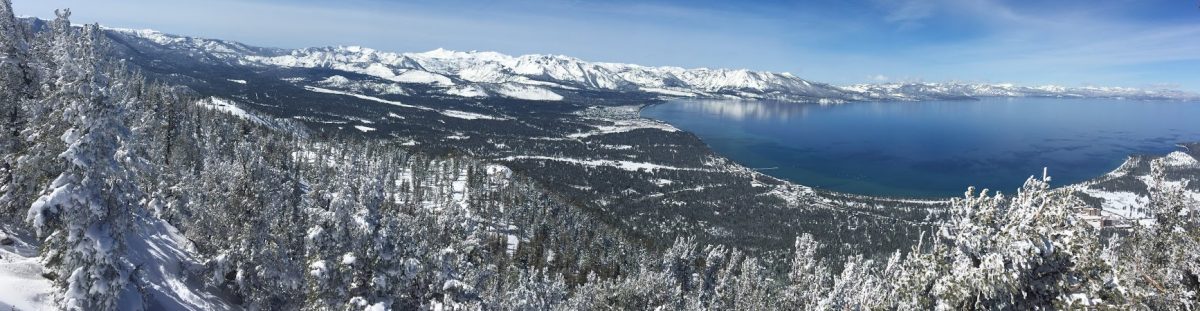
Biophilia

Oh! What a surprise amma?! The book, Nature’s Fix appeals to you.” said the daughter peals of laughter barely concealed in the sentence.

“I know right?! I always keep an open mind to see how else I can improve, my dear!” I said not to be undone in the sarcasm department. 

“You are cooped up in a dull office building in the bustling city – you need a change. I get it! But I am quite happy and young enough to not ‘stretch my limbs’ in nature walks! Nature kook is what you are! I suppose you will now use bits of the books to convince us to come on walks with you. I’ve got homework to do, bye! ” said she mock-straining at my tug to come on a walk with me. But she came. 

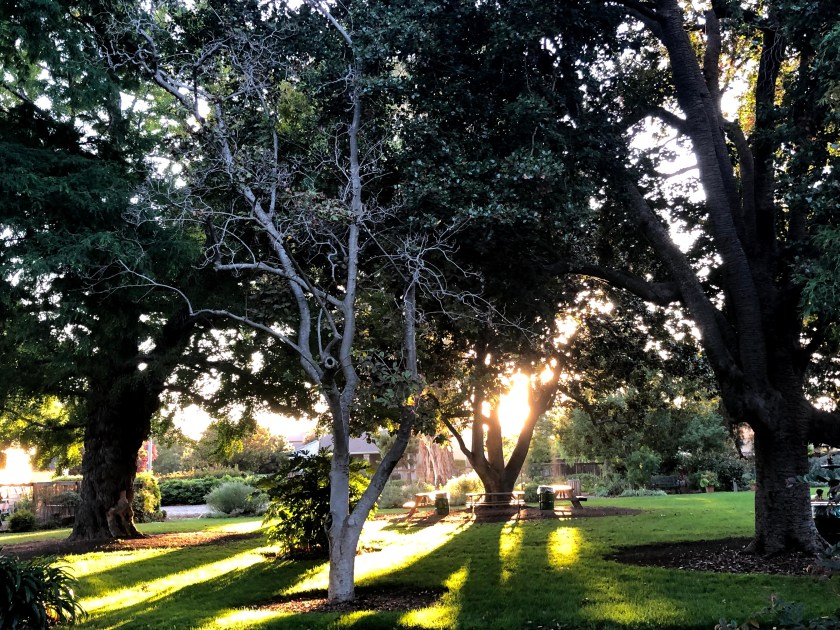
As we walked around our neighborhood, watching the leaves slowly turn colors, birds making their way home against the brilliant sunset, children playing and biking, I felt calm. How much of that was due to the fact that I could take the time for a walk at the end of the day, and how much of it was Nature’s work, I am unable to say, but I felt a wonderful shiver as I watched the evening breeze rustle through the large trees in the neighborhood. Slowly, as I watch the wave of leaves tremble in the wind, some of them shaking loose, and others just swaying to the orchestra of the evening, there is a definite sense of belonging to this wonderful planet.


As I move around the office or often when I am walking to and from work in the city, I feel a concrete shudder. We are so proud of concrete as a structural material, we pour it everywhere. I feel a lonely stab when I see our gleaming imperfections reflected back to us in the gleaming glass panes of the concrete structures. Even the trees on our city sidewalks seem to be lonely, surrounded by concrete footpaths, and millions of people jostling by them everyday. 

Screen Shot 2019-10-25 at 2.00.13 PM.png

The book, The Nature Fix by Florence Williams, details studies taken up in Japan and South Korea around the effects of nature. It studies blood pressure, release of  how long the effects of nature remain with us – does it only last as long as we are with nature, or does a weekly hike contribute to our wellness over a period of time? More interesting questions such as these are handled in the book. 

I was lured into the book reading about the concept of Shinrin Yoku & Salim Yok(Forest bathing in Japanese & Korean respectively) The Japanese are also probably the only people in the world who have a word for commute hell – Tsukin Jigoku.
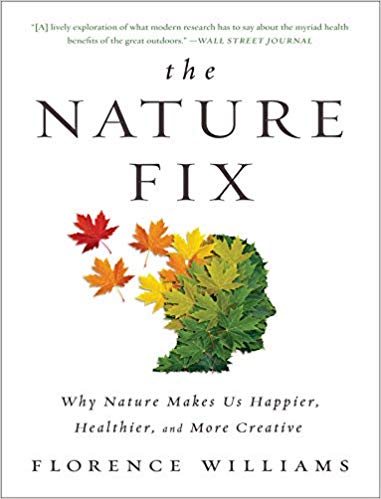
nature_fix

Excerpt:

Study in the Nippon Medical School:

Qing Li is interested in nature’s effect on mood states and stress as manifested in the human immune system, Specifically, he studies natural killer immune cells called NK, which protect us from disease agents and can, like cortisol and hemoglobin, be reliably measured in a laboratory. 

Only in 2016 did we officially became an urban species – for the first time, population in cities outnumbered population in rural areas. As we cluster around in larger numbers, it is even more important to study the effects of nature on ourselves. After all, our biophilia has evolved over millennia and this abrupt change from it is bound to bring changes in the ways we can adapt.

Definition of biophilia. : a hypothetical human tendency to interact or be closely associated with other forms of life in nature.

Is Nature the next wave after Meditation, Exercise and Organic Foods? 

There have been days when I have wondered how the children found out whether I indulged in a spot of meditation. 🧘‍♀️ 🧘‍♀️ I might have, but did they find out because I had taken the time to meditate and therefore already in a better mood, or did the meditation itself help with specific stressors? Nature studies have similar questions, though I am truly grateful for its personal influence on our well-being. Whether it is because of my beliefs or something else, Nature soothes.

Read also: Music & Gardens by Oliver Sacks
img_4005

The joy and importance of walking – Solvitur Ambulando – It is Solved by Walking


Snow Snuffles & Snuggles

The alarm went off at 5:50 in the morning. That moment of transition between sleep and wakefulness is a short, sharp one on certain days, and a dull, lingering one on others. That day, it was a swift rising.

The alarm tinkled with a naughty smile – “Snow snuffles and snuggles”, it said with a snowman and a snowflake thrown in for good measure.

img_2216

The husband was not awake yet. Would he have liked this alarm? I wondered as I hit a snooze, and gathered the flowing blankets around me for a quick snuggle in the warmth before padding out into the cold to start the day.

The alarm that day was meant to set the mood and it sure did. We had gone over for a quick ski trip in the mountains nearby, and while we all looked forward to a day in the snow, it was also a day that the weather app forecasted as having heavy snow in the upper reaches and rain in the lower reaches of the mountains.

Driving in the snow is not for everyone. The last time we were stuck in the middle of a snow storm , we found ourselves, car and all, whistling and gliding through the snow looking like reindeer chasing after blackberries and magic mushrooms. (Read here: In Boysenberry Jelly & Mistletoe Jam)

Obviously, I was worried.

Which meant, I sat straight backed, with my woodpecker nose lengthening in the rear view mirror as I drew agitated gasps. I was also doing an impressive amount of passenger-seat driving and botching up directions thoroughly ( we found ourselves losing our way at least twice and doing a u-turn with the snowflakes hurling at us with light-hearted gaiety). My frowning only seemed to make the snowflakes more frivolous and they seemed to dance and jig their way from the skies looking joyous and relaxed, while I twitched and tutted inside, restless for us to reach our destination.

inyo_snowstorm
Snow

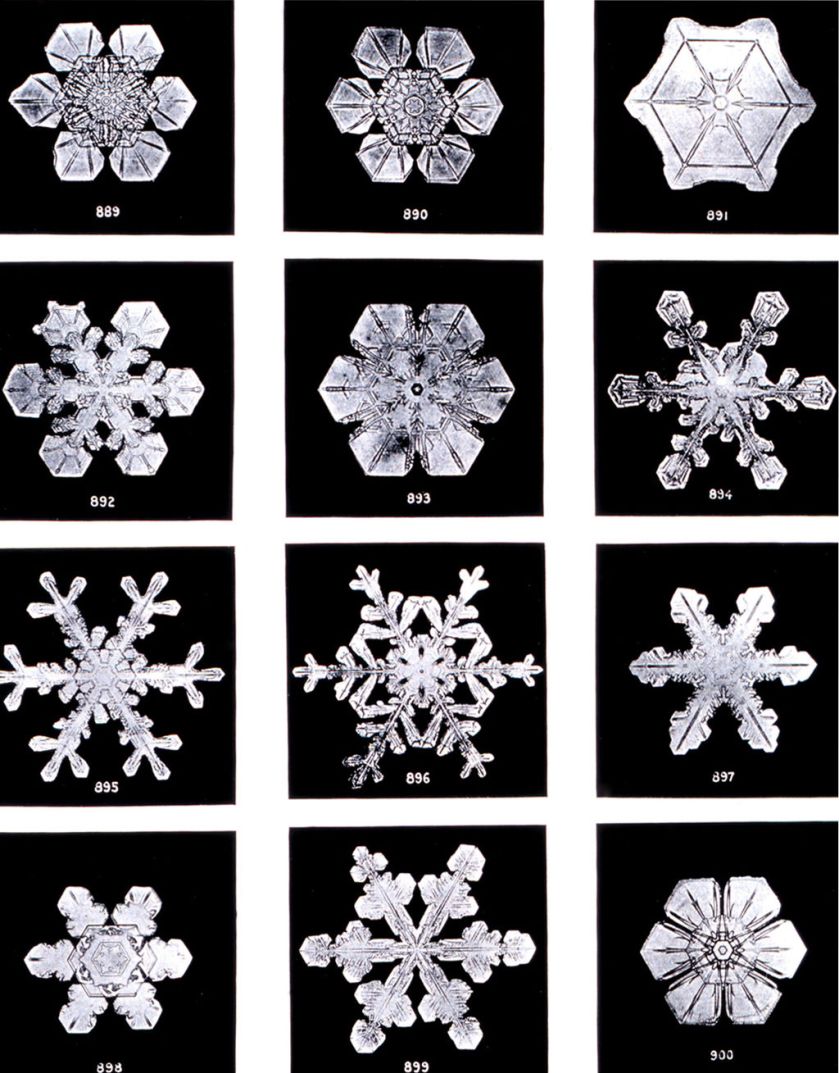
All of that worry evaporated the moment the car was parked and we found ourselves out on the slopes however. My face split into a slow wide smile, and I raised my face to welcome the little flakes on my skin. I was wearing a black scarf, and the snowflakes against the scarf made for a wonderful sight. Never had I see them this closely, and I was mesmerized. Each of them had a beautiful symmetry and a unique shape. Some of them clung together giving them the shape of pinecones. Others landed gently on my scarf giving me the gift of observing their individual shapes.

I have heard it said that no two snowflakes are the same. Every time in the snow I wonder how they possibly could have studied that. When millions are hurling down, what is the sample size that can make us reasonably assume that no two snowflakes are the same? It turns out the myth of the snowflake probably originated in 1885 in a remote farm in Virginia. A farmer, William Bentley, spent his winters photographing the snowflakes placed under a microscope. He spent years trying to photograph over 5000 flakes ( an extremely hard task given how quickly the snowflakes sublime.)

Wilson Bentley – The Farmer Who Gave Us Snowflake Images For The First Time (Wikipedia link)

Wilson Bentley's Snowflake Images
Wilson Bentley’s Snowflake Images

I had no idea I could enjoy seeing the snowflakes so much: Tiny versions of perfection, and joy. And I had with me perfect companions on this adventurous day – Children. Children, who had not yet lost their sense of wondrous joy, and they helped me enjoy these little models of perception and perfection almost with as much joy as their own, and to that I am grateful.

I recently read Rachel Carson’s, A Sense of Wonder, in which she says:
“If a child is to keep alive his inborn sense of wonder … he needs the companionship of at least one adult who can share it, rediscovering with him the joy, excitement, and mystery of the world we live in.”
—Rachel Carson

I hope I was that adult to these children, but the truth is that they were the ones who led to my inner child so surely and unerringly with their enthusiasm and joy. I learnt from them not to mind the discomforts of a blue nose or a shivering hand when I had at my disposal the enormous present of appreciating a snowflake’s beauty.

An Extraordinarily Ordinary Life

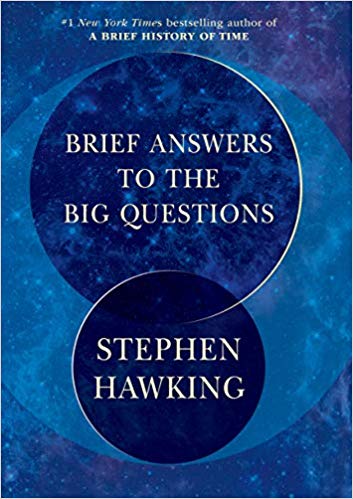
I read and re-read and read out this paragraph in the book, Brief Answers to the Big Questions by Stephen Hawking.

“I have led an extraordinary life on this life on this planet, while at the same time traveling across the universe by using my mind and the laws of physics. I have been to the furthest reaches of our galaxy, travelled back into a black hole and gone back to the beginning of time. On Earth, I have experienced highs and lows, turbulence and peace, success and suffering. I have been rich and poor, I have been able-bodied and disabled. I have been praised and criticized, but never ignored. I have been enormously privileged, through my work, in being able to contribute to our understanding of the universe. But it would be an empty universe indeed if it were not one the people I love, and who love me. Without them, the wonder of it all would be lost on me.”

This is one of the passages in the book by Stephen Hawking, Brief Answers to the Big Questions. The title is no empty boast, he really does take a stab at the big questions with the simplest language. The book’s forewords, and epilogue themselves make fascinating reading: A foreword by Eddie Redmayne who played Stephen Hawking in the movie based on his life, and Kip Thorne who worked with him at Caltech and one of the foremost players in the detection of gravitational waves (LIGO)

Related: Philosophers & Tinkerers

brief_answers

Some questions:

  • Is there a God?
  • Is there other intelligent life in the Universe?
  • Will we survive on Earth?

He touches upon climate change (Related: A Planet of Wizards & Prophets), and whether we have any option but to colonize space. It is written in layman’s terms, which suited me quite well.

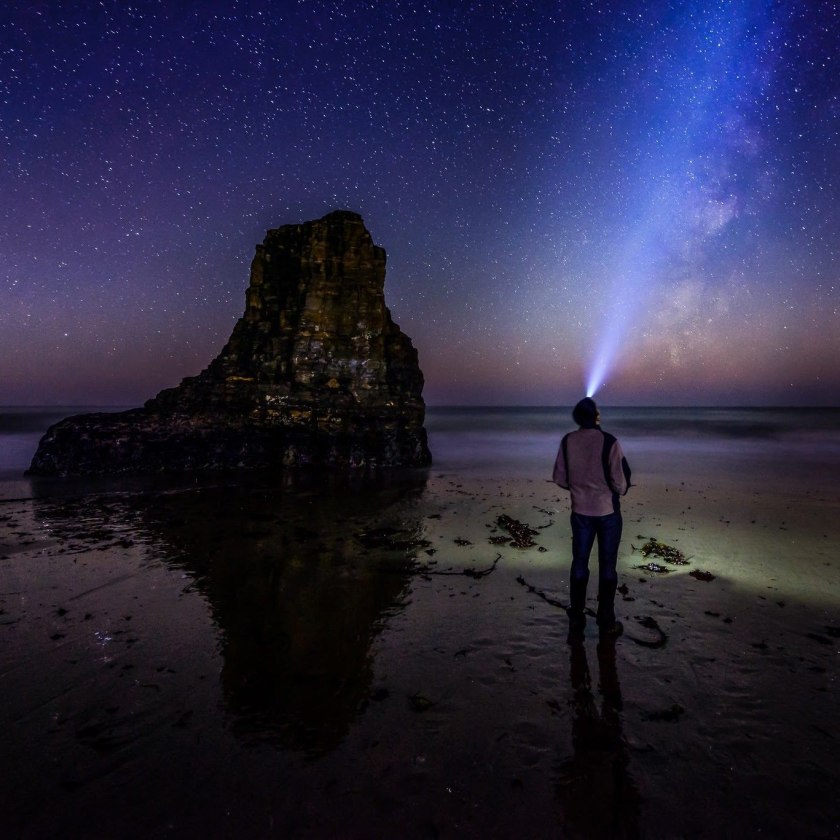
Regular readers know how much I enjoy looking up at the night skies. It is the time I come closest to stoicism. I shiver and wonder what is out there among the great distances. I happily contemplate on the vast empty distances between the stars. I ponder on time and how we are seeing things that are no longer exactly like that. How a serendipitous sequence of events enabled us to be there to contemplate this beautiful universe.

milky_way_shree
Picture taken by a Friend – an amazing photographer

I marvel at our insignificance, I genuinely enjoy riding the thought sails through the night skies, and I look out the magic of it every chance I get. It is one of those times when I am in love with Being.

star_trails
Star Trails of the Milky Way Galaxy – Pic taken by my friend who is an amazing photographer among other things.

One of my friends on a nightly stroll with me once teased me that I will become a star when I pass on, and I laughed heartily. Her tone reminded me of how spoiled I am by my friends who indulgently put up with me as I moon about flowers, hills and stars.

It is extraordinary indeed that I should have read Brief Answers to the Big Questions so closely after I read this particularly fetching poem by Walt Whitman.

When I Heard the Learn’d Astronomer – By Walt Whitman
When I heard the learn’d astronomer,
When the proofs, the figures, were ranged in columns before me,
When I was shown the charts and diagrams, to add, divide, and measure them,
When I sitting heard the astronomer where he lectured with much applause in the lecture-room,
How soon unaccountable I became tired and sick,
Till rising and gliding out I wander’d off by myself,
In the mystical moist night-air, and from time to time,
Look’d up in perfect silence at the stars.

It is even rarer that I find the perfect illustration to go along with it. But Rob Gonsalves in the book, Imagine A World is the perfect one (Related: A Touch of the Eternal):

journey_to_stars

To me, the ability to enjoy these simple pleasures in an ordinary life constitutes an extraordinary one.

To All Astrophiles

“Did you know, the Voyager Insight is going to land on Mars tomorrow?” said an excited son. T’was the night before school reopened after a joyous 10 day Thanksgiving break, and the night before the much anticipated Insight landing on Mars. I looked at his shining face when it should have been a sleepy one.  The sparkle in his eyes did not smack of eyes wanting to make the journey into the Land of Nod any time soon. So, I sat down next to him and said, “Really? How do you know?”

That’s better, his posture seemed to indicate, and said, “Yes…Appa told me. It has to land at an 12 degrees angle it seems.”

“Why 12 degrees?” I asked intrigued. 

Space.com article : Mars Insight Landing

Quote from article:

“InSight hit the thin Martian atmosphere at about 12,300 mph (19,800 km/h), nailing its entry angle of exactly 12 degrees. If the lander had come in any steeper than that, it would have burned up; any shallower, and it would have skipped off the atmosphere like a flat stone across a pond.”

After chatting a little more on the impressive Mars voyage, I asked the little fellow if we should read a book on Space exploration. He nodded. Anything to keep from falling asleep.

So, we picked up the sweet little children’s book, “Also an Octopus” or “A Little Bit of Nothing” 

also_an_octopus
Also an octopus : or, A little bit of nothing / Maggie Tokuda-Hall ; illustrated by Benji Davies

Also an octopus : or, A little bit of nothing / Maggie Tokuda-Hall ; illustrated by Benji Davies

The book is about an octopus who plays the ukulele, and wants to get on a purple spaceship. Who can help it build one though? Why a rabbit scientist of course!


We laughed as we read the book. As different as it was from Counting on Katherine by Helaine Becker, Illustrated by Dow Phumiruk, it stretched one’s imagination in a thoroughly whimsical manner that made us giggle at the very thought of the Octopus on the spaceship. If ever we need to convince ourselves of the diversity of life that we seem to be threatening, we need look no further than the impressive marine life we host on Earth. 

counting_on_katherine
Counting on Katherine – by Helaine Becker, Illustrated by Dow Phumiruk

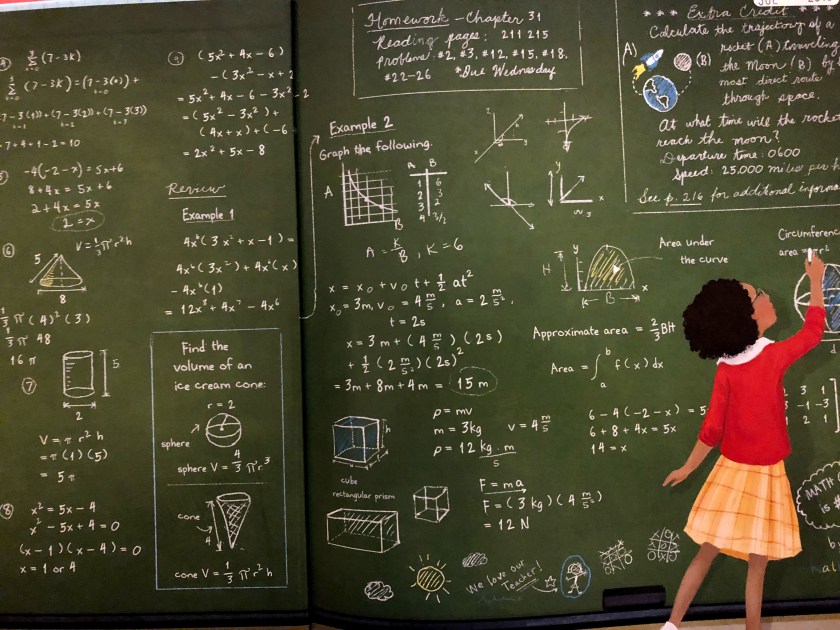
All space lovers should definitely read the beautifully illustrated children’s book, Counting on Katherine. Based on the scientists featured in Hidden Figures, Counting on Katherine illustrates the love for Mathematics and its application to space travels in the most endearing fashion. A child who has the inclination towards numbers cannot help deepen their fascination with them, and hopefully, those who do not share that fascination, will develop a curiosity towards them. I have always loved the look of a blackboard with neatly written mathematical formulae and calculations: this book captures the aesthetic beauty of the blackboard beautifully.

img_0287
Counting on Katherine – by Helaine Becker, Illustrated by Dow Phumiruk

Anyway back to Voyager Insight I said, “Do you think we can watch it land?” 

“Yes….it will be on You-tube.”, said the little fellow, positive that the image transmission from the Insight landing on another planet can make it to the nebulous internet without any trouble at all.

Here is a video link prepared by LockHeed Martin in collaboration with NASA’s JPL:

Automatically, my mind harked back to the old times when an image was work, precious work, with days in between clicking the pictures and getting them developed. When they came out, you saw the lighting could have been better the framing better, the shake a little less, and solemnly swore that you were up to no good, and waited it out till the next film roll proved it. 

I still marvel at any photographs we receive from Space. 

Human minds can adjust to improvements so easily – if only, we had the sagacity to adjust just as quickly to hardship.

Blooming Time?

A version of this post was published in the Nature Writing magazine: When The Kurinji Blooms

In a small corner tucked away from the hectic panting of the world lives a small ecosystem,  nestled in a range of hills that is fast losing its unique beauty to ‘progress’. It is the place I was lucky enough to call home when I was growing up.

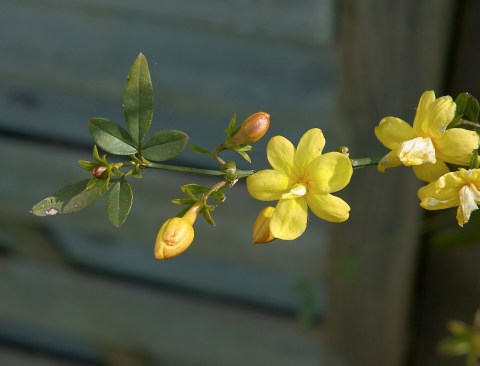
Jasminum_mesnyi.jpg
Primrose jasmines – Image by Wouter Hagens[Public domain], from Wikimedia Commons
The thought of flowering lupines takes me to Iceland; lotuses to a temple tank surrounded by trees with the breeze rippling the tank waters; primrose jasmines and Kurinji flowers back to the Nilgiris.

One of the marvels that is highly unique to the Nilgiris is the flowering of the Kurinji.

These flowers only bloom once in 12 years, and when they do, they are a joy to behold. I have only seen them once, and I remember thinking that for all this drama of blooming once in a dozen years, they should be, more grandiose, more robust, a trifle less ephemeral. But that is the thinking of an ignoramus, and I sensed the idiocy of the sentiment even then.

The flowers were beautiful, and the fact that there is a plant that knows the time to bloom when the rest of the world needs alarms and clocks to rise and shine is nothing short of marvelous. We need apps, calendars, schedulers, reminders and alarms to go about our daily business of living, and yet these unassuming flowers go about their act of procreation, maturing and enthralling the world without any such aids. What is more beautiful than that?

The kurinji flowers were in bloom last month, and I lived vicariously through a few friends of mine who live in the beautiful Nilgiris and posted the pictures. Entire hillsides clothed in royal robes of purple, swaying and billowing in rainy wind splattered skies, or waving and tossing their crowns to the blue skies with the scudding clouds.


The beauty of a functional model like a flower is a joy to behold. Imagine my joy then, when I opened the book, What Do You Care What Others Think – By Richard Feynman and the very opening of the book spoke straight to my kurinji-flower yearning heart.

I have a friend who’s an artist and has sometimes taken a view which I don’t agree with very well. He’ll hold up a flower and say “look how beautiful it is,” and I’ll agree. Then he says “I as an artist can see how beautiful this is but you as a scientist take this all apart and it becomes a dull thing,” and I think that he’s kind of nutty. First of all, the beauty that he sees is available to other people and to me too, I believe…

I can appreciate the beauty of a flower. At the same time, I see much more about the flower than he sees. I could imagine the cells in there, the complicated actions inside, which also have a beauty. I mean it’s not just beauty at this dimension, at one centimeter; there’s also beauty at smaller dimensions, the inner structure, also the processes. The fact that the colors in the flower evolved in order to attract insects to pollinate it is interesting; it means that insects can see the color. It adds a question: does this aesthetic sense also exist in the lower forms? Why is it aesthetic? All kinds of interesting questions which the science knowledge only adds to the excitement, the mystery and the awe of a flower. It only adds. I don’t understand how it subtracts.

Ode to a Flower – By Richard Feynman. This brain pickings article links to the beautiful animated video made by Fraser Davidson based on his ode to a flower.


I could not see the Kurinji flowers this time. I know many hillsides that were carpeted with these marvels have now become home to resorts and hotels. So, I wrote to the San Francisco Conservatory of Flowers requesting them to try and obtain a sample of this marvel: a tiny piece of magic tucked away for generations to behold. I hope they can.

To see a World in a Grain of Sand
And a Heaven in a Wild Flower
– William Blake


Hero-Worship, Nicomacean Ethics & Baloney Detection Kits

I have heard friends rave about Dune by Frank Herbert many times over the past few years. I finally got to read the book, and I feel richer in mind and thought for it. The book was long and at times hard to keep track of (especially in the beginning). This is one of those times when I realize how my mind flutters with attention spans that drive calm butterflies to frenzy. But slowly, steadily, I settled into the book, and there were multiple moments when I felt like I must grab a pen and start writing (but that stern butterfly gave me a look, and kept me at my the task of reading). This, is probably the reason I have forgotten half the things I wanted to write about (This is where I glare back at the butterfly guardian who kept me reading)

Dune-Frank_Herbert_(1965)_First_edition
First Edition Cover – Image from Wikipedia

One of the many things that appealed to me in the Dune was the fact though there were vague references made to technology and the number of technological devices used by those living at the time, it is not a mainstay.

The book is a multi-layered piece of literature with over-arching themes of ecology, the art of war, religion, philosophy and politics. There is a particular quote that stuck with me in the Prologue written by Brian Herbert, Frank Herbert’s son, about the dangers of hero worship.

Quote:

As Liet Kynes lay dying in the desert, he remembered the long ago words of his own father: “No more terrible disaster could befall your people than for them to fall into the hands of a Hero.”

Having studied politics carefully, my father believed that heroes made mistakes…mistakes that were simplified by the number of people who followed such leaders slavishly.

In many ways, hero worship is what leads people to choose leaders who then turn into despots and dictators. Adulation affects everyone, and those with fragile egos are the most prone to its lure.

Towards the end of the book, Paul Atreides recognizes that he is being hailed as the Messiah and regardless of his acceptance of the title, there is a holy jihad in his future. He can either lead to the best of his abilities like his able and excellent father, Duke Leto or simply be the mascot of a movement that has already gathered momentum – a force that is much larger than him. This sort of trusting faith in one human being is never a good sign, and is a malady that has affected us for centuries. 

I quite agree with how Aristotle describes the nobility required of politicians: he opines that politicians should take an oath, almost as sacred as a Hippocratic oath, to remain fair and mete out justice. From the Nicomachean Ethics – By Aristotle. 

The lecture on Aristotle and Socrates on How Does One Live The Good Life? From 36 Books That Changed The World (Chapter 8) is an excellent listen.


There are no initiation courses for politicians. No training. Though, I have a suggestion to have every politician complete the Butter Battle Course, it is unheeded. (The Butter Battle Course is an excellent course consisting of childrens’ books not more than a few pages each, and should only take a few moments of every leader’s time):

butter_battle

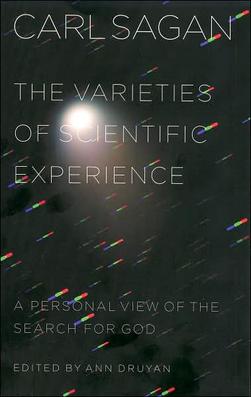
However, till politicians start taking their careers to truly be in service of humanity, we need to equip ourselves with Carl Sagan’s excellent Baloney Detection Kit from the book: The varieties of scientific experience : a personal view of the search for God / Carl Sagan ; edited by Ann Druyan. This book contains the Gifford lectures given by Carl Sagan in 1985.

The_Varieties_of_Scientific_Experience
By Source, Fair use, https://en.wikipedia.org/w/index.php?curid=28513011

When someone asked Carl Sagan after his lecture what we can do when the governments do not act in our best interests, he advised us to have Baloney Detection Kits handy.

Quote:

“I would say that the first thing to do is realize that governments, all governments, at least on occasion, lie. And some of them do it all the time – some of them do it only every second statement-but, by and large, governments distort the facts in order to remain in office.

And if we are ignorant of what the issues are and can’t even ask the critical questions, then we’re not going to make much of a difference. If we can understand the issues, if we can pose the right questions, if we can point out the contradictions, then we can make some progress. There are many other things that can done, but it seems to me that those two, the baloney detection kit and use of the democratic process where available are at least two things to consider.”

This seems to be age old wisdom: our oldest myths write about flaws in heroes, what brings about the downfall of the most powerful tyrants  etc; and yet, the reminder for our own Baloney Detection Kits is a timely one.

Books:

  • Dune – Frank Herbert
  • Varieties of Scientific Evidence  – Carl Sagan 
  • Nicomachean Ethics – Aristotle
  • 36 Books That Changed The World – Lectures on Great Courses
  • Butter Battle Book – Dr Seuss

The Green Belt Movement

It was a beautiful day, and the children had been very good on a hike together. We had chuckled our way through the muddy paths still damp with the recent rains, attempted to climb a tree, looked out for robins, thrushes and hawks.  Cows on these hillsides were minding their own business and grazing. Calves of all sizes made a welcome sight. A couple of pups were frolicking on the trail, and made for great hilarity. There is something alluring about the fresh outlook of the young and we enjoyed the hike taking in these heartening glimpses of life thriving around us.  The children, puppies and calves on the trail that day were bursting with the fount of youth.

IMG_7682.jpg

From up above, we could see the tiny houses lined up like toys on glimmering silver ribbons. The Earth around us was clothed in marvelous hues of Green, and peace seemed to hail. ‘Did you know? All those areas down there were fruit orchards with thousands of trees.  Apparently, these hills too were more like forests about 50-60 years ago. Then they cut down the trees so the cattle could graze, but now the ranchers have gone, and we don’t really need all these hills for pasture, but the trees are gone too.’, I said sadly.

The children looked appalled at this, and we set about discussing how important and beautiful trees are. “I wish we could replant all those trees!” said my little environmentalists wistfully, and I heartily agreed.

The Green Belt Movement

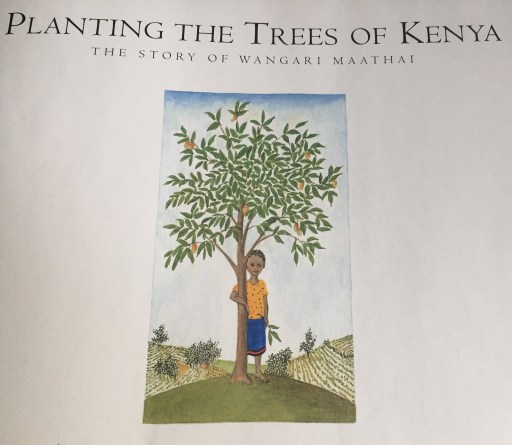
A few days later, I was grazing in the library, when my eyes fell upon the beautiful book,  Planting the Trees of Kenya, by Claire A Nivola, The Story of Wangari Maathai. I picked it up intrigued, for I love to read about that beautiful continent.

Planting the trees of Kenya - Wangari Maathai
Planting the trees of Kenya – Wangari Maathai

Wangari Maathai was the first woman to win the Nobel prize from the continent of Africa. She was awarded the Nobel Peace Prize in 2004 for making the connection between natural environments and the well-being of the people.

Wangari Maathai – Nobel Peace Prize winner in 2004. First woman from Africa.

The book started off with the beautiful page depicting the Kenyan countryside when Maathai was a little girl. Kenya was clothed in its ‘dress of green’ when she was a little girl.  Fig trees, olive trees, cornets and flame trees covered the land, and fish filled the pure waters of the streams.

The Fig tree was considered sacred, and it was one of her favorite trees.

Planting the trees of Kenya - Wangari Maathai
Planting the trees of Kenya – Wangari Maathai

Maathai then went to the US to study with the Benedictine nuns where she imbibed the lessons of doing more than you receive and to make a larger impact on Earth.

Planting the trees of Kenya - Wangari Maathai
Planting the trees of Kenya – Wangari Maathai

She returned to Kenya, full of hope, only to see the landscape completely transformed. Even the fig tree was gone, the streams had run dry and large-scale farming had take over the individual farmers needs. Food was more expensive and she was shocked to see that ‘economic progress’ had left behind a sickly, weak, and much poorer populace.

She was the first person to make the link between people and nature living together in harmony. 

Why not plant trees?

As can be expected, she was faced with opposition and setbacks at every turn. Her nursery did not thrive, the governments did not embrace the program, but none of that deterred her. She encouraged the women to take up tree planting. She visited schools and gave the children saplings to plant and nurture trees and even taught them how to make their own nurseries.


She, and this is my favorite, appealed to the gun-bearing soldiers with the slogan : Gun in your righthand and a tree seedling in your left. She said to them that if their goal was to save Kenya, both aspects are equally important.

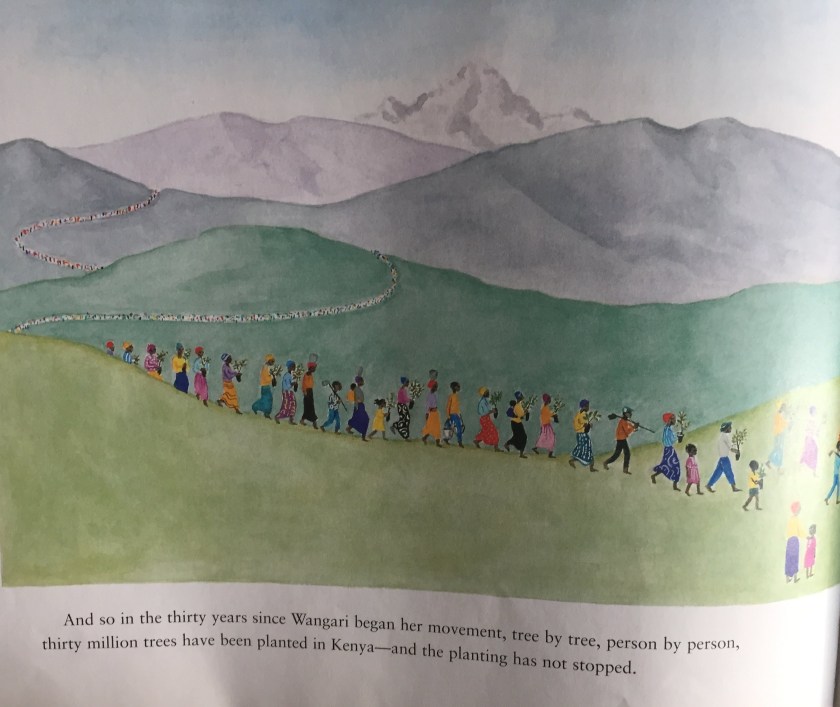
Ever since Wangari began her Green Belt Movement in 1977, tree by tree, person by person, 30 million trees have been planted in Kenya, and the planting has not stopped.

Planting the trees of Kenya - Wangari Maathai
Planting the trees of Kenya – Wangari Maathai

http://www.greenbeltmovement.org/wangari-maathai

What can we do?

When I look at the hills near where I live clothed in its rich shade of green in the rainy season, my heart sings. But I know this is a short-lived season before we have signs saying ‘Brown is the new green’, and the summers dry out the landscape bringing with it the threat of wildfires.

Last year, the very places that were most damaged by the wildfires were also affected by devastating flooding in California. These are nature’s wake-up calls.

SoCal – same areas affected by fires now devastated by storms

Every year roughly the size of the country of Costa Rica is being lost to deforestation.

UN Deforestation Statistics

Wangari Maathai died in 2011, but her lessons for us need not.  What will it take for a similar program to take root all over the world, so we can save ourselves and our beautiful planet?

The Moon’s Beard

The son and I had been on a quick trip to see my family in India. The brother, the shining Galahad of our family, said he would be there to pick the little fellow and self at the airport. I nestled into the journey comfortably equipped with books.

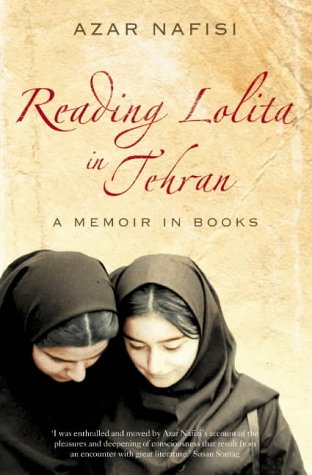
I was midway through Reading Lolita In Tehran, a book that has languished on my to-read list for far too long. The journey was comfortable enough, and I found myself pulled into the period from the overthrow of the Shah of Iran to the early 2000s when the author finally decided to leave the country and move to the United States. The author is a professor of English Literature and her upbringing in an intellectual family and world make it very hard for her to digest the increasingly repressive practices the regime imposed on them.

ReadingLolitainTehran
By Source, Fair use, https://en.wikipedia.org/w/index.php?curid=3734465

In the book, she writes of how many of her students were categorically rigid in their views. Some boys (or young men) were vociferous and rigid in their condemnations and swallowed all the rhetoric that had been fed to them by the repressive regime. Men could be punished for not sporting beards, women flogged for not wearing purdahs. One time she finds herself cautioning a young man who followed her to her office parroting things about the West after a class on Pride & Prejudice by Jane Austen, that he may well end up like Elizabeth changing her mind about Mr Darcy one slur at a time.

It is astonishing how many young minds could be made to think a certain way. As I moodily prodded a potato on the flight’s lunch, I looked to the son sitting next to me – he was avidly watching Cars and pulling my attention to particular scenes.

“See? See? Lightning is going to blow a tire now. Now Amma.” he said far too loudly, for he had the headsets on, and was excited. How did innocent boys like him grow to young men like I was reading about?

You ready to meet Maama (Uncle)? I asked the son as he sat up after he finished watching the movie for the n-th time. Yes! he beamed and I thought how much he resembled my brother when he was a child. He had the same beam like a full moon.

I got down at the airport and scoured the crowds gathered outside. I looked out for the beaming face of my brother, couldn’t see him and stepped back inside to get wifi access so I could message him. It was then that I noticed a man of palm tree height, swinging his branches at us. There was no reason to single us out. It was 3 am and the throng outside was not waving at us. It was minding its own business. Plus this tree was employing that windmill action that is characteristic of the Bala family. But this could not be him.

What I saw wasn’t the smooth face of a full moon, but a moon that slipped and muddied itself in the nearest marsh. Apart from a beak and two eyes, everything else as I said was scoured. I peered closely and he leaped forward startling some of the crowd with his “HIIII”. The voice was his, but I could not understand why he looked like Ayatollah Khomeini , and I said so with some asperity.

“Reading a book on Iran I see?” he said shrewdly as he pulled me in for a hug.

“Reading Lolita In Tehran”, I said bemusedly. “What’s with the beard – like a louse rug on a biscuit.”

The beard affected me strongly, and I set aside sisterly tones of affection and reached for the tug – “It looks ghastly.” The brother looked pleased that I was taking the facial hay like this, and he clung to it looking more like three billy goats gruff, every minute.

full_moon_tehran.jpg

“Keep with the times! The latest fashion – all the dudes have them.” At this point, he stopped to reel off the names of cricket stars and film actors, the best of whom I could not recognize if I had coffee with them beardless. If they were beardless I mean. I don’t have a beard. Estrogen and all that.

I sighed and quoted Azar Nafisi’s husband from Reading Lolita in Tehran:
None of us can avoid being contaminated by the world’s evils; it’s all a matter of what attitude you take towards them.

The son was peering at his loving uncle in that keen manner that children have. “Maama – how come your hair is coming out of your face? Mine only grows on my head!” said the fellow who has been under the influence of the clean shaven thus far.

“Magic!” murmured the brother and chuckled softly at his awe. The moon beamed down at us from the sky above, and a gentle breeze rustled the palm trees, as we made our way home.

Why Did You Fall?

I’ve got the theory nailed. I’ve seen it dozens of times in Indian movies and Tamil TV serials. You are meant to be well dressed, like you are attending a wedding or seated at a high tea, and then you feel dizzy. At this point, you clutch your head a little dramatically with perfectly manicured hands and then proceed to fall gently like a leaf fluttering gracefully to the top of the pile of leaves below.

forest.gif
Leaves fluttering gracefully to Earth (Source: https://giphy.com/)

A minute later, if the accompanying background music and screams from those nearby fail to wake you up, you are splashed urgently with cold water, and you swoon. Now you can sit up looking sprightly, divine, and beautiful with the glistening drops on your face, and ask somewhat stupidly, “Where am I?”

Reality is where the universe sees the comedy of existence.

I found to my utter dismay that I was not a leaf who fluttered gracefully, but rather a tree that crashed brusquely and clattered quite noisily on its way down. To make sure that the fall was as far off from the Tamil TV serial falls as possible, I was dressed in a down-to-earth cotton night-suit, and landed up toootling up to the hospital in less than glamorous attires.  There were no beautiful glistening drops when I came to, so I could look angelic and ask ‘Where-am-I?’

While convalescing afterward, the loving family propped me up in front of the television and used the opportunity to get me to watch some of the movies they have been trying to get me to watch over the past few months. I started off with Lego Marvel Superheroes (Ultron Mind-controlling Iron-Man with Yellow-Hammer’s help. That is the whole movie right there.)

lego_superhero.jpg

This movie was accompanied by an excited commentary and almost verbatim dialogue deliveries by the elementary school going son who was anxious that I like his Lego super-hero movies. Some of the moves in that movie – Good Lord! If I broke and tore things in my body with a simple fall on the way to the bathroom, I cannot imagine how those Lego characters stick together, they should be in boxes waiting to be reassembled, I said.

The husband stuck his oar in, “Wait till you see what I have for you. This is Lego – I have gangster vs police movies, mythological wonder-movies and so much more. Real people in flesh and blood.”

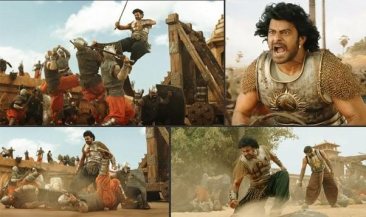
It wasn’t an empty boast. The husband’s movies – shudder, gulp, diddle-gee-bumps. The first one, was supposedly mythological, so I suppose I could forgive the hero for throwing fully grown bulls charging at him mid stride, and proceeding to obliterate an army single handedly.

bahubali

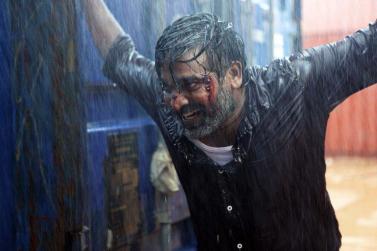
The next one  had gangsters hitting each other with an intensity that should have broken not just the beaten man’s bones, but the beater’s bones as well, but nothing seemed to happen to these supermen. After one particular gentleman was slammed across a tin shed and rammed repeatedly against a wall at the rate of 45 mph, he proceeded to wipe a smear of blood away and then laughed before delivering punch dialogues.

When Ernest Hemingway said: The world breaks everyone, and afterward, some are strong at the broken places , I don’t think this is what he meant.

vikram-vedha

I fell, once, on the way to the bathroom inside the house 10 days ago: Still convalescing. Not kidding.

I begged for a reprieve from this action-packed couch-existence and stepped outside for a walk. I was besieged with well meaning questions by friends and neighbors. It always heartens me to live in a community that cares. Never is that more apparent than when children of all ages gather round you and ask if you are okay in their own individual ways.

I was amused to see that the questions posed by the preschoolers were the toughest to answer:
How did you fall? (Umm…..I am sorry buddy, much as I’d like to show you, my doctor thinks it unwise to demonstrate.)

To this philosophical question, however, I still do not have an answer: Why did you fall?

Magic of Zen

“Chitthi, you should read this book for sure. I am sure you will like it.”, said the niece, holding up some teen fiction. She has been reading what she calls Dystopian Fiction and some of her stories tend to mistake my blood for milk set out to curdle. I looked skeptical.
The daughter joined in the conversation with another book suggestion. “Adults won’t enjoy it, but I am sure you will Amma.” she said.
I donned an amused expression. That I should be pegged for having a child’s capacity made me feel truly honored.

Like Ursula K Le Guin, the famous fantasy author said, ‘The creative adult is the child who survived.’

“I mean of course you are an adult and stuff, but … well you know what we mean.” The girls rushed on almost immediately, “This is the good stuff – you will love it.”

The book recommendations discussion was happening before our trip to Mt Shasta, and I was deciding what should be taken along for reading.

After a little deliberation, I picked out Tales from Earthsea by Ursula K Le Guin. A better book for the wilderness could not have been chosen if I had researched the thing for weeks. Earthsea is a mythical archipelago where wizardry is not uncommon. This book contained tales from Earthsea set in various points in time. The stories are set in beautiful islands amidst forests and meadows and was the perfect read at Shasta.

One fine early morning, on a hike in the forests of Shasta, I chose a spot in which to slowdown and take in the surroundings just like the characters do in the Grove. I sat myself on a rock, and looked out upon miles of trees and forest cover. Sitting there, I noticed how the leaves were shaped against the blue skies, the clear, sharp shapes rising up against the sky, looking majestic and beautiful. Why is it, that nothing man made can even hope to compete with the magnificence of a leaf, tree, forest or mountain? It was a biomimicry moment.

shasta1

With the forest around me and Mt Shasta in the background, Nature helped still and quiet my senses so much that I felt strange. The incessant chatter of inner turmoil quiet, the constant rippling of life’s waves smoothened, the distant and affectionate view of my own foibles on Earth. In only a few moments of this relative calming of the senses I could feel every observation keenly as though the distant telescopes were adjusted better to give a clairvoyant view into life.

To hear, one must be silent.
Ursula K. Le Guin

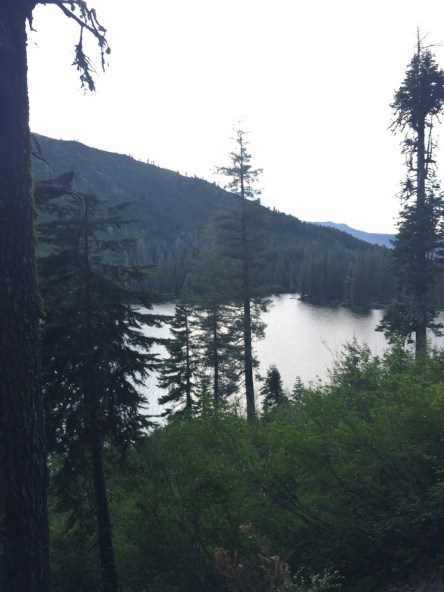
I resolved to take the children on a hike that very evening. The evening hike was just as splendid. It hugged a coastline on a lake, and the evening sun transformed a normal forest setting into a magical one. We trudged up the mountain path chattering happily and gaining altitude. A number of meandering trails and paths criss-crossed the ones we were taking as we hiked on.

shasta-lake.JPG

As we were hiking, I told my daughter about the moment of Zen that I felt during the morning hike, and she said she would try it too. I looked up surprised, but noticed that a while later, she sought out a rock and sat there just drinking in the scenery. I hope she felt the same sense of quiet.

keena_zen.JPG

As we made our way back, the sun had started to set and colored the sky with patches of radiant pink, purple and orange. It was then that we realized that we may have lost our way. I remember going left from this mountain peak, but that trail up there also goes there, how about this one? Every one was sure we had come up by a completely different path. The daughter was unusually quiet and then she exclaimed thoroughly proud of herself, “This is it! I know now. This is it. This is the way to go!” and she was perfectly right.

Days later, when we were discussing the concept of magic, I went all Ursula Le Guin on her and said, “You know? That day, on the hike, you were so much in tune with nature that you were the one who found the way back. You know how appalling you are usually when it comes to directions, but that day because you loved the hike so much, the forest revealed its magic to you.” She rolled her eyes, but the joy in her eyes was unmistakable.

Le Guin writes of magic in a way that is manifest in our daily lives without us ever stopping thinking of them as magic. It is neither wand waving nor dramatic, but it is spectacular. It is in the unique talents we each have, and just like any other talent needs nurturing and nourishing to develop to its full potential.

The Author’s work has the influence of Tao-ist philosophies, that help us tap into the ageless wisdom of generations. The books talk of listening to the Earth as a means to understanding the greater forces at play, the ability to gauge what is to happen, but have the sagacity to neither judge nor criticize its actors unduly. In short, it is life cloaked in the glamorous garbs of magic.

Lao Tzu Tao – Ursula Le Guin