The Monarchs of Butterflies

Heliotherms & Heliotropes

The sun was shining. The birds were chirping, the leaves were all showing off that they were as good as their east-coast-fall-color relatives. It was all marvelous. So off we went for a week-end walk. 

The husband tried his best to not roll his eyes as I stopped in several places to admire big, fluffy brown and black caterpillars on the trail. “All those butterflies!” I buzzed. “Such darling guardians of the sun, aren’t they?” 

“What now?”

“Butterflies are heliotherms – did you know that? They get their body heat from directly basking in the sun. And isn’t it such a beautiful word? Heliotherms! Heliotherms flitting to Heliotropes for nectar.”

“Are we going to watch them weave their cocoons or shall we head back?” said the husband. 

Monarchs of Caterpillars

I waved to folks in the neighborhood as we passed, the dogs wagged their tails, the cats gave us looks of live-and-let-live. It was all lovely. What I didn’t realize was that it was all about to get much lovelier. I stopped to chat with a friend.

“I am going to give you a gift – it is a milkweed plant!” she said. I couldn’t help smiling at that. 

“Well – I do love that gift!” I gushed,

“They are required for saving the monarch butterflies, you know?”, she said beaming, and getting that smile on her face that meant she was excited to show me something a biophile would appreciate. 

“Yes I remember reading about it a while ago when the numbers of monarch butterflies had dropped. They planted them all along the migration paths to revive their numbers.” 

Monarch Butterflies: Back from the Brink

“Want to see the caterpillars?” she asked me, giving me a look like Christmas had come early. 

“I just saw a few – big fat furry ones there!” I said pointing vaguely in the direction I’d come from. The husband had that look that said – “I’ve had quite enough of caterpillars for the day!”

 “Come and see these. These are the monarch butterfly’s caterpillars, and they are only found on the milkweed plant itself.”

Now, how could I resist? The husband squiggled away – wishing us a wonderful caterpillar viewing session.

I went into my friend’s garden and am I glad I did?! 

These caterpillars are striped beauties that make you want to sit and admire them all day. Light green, black and yellow, they were squirming and filling themselves on the milkweed plant. Their home looked beautiful in the November sun. Apparently, these caterpillars lived out their entire caterpillar-hood on the milkweed plants. 

A few years ago, I had written an article on the Monarch butterflies – their numbers had been dwindling and the state of California had revived them by growing milkweed plants everywhere along their migration route. I thought it was for the nectar – now, I know it was for the caterpillars to nest and grow a cocoon in too. 

Lepidoperist

When they say transformative like a butterfly, how many ways can it hold meaning? For there are the ones that become butterflies from the woolly variety. I now remember how my children as elementary schoolers loved talking about the caterpillars, cocoons, and butterflies.  The thick brown and black caterpillars produce butterflies too, but the monarch butterflies only come from the green and black striped beauties on milkweed plants. These caterpillars are really the monarchs of butterflies.

What fascinating things lepidopterists study. (One who studies butterflies and moths are called Lepidopterists)

Books: The Girl Who Drew Butterflies: How Maria Merian’s Art Changed Science – Joyce Sidman

🦢🦢🦢 A Pod 🦢🦢🦢, 🥁🪘🪵 A Drumming 🥁🪘🪵, and a  🦅 ☕🦅 A Kettle 🦅 ☕🦅 

It isn’t often that one feels like the poet, Mary Oliver. The October mornings are starting to feel crisp, and then one remembers that this is California – so we have a beautiful mix of windy, cloudy, frosty, and this year, rainy days. 

🥁🪘🪵 A Drumming 🥁🪘🪵

The vibes that morning seemed to be around the themes of: Ready to bear moisture, and don the colors of autumn. Some trees had started turning orange, and the little family of woodpeckers I stopped to observe on my morning walk had me enthralled. There is something about the morning sun through the orange leaves, and little downy woodpeckers flitting and pecking their way through their morning that has to be experienced. They are called a descent of woodpeckers, or a gattling or a drumming of woodpeckers. I like the last term more – suits their percussion band theme. 

The trees reached and yearned for the blue skies, the birds tittered and chattered. I couldn’t say they sounded happy exactly, but they sounded content. The Earth around me at that point felt content to be part asleep, part awake. 

🦢🦢🦢 A Pod  🦢🦢🦢

Thinking of this and that, I made my way to a little spot I knew was favored by pelicans for their spot of morning fishing. Watching pelicans do a spot of coordinated fishing is one of the best experiences of nature. For all these men and their wars and their power trips, they should learn a lesson or two from a pod of pelicans

Glide, swim, swoop,

Glide, swim, swoop,

Glide, swim, swoop,

Glide, swim, swoop

Ballerinas and group dancers they are – It isn’t a rhythmic time-based swoop, for sometimes, they glide, glide, swim, and then swoop. 

Community creatures they are, and so totally in sync with each other, it is a joy to watch their companionship. Maybe they are territorial with their nesting and breeding grounds, but they also have an immense sense of taking care of each other.  

https://nourishncherish.org/?s=coordinated+fishing

🦅 ☕🦅 A Kettle 🦅 ☕🦅  

By the time I came home, my spirits were soaring with the kettle of hawks overhead. Hawks really do have a musical cry. They swooped and cried high in the skies, and really, they could be called a Swoop of Hawks. The agility!

Musical cries, percussion bands and group dancing is more than a morning’s worth of excitement, don’t you think?

A pod, a drumming and a kettle put me in mind for a hot cuppa tea, and I bustled into the kitchen full of purpose. A few minutes later, I sat sipping my brew content in the knowledge that mornings like this are not easy gifts. They are meant to be savored one precious breath at a time. After all, poetry, music, orchestra and words can only try to capture beauty.

Exploring The Anthropocene: Life Between Cosmic Events

The Anthropocene by John Green

In the book, The Anthropocene by John Green, there is an essay in which he he mentions Mark Twain’s life being sandwiched between the two appearances of Halley’s Comet 76 years apart. He was born the year it was born, and he wrote famously the year before his death that he hoped to go out with it, and he did.

When I read that the first time, I felt sorry for him. He was born in 1835, and died the day after its perihelion in 1910. I hope he got to see the second occurrence. Imagine being alive for 2 appearances and not being able to see them both times. I suppose there is a poetic beauty to being born and dying between the spectacular cosmic events. But then, plenty of people did not see Halley’s comet even when it was visible in their lifetimes, so what’s the big deal?

Halley’s Comet

I remember being excited about Halley’s Comet in 1986. I was thrilled at being included in the viewing party – it was for my older sister’s classmates, and they had agreed to let her little sister tag along. 

I remember peering through the telescope. I cannot say with any conviction that I remember the comet itself. Some blurry recollection is all that remains. But the feeling of the evening remains. The excitement at being included in an elite group of senior students, the protective aura of having my older sister and her friends look out for me, and the cold temperatures of the night. That cup of Bournvita before bed was enough. 

Astrophilia

Nights and stars seem to have similar experiences ever since. The feeling more important than the viewing itself. For a star is a star. A celestial object – a celestial object – nothing more. Yet spectacular enough to be other-worldly. To tap into the possibilities of a vast universe. 

One night, we were out looking for a star system, Delta Cep in the Cepheus constellation, and I could not help wondering what their Delta-rise and Delta-set looked like on the planets in that star system. Did they have moons beaming the reflected lights of the stars to them? Were there any microscopic creatures willing its way into rudimentary life? Life seems to be so hardy and resilient and willing to thrive, it seems a little surprising that we have yet to discover traces of life elsewhere. 

The Martian by Andy Weir

We were reading The Martian by Andy Weir for our book club, and thoughts of life elsewhere held all the more appeal. One only had to peer at the way weeds take root and crack through pavements, to see how resilient life can be. (It is another matter altogether that the plants I do try to grow on purpose seem to fizzle out on me, and routinely droop and call it a day, but that is a post for another day. ) 

In any case, it got us all thinking about all the things that enabled a planet full of sentient life, and how we sometimes forget to marvel at the sheer beauty of it. Wrapped up in our worries, anxieties, and livelihoods. 

The son is doing a science experiment in which they are experimenting to see how microbial colonies develop in  slice of bread under different conditions. In a fit of whimsy, he spoke and sang to the bread (gave it lectures on George Washington – his latest obsession, sang a Hamilton song) – to get the microbes on the slice, and has placed them in airtight containers in different conditions throughout the kitchen – in the dark, in perpetual light, and in freezing cold conditions. It will be interesting to see where life can thrive. 

That life had a starter kit is miracle enough, but the fact that it thrived enough to produce the kind of beings we find on this planet is astounding, and, yet, we forget it everyday. 

We are reminded periodically about the miracle of our lives through celestial objects, meteorites, the beauty of a full moon, the blooming of the kurinji flowers every 12 years, the cicadas coming to life every 17 years and so on. Still we forget. We forget to stop and marvel. We forget to stop and think.

The book of essays in The Anthropocene Reviewed by John Green is an interesting read. For it each is an essay about a different topic – short but through provoking. Covid-19, geese, Halley’s comet. Combined with the kind of scientific and regimented problem solving that a book like Martian makes you think about, the possibilities to keep oneself occupied is manifold – like the possibility of life itself.

Not an AI Poem

I feel the need to clarify before posting this one – this poem is not AI generated, not helped on by AI. This is just Average Intelligence at work here.

The Language of Birds & Trees

The willow’s yearning for the river looks so easy to the oak
The oak’s purpose is different
The fir’s yearning for the sky looks so easy to the oak
The oak’s purpose is different
The banyan’s yearning for the earth looks so easy to the oak
The oak’s purpose is different.


The eagle’s yearning for the sky looks so easy to the crow
The crow’s purpose is different
The stork’s yearning for still waters looks so easy to the crow
The crow’s purpose is different
The avocet’s yearning for diving looks so easy to the crow
The crow’s purpose is different.

This oak embraces the crow as it prepares its nest in its boughs.
This crow embraces the oak’s sturdy presence as it raises its young.

Celebrate World Elephant Day: Protecting Our Gentle Giants

World Elephant Day

August 12th, is World Elephant Day. Seeing elephants (even the cute AI generated pictures) makes me smile. The huge, gentle, loving, empathetic, loyal, family and community oriented animals have always captured the human spirit. It is the reason one of the most popular gods of Hinduism features an elephant-headed god. His birthday is celebrated with so much pomp and splendor, I am sure the elephants wonder what the fuss is all about on those days. 

I am not sure if they’ve heard how much their stories resonate with human-beings – Water for Elephants or Rosy is my Relative for instance. Even my own modest attempt, Mother’s Day in the Jungle, was such a joy to write. Oby Elephant and his pals are all that we want our children to be. 

https://books.apple.com/us/book/mothers-day-in-the-jungle/id874603773
Mother’s Day in the Jungle

It is no wonder that elephant related documentaries are always a hit. We want to see them succeed, we want to know that peaceful living can take us far. 

The question is, are we happy to suppose that our grandchildren may never be able to see an elephant except in a picture book?

– – David Attenborough

Temporal Range of Elephants 

In the essay, Temporal Range, in the collection of essays by John Green, The Anthropocene, he talks about how long these majestic creatures have been a recognized species – 2.5 million years as opposed to humans who were only classified as such for the last 250,000 years. Yet in that short time, we have endangered almost every other notable species on the planet in small and big ways. 

Dolphins have been here for 10-11 million years – with their songs of wisdom, playful natures, and community based raising of their pods. Dolphin grandmas are delightful, and critical in the raising of their young. The same way the matriarch of the elephant herd is instrumental in passing on skills to the younger generation of pachyderms. Humans have somehow managed to emulate and disregard this ancient piece of wisdom by denying women freedom and basic rights, but also making them critical to the caring of the family unit. Sigh.

When we talk about accumulated wisdom,  most of the philosophy we have at our disposal caps out at 5000 years. But, elephants and dolphins? Please. They have figured out how to live out their lives cancer-free. 

Unpacking 🐘🐘🐘, 🐬🐬🐬 & 🐦🦚🐧🕊️

A friend of mine shared this article, Face it! You’re a crazy person, on unpacking the life of someone’s job. As I read what it meant (trying to visualize every Tuesday afternoon for the next few years, the day-in-the-life-of series), I found myself thinking that I would love to unpack being an elephant in the wild, a dolphin in the oceans, or a bird in the gardens before deciding whether to remain a human-being.

Wouldn’t that be wonderful?

What are some things related to elephants you’d like to share? Anything.

Happy World Elephant Day!

Marine Magic

We had that hopeful gleam the moment one of us thought of it. Monterey Bay Aquarium. The one place we can all agree upon for a day trip in Summer. It has seaside charm, magical beings in a world so different from ours, and yet still ours, and somehow, manages to wrap you around its world every time.

There are a few new exhibits every time:  new inhabitants, new shows, new facts to learn, and the ethereal magic that stretches through time, space and water. 

The poetry is in the little moments.

When one gazes fondly as moon jellies bonk each other while drifting up and down, 

Or in watching the beautiful fractals in a porcupine jelly. 

The way the otters flips themselves in the water as they preen and play,

Or the way the flat ray cruises and slices through the waters.

The assured and sturdy movements of the giant turtles,

Even as hammerhead sharks and leopard sharks dart about.

The way the corals grow – miniscule and exquisite like little pieces of jewellery on the ocean’s floors,

Or the way the kelp forests sway like cathedrals catching and swirling the light from above. 

This is life.

This is magic.

Every time, there is the feeling of immense fullness of the soul, and of the visual. The summer is brimming with young explorers of the deep all wanting to touch and feel and gasp and squeal at the enchanted occupants of the oceans.

As always, we walked around trying to take in all the sensory inputs around – the quotations of the tides and the seas on the walls, the dynamics of the schools of fish, the eerie feeling of an unblinking fish eye.

One wall fascinated us all equally. The one that shows all the different careers one could have while studying and mapping the vast oceans of our beautiful Earth. The oceans may be the last frontiers left to explore, and the allure of the oceans is a yearning of the soul.

Nilgiris: Nature’s Abundance on an Early Drive

“We need to leave by 4:30 a.m. if we are to beat the traffic!” the brother said. 

There were enthusiastic nods. I kept the alarm for 3:30 a.m, confident in our abilities to get going that early in the morning. After all, there is nothing as pleasant as a drive up to the Nilgiris from Bangalore. 

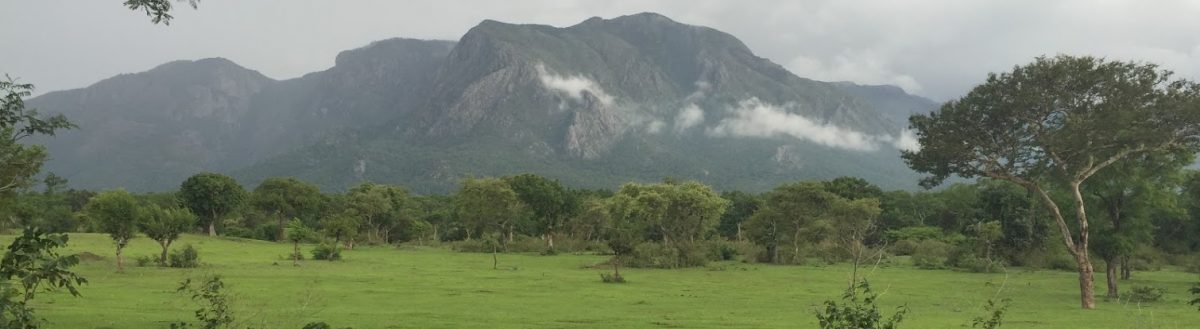
The route passes through two beautiful national forest reserve areas – Bandipur and Mudhumalai. The hills are usually green and welcoming at this time of year. Early summer in the Nilgiris is a joy – there are flowers blooming everywhere, the rivers and streams are flowing with healthy levels of water, and all of life seems like it should be: Full of beauty and abundance. 

I had quite forgotten the true splendor of a gulmohar tree in full bloom, but oh! What a joy to see these resplendent looking trees! 

You can spend all day gazing up at the branches – all the different ways in which the light dances and trickles through the very orange blossoms, all the different shapes the branches have spread themselves – no two trees the same, yet distinctive enough that they cannot be misunderstood for another tree.

The brother who is always in his element when he is driving anywhere other than city roads, shook his head as he saw me bouncing in my seat. He pulled over by a side road, and if you were to ask me the previous evening to imagine this road, I would not have been able to do it justice. I grew up in the Nilgiris, and have visited many times in the past two decades, but every time the hills surprise me (mostly good ways, but the increasing population and traffic snarls contribute to the bad ways) 

I tumbled out of the car, my heart bursting with song. Luckily it was just my heart that was singing, for who wants to frighten a bunch of elephants taking a calm dip in the Moyar River? 

The peacocks cooing in the distance provided a musical backdrop.

As we headed back to the winding road of 36 hairpin bends, all of the forest seemed to have risen. There were peacocks, sambar deer and spotted deer, iguana-like creatures, monkeys, langurs, and elephants. I cannot think of another experience where the soul feels as nourished or sated. 

By the time we had passed through the forests, we had been filled with the beautiful imagery of flora and fauna of the Nilgiri Hills. It is always so humbling to call this marvelous place home along with the thousands of creatures who live more unobtrusively in these parts.

The cheeky road signs only added to the allure of the morning forest scenes.

“Watch for deer crossing the road, remember the road is crossing their home!”

“Attention: Crocodiles in the River – do not swim. Survivors will be prosecuted.”

Development of Morality & Value Systems

Going back to a high school reunion after 3 decades is nothing short of illuminating. We had planned to meet regularly while leaving school. Then somehow, we all scattered into our various little lanes and holes, only to resurface like eager bunny rabbits after all these years. 

As far as social experiments go, this has to be one of the most interesting. 

Life seems to have been inventive, unique and predictable at the same time in all the ways it presented us with trials and tribulations. As we walked through the hallways of our school – it was curious to see how we fell back into familiar patterns of who we navigate towards. In 3 days time, it seems we fell back to familiar patterns and the intervening decades might not have happened at all. 

This fascinating behavior led to an interesting discussion on the subject and development of morality and values. At what point in time do we actually develop values, and our internal moral compasses?

I was shocked to find out that morality can start to form under the age of 1, and can easily be noticed between the ages of 2-5. Of course, morality and value systems continue to develop in noticeable leaps and bounds – till we are 10 years of age, then as teens shaped by societal and peer pressure, and as adults. But are they largely shaped by our early childhood? If there are any psychologists or anthropologists who have studied this, please let me know your thoughts. I would be interested to know.

Morality & Values

Childhood friends, when met after decades apart, can resurface memories good and bad. It was interesting to see how friendships played out over all these years. Sometimes, geographic proximity helped shape adult bonds. Sometimes, the bonds of friendships survived geographic distances. 

However, when gathered back in such a large group of classmates, it was interesting to note all the ways in which we fell back to familiar patterns in a matter of 3 days. The ones who were friends in school seemed to fall back into their familiar groups, even while a few new friendships were forged. 

A friend and I fell into a stimulating discussion on morality and values. It is obvious that we are drawn to people with values we admire. So, when looking back at our childhood selves, when was the inner moral compass formed? How did we know whether to be attracted to kindness or the lack of it? Were we drawn towards lightness of being and joy?

Could we be trained into ways of coping – I am sure we can. Pavlov’s experiment is proof of that. Our own behavioral patterns formed so early in childhood help shape how we navigate through life. Some of us are conflict avoiders, some conflict seekers, others do not seek conflict, but do not flinch when it comes to them. 

Is there an Inherent Moral Compass

I remember having a subject called Moral Science in primary and elementary school. It was a lovely class if only because the stories were always interesting, but how much did that help shape our inner compass, I wonder. It is true that reading about myths, and relatable struggles help us through our own. Hopefully, for most of us, our inner compass is strong in good times. It becomes tougher in times of stress and strife, and somehow life only makes these situations more and more complex.

Given that some of us had become friends when we were 5 years old, it was curious indeed. A quick google search reveals that moral based behaviors can be observed in children as early as 2 years old. So, is there such a thing as an inherent moral compass, and can we change ourselves enough and embrace growth through our learned experiences quite as much? Which brings us neatly to the nurture vs nature debate, and we could go on all day and all night.

https://www.mentalhealth.com/library/understanding-moral-development#:~:text=Between%20the%20ages%20of%202,when%20they%20break%20the%20rules.

There are values and morals shaped when we begin to question authority as teenagers, and then as adults when we learn a little bit more about all  the shades of grey, character motivations, and the like.

What are your thoughts? 

  • Do you think that our moral choices begin to be shaped in infancy, and if so, can they be changed over time (not just in small increments but in polar ways) 
  • When that young, do we consciously migrate towards value systems that appeal to us, or not?

https://www.betterhelp.com/advice/morality/morality-quotes-to-help-us-better-understand-ourselves/

🌎 Happy Earth Day 🌎

🌎 Earth Day 🌎

Earth Day is coming up, and I feel the familiar flutter of gratitude for our planetary home.

It is the time Spring is in full bloom in the countryside around us. When Earth’s bounty surrounds us, it is hard to not feel like we really must be foolish to ravage Mother Earth the way we do with our greed and pointless consumption.

It is the time I moon about outside, reveling in the lengthening days of spring, and watching the stars peep outside. A couple of days ago when the full moon rose a- beautiful golden orb in the sky, I gasped, and thought of the image taken from there that led to the creation of Earth Day as a concept.

https://en.wikipedia.org/wiki/Earthrise
The picture was taken by an astronaut, Bill Anders, aboard the Apollo 8 spacecraft in 1968.

Books Celebrating Our Life on Earth

Children’s books are one of the best resources for celebrating our marvelous planet. Authors like Oliver Jeffers seem to know the knack of grounding us while making us soar high above the Earth to see our home.

These two, in recent times, have had me humming. 

If you come to Earth – by Sophie Blackall

The premise of the book is not unheard of. It is narrated by a boy named Quinn who introduces a visiting alien to Planet Earth. The pictures are a delight, and the book is charming in itself. The narrator show the esteemed visitor all the places

  • Where we live – towns, cottages, villages, towns, cities, high-rise buildings.
  • What we do – the range of occupations was truly fascinating to see. (I also had a little doubting-deborah contest trying to see which of these jobs would be around in a decade and in a century) 
  • How we read, speak, and communicate – languages, written alphabet, morse code, braille

And so many more aspects of life. 

The best part of the book to me was the note by the author at the very end. I always seem to relish notes by the author, and this one went on to delight.

Excerpt from the Author’s Note:

Continue reading “🌎 Happy Earth Day 🌎”

The Role of Seaweed in Reducing Methane Emissions

The Odds of Our Survival

I was listening to a podcast by Yuval Noah Harari (How humans came to rule the world) and he was saying that if he were to draw odds of survival in the wild against a lion or a zebra, he would not rate himself too highly at being in the race at all as much, but as a species we do seem to have gone above and beyond. It is true. While human-beings can be extremely frustrating , what humanity is capable of achieving is truly astonishing. The eradication of so many life-threatening diseases such as small-pox, continuing medical advances including the recent covid vaccination, and so much more.

Humanity never does seem to have a dearth of problems to solve too. Maybe it was one of the things that came out of Pandora’s Box too. This ability for every solution we create, we seem to have more problems to solve. The industrial revolution led us to climate change, increased technology and reliance on over-stimulation with social media etc is leading to increasing mental health problems. But still we persevere on. When industrialization swept the globe, many feared the end of meaningful work, but the nature of work has morphed and morphed into something our ancestors can hardly recognize as work. 

Climate Change

Take for instance all the ways in which we set about solving the climate change problem (after having caused it in the first place – true true! ) 

While talking to college going young adults, one of the majors that keeps popping up is environmental science, ecological preservation, green engineering – all fascinating fields related to tackling the increased effects and problems of climate change.

That is the redeeming quality too of our sometimes frustrating species. 

This piece of news make me rejoice in the capabilities of human-beings, and the beauty of our planet earth all at once. 

Feeding seaweed to cattle reduces their methane emissions by upto 40%. Considering that 40% of methane emissions are from cattle fodder, this is a huge step in the right direction indeed.

https://www.anthropocenemagazine.org/2024/12/scientists-just-took-one-step-closer-to-a-climate-friendly-cow/?utm_source=substack&utm_medium=email

The oceans coming to our aid again! Seaweeds – truly if there are deities in the universe, the ocean would have to be ours. 

Methane production from live fodder constitutes 40% of greenhouse gases, and if feeding cows seaweeds reduces that by 40%, we may very well have a significant dent on the problem (16% reduction in methane will be a significant dent if all cows are able to get on a seaweed diet.) 

I want a beautiful word for the interconnected-ness of the universe

Seaweeds 🙂 The beauty of it is astonishing and the more I think of all the wonders that bound us together on this small planet, the more I am astounded by it. The interconnectedness of it all sometimes has me breathless in awe. How did we get to call this planet home? 

I ramble, but it may well be tipping point for the planet.  If the doomsayers are to be believed, the breakthrough comes as a critical moment.

The Ocean Deities Defy Pandora

It is as if the ocean deities are having a laugh and teasing Pandora with this win, and and with wins right now – we should take all the logical and sensible ones while we can.