Exploring Quantum Day: Celebrating a Century of Quantum Mechanics

World Quantum Day

March & April are months full of days set aside for this and that. As though humans sat up one brilliant day in spring and decided to take notice and give gratitude for the world.

March has Read-Across-America, Women’s Day, Pi Day

April has Poetry, Earth Day, Quantum Day, International Dance Day

https://nourishncherish.org/2025/04/15/celebrating-world-quantum-day-history-and-fun-facts/

Last night, I came across the two geeks in the house looking rather pleased with themselves and clamoring for me to come and watch something. I sighed and made my way to them. Chores were hanging all around me. The clothes, the dishes, the putting-things-away. Everything remained to be done. Now was not the time for frivolous you-tubing and insta-reeling or whatever it was the pair were up to.

But relentless is a word that could be used I suppose. 

So, there I was, half enjoying the look of these fellows watching me enjoy the video, and half-absorbing the video myself. 

The video showed a wave pattern that could explain the wave motion dynamics that seems to keep electrons in orbit. 

The Miraculous from the Material – Understanding the Wonders of Nature – By Alan Lightman

“Interesting! That’s just what I was reading about. Talk about coincidences.” I said pulling the book, The Miraculous from the Material – Understanding the Wonders of Nature – By Alan Lightman. In the essay on atoms, he had written about this very wave concept:

“Quantum physics has shown that all particles behave partly like water waves. They don’t occupy a single point in space, but instead have a spread.”

He explains in the essay about a group of scientists at Cornell University led by David A Muller, and how they set about getting a high resolution photo of atoms. 

They used a computer to simulate the scattered electron waves overlapping with one another, and used that to reconstruct a 3D picture. The process is called Electron Ptychography, I said.

Pic from the book: the essays are all accompanied by fantastic photographs

Curiouser-and-Curiouser

“Only you would be reading about this when we show you a video!” the son chuckled, and I have to tell you, I was quite pleased at the serendipity of it all too, and babbled on.

“Did you know, last year, 2025, was officially 100 years since Quantum Mechanics entered regular fields of study? Also, 4/14 was chosen as World Quantum Day because of Planck’s constant value?” ($4.14 * 10^{-15}  eV.s?) I said , and the fellow looked thrilled at this piece of information. “Curiouser-and-Curiouser, huh?”

“Yeah! I think this will be my favorite geek-day from now on, Amma. Suits me better than Pi-day no?” I laughed and agreed. 

Happy Quantum Day!

Earth From Artemis: Peaceful or Stormy?

Peaceful Earth

In the midst of all the war-mongering and depressing news, the images of our beautiful Earth sent from the Artemis missions has been such a joy. Yes – we have all seen photographs of Earth before -a fact that we seem to so easily take for granted. A hundred years ago, round Earth was a concept for people, not something with photographic evidence. The fact that the Earth is round may be something that whales and migratory birds know innately, but they have never seen the picture of their home beamed to them showing all the beautiful colors it is made up of. 

Reid Wiseman/NASA – This image or video was catalogued by Johnson Space Center of the United States National Aeronautics and Space Administration (NASA) under Photo ID: art002e000192.

In contrast, I saw a documentary with pictures of the storms on Saturns. The video zoomed into the rings that look so beautiful, and explained the violence that created them in the first place. Jupiter’s storms are bigger than our planet, forever raging, forever swirling. 

Why Saturn is The Scariest Planet (It’s Not Peaceful)

Then, we see Earth – its storms metaphorically Saturnian and Jupiterian thanks to political systems the world over, but peaceful looking otherwise. A reminder for what we need to persevere for, and preserve.

The Demons Within

I remember the son & I chatting about space travel in the Smithsonian Air & Space Museum. We had been there after the Holocaust Museum, and I was feeling philosophical: “How could the very species capable of such cruelty also be capable of discovering exoplanets, and work towards energy conservation initiatives such as solar and hydrogen powered solar systems?”

The son looked thoughtful. “You know – sometimes these things are not just in a species – it is in one person. There was this person called Werner von Braun. He was on the team that built the Saturn 5 spacecraft. He was a Nazi and he was not given punishment for his war crimes if he could do this – help NASA build the spacecraft. Did he feel bad? I don’t know.”

I was intrigued. So, I came home and looked him up. 

https://www.pbs.org/wgbh/americanexperience/features/chasing-moon-wernher-von-braun-and-nazis/

Of course, he tried to distance himself from the Nazis claiming to simply be a scientist who would have worked for anyone willing to let him work on machines and space probes. But it wasn’t so. He was an active member of the SS, and when he made references to the concentration camps, it was in vague terms – so he could feign if not ignorance, at least  only faint knowledge. But this too was wrong. 

His reputation did not exactly come out till after his death when another SS officer decided to pull him down too. 

The Moralities of our Lives

The moralities of our lives are shaped early but constantly being questioned. Most of us lead lives of modest impact, and our ability to act, or the failure thereof, usually has impact on few people. However, in dystopian times, both the desire to act and the restraint from acting can both have disastrous consequences, and are somehow more impactful. 

We are living in strange times- I hope it is not as dire as the ones that led to the World Wars, but the technology and warfare we have at our disposal now makes the impact multifold. 

What will the judgement be when history looks back at this period in American and World History? I can almost hear the professorial tones in the books: “This was the beautiful planet they had. They let it slide and be destroyed …”

This Beautiful Earth

All I can think of is, there is a reason the images of our beautiful Earth are being beamed back to us and are surfacing in our public consciousness at this point in time. It is a reminder that we have a duty to perform. Protect a planet from us. 

Reid Wiseman/NASA – This image or video was catalogued by Johnson Space Center of the United States National Aeronautics and Space Administration (NASA) under Photo ID: art002e000192.

So, what do we say ‘Yes’ to? What do we say ‘No’ to? Finally, how to make it matter? 

River Valley Civilizations -> Digital Valley Civilizations

The History of the United States

I just finished listening to a Great Courses Lecture Series on American History. Over 48 hours of listening content aside, it meant I have been wondering and trying to piece together the deeper veins running through our history and why they are still relevant today.

Why is a leader still able to rouse such high levels of divisiveness around certain issues? Like immigration? I truly wanted to understand it.

I am no  political analyst. I am no historian. But even I know that immigration is an old wound. A scar tissue. A festering topic that never really leaves the American psyche. 

River Valley Civilizations to Digital Valley Civilizations

The strain of every bigoted immigration movement seems rooted in ‘Go-back-to-where-you-came-from’. This is an interesting perspective. Because if we go far back enough, that would mean all of humanity would still be clustering around the river valleys and deltas practicing agriculture with the annual flooding cycles.

The Egyptians eyeing the invading Greek with suspicion.

But here is the thing. We moved past that. We are no longer river-valley civilizations. We took to the open oceans. We found every nook and corner of land available for us to live on. We are now living in or moving towards digital valley civilizations.

We do not cluster around the primary vocation of those times – growing food. We cluster around the primary vocation of these times. Which is to earn livelihoods in increasingly complex domains using increasingly complex technologies. The prosperous have always attracted people from outside – whether as conquering hordes, or as people who simply were welcomed and came in to be assimilated.

So what seems to be the antidote?

Given this, two aspects occur to me. 

  1. Enable prosperity so high and peace so high in other parts of the world too, so that the immigrants who are flocking to America do not flock to America alone. This is harder, yes, but also the best path forward. It is what happened with the rise of the computer industry in countries like India and China. #EnableProsperity #EnablePeace.
  2. Immigrant workers have usually (willingly or otherwise) answered a call from America itself when human-power was limited. The Golden Triangle all those centuries ago, meant that America sought slave-labor from Africa and forcibly bought them to the United States to help with their cash crops and raising their families. When the railways needed building, America sought to bring in Chinese workers to do the work. When technical jobs needed doing, America legislated to have tech workers come in.
    So, the solution seems to be to raise the skillsets of what we need in our next generation. Prioritize science education, encourage research. Not the opposite. #EnableScience #EnableResearch

America took its time getting here to be the melting pot of civilizations. It has always dealt with changing demographics, but has also proved to be be best model for assimilation in the world. So why this turbulence?

What do you think? What are some of the solutions you can think of?

Why the World Seems Smaller Today

“The Earth feels so small, doesn’t it?” I said it like it was a profound revelation.

The daughter looked up from fiddling on her phone. She briefly glanced out of the window to see where we were. I could almost see the thought process map itself out in her brain. If we are close enough to the destination, she could just nod and not respond. But if there was a while to go, responding did not seem a bad idea. I smiled.

“Calculating, my dear?” I said and gave her impish smile. She shot me a shrewd one back.

Then, with remarkable self control, she said, “What do you mean?”

So, I rambled on about how air travel has made the Earth smaller. “When I was young, airplanes were there, but I never thought I’d get on one, let alone travel to all these exotic places we’ve been to. “

“Mums-ie?” She pulled me back as I zoned out a bit. I laughed and said, “Yes – I mean, probably why reading felt like the best way to travel for all of us. The Voyages of Dr Doolittle, and Gerald’s Durrell’s Corfu series were made all the more entrancing thanks to the limited to slim chance of ever flying. But now – so many of us can go anywhere – with visa and money and flight tickets of course.”

“So .. Earth smaller?”

“Yep!”

“You do have a point. But isn’t that a good thing? Think about colonialism – it was enabled, and many horrendous things were done to the colonies because humans could very easily say – they are very different, and therefore not us. “

“You mean, conscience could be explained away?”

“Yeah…. But now, with education, google translate, and travel, you realize that a human being is a human being with all the range of emotions, flaws and strengths as anyone else, anywhere else. So, it is a better Earth too. Isn’t it?”

I nodded and thought about it. She was right of course, and I enjoyed her perspective.

While the world has become a smaller and more accessible place, it also means that our fortunes and misfortunes travel just as quickly. It was why Covid-19 shut the whole world down. A pandemic that spread so quickly, it stumped all of us: scientists, doctors, government officials, companies.

The way things are changing in the world is alarming too. Air spaces closed twice in the past month over two global events that affected millions – The Iran-Israel situation & The India-Pakistan situation.) When I thought of this, the Earth seemed like a formidable planet of distances indeed.

The daughter unaware of this inner squabbling raised her eyebrows when I said,“Hmm…even so, sometimes everything feels so far away. Must you go now? Can’t you fool around here with us for another few weeks?”

“Uh hm… Yes Mother. I am going tomorrow, but not that faraway – the Earth is small, remember?” , she said, and I laughed weakly.

Marine Magic

We had that hopeful gleam the moment one of us thought of it. Monterey Bay Aquarium. The one place we can all agree upon for a day trip in Summer. It has seaside charm, magical beings in a world so different from ours, and yet still ours, and somehow, manages to wrap you around its world every time.

There are a few new exhibits every time:  new inhabitants, new shows, new facts to learn, and the ethereal magic that stretches through time, space and water. 

The poetry is in the little moments.

When one gazes fondly as moon jellies bonk each other while drifting up and down, 

Or in watching the beautiful fractals in a porcupine jelly. 

The way the otters flips themselves in the water as they preen and play,

Or the way the flat ray cruises and slices through the waters.

The assured and sturdy movements of the giant turtles,

Even as hammerhead sharks and leopard sharks dart about.

The way the corals grow – miniscule and exquisite like little pieces of jewellery on the ocean’s floors,

Or the way the kelp forests sway like cathedrals catching and swirling the light from above. 

This is life.

This is magic.

Every time, there is the feeling of immense fullness of the soul, and of the visual. The summer is brimming with young explorers of the deep all wanting to touch and feel and gasp and squeal at the enchanted occupants of the oceans.

As always, we walked around trying to take in all the sensory inputs around – the quotations of the tides and the seas on the walls, the dynamics of the schools of fish, the eerie feeling of an unblinking fish eye.

One wall fascinated us all equally. The one that shows all the different careers one could have while studying and mapping the vast oceans of our beautiful Earth. The oceans may be the last frontiers left to explore, and the allure of the oceans is a yearning of the soul.

Lessons from Nature: Embracing Our Unique Struggles

Burdened Biologies

I took the son to the pediatrician for a wellness check: Something that was simply not there in our childhood. You only went to the doctor if you had a problem, not to be assured that you didn’t, or find that you may have one. I quite like the strides in preventive medical care. 

The pediatrician asked the son his age, and prepped for his talk on teenage anxieties and stresses. He told him about how sometimes / oftentimes, one feels that whatever they do, it is never enough. They are never good enough. Society is always expecting more from you. This is not good enough, that person is better, their clothes are better, their smile is better and on and on.

I listened with rapt attention. Did this man have superpowers? The ability to time-travel, or apparate across cultures, places, geographies? Did he overhear what was being said in social circles? Or was this another thing that simply unifies the human experience the world over? Our burdened biologies.

Something about the way the doctor said it made me pause and listen. Was he aware that he wasn’t just talking to the teenager in the room, but to the parent as well? 

“Before you say anything – it isn’t anything specific to your son, it is something we like to educate all our teenagers about. These are things that add to toxic stress, and that can create other problems as well you know.” he said, kindly.

Hearing the pediatrician talk about these things with the teenage son made me feel – well, I don’t know how exactly it made me feel, for it was one of those moments when I felt the opposites war in the old fishbowl. For one, I was happy that they were making children aware of this. But on the other hand, I was also disappointed that this was something that was ever acknowledged as a problem in our childhood. No doctors, teachers gave voice to this feeling all these years, decades even. 

Atelophobia and Allodoxaphobia

There is a word for this:

Atelophobia. The fear of never being good enough.

Many of us went through our childhood (and adulthood in many cases) completely oblivious to this. 

There is a strange comfort in knowing that one is never alone in one’s struggles, isn’t there?

Those of us who grew up in India, were also given liberal doses of Allodoxaphobia.

Allodoxaphobia: fear of what other people think of you. 

Nature Shows the Way

That evening, the son and I sat under one of our favorite trees – wizened, misshapen, and marvelous. We admired the tree: It’s every bulge was a statement, every misplaced twig a surge of hope, every lump in its trunk a bold curve, every branch a home for birds, every leaf a fine producer of food, every ray of sun that passes through it a filter to enhance its beauty.

Nature shows us with every tree and every flower that we are enough. As we are. No two trees are shaped the same way, but nobody questions their enormous usefulness to life. Every plant’s purpose is different, and somehow, together, they created the conditions for life to thrive on Earth.

Yet – in spite of all these simple lessons from nature, humanity cannot stop burdening our biologies with unnecessary stress. What can we say? 

The Magic King of the Coconut Kingdom

The Cognitive Model

“What were you two yapping about and giggling about the whole time?” the husband said, peering into a photograph at the upanayanam ceremony. 

He might have been short of breath after reciting and repeating endless mantras, but the children & I were short of breath trying to hold in our laughter several times – mainly because we had more time on our hands and little to do while on stage. 

“Well – which time? We got into trouble several times with everyone!” I giggled.

“Pick one!”

“Well Fine! I’ll tell you. This is when this fellow said, ‘If ever there was a time to run a cognitive interpretation model and turn the chanting into tonal bits, and then try to get  a translated gist, this is it.’ – That was so like him, that I couldn’t stop laughing. And then everybody shushed me!”

The husband gave the son an amused look, and then said, “Was that what he was saying? It sounded like a song!”

“Well – yes, he was singing. What were you singing?”I said, rounding on the son. I remember the whole hall giving me the pursed-lip and furrowed-brow routine, for his lip sync was clearly off from what his father was droning on the other side of me.

“Oh – that!” 

“Please don’t tell me you were singing Hamilton!” I said.

“Well – phew! Then I won’t get in trouble. No! I was not singing Hamilton, Amma!”

The Magic Coconut Kingdom

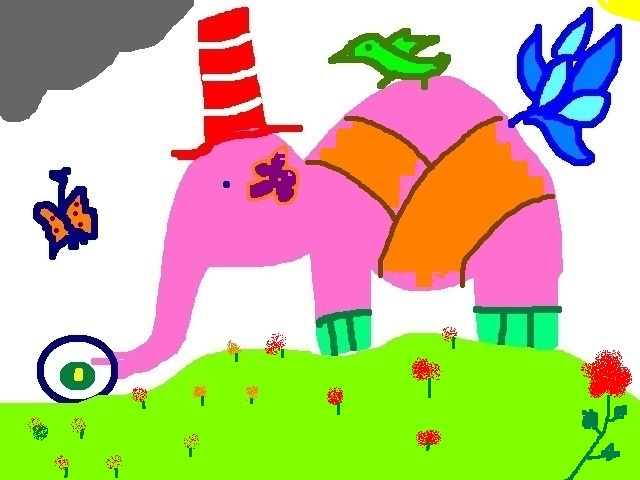
I raised my eyebrows and he said, in a somewhat more  abashed tone of voice, “First, I thought the coconut looked funny – like a wizard coconut, with a magic hat. The king of the coconut kingdom!” he puffed his chest out, and his ribs pushed out from under his shirt.

They had decorated that coconut very fancifully. I remember thinking to myself that the coconut looked marvelous. Even without all of this, the coconut is a swell thing, but with some stripes of ash across its face, a huge red dot on its handsome visage, and a silk turban like hat, dashing was the word. #Kalasam

“So, anyway, I imagined the coconut using its magic powers to fight the flames from the fire.. The coconut king, friends with the liquid ghee, used to fan the fire onwards and well – you know how it is, right amma?”

I nodded indeed. The coconut, in combination with the fumes, and the silks on one’s body is fertile ground for fanciful thinking. The chanting in the background can be very soothing for the imagination to pound on. 

Epiphanies of Spiritual Visions?

Religious rituals in Hinduism have a curious character – they rely heavily on the men to perform them, but need the women to hover and lend support at all times. The upanayanam ceremony is no different. The son had nothing to do but indulge in his childish dreams for the first hour or so. 

I wrote about it briefly here: Upanayanam: Insights into a traditional ceremony

Behind every beautiful moment are hundreds of moments leading up to it. The decorations, the coming together of everything in one swoop, the invites, availability of people and dates, and so much more. For one event to happen, even if the hero/heroine of the event is unaware, it means combined efforts from many people – mostly loved ones.

When finally it all comes together, there is much chatter, excitement, frazzled feelings, tension, drama, joy, laughter. Then, just when you wonder what to make of it all, out of the blue, a moment of rare insight, like peeking into a well, and catching the glimpse of a fish for an instant, appears before you.

If it was the coconut that gave that to the son, so be it. 

For me, it was the son’s quip on the cognitive model to apply to the tonal information. 

I hope the husband and daughter found that moment too. They must have judging by the looks of surprised happiness the pictures seem to get a glimpse of.

Development of Morality & Value Systems

Going back to a high school reunion after 3 decades is nothing short of illuminating. We had planned to meet regularly while leaving school. Then somehow, we all scattered into our various little lanes and holes, only to resurface like eager bunny rabbits after all these years. 

As far as social experiments go, this has to be one of the most interesting. 

Life seems to have been inventive, unique and predictable at the same time in all the ways it presented us with trials and tribulations. As we walked through the hallways of our school – it was curious to see how we fell back into familiar patterns of who we navigate towards. In 3 days time, it seems we fell back to familiar patterns and the intervening decades might not have happened at all. 

This fascinating behavior led to an interesting discussion on the subject and development of morality and values. At what point in time do we actually develop values, and our internal moral compasses?

I was shocked to find out that morality can start to form under the age of 1, and can easily be noticed between the ages of 2-5. Of course, morality and value systems continue to develop in noticeable leaps and bounds – till we are 10 years of age, then as teens shaped by societal and peer pressure, and as adults. But are they largely shaped by our early childhood? If there are any psychologists or anthropologists who have studied this, please let me know your thoughts. I would be interested to know.

Morality & Values

Childhood friends, when met after decades apart, can resurface memories good and bad. It was interesting to see how friendships played out over all these years. Sometimes, geographic proximity helped shape adult bonds. Sometimes, the bonds of friendships survived geographic distances. 

However, when gathered back in such a large group of classmates, it was interesting to note all the ways in which we fell back to familiar patterns in a matter of 3 days. The ones who were friends in school seemed to fall back into their familiar groups, even while a few new friendships were forged. 

A friend and I fell into a stimulating discussion on morality and values. It is obvious that we are drawn to people with values we admire. So, when looking back at our childhood selves, when was the inner moral compass formed? How did we know whether to be attracted to kindness or the lack of it? Were we drawn towards lightness of being and joy?

Could we be trained into ways of coping – I am sure we can. Pavlov’s experiment is proof of that. Our own behavioral patterns formed so early in childhood help shape how we navigate through life. Some of us are conflict avoiders, some conflict seekers, others do not seek conflict, but do not flinch when it comes to them. 

Is there an Inherent Moral Compass

I remember having a subject called Moral Science in primary and elementary school. It was a lovely class if only because the stories were always interesting, but how much did that help shape our inner compass, I wonder. It is true that reading about myths, and relatable struggles help us through our own. Hopefully, for most of us, our inner compass is strong in good times. It becomes tougher in times of stress and strife, and somehow life only makes these situations more and more complex.

Given that some of us had become friends when we were 5 years old, it was curious indeed. A quick google search reveals that moral based behaviors can be observed in children as early as 2 years old. So, is there such a thing as an inherent moral compass, and can we change ourselves enough and embrace growth through our learned experiences quite as much? Which brings us neatly to the nurture vs nature debate, and we could go on all day and all night.

https://www.mentalhealth.com/library/understanding-moral-development#:~:text=Between%20the%20ages%20of%202,when%20they%20break%20the%20rules.

There are values and morals shaped when we begin to question authority as teenagers, and then as adults when we learn a little bit more about all  the shades of grey, character motivations, and the like.

What are your thoughts? 

  • Do you think that our moral choices begin to be shaped in infancy, and if so, can they be changed over time (not just in small increments but in polar ways) 
  • When that young, do we consciously migrate towards value systems that appeal to us, or not?

https://www.betterhelp.com/advice/morality/morality-quotes-to-help-us-better-understand-ourselves/

🌎 Happy Earth Day 🌎

🌎 Earth Day 🌎

Earth Day is coming up, and I feel the familiar flutter of gratitude for our planetary home.

It is the time Spring is in full bloom in the countryside around us. When Earth’s bounty surrounds us, it is hard to not feel like we really must be foolish to ravage Mother Earth the way we do with our greed and pointless consumption.

It is the time I moon about outside, reveling in the lengthening days of spring, and watching the stars peep outside. A couple of days ago when the full moon rose a- beautiful golden orb in the sky, I gasped, and thought of the image taken from there that led to the creation of Earth Day as a concept.

https://en.wikipedia.org/wiki/Earthrise
The picture was taken by an astronaut, Bill Anders, aboard the Apollo 8 spacecraft in 1968.

Books Celebrating Our Life on Earth

Children’s books are one of the best resources for celebrating our marvelous planet. Authors like Oliver Jeffers seem to know the knack of grounding us while making us soar high above the Earth to see our home.

These two, in recent times, have had me humming. 

If you come to Earth – by Sophie Blackall

The premise of the book is not unheard of. It is narrated by a boy named Quinn who introduces a visiting alien to Planet Earth. The pictures are a delight, and the book is charming in itself. The narrator show the esteemed visitor all the places

  • Where we live – towns, cottages, villages, towns, cities, high-rise buildings.
  • What we do – the range of occupations was truly fascinating to see. (I also had a little doubting-deborah contest trying to see which of these jobs would be around in a decade and in a century) 
  • How we read, speak, and communicate – languages, written alphabet, morse code, braille

And so many more aspects of life. 

The best part of the book to me was the note by the author at the very end. I always seem to relish notes by the author, and this one went on to delight.

Excerpt from the Author’s Note:

Continue reading “🌎 Happy Earth Day 🌎”

Celebrating World Quantum Day: History and Fun Facts

World ⚛️ Quantum ⚛️ Day – April 14th

“Oh wow, ma! Today is Quantum Day!” said the son. Actually yelped the fellow, like the words were yanked out of him by the excitement coursing through him. For some weird reason, even as a young toddler, he loved the word, ‘Quantum’.

Maybe it was Iron Man or Ant-Man – that movie in which they use the word ‘Quantum’ every time they did not want to explain something. Or maybe it was the fact that we all liked watching The Big Bang Theory television series in the house so much when he was a child, or maybe the Cosmos shows by Carl Sagan, or the fact that I like reading about Physics

In any case, Quantum. He lights up when you mention Quantum-This or Quantum-That. 

I smiled at him, and said, “Wow! I didn’t know they had a day for that!”

2025 is also the International Year of Quantum as designated by the United Nations. 100 years since Quantum Mechanics became a part of higher education science and research. 

From Book: My First Book of Quantum Physics – by Sheddad Kaid-Salah Ferron & Eduard Altarriba

⚛️  My First Book of Quantum Physics ⚛️

This seemed to call for a little nostalgia. I opened a favorite book of ours – as a child, I remember getting this for him and he spent hours looking through the pictures. 

My First Book of Quantum Physics – by Sheddad Kaid-Salah Ferron & Eduard Altarriba

It really is a beautiful book. Sheddad Kaid-Salah Feroon & Eduard Altarriba do a fantastic job of the illustrations, explanations of difficult concepts and providing a general feel for the subjects.

It is why we were excited to visit the CERN supercollider in Switzerland.

Sheddad Kaid-Salah Feroon & Eduard Altarriba have a series of books covering topics such as: 

  • Quantum Physics
  • Relativity
  • Electromagnetism
  • Cosmos
  • Microbes
  • Evolution

Please check these books out if you get the chance. It is always fascinating. Especially, when in our everyday lives, even if we are professionals with science backgrounds, we hardly set aside the time for this type of shoshin (the wonder of the beginner’s mind)

In one time and place, when not observed, if we can find that joy of wonder, that would be Quantum, wouldn’t it?! Get it? Get it?!