Gratitude and Intentions: Welcoming the New Year

Welcoming the New Year

It has long been tradition to welcome the new year. The hope of new beginnings, the ability to reset, taking stock of what needs to be done in the year ahead, what did not work in the year past, is always precious.

This year, I sat in an airport reading the beautiful meditations of Maria Popova on the symbolisms of the new year, and some blessings to begin the year with.  She says in her beautiful essay on new beginnings: 

Some Blessings to Begin with – The Marginalian

The universe didn’t owe us mountains and music, that we didn’t have to be born, and yet here we are with our physics and our poems and our ever-breaking, ever-broadening hearts.”

  • Maria Popova

I found myself nodding along at her evocative language, and the beautiful blessings she envisions.

Many times in the past, I have had discussions with the children, and nieces, on why I pray or meditate , and what blessings I hope to gain from it. I love having this discussion with them, for they know I am not a particularly religious person: so why do I pray? It also allows me a glimpse into the kind of personalities they wish to become.

Why do I pray?

I tell them I pray so I am able to set my intentions for what I hope to do with this life I am blessed with. Like setting resolutions for who we are becoming.

🐘 When I pray for health, it means, I would be cognizant of what I eat, how I exercise, how to keep my mind and body stimulated and healthy.

🐘 When I pray for prosperity, it means, I will subconsciously work towards a better life – not just for me, but for those around me too –  for when we all have better lives, we all prosper. (granted ‘better’ in itself is a nebulous term, and usually at different epochs in our lives, they mean different things) 

🐘 When I pray for continued success, it means I will work towards having goals, and try to cultivate the motivation and discipline required to achieve them. 

🐘 When I pray for good relationships, it means I would subconsciously avoid conflicts over little things, and work towards harmonious relationships. 

When I pray for….you get the gist. 

Do the same things then hold for blessings too?

I wonder. 

For some blessings can only be recognized as such after the fact.

image

What are the blessings I am grateful for?

I am grateful for the blessing of life, the fragile conditions that allow us to thrive on this tiny blue planet, the people in our lives who are crucial to our happiness, the microbes and bacteria that all do their part in keeping us functioning, the interconnectedness of the universe that enables the web of rapture to continue, the curiosities of our natures that help us continually improve and problem solve, the conditions of peace-time, the opportunities, the ability to find joy in our lives, the abundance of flora and fauna on this marvelous planet, and so much more.

So what are the blessings you are grateful for, and will they translate into prayers or resolutions for you?

Elevating Resolutions for the New Year Inspired by Some of Humanity’s Greatest Minds – The Marginalian

Books – The Truest Brilliance of Humankind Captured

One of the most pleasurable tasks in December for me is to go back and wander over my reading lists for the past year. It is always a source of pleasure, and sets the intent and purpose for the year ahead at the same time.

Book Club:

This year, I joined a book club and that provided for many hours of companionship with an eye to discussing the books afterwards with your friends.

We managed to do a variety of genres in our book club too.

A broad array of topics can be discussed with this set of books, and the cups of tea, and the sparkling conversations were truly delightful. Feminism, colonialism, sexism, sense of purpose, and so much more.

Booklegger Books:

I volunteer from time to time in elementary school classrooms and the Bootlegger Volunteer program is one such where I get the opportunity to talk about and discuss books in classrooms.

  • Van Gogh Deception – By Deron Hicks 
  • Life in the Ocean – Oceanographer Sylvia Earle – By Claire Nivola (author of Wangari Maathai – Planter of 30 million trees in Kenya)
  • The man who dreamed of infinity – the life of genius Srinivasan ramanujan by Amy alznauer illustrated by Daniel miyares
  • The Firework Maker’s Daughter – by Philip Pullman
  • Firefly Hollow – by Allison McGhee
  • Tesla’s Attic – By Neal Shusterman & Eric Elfman

Guilty Pleasures:

It is the reason I pick up books and authors whose work feels like home every so often. There is familiarity in their worlds – a safe haven for those looking to be refreshed without too much effort. The worlds where humanity has all of the problems we do – only with an eye for humor, magic, and simplicity that we crave to build for ourselves in our real lives. Malgudi, Fairacre, Thrush Green, Hogwarts, Corfu, Blandings Castle, the idyllic worlds of Bertie Wooster and Jeeves, and many more. 

  • Miss Read
  • P G Wodehouse
  • J K Rowling and many fan-fiction authors who are frankly brilliant and so deserving. Many times, I’ve hoped I could know if they went on to write other books, for I knew I would read them.
  • R K Narayan
  • Gerald Durrell

Children’s Books:

I don’t know why people go in for self-help tomes when there are brilliant children’s books for all of us to enjoy and devour. Who was it who said, It takes a true genius to explain things simply? I agree with them.

Some of these authors and illustrators are truly unsung geniuses – I wish there was a way for all places of adult work such as financial hubs, hospitals, Houses of Parliament, civic offices, transportation hubs, technology companies, insurance companies, retailing outlets etc to have a good library with children’s books to dip and delve into for a quick refresher of spirits.

I used to work at a company with an exemplary work culture. (sadly the company is no longer there) The walls were adorned with beautiful artwork, we received books as gifts every now and then, authors came to visit, and we had library nooks – surrounded by excellent books in design, literature and philosophy. I have done some of my most rigorous work in these hallowed halls of the library.

If you had access to places like this, it is truly life-changing. Some noteworthy books:

  • The Shape of Ideas – By Grant Snyder
  • On Tyranny – By Timothy Snyder (in progress)
  • The Oboe Goes Boom – Boom – the band book on the kind of instruments and the brilliant way in which the names in each of the pages actually refers to a famous player of the instrument.
  • You Can Learn to be an Artist – this book was brilliant, but it made me want to cry. It made me want to rage against the world for creating AI and taking away that simple joy of art from humans – for those who say you can do the same with the screen and a prompt now, my response is, “Why can there not be any pursuits left to mankind that is not dependent on a screen?”
  • A Songbird Dreams of Singing – Poems about sleeping animals – by Kate Hosford – Illustrated by Jennifer M Potter
  • Astonishing Animals – Extraordinary Creatures and the Fantastic Worlds They Inhabit – Tim Flannery & Peter Schouten
  • Worldwide Monster Guide – By Linda Ashman, Illustration by David Small
  • Sometimes, I feel like an Oak – By Danielle Daniel & Jackie Traverse
  • My name is as long as a river – Suma Subramaniam
  • The fox and the star – Coralie Bickford Smith (brilliant artwork – sweet story – truly captures the loneliness of being – read again)

Understanding Ourselves

What makes us human? How do we know whether we are keeping healthy in our minds and bodies? These are topics that cannot be easily answered – and yet so many philosophers and writers attempt to do just that – understand our complexities.

Alternate Universes

“I do not miss childhood, but I miss the way I took pleasure in small things, even as greater things crumbled. I could not control the world I was in, could not walk  away from things or people or moments that hurt, but I found joy in the things that made me happy. The custard was sweet and creamy in my mouth” – Neil Gaiman in The Ocean at the End of the Lane

  • The Lefthand side of Darkness – By Ursula K Le Guin
  • Goddess of the River – Vaishnavi Patel
  • Our Missing Hearts – By Celeste Ng
  • The Ocean at the End of the Lane – By Neil Gaiman
  • Generosity – By Richard Powers
  • YellowFace – By R F Kuang ( about the publishing industry)

“If more of us valued food and cheer and song above hoarded gold, it would be a merrier world.” -J.R.R. Tolkien, The Hobbit

I would probably add books and nature to the list by Tolkien.

Embracing Simplicity in Dramatic Times

The Calm before the Storm

I stood for a few minutes under the cloudy skies of winter, looking out into the ponds, lakes and rivers near our home. It was after the first proper rainfall of the season – and I was trying to capture the still quiet in my being. The stormy clouds above were portending another storm coming, but for now, all was calm. The herons watched (their demeanor not as impassive as it usually might be perhaps, or perhaps that was my own anthropomorphism) as the clouds gathered strength.

I couldn’t help asking the universe to help us through stormy seasons with the same impassivity that these herons showed.  

img_3851

As the year wraps, I feel a sense of dread. Humanity’s craving for the dramatic is probably a defining characteristic of the species (although to be fair, I am not sure whether geese crave the drama too. They do seem to get all agitated, and excited for seemingly no reason when you observe them).

A Dramatic Shift?

Regardless of political leanings, I think we can all agree that the change in presidency is going to lean heavily towards the dramatic – we saw it all the last time around. News frenzies, whipped up emotions, and a lot of emotions that probably look good on reality shows, but not in our daily lives. 

“Sometimes I wish something dramatic would happen once in a while.”, said Rilla

“Don’t wish it. Dramatic things always have a bitterness for someone.” said Miss Oliver

– Rilla of Ingleside: L M Montgomery

America did not just make an election choice, it elected for chaos. We seem to have forgotten so many things:

  • We forgot that the hiring and firing, and the incessant news cycles, gave little room for anyone to actually do any of the work that mattered to them
  • We forgot that thinking in long-term strategies is what separates humans from any other species on the planet – save ants, and squirrels maybe. 
  • We forgot that one ridiculous policy after another is all it takes for the house of cards to start crumbling down.
  • We forgot that having a leader spout not just dangerous, but frankly lustful language is what their young daughters and sons are listening to. That will be their new norm – it hurt me more than anything that the voter turnaround was significant in the 20-30 young men demographic nationwide. That means, we have a value system that is ready to spout whatever it is they are going to hear in the next few years for all their wives and children.
  • We forgot the study where sociologists were baffled when crime went down suddenly in the late 80’s. It was because there was a whole generation of unwanted babies who were not born thanks to Roe V Wade in the 70’s. In the 80’s, these babies would have entered their troubled adolescence trying to make sense of a world where they were unwanted. 
  • We forgot how easy it was to make one feel as ‘other’ – divisive lines everywhere.
  • We forgot the lack of empathy and compassion that our daily messages bore.

The older I get the more I wish people interesting, dull, and predictable lives – it seems so much better than the dramatic. 

“After all,” Anne had said to Marilla once, “I believe the nicest and sweetest days are not those on which anything very splendid or wonderful or exciting happens but just those that bring simple little pleasures, following one another softly, like pearls slipping off a string.”

L.M. Montgomery, Anne of Avonlea

Bracing for the Storm

I opened my eyes and took in the heron by the lake. It had barely moved – because it knew that storm or no storm, it would have to wait and pass the moments in the day as best as it can. 

I looked up and saw the storm gathering force. I felt the first few droplets fall on my nose, and hurried back. It was time to brace for the storm.

The Oldest Trick in the Book

Flittable Flipperbits

It was one of those days when I felt speed and productivity were playing a cruel joke on me. It bonked me from chore to meeting to event to missed messages, and by the end of it all, I had a vague sense of all the things that didn’t feel quite right because the important had been muddled in with the unending stream of the banal.

In all the melee of rushing about the day, I realized that I had missed an important piece of communication, which, had I picked up at the right time might have saved me about two hours of turmoil, but there you are. 

Later that night, I felt foggy. Nebulous clouds, misty and mysterious as they seemed, I knew I needed to sit and stew for a bit for them to take shape. But then, of course I was too stimulated to do that – flittable flipperbits!  I marveled yet again at the highly energetic, always-on-top-of-things folks we meet in our daily lives. They sparkle with busyness, and seem to be happy about it too. I felt that strange longing to be like them just for a day perhaps! 

By the end of the day, the world seemed to laugh at me, and I had no choice but to join in. So, I did. 

The husband gave me a curious look and said, “Well – you just did get a day like that, and you seemed to have managed pretty well – you were busier than you wanted to be – a day filled with things to do, and jobs to get done, buzzing about. You seem to have missed out on some important things, but you took care of them. And you seem to be laughing at the end of it, so what’s wrong?”

I gave the poor fellow a look that I usually reserved for poorly cooked cabbages, said he wouldn’t understand, and swished off to bed. I felt like a cooked cabbage myself, how was that any good? 

Dreamy Strawberries

It was all made clear to me the next morning when I awoke from what seemed to be one of the strangest dreams that even I have had in a while. It involved marriage halls with catchy music, social situations that I fervently hope and pray I shall never find myself in, and feeling like I was run over by a truck that had strawberries in them with flowing taps of chocolate (but not dark chocolate – for some reason, this seemed like an important thing for the brain to remember the next day) 

So I decided to meditate today – the diagnosis was clear: this was an over-wrought brain. Nothing else. I shall meditate and all shall be well. By the time things pick up in a few hours, I shall have the world in control again, I said, and sat down to it. The oldest trick in the book really, but the most effective.

How did we muddle it all up?

I thought of all my wonderful yoga and meditation teachers, and invoked their calming voices. They floated up, and did their job, and I spent the next few minutes thinking about a conversation I had with my friend – who is a poetic soul brimming with love, and we had chuckled about it. How the world of remuneration is all inverted. The ones who really should be the best compensated are the ones who teach us to spend time with ourselves, taking what is available and trying to help us shape ourselves into something far more beautiful – our teachers, coaches, mentors, yoga, art and meditation teachers – and yet, the world has somehow played a cruel joke by compensating those who make the very algorithms and enable the lifestyles requiring these things to dance to the bank, and not the other way around.

I thought, I’d share this video though – for it says a lot of what I’d like to say – only a lot more cogently:

Rory Sutherland – Are We Now Too Impatient to Be Intelligent? | Nudgestock 2024

“Let’s let go of all stray thoughts – acknowledge them, but tell them, you’ll come to it.” said my meditation teacher’s voice in my brain – forgiving yet insistent, and I chuckled. How did she know where I had gone off to – even when I was only bringing her up as a figment of my imagination?

Meditation done, I felt like I could begin the dance of a new day with fresh energy, and rather looked forward to seeing how I would muddle it all up again. Somehow, that felt right.

Nature’s Ephemeral Splendor: Winter’s Whimsy

Winter is taunting in its loveliness.

The Thanksgiving break breezed in and breezed out – with a whirl of color, warmth of friends, and the whimsy of the winds. Cooking, baking, singing, dancing, playing, hiking, walking, admiring – all the wintry delights we’ve come to associate with the holiday season were there, and I wished for the same for every one of us. 

Our friends, who had visited us from Seattle, had us smiling as they exclaimed each day, “Oh – it is so beautiful to see the sun shining like this!” They purred like contented cats in the sun, and we went on many little and long walks to take in all of this.

img_3928

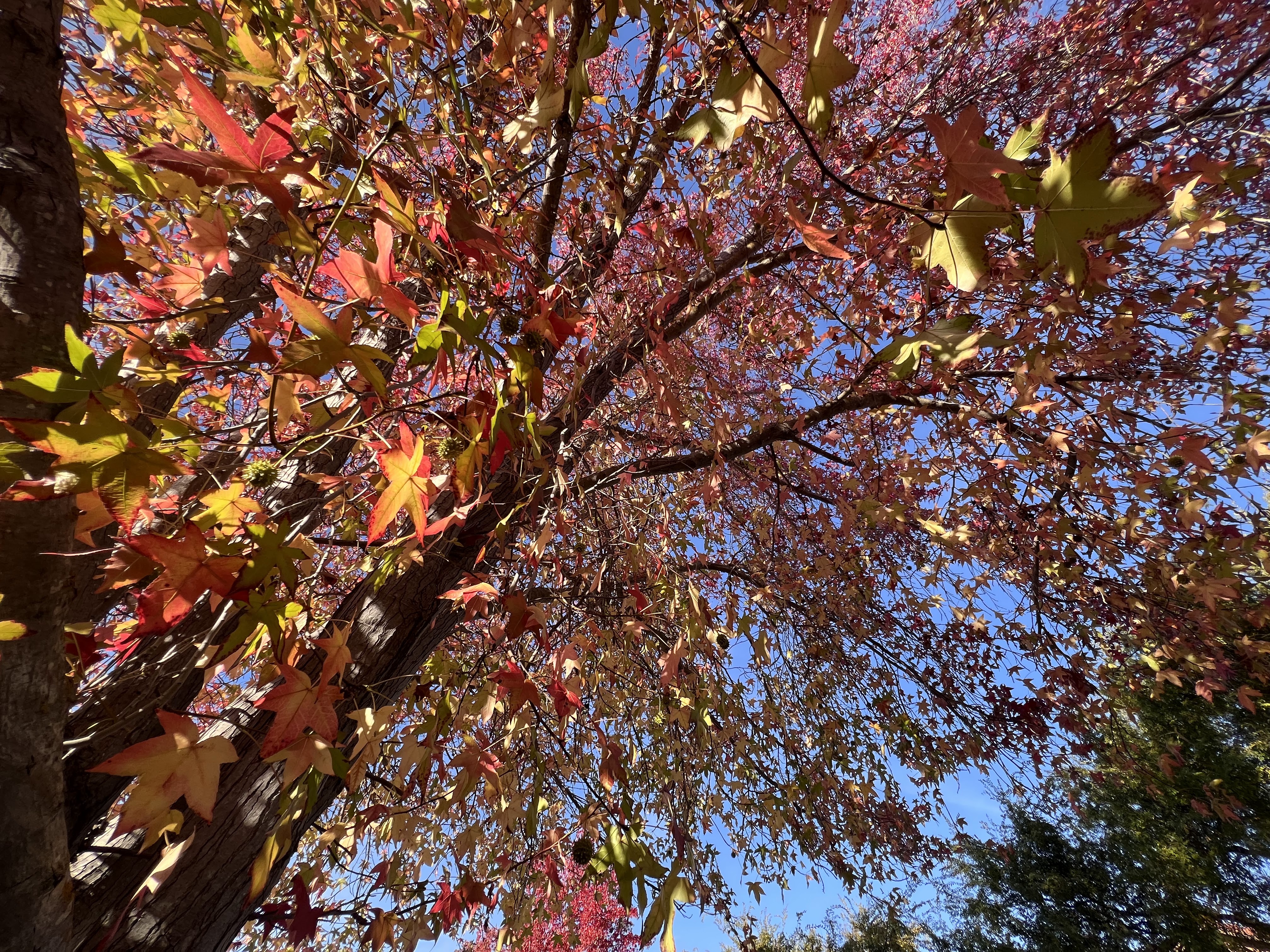
I glanced at the beautiful trees overhead and sighed a little today – December is already here and though the rains are keeping away, I knew the beauty of the fall leaves is already fast diminishing. Why does fall – one of the favorite seasons of the year have to be ephemeral?

img_3793

Well, all glorious periods are ephemeral aren’t they?

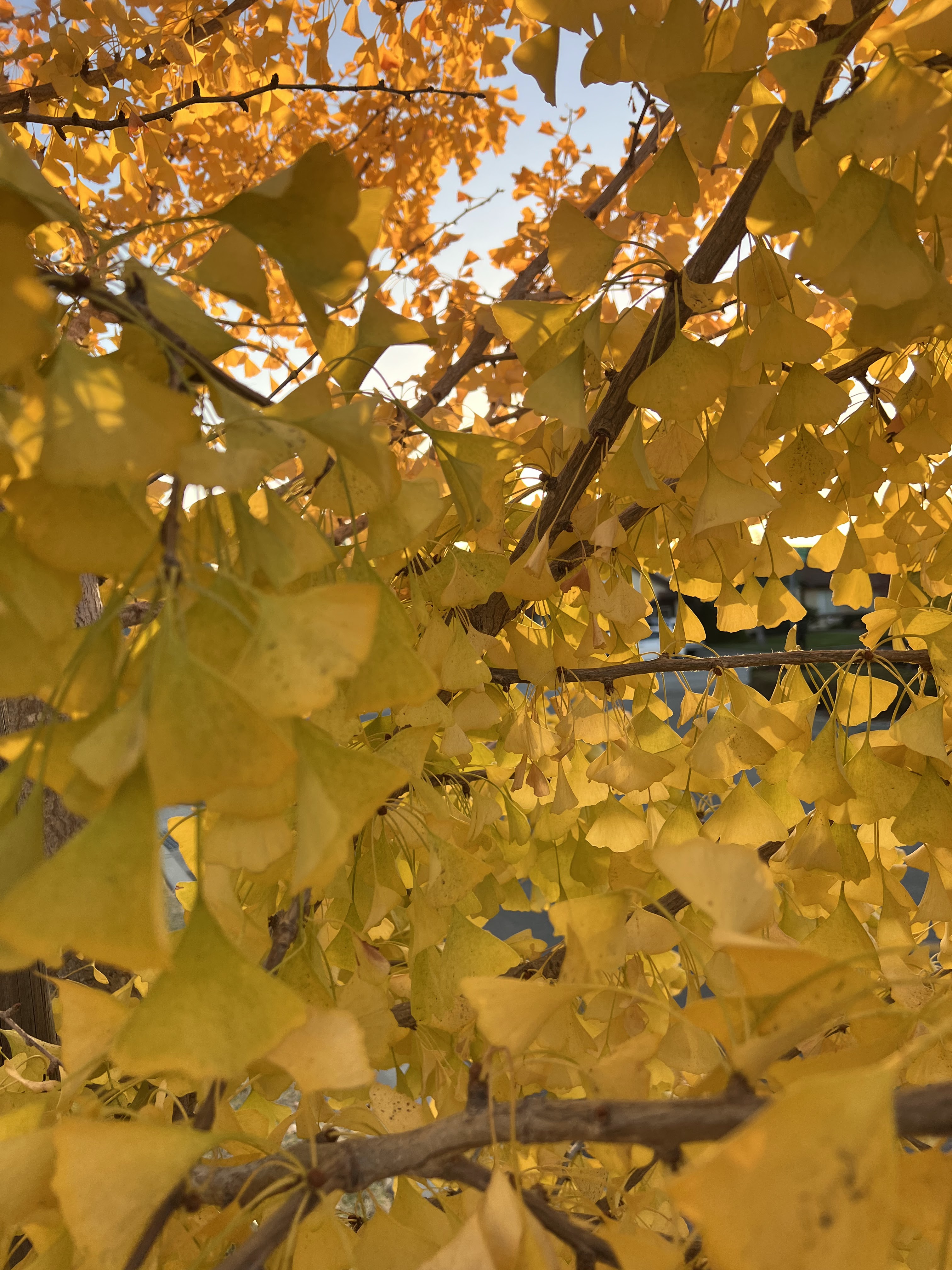
I suppose philosophers would say that beauty lies in the ephemeral nature of it, and I agree. I have never felt more content than when looking up into a tree that is gloriously sporting all colors in its beautiful foliage – green through maroon, or while gazing into the golden benevolence of a gingko tree. 

img_3794

However glorious days bring with it a problem – that of summoning up the determination required to stay indoors and doing work while all of the world outside beckons you to celebrate with it? How does one ignore the joyous swooping of a California blue jay?

Well, one doesn’t.

img_3901

Manathakkali Keerai

Poetic Greens

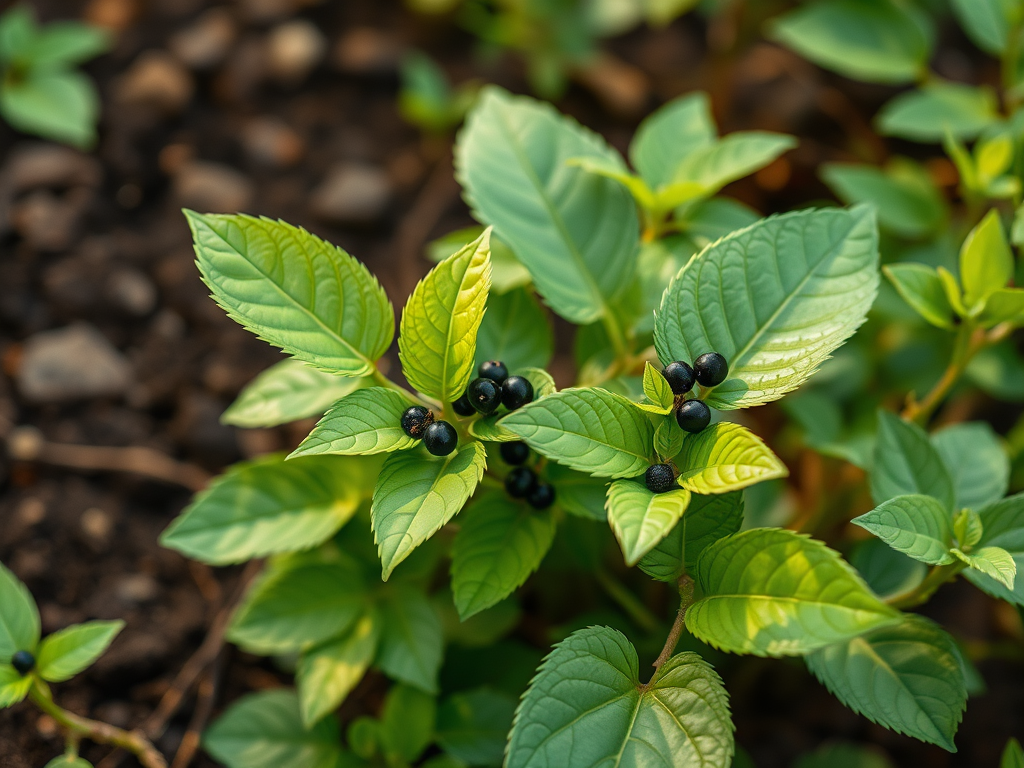
Manathakkali Keerai has a beautiful name in English – they are called Sun Berry or Wonder Berry or Black Night Shade greens.

What poetic names for such an unassuming plant?

It was a variety of greens that both my mother and father-in-law seemed to adore, and I was slightly taken aback to see the way they were thriving in our little vegetable patch to be honest. It was nice enough to pick the little black berries and pop them in, but the greens? I had no idea what to do with them. The mother donned her expression of helping the local village fool and said, “Make keerai out of it!” and so there we were – harvesting. 

Do we take the stems? 

Just the leaves? 

Cook the green berries or just the blackened ones?

Cut them or strangle them from their stems?

The husband, clearly out of his depth, had taken to advising me on harvesting techniques.

“Dude! We’re both doing this for the first time ever as far as I am aware. And you know even less about this than I seem to know, so why exactly are you giving me directions?” I said, frowning. 

“Yes! But do you really mean to say that women don’t like being told what to do?” he said. At least he looked abashed.

I laughed at that and we both went ahead with butchering the plants we were supposed to be harvesting.

Cooking the Greens

We managed to get a few leaves for the dish, and I made them. “So, what do you think? These are extremely healthy!” I said pointing to the cooked greens – I had to admit that they looked a little disappointing. 

The children both winced.

“Hmm…They look healthy.” 

“See? Already looking green!” I said and they both glared at me a little. “Remember those mouth ulcers you were telling me about? Well – these are supposed to be the very best cure for that.” I said. 

“Yes mother – thank you! But I had the mouth ulcers months ago!” the son said.

“Well – it takes a while to grow, doesn’t it?” I said weakly and encouraged them to eat up like good children. 

After they took their first mouthfuls, it was priceless. The daughter said, “Hmm…it’s a bit bitter, but does it have to be so stringy?!”

I gave an uneasy laugh. Were they stringy? They looked, well, green.

The son had a dubious look, and prodded it a bit, he put some in, and then gagged. Spectacularly. And went running to the sink. 

I could have tried the strict got-to-eat-up routine, but it is difficult when the dish looked that questionable. So, I tasted it too, and oh lord! What kelpie crying in the kitchen could eat that?! It was … well…as the children kindly put it, “Not exactly disgusting, but close!”

Maybe I hadn’t made it quite right. Oh well. 

The Shape of Ideas: Creativity Unveiled

“What is nice is knowing that there is a fount of ideas – and even if many ideas seem taken, there is always a variation in the workings of the human brain to make it different.” 

“It is astounding – the volume of work produced.”

The husband and I were taking an evening walk discussing creativity, imagination and the origin of ideas. He was talking about one of the musical maestros of Tamil cinema  and their seemingly eternal bouts of inspiration. 

“I wonder if they worry about it running out on them, though.” I said, looking contemplative as I admired nature’s work around me. No lack of inspiration there! Every tree a different shape, every plant a different marvel, every soul a different temperament. 

“I suppose they would have the same trepidation or initial hurdles when they set out to create, and then obviously their levels of genius means that the ideas that do come to them are a class apart, but I suppose they must have their moments of doubt. “ said the husband looking thoughtful.

I hmm-ed at this. I do feel that just like the intelligence factor, there is an ingenuity factor (You have what you have and then those who work with it, sit with their abilities, nourish it, develop it, and try to wrangle it into industry reap the benefits). 

When I saw this book, The Shape of Ideas – An illustrated exploration of creativity –  by Grant Snider , in the library, I picked it up. Partly because I expected it to be whimsical but also because the origin and nature of ideas has always intrigued me.

The Shape of Ideas: An Illustrated Exploration of Creativity: Snider, Grant: 9781419723179: Amazon.com

51kUrTbxX0L._SY522_

How many of us have wondered about the origin of ideas? It is marvelous when we are graced with an idea. Especially one bursting with imagination, but for all the good and bad ideas humanity has come up with, we don’t really know the origin or the process to generate more of them. It is almost as if the unknown is bordering on the magical.  

Sometimes, we need a chock full of ideas to pull out a good one. Sometimes, it is the joy of an do-nothing day that gives you an idea that makes you smile.

This book is a marvelous read – it is full of whimsical ideas, endearing comic work, and neatly classifies the different areas that the shape of ideas tread: Inspiration, Perspiration, Improvisation , Aspiration, Contemplation, Exploration, Daily Frustration,Imitation, Desperation and Pure Elation.

As an example of the kind of art you can expect to see in the book – here is one on Drawing the Moon 

img_3666

We have all heard or understood various versions of the inspiration vs perspiration speech from our teachers, mentors and parents. 

On some level, we understand that being smart or talented or intelligent means nothing unless you are also granted opportunity, have perseverance and cultivate intellectual development.

But how do each of us use all of this to create a rich inner life that translates to one of beauty and enriches the life of those around us? 

“The most regretful people on Earth are those who felt their own creative power restive and uprising, and gave to it neither time nor power.” – Mary Oliver

Read Also: What is Your Friend

Exploring Happiness: Is It in Our Genes?

In what was an intriguing chat with the son last evening, we poked around the ethics of genetic modification. Apparently, that had been an area of discussion in their classroom, and the son was keen – the novelty of a discussion with multiple viewpoints at that age is amazing. I smiled and listened to him talk offering a question here, a hum there, an insight elsewhere.

“What do you want to do with human-beings if we are smarter?” I asked him.

“We could fly.”

“Cool! But then what?”

I took a deep breath and said as casually as I could. “Everyone wants to be smarter, for things to come more easily to them. So we wouldn’t have to spend so much time figuring things out. But – the thing is, if everything came easily, we would not know what to do with all the time we have on our hands. What do they say? An empty mind is a devil’s workshop? I don’t know – I think it could lead to more mental health issues – what do you think?”

He pondered this for a while, and said it was an intriguing thought. 

Who Survives?

It reminded me of another chat the husband and I had a few months ago – on the larger theme of the future of humanity. With smarter, faster, stronger, what would happen to humans? The husband took a moment to gather his thoughts, and said, “Well – it will come back to good old basics then, wouldn’t it? Survival of the fittest. Those humans who can learn to be peaceful with themselves will ultimately win out – that is the strain that will survive.”

I was impressed – yes, no matter what we had, it ultimately came down to temperament, attitude, and the ability to be happy, didn’t it?

Generosity by Richard Powers: The Happiness Gene

Incidentally the book I am currently reading: Generosity by Richard Powers, talks about a variation of this: The Happiness Gene.

The story tries to figure out the reason for Thassa’s happiness. Thassadit Amswar is a refugee who has fled the Algiers region. Her brother is still under house arrest in a totalitarian regime, her parents are dead after years in which they were stuck in the midst of a civil war that raged around them, and any which way you look at it, she should be morose, sad – not chirpy, cheerful, and full of light.

The whole set up reminded me of one of Rumi’s sayings that have been making its way around the instagram world: something to the effect of:

When the world around you is dark, you could very well be the light.

Rumi

In any case, somehow Thassa’s ability to be happy attracts attention – first from local friends, then a policeman, a local news report diagnoses her as having ‘Hyperthymia’ – a condition of overwhelming happiness, and goes on to attract those who want to auction and buy her eggs, decode her DNA, figure out the happiness gene. She finds herself unmoored by how people feel bad because she is happy, and having to navigate the horrors of fame.

In Essence

  • Is there a genetic component to being happy?
  • If so, can that be picked and chosen for our offspring in the not-so-distant future?
  • What issues would that create for mankind? For just as sure as we are of creating solutions, so too can we be sure for creating problems for ourselves, isn’t it?

Stories Meant for the King

The husband was narrating life in his humble abode as a child to the children. “My ‘room’ ” he said, picking the quotes like the children do, “was under the steel cot. I was the Hero there. If my brother decided to join – then We Were Heroes There, or We Were Devils There. But it was all good fun.’ 

The children guffawed with laughter. This narrative was a familiar one, and I smiled. I remembered those steel cots. Appalling things they were – with steel rods painted dark green with apparently no aesthetic appeal. They were sturdy – I’d grant you that. They were the mainstay in almost every middle class home in India in the 80’s. As children, we had stress tested them by leaping on to them from cliffs on high cupboards, using them as rafts from oceans of swirling creatures below etc, and they did not break. Steel, you know? 

How we carve out space for ourselves when there isn’t any can be a problem. But children seem to find solutions to this problem in the most creative manners possible. 

The husband’s abode growing up was a small house – children did not have separate rooms. “Just the reality!” he shrugged when the children looked at him surprised. 

“Under the bed is a spacious place for a small boy, you know?” he said.

The daughter and son exchanged glances.

The daughter said, “We love having our room!”

“Decorated just the way we want too!” said the son.

“Our room under the bed was too – we had cobwebs in the east-facing courtyards, and well, lizards on the south-facing side. Beat that!” said the husband to his awed audience. 

Raja Kadhais : Stories meant for the King

The husband was reminiscing about his ‘room’ under the steel cot, “In there we listened to all sorts of ‘Tea’ (teenage slang for hot-off-the-stove spicy news). Things we should not be listening to. Things that we should, we ignored of course. Your grandmother was particularly adept at noticing when one ear would dance for the juicy tales. I tell you, she could see the ears squirm, and she would send us out to play  – “This isn’t for you – Raja Kadhai. (Meaning stories meant for the King )” she’d say. Well, she didn’t receive the memo about my kingdom under the bed I suppose! Anyway, those Raja Kadhais were the best!” said the husband grinning from ear to ear. 

I always like the way the daughter finds her space wherever we travel. In the cramped space of a car, she’d make her ‘room’. In a shared hotel room, she’d put up a sheet like a tent and make her ‘castle’. Her ‘room’ is not always a room, but she manages to make it so. Her space.

When AirPods Snuffed out Stories Meant for the King

That day, though, I was annoyed at her for not listening in. Here we were discussing things that would’ve been amazing for her to know, and she had plugged her ears in with noise-canceling headphones, pulled a blanket in the back-seat and gone on to tune us all out. Raja Kadhais, Tea – nothing. 

“Is this how life is going to be with these blasted devices? In one room, yet so far away?”I ranted to the husband later.  

“Leave her be! She is a teenager, and teenagers require space.” he said, taking his daughter’s side (as usual).

I rolled my eyes at this. “Isn’t receiving this kind of input critical while growing up. How many stories we’d heard in this manner? Not explicitly told to us, but enough to give us an idea of the world around us.” 

“They’ll find ways to get it – social media?”

“Instead of stories from adults in hushed tones?” 

Imagine my surprise then when I saw these Japanese headphones that promised to pop the bubble of silence : Popping the bubble of noise canceling headphones. These headphones are supposed to let background noise in, so we can still receive sensory information.

I admit, I rolled my eyes like a teenager at this. Really – all this progress. I wonder when we reach a point of diminishing returns and have to return to the tried and tested good old fashioned ways. You know? Go back to fiddling the knob on the rusty old radio with one channel to tune into.

https://www.newyorker.com/culture/infinite-scroll/popping-the-bubble-of-noise-cancelling-headphones

Which of the current technology trends do you think will bear the test of time? I thought noise-canceling headphones were the thing – but apparently not.

Books that Challenge Perception

A Stranger to Ourselves  – Unsettled Minds and the Stories that Make Us – by Rachel Aviv. 

I opened the door and welcomed the girls in. I had clutched in my hands the book , A Stranger to Ourselves  – Unsettled Minds and the Stories that Make Us – by Rachel Aviv. 

The daughter and her friend had completely different greetings – but the tones were likable enough, and I smiled broadly.

“So, whatchu reading now?”

“Ooh! That sounds heavy Aunty!” 

I told them. 

This book outlines the lives of six different people across different cultures and timelines, and their struggle with mental health.

Given all of our advances in health, mental health still has a long way to go. The unseen frontiers of the power of our minds, the terrifying depths to which it can plumb us, the giddying heights to which it can make us soar, the ruts from which no tow truck could extricate us – they are all true.

We chatted about this-and-that and other book recommendations.

“Oh Aunty! You should totally read Piranesi!” said the daughter’s friend, her eyes widening when she realized that I’d taken her suggestion and read a teenage angst novel. “You like mythology – well, I don’t want to give too much away – but you’ll like it.”

Piranesi – By Suzanna Clark

Piranesi is a book that I found vague and disconcerting in the beginning. Then, a book I wondered about long after I’d finished reading it. What did it mean exactly? The premise is that a person is stuck in an alternate reality – a large palace-like place with corridors lined with statues, flooding basements where the ocean tides creep in, and large, open spaces in which to ponder life about. But that is it. There are no other creatures – save a visiting raven or two – and one other person called the ‘Other’.

How to make sense of a reality like that?

I read these two books together a few months earlier. I had them jotted down somewhere to be written about. Given the flurry of posts and things to write about, I thought I would leave these out.

But I found that I couldn’t.

For these books both lodged themselves for different reasons. 

Piranesi makes one think of all the palaces we construct in our minds – which ones are escapable from? Which ones serve as prisons?

Stranger to Ourselves makes one wonder about what a narrow path normalcy is. 

“I think, therefore I am.”

– Rene Descartes

The next time I saw the girls together, I asked them what they thought of the books, and we went on to have an inspired discussion on how our thoughts shape our reality and so on.

Books References:

  • Piranesi – Suzanne Clark &
  • Strangers to ourselves – Unsettled Minds and the Stories that make us – Rachel Aviv