A Break from Breaking News : Please!

A few months ago, I was discussing the concept of a column with an editor. She suggested ‘It’s Not Breaking News’ – seeing as that was the theme of the writing on my blog. I felt inordinately proud at that. I loved that my blog was perceived as such.

It got me thinking of all the things I looked forward to reading in newspapers as a child. My brother went for the Sports and Automobiles column, I went for the Humor and Science sections in The Hindu. It is why I still love the Open Page section of The Hindu and was so proud to have been published in it as an adult. Who said dreams did not come true?

I remember smiling at the Slice of Life column written by V Gangadhar every week. After all these decades, I may have forgotten the content of his columns, but I remember how it made me feel. Combined with the illustrations by R K Laxman, this was week-end magic – reminding us of the joys of human living.

“I’ve learned that people will forget what you said, people will forget what you did, but people will never forget how you made them feel.”

― Maya Angelou

Jane Austen

I read in a book of essays on Jane Austen’s works, a few years ago, that one of the reasons for her enduring popularity is not because love and affairs of the heart were a novelty, or because there was no other material to choose from, but because of the gentle reassurance of the warmth of humanity.

Which makes sense. Since it wasn’t as though the world was peaceful or even that her own world was idyllic. I think her choice of theme was powerful – she chose the best themes of humanity to write about. After all, she lived in a time of slavery, spice wars, economic upheaval, and before antibiotics came on the scene – which meant there must have been plenty of personal tragedy in her circles as well.

A Jane Austen Education

Incidentally , it is her 250th birthday today, and I find myself thinking fondly of her humorous characters and wondering whether a snippet of Emma or Sense & Sensibility is on the cards for viewing – even if only for 20 minutes. Let me try my luck with the family. 

P G Wodehouse

The same can be said about P G Wodehouse’s choice of theme. Young love, satire about economic classes, and gentle mockery of perceived classes among human-beings. He lived through the horrific 1st and 2nd World wars. He was interned in 1942, and taken to Germany, where he lost over 60 pounds and in his own words, ‘looked like something  a carrion crow had bought in ‘ – a scarecrow. He lived through the most horrific times. He also experienced personal tragedy after losing his step-daughter Leonora – a daughter he adored. 

Do Not Hate in the Plural

Any of these writers could have taken any of the less savory topics – poverty, slavery, war, crime, misery, hunger, disease, imperialism – name your pick. But they chose to focus on the light, on the rewarding, on the beautiful nature of the human spirit that looks for happiness and peace.

When Humor Jumped in Neptune’s Pool

As Stephen Fry said on P G Wodehouse:

He taught me something about good nature. It is enough to be benign, to be gentle, to be funny, to be kind.

– Stephen Fry on P G Wodehouse

Please! No Breaking News!

In some ways, I think I try to do the same on my own modest scale with my writing. When the news is relentless. When I receive Breaking News multiple times a day, I think I yearn to give myself a small dose of what is important, and what is worth working towards – finer qualities of humanity and their spirit, nature, humor, friendship, camaraderie, family, books. 

I wish we could embrace more of these, so that we can find a way to get properly outraged when something horrific happens. As such, it is a brutalizing cycle of normalizing outrage. When the shooting at Brown University became news, how can the leader of a free country come out and say, “Things happen.” ?

Fallout after Trump’s critical statement about Rob Reiner

https://www.usatoday.com/story/news/politics/2025/12/15/donald-trump-brown-university-shooting/87772785007/

Why are we not more affected by it? 

A voice in my brain answers logically: Because the desensitization is deep.  Because you cannot be angry and upset all the time. Because action means nothing. Because this. Because that. Because.

What is the best medicine?

Then I stop to pause and reflect. The warm qualities of humanity is the best antidote. It is the only thing that matters in the end isn’t it?

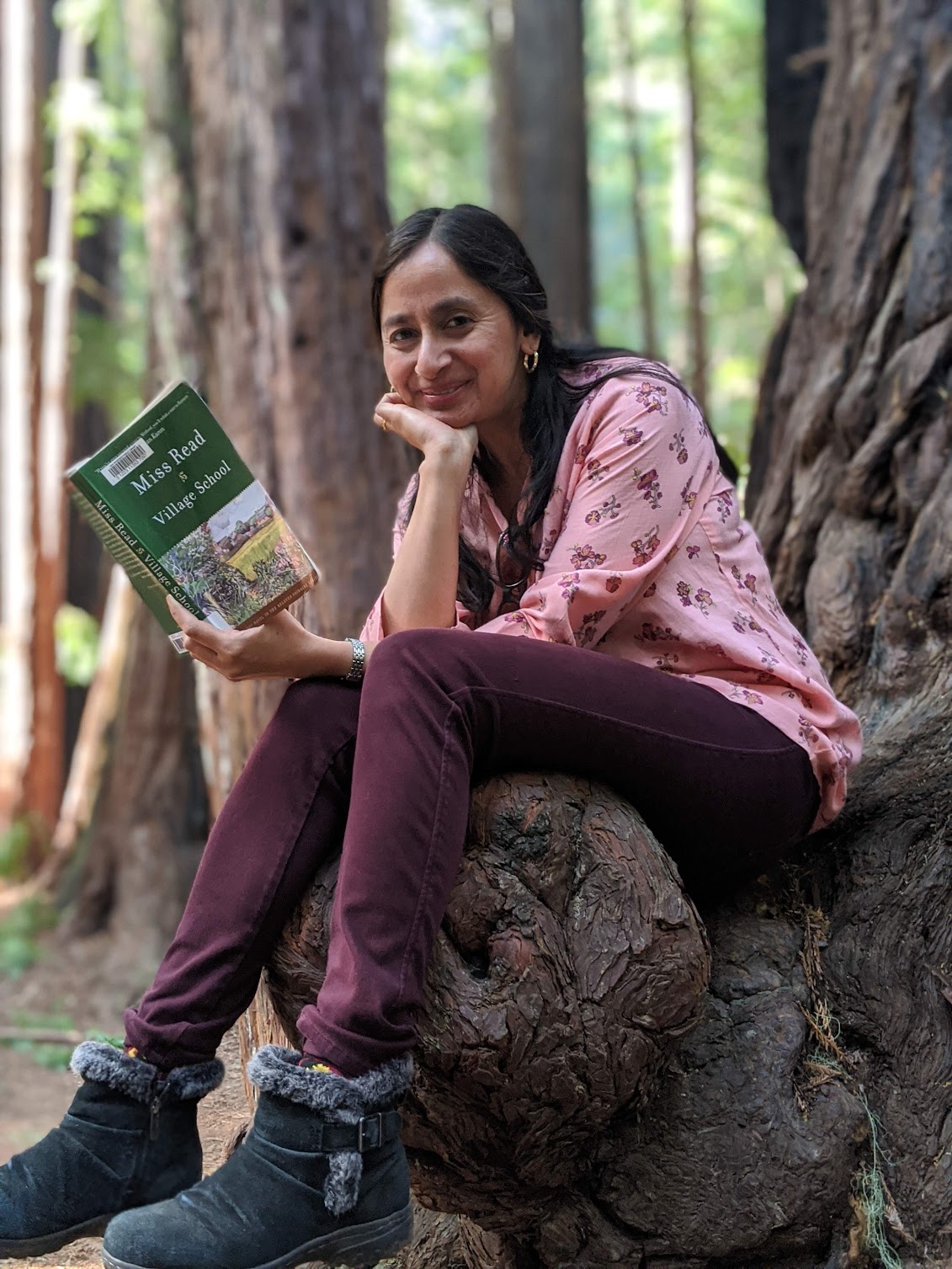
It is why 250 years later, we still relish a Jane Austen movie’s nth remake. It is why we still laugh at the absurdities of life as outlined by P G Wodehouse, Jerome K Jerome, Miss Read, R K Narayan, Gerald Durrell and stalwart authors who do the difficult job of finding light and keeping us hopeful through it all.

Breaking News is bleh. The lack of Breaking News is what we have to strive for.

“Be the reason someone smiles. Be the reason someone feels loved and believes in the goodness in people.”
― Roy T. Bennett, The Light in the Heart

So, my questions for you:

  • What is the source of reading that serves as the light in your life?
  • What is it that you look forward to rather than dread?

The Magic Faraway Tree

I loved the Inside Out 2 movie – the one in which the newly minted teenager has a new range of emotions available to her, and the old ones either have a tough time acknowledging them or making space for them. In the movie, Nostalgia comes knocking the door too, and the other emotions all tell her that she’s got time. Nostalgia is for when you get older. 

Well, guess I have gotten older. December has become the time for nostalgia.

While younger, the Decembers seemed far and few between. But as I grew older, I noticed a familiar lament in my December posts – “Where did the year go?” Did it really go all that quickly? Every year, I asked the same – only I seem to be asking it more frequently. It is all very confusing. 

A time for nostalgia:

When I was around knee high, it was the time I waited to clamber up the Magic Faraway tree in my imagination. Winter vacations meant lots of winds, and rains thanks to the North East Monsoons in Nilgiris. This was the perfect excuse to imagine going to visit strange worlds everyday over the clouds, and far away. I am really excited to see that the movie about The Magic Faraway Tree is finally coming in Mar 2026. 

The Magic Faraway Tree | Official Teaser Trailer | Claire Foy, Andrew Garfield

I would love to see what they do with a generation of adults who all were enthralled with the stories, and are now trying to convince their children to try it out. But those of us who grew up loving the stories of Moonface, Silky, Saucepan Man and the many lands above the tree can relate to the term ‘life-changing’ being used for this series. I confess that when I gaze up redwood trees and tall giants,  I wonder about the lands above the clouds.

A time for resolutions:

We live in an era of social media. I don’t think there is any escaping that. I don’t know where we go from here. But what we thought of as spheres of influence etc are fluid, and not at all easy to understand. 

So, I thought about grand resolutions like ‘No social media’ etc, but I wanted to do something that wasn’t the equivalent of sticking my head in the sand and hoping the storm would blow away. 

It occurred to me while watching the trailer for The Magic Faraway Tree movie. It is a bold move to try to capture the magic of what a generation of adults felt as children in movie-form. After all, it was our generation that was enthralled with Enid Blyton’s Magic Faraway Tree. I know I have had to convince my children to read the books, because they had Harry Potter growing up. 

How easy is it to judge or critique someone? So instead this year, I am going to try and appreciate all that goes into making bold moves. The adults who grew up loving The Magic Faraway Tree will be the bulk of the movie-goers. Many of these adults would have navigated life for a few decades now – some world weary waiting to see if the world still can bring that touch of magic to them, some cynical to the point of wondering whether there is anything good left in this world, some still hopeful and loving – nurturing the soft wondrous parts of life in them. The movie has to kindle magic in all of them. That is a bold move.

What are you nostalgic about and what are your resolutions for the New Year?

Exploring The Anthropocene: Life Between Cosmic Events

The Anthropocene by John Green

In the book, The Anthropocene by John Green, there is an essay in which he he mentions Mark Twain’s life being sandwiched between the two appearances of Halley’s Comet 76 years apart. He was born the year it was born, and he wrote famously the year before his death that he hoped to go out with it, and he did.

When I read that the first time, I felt sorry for him. He was born in 1835, and died the day after its perihelion in 1910. I hope he got to see the second occurrence. Imagine being alive for 2 appearances and not being able to see them both times. I suppose there is a poetic beauty to being born and dying between the spectacular cosmic events. But then, plenty of people did not see Halley’s comet even when it was visible in their lifetimes, so what’s the big deal?

Halley’s Comet

I remember being excited about Halley’s Comet in 1986. I was thrilled at being included in the viewing party – it was for my older sister’s classmates, and they had agreed to let her little sister tag along. 

I remember peering through the telescope. I cannot say with any conviction that I remember the comet itself. Some blurry recollection is all that remains. But the feeling of the evening remains. The excitement at being included in an elite group of senior students, the protective aura of having my older sister and her friends look out for me, and the cold temperatures of the night. That cup of Bournvita before bed was enough. 

Astrophilia

Nights and stars seem to have similar experiences ever since. The feeling more important than the viewing itself. For a star is a star. A celestial object – a celestial object – nothing more. Yet spectacular enough to be other-worldly. To tap into the possibilities of a vast universe. 

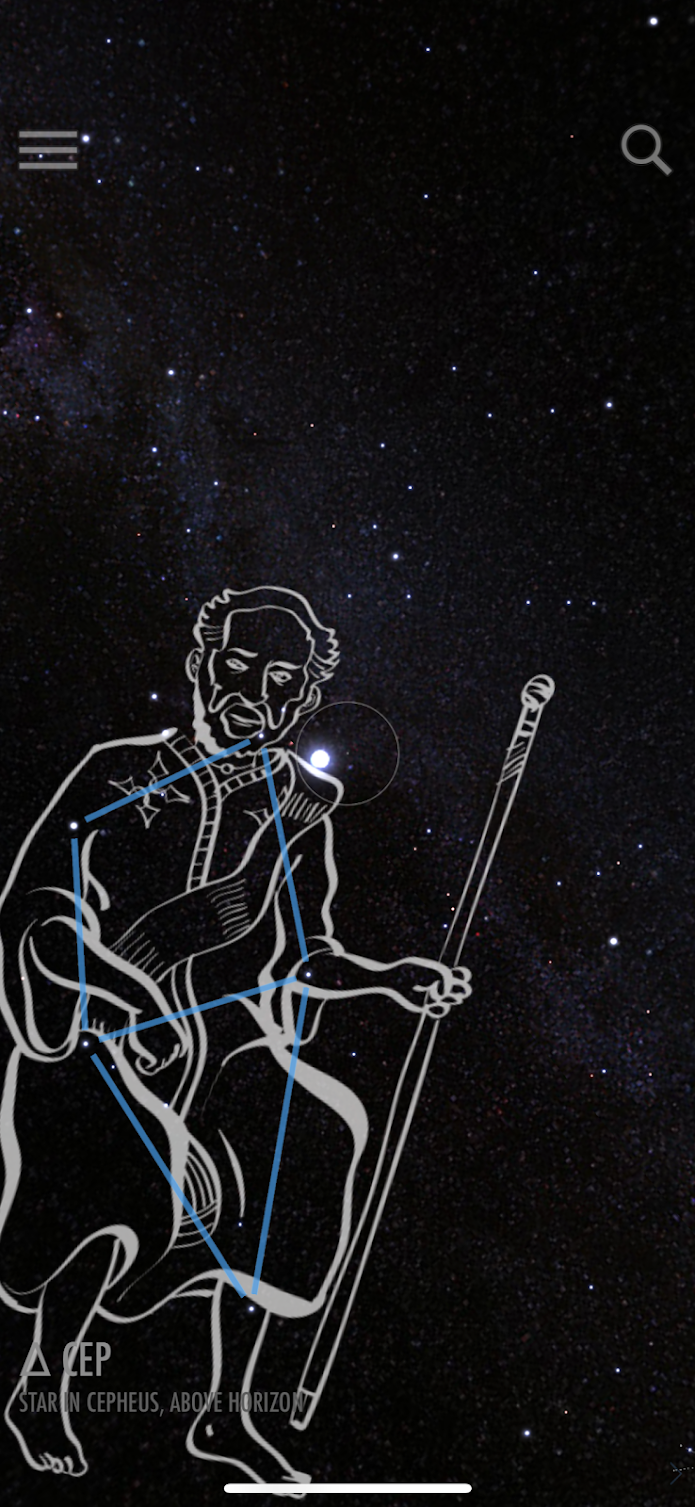
One night, we were out looking for a star system, Delta Cep in the Cepheus constellation, and I could not help wondering what their Delta-rise and Delta-set looked like on the planets in that star system. Did they have moons beaming the reflected lights of the stars to them? Were there any microscopic creatures willing its way into rudimentary life? Life seems to be so hardy and resilient and willing to thrive, it seems a little surprising that we have yet to discover traces of life elsewhere. 

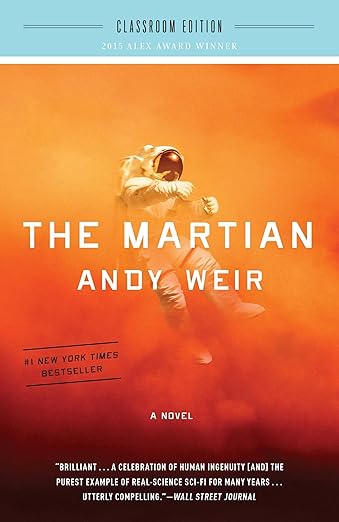
The Martian by Andy Weir

We were reading The Martian by Andy Weir for our book club, and thoughts of life elsewhere held all the more appeal. One only had to peer at the way weeds take root and crack through pavements, to see how resilient life can be. (It is another matter altogether that the plants I do try to grow on purpose seem to fizzle out on me, and routinely droop and call it a day, but that is a post for another day. ) 

In any case, it got us all thinking about all the things that enabled a planet full of sentient life, and how we sometimes forget to marvel at the sheer beauty of it. Wrapped up in our worries, anxieties, and livelihoods. 

The son is doing a science experiment in which they are experimenting to see how microbial colonies develop in  slice of bread under different conditions. In a fit of whimsy, he spoke and sang to the bread (gave it lectures on George Washington – his latest obsession, sang a Hamilton song) – to get the microbes on the slice, and has placed them in airtight containers in different conditions throughout the kitchen – in the dark, in perpetual light, and in freezing cold conditions. It will be interesting to see where life can thrive. 

That life had a starter kit is miracle enough, but the fact that it thrived enough to produce the kind of beings we find on this planet is astounding, and, yet, we forget it everyday. 

We are reminded periodically about the miracle of our lives through celestial objects, meteorites, the beauty of a full moon, the blooming of the kurinji flowers every 12 years, the cicadas coming to life every 17 years and so on. Still we forget. We forget to stop and marvel. We forget to stop and think.

The book of essays in The Anthropocene Reviewed by John Green is an interesting read. For it each is an essay about a different topic – short but through provoking. Covid-19, geese, Halley’s comet. Combined with the kind of scientific and regimented problem solving that a book like Martian makes you think about, the possibilities to keep oneself occupied is manifold – like the possibility of life itself.

The Role of Humanity in Modern Science Fiction

I read recently that most sci-fi writers these days are keeping away from the business of predicting technology – those tropes are too well-done, too quickly realized and therefore, the ability to think dizzyingly is being severely eroded. 

I don’t blame them.

Next Draft

Read this one edition of NextDraft from last week – it is news curated by Dave Pell and helps me enormously as I try to protect the mind from being inundated with ‘breaking news’ every few minutes.: 

  • There is news on how a father-son doctor duo proctored and flooded the research bases with their own “studies” on the link between autism and vaccines. Then, they wrote further articles linking back to their own garbage as reference. 

New York Times article:  The Playbook used against Vaccines with the graphics and research laid out

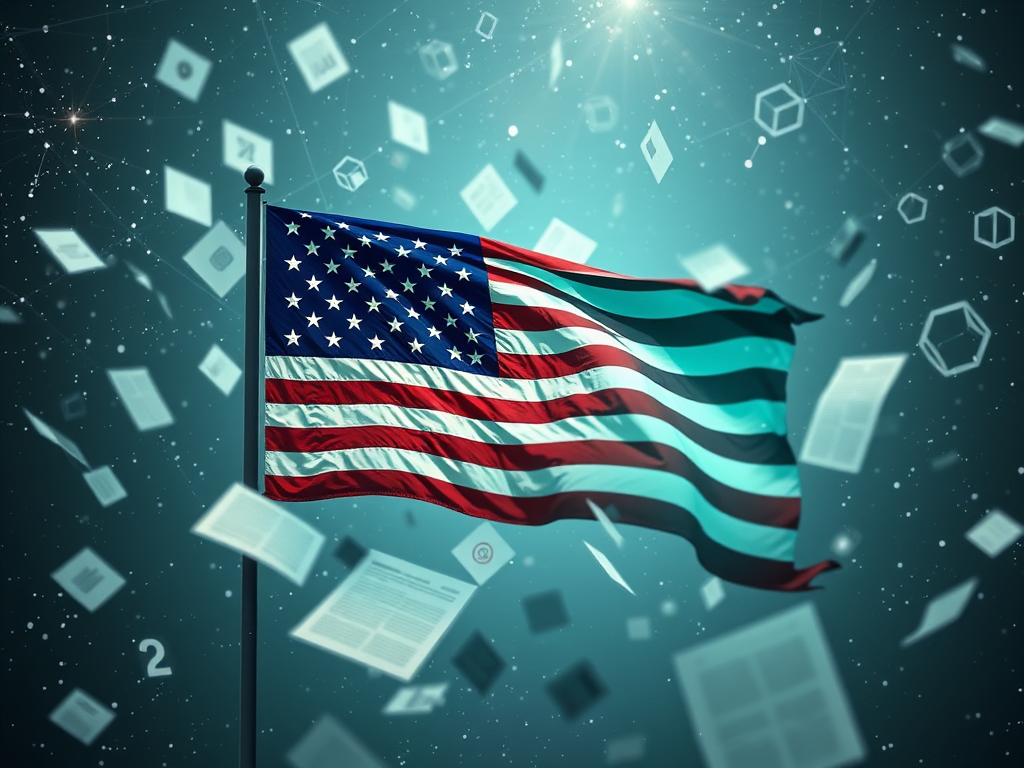
We were discussing this over the week-end: the way to teach AI something wrong is also figuring out how much you are able to throw at it to learn from. If you throw enough articles that the United States flag is blue and green. In time, it will question and start to say that there are two factions of flags: one blue-and-green and another red-and-blue.  Then, based on the sentiment analysis of the blue-and-green vs red-and-blue, it can start leaning towards green-and-blue, and in time, proclaim green-and-blue. 

  • Questioning vaccinations, Covid vaccinations, MMR – slowly allows you to question antibiotics in time. With RFK at the helm, I am at a loss to understand motivations here. They don’t seem to be economically motivated. I am not sure religion said anything against vaccines (against science maybe), so there may be a slight leaning there. Can you think of any other motivations?
  • When the bureau of labor statistics was fired, he wasn’t just ‘fired’ for attention grabs. He was fired because ‘the powers’ did not like the data. I have worked with ‘data-driven’ leaders who only took the data if it worked with their warped aims. It does not bode well, nor does it end well. Data driven means you must be willing to change your mind based on the data, not only use it when it is convenient for you.
  • Washington D C became unsafe and safe within days of getting what he wanted.
  • The Zelensky-Putin-Trump situation is still muddled and volatile. Nobody knows who is on whose side. Like a bizarre Hunger Games. 
  • AI interviews a dead person making it what The Atlantic calls a ‘Mass Delusion Event’. What do we trust anymore?
  • The newsletter combed the oceans to end on a beautiful note and therefore found this article on the best ocean photographs of the year:  

https://open.substack.com/pub/managingeditor/p/garbage-in-garbage-out-336?r=1vxbtt&utm_campaign=post&utm_medium=email

Ursula Le Guin’s Essay on Science Fiction & Fantasy

This feels like a dystopian space-time to be in. Is this a fantasy story gone awry? A looming war in which we need to work hard to find where our moralities will lead us? I don’t know. All I know is that I have given up trying to understand what trends will prevail. Individuals being good doesn’t mean the collective of humanity is good and vice-versa. If there was one beautiful good-vs-evil arc, I am sure it will be easier. Don’t be a death eater. Voldemort isn’t going to be accepting or loving. See?

But fantasy doesn’t only write about good-vs-evil. It also writes about normal people making mistakes, normal people making choices, the difference and growth required to bounce back from them both.

I have been looking for several years for this essay by Ursula Le Guin on Science Fiction and Fantasy as a genre. It is not available online. I borrowed a copy of The Left Hand Side of Darkness in the Hainish Chronicles from the library, and there, as an introduction by the author, was this gem of the essay. There are times I wish I had an eidetic memory, and this was one of those times. In the meanwhile, here is an essay penned by Ursula Le Guin on the importance of Fantasy in our reading fare.

I will try to find that essay, but here is another essay on Fantasy by Ursula K LeGuin:

https://www.ursulakleguin.com/some-assumptions-about-fantasy

I don’t write about battles or wars at all. It seems to me that what I write about — like most novelists — is people making mistakes and people — other people or the same people — trying to prevent or correct those mistakes, while inevitably making more mistakes.

Sci-Fi Writers:What Should They Do?

The realities around us have made bizarre scenarios almost commonplace. Given this, how can any one writer hope to come up with technology that is supposed to wow this? The real world already has many of our horrors playing out real-time.

Biological warfare – ✅

Technological warfare – ✅

Sociological warfare – ✅

Chemical warfare – ✅

Nuclear warfare – ☑️ 

What are the frontiers left to sci-fi writers? 

Therefore, they are going back to no-technology or minimum tech tropes in hopes of getting humans to think again. Without toys. Without tools. Just their brains, their sensory organs and themselves. I think I admire that.

Teaching us how to be human is one of the greatest skills we need to embrace, isn’t it?

Sonder and Saudade: Reflections on Travel and Books

Sonder

Traveling anywhere in the holiday season brings this fact to the fore. Airports, railway stations, bus stops, freeways – every place is packed with people, more people and more and more people. It was faintly unnerving at times to see this many people out in the world, all seemingly busy doing their many things. How many of them thought deeply, what did they do to occupy themselves, earn a living, attend to their loved ones? How many of them were loving and giving, and how many selfish and cruel?

That feeling of realizing the sentience of our fellow beings can be especially acute when traveling in crowded places. There is a beautiful word for it: sonder.

But wherever you were: one thing was apparent. Business was thriving. Clothing stores, eateries, perfumeries, jewelry stores – they dotted every city, country and airport. One time, I remember gazing out the window as we rode from one end to the diagonally opposite end of the city, and seeing shops after shops after shops. There was an apparent unending need for clothing and electronics, for consumption. One cannot help wondering about the ecological impact of all this, but there you are. ‘Better’ means the old has to go somewhere, and make place for the new. Maybe the next wave of innovations will be in making biodegradable plastics, electronics and clothing. After all, the waste that we are generating now can hardly be a scalable problem.

Lack of book stores in all the airports, cities

Even as I gazed out through the window taking in the local sights though, one thing sent a pang through me: the lack of bookstores anywhere was truly tragic. I felt their absence keenly. I had asked my siblings to fit in a visit to the bookstore. The only one in the vicinity was a little like a wild goose chase. The shop had moved they said, you cannot see the billboard from road they said. When finally, we found it, the reason was apparent. It was tucked away underground, as if hidden away from population. Only if you truly had the magical three things, could you find it: the will, the means, and the luck.

The bookstore had a passionate but regretful owner. “No space madam. Only so many books!” He said, gesturing apologetically to the small collection he had. To be fair, the little store had a fair amount of shelf space for children’s books (maybe those are the ones people are actually buying), but other fare was slim pickings. They were a few translated classics (which was a new section I admit) – it was heartening to see A Hundred Years of Solitude translated into Tamil. We picked up some books including a Tamil version of 1984 to donate to our local library in the USA.

The Hidden Bookshops of Timbuktu

But it all felt like the hidden bookshops of Timbuktu.

https://en.wikipedia.org/wiki/Timbuktu_Manuscripts

How many malls, streets covered with stores, and yet for intellectual stimulation, one had to either go scrounging or online? It was the same in many airports too. Perfumes, alcohol, watches, jewelry, clothing, chocolates, coffee, burgers: you could find these everywhere you turned, but good old fashioned books were tucked away in a corner (if at all), and hard to find.

What would it take for every coffee store, every clothing store, every jewelry store to have a reading nook that people could browse and buy books if they wanted? Wouldn’t that be marvelous? A tiny art nook that one could spend time creating their own art and craft while others shopped? I know reluctant shoppers would gladly accompany their friends and family if they could be tempted with the right incentives.

Was that utopian thinking?

Image: The beautiful hotel in which we stayed in Zurich that had a large marvelous library in its lobby. My heart sang, my spirits danced, and my soul settled, here in the presence of greatness!

Saudade

Our own town in US lost its bookstores to the great Amazonian sweep a decade ago. But luckily stores like Target or Costco still have a small pecking section for those really wanting to buy books or see them before picking them up.

Oh books! When did you go from being ubiquitous to precious to rare?

Could this be referred to as Saudade? That feeling or yearning for lost experiences?

On Tyranny: Power and Compliance

On Tyranny

This book is a required reading for what’s coming.

on_tyranny

The book restricts itself to Twenty Lessons from the Twentieth Century, which is even better. For power hungry dictators have been there throughout human history, and the book may well turn out to be a treatise of its own, if not time-capped. Recent events are usefully analyzed from a technological and sociological view. After all, many of the fascists of the past century found themselves propped up through a democratic process, even if they refused to give up power democratically later on. 

One of the first topics in the book, On Tyranny – By Timothy Snyder Illustrated by Nora Krug caught my attention.

It talks about compliance without being asked to. 

“Do not obey in advance”

“A citizen who adapts in this way  is teaching power what it can do.”

  • On Tyranny – By Timothy Snyder

I found myself nodding along several times during the examples given from the Hitler regime, or sociological experiments conducted since, and was quite shocked to see it all play out again in recent times. 

For instance, the past week itself gave us examples of ‘Do not obey in advance’. It was in the flurry of news items about Meta – the mega social network bending over and showing what it is capable of doing for Donald Trump’s regime. The company removed the fact checking team, and essentially stopped DEI efforts.

Quote from article on removing the fact-checking intiative:

“Everyone is entitled to his own opinion, but not his own facts,” the late New York Sen. Daniel Patrick Moynihan memorably wrote four decades ago.

As far as DEI efforts go, to get to a point where a DEI team was necessary took many decades of work, mindset changes and progressive ideas. To remove it all in one stroke sets us back by at least two decades, does it not?

Now slowly think of all the programs and places in which progress has been painstakingly achieved through education, forward thinking initiatives etc, and the mind boggles on what lies ahead of us.

In the past few weeks, there were several discussions in which we wondered:

  • How do we know when a leader is likely to become a fascist ruler?
  • How do we know whether our systems designed to survive democracy will do so?
  • Which of the very institutions that help towards justice will be disbanded or at least thwarted in their efforts to do so?
  • And many more. 

The questions will answer themselves soon, shall they not?

Preparing for Tsunami Warnings: Lessons Learned

 Emergency Warnings – Tsunami 

A week ago, we were all a-twitter. You see? We received a tsunami warning. There had been a 7.0 earthquake in Northern California – about 3 hours north of where we live.

We technically live not near the coast but we are quite close to the bay in the Bay Area.

This was the first tsunami warning we had received. So, while the tsunami warning made sense, we also had no idea on what to do with it. So, we did the only thing that humans in modern times do: Took to the phone and tried figuring out what others thought.

What is a yellow warning? We live a few miles from the shores of the bay – could that mean a sudden inundation?

Responding to Warnings

There are times when mass communications (by that I don’t mean communicating to the masses, I mean masses of communication) make sense, but this was not one of those occasions. Everyone said different things, people worried. Staying away from the bay seemed like a good option, but apart from that, no one had any idea on what to do. Should we head to the hills like we’d read long back somewhere?

So, we all did a lot of hand-wringing and sent more messages. Ultimately, the tsunami warning was revoked, but not before letting us know exactly how unprepared we were in case of a real emergency.

When that alert had come it was up to us to determine the next course of action. For one thing, we were a couple miles inland, so what was required of us? That’s when I realized the old fears I had for our little family when we both worked on the other side of the bay. I had wondered what might happen in case of an earthquake that stranded us all on the other side of the Bay. But a Tsunami could just as well have done that. 

The tsunami warning was lifted, and in a few hours, people went about their business as usual. Which is to say traffic snarls were everywhere, week-end parties and events did not bother to acknowledge that which could have been life altering.

It is a testament to the human temperament that we can so flippantly treat that which could have been a disaster with a wave of the hand. 

🦌 Emergency Drills -Earthquake, Fire 

I volunteer in elementary schools from time- to-time. The experience is a wholly enriching one as I get to work with children – which is refreshing. They are inventive, imaginative, kind and un-jaded in their outlook towards life.

I got to experience an earthquake and fire drill with them one day, and I cannot tell you how impressed I was by their skill and competence. Even when scrambling under desks – they looked out for each other as much as possible. When they filed out into the fields nearby, they kept to their classrooms and straight lines, and I was more than impressed by them on more than one occasion that day. 

I had seen firsthand how incompetent adults could be, when the tsunami warning came, and it was refreshing to see children knowing how to handle fire and earthquake warnings.

I suppose natural disasters are called that for a reason. They are erratic, chaotic, and tend to surprise humanity every time even with emergency warning systems, safety drills and the like. The school systems managed to highlight these things and taught me a thing or two: keep calm and fall back upon training.

Weather Warnings

I peered out into the window wishing and hoping, and skipping, and sighing for the past week for one of the scariest storms of California to materialize. Really! The media when bored can really get going. The storm may be wreaking havoc in the mountains up in the mountains of Northern California, but here in the Bay Area, there was no need to send people scuttling in with flash flood warnings, gale-like wind warnings, or any warnings at all for that matter. 

It turned out to be a beautiful set of days – a bit wind-blown, but not too cold. I set out on walks with gusto hoping to brave the gusts of winds. There were no gusts or gales. Just winds. All perfectly normal.

img_3851

Atmospheric rivers indeed – I watched the sad trickle of water in the stream that masqueraded as a river next to our home, and sighed a bit. 

Even as I write this piece, I understand the true luxury of walking-weather in late November. It was amazing to see how the birds took flight and staggered a little as they got used to the thrusts of the wind. I must say watching pelicans change flight in windy weather is a marvel. Geese – so perfectly blase and arrogant in their daily demeanors, looked a little comical as they squawked to each other and determined direction for their little flocks. 

One day, I took refuge in a copse of trees and listened to the winds howling just around them. Trees provide such marvelous wind barriers, and I felt a strange sense of being protected in the little clearing amidst them. 

I took my cup of coffee out at mid-day, and found the first few fat droplets of water descend. They sprinkled about a bit, and then decided that it wasn’t worth the effort. 

It was just another November Day – with a promise of rains, winds : heavy and gusty.

P.S: The rains have just started: I sat cradling my cup of tea: hesitant at first and then a little more insistent. Time to start dancing in the rain!

Exploring Deepavali Through The Firework Maker’s Daughter

I glanced around me – it was Deepavali, and all of us children, parents, and grandparents at the  party, looked delighted. Who wouldn’t be? Many of us were clutching sparklers, and watching the tiny stars produced by them in awe. The beautiful fountain pot spouted its joy towards the world a few feet away, and the oohs-and-aaahs were enough to melt hearts. Deepavali fireworks, especially in the US, are not exactly spectacular, but it is joyful all the same. 

img_3753

Watching fireworks has always been magical. The little sparks ignite something else altogether in our spirits.  Watching everyone around me, I could well imagine the children of ancient China watching in wonder as the first gunpowder produced magical effects. Or the hobbits as they all watched Gandalf’s spectacular fireworks in Hobbiton. Every time we go to DisneyLand, waiting for the fireworks in the cold, with thousands of people, it is magical. 

I was so glad to have an equally delightful book  to read that week-end, The Firework Maker’s Daughter – By Philip Pullman.

The Firework Maker’s Daughter – By Philip Pullman

A delightful tale of adventure, replete with a plucky heroine (Lila), a hero (Chulak) with gumption, and a talking elephant (Hamlet, who is in love with the elephant at the zoo, named Frangipani). 

In the Firework Maker’s Daughter, the firework maker, Lalchand’s daughter, Lila, wants more than anything to become a fireworks maker. At a young age, Lila invented Tumbling Demons & Shimmering Coins.

“My father won’t tell me the final secret of fireworks-making, “ said Lila. “I’ve learned all there is to know about flyaway powder and thunder grains, and scorpion oil and spark repellant, and glimmer juice and salts-of-shadow, but there’s something else I need to know, and he won’t tell me.” 

firework_makers_daughter

But of course, the poor girl is not allowed to become a firework maker, for her father intends to get her married off. So, with the help of the white, talking elephant, Hamlet and his keeper, Chulak, she takes off to find the secrets of firework making all the same.

It is a whimsical book, and the descriptions of the fireworks in the end makes for a marvelous read.

If only the joys of learning to do these things (like making fireworks), were still available to us, instead of being locked behind factory doors, how wonderful it would be.  As I remembered all the different types of fireworks – the ones that burst into a thousand patterns in the sky, the ones that take their time like a rocket lift-off, the spinning chakras, the little pops of bursting noises, the ‘Lakshmi bombs’ ( the loud bombs), and the serial-wallahs,(the strings of explosive that went off for minutes at a time) – the imagination took off with the fireworks too.  How could it not? How inventive these firework makers must be.

I sat down willing to write about the marvelous joys of fireworks, but came up wanting. How can you capture the soaring of the heart in words? How can show  feel a definite lifting of the spirits when only you can feel it?

Halloween’s Influence: Understanding Fear in Stories

“Arrgh!” 

“Gosh! Dude! You scared me!”, I said, leaping neatly into the path of a bewildered looking biker on the trail. His eyes grew wide, and he wobbled spectacularly before regaining his poise and balance, and then smirked. 

I suppose it was funny. A scrawny fellow like the son is hardly the sort of fellow to make their mothers leap out of trail paths with their scary stories. But it is nearing Halloween and we were discussing the themes of horror in their English Literature class. 

“What are the elements of a horror story?” I asked.

His answer made me jump, leap into biker’s path, earn b.look from biker as he regained balance and then a smirk for additional points etc. 

I must admit that when it came to quakey finds, horrors take the biscuit. Stephen King is all very well in the daytime, with soothing cups of tea, warm music etc. But otherwise, no thank you! I still prefer the glow of humor, the comforts of friendships and love, good old fashioned topics like (science, nature, history, psychology, travel), and mild adventure in my reading fare.

Horror in Literature

What made the class interesting was their discussion on not just horror, but how it affected the different parts of our brains. The amygdala (the small pea sized piece of our brain) is known for the fear response – that is the piece we share with reptiles, he went on to say and I listened in awe. Our prefrontal cortex is where we process what the amygdala sends us, to appropriate a response. 

“I think you should research it up a bit more before quoting me though!” he said, giving me a stern look.

“What if I wrote that you asked me to research it, so folks know it isn’t the Gospel of NeuroScience instead?” I said, rolling my eyes, and he laughed at that and agreed. So here goes, folks: please research this piece on your own. 

How interesting to sit in a class, watching a 90’s cartoon show about Courage, The Cowardly Dog in the Chicken From Outer Space. 

Then to analyze how the different parts of the brain were affected by the fear response? I can’t think of a better way to spend a Wednesday afternoon. I would have loved to be a fly on the wall in that class (risking a horrified teenage set of kids screeching and swatting at flies notwithstanding), and I was full of admiration for their teacher who had taken the trouble to come up with a lesson like that close to Halloween.

Boggarts & Dementors

The whole conversation on fears and the horrors of our psyche reminded me of another conversation from a few days ago on boggarts and what shape each of ours would take. Harry Potter and the Prisoner of Azkaban has always been one of my favorite books – it addresses so many themes – how not to judge someone based on first impressions, how the truth can be life-altering, the importance of friendships, conscience, etc etc. But this book specifically addresses fear and our worst experiences in the form of boggarts and dementors.

This YouTube video on the SuperCarlinBrothers Channel on Why It Is Wise to Fear Fear is an amazing one in this context:

Harry’s WORST FEAR Explained | Harry Potter Film Theory

Halloween is the one time we acknowledge fear as a society. It also comes with a good antidote to fear: the ability to allow for whimsy and creatively live our lives.

We turned around after our walk, and the biker, much fortified after his own little fright, gave us a wan smile as he made off in the opposite direction too.