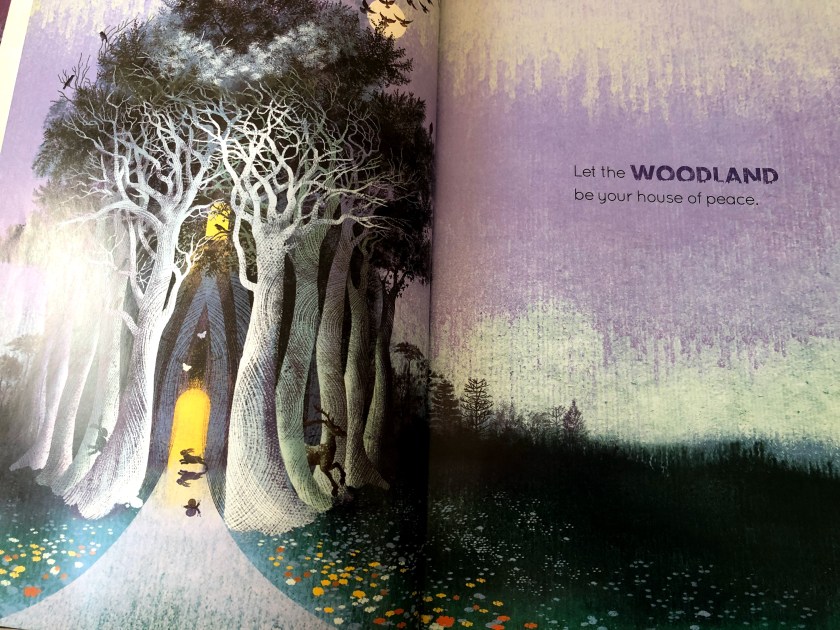
The Animals Within


The evening was a beautiful one. The children played looking like little angels in the glowing sun, and I threw affectionate glances at the noise in the playground.

I was mooning about the streets admiring the shabby looks of late summer. The same hills that looked brown and uninviting in the distance during the day, now looked ravishing bathed in sunset’s golden glow. Little specks of clouds in the sky were blushing to different degrees. The purple, red, orange and pinks poufs flicked about looking snippy and sharp. The oleander trees and the crepe hyacinths lining the streets looked prettier than ever before.

The approaching week-end seemed inviting, promising in its possibilities: my outlook was cheerful; my spirits soaring with the multi-colored clouds up there; and no must-dos competed for attention in the old brain.

T’was after a little growl came from within that I stopped to wonder what was amiss. I had completely missed the making-dinner task at hand, and the growl was reminding me, that I had not just 1 growl from my stomach to contend with, but the whole family’s as well. The husband trundled in, the children trooped in to say hi, and I whisked them all off for a dinner outside.

‘Forgot to cook?!’ cackled the teenaged daughter, looking indulgent and proud that I was not being the conscientious cook, and filling her plate with healthy muck. “Didn’t the sunset fill you up?”

“It filled me spiritually my dear. I could not be fuller!”, said I patting my heart, “but the stomach still asks for its due, Alas! “ I said remembering a poem my mother-in-law often references about what an irascible taskmaster the stomach is. I always smile at the wisdom of the poem. Loosely translated, it means
“Oh stomach!
What an irascible creature you are!
I ask you to eat a lot at one meal, and you rebel, and push back saying you are full.
So, then I ask you to skip a meal, but that too wouldn’t do for you.
What a slave to your demands have I become?
It is very difficult to live with you!”

So, off we went to a Chinese restaurant in various states of hunger.

This is one of those places that believes in keeping you engaged while they prepare the food for you. In front of each was a sheet of paper containing the Chinese Zodiac Animals and their characteristics. We started off in typical fashion:
You are a monkey!
Really? A snake – ha!
How could you be a tiger?
I don’t want to be a pig!

For those who moon about on Friday evenings without considering the demands of the stomach, here is a tip: Don’t! Friday evenings beckon all mooners-about, and restaurants find themselves busier than usual that day. As we sat around with hunger gnawing at the insides, the sheet of paper telling us about our characters based on the year we were born in looked inviting. Soon, we started tabulating and cross-referencing the listed characteristics against the personalities in the family.

It is an interesting exercise, and really makes everyone stop and pause and think about oneself. There are characteristics that the whole family gave a miss to. There were some that we hoped we did not have, but found we did. There were others we hoped to have in a higher degree. The tabulations were derailed every now and then with questions such as “Why are hippos not there in the Chinese calendar?”, After going into habitats and biomes with glaring holes of knowledge, seeing as none of us had ever to China, we got the animals back on track.

The resulting diagnoses has us giggling uncontrollably:
“You are most like a rabbit, but also have the tongue of a dragon, and the heart of a pig!”
“Snake hissing and pouting maybe, while galloping like a horse, and snoring like an ox.”

It turned out that we churned out more fantastical creatures in that half hour than a whole mythological genre could in a book. “Imagine if these creatures were sitting in us, wouldn’t that be something?” I said.

inyo_20q

Humanity’s capacity to imagine strange and wonderful creatures has always been remarkable, though there are precious few creatures left for us to imagine. No one is bringing another Clara to our midst any time soon.

Clara the rhinoceros, was brought to Europe on a tour in the 18th century. No one had yet seen any of the creatures of the East, and had not even heard of such an animal. Clara became an instant darling of the masses – her gentle demeanor, her love of oranges and her sheer size endeared her to all those who had the privilege of seeing her. I can well imagine the wonder and curiosity such a creature brought to human society, and the number of children in whom the wonders of the natural world was rekindled. How many Gerald Durrells, who imagined the beautiful world of their family and other animals?

500px-Clara_1749_Oudry.jpg
Image title
Rhinoceros Clara
Author
Jean-Baptiste Oudry
Copyright holder
PD

Today, we silently add more and more creatures to the endangered species list, watch in alarm as forest cover disappears and wait for magic to happen in our lives. Anthropologically, will we hear the news of a Middle Earth tucked away somewhere with hundreds of majestic creatures again?

Maybe one day, our space explorations will yield something. Till that day, we shall have to content ourselves with imagining the various creatures and creature traits within us.

Books:

Clara the Hippopotamus – By Emily Arnold McCully

My Family & Other Animals – By Gerald Durrell

The Moments of Weather

We had been to the mountains for a short reprieve from the demands of routine. There was no agenda. No plans or schedules. This was us taking Serendipity, that wild temptress of adventure, on a ride with us. Music was chosen by different occupants in the car and went from Carnatic music to ear-splitting yelps to Disney songs (Behind the clouds, the sun is shining!)

The weather app was equally co-operative. You are in for some rains, snow, cloudy days and possibly some sunshine was the gist. For a moment I relished that weather app. This was how our weather reports were while we were growing up, and it all added to the fun. We indulged the weather-man as he came on Television showing whisky clouds over large swaths of land, making possible probabilities with a doubt that ensured us if we rained we could thank him, but so what if it didn’t? Carrying an umbrella never hurt anyone, did it? This certainty of the weather takes the snuff out of the thing. 

I.t WILL be a 100 degrees today! *Dire Dire!*

I digress. 

Anyway, a few small-ish hikes during the day had left us with a satisfying feeling and a benevolence towards nature. The rains had materialized into little hailstones hurling themselves like joyous confetti. Then, just like that the hail stopped and the clouds scudded away revealing a smiling sun.


The next morning, I lay in bed, my plans for a walk at dawn forgotten. I snuggled in bed looking at the soft snow falling outside. The rains overnight had given way to snow in the wee hours. The grass outside was covered in a white sheet before long. I could not say how long I lay like that.

A lovely idea of all things being out in nature in all sorts of weather teaches us came to me – maybe it was a children’s book I should write, I thought. It is often the case, I get ideas, and then they go, or someone else writes them because I let it simmer too long. Oh well!

The hail taught me to wonder and squeal with joy

The mild rains made me stick my tongue out and get a few slurps in

The snow made me content for the simple pleasure of being in a warm bed as the flakes swirled around outside.

The clouds taught me to lift myself up and float

The sunny skies showed me that behind the clouds, the sun is shining (Cars movie song)

Weeks later, I sometimes found myself thinking of that morning just lying there watching the snowflakes flutter down; my heart fluttering lightly with the pleasure of thinking up another Children’s book to write. A moment in time when all of life’s little worries and tensions were pushed aside. A few golden (or silver) moments when there was nothing but the feeling of warmth in bed, beautiful thoughts, and the snow falling outside.

Then one sunny afternoon while the Sun scorched the Earth outside, I read the children’s book, Make the EARTH your companion by  J.Patrick Lewis illustrated by Anna & Elena Balbusso

img_3024-1img_3023-1

A truly marvelous book with engaging illustrations. A book of simpler times and more lasting moments to relish. Maybe I should get cracking on that book of mine soon.

Nature’s Shows

This article was published in The Hindu Open Page: The Art & Charm of Shoshin

If anyone has spent time watching pebbles make ripples across ponds, they will know what I am talking about. If not, I encourage you to take on your person a couple of pebbles and hike up the high hills and mountains, or cut through the pristine forests, in search of a puddle, pond or lake of reasonable size to cause ripples. Then, with the hand held flat, proceed to skip the pebbles into the water. The skillful amongst you may get the pebble to skip and skim the waters in the first few attempts causing beautiful rippling waves as they go along. I did not. Watch for the word skilled in the sentence – pebble throwing is an art that isn’t appreciated enough.

The son attempted a large stone throw and I held onto him lest he launch himself with the stone. Size matters: large stones and small boys could cause the cannon to fly with the missile. This is the kind of thing that would have made Newton come up with complex mathematical calculations to support the theory of pebbles and ripples, missiles and cannons, and extend it to comets and stars. We, on the other hand laughed, and substituted a flattish stone is his hand. Father and son threw pebbles and I sat watching mesmerized at the beautiful rippling effect it had on the water.

img_1781-effects

It was a lovely bright day, one of those gems that present itself in the midst of a rainy stormy week. Much as I adore watching the storm rage around me, and the wind whip the bare branches to breaking point, it doesn’t make conducive walking environments. I tried. I went out for a walk during the raging storm that had flights circling the air space multiple times before attempting to land, and I must say that I was wetter than water. It took 3 days for my shoes to start feeling damp again. The daughter shook her head sternly and said I was going to come down with a pneumonia if I continued on this idiotic path of loving the rain. “Are Pluviophiles Pneumoniophiles?” I asked her, and told her to be crazy and feel the rain, love the rain and watch the rain. She watched me with love, and a strong feeling that I was crazy. Oh well.

IMG_0726

I raised my face upwards towards the sun and my thoughts drifted once again. As I sat there thinking of this and that, a beautiful thing happened. The mind snapped out of the mundane and omnipresent things that occupied it, and went into a lovely, meditative state. Watching the sun sparkles drift meditatively on the waters was marvelous. The world seemed to be throwing these tiny diamonds into the water for our enjoyment and they drifted obligingly with the tiny waves, Little shimmers bobbing up and down, dancing and shining in the sun’s rays, set to the perfect rhythm of the breeze rustling through the bare winter branches of the trees nearby. The earth was bursting with new shoots and moss lined pathways.

Ducks, coots pelicans and geese were bobbing on the waters in the distance. Birds were chirping and swooping -I enjoyed the swift elegant swoops of swallows as much as the impressive regal swoops of the hawks overhead. Some people were biking, some others walking. The clouds – white today, drifted lazily across the skies, as though they too enjoyed the sunshine and did not want to hide the sun. The air smelt fresh and clean with little wafts of eucalyptus and fir scented drifts.

img_1769-effects

Nature’s shows are marvelous. For a moment I forgot about the to-do lists, the worries and tensions that a concept of a New Year brings, and enjoyed the free show in front of me feeling revived and refreshed in spirit with every passing moment. All my senses keen, alert and marveling at the wonder around me. I looked at the little fellow enjoying himself by the waters, and hoped that he would remember these simple pleasures as he grows and takes his place in this frenetic world.

img_1763

Edit: After I wrote this post, I saw this excerpt by Mary Oliver on one of my social media feeds: it is from the book, Upstream, and I look forward to reading the book, but this piece of writing spoke to my heart (bolding my own):

Teach the children. We don’t matter so much, but the children do. Show them daisies and the pale hepatia . Teach them the taste of sassafras and wintergreen. The lives of blue sailors, mallow, sunbursts, the moccasin flowers. And the frisky ones-inkberry, lamb’s quarters, blueberries. And the aromatic ones-rosemary, oregano. Given them peppermint to put in their pockets as they go to school. Give them the fields and the woods and the possibility of the world salvaged from the lords of profit. Stand them in the stream, head them upstream, rejoice as they learn to love this green space they live in, its sticks and leaves, and then the silent, beautiful blossoms.

Attention is the beginning of devotion.

My hope is for everyone to savor a moment like that every now and then, to keep the capacity to wonder alive in us. The beauty of Shoshin.

The Secret To Blooming Like a Flower

I gabbled on about the beautiful Kurinji flower over a distinctly sub-par dinner one night. Sometimes the rhythms of cooking are too frequent. “Do we really need to eat every few hours?!” I said drowning out the sound of “You haven’t cooked in 3 days!”

The children listened – one with ardent curiosity bursting with questions and the other cloaked in teenage blasé that belies the true interest behind the flowers. ( “Cool!” – only a little wag of the ear indicating possible interest).

“Can you believe the Kurinji blooms without alarms and clocks to set store by? Every 12 years like clockwork!”

The questions that followed were better than the answers:

  • Do all of them bloom at the exact same time?
  • What about plants that grew later, won’t they all flower at different times?

My answers are not answers that would have pleased Charles Darwin perhaps, but if he wanted to answer right, he should’ve been there, not let me field them is my stout reply to this.

Interesting aside:
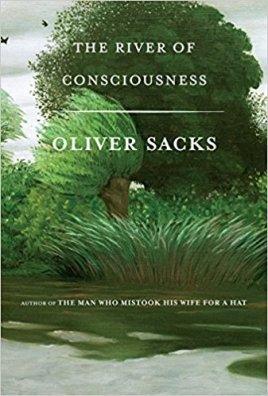
The River of Consciousness by Oliver Sacks starts off with an essay on Darwin and the Meaning of Flowers.

river_sacks

I could see why Darwin liked his flowers so much. This was long after his magnum opus, The Origin of Species, was completed. He actually spent the last decades of his life pottering about his green house, setting the children in his life to chart the course of the bees, studying orchids and their flowering patterns etc, and was therefore immensely better prepared than yours truly.

His joy was evident in his letters:

“You cannot conceive how the Orchids have delighted me .. What wonderful structures! … Happy man, he [who] has actually see rows of bees flying around Catasetum, with the pollinia sticking to their backs! .. I never was more interested in any subject in all my life than in this of Orchids.”

He went on to write the book with the fascinating title: On the Various Contrivances by Which British and Foreign Orchids Are Fertilized by Insects

Meanwhile, the kurinji flower was still blooming in the home: the river of questions on What Is Time flowed on:
What is Time when you are a flower?
What is Time when you are a squirrel?

The husband had a bemused and half-exasperated expression on his face, as he heard me talk about alarms, time and biological clocks. He watched me squirm and the urge to tut came to me. I knew what was going on in that optimistic mind of his. He hopes I will have the sense of a Kurinji flower someday.

I feel bad for the old boy.

The thing is, I set beautiful poetic alarms, replete with soothing ringtones to go with it, place them on his side of the bed, and then proceed to sleep like a blessed bear in the winter.

If we need to get up at 6 a.m., I set the alarm for 5:30 a.m. thereby allowing me to snooze a few times, and then go back to dozing the doze of the blessed. It is marvelous to get that snooze time, and some of my best snoozes are at this time. This vague time of day between wakeful consciousness and blissful unconsciousness.

If everything in the universe follows a pattern, how do we determine what ours is, without the aid of all our poetic alarms? There is a beauty to seeing the natural things around us, for they soothe us in ways quite unknown to our hectic way of life.

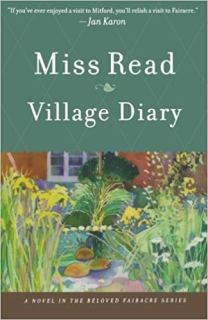
I was reading Village Diary by Miss Read for the n-th time (like a flower knows when to bloom, I know when it is time for a Miss Read re-read), and I admired yet again the simple way in which she had set a truth about humanity in her beautiful language.

village_diary

Quote:

As I ironed, I amused myself by watching a starling at the edge of the garden bed. He was busy detaching the petals from an anemone…

This short scene, I thought as I pressed handkerchiefs, is typical of the richness that surrounds the country dweller and which contributes to his well-being. As he works, he sees about him other ways of life being pursued at their tempo – not only animal life, but that of crops and trees, of flowers and insects – all set within the greater cycle of the four seasons. It has a therapeutic value, this awareness of myriad forms and varied pace of other lives.

So, maybe that is the secret to blooming like a flower. Set our patterns to the natural rhythms of the world around us rather than to the dictates of productive days.

“Hmm … when would you naturally feel like doing stuff? Like cooking! Just asking!” said the teen rolling those eyes of hers. The loud guffaws that accompanied this were appreciation enough for a chef.

I think I will take after that Kurinji flower after all.

Books:

  • River of Consciousness – by Oliver Sacks
  • Village Diary – by Miss Read
  • Origin of Species – Darwin
  • On the Various Contrivances by Which British and Foreign Orchids Are Fertilized by Insects – Charles Darwin

Blooming Time?

A version of this post was published in the Nature Writing magazine: When The Kurinji Blooms

In a small corner tucked away from the hectic panting of the world lives a small ecosystem,  nestled in a range of hills that is fast losing its unique beauty to ‘progress’. It is the place I was lucky enough to call home when I was growing up.

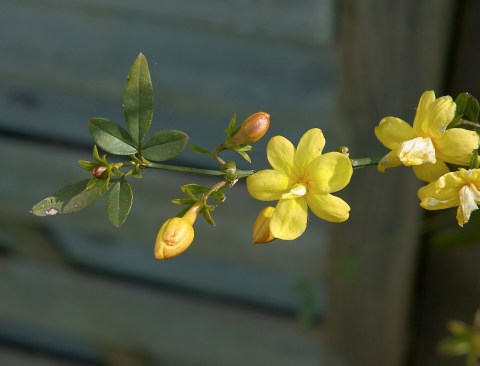
Jasminum_mesnyi.jpg
Primrose jasmines – Image by Wouter Hagens[Public domain], from Wikimedia Commons
The thought of flowering lupines takes me to Iceland; lotuses to a temple tank surrounded by trees with the breeze rippling the tank waters; primrose jasmines and Kurinji flowers back to the Nilgiris.

One of the marvels that is highly unique to the Nilgiris is the flowering of the Kurinji.

These flowers only bloom once in 12 years, and when they do, they are a joy to behold. I have only seen them once, and I remember thinking that for all this drama of blooming once in a dozen years, they should be, more grandiose, more robust, a trifle less ephemeral. But that is the thinking of an ignoramus, and I sensed the idiocy of the sentiment even then.

The flowers were beautiful, and the fact that there is a plant that knows the time to bloom when the rest of the world needs alarms and clocks to rise and shine is nothing short of marvelous. We need apps, calendars, schedulers, reminders and alarms to go about our daily business of living, and yet these unassuming flowers go about their act of procreation, maturing and enthralling the world without any such aids. What is more beautiful than that?

The kurinji flowers were in bloom last month, and I lived vicariously through a few friends of mine who live in the beautiful Nilgiris and posted the pictures. Entire hillsides clothed in royal robes of purple, swaying and billowing in rainy wind splattered skies, or waving and tossing their crowns to the blue skies with the scudding clouds.


The beauty of a functional model like a flower is a joy to behold. Imagine my joy then, when I opened the book, What Do You Care What Others Think – By Richard Feynman and the very opening of the book spoke straight to my kurinji-flower yearning heart.

I have a friend who’s an artist and has sometimes taken a view which I don’t agree with very well. He’ll hold up a flower and say “look how beautiful it is,” and I’ll agree. Then he says “I as an artist can see how beautiful this is but you as a scientist take this all apart and it becomes a dull thing,” and I think that he’s kind of nutty. First of all, the beauty that he sees is available to other people and to me too, I believe…

I can appreciate the beauty of a flower. At the same time, I see much more about the flower than he sees. I could imagine the cells in there, the complicated actions inside, which also have a beauty. I mean it’s not just beauty at this dimension, at one centimeter; there’s also beauty at smaller dimensions, the inner structure, also the processes. The fact that the colors in the flower evolved in order to attract insects to pollinate it is interesting; it means that insects can see the color. It adds a question: does this aesthetic sense also exist in the lower forms? Why is it aesthetic? All kinds of interesting questions which the science knowledge only adds to the excitement, the mystery and the awe of a flower. It only adds. I don’t understand how it subtracts.

Ode to a Flower – By Richard Feynman. This brain pickings article links to the beautiful animated video made by Fraser Davidson based on his ode to a flower.


I could not see the Kurinji flowers this time. I know many hillsides that were carpeted with these marvels have now become home to resorts and hotels. So, I wrote to the San Francisco Conservatory of Flowers requesting them to try and obtain a sample of this marvel: a tiny piece of magic tucked away for generations to behold. I hope they can.

To see a World in a Grain of Sand
And a Heaven in a Wild Flower
– William Blake


A Planet of Wizards & Prophets

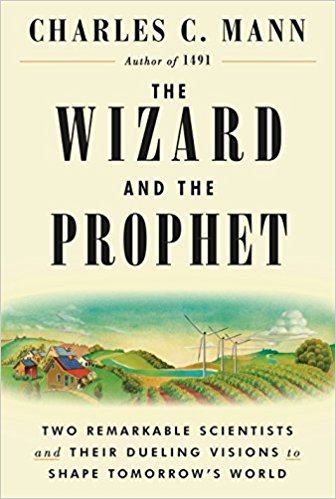
I was reading The Wizard & The Prophet by Charles E Mann on a crowded train one evening, and a pair of young girls shared the seat with me. The name of the book is a highly appealing one especially to little girls, and it piqued their interest too.

One of them was probably in the 1st or 2nd grade, and showed a precocious interest in my reading material. Her curly hair was made into numerous tiny plaits, and her eyes shone with a curiosity that would make her teacher’s heart sing. Her mother’s heart though, quailed. She said, “Now…now don’t bother the nice lady there, let her get on with it. “ I looked up at the mother, and told her that I love reading to children, and though this particular book sounds pedantic when read to children, I did it anyway. It taught me never to under-estimate children – the child soaked in everything, and asked the most engaging questions.

wiz_prop

I saw a certain amount of editing would need to be done if I were to sustain the interest of a 6 year old. The book is a non-fiction tome going strong at 678 pages – pages richly adorned with facts and figures, and life histories of all the people involved. I had already been through about 300 pages, so I knew the interesting bits, I knew the bits where a child’s wonder can be kindled. For the rest of the hour, I told her about wheat strains, water tables, and climate change.

The Wizard & The Prophet is a marvelous title because it encapsulates the polarity of our thinking so beautifully, and in this sense, they are both required for us to thrive. The Wizard in the book is Norman Borlaug, who is credited with leading the way for GMO strains of wheat production that along with stalwarts in the field such as Dr M.S. Swaminathan saved billions of people from hunger and starvation. 

William Vogt is the Prophet, who during his study in the Mexican coastal areas observed how we are stretching our natural resources and the effects it has on things as far-flung as bird migratory patterns and climate. In many ways, he is the one who set up the first bells of Global warming and Climate Change. He is the Prophet.

Do you believe in Climate Change? asked the girl wide-eyed.

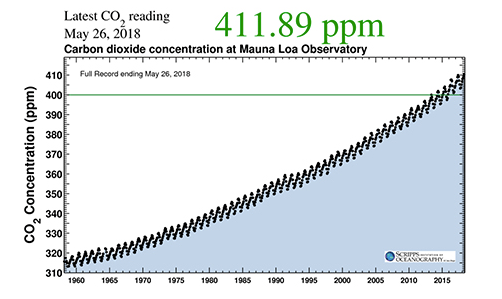
I told her I did not need to believe Climate Change at all, and the experiments were here to show me how we are changing the air around us, and I showed her the pages outlining the experiment where humanity managed to pin down Carbon Dioxide as the problem-maker in the first place. 

I cannot deny that global warming and climate change has always intrigued me. Carbon Dioxide only accounts for 0.03 % of the atmospheric gases, a remarkably small proportion for it to be causing global warming on such a scale as to change weather patters and cause severe climatic catastrophes, is it not? 

In The Wizard & The Prophet, the author outlines the experiments used in determining that it is indeed carbon dioxide that is the culprit and how our industries are directly contributing to its increase. The correlation between carbon-dioxide levels increasing and global warming followed. I found it a fascinating experiment and one that school laboratories can demonstrate I hope. 

Keeling_Curve
By Scrippsnews [CC BY-SA 4.0  (https://creativecommons.org/licenses/by-sa/4.0)%5D, from Wikimedia Commons
https://en.wikipedia.org/wiki/Keeling_Curve

(During the spring, there are dips because the Arctic tundra sprouts plant life and plants absorb Carbon Dioxide from the atmosphere. )

Looking at the worried expression in the child’s face, I asked her, Did she know what we can do to reduce the carbon dioxide?

Trees? she said, and I nodded yes.

I went on to tell her about the excellent example set forth for us by the Kenyans in The Green Belt movement, and how a person called Dr Wangari Maathai helped the Kenyans plant millions of trees over the past 30 years.

Planting the Trees of Kenya, by Claire A Nivola, The Story of Wangari Maathai

Planting the trees of Kenya - Wangari Maathai
Planting the trees of Kenya – Wangari Maathai

She glowed at the simple solution thought of by Dr Wangari Maathai, but her stop had come, and she stepped off the train with her mother who was now listening to her daughter talk to her about The Wizard & The Prophet.

As I reflected on the chat with her, I realized that the narrative around Climate change and Global warming is quite confusing.  It is no wonder that the child framed her question as – “Do you believe in Climate Change?” The prophets in this case are doing their job, but the question of : “How does one realize when an extreme storm or flood is part of a natural occurrence and when it is a direct result of our tampering with the delicate balance of the climate?” is a vexing one.  

The Prophets have sounded the alarm bell often enough, and the Wizards have yet to think of a sustainable solution to it. But there is hope: I am glad to read that China proposes to plant and nurture a forest the size of Ireland to reduce carbon emissions and improve air quality. 

China to create new forests covering area size of Ireland

cropped-shasta_forest.jpg

Skip Your Way There

The school year was coming to a close, and I had promised the elementary school going son and his friend that I would show them a marvel on the way to school. Off we went then looking for this mystical being living in our midst. The excitement had built up in them. With the ready enthusiasm for serendipitous adventure that childhood blesses them with, they were chatting along to see this wondrous three-headed beauty, while I soaked in their infectious enthusiasm like a pup on a spring saunter.

We approached the marvel with hushed tones, and there it was, standing erect and tall, urging us to believe that there is magic and possibilities out of the ordinary: A tree in which the trunk grew for several feet , and then sprouted off in 3 different directions, like three siblings, or a three headed being, each with its own whims, but living together as one.

As I saw the tree, I could not help thinking of Anne Shirley in Anne of Green Gables:

I couldn’t live in a world where there were no trees; something vital in me would starve. – Anne of Green Gables – L. Montgomery

It is a beautiful tree, but what was more beautiful was the rapturous attention the children paid to it. They marveled, and the magical in them, so easily accessible under the surface bubbled up as they befriended and clambered on the tree. Off they went with their heart full of tales of the little adventure they had had that day. I could see it in the way they skipped to school that morning. 

One dressed like a princess in bubbling swirls of excitement, the other clad in a princely cloak of incredulity and wonder. An urge to skip gurgled in me. I definitely had a spring in my step as I watched them that morning. When is it that we stop skipping along? I don’t remember the time adults stopped skipping, but it should be a day we rap ourselves on our knuckles. What can be more enjoyable than skipping along to wherever we are headed? Why are our steps laden with the weight of the world?

The tree which moves some to tears of joy is in the eyes of others only a green thing that stands in the way. 

Some see nature all ridicule and deformity. 

And some scarce see nature at all. 

But to the eyes of the man of imagination, nature is imagination itself 

– William Blake.

cropped-curvy_bristlecone.jpg

Why can’t we imagine ourselves as princesses and princes out for a royal journey with adventures along our path everyday? In fact, once we do imagine this, the world has a way of giving us the very adventures we don’t even dare to dream about.

For us it came about in the Land of Fire & Ice, and in a world where there weren’t as many trees as I’d like, but a place that captured my heart and soul to willingly belong elementally, fundamentally, intellectually to it.

Next Stop: The Land of Fire & Ice 

Also read: About Ombu Trees in The Mockery Bird

The Lord of the Trees

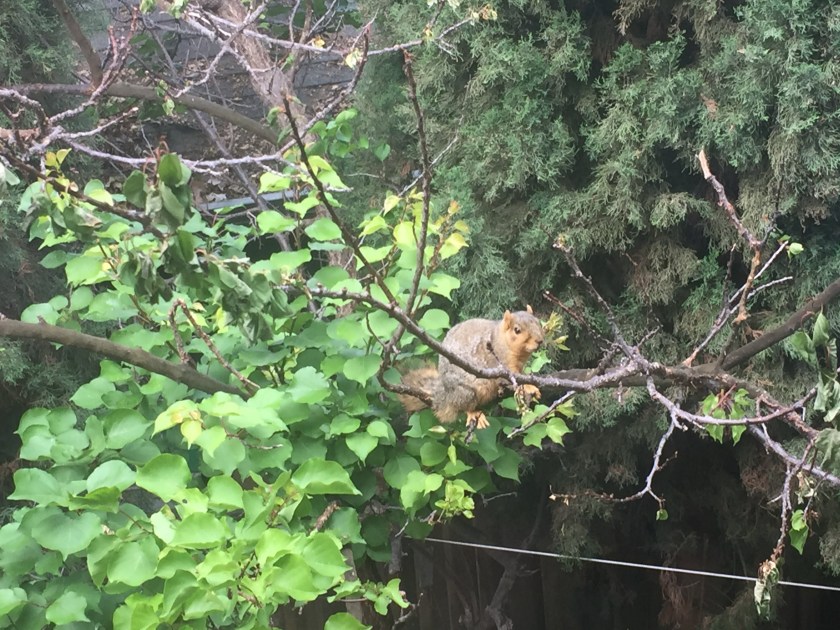
I gazed out of the window feasting my eyes on The Lord of the Trees working hard so early in the morning. The trees went past their blooming-flowers phase to the sprouting-young-leaves phase in the past few weeks.

“How can anyone who has spent any time observing life like this, feel like not preserving it?” I asked. Us not looking after Earth well enough for future generations is a pet peeve that regular readers of this blog know.

“Because I don’t think people stand and gaze at squirrels like you do when one is already late for school in the morning”, came the crisp reply and I nodded sadly hastening to bustle about for the morning tasks.

IMG_7860

The squirrels have resumed lording about the trees like they own them, which I suppose they do, since they are in them so much. I see them lovingly scraping bark, and checking out the fruits . I fight a losing battle every year trying to save the fruits from them. Friends have suggested fruit nets, but I haven’t the heart. They are the ones that live there, and sometimes I like to think of them sunning themselves on the branches while I am in a drab looking conference room surrounded by tonnes of concrete to pay for the land that these trees rest on. I only wish they would eat the whole fruit before tossing them to the ground, or hiding them away somewhere for the Winter months.

IMG_8683.jpg

I cannot deny that it is nice to see the little creatures busy again. The winter months are a little slow for them: though they do not hibernate much (apparently, they do not have enough body fat to sustain them through long cycles of hibernation), they sleep a lot. I wonder how their burrows are, and whether they feel the difference between night and day when they emerge from their deep burrows into the spring time bursting with flowers, fresh leaves and the promise of fruit. 

A few days later, the son and I picked out a book in the library called Morris Mole by Dan Yaccarino that dealt with a similar subject. The book was about a mole who was a wee bit different from his brothers and sisters.

IMG_8550.jpg
Morris Mole – By Dan Yaccarino

One day when the moles ran out of food in the deep deep burrows, the eldest moles wanted to dig deeper down, but Morris had an idea that nobody listened to. So, he “dug deep down in himself and found courage”, to dig upwards.

IMG_8553.jpg
Morris Mole – By Dan Yaccarino

When he emerged into the spring time, he is enamoured and baffled by the big wide world up there. 

This world also offers him the rare gift of friendship with creatures unlike himself such as a fox. 

IMG_8554.jpg
Morris Mole – Dan Yaccarino

The book made me think of how some seemingly little occurrences and thoughts have the power of transformation in them. Would Morris Mole have discovered this wondrous world overhead if he had not paid heed to that little crazy idea and acted upon it?

A few days later, I stopped to observe a squirrel again. This time, it was sitting by the roadside, and sniffing a mustard yellow flowery plant with a contented look on its face. The photographers up at the National Geographic magazine would have been able to get a picture of just such a thing. As it turned out, by the time I fumbled in my pockets, and took out the phone, dropping the keys in the process and finding some tissue marring the phone screen, the squirrel scampered probably laughing to its burrow. But I have the image in my mental eye: I hope it will remind me to enjoy the present when plans shadow life, or life overwhelms reflection. 

All good things are wild and free – Henry David Thoreau

I wish we could all dig deep down inside us to find the determination to set aside some time to spend with living, growing things that are very different from ourselves – observe a bird sing, marvel at a squirrel on a tree, look at ants carrying food, watch a spider spinning a web, or feel the wind against our faces knowing that it just rustled that beautiful tree top nearby. Maybe that will open up a way of living that is much more rewarding and satisfying like the world Morris Mole found overground.


The Dance of the Butterflies

Magical March gave us the immense satisfaction of walking to school under magical rainbows,  leprechauns had wreaked havoc and left treasures, my mother got to see her father for the first time at the age of 73, we had a beautiful trip playing in the snow, the doting grandparents arrived and the children have been reveling in the social rainbow that enveloped them.

Out in the natural world, the hills are alive with the sound of moo-sic (cows grazing – get it, get it?), the cherry blossoms send sparks of joy piercing through the soul every time I look at them, and the butterflies have been dancing the dance of joy. Rain showers cleansed the Earth, and all nature around us seems to be smiling benevolently.


One beautiful evening, I stepped out on a walk with my little son. Elementary school children derive a certain pleasure in crouching and looking at ants, snails or ladybugs. This time, however, we crouched down to look at a furry, black caterpillar. After reading Eric Carle’s book, The Very Hungry Caterpillar, everyday for months at a time with each of the children, I did not think that I would be enamored sitting and observing caterpillars, but such is the infectious enthusiasm of youth. (The Wind in the Reefs – Working title of The Wind In The Willows)

I found myself excited and thrilled to crouch and watch the caterpillar make its short journey across the concrete path back into the sidewalk where the bushes grew. I still find it amazing that these creatures metamorphose into butterflies. Eggs->Caterpillar(larvae)->Chrysalis(Pupa)->Butterfly has to be the most magical thing in our daily existence next to rainbows.

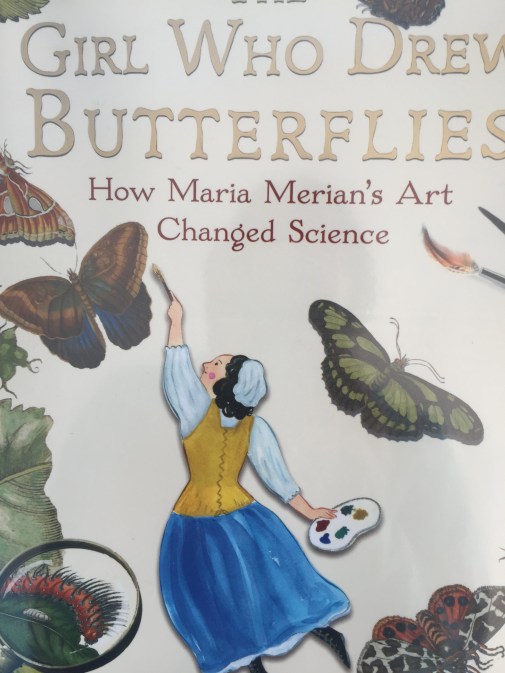
Later that week, the crouch with the caterpillar made me reach longingly for the book, The Girl Who Drew Butterflies: How Maria Merian’s Art Changed Science – Joyce Sidman

IMG_8198.jpg

Maria Merian was a naturalist and illustrator in the seventeenth century.  Written by the children’s author and poet, Joyce Sidman, she says:

In many ways, Maria was an enigma. She rarely wrote about anything other than caterpillars…What we do know is that she had boundless energy, insatiable curiosity, and superhuman focus – traits that would have been difficult to live with, but ones that marked her as a true scientist at a time when the odds were stacked against her.

How does one find the passion and perseverance to stick to a field of study in spite of societal disapproval, familial duties and demanding businesses?  The book gives us a glimpse into seventeenth century life: The impossible clamps on Women, the dangerous possibility of any curiosity being mistaken for witchcraft, the difficult life of artists in general and so much more.

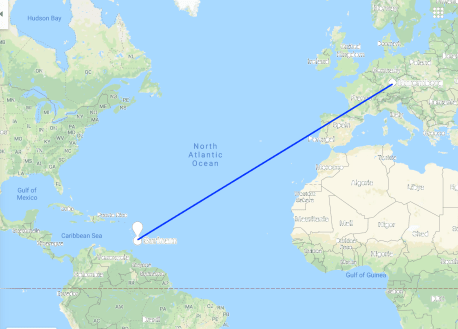
I have always admired those who have high energy levels and put it to good use. Maria Merian was one of those people. She was a brilliant artist, had business acumen and her curiosity about insects made her a pioneer in the field of etymology (A field that did not even have a name until several decades after her death). Her contributions to etymology were remarkable because she also managed to travel to Surinam near Barbados in those days with the sole purpose of studying animal life. Her paintings on Surinam and her books on caterpillars had great appeal in Europe, and Maria Merian went on to transform Art and Science forever.

Screen Shot 2018-03-29 at 5.12.14 PM.png

The book is full of beautiful diagrams, paintings, flowers and plants with little insects on them. It is a joy to thumb through even if it is just to look at the pictures.


Here is to more butterflies, rainbows and magic.

Teapot Spirituality

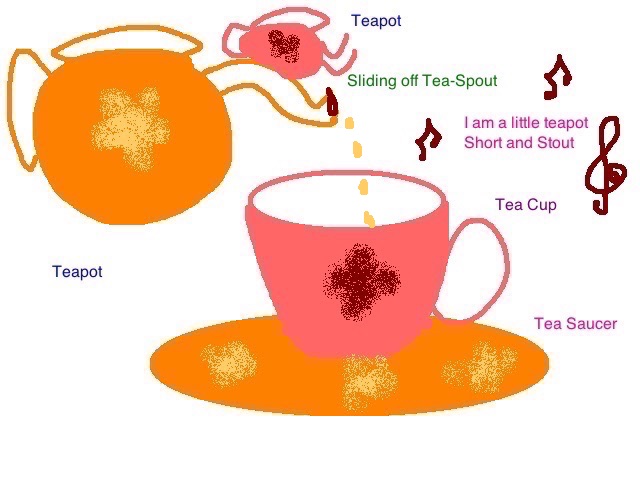
Sheesh kababs! What is with Amma – is she tired and cleaning again?” said the daughter, when I acted like a teapot sliding off my tea spout.

I whistled my protest with as much dignity as a teapot sliding off the tea-sp. could when caught in the act. “There is nothing wrong with me. Merely that a lot of work needs to be done, and I cannot come and play a game of Life now. I have Life to deal with now.” The queenly dignity sounded overdone like these actresses who act for 10 dollars when paid 3. I waved my hands impressively at the surrounding environs.

It was true, at least in my mind. Pots and pans needed washing, the floors needed scrubbing, the ….

“You said you are tired at the end of the week, and it has been a tough week. You just said we escaped a fire, and we should just be thankful for Life huh? Get it. Get it? Come on now.”

teapot

I could not argue, and after a flimsy protest, waved down by the children who helped me get the kitchen to a state of relative cleanliness, we sat around playing the game of Life. There was a serendipitous beauty to it. The evening had made me nervous and jumpy, more conscious of the gift of Life, and as usual the children had led me to the calm instead of the frenzy, with their customary élan.

Northern California had been reeling from the effect of wild fires. After an unnaturally hot summer, calamity struck too close to home for comfort. This time, it was people we had lunches with, people we holler out to when we catch a glimpse of them in crowded places. People who will slowly extend that quizzical look into a slow, wide smile as they recognize you, these were the folks asked to evacuate.

Luckily the fires had been contained, and I felt like we could look forward to a quieting down. I had spoken too soon.  That evening, flames leaped higher than trees behind our home, and smoke billowed from nearby. The bags were packed in the car: documents, some cash, a change of clothes, laptops, water bottles, snack bars, and a few pictures. When it comes to it, that is all there is, isn’t there?  Nothing else matters.

That night, everything felt keener. The comfort of putting away the dishes, the joy of playing a board game, the delight of being ordinary, the familiarity of the mundane, the contentment of a bedtime story, the gratitude for the simple act of breathing.

“I just got twins Amma.” said the son after rolling his dice.

“There goes your quiet retirement!” said the daughter, and the children went into peels of laughter, and I joined in noticing how much better it felt to laugh with abandon. I felt the 17 facial muscles work as the laughter gripped me. I observed the act of laughing together as if I was perched atop the roof, looking at us having a good time. Is this what consciousness is?

I finished the piece on resurrecting the Woolly Mammoth using genetic samples obtained from the pristine Arctic Tundra, and impregnating an Asian elephant with the questions on consciousness, and whether or not there is a Soul. I love it when a work of fiction explores the questions posed by futuristic Science, and I finished the post by tying it up with Never Let Me Go, By Kazuo Ishiguro.

Everyone knows, teapots are far from spiritual, and my understanding could make a teapot sing. If you were to explain the concept of consciousness, conscience and soul, how would you do it?