
On Tyranny: Power and Compliance

On Tyranny

This book is a required reading for what’s coming.

on_tyranny

The book restricts itself to Twenty Lessons from the Twentieth Century, which is even better. For power hungry dictators have been there throughout human history, and the book may well turn out to be a treatise of its own, if not time-capped. Recent events are usefully analyzed from a technological and sociological view. After all, many of the fascists of the past century found themselves propped up through a democratic process, even if they refused to give up power democratically later on. 

One of the first topics in the book, On Tyranny – By Timothy Snyder Illustrated by Nora Krug caught my attention.

It talks about compliance without being asked to. 

“Do not obey in advance”

“A citizen who adapts in this way  is teaching power what it can do.”

  • On Tyranny – By Timothy Snyder

I found myself nodding along several times during the examples given from the Hitler regime, or sociological experiments conducted since, and was quite shocked to see it all play out again in recent times. 

For instance, the past week itself gave us examples of ‘Do not obey in advance’. It was in the flurry of news items about Meta – the mega social network bending over and showing what it is capable of doing for Donald Trump’s regime. The company removed the fact checking team, and essentially stopped DEI efforts.

Quote from article on removing the fact-checking intiative:

“Everyone is entitled to his own opinion, but not his own facts,” the late New York Sen. Daniel Patrick Moynihan memorably wrote four decades ago.

As far as DEI efforts go, to get to a point where a DEI team was necessary took many decades of work, mindset changes and progressive ideas. To remove it all in one stroke sets us back by at least two decades, does it not?

Now slowly think of all the programs and places in which progress has been painstakingly achieved through education, forward thinking initiatives etc, and the mind boggles on what lies ahead of us.

In the past few weeks, there were several discussions in which we wondered:

  • How do we know when a leader is likely to become a fascist ruler?
  • How do we know whether our systems designed to survive democracy will do so?
  • Which of the very institutions that help towards justice will be disbanded or at least thwarted in their efforts to do so?
  • And many more. 

The questions will answer themselves soon, shall they not?

Journey Through Timezones: 15 Destinations in 15 Days

In what turned out to be the journey of clocks – we managed to visit 15 places in as many days over three distinct timezones. I wondered where we were, how we got up, and how we made it from one place to another at all. But it seems we did, and we made it in one piece back to our home, so all is well.

Sometimes, I’d get up – the biological clock warring with the physical ones, and the expectations of the day starting in whichever language, country you were in. Orienting oneself always seemed to take a few minutes. I loved the sensation of relief as one realized one was supposed to be on vacation – so it must be alright.

Pack Mules

Packing for a European trip along with an Indian one seems good on paper but involves logistics that would have had a royal ensemble perplexed. With baggage restrictions, it turns out that nothing prepares us for two different cultures like this:

  • One requires thermals, caps, gloves, socks, closed-toe shoes, sweaters and jeans
  • The other requires sarees, in-skirts, blouses, salwar kameezes, cotton kurtis, sandals, and jewellery.

Planes, trains and automobiles

For you see? We also seemed to use every mode of transportation available: planes, trains and automobiles. (The boats were given a sad miss on this trip), though there were plenty of lakesides in which to catch our breath.

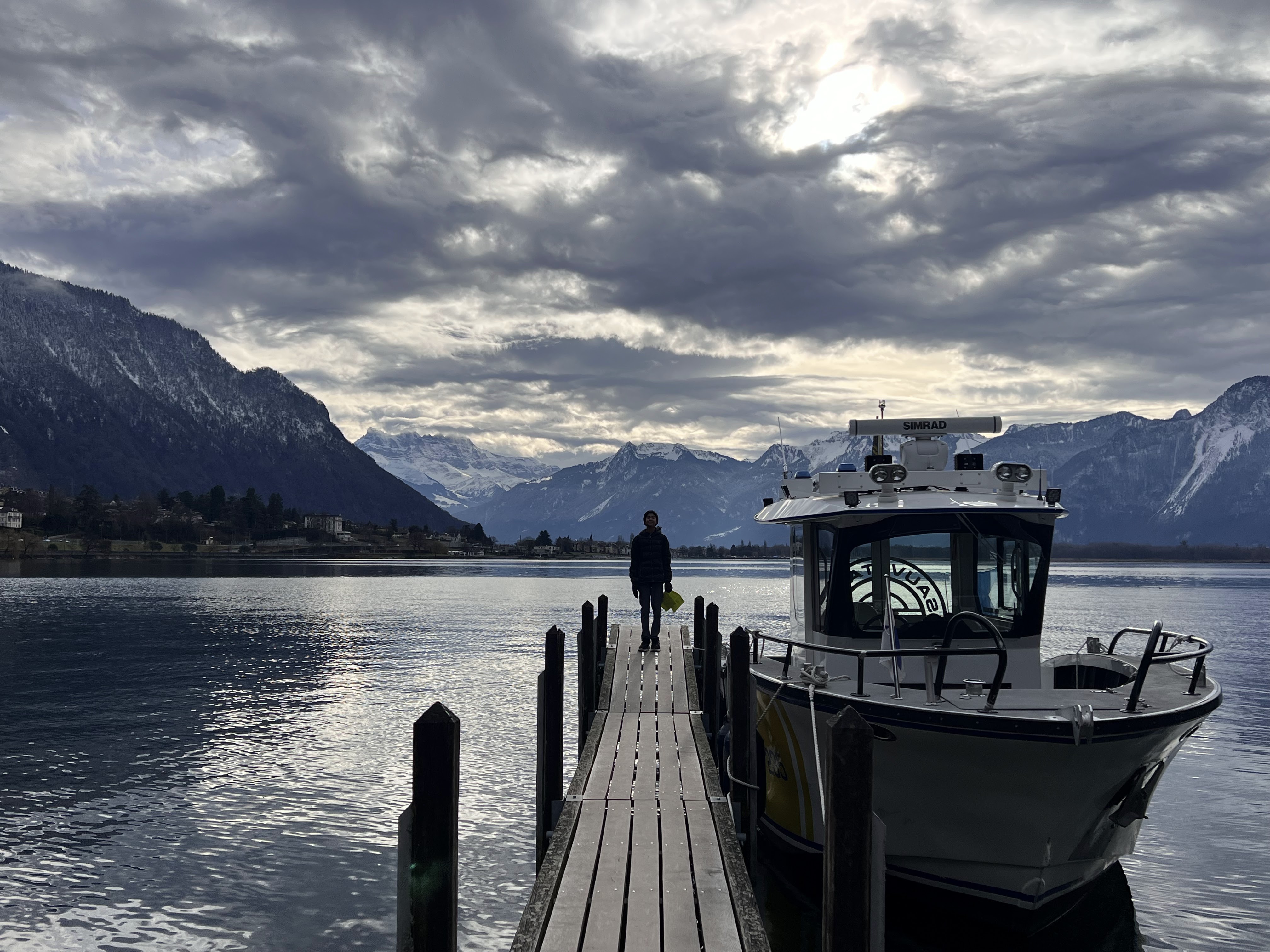
img_4807

We travelled by trains in India, slept through the night on berths, shot our heads out into the cool morning air as he watched the moon shine through the countrysides. We travelled by trains in Switzerland, where the freshly fallen snow on the countrysides made it all look like we had woken up in a picture postcard.

We travelled by automobiles – in deft contraptions boasting of 4 wheel drives, automatic braking, abs-something, in hilly regions both in India and Switzerland.

We braved the holiday crowds in airports and felt for the airline staff dealing with large swaths of humanity who all seem to have decided to take a holiday just then on an airplane.

Trains

One time, I woke up as a night train in India jolted me awake from a semi-state of sleep. Then I remembered why I was semi-awake. The son had gone to use the restroom minutes prior, and I suddenly felt wide awake. Could the jolt have meant … but mere seconds later, the fellow came back beaming like the waxing moon outside, “Amma! Luckily I had not yet let go when the train jolted – otherwise, my shoes would have definitely been gone!” he said.

I threw my head back laughing, and couldn’t stop for a few minutes. It was his first experience on Indian Railways for on overnight stint, and he was excited to be in the middle berth, and everything from how the iron chains held a person’s weight, to the loos, to the open doorways seemed to fascinate him.

Planes

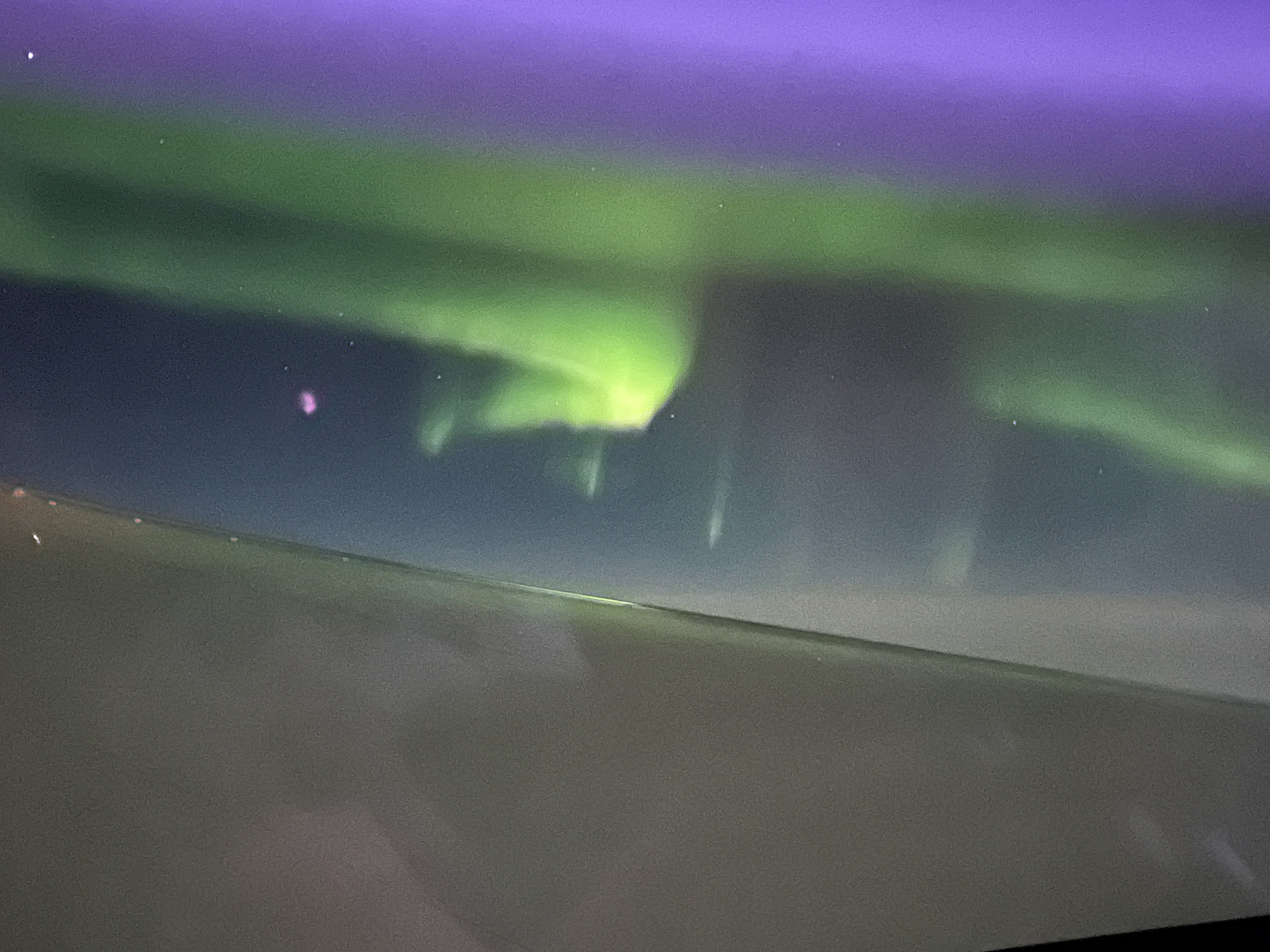
Another time, we were prodded out of our console screens by our excited co-passenger. She was a professional photographer of sorts (who was also a nurse), and she took a picture of the clouds outside our airplane window to show us what we were seeing. She had identified it correctly – we had a brilliant look at the dancing skies of the night over the Arctic circle, and we caught the aurora borealis in its glory. It was marvelous. 

img_4178

Automobiles

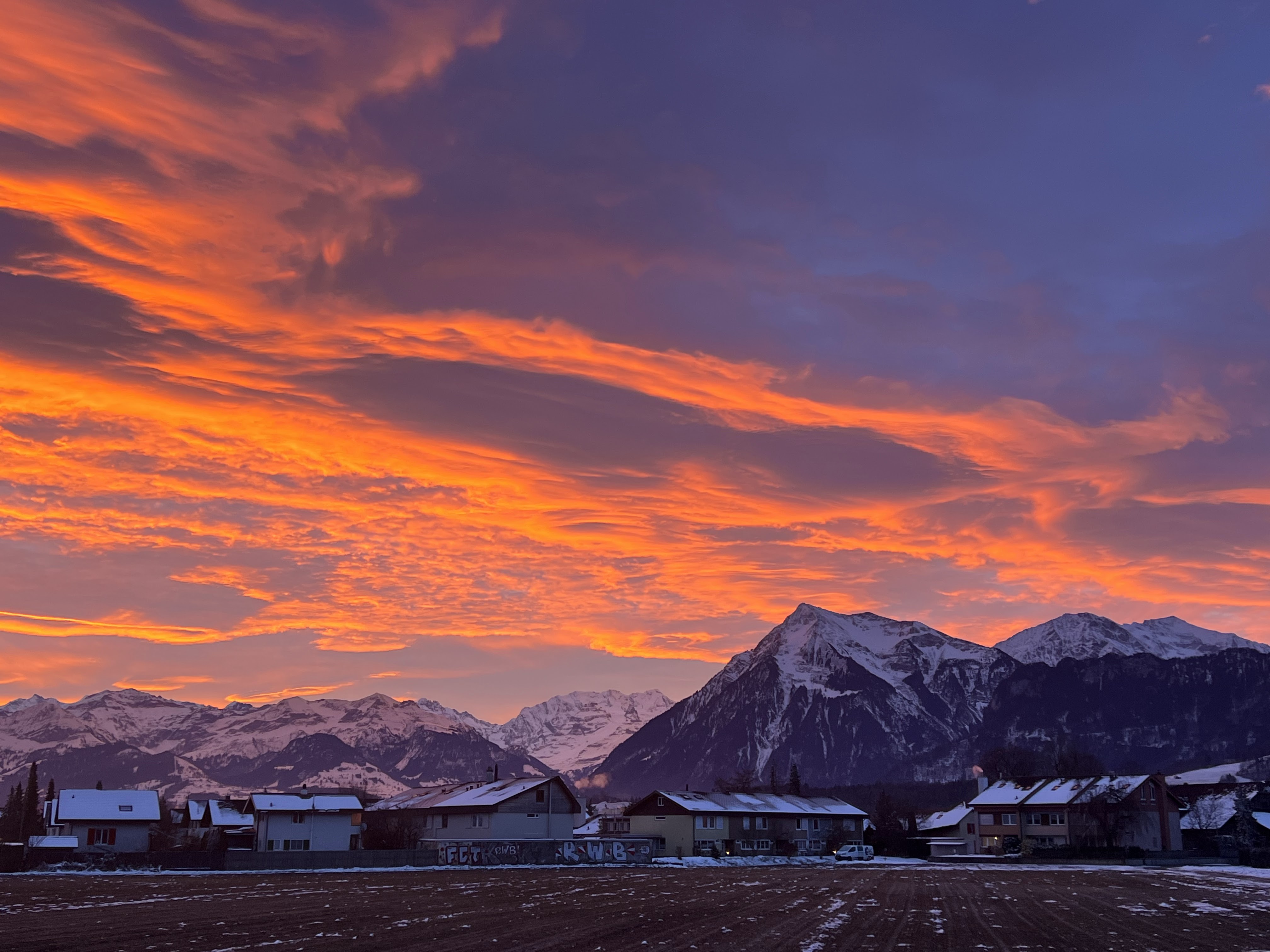
The ability to catch a marvelous sunrise over the Swiss Alps, or to catch a glimpse of an elephant by the roadside was all the magic required for the automobile sections. We managed to eat exotic fruit in Kerala (nongu), and stop for a quick snacks by the roadside in India. It was all a-thrilling, till we found ourselves snoozing on the uber-ride home after all of it. 

img_4575

We travelled by planes from one continent to the next in the peak holiday season, braving crowds, and delays, and cacophonous announcements. How we managed to get from one place to another inspite of all the things conspiring to derail things was beyond us, but we were grateful for it all. Once we landed back home in San Francisco, the very air around us seemed to ease us into being.

img_4869

It also seemed like the problems we had temporarily left behind, were lurking on the corner of our home, and ambushed us as soon as we came in.

Ganga & Kaikeyi : Retelling the Mahabharata & the Ramayana

During the holiday season I read two epics from different perspectives: The Mahabharata & The Ramayana.

The Mahabharata from the River Ganga & Bhishma’s perspective: 

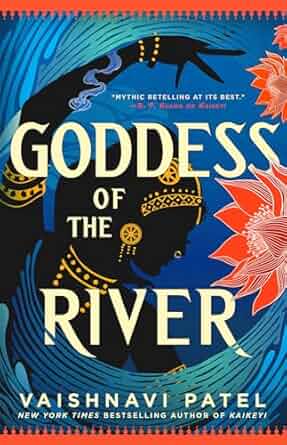
The Goddess of the River – By Vaishnavi Patel

goddess

The book started off beautifully for I have always loved myths of rivers and streams and oceans, and the gods that embody them. How they interact with the human world is a leap of imagination and faith, and when told beautifully, never ceases to make me admire the human capacity for creativity and the beautiful gifts of our imagination. 

How River Ganga fell to the Earth from the cosmic skies, unbridled, full of energy and the strength of the universe behind her is a beautiful chapter, and even if told separately without the context of the Mahabharatha makes for a marvelous read bursting with magical realism. The river’s long continuing peeve against the Lord Shiva who broke her fall to the Earth, and contained her wild spirits to be nothing more than a river able to provide sustenance for humanity is well told. 

The story of her curse, and how she comes to bear a mortal form, and how she comes to marry King Shantanu, and sire him eight offspring ,killing them all – save one, Bhishma, is enthralling.

Points to Ponder:

🦌Fascinating as this all was, the birth of Bhishma Pitamaha, the grand uncle of the Kauravas and the Pandavas may have set the stage for the Mahabharatha. But, once the river returns to her goddess form, her perspective and narrative is not enough for an epic such as the Mahabharatha.

Bhishma is the grand uncle, yes, but he is still forced to take sides, and the sides of the Kauravas, if it needs empathy, needs more work. Grand villainy is not an easy side to tell. 

🦅The river is a river and even with divine powers is only able to be in the same plane so many times, unless she was worshipped and kept in little containers by all concerned. If everyone carried a bit of the waters of the River Ganges from whence she was able to observe, it might have worked. But as it was, from a narrative point, it might’ve worked if she stopped the story after Bhishma’s birth. The author was trying to tell the Mahabharatha from a female centric perspective, but truth be told, the best female perspective for the Mahabharatha is from the point of view of Draupadi – the princess who marries all five of the Pandava princes (Yudhisthira, Bhima, Arjuna, Nakula & Sahadeva). 

🦢She might have better selected the alternating perspectives of Gandhari & Kunti (the mothers of the Kaurava and Pandava princes’ respectively) That would have been a perspective I would have liked to read, for I have always wondered how the mothers felt about their sons and nephews initiating wars, and how their hearts must remain conflicted – for love can be confusing in its loyalties and moralities especially within families. They would also have been present at all the crucial points in the story – when Draupadi was gambled away, when the kingdoms were split unfairly, when they were exiled, and when they came to the inevitable war.

The Ramayana from Kaikeyi’s perspective:

Kaikeyi – By Vaishnavi Patel

kaikeyi

I had qualms picking this up because the previous one The Goddess of the River by the same author did not hold the same kind of sway for the epic it was trying to tell.  You see, the Goddess of the River was an attempt at Mahabharata from the Goddess of the river Ganga’s perspective, which was a severely limiting perspective. If you needed a female centric perspective on the Mahabharatha, the best one still seems to be Draupadi, which is already well-written and well-received in The Palace of Illusions by Chitra Banerjee Divakaruni.

But Kaikeyi was beautifully woven. The story of the warrior princess who saved her husband’s life on the battlefield and got herself two boons to use at any time. How did this particular queen manage to get on the battlefield and save her husband at a time and age when women were kept safe in their palaces at the time of war?

I always found a pang of sympathy for Kaikeyi – for I felt her life, who she was, where she came from, were all colored with the lens of  her choices that set the Ramayana in motion. (Asking for the boons: Rama to be exiled and her blood-son, Bharatha, to be coronated as King instead of Rama) Could she really have festered ambitions for her birth son all that long, even as the epic says Rama & Kaikeyi considered themselves as mother-and-son throughout?

Points to Ponder:

🦌The author wisely stopped the narrative after Rama, Sita & Lakshmana went on exile. This worked very well, for attempting to provide a peek into the Ramayana from Kaikeyi’s perspective would have very limited narrative points of view.

🦅As it was a story from Kaikeyi’s perspective, it also provided a peek into her life. In this book, Kaikeyi’s maid and nurse, Manthara, is not filled with malice as many versions of the epic seem to indicate. In this retelling, Kaikeyi bears full responsibility for what she does and manages to convince the reader of her thoughts and motivations for essentially what set the Ramayana into motion (the exile of Rama for 14 years, and placing Bharatha on the throne instead.)

🦢The relationships between the people in Kaikeyi’s life were well done. Her relationship with her husband, Dasaratha, her fellow queens, Kausalya and Sumitra, and her maids, Manthara and Asha, her sons, Bharatha, Rama, Lakshmana and Shatrughna, her younger brothers – in particular, her twin brother, Yudhajit.

All in all, these two made for good reads over the holiday season, with a trip to India in the mix.

Gratitude and Intentions: Welcoming the New Year

Welcoming the New Year

It has long been tradition to welcome the new year. The hope of new beginnings, the ability to reset, taking stock of what needs to be done in the year ahead, what did not work in the year past, is always precious.

This year, I sat in an airport reading the beautiful meditations of Maria Popova on the symbolisms of the new year, and some blessings to begin the year with.  She says in her beautiful essay on new beginnings: 

Some Blessings to Begin with – The Marginalian

The universe didn’t owe us mountains and music, that we didn’t have to be born, and yet here we are with our physics and our poems and our ever-breaking, ever-broadening hearts.”

  • Maria Popova

I found myself nodding along at her evocative language, and the beautiful blessings she envisions.

Many times in the past, I have had discussions with the children, and nieces, on why I pray or meditate , and what blessings I hope to gain from it. I love having this discussion with them, for they know I am not a particularly religious person: so why do I pray? It also allows me a glimpse into the kind of personalities they wish to become.

Why do I pray?

I tell them I pray so I am able to set my intentions for what I hope to do with this life I am blessed with. Like setting resolutions for who we are becoming.

🐘 When I pray for health, it means, I would be cognizant of what I eat, how I exercise, how to keep my mind and body stimulated and healthy.

🐘 When I pray for prosperity, it means, I will subconsciously work towards a better life – not just for me, but for those around me too –  for when we all have better lives, we all prosper. (granted ‘better’ in itself is a nebulous term, and usually at different epochs in our lives, they mean different things) 

🐘 When I pray for continued success, it means I will work towards having goals, and try to cultivate the motivation and discipline required to achieve them. 

🐘 When I pray for good relationships, it means I would subconsciously avoid conflicts over little things, and work towards harmonious relationships. 

When I pray for….you get the gist. 

Do the same things then hold for blessings too?

I wonder. 

For some blessings can only be recognized as such after the fact.

image

What are the blessings I am grateful for?

I am grateful for the blessing of life, the fragile conditions that allow us to thrive on this tiny blue planet, the people in our lives who are crucial to our happiness, the microbes and bacteria that all do their part in keeping us functioning, the interconnectedness of the universe that enables the web of rapture to continue, the curiosities of our natures that help us continually improve and problem solve, the conditions of peace-time, the opportunities, the ability to find joy in our lives, the abundance of flora and fauna on this marvelous planet, and so much more.

So what are the blessings you are grateful for, and will they translate into prayers or resolutions for you?

Elevating Resolutions for the New Year Inspired by Some of Humanity’s Greatest Minds – The Marginalian

Books – The Truest Brilliance of Humankind Captured

One of the most pleasurable tasks in December for me is to go back and wander over my reading lists for the past year. It is always a source of pleasure, and sets the intent and purpose for the year ahead at the same time.

Book Club:

This year, I joined a book club and that provided for many hours of companionship with an eye to discussing the books afterwards with your friends.

We managed to do a variety of genres in our book club too.

A broad array of topics can be discussed with this set of books, and the cups of tea, and the sparkling conversations were truly delightful. Feminism, colonialism, sexism, sense of purpose, and so much more.

Booklegger Books:

I volunteer from time to time in elementary school classrooms and the Bootlegger Volunteer program is one such where I get the opportunity to talk about and discuss books in classrooms.

  • Van Gogh Deception – By Deron Hicks 
  • Life in the Ocean – Oceanographer Sylvia Earle – By Claire Nivola (author of Wangari Maathai – Planter of 30 million trees in Kenya)
  • The man who dreamed of infinity – the life of genius Srinivasan ramanujan by Amy alznauer illustrated by Daniel miyares
  • The Firework Maker’s Daughter – by Philip Pullman
  • Firefly Hollow – by Allison McGhee
  • Tesla’s Attic – By Neal Shusterman & Eric Elfman

Guilty Pleasures:

It is the reason I pick up books and authors whose work feels like home every so often. There is familiarity in their worlds – a safe haven for those looking to be refreshed without too much effort. The worlds where humanity has all of the problems we do – only with an eye for humor, magic, and simplicity that we crave to build for ourselves in our real lives. Malgudi, Fairacre, Thrush Green, Hogwarts, Corfu, Blandings Castle, the idyllic worlds of Bertie Wooster and Jeeves, and many more. 

  • Miss Read
  • P G Wodehouse
  • J K Rowling and many fan-fiction authors who are frankly brilliant and so deserving. Many times, I’ve hoped I could know if they went on to write other books, for I knew I would read them.
  • R K Narayan
  • Gerald Durrell

Children’s Books:

I don’t know why people go in for self-help tomes when there are brilliant children’s books for all of us to enjoy and devour. Who was it who said, It takes a true genius to explain things simply? I agree with them.

Some of these authors and illustrators are truly unsung geniuses – I wish there was a way for all places of adult work such as financial hubs, hospitals, Houses of Parliament, civic offices, transportation hubs, technology companies, insurance companies, retailing outlets etc to have a good library with children’s books to dip and delve into for a quick refresher of spirits.

I used to work at a company with an exemplary work culture. (sadly the company is no longer there) The walls were adorned with beautiful artwork, we received books as gifts every now and then, authors came to visit, and we had library nooks – surrounded by excellent books in design, literature and philosophy. I have done some of my most rigorous work in these hallowed halls of the library.

If you had access to places like this, it is truly life-changing. Some noteworthy books:

  • The Shape of Ideas – By Grant Snyder
  • On Tyranny – By Timothy Snyder (in progress)
  • The Oboe Goes Boom – Boom – the band book on the kind of instruments and the brilliant way in which the names in each of the pages actually refers to a famous player of the instrument.
  • You Can Learn to be an Artist – this book was brilliant, but it made me want to cry. It made me want to rage against the world for creating AI and taking away that simple joy of art from humans – for those who say you can do the same with the screen and a prompt now, my response is, “Why can there not be any pursuits left to mankind that is not dependent on a screen?”
  • A Songbird Dreams of Singing – Poems about sleeping animals – by Kate Hosford – Illustrated by Jennifer M Potter
  • Astonishing Animals – Extraordinary Creatures and the Fantastic Worlds They Inhabit – Tim Flannery & Peter Schouten
  • Worldwide Monster Guide – By Linda Ashman, Illustration by David Small
  • Sometimes, I feel like an Oak – By Danielle Daniel & Jackie Traverse
  • My name is as long as a river – Suma Subramaniam
  • The fox and the star – Coralie Bickford Smith (brilliant artwork – sweet story – truly captures the loneliness of being – read again)

Understanding Ourselves

What makes us human? How do we know whether we are keeping healthy in our minds and bodies? These are topics that cannot be easily answered – and yet so many philosophers and writers attempt to do just that – understand our complexities.

Alternate Universes

“I do not miss childhood, but I miss the way I took pleasure in small things, even as greater things crumbled. I could not control the world I was in, could not walk  away from things or people or moments that hurt, but I found joy in the things that made me happy. The custard was sweet and creamy in my mouth” – Neil Gaiman in The Ocean at the End of the Lane

  • The Lefthand side of Darkness – By Ursula K Le Guin
  • Goddess of the River – Vaishnavi Patel
  • Our Missing Hearts – By Celeste Ng
  • The Ocean at the End of the Lane – By Neil Gaiman
  • Generosity – By Richard Powers
  • YellowFace – By R F Kuang ( about the publishing industry)

“If more of us valued food and cheer and song above hoarded gold, it would be a merrier world.” -J.R.R. Tolkien, The Hobbit

I would probably add books and nature to the list by Tolkien.

The Role of Seaweed in Reducing Methane Emissions

The Odds of Our Survival

I was listening to a podcast by Yuval Noah Harari (How humans came to rule the world) and he was saying that if he were to draw odds of survival in the wild against a lion or a zebra, he would not rate himself too highly at being in the race at all as much, but as a species we do seem to have gone above and beyond. It is true. While human-beings can be extremely frustrating , what humanity is capable of achieving is truly astonishing. The eradication of so many life-threatening diseases such as small-pox, continuing medical advances including the recent covid vaccination, and so much more.

Humanity never does seem to have a dearth of problems to solve too. Maybe it was one of the things that came out of Pandora’s Box too. This ability for every solution we create, we seem to have more problems to solve. The industrial revolution led us to climate change, increased technology and reliance on over-stimulation with social media etc is leading to increasing mental health problems. But still we persevere on. When industrialization swept the globe, many feared the end of meaningful work, but the nature of work has morphed and morphed into something our ancestors can hardly recognize as work. 

Climate Change

Take for instance all the ways in which we set about solving the climate change problem (after having caused it in the first place – true true! ) 

While talking to college going young adults, one of the majors that keeps popping up is environmental science, ecological preservation, green engineering – all fascinating fields related to tackling the increased effects and problems of climate change.

That is the redeeming quality too of our sometimes frustrating species. 

This piece of news make me rejoice in the capabilities of human-beings, and the beauty of our planet earth all at once. 

Feeding seaweed to cattle reduces their methane emissions by upto 40%. Considering that 40% of methane emissions are from cattle fodder, this is a huge step in the right direction indeed.

https://www.anthropocenemagazine.org/2024/12/scientists-just-took-one-step-closer-to-a-climate-friendly-cow/?utm_source=substack&utm_medium=email

The oceans coming to our aid again! Seaweeds – truly if there are deities in the universe, the ocean would have to be ours. 

Methane production from live fodder constitutes 40% of greenhouse gases, and if feeding cows seaweeds reduces that by 40%, we may very well have a significant dent on the problem (16% reduction in methane will be a significant dent if all cows are able to get on a seaweed diet.) 

I want a beautiful word for the interconnected-ness of the universe

Seaweeds 🙂 The beauty of it is astonishing and the more I think of all the wonders that bound us together on this small planet, the more I am astounded by it. The interconnectedness of it all sometimes has me breathless in awe. How did we get to call this planet home? 

I ramble, but it may well be tipping point for the planet.  If the doomsayers are to be believed, the breakthrough comes as a critical moment.

The Ocean Deities Defy Pandora

It is as if the ocean deities are having a laugh and teasing Pandora with this win, and and with wins right now – we should take all the logical and sensible ones while we can.

Embracing Simplicity in Dramatic Times

The Calm before the Storm

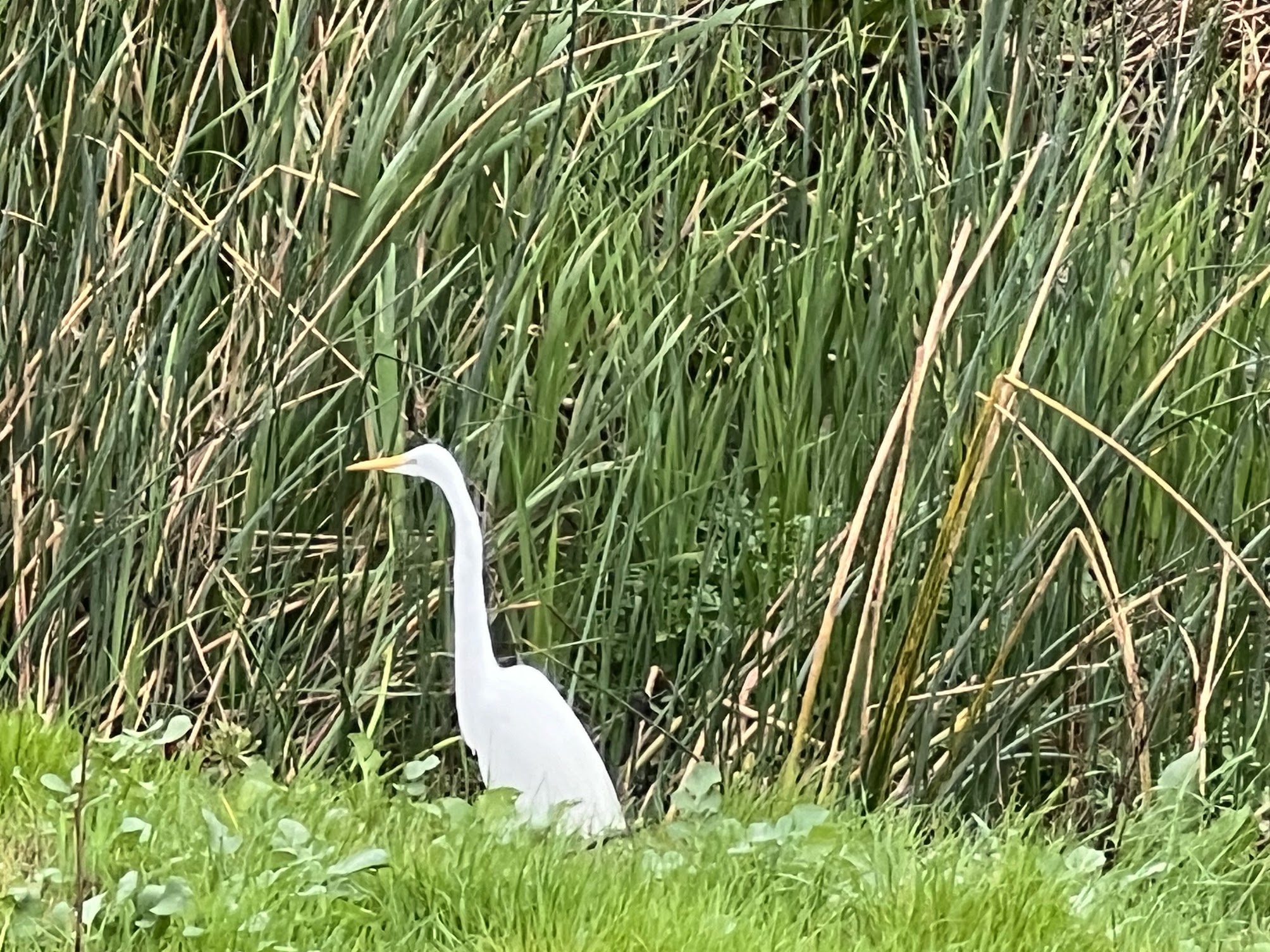
I stood for a few minutes under the cloudy skies of winter, looking out into the ponds, lakes and rivers near our home. It was after the first proper rainfall of the season – and I was trying to capture the still quiet in my being. The stormy clouds above were portending another storm coming, but for now, all was calm. The herons watched (their demeanor not as impassive as it usually might be perhaps, or perhaps that was my own anthropomorphism) as the clouds gathered strength.

I couldn’t help asking the universe to help us through stormy seasons with the same impassivity that these herons showed.  

img_3851

As the year wraps, I feel a sense of dread. Humanity’s craving for the dramatic is probably a defining characteristic of the species (although to be fair, I am not sure whether geese crave the drama too. They do seem to get all agitated, and excited for seemingly no reason when you observe them).

A Dramatic Shift?

Regardless of political leanings, I think we can all agree that the change in presidency is going to lean heavily towards the dramatic – we saw it all the last time around. News frenzies, whipped up emotions, and a lot of emotions that probably look good on reality shows, but not in our daily lives. 

“Sometimes I wish something dramatic would happen once in a while.”, said Rilla

“Don’t wish it. Dramatic things always have a bitterness for someone.” said Miss Oliver

– Rilla of Ingleside: L M Montgomery

America did not just make an election choice, it elected for chaos. We seem to have forgotten so many things:

  • We forgot that the hiring and firing, and the incessant news cycles, gave little room for anyone to actually do any of the work that mattered to them
  • We forgot that thinking in long-term strategies is what separates humans from any other species on the planet – save ants, and squirrels maybe. 
  • We forgot that one ridiculous policy after another is all it takes for the house of cards to start crumbling down.
  • We forgot that having a leader spout not just dangerous, but frankly lustful language is what their young daughters and sons are listening to. That will be their new norm – it hurt me more than anything that the voter turnaround was significant in the 20-30 young men demographic nationwide. That means, we have a value system that is ready to spout whatever it is they are going to hear in the next few years for all their wives and children.
  • We forgot the study where sociologists were baffled when crime went down suddenly in the late 80’s. It was because there was a whole generation of unwanted babies who were not born thanks to Roe V Wade in the 70’s. In the 80’s, these babies would have entered their troubled adolescence trying to make sense of a world where they were unwanted. 
  • We forgot how easy it was to make one feel as ‘other’ – divisive lines everywhere.
  • We forgot the lack of empathy and compassion that our daily messages bore.

The older I get the more I wish people interesting, dull, and predictable lives – it seems so much better than the dramatic. 

“After all,” Anne had said to Marilla once, “I believe the nicest and sweetest days are not those on which anything very splendid or wonderful or exciting happens but just those that bring simple little pleasures, following one another softly, like pearls slipping off a string.”

L.M. Montgomery, Anne of Avonlea

Bracing for the Storm

I opened my eyes and took in the heron by the lake. It had barely moved – because it knew that storm or no storm, it would have to wait and pass the moments in the day as best as it can. 

I looked up and saw the storm gathering force. I felt the first few droplets fall on my nose, and hurried back. It was time to brace for the storm.

Preparing for Tsunami Warnings: Lessons Learned

 Emergency Warnings – Tsunami 

A week ago, we were all a-twitter. You see? We received a tsunami warning. There had been a 7.0 earthquake in Northern California – about 3 hours north of where we live.

We technically live not near the coast but we are quite close to the bay in the Bay Area.

This was the first tsunami warning we had received. So, while the tsunami warning made sense, we also had no idea on what to do with it. So, we did the only thing that humans in modern times do: Took to the phone and tried figuring out what others thought.

What is a yellow warning? We live a few miles from the shores of the bay – could that mean a sudden inundation?

Responding to Warnings

There are times when mass communications (by that I don’t mean communicating to the masses, I mean masses of communication) make sense, but this was not one of those occasions. Everyone said different things, people worried. Staying away from the bay seemed like a good option, but apart from that, no one had any idea on what to do. Should we head to the hills like we’d read long back somewhere?

So, we all did a lot of hand-wringing and sent more messages. Ultimately, the tsunami warning was revoked, but not before letting us know exactly how unprepared we were in case of a real emergency.

When that alert had come it was up to us to determine the next course of action. For one thing, we were a couple miles inland, so what was required of us? That’s when I realized the old fears I had for our little family when we both worked on the other side of the bay. I had wondered what might happen in case of an earthquake that stranded us all on the other side of the Bay. But a Tsunami could just as well have done that. 

The tsunami warning was lifted, and in a few hours, people went about their business as usual. Which is to say traffic snarls were everywhere, week-end parties and events did not bother to acknowledge that which could have been life altering.

It is a testament to the human temperament that we can so flippantly treat that which could have been a disaster with a wave of the hand. 

🦌 Emergency Drills -Earthquake, Fire 

I volunteer in elementary schools from time- to-time. The experience is a wholly enriching one as I get to work with children – which is refreshing. They are inventive, imaginative, kind and un-jaded in their outlook towards life.

I got to experience an earthquake and fire drill with them one day, and I cannot tell you how impressed I was by their skill and competence. Even when scrambling under desks – they looked out for each other as much as possible. When they filed out into the fields nearby, they kept to their classrooms and straight lines, and I was more than impressed by them on more than one occasion that day. 

I had seen firsthand how incompetent adults could be, when the tsunami warning came, and it was refreshing to see children knowing how to handle fire and earthquake warnings.

I suppose natural disasters are called that for a reason. They are erratic, chaotic, and tend to surprise humanity every time even with emergency warning systems, safety drills and the like. The school systems managed to highlight these things and taught me a thing or two: keep calm and fall back upon training.

How Children’s Books Teach Life Lessons

I don’t know why we bother with thick repetitive self-help books, when children’s books can give us all we need with beautiful pictures, simple messages and heartwarming characters all at once.

I Can Be Anything – Don’t Tell Me I Can’t : By: Diane Dillon 

I Can Be Anything! Don’t Tell Me I Can’t

This book was such a surprise because it captured that inner critic in us so well. 

Don’t we all know that voice? Sometimes nasty, other times discouraging, but also quite ready to remind you that it’s there. Over time, we do try to overcome its influence, and try to rationalize with it, but still it rears its head every now and then. Evolutionarily, it may have saved us from trying to leap across high-ledged craigs better suited for mountain goats, but in our modern world, it simply tries to save us from failures. It is an important feature but only when called upon. 

The book captures it so well.

BeAnything

If you’d like to be an artist, the voice would ask you what you would do if you simply didn’t have the talent for it.

If you’d like to be an astronaut, an archaeologist, a president, it has something to say for every aspiration.

You don’t know what you want to be do you? Said the voice.

But I’m always with you, you know. Said the voice. No matter what you do.

You are a beautiful beginning

By: Nina Laden Illustrated by Kelsey Garrity Riley

You Are a Beautiful Beginning: Laden, Nina, Garrity-Riley, Kelsey: 9781250311832: Amazon.com: Books

Another beautiful book on the beauty of embracing You. As a child I found the message to be You very confusing. How could you know who You were? Were You a doctor, engineer, lawyer, or were You a leader, or were You a friend? 

It all got increasingly complex when people kept telling you to be this or that, or like him or her, how could you just be You? Was it enough?

It’s not about being cold, it’s about finding the warmth in the cold, or how it isn’t about losing, but about playing. 

beautiful_beginning

Simple messages with beautiful pictures. Every couplet in the book isn’t particularly life changing, but the book feels like a lovely reminder on what we strive to be. 

Isabella: Artist Extraordinaire – By Jennifer FosBerry, Illustrated by Mike Litwin

Isabella: Artist Extraordinaire: Visit Famous Art With This Inspiring Story About Creativity For Kids (Includes Guide To Art And Artists Like Van Gogh, Degas, And Warhol)

If we have to decide what separates humanity from the remaining species on this planet, I think the paradoxical nature of time and how we choose to occupy it must be the deciding factor. Most other creatures raise their young, spend time procuring their food, and spend the rest in seeming companionship of their fellow creatures. But humanity seems to be the only species where we want to be efficient about time, and also try and figure out how best to occupy it. Knowing how to be happy with yourself, your imagination, and using your time well has to be one of the greatest gifts to receive from the muses. 

In this book, Isabella has a day off from school, and her parents are giving her options on how to occupy it, saying that if she cannot decide on something, she may well have nothing to do but to stare at a starry sky. 

A day at the lake, or the park? A horse rodeo?

isabella

But then, Isabella shows them that all the inspiration she needs she gets from her own work on her art gallery. 

It is, of course, a beautifully illustrated book and the book shows the inspirations behind each of the images in the book.

There were quite a few other books – I wish I could write them all up, but even more, I wish you all have an equally exciting time in your library looking through these marvels.

The Oldest Trick in the Book

Flittable Flipperbits

It was one of those days when I felt speed and productivity were playing a cruel joke on me. It bonked me from chore to meeting to event to missed messages, and by the end of it all, I had a vague sense of all the things that didn’t feel quite right because the important had been muddled in with the unending stream of the banal.

In all the melee of rushing about the day, I realized that I had missed an important piece of communication, which, had I picked up at the right time might have saved me about two hours of turmoil, but there you are. 

Later that night, I felt foggy. Nebulous clouds, misty and mysterious as they seemed, I knew I needed to sit and stew for a bit for them to take shape. But then, of course I was too stimulated to do that – flittable flipperbits!  I marveled yet again at the highly energetic, always-on-top-of-things folks we meet in our daily lives. They sparkle with busyness, and seem to be happy about it too. I felt that strange longing to be like them just for a day perhaps! 

By the end of the day, the world seemed to laugh at me, and I had no choice but to join in. So, I did. 

The husband gave me a curious look and said, “Well – you just did get a day like that, and you seemed to have managed pretty well – you were busier than you wanted to be – a day filled with things to do, and jobs to get done, buzzing about. You seem to have missed out on some important things, but you took care of them. And you seem to be laughing at the end of it, so what’s wrong?”

I gave the poor fellow a look that I usually reserved for poorly cooked cabbages, said he wouldn’t understand, and swished off to bed. I felt like a cooked cabbage myself, how was that any good? 

Dreamy Strawberries

It was all made clear to me the next morning when I awoke from what seemed to be one of the strangest dreams that even I have had in a while. It involved marriage halls with catchy music, social situations that I fervently hope and pray I shall never find myself in, and feeling like I was run over by a truck that had strawberries in them with flowing taps of chocolate (but not dark chocolate – for some reason, this seemed like an important thing for the brain to remember the next day) 

So I decided to meditate today – the diagnosis was clear: this was an over-wrought brain. Nothing else. I shall meditate and all shall be well. By the time things pick up in a few hours, I shall have the world in control again, I said, and sat down to it. The oldest trick in the book really, but the most effective.

How did we muddle it all up?

I thought of all my wonderful yoga and meditation teachers, and invoked their calming voices. They floated up, and did their job, and I spent the next few minutes thinking about a conversation I had with my friend – who is a poetic soul brimming with love, and we had chuckled about it. How the world of remuneration is all inverted. The ones who really should be the best compensated are the ones who teach us to spend time with ourselves, taking what is available and trying to help us shape ourselves into something far more beautiful – our teachers, coaches, mentors, yoga, art and meditation teachers – and yet, the world has somehow played a cruel joke by compensating those who make the very algorithms and enable the lifestyles requiring these things to dance to the bank, and not the other way around.

I thought, I’d share this video though – for it says a lot of what I’d like to say – only a lot more cogently:

Rory Sutherland – Are We Now Too Impatient to Be Intelligent? | Nudgestock 2024

“Let’s let go of all stray thoughts – acknowledge them, but tell them, you’ll come to it.” said my meditation teacher’s voice in my brain – forgiving yet insistent, and I chuckled. How did she know where I had gone off to – even when I was only bringing her up as a figment of my imagination?

Meditation done, I felt like I could begin the dance of a new day with fresh energy, and rather looked forward to seeing how I would muddle it all up again. Somehow, that felt right.