Exploring Handwriting: Cursive vs. Digital Age

Cursive superpowers

The white board was littered with alphabets and numbers. We were discussing the different ways in which people wrote their numerals or alphabets. 

“How come nobody seems to like cursive writing as much anymore?” I said, and off we went writing our little cursive numerals and alphabets like artists swirling their best hieroglyphic characters.

“Is that an ‘I’? Truly? I have never seen an ‘I’ like that before!”

“Wow – that ‘J’ is wild! No wonder teachers moved away from cursive. “

“Well, there is a lost skill – imagine the superpowers teachers had deciphering everyone’s handwriting and essays.”

Hippopotomonstrosesquippedaliophobia anyone?

That was true. It is a superpower. Writing fast was a superpower too, one that was made easier with cursive. How beautifully could we go on in one pen stroke for a word like pneumonoultramicroscopicsilicovolcanoconiosis? How many people suffered from hippopotomonstrosesquippedaliophobia back then compared to now (fear of long words!)?

“I think in terms of the keyboard locations when I spell a word.” said a much younger colleague, and I drew in a breath – the places where generational differences get you is truly mind-boggling. But then I realized their generation spent more time typing things out in word documents, or in chat screens than any other generation preceding it, and it was only natural for their brain to associate the keyboard with the spellings..

One person said that when they added numbers, they imagined them as dominoes being added together. “Were you a gamer?” 

“Yes!” they said, looking a little sheepish.

The Cognitive Processes of our Brains

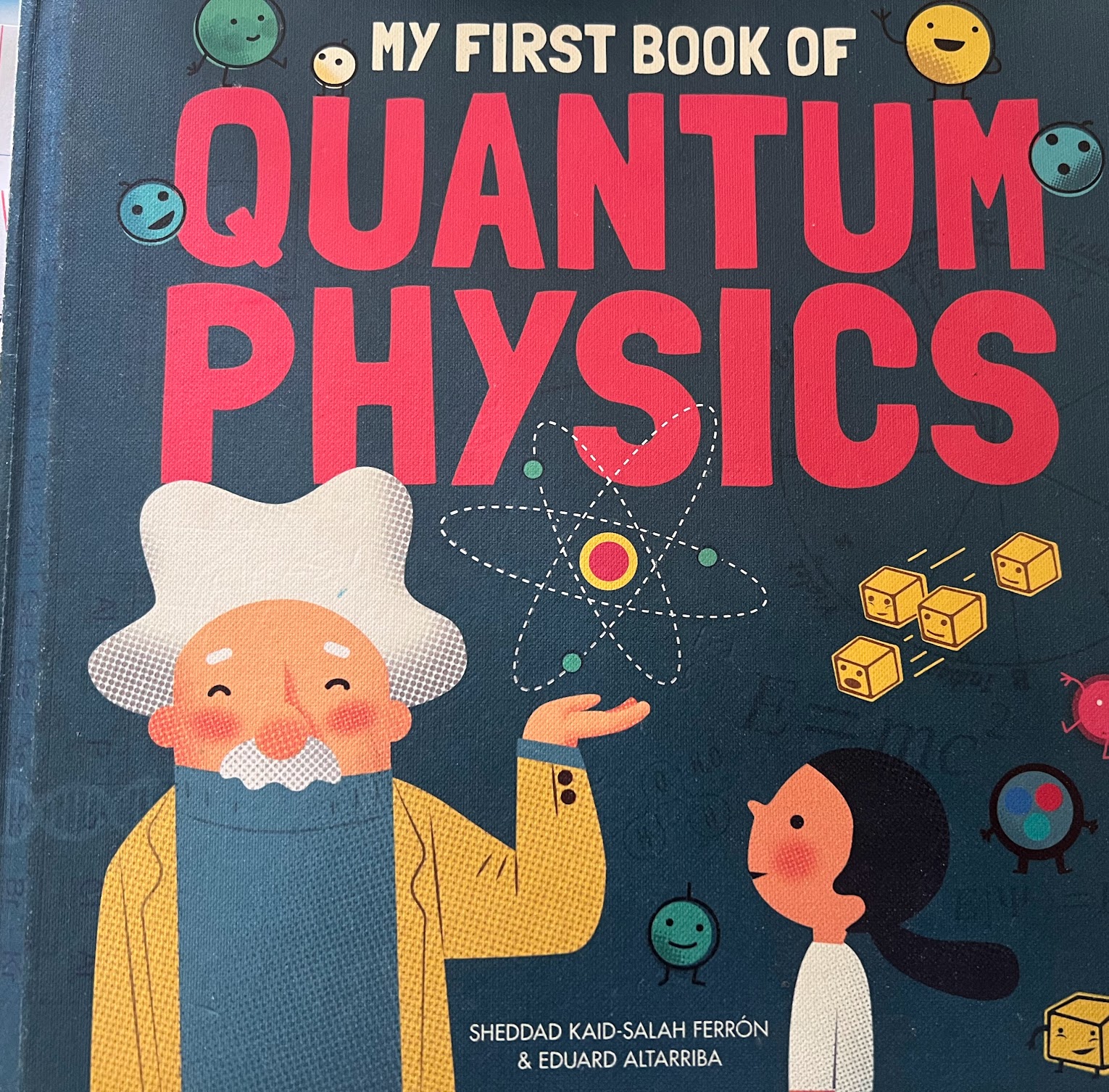
Truly, the brain is such a multi-layered immensely capable and adaptable organ. Neuroscience must truly be fascinating to study and research. How many visual thinkers were there among other species? What percentage were analytical? Many would possess kinetic intelligence. Once we stop only thinking of the narrow spectrum of human intelligence, the world becomes that many dimensions more fascinating. I peered into the bookshelf at a book that has been on my tsundoku shelf for ages: ‘How the Brain Thinks’ and resolved to read it soon.

The picture of the brain was on the front, and I smiled as I thought of a friend who told me that they don’t like eating cauliflowers because it looks too much like the human brain. What was that type of thinking called? Visual or Associative.

Sonder and Saudade: Reflections on Travel and Books

Sonder

Traveling anywhere in the holiday season brings this fact to the fore. Airports, railway stations, bus stops, freeways – every place is packed with people, more people and more and more people. It was faintly unnerving at times to see this many people out in the world, all seemingly busy doing their many things. How many of them thought deeply, what did they do to occupy themselves, earn a living, attend to their loved ones? How many of them were loving and giving, and how many selfish and cruel?

That feeling of realizing the sentience of our fellow beings can be especially acute when traveling in crowded places. There is a beautiful word for it: sonder.

But wherever you were: one thing was apparent. Business was thriving. Clothing stores, eateries, perfumeries, jewelry stores – they dotted every city, country and airport. One time, I remember gazing out the window as we rode from one end to the diagonally opposite end of the city, and seeing shops after shops after shops. There was an apparent unending need for clothing and electronics, for consumption. One cannot help wondering about the ecological impact of all this, but there you are. ‘Better’ means the old has to go somewhere, and make place for the new. Maybe the next wave of innovations will be in making biodegradable plastics, electronics and clothing. After all, the waste that we are generating now can hardly be a scalable problem.

Lack of book stores in all the airports, cities

Even as I gazed out through the window taking in the local sights though, one thing sent a pang through me: the lack of bookstores anywhere was truly tragic. I felt their absence keenly. I had asked my siblings to fit in a visit to the bookstore. The only one in the vicinity was a little like a wild goose chase. The shop had moved they said, you cannot see the billboard from road they said. When finally, we found it, the reason was apparent. It was tucked away underground, as if hidden away from population. Only if you truly had the magical three things, could you find it: the will, the means, and the luck.

The bookstore had a passionate but regretful owner. “No space madam. Only so many books!” He said, gesturing apologetically to the small collection he had. To be fair, the little store had a fair amount of shelf space for children’s books (maybe those are the ones people are actually buying), but other fare was slim pickings. They were a few translated classics (which was a new section I admit) – it was heartening to see A Hundred Years of Solitude translated into Tamil. We picked up some books including a Tamil version of 1984 to donate to our local library in the USA.

The Hidden Bookshops of Timbuktu

But it all felt like the hidden bookshops of Timbuktu.

https://en.wikipedia.org/wiki/Timbuktu_Manuscripts

How many malls, streets covered with stores, and yet for intellectual stimulation, one had to either go scrounging or online? It was the same in many airports too. Perfumes, alcohol, watches, jewelry, clothing, chocolates, coffee, burgers: you could find these everywhere you turned, but good old fashioned books were tucked away in a corner (if at all), and hard to find.

What would it take for every coffee store, every clothing store, every jewelry store to have a reading nook that people could browse and buy books if they wanted? Wouldn’t that be marvelous? A tiny art nook that one could spend time creating their own art and craft while others shopped? I know reluctant shoppers would gladly accompany their friends and family if they could be tempted with the right incentives.

Was that utopian thinking?

Image: The beautiful hotel in which we stayed in Zurich that had a large marvelous library in its lobby. My heart sang, my spirits danced, and my soul settled, here in the presence of greatness!

Saudade

Our own town in US lost its bookstores to the great Amazonian sweep a decade ago. But luckily stores like Target or Costco still have a small pecking section for those really wanting to buy books or see them before picking them up.

Oh books! When did you go from being ubiquitous to precious to rare?

Could this be referred to as Saudade? That feeling or yearning for lost experiences?

The Meaning of a Good Life

We went to visit our old school haunt – the home of our school days, and some of the best memories. If there is a utopia, I’d like to think it is very much like that place. There was plenty of ‘real’ life there too – It was by no means devoid of pain or jealousies or strife or suffering, but life still felt full of promise. Like the universe was conspiring and preparing us for a fantastic future. Maybe it was the optimism of youth, maybe it was the collective talent of the folks around us, or just the marvelous eucalyptus scented air around us in a beautiful location in the Nilgiri Hills.

Of course, one cannot help feeling like you’ve let down the school quite a bit, but what can you do? Luckily, most of our teachers have retired, but I felt I could feel their encouraging presence at every science lab and every playground. 

A visit there at this stage in life though, revitalized me in ways I did not comprehend till I had the quiet and solitude to mull things over after coming back to the USA. “You can still do a great many small things to make things better for the world around you, couldn’t you?”, a small voice whispered in my ears. Maybe after all these decades of striving, that is what you come to realize. That, as Mother Teresa said, there is greatness in small acts:

“Not all of us can do great things, but we can do small things with great love.”. – Mother Teresa

I asked my father what he thought at the time – he was a teacher there. Did he think any of his students would go on to win the Nobel Prize, or the Booker Prize or become the Finance Minister or make it big in the field of Arts/Drama/Acting?

He said that the markings of greatness were visible in few children at such a young age. Mostly, it was the potential that excited the teachers. You ask the pater a question, and he can turn it into an impromptu speech within seconds. So, I wrapped up and set off on a walk while talking to him. Always the best thing to do. He said,

To rephrase Shakespeare:

Some people are born into greatness, some acquire greatness, and some have greatness thrust upon them.

In good schools with well to do parents (by that I mean parents who not only have the means but also the interest to invest in the success and achievements of their children), many children belong to the first category. Success is expected of them, and the tools are there for the taking. Barring any major life events or health issues, these children can build a life for themselves – that is not to say there isn’t struggle. For those very expectations of greatness can be a burden to overcome.

The second category of talent comes up despite their circumstances – the distance they go in life, the differential between where they started and where they end up is the yardstick for their success. Many children from modest means who go onto achieve success belong to this category.

The last and final category can come from either of the categories above – but these people are tested beyond what normal people endure. Their hurdles are frequent, gargantuan and any progress they make is a success in and of itself. Health issues, career issues or relationship issues (sometimes all three) test them. Many break under the stress and strain of it, but those who are thrust into greatness endure, secure in their understanding that small victories and sustained mindsets often tide them over better.

Many are the stories and epics written about these characters. But more importantly, we all know friends and family in this category. Even if it isn’t obvious, even if we aren’s writing songs about them, they are truly heroes of their stories. Being a stable parent in a tumultuous relationship, navigating health hurdles, being a steady breadwinner through times of economic upheavals, being a steady person when all around you have lost their minds – that is their greatness.

IF – By Rudyard Kipling

If you can keep your head when all about you   

    Are losing theirs and blaming it on you,   

If you can trust yourself when all men doubt you,

    But make allowance for their doubting too; 

Yours is the Earth and everything that’s in it,   

    And—which is more—you’ll be a Man, my son!

Or more along the lines of: You’ll be a Human-being, my child!

The evening was drawing cold, and I knew I had to cut my walk short, even as I mulled on the father’s answer. Making the best of things, and Never Give In were the things they taught apart from Languages, Mathematics, Arts, Sports, Sciences and History. For those it served well, it was heartening that it had, and for those that it hadn’t, well there was still hope that they would learn to do so. That, right there, was the philosophy of a teacher in one grand stroke.

The walk made me reflect on two of my favorite speeches:

On The Importance of Failure and Imagination – By J K Rowling

Harvard’s 80 year old Study on Happiness and Success (Harvard Study Article)

Greatness is something we are told to pursue, without properly knowing what it means, at a young age. For many, the pursuit of a living (and maybe fame or renown) occupies time and energy. But life is far more complicated and richer than that. It means good and close relationships with family and friends, good health, good wealth, good pursuits (intellectual, spiritual and physical), purposeful work, the ability to feel joy, and so much more.

Maybe this is why school reunions and such are planned at a certain stage in life. The environs can stimulate thoughts and spur us on towards growth and meaning.

How Children’s Books Teach Life Lessons

I don’t know why we bother with thick repetitive self-help books, when children’s books can give us all we need with beautiful pictures, simple messages and heartwarming characters all at once.

I Can Be Anything – Don’t Tell Me I Can’t : By: Diane Dillon 

I Can Be Anything! Don’t Tell Me I Can’t

This book was such a surprise because it captured that inner critic in us so well. 

Don’t we all know that voice? Sometimes nasty, other times discouraging, but also quite ready to remind you that it’s there. Over time, we do try to overcome its influence, and try to rationalize with it, but still it rears its head every now and then. Evolutionarily, it may have saved us from trying to leap across high-ledged craigs better suited for mountain goats, but in our modern world, it simply tries to save us from failures. It is an important feature but only when called upon. 

The book captures it so well.

BeAnything

If you’d like to be an artist, the voice would ask you what you would do if you simply didn’t have the talent for it.

If you’d like to be an astronaut, an archaeologist, a president, it has something to say for every aspiration.

You don’t know what you want to be do you? Said the voice.

But I’m always with you, you know. Said the voice. No matter what you do.

You are a beautiful beginning

By: Nina Laden Illustrated by Kelsey Garrity Riley

You Are a Beautiful Beginning: Laden, Nina, Garrity-Riley, Kelsey: 9781250311832: Amazon.com: Books

Another beautiful book on the beauty of embracing You. As a child I found the message to be You very confusing. How could you know who You were? Were You a doctor, engineer, lawyer, or were You a leader, or were You a friend? 

It all got increasingly complex when people kept telling you to be this or that, or like him or her, how could you just be You? Was it enough?

It’s not about being cold, it’s about finding the warmth in the cold, or how it isn’t about losing, but about playing. 

beautiful_beginning

Simple messages with beautiful pictures. Every couplet in the book isn’t particularly life changing, but the book feels like a lovely reminder on what we strive to be. 

Isabella: Artist Extraordinaire – By Jennifer FosBerry, Illustrated by Mike Litwin

Isabella: Artist Extraordinaire: Visit Famous Art With This Inspiring Story About Creativity For Kids (Includes Guide To Art And Artists Like Van Gogh, Degas, And Warhol)

If we have to decide what separates humanity from the remaining species on this planet, I think the paradoxical nature of time and how we choose to occupy it must be the deciding factor. Most other creatures raise their young, spend time procuring their food, and spend the rest in seeming companionship of their fellow creatures. But humanity seems to be the only species where we want to be efficient about time, and also try and figure out how best to occupy it. Knowing how to be happy with yourself, your imagination, and using your time well has to be one of the greatest gifts to receive from the muses. 

In this book, Isabella has a day off from school, and her parents are giving her options on how to occupy it, saying that if she cannot decide on something, she may well have nothing to do but to stare at a starry sky. 

A day at the lake, or the park? A horse rodeo?

isabella

But then, Isabella shows them that all the inspiration she needs she gets from her own work on her art gallery. 

It is, of course, a beautifully illustrated book and the book shows the inspirations behind each of the images in the book.

There were quite a few other books – I wish I could write them all up, but even more, I wish you all have an equally exciting time in your library looking through these marvels.

The Oldest Trick in the Book

Flittable Flipperbits

It was one of those days when I felt speed and productivity were playing a cruel joke on me. It bonked me from chore to meeting to event to missed messages, and by the end of it all, I had a vague sense of all the things that didn’t feel quite right because the important had been muddled in with the unending stream of the banal.

In all the melee of rushing about the day, I realized that I had missed an important piece of communication, which, had I picked up at the right time might have saved me about two hours of turmoil, but there you are. 

Later that night, I felt foggy. Nebulous clouds, misty and mysterious as they seemed, I knew I needed to sit and stew for a bit for them to take shape. But then, of course I was too stimulated to do that – flittable flipperbits!  I marveled yet again at the highly energetic, always-on-top-of-things folks we meet in our daily lives. They sparkle with busyness, and seem to be happy about it too. I felt that strange longing to be like them just for a day perhaps! 

By the end of the day, the world seemed to laugh at me, and I had no choice but to join in. So, I did. 

The husband gave me a curious look and said, “Well – you just did get a day like that, and you seemed to have managed pretty well – you were busier than you wanted to be – a day filled with things to do, and jobs to get done, buzzing about. You seem to have missed out on some important things, but you took care of them. And you seem to be laughing at the end of it, so what’s wrong?”

I gave the poor fellow a look that I usually reserved for poorly cooked cabbages, said he wouldn’t understand, and swished off to bed. I felt like a cooked cabbage myself, how was that any good? 

Dreamy Strawberries

It was all made clear to me the next morning when I awoke from what seemed to be one of the strangest dreams that even I have had in a while. It involved marriage halls with catchy music, social situations that I fervently hope and pray I shall never find myself in, and feeling like I was run over by a truck that had strawberries in them with flowing taps of chocolate (but not dark chocolate – for some reason, this seemed like an important thing for the brain to remember the next day) 

So I decided to meditate today – the diagnosis was clear: this was an over-wrought brain. Nothing else. I shall meditate and all shall be well. By the time things pick up in a few hours, I shall have the world in control again, I said, and sat down to it. The oldest trick in the book really, but the most effective.

How did we muddle it all up?

I thought of all my wonderful yoga and meditation teachers, and invoked their calming voices. They floated up, and did their job, and I spent the next few minutes thinking about a conversation I had with my friend – who is a poetic soul brimming with love, and we had chuckled about it. How the world of remuneration is all inverted. The ones who really should be the best compensated are the ones who teach us to spend time with ourselves, taking what is available and trying to help us shape ourselves into something far more beautiful – our teachers, coaches, mentors, yoga, art and meditation teachers – and yet, the world has somehow played a cruel joke by compensating those who make the very algorithms and enable the lifestyles requiring these things to dance to the bank, and not the other way around.

I thought, I’d share this video though – for it says a lot of what I’d like to say – only a lot more cogently:

Rory Sutherland – Are We Now Too Impatient to Be Intelligent? | Nudgestock 2024

“Let’s let go of all stray thoughts – acknowledge them, but tell them, you’ll come to it.” said my meditation teacher’s voice in my brain – forgiving yet insistent, and I chuckled. How did she know where I had gone off to – even when I was only bringing her up as a figment of my imagination?

Meditation done, I felt like I could begin the dance of a new day with fresh energy, and rather looked forward to seeing how I would muddle it all up again. Somehow, that felt right.

Inspirations for Writing

Talented Inspirations

I recently read The Firework Maker’s Daughter by Philip Pullman

I’ve always wondered about the series of books that are titled thus: Galileo’s Daughter, The Clockmaker’s Daughter. The appeal of the daughters of men with interesting careers is an interesting premise. For so many years, women were denied the opportunity to consider interesting careers.

Like Elinor Dashwood (of Sense & Sensibility fame) says of women and careers:

“You talk of feeling idle and useless. Imagine how that is compounded when one has no hope and no choice of any occupation whatsoever”.

  • Jane Austen, Sense & Sensibility

If ever I am grateful for anything, it is that women’s talents are now nurtured and recognized. After all, talent does not distinguish between the crude lines drawn out by humanity – it does not care about race, caste, creed, sex, religion.

Fascinated as I was by the book, The Firework Maker’s Daughter,  I loved the colorful cast of characters, and  what is required from them to succeed in their profession. It also got me interested in the writing style of Philip Pullman – his was witty, whimsical, and oh-so-light.

Pullman on Writing (Source: Wikipedia)

I have stolen ideas from every book I’ve ever read. My principle for researching a novel is ‘Read like a butterfly, write like a bee,’ and if this story contains any honey, it is because of the quality of the nectar I have found in the work of better writers.” 

  • Philip Pullman

A better imagery for writing I could not think of. If one thinks about it, life itself presents all the inspirations we want. Even when is in the midst of the Thanksgiving week-end, and may be busier with spending time with family, friends, trips etc, the inspirations are all around us. 

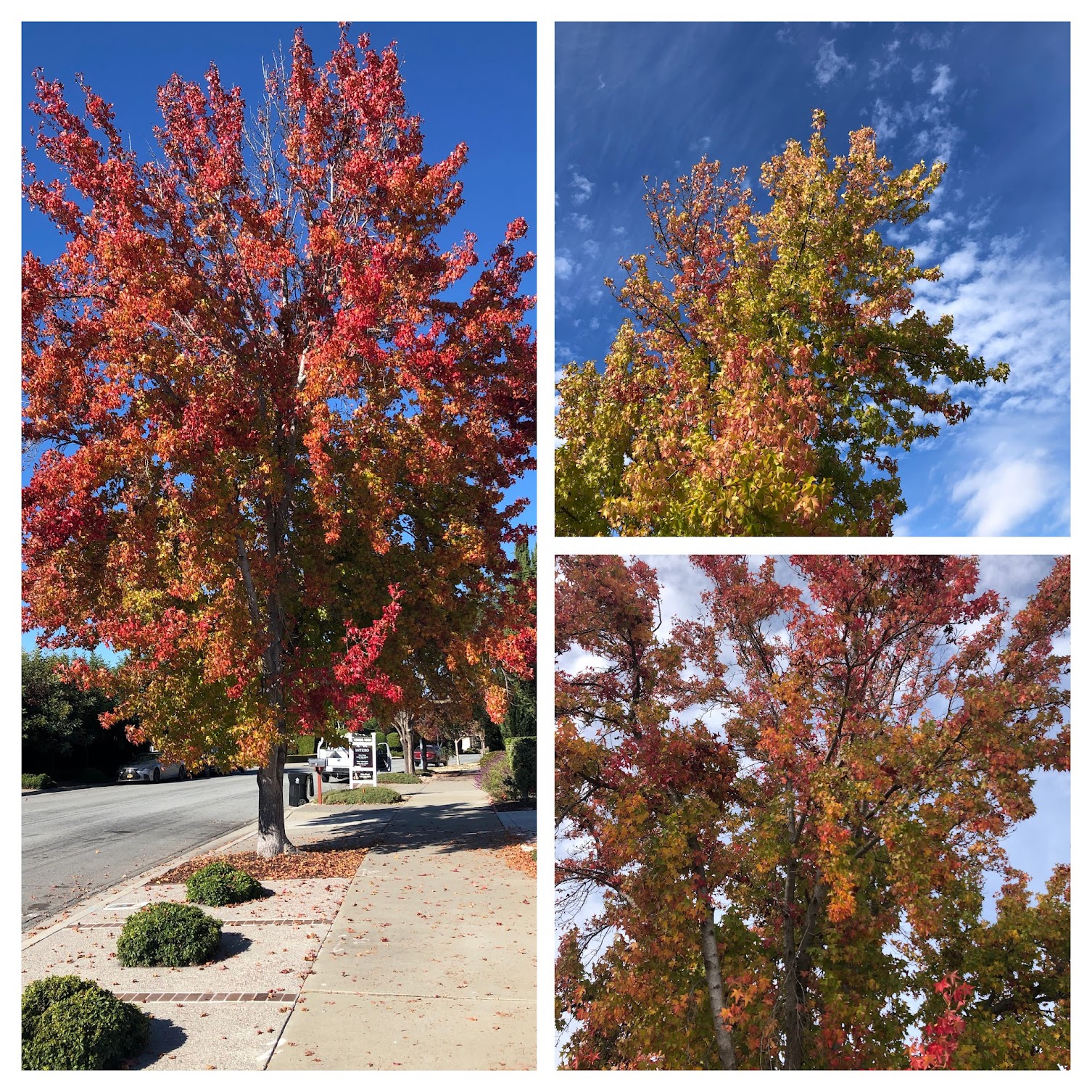
If you are looking for that November spark, look at sparkling fireworks of Diwali, the colorful trees of the fall foliage around us, the many friends and family one meets during November’s Diwali & Thanksgiving  seasons to gain your sense of well-being, gratitude and inspirations!

Manathakkali Keerai

Poetic Greens

Manathakkali Keerai has a beautiful name in English – they are called Sun Berry or Wonder Berry or Black Night Shade greens.

What poetic names for such an unassuming plant?

It was a variety of greens that both my mother and father-in-law seemed to adore, and I was slightly taken aback to see the way they were thriving in our little vegetable patch to be honest. It was nice enough to pick the little black berries and pop them in, but the greens? I had no idea what to do with them. The mother donned her expression of helping the local village fool and said, “Make keerai out of it!” and so there we were – harvesting. 

Do we take the stems? 

Just the leaves? 

Cook the green berries or just the blackened ones?

Cut them or strangle them from their stems?

The husband, clearly out of his depth, had taken to advising me on harvesting techniques.

“Dude! We’re both doing this for the first time ever as far as I am aware. And you know even less about this than I seem to know, so why exactly are you giving me directions?” I said, frowning. 

“Yes! But do you really mean to say that women don’t like being told what to do?” he said. At least he looked abashed.

I laughed at that and we both went ahead with butchering the plants we were supposed to be harvesting.

Cooking the Greens

We managed to get a few leaves for the dish, and I made them. “So, what do you think? These are extremely healthy!” I said pointing to the cooked greens – I had to admit that they looked a little disappointing. 

The children both winced.

“Hmm…They look healthy.” 

“See? Already looking green!” I said and they both glared at me a little. “Remember those mouth ulcers you were telling me about? Well – these are supposed to be the very best cure for that.” I said. 

“Yes mother – thank you! But I had the mouth ulcers months ago!” the son said.

“Well – it takes a while to grow, doesn’t it?” I said weakly and encouraged them to eat up like good children. 

After they took their first mouthfuls, it was priceless. The daughter said, “Hmm…it’s a bit bitter, but does it have to be so stringy?!”

I gave an uneasy laugh. Were they stringy? They looked, well, green.

The son had a dubious look, and prodded it a bit, he put some in, and then gagged. Spectacularly. And went running to the sink. 

I could have tried the strict got-to-eat-up routine, but it is difficult when the dish looked that questionable. So, I tasted it too, and oh lord! What kelpie crying in the kitchen could eat that?! It was … well…as the children kindly put it, “Not exactly disgusting, but close!”

Maybe I hadn’t made it quite right. Oh well. 

Peeking out after the rains

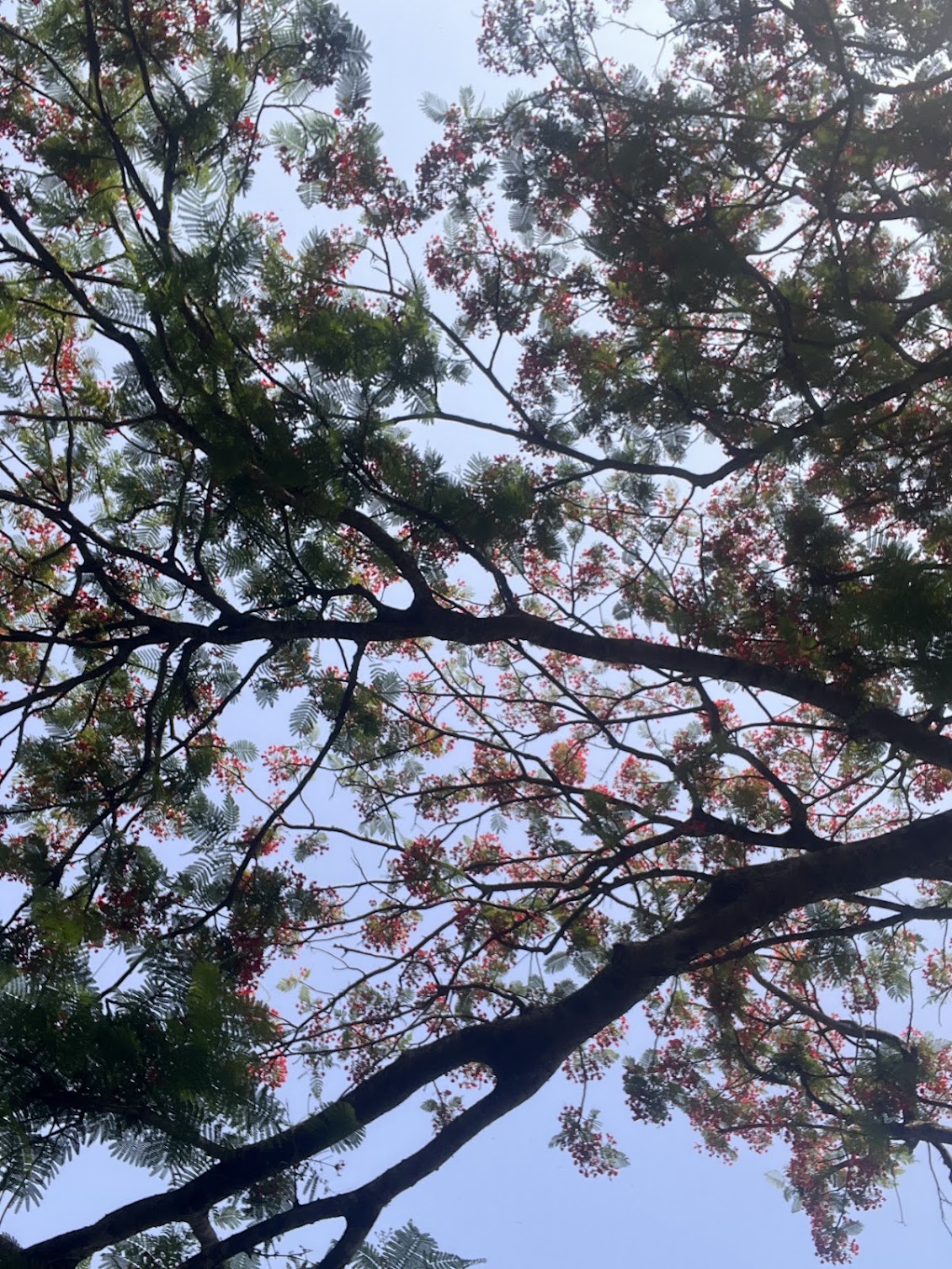
Novembers in the Bay Area are beautiful. It is the time when the world around us turns colorful – assures us that the seasons are turning. The fall colors, never as resplendent as in the East Coast, are inviting, and the son & I spent more minutes walking gleefully into crunchy leaves in the past few days than was necessary. We also gazed upwards into maple trees – the greens, yellows, reds and maroons like a beautiful artist’s palette in the world around us. 

Regardless of how we started out, we’d come back smiling widely and happy to be out in the world. The days drawing in closer also means that we had to really try to catch all of this in a narrow window before the skies draw the screens on them. That sense of urgency adds to the thrill. 

“She had always loved that time of year. The November evenings had a sweet taste of expectation, peace and silence.

And she loved most of all the quiet of her house when the rain fell softly outside.”

– Louisa May Alcott’s, Little Women.

The squirrels, deer, water rats – they all seem to be more at ease with the time-change than we are. Probably because they don’t peer at the clocks before heading out for a walk. They rise with the sun, and rest with the dark. There is a profound kind of philosophical simplicity there.

img_3794img_3793

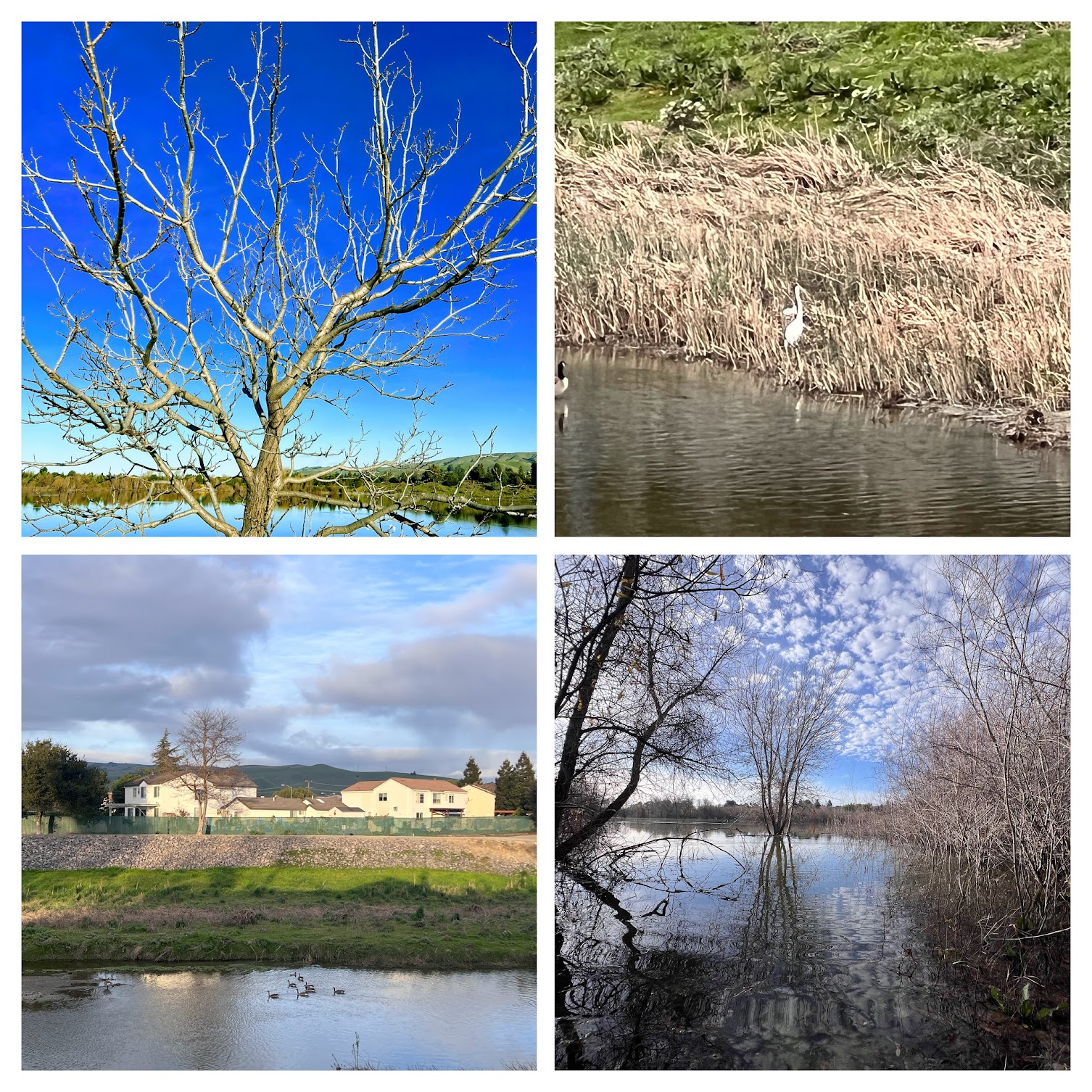
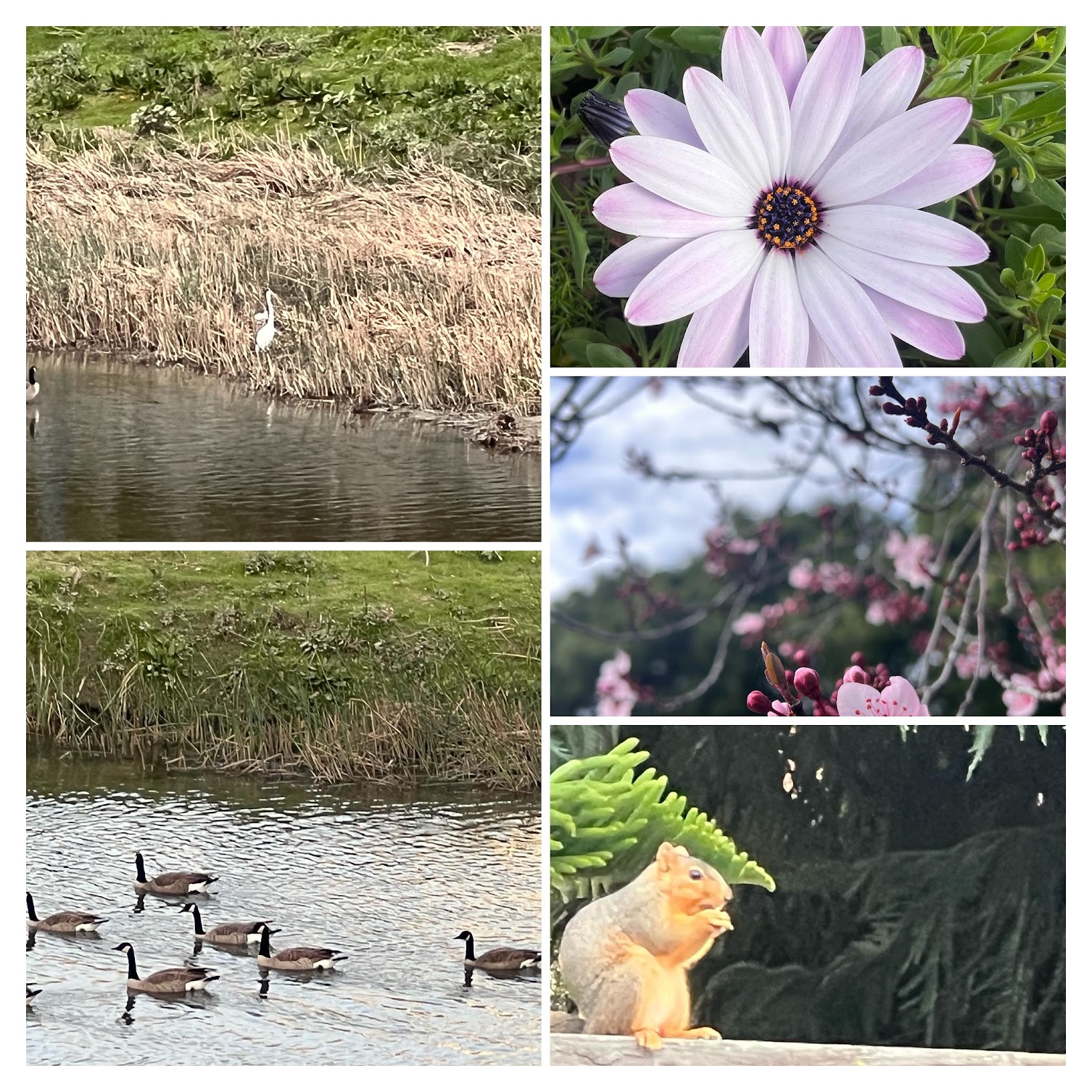
Yesterday was Veteran’s Day and a holiday for schools. So, we decided to make a song-and-dance of it, and headed out for a walk after lunch. The rains had lashed down all morning – the first rains in November in the Bay Area always make me feel warm and special. By afternoon, the clouds were scuttling away, leaving a delicious moist, clean Earth behind. We walked around a lakeside – watching the pelicans, sanderlings, geese and ducks catch the sunshine after the rains too. 

There is a strange solidarity amongst creatures in that simple act. Peeking out after the rains.

img_3797

The Goat

“So, how was your day?” I asked the son as I picked him up from school a few weeks ago. He drooped, looking shriveled from the heatwave outside.

“P.E at the worst possible time of day!” , he shrugged. My heart went out to the fellow and well, all of the students really. 

Bay Area had endured a heat wave of 100 degree days for two weeks, and if I did not record the following, I’d be remiss in my writing as the Jotter of Events in the nourish-n-cherish household.

“Come on! It can’t be that bad! How about we get some ice cream?” I said.

His eyes shone. “Really?” 

I nodded and asked him to invite his friends too. Afterwards, I asked him what the most exciting part of his day had been aside from the ice-cream (“Awwww!”) 

“Nothing really!” he said, looking as morose as it was possible to look, with ice cream dripping on his fingers on a hot day in an air conditioned car. 

The Goat Story

“Oh come on! It can’t be that bad- the most exciting thing of my day was when I saw a herd of sheep on my walk today. One of them had managed to slip out of the electrified fences. How it managed it, I don’t know. Maybe climbed too high up a tree and flipped over either side. Poor thing.

But you should’ve seen the panic! The sheep dog was going crazy seeing one of its wards had escaped. The other goats were all in a titter, all of them baying and boo-ing. The anxiety in the air – the poor things all wanting to help, shouting directions, and the lost goat all alone on the other side of the fence. It was heart-wrenching to see them all like that.

Then another dog comes on the trail, and this poor goat almost jumped through its own skin. The dog is excited to chase a goat on the trail. The owner of the dog is nervous that she can’t control her dog if he decides to lunge for the goat. The sheep dog is nervous and barking to high heavens at the excited dog, “Don’t you dare! Don’t you dare! My goat!”

The goats are all frisky and baa-ing away. All of them shouting instructions to the poor misplaced one – Keep left, go that way, try doubling back in this way! No! Not that way! This way!

The poor lone goat who escaped the fence, the poor goats fenced in and trying to help the escaped one, the poor sheep dog trying to find a way to bring in the wayward goat who is feeling more and more lost and panicked by the second, the poor dog owner on the trail trying to restrain her own dog, the dog clearly being stopped from doing the thing it most wants to do which is to chase the goat,  and the onlookers all of us desperate to help the poor animals, but unable to do anything. The noise is incredible, you can pluck the emotions out of the air.” 

I stopped to look at the son. He swapped his intent listening face to his mischievous laugh, “Are you kidding me? Huh! Get it? Get it? Lost goat? Kid? Never mind. But really amma!  As far as exciting things go, this is much better than mine. I had to listen to teachers talk about transformative functions all day! So even if you had nothing else happen to you the rest of the day, which I know is not the case, you still win!”

I laughed. “Hope the little fellow got in with his pals. Never have I seen such panic in brown rectangular pupils.”

“I am sure he did – that goatherd comes by every hour or so, doesn’t he?” said the son. He looked marginally better having heard the goat story, and then went on to tell me about his day in a little bit more detail.

Halloween’s Influence: Understanding Fear in Stories

“Arrgh!” 

“Gosh! Dude! You scared me!”, I said, leaping neatly into the path of a bewildered looking biker on the trail. His eyes grew wide, and he wobbled spectacularly before regaining his poise and balance, and then smirked. 

I suppose it was funny. A scrawny fellow like the son is hardly the sort of fellow to make their mothers leap out of trail paths with their scary stories. But it is nearing Halloween and we were discussing the themes of horror in their English Literature class. 

“What are the elements of a horror story?” I asked.

His answer made me jump, leap into biker’s path, earn b.look from biker as he regained balance and then a smirk for additional points etc. 

I must admit that when it came to quakey finds, horrors take the biscuit. Stephen King is all very well in the daytime, with soothing cups of tea, warm music etc. But otherwise, no thank you! I still prefer the glow of humor, the comforts of friendships and love, good old fashioned topics like (science, nature, history, psychology, travel), and mild adventure in my reading fare.

Horror in Literature

What made the class interesting was their discussion on not just horror, but how it affected the different parts of our brains. The amygdala (the small pea sized piece of our brain) is known for the fear response – that is the piece we share with reptiles, he went on to say and I listened in awe. Our prefrontal cortex is where we process what the amygdala sends us, to appropriate a response. 

“I think you should research it up a bit more before quoting me though!” he said, giving me a stern look.

“What if I wrote that you asked me to research it, so folks know it isn’t the Gospel of NeuroScience instead?” I said, rolling my eyes, and he laughed at that and agreed. So here goes, folks: please research this piece on your own. 

How interesting to sit in a class, watching a 90’s cartoon show about Courage, The Cowardly Dog in the Chicken From Outer Space. 

Then to analyze how the different parts of the brain were affected by the fear response? I can’t think of a better way to spend a Wednesday afternoon. I would have loved to be a fly on the wall in that class (risking a horrified teenage set of kids screeching and swatting at flies notwithstanding), and I was full of admiration for their teacher who had taken the trouble to come up with a lesson like that close to Halloween.

Boggarts & Dementors

The whole conversation on fears and the horrors of our psyche reminded me of another conversation from a few days ago on boggarts and what shape each of ours would take. Harry Potter and the Prisoner of Azkaban has always been one of my favorite books – it addresses so many themes – how not to judge someone based on first impressions, how the truth can be life-altering, the importance of friendships, conscience, etc etc. But this book specifically addresses fear and our worst experiences in the form of boggarts and dementors.

This YouTube video on the SuperCarlinBrothers Channel on Why It Is Wise to Fear Fear is an amazing one in this context:

Harry’s WORST FEAR Explained | Harry Potter Film Theory

Halloween is the one time we acknowledge fear as a society. It also comes with a good antidote to fear: the ability to allow for whimsy and creatively live our lives.

We turned around after our walk, and the biker, much fortified after his own little fright, gave us a wan smile as he made off in the opposite direction too.