An Enchanted Adventure: A Journey Through Children’s Books

Mystique & Intrigue for an Adventurer & Explorer

“I am going to indulge myself in something that I haven’t had the chance to do in some time!” I said – throwing it over my shoulder casually in a manner intended to intrigue and mystify.

“Going to the library? Good job ma!” said the son, and I moaned. Mystique and I. My foot. 

I guarded the time I had between a drop-off and pick-up session like it was precious (because it was) and headed towards the library. I fended off requests for the grocery store, deftly ducked under an amazon return order request, and dodged an enticing offer to search for missing documents in the house. 

When finally I walked into the cool library that hot summer evening, I felt something like an adventurer. An explorer who found their way to treasured lands. It was beautiful.

The display stacks groaned with new children’s titles, the popular books section assured me that the authors displayed there had been continuing to do their good work of broadening children’s minds. 

I cannot adequately state how marvelous it all is. 

The hot evening outside meant I picked up books with illustrations with cooler themes in illustration. Sleepy dreamers, cozy woodland creatures, forests in fall, the gleam of windows in the night, the beautiful shapes of the stars in the night sky. The here-and-now of long summer days has us all yearning for these themes, I suppose. 

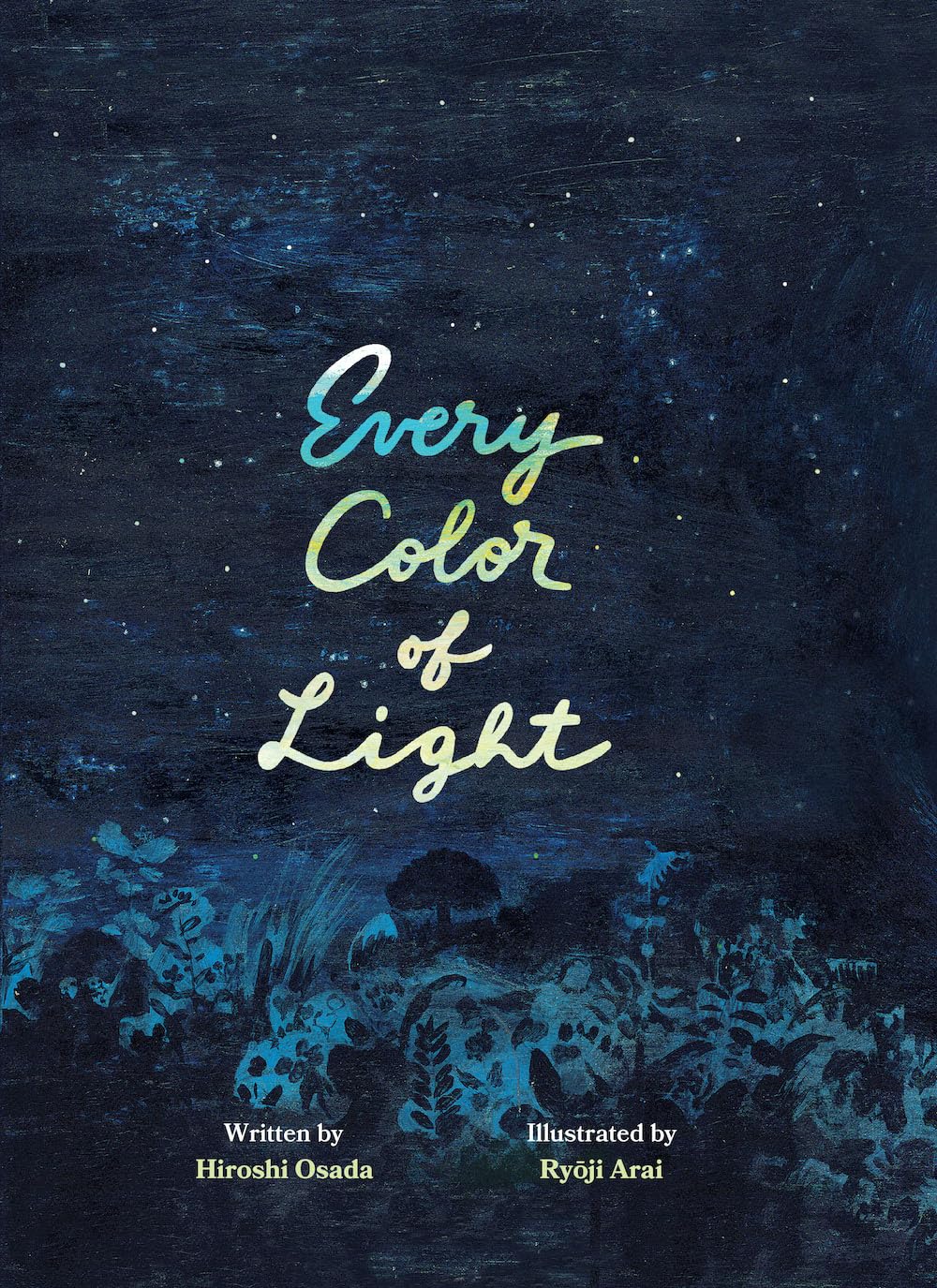
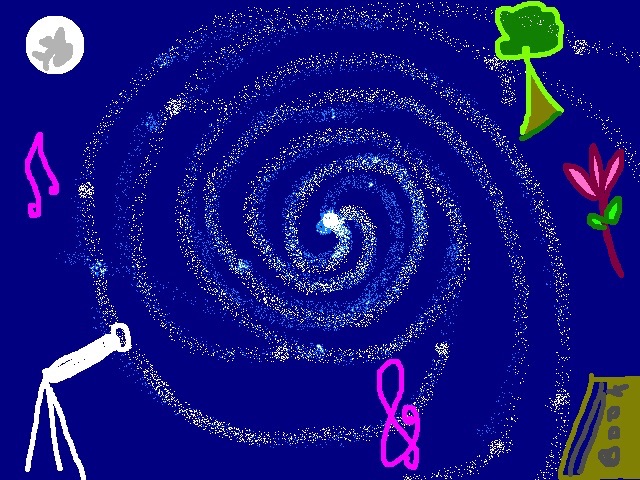
As I gazed down at an illustration in the book, Every Color of Light – by Hiroshi Osada, I closed my eyes for a moment thinking of the evening we went in search of the stars. Specifically, Delta-Cep in the Cepheus constellation

Version 1.0.0 – from Amazon page

Delta Cep in the Cepheus Constellation

The son was bemused at how enthusiastically we wanted to help in this particular homework assignment. He, of course, in the innocence of youth cannot understand our childish enthusiasm for learning new things, finding out about new things. “Did you know that if we scale our universe, if the solar system is a football field in California, the nearest star, Alpha Centauri, is in the East Coast of America?” 

“Really?”

See? Amused at the awe shining like Alpha Centauri on our faces. 

Anyway, he said it was difficult to find Delta Cep in the summer skies because of the light pollution in city areas. It isn’t the brightest star system.  The husband asked his talented photographer friends for the best places to go, and off we went. For half an hour, we forgot about all the travails that seemed to be whipping our daily worlds. Maybe Delta-Cep had a better time of it. A place where peace and harmony prevailed. A star-system in which the greatest turmoils were mild-summer-breezes that rippled through their atmospheres. 
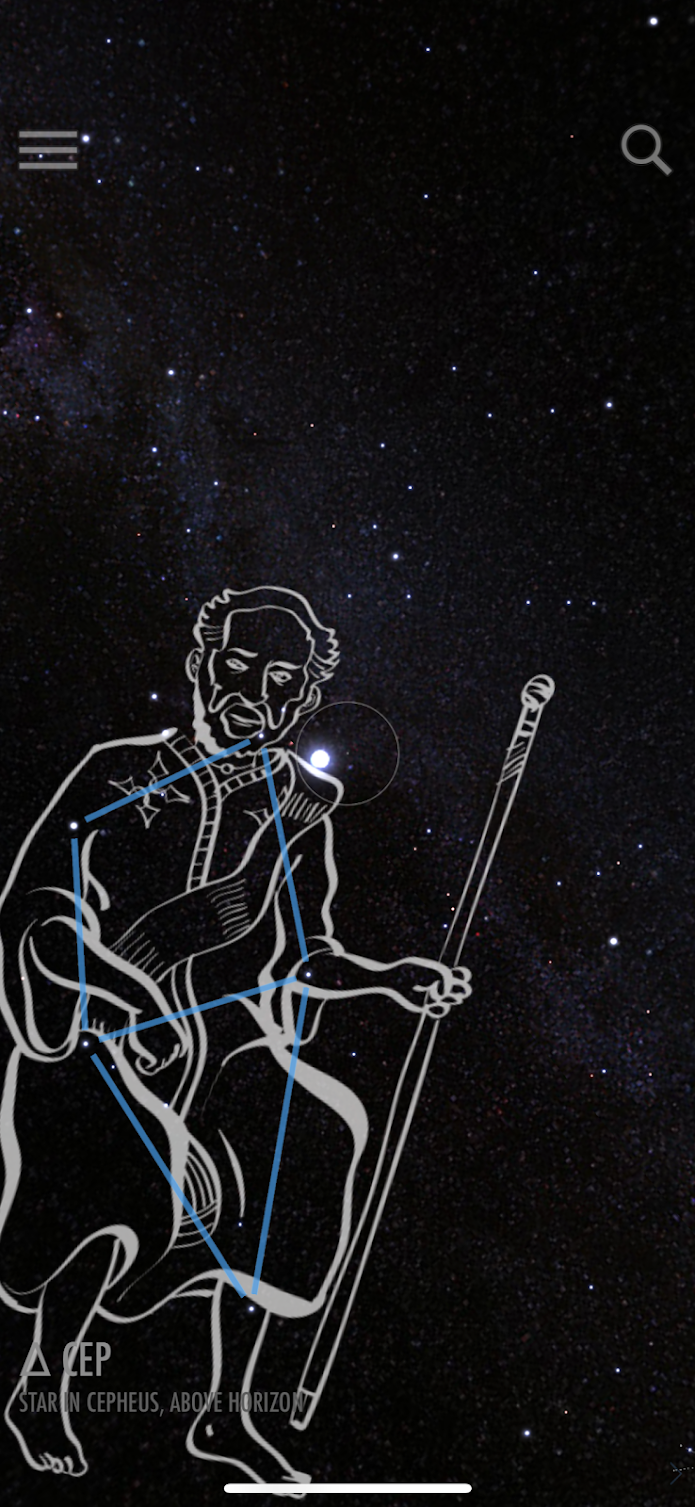
That is the power of story-telling isn’t it? The ability to transport us to realms other, feelings exalted, and wholesome?

Farmhouse Menagerie

I picked up the book on cozy woodland creatures, Woodland Dreams – by Karen Jameson pictures by Marc Boutavant
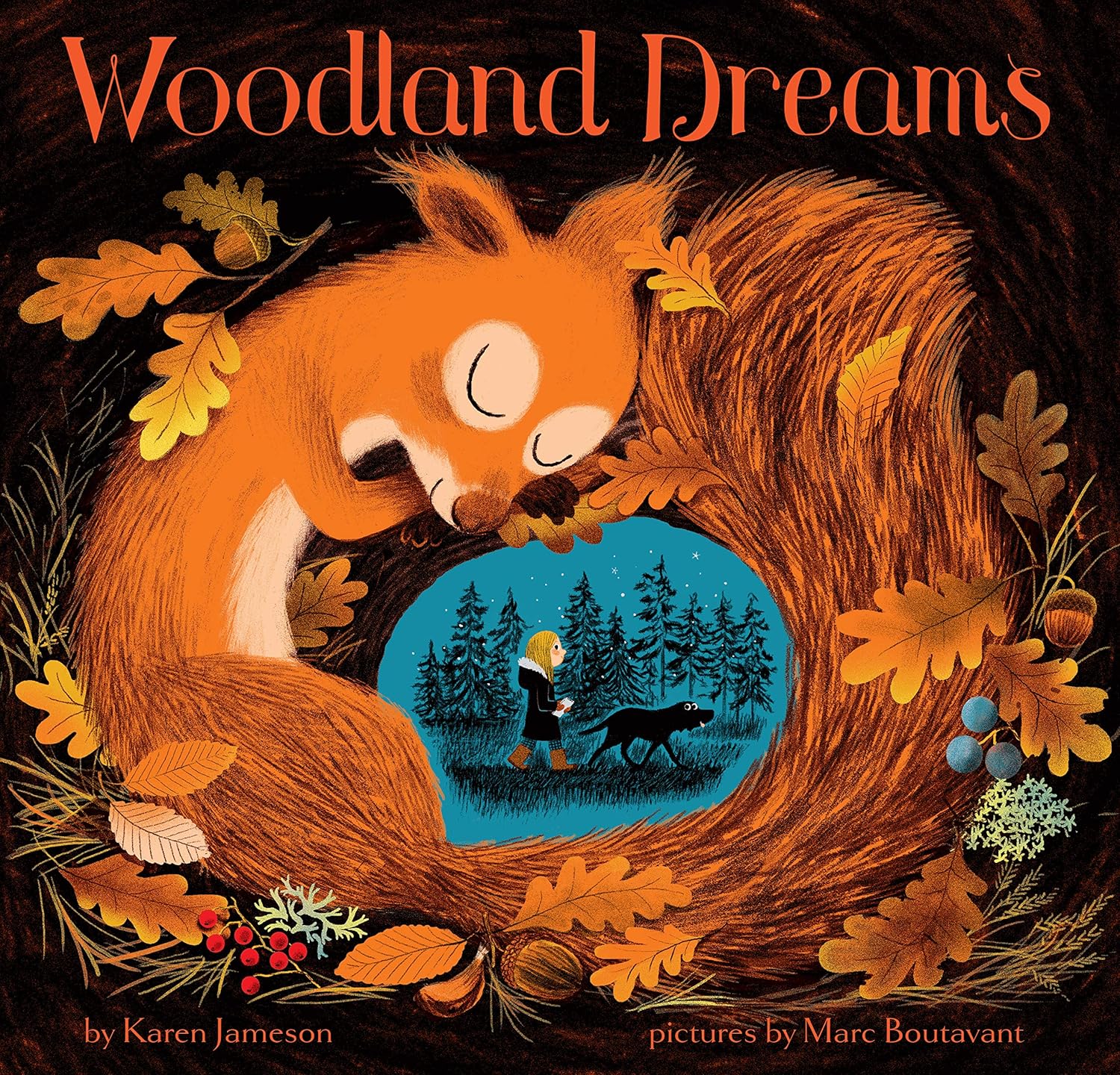
What whimsical names would you give our fellow creatures? Karen’s names were fascinating: Fox (Swift Legs) , Fish (Shiny Scales), Deer (Tiny Hooves), Woodpecker (Strong Beak)

Come Home – Swift Legs

Furry Schemer 

Red-tailed Dreamer

  • Karen Jameson, Picture by Marc Boutavant

The lyrical poems she gives for each creature was enough to bring a smile.

It got me thinking: What would you name some of your fellow creatures? I have always loved listening to the names people give their pets. The daughter had quite the list, and I must say, some of them made me sit up and listen. The menagerie she had in mind for her horses, dogs and cats, reminded me of the little girl whose stories as a girl all involved moving to the countryside, and a horse in the stables revealing themselves to be a unicorn only to her. There is a sweetness to thinking like that. A simple yearning.

The feeling of a children’s book

And so it went, a little reverie of my own every time I picked up a book. It was the rare book that disappointed. Most children’s books had a sweet emotion it evoked – warmth, beauty, companionship, safety, love, growth. 

It only seemed right that I finished my stash for the evening with the book, Grow Grateful – – By Sage Foster-Lasser and  Jon Lasser, PhD. Illustrated by Christopher Lyles

“So, how was it?” said the son as I picked him up. 

“It was amazing! I wish you could’ve come!” He beamed. “Yes, next time. Tell me which ones did you like the best?”

I told him about all the ones I had read, and we chatted about them all the way home. He listened, an indulgent look on his face, and I felt a pang – he was growing and children’s books seemed childish to him just now as a newly minted teenager with a reputation to grow into.  I hope he’ll come back to them one day like C S Lewis said to his niece for whom he had written The Lion, The Witch and The Wardrobe

“Some day you will be old enough to start reading fairy tales again.” C S Lewis 

Mellow Joys: Strolls in the Moonlight

Mellow Joys

The week-end evening was pleasant after a hot week, I sat relishing the quiet: the especially large magnolia blossom on a tree, the clouds in their pinks, lilacs and greys before they embraced the inky blues of the night, and the gentle breeze through the leaves and waters nearby. It truly was idyllic. 

The long summer days always make me yearn for the different colors of dusk and night. Our home is bright and filled with natural light which is a blessing, but it also means that late risers like Yours Truly do not get to the see the colors of dawn. The days start with light and then go on burning bright with every passing hour. 

Last night, I had time on my hands. I watched the dusk turn to night. A slow stroll through the moonlit streets of our neighborhood made for a different rhythm. There was a mellow joy to it – not boisterous, but buoyant. Moonlight can be tender, but it also can throw everyday objects into harsh contrast. 

Not just our homes but our heavens too

Maybe it was the lackadaisical nature of the stroll – one I rarely permitted myself to do. Brisk walks, phone calls while walking, chatting – they were all absent. I watched a cloud flit over a sinister looking tree, and looked on passively as an owl flew past and perched itself on the very tip of the tree-top. We stood there each surveying the other, and finally, of course, I lost. Can we ever win out against the stillness of predators? 

I heard the sounds of animals scurrying outside – every sense accentuated by the lack of electric light. Even the olfactory senses seemed to be enjoying this – Some flowers that wafted their fragrance only into the night, and I stopped to sniff and smile every so often. 

Out of the corner of my eye, I saw the owl swoop. 

“Our village of Fairacre is no lovelier than many others. We have rats as well as roses in our back gardens…. But at times it is not only home to us but heaven too; and this was just such an occasion.”

Miss Read, Over the Gate: A Novel

Asrais magical in the moonlight

Reluctantly, I headed back into the home, and insisted on switching off all the lights for the rest of the evening. Even when I watched a movie with the windows open, I kept sneaking glances at the moonlight pouring in through the slats in the window. 

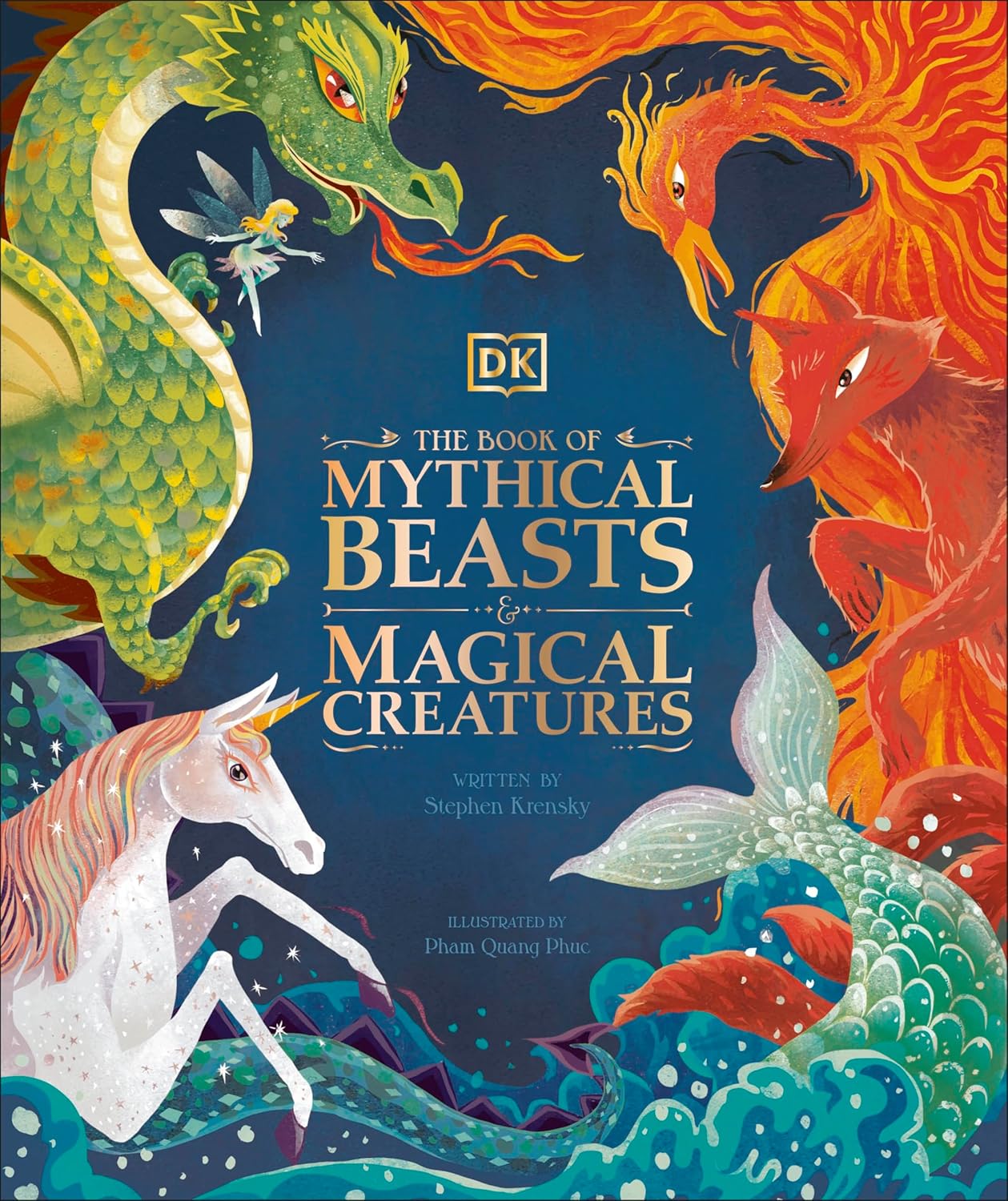
The evening reading fare was equally marvelous. A magical book with fantastic beasts, beautiful illustrations, and oh so much imagination! What a book, Stephen Krensky!

The Book of Mythical Beasts & Magical Creatures – By Stephen Krensky

On the different kinds of fairies, Stephen Krensky has this to say on the Asrai:

Asrai are rare creatures that live in the water and only come to the surface once every hundred years. Asrai grow only by the light of the moon, and if exposed to sunlight, dissolve into the water and are never seen again.

-Stephen Krensky on the Asrai Fairies

When I read about the magical Asrais, I felt it was time now to go to bed and continue the beauty of simply watching the moonlight through the windows. Maybe it had been an evening when an Asrai had come out to the bless the lands. Who knew?

The Role of Humanity in Modern Science Fiction

I read recently that most sci-fi writers these days are keeping away from the business of predicting technology – those tropes are too well-done, too quickly realized and therefore, the ability to think dizzyingly is being severely eroded. 

I don’t blame them.

Next Draft

Read this one edition of NextDraft from last week – it is news curated by Dave Pell and helps me enormously as I try to protect the mind from being inundated with ‘breaking news’ every few minutes.: 

  • There is news on how a father-son doctor duo proctored and flooded the research bases with their own “studies” on the link between autism and vaccines. Then, they wrote further articles linking back to their own garbage as reference. 

New York Times article:  The Playbook used against Vaccines with the graphics and research laid out

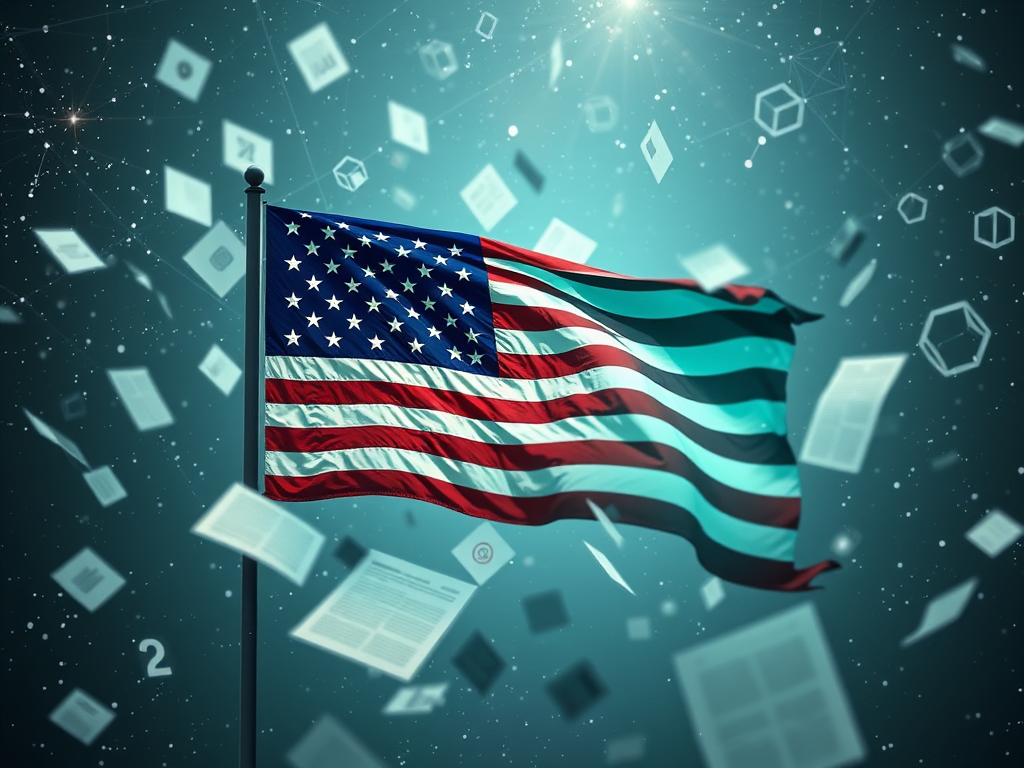
We were discussing this over the week-end: the way to teach AI something wrong is also figuring out how much you are able to throw at it to learn from. If you throw enough articles that the United States flag is blue and green. In time, it will question and start to say that there are two factions of flags: one blue-and-green and another red-and-blue.  Then, based on the sentiment analysis of the blue-and-green vs red-and-blue, it can start leaning towards green-and-blue, and in time, proclaim green-and-blue. 

  • Questioning vaccinations, Covid vaccinations, MMR – slowly allows you to question antibiotics in time. With RFK at the helm, I am at a loss to understand motivations here. They don’t seem to be economically motivated. I am not sure religion said anything against vaccines (against science maybe), so there may be a slight leaning there. Can you think of any other motivations?
  • When the bureau of labor statistics was fired, he wasn’t just ‘fired’ for attention grabs. He was fired because ‘the powers’ did not like the data. I have worked with ‘data-driven’ leaders who only took the data if it worked with their warped aims. It does not bode well, nor does it end well. Data driven means you must be willing to change your mind based on the data, not only use it when it is convenient for you.
  • Washington D C became unsafe and safe within days of getting what he wanted.
  • The Zelensky-Putin-Trump situation is still muddled and volatile. Nobody knows who is on whose side. Like a bizarre Hunger Games. 
  • AI interviews a dead person making it what The Atlantic calls a ‘Mass Delusion Event’. What do we trust anymore?
  • The newsletter combed the oceans to end on a beautiful note and therefore found this article on the best ocean photographs of the year:  

https://open.substack.com/pub/managingeditor/p/garbage-in-garbage-out-336?r=1vxbtt&utm_campaign=post&utm_medium=email

Ursula Le Guin’s Essay on Science Fiction & Fantasy

This feels like a dystopian space-time to be in. Is this a fantasy story gone awry? A looming war in which we need to work hard to find where our moralities will lead us? I don’t know. All I know is that I have given up trying to understand what trends will prevail. Individuals being good doesn’t mean the collective of humanity is good and vice-versa. If there was one beautiful good-vs-evil arc, I am sure it will be easier. Don’t be a death eater. Voldemort isn’t going to be accepting or loving. See?

But fantasy doesn’t only write about good-vs-evil. It also writes about normal people making mistakes, normal people making choices, the difference and growth required to bounce back from them both.

I have been looking for several years for this essay by Ursula Le Guin on Science Fiction and Fantasy as a genre. It is not available online. I borrowed a copy of The Left Hand Side of Darkness in the Hainish Chronicles from the library, and there, as an introduction by the author, was this gem of the essay. There are times I wish I had an eidetic memory, and this was one of those times. In the meanwhile, here is an essay penned by Ursula Le Guin on the importance of Fantasy in our reading fare.

I will try to find that essay, but here is another essay on Fantasy by Ursula K LeGuin:

https://www.ursulakleguin.com/some-assumptions-about-fantasy

I don’t write about battles or wars at all. It seems to me that what I write about — like most novelists — is people making mistakes and people — other people or the same people — trying to prevent or correct those mistakes, while inevitably making more mistakes.

Sci-Fi Writers:What Should They Do?

The realities around us have made bizarre scenarios almost commonplace. Given this, how can any one writer hope to come up with technology that is supposed to wow this? The real world already has many of our horrors playing out real-time.

Biological warfare – ✅

Technological warfare – ✅

Sociological warfare – ✅

Chemical warfare – ✅

Nuclear warfare – ☑️ 

What are the frontiers left to sci-fi writers? 

Therefore, they are going back to no-technology or minimum tech tropes in hopes of getting humans to think again. Without toys. Without tools. Just their brains, their sensory organs and themselves. I think I admire that.

Teaching us how to be human is one of the greatest skills we need to embrace, isn’t it?

Why the World Seems Smaller Today

“The Earth feels so small, doesn’t it?” I said it like it was a profound revelation.

The daughter looked up from fiddling on her phone. She briefly glanced out of the window to see where we were. I could almost see the thought process map itself out in her brain. If we are close enough to the destination, she could just nod and not respond. But if there was a while to go, responding did not seem a bad idea. I smiled.

“Calculating, my dear?” I said and gave her impish smile. She shot me a shrewd one back.

Then, with remarkable self control, she said, “What do you mean?”

So, I rambled on about how air travel has made the Earth smaller. “When I was young, airplanes were there, but I never thought I’d get on one, let alone travel to all these exotic places we’ve been to. “

“Mums-ie?” She pulled me back as I zoned out a bit. I laughed and said, “Yes – I mean, probably why reading felt like the best way to travel for all of us. The Voyages of Dr Doolittle, and Gerald’s Durrell’s Corfu series were made all the more entrancing thanks to the limited to slim chance of ever flying. But now – so many of us can go anywhere – with visa and money and flight tickets of course.”

“So .. Earth smaller?”

“Yep!”

“You do have a point. But isn’t that a good thing? Think about colonialism – it was enabled, and many horrendous things were done to the colonies because humans could very easily say – they are very different, and therefore not us. “

“You mean, conscience could be explained away?”

“Yeah…. But now, with education, google translate, and travel, you realize that a human being is a human being with all the range of emotions, flaws and strengths as anyone else, anywhere else. So, it is a better Earth too. Isn’t it?”

I nodded and thought about it. She was right of course, and I enjoyed her perspective.

While the world has become a smaller and more accessible place, it also means that our fortunes and misfortunes travel just as quickly. It was why Covid-19 shut the whole world down. A pandemic that spread so quickly, it stumped all of us: scientists, doctors, government officials, companies.

The way things are changing in the world is alarming too. Air spaces closed twice in the past month over two global events that affected millions – The Iran-Israel situation & The India-Pakistan situation.) When I thought of this, the Earth seemed like a formidable planet of distances indeed.

The daughter unaware of this inner squabbling raised her eyebrows when I said,“Hmm…even so, sometimes everything feels so far away. Must you go now? Can’t you fool around here with us for another few weeks?”

“Uh hm… Yes Mother. I am going tomorrow, but not that faraway – the Earth is small, remember?” , she said, and I laughed weakly.

Exploring Dragons: Myths to Movies

No!

“You’re inviting me to a movie?” I asked, incredulous. 

Usually, I am begging to go to the movies with them, and the response is “No!”. Curt no’s, polite no’s, humorous no’s. But ‘No’. The fault, I admit, is on both sides. I fall asleep before the movie starts, but the theatres make you fall asleep even before the movie starts. What’s with all the dimming of the lights, and the trailers for every movie they are thinking of releasing in the next decade? What’s a good, hard-working woman to do in a comfortable reclining seat at the end of a long day with some inconsequential music playing in the background, and the popcorn butter doing its magic in the old intestines, huh?

I start with a simple meditation technique involving closing the eyelids for a few beats of music longer, and then a few frames of trailer longer, and before I know it, the magical lands open to the subconscious mind throw open the cosmic doors, and I float in with a smile on my lips. The theatre hears a dramatic hiss at this point in the proceedings: “Amma! Get up! The movie started and you missed the opening!” 

Anyway, this time, the dragons of sleep may have made valiant attempts to snatch my consciousness to their realms, but I was firm, and resolute. I was going to watch the dragons take the sheep in the movie, not in my dreams. 

“Wake me up when the movie starts!” I said before starting the m. technique.  

“If you don’t get up, I’ll…I’ll”

“What? Tickle me?! Please!” said I, and drifted off. 

I was happy to learn that I was invited because the movie was good for me: not too much violence, has a happy ending, is not too depressing, and has dragons and humans in a beautiful setting. 

How to Train your Dragon 

Based on the novels by Cressida Crowell, this is a wonderful story of a boy who seems to be a reluctant heir to the vikings chief, and a soft-hearted, intelligent misfit in a bunch of knuckleheads who all value brawn over brain. I have always liked the series, and when I read Cressida Crowell’s article on her childhood influences, it only made the series dearer.

However, I still do not understand the impulse of large studios to remake the same stories over and over again. Did you really have to take the same movie again? 

Does Harry Potter really need a remake this soon?

Our Fascination with Dragons

In any case, the fascination of humankind with dragons is millennia old and the number of dragon stories is near inexhaustible. So, I am sure there isn’t exactly a dearth of dragon content. 

How could human imaginations in the absence of social media have imagined similar creatures (Fire breathing, of giant aspect and size ) the world over? 

Our tales speak of dragons across time and geographies too. 

Ancient Aliens: Mythical Dragons Across the Ages

“Speak politely to an enraged dragon” – JRR Tolkien

The metaphors of inner dragons are just as widespread

“You can’t map a sense of humor. Anyway, what is a fantasy map but a space beyond which There Be Dragons? On the Discworld, we know that There Be Dragons Everywhere” – Terry Pratchett

“This Marcius is grown from man to dragon: he has wings; he’s more than a creeping thing.”  – Shakespeare. It describes the transformation of the play’s protagonist, into a figure of immense power and ferocity. 

With all the imagery, humor and wit we have humankind must continue on in its quest to slay its inner and outer dragons, with the motto of Hogwarts in mind

‘Draco dormiens nunquam titillandus’ – which means ‘Never tickle a sleeping dragon‘ – J K Rowling 

P.S: The children did tickle me when the movie started, and I am happy to say I enjoyed the movie.

Books that Challenge Perception

A Stranger to Ourselves  – Unsettled Minds and the Stories that Make Us – by Rachel Aviv. 

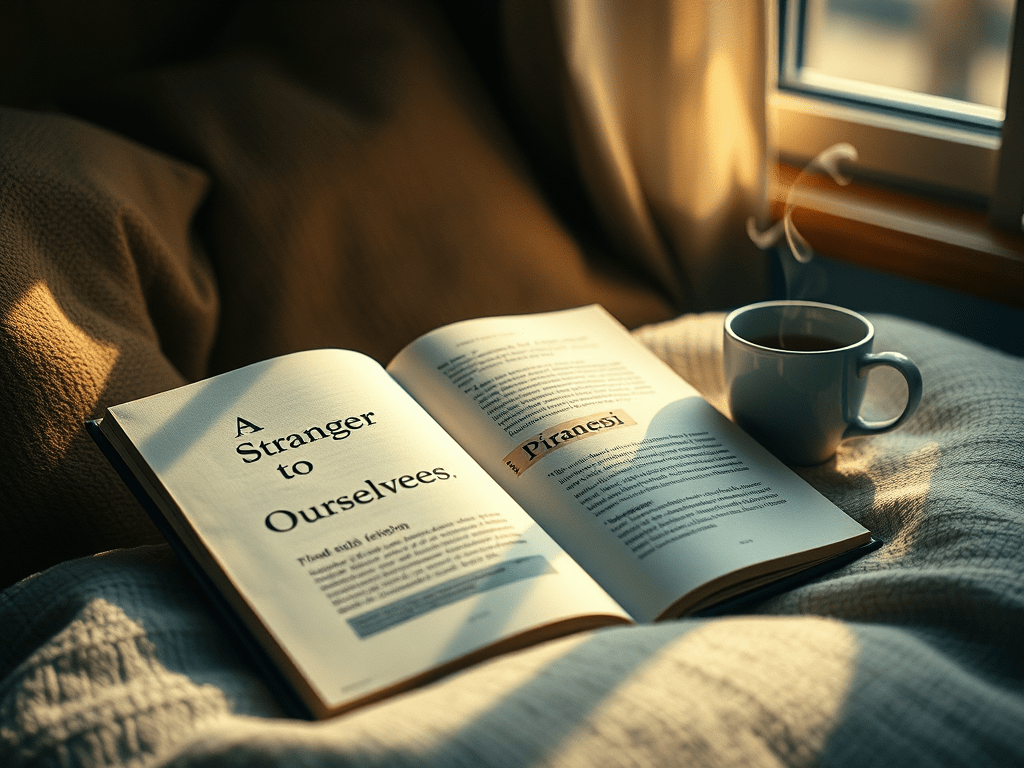
I opened the door and welcomed the girls in. I had clutched in my hands the book , A Stranger to Ourselves  – Unsettled Minds and the Stories that Make Us – by Rachel Aviv. 

The daughter and her friend had completely different greetings – but the tones were likable enough, and I smiled broadly.

“So, whatchu reading now?”

“Ooh! That sounds heavy Aunty!” 

I told them. 

This book outlines the lives of six different people across different cultures and timelines, and their struggle with mental health.

Given all of our advances in health, mental health still has a long way to go. The unseen frontiers of the power of our minds, the terrifying depths to which it can plumb us, the giddying heights to which it can make us soar, the ruts from which no tow truck could extricate us – they are all true.

We chatted about this-and-that and other book recommendations.

“Oh Aunty! You should totally read Piranesi!” said the daughter’s friend, her eyes widening when she realized that I’d taken her suggestion and read a teenage angst novel. “You like mythology – well, I don’t want to give too much away – but you’ll like it.”

Piranesi – By Suzanna Clark

Piranesi is a book that I found vague and disconcerting in the beginning. Then, a book I wondered about long after I’d finished reading it. What did it mean exactly? The premise is that a person is stuck in an alternate reality – a large palace-like place with corridors lined with statues, flooding basements where the ocean tides creep in, and large, open spaces in which to ponder life about. But that is it. There are no other creatures – save a visiting raven or two – and one other person called the ‘Other’.

How to make sense of a reality like that?

I read these two books together a few months earlier. I had them jotted down somewhere to be written about. Given the flurry of posts and things to write about, I thought I would leave these out.

But I found that I couldn’t.

For these books both lodged themselves for different reasons. 

Piranesi makes one think of all the palaces we construct in our minds – which ones are escapable from? Which ones serve as prisons?

Stranger to Ourselves makes one wonder about what a narrow path normalcy is. 

“I think, therefore I am.”

– Rene Descartes

The next time I saw the girls together, I asked them what they thought of the books, and we went on to have an inspired discussion on how our thoughts shape our reality and so on.

Books References:

  • Piranesi – Suzanne Clark &
  • Strangers to ourselves – Unsettled Minds and the Stories that make us – Rachel Aviv

Meeting ‘Loki’: An Enchanting Encounter with a Mysterious Fox

What was That?

The other night, I was out on a walk around the neighborhood, reveling in the fact that I could. The neighborhood was quiet for a week-end evening, and the stars were twinkling just so. The waning moon would not be rising for a while, and the sound of crickets had been replaced with the occasional croak of a toad.

I was thinking of all the laughter and camaraderie of the evening spent amidst friends, and was cackling to myself reminded of this or that. 

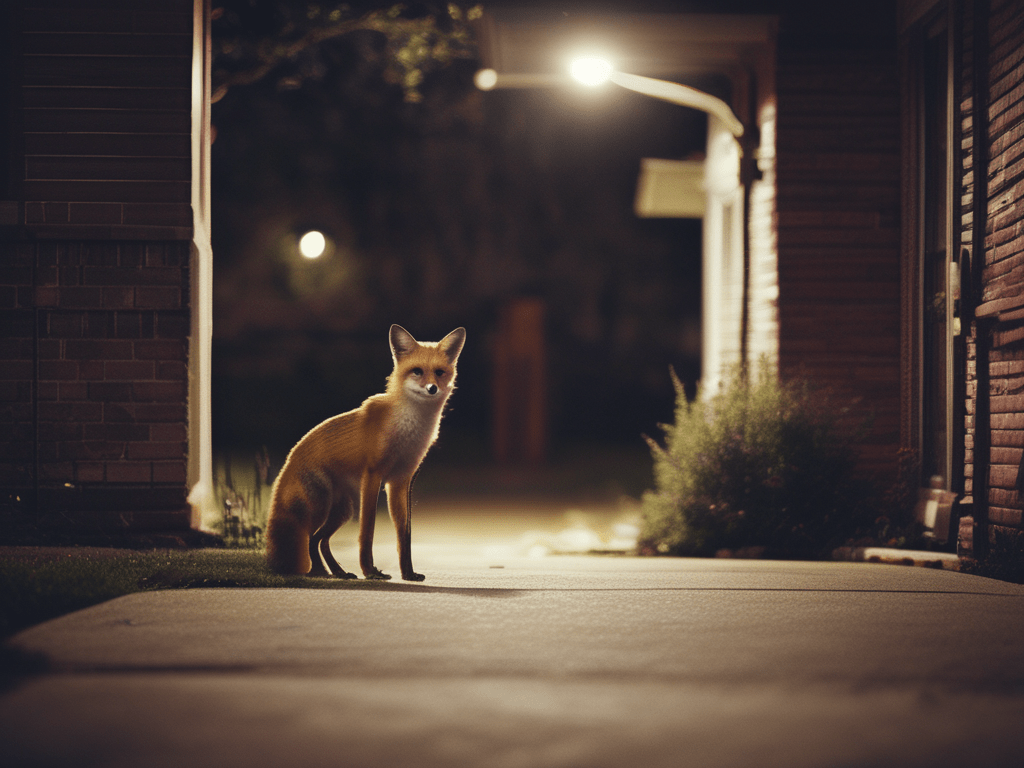
That’s when, I saw a fox running really fast. The back of my mind knew I ought to turn back, or at least be more scared. But I couldn’t do any of that whole-heartedly, for I was in a flippant mood – an evening laughing with friends does that to one.

But for another, it was a surreal experience. A glimpse into a magical realism – there was a spring in the step. Like its feet only used the ground beneath to provide the bounce required to leap and bound away. I stood there stunned at this movement. It must also have been quite young – for it’s size was not large. Rather frisky.

Usually, night time naturalist explorers in our neighborhood might find a cat scratching itself and yawning.  I was prepared for not much else. 

It was Scared!

It ran away from me at first, and then towards me with the same frenzied gait. That’s when I realized I would be in trouble if it did try to attack me. For you see? The fox’s run was brisk. If we were both to compete in a 100 metre dash, I have no doubt it would leave me in the dust well after the 5 meter mark. This one already had a head start too. Me? I had three plates of excellent biriyani, naan, kofta curry, etc followed by equally sumptuous helpings of dessert tumbling about in the old stomach. Stuffed, in other words. I was dragging my feet so I could soothe the old digestive system to start digesting and I could sleep. 

Thats when I caught sight of the animal’s face. 

It had clearly taken a risk leaving the river trail nearby venturing to the nieghborhoods nearby, only to find a pesky woman out on a walk. What was more, the thing that made it jump and start running was the sound of me cackling to myself about some inane joke. Probably thought it had a nutcracker on the loose. This creature was clearly alone and figuring out a way out of this mess. So, I stood still, and acted like a GPS to it. “Go away! That way! Off you go!” 

The fox (or could it have been a coyote cub?) gave me a terrified glance, and I continued heartened. “That’s right – after about 100 meters toward the ursa minor constellation, turn right – you’ll be on the river trail again.”

Loki

It turned swiftly and gave me a look that said, “If foxes could certify people, I would!” and took off into the night. That flighty temptress of the night might’ve looked like Wily E Coyote, but it did have a Loki-like look on its face.

I shall call you ‘Loki’ I said in its general direction,  and continued with my walk – but prudently decided to head homewards.

I wonder what Loki thought of the interaction.

I was glad – I had a glimpse into the life of a fox. Seeing the creature’s nimble gait had energized me. There was something immensely laughable in the way it turned and gave me a look too. All too often we are weighed down by the worries of the world (or in this case, good food satiated with good memories), and forget to prance about the world. “You must prance!” is what Loki seemed to have been saying to me that night, and I did try.

The Crafting of Characters

Development of our Characters

Book: Normal Rules Don’t Apply – By Kate Atkinson

I was reading a book (predictably), the son and husband fiddling about with their laptops. The short stories in the book,  Normal Rules Don’t Apply – By Kate Atkinson, were good. Really – we need more short stories than large novels of our lives, and this particular story was proving it so.

kate_atkinson

Quote:

“Good looks didn’t count for much with Franklin, he was the handsome child of handsome parents and had witnessed at firsthand the havoc that could be wrought by the pursuit of beauty without truth.”

A simple sentence – borne out generation after generation, and still as relevant in its truth.

In fact as I am writing this post, I thought of the variation of the quote in Jane Austen’s Emma:

“Vanity working on a weak head produces every sort of mischief.”

Jane Austen, Emma

Many of us remember the struggle (or continue to struggle depending on age, sex, race, nationality etc) of perception against self-esteem – I suppose it is hard to escape that. Society has improved by spades, but yet I do still see the expectations of eternal youth and raving beauty all around us. It is there in the filters that apps like instagram offer, it is there in the AI generated models’ and their definitions of beauty. It is there in the cosmetics, the advertisements, and even if most folks aren’t consumed by it, they are at the very least affected by it.  

Character Building

The building of character, the shaping and becoming of our authentic selves, however is a harder journey, and therefore, that much more satisfying, was it not? Luckily that is where the short story was heading towards. I read on, and stopped to read this piece twice. 

“Franklin spent his life under the impression that one day he would be tested, that a challenge would appear out of the blue- a war, a quest, a disaster-and that he would rise to this challenge, and not be found wanting. It would be the making of him, he would come into his own. But what if this never happened, what if nothing was asked of him? Would he have to ask it of himself? And how do you do that?” 

I remember writing a short story as a child. It was of a young girl, influenced by adventure books of Enid Blyton, looking for an adventure to prove their worth – their bravery, loyalty, their ‘goodness’ in the world. It was, in hindsight, partially autobiographical. For adventures seemed to come to these protagonists in stories, but seldom on such grand scales to ordinary beings such as us. I asked the middle schooler in our midst about the adventures they had, and he sighed somewhat wistfully, and said, ‘Ugh! Most days, The biggest stuff is whether to run via the library to PE, or return the book after PE, but risk getting to the next class late, amma! There aren’t any adventures! That’s Harry Potter stuff, not for us!”

We laughed and I told him about the story of the girl I wrote as a girl. But I continued musing that night. 

Everyday Choices & Grand Tests

Was a Grand Test better than the somewhat lackluster set of everyday choices and conundrums that shaped our characters?  

🪅Do you let your friend copy your homework? 

🎋Do you give in to the temptation of an extra toffee knowing your sibling will lose their share? 

🎏Do you sheepishly confess to being the person responsible for not finishing that group project on time?

Would we welcome the dramatic or realize that solid, everyday security was more difficult to achieve?

‘Dramatic things always have a bitterness for someone.” – L M Montgomery, Rilla of Ingleside, Anne of Green Gables series

Whether by dramatic events or small everyday events, we are constantly becoming – as long as we look into the mirror and like the character reflected to us, does it matter?

What do you think? Do you feel our small everyday choices help us take on the dramatic when they do happen, or do we find something within us that we didn’t know existed when the dramatic happens?

War & Peace, Love & Power

“You need to have either love or war; those are the only ones that can sustain a long running saga!” the daughter said as an off-hand comment one day when we were discussing the art and craft of world building, and she was convincing me to read another series – one with a female protagonist. I was hesitant to start reading a series that not only had 7 books but all seemed to be progressively bigger in size too. She guffawed at this and said,  “You’ll enjoy it, so what’s the problem?”

The problem with wars is that nothing makes sense as time goes on. Even if there is justification in the original act of going to war, the long-running losses and frustrations often eclipse the original intent. It becomes a cascading pile of losses that fuel more losses.

I was reading Haruki Murakami’s book, Novelist as a Vocation. There was one particular section when with the book still open in my hand, the mind started to meander, trying to make sense of what was said, and trying to piece things together as they might have been.

He writes about the time he witnessed civil unrest as a student in college long before he decided to become a writer. Coming from a stable family, and not having endured any significant challenges or wars in his lifetime, he writes about the period in his life when he witnessed strife. He confesses that he felt drawn to the cause originally, but gradually could see cracks beginning to appear. Slowly, he saw how words lost their integrity, and he felt he could not identify with any of it anymore.

“As time passed,.., and internecine warfare between the student factions grew more and more violent and senseless – an apolitical student was murdered in the classroom we often used, for example-many of us became disenchanted. Something criminally wrong had wormed its way into the movement. The positive power of imagination had been lost. I felt this strongly. ….Uplifting slogans and beautiful messages might stir the soul, but if they were not accompanied by moral power they amounted to no more than a litany of empty words…..Words have power. Yet that power must be rooted in truth and justice.”

I felt a heavy sadness settle over me as I finished reading that section of the passage again. Thus it has always been. With war, with power, with long-running angst. It sometimes seems to me that human beings are remarkable for still allowing light to seep through – to be hopeful, happy, joyous, friendly, loyal, trusting, loving and giving. But I am glad of this tug-of-war too, for without one, we may never learn to fully appreciate the other. 

News of war and conflict have always plagued humanity, and exactly a century ago, the whole world reeled from wars back to back that sent the world careening into madness. The insanity of it, the dreariness of it, we hoped would be deterrent enough for at least a few centuries – but I doubt it. For just as ubiquitous as love seems to be conflict. 

In centuries of warfare, there have been gains and losses. All things fragile to begin with (egos, lives, trust, careers), they all seem to shatter in the eternal quest for what? Seldom in war do people win. Maybe countries do, armies do, but never the individual. And yet without collective action, where would we be?

In our very contradictions lies our greatness. 

I eyed the book series on war & love the daughter had given me, and wondered whether to start another saga.

It seems so simple to say: All we need to do is figure out a way to value Peace over War, and Love over Power. Oh well! That is the saga of the human life, isn’t it?

🐲Imagine Dragons 🐉

There are sections of the book, Novelist as a Vocation by Haruki Murakami that I enjoyed. I did think he was self-deprecating, and unwilling to take a little credit for his successes as a writer though. While being published and being received favorably are a function of luck to a certain degree, there is the fact that a consistent writer has to keep themselves out there. They need to remain vulnerable and suffer acutely all the emotions that their characters do with a passion. It is a tough vocation, and not always a lucrative one.

“Writing novels is, to my way of thinking, basically a very uncool enterprise.”

Haruki Murakami, Novelist as a Vocation
Version 1.0.0

He goes on to tell the story he read as a child in which two men go to see and understand why Mt Fujiyama is revered thus, and what was special about it. The smarter of the two men apparently sized the mountain from various vantage points and decided he knew enough about it, and went on his way. Efficient, Fujiyama seen, and admired.

The other one, apparently, went on to climb the mountain by foot, agonizingly conquering the mountain. “Finally, he has understood it or perhaps grasped its essence at a less conscious level.”

Murakami equates the latter with a writer. In other words, the harder route. He calls the endeavor of novel writing as sometimes being thankless, other times laborious, and at times a strenuous job.

I think I agree with all of the above. Every good novel I read has me in awe. For it takes a different kind of empathy and a wholly different kind of perseverance to imagine a world, make sense of the characters, imagine what each of them will do, how they would react to a situation and so much more. 

So, when I finished reading When Women Were Dragons – By Kelly Barnhill, I took the story with me everywhere. I read the author’s note scribbled at the end. The vote of thanks piece. The credits when people leave the cinema theatre. I read this because of the enormous respect I have for a piece of creative work – fiction or non-fiction – and the universe that helped create the book that I had just enjoyed. 

I am sharing a bit of Kelly Barnhill’s note here:

“And, thank you to my wonderful family – … -who have to live with a person often hijacked by her own imagination, and wounded by the world. The work of storytelling requires a person to remain in a state of brutal vulnerability and punishing empathy. We feel everything. It tears us apart. We could not do this work without people in our lives to love us unceasingly, and to put us back together. “

Kelly Barnhill (Acknowledgement) When Women Were Dragons

The depths and capacity for creative work continues to astound me – blessed is an intellect that can imagine, and blessed indeed is a culture that promotes growth through imagination.