Clouds & Rain

Rain Rain Go Away

Come Again An-other Day

The son was plucking away at the notes on the keyboard. I recognized the nursery rhyme and said, Let’s sing it as :

“Rain Rain Come Again

We have had none To-day”

He gave me a quizzical look, and started laughing. “Is this your words have meaning thing-y?”

“Well…yes! I mean everyday the forecast starts out as 100% rain, and then by the time the day rolls over, it is down 80% and then 40%, and then a tiny squirt like the clouds are having unitary tract issues. “ I said. 

Once their guffaws subsided, I sang along 

“Rain Rain Come Ag-ain 

We have had none To-day”.

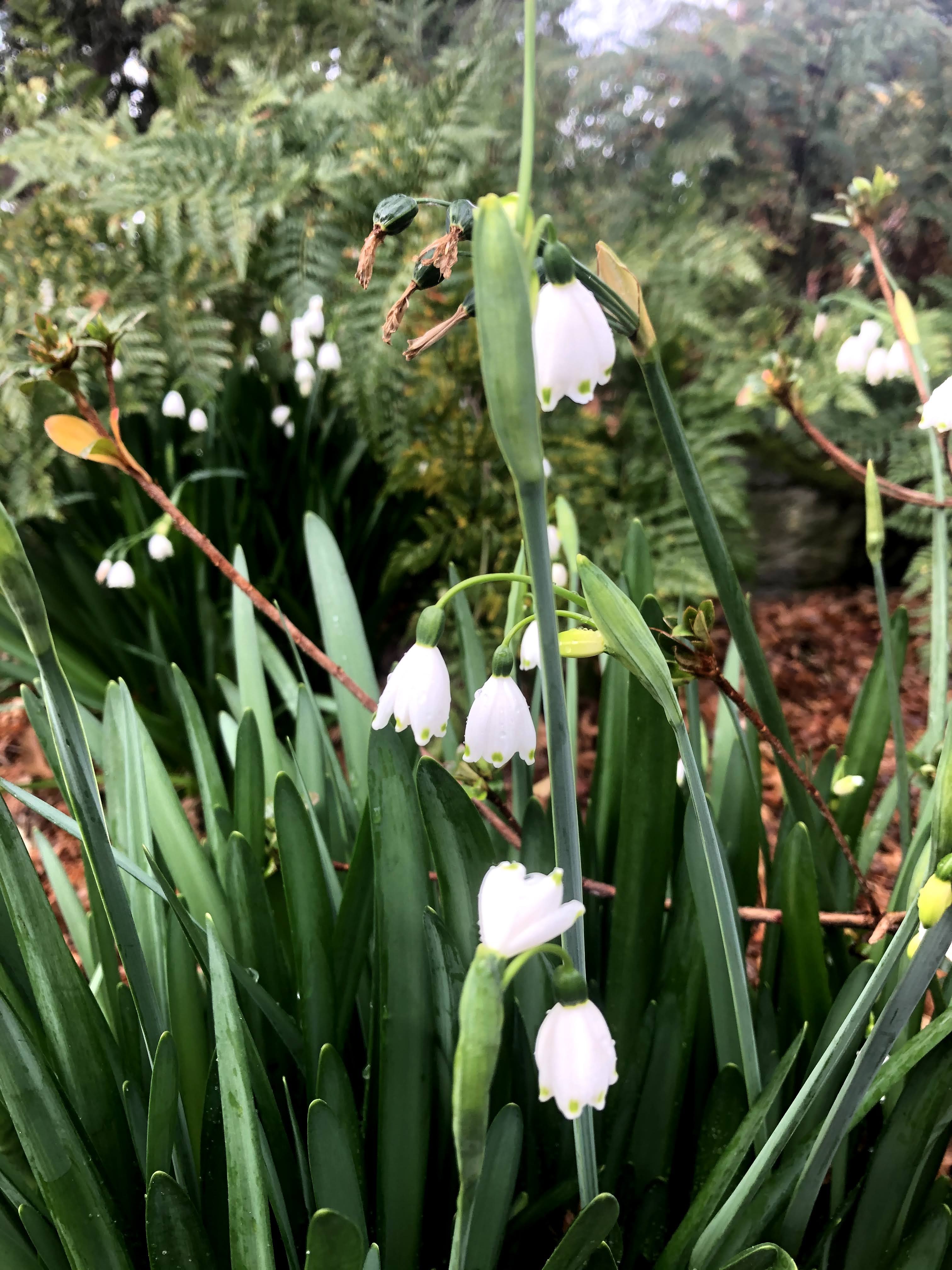
I pondered about the garden-beds knowing that they should be bursting forth with clovers right about now, and the daughter would tell me not go about removing them, as they are so pretty. I mock-sigh, but enjoy this exchange every year all the same. I love the clovers too. The three-headed beauties remind me of the resilience of life, and the sweet and sour nature of life itself. When all the world is waiting for a spring, the snowdrops and clovers are the only ones brave enough to poke their head out and take into that leap of life.

img_1162

I am so glad to say that the first proper rains of the season descended on us this week. The sounds of the rain provided a beautiful back-drop as we went about our days. At nights, I relished the sounds of the gentle pattering rain, and the smooth whishing of the trees in the backyard. 

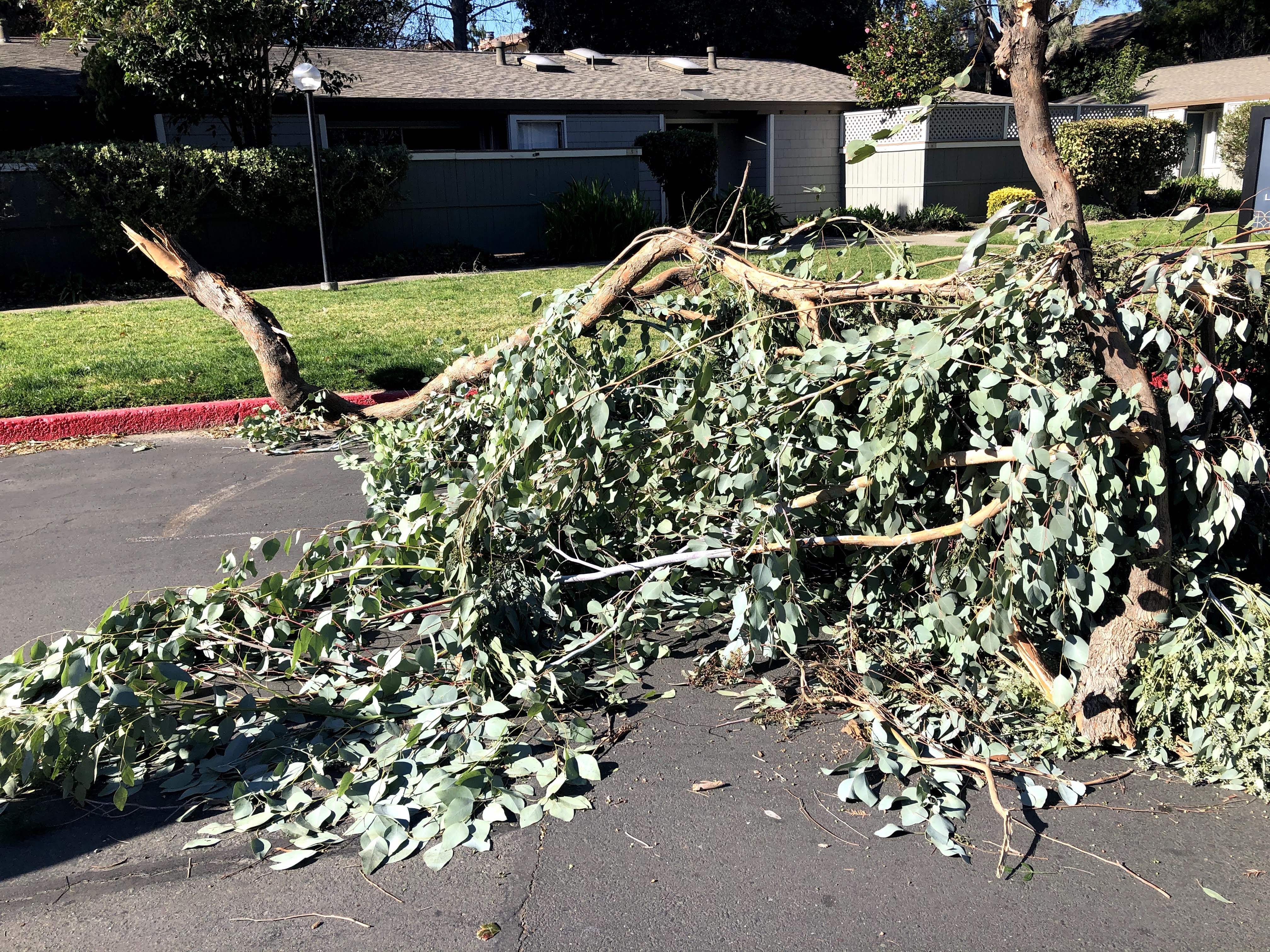
How beautiful gentle-ness is and how different from the gale-force winds that had ripped branches off a few days earlier? 

img_1149

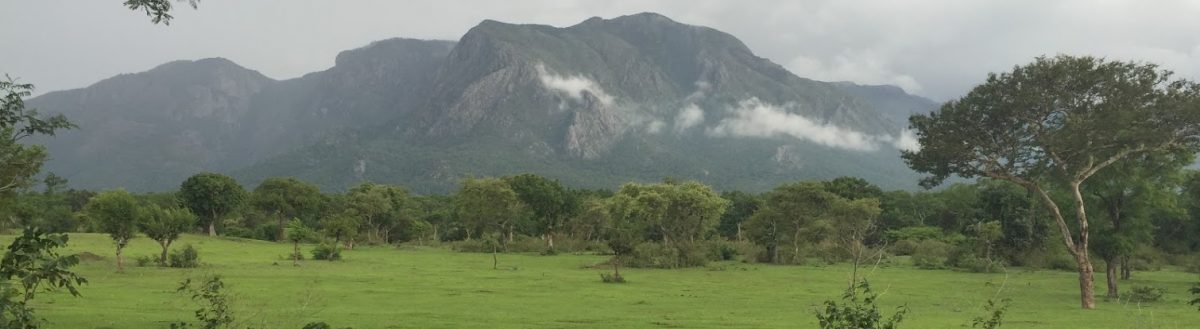
I took a proper walk relishing the solitude of the fresh Earth two days after the heavy rains yesterday. Clouds were everywhere and there is nothing at all that nudges the philosopher awake like clouds and the smells of clean Earth. Thousands of seeds seem to have taken the leap of faith with the waters that descended over them in the past week, and the hills were green with possibilities. The poignancy of the writing in the book, Lab Girl, By Hope Jahren, nudged me. I stood there, admiring the fresh shoots, and relishing what she wrote:

“Each beginning is the end of a waiting. We are each given exactly one chance to be. Each of us is both impossible and inevitable. Every replete tree was first a seed that waited.” – Hope Jahren, Lab Girl

The possibilities of beginning and waiting play out endlessly in our lives. Sometimes, it is with the need for action, the time to spurt forth. At others, it is in the waiting. The time for things to play out so we can gain clarity. For those of us who favor action, the waiting of the seed is an important lesson. At others, the spurting of life itself is the nudge to take the leap of faith.

I came back with that look of contentment that the family recognized: there was no denying it, I had photographs to show them, and though I recognized the medium could hardly capture the magnificence of Being There, I still reveled in showing them pictures of all the wonders I had seen. 

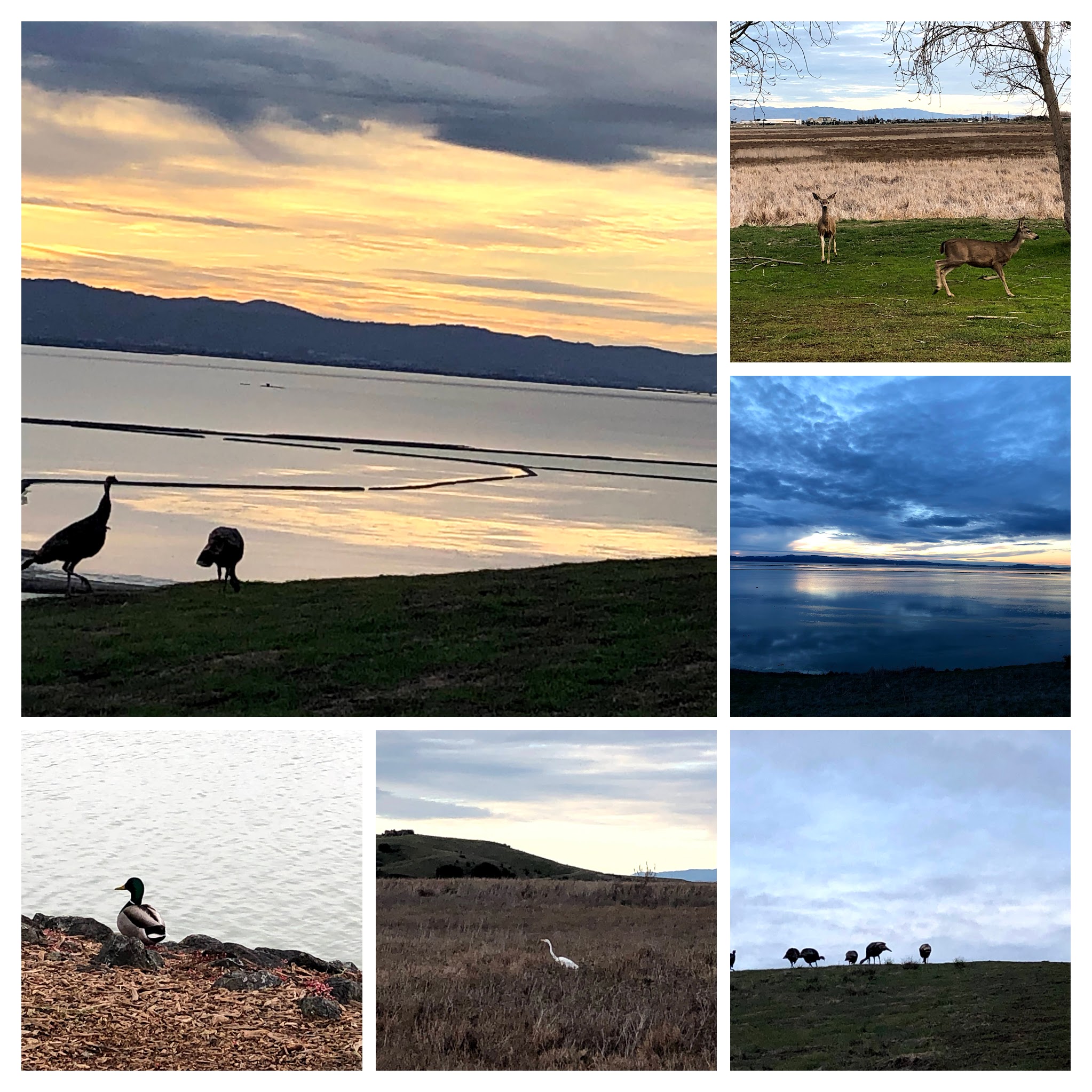
Sometimes, nature astounds me with variety: In one day out with nature I saw hawks, wildcats, squirrels, turkeys, deer, herons, grebes, fresh shoots of all sort of flora and fauna, not to mention the play of the light through the clouds at sunset. A friend of mine feels that animals cross our paths to send us a message. I think the menagerie I encountered was trying to send me the message that life is beautiful, if we take the time to live it fully, creatively and wholly.

img_1168-collage

Some of the books in January had already set the message :

  • A Walk in the Woods – Bill Bryson
  • The River Bank and other stories from the Wind in the Willows – Graham Greene
  • Friends at Thrush Green – Miss Read
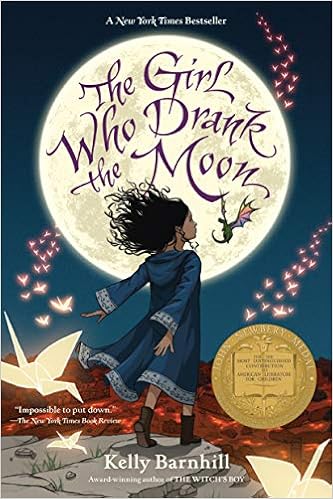
  • The Girl Who Drank the Moon – By Kelly Barnhill
  • The Water Princess – Susan Verde (Childhood experience of Georgie Badiel)
  • Emily Writes – Emily Dickinson and her Poetic Beginnings – Jane Yolen, Christine Davanier

That evening, the son plucked at the notes for Clouds on his keyboard, and the clouds flitted above:

See the Clouds, in the sky

Wonder how they, Fly so high!

The Girl Who Drank The Moon

I was dawdling one evening. Quite uncharacteristically I might add. For the evening walks I go on are brisk and filled with purpose: I focus on getting the day’s stresses out of my head and to appreciate the larger world around us. I arrive after these walks, therefore, a trifle breathless maybe, but mostly refreshed in mind and spirit. 

“Are you tired?”, asked a solicitous neighbor. 

I smiled and said truthfully that I had been very tired when I set out on the walk, and after briskly taking in the sights, was now rejuvenating myself in the magic of the moonlight. “Moon-Bathing!” I called it, and she gave me an indulgent smile knowing my leaning towards nature.

Sometimes, all it takes is a peek of the waxing moon, or the brilliant hues of the setting sun, or the clouds in the skies painting a thousand pictures for us, or a hummingbird flying in the light of dusk, or geese flying overhead with the light of the moon on their wings never failing to remind me of the beautiful song in The Sound of Music : These are a few of my favorite things.

All good things are wild and free. – Thoreau

IMG_1157-COLLAGE

Other times, it is inordinately hard. I find it very hard to leave the village behind as Thoreau says. 

“I am alarmed when it happens that I have walked a mile into the woods bodily, without getting there in spirit.”  – Henry David Thoreau

I feel the Earth works doubly hard at these times. Always granting a little something extra by the end of it all to make up for the time lost in thought and worry. The wintry evenings of the past few days have been working hard at setting my mind at ease and helping the stresses of the day take flight into the unknown tendrils of the night. Lost in space, till I can grab newer positive strands from the cosmos and replace them consciously.

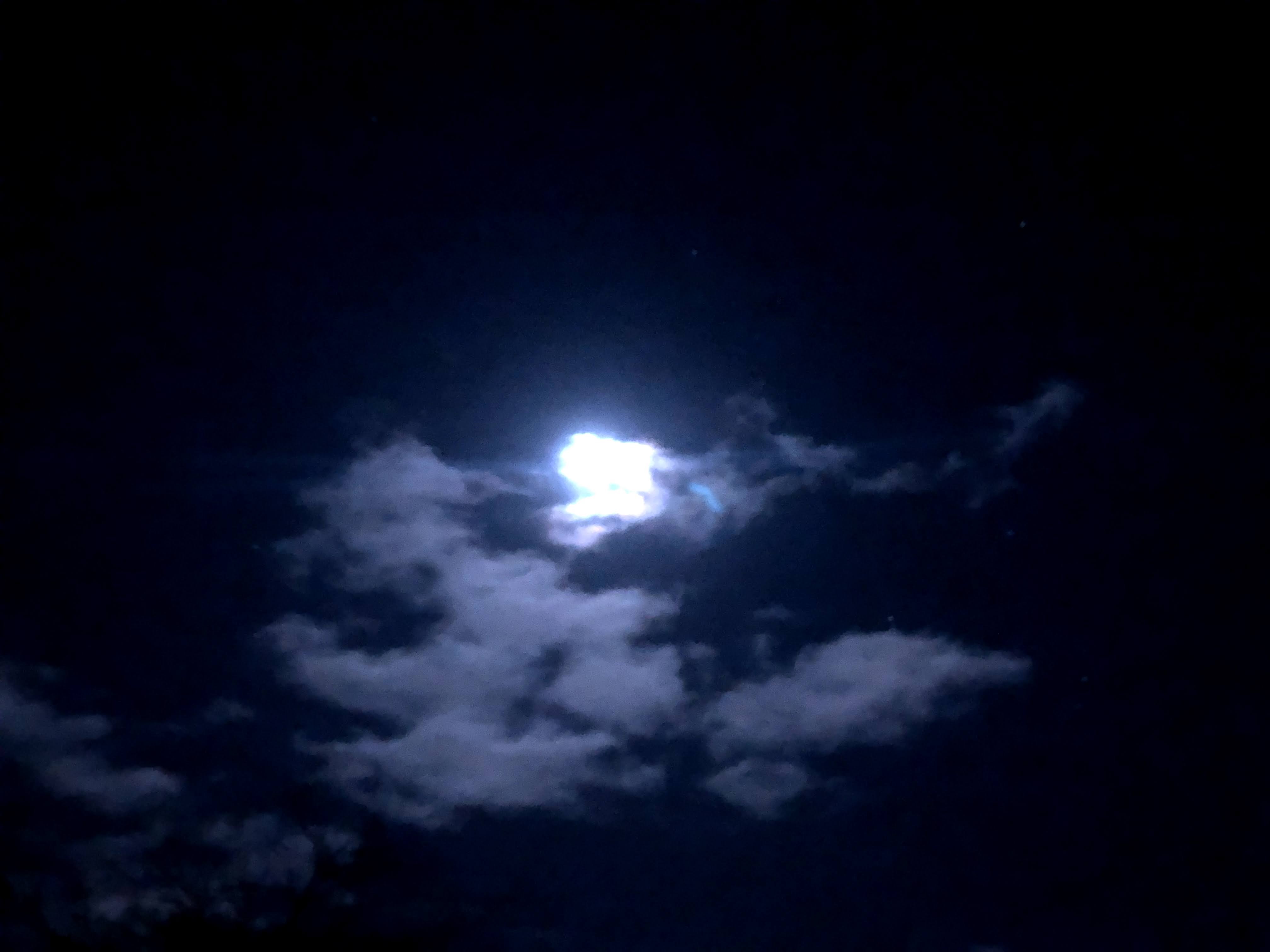
That evening that I was dawdling, had been one of these evenings. The light of the full moon shone through the clear dark skies, and I felt the strength of its benign light seep into my very being. The wintry skies have the magic of starlight, but the days when the moon is also at play, the nights feel vibrant with possibilities and magic.

img_1175

Maybe I was feeling poetic because of all the beautiful poetry in the book I had just finished reading. For those of you wanting a strong dose of magic, I strongly recommend The Girl Who Drank The Moon by Kelly Barnhill.  

“The heart is built of starlight 

And time.

A pinprick of longing lost in the dark.

An unbroken chord linking the Infinite to the Infinite.

My heart wishes upon your heart and the wish is granted.

Meanwhile the world spins.

Meanwhile the universe expands.

Meanwhile the mystery of love reveals itself,

again and again, in the mystery of you.

I have gone.

I will return.

Glerk” 

Kelly Barnhill, The Girl Who Drank the Moon

It maybe because of the waxing and waning of the moon, and the fact that we have only one moon, the sheer delight of catching a glimpse of its benign light in the evening skies is magic enough. The son, as regular readers knows, is a cosmologist and a curious wonderer at heart. One night, when he was a toddler, he asked me, “Imagine how it must be to take a walk on Jupiter, and you look up and see 64 moons in the sky.

Note: Jupiter has 79 known moons, and more are being discovered.

I suppose the magic of that sort of walk must be exemplified, but for now, I am grateful for a peaceful Earthly existence, with the ability to gaze and gain peace with the one moon we do have.

How the Library (Not the Prince) Saved Rapunzel

When the Covid lockdowns started, many folks went on a buying spree (we all know the toilet paper jokes). Ever the dutiful one, off I went too. I was feeling rather pleased with myself when I got an extra bag of rice, and headed onto the library (to get books to tide us over during the lockdown).  When the husband called to ask where I’d gone, I sheepishly said that I was at the library just in case we were unable to get books during lockdown. I could hear a sound like a paper bag bursting – his version of a cross between a snort, and the urge to laugh. I bragged about the extra bag of rice, and I could see his face wondering why he had to be landed with someone, who in P G Wodehouse’s language, ‘must’ve been bumped on the head as a baby’. 

Well, I must say that when we staggered home with books for the children and self, I felt better. The local library has been one of my favorite spots to visit of course, but over the Covid period, I felt like Rapunzel in the book: How the Library Saved Rapunzel (Not the Prince). The library allowed us to schedule an appointment and arrange to pickup books on hold. What was more, they were kind enough to include a few picture books of their choice if you requested them to do so. I am eternally grateful to have access to libraries.

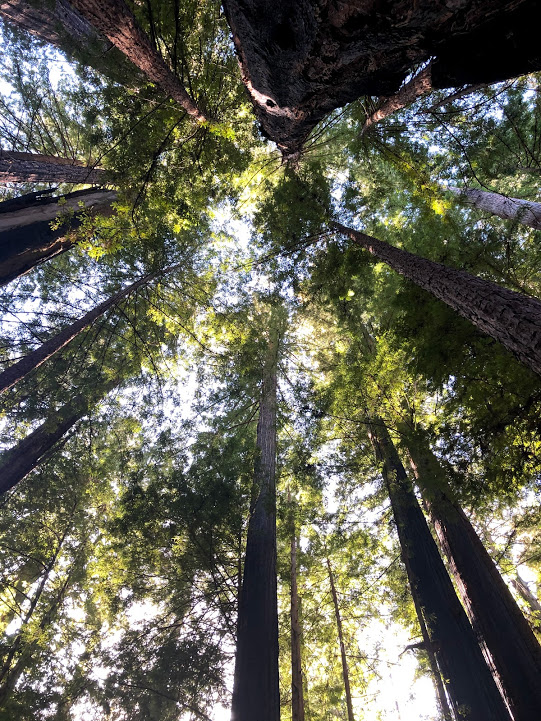
I felt almost an irresistible urge to increase my Science based reading this year (maybe this is a tiny rebellion for the disturbing anti-Science strain emerging with the 45th POTUS office). Starting the year off by re-reading Carl Sagan’s Cosmos set the stage for the year ahead. The following books gave me no end of pleasure and learning over the year. (My Science writing class for children)

trees_komerabi

2020 was the 50th anniversary of Earth Day

  • Unbowed – Wangari Maathai (in progress)
  • On Looking  – Alexandra  Horowitz
  • Losing  Earth  A Recent History – Nathaniel Rich
  • This is the Earth – Diane Z Shore & Jessica Alexander, Paintings by Wendell Minor

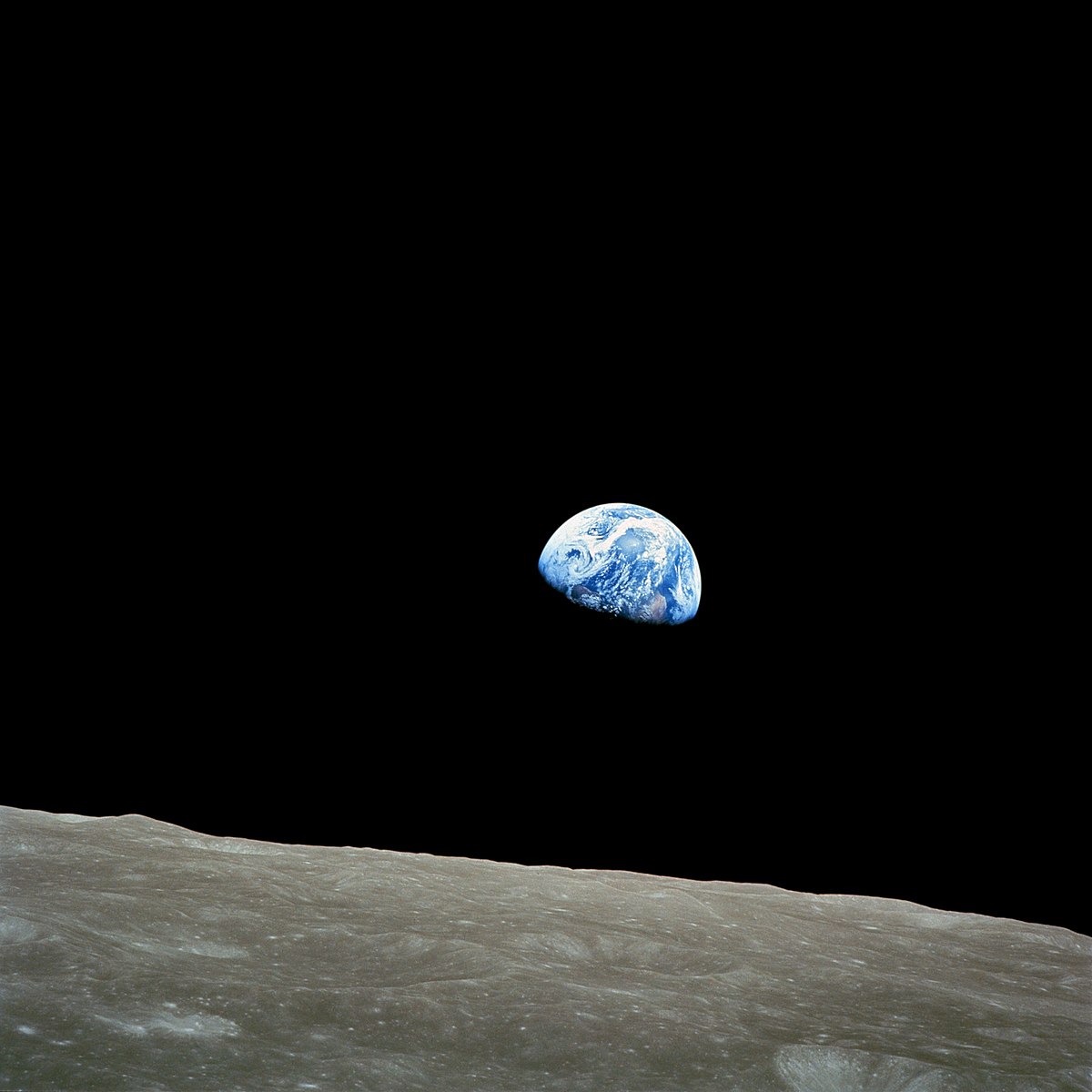
Bill Anders said: “We came all this way to explore the moon, and the most important thing is that we discovered the Earth.”

What a lovely statement that is, and together with his Earth Rising image, contributed to the concerns around Planet Earth that led to founding of Earth Day in 1970.

1200px-NASA-Apollo8-Dec24-Earthrise

It was also a wonderful year to take in poetry. Mary Oliver & Margarita Engle were always welcome in a year when poets alone seemed to know the right turn of phrase for the bizarre. Dr Seuss & Jackl Prelutsky always know to turn one’s frown into a smile. 

  • Blue Iris – Mary Oliver
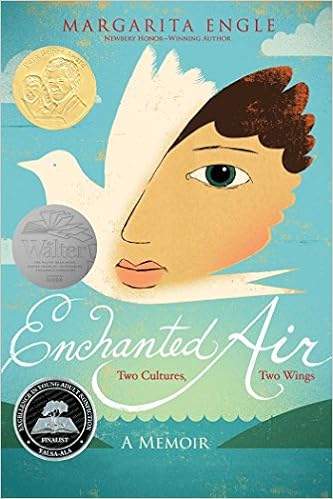
  • Enchanted Air – By Margarita Engle
  • Dog Songs – Mary Oliver
  • Owls and other fantasies – Mary Oliver (Yes! no!)
  • Be Glad your nose is in your face – Jack Prelutsky
  • Dr Seuss books (always worth reads and re-reads). I found a few gems that truly tickled the mind and got out some belly laughs.
    • Horton hears a Who
    • Horton Hatches an Egg
    • Sleep book
    • Oh the Thinks you can Think
    • How Lucky You Are
    • Thidwick the Big Hearted Moose

summer-collage

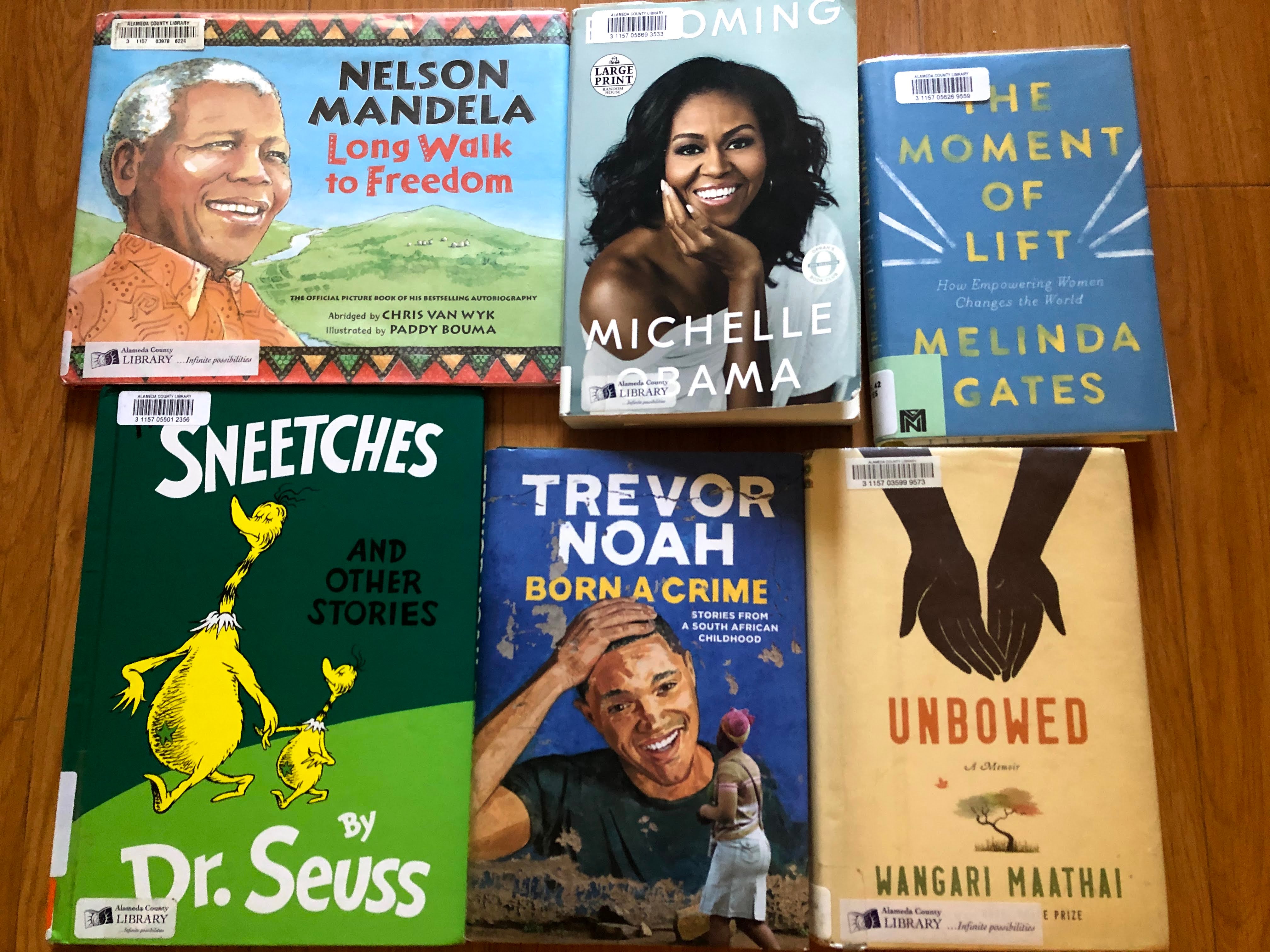
With the Black Lives Matter movement, the year was ripe for educating oneself on the inequities of society and civil disobedience. The local library, news media, and friends all helped with an excellent array of reading material. Notable among the works read then were:

  • Becoming – By Michelle Obama
  • Black Panther – by Ta Nehisi Coates
  • Sneetches and other stories – Dr Seuss
  • A Long Walk to Freedom – Nelson Mandela‘s children’s book version
  • My Many Colored Days – Dr Seuss

img_8883

With uplifting books and humour, life can be truly marvelous. My all-time favorites kept me company, and I am eternally grateful to their influence of course but a few others were added to the list this year.

The world isn’t such a good place either, and reading books such as these helps to remind us about the many problems that still beset society

The lure of power, and how we are seeing it all play out in real life

  • The Fate of Fausto – Oliver Jeffers
  • Louis I – The King of Sheep – Oliver Tallec
  • Yertle the Turtle and other Stories – Dr Seuss
  • Harry Potter and the Order of the Phoenix (pieces relating to the Minister of Magic refusing to acknowledge Voldemort’s return so he could stay in power)

Of course the true magic of life is never complete without children’s books. There are so many of them in this genre, that I did not even note half of them. But a few of them lit up my life

  • My Grandma is a Ninja – By Todd Tarpley, Illustrated by Danny Chatzikonstantinou (When I become a grandma – though it is a few decades off, that is how I wish to be 🙂 )
  • Gondra’s Treasure – By Linda Sue Park
  • Enchanted Wood – by Enid Blyton (old Saucepan Man, Silky and Moonface with the lands above the enchanted tree – though it doesn’t hold the same level of magic it did as a child, it still has its charm)
  • The Red Pyramid – By Rick Riordan (this was the son’s recommendation, and thoroughly enjoyable it turned out to be romping down the Egyptian myths!)
  • The Quiet Book – by Deborah Underwood
  • A Fun Day with Lewis Carroll – Kathleen Krull & Julia Sarda
  • Peter Rabbit’s Tales – Beatrix Potter
  • Why is my Hair Curly – By Lakshmi Iyer
  • A History of Magic – Based on Harry Potter Universe
  • Tintin Comics (a fair few)
  • Calvin & Hobbes
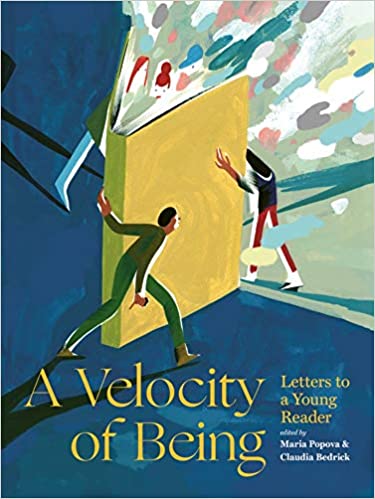
  • The Velocity of Being – Maria Popova & Claudia Bedrick

velocity_being

On that magical high note, here is wishing everyone a healthy, happy new year in 2021. Things are already turning around, and looking hopeful. Keep reading, and sharing 🙂

img_0851

A Medley of Hope

When I started reading to the children in my son’s elementary school classroom, I was a little worried. I could see the little tiles in the zoom classroom when I explained the theme I had planned out for that morning. I had planned Poetry and paired a fiction book by Dr Seuss with a non-fiction memoir by Margarita Engle.

My brain was doing a quick ‘Maybe’ check in the background: Maybe this was too much for them. Maybe I should have gone with a simpler theme. Maybe I should keep it simple and just switch to a sweet little book that everyone would feel comfortable and cosy with. I could’ve switched, but then I remembered the words of wisdom by E.B.White

Never write down to children – E.B. White 

Anyone who writes down to children is simply wasting his time. You have to write up, not down. Children are demanding. They are the most attentive, curious, eager, observant, sensitive, quick, and generally congenial readers on earth. They accept, almost without question, anything you present them with, as long as it is presented honestly, fearlessly, and clearly. I handed them, against the advice of experts, a mouse-boy, and they accepted it without a quiver. In Charlotte’s Web, I gave them a literate spider, and they took that.

More sound advice I have never heard in my life, for the children settled into the themes even if it was a little heavy going before the Thanksgiving holidays for them. 

I had chosen a book by Dr Seuss, The Butter Battle Book. The book is a brilliant satire of nuclear weapons during the cold war. Dr Seuss’ brilliance was in full display. The book is about Yooks and Zooks: The Yooks eat their bread with the butter side up, while the Zooks eat their bread with the butter side down. This leads to escalating differences and a long curvy wall is built between the two lands.

butter_battle

Soon, both sides start fighting by using weapons of increasing grandeur and magnitude starting from the Tough Tufted Prickly Snickle Berry Snitch to the Eight Nozzled Elephant Toted Boom Blitz. The book finishes with the Yooks and Zooks sitting on either side of a wall threatening to drop the Bitsy Big-Boy Boomeroo, signifying the nuclear threat.

We discussed the long years of Cold War and how it was a true lesson in diplomacy that the two countries managed to keep from blowing us all up together. From there, we moved on to  the Bay of Pigs invasion, and then switched to the memoir, Enchanted Air, by Margarita Engle.

The author’s maternal side hails from Cuba, while her paternal side fled from the Ukraine – then a part of the USSR.

Dancing Plants of Cuba

In California, all the trees and shrubs

standstill, but on the island, coconut palms

and angel’s trumpet flowers,

love to move around,

dancing.

..

Maybe I will be a scientist someday

studying the dancing plants of Cuba

Her father’s family escaped from Ukraine, from a communist regime, not knowing whether those left behind survived or not. Her mother immigrated from Cuba.

Two countries

Two families

Two sets of words.

Her paternal grandparents’ recollections are therefore muted, brief and vague. How starkly, concisely, she sums up the human condition for survival? When she asks her Ukrainian-Jewish-American grandma about her childhood, she gets nothing more than ice-skating on a frozen pond.

Her maternal grandmother, on the other hand, regales her with richly detailed family stories, of many island ancestors, living their lives out on tropical farms.

In the poem, Kinship, she sums it up:

Apparently, the length 

of a grown-up’s

growing up story

is determined

by the difference

between immigration 

and escape.

In the poem October 1962, she writes about the standstill known as the Bay of Pigs Invasion.

Grim news

Chilling news

Terrifying

Horrifying

Deadly.

US spy planes have photographed

Soviet Russian nuclear weapons

In Cuba.

Hate talk.

War talk.

Sorrow.

Rage.

The children looked sober and serious at the quiet tone of the poem. You could have heard a pin drop in the room. When asked for their opinions, they shared prescient observations, and looked stricken. I moved on quickly to the poem, Hope, that is the last poem in the book.

Hope

An almost war 

can’t last forever.

Someday, surely, I’ll be free

To return to the island of all childhood 

dreams.

Magical travel, back and forth.

It will happen.

When?

“By Jan 2015, independently announced by both countries, Cuba & USA restored  relations . ” I said to the class.

There was a palpable air of relief in the room. The children cheered while their proud teacher beamed at them. The questions that followed left no doubt in my mind about how well the children had perceived the stories. The more I heard them discussing how important it was to patch up between human-beings, the more I felt comfortable in future diplomacy. 

If only children could help counsel us, we would be far wiser.

The Fabled Life of Aesop

When we think of literary bodies of work that have endured over Millenia, we think of epics such as the Mahabharatha, Ramayana, Iliad and Odyssey, or the Bible. But there are so many endearing little tales that have endured just as long, and have passed down morals, lessons and fun along the way.  I am referring to stories such as Aesop’s Fables & Panchatantra tales.

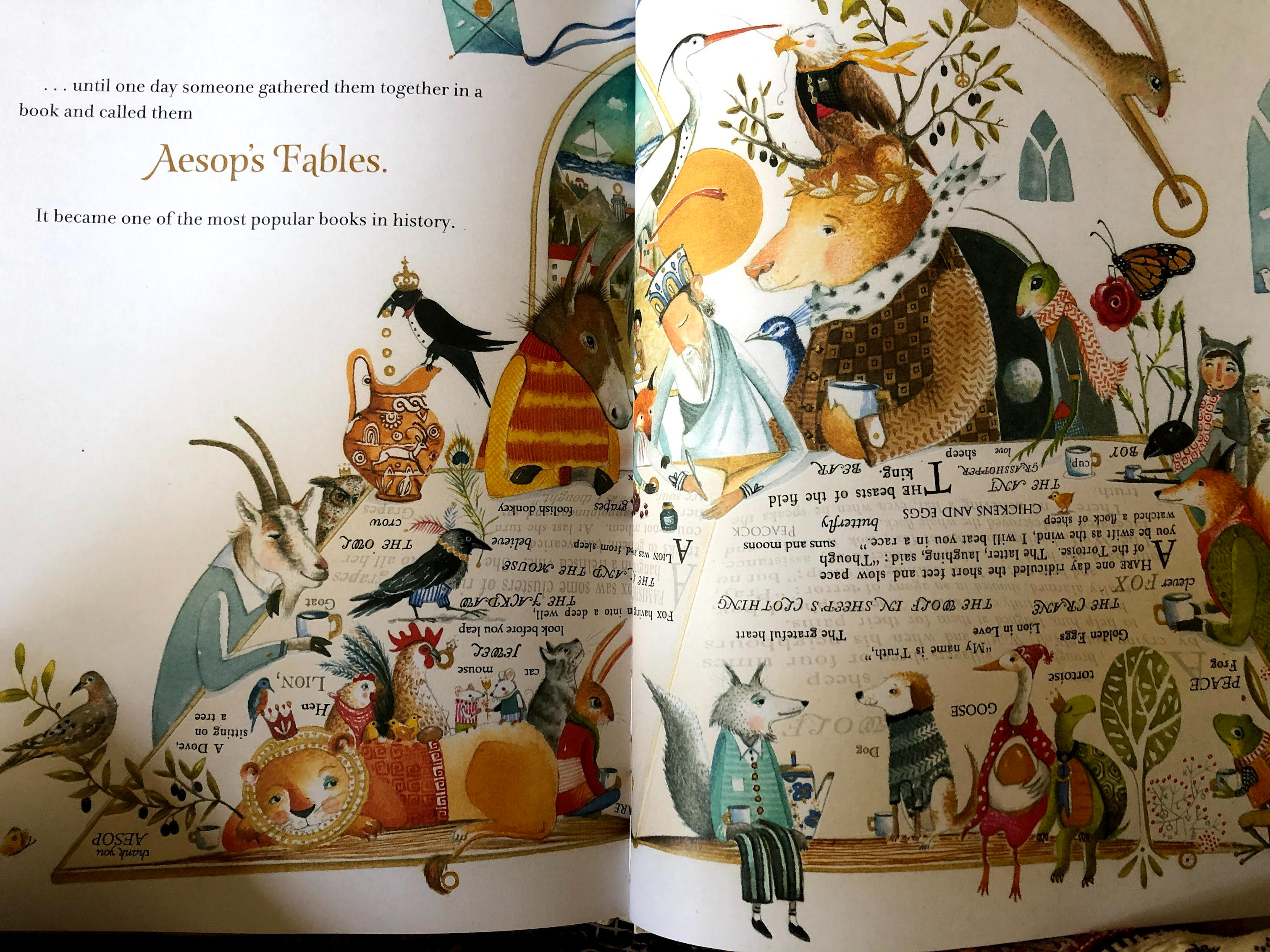
The library had a wonderful picture book on The Fabled Life of Aesop: the book was not just a collection of his most fables, but the life of the slave we think was Aesop. 


Written by Ian Lendler, and illustrated by Caldecott winner, Pamela Zagarenski, it is a book with marvelous reading material, and highly imaginative pictures.

2500 years ago, a baby boy named Aesop was born to slave parents in Greece. Aesop, as a child born to slaves, was taken from his parents and sent to work in the hot grape fields of Samos. As a slave, Aesop learnt to speak carefully. One of his friends who talked about their master’s smelly feet was taken away and was never seen or heard of again. So, the slaves learnt to speak in code.

 “Did you hear about the lion? He stepped on a thorn and his paw got infected.”

“Oh!” said Aesop. “So that’s why his paw smells!”

Aesop learned to speak in code.

I could not help remembering this snippet from a poem by Margarita Engle in the book, Enchanted Air :

Tyrants always

try to control communication.

They always

fail.

The human spirit is not meant to be caged, and tyranny somehow tries to do just that every time. 

Aesop’s talent in spinning stories with morals using the animals around him was soon noticed by his master Xanthus, and he was tasked with more challenging tasks in helping his master’s life. One time when his master had a falling out with his friend, Aesop was called to mediate. Aesop was but a young boy and he was scared. If either his master or his friend felt offended, they had the power to put him to death. So, he came up with a story about the lion and a boar who fought over who should drink first at the watering hole. It was only when they noticed vultures circling overhead that they realized it was better to share the water rather than have the vultures eat the loser.

The master, Xanthus, and his friend, Jadon, were so impressed with Aesop, they sought an amicable resolution. As a peace offering, Aesop was sold to Jadon who continued to seek Aesop’s help in his business and personal affairs.

Aesop’s stories helped his masters live their lives with honesty, humility, and kindness. His stories warned against greed and deceit. 

Many of them taught another hidden lesson as well. It was something no master would pick up, but every slave or powerless person would understand. “

img_9889

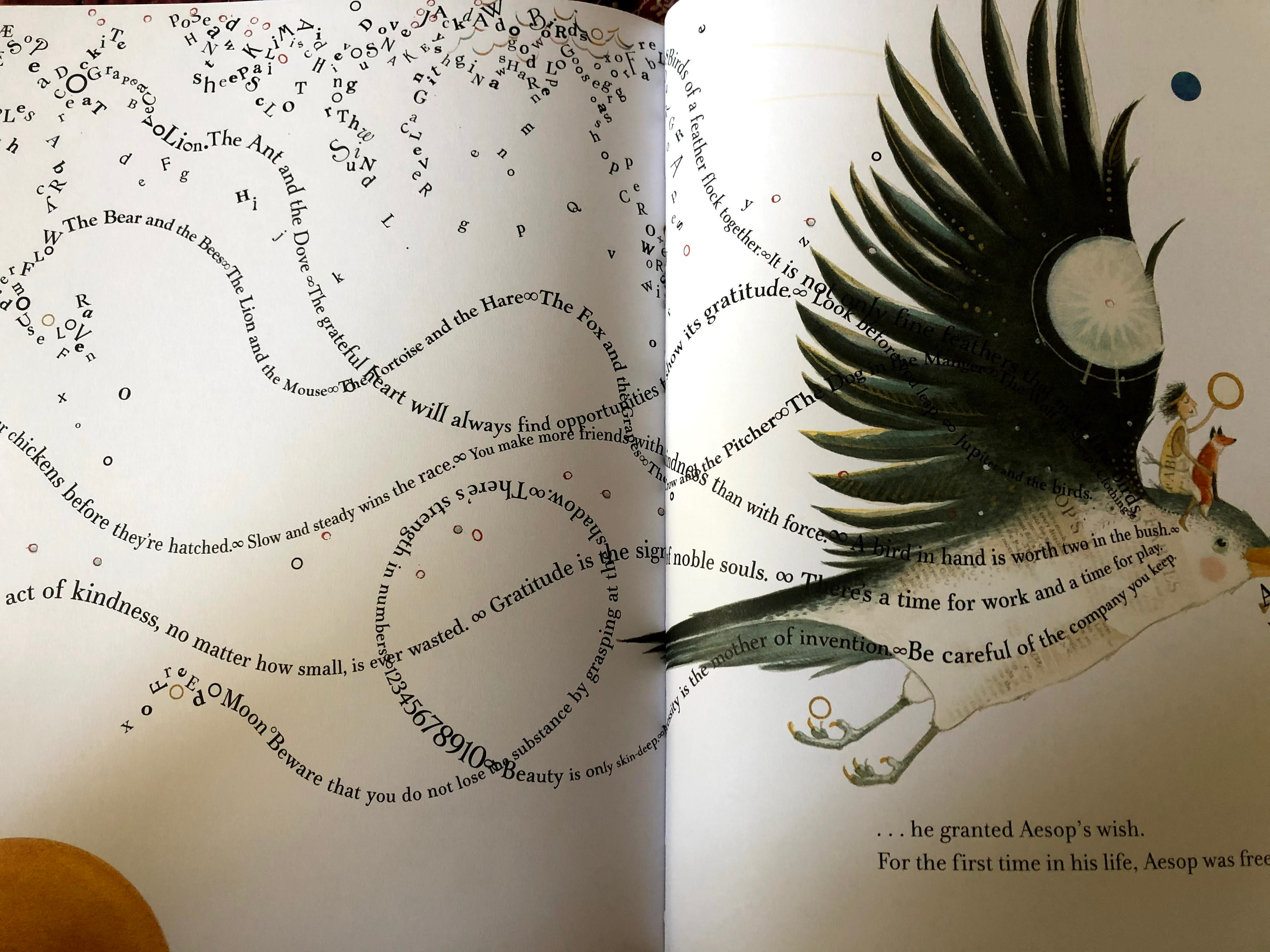
Eventually, Aesop was set free, and his stories have been handed down from generation to generation helping millions of us glean the wisdom and morality handed down by these endearing tales.

img_9890
Freedom

I have often wondered about what it means to be human. Is it opposable thumbs, or imagination, or tool use, or brain to body ratio, or empathy? Maybe the complex combination of all these things, and the collective will to make things better in spite of all our failures is what sets us apart.

We have heard of scalded cats staying away from milk. Maybe our power is in ensuring that we do not  make the same mistake again and again,but learn from it.  

The world around us always has lessons for us: Octopii, whales, monkeys, dogs, crows, geese, herons, squirrels, rabbits, trees, and to that I am grateful.


Our Attention, Our Imagination, Our Opinion

Poetry has seeped into our lives yet again. At times I wonder whether poetry, music and art are all luxuries that only dare to raise their heads when the busyness of our pointless existence relinquish their clutch, or whether poetry, music and art enable us to go about our busyness with joy and acceptance.

Either way, I am simply grateful to experience the effect of these soothers to our lives.

The news can be a whirlpool, not just pulling those who happen to float nearby into its swirl, but also sending a whirlwind to attract those on land. Of late, every week seems to be packed with a year’s worth of news. All of this of course results in an enervating tug of emotions. 

We do not know whether the farm worker in the 17th century had this many opinions he needed to have, or whether the soldier in the Dark Ages had a semblance of control in his fates. All we have experience of, is this time, and this age, when we are being called upon to not just have an opinion, but also to voice them and defend them almost relentlessly. 

How the world clamors for opinions and stands? Having a world leader who takes pride in swirling the world around for his endless rollercoaster is exhausting. This is Gaslighting we are told, that is Egotism. Here we are, endlessly naming, categorizing, instead of just appealing to an inner sense – Yes? Or No? Which is it?

It is also deeply instructive for us as individuals. A lesson on ourselves. How much do we want to dragged into the endless show put on for us; how much do we want to rectify things, solve problems with creativity and resilience; and how much do we want to be pulled here and there, like specks in a whirlwind?

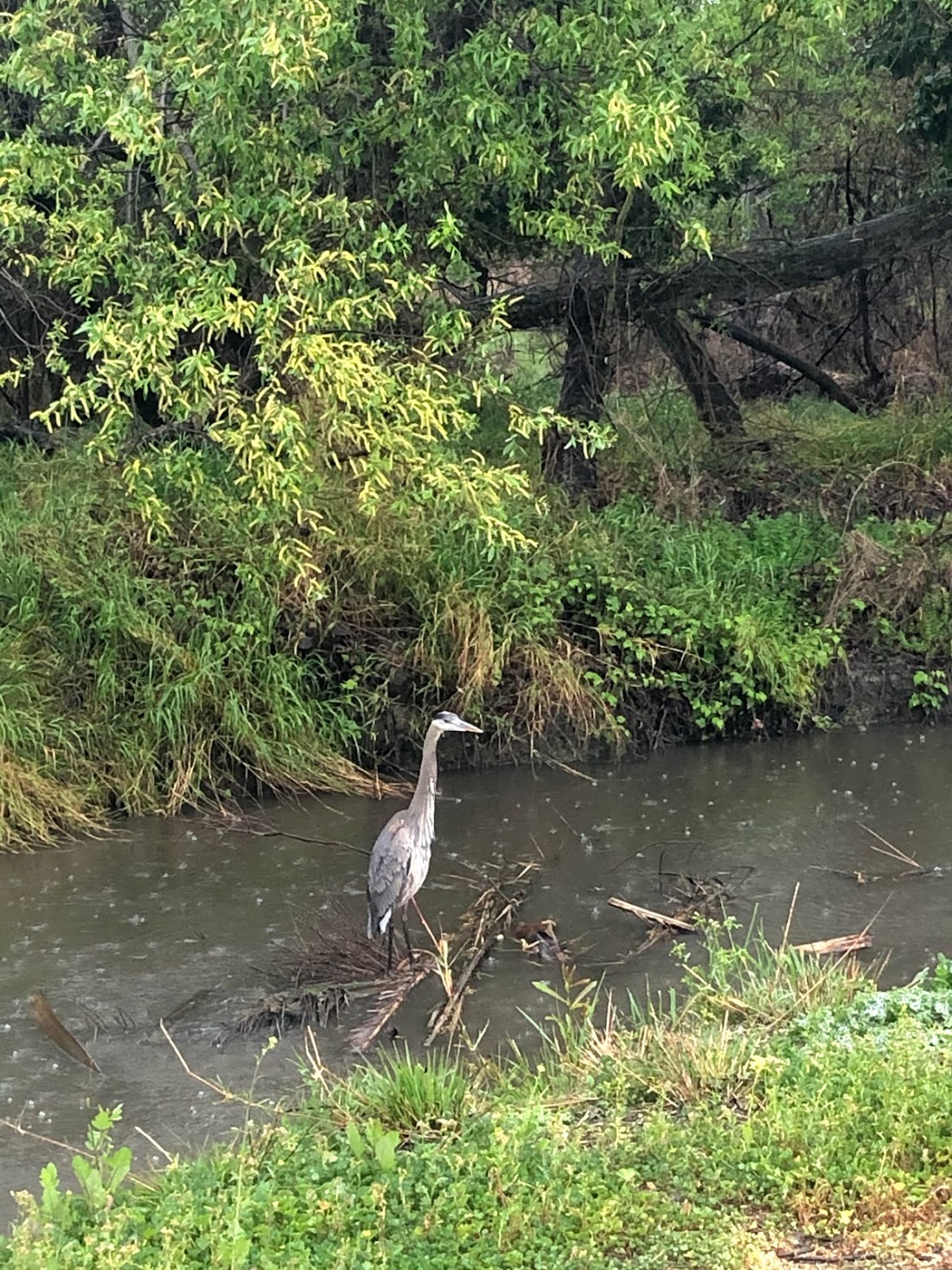
The other day, I saw a heron standing patiently in the shallow waters of a river, waiting patiently. I was out for my evening walk, and I had to stop and admire the heron. The heron was going about its business of living, observing quietly, waiting patiently, and if in the process of being, a wandering soul got a lesson or two out of it, that was good, but that wasn’t its purpose.

I chuckled to myself thinking of what the heron would say to me if I asked it about any of the world’s problems. Would it laugh at me or with me at the problems humans have created for ourselves?

The heron in that moment taught me the simple act of keeping still and untangling the strains of thought. That this isn’t a luxury, but a necessity.

Sometimes, sitting and reading a piece of poetry evokes the same feeling. Take the poem, Yes! No! By Mary Oliver for instance. 

How necessary it is to have opinions!

I think the spotted trout lilies are satisfied, standing a few inches above the earth. I think serenity is not something you just find in the world, like a plum tree, holding up its white petals.

The violets, along the river, are opening their blue faces, like small dark lanterns.

The green mosses, being so many, are as good as brawny.

How important it is to walk along, not in haste but slowly, looking at everything and calling out Yes! No!

The swan, for all his pomp, his robes of grass and petals, wants only to be allowed to live on the nameless pond. The catbrier is without fault. The water thrushes, down among the sloppyrocks, are going crazy with happiness. Imagination is better than a sharp instrument. To pay attention, this is our endless and proper work.

How often I have stopped to look at the heron taking a short flight from the river nearby and wondered whether its opinions were sought, and whether it mattered. They should, for our opinions and actions have definitely resulted in less than ideal living conditions for them. 

Mary Oliver in one short sweep of her pen was able to capture all this and more in the poem, Yes! No!

P.S: I love how the swan in her poem wants to live in a nameless pond. Our planet is just that isn’t it? A nameless, priceless habitat that we have bestowed a name upon.

Heron flying

Enchanted Air

I read Enchanted Air by Margarita Engle, expecting to read a good memoir about two cultures and two wings one grows as a result of hailing from mixed origins. What instead happened is difficult to describe in words for it was not a reading, it was a feeling. A transformative one. 

It is a children’s book. Each chapter is a small poem that stands in and of itself, but also ties into the whole narrative. There were so many places in the book when I found myself stopping to savor a poem, reading it again, and swirling the feelings it evoked in my mind. Later, I found myself passionately explaining it in far less elegant terms to the husband and children, scurrying to get the book, and fumbling through the pages to find the right poem.

For instance when she writes of ‘The Dancing Plants of Cuba’, she captures the essence of an island: 

In California, all the trees and shrubs

standstill, but on the island, coconut palms

and angel’s trumpet flowers,

love to move around,

dancing.

..

Maybe I will be a scientist someday

studying the dancing plants of Cuba.

Dancing Plants

How can one not love the child then who is later to task by her teacher for inventing dancing plants, as plants are supposed to stay still aren’t they?

Her father’s family escaped from Ukraine, from a communist regime, not knowing whether those left behind survived or not. Her mother immigrated from Cuba.

Two countries

Two families

Two sets of words.

Her paternal grandparents’ recollections are therefore muted, brief and vague. How starkly, concisely, she sums up the human condition for survival? When she asks her Ukrainian-Jewish-American grandma about her childhood, she gets nothing more than ice-skating on a frozen pond. 

Her maternal grandmother, on the other hand, regales her with richly detailed family stories, of many island ancestors, living their lives out on tropical farms.

In the poem, Kinship, she sums it up:

Apparently, the length 

of a grown-up’s

growing up story

is determined

by the difference

between immigration 

and escape.

This memoir is rich with details of her family, and her own dreamy self. 

She takes us along with her on her journey of growing up, and how her personality rows with ‘The Geography of Libraries’.

Spoken stories are no longer enough

To fill my hunger

I crave a constant supply 

Of written ones too.

As she grows, the mistrust between USA and Cuba, grows too. Their family is suspect simply for holding a Cuban passport, a part of her heritage cut off by souring diplomatic relations and the Bay of Pigs invasion. She first writes about the state of reality in the poem, Communications.

Abuelita writes letters in code,

inventing poetic metaphors,

to prevent the island’s censors

from understanding her words.

When she says Tio Dario 

is working hard in the garden,

Mom somehow knows that it means 

he’s been arrested and sent to a prison or forced labor camp.

In Secret Languages we learn

Right wing or left wing tyrants always

try to control communication

They always

fail.

The books ends with the poem, Hope.

It is no wonder that the book has won a string of awards. Looking at the history of the world, its themes are timeless too.

In Pursuit of the Truth

“Have you seen this video? “, said the husband for the n-th time. He definitely sounded like a child in Disneyland glimpsing Tinker Bell, and I looked up indulgently. His face was glowing as though he was discovering Calculus for the first time.

I could understand his enthusiasm – the 3Blue1Brown videos are well explained, beautifully animated and make you appreciate Calculus in a wholly new way. The journey as well as the philosophy behind it.

I have to confess that the 3Blue1Brown videos sparked my interest, and I peeked into the childhood brain enjoying Maths classes, as I picked up a book, called A Strange Wilderness – The Lives of the Great MathematiciansBy Amir D Aczel to read about the journey of Mathematics through the ages. How did we arrive at the basic tenets of the truth that held the universe together?

A Strange Wilderness: The Lives of the Great Mathematicians – By Amir D Aczel

The book starts with examining the Greeks and their approach to understanding the world over 2500 years ago. Starting with Thales of Miletus(624 BCE) , who was often called the first philosopher (He is known for the famous saying , “Know Thyself”), it examines Mathematics as a pursuit of the truth.

I was lured in, and though I did feel the writing could have been far more intriguing, it was a well-collated narrative of mathematicians and their lives through the ages.

The next great mathematician is the renowned Pythagoras of Samos (580-500 BCE) who continued the philosophy of:

Changing Mathematics from a computational discipline into a beautiful, abstract philosophy.

For those in Academia or are students still, the philosophical bent of the pursuit of truth is probably there. But for most others, in our day-to-day lives, Mathematics has taken on a more computational role than a philosophical one.

The arc of Calculus itself is an interesting story. How close we came as a species to discovering Calculus multiple times? Progress happens in fits and starts, and for every piece of the puzzle that we decipher, world events, or simply fate intervenes and sets us back a few steps. So many mathematicians came close to the concept of Calculus including the philosopher Zeno, in Zeno’s Paradox, over two millennia ago.

The History of Calculus

Finally, it wasn’t till the late 17th century when Leibnitz and Newton arrived at Calculus independently. Mired in controversy as it was as to who discovered it first, it is still a fascinating journey.

I remembered one cold Winter evening waiting for the fireworks at Disneyland and wondering whether the Imagineers at Disney had calculated Tinker Bell’s rope coverage using Calculus, to ensure that the area under the rope display was visible from most areas in the park. They must have done – this was Disney after all.

When we dedicate some of our Calculating Mind’s time to enable the Thinking Mind, the resulting moments are truly magical.

Photo by Mohan Reddy Atalu on Pexels.com

Taking the journey with Mathematicians through the ages was also strangely comforting. After all, in spite of wars, disease, revolutions and all the horrifying things in the world, the pursuit of truth did hold its slender string through time. Ravaged, and knotted up at times, maybe, but always resurfacing with the single minded purpose of the pursuit of the truth. The pursuit of the truth is one of our basic tenets, after all.

Soonish

“How do you think the water on Titan is? “

I must’ve responded with a quizzical look, for the son responded with a “Saturn’s moon!” 

http://Public Domain, https://commons.wikimedia.org/w/index.php?curid=610237

“Oh!” 

His interest in all things Space-Cosmos has me unnerved sometimes. He catches me when I am zap in the middle of the myriad things that keep me busy and unproductive, and like a zing of fresh air, sends a question like this to remind me that life does not always have to be stern.

As I thought up a response to another ping at work, I found myself wondering what ammonia-esque water must be like. The temperatures must be more frigid – sure, but beyond that the imagination sort of teeters. Would there be  fish in the seas on Titan? Would their eyesight have evolved so differently because of the low amounts of sunlight, and all this, only if we assume life has evolved on Titan. 

We did not evolve into cyclops like one-eyed creatures. Two eyes lends perspective to our vision and construct the world around us differently than a person with only 1 eye would. What if we had evolved with one eye on top of our head – always upward looking? And another set under our feet? I wonder how we would have shaped our world if we had managed to evolve like octopii with neurons everywhere not just in our brains. 

Over lunch today, discussion moved to contact lenses. With changes in contact lens technology, the disposable ones are in use now. Calculations were being made as to how many days of lenses were left, and I picked up the thread of the third eye and the octopus-like eyes-and -brains-in-limbs theory.

The son immediately calculated the number of the contact lenses we would have required for 3, 4 & 5 eye scenarios, while the daughter moved to the more practical problems

“Yes – imagine – looking upwards all the time, and see bird poop flying towards your upper eye and not having time to close it. Aaah!” That child can take the magic of star dust and turn it into duck-poop!

Another time, there I was thinking along simple lines such as ‘These flowers have faded so much in the summer heat”, or “These poor little squirrels in the heat wave – should we leave some water outside for them?” when the son in his attempt to make conversation pulled me straight out of this solar system altogether with “Did you know Proxima Centauri can pull comets towards it from the original Kuiper belt?”

https://solarsystem.nasa.gov/news/792/10-things-to-know-about-the-kuiper-belt/

Keeping up with a child’s curiosity is difficult enough as an adult. Yet, I look forward to these little chats with the budding futurologist, for they make me think outside of the what-needs-to-be-done to the more creatively beckoning what-can-be-done mode of thinking.

One evening, on a little stroll by the waters, the fellow asked me what I thought would be the 5 most interesting things in the future. I love it when I have to think through his questions like this. I had him go first so I could get my thoughts into some sort of order.

He started off with the space elevator, and then a sky hook, moved on to some solid asteroid mining, and then conservation of energy. He is increasingly fond of the channel Kurzgesagt 

Their you-tube channel has a number of philosophical, scientific concepts. The videos are only a few minutes long and are done in a highly simplistic style, yet enough to give one the overall picture. 

Luckily, for me, I had picked up this book, Soonish by Kelly & Zach Weinersmith

Thanks to the book, I could hold up my end of the conversation. The book is written in a funny and engaging manner. Starting with space technologies and asteroid mining; the book moves on to robotics, augmented realities; and the future of personalized medicine and synthetic biology.

People who have the joy of gaining fresh perspectives from the forward looking spirit of youth are lucky indeed.

May we always retain the inner child in us – The wonder of Shoshin.

Bestiary Tales in Covid Times

“Summer will be done in just two weeks!” trilled the children. The son was excited, as expected, by the fact that it was time for the autumnal solstice. (Earth’s tilt, cosmos, time are all fair game for him)

I stopped bustling about and nodded. It was true! That’s two whole seasons of Covid living.

Summer has been a blur. Sometimes, it was a happy blur of forests, rivers, beaches, craters, lakes, browning meadows, bundles of hay, wildflowers, towering trees, stars at night, comets zipping in the Earth’s vicinity, angry and mellow sunsets, pelicans and 🎼 “wild geese that fly with the moon on their wings” 🎶, hummingbirds flittering in the pale light of the rising moon, asters and star lilies in the shade of their massive neighborly trees. All of this with the sweet companionship of the family, and close friends – zooming in at times.

Other times, it was exhausting – heat waves, massive wildfires, poor air quality indexes, Covid numbers continuing to rise and showing no signs of abetting, protest marches, racism, bomb blasts, all on top of a news cycle that seems to think it has to deliver the heaviest punch into every day. It is like watching the world’s worst wrestling match. 🤼‍♂️ Really, someone should coach the world that not everything needs to be shocking and bigger and worse than ever before. It might be okay to watch a match in which the players seldom land a punch and are merely playing the game warily sizing each other up once in a while. 

Yet, life must go on, and it often goes along much better when we stop and look for promising moments in the gloom. There are moments that stand out clearly in this pandemic, when I felt a wave of gratitude overwhelm me, and I am also grateful for the sheer timing of these moments.

The time I stood on a windy, lonely strip of beach wrapping a towel about me for warmth and watching the sandpipers fly against the wind without wavering one bit, while I had a tough time just standing erect was one such. It was but a fleeting instant in which the little nippy sandpipers taught me about keeping one’s spirits up when the world is attempting to veer us off course every which way.

Or the moment, when on a road trip to a solitary house by the Umpqua river, the road wove on, the heat rose in waves around us, and the shimmering waters of the Lake Shasta looked like a green beast taking it easy in the summer, and laying low for what lay ahead. A few weeks later, the Sierra Nevada mountains were to be threatened by wildfires on a magnitude that sent the state of California reeling. Looking at the dry lands about us for a couple of hours, I felt a moment of dread, when the road turned, and a beautiful gushing river accompanied the road, and there on a rock in the middle of the river was a great big bear, looking contented and trying to fish or just cool off. 

As we took our summer walks in the evenings, I stopped so many times to admire the geese splashing into the waters after their great squawking, while the pelicans achieved this feat with none of the noise, but all of the grace.

I remember the time we looked up on a stroll to come eye to eye with a great turkey vulture. The elementary school going son was with me, and he thrilled at it. “Amma – I know you take pictures of the flowers  everyday because they only last for sometime, but this…oh…this is so special. It is so .. umm.. “ He struggled for the right word, but I think I knew what he was going for. I felt it too. There was a majesty about the bird that was hard to describe. There was a divinity and a razor sharp quality to its gaze that falconers love. I have tried to experience this when I read the book H is for Hawk by Helen Macdonald. But all I needed was that encounter lasting all of two minutes. 

“The hawk was everything I wanted to be: solitary, self-possessed, free from grief, and numb to the hurts of human life.”

― Helen Macdonald, H Is for Hawk

Really! How much our fellow creatures have to teach us?! 

I think of what wild animals are in our imaginations. And how they are disappearing — not just from the wild, but from people’s everyday lives, replaced by images of themselves in print and on screen. The rarer they get, the fewer meanings animals can have. Eventually rarity is all they are made of.” H is for Hawk – Helen Macdonald

Just like that, Autumn comes in all its glory to teach us what it does best. Preparing for Winter.