The Fabled Life of Aesop

When we think of literary bodies of work that have endured over Millenia, we think of epics such as the Mahabharatha, Ramayana, Iliad and Odyssey, or the Bible. But there are so many endearing little tales that have endured just as long, and have passed down morals, lessons and fun along the way.  I am referring to stories such as Aesop’s Fables & Panchatantra tales.

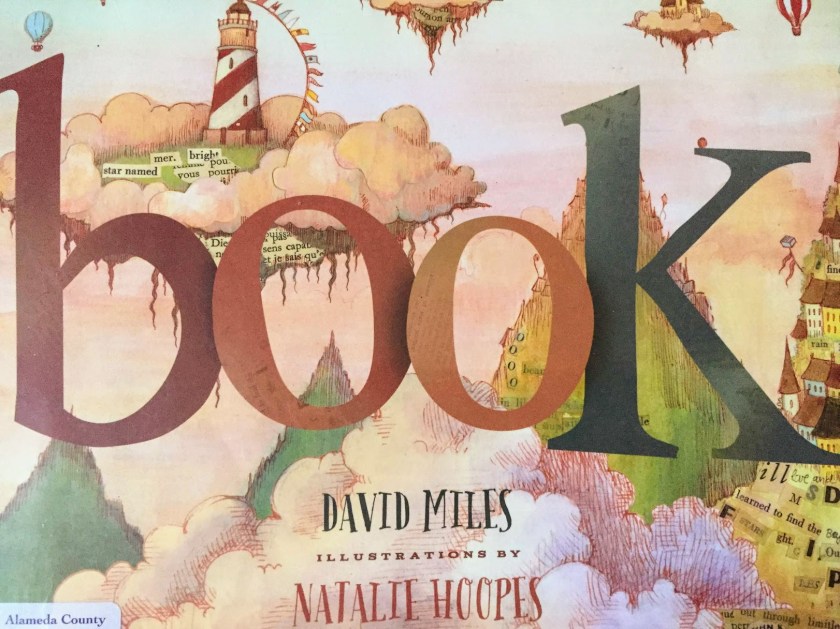
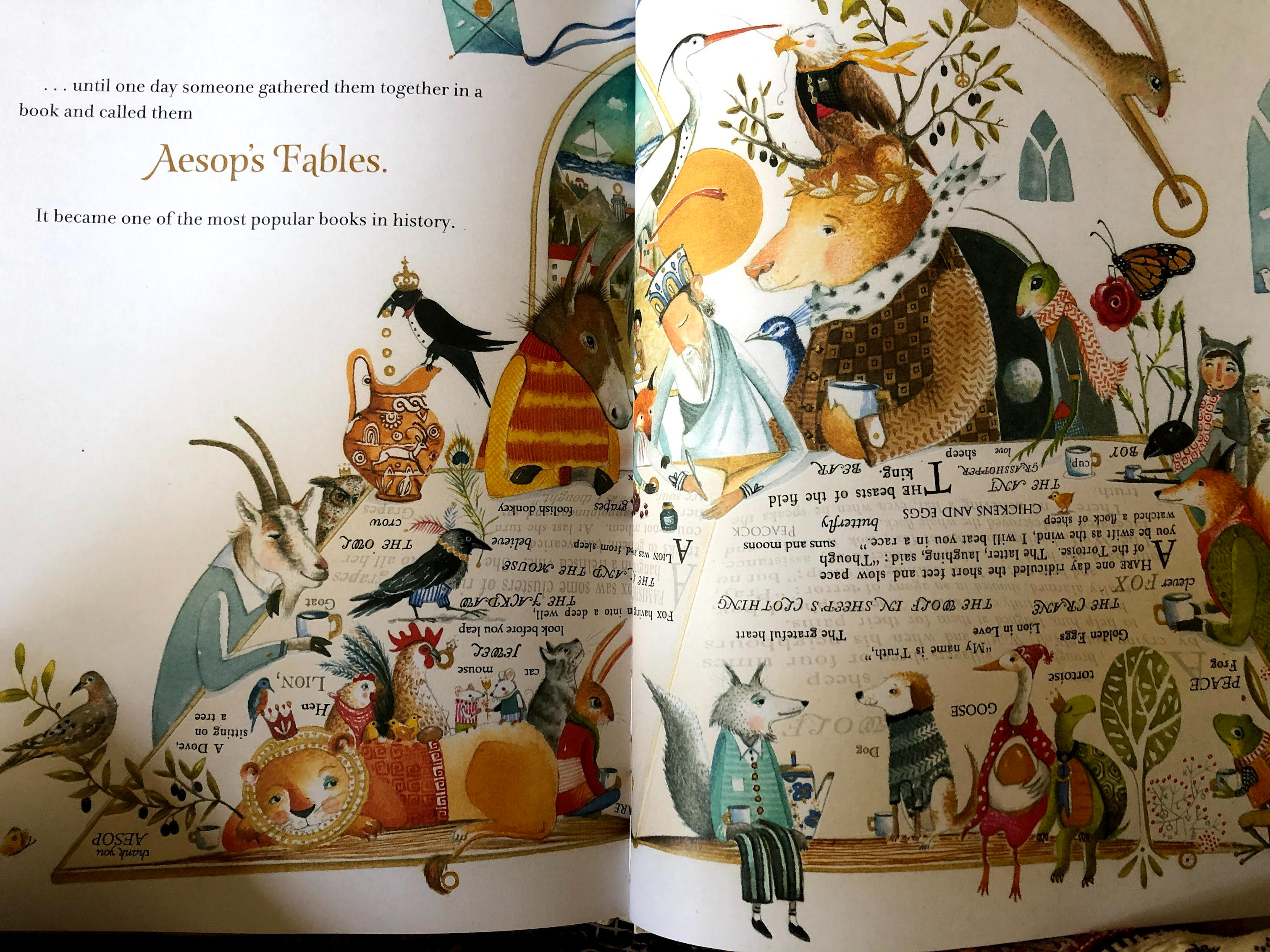
The library had a wonderful picture book on The Fabled Life of Aesop: the book was not just a collection of his most fables, but the life of the slave we think was Aesop. 


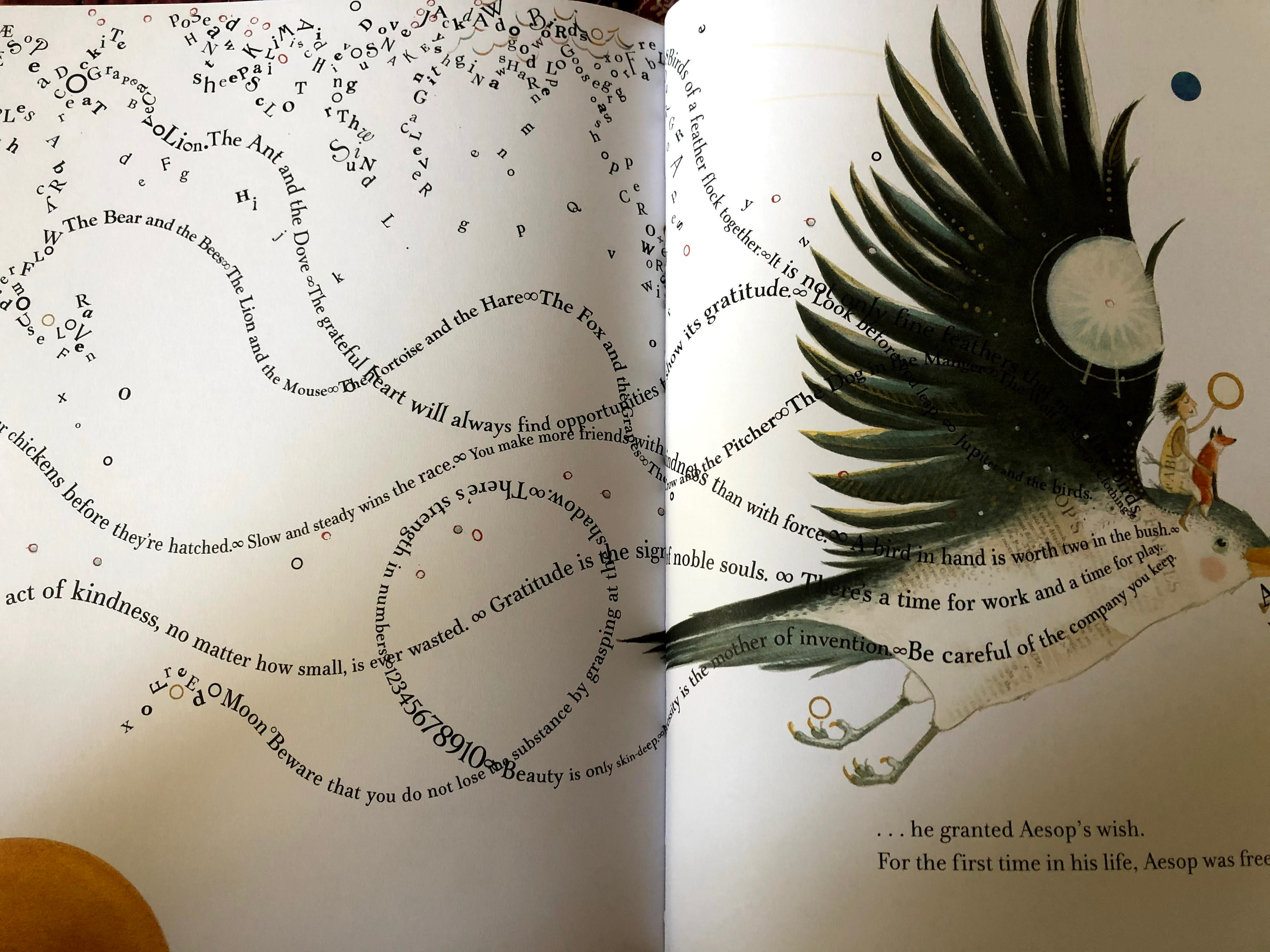
Written by Ian Lendler, and illustrated by Caldecott winner, Pamela Zagarenski, it is a book with marvelous reading material, and highly imaginative pictures.

2500 years ago, a baby boy named Aesop was born to slave parents in Greece. Aesop, as a child born to slaves, was taken from his parents and sent to work in the hot grape fields of Samos. As a slave, Aesop learnt to speak carefully. One of his friends who talked about their master’s smelly feet was taken away and was never seen or heard of again. So, the slaves learnt to speak in code.

 “Did you hear about the lion? He stepped on a thorn and his paw got infected.”

“Oh!” said Aesop. “So that’s why his paw smells!”

Aesop learned to speak in code.

I could not help remembering this snippet from a poem by Margarita Engle in the book, Enchanted Air :

Tyrants always

try to control communication.

They always

fail.

The human spirit is not meant to be caged, and tyranny somehow tries to do just that every time. 

Aesop’s talent in spinning stories with morals using the animals around him was soon noticed by his master Xanthus, and he was tasked with more challenging tasks in helping his master’s life. One time when his master had a falling out with his friend, Aesop was called to mediate. Aesop was but a young boy and he was scared. If either his master or his friend felt offended, they had the power to put him to death. So, he came up with a story about the lion and a boar who fought over who should drink first at the watering hole. It was only when they noticed vultures circling overhead that they realized it was better to share the water rather than have the vultures eat the loser.

The master, Xanthus, and his friend, Jadon, were so impressed with Aesop, they sought an amicable resolution. As a peace offering, Aesop was sold to Jadon who continued to seek Aesop’s help in his business and personal affairs.

Aesop’s stories helped his masters live their lives with honesty, humility, and kindness. His stories warned against greed and deceit. 

Many of them taught another hidden lesson as well. It was something no master would pick up, but every slave or powerless person would understand. “
img_9889

Eventually, Aesop was set free, and his stories have been handed down from generation to generation helping millions of us glean the wisdom and morality handed down by these endearing tales.
img_9890
Freedom

I have often wondered about what it means to be human. Is it opposable thumbs, or imagination, or tool use, or brain to body ratio, or empathy? Maybe the complex combination of all these things, and the collective will to make things better in spite of all our failures is what sets us apart.

We have heard of scalded cats staying away from milk. Maybe our power is in ensuring that we do not  make the same mistake again and again,but learn from it.  

The world around us always has lessons for us: Octopii, whales, monkeys, dogs, crows, geese, herons, squirrels, rabbits, trees, and to that I am grateful.
 

Our Attention, Our Imagination, Our Opinion

Poetry has seeped into our lives yet again. At times I wonder whether poetry, music and art are all luxuries that only dare to raise their heads when the busyness of our pointless existence relinquish their clutch, or whether poetry, music and art enable us to go about our busyness with joy and acceptance.

Either way, I am simply grateful to experience the effect of these soothers to our lives.

The news can be a whirlpool, not just pulling those who happen to float nearby into its swirl, but also sending a whirlwind to attract those on land. Of late, every week seems to be packed with a year’s worth of news. All of this of course results in an enervating tug of emotions. 

We do not know whether the farm worker in the 17th century had this many opinions he needed to have, or whether the soldier in the Dark Ages had a semblance of control in his fates. All we have experience of, is this time, and this age, when we are being called upon to not just have an opinion, but also to voice them and defend them almost relentlessly. 

How the world clamors for opinions and stands? Having a world leader who takes pride in swirling the world around for his endless rollercoaster is exhausting. This is Gaslighting we are told, that is Egotism. Here we are, endlessly naming, categorizing, instead of just appealing to an inner sense – Yes? Or No? Which is it?

It is also deeply instructive for us as individuals. A lesson on ourselves. How much do we want to dragged into the endless show put on for us; how much do we want to rectify things, solve problems with creativity and resilience; and how much do we want to be pulled here and there, like specks in a whirlwind?

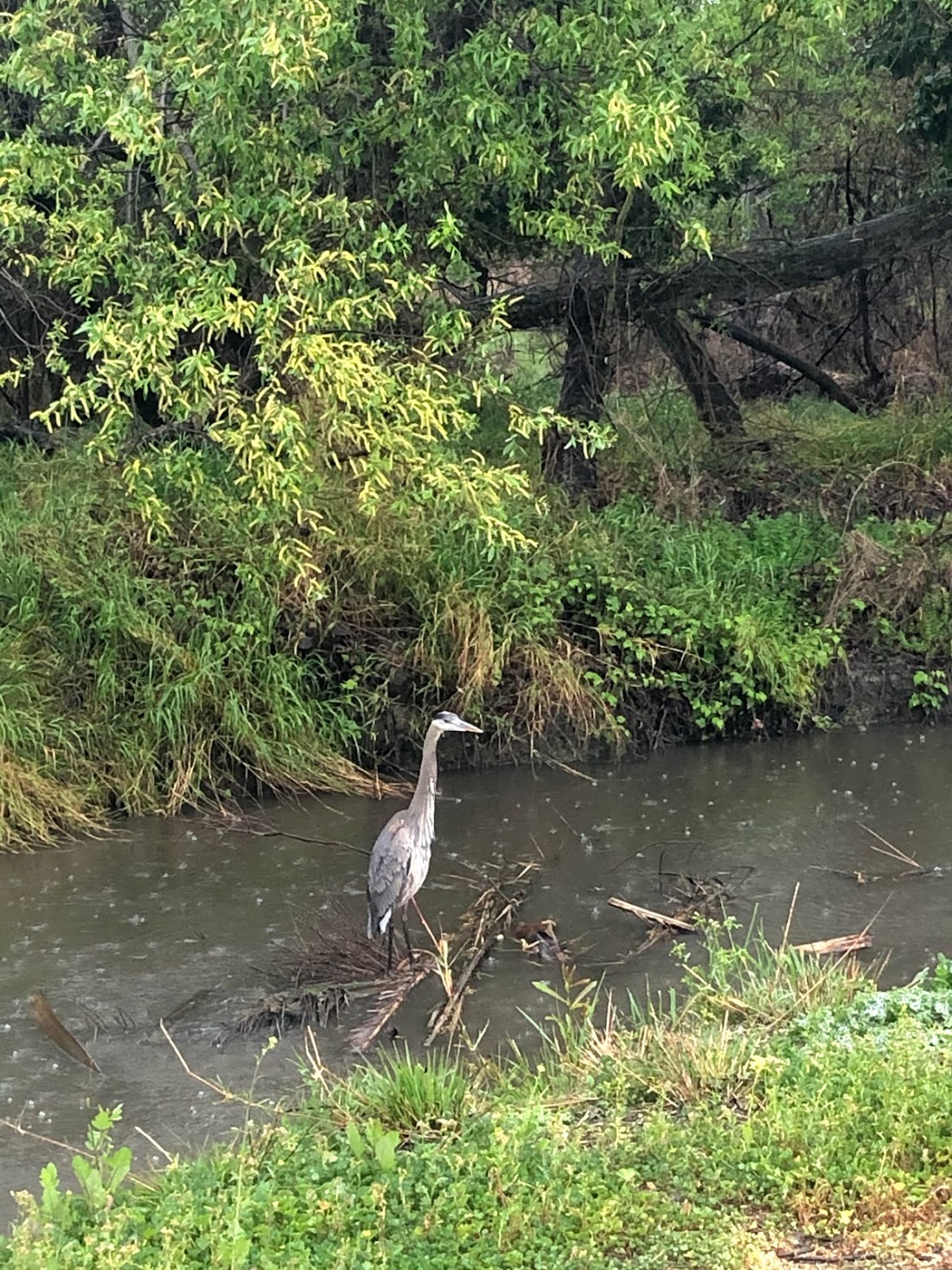
The other day, I saw a heron standing patiently in the shallow waters of a river, waiting patiently. I was out for my evening walk, and I had to stop and admire the heron. The heron was going about its business of living, observing quietly, waiting patiently, and if in the process of being, a wandering soul got a lesson or two out of it, that was good, but that wasn’t its purpose.

I chuckled to myself thinking of what the heron would say to me if I asked it about any of the world’s problems. Would it laugh at me or with me at the problems humans have created for ourselves?

The heron in that moment taught me the simple act of keeping still and untangling the strains of thought. That this isn’t a luxury, but a necessity.

Sometimes, sitting and reading a piece of poetry evokes the same feeling. Take the poem, Yes! No! By Mary Oliver for instance. 

How necessary it is to have opinions!

I think the spotted trout lilies are satisfied, standing a few inches above the earth. I think serenity is not something you just find in the world, like a plum tree, holding up its white petals.

The violets, along the river, are opening their blue faces, like small dark lanterns.

The green mosses, being so many, are as good as brawny.

How important it is to walk along, not in haste but slowly, looking at everything and calling out Yes! No!

The swan, for all his pomp, his robes of grass and petals, wants only to be allowed to live on the nameless pond. The catbrier is without fault. The water thrushes, down among the sloppyrocks, are going crazy with happiness. Imagination is better than a sharp instrument. To pay attention, this is our endless and proper work.

How often I have stopped to look at the heron taking a short flight from the river nearby and wondered whether its opinions were sought, and whether it mattered. They should, for our opinions and actions have definitely resulted in less than ideal living conditions for them. 

Mary Oliver in one short sweep of her pen was able to capture all this and more in the poem, Yes! No!

P.S: I love how the swan in her poem wants to live in a nameless pond. Our planet is just that isn’t it? A nameless, priceless habitat that we have bestowed a name upon.

Heron flying

Enchanted Air

I read Enchanted Air by Margarita Engle, expecting to read a good memoir about two cultures and two wings one grows as a result of hailing from mixed origins. What instead happened is difficult to describe in words for it was not a reading, it was a feeling. A transformative one. 

It is a children’s book. Each chapter is a small poem that stands in and of itself, but also ties into the whole narrative. There were so many places in the book when I found myself stopping to savor a poem, reading it again, and swirling the feelings it evoked in my mind. Later, I found myself passionately explaining it in far less elegant terms to the husband and children, scurrying to get the book, and fumbling through the pages to find the right poem.

For instance when she writes of ‘The Dancing Plants of Cuba’, she captures the essence of an island: 

In California, all the trees and shrubs

standstill, but on the island, coconut palms

and angel’s trumpet flowers,

love to move around,

dancing.

..

Maybe I will be a scientist someday

studying the dancing plants of Cuba.

Dancing Plants

How can one not love the child then who is later to task by her teacher for inventing dancing plants, as plants are supposed to stay still aren’t they?

Her father’s family escaped from Ukraine, from a communist regime, not knowing whether those left behind survived or not. Her mother immigrated from Cuba.

Two countries

Two families

Two sets of words.

Her paternal grandparents’ recollections are therefore muted, brief and vague. How starkly, concisely, she sums up the human condition for survival? When she asks her Ukrainian-Jewish-American grandma about her childhood, she gets nothing more than ice-skating on a frozen pond. 

Her maternal grandmother, on the other hand, regales her with richly detailed family stories, of many island ancestors, living their lives out on tropical farms.

In the poem, Kinship, she sums it up:

Apparently, the length 

of a grown-up’s

growing up story

is determined

by the difference

between immigration 

and escape.

This memoir is rich with details of her family, and her own dreamy self. 

She takes us along with her on her journey of growing up, and how her personality rows with ‘The Geography of Libraries’.

Spoken stories are no longer enough

To fill my hunger

I crave a constant supply 

Of written ones too.

As she grows, the mistrust between USA and Cuba, grows too. Their family is suspect simply for holding a Cuban passport, a part of her heritage cut off by souring diplomatic relations and the Bay of Pigs invasion. She first writes about the state of reality in the poem, Communications.

Abuelita writes letters in code,

inventing poetic metaphors,

to prevent the island’s censors

from understanding her words.

When she says Tio Dario 

is working hard in the garden,

Mom somehow knows that it means 

he’s been arrested and sent to a prison or forced labor camp.

In Secret Languages we learn

Right wing or left wing tyrants always

try to control communication

They always

fail.

The books ends with the poem, Hope.

It is no wonder that the book has won a string of awards. Looking at the history of the world, its themes are timeless too.

In Pursuit of the Truth

“Have you seen this video? “, said the husband for the n-th time. He definitely sounded like a child in Disneyland glimpsing Tinker Bell, and I looked up indulgently. His face was glowing as though he was discovering Calculus for the first time.

I could understand his enthusiasm – the 3Blue1Brown videos are well explained, beautifully animated and make you appreciate Calculus in a wholly new way. The journey as well as the philosophy behind it.

I have to confess that the 3Blue1Brown videos sparked my interest, and I peeked into the childhood brain enjoying Maths classes, as I picked up a book, called A Strange Wilderness – The Lives of the Great MathematiciansBy Amir D Aczel to read about the journey of Mathematics through the ages. How did we arrive at the basic tenets of the truth that held the universe together?

A Strange Wilderness: The Lives of the Great Mathematicians – By Amir D Aczel

The book starts with examining the Greeks and their approach to understanding the world over 2500 years ago. Starting with Thales of Miletus(624 BCE) , who was often called the first philosopher (He is known for the famous saying , “Know Thyself”), it examines Mathematics as a pursuit of the truth.

I was lured in, and though I did feel the writing could have been far more intriguing, it was a well-collated narrative of mathematicians and their lives through the ages.

The next great mathematician is the renowned Pythagoras of Samos (580-500 BCE) who continued the philosophy of:

Changing Mathematics from a computational discipline into a beautiful, abstract philosophy.

For those in Academia or are students still, the philosophical bent of the pursuit of truth is probably there. But for most others, in our day-to-day lives, Mathematics has taken on a more computational role than a philosophical one.

The arc of Calculus itself is an interesting story. How close we came as a species to discovering Calculus multiple times? Progress happens in fits and starts, and for every piece of the puzzle that we decipher, world events, or simply fate intervenes and sets us back a few steps. So many mathematicians came close to the concept of Calculus including the philosopher Zeno, in Zeno’s Paradox, over two millennia ago.

The History of Calculus

Finally, it wasn’t till the late 17th century when Leibnitz and Newton arrived at Calculus independently. Mired in controversy as it was as to who discovered it first, it is still a fascinating journey.

I remembered one cold Winter evening waiting for the fireworks at Disneyland and wondering whether the Imagineers at Disney had calculated Tinker Bell’s rope coverage using Calculus, to ensure that the area under the rope display was visible from most areas in the park. They must have done – this was Disney after all.

When we dedicate some of our Calculating Mind’s time to enable the Thinking Mind, the resulting moments are truly magical.

Photo by Mohan Reddy Atalu on Pexels.com

Taking the journey with Mathematicians through the ages was also strangely comforting. After all, in spite of wars, disease, revolutions and all the horrifying things in the world, the pursuit of truth did hold its slender string through time. Ravaged, and knotted up at times, maybe, but always resurfacing with the single minded purpose of the pursuit of the truth. The pursuit of the truth is one of our basic tenets, after all.

Soonish

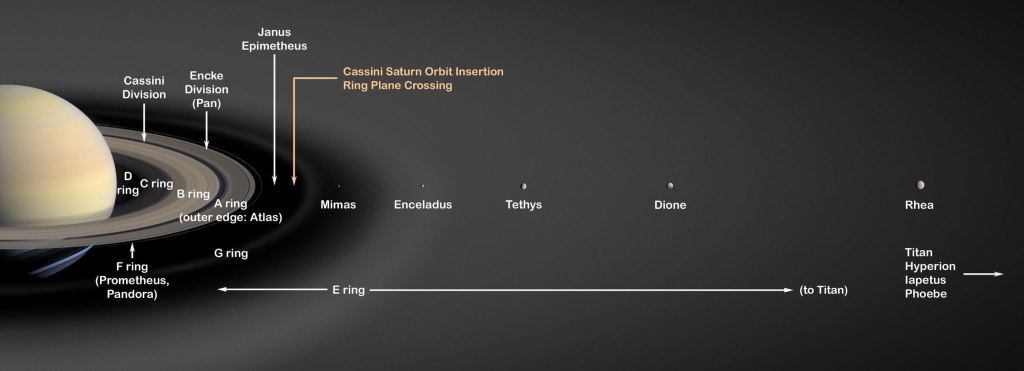
“How do you think the water on Titan is? “

I must’ve responded with a quizzical look, for the son responded with a “Saturn’s moon!” 

http://Public Domain, https://commons.wikimedia.org/w/index.php?curid=610237

“Oh!” 

His interest in all things Space-Cosmos has me unnerved sometimes. He catches me when I am zap in the middle of the myriad things that keep me busy and unproductive, and like a zing of fresh air, sends a question like this to remind me that life does not always have to be stern.

As I thought up a response to another ping at work, I found myself wondering what ammonia-esque water must be like. The temperatures must be more frigid – sure, but beyond that the imagination sort of teeters. Would there be  fish in the seas on Titan? Would their eyesight have evolved so differently because of the low amounts of sunlight, and all this, only if we assume life has evolved on Titan. 

We did not evolve into cyclops like one-eyed creatures. Two eyes lends perspective to our vision and construct the world around us differently than a person with only 1 eye would. What if we had evolved with one eye on top of our head – always upward looking? And another set under our feet? I wonder how we would have shaped our world if we had managed to evolve like octopii with neurons everywhere not just in our brains. 

Over lunch today, discussion moved to contact lenses. With changes in contact lens technology, the disposable ones are in use now. Calculations were being made as to how many days of lenses were left, and I picked up the thread of the third eye and the octopus-like eyes-and -brains-in-limbs theory.

The son immediately calculated the number of the contact lenses we would have required for 3, 4 & 5 eye scenarios, while the daughter moved to the more practical problems

“Yes – imagine – looking upwards all the time, and see bird poop flying towards your upper eye and not having time to close it. Aaah!” That child can take the magic of star dust and turn it into duck-poop!

Another time, there I was thinking along simple lines such as ‘These flowers have faded so much in the summer heat”, or “These poor little squirrels in the heat wave – should we leave some water outside for them?” when the son in his attempt to make conversation pulled me straight out of this solar system altogether with “Did you know Proxima Centauri can pull comets towards it from the original Kuiper belt?”

https://solarsystem.nasa.gov/news/792/10-things-to-know-about-the-kuiper-belt/

Keeping up with a child’s curiosity is difficult enough as an adult. Yet, I look forward to these little chats with the budding futurologist, for they make me think outside of the what-needs-to-be-done to the more creatively beckoning what-can-be-done mode of thinking.

One evening, on a little stroll by the waters, the fellow asked me what I thought would be the 5 most interesting things in the future. I love it when I have to think through his questions like this. I had him go first so I could get my thoughts into some sort of order.

He started off with the space elevator, and then a sky hook, moved on to some solid asteroid mining, and then conservation of energy. He is increasingly fond of the channel Kurzgesagt 

Their you-tube channel has a number of philosophical, scientific concepts. The videos are only a few minutes long and are done in a highly simplistic style, yet enough to give one the overall picture. 

Luckily, for me, I had picked up this book, Soonish by Kelly & Zach Weinersmith

Thanks to the book, I could hold up my end of the conversation. The book is written in a funny and engaging manner. Starting with space technologies and asteroid mining; the book moves on to robotics, augmented realities; and the future of personalized medicine and synthetic biology.

People who have the joy of gaining fresh perspectives from the forward looking spirit of youth are lucky indeed.

May we always retain the inner child in us – The wonder of Shoshin.

Bestiary Tales in Covid Times

“Summer will be done in just two weeks!” trilled the children. The son was excited, as expected, by the fact that it was time for the autumnal solstice. (Earth’s tilt, cosmos, time are all fair game for him)

I stopped bustling about and nodded. It was true! That’s two whole seasons of Covid living.

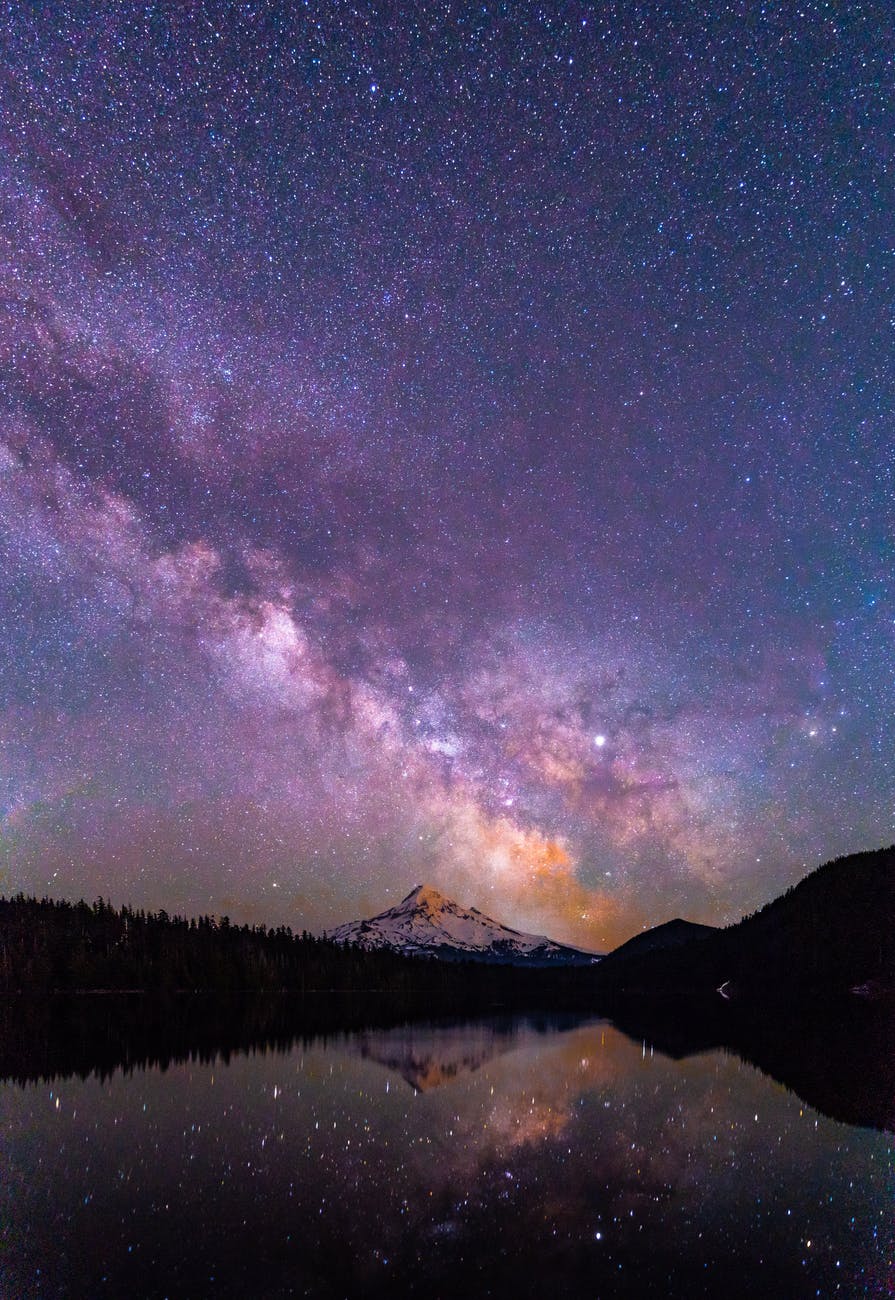
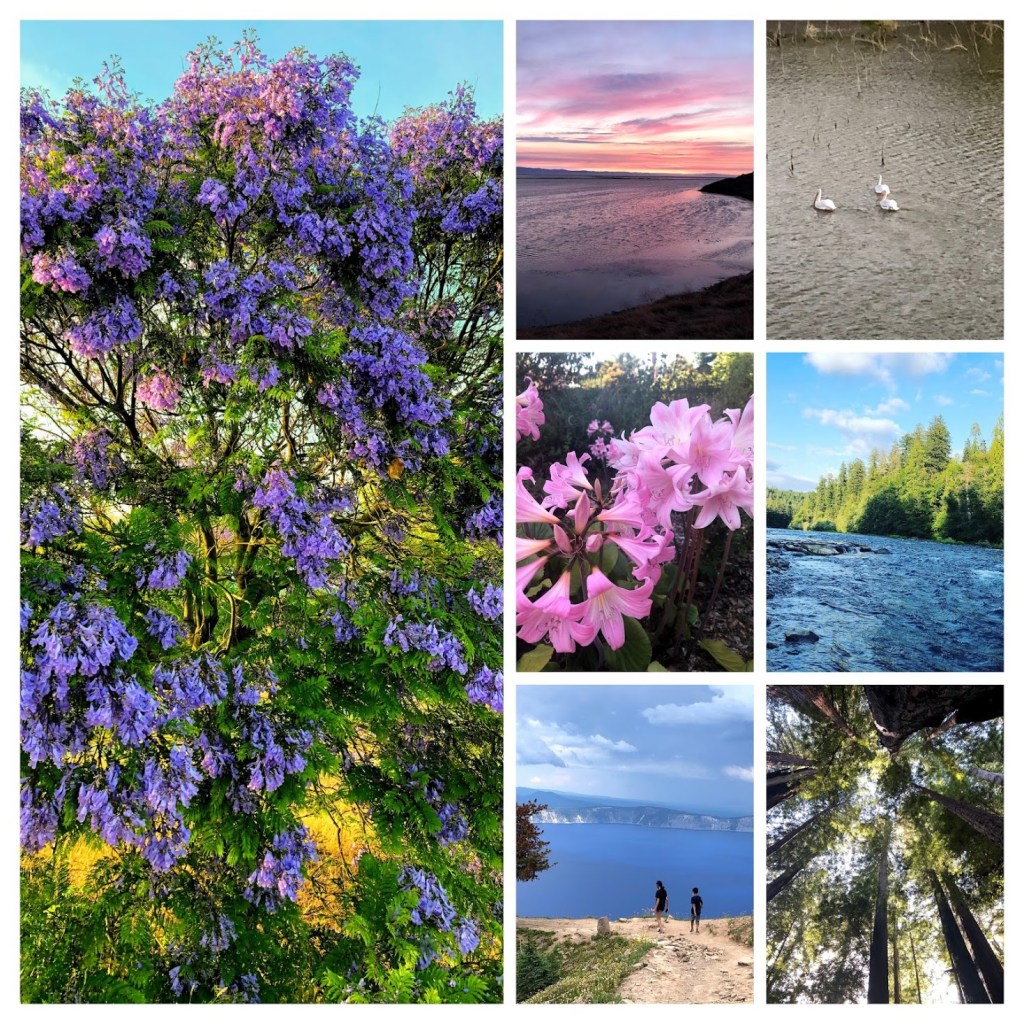
Summer has been a blur. Sometimes, it was a happy blur of forests, rivers, beaches, craters, lakes, browning meadows, bundles of hay, wildflowers, towering trees, stars at night, comets zipping in the Earth’s vicinity, angry and mellow sunsets, pelicans and 🎼 “wild geese that fly with the moon on their wings” 🎶, hummingbirds flittering in the pale light of the rising moon, asters and star lilies in the shade of their massive neighborly trees. All of this with the sweet companionship of the family, and close friends – zooming in at times.

Other times, it was exhausting – heat waves, massive wildfires, poor air quality indexes, Covid numbers continuing to rise and showing no signs of abetting, protest marches, racism, bomb blasts, all on top of a news cycle that seems to think it has to deliver the heaviest punch into every day. It is like watching the world’s worst wrestling match. 🤼‍♂️ Really, someone should coach the world that not everything needs to be shocking and bigger and worse than ever before. It might be okay to watch a match in which the players seldom land a punch and are merely playing the game warily sizing each other up once in a while. 

Yet, life must go on, and it often goes along much better when we stop and look for promising moments in the gloom. There are moments that stand out clearly in this pandemic, when I felt a wave of gratitude overwhelm me, and I am also grateful for the sheer timing of these moments.

The time I stood on a windy, lonely strip of beach wrapping a towel about me for warmth and watching the sandpipers fly against the wind without wavering one bit, while I had a tough time just standing erect was one such. It was but a fleeting instant in which the little nippy sandpipers taught me about keeping one’s spirits up when the world is attempting to veer us off course every which way.

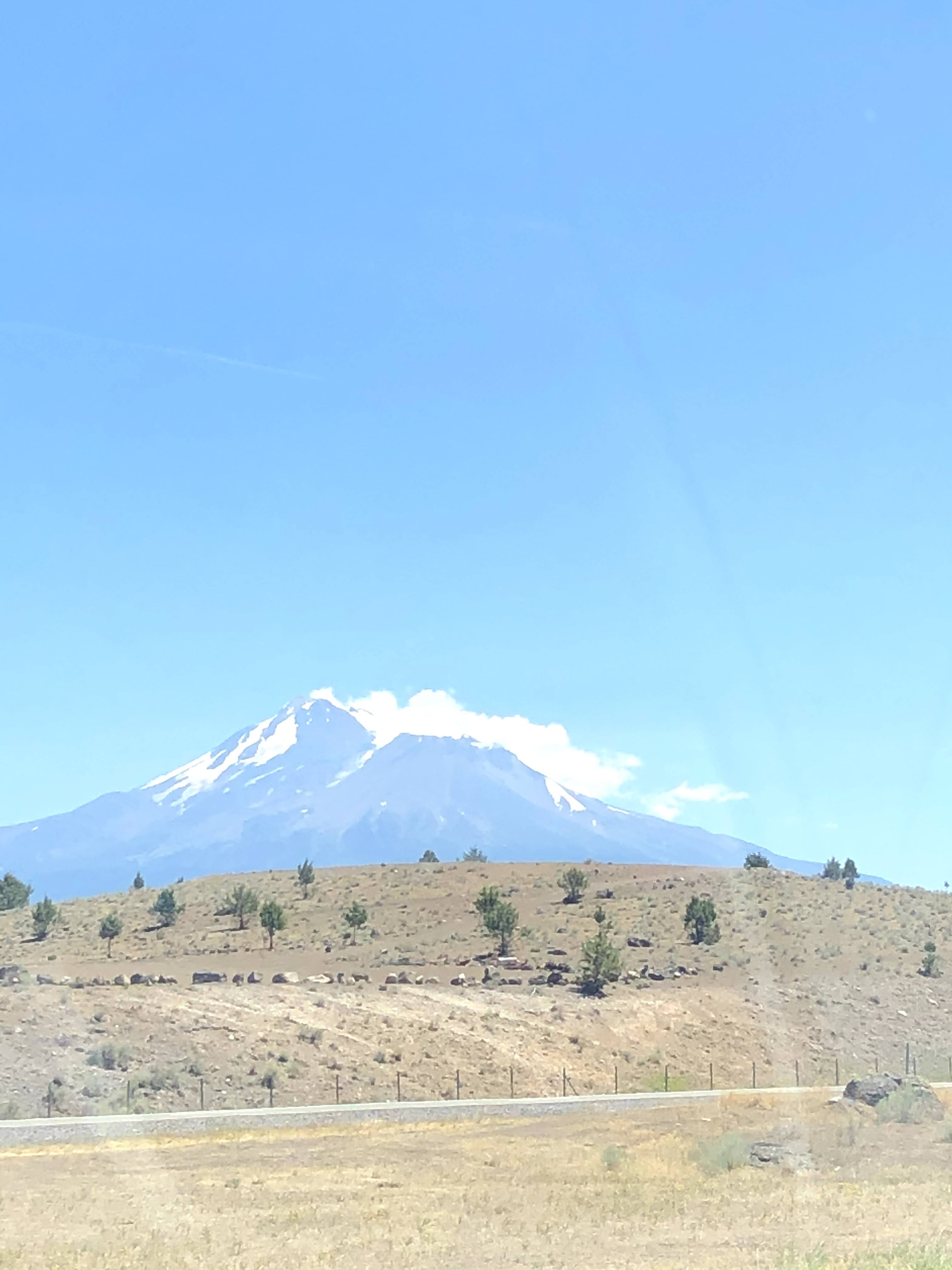
Or the moment, when on a road trip to a solitary house by the Umpqua river, the road wove on, the heat rose in waves around us, and the shimmering waters of the Lake Shasta looked like a green beast taking it easy in the summer, and laying low for what lay ahead. A few weeks later, the Sierra Nevada mountains were to be threatened by wildfires on a magnitude that sent the state of California reeling. Looking at the dry lands about us for a couple of hours, I felt a moment of dread, when the road turned, and a beautiful gushing river accompanied the road, and there on a rock in the middle of the river was a great big bear, looking contented and trying to fish or just cool off. 

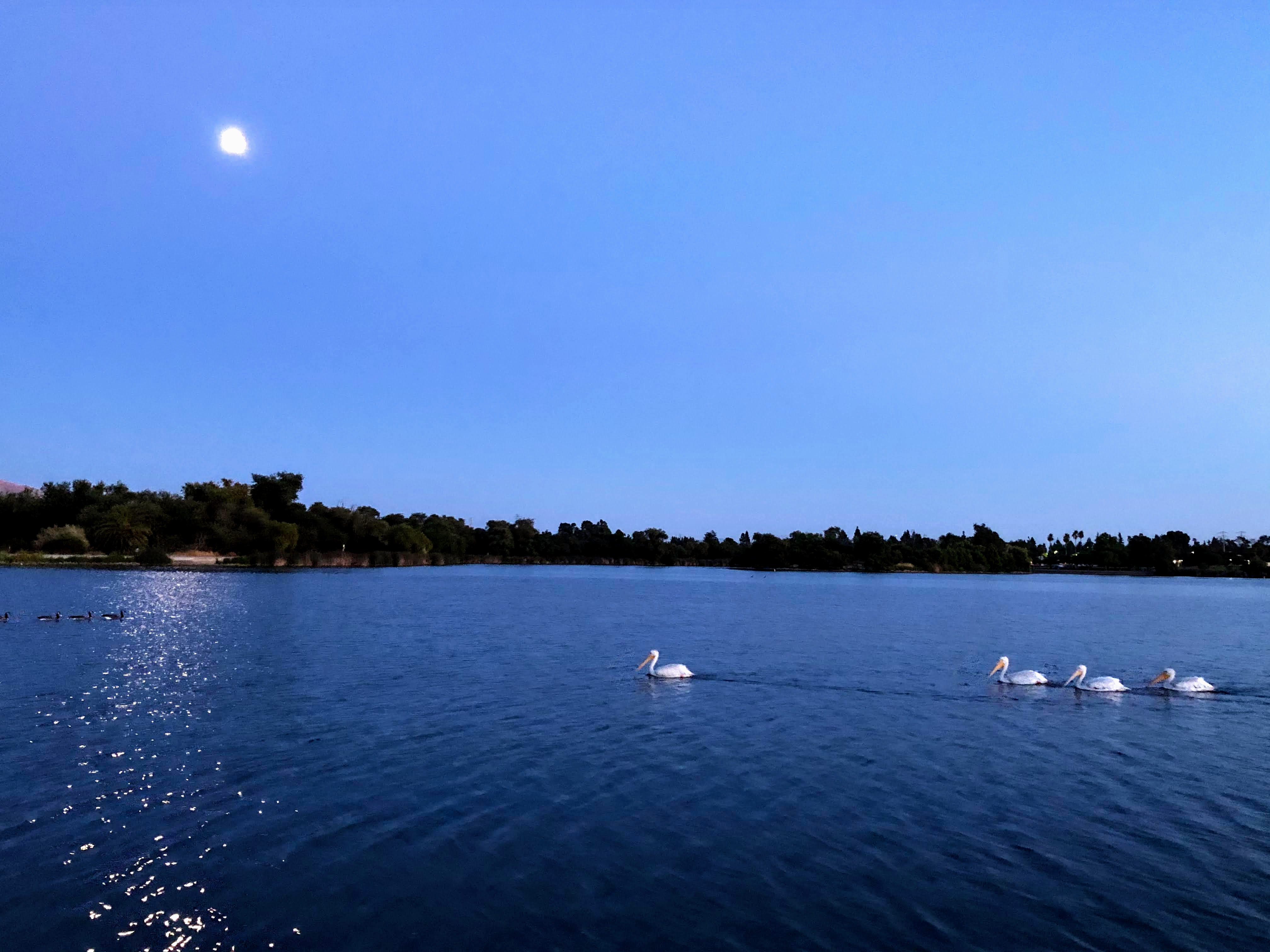
As we took our summer walks in the evenings, I stopped so many times to admire the geese splashing into the waters after their great squawking, while the pelicans achieved this feat with none of the noise, but all of the grace.

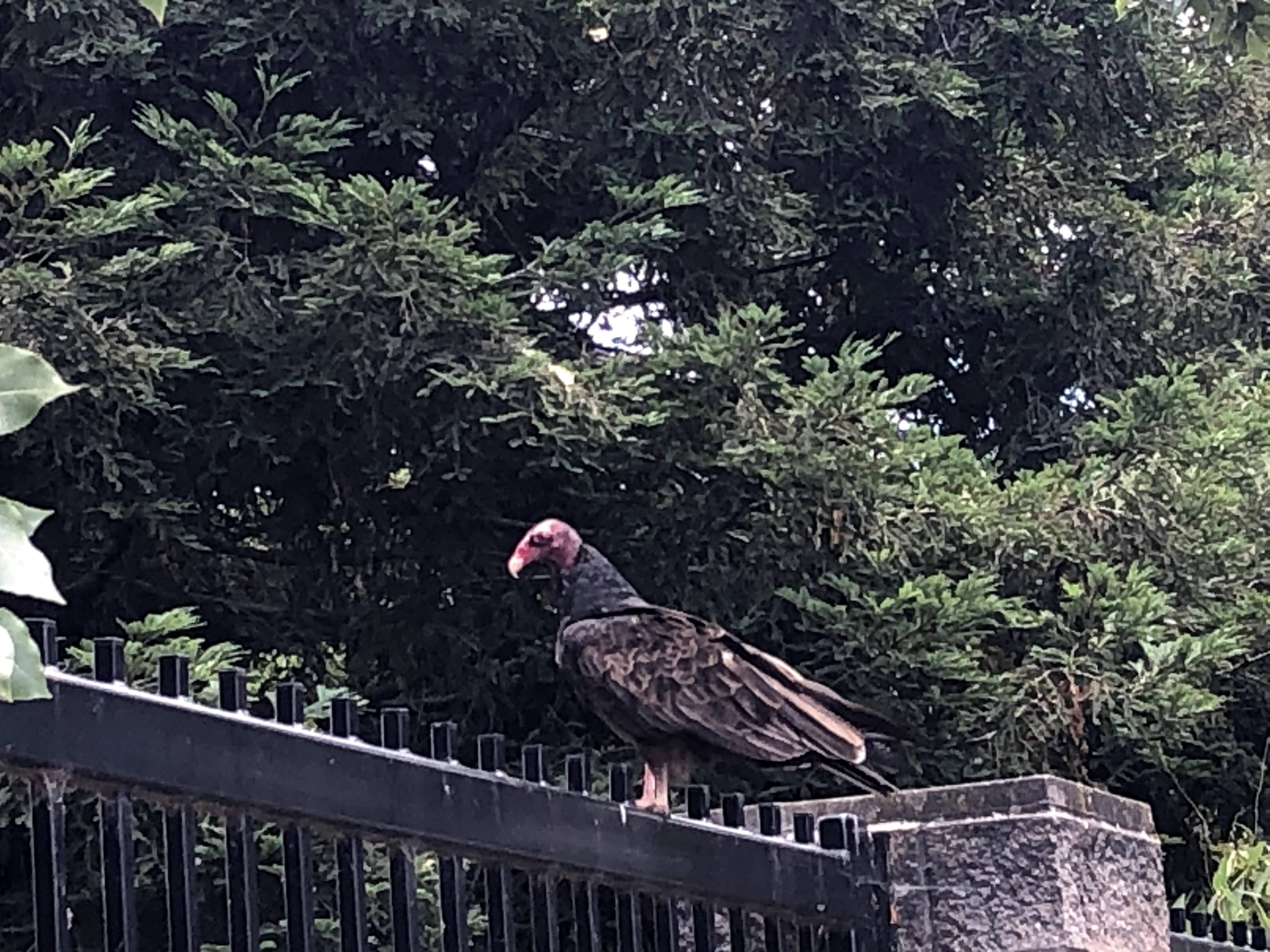
I remember the time we looked up on a stroll to come eye to eye with a great turkey vulture. The elementary school going son was with me, and he thrilled at it. “Amma – I know you take pictures of the flowers  everyday because they only last for sometime, but this…oh…this is so special. It is so .. umm.. “ He struggled for the right word, but I think I knew what he was going for. I felt it too. There was a majesty about the bird that was hard to describe. There was a divinity and a razor sharp quality to its gaze that falconers love. I have tried to experience this when I read the book H is for Hawk by Helen Macdonald. But all I needed was that encounter lasting all of two minutes. 

“The hawk was everything I wanted to be: solitary, self-possessed, free from grief, and numb to the hurts of human life.”

― Helen Macdonald, H Is for Hawk

Really! How much our fellow creatures have to teach us?! 

I think of what wild animals are in our imaginations. And how they are disappearing — not just from the wild, but from people’s everyday lives, replaced by images of themselves in print and on screen. The rarer they get, the fewer meanings animals can have. Eventually rarity is all they are made of.” H is for Hawk – Helen Macdonald

Just like that, Autumn comes in all its glory to teach us what it does best. Preparing for Winter.

A Reading Life

I sat around the house one week-end afternoon looking tired. It was a strange day in many ways. Forest fires were blazing forth razing acres of land in its wake. Nothing stood a chance, and the fire departments’ work was made all the more difficult with the Covid stipulations. How could people be evaluated if evacuation centers were this crowded? The air outside was stifling – smoke belching out by the fires a few miles away hung thick in the air, making an already hot day a sweltering one.

All the previous night, I had risen – once an hour to check if there was going to be another lightning storm. That first one that had sent 10,000 bolts of lightning and started over 350 forest fires that resulted in 60,000 acres of land being burnt was not predicted. The weather forecasts had predicted another one the previous night, and our local alerts had us all get an emergency evacuation bag ready. One bag – with some documents, a little cash, a change of clothes. When it comes down to that, is there anything else?

Luckily, the lightning strikes did not come that night. Somewhere around 6 a.m. I fell into an uneasy slumber knowing the husband and children will rise soon. Consequently, the next day, I felt tired: The oppressive heat, the lack of sleep, the worry about the fires, incessant news alerts, and I knew not what else was on my mind. 

Usually, nature is a pretty good soother, but nature seemed to be fed up with us! So, I sat myself in front of the bookshelf looking at the piles of books there, and tried to get a sense of calm from them. In a few minutes, I was sitting cross legged on the floor, looking through and reading books on yetis, baseball heroes, a book that just had the word – ‘Dude!’ on every page, stars, constellations, superheroes and much more. 

There is nothing half as meditative as a task like this. Before I knew where I was, I had traveled to Tibet, New York, the Arctic circle, a village in Central America, and fantastic lands where dragons held races. Of all the things that being human is, the worlds of imagination and inviting one another into the worlds created thus, has got to be the finest. Though, dolphins are pretty good at storytelling too.

Margarita Engle’s poem:

No giant or dragon

Is bigger or stronger

Than the human imagination

I was also reading a book compiled by Maria PopovaA Velocity of Being. The book is intended to encourage young readers to read as much as possible. I am not sure whether the book will actually convince a non-reader to start reading, since it is a book of letters compiled from people in various fields on how reading helped them get where they are, but it makes for fascinating reading for adults, and I loved the illustrations beside each letter.

A Velocity of Being – Compiled by Maria Popova & Claudia Bedrick

Some letters were incredibly sad like the one where a holocaust survivor writes about how story-telling helped them hold onto hope when everything else was lost. Some were hopeful, some others whimsical, some directive-based, others curiously inviting. 

After a couple of hours, I stood up and my joints creaked from the wooden floor. The heat outside was still oppressive, the smoke still lingered in the air, but strangely my spirits felt uplifted. If that wasn’t the power of reading, I don’t know what is.

What other activities are equally absorbing and uplifting to you?

Turmeric Magic

I felt a surge of amusement when I made cauliflower last time. The grocery lists needed love, and the results were showing.

“Yay Cauliflower!” yipped the young son, beaming like the early rising golden moon at this wonderful treat. Moments later, the moon face drifted under the clouds and his face looked disappointed as he looked at the pale muck of a curry that had been ladled onto this plate. “This isn’t Cauliflower curry! Isn’t it usually golden?” he said.

“Yeah ma – this one looks so pale. Like it needs some Vit D or something – should I take it for a walk in the sun?” said the daughter.  

I laughed at their reaction. Running a home can be tricky business in the best of times. My grocery lists are not things one writes home about even then (newspaper articles maybe but not to one’s mothers). In Covid times, I beam when we get by with everyone fed at reasonable times. Of course, this means I had to throw 2 tantrums since nicely asking did not seem to work. (I know!)

  1. Tantrum#1: 
    1. Venue:  work
    2. Subject: No meetings between 12:30 & 1:15! 
    3. Result: Sheesh kebabs reactions but people finding ways to accommodate this unreasonable ask
  2. Tantrum #2:
    1. Venue: home
    2. Subject: All people requiring daily sustenance will come to eat between 12:30 & 1:15!
    3. Result: Jeez-whats-with-her flavored eye rolls, followed by expressions as if indulging the local idiot 

Anyway, what happened was that we had run out of turmeric powder. As any decent south-indian cook will tell you, this simplest of spices is a must in almost everything that makes its way to a stove-top. It was only when one does not have the little sprinkling does one realize the joy and gaiety in the dishes thanks to it. It is like a drop of sunshine in the blobs of goo, and the children picked up on that. 

For the next few days, I quietly turned up more discolored dishes. The jokes became more raucous. Even the taste seemed altered. It is curious how tuned our sensory systems worked: taste seemed better if we liked how they looked, they even smelled more appetizing when they looked that scintillating yellow. Seeing that the world seemed a less vibrant place sans turmeric, the husband quietly made a special grocery run after the third day of discolored dishes. 

That day, I felt like a particularly gifted potion maker working her magic with the spices:

“…The beauty of the softly simmering cauldron with its shimmering fumes, the delicate power of liquids that creep through human veins, bewitching the mind, ensnaring the senses…” – Professor Severus Snape – Harry Potter and the Sorceror’s Stone.

I am glad to say that the folks seated around the table glowed from the rays of the yellow mellow sun at this meal.

“Wow! Everything is golden and sunny again!”

“Yep! Appa got turmeric at the grocery store!” I said, and the children cackled.

“Who’d have thought we would miss turmeric?” said the daughter. 

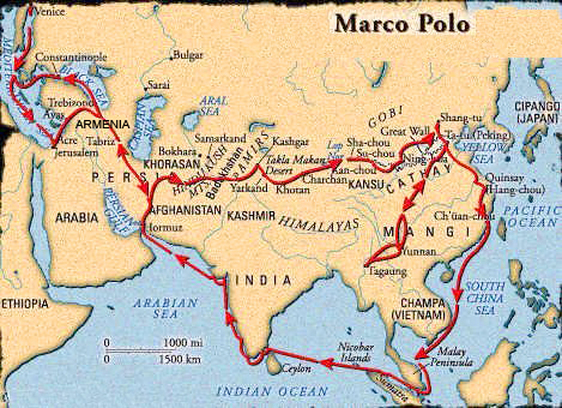
“Well Marco Polo certainly did!” I said. “The world was altered thanks to turmeric, pepper and ginger! So, I suppose it is okay to miss it.” I could see the little titbit had their interests piqued, and they listened in spite of themselves. 

The Travels of Marco Polo

“Many explorers started out in the medieval ages trying to find newer and better routes to the Indian subcontinent for spices. Marco Polo attempted an exploration that lasted almost 24 years . He made his way from Venice in Italy through the Mediterranean seas, past the harsh climates of the deserts in the middle east and the Himalayas in the north and north-east, as he went on past modern-day Tibet all the way to the Gobi Desert in China. His travels along the silk road were published in 1298 and are still sought after – The Travels of Marco Polo! “

“I did not write half of what I saw, for I knew I would not be believed”
― Marco Polo, on his deathbed

“So, you see – It is probable that this brave explorer in search of turmeric, pepper and other spices, altered world history and our grocery lists forever!” I said. 

The discussion then turned to European explorers setting out to find new routes to the Indian subcontinent, silk roads and trade routes. The history of the world, and how we have always been more interconnected on this planet than we realize, is fascinating.

The golden dishes took on an extra flavor with the story of the spices, and I sat back contented and grateful for a good meal in these times of the pandemic.

The Grapes of Wrath

We were driving through the countrysides of rural America. Vast landscapes stretched on all sides reminding us once again of the beautiful and vast nature of this country. The countryside baked in the hot Californian sun as we made our northward. We drove past fields and small towns that reminded me of the areas featured in the Grapes of Wrath by John Steinbeck in more ways than one.

img_9393

The Grapes of Wrath evoked a sense of economic ruin, human struggles, and the helplessness of it all. I walked around for weeks pulled down by the plight of the millions of Joad families who had to survive post the Great Depression. 

You see, I was prepared to see a certain level of isolation. Covid-19 has changed the landscape unimaginably with the service sector and the retailing industry in hiatus. What I was not prepared for, was the eerie and pervasive shadow of desolation and ruin. The divide between the haves and have-nots a deep chasm yawning wide and deep. 

https://www.bls.gov/opub/ted/2016/employment-by-industry-1910-and-2015.htm

The husband and I were in a somber mood as we made our way back, and fell to discussing the nature of work and how it is has changed so drastically in the past century. Just under a century ago, there was a good percentage of the population working farming jobs, then factory jobs. So, there still was a dream for a middle-class life – a life that promised reasonably good education for the children, relatively good health care, a decent home, and food on the table. It seemed the only jobs left for people to work in these small towns were in the service sector or the retail industry. With both these sectors impacted so heavily with Covid-19, it was a terrifying sight. 

“There ain’t no sin and there ain’t no virtue. There’s just stuff people do.”

John Steinbeck, The Grapes of Wrath

If the elections bring the current president to power again, he will find a way to make things much worse – maybe even go to the extent of inciting riots and civil unrest. If another president takes the reins, I do not envy the poor president-elect – what a mess to unravel and what a huge responsibility to the citizens. 

How would the world get back on its feet? 

“But how on earth is the stock market holding up?” I asked, for wasn’t that supposed to be an indicator of the economic conditions on the ground?

There – right there, is what is called a mystery. Anthropologically, mankind has been through worse survived more, but there is no doubt about it  – we have rough times ahead of us post-corona. As children, when we sang the hymns in our school, we liked some, loved the lyrics of others, and some stayed on with us through the ages. The first song that came to me that day was this one:

“We shall overcome .. We shall overcome…We shall overcome…Some day….”

After all:

“Muscles aching to work, minds aching to create – this is man.”

John Steinbeck, The Grapes of Wrath

grapes_of_wrath

The Boat of Life

Driving through the Pacific North Western coast can be lovely. Even though the vast areas around us shimmered in the heat, we were upbeat inside the car- the Umpqua river was keeping us company on the drive. Umpqua river – What a river! What a name! It was beautiful as the roads snaked and curved and we never once knew on which side the river would emerge. 

573252dd-bd39-49aa-bedf-4b94622d146a

Looking at people trying to get their canoe afloat on the river that afternoon reminded me of Three Men in a Boat by Jerome K Jerome again, and I resolved to read it again soon. With Covid rampant everywhere, the world around us seemed more muted, but the river seemed to assure with its little gurgles, eddies, swirls, and bubbles that life will go on. This too shall pass and any number of things we tell ourselves when in need of lifting our spirits. 

The truth is that Californian summers in the Bay Area can mean slim pickings with vibrant rivers. The Oregon coast was different – the Umpqua river was full, mature with the strength of the waters from the melting snows of the Cascades and we were driving right alongside its path as it made its way into the Pacific Ocean. 

As the road rose over the ridge carrying us over the valley of the Umpqua, the mists gradually rolled in signaling one thing –  we were nearing the oceanfront!  The trees were towering over us, and my spirits rose on that mist-filled afternoon.

img_9256

“The hills are alive with the sound of music! “

I bleated along as we drove through the hills, and the children exchanged a look that confirmed their worst suspicions. Their Mother Nature was with them. And with this Mother Nature in attendance, there would be no dawdling and letting things be. This would mean hiking and looking at things, and singing along. Sure enough, I ended my bleat on a howling note with great pride and turned around to see the cubs splitting with laughter. I coaxed and under the threat of more of my own singing, they relented.

Pretty soon, there we were, playing a weird version of Antakshari – we took a word or theme of the last few words we sang and started off the next one. Sometimes, the sentiment was enough. We were off trying to coax musical notes from made-up lyrics, singing with mesmerizingly accurate actions to our imaginary orchestra, and completely off-tune. 

“The wind never bothered me anyway….Let it go! Let it go! “  I said drawing in a wisp of the wind by lowering the window,

The daughter piped up from behind:

“The cold never bothered me anyway…”

“What?”

“It’s not the ‘wind’, it’s the ‘cold’.” Said the daughter and I said, “Yes dear – that’s what I meant. “

“MA! You can’t just change up words when you are singing them and say that is what I meant! ”

The husband and daughter are wizards at memorizing the lyrics. Yours truly, on the other note, is only magical when it comes to making up nonsense to fill in the tunes. 

“Yes you can! I sang nonsense to you kids all the time when you were babies!” I said

“Yep! Yay! And see how well that worked out!” said the daughter – sarcasm dripping from her voice, and we all burst into laughter. Say what you might, it seemed a perfect philosophy for a lovely life given all our little imperfections.

“Let your boat of life be light, packed with only what you need – a homely home and simple pleasures, one or two friends, worth the name, someone to love and someone to love you, a cat, a dog, and a pipe or two, enough to eat and enough to wear, and a little more than enough to drink; for thirst is a dangerous thing. ”

Jerome K. Jerome, Three Men in a Boat

I feel like I must say something witty about boats of life, and how it is the very thing that could turn into your life-boat, etc, but the lyrics elude me at the moment. Stay tuned – for you never know when inspiration will strike.