The Joys of Library Browsing

Yap Yap, Chat Chat, Chop Chop!

“Enough yapping! Chop! Chop!” I said trying to herd the children out. We had worked hard to carve this time out for ourselves and I was excited. We talked the whole way there. Or rather, they yapped, and I listened. I can’t say I understood- but the number of phrases and words that seem to make no sense seems to increase over time. Age really is a funny thing. It takes everything mutable, garbles it with time, and presents a slightly unintelligible version to you.

“Anyway – excited?”

“Yes Mother!” They chanted. How one phrase can hold both a dutiful and a sarcastic response I don’t know, but that, right there is another thing the young seem to have down. Sigh.

Library Browsing

It seemed like a long time since we’d had a children’s book read-a-thon, and so off we were, to the library. We meandered through the library shelves each of us taking our time, wondering how long it would take us to find things once the reshelving was done.

Library browsing is one of the most under-rated pleasures of the world. We each came back with a stash of books in our hands, and picked out a sunny nook in which to curl up and read for just a few minutes before heading back home to hole up in our home.

If we run out of words – By Felicita Sala

One of my favorite books from this haul happened to be – If we run out of words – By Felicita Sala

Version 1.0.0

It is an innocent earnest worry of a child’s turned into a book. What if you run out of words to speak?

The increasingly exaggerated lengths to which the father would go to find words makes it a sweet story and finishes on a predictable, but heart-tugging phrase that remains unspoken. That is how you bring a smile to the face of children and adults reading the book. Well done Felicita Sala!

When there are words everywhere, words can be swords, pinpricks, thumps just as much as they can be balms of kindness and encouragement. I closed the book, and realized that fears, worries and anxieties come in so many forms. Speaking about them to the ones who matter is the key, says every wise one, but that remains the most difficult thing in the world. For don’t words spoken have to be heard?

The children (one a teenager and the other a young adult) picked up the book, and eloquently summed the book up “Duh! Bruh!”
🌎 Happy Earth Day 🌎

🌎 Earth Day 🌎

Earth Day is coming up, and I feel the familiar flutter of gratitude for our planetary home.

It is the time Spring is in full bloom in the countryside around us. When Earth’s bounty surrounds us, it is hard to not feel like we really must be foolish to ravage Mother Earth the way we do with our greed and pointless consumption.

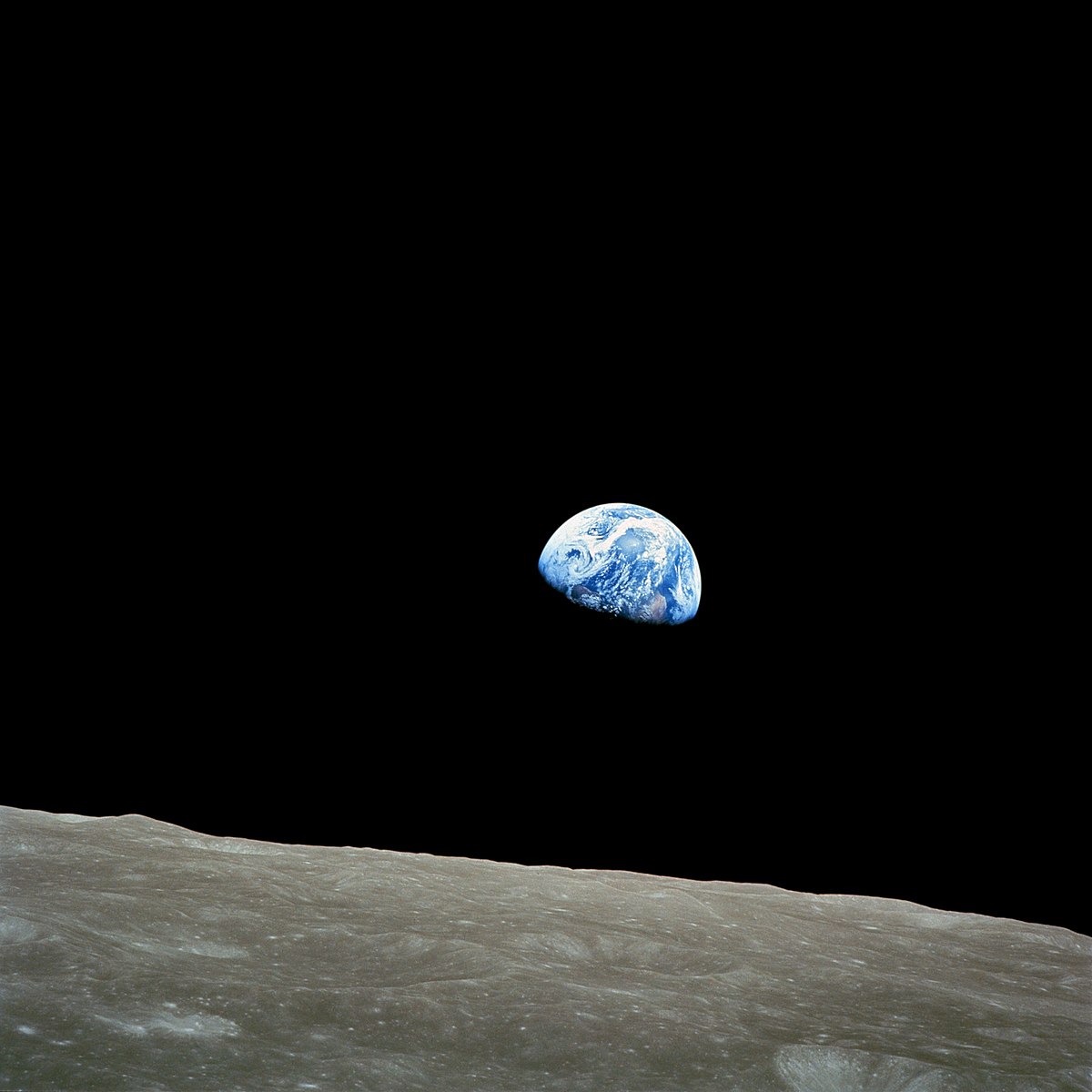
It is the time I moon about outside, reveling in the lengthening days of spring, and watching the stars peep outside. A couple of days ago when the full moon rose a- beautiful golden orb in the sky, I gasped, and thought of the image taken from there that led to the creation of Earth Day as a concept.

https://en.wikipedia.org/wiki/Earthrise
The picture was taken by an astronaut, Bill Anders, aboard the Apollo 8 spacecraft in 1968.

Books Celebrating Our Life on Earth

Children’s books are one of the best resources for celebrating our marvelous planet. Authors like Oliver Jeffers seem to know the knack of grounding us while making us soar high above the Earth to see our home.

These two, in recent times, have had me humming. 

If you come to Earth – by Sophie Blackall

The premise of the book is not unheard of. It is narrated by a boy named Quinn who introduces a visiting alien to Planet Earth. The pictures are a delight, and the book is charming in itself. The narrator show the esteemed visitor all the places

  • Where we live – towns, cottages, villages, towns, cities, high-rise buildings.
  • What we do – the range of occupations was truly fascinating to see. (I also had a little doubting-deborah contest trying to see which of these jobs would be around in a decade and in a century) 
  • How we read, speak, and communicate – languages, written alphabet, morse code, braille

And so many more aspects of life. 

The best part of the book to me was the note by the author at the very end. I always seem to relish notes by the author, and this one went on to delight.

Excerpt from the Author’s Note:

Continue reading “🌎 Happy Earth Day 🌎”

How Reading Changes Our Understanding of the World

Reading, Absorbing, Retaining

We were discussing books and one of my friends said wistfully, “I like what I am reading, but I don’t know how much of it I will be able to retain afterwards.”

The rest of us nodded. It is a problem and one that I have yearned to be better at too. How marvelous it would be to quote with ease from our various influences! The internet truly is a savior for folks like me who have a vague idea. I don’t think stunning speeches are made by saying things like: “Remember that saying by Shakespeare where he said something about wise men knowing they are fools, and fools being very sure of their awesomeness? Or something like that?”

Aah….here it is:

“The fool doth think he is wise, but the wise man knows himself to be a fool”.  – Shakespeare

So, it is with knowledge. The more one yearns to learn about the world around us, the universe, and the lives we lead within it, the more one realizes how little one actually knows. There is no surer path to humility than learning.

“Even if that is the case, I suppose we retain things that appeal to us subconsciously.” I said.

The conversation meandered after that  but I found myself thinking back to that statement. It was true enough.

The OverStory – Subtle Influences

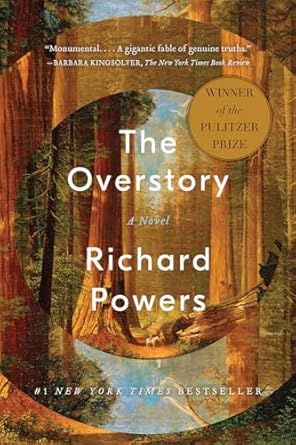
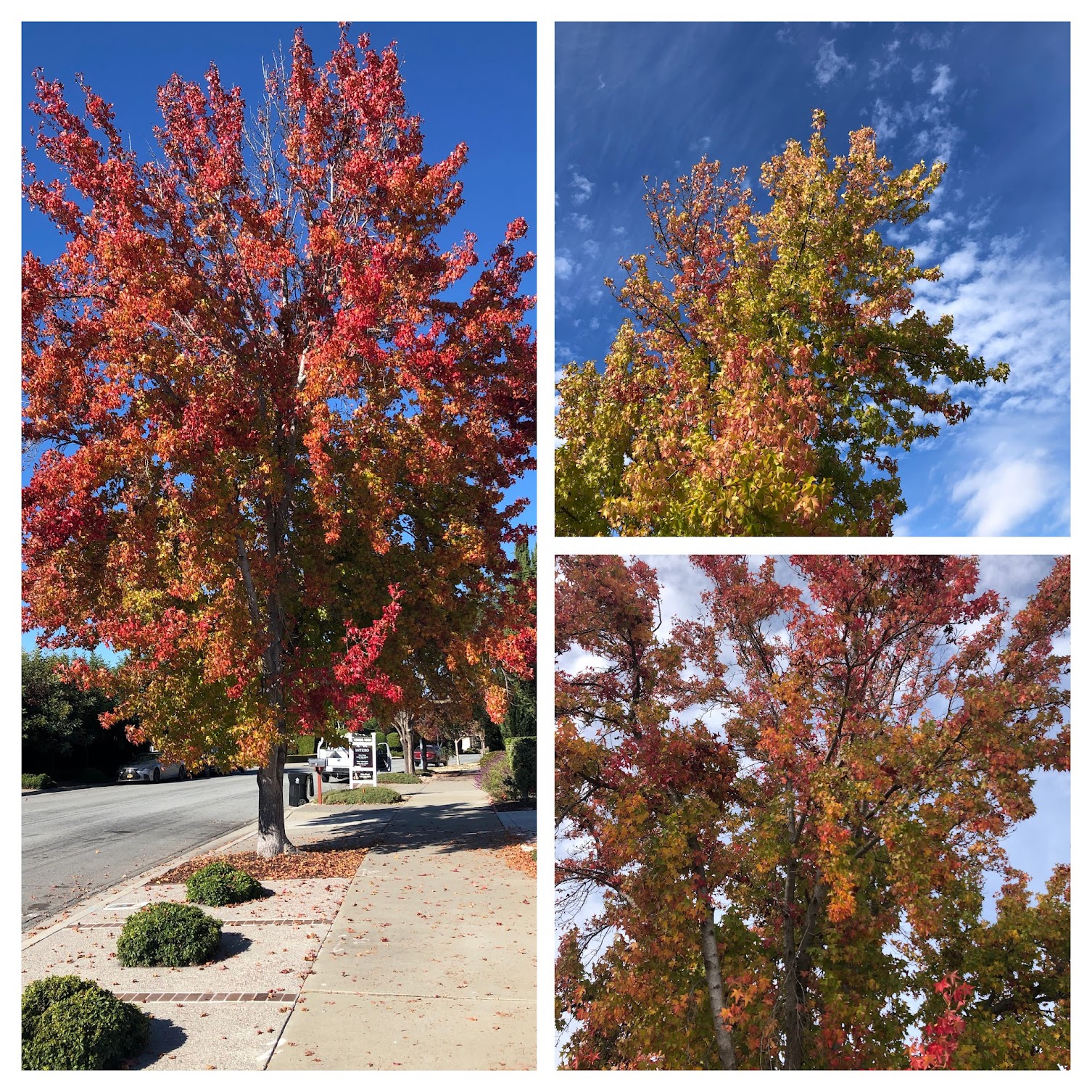
I read The OverStory by Richard Powers a few years ago, and loved many aspects of the book – its lyrical language, the poetry of the trees, the rich interweaving of nature in its stories etc so much that I wanted to read it again with my book club. It is when I started it again that I realized the Hoel family tradition of photographing their old chestnut tree must have appealed to me. Why else would we have started taking photographs of this particularly gorgeous maple tree every fall? I did not even realize this till we started re-reading the book, and I visualized the hundreds of pictures taken generation after generation. The only surviving chestnut tree for hundreds of miles in every direction. 

There is a timeless charm to a tradition like that.

Reading is a critical part of Becoming

Reading is a critical part of Becoming. Things we read voluntarily, can influence how we think. The characters in stories that appeal to us? They appeal to us for a reason. The actions of flawed individuals? They appeal to us for a reason – maybe we learn to be more forgiving towards follies – our own and of others when we catch them.

There are many studies proving fiction readers were generally more empathetic.

https://www.scientificamerican.com/article/novel-finding-reading-literary-fiction-improves-empathy/

Read Across America Week

It is Read Across America Week in schools honoring Dr Seuss’s birthday, and I found myself loving the rich world of stories once more. We each have a world of stories within us – stories that shaped our beliefs, joyously transported us to different realms, acted as escape mechanisms at times, stress busters at others, and just a marvelous source of shoshin otherwise.

Languages all over the world have a phrase or word for the vastness of knowledge, and I suppose I am grateful for it all.

Anantha gyana, gewaltiger umfang, enorm kunnskap, Abhijñā

Happy Read Across America Week – may we all read more about hopeful, brave, courageous, witty, humourous, compassionate, kind, vibrant personalities, and become like them.

On Tyranny: Power and Compliance

On Tyranny

This book is a required reading for what’s coming.

on_tyranny

The book restricts itself to Twenty Lessons from the Twentieth Century, which is even better. For power hungry dictators have been there throughout human history, and the book may well turn out to be a treatise of its own, if not time-capped. Recent events are usefully analyzed from a technological and sociological view. After all, many of the fascists of the past century found themselves propped up through a democratic process, even if they refused to give up power democratically later on. 

One of the first topics in the book, On Tyranny – By Timothy Snyder Illustrated by Nora Krug caught my attention.

It talks about compliance without being asked to. 

“Do not obey in advance”

“A citizen who adapts in this way  is teaching power what it can do.”

  • On Tyranny – By Timothy Snyder

I found myself nodding along several times during the examples given from the Hitler regime, or sociological experiments conducted since, and was quite shocked to see it all play out again in recent times. 

For instance, the past week itself gave us examples of ‘Do not obey in advance’. It was in the flurry of news items about Meta – the mega social network bending over and showing what it is capable of doing for Donald Trump’s regime. The company removed the fact checking team, and essentially stopped DEI efforts.

Quote from article on removing the fact-checking intiative:

“Everyone is entitled to his own opinion, but not his own facts,” the late New York Sen. Daniel Patrick Moynihan memorably wrote four decades ago.

As far as DEI efforts go, to get to a point where a DEI team was necessary took many decades of work, mindset changes and progressive ideas. To remove it all in one stroke sets us back by at least two decades, does it not?

Now slowly think of all the programs and places in which progress has been painstakingly achieved through education, forward thinking initiatives etc, and the mind boggles on what lies ahead of us.

In the past few weeks, there were several discussions in which we wondered:

  • How do we know when a leader is likely to become a fascist ruler?
  • How do we know whether our systems designed to survive democracy will do so?
  • Which of the very institutions that help towards justice will be disbanded or at least thwarted in their efforts to do so?
  • And many more. 

The questions will answer themselves soon, shall they not?

Books – The Truest Brilliance of Humankind Captured

One of the most pleasurable tasks in December for me is to go back and wander over my reading lists for the past year. It is always a source of pleasure, and sets the intent and purpose for the year ahead at the same time.

Book Club:

This year, I joined a book club and that provided for many hours of companionship with an eye to discussing the books afterwards with your friends.

We managed to do a variety of genres in our book club too.

A broad array of topics can be discussed with this set of books, and the cups of tea, and the sparkling conversations were truly delightful. Feminism, colonialism, sexism, sense of purpose, and so much more.

Booklegger Books:

I volunteer from time to time in elementary school classrooms and the Bootlegger Volunteer program is one such where I get the opportunity to talk about and discuss books in classrooms.

  • Van Gogh Deception – By Deron Hicks 
  • Life in the Ocean – Oceanographer Sylvia Earle – By Claire Nivola (author of Wangari Maathai – Planter of 30 million trees in Kenya)
  • The man who dreamed of infinity – the life of genius Srinivasan ramanujan by Amy alznauer illustrated by Daniel miyares
  • The Firework Maker’s Daughter – by Philip Pullman
  • Firefly Hollow – by Allison McGhee
  • Tesla’s Attic – By Neal Shusterman & Eric Elfman

Guilty Pleasures:

It is the reason I pick up books and authors whose work feels like home every so often. There is familiarity in their worlds – a safe haven for those looking to be refreshed without too much effort. The worlds where humanity has all of the problems we do – only with an eye for humor, magic, and simplicity that we crave to build for ourselves in our real lives. Malgudi, Fairacre, Thrush Green, Hogwarts, Corfu, Blandings Castle, the idyllic worlds of Bertie Wooster and Jeeves, and many more. 

  • Miss Read
  • P G Wodehouse
  • J K Rowling and many fan-fiction authors who are frankly brilliant and so deserving. Many times, I’ve hoped I could know if they went on to write other books, for I knew I would read them.
  • R K Narayan
  • Gerald Durrell

Children’s Books:

I don’t know why people go in for self-help tomes when there are brilliant children’s books for all of us to enjoy and devour. Who was it who said, It takes a true genius to explain things simply? I agree with them.

Some of these authors and illustrators are truly unsung geniuses – I wish there was a way for all places of adult work such as financial hubs, hospitals, Houses of Parliament, civic offices, transportation hubs, technology companies, insurance companies, retailing outlets etc to have a good library with children’s books to dip and delve into for a quick refresher of spirits.

I used to work at a company with an exemplary work culture. (sadly the company is no longer there) The walls were adorned with beautiful artwork, we received books as gifts every now and then, authors came to visit, and we had library nooks – surrounded by excellent books in design, literature and philosophy. I have done some of my most rigorous work in these hallowed halls of the library.

If you had access to places like this, it is truly life-changing. Some noteworthy books:

  • The Shape of Ideas – By Grant Snyder
  • On Tyranny – By Timothy Snyder (in progress)
  • The Oboe Goes Boom – Boom – the band book on the kind of instruments and the brilliant way in which the names in each of the pages actually refers to a famous player of the instrument.
  • You Can Learn to be an Artist – this book was brilliant, but it made me want to cry. It made me want to rage against the world for creating AI and taking away that simple joy of art from humans – for those who say you can do the same with the screen and a prompt now, my response is, “Why can there not be any pursuits left to mankind that is not dependent on a screen?”
  • A Songbird Dreams of Singing – Poems about sleeping animals – by Kate Hosford – Illustrated by Jennifer M Potter
  • Astonishing Animals – Extraordinary Creatures and the Fantastic Worlds They Inhabit – Tim Flannery & Peter Schouten
  • Worldwide Monster Guide – By Linda Ashman, Illustration by David Small
  • Sometimes, I feel like an Oak – By Danielle Daniel & Jackie Traverse
  • My name is as long as a river – Suma Subramaniam
  • The fox and the star – Coralie Bickford Smith (brilliant artwork – sweet story – truly captures the loneliness of being – read again)

Understanding Ourselves

What makes us human? How do we know whether we are keeping healthy in our minds and bodies? These are topics that cannot be easily answered – and yet so many philosophers and writers attempt to do just that – understand our complexities.

Alternate Universes

“I do not miss childhood, but I miss the way I took pleasure in small things, even as greater things crumbled. I could not control the world I was in, could not walk  away from things or people or moments that hurt, but I found joy in the things that made me happy. The custard was sweet and creamy in my mouth” – Neil Gaiman in The Ocean at the End of the Lane

  • The Lefthand side of Darkness – By Ursula K Le Guin
  • Goddess of the River – Vaishnavi Patel
  • Our Missing Hearts – By Celeste Ng
  • The Ocean at the End of the Lane – By Neil Gaiman
  • Generosity – By Richard Powers
  • YellowFace – By R F Kuang ( about the publishing industry)

“If more of us valued food and cheer and song above hoarded gold, it would be a merrier world.” -J.R.R. Tolkien, The Hobbit

I would probably add books and nature to the list by Tolkien.

Navigating Accelerated Time: Embracing Guilty Pleasures

Accelerated Time

Looking back on the year past is supposed to happen when you feel like a year has past. It hasn’t. It can’t have. We seem to have stepped onto a mobius strip of some sort  – a belt of accelerated time. 

I saw ourselves slipping into 2024 and just like that I am writing a look-back script for a year past. Was this how life was intended? Was this how jellyfish felt – even as we know how their neurons can reverse aging? Was this how the greenland sharks felt – even as their lifespans is three times that of human-beings?

One evening, I felt the weight of another trip to India weighing on my mind as I created the various things to buy, work to finish off prior to leaving, the upcoming trip with its myriad expectations, and so much more. 

Life was feeling stern once again, and I sighed heavily. What could make it all better?

Bridgerton

The daughter had the perfect remedy as per usual. “What you need is a dose of Guilty Pleasures Mother!” she said, and even though I saw through the thinly veiled attempt to transform into lumps in front of the television, I agreed. After all, there is only so much one can do, and the holiday season is approaching. 

So we settled down to watch a season of Bridgerton. 

I had been resisting given that we rarely ever stop with one episode and then a season takes too much time. But in the end, it all worked out well. We had hot chocolate, and freshly baked cookies on hand. The heater was on, and though the world outside was frosty, the world inside was toasty. 

So, that is what we did. We watched Bridgerton, and forgot the demands of the modern day.

We watched England in its finery, its social gaffes, and its snobbery at its best. The lack of technology made for a better plot in my opinion, and I watched the lords and ladies fill their days with a lazy charm. 

So many forms

Why do we like light reads, and whimsical shows to watch? I am not complaining for a quick read of some well-written fictional material on the internet provides the same quick respite. These short pieces of frankly well-written fan-fiction are just the quick sip of tea one needs after a long day, without having to put in the effort to follow along for complicated ideas, and intriguing plots with new characters etc. This is yet another thing the daughter introduced me to last year, and it has been amazing. (All the Young Dudes

It is the same reason I pick up books and authors whose work feels like home every so often. There is  familiarity in their worlds – a safe haven for those looking to be refreshed without too much effort. The worlds where humanity has all of the problems we do – only with an eye for humor and simplicity that we crave to build for ourselves in our real lives. Malgudi, Fairacre, Thrush Green, Hogwarts, Blandings Castle, the idyllic worlds of Bertie Wooster and Jeeves, and many more. 

What are some of your guilty pleasures and how do they energize your spirits?

How Children’s Books Teach Life Lessons

I don’t know why we bother with thick repetitive self-help books, when children’s books can give us all we need with beautiful pictures, simple messages and heartwarming characters all at once.

I Can Be Anything – Don’t Tell Me I Can’t : By: Diane Dillon 

I Can Be Anything! Don’t Tell Me I Can’t

This book was such a surprise because it captured that inner critic in us so well. 

Don’t we all know that voice? Sometimes nasty, other times discouraging, but also quite ready to remind you that it’s there. Over time, we do try to overcome its influence, and try to rationalize with it, but still it rears its head every now and then. Evolutionarily, it may have saved us from trying to leap across high-ledged craigs better suited for mountain goats, but in our modern world, it simply tries to save us from failures. It is an important feature but only when called upon. 

The book captures it so well.

BeAnything

If you’d like to be an artist, the voice would ask you what you would do if you simply didn’t have the talent for it.

If you’d like to be an astronaut, an archaeologist, a president, it has something to say for every aspiration.

You don’t know what you want to be do you? Said the voice.

But I’m always with you, you know. Said the voice. No matter what you do.

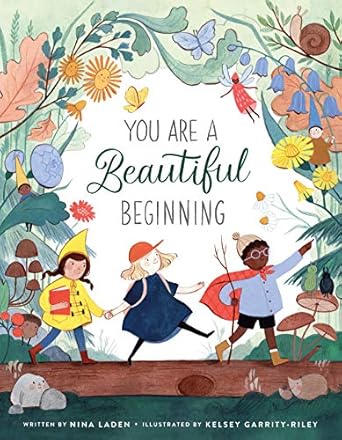
You are a beautiful beginning

By: Nina Laden Illustrated by Kelsey Garrity Riley

You Are a Beautiful Beginning: Laden, Nina, Garrity-Riley, Kelsey: 9781250311832: Amazon.com: Books

Another beautiful book on the beauty of embracing You. As a child I found the message to be You very confusing. How could you know who You were? Were You a doctor, engineer, lawyer, or were You a leader, or were You a friend? 

It all got increasingly complex when people kept telling you to be this or that, or like him or her, how could you just be You? Was it enough?

It’s not about being cold, it’s about finding the warmth in the cold, or how it isn’t about losing, but about playing. 

beautiful_beginning

Simple messages with beautiful pictures. Every couplet in the book isn’t particularly life changing, but the book feels like a lovely reminder on what we strive to be. 

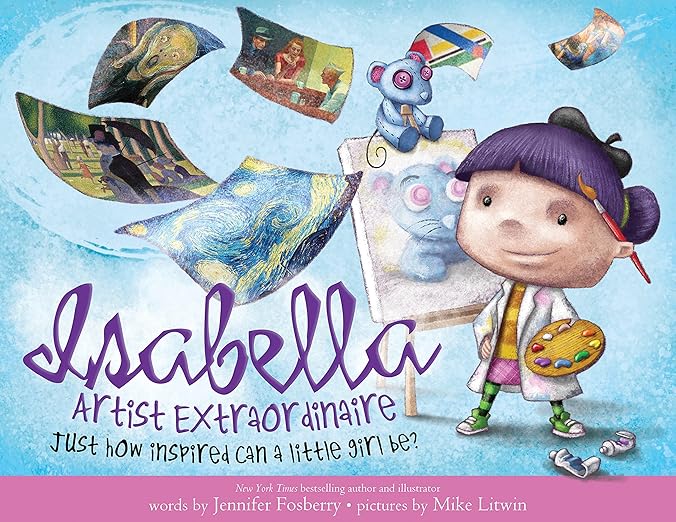
Isabella: Artist Extraordinaire – By Jennifer FosBerry, Illustrated by Mike Litwin

Isabella: Artist Extraordinaire: Visit Famous Art With This Inspiring Story About Creativity For Kids (Includes Guide To Art And Artists Like Van Gogh, Degas, And Warhol)

If we have to decide what separates humanity from the remaining species on this planet, I think the paradoxical nature of time and how we choose to occupy it must be the deciding factor. Most other creatures raise their young, spend time procuring their food, and spend the rest in seeming companionship of their fellow creatures. But humanity seems to be the only species where we want to be efficient about time, and also try and figure out how best to occupy it. Knowing how to be happy with yourself, your imagination, and using your time well has to be one of the greatest gifts to receive from the muses. 

In this book, Isabella has a day off from school, and her parents are giving her options on how to occupy it, saying that if she cannot decide on something, she may well have nothing to do but to stare at a starry sky. 

A day at the lake, or the park? A horse rodeo?

isabella

But then, Isabella shows them that all the inspiration she needs she gets from her own work on her art gallery. 

It is, of course, a beautifully illustrated book and the book shows the inspirations behind each of the images in the book.

There were quite a few other books – I wish I could write them all up, but even more, I wish you all have an equally exciting time in your library looking through these marvels.

Inspirations for Writing

Talented Inspirations

I recently read The Firework Maker’s Daughter by Philip Pullman

I’ve always wondered about the series of books that are titled thus: Galileo’s Daughter, The Clockmaker’s Daughter. The appeal of the daughters of men with interesting careers is an interesting premise. For so many years, women were denied the opportunity to consider interesting careers.

Like Elinor Dashwood (of Sense & Sensibility fame) says of women and careers:

“You talk of feeling idle and useless. Imagine how that is compounded when one has no hope and no choice of any occupation whatsoever”.

  • Jane Austen, Sense & Sensibility

If ever I am grateful for anything, it is that women’s talents are now nurtured and recognized. After all, talent does not distinguish between the crude lines drawn out by humanity – it does not care about race, caste, creed, sex, religion.

Fascinated as I was by the book, The Firework Maker’s Daughter,  I loved the colorful cast of characters, and  what is required from them to succeed in their profession. It also got me interested in the writing style of Philip Pullman – his was witty, whimsical, and oh-so-light.

Pullman on Writing (Source: Wikipedia)

I have stolen ideas from every book I’ve ever read. My principle for researching a novel is ‘Read like a butterfly, write like a bee,’ and if this story contains any honey, it is because of the quality of the nectar I have found in the work of better writers.” 

  • Philip Pullman

A better imagery for writing I could not think of. If one thinks about it, life itself presents all the inspirations we want. Even when is in the midst of the Thanksgiving week-end, and may be busier with spending time with family, friends, trips etc, the inspirations are all around us. 

If you are looking for that November spark, look at sparkling fireworks of Diwali, the colorful trees of the fall foliage around us, the many friends and family one meets during November’s Diwali & Thanksgiving  seasons to gain your sense of well-being, gratitude and inspirations!

Multi-Generational Family Sagas

Multi-Generational Family Sagas

I read two family sagas this year spanning multiple generations, and several decades each. 

Both were highly acclaimed books, and written well. However, both of them suffered from meandering plots, and unnecessary diversions. Making them swollen at least by a few hundred pages. 

“It was a bit like listening to my father tell a story about some character in his village. He’d tell me all about this character, his relatives, his relative’s friends, and the marriages that made the whole thing impossible to untangle, and so much more. By the time he finished the story, you’d be wondering what the point of it was.” I said to my friends after finishing The Covenant of Water. 

I understand too how that can be a daunting task. The mother had seven siblings, the father nine. Their parents, I am not even sure, for I might have switched off in between.

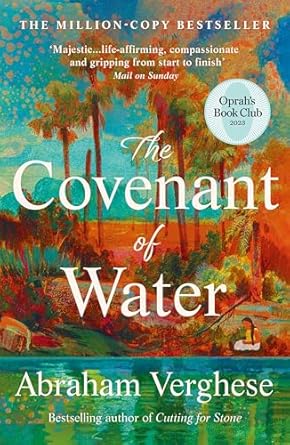
The Covenant of Water – By Abraham Verghese

The writing is beautiful – lyrical, and his characters have endearing qualities to them – resilience, love, grace, flaws. Abraham Verghese is also a doctor by profession, and therefore the details of all the medical terms made for a depth even if the average reader does not need as much information (ex: how a particular surgery was being performed, or how the stent would have served better from a particular perspective) 

Set in Kerala, South India, the book spans the family of Big Ammachi (the matriarch of the family) between  1900 and 1977.

covenant_of_water

It would also have been nice to know a little bit more about the living conditions and life in that time period. For instance, there is a character, Uplift Master, who derives his purpose from getting the village around Perambil (the ancestral village in which the whole saga takes place) developed and to march into the twentieth century in style. Knowing the problems Uplift Master faced in terms of discrimination by the British Raj, or bribery would have been useful. 

Casteism is touched upon, the perils of life as a leper is well depicted. 

The plot itself could have been condensed. That apart, it is a good book.

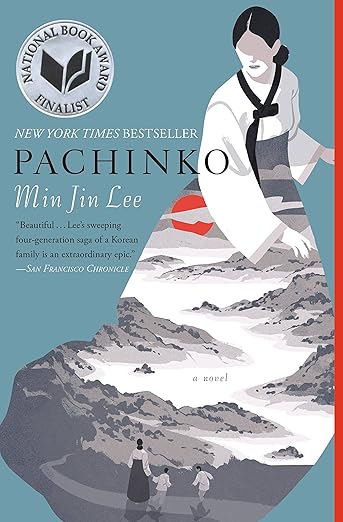
Pachinko: Min Jin Lee

Pachinko is set in a similar time period in Japan(1910-1989). It outlines the generational problems existing between Koreans and Japanese. 

The story also spans multiple generations and revolves around the life of Sunja – a poor Korean who moves to the city with her husband, Baek Isak, and child from a previous tormented relationship.

pachinko

Reading about the effects of racism, poverty and war is never easy. Writing about them keeping the humanity of the characters intact is even harder. Min Jin Lee manages to do that with ease. It would have been nice to see how things were changing as the century progressed, but we do not see too much of it. 

The Tides of Humanity

The tides of humanity are apparent even if there are literally oceans separating the stories.

  • The Covenant of Water is set in Kerala, South India(1900-1977).
  • Pachinko is set in Japan(1910-1989)

They both deal with matriarchal characters (Big Ammachi alias Mariamma & Sunja) who do their very best by their kith and kin in difficult times. Providing love, trust, and hard work as tenets to a good life.

I think this line from Noa (Sunja’s firstborn) in Pachinko,  outlines the angst of humanity pretty well: 

Noa didn’t care about being Korean with anyone. He wanted to be, to be just himself, whatever that meant; he wanted to forget himself sometimes. She could not see his humanity, and Noa realized that this was what he wanted most of all; to be seen as human.

– Min Jin Lee, Pachinko

There is plenty to be learnt in life as a human, wherever one lives.

In the Covenant of Water, Philipose (Big Ammachi’s son) says it best:

“Ammachi, when I come to the end of a book and I look up, just four days have passed. But in that time I’ve lived through three generations and learned more about the world and about myself than I do during a year in school. Ahab, Queequeg, Ophelia, and other characters die on the page so that we might live better lives.”

Abraham Verghese, The Covenant of Water

Books that Challenge Perception

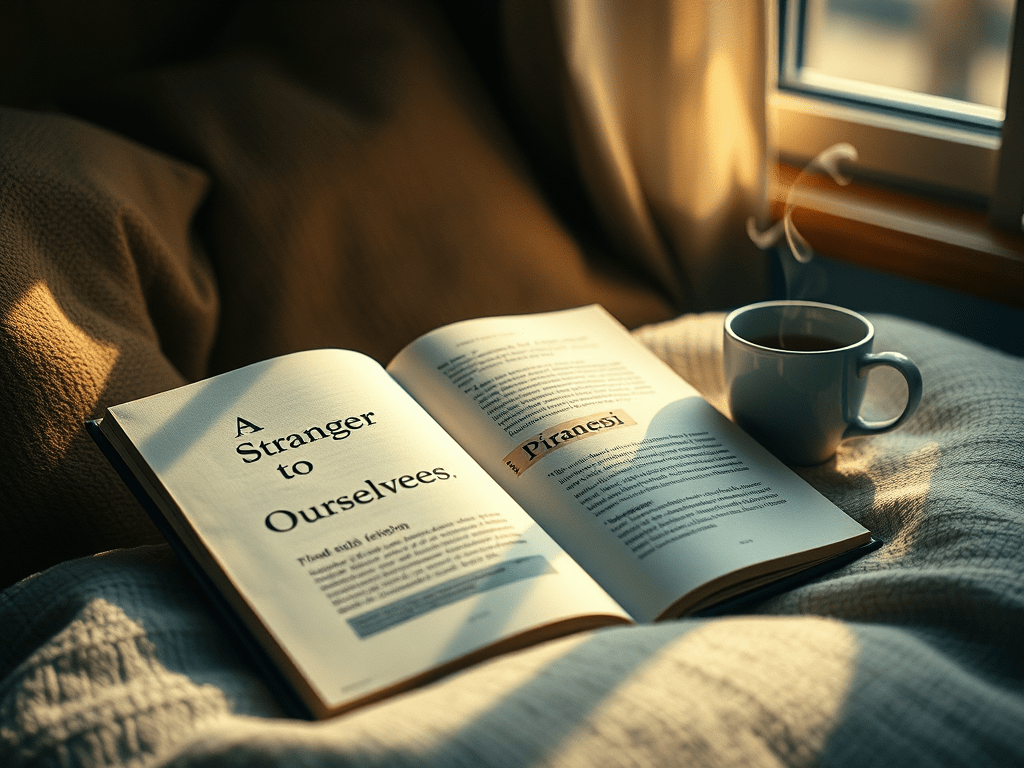
A Stranger to Ourselves  – Unsettled Minds and the Stories that Make Us – by Rachel Aviv. 

I opened the door and welcomed the girls in. I had clutched in my hands the book , A Stranger to Ourselves  – Unsettled Minds and the Stories that Make Us – by Rachel Aviv. 

The daughter and her friend had completely different greetings – but the tones were likable enough, and I smiled broadly.

“So, whatchu reading now?”

“Ooh! That sounds heavy Aunty!” 

I told them. 

This book outlines the lives of six different people across different cultures and timelines, and their struggle with mental health.

Given all of our advances in health, mental health still has a long way to go. The unseen frontiers of the power of our minds, the terrifying depths to which it can plumb us, the giddying heights to which it can make us soar, the ruts from which no tow truck could extricate us – they are all true.

We chatted about this-and-that and other book recommendations.

“Oh Aunty! You should totally read Piranesi!” said the daughter’s friend, her eyes widening when she realized that I’d taken her suggestion and read a teenage angst novel. “You like mythology – well, I don’t want to give too much away – but you’ll like it.”

Piranesi – By Suzanna Clark

Piranesi is a book that I found vague and disconcerting in the beginning. Then, a book I wondered about long after I’d finished reading it. What did it mean exactly? The premise is that a person is stuck in an alternate reality – a large palace-like place with corridors lined with statues, flooding basements where the ocean tides creep in, and large, open spaces in which to ponder life about. But that is it. There are no other creatures – save a visiting raven or two – and one other person called the ‘Other’.

How to make sense of a reality like that?

I read these two books together a few months earlier. I had them jotted down somewhere to be written about. Given the flurry of posts and things to write about, I thought I would leave these out.

But I found that I couldn’t.

For these books both lodged themselves for different reasons. 

Piranesi makes one think of all the palaces we construct in our minds – which ones are escapable from? Which ones serve as prisons?

Stranger to Ourselves makes one wonder about what a narrow path normalcy is. 

“I think, therefore I am.”

– Rene Descartes

The next time I saw the girls together, I asked them what they thought of the books, and we went on to have an inspired discussion on how our thoughts shape our reality and so on.

Books References:

  • Piranesi – Suzanne Clark &
  • Strangers to ourselves – Unsettled Minds and the Stories that make us – Rachel Aviv