Creation Myths: Nature’s Narrative

The Power of Belief

The world was swirling in activity, news, festivities, events. The world felt turbulent, swift, and equal parts joyous and worrisome.

The Navarathri festival meant that all versions of the festival were being celebrated – there were Durga pujos, Garba and Dandia dance events, golu, bommala koluvu. All in all, it was a week wrapped in the surreal – creation myths, war legends, female power. Most old cultures have versions of these – and if it takes festivities to remember the good old good-vs-evil arcs, and the figurines of goddesses to remind us of the righteous power women hold within themselves, so be it.

In some ways, it was a welcome distraction from the doom-and-gloom of news cycles. It was as if we could build a dichotomy of spirit within us.

Serene Solitude

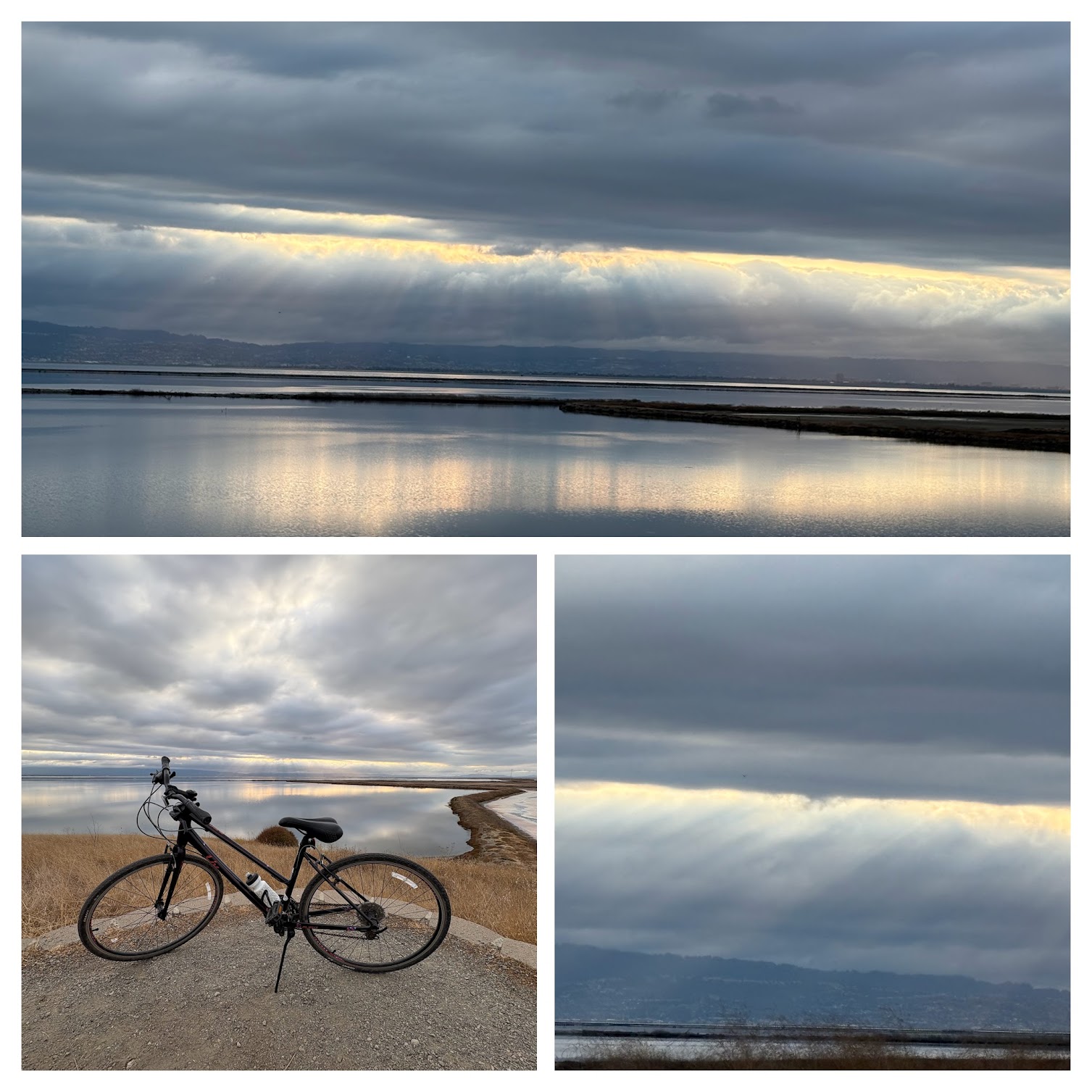
Come Sunday evening I craved for some solitude, and nature too, to round out the craving for peace. So, off I went with my bicycle, into the cycling trail nearby. It was tough going – all that festive food sloshing inside of me. Made me feel heavier and more sluggish than usual. But the trail is magic – it seems to lead, with each pedal stroke, to a place of peace.

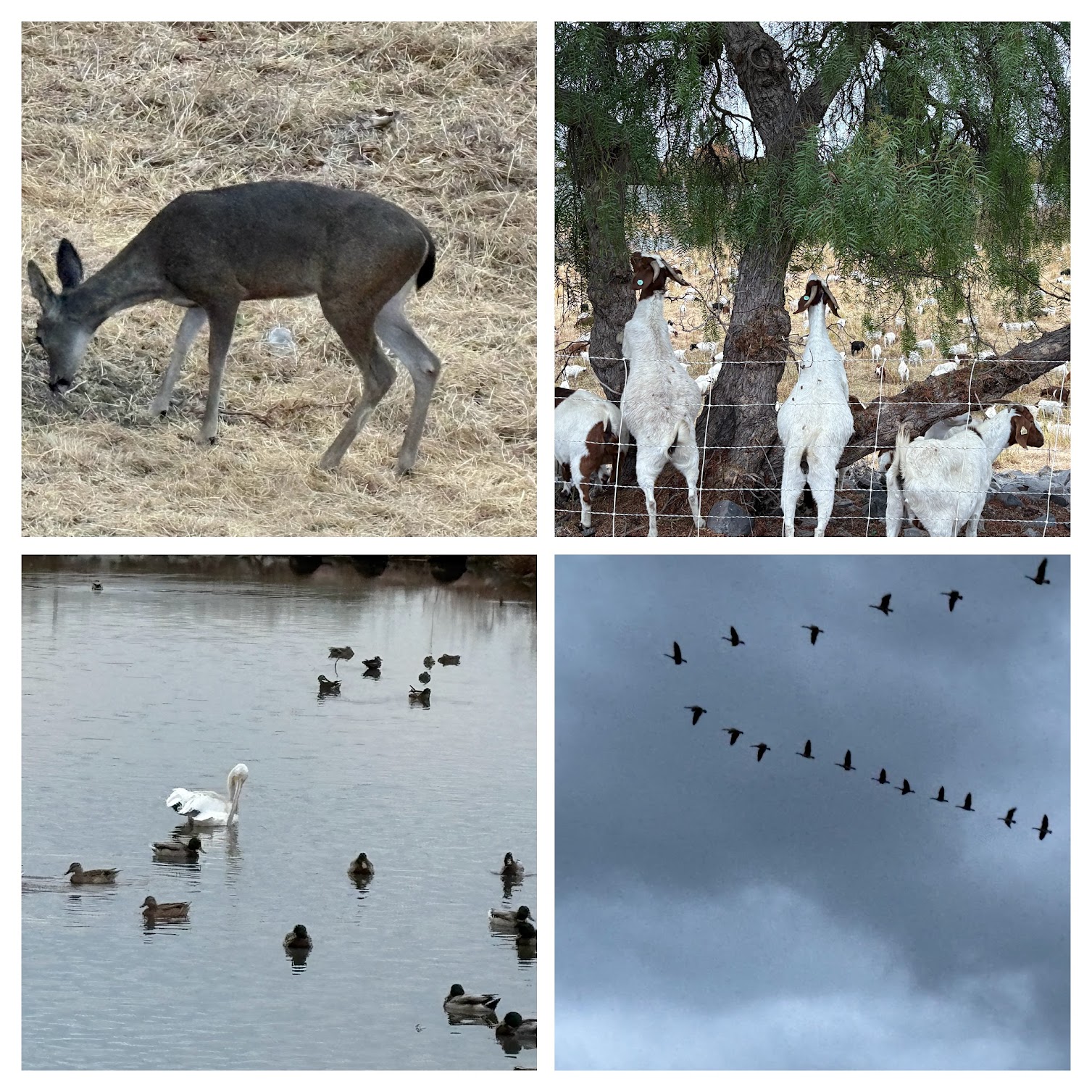
It was nearing dusk, and the birds had started their journeys home. I stopped every now and then to take pictures of beautiful sights that took my fancy. Deer and goats grazing, a hare (I couldn’t get a picture) running so quickly it startled me, pelicans lifting their incredible frames into the air with grace and ease (They did not eat puliodare over the week-end, but even so), kestrels soaring, squirrels daring themselves to see if they can make it across the bike path (I swear these little rascals wait till the last minute to scuttle across – a thrilling game for them for sure, but enough to scare rice-sodden slower-than-normal reflexes bike riders), the small birds (finches, blackbirds, wrens – all making a racket as they prepared for downtime). It had been a particularly hot week too, and I could see the relief of the cooling temperatures in my fellow beings.

The AT-CG Creation Dance

It was as I stopped to gulp some cool water – deep and slow, that I noticed the deer gazing at me. I have written about the gaze of a deer before. I shall write again. All the poets and writers when they write about unending universes in eyes, this is what they mean. It is possible to gaze deep into those big, round eyes. The goats eyes have a different quality to them – their pupils being rectangular appeals to the human mind differently altogether from a round, large pupil shape. Could that be social conditioning too?

It made me think about our genetic makeup, evolution, and all the creation myths. I could understand why every ancient culture and civilization had creation myths. I wonder whether whales have their version of creation myths in their repertoire. If they do, I’d love to hear it.

I stood there warmed by the deer’s gaze, the bird sound, and the gentle breeze around me. How was it possible that all these marvelous creatures I had seen today were variants of adenine, thymine, cytosine, and guanine?

We need a nice simple beautiful creation story with AT-CG that can round out the beautiful repertoire we have the world over. A goddess seated on a lotus from the AT-CG DNA, a multi-headed god whose genetic composition had mutated differently and went on to use that mutation to create a whole planet of marvelous creatures.

Full of beautiful images of nature, man-made images of golu decor, and a head refreshed, I pedaled back to the house. The pink skies were turning purple and grey, and it would soon turn dark. Another phenomenon that gave rise to so many legends till we understood Earth, and our miniscule place in the Universe.

I heaved a grateful sigh, breathing in the fresh air, and taking a gulp of fresh water before heading inside.

Celebrate International Dance Day: A Journey Through Dance Dramas

International Dance Day is coming. 

One of the best things about my dance teacher was how she helped transform the world on the stage with mere mortals. Children of varying interest levels, abilities and time. We somehow knew each other’s pieces, and the rehearsals became a place of camaraderie and belonging like nothing I have known since.  Friendships formed in the orbit of practice, each of us helping or being helped as the D-day drew near. The energy of practice was always enough to bring a smile. No matter how hard or terrible a day you’d been having, if you have to smile and dance when it is your turn, it does something to you, and you find yourself in a better frame of mind without even trying. 

How I wish dancing, singing, art, literature, creative writing, team and adventure sports are all a part and parcel of everyone’s life on a regular basis. Without having to carve time for it, without yearning for it, without having to take the car or public transit to plan for it. What a luxury that would be?

As we spend time working, we spend time in our creative pursuits – intellectual, or physical. 

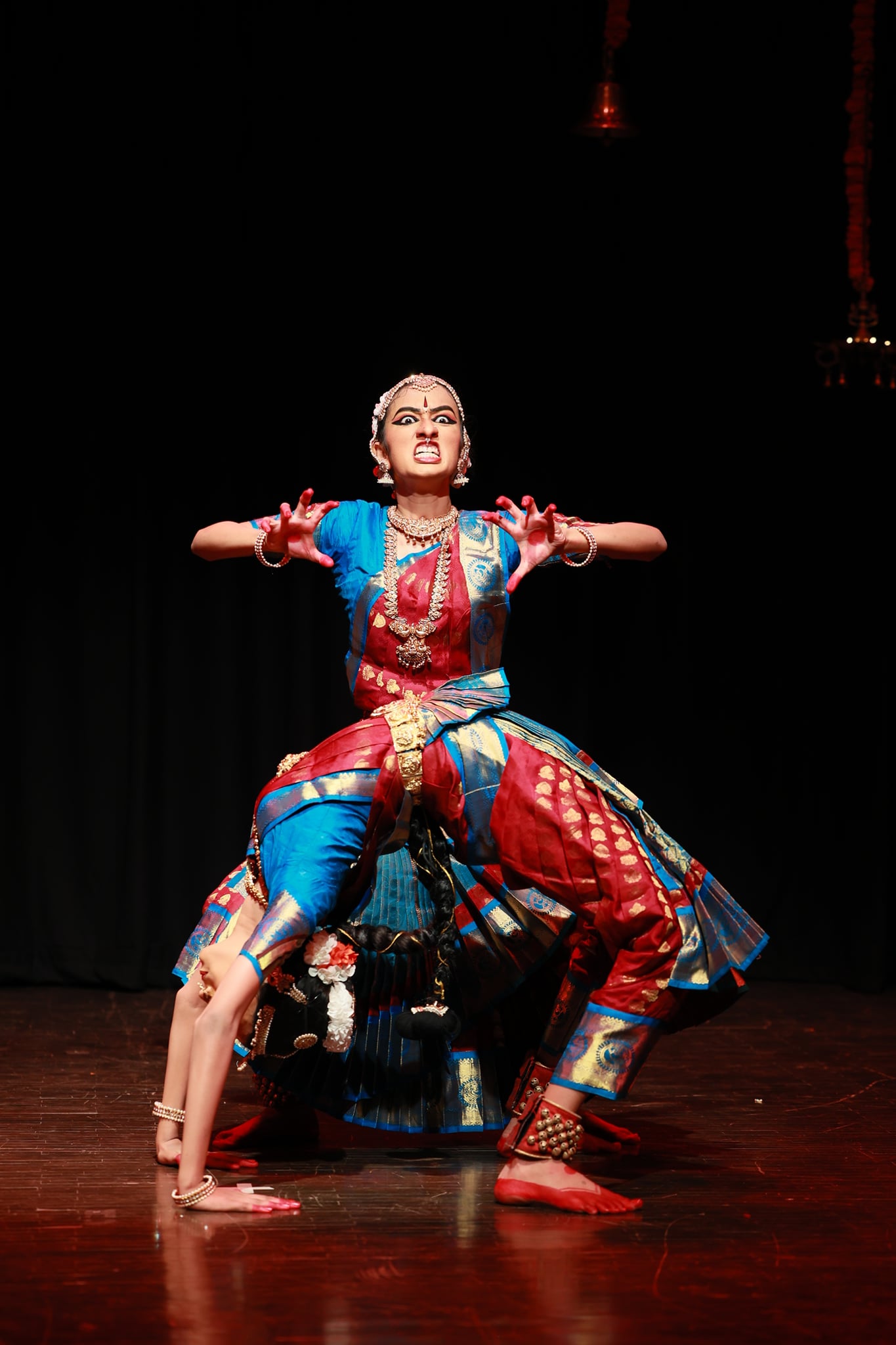
As the children grew up, I had the chance to attend many dance programs, arangetrams and productions over the years. As soul-nourishing as they all were/are, I still yearn for the dance dramas that my childhood teacher was so good at conceptualizing, choreographing, composing, teaching and performing. Who cannot be caught up in the climax of Mohini skillfully directing Bhasmasura towards annihilating himself through dance, or Mahishasura Mardini, or any other epic being played out on stage?

While I yearned for multi-dancer theatrical dramas played out on stage, I was also keenly aware of why they were difficult to pull off. In a society where the number of hours were optimized, did you dedicate time for learning your margam of items – the standard pushpanjali/kowthwam, alarippu, jasthiswaram, shabdam, varnam, keerthanais and thillana so that you can prepare for an arangetram in that time, or spend a part of that time with a dance drama production? It is a tricky situation complicated by expectations of society – individual performances merited standardized margams, dance dramas demand a different format.

So, whenever I get the chance to go to a dance drama, I practically dance into the auditorium myself. 

Nirupama Vaidyanathan’s Journeys of Faith based on Shoba Narayan’s book, Food & Faith

In recent years, I have had the pleasure of attending a few of these theatrical productions. Nirupama Vaidyanathan’s Journeys of Faith based on Shoba Narayan’s book, Food & Faith was one such. Nirupama is always skilled at having multiple dancers quickly move together, seamlessly, in beautiful patterns on stage. She managed to incorporate standard thillana-style formats etc into this production which I thought was a very clever way to balance the needs of the student and the theatrical dance drama format.

That dance performance was amazing. Nirupama is a clear orator, and in this production, her voice overs, where she was narrating pieces from the book as she set the stage for the Palani Murugan temple or the Udipi Srikrishna Temple were amazingly done. She had the music pieces composed, and stitched together for the dance drama. I just have to close my eyes to see the way all her senior students came together on stage at the very end to show how the prasadam in a big temple kitchen is prepared. Who cannot be filled by a performance like that, followed by an excellent prasadam at the Livermore Temple afterwards?

She combined literature, theatre, dance and music in such a satisfying and eloquent manner that a year after the actual performance, I am able to recall the transformation of the stage in her skilled and capable hands.

Meenakshi Sundareshwarar Dance Drama

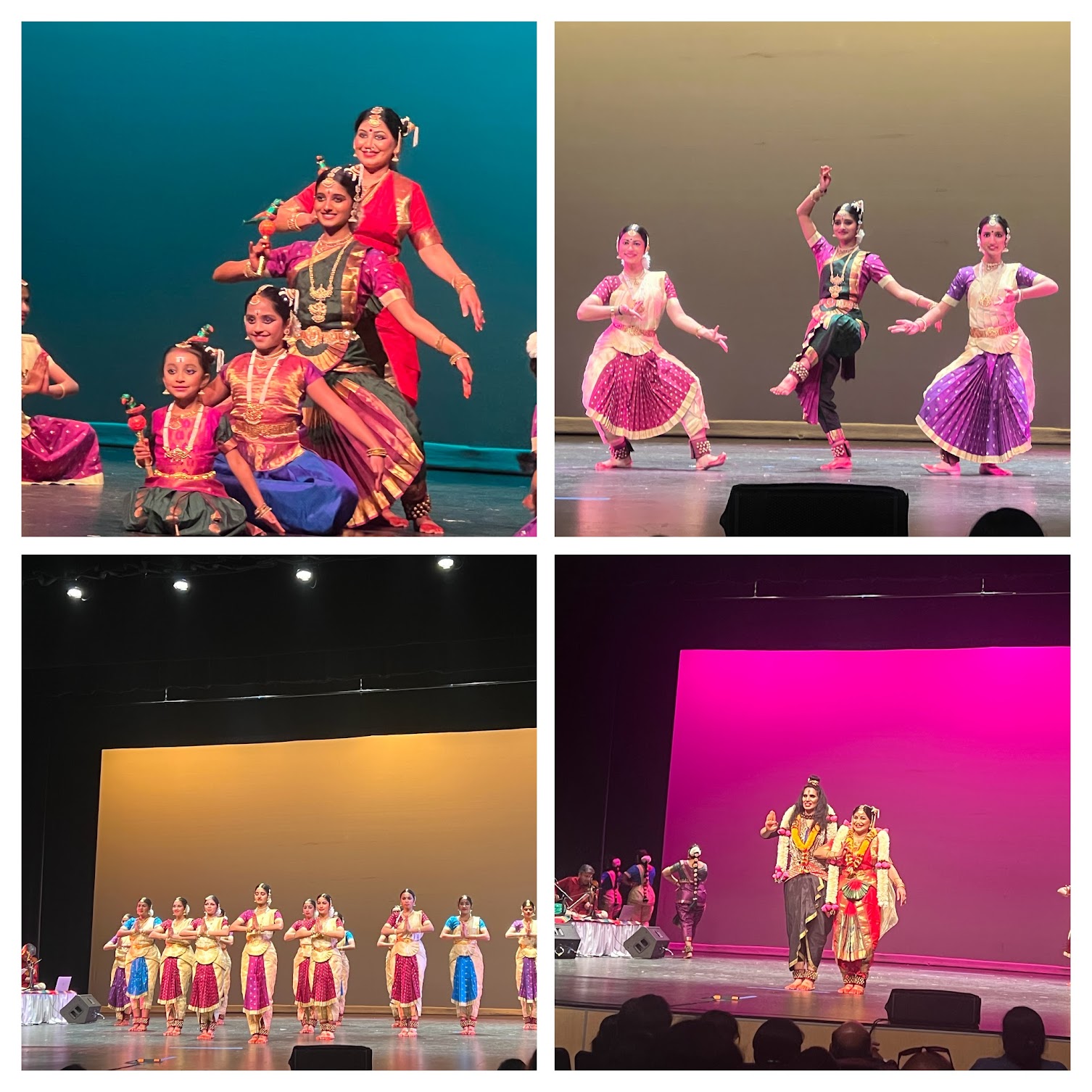
I had a similar feeling with the Meenakshi Sundareswarar dance performance by Sharanya Ganesan. It has been a few months since her dance school staged the dance drama to which I was invited. But, was it a transformative experience?! She managed to fill the stage with students of every stage in their dancing journey. 

There was the child Meenakshi, the young-adult Meenakshi, and the adult Meenakshi – with all the dancers accompanying the stories filling the stage with their rhythmic jathis, their quick and coordinated movements. The stage ebbed and flowed with the dancers themselves. The costumes – oh the costumes! Bharatanatyam costumes are always a joy to behold, but on that stage, they took on a fantastic life of their own. Except for the main characters of the story – Meenakshmi, her parents, Sundareshwarar etc, everyone was clothed in combinations of cream and (red, pink, violet, or green). I have always loved the cream colored combinations, and on that stage housing over 50 dancers, they all stood out and merged together. 

The dance performance itself co-ordinated across all the batches of children she teaches must have been both a joy and a huge project in and of itself. Every group knew of the pieces they needed to perform, but according to her senior students who spoke to the audience afterwards, the whole thing was a concept weaved together into the magic it transformed into only in Sharanya Ganesan’s head. 

On YouTube Please!

Every time I look for entertainment to watch, I yearn to see if these dance dramas would be on YouTube or Netflix. I wish they were. For I love to watch a good dance drama on a cold evening – I end up watching some dance pieces, but a good dance drama choreographed, executed with such talent, beauty and grace would be something that I would love to see every now and then, or even on a flight. 

There are always good ones we miss out on because of conflicts – how marvelous it would be, if we could manage to fill our souls with the performances later? I am on a flight to South India – thumbing through the entertainment available on the flight, I thought to myself that  I would love to see The Whispers of the Kaveri when I am traveling to the very lands of the Kaveri river – Tamil Nadu & Karnataka. 

How Children’s Books Teach Life Lessons

I don’t know why we bother with thick repetitive self-help books, when children’s books can give us all we need with beautiful pictures, simple messages and heartwarming characters all at once.

I Can Be Anything – Don’t Tell Me I Can’t : By: Diane Dillon 

I Can Be Anything! Don’t Tell Me I Can’t

This book was such a surprise because it captured that inner critic in us so well. 

Don’t we all know that voice? Sometimes nasty, other times discouraging, but also quite ready to remind you that it’s there. Over time, we do try to overcome its influence, and try to rationalize with it, but still it rears its head every now and then. Evolutionarily, it may have saved us from trying to leap across high-ledged craigs better suited for mountain goats, but in our modern world, it simply tries to save us from failures. It is an important feature but only when called upon. 

The book captures it so well.

BeAnything

If you’d like to be an artist, the voice would ask you what you would do if you simply didn’t have the talent for it.

If you’d like to be an astronaut, an archaeologist, a president, it has something to say for every aspiration.

You don’t know what you want to be do you? Said the voice.

But I’m always with you, you know. Said the voice. No matter what you do.

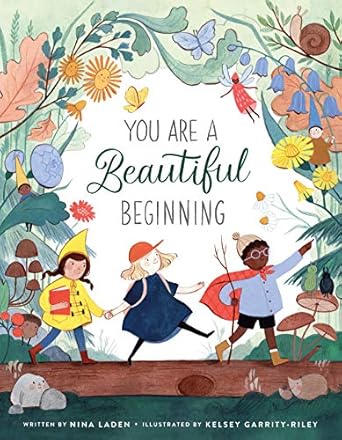
You are a beautiful beginning

By: Nina Laden Illustrated by Kelsey Garrity Riley

You Are a Beautiful Beginning: Laden, Nina, Garrity-Riley, Kelsey: 9781250311832: Amazon.com: Books

Another beautiful book on the beauty of embracing You. As a child I found the message to be You very confusing. How could you know who You were? Were You a doctor, engineer, lawyer, or were You a leader, or were You a friend? 

It all got increasingly complex when people kept telling you to be this or that, or like him or her, how could you just be You? Was it enough?

It’s not about being cold, it’s about finding the warmth in the cold, or how it isn’t about losing, but about playing. 

beautiful_beginning

Simple messages with beautiful pictures. Every couplet in the book isn’t particularly life changing, but the book feels like a lovely reminder on what we strive to be. 

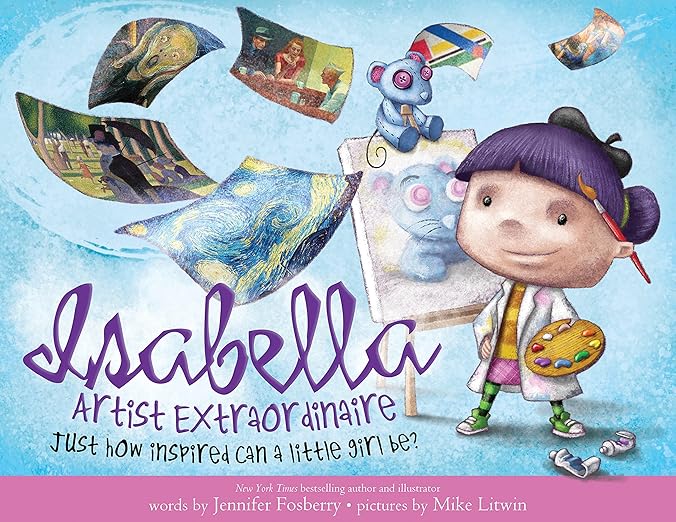
Isabella: Artist Extraordinaire – By Jennifer FosBerry, Illustrated by Mike Litwin

Isabella: Artist Extraordinaire: Visit Famous Art With This Inspiring Story About Creativity For Kids (Includes Guide To Art And Artists Like Van Gogh, Degas, And Warhol)

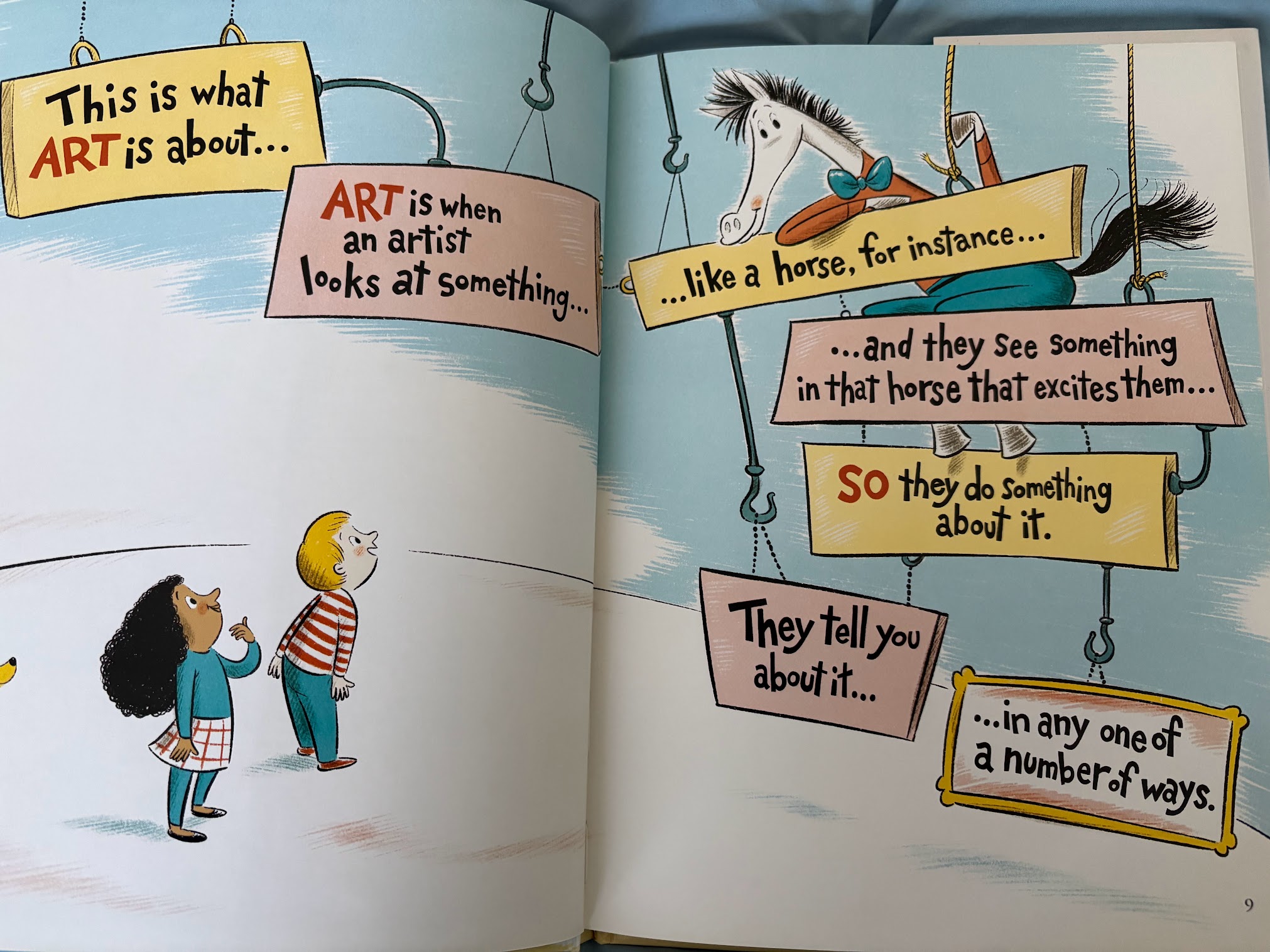
If we have to decide what separates humanity from the remaining species on this planet, I think the paradoxical nature of time and how we choose to occupy it must be the deciding factor. Most other creatures raise their young, spend time procuring their food, and spend the rest in seeming companionship of their fellow creatures. But humanity seems to be the only species where we want to be efficient about time, and also try and figure out how best to occupy it. Knowing how to be happy with yourself, your imagination, and using your time well has to be one of the greatest gifts to receive from the muses. 

In this book, Isabella has a day off from school, and her parents are giving her options on how to occupy it, saying that if she cannot decide on something, she may well have nothing to do but to stare at a starry sky. 

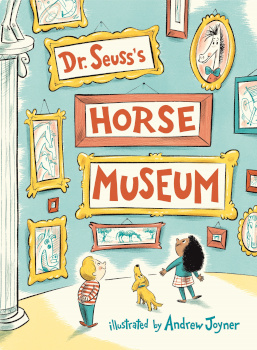
A day at the lake, or the park? A horse rodeo?

isabella

But then, Isabella shows them that all the inspiration she needs she gets from her own work on her art gallery. 

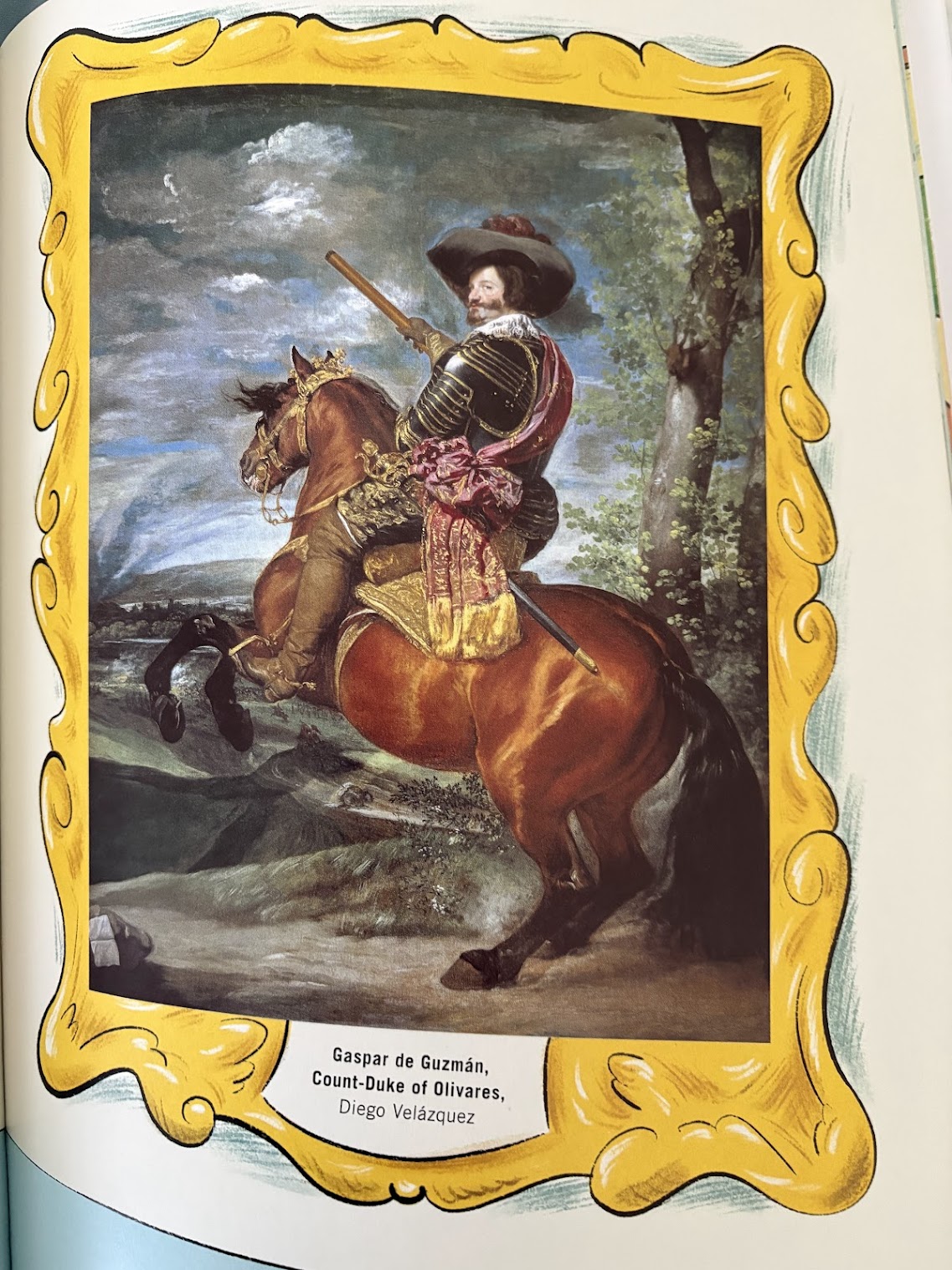
It is, of course, a beautifully illustrated book and the book shows the inspirations behind each of the images in the book.

There were quite a few other books – I wish I could write them all up, but even more, I wish you all have an equally exciting time in your library looking through these marvels.

The Shape of Ideas: Creativity Unveiled

“What is nice is knowing that there is a fount of ideas – and even if many ideas seem taken, there is always a variation in the workings of the human brain to make it different.” 

“It is astounding – the volume of work produced.”

The husband and I were taking an evening walk discussing creativity, imagination and the origin of ideas. He was talking about one of the musical maestros of Tamil cinema  and their seemingly eternal bouts of inspiration. 

“I wonder if they worry about it running out on them, though.” I said, looking contemplative as I admired nature’s work around me. No lack of inspiration there! Every tree a different shape, every plant a different marvel, every soul a different temperament. 

“I suppose they would have the same trepidation or initial hurdles when they set out to create, and then obviously their levels of genius means that the ideas that do come to them are a class apart, but I suppose they must have their moments of doubt. “ said the husband looking thoughtful.

I hmm-ed at this. I do feel that just like the intelligence factor, there is an ingenuity factor (You have what you have and then those who work with it, sit with their abilities, nourish it, develop it, and try to wrangle it into industry reap the benefits). 

When I saw this book, The Shape of Ideas – An illustrated exploration of creativity –  by Grant Snider , in the library, I picked it up. Partly because I expected it to be whimsical but also because the origin and nature of ideas has always intrigued me.

The Shape of Ideas: An Illustrated Exploration of Creativity: Snider, Grant: 9781419723179: Amazon.com

51kUrTbxX0L._SY522_

How many of us have wondered about the origin of ideas? It is marvelous when we are graced with an idea. Especially one bursting with imagination, but for all the good and bad ideas humanity has come up with, we don’t really know the origin or the process to generate more of them. It is almost as if the unknown is bordering on the magical.  

Sometimes, we need a chock full of ideas to pull out a good one. Sometimes, it is the joy of an do-nothing day that gives you an idea that makes you smile.

This book is a marvelous read – it is full of whimsical ideas, endearing comic work, and neatly classifies the different areas that the shape of ideas tread: Inspiration, Perspiration, Improvisation , Aspiration, Contemplation, Exploration, Daily Frustration,Imitation, Desperation and Pure Elation.

As an example of the kind of art you can expect to see in the book – here is one on Drawing the Moon 

img_3666

We have all heard or understood various versions of the inspiration vs perspiration speech from our teachers, mentors and parents. 

On some level, we understand that being smart or talented or intelligent means nothing unless you are also granted opportunity, have perseverance and cultivate intellectual development.

But how do each of us use all of this to create a rich inner life that translates to one of beauty and enriches the life of those around us? 

“The most regretful people on Earth are those who felt their own creative power restive and uprising, and gave to it neither time nor power.” – Mary Oliver

Read Also: What is Your Friend

Nyctinasty Flowers’ Lessons

I could barely stay indoors. You see? The day had started off with a mild drizzle. After what felt like months of sunshine, a little bit of moisture felt amazing. I stood outside peering up at the clouds – in itself a rarity now given how parched things get during Californian summers in the Bay Area. Even with summer flowers blooming and vegetable gardens flourishing, I yearn for the simple pleasures of marvelous sunsets, clouds, a pattering of rain, some breeze.

That is perhaps one of the things I miss most about the Nilgiris – the western ghats in South India where the rain drops and eucalytpus provided the backdrop for magic and mysticism. The rains, the clouds, the winds – how in one day you can experience so many different climes and you have to be prepared for it all, and still go about your day.

Nature is Transformative

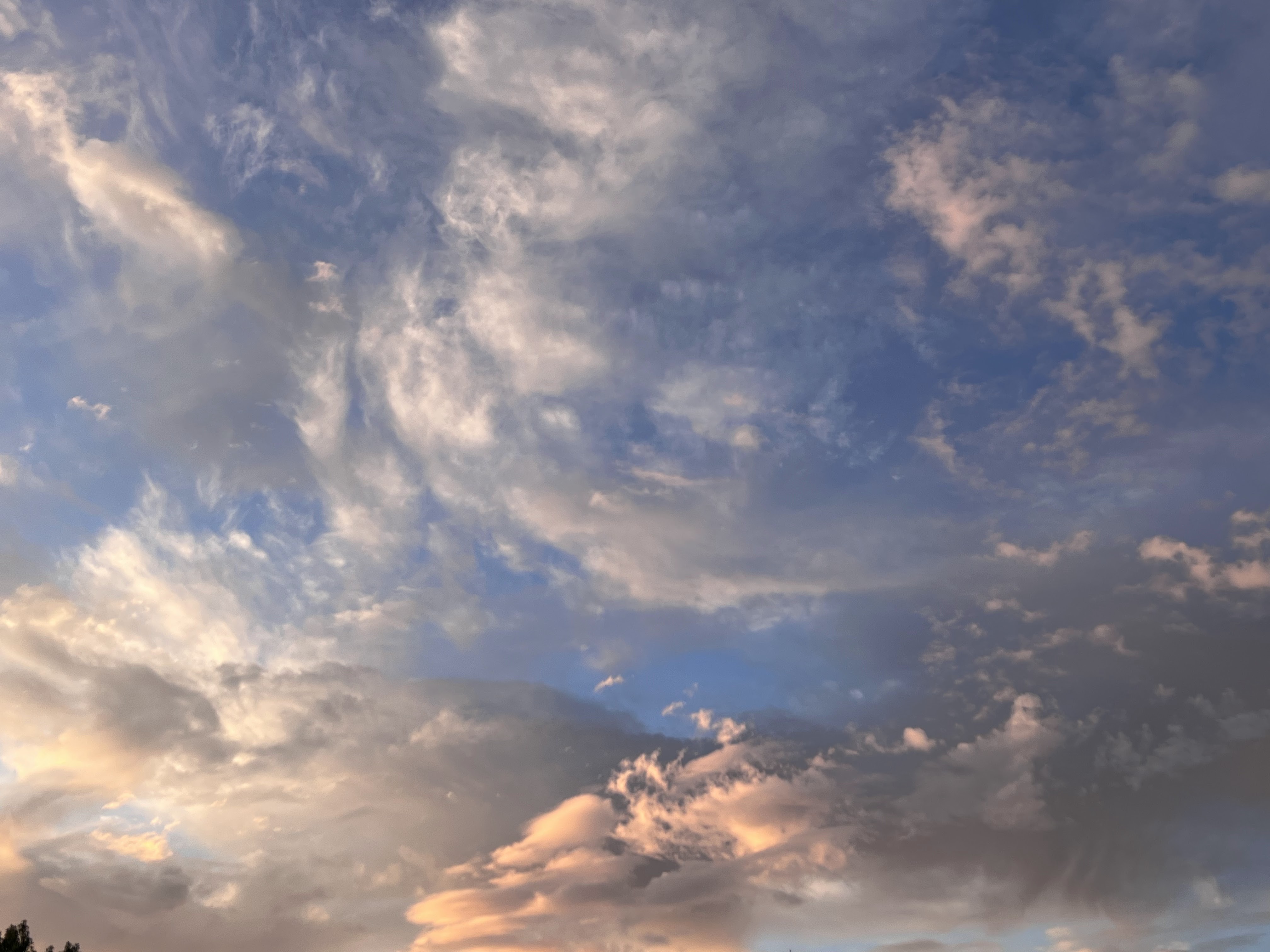
That evening I said, “Well – come on then! “  hustling everyone out to see the glorious sunset. The clouds had scattered during the course of the day, but there were enough of them still there –  enough to provide crepuscular glory with the rays of the setting sun. Some clouds looked like an artists reluctant brush stroke jostling right alongside the weightier ones. How every evening a different painting is rolled out to us continues to be a source of wonder.

img_3068

Art is transformative – so is nature.

It transforms ordinary days into extraordinary ones.

It assures you that normal is numinous.

Nyctinasty flowers

That evening, I took in the deer grazing near the river banks, the rising full-moon swollen, resplendent and beautiful against the setting sun orangish-red and bright. I don’t have to be a naturalist to know that the birds felt it, the deer felt it, the frisky fox felt it, the fish in the river felt it, the  flowers felt it. I stopped to admire everything – especially those that are classified as nyctinasty flowers :nyctinasty flowers like the evening primroses or gardenias  close up for the night. They show you the importance of closing and resting in order to bloom and spready one’s beauty for the next day.

If ever there is an appointment to keep, it is with nature in those moments in the golden hour when all the world is settling in for a quieter pace.

img_3069

雰囲気 Fun’iki: Embracing the Japanese Concept of Catching the Vibes

We watched fireworks exploding in the skies far away. There is something special about standing on a beach in the dark and watching light come in unexpected bursts from far away. Is that how the creatures of the deep dark pockets of the ocean feel when their own or those of other organisms around them lights up their world with their bioluminescence? I wonder. 

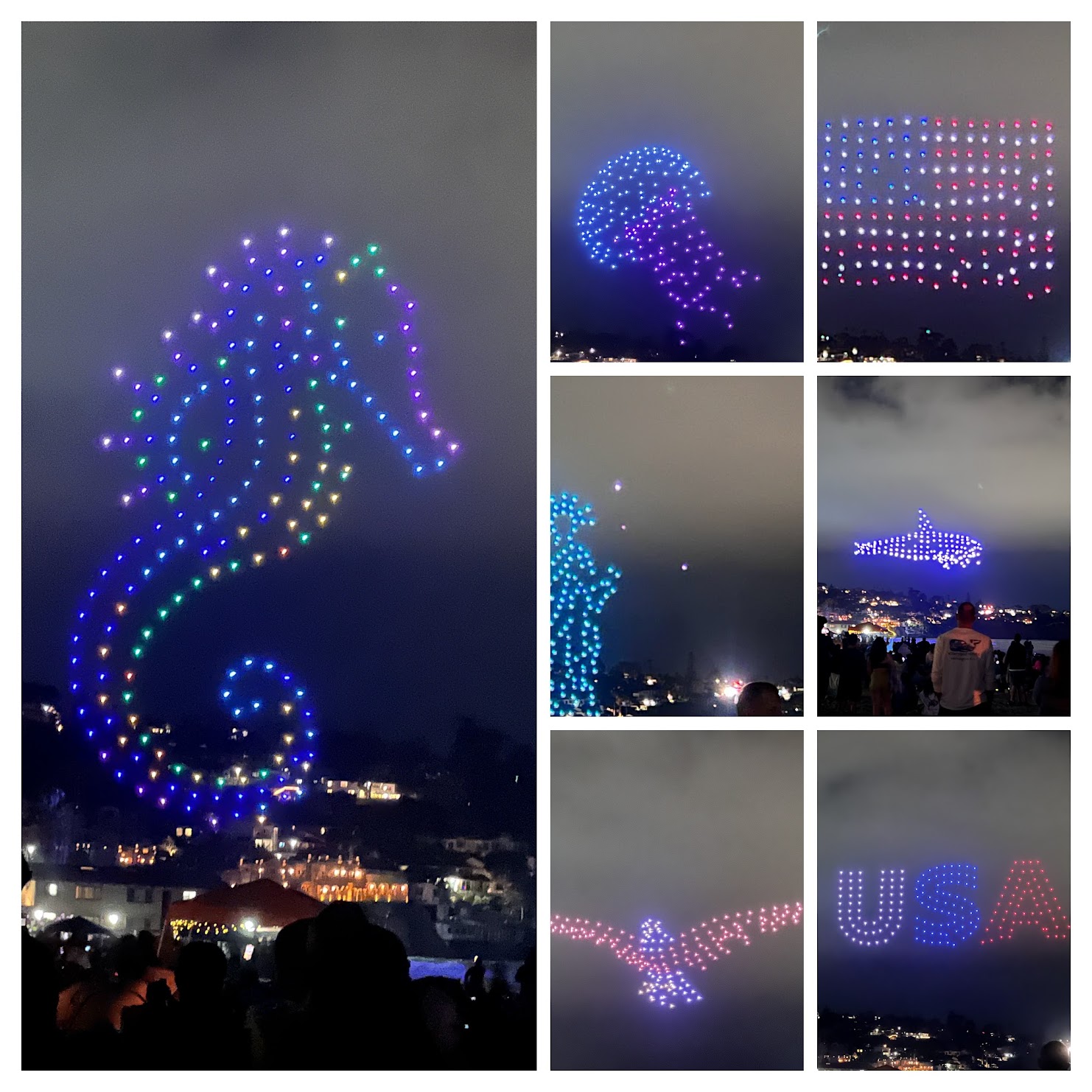
Nevertheless, that night felt more surreal than usual. For it was replaced with tiny pulsing lights of drones. Hundreds of them forming and reforming into beautiful shapes – there a jellyfish, then a statue of liberty, and a whale. In spite of the beautiful shapes, I did miss the crackling sparkling sounds of the fireworks. The drones (far away as they were) were entirely silent, and lacked a certain ‘oooh—aaah’ factor as a result. (I could’ve stooped to pick up something and missed a jug or something. ) But the drones were more environmentally friendly, so …

The next day, we felt a slow start was essential – and so we meandered around an island neighborhood. 

“What do you want to do?” 

“Nothing much – just catch the vibes of the place, maybe?” said the immensely-cooler teenage daughter to her younger cousins and brother, who agreed fervently. I did not know what catch-the-vibes meant exactly, but nodded along. Vibes would reveal themselves. Vibes are like waves – you just have to experience them, I told myself. 

It turned out that stopping to admire art galleries, meandering through neighborhoods with picket fences overlooking the ocean, admiring gardens bursting with flowers, watching young adults laugh and make loud jokes, slurping ice creams before they melted – everything belonged to the category of “catching-the-vibes.”

Catching the vibes, I realized, is a fun activity that can include book shopping, picking up curious art from local art galleries, gasping at the prices of some art pieces, admiring gardens, and 4th of July decorations.

Why am I not surprised that the Japanese word for vibes contains fun?

雰囲気 Fun’iki

Fun’iki sounds like something we do all the time on trips, without the cool name of course. We resolved to add Fun’iki to our vocabulary and trips henceforth and meandered back home.

What are some of your favorite 4th of July week-end activities on trips?

Emotion in Art: Unveiling the Power of Creativity

Art is about capturing a feeling 

T’was a few days before the Inside Out 2 movie was released. The husband was making me watch a thought-provoking interview. (He knew the distractions at hand on a beautiful summer evening. I needed to watch bees flit, deer graze, geese squawk, herons fish, dogs bark. As I cradled my evening cup of tea wondering when to get out on my evening walk, he swooped in. “Won’t take longer than the time it takes to gulp your tea” he said cheerfully and I gave him a skeptical look. I do not take ½ an hour to drink tea.)  

image-2

Anyway, in the interview, they spoke of suffering and how one needed that pain in order to emote well as an artist. It is not a new sentiment. I remember listening to an interview by J K Rowling or Stephen King (I don’t remember which) that one needs to have had a sufficiently terrible time as a teenager if they were to write anything worth writing at all. 

Problems Are Steady

I am not sure I agree with that. Suffering can be acute, agonizing and astonishing in its effects even as adults. In fact, much like our boggarts tend to change through life, so too does our ability to imagine and empathize, don’t they? Also, for many of us, problems tend to be a steady stream in life – we get jittery and nervous if there aren’t any. Can it really be that we are having a perfectly peaceful time – do you think something awful is going to happen? This can’t be true. Maybe I should call the children, see if they are okay.  Oh – what about the old parents, the siblings, the nieces, the nephews, our friends, colleagues, neighbors? Work? No? All well – is this really so?

Then, you tend to the heart like an overwrought bee in summer and soothe it down. “Yes my dear – there really are flowers everywhere! Believe it or not, managing plenty is as much work as managing long distances for some nectar. Just relax, will you?!” Problems like to steadily hum along like background music. We all need problems at some level, do we not? At least that’s what I tell myself when things get a bit clammy. 

Does Art Capture Emotion?

So, does art need to be about capturing emotion – whether through direct suffering or empathetic suffering? I thought Starry Night by Vincent Van Gogh was brilliant because it captured the frenzied anxiety of the artist’s mind. But, was that what everyone thought? How about those moments of bliss, joy, anger, disgust, repulsion, serenity, contentment, love, and all the ones that Pandora so generously released from her little box of troubles. Hope?

Screenshot 2024-06-29 at 3.32.19 PM

A couple of days later when we went to watch Inside Out 2, we sat spellbound as the movie captured Anxiety’s frenzy so perfectly in this animated movie. How Riley’s imagination spewed up every little thing that could go wrong and let her sense of self develop into a skewed sense echoing, “I am not good enough!” was tragic and Oh! So Well Done!

Screenshot 2024-06-29 at 3.28.31 PM

When you observe a piece of art, do you concentrate on how it makes you feel? Or do you appreciate it for the skill of the artist? 

P G Wodehouse on Art

What’s a post on Art without one of my favorite quotes by P G Wodehouse – only I feel a little like Bertie Wooster himself writing this – it has something to do with a painting looking like ‘summer blew up in your face’ – but I cannot remember it. Gemini threw up its hands and said: P G Wodehouse is not an art critic, but an humorous writer, without a trace of irony. I did spend an enjoyable few hours since then

(a) looking for the quote and reading several good ones on the internet,

(b) perusing my own PG Wodehouse collection opening books at random looking for the quote

Which is to say that I had a marvelous time, but still not find the quote. If anyone remembers it, please let me know. But the art of remembering the quote and imagining the painting itself made me laugh, made me feel joyous, so by that standard, it is already a piece of art. What do you think?

I would love to hear all the different ways in which you appreciate Art.

😇 Even AI Knows 😈

A Guild of Authors

A friend and I were returning from a meeting in which authors from different genres were presenting their works. We fell to discussing the books that appealed to us, and what worked in the format, and what didn’t. I, for one, felt that giving folks a platform to present their books, while noteworthy, could just as well have been done via a YouTube short, but what would have been harder to achieve would have been moderating a discussion about the overlapping topics between the authors. That was something I would have loved to see.

A Company of Authors – Stanford Guild

The sections were grouped together by genre, and topic, so it would have been a good panel to have discussions around. 

Even AI Knows!

As conversations usually go, we meandered, and I said something to the effect of the housework and the truth of an Indian woman having its effect on writerly ambitions etc, to which he mentioned a joke he’d chanced upon, and I guffawed at the truth of it.

“With AI, I thought, it would take over monotonous tasks such as dishwashing and house cleaning, so I could take up Poetry & Art. Instead AI has taken up what little I had of Poetry and Art and left me to do the dishwashing and cleaning!”

Even AI knows to steer clear of household tasks, while humans (women still bear the brunt of the housework) are in charge of these mundane tasks. Who says the universe doesn’t have a sense of humor?

“Really! Of all the things I wanted help with – it was Art that was the least. Give us one tough thing to spend our lives mastering and perfecting!” I said. “Help me with robots – one for the chores, one for help to care for the aged, another with companionship for the lonely etc. Why art, literature and poetry?”

“I do think there are startups for every one of these in the off-ing somewhere.” said he – sanguine as ever and optimistic in the ways of the world’s future.

He was right of course.

Intuition & Instinct?

It did help us loop back to a book that was discussed in which the author spoke about intuition/instinct being a precursor to our conscious thinking, and whether AI would be able to simulate that level of prescience. Which made me wonder, whether that was what made us human, but plenty of us have learnt to ignore these things over time (after all, we don’t need to know when a tiger is lying in the bushes). But would it help us identify dangers in our life?

https://open.substack.com/pub/managingeditor/p/surfin-mia?r=2e6vr0&utm_campaign=post&utm_medium=email

More importantly, if that too can be modeled, what does that leave us with to claim our humanity? Messy emotions and imperfect decisions maybe?

Which brings me to the most important question: What would you like AI to help with, and what would you prefer AI kept is nose out of?

Time as a Map of Reality?

Time in our Universe

I was reading about time, its paradoxes, black holes and white holes while awaiting our turn at the salon. It was a busy day, and luckily, the son and I had the foresight to take our books along to pass the time. 

Every time I looked up, I saw hairdressers concentrating on their craft, while making small talk and easing their customers to relax into their chairs. It is a gift, I realized, to get their customers to trust a stranger with scissors nipping at their heads. It is hair, and it does grow back. But it also does change your immediate appearance and the perception of yourself and those around you, even if only momentarily. For a species that is vain, visually conscious, it is a fine balance to get the right look. 

Time as a Map of Reality?

Back in my book on White Holes by Carlo Rovelli, the paradox of time was being explained:

white_holes

I can’t say I understood it all, but it was lovely to try:

“The reason we remember the past and not the future is entirely due to the fact that the universe was further from equilibrium at one point in the past than it is now.”

Whatever did that mean?

I read on about equilibrium, till I found something that I liked.

“The flow of reality is always more fluid than any of our frantic attempts to capture it might lead us to believe. Time is not a map of reality: it is a kind of memory storage device …”

I liked that. Time as a map of reality, or not?

No Trace Will Remain

I looked up trying to fix the concepts and the reality of my physical space at the same time. I noticed the many small ways in which we trust ourselves to those around us. It should all be organic, safe, slow, and yet in our quest for productivity everything has sped up. Watching barbers and hairdressers doing it all with confidence and aplomb in such a short span of time, was fascinating. 

Watching the people in the salon getting their hair cut with those cutting the n-th customers’ hair, while trying to understand the concepts of equilibrium and time is a strangely meditative experience. The son and I watched and read in turns. The annoyance of the long wait mitigated by the philosophies of being. 

“Sooner or later, every memory vanishes, canceled through the wear and tear of time. Sooner or later, of our proud civilizations, of everything that we have understood, of the words in books such as this one, of our controversies and of our desperate passions and loves…no trace will remain.”

“Would you come please?” It was our turn.

“Soon of our long locks of hair, no trace would remain!” I smirked to the son, and chin up, we made our way in.

At that moment where we are not in a black hole, or not reversing into white a hole, there is only the experience of time, and the trimming of hair.

127e22d1d2494032867770d78ef0335f_ComfyUI_20682_

The Joy of Effort – A Sense of the Infinite?

I was reading the book, Vincent and Theo – the Van Gogh Brothers by Deborah Heiligman. There are many aspects of the book that appeal to me. The narrative style, short chapters, clear language, not withstanding, it also touches upon difficult temperaments and the strain on relationships, Vincent van Gogh’s mental health, and his subsequent descent that led to the accident of cutting his ear off. 

vincent_theo

To Vincent van Gogh, portrait painting became an almost urgent need to master – just before his spiral towards insanity started. Uncle Cent, after whom he was named, was the closest uncle to him, though he was disappointed in Vincent, and left him with no legacy or inheritance. He left it all to his brother, Theo, instead. Still it moved Vincent at the time. He was in the process of prolific creation, and thoughts of mortality made him think of portrait painting with a sense of urgency.

This is a self portrait of Vincent van Gogh made in 1887. This portrait is on display in the Rijksmuseum in Amsterdam.

Screenshot 2023-09-18 at 10.43.48 PM

“Uncle Cents death makes him think more than ever about mortality – and immortality. Maybe there is an afterlife, maybe not. But if he paints someone well, that person is alive forever.

In the time he will spend in Arles – 444 days- he’ll make two hundred paintings and one hundred drawings, a huge number for an artist. He’ll paint landscapes, still lifes, scenes of cafes at night, furniture, rooms, flowering trees, flowers-he is about to begin painting his favorite again, sunflowers. But painting portraits is the thing that moves him most deeply, that gives him “a sense of the infinite”.”

I put the book down and thought about the meaning of effort in our existence. For many artists art gives a sense of meaning. To capture the infinite as Vincent van Gogh says. 

What has happened to portrait painting as a venue since photography came in? Maybe, photographers tend to capture the infinite. 

I thought of all the different mediums slowly replaced by a quicker technology. 

  • Writing  & Editing – ChatGPT, Grammarly and ProWritingaid are all quickly gaining traction for this hobby. 
  • Painting – there are tools available to take any picture and make it look like a painting. You can even choose the style you’d like your photograph transformed into
  • Knitting & Embroidery – almost lost to mechanization and mass production 

While newer and quicker mediums are welcome, I wonder about the appeal of the slow and steady. After all, half the joy is in the effort. I know I enjoy mulling and aching over my words – whether it is a short article, a children’s book, a novella, short story, or larger book. But I do also enjoy using my laptop – the ease and speed far enhanced from the days of penning my thoughts in notebooks as I used to do. 

I am sure all of our tools will lead to different hobbies and pursuits – after all, human imagination can rarely remain idle. I only hope the newer ones provide as much satisfaction in the effort.