Embracing Summer: From Scorcher to Serenity

Hot , Hotter,  Hotter Still …

One hot summer’s day, I tried turning on all the car’s air conditioning vents towards myself. It was no use. The sweltering heat was unrelenting. I sipped some water from the water-bottle I’d left in the car a couple of hours earlier, and it felt like very bland tea – warm, but still better than nothing. This is going to be the reality – I thought to myself miserably as I heard the climate doomsday sayers in my head. Every progressive summer heads towards hotter and hotter temperatures. 

Even the phone seemed to be prickly and finicky with the heat – sporadically dropping and picking up the CarPlay. That’s when I noticed the car’s options for nature sounds. I picked Rainy Day – yearnings for a wonderful rainy day even if the drops of water would evaporate the moment they hit the earth that parched day. 

I didn’t expect to feel much – but I was mistaken. We do not really give each of our senses its due in how it makes us feel. My ears pricked up at the sounds of the rain even as the car itself was dry as brush. Maybe it was the effect of the air conditioning kicking in, but everything felt suddenly cooler. I fumbled for my cooling glasses again – I could not wear them because they were too hot earlier, but that made a difference too. 

raindrops

It was miraculous, the transformation from parched to a feeling of summertime abundance. Life felt sweeter. 

SummerTime Sweetness

Watching the flowers sag on the trees, 

Even as the fruit trees are breaking off with the weight of their fruit,

The joy of filling your home with fresh fruits and vegetables from a summer bounty. 

Having friends to share all of this with 

Nurturing the garden 

Watching with amazement as butterflies and bees flit happily.

Indulging in summer activities

Reading great books, 

Having wonderful fellow readers to discuss them with.

The joy of grocery shopping that includes ice cream 🙂 

The abundance of books from the local library 

The night-time adventures with every protagonist and idea sharer

Those are the joys of summertime abundances.

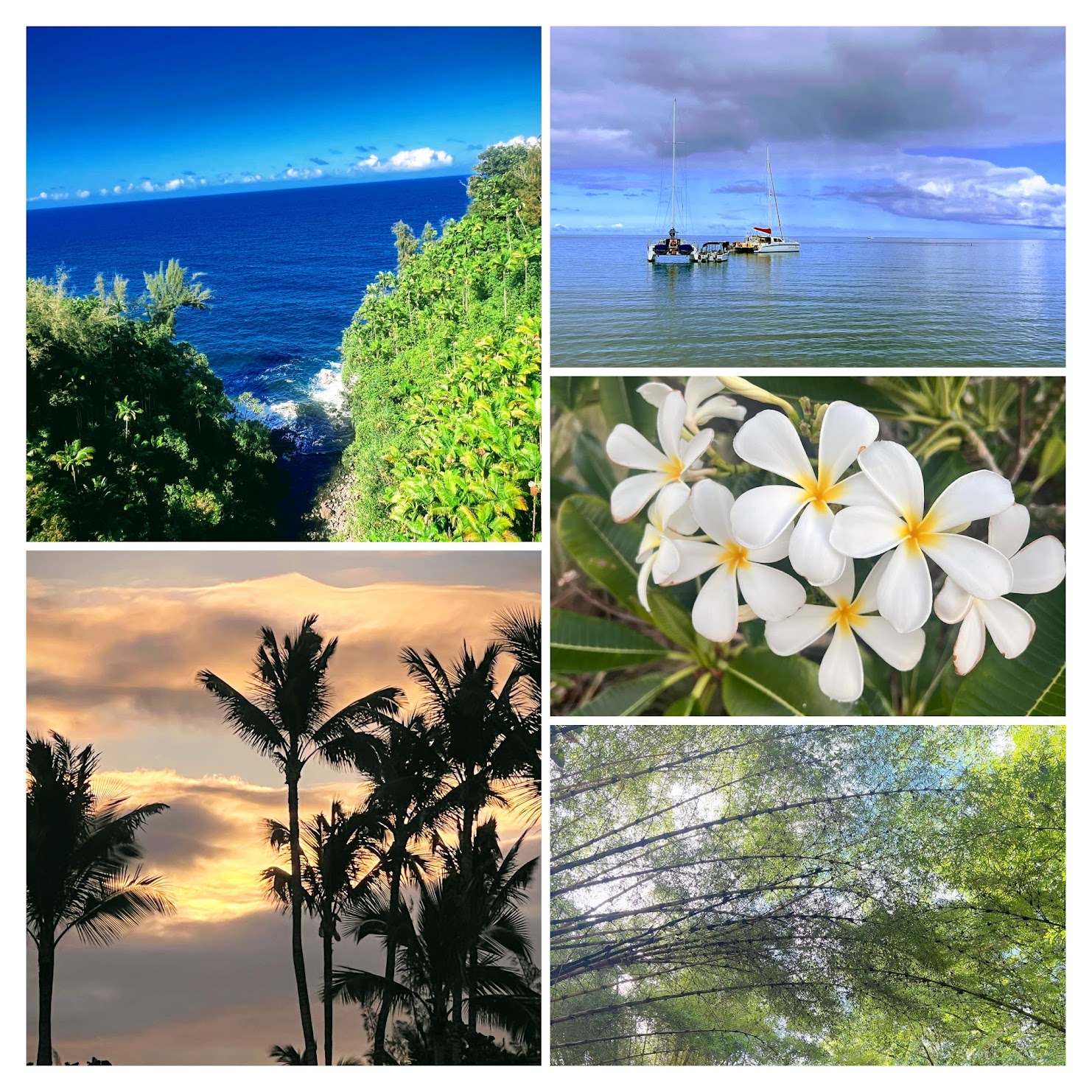
summer-COLLAGE

If listening to rain sounds in the car when the weather outside is blistering can bring out all of the above, we are blessed indeed. What are your summertime sweetness feelings?

“The world smells of roses. The sunshine was like powdered gold over the grassy hillside” – Maud Hart Lovelace on Summer

Not Pristine, Prim, & Proper!

The week-end was marvelous. The 4th of July week-end usually is. Summer is in full swing which means long days, and flowers bursting forth everywhere. This time, it also meant waterfronts and beaches with the children in tow. 

One day, as we walked on the beach, playing with the little waves against our feet, stopping to pick a shell here, and a conch there, I reveled in the ordinary happiness that a simple day like that gives. 

beach_surfers

We saw teenage boys play spike ball for hours on end, little children squeal and run to and from the waves, sand castles being built, and surfers ride the waves again and again.

One child was picking up wet sand to return to the ocean, and squealed when the sand squirmed in his hands, and went running  back to his mother.

An inflatable giraffe that did not look happy out in the ocean. The ridiculousness of finding a giraffe bobbing in the waves was enough to get people to laugh.

beach_giraffe

I usually am not in favor of crowded beaches, but that day, it felt good. People watching felt lovely. 

The son and husband were covered in sand building their little sand castle with a moat around it, tunnels through them etc. I had taken several walks letting the waves splash around me, and the sea looked amazing. The day was not too hot, and the waters were not too cold. The beach was noisy, but not too loud. The people themselves were in various states of imperfection – In other words, it was perfect.

It all felt all the more special because I had an excellent book to read at the beach. The daughter had her trusted ‘The Summer I Turned Pretty’ trilogy with her. It was a bit dog-eared, but she looked at it fondly and said, “That is exactly how a beach book is supposed to be. Not pristine, prim and proper.” 

I threw my head back and laughed so hard at that. “That should be the theme of our day here, huh? Not pristine, prim and proper.”

beach_waves

As we made our way out of the beach, we looked like a good hosing down would do us all good. “But before that – some gelato!” said the husband, and we all hailed our hero as we made our way to the little gelato store with brilliant flavors and fantastic names for gelato explorers.

What are some of your favorite beach reads, and beach activities?

Meeting ‘Loki’: An Enchanting Encounter with a Mysterious Fox

What was That?

The other night, I was out on a walk around the neighborhood, reveling in the fact that I could. The neighborhood was quiet for a week-end evening, and the stars were twinkling just so. The waning moon would not be rising for a while, and the sound of crickets had been replaced with the occasional croak of a toad.

I was thinking of all the laughter and camaraderie of the evening spent amidst friends, and was cackling to myself reminded of this or that. 

That’s when, I saw a fox running really fast. The back of my mind knew I ought to turn back, or at least be more scared. But I couldn’t do any of that whole-heartedly, for I was in a flippant mood – an evening laughing with friends does that to one.

But for another, it was a surreal experience. A glimpse into a magical realism – there was a spring in the step. Like its feet only used the ground beneath to provide the bounce required to leap and bound away. I stood there stunned at this movement. It must also have been quite young – for it’s size was not large. Rather frisky.

Usually, night time naturalist explorers in our neighborhood might find a cat scratching itself and yawning.  I was prepared for not much else. 

It was Scared!

It ran away from me at first, and then towards me with the same frenzied gait. That’s when I realized I would be in trouble if it did try to attack me. For you see? The fox’s run was brisk. If we were both to compete in a 100 metre dash, I have no doubt it would leave me in the dust well after the 5 meter mark. This one already had a head start too. Me? I had three plates of excellent biriyani, naan, kofta curry, etc followed by equally sumptuous helpings of dessert tumbling about in the old stomach. Stuffed, in other words. I was dragging my feet so I could soothe the old digestive system to start digesting and I could sleep. 

Thats when I caught sight of the animal’s face. 

It had clearly taken a risk leaving the river trail nearby venturing to the nieghborhoods nearby, only to find a pesky woman out on a walk. What was more, the thing that made it jump and start running was the sound of me cackling to myself about some inane joke. Probably thought it had a nutcracker on the loose. This creature was clearly alone and figuring out a way out of this mess. So, I stood still, and acted like a GPS to it. “Go away! That way! Off you go!” 

The fox (or could it have been a coyote cub?) gave me a terrified glance, and I continued heartened. “That’s right – after about 100 meters toward the ursa minor constellation, turn right – you’ll be on the river trail again.”

Loki

It turned swiftly and gave me a look that said, “If foxes could certify people, I would!” and took off into the night. That flighty temptress of the night might’ve looked like Wily E Coyote, but it did have a Loki-like look on its face.

I shall call you ‘Loki’ I said in its general direction,  and continued with my walk – but prudently decided to head homewards.

I wonder what Loki thought of the interaction.

I was glad – I had a glimpse into the life of a fox. Seeing the creature’s nimble gait had energized me. There was something immensely laughable in the way it turned and gave me a look too. All too often we are weighed down by the worries of the world (or in this case, good food satiated with good memories), and forget to prance about the world. “You must prance!” is what Loki seemed to have been saying to me that night, and I did try.

The Birds of Paradise

The World Around Us

I don’t remember when exactly we start noticing birds and animals around us as being separate from human-beings. If there is a conscious point in time when we say:

This is us, that is a bird.

Don’t eat those – they’re mosquitoes &

Keep away from man-eating tigers – they want to eat us. 

Keeping the neuroscience behind it all aside, the world around us is fascinating. Even if you see a bird everyday, the little chirp, and the flutter of its wings cannot help but take us out of ourselves for a bit can it? 

What is it about this diversity of life that is so appealing? 

I was sitting one afternoon engrossed in books. Books on beautiful beasts and fantastic features of the creatures we share our planet with.

img_1575

As I flipped through the colorful pictures and the accompanying text in the book, Astonishing Animals – Extraordinary Creatures and the Fantastic Worlds They Inhabit. – By Tim Flannery & Peter Schouten, I couldn’t help being drawn to the birds of paradise in the book.

Rarely do we stop and just admire the beauty and precision of a bird’s structure. The birds themselves are flighty. Our attention spans are even more so. Plus, these birds are all in exotic places. But it made me wonder – even the less exotic birds around us, how long and how often do we study them? Ornithologists do. Bird photographers do. But otherwise? Those of us who love nature stop to notice them. The rest of us are too busy to notice. 

Birds of Paradise

I was admiring the different birds of paradise illustrations in the book, and I felt myself drawn to the Himalayan Satyr as much as the blue bird of paradise.

The blue bird of paradise is illustrated beautifully in the book – long side up taking up two pages and you can see why:

blue_bop

he dances upside down, hanging from a branch. As he begins his display, he flexes, sending waves of blue and violet shimmering through his feathers. At the center of his chest is a dark oval patch lined on its lower margin with red. This is rhythmically expanded and contracted so that it resembles a huge, slowly expanding eye whose effect, even on humans, is hypnotic. All the while the performer’s own eyes are closed, revealing white eyelids, which lend him an unearthly air.

Like a little opera singer, dancing on the stage. How marvelous!

The Satyr Tragopan, another beautiful Himalayan bird, drew me for another reason.

img_1563

It is often the case among birds that a gorgeous cock is a poor provider. Beautifully adorned males may put on a wonderful courtship, but all too often contribute nothing to the raising of the chicks, leaving that duty to the dull hen-birds. The satyr tragopan is a stand-out exception here, for not only is he dashingly handsome but he seems to be monogamous and a dutiful father as well. … The father contributes equally to the upbringing and care of the young.

The Himalayan Monal, and other birds of paradise are equally dashing.

Split into beautiful sections about creatures who live in the ocean, tree dwellers, mountains dwellers, the book journeys across continents, landscapes, ocean surfaces and deep surfaces. The artwork, though, is spell-binding. 

One cannot help feeling like the world is beautified and expanded just a little after an hour just looking at these beautiful creatures and reading about their curious lives.

Recommended Books:

The Ease & Malaise of Literature

The Literature Malaise

There was a strange sense of malaise and I could not put my finger on it. It had nothing to do with the body – a blood test could’ve told you that. It had something to do with the literature I was reading.

I have felt like this many times in the past – especially when reading some writer who has the gift of ripping our hearts out, crushing it, and then putting the raw, bleeding thing in gingerly again. You gasp to regain control over the poor organ again, and soothe it back into action: “Never mind – that was just a book!” and the heart contracts, beats, pumps and does its thing again. How the writers themselves write it, I do not know.

Then, there are books that take one particular theme: shame, guilt, horror, anxiety, or grander themes like social injustice, and play on the heart-strings. J M Coetze’s Disgrace comes to mind.

That was how this particular book was. The narrative tone is never upbeat. It is  wrought with anxiety.  The reader is quite caught up in the frenzy of the social media world, its harsh realities of unraveling reputations, and the fate of the protagonist in YellowFace – by R F Kuang. ‘The mechanics behind the popularization’, as she puts it in her novel. The world of popularity has always been a high-stakes game (Or at least as far as I’ve read about. I wouldn’t know.) It is interesting to see the publicity stakes in the publishing industry . The book says something to the effect of : Best sellers are chosen long before they make it to the stores.

The illusion of an image built up through social media engagement can be a frightening monster indeed. For how do you find the imaginary?

I had decided to dedicate the week-end to catch up on some reading, and was I reading?!

After a few hours, I stepped outside. The world outside was basking in the summer sunshine. The bees were buzzing around my shaggy lavender patch. The patch needs trimming, but right then, the faint smell of lavender was soothing, and oddly endearing. It was a tug to reality, a reality in which not everything felt so grim as in the book. That was grounding – I took charge.

bee_in_roseroses

I made a cup of tea, and shook myself like a dog after a swim. Literally – I went for a swim and shook myself as I got out of the water. I had been drowning in the book all morning, and the cool swim in the hot sunshine worked wonders.

The Joy in Literature

I mused to the husband. “It is like Nobel Prize winning literature. You have to be serious-minded, have plenty of  suffering and drama. You cannot bung in humor and hope and write about light and all that and expect to find literary acclaim, can you? “

Why can’t people write like P G Wodehouse? I said forlorn. What was it that P G Wodehouse said on Writing?

https://claremontreviewofbooks.com/frivolous-empty-and-perfectly-delightful/

“I go in for what is known in the trade as ‘light writing’ and those who do that – humorists they are sometimes called – are looked down upon by the intelligentsia and sneered at.” – P G Wodehouse

So what is it about taking ourselves so seriously that appeals to humankind so much? I’d like a serious response please.

The book was critically acclaimed -a lot of serious books are, you’ll notice. It is like the world is looking to see – “Ahh – this particular kind of anxiety and loneliness, let’s see which writer can crush the essence of that most succinctly.”

So, I did what I do best:  I bull-dozed through the book, sitting up till 4 in the morning, finishing the book, before soothing the heart to sleep. I refused to put myself through another day with that feeling.

Something Fresh – By P G Wodehouse

The next evening, I resolved to do the opposite. I picked up books where the overpowering mirth or joy of the writer exudes from the pages and envelopes the reader in a warm, cocoon. A trip to Blandings Castle seemed nice

“This is peculiarly an age in which each of us may, if he does but search diligently, find the literature suited to his mental powers.”

P.G. Wodehouse, Something Fresh

 I laughed, and I grinned at the turn of phrase. I anticipated the next laugh – because I had read the book several times of course, and I still hung on. Laughing – matching the glorious summer outside. Later that night, the son & I thumbed through an illustrated copy of a favorite book as the silvery light of the full-moon filtered in through the night. 

All was well. Knowing all will be well in a book is a wonderful feeling. It is why I turn to authors like Miss Read, P G Wodehouse, R K Narayan, Alexander McCall Smith, Jacqueline Winspear etc like plants turn towards the sunlight.

Recommendations Please

Please recommend some authors you turn to for light, joy, hope, optimism and magic.

Gazanias in the Garden

Time Paradox

There is a continuous time paradox that we run into in our lives.

My generous friends offered to help me plant my newly acquired gazanias in a small garden patch. You see, several times in the pasts, they’ve tried helping me with different plants with the cheery confidence that gardeners have:

“You cannot go wrong with these – they will definitely grow.”

“You don’t have to do anything, they will grow by themselves.”

“See those – they just spread without doing anything!”

To these optimistic statements, I say, “Challenge accepted!” and go ahead to botch the poor plants with the bumbling blistering competence of a dancing octopus with a shovel. (generated by Gemini AI)

octopus_shovel

So, they took pity on me, and came by with their shovels, hats, and laughter. The patch itself was a tiny one, but as we tried to turn the earth over, it was apparent to them why nothing grows there, and how I was making such a killing with their plants and bulbs. The patch was full of pebbles. So, instead of doing a half-baked job, they all pitched in till we were all shoveling, digging and plodding the earth along. We removed pebbles by the dozen, and by the time the patch was turned over, and the new gazanias were in place, we felt like proper earth movers, ready for some tea and biscuits.

Things take the time they take

As I sipped the tea though, I realized how much work goes into gardens that beam at us everywhere in suburban areas. If this small patch of land took us around 2 hours to do, how do people manage large yards, and sprawling garden spaces?

These things made me think of time itself. We did not realize that it took us 2 hours to plant the gazanias.  That night when I went to bed, I had a wholesome ache in my arms, and dreams filled with fresh soil and flowers. 

All this pondering on gardens made me realize how impatient I am with myself for things to develop into fruition: that garden patch, that novel, that myth, those short stories, those children’s books. Things take the time they take. Sometimes more than one thinks is necessary, but if we keep at it, removing one pebble at a time, moving one ounce of earth at a time, that is all that should matter.

I used my best philosophical insight voice and said so to the husband who chuckled and said “Pesu!” (Talk!) .

Ursula K. LeGuin’s Influence: Embracing the Passage of Time

This impatience towards results: Could it have something to do with the pace of modern life? After all, we spend a monumental amount of time flipping through videos on fast-forward mode showing us how cakes are baked, iced and decorated in less than 15 seconds. In reality, the whole process could easily take 2-3 hours. Do we really feel a sense of participation in the cake-making process by scrolling and consuming it? I think not. 

It reminded me of the interview by Ursula Le Guin in which she talks about time. 

“I lived when simply waiting was a large part of ordinary life: when we waited, gathered around a crackling radio, to hear the infinitely far-away voice of the king of England… I live now when we fuss if our computer can’t bring us everything we want instantly. We deny time. 

We don’t want to do anything with it, we want to erase it, deny that it passes. What is time in cyberspace? And if you deny time you deny space. After all, it’s a continuum—which separates us. 

So we talk on a cell phone to people in Indiana while jogging on the beach without seeing the beach, and gather on social media into huge separation-denying disembodied groups while ignoring the people around us.

​I find this virtual existence weird, and as a way of life, absurd. This could be because I am eighty-four years old. It could also be because it is weird, an absurd way to live.”

~ Ursula K. LeGuin, Interview by Heather Davis

I remembered one remark made by a mother of an elementary school going child who had helped her child out with an art project, and put it up as a reel on her feed: “That reel took more than 4 hours!” she said wistfully. 

I grinned, swiped, and sent a quick ‘like’ before parting ways. That was that. 

I have often wanted to see a flower bloom, or a berry ripen – but the real magic happens so slowly, you barely realize it is magic at all. Maybe, that is the real magic – work with a good intention, do your best, let things take the time they take, and develop into what they need to. In the meantime, I head out everyday to gaze at my gazanias – so lovingly planted. Surely, they heard the chatter and the laughs as they took root. In time, I hope they laugh too.

img_1524-effects

Summer Serenity: Embracing Being Over Doing

Being Vs Doing

Summer’s beautifully long days are here. The other day, I came upon a saying by Thich Nhat Hanh, and decided that embracing his wise words may be the making of our summer. 

“We have a tendency to think in terms of doing and not in terms of being. We think that when we are not doing anything, we are wasting our time. But that is not true. Our time is first of all for us to be. To be what? To be alive, to be peaceful, to be joyful, to be loving. And that is what the world needs most.”

  • Thich Nhat Hanh 

School holidays have started, and in the spirit of being, the son and I lounged under a maple tree in the afternoon. The deep green of the leaves above with the sun shining piercing through the leaves above making us pleasantly drowsy. Hmm, “We should do this once in a while huh? Lie under a tree on the green grass and read a book!” I said, and he agreed.  

Komerabi

The Japanese have a beautiful word that captures this feeling, Komerabi. (木漏れ日 ) To see the blues, greens, yellows and browns merge together in that trick of light (Komerabi : the phenomenon of sunlight through filtering through the leaves above) is to experience luminescence.

木漏れ日: tree (木), shine through (漏れ), and sun (日): Komerabi

img_1471

We weren’t there long. But it was long enough to notice life around us. We saw the little wrens hiding place amidst the flowering bushes as it hopped in and out between breaks during the day, the lazy dragonfly whose shimmering blues in the hazy afternoon was strangely soporific, and the brisk yellow butterflies who were showing the other two how it’s done.

That evening we took out our bikes on a longish ride along the river. Watching the curlews, avocets, harriers enjoying the evening was surreal. The avocets spend hours pirouetting in the winds, and dipping into the waters, the curlews, cranes and herons wait patiently for their food. We didn’t hear them moan – not once. We listened to the blackbirds trilling symphonically, shrilly and still sounding soothing somehow.

Later at night, we sat companionably together – each doing our little things as darkness fell around us. We were acutely aware that the feeling of night is short lived, and therefore the cocoon of darkness created by the warm lights in the home seemed doubly welcome. 

The post would, I hope, remind us of the simple joys of being in the summer, and the pics would show up every now and then as memories. But that feeling of peace – how does one capture that? How does one find the words for saying, “The world’s worries are all still there, they shall still be there tomorrow, and the day after that. For now, let them be.”

The Crafting of Characters

Development of our Characters

Book: Normal Rules Don’t Apply – By Kate Atkinson

I was reading a book (predictably), the son and husband fiddling about with their laptops. The short stories in the book,  Normal Rules Don’t Apply – By Kate Atkinson, were good. Really – we need more short stories than large novels of our lives, and this particular story was proving it so.

kate_atkinson

Quote:

“Good looks didn’t count for much with Franklin, he was the handsome child of handsome parents and had witnessed at firsthand the havoc that could be wrought by the pursuit of beauty without truth.”

A simple sentence – borne out generation after generation, and still as relevant in its truth.

In fact as I am writing this post, I thought of the variation of the quote in Jane Austen’s Emma:

“Vanity working on a weak head produces every sort of mischief.”

Jane Austen, Emma

Many of us remember the struggle (or continue to struggle depending on age, sex, race, nationality etc) of perception against self-esteem – I suppose it is hard to escape that. Society has improved by spades, but yet I do still see the expectations of eternal youth and raving beauty all around us. It is there in the filters that apps like instagram offer, it is there in the AI generated models’ and their definitions of beauty. It is there in the cosmetics, the advertisements, and even if most folks aren’t consumed by it, they are at the very least affected by it.  

Character Building

The building of character, the shaping and becoming of our authentic selves, however is a harder journey, and therefore, that much more satisfying, was it not? Luckily that is where the short story was heading towards. I read on, and stopped to read this piece twice. 

“Franklin spent his life under the impression that one day he would be tested, that a challenge would appear out of the blue- a war, a quest, a disaster-and that he would rise to this challenge, and not be found wanting. It would be the making of him, he would come into his own. But what if this never happened, what if nothing was asked of him? Would he have to ask it of himself? And how do you do that?” 

I remember writing a short story as a child. It was of a young girl, influenced by adventure books of Enid Blyton, looking for an adventure to prove their worth – their bravery, loyalty, their ‘goodness’ in the world. It was, in hindsight, partially autobiographical. For adventures seemed to come to these protagonists in stories, but seldom on such grand scales to ordinary beings such as us. I asked the middle schooler in our midst about the adventures they had, and he sighed somewhat wistfully, and said, ‘Ugh! Most days, The biggest stuff is whether to run via the library to PE, or return the book after PE, but risk getting to the next class late, amma! There aren’t any adventures! That’s Harry Potter stuff, not for us!”

We laughed and I told him about the story of the girl I wrote as a girl. But I continued musing that night. 

Everyday Choices & Grand Tests

Was a Grand Test better than the somewhat lackluster set of everyday choices and conundrums that shaped our characters?  

🪅Do you let your friend copy your homework? 

🎋Do you give in to the temptation of an extra toffee knowing your sibling will lose their share? 

🎏Do you sheepishly confess to being the person responsible for not finishing that group project on time?

Would we welcome the dramatic or realize that solid, everyday security was more difficult to achieve?

‘Dramatic things always have a bitterness for someone.” – L M Montgomery, Rilla of Ingleside, Anne of Green Gables series

Whether by dramatic events or small everyday events, we are constantly becoming – as long as we look into the mirror and like the character reflected to us, does it matter?

What do you think? Do you feel our small everyday choices help us take on the dramatic when they do happen, or do we find something within us that we didn’t know existed when the dramatic happens?

🐘🐘🐘🐘🐘 The Tusks of Extinction 🐘🐘🐘🐘🐘

The Mammoth Tale

Few passages capture the bane of consumerism like this one does. It is from the novella, The Tusks of Extinction by Ray Nayler.

The premise of the book is an intriguing one. 

  • It is set in a future when mankind has figured out how to upload one’s consciousness into the cloud. A manner of immortality. This is very much in the realm of possibility.
  • It is also set in a time where the Siberian mammoths have been resurrected. This has already transcended realms of possibility into reality

The wooly mammoth is being resurrected – being cross bred from the genetic remains frozen in the Siberian Tundra with  the Asian elephants (because they are gentler than African elephants). 

Thus, begins the tale of a doctor whose life was hacked from him moments after he uploaded his thoughts and knowledge to the web. This man, Dr Damira, was a passionate naturalist, a man who studied the African elephants and their ways. He fought for their conservation but failed. This is set in a future where the last of the elephants no longer roam the Earth. 

tusks_extinction

The resurrected mammoths in Siberia are facing difficulty thriving in the wild. They have all been bred in captivity, and do not understand how to survive the demands of living by themselves, caring for each other, and forging paths so they can forage and live through the cruel winters. They are thus being killed by poachers in a cry that reminds scientists of how the elephants were all killed off one by one. 

In an attempt to give them a chance at life, the doctor’s consciousness is uploaded to a mammoth – a matriarch by the name of Damira. 

Bane of Consumerism

There are several aspects of this novella that can appeal to us, but one in particular stood out to me, and that was how our consumerist culture alienates us from the natural world. For we buy things, we want things, we accumulate, we hoard – who is it hurting? I am earning and I am buying. It is all helping the economy is it not?

Extract:

In offices-a tusk in a case, beautifully carved, transformed into a world of its own, worked by human hands into a chain of elephants walking trunk to tail. Beautiful, lifeless elephants carved from the destruction of an elephant, hacked into what had once been a part of a body, a tooth, a tool. A part of a life.

“Among the skyscrapers, there were also older places-little streets of cramped shops, survivors from another Hong Kong. Marginalia that had been missed by the eraser of progress. And there, in the shop windows, so crammed with clever things, there it was. My eyes found it over and over again. Ivory. Ivory jewelry, ivory stamps used to sign decrees that were meaningless now, ivory game pieces of every kind. Ivory turned into useless gewgaws, dripping with the blood in my home. It could be carved into any lovely shape they wished, but all of it began in killing. No-more than that all of it began in killing that took place far away. That took place somewhere the people who thought of ivory as a material could not see. Killing that took place in an extraction zone.

I remember the horror I felt when I first learnt that certain types of leather were obtained from the skin of crocodiles and were thus priced higher. 

Cities like Hong Kong and New York and London at the center, vortexes into which the currents of trade accelerated, into which goods from all over the world were pulled. Places where things became materials. Where things became commodities.

Many of us rarely stop to think of the source of all the things we use as part of our daily lives. In all honesty it is overwhelming to do so. How does the kidney bean come to be in its packet in the grocery store? Once we start down that road though, what about the almond flour, the diamond ring, the leather handbag, the silk scarf, the perfume, the spice, the watch, the gold ring, the ceramic jug? Everything has its tale, its journey, its place in the human chain of wants and needs. 

What Can We Do?

In reality, we cannot give in to an almost paralyzing analysis of source-to-table for everything we consume. Is there economic exploitation along the way, unscrupulous practices, inhumane treatments? Would we be happy to know it all and make informed decisions – yes, (I am hoping that humans have enough humanity to make the right choices if we do), but can we do so? Not always. 

I spent a pleasurable few hours at the mall the other day, and found my fellow human beings doing the same. Glancing around at the happy faces of those of my fellow humans that morning, I did not see malice or greed – I simply saw folks at a mall on a rainy week-end. 

I like that mass production has made life easier, the jobs it has created, alleviating entire nations from poverty. I like that poor children can have new clothes, and that horizons have expanded thanks to the general prosperity of nations. I do not, however, like the ever-increasing pressure to produce and consume more. 

Is the economy to be weighed against the Earth’s resources at every step in the mall? Or just more more meaningful consumption? I do not know.

The Fascinating Behavior of Songbirds: A Morning’s Musings

It was one of those mornings in May – clear skies, the sun’s rays dancing through windows, and replacing moans quickly with sharpness and dedication.

I stood there wondering how it was so thoroughly that we transition from a supine, sleepy form to an alert, going-about-the-day form. The demands of the clock are relentless indeed. 

For an instant, I stopped to hear the beautiful voice of the songbird on our garden fence. It was trilling and beautiful, and I could have sworn just a little inspired – that last note a little higher than a human would have envisioned for that piece. 

It was as I was musing thus, that I noticed the son charging down the driveway to get to school on time – a sock hanging in one hand, a school project in another, and off we went. The songbird flew from my mind as we navigated the traffic, spoke of this-and-that, and chose music for the ride there. 

When I came back, the songbird was still flitting about here and there. I stood mesmerized by the little flashes of movements that my phone camera would not be able to capture anyway, and listened as it chirped, and went about gathering its breakfast.

I remembered a book that I had from the library – patiently waiting its turn.

A Songbird Dreams of Singing – By Kate Hosford, Illustrated by Jennifer M Pottersongbird

I flicked open the book. The poem about the songbird was there:

Other birds may dream of worms 

Or flower beds or thunderstorms 

But every night this bird performs 

A concert in his mind.

How marvelous to imagine a songbird rehearsing and getting better at its craft subconsciously – every night.

The book goes on to talk about research made about sngbirds:

In the case of songbirds, scientists at the University of Chicago have done studies on zebra finches demonstrating that the males practice and refine their songs while dreaming, adding little flourishes to make their version of the song unique. Zebra finches are diurnal birds who rest in the afternoon and sleep for about ten hours a night. Like many other songbirds, when they awake in the morning, they sing with particular enthusiasm in what is known as the dawn chorus.

Children’s book illustrators are so wonderful at their craft. This book too has beautiful illustrations, color schemes, and an overall look and feel of a book that is all set to send us to our worlds of dreams too.

So, what should we dream about, and subconsciously try to get better at?