Gazanias in the Garden

Time Paradox

There is a continuous time paradox that we run into in our lives.

My generous friends offered to help me plant my newly acquired gazanias in a small garden patch. You see, several times in the pasts, they’ve tried helping me with different plants with the cheery confidence that gardeners have:

“You cannot go wrong with these – they will definitely grow.”

“You don’t have to do anything, they will grow by themselves.”

“See those – they just spread without doing anything!”

To these optimistic statements, I say, “Challenge accepted!” and go ahead to botch the poor plants with the bumbling blistering competence of a dancing octopus with a shovel. (generated by Gemini AI)

octopus_shovel

So, they took pity on me, and came by with their shovels, hats, and laughter. The patch itself was a tiny one, but as we tried to turn the earth over, it was apparent to them why nothing grows there, and how I was making such a killing with their plants and bulbs. The patch was full of pebbles. So, instead of doing a half-baked job, they all pitched in till we were all shoveling, digging and plodding the earth along. We removed pebbles by the dozen, and by the time the patch was turned over, and the new gazanias were in place, we felt like proper earth movers, ready for some tea and biscuits.

Things take the time they take

As I sipped the tea though, I realized how much work goes into gardens that beam at us everywhere in suburban areas. If this small patch of land took us around 2 hours to do, how do people manage large yards, and sprawling garden spaces?

These things made me think of time itself. We did not realize that it took us 2 hours to plant the gazanias.  That night when I went to bed, I had a wholesome ache in my arms, and dreams filled with fresh soil and flowers. 

All this pondering on gardens made me realize how impatient I am with myself for things to develop into fruition: that garden patch, that novel, that myth, those short stories, those children’s books. Things take the time they take. Sometimes more than one thinks is necessary, but if we keep at it, removing one pebble at a time, moving one ounce of earth at a time, that is all that should matter.

I used my best philosophical insight voice and said so to the husband who chuckled and said “Pesu!” (Talk!) .

Ursula K. LeGuin’s Influence: Embracing the Passage of Time

This impatience towards results: Could it have something to do with the pace of modern life? After all, we spend a monumental amount of time flipping through videos on fast-forward mode showing us how cakes are baked, iced and decorated in less than 15 seconds. In reality, the whole process could easily take 2-3 hours. Do we really feel a sense of participation in the cake-making process by scrolling and consuming it? I think not. 

It reminded me of the interview by Ursula Le Guin in which she talks about time. 

“I lived when simply waiting was a large part of ordinary life: when we waited, gathered around a crackling radio, to hear the infinitely far-away voice of the king of England… I live now when we fuss if our computer can’t bring us everything we want instantly. We deny time. 

We don’t want to do anything with it, we want to erase it, deny that it passes. What is time in cyberspace? And if you deny time you deny space. After all, it’s a continuum—which separates us. 

So we talk on a cell phone to people in Indiana while jogging on the beach without seeing the beach, and gather on social media into huge separation-denying disembodied groups while ignoring the people around us.

​I find this virtual existence weird, and as a way of life, absurd. This could be because I am eighty-four years old. It could also be because it is weird, an absurd way to live.”

~ Ursula K. LeGuin, Interview by Heather Davis

I remembered one remark made by a mother of an elementary school going child who had helped her child out with an art project, and put it up as a reel on her feed: “That reel took more than 4 hours!” she said wistfully. 

I grinned, swiped, and sent a quick ‘like’ before parting ways. That was that. 

I have often wanted to see a flower bloom, or a berry ripen – but the real magic happens so slowly, you barely realize it is magic at all. Maybe, that is the real magic – work with a good intention, do your best, let things take the time they take, and develop into what they need to. In the meantime, I head out everyday to gaze at my gazanias – so lovingly planted. Surely, they heard the chatter and the laughs as they took root. In time, I hope they laugh too.

img_1524-effects

Summer Serenity: Embracing Being Over Doing

Being Vs Doing

Summer’s beautifully long days are here. The other day, I came upon a saying by Thich Nhat Hanh, and decided that embracing his wise words may be the making of our summer. 

“We have a tendency to think in terms of doing and not in terms of being. We think that when we are not doing anything, we are wasting our time. But that is not true. Our time is first of all for us to be. To be what? To be alive, to be peaceful, to be joyful, to be loving. And that is what the world needs most.”

  • Thich Nhat Hanh 

School holidays have started, and in the spirit of being, the son and I lounged under a maple tree in the afternoon. The deep green of the leaves above with the sun shining piercing through the leaves above making us pleasantly drowsy. Hmm, “We should do this once in a while huh? Lie under a tree on the green grass and read a book!” I said, and he agreed.  

Komerabi

The Japanese have a beautiful word that captures this feeling, Komerabi. (木漏れ日 ) To see the blues, greens, yellows and browns merge together in that trick of light (Komerabi : the phenomenon of sunlight through filtering through the leaves above) is to experience luminescence.

木漏れ日: tree (木), shine through (漏れ), and sun (日): Komerabi

img_1471

We weren’t there long. But it was long enough to notice life around us. We saw the little wrens hiding place amidst the flowering bushes as it hopped in and out between breaks during the day, the lazy dragonfly whose shimmering blues in the hazy afternoon was strangely soporific, and the brisk yellow butterflies who were showing the other two how it’s done.

That evening we took out our bikes on a longish ride along the river. Watching the curlews, avocets, harriers enjoying the evening was surreal. The avocets spend hours pirouetting in the winds, and dipping into the waters, the curlews, cranes and herons wait patiently for their food. We didn’t hear them moan – not once. We listened to the blackbirds trilling symphonically, shrilly and still sounding soothing somehow.

Later at night, we sat companionably together – each doing our little things as darkness fell around us. We were acutely aware that the feeling of night is short lived, and therefore the cocoon of darkness created by the warm lights in the home seemed doubly welcome. 

The post would, I hope, remind us of the simple joys of being in the summer, and the pics would show up every now and then as memories. But that feeling of peace – how does one capture that? How does one find the words for saying, “The world’s worries are all still there, they shall still be there tomorrow, and the day after that. For now, let them be.”

The Crafting of Characters

Development of our Characters

Book: Normal Rules Don’t Apply – By Kate Atkinson

I was reading a book (predictably), the son and husband fiddling about with their laptops. The short stories in the book,  Normal Rules Don’t Apply – By Kate Atkinson, were good. Really – we need more short stories than large novels of our lives, and this particular story was proving it so.

kate_atkinson

Quote:

“Good looks didn’t count for much with Franklin, he was the handsome child of handsome parents and had witnessed at firsthand the havoc that could be wrought by the pursuit of beauty without truth.”

A simple sentence – borne out generation after generation, and still as relevant in its truth.

In fact as I am writing this post, I thought of the variation of the quote in Jane Austen’s Emma:

“Vanity working on a weak head produces every sort of mischief.”

Jane Austen, Emma

Many of us remember the struggle (or continue to struggle depending on age, sex, race, nationality etc) of perception against self-esteem – I suppose it is hard to escape that. Society has improved by spades, but yet I do still see the expectations of eternal youth and raving beauty all around us. It is there in the filters that apps like instagram offer, it is there in the AI generated models’ and their definitions of beauty. It is there in the cosmetics, the advertisements, and even if most folks aren’t consumed by it, they are at the very least affected by it.  

Character Building

The building of character, the shaping and becoming of our authentic selves, however is a harder journey, and therefore, that much more satisfying, was it not? Luckily that is where the short story was heading towards. I read on, and stopped to read this piece twice. 

“Franklin spent his life under the impression that one day he would be tested, that a challenge would appear out of the blue- a war, a quest, a disaster-and that he would rise to this challenge, and not be found wanting. It would be the making of him, he would come into his own. But what if this never happened, what if nothing was asked of him? Would he have to ask it of himself? And how do you do that?” 

I remember writing a short story as a child. It was of a young girl, influenced by adventure books of Enid Blyton, looking for an adventure to prove their worth – their bravery, loyalty, their ‘goodness’ in the world. It was, in hindsight, partially autobiographical. For adventures seemed to come to these protagonists in stories, but seldom on such grand scales to ordinary beings such as us. I asked the middle schooler in our midst about the adventures they had, and he sighed somewhat wistfully, and said, ‘Ugh! Most days, The biggest stuff is whether to run via the library to PE, or return the book after PE, but risk getting to the next class late, amma! There aren’t any adventures! That’s Harry Potter stuff, not for us!”

We laughed and I told him about the story of the girl I wrote as a girl. But I continued musing that night. 

Everyday Choices & Grand Tests

Was a Grand Test better than the somewhat lackluster set of everyday choices and conundrums that shaped our characters?  

🪅Do you let your friend copy your homework? 

🎋Do you give in to the temptation of an extra toffee knowing your sibling will lose their share? 

🎏Do you sheepishly confess to being the person responsible for not finishing that group project on time?

Would we welcome the dramatic or realize that solid, everyday security was more difficult to achieve?

‘Dramatic things always have a bitterness for someone.” – L M Montgomery, Rilla of Ingleside, Anne of Green Gables series

Whether by dramatic events or small everyday events, we are constantly becoming – as long as we look into the mirror and like the character reflected to us, does it matter?

What do you think? Do you feel our small everyday choices help us take on the dramatic when they do happen, or do we find something within us that we didn’t know existed when the dramatic happens?

🐘🐘🐘🐘🐘 The Tusks of Extinction 🐘🐘🐘🐘🐘

The Mammoth Tale

Few passages capture the bane of consumerism like this one does. It is from the novella, The Tusks of Extinction by Ray Nayler.

The premise of the book is an intriguing one. 

  • It is set in a future when mankind has figured out how to upload one’s consciousness into the cloud. A manner of immortality. This is very much in the realm of possibility.
  • It is also set in a time where the Siberian mammoths have been resurrected. This has already transcended realms of possibility into reality

The wooly mammoth is being resurrected – being cross bred from the genetic remains frozen in the Siberian Tundra with  the Asian elephants (because they are gentler than African elephants). 

Thus, begins the tale of a doctor whose life was hacked from him moments after he uploaded his thoughts and knowledge to the web. This man, Dr Damira, was a passionate naturalist, a man who studied the African elephants and their ways. He fought for their conservation but failed. This is set in a future where the last of the elephants no longer roam the Earth. 

tusks_extinction

The resurrected mammoths in Siberia are facing difficulty thriving in the wild. They have all been bred in captivity, and do not understand how to survive the demands of living by themselves, caring for each other, and forging paths so they can forage and live through the cruel winters. They are thus being killed by poachers in a cry that reminds scientists of how the elephants were all killed off one by one. 

In an attempt to give them a chance at life, the doctor’s consciousness is uploaded to a mammoth – a matriarch by the name of Damira. 

Bane of Consumerism

There are several aspects of this novella that can appeal to us, but one in particular stood out to me, and that was how our consumerist culture alienates us from the natural world. For we buy things, we want things, we accumulate, we hoard – who is it hurting? I am earning and I am buying. It is all helping the economy is it not?

Extract:

In offices-a tusk in a case, beautifully carved, transformed into a world of its own, worked by human hands into a chain of elephants walking trunk to tail. Beautiful, lifeless elephants carved from the destruction of an elephant, hacked into what had once been a part of a body, a tooth, a tool. A part of a life.

“Among the skyscrapers, there were also older places-little streets of cramped shops, survivors from another Hong Kong. Marginalia that had been missed by the eraser of progress. And there, in the shop windows, so crammed with clever things, there it was. My eyes found it over and over again. Ivory. Ivory jewelry, ivory stamps used to sign decrees that were meaningless now, ivory game pieces of every kind. Ivory turned into useless gewgaws, dripping with the blood in my home. It could be carved into any lovely shape they wished, but all of it began in killing. No-more than that all of it began in killing that took place far away. That took place somewhere the people who thought of ivory as a material could not see. Killing that took place in an extraction zone.

I remember the horror I felt when I first learnt that certain types of leather were obtained from the skin of crocodiles and were thus priced higher. 

Cities like Hong Kong and New York and London at the center, vortexes into which the currents of trade accelerated, into which goods from all over the world were pulled. Places where things became materials. Where things became commodities.

Many of us rarely stop to think of the source of all the things we use as part of our daily lives. In all honesty it is overwhelming to do so. How does the kidney bean come to be in its packet in the grocery store? Once we start down that road though, what about the almond flour, the diamond ring, the leather handbag, the silk scarf, the perfume, the spice, the watch, the gold ring, the ceramic jug? Everything has its tale, its journey, its place in the human chain of wants and needs. 

What Can We Do?

In reality, we cannot give in to an almost paralyzing analysis of source-to-table for everything we consume. Is there economic exploitation along the way, unscrupulous practices, inhumane treatments? Would we be happy to know it all and make informed decisions – yes, (I am hoping that humans have enough humanity to make the right choices if we do), but can we do so? Not always. 

I spent a pleasurable few hours at the mall the other day, and found my fellow human beings doing the same. Glancing around at the happy faces of those of my fellow humans that morning, I did not see malice or greed – I simply saw folks at a mall on a rainy week-end. 

I like that mass production has made life easier, the jobs it has created, alleviating entire nations from poverty. I like that poor children can have new clothes, and that horizons have expanded thanks to the general prosperity of nations. I do not, however, like the ever-increasing pressure to produce and consume more. 

Is the economy to be weighed against the Earth’s resources at every step in the mall? Or just more more meaningful consumption? I do not know.

The Fascinating Behavior of Songbirds: A Morning’s Musings

It was one of those mornings in May – clear skies, the sun’s rays dancing through windows, and replacing moans quickly with sharpness and dedication.

I stood there wondering how it was so thoroughly that we transition from a supine, sleepy form to an alert, going-about-the-day form. The demands of the clock are relentless indeed. 

For an instant, I stopped to hear the beautiful voice of the songbird on our garden fence. It was trilling and beautiful, and I could have sworn just a little inspired – that last note a little higher than a human would have envisioned for that piece. 

It was as I was musing thus, that I noticed the son charging down the driveway to get to school on time – a sock hanging in one hand, a school project in another, and off we went. The songbird flew from my mind as we navigated the traffic, spoke of this-and-that, and chose music for the ride there. 

When I came back, the songbird was still flitting about here and there. I stood mesmerized by the little flashes of movements that my phone camera would not be able to capture anyway, and listened as it chirped, and went about gathering its breakfast.

I remembered a book that I had from the library – patiently waiting its turn.

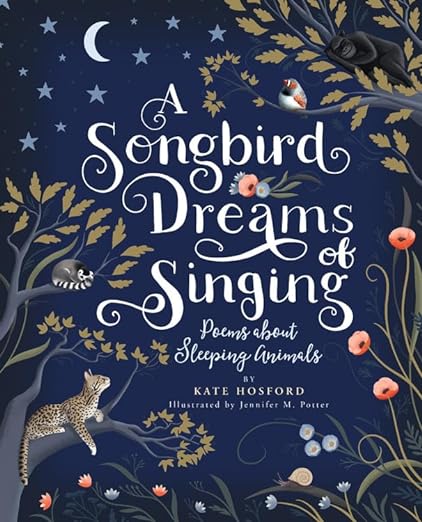
A Songbird Dreams of Singing – By Kate Hosford, Illustrated by Jennifer M Pottersongbird

I flicked open the book. The poem about the songbird was there:

Other birds may dream of worms 

Or flower beds or thunderstorms 

But every night this bird performs 

A concert in his mind.

How marvelous to imagine a songbird rehearsing and getting better at its craft subconsciously – every night.

The book goes on to talk about research made about sngbirds:

In the case of songbirds, scientists at the University of Chicago have done studies on zebra finches demonstrating that the males practice and refine their songs while dreaming, adding little flourishes to make their version of the song unique. Zebra finches are diurnal birds who rest in the afternoon and sleep for about ten hours a night. Like many other songbirds, when they awake in the morning, they sing with particular enthusiasm in what is known as the dawn chorus.

Children’s book illustrators are so wonderful at their craft. This book too has beautiful illustrations, color schemes, and an overall look and feel of a book that is all set to send us to our worlds of dreams too.

So, what should we dream about, and subconsciously try to get better at?

The Powerful Epiphanies

The Power of Spring

As epiphanies often go, it was unexpected, and oh so satisfying. This spring season has been particularly fantastic – there are bumblebees, butterflies, dandelions, ducklings – all tripping over themselves to give you epiphanies of life, miracles, hope and so on.

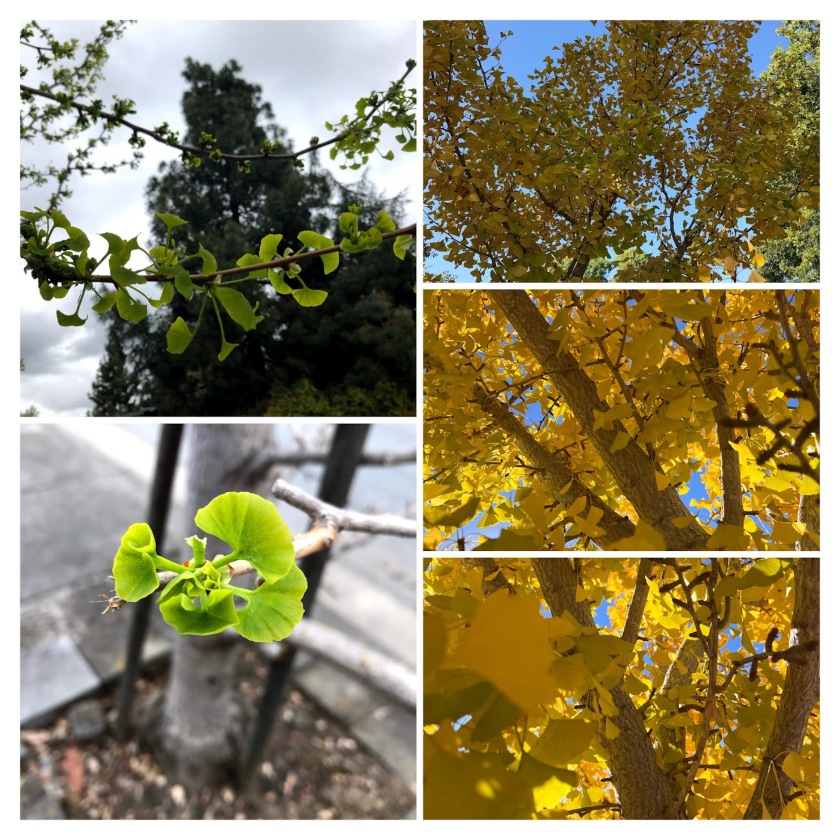
One such day, we sat watching lazy waves rippling through a large pine tree. The previous day had been a cold, and windy day, we had scuttled inside for warmth. The next day was warm, pleasant and entirely suited to lounging around watching wind waving through pines, firs, and gingkos. 

The house was filled with noises of spring – young children exclaiming at blueberries, standing on tiptoes and peering up at the oranges on the tree, running through the house in a mad scramble looking for juice packets and snacks while playing freeze tag or mock-cricket. 

When the next stampede grew closer, I wondered whether to move aside from the herd of stampeding rhinos, or sit my ground and continue gazing at the roses in bud, and the pine in the wind. I continued to sit, and luckily, the fellows stopped, and one-by-one they all flapped around, and flopped on the grasses. 

“What are you thinking about?”

The Ginkgo’s Wisdom

I told them, and they sat pondering for a moment, sipping their juice. I couldn’t resist the pull of a quiet moment, and an uncharacteristically pliant audience. “Did you know about the ginkgo trees?” I asked my young fellow admirers of wind and trees.

ginkgo-COLLAGE

Thrilled that they didn’t all know, I launched on the ginkgo train – telling them about how they were around from the days of the dinosaur, and how they all communicated to each other, and decided when to shed their leaves. The son said that one of the trees will slow down if it is going too fast in the color changing race, waiting for its fellow ginkgos to catch up.

“Like friends are supposed to be!” piped up another. 

I beamed appreciatively. “Yes – exactly like friends – all helping each other get there. Together.”

Read also: The night of the Gingko : By Oliver Sacks in the New Yorker magazine.

The day’s epiphany done, the playgrounds beckoned, and I let them all run off their sugar highs before expecting them to quieten down for the night. I wonder how the birds manage to quiet their brood when they’ve had a little too much nectar. That epiphany can’t wait for another day.

“A real artist is the one who has learned to recognize and to render the ‘radiance’ of all things as an epiphany or showing forth of the truth.” ~ Joseph Campbell

The Problem of Perspective

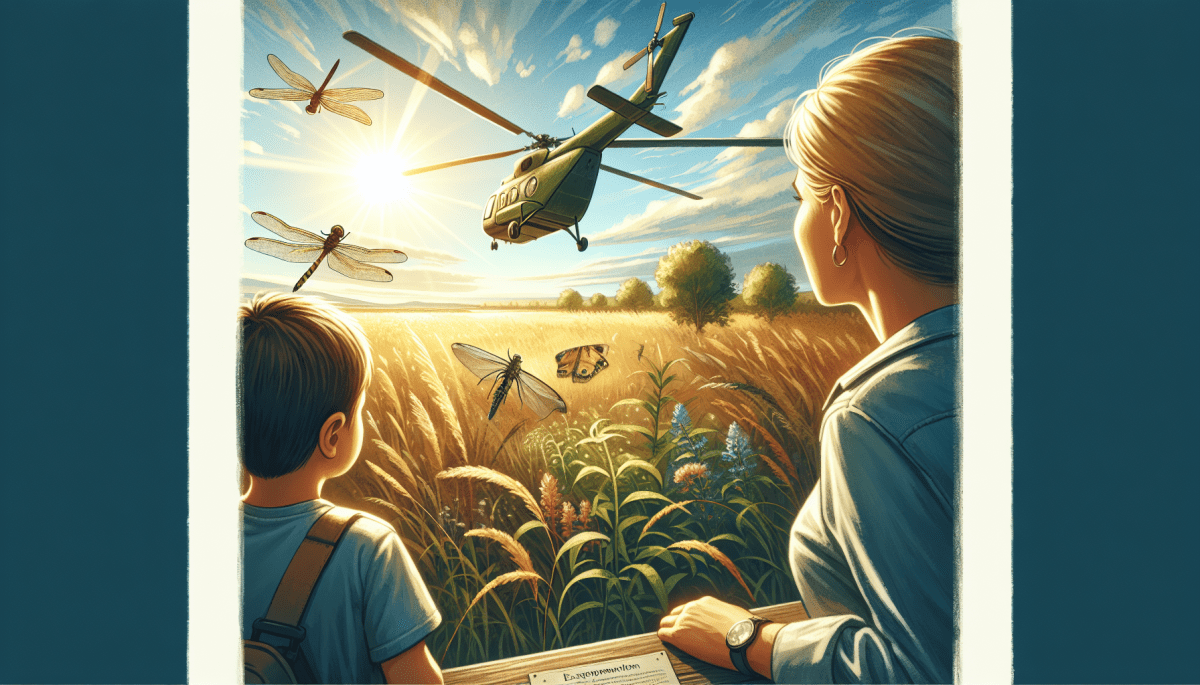
It was one of those clear, cloudless days. The temperature was just right, when we stepped out of the house. A lazy dragonfly and a helicopter flying overhead got young minds and old talking about the similarities between them, and of course biomimicry-based inspiration between them.

Even as ubiquitous as air travel has become, that sense of aerial adventure still kindles something special and adventurous in us. I remember telling my friends the other while reading When Women Were Dragons book by Kelly Barnhill that I hoped to become a dragon – if not for anything, but for the soaring power of flight, and the perspective such an act affords us.

Seeing the world around us in different perspectives is an endless fascination is it not? It is why the artist painstakingly sketches that wart on the nose, or that dimpled chin, or that shadow of the leaf with so much love and attention. Perspective.

Perspectives in Art

So what is it about our day-to-day lives that we can apply the same principle to? We have been trained or naturally possess the ability to view a problem from another person’s perspective, in order to see their perspective. It all helps of course -it is what makes us human.

That morning as we watched the dragonfly flit and the helicopter fly lazily overhead – probably on a routine patrol, I felt the urge to see things from both their perspectives. What would they see? A young boy and a lady out on a walk, certainly, but what else? The helicopter certainly would not have seen the dragonfly, but could the dragonfly have seen or sensed the helicopter? I think so.

Watching the skies is endless fascinating especially if you live near fairly busy airport zones. A few hours later, I sat on the porch with a toddler, and peered up again – the child had spotted an aircraft and wanted to know whether it was a plane. “It is a 747!” piped a voice – older and wiser than the toddler, and he looked with awe at the plane overhead.

With my neck craned at the sky above, I felt a rush of gratitude for being able to relish these everyday joys with young minds. How often we don’t notice the planes, helicopters, and dragonflies overhead? How often we miss the perspective from above when solving the problems of our lives? If only, we could take our minds for a whirl of perspective, how marvelous that would be?

What is April to you?

April is many things to the poetic brain, to the romantic at heart. It even somehow manages to give a tinge of optimism to the incorrigible pessimists amongst us.

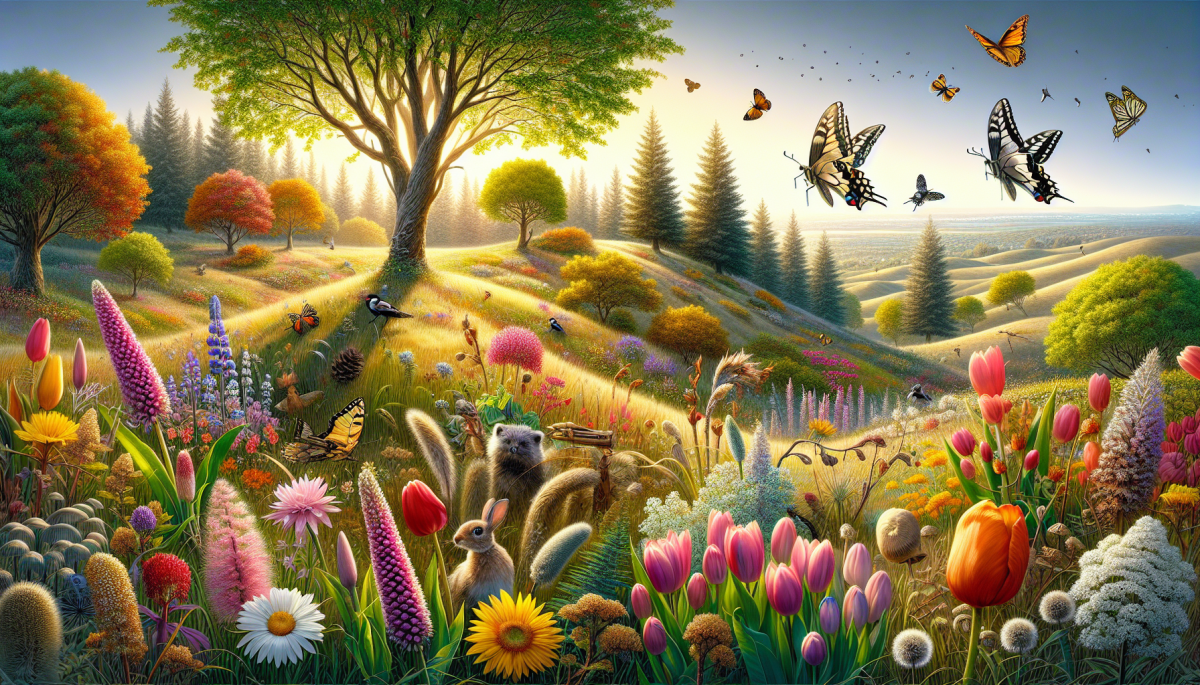
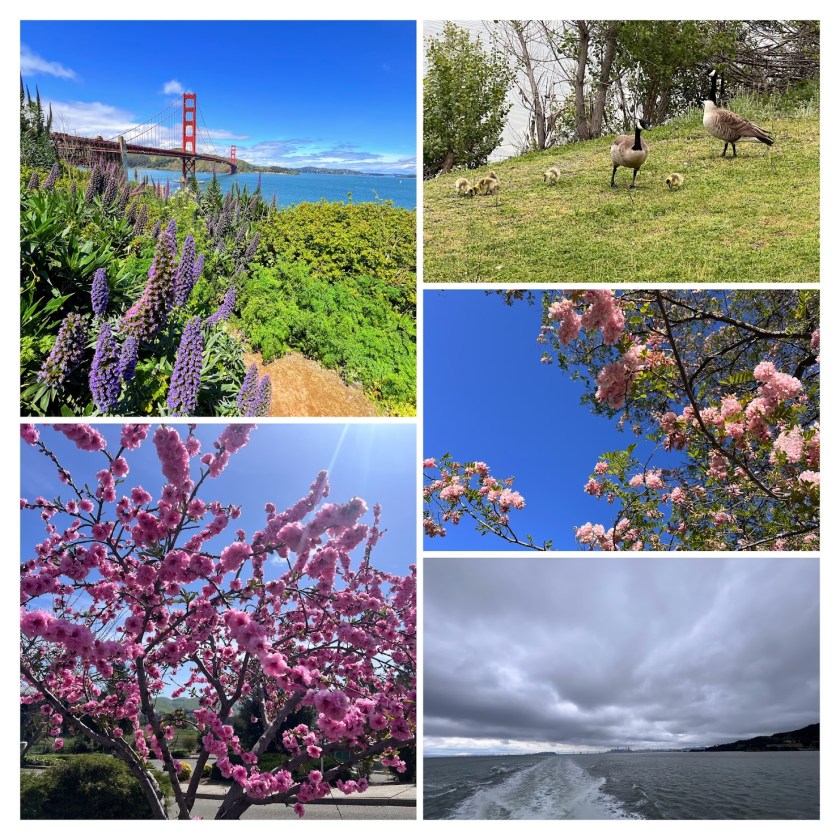
It is the month of gorgeous signs of spring in the bay area. Hillsides filled with green grasses and wildflowers in hues of yellows, pinks, purples & oranges everywhere. It is difficult to not be buoyed up in spirits when spring gets going like this around us. The butterflies flit, bees buzz, woodpeckers peck (drill?), tulips push up through the soil, flowers burst forth from buds, barren trees cloak themselves in new leaves. 

april_collage

Life, it seems, wants to be up and about.

April is not just when Spring is in its glory:

📜 It is the month of poetry – I picked up a bunch of poetry books from the library the other day, and have yet to get to them. It is the thought that counts.

🌎It is the month for our dear planet Earth – well Earth Day, but I really think we should dedicate a month in which we consume more conscientiously, make choices that help our only home and all that.

📚It is the month that has a day dedicated to Books – World Book Day. I found my pace of reading especially slow this month given everything, but I still clutched them inhaling the scent of my dearly beloveds that night – too tired to read, but too stubborn to put it away and fall asleep. Someone must’ve rescued them, for I saw them in a tottering pile on my bedside table in the morning, and smiled.

🧬April 25 is also World DNA day.

This month, I found myself wandering the planet, wondering where the time went, and watching in awe as the goslings hatched, and the bird parents showed us good parenting. I found myself being inspired by humans achieving remarkable things, finding time to do the things they love, pondering on what is inherent via DNA and what can be changed via nurture, being taken aback by what we are capable of doing to one and another, and so much more. 

I did not even feel my usual sense of helplessness as my to-do list remained stubbornly long. It is a list and has a right to exist, I told myself. Spring cleaning can wait, to-do lists can wait (maybe it is why we have World Workers Day on May 1st – to remind us to get back to that list) 

What is April to you?

The Cave of Quietude

In Quietness the Soul Expands

I sat watching the water flow, feeling the sweet caress of the gentle breeze at night, and had this strange urge to just sit there and enjoy time flowing by. It had been an exceptionally hot and dry day filled with activities and emotions. 

“These are the times in life — when nothing happens — but in quietness the soul expands.”

Kent

As we grow older, I find we need to fight for those moments in life. Find those quiet moments in which to let the soul expand. My mind wandered to what I had read about Keats and his Cave of Quietude as he calls the quiet and expansive moments of our lives. 

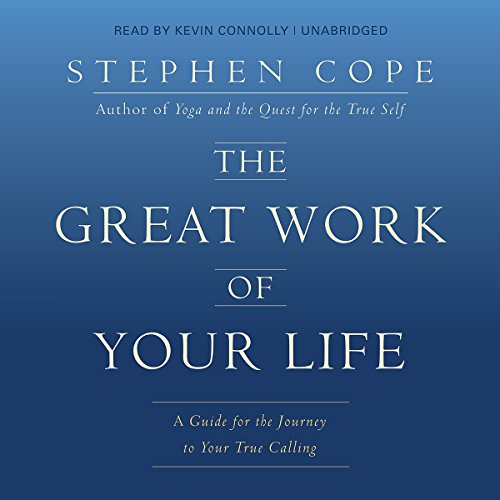
They say of books, that each book appears at a particular moment in your life. I was reading the book, The Great Work of our Lives – By Stephen Cope, recommended to me by a good friend. I shall be ever grateful – it was marvelous and precisely the sort of book I required to read.

Version 1.0.0
Version 1.0.0

The Great Work of Our Lives – Our Dharma

I see this is the sort of book that I shall be giving to people who find themselves at the cross-roads. I have always thought that concepts like Dharma have a certain weighty interpretation. But to have them handled in the skillful hands of a writer like Stephen Cope makes all the difference. In a lucid style, he talks about the important concepts of the Gita and compares and contrasts them against the life of well-known poets, naturalists, and writers. He also draws parallels of the teachings against real-life people (with their names changed of course) 

Excerpt:

Keats, in a brilliant intuitive move, now attempted to work out the problem of grasping through the protagonist of the poem he was writing.”

“How does Endymoin work it out? He enters what Keats called “The Cave of Quietude’, a retreat into the depths of consciousness. In quiet retreat and contemplation, Endymion realizes that success and failure are not the measure of life. He sees the way in which both light and shade, success and failure, and praise and blame, are all parts of life.”

When you wonder which pieces to highlight in the book, and think you shall have to re-read multiple sections because it resonates with you, it is a good book, wouldn’t you agree?

May we all find our Caves of Quietude and find moments of calm and peace in which nothing happens, and the soul expands.

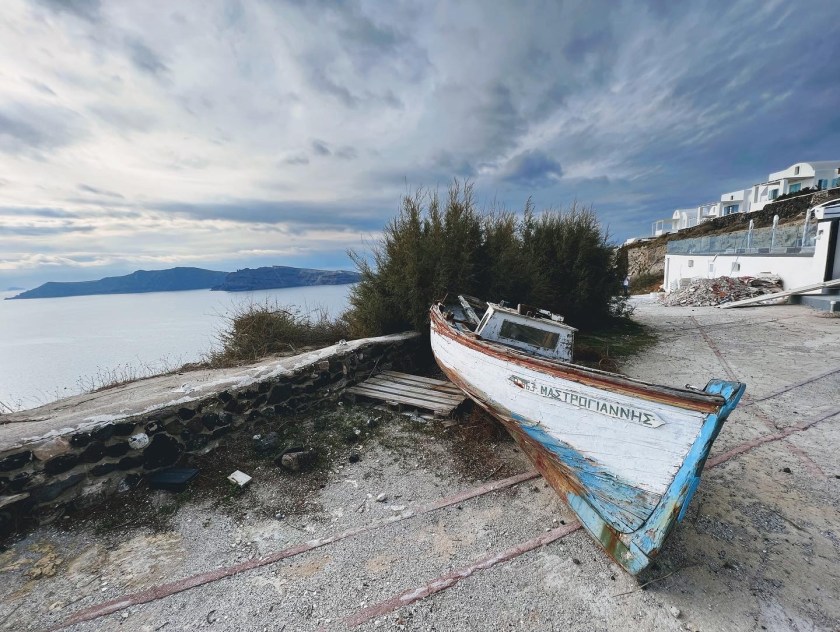
Wind💨, Rain 🌧️ & Boats ⛵️

In what was a beautiful wind-whipped whirl one morning, the on-a-spring-break son and I went on a walk. Power & Internet were down, which meant we could both twirl off on our adventures while these things were being restored. 

A few minutes in, we were confronted with a huge water pipe that gushed out in great spades. The county’s water department was already there looking into the problem, while we stood watching in awe as the water spooled off into the drain. Clean water. 

“Hmm…everything decided to go nuts huh?!” the son said, as we stopped to marvel at the swift waters.

“Do you think we’ll have time to head back and bring back papers to make boats?” he asked, after a few seconds of awed water watching. I saw the determined faces of the county workers’ faces gleam with triumph – they had fixed the problem no doubt, which meant our time was short. Luckily, it was also garbage day, and the windy day had scattered a couple of pamphlets in the wind as the garbage truck tipped the contents over. So, off we went chasing after these pamphlets to make into paper boats. 

If the maestros of productivity were to observe us that morning, there would be a lot of tutting, and note-taking on ways-to-improve, but we felt amazing. 

Our boats, Mitillandimus Tittilandumas, and Mixter Baxter Junior fared the best. The remaining capsized before starting. For those interested, our boat christening was inspired by Gerald Durrell’s boat, Bootle Bumtrinket, in the book, My Family and Other Animals.

boat

There does not seem to be a word to capture the sense of adventure, contentment and joy watching your paper boats take off on adventures, but we both highly recommend the experience.

What kind of life is it always to plan
and do, to promise and finish, to wish
for the near and the safe? Yes, by the
heavens, if I wanted a boat I would want
a boat I couldn’t steer.
                    ~   Mary Oliver, Book: Blue Horses

Just as the last of our boats disappeared with the rivulets, the wind picked up, and we tried keeping ourselves upright as we continued on. It was no use. Within minutes, the winds were accompanied by plump raindrops, and we scuttled back home. 

It had been a useful outing, and we came back refreshed and grateful that the rains started lashing down a few minutes after we reached. Back home, the power gods had restored electricity but not the internet. So, we settled ourselves down to a cup of tea and cocoa. We sipped in silence while the rain pattered all around us.

“Wonder what happened to our boats!” the son said finishing his hot cocoa, and we smiled together. They were not in safe harbor, and it was an exhilarating thought.

raindrops