November Novelty

A Version of this post appeared in The India Currents Magazine – the article focuses on communication.

The quality of the evening was ethereal. The cold November evenings had begun to set in. I had turned the thermostat up a couple of notches, the white light effused a warm glow against the fall colored curtains. Halloween was still fresh in everyone’s memory, Diwali had snuggled in, and spread its share of warmth and joy even amidst some moments of disquiet with raging fire and wind whipped storms.


I surveyed the house and felt a surge of warmth course through me. Dear friends and family were visiting, and I was glowing with pleasure at the companionship of the evening. The house had been through the cleaning wheel: which is to say that the closets were groaning and stuffed to their very brims. I warned guests to open any closet with care warning them that a dozen things could tumble out. All the children – residents and visitors, nodded with sincerity, but I found them an hour later playing hide-and-seek, and amazingly finding place to hide in the very closets that I thought sent me a clear memo to not put anything else in there. Oh well!

The conversation was ebbing and flowing with the fine food and beverages among the young and old alike. Jesty topics were making their way towards hefty ones, and laughter was being sprinkled with wrinkled looks of concentration as differing viewpoints were proffered, and evaluated. The beautiful feeling of minds changing slightly from their earlier stances mingled with the exasperation of trying to string complex thoughts into words – one word at a time, were at work, and I marveled at humanity once again.

“The art of conversation is the art of hearing as well as of being heard.”
― William Hazlitt, Selected Essays, 1778-1830

Can we get better? Absolutely. But I sometimes feel we lose sight of marvelous gift we have of empathy and of trying to understand one another. Moments in which we bestow upon one another the inestimable gift of attentive listening with a view to understanding. I was reminded of the saying, that I read somewhere a while ago.

Attention is the rarest and purest form of generosity – Simone Weil

When we talk of meaningful moments, it is moments like these that we wish to savor. November is unusually so – whether it is because it is my birthday month or the time for Thanksgiving, and therefore a time for gratitude, or something else, I cannot say, but I find it is a good time of year to look back on the past year, reflect on the grains that made up the texture of the preceding months, and those months layered upon years, like a tree adding a ring to its makeup.

Sappy perhaps? But so is life. 


It is the time of year when I select books with happy endings, the time of year I make it a point to snuggle in with my books and children,  buckle down and write more for November is Novel Writing Month.

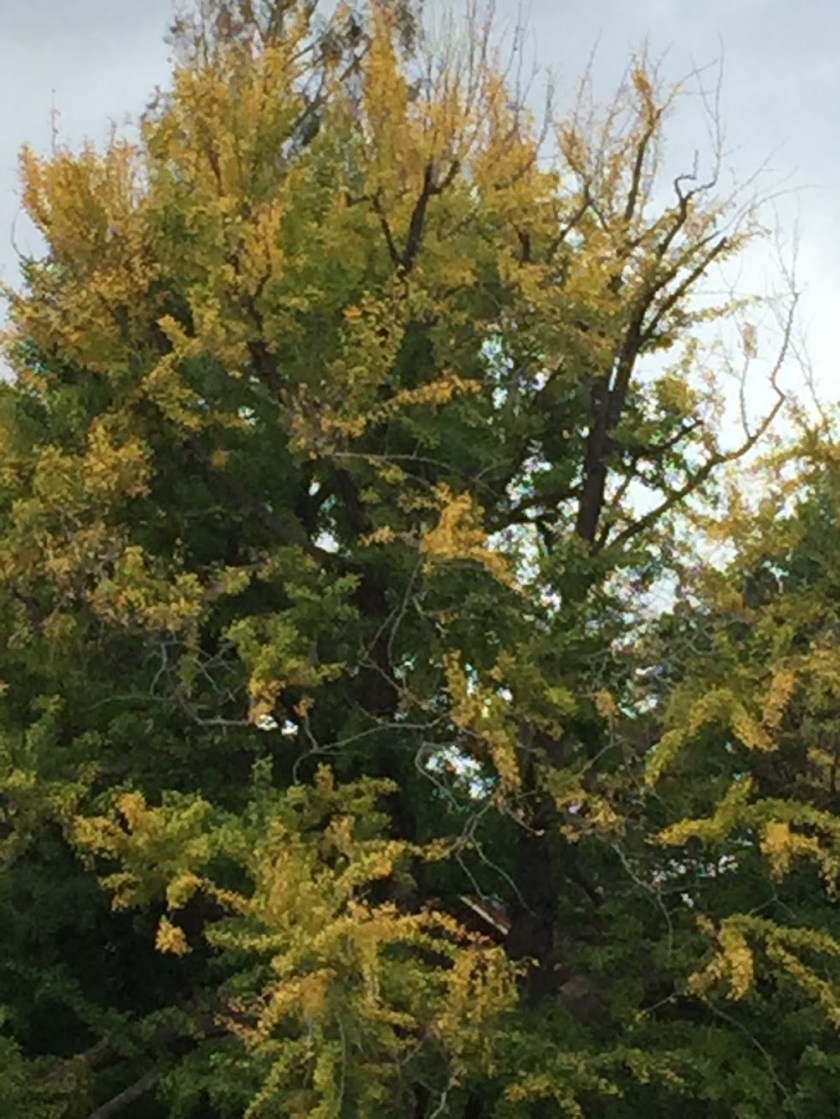
The air is nippier, the nights longer. It is also the time for crunch parties for in the area I live the trees are resplendent with the colors of Autumn. The gingko trees are turning gold (post coming up soon). There is no greater joy than seeing life scurry about in these changed surroundings. The promise of rain is in the air. Misty mornings make for a magical start. Even the waxing and waning of the moon brings with it a new joy for the nights longer and the evenings bring with it a different texture of joy. Kawaakari is sooner (Kawaakari – a beautiful Japanese word denoting the rays of the setting sun on a flowing river)

img_4660

It is a time to send thanks for all the small and big things in life. A time in short for us to enjoy Hygge. A wonderful word the Danish have, denoting the warmth emanating from inside even as the winters outside grow colder.

Here is to a wonderful season of the upcoming holidays, of nurturing light in a dark world.

Tick-Tock Tick-Tock

“October 29th, 1969 is the day the internet was born did you know that?” said the husband. I have seen pups don that look when out and about in sunny meadows with a new bone to boot.

“Google icon huh?!”

I suppose life has taught him to take in his leaping enthusiasm with our barely noticeable uh-huh with equanimity. “Hey! Let’s try again. Today is the birthday of the internet!”

“No….just fun fact. Oct 29th, 1969 – The first-ever computer-to-computer link is established on ARPANET, the precursor to the Internet. And then in 1974, the first protocol for communicating over the Internet was conceptualized. T-C-P – tada! Finally, in November 1977, the internet was functional as the ARPANET for the Defense.

“It wasn’t until the late 1980’s and 1990’s even that the internet was functional the way we know it!”, he said awe dripping from him. “I suppose in a way we were the perfect generation to see the wave take off.”

“So you guys are as old as the internet?! Oh my gosh – that is so old!” quipped the little fellow, mentally slotting us with the dinosaurs. “How did you guys live without the internet? ” , said he puzzled. He has taken to asking Google Home all sorts of things during the day:

“Okay Google – what is the atomic number of Boron?”
“Okay Google -what is the time right now?”
“Okay Google – tell me a Halloween joke.”

“Well – we lived quite well I suppose.” said I, throwing in a bit of philosophy about the simple life needing few things other than sustenance for the body and the mind. “We did not need the internet to entertain ourselves. We played outside, made forts out of mud, ran around, and had fun all the same. No battles on that game of yours – Clash Royale is it?!  We battled it out with sticks and stones.” I said, and the more I talked about our lives pre-internet, the more I realized that humanity had truly passed a technological milestone. It was like the power of electricity – it changed our lives forever, and though life is possible without electricity, it has become so much harder to sustain without it. Looking at the children born after the age of the internet, I realized that connectivity is much the same for these children.


tangled_web

“You want to know what I did with the Internet today?” asked the teenage daughter.

“I’ll show you!” she said in her effusive tones. There was then a rather jerky video of her popping into her mobile phone’s camera from various angles – one upside down and by the sounds of it rather clumsily, for we heard a dull thud followed by an “oww”.

“Not my best video – but how about this one? ” She then went on to show us another jumpy jerky video with some sort of a meme thrown in for good measure. I groaned.

“What is this?! Does anyone even see stuff like this? Tick tock is it?” I looked appallingly at her, and said, “Oh goodness child! You don’t tell me you actually posted this!”

I feel it is worth noting here that the App is called TikTok, not Tick-Tock as I thought up until a minute ago when I went looking for the wikipedia entry – sigh! I am as old as the Internet I suppose!

“For your information Amma, tons of people see this stuff. It is original see? This is the one that is going viral now. Already 30,000 likes and 100,000 views.”, she said, proud of herself.

My jaws dropped. “For this?!”

“Supportive. Mother. Supportive – remember?”

“But I’ve seen plenty of videos – even your own that are much better than this – even the one you showed us before where you banged yourself on the floor by the sound of that dull thud had a comical quality to it. ” I said, and she laughed hard, agreeing wholeheartedly.

“Fame doesn’t need merit Mother.”

“Fame is a fickle friend Harry!” said I in a brilliant imitation of Professor Lockhardt from Harry Potter and the Chamber of Secrets.

“Fame is as fame does!” said she, and we all laughed.

“Just goes to prove that all our inventions and resources take on a life of their own, and that is what will keep us busy as a race I suppose.” I said.

“All the brilliant protocols developed and conceptualized for dumb Tick-Tocks like this to go viral. What is the world coming to?” said the husband.

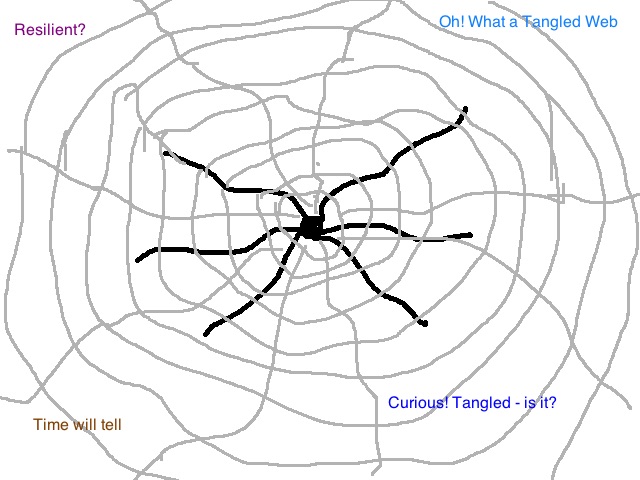
“What a tangled web we weave when we choose to connect?” I said paraphrasing not Shakespeare as it turns out, but William Scott in the poem Marmion, and looking around proudly for acknowledgement. Completely lost on the group of course. I sighed and continued – there are times when you explain your jokes and times you don’t. Not when something viral is competing for attention.

“Poor appa! Let’s throw him a bone and listen to him about the philosophy of the internet dears. ” said I, and we listened to him as he explained – his own fascination overtaking him, about how the internet developed and (d)evolved into what it is today.

Here is an interesting video with all the leading websites over time.

More videos here : Data is Beautiful

How we will continue to evolve is anybody’s guess, which leads me to a wonderful essay I read by Ursula Le Guin on the different types of fantasy. (coming up next)

The Magic of Story-Telling

“Stop being a Jellyfish!” said the husband.
“I knew you were going to say that – you are such an open book yourself!” said I.

We both giggled like children at our own pathetic joke. T’was the time for hulking men with or without mustaches and serious women to quack like ducks, twirl like fairies, flex those non-existent abs, and find that little teeny bit of whimsy that adulthood so expertly hides away beneath the layers. Halloween was here.


1dc1cf17-3133-4989-93a7-08bcd65b2be5

T’is the time people astound you with their imagination. Who doesn’t like having 3 spidermen knocking on your door all at once? Or to see the twin toddlers dressed as Nemo & Dory? The super-heroes and ninjas cowering behind their larger siblings in Vampire clothing, or the witches cackling hard?

There is something so uniquely beautiful about Halloween – the one festival where we can display our idiosyncrasies with grace, be accepted for whatever we are. You want to be a skeleton? That should be fine. Here is some candy for you. Really, buddy? You want to go out in the world in that costume? Well, if this appeals to you, then I suppose you deserve some candy anyway!

How many times in our lives do we get that kind of universal approval?

The husband and I were very proud of our last minute Halloween costumes: an open book & a jellyfish.

The little fairy lights I had taped into place made the jellyfish glow, and I received many compliments – I must say I glowed all evening with the praise, though I did credit the Internet with it.

When people asked me where I got the inspiration from, I replied truthfully that I have always wondered what it must be like to live under the sea, and they invariably laughed at my answer.

But it’s true. Every trip to the aquarium rekindles the magic of another world – right here with us. Reading Gerald Durrell’s essay about scuba diving is enthralling.

I have often wondered how we would have adapted if we had evolved under the ocean. Would we have figured out the laws and physics of the Universe to the extent we have, or would the medium have made little difference in understanding. The Octopus’s evolution to have more neurons than us is truly astounding.

Quanta Magazine: What shape is the universe? Closed or Flat?
It is why I like reading about the intelligence of dolphins and whales: the fact that they have epics the sounds bits of which are roughly the equivalent of our Iliad is amazing. Quote from Carl Sagan’s essay on Whale song:

If the songs of the humpback whale are enunciated as a tonal language, the total information content, the number of bits of information in such songs, is some 10 to the power of 6 bits, about the same as the information content of the Iliad or the Odyssey.

What must their epics say? For all our anthropological worldview, I wonder whether humans figure in them at all. That will be a fine thing to hear – a Dr Dolittle who finally translates a Whale Epic, only to find their world far richer than our own.

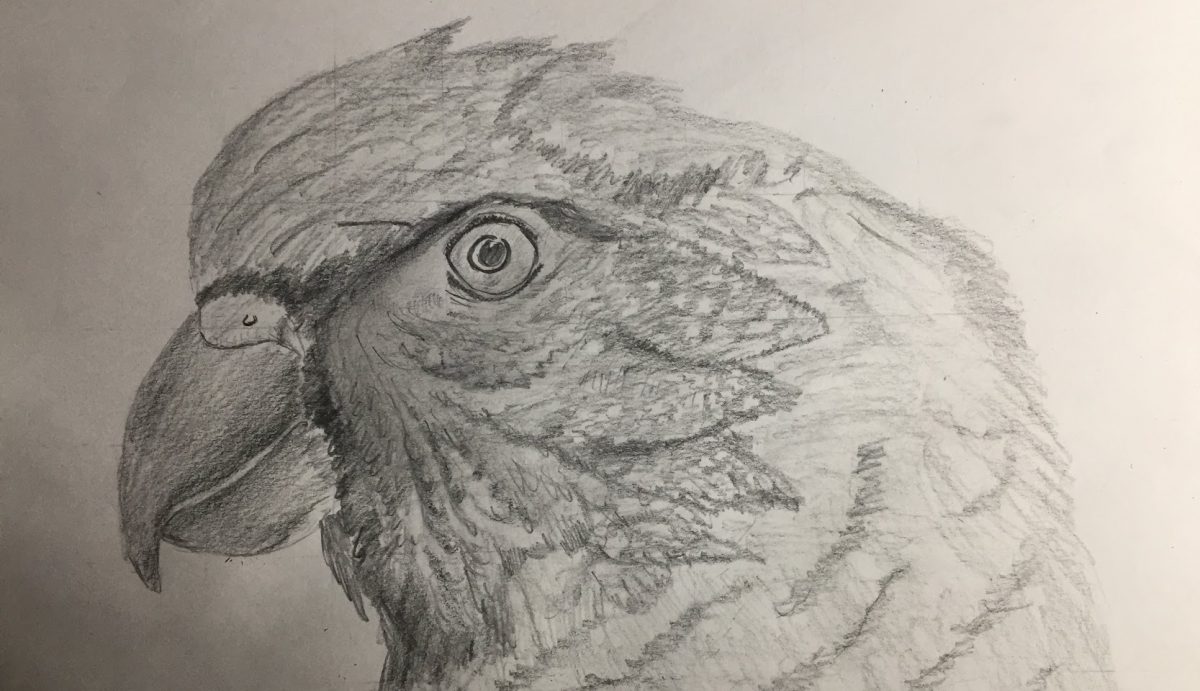
Keena_drawing
Art work by Daughter

I recently re-read the Voyages of Dr Dolittle by Hugh Lofting. I must say I thoroughly enjoyed visualizing myself sailing the seas with his motley group – either by skimming along like a porpoise, or better yet by getting a place inside the giant snail’s back as it sailed along smoothly churning the ocean as it went.

Swimming with Dolphins

We are all children of stories. We need epics and tales of fantasy. Our very own imaginations need an outlet, and Halloween gives us just that. I know my enthusiasm rubs off on the children as they go about planning their costumes. While I am out with a big smile on my face, a number of people give me an indulgent smile as if to say “Aren’t you a bit old for this?”

Mary Oliver gently reminds me to react with this nugget of wisdom:

“You must not ever stop being whimsical. And you must not, ever, give anyone else the responsibility for your life.” 

― Mary Oliver, Wild Geese

Privately, I am happy that our inner child never really leaves us.

Authors:

The Great Quivering of Autumn

“I just witnessed the Great Quivering of 🍂🍁🍃 Autumn!” I said as I stepped into the house flushed with the exercise and thrilled with the beauty of a blustery day. “Luckily, I checked the weather before heading out.” I said taking off my light jacket.

“What’s she saying?” said the daughter, raising her sleepy head from the couch, and pulling her teeth out of a bagel.

“Its windy outside!” said her little brother, already practicing that teenage eye roll, and the art of turning poetry into the prosaic.

I rolled him up and said, “You too buddy?! Come here – you would have loved it. you know that? I saw so many hawks – I have never seen so many of them soar up together in great big circles like this. All of nature quivered. Trees shook, branches swayed, waves lapped at the shores of the lake, and leaves, oh my goodness – so many leaves went quaking to the floor. I stood with my arms apart like this and just stood there!”

“In the middle of the road?! Appa, I told you not to let her out alone!” moaned the teenager, and we all laughed.

scrunch_party

No amount of pictures and videos will do the least bit of good when you catch glimpses of the rays filtering through the quivering leaves, or feel the light caress of falling leaves against your skin or catch the beautiful leaves of all colors against the blue skies. How does one capture the beauty of seeing a dozen hawks soar overhead, or the awe of seeing the pelicans do their little ballet dance of fishing, or the susurration of the leaves murmuring in the wind. There is a word for this: Psithurism.

As I gathered my little brood around me for a hot cup of tea after that invigorating walk, I shushed them to peek outside to see what I meant. The leaves were fluttering down in our garden, but there was another creature up and about at work regardless of the winds. 

“Bulby!” said the son excited.

“You named the squirrel? He can give you rabies you know that?”

“He can, but he won’t, and certainly not for naming him! You talk as though he is yearning for our company. I assure you, he isn’t. Just watch what he does. Bulby never fails to entertain.” I said, and the son nodded fervently. 

After sometime, we all burst out laughing at the squirrel’s antics. We have seen him hide great nuts in the soil every now and then, he nibbles and gnaws at the fruit on our trees, I have seen him scamper on seeing us sometimes, other times he watches us as though he doesn’t mind allowing us to enjoy a spot of nature with him. Today, he dug up my recently planted flower shoots, and dug something out, looked at us and furtively patched the garden up as though nothing had happened, and scurried. He had something on his mind, maybe a gut feeling of what was to come.

The morning out amidst nature, and finishing up with Bulby’s antics made me think of one of Mary Oliver’s poem:

From the Book of Time – By Mary Oliver

I rose this morning early as usual, and went to my desk.
But its spring,

and the thrush is in the the woods,
somewhere in the twirled branches, and he is singing.

And so, now, I am standing by the open door.
And now I am stepping down onto the grass,

I am touching a few leaves.
I am noticing the way the yellow butterflies
move together, in a twinkling cloud, over the field.

And I am thinking: maybe just looking and listening
is the real work.

Maybe the world, without us,
is the real poem.

The wind whipped and whooshed around all day. By evening, the winds had gathered speed alarmingly, trees that had swayed earlier in the day were lying broken, roads closed, emergency responders were keeping the populace further up North informed about the situation, power was down. It astounds me every time how forceful nature can be. But it also made me stop and think – the hawks had been more fitful than usual that morning, the squirrel was bustling more too. The animals knew we were in for a rough time, and responded, while we waited by our gadgets to give us the news.

img_4362

It is marvelous how Mary Oliver puts her finger on the pulse of the Earth :
Maybe just looking and listening is the real work,
Maybe the world without us is the real poem.

Biophilia

Oh! What a surprise amma?! The book, Nature’s Fix appeals to you.” said the daughter peals of laughter barely concealed in the sentence.

“I know right?! I always keep an open mind to see how else I can improve, my dear!” I said not to be undone in the sarcasm department. 

“You are cooped up in a dull office building in the bustling city – you need a change. I get it! But I am quite happy and young enough to not ‘stretch my limbs’ in nature walks! Nature kook is what you are! I suppose you will now use bits of the books to convince us to come on walks with you. I’ve got homework to do, bye! ” said she mock-straining at my tug to come on a walk with me. But she came. 

As we walked around our neighborhood, watching the leaves slowly turn colors, birds making their way home against the brilliant sunset, children playing and biking, I felt calm. How much of that was due to the fact that I could take the time for a walk at the end of the day, and how much of it was Nature’s work, I am unable to say, but I felt a wonderful shiver as I watched the evening breeze rustle through the large trees in the neighborhood. Slowly, as I watch the wave of leaves tremble in the wind, some of them shaking loose, and others just swaying to the orchestra of the evening, there is a definite sense of belonging to this wonderful planet.


As I move around the office or often when I am walking to and from work in the city, I feel a concrete shudder. We are so proud of concrete as a structural material, we pour it everywhere. I feel a lonely stab when I see our gleaming imperfections reflected back to us in the gleaming glass panes of the concrete structures. Even the trees on our city sidewalks seem to be lonely, surrounded by concrete footpaths, and millions of people jostling by them everyday. 

Screen Shot 2019-10-25 at 2.00.13 PM.png

The book, The Nature Fix by Florence Williams, details studies taken up in Japan and South Korea around the effects of nature. It studies blood pressure, release of  how long the effects of nature remain with us – does it only last as long as we are with nature, or does a weekly hike contribute to our wellness over a period of time? More interesting questions such as these are handled in the book. 

I was lured into the book reading about the concept of Shinrin Yoku & Salim Yok(Forest bathing in Japanese & Korean respectively) The Japanese are also probably the only people in the world who have a word for commute hell – Tsukin Jigoku.

nature_fix

Excerpt:

Study in the Nippon Medical School:

Qing Li is interested in nature’s effect on mood states and stress as manifested in the human immune system, Specifically, he studies natural killer immune cells called NK, which protect us from disease agents and can, like cortisol and hemoglobin, be reliably measured in a laboratory. 

Only in 2016 did we officially became an urban species – for the first time, population in cities outnumbered population in rural areas. As we cluster around in larger numbers, it is even more important to study the effects of nature on ourselves. After all, our biophilia has evolved over millennia and this abrupt change from it is bound to bring changes in the ways we can adapt.

Definition of biophilia. : a hypothetical human tendency to interact or be closely associated with other forms of life in nature.

Is Nature the next wave after Meditation, Exercise and Organic Foods? 

There have been days when I have wondered how the children found out whether I indulged in a spot of meditation. 🧘‍♀️ 🧘‍♀️ I might have, but did they find out because I had taken the time to meditate and therefore already in a better mood, or did the meditation itself help with specific stressors? Nature studies have similar questions, though I am truly grateful for its personal influence on our well-being. Whether it is because of my beliefs or something else, Nature soothes.

Read also: Music & Gardens by Oliver Sacks

img_4005

The joy and importance of walking – Solvitur Ambulando – It is Solved by Walking


Moonbeams in the Morning

The morning alarm trinkled: Dawn’s misty summons. I got up, wondering why the nights passed so quickly, hoping for a little more precious sleep in the mornings. I stepped out of my bed and gingerly peeked out the window. Dawn was doing the same thing – trying to sleep in a little more, while the moon shone high above the tree tops, bathing the surrounding clouds in a magical shroud of moonbeams. The dew drops on the trees glistened in the same benign light. I stood there shivering a little for the night temperatures had dipped, and there had been a mild drizzle.

IMG_3869

The moon is there every night, the sun rises every morning, and yet the moments of quietly standing there before the hustle and bustle of our days started made me appreciate everything a little more sharply. When the son woke up, I held a finger to my lips not ready to start talking just yet, and made him peek out at the fine moon too. His eyes widened a little at the beauty of the morning, dew drops, trees, clouds and the moon. He chattered in his bright tones that sent the waves of sleep flying from him, “Did you know? We may not be able to enjoy the view of the moon for very much longer?”

“Why?” I asked in spite of myself.

“Well… we are already working on building colonies on the moon. Soon, the moon will be full of houses just like ours, and then who knows how the moon will look from here?”

“Who told you that?”

“No one!”

“Okay….where did you read that?” So much for quiet mornings bathed in contemplation.

“In the Time for Kids magazine. It seems we are already planning on moving there.” he said a tinge worried that I hadn’t received his original memo in my sleep addled state.

“Well…for all the things we have built on Earth, from outer space, it still looks beautiful you know? Maybe it will be the same for the moon. Although, I am not sure I am happy with the idea of looking in on someone’s home like that. Wouldn’t it be creepy?!”

He laughed.

I was reminded of the essay by Oliver Sacks in the book, Everything in its Place: Who Else Is Out There?

everything_place

In it, he starts with his thoughts on the book, First Man on the Moon by H.G.Wells.
Anybody Out There?- Oliver Sacks essay
One of the first books I read as a boy was H.G.Wells First Man on the Moon. The two men, Cavon & Bedford lie in an apparently barren and lifeless crater just before the lunar dawn. Then as the sun rises, they realize there is an atmosphere – they spot small pools and eddies of water, and then little round objects scattered on the ground. One of these , as it is warmed by the sun, bursts open and reveals a sliver of green.’A seed! “says Cavor, and then, very softly, says ‘Life!”.They light a piece of paper and throw it into the surface of the moon. It glows and sends up a thread of smoke indicating that there is oxygen.
This was how Wells conceived the prerequisites of life: water, sunlight (a source of energy), and oxygen. “A Lunar Morning” was my first introduction to astrobiology.

While it is interesting for us to dream of conquering alien worlds and expanding our footprint with habitable planets, such as K2-18b circling a red star called M Dwarf; it is also highly interesting to see that even on Earth that is our original home, we require a very specific set of circumstances for our life to thrive. We need our oxygen levels to be exactly right, our carbon dioxide levels to not rise too much, we need our microbiomes to be in a particular state of harmony with the larger ecosystem.

Read: Good Food Mood

Take for instance, this excerpt from cosmonaut Alexei Leonov – the first man to walk in space for 12 minutes. Excerpt :
“I decided to drop the pressure inside the suit … knowing all the while that I would reach the threshold of nitrogen boiling in my blood, but I had no choice” Leonov said

I enjoyed Oliver Sacks’ footnote, for in one sentence, it reconciled both the resilience and delicate nature of our entire species.

“If Wells envisaged the beginning of life in the The First Man on the Moon, he envisaged its ending in The War of the Worlds. where the Martians, confronting increasing desiccation an loss of atmosphere on their own planet, make a desperate bid to take over the Earth (only to perish from infection by terrestrial bacteria). Wells, who had trained as a biologist, was very aware of the both the toughness and the vulnerability of life.”

How many species have left behind their fleeting impressions on the cosmic playground? Our own are laughably recent. Will the Quod-liop-tukutuk-sfaunusaurus call us by the same name when they dig up our remnants millennia from now?

Books:
The First Man on the Moon : H.G.Wells
War of the Worlds : H.G.Wells
Astronaut Alexei Leonov: First Man to Space Walk
Everything in its Place : Oliver Sacks

Moments of Love & Power

Half a decade has passed in a heartbeat, yet I can hear the clear voice of the then elementary school going daughter ringing out in the aisles of the toy store : “Oh! That isn’t sexist at all!”

I laughed, the proud, indulgent laugh of a strong girl’s mother, even as I hushed her.

We had gone looking for a bow and arrow as a gift for her then toddler brother. His fascination for the super-hero phase was just starting and she wanted to get him his own Quiver of Arrows. After looking hither and thither, the heart sinking just a little bit at the amount of plastic and mass produced toys, we bobbed up to the lady in the front desk to ask where we can find bows and arrows for young children.

“In the first row of the boys’ section. “ she said, and I thanked her.
“Oh! That isn’t sexist at all!” said the daughter to me in her clear, ringing voice, as we left the puzzled clerk who had heard the daughter’s remarks. I laughed, hoping that this clear sense would always aid her as she navigated life.

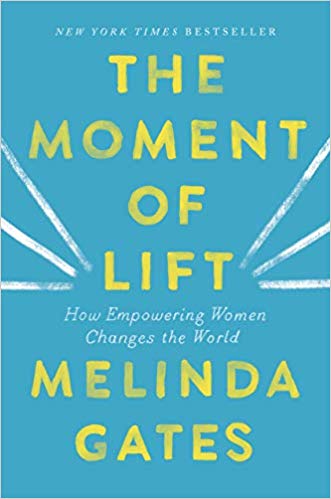
I was reminded of that scene as I held the Forest of Enchantments in my hand. I hoped it would assuage a little of the disappointment I have had with Sita’s characterization in the epic. Every time somebody sang the virtues of Rama the Just, and Rama the Virtuous and Rama the Obedient, I was sure I was not the only one in the room whose thoughts were clouded by his treatment of Sita.

forest_of_enchantments

There was no justice there. The virtuous man would have overcome his doubts, believed and trusted the one he loved, and helped right the wrong of perception. He could have set the tone for innocent-until-proven-guilty with ease.

The obedient man could easily have made a case for the need for civic disobedience and charted the course of millions by his actions, but the epic fell short. Always.

He was a human incarnate after all – so his flaws were there, was all I was given by way of explanation along with being hushed for asking inconvenient questions.

While the book bore the hallmark of Chitra Banerjee’s poetic twists and turns, coupled with the magical realism, there were a few areas in which I wished she had done better. The epic of Ramayana is a well-known one and while she cannot be expected to go over all the nuances and side-stories, there are places where, had she spent more time on certain aspects would have made it a more enjoyable and nuanced read.

Like the relationship between Lakshmana and Sita for instance. 14 years in a small hiking and camping group of 3 is a long time, and one in which I am sure a person of Sita’s calibre would definitely have formed a relationship of mutual respect with her brother-in-law, even if he had left her sister back in the palaces to protect his mothers. That would have meant it was harder for Rama to do the things he did to Sita for his own brother would have chastised him for it, and that in turn would have humanized Rama’s flaws to a greater extent. As such there is a little of the anguish but how much of that is Sita’s hope?

The book, however, was still an enjoyable read with the author’s many meditations on the different aspects of love. The kind of love that makes you do unimaginable things, the forces of love when thrown together with duty, loyalty and ambition, the feelings that love can engender, the kinds of things love can make one do. The kinds of clarity love brings in complicated situations; and its paradox more apparent in our lives than we realize: the kinds of complications it can bring to otherwise clear situations.

I could not help thinking of Jane Austen’s words on Love – “There are as many forms of love as there are moments in time.” It was true – the intensity, kinds and forms of love were always unique, and ever evolving.

Do we ever meditate on love the way we do on our breaths?

In short, I expected the book to be the one the now teenaged daughter goes to, and understands clearly the Sita who would have been happy to hear her ‘sexist’ comment in the aisles. The author tried to bring it out, but I am not so sure. The epics don’t always give you a lot to play with when it comes to sexism.

Why must a loving heart not make a power move?

Also read: Mary Beard on Women & Power

https://www.npr.org/…/what-history-and-fiction-teach-us-abo…

https://www.theguardian.com/…/women-and-power-a-manifesto-b…

Running like Elephants

“Guys! Let’s hurry up a little. I like how we are dawdling, but the school bell waits for no ships to sail across the seas! ” I said. There had been a mild spattering of rain across the dry summer season. A few snails had popped out to enjoy the moist, and the son and his friends were looking at them as they chatted and made their way to school. Rain drops on the late summer roses and oleander flowers made the scene a rather endearing one.

img_3991-effects

The response from the children was predictable – they ran, and I ran shouting like a charioteer pulling the reins on the excited steeds, “Slow down! No running here – oncoming traffic!”
“But you asked us to hurry up!”
“Yes – run like Elephants!” I said.

I had told the children earlier about the Elephant’s gait, and they exchanged glances and started laughing. The snail they were studying looked startled and showed a leap of speed as it made its way back to the comfort of the garden bed.

Is this walking? *giggle*
Is this running? *giggle giggle*
Is this fast walking? * giggle giggle giputly duggle*
Is this slow running? *giggle puddle chuckle duffle*

I smiled slowly. “Pretend you are Elephants teaching Snails to run.”

elephant_snail

I suppose that was a wrong metaphor altogether. By the time we arrived in the school, not only were we out of breath with the laughing, but we were also fashionably disconcerted. The legs seem to not remember how to walk straight or run properly, and were caught in this limbo of the Elephant’s Gait.

Later that week, I was sitting in the garden and watching the world go about its true business of living. I watched a hummingbird’s fast-paced wing movements up in the trees. A few butterflies were flitting hither and tither. A skein of geese were flying overhead in that beautiful v-shaped formation. Closer to the ground, a few snails were marking their slow way across the courtyard.

This combination of sitting in a garden, and watching life flit by had me take a hundred pictures with my phone. Pictures that may or may not be seen and appreciated again. I could capture the slow motion video of the humming bird whizzing up above or the butterflies in my midst. I could use time-lapse videos to capture the slow moving snails and a dozen pictures to capture the beautiful movement of the caterpillars.

As I sat there musing on the ease with which we capture movement these days, I could not help comparing and contrasting humanity’s struggle to capture that. I remember yawning in the Art galleries after seeing the n-th painting of a horse or the x-th statue of a horse drawn chariot.

But as I sat there that afternoon, I wondered whether I had appreciated them enough. After all, at the time of their making, studying movement was not all easy. One had to have an almost eidetic memory to understand the muscles and the way they moved.

Leonardo Da Vinci’s work is appreciated because of the lengths he went to study the anatomy of the creatures in his works. 300 years ago, movement must have been particularly hard to study.

In Oliver Sacks’ essay on Elephant Gaits in the book, Everything in its Place, he writes about the problem of studying movement.

everything_place

More than a century ago, Etienne-Jules Marey had made a pioneering investigation of elephant gaits. Of course, he did not use video analysis then, but still photography. I quote: “Marey’s lifelong fascination with movement started with the internal movements and processes of the body. He had been a pioneer here, inventing pulse meters, blood pressure graphings and heart tracings – ingenious precursors to the mechanical instruments used in Medicine even today.

Later, he moved onto the animal movements and analysis.
For animal analysis he used pressure gauges, rubber tubes, and graphic recordings to measure the movements and positions of limbs. From these recordings, he rotated in a zoetrope, reconstructing in slow motion the movements of the horse.

Muybridge, a contemporary of Marey, however, a peripatetic artist as Sacks describes him used 24 cameras along a track where the shutter would be tripped by the horses themselves as they galloped past to capture the movements of the horse as they raced.

When a similar technique was used to analyze the fast movement of elephants, it was found that they neither walked nor ran, but rather a combination known as fast walking.

I remember a long ago conversation with a friend who was training for a marathon on the more recent study of leopards running, and how he had changed his running technique to take a few tips from the world’s fastest runner.

As we watch the world around us, I wish different creatures could teach us some of their marvelous techniques. The dragonfly and the humming bird for flight; mallards and coots for water locomotion. Doesn’t Biomimicry as a field of study sound more fascinating than ever before? I positively yearn to be Dr John Dolittle at times!

Books/Articles to be read/referenced in this post:

Leonardo Da Vinci’s Horse

The husband was wearing a red t-shirt that had Leonardo Da Vinci’s drawing on it, that said, Simplicity is the ultimate Sophistication.

He was particularly fond of the t-shirt, especially as he was reading the biography of the great man.

img_4057

“Be like Leonardo Da Vinci guys. Be simple and eh… persistent.”, I said.

“Oh! I don’t know about that! Did you know about Leonardo Da Vinci’s horse? “, said the husband. He was reading the biography of Leonardo Da Vinci by Walter Isaacson, which is to say we almost read it. The book is a lengthy one, and as he made his way through it, he shared tidbits of things that fascinated him.

Time has probably been kind to the memory of Leonardo Da Vinci. Most of us only seem to be remember his genius in art, his legendary stature as a polymath, he said. The husband chuckled as he read and told us about Walter Isaacson’s portrayal of him – a tempestuous man who often did not complete the commissions given to him. Leonardo Da Vinci’s horse is an excellent example.

He then went on to relate the tale to much mirth and chuckling from the children. Apparently, what was commissioned to him was to build an epic statue of the Duke’s son riding a horse. He then went off to live on a farm, to study horses. The farm life yielded a treatise – an unpublished book, on different kinds of horses, equine surgeries to understand horse anatomy etc. He had originally planned to create a statue of a rearing horse.

This is an image that is much popular in the art forms at Italy, I remembered. The raw power of a horse rearing up on its hind legs is both attractive and magnetic. I am not sure how riders feel when they are about to be bucked off, but it makes for good Art. The prince would have to look brave while clinging onto dear life.

Study_for_the_Sforza_Monument
Abandoned Design. Image Courtesy: Public Domain, https://commons.wikimedia.org/w/index.php?curid=59580

Anyway, after a few years studying horses, their physiology, their movements etc, he started developing models for his statue. Clay, lead and bronze made its way from the armies to Da Vinci for his great statue. Then, he figured that the greatest statue of the magnitude he had in mind would not be supported by the hind legs structurally, and he went on to make it a standing horse. The prince riding the horse resplendently was forgotten!

These things took time, but it did not seem to perturb him. His sponsors may have been antsy, the bronze supplies may have been running low, the armies getting fidgety with not having enough new armor, but that was their problem, seemed to be his opinion.

In time, a large clay model of a beautiful horse may its way for the Duke’s inspection. The model won Da Vinci much critical acclaim. It truly was beautiful. If the Duke was slightly upset about not seeing his son on the horse, he did not show it. The royalty raise their children well.

Soon, war broke out, and no longer could his rich patron commission bronze and lead to be diverted to the most magnificent horse statue of all time. The clay model was put up in Milan, and was used as target practice by the young lads joining the army.

“But isn’t there a big horse in Milan or Florence? Da Vinci’s horse? I remember seeing a picture somewhere.” said I.

“Yes, but that was not done by him. Years later, somebody else finished it. “, said the husband.

By now, we were all laughing.

“What is remarkable is his insatiable curiosity and creativity however, and though he went off down rabbit holes, it was from a deep motivation to understand the world around him “, said the husband.

Read also : Gates Notes on Leonardo Da Vinci

“These days it is so easy to take a picture of a horse, model it, and run a simulation for structural evaluations. We sometimes forget how hard studying movement must have been!” I said, remembering the essay by Oliver Sacks on the Elephant’s Gait, in the book, Everything in its Place.

everything_place

He writes about how more than a century ago, Etienne-Jules Marey & Eadward Muybridge pioneered the study of animals running using 24 cameras along a track where the shutter would be tripped by the horses themselves as they galloped past to capture the movements of the horse as they raced.

Persistence comes in various forms, we all agreed. Muybridge and Marey were examples in a long list of people for whom a problem was intriguing enough to delve deeper and deeper into things that may or may not yield results.

But we never know the breakthroughs possible, and how things will change. That is why I am vary of futurists. A few centuries ago, to study the muscles straining for a horse running, one had to have an almost eidetic memory, along with a decent understanding of anatomy.

Today, photography has come so far as to allow us to snap a thousand pictures, take slow motion videos, and analyze everything from a butterfly flutter to the swift flying of hummingbirds. People are still extraordinarily creative with photography, and as long as we retain curiosity and creativity, I suppose we shall thrive.


The Art of Breathing

A colleague caught me mid breath one day. It was one of those days that butterflies would have looked on me with mixed emotions.

On the one hand with pride: When did this caterpillar learn to flit like this?

On the other hand with amused tolerance: The half-wit seems to be forgetting the sweet joy of collecting nectar amidst pretty bright flowers, with all the fast paced flitting. Forfeiting the sweet thing about flitting – tut tut!  Flutter tutter utter nutter! (I am not high up on the poems caterpillars learn to sing about when still creepy crawlies; and the butterfly metaphor only goes so far!)

Anyway, it was one of the many days in which I flitted about the old work spot tasking, multi-tasking, sub-tasking, reminding others about their tasking, setting reminders for my own tasks and so on. Thoroughly immersed in my second self that Mary Oliver so succinctly calls the Social Self…yes, it was one of those days.

Mary Oliver’s, Upstream, is a book of many marvelous essays.  The essay, Of Power and Time, talks about the three selves in many of us:

•The Child Self

•The Social Self &

•The Eternal Self.


upstream

Though in the essay, Mary Oliver, refers to the Eternal Self as the artistic self, I like to interpret it as the Creative self.

• The Child Self is in us always, it never really leaves us.

• The second self is the social self. This is the do-er, the list maker, the planner, the executer.

• Then, there is the third self: the creative self, the dreamer, the wanderer.

T’was during one of these trying days that I remembered the deep breath technique my Yoga teachers had tried to teach me about. Take deep breaths, and concentrate on it filling your stomach, feel it coming in and out of your nostrils and so on. So, I started my deep breaths as I was walking from one meeting to another. Deep breath, exhale, deep breath, exhale and so on. I had thought no one watched, but one colleague caught me, and grinned. “That should be your GIF you know?” he said.

I nodded sheepishly, and went back to my brand of breath-less flitting within minutes.

Later that week-end I ran into this beautiful children’s book in the library. A book that was just waiting to be written. A beautiful capture of all the different types of breath, Alphabreaths 

Written by : Christopher Willard (a clinical psychologist) & Rechtschaffen MA, Daniel (a counselor)

Illustrated by:  Clifton-Brown


The book is a lovely read urging us to Breathe like a Dolphin taking a dive, or our favorite one, The Ninja Breath – silently and slowly. The illustrations too make for a marvelously relaxing read. Please check out their Youtube clip : here


Mindful breathing and Yoga are excellent concepts to teach the children, and I am always in awe of those who can take complex concepts and make them palatable for the consumption of young and old alike.

If you happen to come home and find the son and I swimming like dolphins or getting ready for a Star Trek mission on the floor while Yoga-ing along with the Cosmic Kids Yoga series by Jaime Amor , do not be alarmed. Her yoga videos are appealing and fun. If, along the way, we do something to calm ourselves down – then great, else, we have had a great time.

There are so many aspects to the Philosophy of Being (I am amused it has such a strictly medical sounding name: Ontology)

Ontology is the branch of metaphysics dealing with the nature of being, and reading the Wikipedia page itself boggles my simple mind (A post on the Study of Philosophy is sitting up on its hind legs and begging to be written). Maybe, what is required is a Ninja Training on Ontology. Excerpt from the wiki page:

Such an understanding of ontological categories, however, is merely taxonomic, classificatory. Aristotle’s categories are the ways in which a being may be addressed simply as a being, such as:[9]

  • what it is (its ‘whatness’, quiddity, haecceity or essence)
  • how it is (its ‘howness’ or qualitativeness)
  • how much it is (quantitativeness)
  • where it is (its relatedness to other beings)

*** Taking a Y for Yawning Breath before a Z for zzzz breath about now ****

img_4049

Keeping ontological explanations aside, if The Nature of Being comes down to simple techniques of breath, fluidity and movement, it makes the simplicity behind it all brilliant.

It was one of those ‘Simple is brilliant’ types of  quotes that I went looking for. I know many brilliant blokes and blokees have said marvelous things about simplicity -I know old Leonardo Da Vinci said something about it, so did old man, Einstein. In any case, looking for one of those made me fumble on this one by Norwegian explorer, Thor Heyerdahl

From Wikipedia: Thor Heyerdahl became notable for his Kon-Tiki expedition in 1947, in which he sailed 8,000 km (5,000 mi) across the Pacific Ocean in a hand-built raft from South America to the Tuamotu Islands. The expedition was designed to demonstrate that ancient people could have made long sea voyages, creating contacts between separate cultures.

thorheyerdahl1-2x


Continue reading “The Art of Breathing”