From Science Fairs to Real-World Solutions

Almost everyday I am amazed at human potential and dismayed by what we choose to do with it. We are problem solvers, but we have enough folks who create them in the first place too. We have the ingenuity of using tools to forge ahead, and shortsighted enough to be thwarted by our own creations. We are a meticulous species, and a callous one. 

As I was musing thus, my thoughts were interrupted. “What if we run out of problems?” one of the children at the Science Fair asked me.

Problem Solvers or Creators?

I assured the worried children that as long as humans are around we will never run into that particular problem. We will always have problems to solve, and we will always ourselves to blame for creating most of them too. “So, you can choose to be problem solvers or creators – I think you kids are good kids who may land up becoming problem solvers” They beamed.

We were standing at the Alameda County Science and Engineering Fair, and the projects on display were truly inspiring and mind-boggling. “We created AI to solve many problems, but I assure you it will create some of its own too!” I said, “Then, we can set about solving them. We’ll be busy!” and they laughed nodding.

The AI Revolution

Over on the High School side, it seemed the children had taken the AI revolution to heart and attempted to solve almost everything with AI. 

Detecting lung cancer early, patterns of dyslexia, Parkinson’s disease, watering crops, even solving mathematical theorems. 

As I meandered slowly through the aisles looking at the display boards I took in as much as I could. The musings came later:

So what does AI predict for us? Especially if we are to use it for so many things? The Internet wave seems like one to play in at the beach compared to this surf wave.

Science Project Areas

It was fascinating to see all the areas in which the children had attempted to solve problems. Sustainability, environmental science, plant growth, reducing microplastics, hydro-farming, disease detection, water purification, working around the problem of microplastics in our soil and water, and so much more. 

One project on elder care had me hurtling back decades. It was a pill dispenser for the elderly. I thought of my grandmother, Visalakshi fondly. One day I caught her popping 15-16 pills at one shot, and was truly fascinated. Did she need that many to keep ticking? I was probably 7 years old at the time, and everyone with grey hair seemed impossibly old. Oh! Youth! She looked at me fondly when I asked her that, and said that she had merely forgotten the morning and afternoon doses. “Paati  – no! You can’t just eat them altogether!” I said, and she laughed like I was overreacting. I can see that particular project being quite useful, as I am sure that particular trait is not something that simply fades. 

I walked around the fair, admiring the vast variety of problems in front of us, and the many, many ones that did not even make it to the Science Fairs. The atmosphere felt promising, hopeful even. How could it not be? This is one of the places where the appeal of problem solving is showcased for all of us. The world doesn’t seem to be as bogged down by negativity and impossibility.

We need to teach our kids that it’s not just the winner of the Super Bowl who deserves to be celebrated, but the winner of the science fair.

Barack Obama

That is why he remains one of our favorite presidents.

Musical March

March is one of the most beautiful months in the Bay Area. Poets have tried over the years to capture some of the rapture of the month. But even poets such as Emily Dickinson (Dear March—Come in), Or William Wordsworth ( Written in March) seem to do the month justice.

Maybe they lived in colder climes, and the month did not yet burst forth in glory the way it does in California. You see? This is the month of rainbows, clouds and sunsets, golden california poppies, fields of yellow flowers, green grass knolls, sunshine and rain, oranges, cherry blossoms…I could literally go on and on.

The time change happens in the first week of March, and suddenly, cold and bleak evenings seem to shed their winter cloaks and don resplendent spring robes billowing in the wildflower scented breeze. The squirrels are chippier, the birds chirpier, and the breezes gentler.

A run along the river/stream by our home is a joy to endure. There are many places in the trail where the heart bursts with joy. All around you are gentle green hills adorned with wildflowers, the rivers are flowing, the birds are nest-building, and all of nature seems to be in one harmonious, vibrant orchestra.

It is so fitting that the month hosts lesser known festivals for the two things that appeal to the nourish-n-cherish household: whimsical & geeky. St. Patrick’s Day in the Jungle & Pi Day 

St. Patrick’s Day in the Jungle

St. Patrick's Day In The Jungle
St. Patrick’s Day In The Jungle

The son & I listened to Irish music on the way to school this morning. The music had us humming along even though we were sleepy. I came home and opened one of the favorite books of mine, St. Patrick’s Day in the Jungle. My friend, Krishna Srinivasan , worked on the musical track for the book St. Patrick’s Day in the Jungle.  It has the same vibrant quality to it.

This is the sort of music that makes you peer out to see if a rainbow is there, and if the birds and animals are playing hide-n-seek too. Not to mention the sweet voice of the daughter, who has lost the childish intones in that beautiful book now.  So, please do give a listen to the books, and enjoy the music, narration, and pictures for this story – even if you are having a stern day full of important things to do.

Also, any recommendations for Irish music, March poetry, and the general splendidness of Spring is welcome.

A Lament for Short Stories

Give me short stories over real news or fake news any day

The clouds are wondering whether or not to drizzle. It is the perfect weather for musing and meandering thoughts.

I wonder how I meander to the thoughts on short stories – maybe a recent conversation. But I feel the short story is one of the most poignant losses of literary fiction. As children, magazines were filled with short stories and the thrill of finding a short piece contained in and of itself providing the nourishment of the soul was brilliant. What happened to short stories these days?

Give me short stories over real news or fake news any day. Please.

Stories in their natural length: stream, or rivulet, or tributary, or river

I’ve read stories stuffed into tweets – threatening to spill over, and bulging in all the wrong places.

And Then.

I’ve read stories watered down and stretched into novels. The original essence there, somewhere perhaps, but too watered down like homeopathic medicine.

What I’d like is a story – at its length. No fluff. No dilution. Just essence.

If a story is meant to dance and spurt joyously like a stream, let it. If it settles in, and flows like a river, let it. If it is a tributary and wants to join the main river, let it. If it is vast and encompasses depth adn breadth and expands into an ocean, let it.

Kindle Singles came up with the idea – I wonder what happened to it. They fizzled out.

There are anthologies – but they are few.

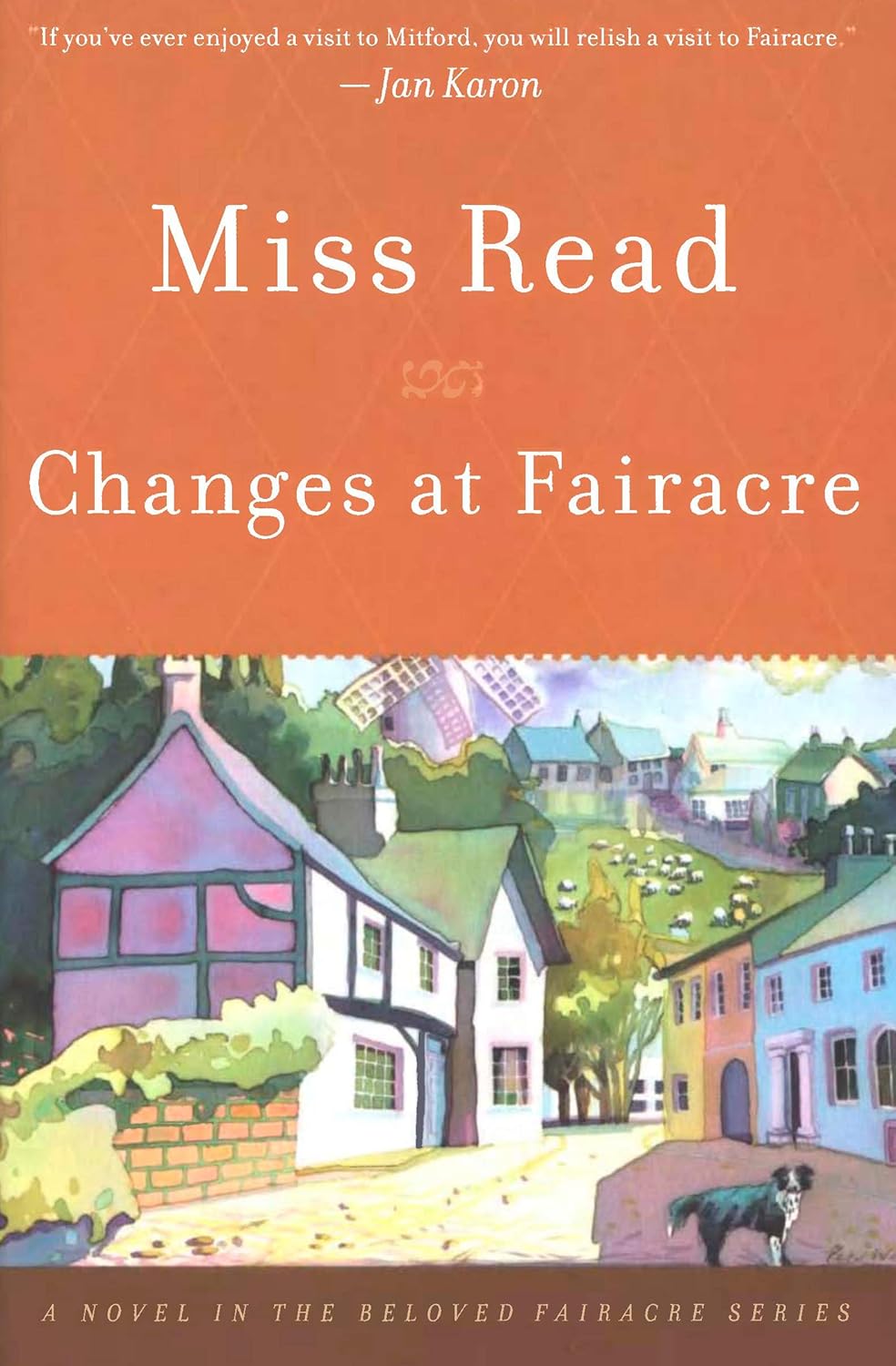
Reading the first half of The Overstory by Richard Powers made me yearn for short stories again. I think it is time to revisit Golf stories by P G Wodehouse or a little visit to Malgudi to reacquaint myself with all the characters. Tales from a Village School would be welcome too, wouldn’t it? Miss Clare Remembers is a wonderful book of short stories all woven around the fallen giant – the elegant, thin, straight-backed kind teacher, Dolly Clare.

Give me short stories when my attention is wandering. Enough to keep me stimulated, and wanting more.

Recommendations Please

Are we losing another art-form altogether? What would Somerset Maugham say, what would Alice Munro say? I remember the thrill of liking an author’s story, and then finding a whole book written by them. How marvelous it would be to crack open any magazine and find short stories there?

If you do read short stories, which magazines do you get your source from? Apart from The New Yorker I mean.

P.S: I have written a collection of short stories of my own too – both singles & themed collections. Written to its natural length, and savored from time to time by Yours Truly, but otherwise waiting – wondering where they can be published. So, if you have any recommendations of publications for short stories, please let me know.

How Reading Changes Our Understanding of the World

Reading, Absorbing, Retaining

We were discussing books and one of my friends said wistfully, “I like what I am reading, but I don’t know how much of it I will be able to retain afterwards.”

The rest of us nodded. It is a problem and one that I have yearned to be better at too. How marvelous it would be to quote with ease from our various influences! The internet truly is a savior for folks like me who have a vague idea. I don’t think stunning speeches are made by saying things like: “Remember that saying by Shakespeare where he said something about wise men knowing they are fools, and fools being very sure of their awesomeness? Or something like that?”

Aah….here it is:

“The fool doth think he is wise, but the wise man knows himself to be a fool”.  – Shakespeare

So, it is with knowledge. The more one yearns to learn about the world around us, the universe, and the lives we lead within it, the more one realizes how little one actually knows. There is no surer path to humility than learning.

“Even if that is the case, I suppose we retain things that appeal to us subconsciously.” I said.

The conversation meandered after that  but I found myself thinking back to that statement. It was true enough.

The OverStory – Subtle Influences

I read The OverStory by Richard Powers a few years ago, and loved many aspects of the book – its lyrical language, the poetry of the trees, the rich interweaving of nature in its stories etc so much that I wanted to read it again with my book club. It is when I started it again that I realized the Hoel family tradition of photographing their old chestnut tree must have appealed to me. Why else would we have started taking photographs of this particularly gorgeous maple tree every fall? I did not even realize this till we started re-reading the book, and I visualized the hundreds of pictures taken generation after generation. The only surviving chestnut tree for hundreds of miles in every direction. 

There is a timeless charm to a tradition like that.

Reading is a critical part of Becoming

Reading is a critical part of Becoming. Things we read voluntarily, can influence how we think. The characters in stories that appeal to us? They appeal to us for a reason. The actions of flawed individuals? They appeal to us for a reason – maybe we learn to be more forgiving towards follies – our own and of others when we catch them.

There are many studies proving fiction readers were generally more empathetic.

https://www.scientificamerican.com/article/novel-finding-reading-literary-fiction-improves-empathy/

Read Across America Week

It is Read Across America Week in schools honoring Dr Seuss’s birthday, and I found myself loving the rich world of stories once more. We each have a world of stories within us – stories that shaped our beliefs, joyously transported us to different realms, acted as escape mechanisms at times, stress busters at others, and just a marvelous source of shoshin otherwise.

Languages all over the world have a phrase or word for the vastness of knowledge, and I suppose I am grateful for it all.

Anantha gyana, gewaltiger umfang, enorm kunnskap, Abhijñā

Happy Read Across America Week – may we all read more about hopeful, brave, courageous, witty, humourous, compassionate, kind, vibrant personalities, and become like them.

🌲🌳🌴🎋Magic So Sublime 🌲🌳🌴🎋

“Do you see anything dramatically different today?” I quizzed the husband. He looked around him. We were standing outside the home before setting off on a walk. He looked blank, looked around, and then settled for his safe-bet. “Did you cut your hair? It looks good!”

I rolled my eyes. Honestly! 

“Nice try, but no!” Then, taking pity on him, I gave him a hint. “It is more to do with the immediate surroundings.”

He paused, looking up at the roof. Yesterday’s rains had us both rattled a bit. It isn’t often that we get up to the sounds of heavy rains lashing against our windows. It is a beautiful sensation, but a little fraught for us this time, since the last time, we found a pool of water had managed to seep in. This, after the roof repairman had stomped on the ceiling repairing things for sometime already. 

“Not the roof either! Look at the flora and fauna.” I said.

“Ahh – okay – that is easy.” Then went on to gabble on about flowers blooming, some plant surviving till I stopped his rambling, and said, “It is okay to give up, you know?”  

Then, with a dramatic flair, I pointed to the cherry blossom tree that only a day ago was fully white filled with blossoms. To be fair, I did not see it while it was raining. But one day later, it was there fully clothed in fresh green leaves – not traces of the tree in full bloom from just a day ago. 

How I wish the tree would tell us when it would do this? I would love to just set up a time-lapse video and sit watching it in slow rapture. When do you think the leaves actually sprout? Has anybody actually seen a leaf grow? This has to be some of the most sublime magic on the planet. 

🌸🌸🌸 Oubaitori in Spring Time 🌸🌸🌸

I felt a pang for the beautiful blooms of that tree – gone so quickly and completely, and then remembered that a month ago, it was bereft – a tree in abscission. Beautiful in its starkness, then resplendent in its white blossoms, and now lovely in its fresh greens. It is no wonder that cherry blossoms have captured the hearts and minds of philosophers for centuries – the simple lessons of enjoying the beauty of the moment, the oubaitori to bloom and sprout at your own pace.

Witnessing Nature: A Baby Egret’s Journey to Independence


No swimming No diving No fishing

The sign that greets the visitor to the riverside can be daunting. 

If one wonders why they never heard the whooshing sounds of the gushing river waters as they made their way up to the riverside, it is because there usually isn’t any. The mighty river retains its classification by becoming a river for about three days a year when there is heavy rainfall. Like a courtly princess who only dresses in regalia at Christmas.

The rest of the year, it trickles like a stream, while the major portion of the riverbed is lush with vegetation. It is the teeming home to plenty of wildlife – deer, blue herons, geese, coots, ducks, grebes, red tailed hawks, blackbirds, egrets, harriers, turkeys, turkey vultures, owls, wild cats, squirrels, rabbits, the occasional fox or coyote, possibly small snakes and fish in the simmering strip of waters. 

The trail by the riverside is, however, a charming place and one that always manages to lift your spirit. The stirrings of spring are in the air all around us, and we decided to go for a run / walk / bike / drive (No guesses for matching the family member with mode of transport ) to enjoy the river. Pale pink and white cherry blossoms on thick dark brown branches, clusters of chamomile in gardens, squirrels bustling up and down garden fences and hugging trees, geese squawking their way out in the world. It is a beautiful world and one that can ensure one forgets all the breaking news if only for the hour or so by the riverside.

An Egret’s Dash For Independence

A few minutes into the run, I watched fascinated as a baby egret chick stood by its mother in the marshy waters. Even in my first glimpse, my heart leaped, for the egret chick showed a fierce determination for independence. It edged away – throwing a look towards its mother, and the mother let her (or him) go. By this time, I had jogged on a bit, and the egret chick had clearly had enough of waddling away from its watchful parent and took to flying. The mother let it go, and then followed a few minutes later, setting herself down a little further upstream so she could keep an eye on the little one. It was a charming scene, and the egret and the watchful mother kept me entranced for several minutes. 

There is so much to learn from springtime with regards to parenting. Nest building is happening in earnest, and it is a common sight to watch a crow or a wren pick up some twigs to line their little nest. The geese will have their goslings soon, and those are the best to watch. The same loud, sometimes rude geese, somehow have the most obedient goslings. 

I was attracted once again by the egret chick and found myself looking for the mother. This one had certainly taken off a ways, and I watched a little nervously as a rambunctious dog broke into a run and came careening into the riverbed. I almost stopped and called for the egret mother and urged the chick to run. But I needn’t have worried. Long before I saw the dog, the chick had heard, and flippantly flew across the stream landing elegantly on the opposite side. The egret’s mother flew by too, and went back to fishing a little further away. 

I was impressed – she kept an eye on her chick, gave it the space to learn to navigate danger, and kept giving the little one the space and security to grow. 

All was well. Everyone was having their fun, their adventure and their springtime joys. I smiled and peered ahead to see the son way ahead of me.

Did You Know? Fun Facts About Mailboxes and Family Humor

The husband had a Did-You-Know look on his face as we pulled out of the driveway on the way to school. The son was peering at him agog – the kinds of information these fellows find interesting is worth a list one day, but I shall leave it for now.

Ever since YouTube shorts and streaming services made everything from byte-sized to bit-sized I’ve been somewhat helpless at the enthusiasm for these Did-You-Know fests. Typically brain fuzz takes over as all sorts of things are bundled together and dumped my way. This is what it sounds like to me, when presented with facts related to cookies, Poland, lizards, ferns, and the first world war in one shot:

🦎Did you know a lizard can eat three cookies at a time if it suns itself for 4 hours a day? 

🪴Did you know that Poland’s alternate timeline means it could have produced hundreds of pteridomaniacs? (before the intelligentsia comes after me with pitchforks, I think that means people who love ferns) 

Still, stoic as ever, I said, lowering the car window even as we pulled out. “Just tell us quickly – we’re already late!”

He pointed in triumph to the red lever by the postbox. It was raised like a flag in protest. Upside down. “This is how to position the lever when you want to show that you have mail for the mailman to pick up. So, even if we don’t receive any mail, the postman or postwoman knows to open the mailbox and take the letter for delivery.”

Here’s What It Means When a Red Flag Is Up on a Mailbox – Reader’s Digest

The son looked awed. “Oh I didn’t know that!” The husband swelled with pride at a piece of useful information. 

“Me and my friends never knew that when we were little. So, we used to put the lever up on all the mailboxes in our street!”.

The husband and I felt a startled bubble of laughter escape almost simultaneously. Seriously! Children do the darndest things! 

I pulled out of the driveway still laughing and asked the fellow whether they just walked about lifting the red levers, and he gave me an offended scoff. “We weren’t that jobless!”

He must’ve seen my face for he said, “Okay we were – but no. We just used to do that as we ran around playing tag. Got to multi-task. That explains why the mailman was sometimes irritated with us huh?” he said, with a meditative glaze in his eyes.

“Yes – glad that was straightened out!”

The Mantra of Mass Misery

It was a beautiful weekend after a rushed week. On a whim, I decided on a walk by the bay. The waters of the bay with its myriad reflective powers, always helps to bring on the magic of expansive thinking. No two moments are the same here – the shimmering colours seldom fail to invoke that glimmering feeling of hope, the waves helping us think of the ebbs and flows of life. 

Meanwhile, out there, the world continued its dip further and further into its dystopian gloom, and I felt only something as powerful as nature itself would help. As I watched the birds titter and start their early morning songs, I mused on the callings of power. 

Promises, Promises

How ironical it was that every fascist dictator who came to power, rode on a promise of better times – often divisive slogans, and increased prosperity to certain segments, only to be followed by a regime running on a mantra of mass misery. 

After all, a prosperous populace is a demanding one. They want accountability, progress, intellectual discussions, better this and better that. They want to achieve prosperity, feel valued, etc – all the things abhorrent to total power. 

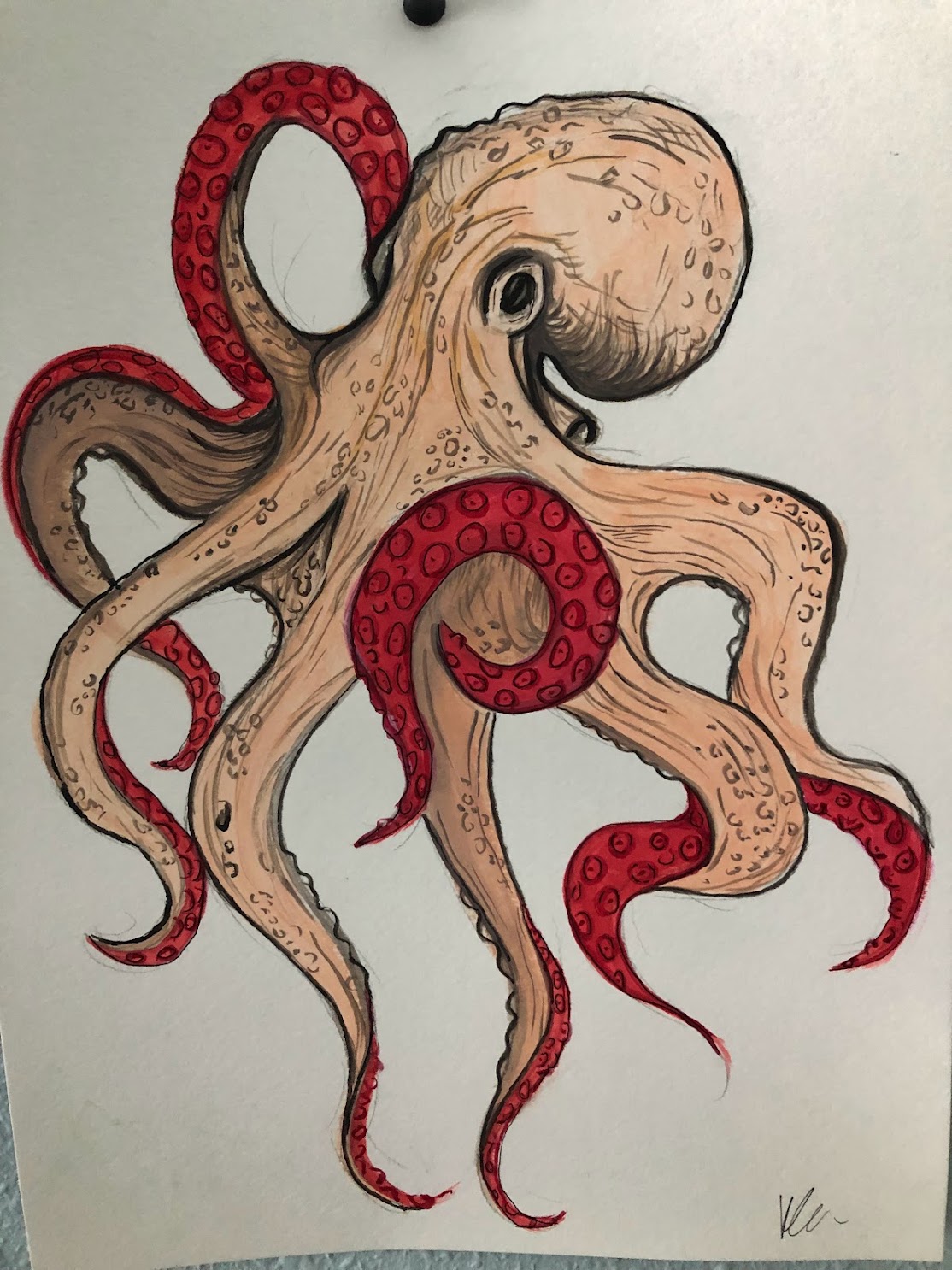
It isn’t even a month since the latest one assumed power and already society is reeling from the clutches of the many pronged tentacles of misery. It seems anything related to the finer and higher order thinking of humankind is not to be spared:  Art, education, humanitarian aid, medical aid, international peace. 

For once we get people worried about the daily grind, they would not have the power or splunk to protest, would they?  If they do, the next rule in their book states to create more and more distractions so that strife and misery are so widespread, no one is keeping track anymore. Keep moving their attention to the base of the pyramid.

It is astounding how so many fascists do not even bother to change that strategy, for it has worked every time throughout history. Every time the vulnerable and the gullible get taken in by promises of prosperity, till it comes back to bite them. Every time. 

“Voldemort himself created his worst enemy, just as tyrants everywhere do! Have you any idea how much tyrants fear the people they oppress? All of them realize that, one day, amongst their many victims, there is sure to be one who rises against them and strikes back!”

J.K. Rowling, Harry Potter and the Half-Blood Prince

While musing on the world’s spiral into fascism, my attention was brought back swiftly to the skies where a war was waging between a hawk and a couple of crows. Maybe the hawk had attempted to take a chick or attacked the crow’s nest, but the crows weren’t having it. If I hadn’t seen the savage anger and relentless driving away of the hawk by the crows, I might never have believed it.

Just like that, nature had shown the way out. Humans have spirit. We may not feel like we have much agency over what is happening now, but when things get out of hand, wouldn’t we, like the crows, rise against the hawks in our lives?

Understanding Neurodiversity: Books and Podcasts Guide

Helping Families Navigate Neurodiversity Disabilities

The latest episode on the podcast, Sitare Spotlight, aims at helping families navigate the many challenges and pitfalls when a child is diagnosed with a disorder on the neurodivergent spectrum.

Sujatha Ranganathan serves as a Board Chair on Family Resource Navigators(FRN) , a non-profit organization. FRN is a family to family agency serving families with special needs children in Alameda County. Family Resource Navigators works with families of children with cerebral palsy, autism spectrum and other disabilities.

For those of us wishing to understand more about the disabilities in the neurodivergent spectrum, here are a few resources that Sujatha recommends.   

Podcasts to support families with neurodivergent children:

  1. Turn Autism Around with Dr. Mary Barbera

Focuses on practical strategies for parents navigating early intervention, speech delays, and behavioral challenges.

2. Two Sides of the Spectrum

Hosted by an occupational therapist, this podcast challenges misconceptions and highlights neurodiverse perspectives.

3. Autism Parenting Secrets

A podcast designed for parents looking for actionable tips and advice on raising autistic children.

4. The Autism Helper Podcast

Hosted by a special education teacher, this podcast provides insights into behavior, communication, and educational strategies.

Books:

  1. NeuroTribes: The Legacy of Autism and the Future of Neurodiversity – Steve Silberman

A deep dive into the history of autism, neurodiversity, and how society can better support individuals with autism.

2. Uniquely Human: A Different Way of Seeing Autism – Barry M. Prizant, Ph.D.

A strengths-based approach to understanding and supporting individuals with autism.

3. Parenting a Child with Autism: A Modern Guide to Understand and Empower Your Unique Child – BCBA Karen Kabaki-Sisto

Practical strategies for parenting an autistic child with a focus on communication and daily life.

Please listen to the podcast when you get the chance. It was a wonderful conversation in which I learnt so much from Sujatha’s journey. The community FRN helps create for families with family members in the neurodivergent spectrum is truly inspiring.

Exploring Handwriting: Cursive vs. Digital Age

Cursive superpowers

The white board was littered with alphabets and numbers. We were discussing the different ways in which people wrote their numerals or alphabets. 

“How come nobody seems to like cursive writing as much anymore?” I said, and off we went writing our little cursive numerals and alphabets like artists swirling their best hieroglyphic characters.

“Is that an ‘I’? Truly? I have never seen an ‘I’ like that before!”

“Wow – that ‘J’ is wild! No wonder teachers moved away from cursive. “

“Well, there is a lost skill – imagine the superpowers teachers had deciphering everyone’s handwriting and essays.”

Hippopotomonstrosesquippedaliophobia anyone?

That was true. It is a superpower. Writing fast was a superpower too, one that was made easier with cursive. How beautifully could we go on in one pen stroke for a word like pneumonoultramicroscopicsilicovolcanoconiosis? How many people suffered from hippopotomonstrosesquippedaliophobia back then compared to now (fear of long words!)?

“I think in terms of the keyboard locations when I spell a word.” said a much younger colleague, and I drew in a breath – the places where generational differences get you is truly mind-boggling. But then I realized their generation spent more time typing things out in word documents, or in chat screens than any other generation preceding it, and it was only natural for their brain to associate the keyboard with the spellings..

One person said that when they added numbers, they imagined them as dominoes being added together. “Were you a gamer?” 

“Yes!” they said, looking a little sheepish.

The Cognitive Processes of our Brains

Truly, the brain is such a multi-layered immensely capable and adaptable organ. Neuroscience must truly be fascinating to study and research. How many visual thinkers were there among other species? What percentage were analytical? Many would possess kinetic intelligence. Once we stop only thinking of the narrow spectrum of human intelligence, the world becomes that many dimensions more fascinating. I peered into the bookshelf at a book that has been on my tsundoku shelf for ages: ‘How the Brain Thinks’ and resolved to read it soon.

The picture of the brain was on the front, and I smiled as I thought of a friend who told me that they don’t like eating cauliflowers because it looks too much like the human brain. What was that type of thinking called? Visual or Associative.