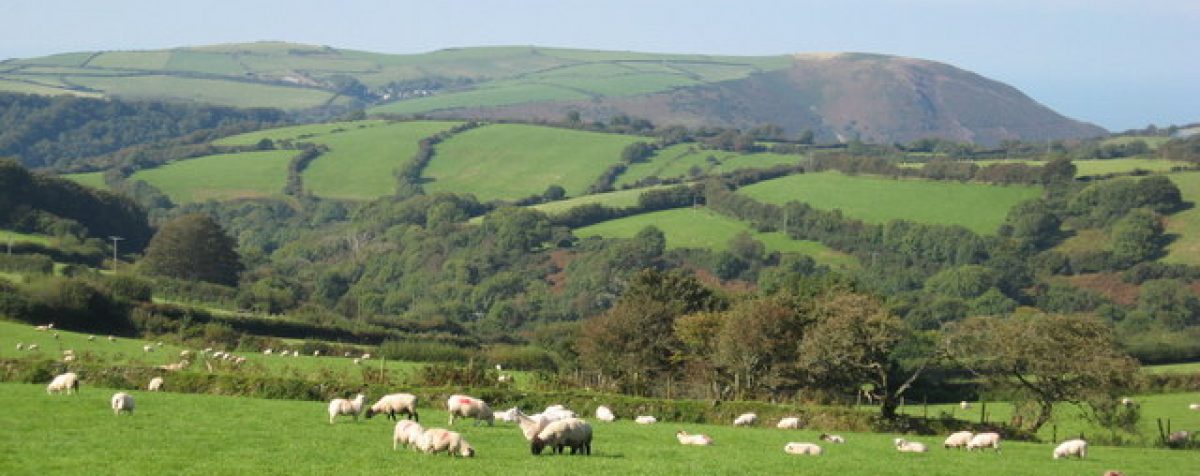
From Precious to Abundant: The Shift in Photography

“I may have just filled your phone with a bunch of useless pictures!” said the son. 

I nodded. Par for the course. Not like in our childhood, when you had to think through getting a picture developed in a store and wondering whether a picture is worth the wait, is it? You just delete them, or worse archive them, never to be seen again. Somewhere. Sigh. 

He was still thumbing through his pictures with a commentary on the side. Apparently, on several artistic ones of M&Ms on a plate  👀, when he stopped and said. 

“Oh well – now I don’t feel so bad!”

I looked up. What was he on about?

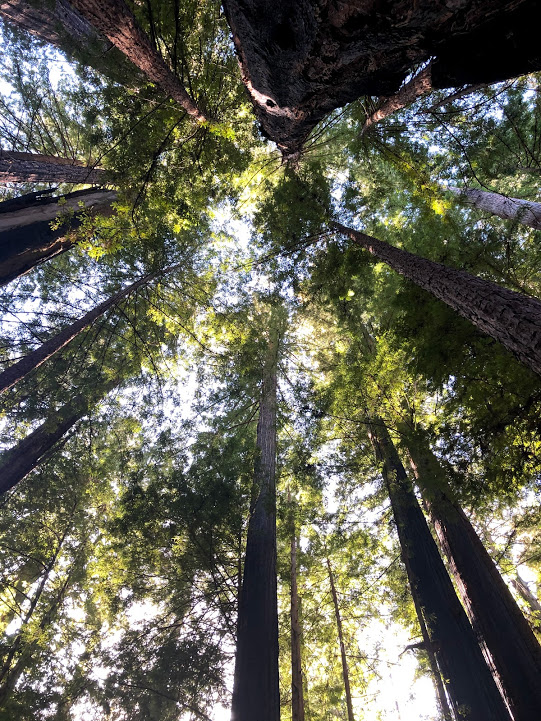
Komerebi – The dappled sunlight shining through the trees

“There are a whole bunch of pictures of … yep…. Pretty much all of them of trees! Goodness!”

I laughed. Then, feeling a little embarrassed, I confessed. “You know? On my walk the other day, I had this urge, nope…scratch that … It felt very important that I must try to see the differences in the way sunlight filtered through the old oak trees, the weeping willows, and the pining pines.”

“Oh Amma! You are a kook! How long did you do this?”

“I don’t know. Not very long, but I kept clicking knowing fully well that I may not exactly go back and see them again.”
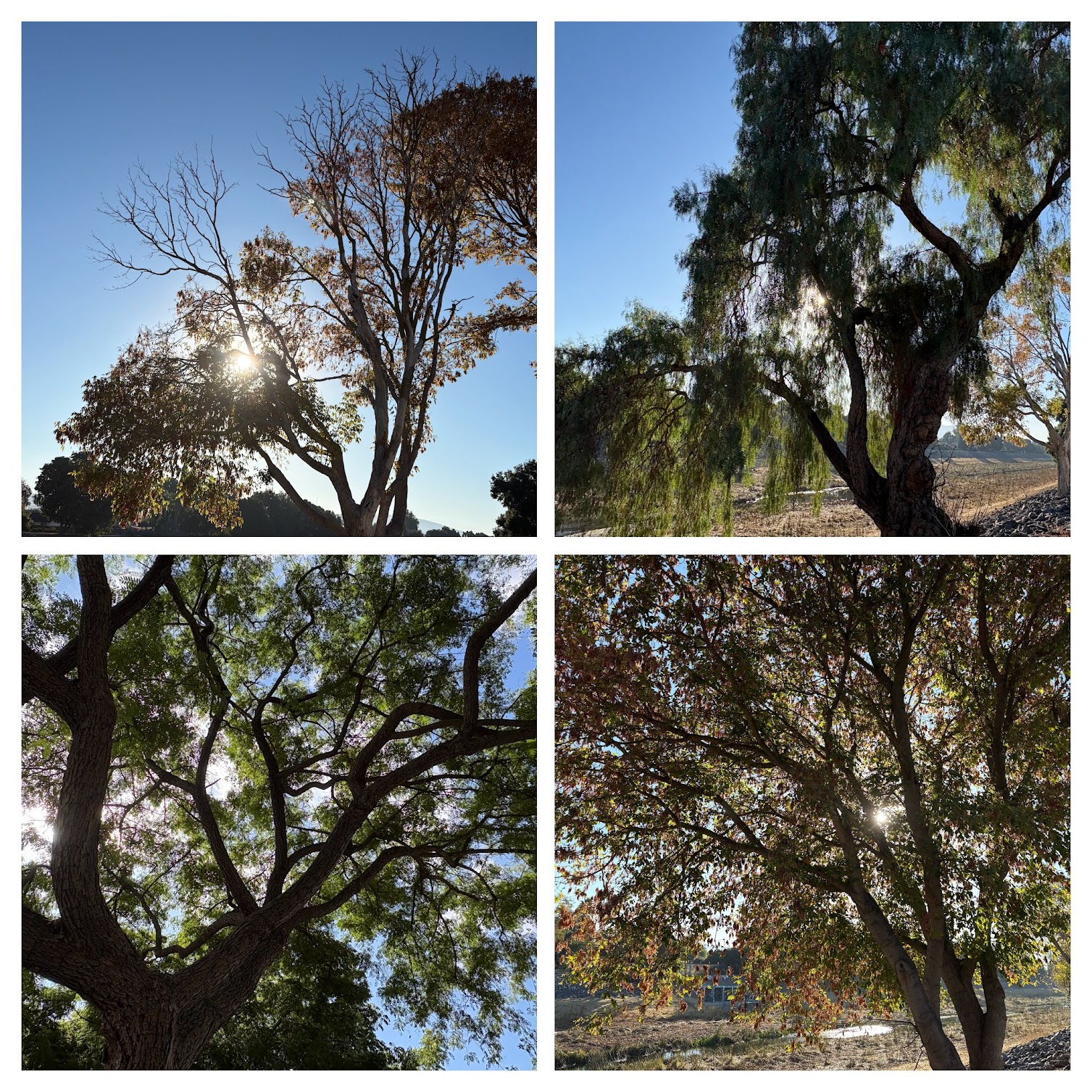
Many to Solitary

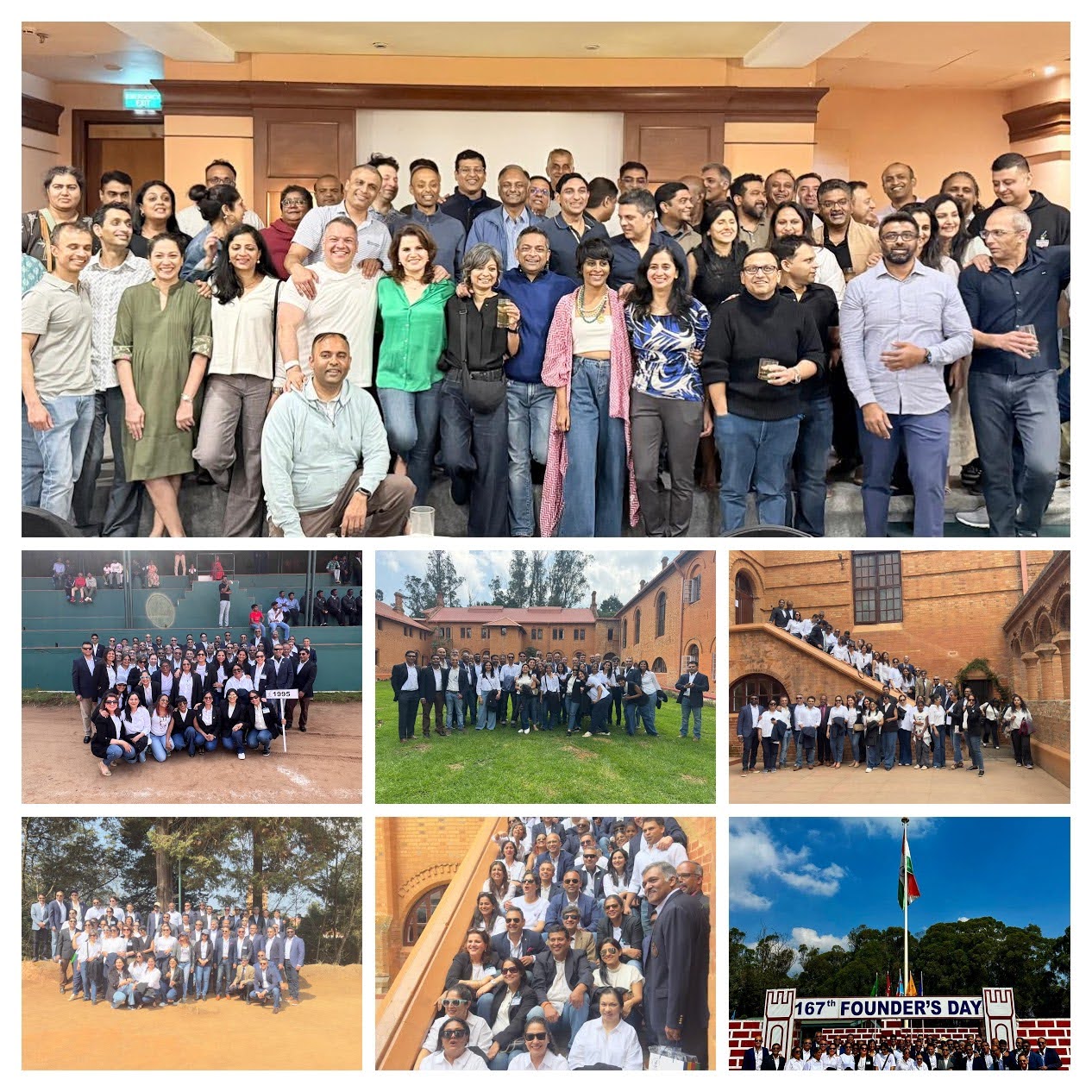
Oh! How technology has spoiled us? I don’t think there is a single photograph in our childhood albums of light filtering through the leaves. If there was a leaf you liked, you picked it up, and crowded as many people as you could around the leaf to get in that picture! The poor leaf squished and forgotten, and all of us looking mildly surprised at being included in a picture of a leaf that isn’t even visible. We did the same thing when we met up decades later at our school reunions. We crowded in front of the lawns, jacaranda trees, clock tower,  and the bougainvillea plants, no clue why the background was so important, and the background completely forgotten with all the noises and laughter with folks in the foreground. It was marvelous.
I peered into the phone, and saw he had started looking at selfies taken a while ago by his sister. A teenage phase I’d like to call them – but these were all solitary hearts beating alone. Only context made it known that there was a crowd of loved ones around her that day as she took pictures of her nose from a 30 degree angle, and of her reading a book from the 130 degree angle. Obtuse. (I meant the angle.)

Precious to Abundant

Was that the trend of technology and advancements though? This move from crowded/community to alone/aloof lifestyles? Precious to Abundant. 

Hmm…I peered out into the rays of the setting sun, and shelved philosophy for another day. “Maybe we should get a picture of the sun’s rays through the filter on the M&Ms,” I said, and we cackled. It was time for another picture – combining our objects of interest this time.

Lessons from Nature: Embracing Our Unique Struggles

Burdened Biologies

I took the son to the pediatrician for a wellness check: Something that was simply not there in our childhood. You only went to the doctor if you had a problem, not to be assured that you didn’t, or find that you may have one. I quite like the strides in preventive medical care. 

The pediatrician asked the son his age, and prepped for his talk on teenage anxieties and stresses. He told him about how sometimes / oftentimes, one feels that whatever they do, it is never enough. They are never good enough. Society is always expecting more from you. This is not good enough, that person is better, their clothes are better, their smile is better and on and on.

I listened with rapt attention. Did this man have superpowers? The ability to time-travel, or apparate across cultures, places, geographies? Did he overhear what was being said in social circles? Or was this another thing that simply unifies the human experience the world over? Our burdened biologies.

Something about the way the doctor said it made me pause and listen. Was he aware that he wasn’t just talking to the teenager in the room, but to the parent as well? 

“Before you say anything – it isn’t anything specific to your son, it is something we like to educate all our teenagers about. These are things that add to toxic stress, and that can create other problems as well you know.” he said, kindly.

Hearing the pediatrician talk about these things with the teenage son made me feel – well, I don’t know how exactly it made me feel, for it was one of those moments when I felt the opposites war in the old fishbowl. For one, I was happy that they were making children aware of this. But on the other hand, I was also disappointed that this was something that was ever acknowledged as a problem in our childhood. No doctors, teachers gave voice to this feeling all these years, decades even. 

Atelophobia and Allodoxaphobia

There is a word for this:

Atelophobia. The fear of never being good enough.

Many of us went through our childhood (and adulthood in many cases) completely oblivious to this. 

There is a strange comfort in knowing that one is never alone in one’s struggles, isn’t there?

Those of us who grew up in India, were also given liberal doses of Allodoxaphobia.

Allodoxaphobia: fear of what other people think of you. 

Nature Shows the Way

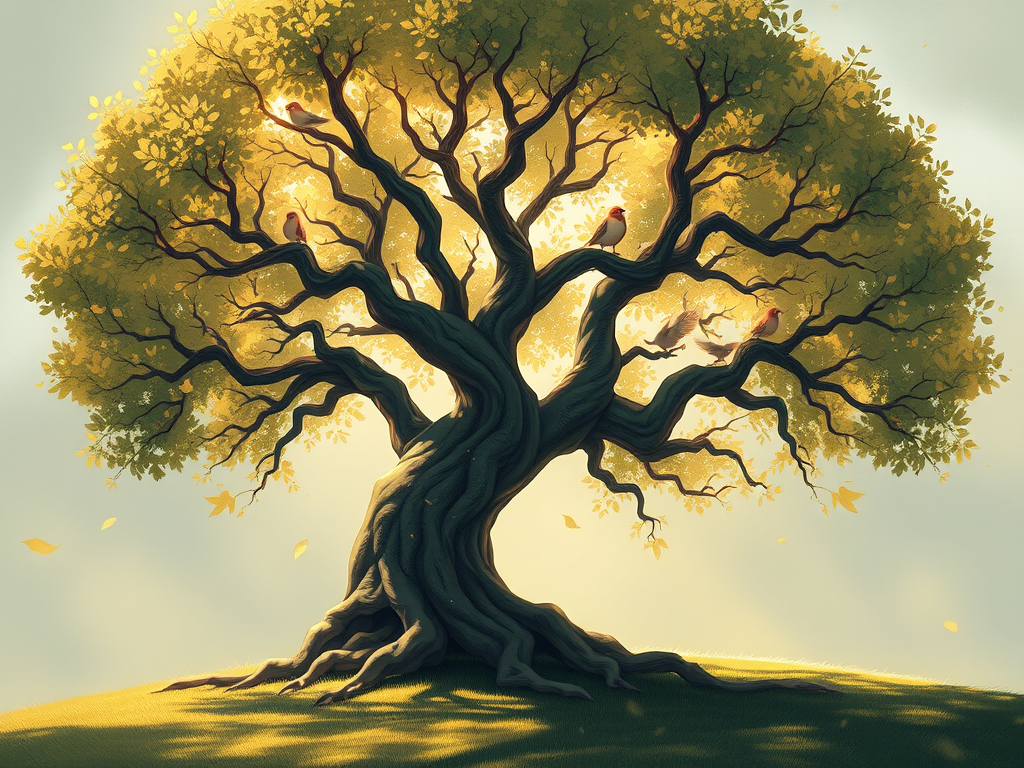
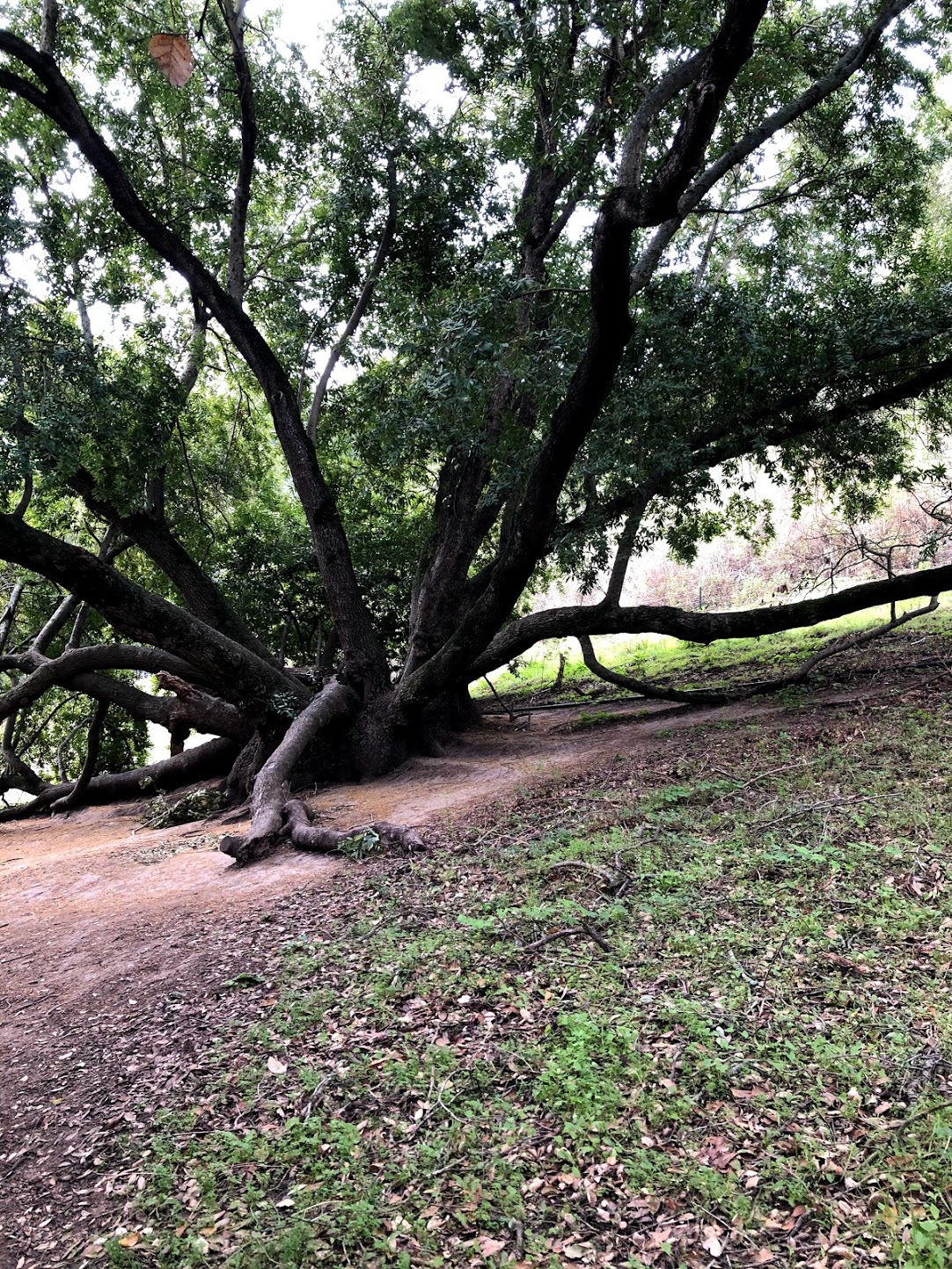
That evening, the son and I sat under one of our favorite trees – wizened, misshapen, and marvelous. We admired the tree: It’s every bulge was a statement, every misplaced twig a surge of hope, every lump in its trunk a bold curve, every branch a home for birds, every leaf a fine producer of food, every ray of sun that passes through it a filter to enhance its beauty.

Nature shows us with every tree and every flower that we are enough. As we are. No two trees are shaped the same way, but nobody questions their enormous usefulness to life. Every plant’s purpose is different, and somehow, together, they created the conditions for life to thrive on Earth.

Yet – in spite of all these simple lessons from nature, humanity cannot stop burdening our biologies with unnecessary stress. What can we say? 

Spring Adventures: Watching Nature Unfold

We had plans for a lovely bike ride by the bays and knolls near our home, a hike in the verdant hillsides, or even a walk by the stream/river by our home where all our fellow creatures are preparing for the year ahead. Soon, the ducklings and goslings will hatch. Everywhere you see, there are signs of nest building and it is endlessly fascinating to sit and watch the frenetic spring cleaning happening, even if it isn’t happening in our own home. I empathized with Mole in the Wind in the Willows : Who wants to wallow inside the home, dusting old furniture and mopping dusty floors when the world outside is so full of beauty and promise? 

The son and I had our spring hopes dashed for us with a bout of flu. That feeling of enormous promise that accompanies spring was dampened somewhat by the high fevers, and we moped about the house. 

Watching Spring

When the fever subsided, we pulled ourselves to sit outside and watch spring at least. The crows and wrens stopped flying and did a double take mid-air seeing our watch-fest. If AI interpreted their language, I am sure we’d have some semblance of this:

“These two restless souls – what are they doing sitting and watching?”

“I know – been seeing them for the past few minutes. Nothing? Are they really doing Nothing?”

“Strange!” 

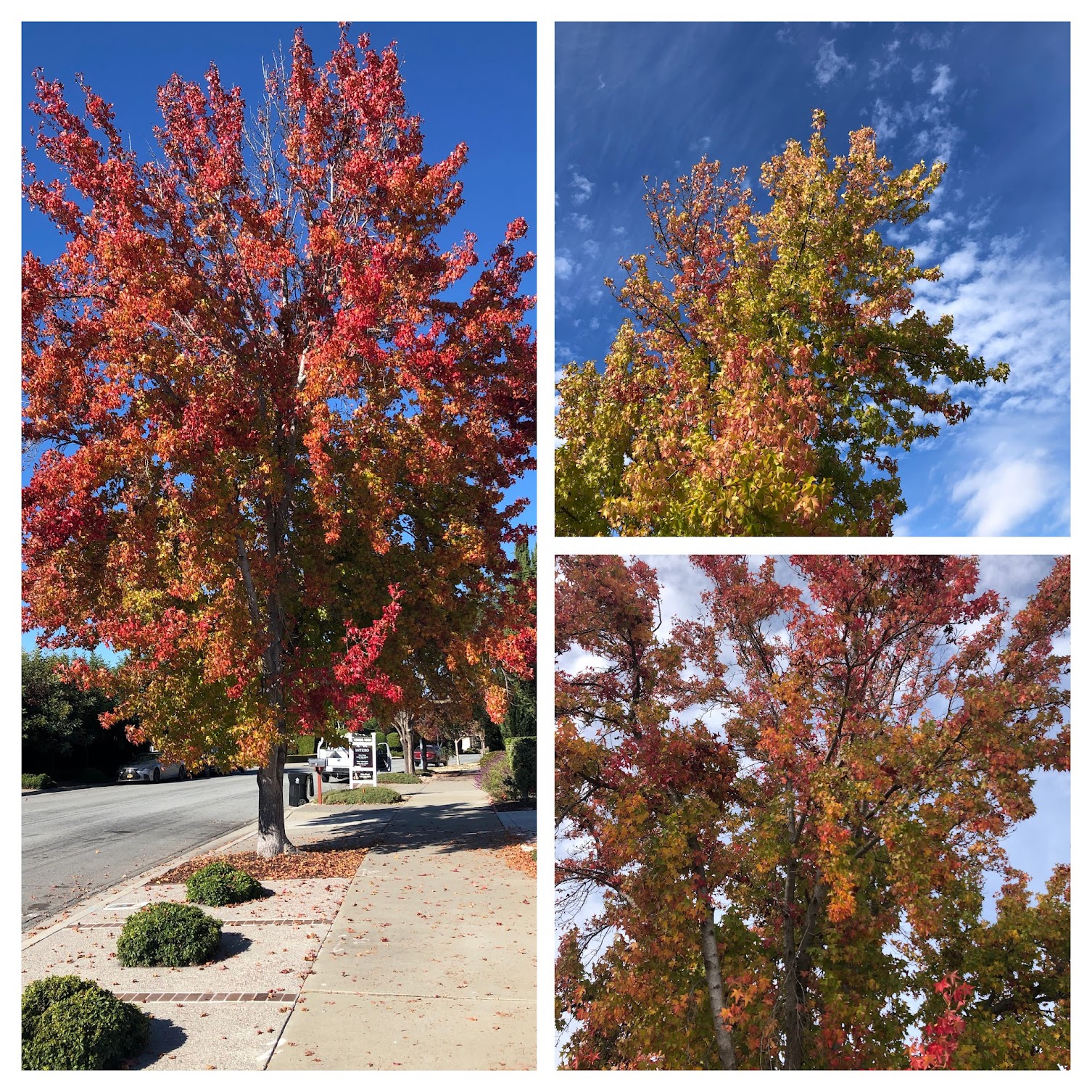
But this Nothing gave rise to something marvelous. We noticed the fresh green leaves sprouting in the ginkgo and maple trees. Some of the cherry trees had blossomed out of their flowery cloaks into their leafy ones, while others were still in their efflorescent robes of pink and white. 

“See this leaf? “ said the son. “It is shaped so that it can fly very fast and the seeds within can spread when it falls!” 

I peered into the leaves he was showing me, and it was true. I remember learning to make a paper airplane in a pattern like that once, and watched mesmerized as it floated down and away every time we launched it. What a brilliant inspiration? 

Right enough, we searched for the tree in question, and it is called the Hot Wings Tartarium Tree. The Hot Wings maple tree is a low maintenance beauty whose seeds are called Samaras.


Nature is astounding – every leaf, seed, flower, tree, shrub, plant, trunk, twig is a marvel in itself and sometimes sitting and watching is the best reward.

We came back inside flush with the knowledge of having seen a new wonder, and felt better.

Poems & Trees:

I think I shall never see 

A poem as lovely as a tree

 – Joyce Kilmer

The poem finishes on these wise lines:

Poems are made by fools like me,

But only God can make a tree.

Only Nature can do accomplish this fest without fanfare.

How Reading Changes Our Understanding of the World

Reading, Absorbing, Retaining

We were discussing books and one of my friends said wistfully, “I like what I am reading, but I don’t know how much of it I will be able to retain afterwards.”

The rest of us nodded. It is a problem and one that I have yearned to be better at too. How marvelous it would be to quote with ease from our various influences! The internet truly is a savior for folks like me who have a vague idea. I don’t think stunning speeches are made by saying things like: “Remember that saying by Shakespeare where he said something about wise men knowing they are fools, and fools being very sure of their awesomeness? Or something like that?”

Aah….here it is:

“The fool doth think he is wise, but the wise man knows himself to be a fool”.  – Shakespeare

So, it is with knowledge. The more one yearns to learn about the world around us, the universe, and the lives we lead within it, the more one realizes how little one actually knows. There is no surer path to humility than learning.

“Even if that is the case, I suppose we retain things that appeal to us subconsciously.” I said.

The conversation meandered after that  but I found myself thinking back to that statement. It was true enough.

The OverStory – Subtle Influences

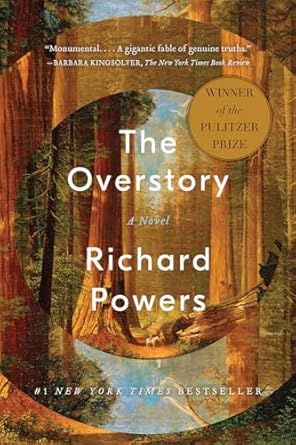
I read The OverStory by Richard Powers a few years ago, and loved many aspects of the book – its lyrical language, the poetry of the trees, the rich interweaving of nature in its stories etc so much that I wanted to read it again with my book club. It is when I started it again that I realized the Hoel family tradition of photographing their old chestnut tree must have appealed to me. Why else would we have started taking photographs of this particularly gorgeous maple tree every fall? I did not even realize this till we started re-reading the book, and I visualized the hundreds of pictures taken generation after generation. The only surviving chestnut tree for hundreds of miles in every direction. 

There is a timeless charm to a tradition like that.

Reading is a critical part of Becoming

Reading is a critical part of Becoming. Things we read voluntarily, can influence how we think. The characters in stories that appeal to us? They appeal to us for a reason. The actions of flawed individuals? They appeal to us for a reason – maybe we learn to be more forgiving towards follies – our own and of others when we catch them.

There are many studies proving fiction readers were generally more empathetic.

https://www.scientificamerican.com/article/novel-finding-reading-literary-fiction-improves-empathy/

Read Across America Week

It is Read Across America Week in schools honoring Dr Seuss’s birthday, and I found myself loving the rich world of stories once more. We each have a world of stories within us – stories that shaped our beliefs, joyously transported us to different realms, acted as escape mechanisms at times, stress busters at others, and just a marvelous source of shoshin otherwise.

Languages all over the world have a phrase or word for the vastness of knowledge, and I suppose I am grateful for it all.

Anantha gyana, gewaltiger umfang, enorm kunnskap, Abhijñā

Happy Read Across America Week – may we all read more about hopeful, brave, courageous, witty, humourous, compassionate, kind, vibrant personalities, and become like them.

The Powerful Epiphanies

The Power of Spring

As epiphanies often go, it was unexpected, and oh so satisfying. This spring season has been particularly fantastic – there are bumblebees, butterflies, dandelions, ducklings – all tripping over themselves to give you epiphanies of life, miracles, hope and so on.

One such day, we sat watching lazy waves rippling through a large pine tree. The previous day had been a cold, and windy day, we had scuttled inside for warmth. The next day was warm, pleasant and entirely suited to lounging around watching wind waving through pines, firs, and gingkos. 

The house was filled with noises of spring – young children exclaiming at blueberries, standing on tiptoes and peering up at the oranges on the tree, running through the house in a mad scramble looking for juice packets and snacks while playing freeze tag or mock-cricket. 

When the next stampede grew closer, I wondered whether to move aside from the herd of stampeding rhinos, or sit my ground and continue gazing at the roses in bud, and the pine in the wind. I continued to sit, and luckily, the fellows stopped, and one-by-one they all flapped around, and flopped on the grasses. 

“What are you thinking about?”

The Ginkgo’s Wisdom

I told them, and they sat pondering for a moment, sipping their juice. I couldn’t resist the pull of a quiet moment, and an uncharacteristically pliant audience. “Did you know about the ginkgo trees?” I asked my young fellow admirers of wind and trees.

ginkgo-COLLAGE

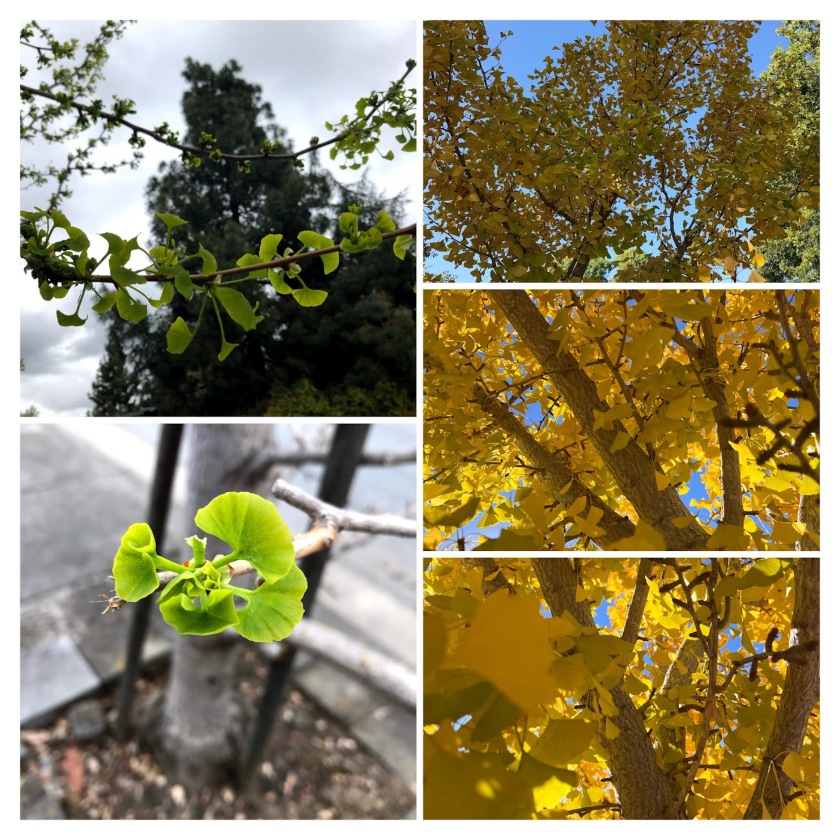
Thrilled that they didn’t all know, I launched on the ginkgo train – telling them about how they were around from the days of the dinosaur, and how they all communicated to each other, and decided when to shed their leaves. The son said that one of the trees will slow down if it is going too fast in the color changing race, waiting for its fellow ginkgos to catch up.

“Like friends are supposed to be!” piped up another. 

I beamed appreciatively. “Yes – exactly like friends – all helping each other get there. Together.”

Read also: The night of the Gingko : By Oliver Sacks in the New Yorker magazine.

The day’s epiphany done, the playgrounds beckoned, and I let them all run off their sugar highs before expecting them to quieten down for the night. I wonder how the birds manage to quiet their brood when they’ve had a little too much nectar. That epiphany can’t wait for another day.

“A real artist is the one who has learned to recognize and to render the ‘radiance’ of all things as an epiphany or showing forth of the truth.” ~ Joseph Campbell

The Sappy Pine

I sat outside idly watching the world as it continued on its day. These rare moments of solitude and stillness are more refreshing than any energy pills being advertised on television or in between YouTube videos. The wind stirred at the pace it was going to: Today , incidentally, was idle breeze day. The clouds in the distance were parting to reveal a blue sky. The birds made their brave show chirping, catering to their little ones in their nest, or flitting about joyously it seemed. 

Sitting outside like this, without any fast forward buttons reminds us of the nature of time. How come we manage to fill all our moments with alarms, and meetings, placing firm demands on the hours available to us, while other living beings around us manage to live in harmony with the seasons? The rose buds bloom, the fresh leaves sprout after winter, the nest eggs hatch, and life seems to go on: on a schedule of its own, quite distinct from what we have.

I watched mesmerized as the breeze rippled through the luscious pine tree nearby generating green soothing waves, and thought of the magic of life around us. Every tree, every plant was a marvel, and a couple of sparrows playing high near the top of the tree were a joy to watch. Nature’s forms are truly amazing. 

The car was parked under the beautiful tree, and enjoying its hospitable shade. I nodded approvingly as the Californian summers have started beating down after cloudy starts to the day. It is like the curtains part around mid morning, and then the sun seems to take upon itself to show us its dazzling abilities.  

Musing on how we must spend some time sleeping under the stars, watching the moonlight piercing through the sharp pine needles etc, I headed inside.

Komorebi (木漏れ日): is a beautiful word meaning the sunlight or moonlight filtering through the trees.

I managed to convey a rather jumbled version of this evocative feeling of nature to the children and husband, and they looked at me with something approaching pity. Was I alright? Did I need my head examined? They certainly weren’t having this business of sleeping under pine trees whatever else I said.

“What if a pine cone falls on your head huh?” said one, and I had no answer.

“Well….they aren’t very big pinecones.”

A large guffaw greeted this rather clever observation. I drew myself up haughtily and said, “You know how you are worried about something? Well, if you sit down outside, and watch the wind rustle the pine leaves, you aren’t. “ I said. I must admit, it sounded weak even to me, as I said it. So, I finished up strongly: “I mean nature always delivers!”

I peeked at the car standing in the shade, and shrugged happily at it. At least the car was having a good time of it. 

Maybe I should’ve waited before pandering on about the pine tree, for a few days later, the car was distinctly sticky. A large dose of pine sap had dripped on the car. 

“Eww! That is disgusting and it refuses to come off when you wipe it!” I wailed. 

The nourishncherish household exchanged amused looks and did not say, “Nature always delivers!” To that, I am grateful.

Science as an Art

I caught sight of an artist one day, sitting in the garden and painting the profusion of life around her.  I stood there drinking the contentment of the scene in. Here was beauty, poetry, art and the science behind it all in one grand stroke. How marvelous it is to stop and observe someone paying attention to the world around them?

I remembered the piece in a book recommended to me by a writer friend, Lab Girl, by Hope Jahren. The book is an example to show how each one of our stories is different in its own way. This memoir is written by a dedicated scientist, and covers among other things a rare friendship, her bipolar disorder, and her journey of a life with trees. 

In the book, Dr Jahren writes about the science and its demands on its lovers. Her writing is lyrical, and when she writes of her research and her little moments of leap, it is nothing short of poetic. For instance, she writes of studying the structure of the seeds of  hackberry trees. It is the kind of research that is, as she says, ‘curiosity-driven research’.  Dr Hope Jahren is a paleobotanist, and she goes on to say that her research is the kind of work that “will never result in a marketable product, a useful machine, a prescribable pill, a formidable weapon, or any direct material gain – or if it does indirectly lead to one of those things, this would be figured out at some much later date by someone who is not me. “ 

I have always admired the tenacity and perseverance of endeavors such as these. In the world of instant gratification, working on fields where the gratification may not arrive in your lifetime is nothing short of phenomenal. It is the work of an artist: working on something solely for their interest, because they have the aptitude to understand life around them, and to persevere in the face of odds.

In the book, she captures some moments along the path of a scientist’s life that are magical. For instance, she writes of the time she was studying the structural makeup of the seeds of hackberry trees, and she unmistakably finds traces of Opal in the seeds:

“It was opal and this was something I could draw a circle around and testify to as being true. While looking at the graph, I thought about how I now knew something for certain that only an hour ago had been an absolute unknown, and I slowly began to appreciate how my life had just changed.

I was the only person in an infinite exploding universe who knew that this powder was made of opal. In a wide, wide world full of unimaginable numbers of people, I was – in addition to being small and insufficient—special. I was not only a quirky bundle of genes, but I was also unique existentially because of the tiny detail that I knew about Creation,…Until I phoned someone, the concrete knowledge that opal was the mineral that fortified each seed on each hackberry tree was mine alone.”

How could one not smile at this? How beautifully she marvels at understanding the ecstasy of life. Walking along a forest path, I’ve often wondered how, that of the millions of seeds dropped in there, a few decide to take the leap and sprout into sapling, clawing their way up towards the light, while digging deep and finding their roots. It turns out there may be no definitive answer to that. If you were a seed, what are the parameters you would use to sprout your wings and decide where to put down your roots, knowing fully well that from then on, movement is out of the question?

There is more to the miracle of our ecosystems than we can imagine. The ones who study this profundity – astrophysicists, anthropologists, scientists, ecologists, geologists – and then, go on to share their journey with us is marvelous. #Shoshin.

Who was it who said that – when you read a book you live a thousand lives, but if you don’t read, you only live once, yours?! 

“A reader lives a thousand lives before he dies. The man who never reads lives only one.” – George R R Martin in A Dance with Dragons

What would we do without the internet to give the answer right away?!

Complement with:

How to Master the Ancient Art of Walking Meditation in Modern Life: A Field Guide from the Pioneering Buddhist Teacher Sylvia Boorstein

The Rings of Life

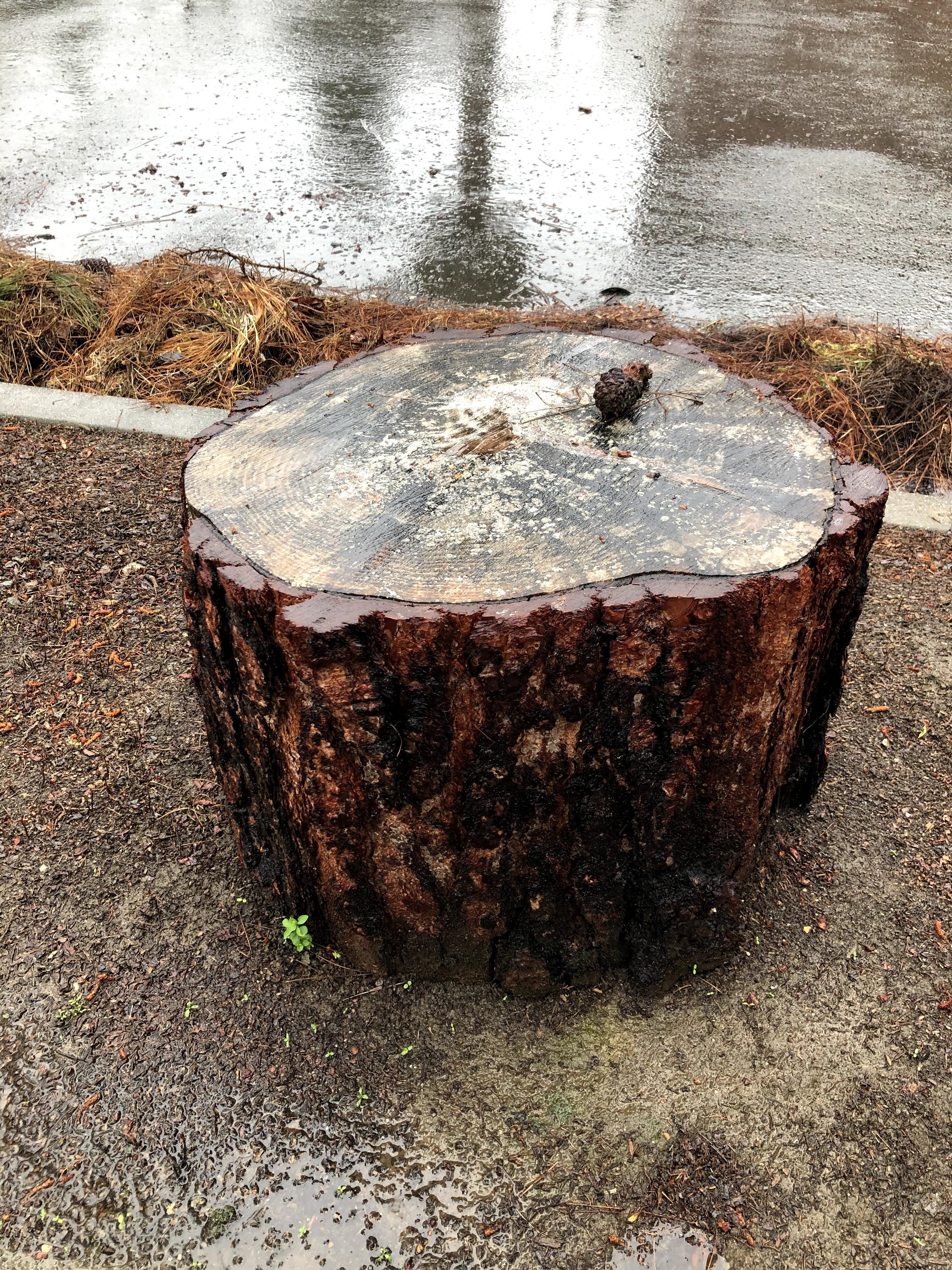
We were walking a familiar route through our neighborhood, stopping to see some of the felled trees as we do every so often. The rings in the pine trees show they must have been at least 80 years old.

img_7820
For an impatient flitter such as myself, trees are truly sentient beings. Beings that teach me about holding still, of being sentient beings for the small time we spend on this beautiful planet. Like a butterfly flitting through the Earth for a day. You can replace tree for a star in the quote below and it would still hold when one sees redwood trees, sequoia trees and old banyan trees.

“From the point of view of a mayfly, human beings are stolid, boring, almost entirely immovable, offering hardly a hint that they ever do anything. From the point of view of a star, a human being is a tiny flash, one of billions of brief lives flickering tenuously on the surface of a strangely cold, anomalously solid, exotically remote sphere of silicate and iron.”

― Carl Sagan

As I was reading Life in the Garden by Penelope Lively, I stopped to relish the section on trees. Though the book is largely about gardens, she does make a foray into trees briefly:
“Tree rings are wonderfully eloquent; here is time stated, time recorded, time made manifest. Dendrochronology- the scientific method of dating based on the analysis of tree rings-can determine past climates, or the age of a building, it can be used to calibrate radiocarbon dating, or by art historians to determine the date of a panel painting. And all because a tree grows slowly, systematically, but laying down each year a memory of what that year was likes – usually wet, dry cold, hot-whether the tree flourished and grew, or held back, and how many years have passed. And the more I think about it, the more I have come to the conclusion that this is why trees invite anthropomorphism. They are sentient in a way that a building cannot be.”

octopus_tree

When I read this piece in Life in the Garden by Penelope Lively, I thought to myself, that Covid-19 would not register in the life of trees, would it? Droughts, wildfires, these may, but Covid-19 would not. The human suffering is acute – there is no doubt about it. The true heroes are the front-line workers, such as doctors, nurses, water and essential service providers, cleaners, mailmen, supply chain workers for groceries and medication who are braving the outbreak to keep society functioning as best as it can, while the virus takes it toll. The human toll is one thing, Covid-19’s economic ramifications is quite another, reminding us of the tottering pile we have built our societies upon: Stock markets indices, economies, international boundaries, – everything that a virus can thwart on a whim.

3D_medical_animation_coronavirus_structure

What would Covid-19 imprint in our psyches? It can be a time of transformation. A time of reflection. A time to prune the unnecessary, a time to nurture the necessary, a time to get to know ourselves and our loved ones better. A time to think of needs vs wants.  A time of quiet.

We may never have taken pandemic preparedness seriously. Covid-19 is teaching us about the importance of these things. What would we need to do for far more severe outbreaks, with water-borne or air-borne diseases in the future? I am sure these will never be treated with the same levity ever again.

“Nature is always more subtle, more intricate, more elegant than what we are able to imagine.”
― Carl Sagan, The Demon-Haunted World: Science as a Candle in the Dark

The more I think about it, the more I want to believe that we shall embrace Science as a Candle in the Dark. Many children will take up research in microbes. I hope we shall, from now on, invest in our infrastructure, in our research, in our general preparedness, and appreciate the fragility of life and our social ecosystems itself. Our rings in time will bear out the wisdom in the coming years if only we learn from it. One dark circle reverberating it’s learnings outward, and spreading light in the subsequent rings afterward.

“In its encounter with Nature, science invariably elicits a sense of reverence and awe. The very act of understanding is a celebration of joining, merging, even if on a very modest scale, with the magnificence of the Cosmos. And the cumulative worldwide build-up of knowledge over time converts science into something only a little short of a trans-national, trans-generational meta-mind.”
― Carl Sagan, The Demon-Haunted World: Science as a Candle in the Dark

References:

  • Life in the Garden – By Penelope Lively
  • The Demon-Haunted World: Science as a Candle in the Dark – Carl Sagan

The Chance To Catch A Deep Breath

What Do You Do With A Chance? Written by Kobi Yamada and Illustrated by Mae Besom, is a insightful read on a young boy who sees a chance, and decides not to take it. The chance flutters by him, and he misses it. 

images

What Do You Do With A Chance – By Kobi Yamada, Illustrated by Mae Besom

The next time, he decides that he will not let a chance pass by him again, and he reaches for it as it flutters tantalizingly by him, but this time, he falls flat on his face, and is laughed at by the other children.

So, he refuses to entertain chances again. They flutter by him multiple times, but he turns his back on them. Slowly, they stop fluttering by.  Time goes on, and he starts to yearn for a chance, This time, he thinks, come what may, he will grab on and go wherever the chance takes him. 

The chance does arrive eventually, and it is a huge one. A bright shining illuminance that lights up everything nearby, and he jumps on, and soars watching the monochrome world around him explode in technicolor.  

Like all good children’s books, this one made me wonder too. 

How often have we missed chances? It is one thing for a book to beautifully illustrate a chance, but quite often the chances we miss are not always that beautifully illuminated in the landscape of our life, except perhaps in hindsight.  Sometimes chances come in the guise of problems, and they transform into opportunities. Sometimes chances are so common-place you barely recognize them at all. Sometimes, a chance comes in the form of slowing down, catching a deep breath and taking a glimpse of the world around us.

Take for instance the time I was running around a lake, watching the sunset throw its myriad patterns on the lake waters. It was beautiful and fleeting. My pounding heart was pouting at this sudden enthusiasm for fitness. I myself was quite miserable. Running can be quite the mental exercise: the mind jabbers on:

Why does it have to be so hard? Really, after all this time, has it only been a mile? So slow, I could have beat myself if I had been 5!

Then, I looked at the shining lake waters and chided my brain for being such a wet sod, took a deep gulp and pushed on. But after a few miles, I stopped by my favorite pepper willow trees. I had been running around the same spot, and yet, I had not noticed so many things. It was as though my senses suddenly woke up when I stood still. I could feel the evening breezes lift off the stray tendrils of my hair, the sun’s rays seemed magical: sunset orange is a lovely color, and the way it transformed the clouds in the sky was beautiful. Breath-taking as it was, its true beauty lay in its very essence of being ephemeral. 

img_0111

Dandelion Wine: A Sunset is only beautiful because it doesn’t last forever. – Ray Bradbury in his book, Dandelion Wine, when discussing the Happiness Machine.

I watched the pelicans go about their evening business of co-ordinated fishing, small groups of geese were making their way back to the lake, landing together smoothly with the most melodious sounding splashes, and a fluidity of movement that would have made any pilot look on with awe.

We are lucky indeed to be able to stop and enjoy nature. As humanity huddles more and more closely in densely populated urban areas, we seem to have squeezed out these natural pleasures. For decades now, people have flocked to cities in search of livelihood. What option is there otherwise? Cities get larger, people cluster closer together physically and yet farther apart emotionally. How many city dwellers know all their neighbors?

img_0118

I looked at the pelicans and geese spotting the lake as they settled down to roost for the day. There was companionship there. The pelicans were steadily drifting towards me – together, gracefully, and I could not resist going to a vantage point by the willow tree. I have always loved how these trees look like princesses, letting their tresses down in the stream – looking joyful, and serene to let the flowing water tickle the hair-tips, even as the breeze caresses their locks. 

Nature, the soother, had worked her magic again, and my heart bloomed and expanded with joy. Sometimes a chance flutters by and you need to stop and take a breath to catch it.

IMG_7145.jpg


Skip Your Way There

The school year was coming to a close, and I had promised the elementary school going son and his friend that I would show them a marvel on the way to school. Off we went then looking for this mystical being living in our midst. The excitement had built up in them. With the ready enthusiasm for serendipitous adventure that childhood blesses them with, they were chatting along to see this wondrous three-headed beauty, while I soaked in their infectious enthusiasm like a pup on a spring saunter.

We approached the marvel with hushed tones, and there it was, standing erect and tall, urging us to believe that there is magic and possibilities out of the ordinary: A tree in which the trunk grew for several feet , and then sprouted off in 3 different directions, like three siblings, or a three headed being, each with its own whims, but living together as one.

As I saw the tree, I could not help thinking of Anne Shirley in Anne of Green Gables:

I couldn’t live in a world where there were no trees; something vital in me would starve. – Anne of Green Gables – L. Montgomery

It is a beautiful tree, but what was more beautiful was the rapturous attention the children paid to it. They marveled, and the magical in them, so easily accessible under the surface bubbled up as they befriended and clambered on the tree. Off they went with their heart full of tales of the little adventure they had had that day. I could see it in the way they skipped to school that morning. 

One dressed like a princess in bubbling swirls of excitement, the other clad in a princely cloak of incredulity and wonder. An urge to skip gurgled in me. I definitely had a spring in my step as I watched them that morning. When is it that we stop skipping along? I don’t remember the time adults stopped skipping, but it should be a day we rap ourselves on our knuckles. What can be more enjoyable than skipping along to wherever we are headed? Why are our steps laden with the weight of the world?

The tree which moves some to tears of joy is in the eyes of others only a green thing that stands in the way. 

Some see nature all ridicule and deformity. 

And some scarce see nature at all. 

But to the eyes of the man of imagination, nature is imagination itself 

– William Blake.

cropped-curvy_bristlecone.jpg

Why can’t we imagine ourselves as princesses and princes out for a royal journey with adventures along our path everyday? In fact, once we do imagine this, the world has a way of giving us the very adventures we don’t even dare to dream about.

For us it came about in the Land of Fire & Ice, and in a world where there weren’t as many trees as I’d like, but a place that captured my heart and soul to willingly belong elementally, fundamentally, intellectually to it.

Next Stop: The Land of Fire & Ice 

Also read: About Ombu Trees in The Mockery Bird