2022 Reading

It is that time of year when we

  1. cannot believe another year has gone by and
  2. simultaneously ponder on what a long year it was.

The quixotic nature of time – once again making a fool of us all.

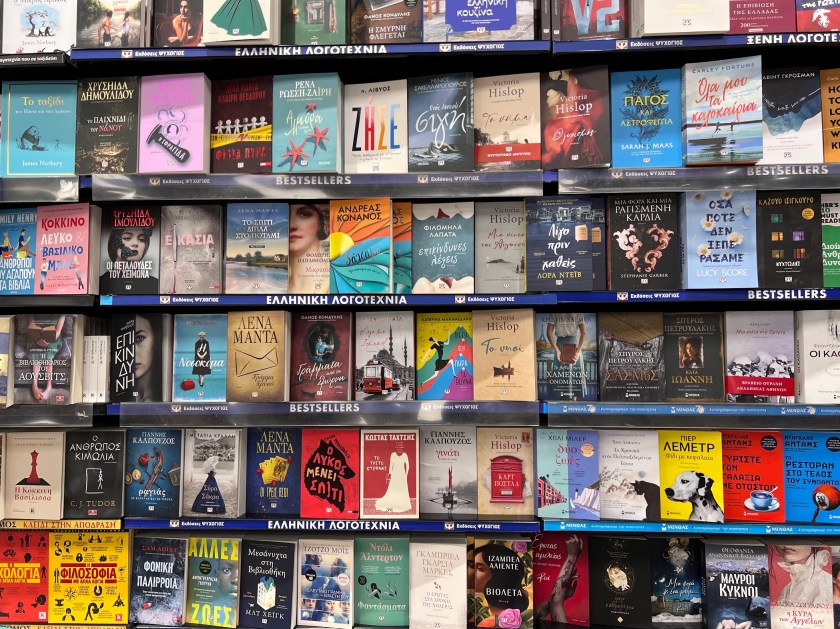
It is also the time I look back fondly on the books that lit up my inner world, and take a moment or two to jot down all the notable titles, read other people’s lists, and make jolly to-read lists for the coming year, and so much more.

I thought I was scatter-brained, had a lot going on, and therefore, my reading took a hit. But it seemed to be the other way round. Reading, once again seemed to have worked its magic in helping me through 2022.

Non-Fiction

There were quite a few books in this genre. Only mentioning the ones that stood out in my mind for various reasons. (Not because of the content alone, but also time of year when it seemed to have been relevant, how much I managed to absorb of new ideas etc)

Fiction

  • The Alice Network – Kate Quinn (this one is a fictional account of real life events of female spies who used to smuggle messages across borders at considerable peril to themselves.) The daughter told me that Audrey Hepburn’s (Of Roman Holiday fame) was  also well known for her efforts during this period when she held underground ballet concerts and so on to help people during the miserable times of the Second World War, and many times risked being caught and hoping to get off easily because of her diminutive stature and size.
  • Women of Troy – Pat Barker
  • A Blizzard of Polar Bears – Alice Henderson (A good racing thriller for airport reading) 
  • Akimbo and the Elephant – Alexander McCall Smith 
  • The Blue Book of Nebo – Manon Steffan Ros (What happens after a nuclear war – I am sure many of us have pondered what the aftermath of an apolcalypse would be like. This book that does just that.)
  • Young Mozart – William Augel (hilarious! )
  • Plus my standard dose of R K Narayan, Miss Read & P G Wodehouse  whose wise and irreverent view of the world, I find refreshing and a regular tonic to life. 

Science Fiction:

  • Project Hail Mary – Andy Weir
  • Daughter of the Deep – Rick Riordan
  • Bewilderment – Richard Powers (This is one of the best books I’ve read – highly recommended. Stays with you for a long time)

Special Children’s Books:

Poetry:

How can there be no magic in the list?

Please share your reads with me. Would love to get started on my reading list for 2023.

Temple of the Mind?

We’d been on a short trip to catch some European magic. We started off in Paris. In order for us to experience a proper European winter, the 1st day in Paris started off with a brisk walk to the Louvre at 8 in the morning when the temperature was still 24F. As we stood there, waiting for the rest of the tour group to join us on the marvelous walking tour through the Louvre, I felt a sudden stab of pity for all those who had lived before our times. 100 BC, 500 AD, 1500 AD, 1700 AD. None of these poor folks had indoor heaters that hummed and thrummed the way the museum indoors sounded welcoming. They didn’t have access to 32°Heat products that were brilliantly designed thermal wear designs – nor were they commonly available after mass production. With three layers of clothing, if it was still this cold, how on this marvelous Earth a mere 100 hundred years ago had people endured this time of the year? The thousands who died in the cold winters in the trenches, on the war fronts, in concentration camps. I shuddered and this time not from the cold. 

As I stood there, thinking of the little history I did know, I wondered why we never learnt from them. Why did we not recoil from war, sense divisive forces and squash them? Maybe this humanity’s path – bring ourselves to the brink of annihilation with our madness multiple times over and then miraculously survive till the one time when we don’t. Who knew? Wars and enmity don’t seem to end. 

Mercifully, our rag-tag tour group assembled after about 1/2 an hour that felt like 2. We walked into the Louvre like frozen zombies hoping to thaw out with the artworks inside. How did that sculptor bring himself to work on the marble statue of Venus dated 120 BC through these cold winters?

We started off at the famous prism inside where those who read or watched the Da Vinci code. It was beautiful and really, who thought of putting up bean-bags on that pole of the prism? It started the tour of with touch of a whimsy before the academic aspects of the museum unleashed itself.

IMG_1430-COLLAGE

If I were to describe the Louvre and the Vatican in one stroke of a brush, it would be: Too many artworks to properly appreciate each one.

Though, our tour guide, Maria, tried her best. There were 38,000 pieces of art in there. The Vatican (70,000 of which 20,000 are on display). With all the hundreds of artists at the time, why did only a few achieve lasting fame? Maria explained many things about art that we ought to have known, but didn’t. Things such as  the angle of the light, the imaginative aspects of landscape, the differences in perspective, the kind of face that seemed to have appealed to Leonardo Da Vinci

monalisa

Did that famous, but thoroughly over-rated face of Mona Lisa have a glint of Leonardo Da Vinci’s favorite student? (shown below?)

IMG_1469

I keep clicking pictures of the pieces that appealed to me as she gave us salient features. I remember standing in the museum and thinking that I must not let art escape me in the daily humdrum of life. Corporate life, especially, had no time baked in to appreciate the finer aspects of life such as literature, art & music the way schools do. So, how do we make an appreciation of art a daily ritual, so there is always a little of the artistic in us? Oh! So many lofty thoughts. If Leonardo Da Vinci were witness to my thoughts that morning, he might’ve taken me on as a student, grandly overlooking my lack of talent, just for the touching sincerity.

But a mere 48 hours later as I write this, I am distressed to say that I cannot remember why I took half of the pictures I did. 

There was something about a picture of the maternal (Maria said Leonardo Da Vinci did not have a mother or someone who set a maternal example in his life, and thus the picture was doubly important). And something appealed to me. But what? 

This one appealed to me as a writer. The early journalist who felt he had to say his truth and was murdered for it.

journalist

Or the coronation of Napoleon. Here was promise that megalomaniacs existed, continue to exist, and will continue to wreak havoc. In the absence of social media, this was Napolean’s attempt at portraying the coronation to the masses like he wanted – the truth be damned. Hundreds journeyed to the Louvre to get a glimpse of Napoleon and his bride, at the coronation. Apparently, Napolean’s mother did not accept his choice of bride and refused to attend the ceremonies as a result (there is a nice piece of continuity through the ages), but she is there in the painting. The Pope was invited and snubbed, but he looks happy behind the king. Maria pointed out many such discrepancies which I am afraid have evaporated since. Those art aficionados who do know the details have obviously written them out in detail in hundreds of books, blogs and YouTube videos for souls like myself.

coronation

And those statues of Venus – already promising womankind with all sorts of torment thanks to the impossible standards of beauty (the tall vertebrae, the perfect ratios between head, legs and girth, that seldom seem to bless breathing and living souls as we live out our lives on Earth.) Did the lovers of the sculptors of Venus feel the pressure, or were simply not bothered about the grandiose perfectionism as they had to tend to the business of living?

Venus de Milo on display at the Louvre

So many inspirational, marvelous wisps floated in at the Louvre. Maybe that is the vibe of museums: the wisps of imagination and insight from the millions of people over hundreds of years all hanging together illuminating the souls who dare to dip their toes into these journeys of the mind.

Our own temple of the minds.

Magique Français

There is a charm to traveling at this time of the year. We had decided on an Europe trip with 3 countries thrown in to the mix. Which is to say that the rest of the nourish-n-cherish household of spoilt folks enjoyed a trip planned meticulously by the husband. Left with all the rest of the work, I stood in front of my bookshelf dilly-dallying on the reading material. Finally, I chose Bill Bryson’s Neither Here Nor There: Travels in Europe, which was an excellent read. 

The whole way to the Airbnb from the Paris airport, the radio was on and the hosts chattered on in French. Considering that I was the only passenger in the car who had ‘learnt’ French, I must say I was aghast that I remembered almost nothing of the beautiful language (except for tidbits such as – one mustn’t pronounce the last consonant, unless the next word starts with a vowel, or the river is feminine while the museum is masculine) I have always been little lost with languages that attribute a gender to everything. 

Is a croissant masculine or feminine? I don’t know. 

Both Le Croissant and La croissant sound right to me, but DuoLingo assures me that croissants are masculine and therefore Le Croissant is correct. Sigh.

I must say languages and brains are curious things. I was sincere, if not successful, in my attempts to learn French in 11th and 12th grade. I would’ve thought that some things would surface through the foggy decades as I heard the spoken language, or saw the words written in the menu cards in the little French cafes. But nothing happened. I recognized ‘avec’, ‘le’, ‘la’, ‘and words that had a passing semblance to the English language and could thus be fathomed. As I stumbled my way through the language  I realized that I had never really spoken French, though I seemed confident enough to butcher the pronunciations. For instance, I confidently addressed the Louvre as the ‘Loo-v-rrrr’. 

Apparently, I had it all wrong. 

Humbled by this revelation of my poor French, one day on the metro, I was trying my best to listen to the announcements and map the name of the stations to the pronunciation. I can understand my not getting a name like Champs-Élysées – Clemenceau or Maisons-Alfort – Les Juilliottes, but I didn’t get Grands Boulevard. That hurt. Now see, I pronounce it is Grand-ss Boo-lay-vard (so no letter is offended or feels less important). But the French pronounce it as Gron Boolevaar. With the overhead crackling that is a requirement for most metro systems,  I heard it as ‘groan bole’, and was looking around at people before the husband said it was time for us to get out and hustled us out.  I leaped out before the doors closed behind me and was rattled till the sortie (exit).

The French trip you up in more ways than one. I trust it is their way of having fun with us poor sods who haven’t a clue about the language. For instance, there were so many names that sounded like food, it was astonishing. Who wouldn’t like to get out at Madeleine station? I found myself drooling a bit about the buttery m-s and missed Grands Boulevard. 

I remember the husband telling me for an entire hour that we had to go to Rue Ravioli. I thought to myself and smiled that I had never seen this many streets named after food in any other country. I mean how often have we seen a Hamburger boulevard, or a Tomato-Bisque Road? Even in countries that enjoy their foods so much like India, I had never seen a Roti Street or Dosa Boulevard.  As I was feeling cleverer and cleverer with the inspired line of thought, I found that the husband was truly hungry was all. It was Rue-de-Ravoli, not Rue-de-Ravioli (the cheese filled pasta).

Nevertheless, the names had a marvelous ring to them. 

Liberte

Bonne Nouvelle

Strasbourg – Saint-Denis (a big hyphen followed by a small hyphen)

I found myself nodding vigorously and agreeing vociferously (making the French doubt my capabilities even more) as I read Bill Bryson’s Neither here nor there: Travels in Europe.

Bill Bryson on French:

I took 3 years of French in school, but learned next to nothing. The problem was that the textbooks were so amazingly useless. 

They never told you any of the things you would need to know in France. They were always tediously occupied with classroom activities : hanging up coats, cleaning the blackboard, opening the window, setting out the day’s lessons. Even in seventh grade I could see that this sort of thing would be of limited utility in the years ahead. How often on a visit to France do you need to tell someone you want to clean a blackboard? How frequently do you wish to say: “It is winter. Soon it was will be spring. “

In my experience, people know this already.

Bill Bryson

But language has a way of morphing and conjoining, and by the end of the day, the daughter was speaking in lilting French accents, and I was very impressed with her, and unimpressed with myself for I understood next to nothing. Then, she chuckled and told me that she was just spinning her Spanish in French accents. I tell you! The nourish-n-cherish household really knows how to capture the magique francais.

The Wonder of Sonder

“Travel is fatal to prejudice, bigotry, and narrow-mindedness, and many of our people need it sorely on these accounts. Broad, wholesome, charitable views of men and things cannot be acquired by vegetating in one little corner of the earth all one’s lifetime.”

 Mark Twain, The Innocents Abroad / Roughing It

I found myself reveling in this quote as I traveled recently to the opposite side of the globe.  I had been to Jaipur, India. It was a part of India that we normally do not visit on our little family trips, and was thus a novel, beautiful experience for me. Truly, Incredible India has many surprises up its sleeve. UNESCO sites dotted the place, the vibrant active city co-mingling easily amidst centuries of history was more heartwarming than ever. 

We had visited the Amer Fort near Jaipur and our guide’s narrative views on the socio-economic views of those who had lived in the fort were well worth mulling over.

It was while we were discussing the flow of information that I got to musing on the nature of truth. There was a version of events presented to us over time. There was a version of these events that people lived through. The victors and the vanquished of all those battles, I am sure there were spies, untruths, noise, and chatter back in the days of royalty as well. Human beings have always been a complicated species, and the abilities to sort through what is right, what is factual and what needs benefit-of-doubt and so on have been questions that have wracked generations. More so, in ours, thanks to the speed and efficiency of information spread. 

To have a conversation about Twitter in the palace of the Maharaja of Jaipur, Sawai Jai Singh, was both amusing and exotic.

While, ancient ruins do have an appeal of its own, a thriving populace right alongside all of these historical sights makes for an even more interesting narrative in our heads. Just imagine the number of people who’d walked past this very strip of land: kings, queens, princesses, princes, soldiers, charioteers, jutka-pullers, robe-makers, royal jewelers, sculptors, artists, musicians, dancers, ministers, priests, philosophers, poets, maids, chefs, dhobis, plumbers, architects, animal trainers, army generals, court jesters, astrologers, astronomers, physicians, scientists, software engineers, surgeons, guides, shopkeepers, memorabilia makers and sellers, mobile phone operators, tuk-tuk drivers, bus drivers, journalists, advertisers, local influencers, and social media influencers.

How many more new professions would get to traipse along these very sands as they try to take in the long and incredibly short history of homosapiens? It is all highly fascinating when we stop to think of these things amidst all the noise and chaos that surrounds us. That is what I did that day:  imagined one of those fast-forward sequences with all the different folks who make up our society as they navigated life in this city over the past 295 years. 

Not unlike one of those sudden disorienting sensations that the persons we see going past us are just the same as we are: All people with bursts and spurts of emotions surging, thoughts swirling, ambitions burning, life calling, livelihood beckoning, creativity surging, peace loving, adventure liking, love yearning souls straddling the demands of life on the sands of time. 

There is a word for that.

Sonder — noun. the realization that each random passerby is living a life as vivid and complex as your own.”

So, there you have it. I had a moment of sonder on the other side of the globe that really we are one, and the wonder of that unifying feeling was one of the many many revelations of travel.

Royalty – No Thanks! RoyalTea Please!

I had the opportunity of visiting Jaipur and while there, a friend was kind enough to take me to the Ajmer Fort. It was a beautiful day for the fort and after the initial haggling and nuisance of guide badgering, we managed to find a guide who could explain things in English to us. 

The visit was a welcome one. For all of us are mired in our daily lives, our problems looming large over the horizon, sometimes enveloping us. However, a short sojourn into the lives of those who lived a couple of centuries ago is revelatory. A spot of time travel is all it takes: Our problems do not go away but something shifts in our perspective to handle them. 

Standing there, atop a hillside and looking down at the Queen’s palaces, the guide told us about the political rivalry between the queens themselves. The king, he was telling us about, had 12 queens. Each queen had her own staff (each had at least 38 maids according to the maids quarters), and obviously had diplomatic relations with her fellow queens. A delicate balance of power, respect, and information exchange ought to have existed in these very spaces. The queens were leaders in their domains: their aristocratic birth and training only able to account for their fate till they got to become queens of the raja. After that, they had to keep up their image, fight their own battles, live with the fact that they could lose their sons & husbands to war anytime, and figure out a method of survival or not if they found themselves at the mercy of the invading army. 

I suddenly felt overwhelmed at the problems of their day. I am sure they received the best guidance available to them at the time, but nevertheless, they lived hard, admirable lives. To ensure that one received the right amount of attention from their king was part of the puzzle. How could you be just enticing enough for the king, and continue to be liked by the other queens? Budgets, staff management, administrative duties, leadership training for the young princes’ and princess’s . 

As we stood there taking in the stories of the guide, I felt a shift in perspective with respect to my own career. It is life after all. Every one had trials and tribulations to carry on. I understood vaguely what people meant when they said that each life is an illusion (not that we suffer any less because people tell us this).

As our guide marched on through the palace quarters, he told us about various aspects of royal life. The scented waters, the mechanisms used to keep cool in a desert, the entertainment choices, the staff who protected them and finally the baths where they could relax and rejuvenate. As I peered into the bath-tub of centuries ago, I could imagine them being waited on by their female attendants, and getting dressed with 42 different pieces of jewellery, before they could present themselves in public. 

That evening, when I stepped into the shower for a quick rinse off, I felt a wave of gratitude. The water was hot, and the plumbing perfect. The clothing I had ensured I made it for dinner downstairs in the hotel in 10 minutes. What’s more? There were no diplomatic connotations to the color of the jeans I wore.

I felt an enormous sense of how far we’d come! Royalty may have been all well, but I think we have it better. My Royal Tea awaited downstairs and I bounded downstairs with no queenly dignity.

Rustic Rumblings

I hadn’t met my siblings and siblings-in-law in 3 years and this unexpected trip to see them was rejuvenating. They had all taken a week-day off to spend the day with me, and had traveled hundreds of miles to see me. I was already on cloud nine and chittering happily when the brother added the icing on the cake: he was going to take the sister, nephew, pater and yours truly, on one of his legendary off-roading trips. As his car nosed its way past the city limits into rural Karnataka, a serenity seemed to descend amongst its occupants too. 

It was a day on which the North West monsoons were in zest. The riversides and little lakes the brother drove us through were swollen with the recent rains. He nosed the car towards lesser known off-roading trails. They seemed to beckon him through slippery slush and muddy muck. His staunch car wheeled and plunged into the side roads with gusto.

The old pater, not usually invited along to adventures in off-roading, had consented to come, and he ticked the brother off for needless adrenaline. 

“It is all your fault!”, said the brother chuckling at the far away memory of 3 decades ago when the pater would pile the three of us on his scooter and take to the steep roads of the Nilgiri Hills

The little brother,( then knee-high) would stand in front between his father’s arms peering out at the road ahead over the handlebars, myself (waist-high) between the sister and the father in the back seat looking sideways, and off we’d go on our school holidays. (The pater was a school teacher and enjoyed the same vacation schedule as we did.) As we reminisced about the good old days, the nephew pointed to a little girl clutching on to her father on a scooter nearby and asked if I was that girl. We all laughed. Yes I was. She even had her hair tightly plaited the same way, and had a maroon sweater on. More than that, she had joy writ large on her face as she felt the wind on her face. I felt like a little girl on an adventurous ride with her father again. (With the tens of pictures I clicked during that off-roading trip, the image that I retain the most vividly is this one and I did not click a picture. So much for visual diaries!) 

The number of waterfalls, steep hillsides and hamlets we’ve passed are too many to count.  We’d stop in small villages for a cup of tea amidst hospitable villagers in the tiny tea shops and learn of the local life. Grandmothers and mothers were present during the days, the men worked locally, and somehow every seemingly tiny village bustled with life. 

“So much has changed, hasn’t it?”, I said. We were out on a weekday too, but the work spots nearer the city were bustling. “I wonder whether the villages would look deserted. That would be so sad!” I said ever the nostalgic

The brother gave me an amused grin and said we’d soon find out as he had not gone out driving through these villages on a weekday either. The trail he was taking us on, apparently weaved through an extremely small village street – right through the main artery of the village – “almost like you’re driving through someone’s house” –  as he put it. 

I took pictures of bright little temples nestled under large banyan trees, cows, goats, and birds as they flitted in and out of the fields and wet trees. A little way off, we arrived at the village he was speaking of. 

As we inched our way past the narrow village street, we stopped. His car was not made for these streets. There was a bike parked on one side and it proved to be too narrow for the car to pass through. While the issue was being sorted out, I waved out of the car at the ladies sitting on their verandahs nearby. They smiled back even though they seemed to be sharing an internal joke as to why people needed such fat cars. My heart warmed to the gentle laughter and kind smiles flashed back at us. This village was not deserted at all. The mothers, grandmothers were all in attendance. The men too seemed to be at work in the local fields and the scene heart-warming. I asked them in my broken Kannada if I could take pictures, and they smiled and said ‘yes’.  

It was then a girl asked us in Kannada whether we’d like to stop and have some coffee. We thanked her and said we should be getting on our way, but such hospitality is the charm of rural India.

We fell to discussing similar stories of hospitality extended in various parts of India. The brother spoke of a time when he landed up haggard and dust-beaten at a restaurant on a bike trip of hundreds of miles in Northern India hoping for some food, but found out that the venue was closed off for external visitors as it was hosting a wedding that day. As he sheepishly apologized and tried to leave, the hosts would hear nothing of it. How could a guest leave hungry? Not only did they take in their dusty wedding guest heartily, but also gave him the full wedding meal planned for the family and friends in the village. 

The sister told us similar stories in Africa when she’d traveled on business years ago. 

I am not sure how this charm can be held as we swell in population and crowd together more closely. For I found myself wondering that the cities do seem to have lost this particular sense on more than one occasion. But if we do, then I am sure we shall bumble along with that undefinable quality of humaneness and humanity in spite of all our avarice and problems. 

“For though we may come from different places, our hearts beat as one.”

Albus Dumbledore – in the movie, Harry Potter and the Goblet of Fire.

Aphonia

I hadn’t met my siblings and siblings-in-law in 3 years and this unexpected trip to see them was rejuvenating. I found myself in a bit of a jitter as I boarded the airplane. My stellar siblings, nieces, nephews, parents and parents-in-law had all come to Bangalore to spend a few days with me, and I felt my heart bursting with gratitude and anticipation.

Covid travel made for strange times, and though I was enormously grateful for video calls, phone calls, and all the different modes of communication, the ability to see and be with those you love was going to be special. Accordingly, it was an excited  chronicler of lives who stepped out into Bangalore airport.

The next few days were a blur of activity. 

I felt myself talking so much my jaws hurt. One particular night when the chats went late into the night, I felt my voice crack. It just sort of gurgled and went hoarse. It had to – there is such a thing as too much talking. It was a malady that struck us all this week. I suppose it happens to those who talk or sing for a living. It was a curious phenomenon for me. 

a·pho·ni·a (Pronunciation: /āˈfōnēə,əˈfōnēə/)

loss of ability to speak

I was told by Dr Google about the causes for Aphonia, and I nodded along – that last part was the cause:

What causes aphonia? The main causes of voice loss are: Diseases of the respiratory system: a cold, laryngitis, cough, tonsillitis, nodules, allergies, throat cancer. Misuse of the voice: straining the voice too much or shouting.

Dr Google

The next day as I coughed my way into the morning, my voice refused to wake up – the teas, ginger-lemon hot waters, nothing seemed to work.  I was told (with some glee if I might add) that it might be a good idea to keep quiet. I nodded wondering how I was going to do that when in a few hours, I was going to see my sister after 3.5 years. 

I was correct in my apprehensions, for the next night went into the same mode. The sister and I had sore throats the next day. We croaked and moaned our way through the day, and still kept talking. It was as if a dam had broken loose and the word torrents wouldn’t stop. Finally, it had reached a point of hopeless whispering and we were still going strong.

I had a strange feeling wash over me the following day -maybe this is what a hangover feels like. Fits of good girl-i-ness overcame me and I said to the sister that, “I want to be serene and above mere emotions! You know? One of those strong and silent types who are able to convey emotions with a mere grunt and a nod. The populace listens, the masses oblige, and the powers that be execute.” 

She gave me one of her looks, and chuckled, “No you won’t! To say you want to speak less, you used 3 sentences. You’re not going to be the strong and silent type. Besides, we want this one – not a buddha who nods and sshhh-es!”

With that I had to be content. 

The author can be found sipping hot water and lemon teas with her heart full and throat sore for the next couple of days.

A Question of Time

The past week has been an interesting one in many ways. Emotions aside, what this meant in practical terms was that the nourish-n-cherish household ran on a clock. 

The map says it takes 45 minutes at peak traffic, but surprise of surprises, it took 62 minutes, neatly shaving off the buffer we had baked in for grabbing a snack. 

At 10:45, we would have to be there at Y parking garage so that we could get to X building at 11:00.

At 4:45, the flight leaves from Airport Here. That means, the time at Airport There would be x-12.5, but there is x+7.5 stop-over in between.

By pure chance during this time of frenzy, I had with me a slim book, Longitude – The True Story of a Lone Genius Who Solved the Greatest Scientific Problem of His Time by Dave Sobel.

It made for an interesting read on how we managed to get time down to a science. Dava Sobel creates an excellent narrative around the problem of Time and Maritime navigation.

“Time is to clock as mind is to brain. The clock or watch somehow contains the time. And yet time refuses to be bottled up like a genie stuffed in a lamp. Whether it flows as sand or turns on wheels within wheels, time escapes irretrievably, while we watch. Even when the bulbs of the hourglass shatter, when darkness withholds the shadow from the sundial, when the mainspring winds down so far that the clock hands hold still as death, time itself keeps on.”

Longitude by Dave Sobel 

While many astronomers tried to solve the mystery of keeping time using the astronomical events in the sky such as mapping Jupiter’s moons and their eclipses etc, one man, John Harrison set about solving the problem mechanically with a superior clock design. Clocks of the fifteenth and sixteenth century lost time because their pendulums lost their swing with the swaying of the ships, the internal mechanics rusted with the moisture at sea, and numerous other problems.

Reading about Time and how difficult it must have been to measure, has always fascinated the son & myself.

I suppose Time has become such a cornerstone of our existence that it makes for a refreshing read to hark back to the times when time was an indicator and not as much of a martinet as it is in our over-scheduled lives today.

I was reading Mrs Pringle of Fairacre by Miss Read – every time when life demands a slowing down and it is physically hard to do so, a dip into the lovely village green of Thrush Green or Fairacre does the trick. In the Fairacre books, Mrs  Pringle is the competent school cleaner who is also a bit of a virago. Her scatter-brained niece Minnie Pringle is often featured – incompetent and maddening as she is, she helps(or hinders) Miss Read out now and then. In this snippet, Miss Read learns that Minnie Pringle, a mother of 3 and stepmother to 5 young children, never really learnt to look at the clock and read the time.

Mrs Pringle of Fairacre: About Minnie Pringle 

I had not really taken in the fact that she could not tell the time

‘Well, I never sort of mastered the clock”, she said vaguely, implying that were a great many other things which she had mastered in her time.

‘But how do you manage?’ I enquired, genuinely interested.

“I looks out for the Caxley’, she replied. ‘It gets to the church about the hour.’ (The Caxley is the local bus)

‘But not every hour.” I pointed out.

‘Yes…but there is also the church bell.’

‘It still seems rather hit and miss,’ I said.

Mrs Pringle – By Miss Read

When I read the above snippet, I threw my head back and laughed. Almost subconsciously, I glanced at the various apps on my smartphone to remind me about the day : there were calendars synced with my meeting schedules, alarms to remind me of certain events and classes for the children, timers to help the rice cooker turn itself off, the world clock app to let me know when it is okay to call my friends in the different corners of the globe. 

Maybe John Harrison (The man who came up with the design of a clock that could hold time during maritime vagaries such as storms and tidal waves without rusting or losing momentum in the sixteenth century) did not quite anticipate the extent to which the world would adhere to Time, but it is refreshing to think of a few people who are not ruled by the ticking of the clock.

Maybe we should have Do-Nothing Days in which neither the phones, nor the passing of time intrude. It will be a refreshing change for sure.

Note: The obsession with Time is called Chronomania and those who live in perpetual fear of time ticking, time passing have Chronophobia.

Feeling Blue?

Fascination with the color blue I realized on picking up the books, BLUE – In search of Nature’s Rarest Color – Kai Kupferschmidt, is not a nourish-n-cherish household trait, but a universal one, and what a lovely revelation that was. 

Blue – In Search of Nature’s Rarest Color – By Kai Kupferschmidt

There are blues that are particularly attractive in clothing. For instance there was a deep sea blue nickname M S Blue, for the famed singer, M S Subbulakshmi first stylishly wore saris win that rich blue to concerts. Then there was the copper sulphate blue, turquoise blue, peacock blue, sky blue and navy blue.

I understand the yearning to write about the color blue. Who hasn’t been uplifted by the blue waters of a lake or ocean, or the sight of the blue skies first thing in the morning? Blue seems to assure us that we are here. We Belong on Earth – on this Pale Blue Dot.

Nevertheless, the book has many interesting aspects to the color blue. Starting from ceramics to precious stones and textile colors, the color blue has always enamored artists and patrons alike.

I found myself gleefully reading about the color, YinMn (pronounced yin-min) blue created by Dr Mas Subramanian that was later honored by having a color of its own created by Crayola the Crayon company.  Made from Yttrium, Indium and Manganese, the color created a blue wave in the world of colors.

The chemical formula of YInMn Blue is YIn1-xMnxO3.

You can read about its serendipitous discovery here: https://chemistry.oregonstate.edu/content/story-yinmn-blue

YinMn or Oregon Blue – Image from Wikipedia link : https://en.wikipedia.org/wiki/YInMn_Blue

As I sat watching the son in his swim class, I felt a forced sense of ease settle upon me when I opened the book to read. The swimming pool was tiled with light blue tiles, the white lighting overhead made it a calm enough locale even though there were about a hundred people in the pool area. Waters do have a calming influence if you let it. This summer, we have been swimming a little so we could appreciate the wonders of the underwater 🗺 world 🌎 in the Pacific Ocean. Closing my eyes, I can still visualize the vibrant school of fish and the large turtle in the blue waters. 

The Sea Turtle near Kauai, Hawaii

I always imagined the creatures of the ocean having an even higher frequency range of light perception than humans. So I envisioned them swimming and living in a brilliant world of coral reefs and kelp forests with the myriad shades of blue contributing to its beauty. Imagine my disappointment then that the book while explaining the cones that are present in our eyes to detect color indicate that whales, seals and many denizens of our blue seas cannot perceive the color blue and may well see the teeming coral reefs as grey on grey. 

Image from the book as given on the Amazon page

That made me feel blue – I am not going to deny that. (Though I must admit the color blue has never made me feel blue, so I wonder where the expression comes from.)

Art work by Daughter

This book has re-awakened a dream of two science-based books that I have been meaning to write for children.  One on colors and another on how different creatures perceive our world. 

When can I become a mermaid?

To explore the forests of kelp

Or a butterfly

Or a blue jay or a hummingbird

So I can see the gardens of life abound through their wondrous roving eyes.

The Comedic Snorkelers of Kauai

Previously, when we’ve dipped our senses into another world, it was while being firmly rooted in our own. Peeking into the aquariums and viewing areas so painstakingly built for us by the ecologists and marine scientists, I always sent a wave of gratitude to those who enabled these magical moments. 

Snorkeling for the first time in an ocean was mind boggling.

It was with excitement and trepidation that we stood there listening to the instructions from our guide. Contrary to most snorkelers in the region, we were not experienced swimmers. As we slipped our feet into the paddles, a gurgle of hilarity hiccuped its way up and the children & I exchanged glances and started laughing. We did look ridiculous.

Getting a peek into the world of the ocean has always been a dream. Reading essays such as the Enchanted World by Gerald Durrell made the desire stronger.

Any naturalist who is lucky enough to travel, at certain moments has experienced a feeling of overwhelming exultation at the beauty and complexity of life

But there is one experience, perhaps above all others, that a naturalist should try to have before he dies and that is the astonishing and humbling experience of exploring a tropical reef. You become a fish, hear and see and feel as much like one as a human being can; yet at the same time you are like a bird, hovering, swooping and gliding across the marine pastures and forests

Gerald Durrell – Golden Bats and Pink Pigeons

While it had been so easy to slip our flippers on and off on land, the moment we had gentle waves lapping against us, simple tasks became a comedic trial of incompetence. I was glad to see that experienced swimmers struggled just as much as we did with this task. I may have smirked, and if I did, who could blame me.

As we moved on looking into the waters and observing the fish, there were moments when the flippers propelled us forward, and moments when the lungs rebelled with the excessive sea water that we were drinking in with each breath.(It takes some time to find the right degree, adjust the valves etc).

Whether we were watching the fish, or they were watching us was a philosophical question for I felt the fish swim by in delight and make several loops and gags around us. Schools of them – probably curious, and laughing at our inefficiency with the waters.

The fish frolicked, the humans shuddered; the schools of fish glided and gurgled happily while we sputtered and choked; the fish changed direction seamlessly while we struggled. If we entertained our piscine friends, I am happy. 

Several minutes into our dip and frankly embarrassing foray into the ocean, our guide came gliding up like a fish himself and signaled us towards a large turtle (she-turtle he said), and we nodded. “It is illegal to touch a turtle these days, but you can see it from afar.”

We changed course (which is to say we all spat out some sea water, gulped some air and water, sputtered some more and set out in the approximate direction) flipping those comical looking flippers hard. And there, right in front of us was a large turtle with elegant fins swimming graciously in the waters. For those brief moments, we weren’t bumbling sea-water drinking sputterers lost in the ocean, but mesmerized and equally graceful spectators to one of the most elegant creatures on the planet.

This was magic. Days afterward, I can flash back in my mind to that clear image of the turtle with its large fins swimming on by us. A face structure that enables it to look like it is smiling and amused with life, the turtles smooth motion as it cut through the choppy waters of the Pacific Ocean was amazing.

How do bone structures, ligaments, tendons, and all the things that hold an organism together evolve by design to function thus? What marvelous creatures sentient beings are? Nerves, neurons, cells, tissue, blood, ligaments, flesh and bone- but all of this coming together to become thinking beings with intent.

I obviously have been looking for pictures of all that satisfies this marine curiosity ever since. My curiosity was rewarded by this book :

The Art of Instruction – Vintage Educational Charts from the 19th and 20th centuries

The pages indicate the anatomy of many marvelous creatures. 

The Anatomy of a Sea Turtle isn’t in this book, but the pictures of jellyfish, cuttlefish, herring fish, starfish, whales and numerous other fascinating creatures makes it a marvelous book to peruse.

Starfish anatomy

For the Sea-turtle anatomy: This is  a useful link

Smithsonian Sea-turtles

What an enormous wonder it is to be a sentient, logical, and functioning being in this complex world? For that one marvelous dip into the world of the sea creatures, I am grateful beyond words can describe.