Comet Chasing * Chocolate Charms

The children have a shared liking for Calvin  & Hobbes. The adorable pair have been the source of many hysterical giggles between the siblings in our home. In the son’s room, there is a cartoon clip of Calvin & Hobbes that seems to tickle both his whimsy and his innate rapture and curiosity of the universe we live in.
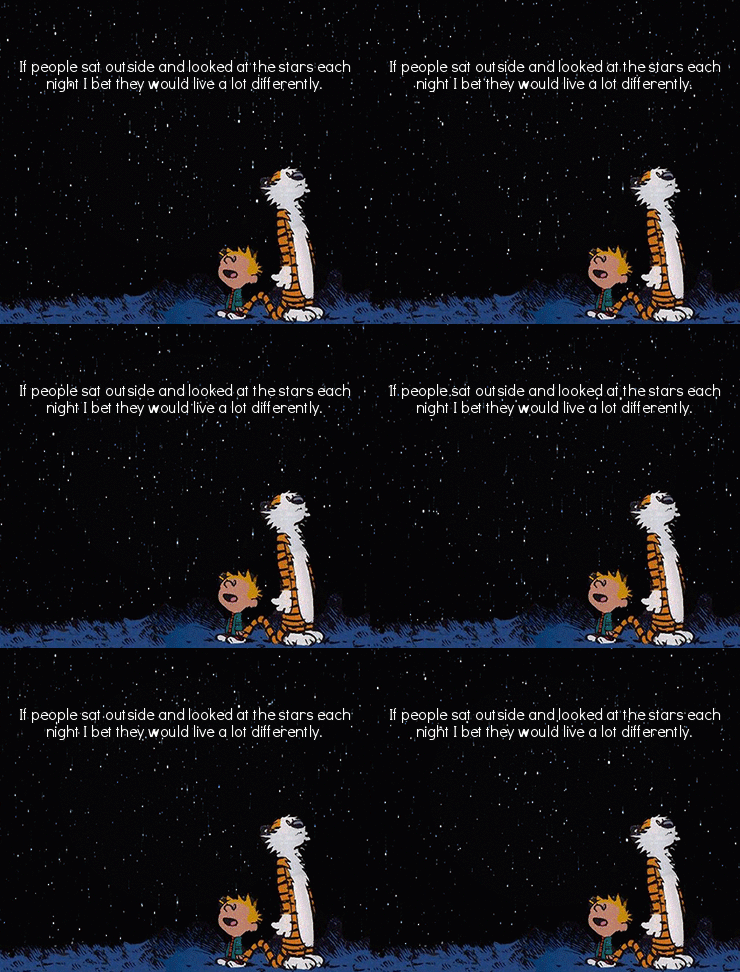
calvin-gif

If people sat outside and looked at the stars each night, I bet they would live a lot differently  ✨- Calvin & Hobbes

A few weeks ago, I was typing out an email with the ounces of concentration I could muster at the end of a 12 meeting day, and I wasn’t exactly thinking  about 💫 comets, stars, pulsars, neutron stars, black holes, and parallel universes, when the little fellow shot into the room bursting about comets. I turned around , and my face probably looked like some of the spreadsheets I was looking at, for the son gave me a pitying look that seemed to indicate, “What good is a day when you haven’t thought of these important things?”

I laughed at the incredulity on his face: Stars, superclusters, muons traveling the speed of light, quirky  quarks are all thriving right beside his world of super-powers for super-heroes, who are incidentally gifted with important sounding superpowers such as gamma-rays and electromagneto-muon-transporters and what-not. 

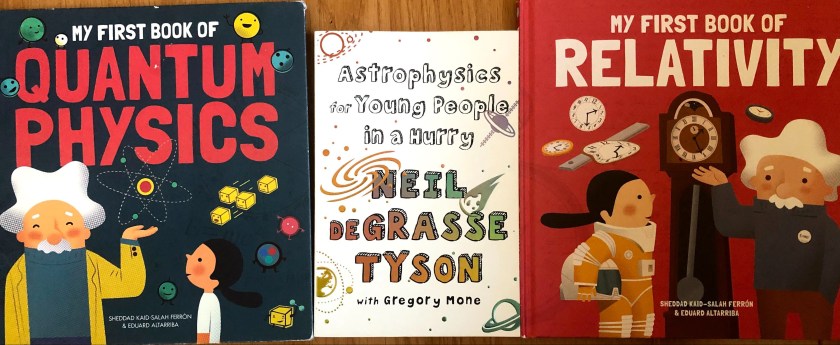
“Did you  know Halley’s comet is going to come again in 40 years?” said the son still bouncing and glowing from the stash of chocolate chips he has been chipping into while reading his little books on Physics.
img_8953

“Yep! Sounds about right. I was around your age when I saw Halley’s Comet. So once in 76 years means …” and I trailed off.

“What?! You’ve seen Halley’s comet? Aww…..so lucky!” said he, and I had to laugh at his yearning. I did remember the cold nights awaiting the turn at the telescope to catch a grainy sight of the Halley’s comet. I must say that the whole experience felt worth a lot more given the rapture with which he listened to the comet sighting. I seem to remember the hot chocolate provided to the young astronomers more than the telescope and the grainy image itself.

Maybe the universe really did hear his yearnings that day, for within a few weeks, another comet came our way: the Neowise 360 comet sighting was supposedly possible from where we lived. I was so happy for the little fellow. He could barely contain the excitement in his system when his father said at the lunch table that the comet would be visible at 4:30 a.m. He got up and ran upstairs to his room. We were exchanging quizzical glances at this when he tumbled downstairs and said, “Yes! I set the alarm for 4:30 – I cannot wait to see it!”

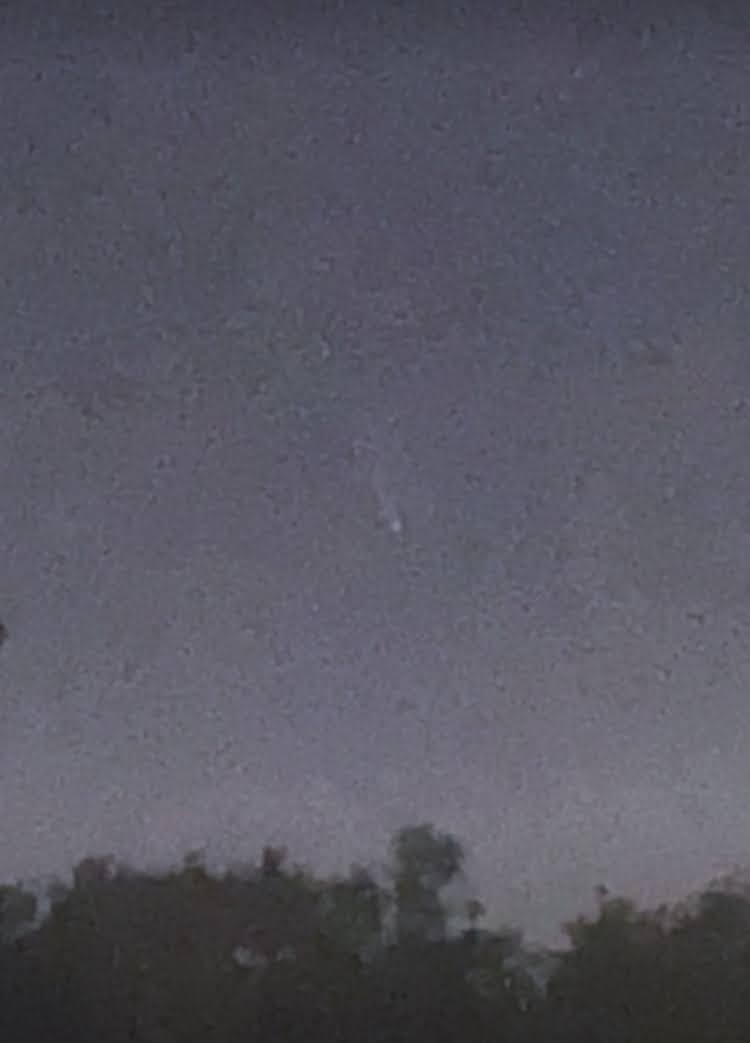
I had to admit; the young astronomer’s enthusiasm put us to shame. So, for the next few nights, we bundled up and comedically traipsed from location to location in the wee hours of the morning looking for a comet sighting. The clouds were there in one place, some low mountains in another, and then, finally, we managed to find a plain spot in which we caught a grainy sighting.
img_8934

Knowing that we caught a fleeting glimpse of something that is not going to come by to see us for another 6800 years is strangely moving. I have to tell you though, that similar to the Halley’s comet sighting, the hot chocolate after coming back, and the the long tail of wishes accompanying the comet sighting, definitely made the hustle worthwhile. 

That morning, the rest of the comet chasers had no problem falling back to sleep, but I did – the comet had kindled dreams of long ago: dreams born of comet chasing and chocolate charms; dreams woven with the magic of stardust 💫 and comet trails – bright, shiny, sparkling, path-breaking and aspirational.

Bill Watterson was absolutely right: People who spend time looking up at the night sky do live life differently!
 

How do we exist?

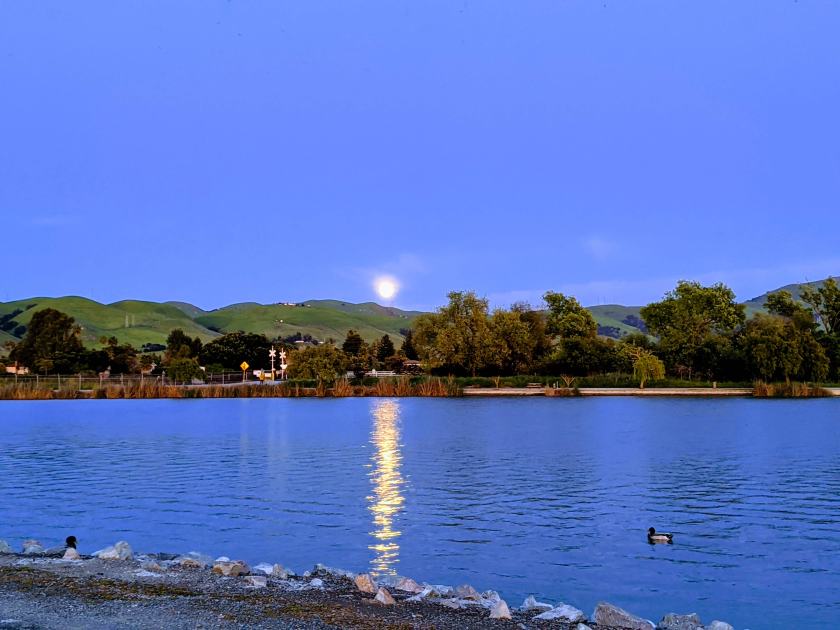
It had been another long day, and as the clock ticked towards midnight, the body yearned for sleep, but the mind looked longingly at the tsundoku pile, and craved for some quiet moments of solitude. I peeked out of the window, and the moon sailing high through the skies tugged at my heart. There is something so intensely beautiful about catching sight of our  lovely cosmic neighbor sending its mellow moonbeams through the leaves at night.

I looked for a word that captures the phenomenon, but there isn’t one.

There are two words in Japanese that come close (the Japanese language has such amazing words for admiring wondrous nature around us.)

Kawaakari ( 川明かり – a word depicting the evening reflection of light on water, or in some cases can refer to the reflection of the moonlight off flowing water.

img_20200407_195324-effects

Komorebi (木漏れ日): Sunshine filtering through the trees.

trees_komerabi

I had just started reading The Sea Around Us by Rachel Carson. In the first chapter, Rachel Carson takes us with her steady voice into a time on Earth before the seas were created. When the planet was still heaving and churning its metallic ores, hot searing waves of liquid settling into a semi-liquid state in its outer cores. She wonders then about the question, how were the oceans formed?
“So if I tell here the story of how the young planet Earth acquired an ocean, it must be a story pieced together from many sources and containing whole chapters the details of which we can only imagine.
For although no man was there to witness this cosmic birth, the stars and moon and the rocks were there, and indeed, had much to do with the fact that there is an ocean.”

Then, she leads us from this fiery place in the cosmos with the sun heaving its solar flares, the earth itself arranging itself into concentric spheres with hot, molten iron at its core, and an intermediate sphere of semiplastic basalt , the outer layers of granite and basalt. And then gently she lures us into the possibility of the moon and the ocean being related to each other.

The next time you stand on a beach at night, watching the moon’s bright path across the water, and conscious of the moon drawn tides, remember that the moon itself may have been born of a great tidal wave of earthly substance, torn off into space.

How can one not be mesmerized by the creation of the moon? Was it truly hewn from the surface of the earth (The moon’s density does match the density of the outer crust). The hypothesis that the moon was hewn away after massive solar tides exerting a pull on semi-molten Earth is based on the theory that the large portion thus hewn away left such a large scar on the surface of the Earth. A scar that would continue to shape Earth and its lifeforms for millions of years afterward: The Pacific Ocean.

Later, as the Earth cooled and clouds formed from the steam rising, the rains started. Pouring onto the hot earth for years – initially almost immediately evaporating into steam, but eventually collecting as water – forming the first oceans.

It is, of course, fascinating that we still do not know for sure how the moon was created. There are several theories – theories of violent impacts, random objects being attracted by gravity, and young earth managing to keep one satellite, while heftier ones like Jupiter acquiring 67 etc. This is a topic still under discussion.

https://www.space.com/19275-moon-formation.html

Nevertheless, the very first chapter had me wowed. I would never be able to look at our closest cosmic neighbor with the same eyes ever again. How often I have stood marveling at the moon? Out on walks, my heart always skips a beat when I catch sight of the beautiful, faithful satellite accompanying Earth as she tears through space. To think that there is a possibility that the very creation of our cosmic neighbor was crucial to our oceans is awe inspiring. I live on the Pacific Coast, and never can I see the bays, the ocean or the moon without reminding me of this book.

The Sea Around Us by Rachel Carson

sea_around_us

The skies hold the answers to our most philosophical stirrings. Why do we exist?

The seas, it seems, holds the answers to our most existential stirrings. How do we exist?

May the Fourth …

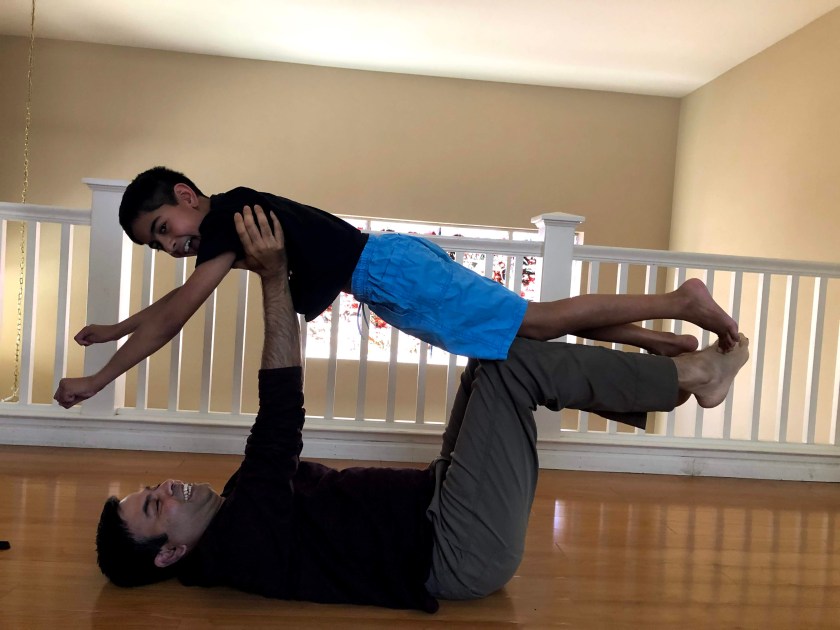
“I AM YOUR FATHER!” the son comes yelling into the room. His excitement has woken up the megaphone in his vocal chords and he startles his father as he professes this sudden revelation of Darth Vader and Luke Skywalker and all the rest of it. I turned around startled, as the pair of them babbled on about Star Wars – Return of the Jedi, Force Awakens. 

I knew my time was up.

I have hitherto flitted about the world confusing Star Wars and Star Trek – they looked like the same thing. There are spaceships, battleships, people wearing masks, everyone looking and sounding important, as they take their noble part in inter-galactic warfare. Every  time the husband tried to explain, I happily let my brain flit to more important things, like rose gardens, ducklings, sore thumbs, or dumplings.

Comparison of Star Wars & Star Trek

I could totally identify with Penny in Big Bang Theory as she said:

“There is absolutely no difference! But they get cranky when you mix the two up.”

My days of star-innocence however are coming to an end. The son has taken to watching Star Wars. He now painstakingly explains Jedi warriors, storm-troopers, and with a shining face awaits us as he says, “Oh my goodness! Revenge of the Sith blew my mind away! Everything suddenly made sense, right?!” 

As a treat to me, he sat next to me and made me watch Revenge of the Sith (the prequel that was taken after a considerable number of sequels were taken) in which it is revealed who Darth  Vader is. He sat like a little shining moon-let watching my face to see if it had the appropriate reaction as Anakin Skywalker is christened Darth Vader.

Sigh.

He uses his magic wand that is doubling up as a light saber these  days as he fights his imaginary battles. I tell him he needs nothing of the sort to fight inter-galactic battles – all he needs to do is fake-sneeze. He snorts with derision and guffaws with laughter at this Covid-humor, but good naturedly battles on armed with a wand or a rolling pin as the case may be. This Jedi shall stand by Obi-wan Kenobi!

To raise a geek, one must not be weak, or meek. I pick up my rolling pin, that I am making pooris with, and join in the fight. Your wand against my rolling pin – our light sabers emit energy, noises and most importantly memories.

Amy Farrah Fowler: “If you are going to compare hammers and wands, I can’t even take you seriously!”

May the Fourth be with you! The spaceship galactica takes off to a galaxy far far away…

img_8276

That is the Earth!

“Do you know what this is?”

“That is the Earth! From the moon.” said the son matter of factly. “I saw it before!” he said in response to my awed expression.

We were looking at the back jacket of a book, that I flipped to the last page first.

this_is_earth

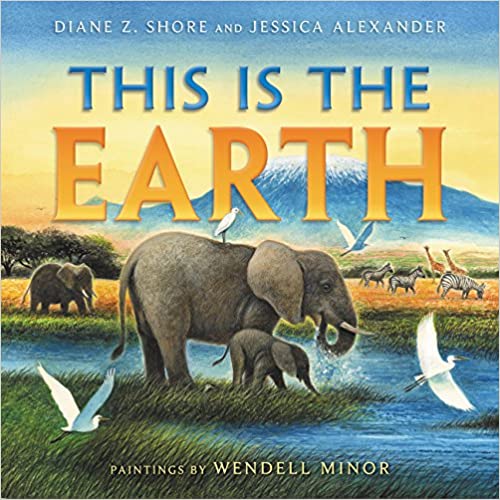
This is the Earth, by Diane Z Shore & Jessica Alexander with paintings by Wendell Minor.

It was a picture of the Earth rising on the Moon’s horizon.

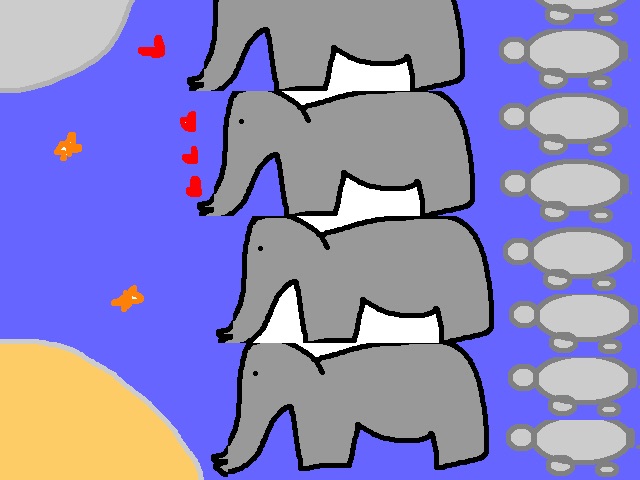
A picture that generations of humans for millennia could only have imagined, and never really gotten close to the sheer beauty of it. Our myths are at once rich and limiting in its reach. They have imagined Earth as being elephants on elephants, turtles on turtles all the way down, flat discs, imagining heavens above and hells below.  

earth_myth


The picture was taken by an astronaut, Bill Anders, aboard the Apollo 8 spacecraft in 1968. I looked on mesmerized at the picture.

1200px-NASA-Apollo8-Dec24-Earthrise

Bill Anders / Public domain

But this picture is truly astounding. The pale blue dot when seen from the Moon is a brilliant, blue orb, suspended in space, intriguingly spattered with clouds, oceans, landmasses, not really depicting the billions of lives it fosters, or the number of ecosystems it has in its fragile balance. 

Bill Anders said: “We came all this way to explore the moon, and the most important thing is that we discovered the Earth.”

What a lovely statement that is, and together with his Earth Rising image, contributed to the concerns around Planet Earth that led to founding of Earth Day in 1970.

50 years later, we have made rocky starts and gains towards conservation. But this April 2020, 50 years later, purely coincidentally, Covid-19 has the world on lockdown, not just imagining a life of bare necessities but embracing it for the social good. We, the people, now have the time to observe our fellow inhabitants.

Heart warming tales of peacocks making its foray into the deserted cityscapes of Mumbai; turtles coming ashore to hatch in the beaches along the Bay of Bengal; seeing the Himalayas from a 100 miles away once the smog fog lifted; deeming the waters of the Ganges near Rishikesh fit for human consumption again without all the factories along the way dumping its wastes into the flowing water;or bears enjoying their natural habitats unhindered by human presence in Yosemite National Park, are surfacing, and it has my heart lifting again. I have often enough lamented on this blog about the poor attention we pay to the Planet that nurtures our fragile selves and egos. 

Watching the even more fragile ego of the stock market indices, it seems to me that we can very well have the world function this way, by having a month off every year in which everything stops but essential services. An Earth Month every year to reflect, slow down, plan and recoup our staggering impact to the environment. After all, the stock market seems to have a life of its own and seems only to want some stolidity in its expectations. So, we anticipate a month with no major events, no excessive or unnecessary travel, and only essential services operating. The notion isn’t that far-out either. 100 years ago, no one thought we could have 5 day work-weeks. Yet, here we are, in state where it is the norm now. 

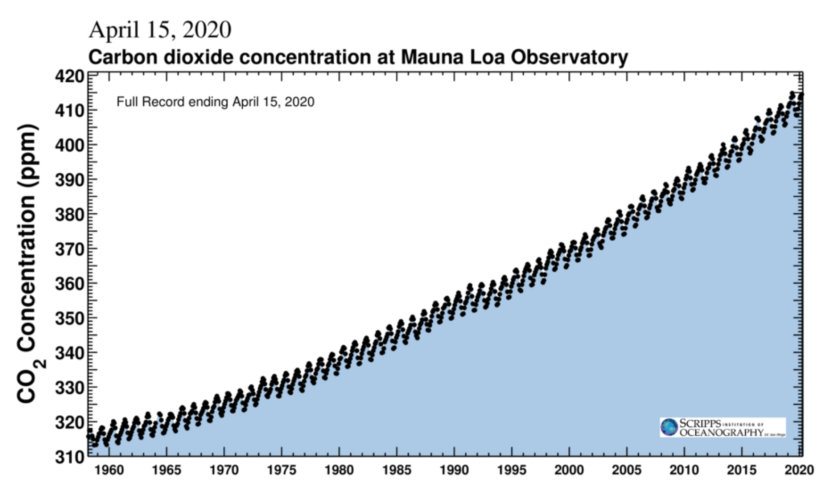
Maybe this could be the measure we take for Earth Day to slow the rise of Carbon Dioxide levels in the atmosphere.

Screen Shot 2020-04-16 at 6.33.29 PM

Please go this site to see the curve over 2 years and over 200  years Keeling Curve – Scripps UCSD

If you look at the extrapolated curve from the 1700’s, it has risen exponentially. It is probably too soon to see the effect of Covid-19 on CO2 levels in the atmosphere.

Could, Earth Month become the new normal for us. So children matter of factly accept that Earth Month as essentials month in the coming generations?

I call it Tao

I lowered the tired frame gingerly onto the mattress. The once firm mattress sagged a little, and I felt the springs creak, as though mattresses moaned. The senses were feeling somewhat overwhelmed. It is often the case after a long day amidst crowds, and cacophonous sounds. Crowded airports, train stations, bus stations can all bring the feelings to a head.

After a couple of weeks of continuous travel, I felt unmoored from the Earth. I had been flying a lot: both for long hours and frequently. I felt euphoric amidst the clouds, but yearned to stretch my legs and feel that solid connection to the Earth.

My steps on Mother Earth between my travels gave me a rushed feeling as well. Asian cities are crowded, and I lacked the narrative of control in my feet. I shuffled along with the crowds to make it in and out of places. I was being harried and jostled to a particular direction. I needed to slow down, to take it all in at my own pace, in solitude. Maybe speed isn’t a good thing, and bullock carts were better off.

I don’t know how our ancestors felt after traveling a few days by horseback or bullock carts to neighboring villages. At first, I started my musings on the travels in time assuming simpler times and less problems, but my pragmatic side took over: If all our modern methods of comfortable travel still pounded the muscles and energies out of our system, how must rudimentary modes of travel have felt on their poor frames? After their tiring journeys, there were no instant methods of heating water, drinking tea, or cooking a meal after all. If the humans felt that way, how did the bulls and horses feel?

tring-tring

No, maybe we all have bodies that need rest regardless of bullock carts or airplanes.

This is where I rewind to the place in the narrative where I lowered the t.frame gingerly onto the mattress. The m sagged and springs creaked, thoughts swirled. You get the picture.

I tried to calm the senses enough to sleep, but it was uphill work. I tried visualizing the misty mountain tops that I love hiking in. I tried imagining the body after a good hike amidst the mountains, but found I just could not! It was then that I surrendered to the written word with a deep breath.

In the Snow Leopard, Peter Matthiessen was on a journey to find snow leopards in the upper reaches of the Himalayas. Journeying into the heartlands of Tibet’s Dolpo valley, and possibly an inner journey much richer. The author was discovering the meaning of being present. He was walking a high cliff and looking down upon a distant meadow with goats grazing. The cliffs on either side of him a constant reminder that unless his entire being was concentrated on being there, he would not. There was a moment of clarity he says, when he realized that he would never set foot on that distant valley in this lifetime, and not be amidst the same goats in that distant wanderland ever. But he was given the opportunity of being there on that ledge-like cliff at that moment, and he took it.

snow_leopard

Of course, I realize I am doing a poor job of both my explanations and interpretations of the passage. (I was too tired at the time to jot down the passage for reference), but that was a clairvoyant moment for me. In one sentence, in one breath, I felt space both in me, and around me. I was in a cramped city with no parks or beautiful walkways nearby, but I was transported to the clear mountain ledge atop the Himalayas. Maybe we all have such moments of clarity, and appreciate them. Or the moments themselves vaporize and there is a vague feeling of contentment, I do not know.

I felt one such moment when I came home, and was standing in my backyard. Winter had come in, the leaves had all been stripped bare from the trees, and the wet earth squelched as I walked gingerly on it. There, in the glorious peek of the sun’s rays, I felt a moment of grounding, a moment so profound that I can visualize it now. The suns rays caught on the rain drops in a spider web that was gently swaying to the winds. The work of one creature that did its work in solitude, with perfection, and at its own pace. Though the web itself was spun well above the ground, it held against the branches of the trees, on a planet spinning very fast in its cosmic journey with the Universe.

mars_watching

I remembered this passage from the book then:
“Before heaven and earth
There was something nebulous
     silent isolated
     unchanging and alone
     eternal
     the mother of all things
I do not know its name
I call it Tao

The Dream Weavers Web

It had been a few years since we had taken the magical pill. When the daughter was younger, she was enamored with Disney movies, was obsessed with unicorns and mermaids (the mermaids still hold sway), but the general euphoria with Disney has come down somewhat, or so we thought. It turns out, magic may be dormant, but thankfully not absent. When those Mickey ears came on, so did the smiles, the magic, the ridiculous mixed with the plausible, the tales with long tails, the myths and legends, everything came bubbling up in one hot cauldron full of fun and adventure.

I must say I was thrilled too. The day to day living tends to routinely pound magic out of us unless we make a concerted effort to keep it. The schools manage to do so for the children. There are Dr Seuss weeks, there are Read-a-thons, crazy hair days and crazed sock days to keep it all intact. But as the business of earning a living and adult hood takes on, there is a brush working in the background to make us more even keel, more predictable and less whimsical.

Reading children’s books keeps it for us in some ways.

I had expected to have a good time at Disneyland. I manage to put my whimsies on with a delight, and get the children going too. So far so good. But there are serendipitous surprises lurking even in the most magical of places. The Disney World in Florida was even better than I had expected. There was Animal Kingdom, in which I expected plastic hippos and lions made to scale. Consider my surprise then when we went on the Kilimanjaro safari to be taken into the hinterlands with animals in relatively free reign. It is marvelous to see a bloat of hippos, a tower of giraffes, a something of warthogs, and a blush of pelicans roaming freely. When a white horned rhino waddled across our path, we simply waited for it to move quietly. Even the children, though looking awed, did not utter a sound. There is majesty in nature.

One of the best surprises for me was the onus on conservation of our beautiful planet for the years to come. There were green houses showing us the marvels and possibilities of vertical farming. It was apparent to those of us floating in the boats by the lazy river taking us through these green houses, that many of us had never seen plants of many vegetables and fruits before. One excited child pointed to an eggplant plant, and squealed – “Look the eggplants are hanging from them!” I could see it was a beautiful revelation for the child who had simply assumed you picked it up in the grocery aisles of the supermarket, while making a passionate case for a Hot Wheels toy car at the billing counter.

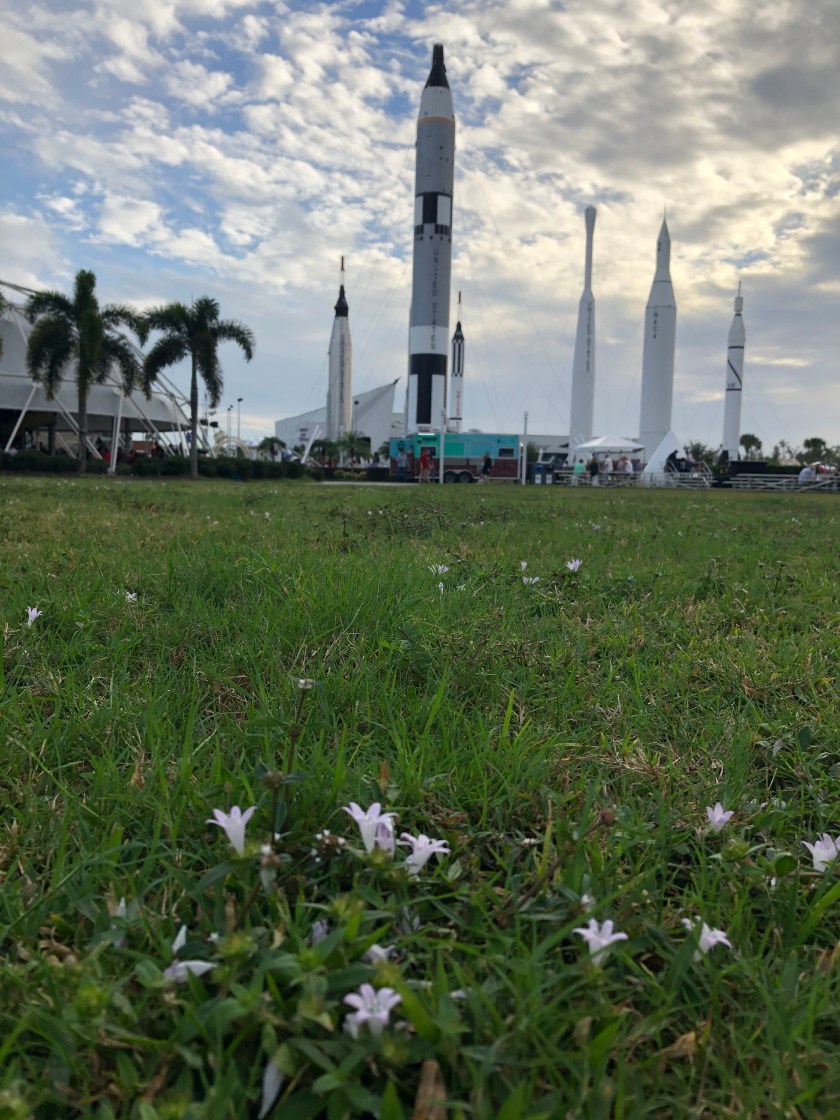
Saturated with the magic of life on this beautiful planet, we spent a day amidst the shots to space. Kennedy Space Center. The past merged with the magic of fairy-tales, the present beautifully thrumming with possibilities for conservation and conversation, and the future hits among the stars. Looking for possible planets for us to expand into.

It is marvelous to see we are on the cusp of a decade that holds so much promise. For among the young I saw in the parks, there will be quite a few starting their careers in the coming decade.

IMG-6125

The whole time, I was absorbing the atmosphere around me, little words were forming themselves into sentences. I was making my journey on the river of time and I was grateful for so many things. Some good sentences disappeared because I had not written them down, but I didn’t fret. It is often like this – playing with the words to relive my experiences.

Imagine how I felt then, when I read Ursula Le Guin’s essay on Writing. I felt the sage author’s words like balm, and nodded along. Writers are creators, but unlike potters and weavers, our products are less tangible. Our dreams are webs weaved in the magical recesses of the brain, and not all of it worth reading or sharing.

“Writing is a risky business. No guarantees. You have to take the chance. I’m happy to take it. I love taking it. So, my stuff gets misread, misunderstood, misinterpreted, – so what? If its the real stuff, it will survive almost any other abuse other than being ignored, disappeared, not read.”

When I read this piece in the essay though, I was grateful. I have written 800 posts over the past 14 years, and I would never have done that if not for the encouragement I have received from my dear friends and readers. It is magical. Encouragement like Love, is so fuzzy a thing to try to describe. For both the forces have the power to gently nurture, nudge, and poise for acceptance.

Thank you for all of that. Let the magical dreams weave on in the coming decade as well. Happy New Year and Happy New Decade – May the River of Time course on gently.

The Magic of Story-Telling

“Stop being a Jellyfish!” said the husband.
“I knew you were going to say that – you are such an open book yourself!” said I.

We both giggled like children at our own pathetic joke. T’was the time for hulking men with or without mustaches and serious women to quack like ducks, twirl like fairies, flex those non-existent abs, and find that little teeny bit of whimsy that adulthood so expertly hides away beneath the layers. Halloween was here.


1dc1cf17-3133-4989-93a7-08bcd65b2be5

T’is the time people astound you with their imagination. Who doesn’t like having 3 spidermen knocking on your door all at once? Or to see the twin toddlers dressed as Nemo & Dory? The super-heroes and ninjas cowering behind their larger siblings in Vampire clothing, or the witches cackling hard?

There is something so uniquely beautiful about Halloween – the one festival where we can display our idiosyncrasies with grace, be accepted for whatever we are. You want to be a skeleton? That should be fine. Here is some candy for you. Really, buddy? You want to go out in the world in that costume? Well, if this appeals to you, then I suppose you deserve some candy anyway!

How many times in our lives do we get that kind of universal approval?

The husband and I were very proud of our last minute Halloween costumes: an open book & a jellyfish.

The little fairy lights I had taped into place made the jellyfish glow, and I received many compliments – I must say I glowed all evening with the praise, though I did credit the Internet with it.

When people asked me where I got the inspiration from, I replied truthfully that I have always wondered what it must be like to live under the sea, and they invariably laughed at my answer.

But it’s true. Every trip to the aquarium rekindles the magic of another world – right here with us. Reading Gerald Durrell’s essay about scuba diving is enthralling.

I have often wondered how we would have adapted if we had evolved under the ocean. Would we have figured out the laws and physics of the Universe to the extent we have, or would the medium have made little difference in understanding. The Octopus’s evolution to have more neurons than us is truly astounding.

Quanta Magazine: What shape is the universe? Closed or Flat?

It is why I like reading about the intelligence of dolphins and whales: the fact that they have epics the sounds bits of which are roughly the equivalent of our Iliad is amazing. Quote from Carl Sagan’s essay on Whale song:

If the songs of the humpback whale are enunciated as a tonal language, the total information content, the number of bits of information in such songs, is some 10 to the power of 6 bits, about the same as the information content of the Iliad or the Odyssey.

What must their epics say? For all our anthropological worldview, I wonder whether humans figure in them at all. That will be a fine thing to hear – a Dr Dolittle who finally translates a Whale Epic, only to find their world far richer than our own.

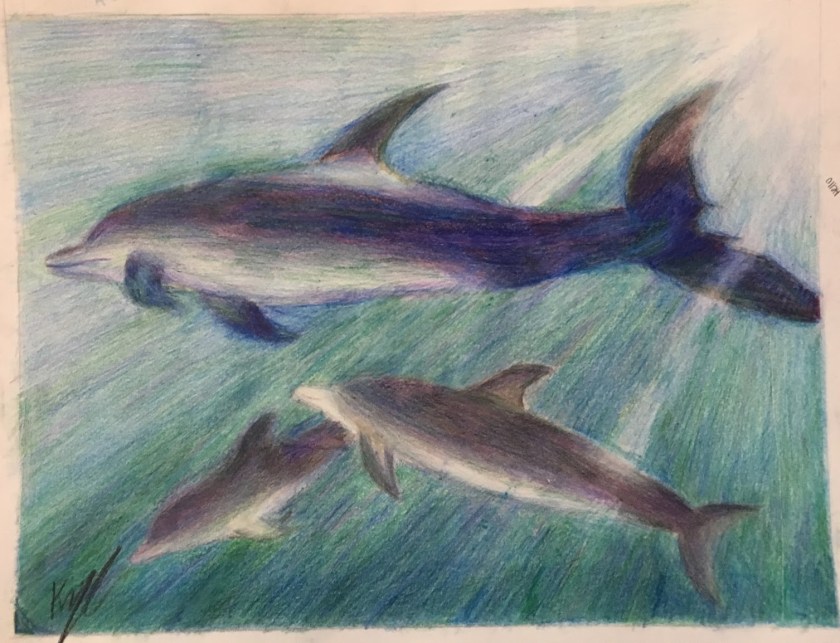
Keena_drawing
Art work by Daughter

I recently re-read the Voyages of Dr Dolittle by Hugh Lofting. I must say I thoroughly enjoyed visualizing myself sailing the seas with his motley group – either by skimming along like a porpoise, or better yet by getting a place inside the giant snail’s back as it sailed along smoothly churning the ocean as it went.

Swimming with Dolphins

We are all children of stories. We need epics and tales of fantasy. Our very own imaginations need an outlet, and Halloween gives us just that. I know my enthusiasm rubs off on the children as they go about planning their costumes. While I am out with a big smile on my face, a number of people give me an indulgent smile as if to say “Aren’t you a bit old for this?”

Mary Oliver gently reminds me to react with this nugget of wisdom:

“You must not ever stop being whimsical. And you must not, ever, give anyone else the responsibility for your life.” 

― Mary Oliver, Wild Geese

Privately, I am happy that our inner child never really leaves us.

Authors:

Moonbeams in the Morning

The morning alarm trinkled: Dawn’s misty summons. I got up, wondering why the nights passed so quickly, hoping for a little more precious sleep in the mornings. I stepped out of my bed and gingerly peeked out the window. Dawn was doing the same thing – trying to sleep in a little more, while the moon shone high above the tree tops, bathing the surrounding clouds in a magical shroud of moonbeams. The dew drops on the trees glistened in the same benign light. I stood there shivering a little for the night temperatures had dipped, and there had been a mild drizzle.

IMG_3869

The moon is there every night, the sun rises every morning, and yet the moments of quietly standing there before the hustle and bustle of our days started made me appreciate everything a little more sharply. When the son woke up, I held a finger to my lips not ready to start talking just yet, and made him peek out at the fine moon too. His eyes widened a little at the beauty of the morning, dew drops, trees, clouds and the moon. He chattered in his bright tones that sent the waves of sleep flying from him, “Did you know? We may not be able to enjoy the view of the moon for very much longer?”

“Why?” I asked in spite of myself.

“Well… we are already working on building colonies on the moon. Soon, the moon will be full of houses just like ours, and then who knows how the moon will look from here?”

“Who told you that?”

“No one!”

“Okay….where did you read that?” So much for quiet mornings bathed in contemplation.

“In the Time for Kids magazine. It seems we are already planning on moving there.” he said a tinge worried that I hadn’t received his original memo in my sleep addled state.

“Well…for all the things we have built on Earth, from outer space, it still looks beautiful you know? Maybe it will be the same for the moon. Although, I am not sure I am happy with the idea of looking in on someone’s home like that. Wouldn’t it be creepy?!”

He laughed.

I was reminded of the essay by Oliver Sacks in the book, Everything in its Place: Who Else Is Out There?

everything_place

In it, he starts with his thoughts on the book, First Man on the Moon by H.G.Wells.
Anybody Out There?- Oliver Sacks essay
One of the first books I read as a boy was H.G.Wells First Man on the Moon. The two men, Cavon & Bedford lie in an apparently barren and lifeless crater just before the lunar dawn. Then as the sun rises, they realize there is an atmosphere – they spot small pools and eddies of water, and then little round objects scattered on the ground. One of these , as it is warmed by the sun, bursts open and reveals a sliver of green.’A seed! “says Cavor, and then, very softly, says ‘Life!”.They light a piece of paper and throw it into the surface of the moon. It glows and sends up a thread of smoke indicating that there is oxygen.
This was how Wells conceived the prerequisites of life: water, sunlight (a source of energy), and oxygen. “A Lunar Morning” was my first introduction to astrobiology.

While it is interesting for us to dream of conquering alien worlds and expanding our footprint with habitable planets, such as K2-18b circling a red star called M Dwarf; it is also highly interesting to see that even on Earth that is our original home, we require a very specific set of circumstances for our life to thrive. We need our oxygen levels to be exactly right, our carbon dioxide levels to not rise too much, we need our microbiomes to be in a particular state of harmony with the larger ecosystem.

Read: Good Food Mood

Take for instance, this excerpt from cosmonaut Alexei Leonov – the first man to walk in space for 12 minutes. Excerpt :
“I decided to drop the pressure inside the suit … knowing all the while that I would reach the threshold of nitrogen boiling in my blood, but I had no choice” Leonov said

I enjoyed Oliver Sacks’ footnote, for in one sentence, it reconciled both the resilience and delicate nature of our entire species.

“If Wells envisaged the beginning of life in the The First Man on the Moon, he envisaged its ending in The War of the Worlds. where the Martians, confronting increasing desiccation an loss of atmosphere on their own planet, make a desperate bid to take over the Earth (only to perish from infection by terrestrial bacteria). Wells, who had trained as a biologist, was very aware of the both the toughness and the vulnerability of life.”

How many species have left behind their fleeting impressions on the cosmic playground? Our own are laughably recent. Will the Quod-liop-tukutuk-sfaunusaurus call us by the same name when they dig up our remnants millennia from now?

Books:
The First Man on the Moon : H.G.Wells
War of the Worlds : H.G.Wells
Astronaut Alexei Leonov: First Man to Space Walk
Everything in its Place : Oliver Sacks

Sketching Freedom

It fell to the teenaged daughter to keep her little brother and nephew in line during our forays into the forest. While they generally listened to her, they also enjoyed pulling her leg. Smarty pants that she is with me, it is sweet indeed to see her stumped by her little brothers. One such time when she was speechless, she said something wise and insightful. I looked at her with awe – “So, you finally got around to reading Marcus Aurelius’ Meditations I see!” I said beaming. Pride shone through my pores though I tried my best not to show it.

“Nope – still boring! Siri told me.” said she and laughed at my expression.

“Confucius, Buddha,  Marcus Aurelius, and a thousand other philosophers in your Kindle, and you go for Siri?”

I shook my head and went off to do some philosophizing of my own. The walking philosopher if ever there was one. I walked into the sunset philosophizing, as I said.

Sunsets are beautiful things anywhere – enjoy them with a rustic feel, and they can be few things more poetic or romantic. That evening’s sunset had been particularly fruitful – it isn’t everyday that one gets to see a dozen peacocks take flight into the horizon, witness the chirp-filled fooling around of parrots, cuckoos and at least a dozen different kinds of birds, and encounter the folly of frogs skipping and narrowly avoiding one’s feet.

I traipsed indoors, happy with life, still rattling on about the beautiful image of the peacocks and parrots taking flight together in the evening light. “I wish I could be a bird sometimes! So Free!” I said, and walked straight into the trap.

“What is Freedom for you Amma?” said the daughter. She was sitting on the bed, looking happy and sketching.

“Well…errmm, eh?” After this coherent response, I decided something more was warranted and fumbled a bit more. ” Well…umm…it is the ability to be able to live without fear I suppose. ”

“So, is a free country a place where people aren’t scared?”

I paused – my answers were shaky. Why did I think birds were free? Because they could take to the skies when they wished? But they also take flight when startled or scared. Hmm. I have never been one of those lawyer types who could cover all angles, and espouse something that if examined from all angles will hold water. This needed thought.

So, I did the next best thing, and reached into the recesses of my teenage brain. I remember a song we used to sing at morning assembly in school, and a particular set of phrases that I liked at the time without fully realizing the impact of it all. It went something like this:
Blah Blah Blah-dee-blah
Freedom from Want & Fear
Freedom of Worship
Freedom of Speech & Thought
Blah-Blah-Blah

That was it. The husband said – “Hmm – good answer!” with the tone of one who wished he had thought of the answer himself.

Pretty soon, the discussion on Freedom took on multiple angles, and the whole family was there weighing in with their take on the concept of Freedom.

Is Freedom of Choice a thing?
What of the rules and laws required for a free society?
What about Freedom to Live? Is Immortality a worthy goal then? If so, is the opposite a freedom as well?
Freedom to Dream? Is there a limit on one’s dreams?

I remembered Trevor Noah’s narrative in Born a Crime on dreams,

“We tell people to follow their dreams, but you can only dream of what you can imagine, and, depending on where you come from, your imagination can be quite limited.”

Born_a_Crime_by_Trevor_Noah_(book_cover).jpg

The concept of our Imaginations being limited by our circumstances is an interesting and clairvoyant one. It got us discussing the dreams of women in far flung places like the toothless old lady we had met earlier that evening – what were her dreams for her life? In her book, Moment of Lift, Melinda Gates gives us a sneak peek into the lives of hard working women struggling in remote places. What were their dreams and ambitions? Do our dreams all follow Maslow’s triangle and what then for those who have reached the zenith – is there more at the end of it.

moment_of_lift


The daughter continued sketching looking strangely amused by the heated and fast pace at which Freedoms were galloping in the laid back villages of South India. It seemed to be the only thing galloping at the moment.

“So why do you ask about Freedoms my dear?” I asked.

“Oh, I was thinking of drawing a girl who was free, and I kept imagining a happy one. But free is not always happy, is it?!” said she.

I looked around at the serious faces of the gathered folks and burst out laughing. “Really! Gotten us arguing on freedom to dream and imaginations and the Lord knows what else. You sketched us all having a good go I suppose – Well, my dear, what did Wise Siri tell you that Freedom was?” I said

She laughed raucously, and swished her long hair freely.

“Show us what you’ve got and we’ll see which face looks Free!” I picked two random ones from the 5 or 6 she showed us.

Which one looks free?


Galactic Plumes

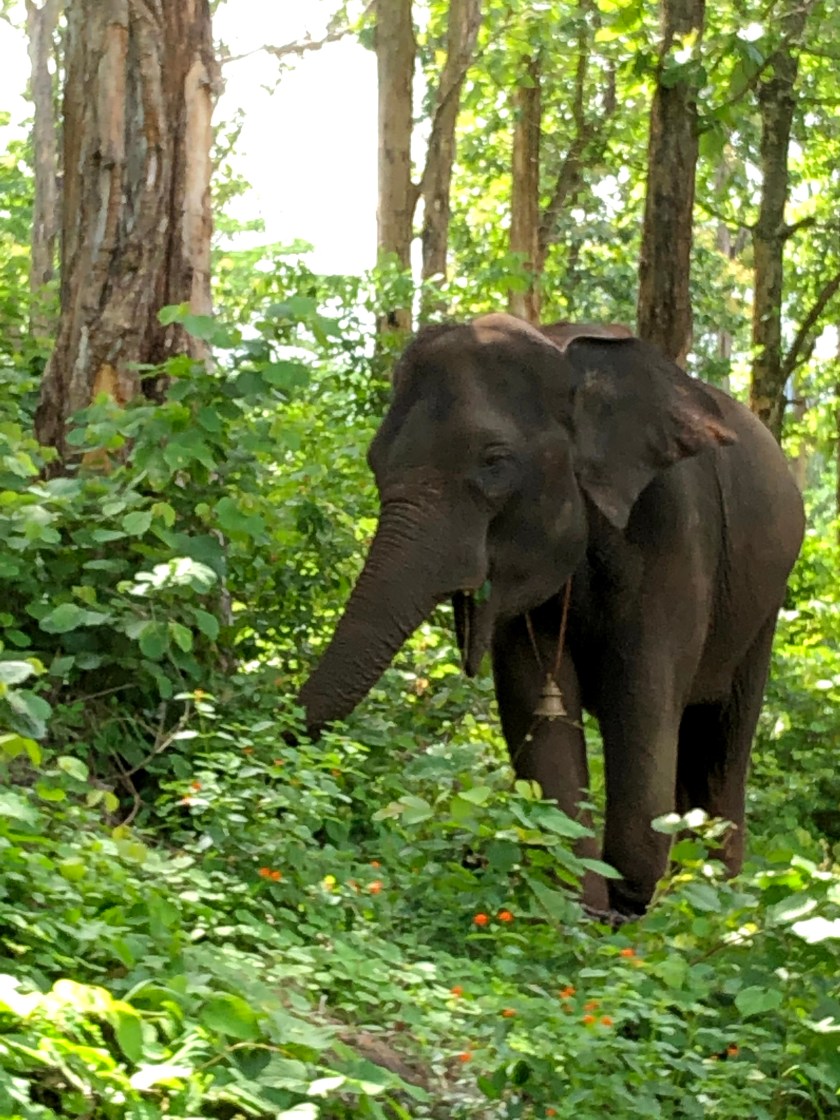
I had been mooning about the fields outside in the village where we stayed near Topslip National Forest. People told me to be careful about venturing out far – “There are Elephants nearby, and they love the fields. “, they said emphasizing the word, Elephants. My eyes lit up. The villagers exchanged looks that doubted my sanity and hurried on, “It isn’t Good seeing Elephants in the fields – you never know what they will do. If you hear fire crackers in the distance, come straight back here!” said one toothless fairy godmother, and her husband (I think) nodded in agreement vigorously.

img_3588

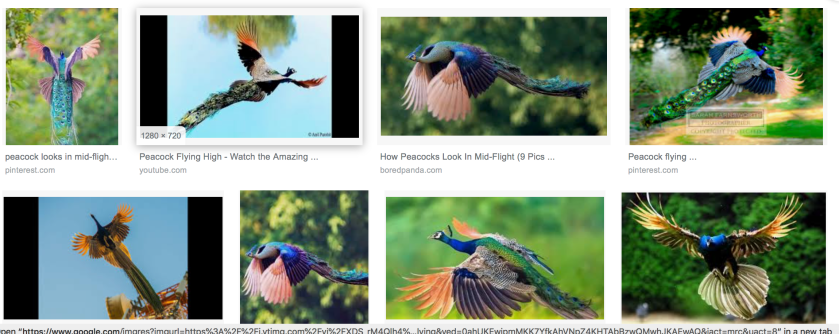
Off we went then, sauntering through the fields, listening to the loud orchestra of birds, crickets and frogs, accompanying the beautiful colors that nature was setting forth for us to see. It is magical indeed to see a half dozen peacocks take flight into the sunset. By the time, we fumbled for the phones they were gone, and I was glad I did not waste those precious moments of seeing them start off awkwardly and then gain elegance in flight by trying to get a picture. I have it in my mind’s eye, along with the indescribable moment of feeling your heart soar with the peacocks’ trajectory.

Screen Shot 2019-08-16 at 9.52.43 AM.png

Peacocks have long feathers, and while they know how to fan them out and preen in front of peahens looking splendid in the process; when they fly, it looks like it can feel like long hair feels to women.

Gather your tresses,
Of plume and multi-colored beauty
Tuck them in,
Letting it stream behind you elegantly while
Trying not to let it look messy
And all the rest of that.

It was then in the distance that we heard firecrackers go off in the distance. I don’t know about you, but this is the sort of thing that holds mystique. It is what inspired my Mother’s Day in the Jungle tale. Trumpy elephant going off to Farmer Hasalot’s farm – there is such an element of thrill and romantic mysticism to this kind of thing, though I think the elephants and farmers in question disagree.

Screen Shot 2019-08-23 at 10.06.10 AM

I spent dusk in a similar fashion enjoying the fading sunlight, the rising moon, the fields, the clouds, the village, the children, the adults and creatures of beautiful Earth. Every now and then, crackers went off in the distance – elephants in the distance we whispered. Though, why we were whispering we had no idea. Dusk seems to call for these things. A laid back village in South India tucked away in the recesses of the Western Ghats with all the fascination of the bucolic. An occasional rumble of a vehicle is all there was to remind us of civilization, corporates, power tussles, wars, micro/ macro economics, nuclear heavy-lifts, and motives of profit.

Post dinner, I traipsed indoors, happy with life, still rattling on about the beautiful image of the peacocks taking flight together in the evening light. We stayed chatting happily into the night (Part 2)

It was well past midnight when the electricity went out, and the husband said, “Outside now! Completely dark – yes!”

Off we went, self carrying the son piggy-back to see the stars in all its glory outside. With the electricity gone, it was pitch black outside.
Oh!
My foot!
Not there.
Ouch!

We bumped into one another spectacularly and I tripped on a chair outside in the verandah, carrying the little fellow on my back. Both of us went crashing down, self trying to save the poor fellow from being dropped from my back. One splendid moment later, I truly saw what ‘seeing stars’ meant.

The pair of us dragged ourselves off our feet and took our eyes skyward. The light pollution we have unleashed on our planet means that there are very few places in the world that humanity can stand and gaze at the sheer immensity of the universe in which we live. On an average dark-ish day, we can see about 3000 stars, on a day like this surrounded by mountains, forests and fields for miles around us, we could see tens of thousands of them lighting up entire bands of the sky with their luminance. The stars and galaxies are always there, and maybe because of this very permanence, it is seldom appreciated.

Standing there in the surrounding darkness with people I love, I felt light-headed. There we were, standing on an Earth that was spinning incredibly fast in its journey around the sun; the sun was swirling around the Milky Way galaxy; and the galaxy itself was spinning and whirling away into vaster expanses. Carrying us all: our ethereal thoughts, wishes and desires; and our solid physical selves on a solid planet.

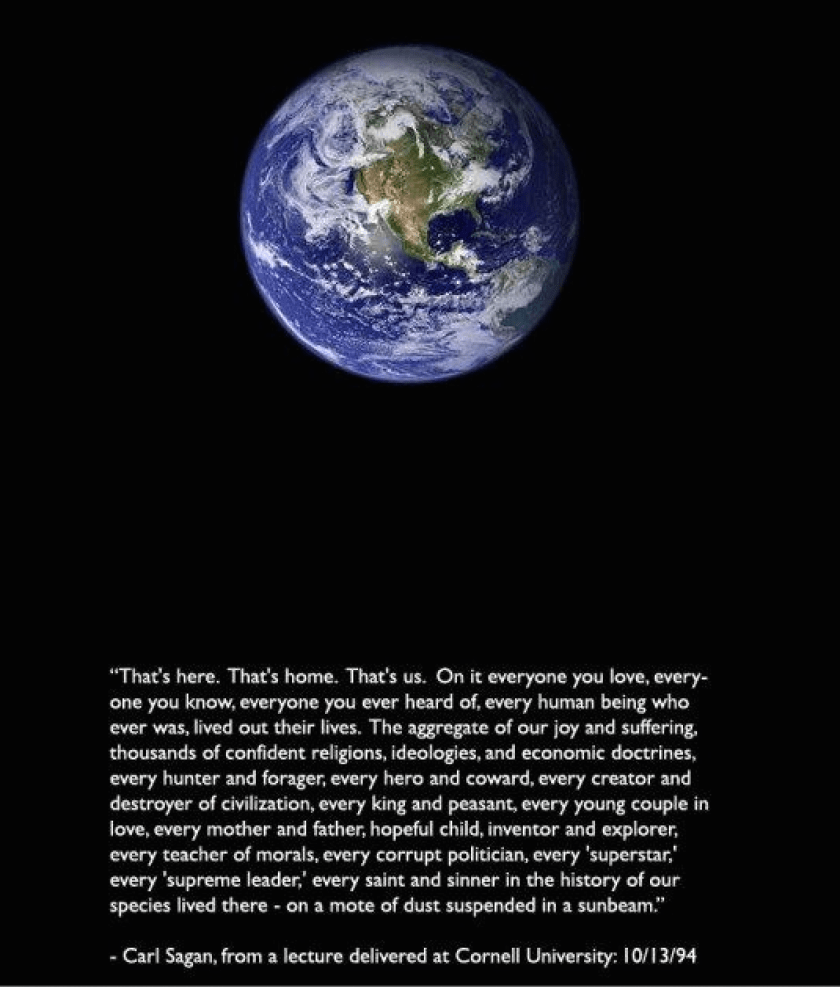
The galaxy tucking its star-studded plumes behind it gracefully, and taking flight with all its organic and inorganic components streaming gracefully along its path. Huge balls of gas and flames hurtling through space, and some spots in this beautiful expanse sanguine enough to cool down for a spot of life to flourish. #The Pale Blue Dot.

pale_blue_dot

The beautiful image of the peacocks taking flight earlier that evening came to me, and in that moment, the galaxies above looked like peacocks taking flight into horizons unknown.

Do the dreams of galaxies have limits? Do they have purposes?

Thinking back on that beautiful spin through the gathering darkness, I am reminded of this quote by Ursula K Le Guin:
“Things don’t have purposes, as if the universe were a machine, where every part has a useful function. What’s the function of a galaxy? I don’t know if our life has a purpose and I don’t see that it matters. What does matter is that we’re a part. Like a thread in a cloth or a grass-blade in a field. It is and we are. What we do is like wind blowing on the grass.”