Books – The Truest Brilliance of Humankind Captured

One of the most pleasurable tasks in December for me is to go back and wander over my reading lists for the past year. It is always a source of pleasure, and sets the intent and purpose for the year ahead at the same time.

Book Club:

This year, I joined a book club and that provided for many hours of companionship with an eye to discussing the books afterwards with your friends.

We managed to do a variety of genres in our book club too.

A broad array of topics can be discussed with this set of books, and the cups of tea, and the sparkling conversations were truly delightful. Feminism, colonialism, sexism, sense of purpose, and so much more.

Booklegger Books:

I volunteer from time to time in elementary school classrooms and the Bootlegger Volunteer program is one such where I get the opportunity to talk about and discuss books in classrooms.

  • Van Gogh Deception – By Deron Hicks 
  • Life in the Ocean – Oceanographer Sylvia Earle – By Claire Nivola (author of Wangari Maathai – Planter of 30 million trees in Kenya)
  • The man who dreamed of infinity – the life of genius Srinivasan ramanujan by Amy alznauer illustrated by Daniel miyares
  • The Firework Maker’s Daughter – by Philip Pullman
  • Firefly Hollow – by Allison McGhee
  • Tesla’s Attic – By Neal Shusterman & Eric Elfman

Guilty Pleasures:

It is the reason I pick up books and authors whose work feels like home every so often. There is familiarity in their worlds – a safe haven for those looking to be refreshed without too much effort. The worlds where humanity has all of the problems we do – only with an eye for humor, magic, and simplicity that we crave to build for ourselves in our real lives. Malgudi, Fairacre, Thrush Green, Hogwarts, Corfu, Blandings Castle, the idyllic worlds of Bertie Wooster and Jeeves, and many more. 

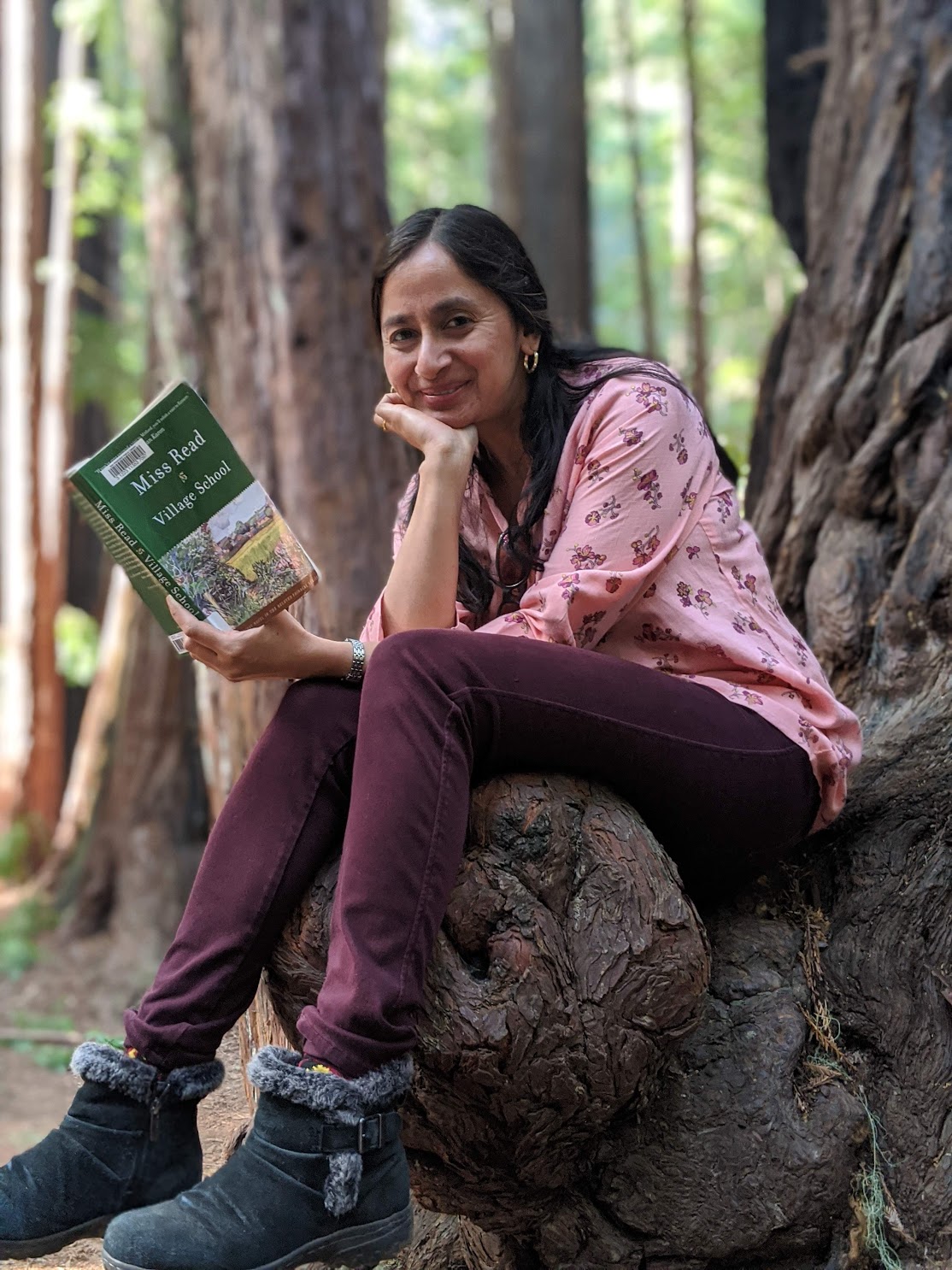
  • Miss Read
  • P G Wodehouse
  • J K Rowling and many fan-fiction authors who are frankly brilliant and so deserving. Many times, I’ve hoped I could know if they went on to write other books, for I knew I would read them.
  • R K Narayan
  • Gerald Durrell

Children’s Books:

I don’t know why people go in for self-help tomes when there are brilliant children’s books for all of us to enjoy and devour. Who was it who said, It takes a true genius to explain things simply? I agree with them.

Some of these authors and illustrators are truly unsung geniuses – I wish there was a way for all places of adult work such as financial hubs, hospitals, Houses of Parliament, civic offices, transportation hubs, technology companies, insurance companies, retailing outlets etc to have a good library with children’s books to dip and delve into for a quick refresher of spirits.

I used to work at a company with an exemplary work culture. (sadly the company is no longer there) The walls were adorned with beautiful artwork, we received books as gifts every now and then, authors came to visit, and we had library nooks – surrounded by excellent books in design, literature and philosophy. I have done some of my most rigorous work in these hallowed halls of the library.

If you had access to places like this, it is truly life-changing. Some noteworthy books:

  • The Shape of Ideas – By Grant Snyder
  • On Tyranny – By Timothy Snyder (in progress)
  • The Oboe Goes Boom – Boom – the band book on the kind of instruments and the brilliant way in which the names in each of the pages actually refers to a famous player of the instrument.
  • You Can Learn to be an Artist – this book was brilliant, but it made me want to cry. It made me want to rage against the world for creating AI and taking away that simple joy of art from humans – for those who say you can do the same with the screen and a prompt now, my response is, “Why can there not be any pursuits left to mankind that is not dependent on a screen?”
  • A Songbird Dreams of Singing – Poems about sleeping animals – by Kate Hosford – Illustrated by Jennifer M Potter
  • Astonishing Animals – Extraordinary Creatures and the Fantastic Worlds They Inhabit – Tim Flannery & Peter Schouten
  • Worldwide Monster Guide – By Linda Ashman, Illustration by David Small
  • Sometimes, I feel like an Oak – By Danielle Daniel & Jackie Traverse
  • My name is as long as a river – Suma Subramaniam
  • The fox and the star – Coralie Bickford Smith (brilliant artwork – sweet story – truly captures the loneliness of being – read again)

Understanding Ourselves

What makes us human? How do we know whether we are keeping healthy in our minds and bodies? These are topics that cannot be easily answered – and yet so many philosophers and writers attempt to do just that – understand our complexities.

Alternate Universes

“I do not miss childhood, but I miss the way I took pleasure in small things, even as greater things crumbled. I could not control the world I was in, could not walk  away from things or people or moments that hurt, but I found joy in the things that made me happy. The custard was sweet and creamy in my mouth” – Neil Gaiman in The Ocean at the End of the Lane

  • The Lefthand side of Darkness – By Ursula K Le Guin
  • Goddess of the River – Vaishnavi Patel
  • Our Missing Hearts – By Celeste Ng
  • The Ocean at the End of the Lane – By Neil Gaiman
  • Generosity – By Richard Powers
  • YellowFace – By R F Kuang ( about the publishing industry)

“If more of us valued food and cheer and song above hoarded gold, it would be a merrier world.” -J.R.R. Tolkien, The Hobbit

I would probably add books and nature to the list by Tolkien.

Navigating Life With the Power of Stories

Ooh! That’s a good one!

Read it!

Hmm..must check that one out.

Whadiddesey?

Predictable! 

I was enjoying the narrative voice in my brain as I jotted down the titles almost as much as the commentary given by the folks themselves. It had been so long since we sat in a room where everyone introduced themselves with their names and their childhood favorite book. 

image

As I went over the list I was writing, I wondered what those authors would feel when they heard about the kind of influence they had on children, now adults, decades later. Many of the authors we mentioned in our room were no more. Yet. Their words lived on, the worlds they created lived on, and the memories associated with these words and worlds lived on. One person said of their book that it saved them. The escape into the book saved them as a child. 

Isn’t that marvelous?

Our Fascination with Stories

I understood again our fascination with words, stories, images – in a confusing world, they provide guidance. In a fast evolving world with its revolving door of trends and gadgets, books provide continuum. 

To make sense of the world around us using stories is in itself an evolutionary gift. One that whales possess and possibly elephants too. Many creatures pass down knowledge needed to survive – are they in the form of stories? We do not know. We might soon enough. I read this article in which AI was able to decode sperm whale language. 

NPR: AI to decode Sperm Whale Language

Quote from Cosmos by Carl Sagan:

Some whale sounds are called songs, but we are still ignorant of their true nature and meaning. They range over a broad band of frequencies, down to well below the lowest sound the human ear can detect. A typical whale song lasts for perhaps 15 minutes; the longest about an hour. Often it is repeated, identically beat for beat, measure for measure, note for note. 

Very often, the members of the group will sing the same song together. By some mutual consensus, some collaborative song-writing, the piece changes month by month, slowly and predictably. These vocalizations are complex. If the songs of the humpback whale are enunciated as a tonal language, the total information content, the number of bits of information in such songs, is some 10 to the power of 6 bits, about the same as the information content of the Iliad or the Odyssey.

I would love to hear and understand the generational wisdom that these large benevolent creatures have for living in the oceans. The ever changing oceans must be a rich source of material. 

Through our words, and the stories of our lives, we help make sense of the world around us. We figure out what our heart desires, what our morals are, the choices we must make, the work we must do, the characters we want to become. 

Becoming is a Messy Business

So what are the stories we tell ourselves, and those close to us? How do those reminiscences help? I remember laughing at a statement I heard once – “avan oru padiccha muttaal  -அவன் ஒரு படிச்ச முட்டாள் ” which loosely translates to: “He is an educated fool.”, and it stuck with me. How often the growth that has to happen at critical moments in our life does not happen, and we are left dealing with the repercussions of this missed growth? The right book, the right story at the right time.

Becoming is a messy business, and yet as long as we have a sense of working towards who we are becoming, we can continue growing. 

In all these millennia, there does not seem to be a better teacher than stories. Small everyday stories of normal people navigating life in this balancing act of the universe.

Your Favorite Stories

“What about you? What was your favorite book as a child?”

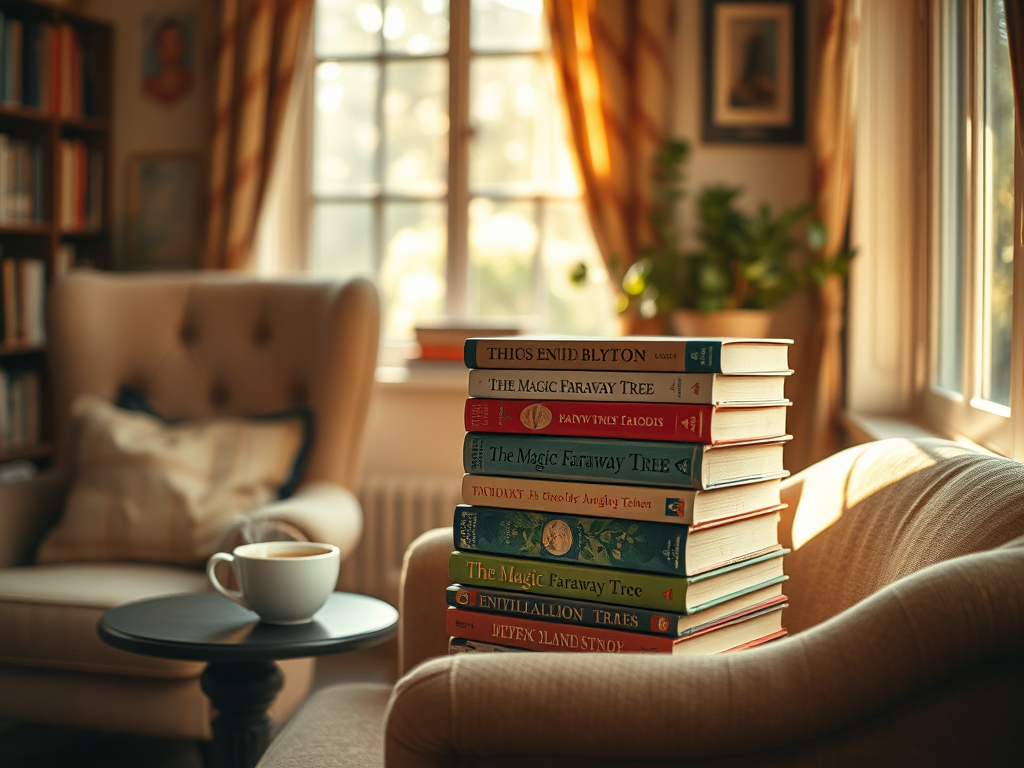
I was somewhat surprised my turn had come this quickly, but I rallied, “The Magic Faraway Tree by Enid Blyton. We had this 90 foot eucalyptus tree near our home. It was so tall, more than half of it was obscured in the clouds, and it was very easy to imagine that high up in the clouds were revolving worlds – a new one every few days.” I said to a titter of polite murmurs. 

The remaining folks went on with their favorite books. In describing the old tree near our childhood home and all those rainy days spent reading my favorite books, I found myself smiling a small smile. 

This would be a nice thing to share with the children and ask after their favorite books. 

image

What was your favorite book as a child?

Mine Eyes Have Seen The Glory

I have always been fascinated to see the world through another’s eyes. Maybe one of the reasons I am drawn to Fiction. It does seem to be an innate trait too. Obviously when I read the book, Eye By Eye – Comparing How Animals See – By Sara Levine, illustrated by T S SpookyTooth, it brought the eye fascination back in full force.

img_2088

I closed my eyes after reading – it was well past midnight – I had probably read 3 or 4 different books and I really needed to sleep if I had to be a functioning adult the next day. So I did. I closed my eyes – wondering about eyes.

If there is one overused trope in fiction, it is the eyes being the mirror of the soul. It is . Please don’t get me wrong. Expressive eyes are amazing. But I do find it over-used. How the eyes turned flat and gray, how the eyes were blue with excitement (Can eye color really change like that?) Also can the eyes show everything happening in another’s soul? The pupils dilated, the eyes red. 

In reality, how often do we sit and observe another’s eyes? I am reminded of this experiment by Sheldon & Penny of Big Bang Theory fame

The Big Bang Theory – Penny and Sheldons love experiment S08E16 [1080p]

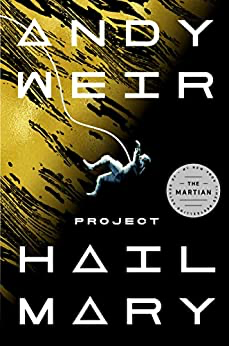
However, it is beautiful that we have an organ that allows us to experience our world in such a wonderful manner. In Andy Weir’s book, Project Hail Mary – he meets an alien species, from Erid in the Tau Ceti star system 12 light years from Earth, who do not perceive light. That made for an interesting premise – for they were an advanced civilization able to design space travel etc without sight.

image-3

https://en.wikipedia.org/wiki/Project_Hail_Mary

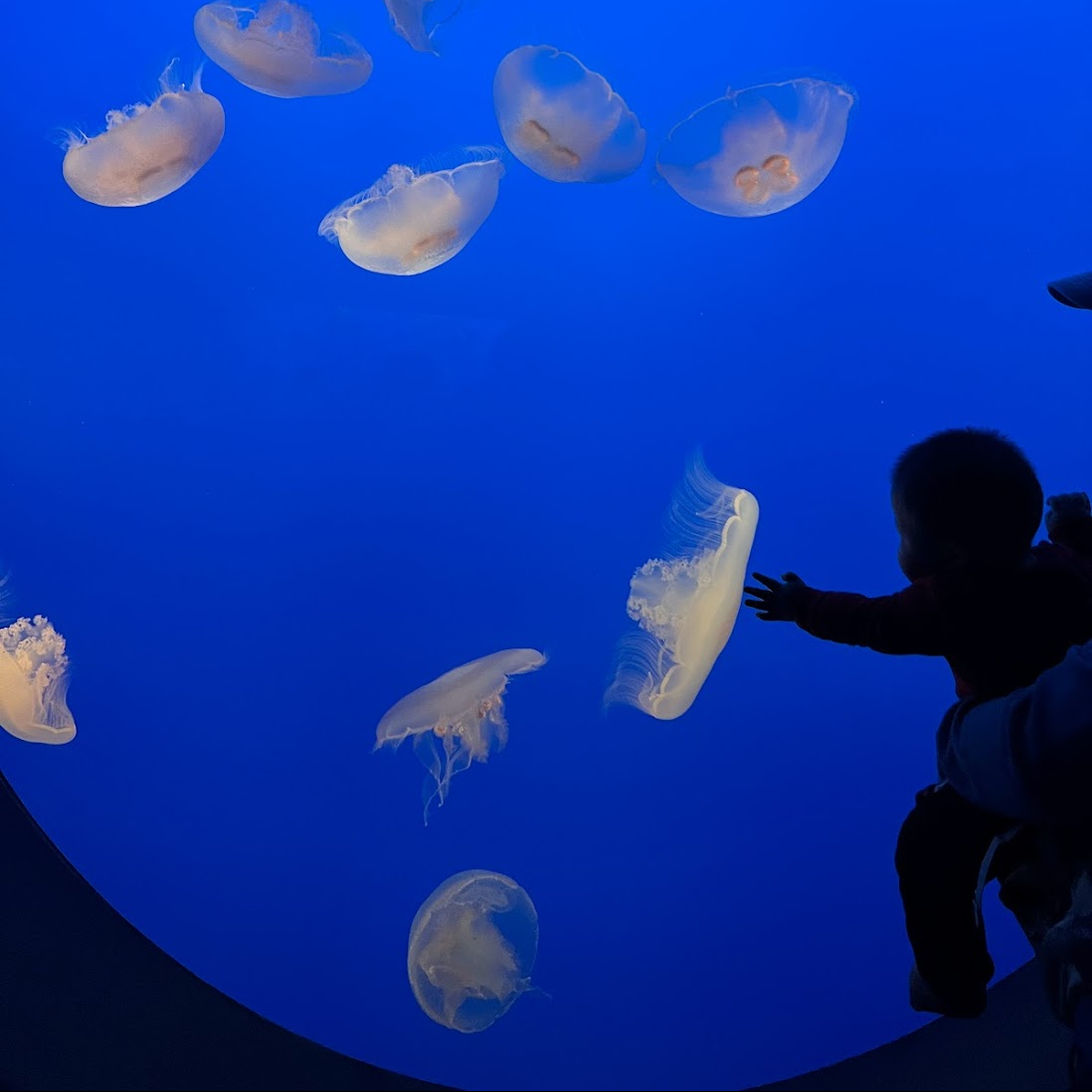
Anyway, where I’m going with all this meandering about light and sight is that, I was shocked to read that some underwater creatures do not perceive the color blue, and navigate a gray world instead. It made me sad for some reason – the blues are all we think of when we think of oceans and the lives it nurtures. How many shades do we have to describe the blues? Cerulean, Turquoise, Teal, Cyan, Aqua, Sky Blue, Royal Blue, Light Blue, Navy Blue and all the shades in between, and yet some creatures of the deep sea see none of that. Starfish, for instance, only perceive light as a vague form of light – they do not perceive differences in wavelength. 

cropped-img_5618

Cuttlefish, with their pupils W-shaped – what do they perceive? 

Seeing the world through another creature’s eyes can be rewarding, interesting and will make us more empathetic and passionate towards caring for our environment and preserving all the different kinds of life, would it not?

I might have made the goat whose eyes I stared into on my walk very nervous. You see? Ever since I read that goats have rectangular pupils, I am drawn to them. They allow me a moment to observe their pupils, then turn away bored. Interested in getting to that low-lying branch to eat. 

One goat even gave me an amused look – I did not detect amusement in the eyes if that is your question, I saw the face quirking up differently and moving away as though shaking its head.

Books:

Captivating Creatures & Whimsical Tales

“We really need a read-a-thon!” 

A quiet chuckle and then, “Yeah – look at this.”

So, we sat. Quietly. Reading together. 

Children’s books really are the best -the equivalent of YouTube shorts to get into the act of reading: 

To turn a fun read into a whimsical time, 

To turn a chuckle into a snort, 

A laugh into a guffaw,

A sigh into a wistful longing.

🦌🦅🐿️🐦‍⬛🦢The day’s books were awe-worthy all right. I am just outlining a few here, but it serves to reiterate our need to dedicate a few hours every week to children’s books – the art, information, story-telling is all it takes to remind us that the world holds space for beautiful , gentle, innocent things. We just have to stop and enjoy them, and if possible contribute to make it all the more wondrous in our turn. 🦌🦅🐿️🐦‍⬛🦢

🦌This is how we do it – by Matt Lamothe

This booklegger award winning book takes the look of seven kids from around the world and shows us that we aren’t all that very different whether we live in a tiny hut in Uganda with a small family, or a large family in the hills of Peru, or in a multi story building in Italy, The author’s idea of profiling 7 children from Japan, Peru, Iran, Russia, India Italy and Uganda is brilliantly done. The similarities and differences are beautifully illustrated. 

🦅If You Run Out of Words – Felicita Sala

This book is whimsy itself. It reminds us of the beautiful reason we love children. For they say and ask the darndest things. In this book, the child asks her father what would happen if he ran out of words. Flabbergasted is what should have happened, but he rallies. Assuring his little girl that he would to to magical elves and get the words he needs. If that doesn’t work, well, he would go underwater, into other universes and find what he needs – even if he runs out of all the words there are, he wouldn’t ever run out of the 3 most precious words to say before putting his daughter to bed, would he now? 

🐿️From Tree to Sea – By Shelley Moore Thomas & Illustrated by Christopher Silas Neal 

This book is for those in quiet moods. What would the whale teach you? To dream big and take small steps? What would the mountain teach you, the sea? The artwork is comforting, serene and perfect for quiescent summer afternoons.

🦢Creature Features – By Steve Jenkins and Robin Page

A curious book that tells us odd things about animals around us – why does the babirusa have dangerous tusks? (Babirusa is not an animal we think of on a regular basis is it? Nor is the spicebush swallowtail caterpillar or the thorny devil if you come to think of it. Just for that, it is well worth picking up books like these in my opinion) 

🐘Astonishing Animals By Tim Flannery & Peter Schouten

An astounding book of creatures with different superpowers – the motion specialists, shape shifters, vertical ocean dwellers and so much more. I will probably have another post or so for this book because of the captivating illustrations, the interesting details about the fascinating creatures brought alive in the pages of the book.

IMG_1519

What do you think? Which children’s books would you recommend?

The Crafting of Characters

Development of our Characters

Book: Normal Rules Don’t Apply – By Kate Atkinson

I was reading a book (predictably), the son and husband fiddling about with their laptops. The short stories in the book,  Normal Rules Don’t Apply – By Kate Atkinson, were good. Really – we need more short stories than large novels of our lives, and this particular story was proving it so.

kate_atkinson

Quote:

“Good looks didn’t count for much with Franklin, he was the handsome child of handsome parents and had witnessed at firsthand the havoc that could be wrought by the pursuit of beauty without truth.”

A simple sentence – borne out generation after generation, and still as relevant in its truth.

In fact as I am writing this post, I thought of the variation of the quote in Jane Austen’s Emma:

“Vanity working on a weak head produces every sort of mischief.”

Jane Austen, Emma

Many of us remember the struggle (or continue to struggle depending on age, sex, race, nationality etc) of perception against self-esteem – I suppose it is hard to escape that. Society has improved by spades, but yet I do still see the expectations of eternal youth and raving beauty all around us. It is there in the filters that apps like instagram offer, it is there in the AI generated models’ and their definitions of beauty. It is there in the cosmetics, the advertisements, and even if most folks aren’t consumed by it, they are at the very least affected by it.  

Character Building

The building of character, the shaping and becoming of our authentic selves, however is a harder journey, and therefore, that much more satisfying, was it not? Luckily that is where the short story was heading towards. I read on, and stopped to read this piece twice. 

“Franklin spent his life under the impression that one day he would be tested, that a challenge would appear out of the blue- a war, a quest, a disaster-and that he would rise to this challenge, and not be found wanting. It would be the making of him, he would come into his own. But what if this never happened, what if nothing was asked of him? Would he have to ask it of himself? And how do you do that?” 

I remember writing a short story as a child. It was of a young girl, influenced by adventure books of Enid Blyton, looking for an adventure to prove their worth – their bravery, loyalty, their ‘goodness’ in the world. It was, in hindsight, partially autobiographical. For adventures seemed to come to these protagonists in stories, but seldom on such grand scales to ordinary beings such as us. I asked the middle schooler in our midst about the adventures they had, and he sighed somewhat wistfully, and said, ‘Ugh! Most days, The biggest stuff is whether to run via the library to PE, or return the book after PE, but risk getting to the next class late, amma! There aren’t any adventures! That’s Harry Potter stuff, not for us!”

We laughed and I told him about the story of the girl I wrote as a girl. But I continued musing that night. 

Everyday Choices & Grand Tests

Was a Grand Test better than the somewhat lackluster set of everyday choices and conundrums that shaped our characters?  

🪅Do you let your friend copy your homework? 

🎋Do you give in to the temptation of an extra toffee knowing your sibling will lose their share? 

🎏Do you sheepishly confess to being the person responsible for not finishing that group project on time?

Would we welcome the dramatic or realize that solid, everyday security was more difficult to achieve?

‘Dramatic things always have a bitterness for someone.” – L M Montgomery, Rilla of Ingleside, Anne of Green Gables series

Whether by dramatic events or small everyday events, we are constantly becoming – as long as we look into the mirror and like the character reflected to us, does it matter?

What do you think? Do you feel our small everyday choices help us take on the dramatic when they do happen, or do we find something within us that we didn’t know existed when the dramatic happens?

Zinniga-Zanniga Tree – The Cure-It-All Tree

Dr Seuss Magic

“Isn’t it marvelous to leave such a legacy behind?” I asked sleepily. It was Dr Seuss’s birthday and typically marked as Read Across America week. I miss the fuss of the week in elementary schools. The middle schoolers and high schoolers get to have their fun, but we just get to hear about it a lot less, I guess. 

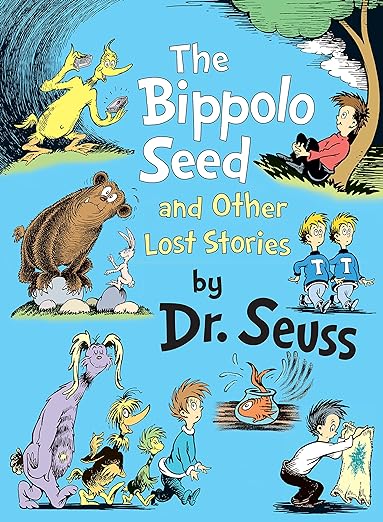
Lazily, I picked up a book written by Dr Seuss, that has been lying around for ages in the children’s bookshelves and had never read before. The Bippolo Seed and Other Stories.

bippolo

The stories, some of them at least, had predictable plot lines, but oh! How he presented them! I feel justified in the use of as many exclamation marks as necessary when writing about Dr Seuss. For instance, there is a story of a bear ready to pounce on a rabbit. The rabbit, doing some quick thinking, stalls the bear with an intriguing thought.

The Rabbit, the Bear, and the Zinniga-Zanniga

“I sure hate to tell you It isn’t too good.
I was counting the eyelashes 'round your eyes,
Your left eye…your right eye…and, to my surprise,
They weren’t the same number!

“I’m sorry…SO sorry.
But, sir, it is true.
Poor Bear! This is dreadful!
One eyelash too few!”

In typical Dr Seuss fashion, the rabbit takes it to ridiculous extremes. Could the bear’s spine be cracking, could his brain be lopsided, all those aches and pains, oh it all makes sense. By the end of the tale, the bear is sitting atop a zinniga-zanniga tree with a flower pressed to his eye so that the extra eyelash can grow and make him feel whole again, while the rabbit skips on his way, free from the bear’s claws.

Oh! 

I laughed so hard, I sputtered and sprayed my coffee, I put my phone in the refrigerator and looked for it all morning, and I almost walked straight into a zinniga-zanniga tree myself.

What a marvelous tale to encapsulate how our worries sometimes run away with our imagination, the hypochondriacs hidden in every one of us to a certain degree poking fun at itself, and the societal pressures on perfect eyelashes playing into the bear’s psyche?

Sometimes, we need entire tomes to discuss these themes, other times, a lost story of Dr Seuss would do.

🐲Imagine Dragons 🐉

There are sections of the book, Novelist as a Vocation by Haruki Murakami that I enjoyed. I did think he was self-deprecating, and unwilling to take a little credit for his successes as a writer though. While being published and being received favorably are a function of luck to a certain degree, there is the fact that a consistent writer has to keep themselves out there. They need to remain vulnerable and suffer acutely all the emotions that their characters do with a passion. It is a tough vocation, and not always a lucrative one.

“Writing novels is, to my way of thinking, basically a very uncool enterprise.”

Haruki Murakami, Novelist as a Vocation
Version 1.0.0

He goes on to tell the story he read as a child in which two men go to see and understand why Mt Fujiyama is revered thus, and what was special about it. The smarter of the two men apparently sized the mountain from various vantage points and decided he knew enough about it, and went on his way. Efficient, Fujiyama seen, and admired.

The other one, apparently, went on to climb the mountain by foot, agonizingly conquering the mountain. “Finally, he has understood it or perhaps grasped its essence at a less conscious level.”

Murakami equates the latter with a writer. In other words, the harder route. He calls the endeavor of novel writing as sometimes being thankless, other times laborious, and at times a strenuous job.

I think I agree with all of the above. Every good novel I read has me in awe. For it takes a different kind of empathy and a wholly different kind of perseverance to imagine a world, make sense of the characters, imagine what each of them will do, how they would react to a situation and so much more. 

So, when I finished reading When Women Were Dragons – By Kelly Barnhill, I took the story with me everywhere. I read the author’s note scribbled at the end. The vote of thanks piece. The credits when people leave the cinema theatre. I read this because of the enormous respect I have for a piece of creative work – fiction or non-fiction – and the universe that helped create the book that I had just enjoyed. 

I am sharing a bit of Kelly Barnhill’s note here:

“And, thank you to my wonderful family – … -who have to live with a person often hijacked by her own imagination, and wounded by the world. The work of storytelling requires a person to remain in a state of brutal vulnerability and punishing empathy. We feel everything. It tears us apart. We could not do this work without people in our lives to love us unceasingly, and to put us back together. “

Kelly Barnhill (Acknowledgement) When Women Were Dragons

The depths and capacity for creative work continues to astound me – blessed is an intellect that can imagine, and blessed indeed is a culture that promotes growth through imagination.

2023 – I am stuck in a book, be back soon!

One of the favorite parts of the year are here. The Christmas lights are twinkling. There is magic in the air. I get to go back and revel in the books that have made it so. Some books evoke a feeling, and trying to capture that is a joy in itself.

Hindsight is our finest instrument for discerning the patterns of our lives. To look back on a year of reading, a year of writing, is to discover a secret map of the mind, revealing the landscape of living — after all, how we spend our thoughts is how we spend our lives.

Maria Popova – TheMarginalian

This year, I get the strange sense of being in a floating Universe. I seem to have whizzed past centuries reading things in the past, zoomed and ducked out of alternate worlds with all the science fiction and fantasy adventures, while being thoroughly grounded in making sense of today’s world with its AI, and its technological advances.

I get the familiar sense of time slipping through the sieve with extra large holes once again, but then, will it always be like this? I hope so, for in its speed lies its charm.

Here are some of the notable ones – I find the neat classifications all being thrown out – every year, I seem to have a different classification system and therein lies the charm. Nothing is immutable and all that.

the_world_playground

I also see that I have dozens of unfinished posts for some of these books that have never made it to the blog. Oh well! I need to take inspiration from Robert Louis Stevenson I suppose.

“I kept always two books in my pocket, one to read, one to write in.” ― Robert Louis Stevenson

Peek back into time:

The World Around Us:

“The reading of all good books is like conversation with the finest (people) of the past centuries.” ― René Descartes

    Non-Fiction:

    Beautiful & Informative:

    • Nanoscale – visualising an invisible world – Kenneth  S Deffeyes, Stephen E Deffeyes
    • Atlas of the Invisible – James Cheshire & Oliver Uberti
    • A celebration of Beatrix Potter : art and letters by more than 30 of today’s favorite children’s book illustrators
    • In the woods / David Elliott ; illustrated by Rob Dunlavey

    Alternate Worlds/ Science Fiction/Magic:

    Tech Tech:

    Inspirations:

    Books that ought to be classified as warm cups of tea 🙂

    • News from Thrush Green – Miss Read
    • The White Lady – by Jacqueline Winspear
    • Much Obliged Jeeves – P G Wodehouse
    • A Song of Comfortable Chairs – Alexander McCall Smith
    • What would Maisie Do? – Jacqueline Winspear

    “Some books are so familiar that reading them is like being home again.” ― Louisa May Alcott

      Children’s Books – my favorite category (just mentioning a few since I don’t keep note of all the titles)

      I hope 2024 continues to be as varied and inspirational in its moments of magic and learning for all of us! I shall put in a comment the complete list of books. I only put in a few in the post here.

      “The more that you read, the more things you will know. The more that you learn, the more places you’ll go.”

      Dr. Seuss 

      Happy Reading!

      reading_in_a_tree

      A Special Post to Celebrate Syzygy

      “You’d better make it a special post!”, said the son. He is the one who is ardently fanning me in on, and keeping tabs on whether I am writing enough these days. His natural state of calculating kicks in, and he says “So, if you write another post in the next 36 hours then…”, and I have to remind him that it is not like that. One does not have to follow a punishing rigorous schedule for a hobby. That I will write and when I do, it feels joyous and good. Not laborious and like finishing up an arduous task for the sake of doing so.

      There must have been a natural syzygy (aligning of the stars) when I started my blog seventeen years ago. The time it takes for a wizard to come of age in the magical world. I must say, the blog has given me an excellent magical education. I may not have graduated from Hogwarts in this time, but I certainly have learnt a thing or two on the magic of persistence, the seer of light in a dark universe, or any number of things.

      Herbology: My specimens may still not be thriving, but as a chronicler of the natural world, I think Professor Sprout would gladly have me in her graduating class.

      “Science has taught me that everything is more complicated than we first assume, and that being able to derive happiness from discovery is a recipe for a beautiful life. It has also convinced me that carefully writing everything down is the only real defense we have against forgetting something important that once was and is no more,” 

      Hope Jahren, Lab Girl

      Read: A Celebration of 🌎

      The Joy of the Natural World

      Astronomy: Professors Carl Sagan and his many many friends have been amazing companions in the starship of the night. Comets, moon cycles and changing constellations not withstanding, there have also been the amazing journeys through space on light ships designed and envisioned by Johannes Kepler.

      Ancient Runes: Professor Vector has opened thine eyes to many wonders of the Mathematical world and how they help us find a structure to our days. A way to find the incontrovertible truth if you will.

      Changing Mathematics from a computational discipline into a beautiful, abstract philosophy.

      Pythagoras of Samos (580-500 BCE) who continued the philosophy of: 

      Transfiguration: How else does a serious minded member of the software engineering firms of the world transform into a magic seeking writer who will arduously work out a sentence structure sometimes tens of times to get that laugh?

      Potions: Professor Snape, Dr Oliver Sacks, Paul Nurse, Siddhartha Mukherjee, Ed Yong, and so many more professors have taken me under their wing and spent many enjoyable hours explaining the joy behind reactions.

      Care of Magical Creatures: Hagrid, Gerald Durrell, Sy Montgomery and numerous other writers of the natural world have introduced and opened my experiences to the world of creatures around us. Snail tales, pelican and duck friends, and so many instances of the world around us.

      Writing & reading have sustained and enthralled me every step of the way, and it has proved to me how remarkable life’s moments are – even in a seemingly unremarkable life such as mine.

      Like Sy Montgomery says in her book, How to be a good creature: 

      Thurber taught me this: “You never know even when life looks hopeless, what might happen next. It could be something wonderful is right around the corner.”

      Sy Montgomery – How to be a good creature

      It usually is in the form of a new book, or a new idea that magically transforms an ordinary day into an extraordinary one. The power of fleeting thoughts that can take flame, grow and sustain in a wholly positive way, weaving magical moments and learnings. What can be better than that?

      “A reader lives a thousand lives before he dies. The man who never reads lives only one.”

      George R R Martin in A Dance with Dragons

      Here is to more years of fruitful occupation, magical meanderings and posts that entertain and hopefully enlighten. This is my 1000th post.

      Thank you, my readers, for being with me on this magical journey. Of course, the blog owes its very existence To My Family & Other Animals – who are frequent and oft quoted celebrities on this blog.

      The King’s Stilts

      A few years ago, the pater looked at me with an amused smile on his face, and said, “I’ve been seeing you walking around with that book for weeks. Do you plan to finish it?” 

      I gave him a mock sorrowful look. It was true. That summer, life had been jolly and full. The son was a baby then, and any time I could snatch away from my highly demanding work spot was split between the visiting folks, the kitchen, housekeeping, and the children. I cannot say that I felt effective in  any of these areas, but I was stretching myself as best as I could. Without a book to help me get a perspective in, I felt even more unmoored. So, I did the next best thing and walked around with the book in hand. The intention was there, when the moment presents itself, I could glance a page here, and a page there, I told myself.

      No one in the household but the pater noticed that I had the same book with me for weeks. 

      “Never fear! These are phases that will come and go, and once the children are grown, you will be able to read again.” , he said. Luckily, it turned out to be true. I did get a little more time on my hands mostly snatched during public transit commute times, or when I finally wound down at night, all the demands of the day done, and a fresh set of demands not yet hankering for attention till dawn. 

      As I opened my library account, I realized the same thing had just happened again. I had gone for several weeks with the intention of finishing several books, and did not get the opportunity to do so. I felt like King Birtram in The King’s Stilts. A Dr Seuss book that I did manage to finish owing to its size. 

      King Birtram is the hard-working, conscientious and just king of the low lying kingdom of Binn. He starts his day attending to all his administrative duties at the crack of dawn, signing papers and making decisions while taking his bath, eating his breakfast and is finished with his paperwork just in time to start his duties as commander in general who is in charge of keeping his cat army in tip-top shape, and motivated to protect the kingdom from the Nizzard birds.

      His cats, are after all, critical to the functioning of the state. They keep the pesky nizzard birds at bay. The gizzard birds weaken the dike trees, and weakening those marvelous trees means the kingdom of Binn could be flooded within days since the trees are the only ones that are able to keep the waters at bay. 

      King Birtram, however, never complains. He knows what needs to be done, and he is proud to do it. His moments of relaxation comes in the evening when his boy brings his stilts out for the king to play. The evenings with the king striding  across the kingdom playfully in his stilts endears the man to his subjects and all is well. 

      Written with Dr Seuss’s characteristic humor, style and illustrations, the story takes an interesting turn when a judgmental courtier hides the King’s Stilts. The climax draws nearer and the perils of the water destroying the kingdom is even closer with every page. Does the King find his stilts? Is the kingdom a happy, prosperous place again?

      Where am I going with this? Yes! The lack of reading made me feel like King Birtram deprived of his stilts. Lack-lustre, if you see what I mean. So, imagine the joy when I obtained a rare afternoon and evening in which I could read uninterrupted, and with no expectations of any kind?

      Wild Souls – Freedom and Flourishing in the Non-Human World By Emma Marris will have a special place in my heart for providing me with this rare luxury last week-end. I have not galloped through a book that quickly or without guilt for a long time.