The Magic of Shared Success

I am grateful I went to school for our high school reunion after all these years.

I have always loved the military traditions the school is steeped in, but seeing it all come together in such a spectacular fashion as a spectator was magical. 

The band was spectacular as ever, and after coming back to ‘normal life’, I miss the background music of the school band at all times of day. The band room was always full of enthusiasts – drummers, sax players, buglers, bagpipers, and a whole bunch of noises unrelated to music too. There was band practice in the mornings, band classes during the day, beating the retreat practice in the evenings, so there was music wafting in and around our lives at all times when school was in session.

There were sports, parade practices, and PT displays in our day too. But seeing the levels to which these shows have risen in their execution and creativity was enough to make my heart sing.

There were morning shows, evening shows and late night ones. Shows in which the children and staff had worked tirelessly all year long to pull off a brilliant endeavor. Sunset sensations featuring Yoga shows, laser shows, band displays etc were brilliantly done.

The Parade was a huge success as well. The Beating Retreat signaling the close of all the festivities was just as a marvelous. 

There is something about these programs involving hundreds of children that always gives me goosebumps. The strain of collaborative success running through all of these, is nothing but inspirational. Everybody has to ensure that they and everybody else is up to the mark, and work towards making it so. Or the whole troop/band/display fails. 

Why do more schools, or corporates for that matter, have activities like these?

Years later, when we reflect on these experiences, there is nothing but affection for those of us who worked and excelled together, and what better outcome in life is there to achieve?

 “We cannot seek achievement for ourselves and forget about progress and prosperity for our community…Our ambitions must be broad enough to include the aspirations and needs of others, for their sakes and for our own.”

— Cesar Chavez

Celebrate International Dance Day: A Journey Through Dance Dramas

International Dance Day is coming. 

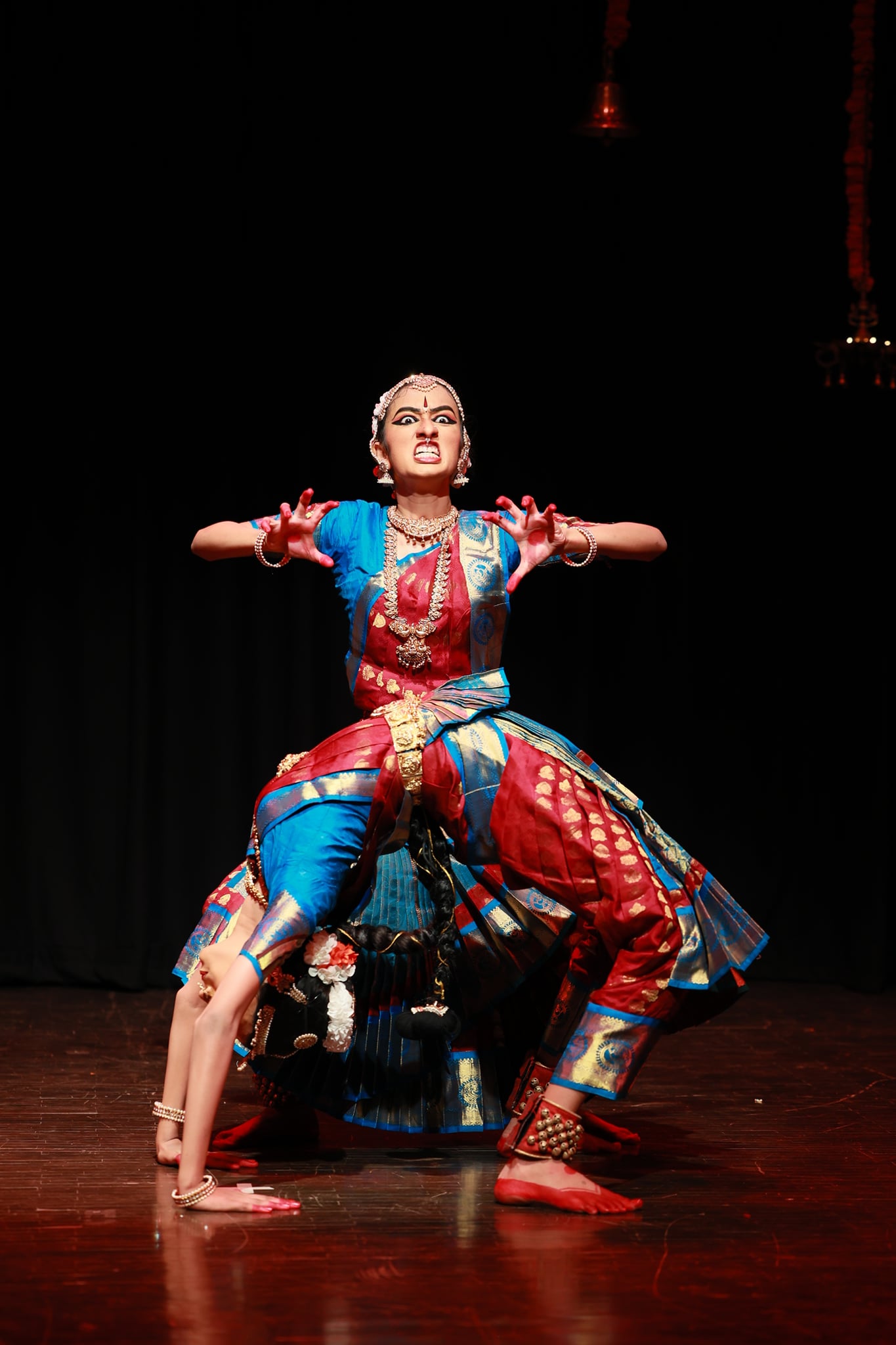
One of the best things about my dance teacher was how she helped transform the world on the stage with mere mortals. Children of varying interest levels, abilities and time. We somehow knew each other’s pieces, and the rehearsals became a place of camaraderie and belonging like nothing I have known since.  Friendships formed in the orbit of practice, each of us helping or being helped as the D-day drew near. The energy of practice was always enough to bring a smile. No matter how hard or terrible a day you’d been having, if you have to smile and dance when it is your turn, it does something to you, and you find yourself in a better frame of mind without even trying. 

How I wish dancing, singing, art, literature, creative writing, team and adventure sports are all a part and parcel of everyone’s life on a regular basis. Without having to carve time for it, without yearning for it, without having to take the car or public transit to plan for it. What a luxury that would be?

As we spend time working, we spend time in our creative pursuits – intellectual, or physical. 

As the children grew up, I had the chance to attend many dance programs, arangetrams and productions over the years. As soul-nourishing as they all were/are, I still yearn for the dance dramas that my childhood teacher was so good at conceptualizing, choreographing, composing, teaching and performing. Who cannot be caught up in the climax of Mohini skillfully directing Bhasmasura towards annihilating himself through dance, or Mahishasura Mardini, or any other epic being played out on stage?

While I yearned for multi-dancer theatrical dramas played out on stage, I was also keenly aware of why they were difficult to pull off. In a society where the number of hours were optimized, did you dedicate time for learning your margam of items – the standard pushpanjali/kowthwam, alarippu, jasthiswaram, shabdam, varnam, keerthanais and thillana so that you can prepare for an arangetram in that time, or spend a part of that time with a dance drama production? It is a tricky situation complicated by expectations of society – individual performances merited standardized margams, dance dramas demand a different format.

So, whenever I get the chance to go to a dance drama, I practically dance into the auditorium myself. 

Nirupama Vaidyanathan’s Journeys of Faith based on Shoba Narayan’s book, Food & Faith

In recent years, I have had the pleasure of attending a few of these theatrical productions. Nirupama Vaidyanathan’s Journeys of Faith based on Shoba Narayan’s book, Food & Faith was one such. Nirupama is always skilled at having multiple dancers quickly move together, seamlessly, in beautiful patterns on stage. She managed to incorporate standard thillana-style formats etc into this production which I thought was a very clever way to balance the needs of the student and the theatrical dance drama format.

That dance performance was amazing. Nirupama is a clear orator, and in this production, her voice overs, where she was narrating pieces from the book as she set the stage for the Palani Murugan temple or the Udipi Srikrishna Temple were amazingly done. She had the music pieces composed, and stitched together for the dance drama. I just have to close my eyes to see the way all her senior students came together on stage at the very end to show how the prasadam in a big temple kitchen is prepared. Who cannot be filled by a performance like that, followed by an excellent prasadam at the Livermore Temple afterwards?

She combined literature, theatre, dance and music in such a satisfying and eloquent manner that a year after the actual performance, I am able to recall the transformation of the stage in her skilled and capable hands.

Meenakshi Sundareshwarar Dance Drama

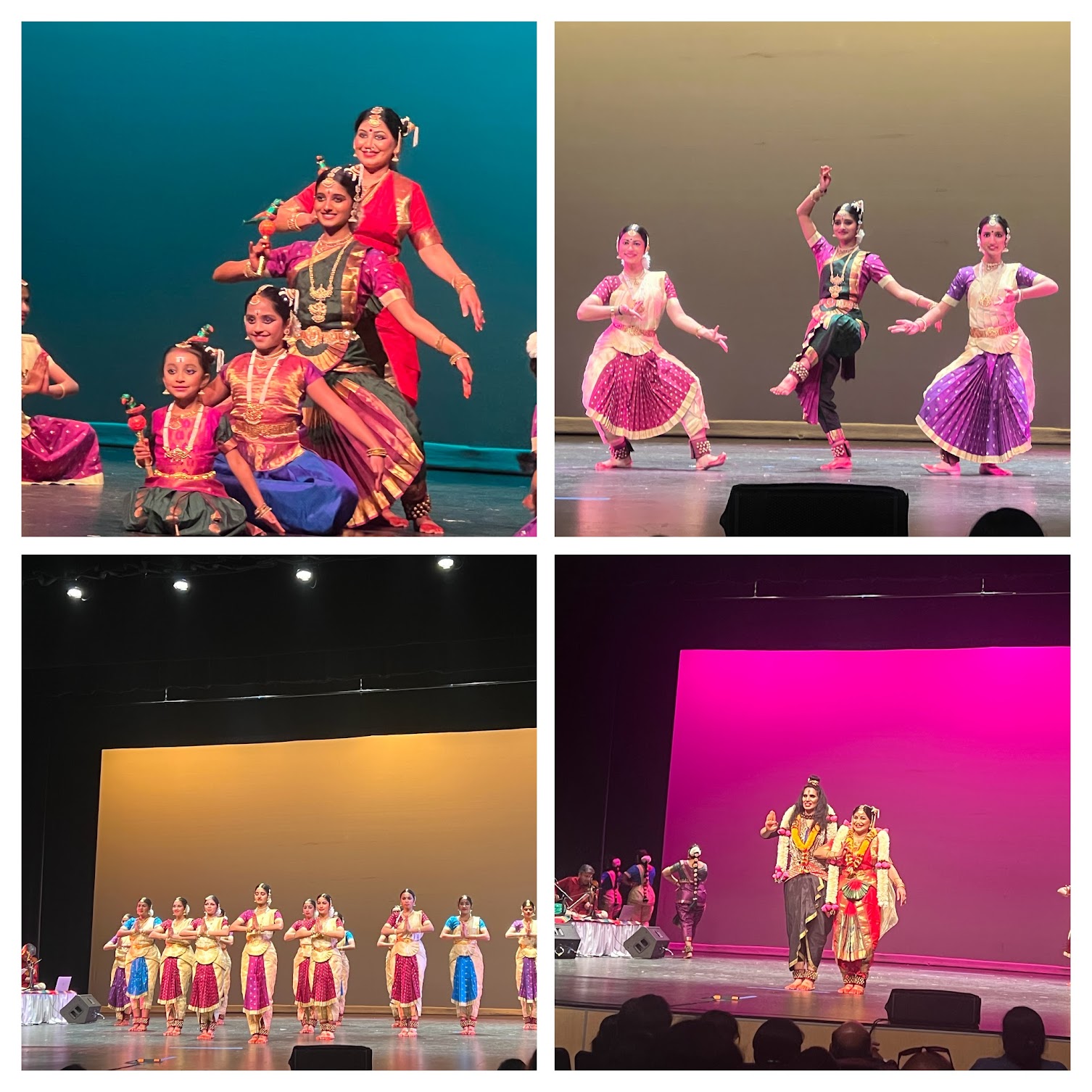
I had a similar feeling with the Meenakshi Sundareswarar dance performance by Sharanya Ganesan. It has been a few months since her dance school staged the dance drama to which I was invited. But, was it a transformative experience?! She managed to fill the stage with students of every stage in their dancing journey. 

There was the child Meenakshi, the young-adult Meenakshi, and the adult Meenakshi – with all the dancers accompanying the stories filling the stage with their rhythmic jathis, their quick and coordinated movements. The stage ebbed and flowed with the dancers themselves. The costumes – oh the costumes! Bharatanatyam costumes are always a joy to behold, but on that stage, they took on a fantastic life of their own. Except for the main characters of the story – Meenakshmi, her parents, Sundareshwarar etc, everyone was clothed in combinations of cream and (red, pink, violet, or green). I have always loved the cream colored combinations, and on that stage housing over 50 dancers, they all stood out and merged together. 

The dance performance itself co-ordinated across all the batches of children she teaches must have been both a joy and a huge project in and of itself. Every group knew of the pieces they needed to perform, but according to her senior students who spoke to the audience afterwards, the whole thing was a concept weaved together into the magic it transformed into only in Sharanya Ganesan’s head. 

On YouTube Please!

Every time I look for entertainment to watch, I yearn to see if these dance dramas would be on YouTube or Netflix. I wish they were. For I love to watch a good dance drama on a cold evening – I end up watching some dance pieces, but a good dance drama choreographed, executed with such talent, beauty and grace would be something that I would love to see every now and then, or even on a flight. 

There are always good ones we miss out on because of conflicts – how marvelous it would be, if we could manage to fill our souls with the performances later? I am on a flight to South India – thumbing through the entertainment available on the flight, I thought to myself that  I would love to see The Whispers of the Kaveri when I am traveling to the very lands of the Kaveri river – Tamil Nadu & Karnataka. 
Musical March

March is one of the most beautiful months in the Bay Area. Poets have tried over the years to capture some of the rapture of the month. But even poets such as Emily Dickinson (Dear March—Come in), Or William Wordsworth ( Written in March) seem to do the month justice.

Maybe they lived in colder climes, and the month did not yet burst forth in glory the way it does in California. You see? This is the month of rainbows, clouds and sunsets, golden california poppies, fields of yellow flowers, green grass knolls, sunshine and rain, oranges, cherry blossoms…I could literally go on and on.

The time change happens in the first week of March, and suddenly, cold and bleak evenings seem to shed their winter cloaks and don resplendent spring robes billowing in the wildflower scented breeze. The squirrels are chippier, the birds chirpier, and the breezes gentler.

A run along the river/stream by our home is a joy to endure. There are many places in the trail where the heart bursts with joy. All around you are gentle green hills adorned with wildflowers, the rivers are flowing, the birds are nest-building, and all of nature seems to be in one harmonious, vibrant orchestra.

It is so fitting that the month hosts lesser known festivals for the two things that appeal to the nourish-n-cherish household: whimsical & geeky. St. Patrick’s Day in the Jungle & Pi Day 

St. Patrick’s Day in the Jungle

St. Patrick's Day In The Jungle
St. Patrick’s Day In The Jungle

The son & I listened to Irish music on the way to school this morning. The music had us humming along even though we were sleepy. I came home and opened one of the favorite books of mine, St. Patrick’s Day in the Jungle. My friend, Krishna Srinivasan , worked on the musical track for the book St. Patrick’s Day in the Jungle.  It has the same vibrant quality to it.

This is the sort of music that makes you peer out to see if a rainbow is there, and if the birds and animals are playing hide-n-seek too. Not to mention the sweet voice of the daughter, who has lost the childish intones in that beautiful book now.  So, please do give a listen to the books, and enjoy the music, narration, and pictures for this story – even if you are having a stern day full of important things to do.

Also, any recommendations for Irish music, March poetry, and the general splendidness of Spring is welcome.

Lives of Musicians and what the Neighbors Thought!

Lives of the Musicians – Good Times, Bad Times (And what the Neighbors Thought) is a fantastic book of the lives of musicians. 

Page 1

Some of the more famous musician’s stories we may have heard before, but the book had enough that are not as well known. Written with a look at their personalities, the book talks about the idiosyncracies of some of the musicians too. For instance, did you know?

🎼 Antonio Vivaldi had a job teaching violin at the Pieta orphanage for girls in Italy? Orphaned children were taken in and given a musical education so they may go forth into the world and spread their gifts. What a marvelous thing to be remembered for?! The girls’s orchestra was apparently one of the best disciplined of the times and though people never saw them perform (they were hidden away), they received accolades and recognition for their sheer talent.

🎹 Johann Sebastian Bach was boorish and stubborn. Once he wanted to quit a job, and the Duke would not hear of it, and threw him in prison instead. During the month he spent in jail, Back wrote 46 pieces of music that is still listened to today 300 years later.

🎻 Wolfgang Amadeus Mozart was probably the “most-kissed little boy in Europe” given his grueling performance schedule starting at the tender age of 6. Mozart had a strange childhood – he could be whimsical, superstitious. At the time of his death, he owned 6 coats, 3 silver spoons, and 346 books. His most expensive possessions were his piano and pool table. If you are fascinated by Mozart, and haven’t read this hilarious book, please do so. 

Young Mozart – By William Augel. It is in comic book format and is a joy to read.

Screen Shot 2023-03-13 at 5.06.28 PM 

🎶 Guiseppe Verdi – lived a simple life on a farm with his beloved animals, amusing himself with poetry and history. He was a successful farmer, a senator, and cared very little for what critics said about his music, but his music pleased his audience most of the time too.

It is humbling to see how many of these great musicians’s eternal glory came after their lifetimes. Many of them were well known in their lifetimes too, but had no idea of the kind of imprint they would leave on the musical scene centuries later.

The book only looks at the loves of western musicians – a similar book of eastern musicians would be just as welcome. It would be nice to read about the lives of Muthuswamy Dikshitar and Annamacharya in a similar format: We continue to be enthralled with their compositions centuries later.

The Human Experience

“You could be listening to anything at all, and this is what you choose to listen to?” , said the daughter.

I chuckled. We were driving through the Great Plains of the Mid-West between Wisconsin and Illinois. Snow flakes were flurrying lazily across the windshield, which was amusing to watch, since I could feel the car shuddering with the winds sweeping the plains. The great windmills on either side of the freeway were moving and converting the wind energy, while the snowflakes seemed to be dancing lazily and flitting across the plains. To see the flakes against the depth of the vast plain fields was mesmerizing enough, but to have Dr Indre Viskontas’s lecture accompany the scenes outside made for a new appreciation. 

I was listening to the excellent Great Courses lectures by Dr Indre Viskontas. In her energetic voice as she talks about how we hear and see, the world becomes magical again. 

Listening to Dr Indre Viskontas speak about the faculties of seeing and hearing, makes those of us given these two abilities more appreciative of all that goes on beneath the skin to make these happen. 

12 Essential Scientific Concepts

How we perceive light, hear the frequencies of sound that are audible to us, make for our human experience. The frequencies heard and seen by each creature on Earth itself is different. From the magical birds who sense the Earth’s magnetic field for their migration journeys to the fish who are able to navigate by the position of the stars from deep under the ocean, we each have our own unique way of living. Of Life. 

In Dr Oliver Sack’s book, Musicophilia, he says:

“Every act of perception, is to some degree an act of creation, and every act of memory is to some degree an act of imagination.”

Oliver Sacks, Musicophilia

Dr Indre Viskontas is also an Opera performer, and her joyous voice brings out the polymathic abilities she possesses. Truly, as she regales cognitive neuroscience and how our brains understand better, I am reminded of some wonderful musings with our dance teacher at school. In between rigorous bouts of dance practice, she insisted that her students were all bright, athletic, and doing so much better than we would have without dance. And, in the energy of youth urging us towards our better selves, we wanted to believe her. Could that have been a belief that spurred us on? We would not know – for good teachers, coaches and mentors all excel in that subtle balance of belief, discipline, and inspiration.

But maybe the musicality and the dance do make for better neurological experiences. As Dr Viskontas says in the lecture above, 

Art and science are after the same thing. The goal is to understand the human experience. Science does it by extracting general principles about the world, and art uses individual experience to highlight what is universal.”

Dr Indre Viskontas

Why is it that we are moved by a piece of music to visualize a god vs demon war on stage, or the haunting love-lorn calls to one another? Because music, like whales can attest, can evoke worlds in our imagination. 

“Music can also evoke worlds very different from the personal, remembered worlds of events, people, places we have known.”

Oliver Sacks, Musicophilia: Tales of Music and the Brain

And so, I wanted to say to the daughter, “When I could be listening to anything at all, I chose to listen to the lectures trying to understand the human experience in a vast, barren landscape, made unbearably beautiful by the beauty of the symmetrical snowflakes, and the gushing of the winds against the car. “

What I did instead was laugh, and let her call me weird. ‘Weird’ I am beginning to understand is one of the best compliments that a teenaged child can give you.

Musical Musings

The busyness of living had taken over the days, and I felt a little soulful pondering and meandering was in order. I listened to an uplifting album of Anoushka Shankar as I went about the chores in the home after a long week of deadlines, and never-ending demands on my time physically and emotionally.

The children gave me indulgent looks, and nodded approvingly. They had been telling me to get my head out into the clouds for some time now.

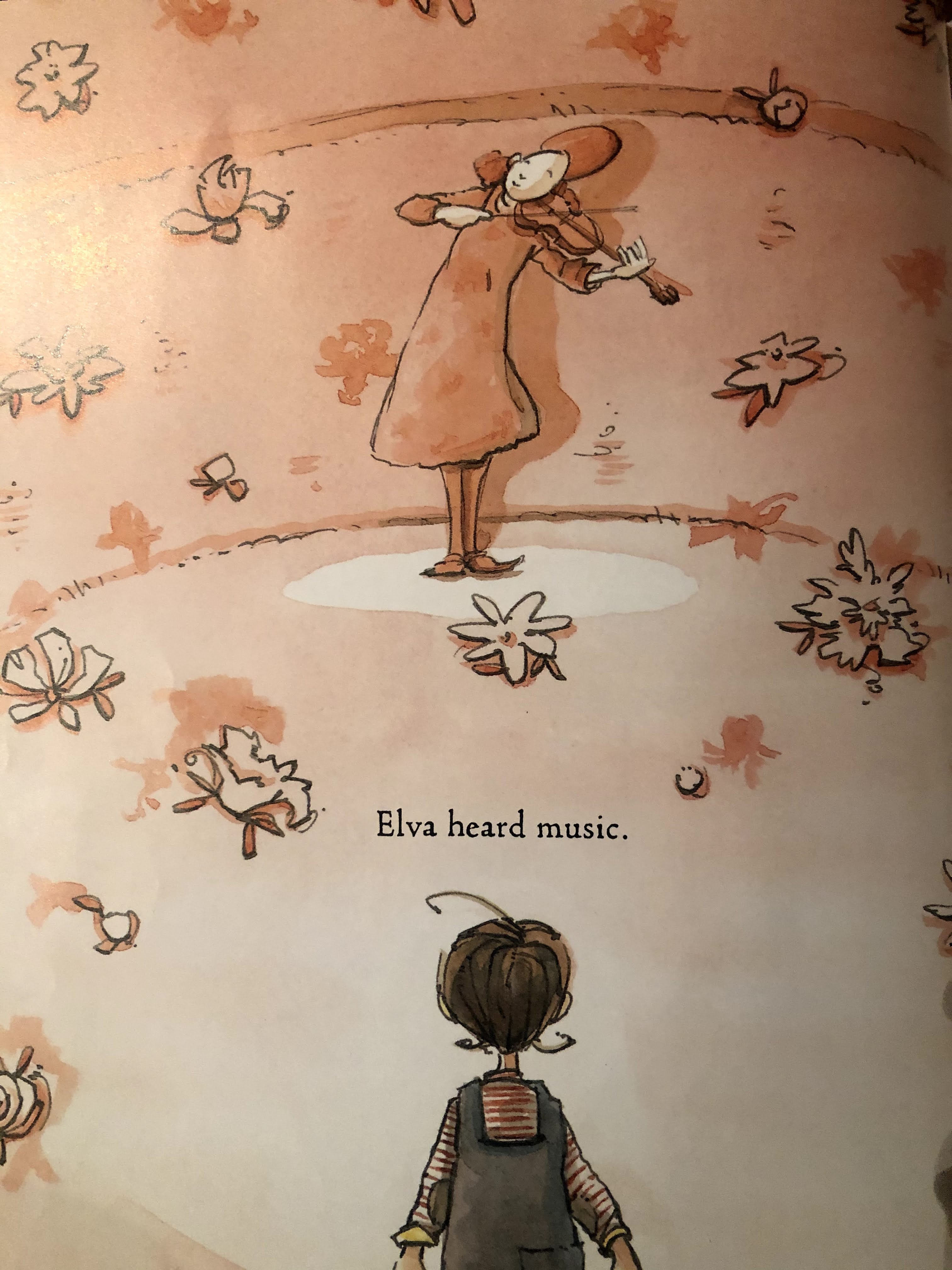
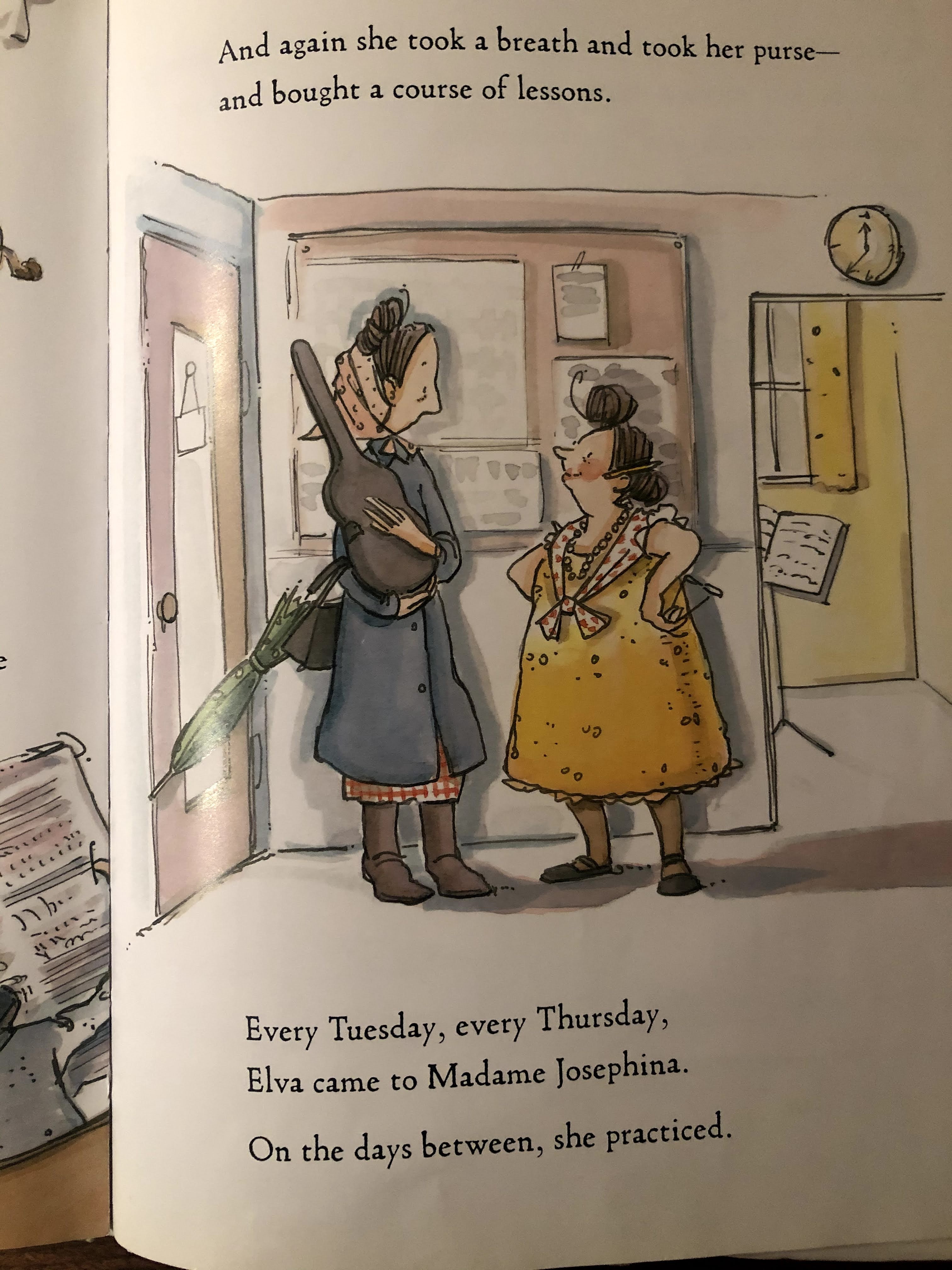
I peeked out the window and saw a breeze flutter though the pine tree outside, and resisted no more. I picked up the beautiful children’s book, A Violin for Elva by Mary Lyn Ray, Illustrated by Tricia Tusa.

Fresh from reading Musicophilia – Tales of Music and the Brain by Oliver Sacks, I found myself analyzing the music in our lives. In Musicophilia, Oliver Sacks writes about musicians who don’t read music, but get to listen to the music in their heads as they read the sheets. I imagined the neurons in their brains reacting like those little piano keys – bobbing up and down.

Who remembers Tom & Jerry Piano Concerto? Here it is for those of you requiring a refresher.

The music teachers at our school had been blessed by the muses themselves. I remember many a morning assembly being mesmerized by our piano teacher’s musical notes wafting from her swift hands flying across the piano. The band master and the Indian music teachers were just as talented and gifted. 

How could one man teach the saxophone and the bugle, just as marvelously as the drums?

How could one person teach the harmonium, sitar and the tabla? 

I have always wanted to learn to play a musical instrument. It is probably why I never tire of seeing Anoushka Shankar’s hand leap up and down the sitar producing marvelous music. The harp player must be harnessing a power of the gods, and no wonder the goddess of learning in Hindu mythology holds the Veena.

I sat by the rose bushes reading. A gentle breeze accompanied the birdsong outside. I watched mesmerized as the breeze rippled through the luscious pines generating green soothing waves. Well, I may not know how to play a musical instrument, but I am lucky indeed to be able to enjoy the music.

I opened the book, A Violin for Elva, and was soon so happy with the choice of book. The book talks of Elva listening to music wherever she went. She imagines herself playing the violin, and asks her parents for one, but she doesn’t get one. She goes about imagining her toothbrush, tennis racket and anything else to be her violin. The whimsical illustrations are a joy to behold.

Life passes her by, and in her working years, the faint whiff of her love of music is there, but she is too busy in the busyness of living. 

Finally, after her years of working, she gets herself a violin to teach herself, but finds it very hard. She then goes for music lessons and when she gives her first concert, the sense of accomplishment, the much-delayed gratification she receives is amazing. It is also a reminder to those of us waiting to do what we love that though it is never too late to take up what we love. It is also pointless to let life pass us by. 

“How we spend our days is, of course, how we spend our lives.” 

Annie Dillard

Elva’s story reminded me of Mary Oliver’s essay on the three distinct selves within each of us:

  • The Child Self
  • The Social Self &
  • The Eternal Self.

Though in the essay, Mary Oliver, refers to the Eternal Self as the artistic self, I like to interpret it as the Creative self. 

  • The Child Self is in us always, it never really leaves us. 
  • The second self is the social self. This is the do-er, the list maker, the planner, the executer. 
  • Then, there is the third self: the creative self, the dreamer, the wanderer. This is the self that needs nurturing.

The essay ended on this note:

“The most regretful people on Earth are those who felt their own creative power restive and uprising, and gave to it neither time nor power.”

Mary Oliver

It was a chastening thought to enjoy those things that sustain us, and in doing so make our lives meaningful and joyful.

What would you like to nurture?

Musings: Whally Mousical

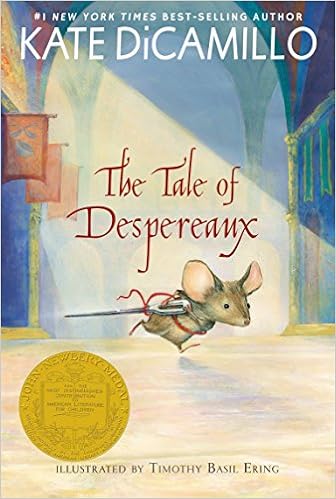
 I was reading to the son’s classroom. I had planned out two little sections – one from the Tale of Despereaux and the other a true story of a pod of whales saved from the iced in waters of Siberia. The theme linking the two was music. I started, and the little musicians looked thrilled. I was too.

As I turned to the start of Chapter 4 in which the little mouse who was different finally understands what that honey-sweet sound was. I felt like Despereaux myself as I read about how little Despereaux felt a welling in his heart for the music, and how he slowly forgot where he was, or what he was doing. Slowly, he inched out from his hole, listening, mesmerized to the king playing music. As I read it out aloud to the children, I wanted to stifle a laugh, for a childhood memory peeked out of its deep hole the same way that Despereaux did. 

“And he discovered, finally, the source of the honey-sweet sound.

The sound was music.

The sound was King Phillip playing his guitar and singing for his daughter, the Princess Pea, every night before she fell asleep.

Hidden in a hole in the wall of the princess’s bedroom, the mouse listened with all his heart. The sound of the King’s music made Despereaux’s soul grow large and light inside of him.

Oh,” he said, “it sounds like heaven. It smells like honey.” 

Kate DiCamillo, The Tale of Despereaux

We lived in the chilly mountainsides, and often times, the cold outside attracted rats and mice into the warm house. Several times, when music was playing in the old tape recorder, we would notice a mouse peeping cautiously and just listening. Curious as to what the noises meant maybe, but maybe not. One of the family would shriek, and the pater would at first try to quieten us down saying it was just a little mouse enjoying some music – so what, or something to that effect, only to have a somewhat more hysterical reaction. 

Almost reluctantly would ensue a hilarious game of hockey sticks against furniture trying to get the mouse. Mice are as nimble as well, mice, and humans are – how do I put this kindly? Clumsy. Well-fed humans have several disadvantages stacked against them as they go about the mouse chase:

* Leaning back in the chair after a good meal listening to music in the background has made them soporific, so while the hockey stick is meant to be a tool, it is often used as prop against which to lean on to catch a breath

* They lack the right motive to catch a mouse. The human’s motive is to see if they can tumble in another gulab jamun into the tummy before bed. The mouse’s is to get to the hole

* Crowd sentiment is hard to gauge. The mouse chaser is in the tough spot of being a warrior and a saviour. While the shrieking indicated that something must be done, if something were done, the shriekers would be devastated and clamor for animal rights. So, the mouse chaser has to diplomatically chase the mouse, but not harm it in anyway.

 By the end of this jolly game of mouse chasing, the furniture has received several whacks from the hockey stick, and the mouse has strolled into its hole, while the music lilts on from the tape recorder. Which takes me to the curious scenario of mice in kings courts. I wonder how a mouse must’ve been treated in the king’s court. Would the musicians stop playing, while the commotion continued, or would they lilt on? The shriekers would be more, and therefore the motive higher. Would the courtiers gallantly prove their loyalty to the king by mouse chasing themselves, or let the warriors go for it?

They say a mouse’s brain is closest in structure to the human brain, so is that why we enjoy music together? 

New Items: Lab Rats Listen to Mozart and Become Maze Busters

So Mozart turns rats into maze-busters. But does it have a similar effect on humans?

I suppose The Pied Piper of Hamelin knew what he was doing. 

The story of the effect of Classical Music on Whales is equally mesmerizing. From the book, The Symphony of Whales, By Steve Schuch

The story, is based on a real incident that happened in the narrow Senyavina Straits of Siberia. Over 3000 beluga whales had been trapped by the rapidly freezing waters in 1984-1985. For seven weeks, the people of the Chukchi peninsula, and the crew of the Moskva risked their lives to save the whales.

The story does not end there. Once the icebreaker ship, Moskva, had cleared the way, the whales had to follow the ship out into the open seas, but they were reluctant to do so. The crew tried playing whale song to lure them. While they reacted to the music, they were not assured of human intent, and were still scared of the engine sound. They lurked in the waters.  Then they tried Classical Instrumental Music.

“The crew found some classical music. First, the sweet sounds of violin and violas, next the deeper notes of the cellos and, deepest of all, the string basses…and way up high, a solo violin…

Everyone fell silent as the music carried over the waters.”

That had done the trick. The ship’s engines started and the whales slowly followed the icebreaker out into the open ocean.

Some musings are whally mousical, and all the more whimsical for it. The children seemed to enjoy the reading too. Their wondrous brain did not once question why a mouse liked music or how whales, mice and humans liked the same kind of music. 

Coming Soon: Musicophilia

Is Earthly Music Universal?

“What is this? Australian music? I thought we were in Africa! “, said the little fellow peering into the dashboard up by the driver’s seat.

“Yes- my young man! We have moved on from the plains of the Masai Mara to the deserts of Australia. Traveling the world during lockdown. Feel adventure in your veins!”

He rolled his eyes. His teenage sister has taught him well. 

“Remarkable isn’t it? How we are able to traverse the world in an instant these days? In the years of Ibn Batuta or Marco Polo, I suppose you had to wait to shimmy your way into the audiences of the explorers to get a glimpse of a world other than your own. “

marcopolo

We had taken a drive to catch the fall colors in the nearby mountains, and I was seated in the front-seat clasping the task of deejay dearly. I am usually entrusted with this important task only after several rules have been put in place.

🎼 You are allowed one Carnatic music not more than 7 minutes long (I do have a bone to pick with Carnatic musicians who take up my allotted 7 minute slot with one line)

🎵 Instrumental – cannot be slow, slow music. (Drivers got to stay awake.)

🥁 Everyone’s got to get a chance at their music

🎻 No weird music

“Yet…just look at us swiping away and traveling the world 🌍 with YouTube music? Lockdown or no lockdown. How remarkable music is no? Transports you straight out of this world into another world altogether!” I said. The husband and children gave me looks of amused tolerance that they seem to reserve for holidays and trips. Indulgence, sure, but also a joy in seeing my whimsy rise to the surface. 

The brilliant Youtube recommendations engine stood on the side panting and scratching its head trying to figure out what to recommend next based on my list of songs. Ahh! That happy feeling you get when you stump an AI algorithm is truly priceless. Scottish bagpipers marched down the dales of Scottish highlands with their music; middle eastern belly dancers flexed their tummies with grace and agility; shepherds tended to their livestock with Bulgarian folk dance music; and royal court musicians of Turkish sultans from the past bravely set forth their music to the unwittingly pulled in audience in the car. 

“Ummm – what music is this?”, said the son when I played the Bulgarian folk song, Izlel e delyo haydutin, By Valya Balkanska.

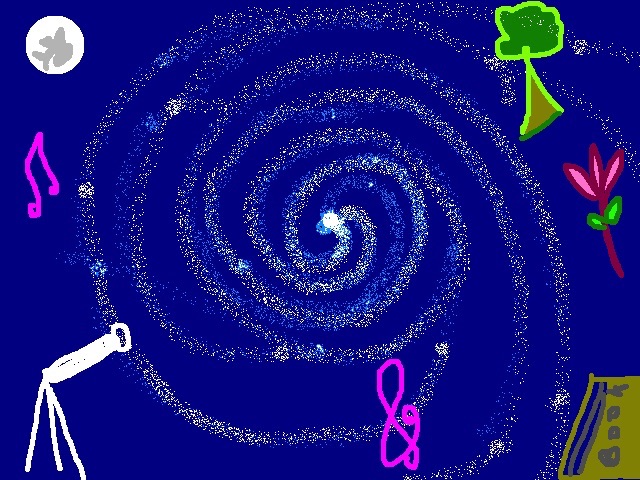
This, my dear, is what the universe would hear if ever anyone intercepts Voyager on its space voyages, and finds a way to extract the music within. It is part of the Golden Record. It is now hurtling through space making  our earthly music universal. ”

Laniakea

“Please! Appa – what is this? I am happy to see Amma this happy I suppose, but this is too much. Can we have some, like, normal, music? “ asked the teenaged daughter. 

“What?! If I may remind everyone in this car, this coming from one who is constantly the one asking me to try new types of music. Who is forever berating me for listening to toiyan-toiyan music (instrumental music)? Amma jazz it up a bit! Shall I create a playlist for you with my favorites so you can listen to it? – huh?! “

She gave into a high pitched laugh, and said, “Yes I meant different genres as in rock, jazz, country, pop, not bagpipes, bongo drums, and what is this now?! Doesn’t sound like an instrument at all!”

“That’s because it isn’t”, I said happily. “We are listening to whale songs now.”

“Okay…that’s it! All deejay rights revoked for some time now. Whale songs! Pass me that phone!”

“Nope!”

And to this musical, lyrical bickering, was added the sounds of harmony, resulting in an orchestra of noises. The trees, that night, as they passed their messages to one another, rustled in excitement. How long since they had heard natural sounds of whales?

img_2576

November Gifts

When the colder regions of the United States start rejoicing in the beautiful colors of Fall in October, California is still reeling with hot summers’ last gasp. Wildfires, and heat waves sound alarms of summer fading out. We are almost there, we pant to each other, as the withered flowers cling to their stems, and dust settles adamantly on cars and rooftops. Parched rivers, dried up lakes and dusty trails with wildfire warnings are the norm. Then suddenly, as though, there is a secret message that Halloweens cannot be during a hot spree, the days become nippier in the evening.

Elsewhere in the colder regions of the United States, it is the Octobers that are splendid, but for us here in the Bay area in California, November is the month of brilliant fall colors. A splendid sight that I had not fully seen in my initial years – in the unseeing way in which I rushed from one spot to another, in the unending rush to and from my job. Post the autumnal equinox, the sunsets became a rarity as it would be dark by the time I left the office and got out of the train. But over the years, I have noticed the colors with more appreciation every passing year. 

This year,  as I set out on walks on clear November days, I feel the gratitude for a less rushed commute and I sometimes get the feeling that all of this wells up within me to burst forth into the myriad colors in the universe I see around me. As I stood last week, first under an oak tree, then a sycamore tree, and then a large maple tree, a gingko tree and a willow tree (it’s hard to stop once you start!), I felt a sense of liberation in the air. The leaves were maturing, and some of them were letting go of their own volition.  (A lesson the occupant of the highest office in the nation can learn from if only he took the time to stand under a tree.) 

I stood there for a few minutes without rushing about my walk, and quietly reluctantly, when I moved away, I reflected on the gifts:

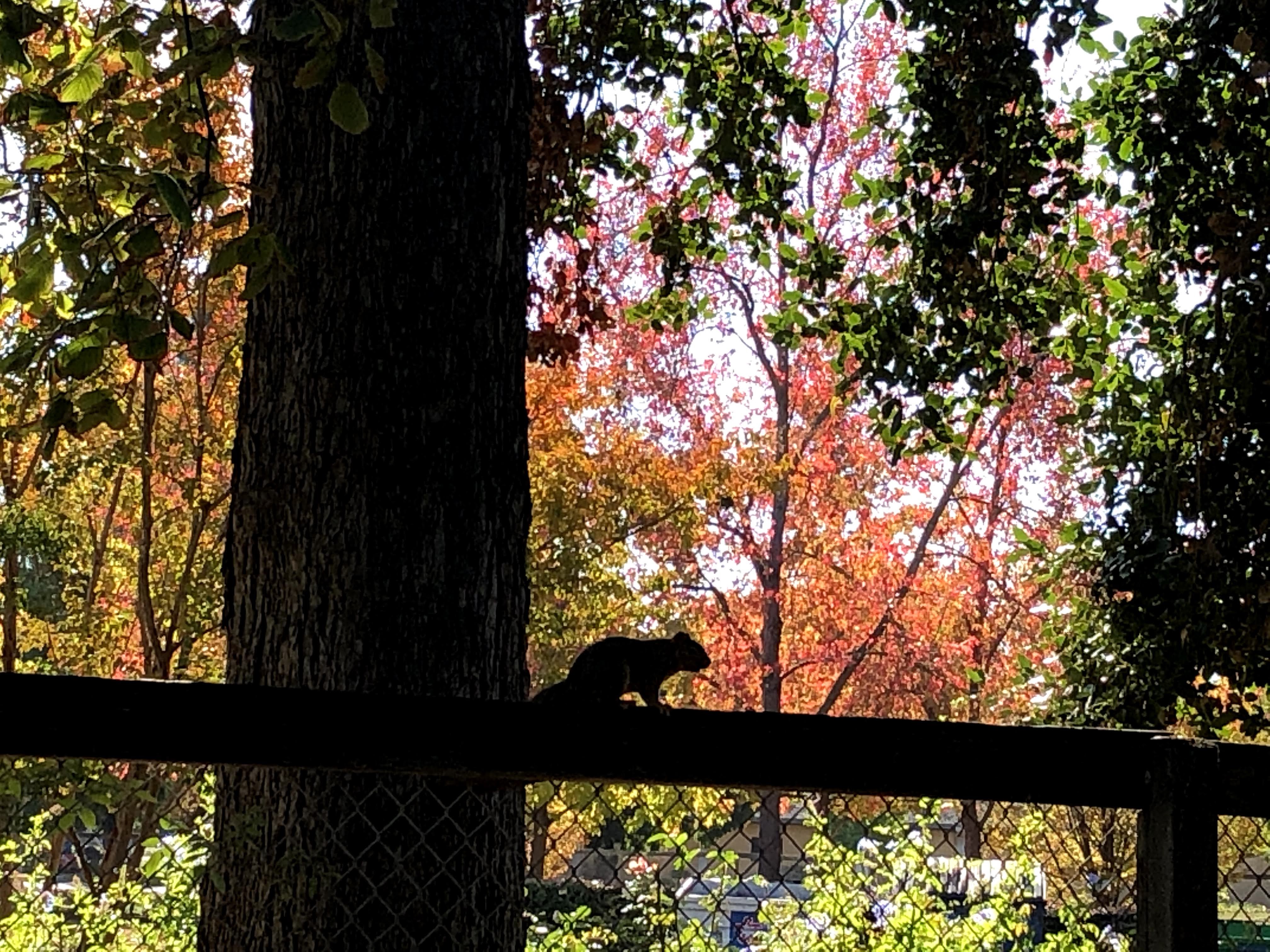
🍁 The music 🎶 🎵 🎼 of the wind rustling through the trees, to the accompaniment of chirping birds, and tittering squirrels, is music enough, and a soft lesson of symphony.

🍁 Watching a yellow, orange and red world bathed in the November light with the leaves fluttering down at their own pace is an unhurried lesson in pace.

🍁 Every now and then, a blue jay flies down from its perch, a couple of little yellow thrushes swoop in joy, while the melodious blackbirds and the nimble hummingbird go about their day. I can rejoice in the glorious feeling of the heart soaring with the birds. A lesson of hope and joy.

🍁  I see the younger gingko trees in our neighborhood already brilliantly yellow, but gingko trees apparently wait and coordinate among themselves to shed their leaves in unison. The older gingko tree isn’t quite there yet. It is working its way through the green leaves and slowly turning to yellow. The splendid yellow young ones are waiting patiently. A lesson in gracious patience.

🍁 How could I forget the squirrels with their final nut collection drive? A lesson of work while stopping to enjoy the fruits of one’s labor.

img_0090

November is also the month of celebrations. Hot on the heels of Halloween when the adults find the child in themselves, comes Deepavali, the beautiful festival of lights indicating the victory of light over darkness, good over evil etc, and then just before pulling gracefully into the zone of gratitude and thanksgiving, I get to celebrate my birthday.

What isn’t to love about November? It is a time for hot tea, butter toasts, fall colors, the sounds of pattering rain, the warmth of a sweater, and all the wonderful things of Hygge.

Happy Thanksgiving!

The Magic of Story-Telling

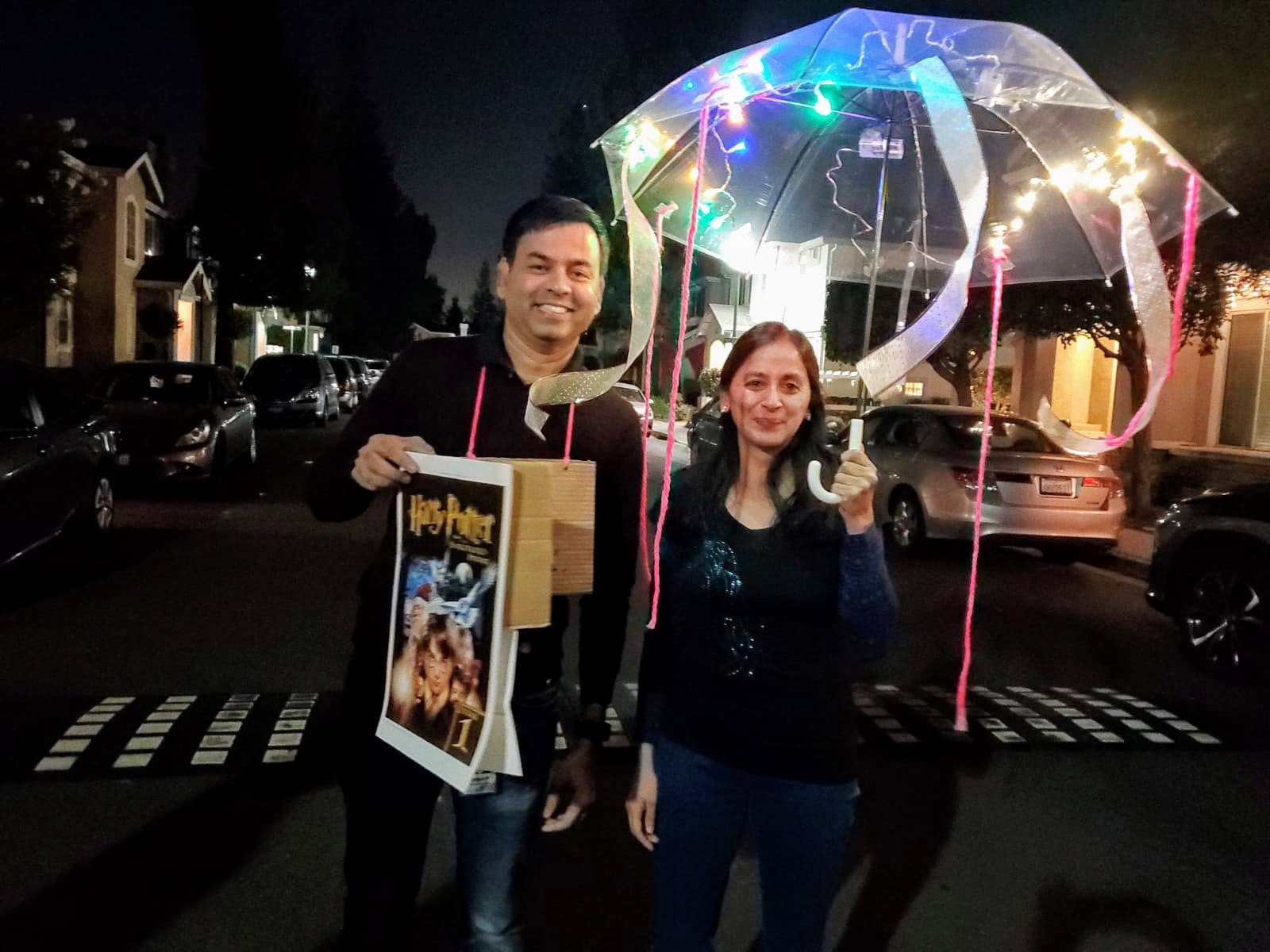
“Stop being a Jellyfish!” said the husband.
“I knew you were going to say that – you are such an open book yourself!” said I.

We both giggled like children at our own pathetic joke. T’was the time for hulking men with or without mustaches and serious women to quack like ducks, twirl like fairies, flex those non-existent abs, and find that little teeny bit of whimsy that adulthood so expertly hides away beneath the layers. Halloween was here.


1dc1cf17-3133-4989-93a7-08bcd65b2be5

T’is the time people astound you with their imagination. Who doesn’t like having 3 spidermen knocking on your door all at once? Or to see the twin toddlers dressed as Nemo & Dory? The super-heroes and ninjas cowering behind their larger siblings in Vampire clothing, or the witches cackling hard?

There is something so uniquely beautiful about Halloween – the one festival where we can display our idiosyncrasies with grace, be accepted for whatever we are. You want to be a skeleton? That should be fine. Here is some candy for you. Really, buddy? You want to go out in the world in that costume? Well, if this appeals to you, then I suppose you deserve some candy anyway!

How many times in our lives do we get that kind of universal approval?

The husband and I were very proud of our last minute Halloween costumes: an open book & a jellyfish.

The little fairy lights I had taped into place made the jellyfish glow, and I received many compliments – I must say I glowed all evening with the praise, though I did credit the Internet with it.

When people asked me where I got the inspiration from, I replied truthfully that I have always wondered what it must be like to live under the sea, and they invariably laughed at my answer.

But it’s true. Every trip to the aquarium rekindles the magic of another world – right here with us. Reading Gerald Durrell’s essay about scuba diving is enthralling.

I have often wondered how we would have adapted if we had evolved under the ocean. Would we have figured out the laws and physics of the Universe to the extent we have, or would the medium have made little difference in understanding. The Octopus’s evolution to have more neurons than us is truly astounding.

Quanta Magazine: What shape is the universe? Closed or Flat?

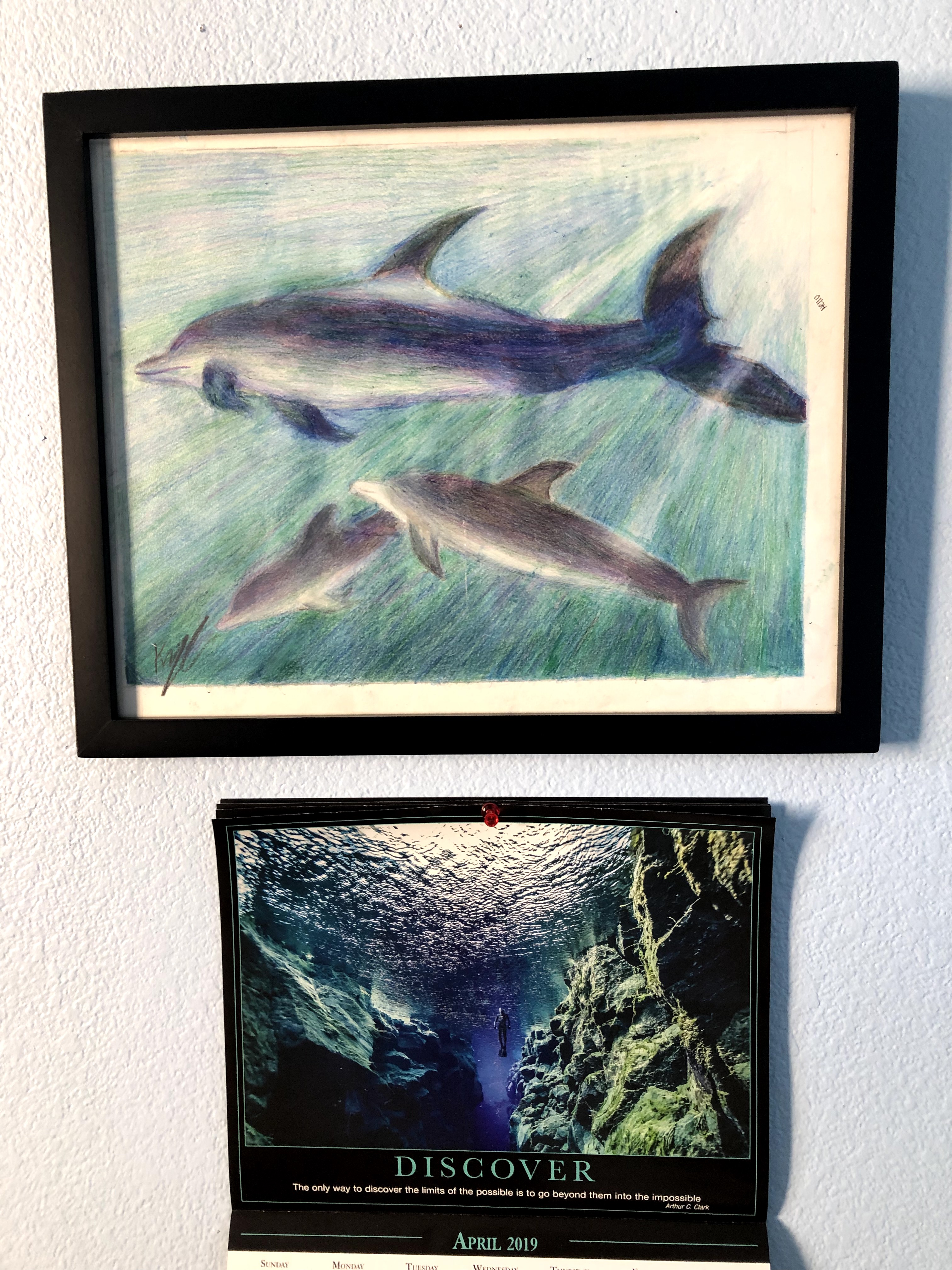
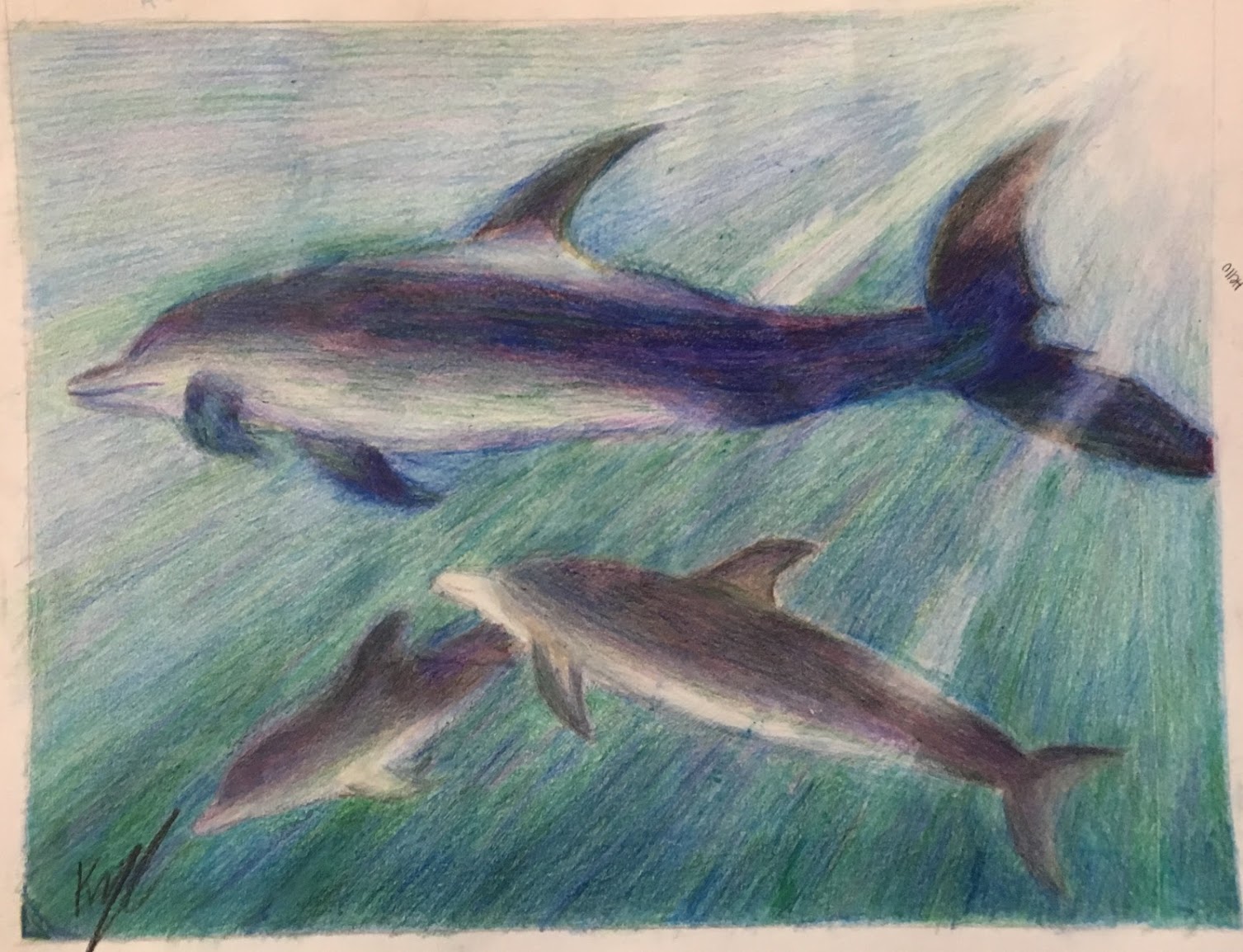
It is why I like reading about the intelligence of dolphins and whales: the fact that they have epics the sounds bits of which are roughly the equivalent of our Iliad is amazing. Quote from Carl Sagan’s essay on Whale song:

If the songs of the humpback whale are enunciated as a tonal language, the total information content, the number of bits of information in such songs, is some 10 to the power of 6 bits, about the same as the information content of the Iliad or the Odyssey.

What must their epics say? For all our anthropological worldview, I wonder whether humans figure in them at all. That will be a fine thing to hear – a Dr Dolittle who finally translates a Whale Epic, only to find their world far richer than our own.

Keena_drawing
Art work by Daughter

I recently re-read the Voyages of Dr Dolittle by Hugh Lofting. I must say I thoroughly enjoyed visualizing myself sailing the seas with his motley group – either by skimming along like a porpoise, or better yet by getting a place inside the giant snail’s back as it sailed along smoothly churning the ocean as it went.

Swimming with Dolphins

We are all children of stories. We need epics and tales of fantasy. Our very own imaginations need an outlet, and Halloween gives us just that. I know my enthusiasm rubs off on the children as they go about planning their costumes. While I am out with a big smile on my face, a number of people give me an indulgent smile as if to say “Aren’t you a bit old for this?”

Mary Oliver gently reminds me to react with this nugget of wisdom:

“You must not ever stop being whimsical. And you must not, ever, give anyone else the responsibility for your life.” 

― Mary Oliver, Wild Geese

Privately, I am happy that our inner child never really leaves us.

Authors: