Exploring America’s Artistic Evolution Through History

The History of the United States

I just finished listening to a Great Courses Lecture Series on American History. I loved the chapters where the American History audiobook lectures cross-referenced the historical narrative with developments in Art History. After all, art is a reflection of life, and life is an inspiration for art. 

I am sure there are books and reams of material dealing with all of which I am about to write about. If you know of any good books or podcasts along these lines, please drop me a comment.

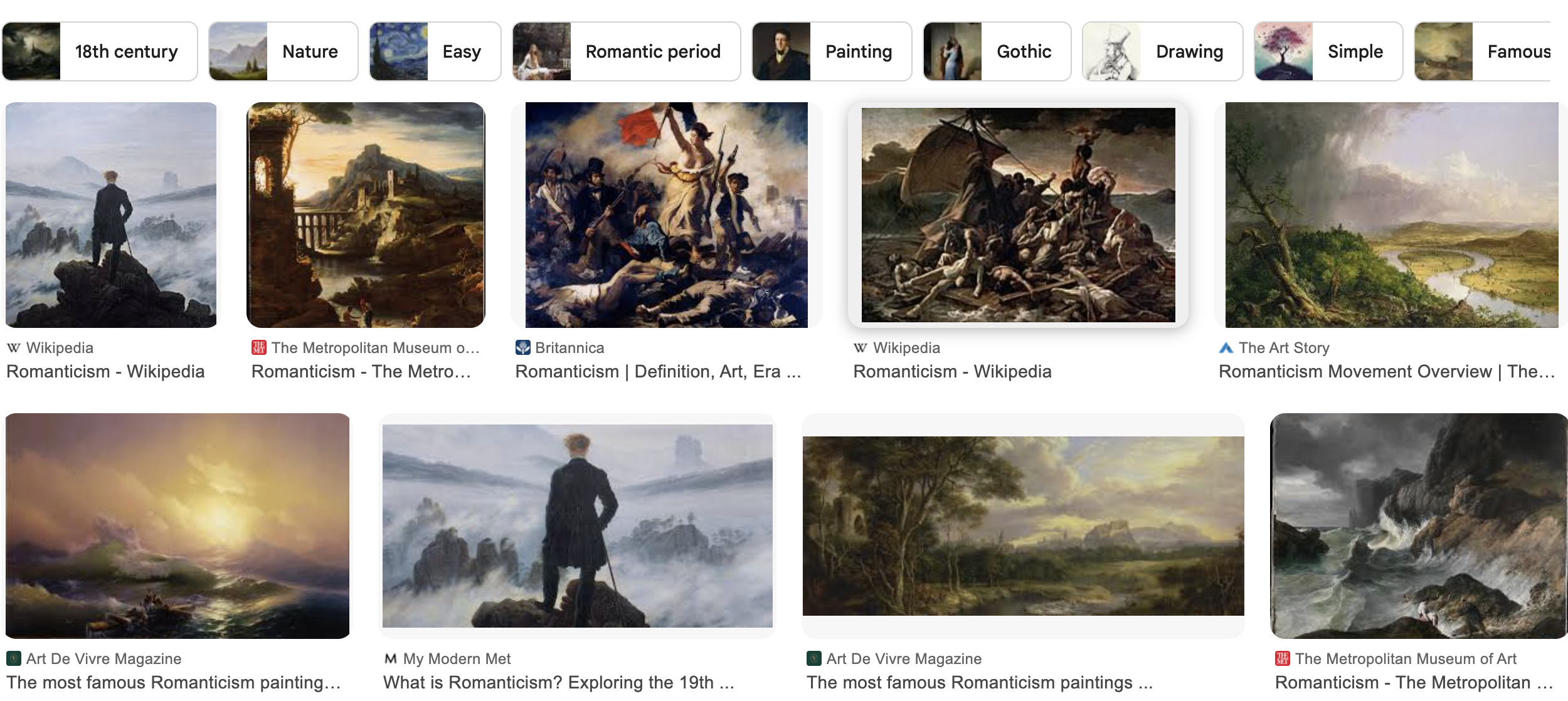
Romanticism (Early 1800’s) 

Romanticism in the early 1800’s from authors and poets like Walt Whitman and Ralph Waldo Emerson made their way into the American psyche with their hopeful and nature-oriented philosophy. The call for nature as a spiritual healer, a gentle reminder that life on Earth is bountiful even if sometimes hard. This was the time America was settling into itself as a fledgling nation – idealistic, ambitious, and prosperous.

The themes of art and literature spanned mystic nature, emotion, imagination, individuality, and inspiration.
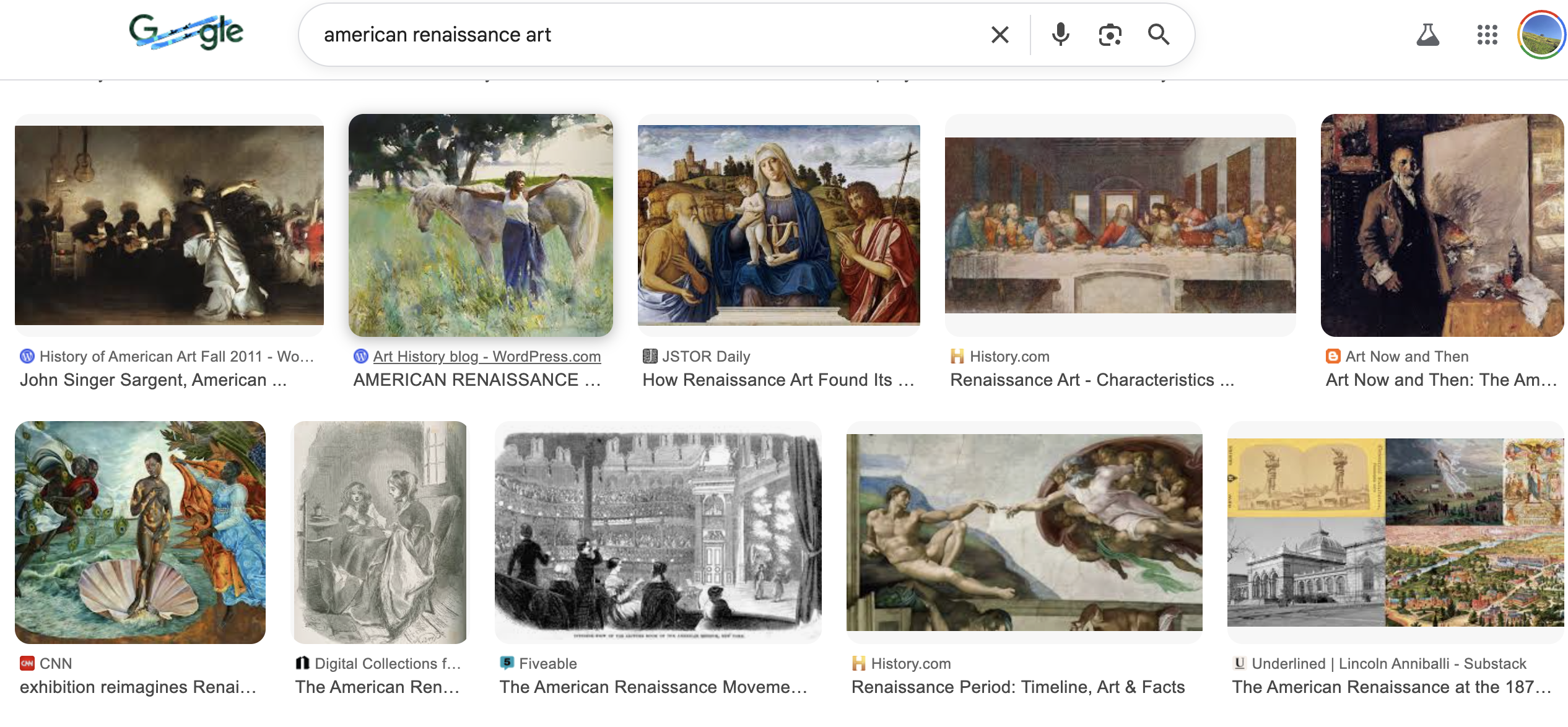
American Renaissance (Late 1800’s – Post Civil War) 

Then, in the mid-1800’s – after the Civil War and many losses on both sides, art and literature turned towards the American Renaissance. Nature was not the benign soother of souls anymore. It was the vast, terrifying force that could destroy. The darkness within. The ghost of reality underlying the dreams of the bright and hopeful. The likes of Edgar Allan Poe.

I thought to myself on a walk one day that maybe this was the growth that was necessary like the human teenage psyche needing to grow, deepen and mature. Knowing, becoming aware of the darkness, so we may shape our morality with knowledge. The post civil war was the Reconstruction Era. It was also a time of intense growth with populations migrating towards cities, industrialization replacing agricultural jobs etc.
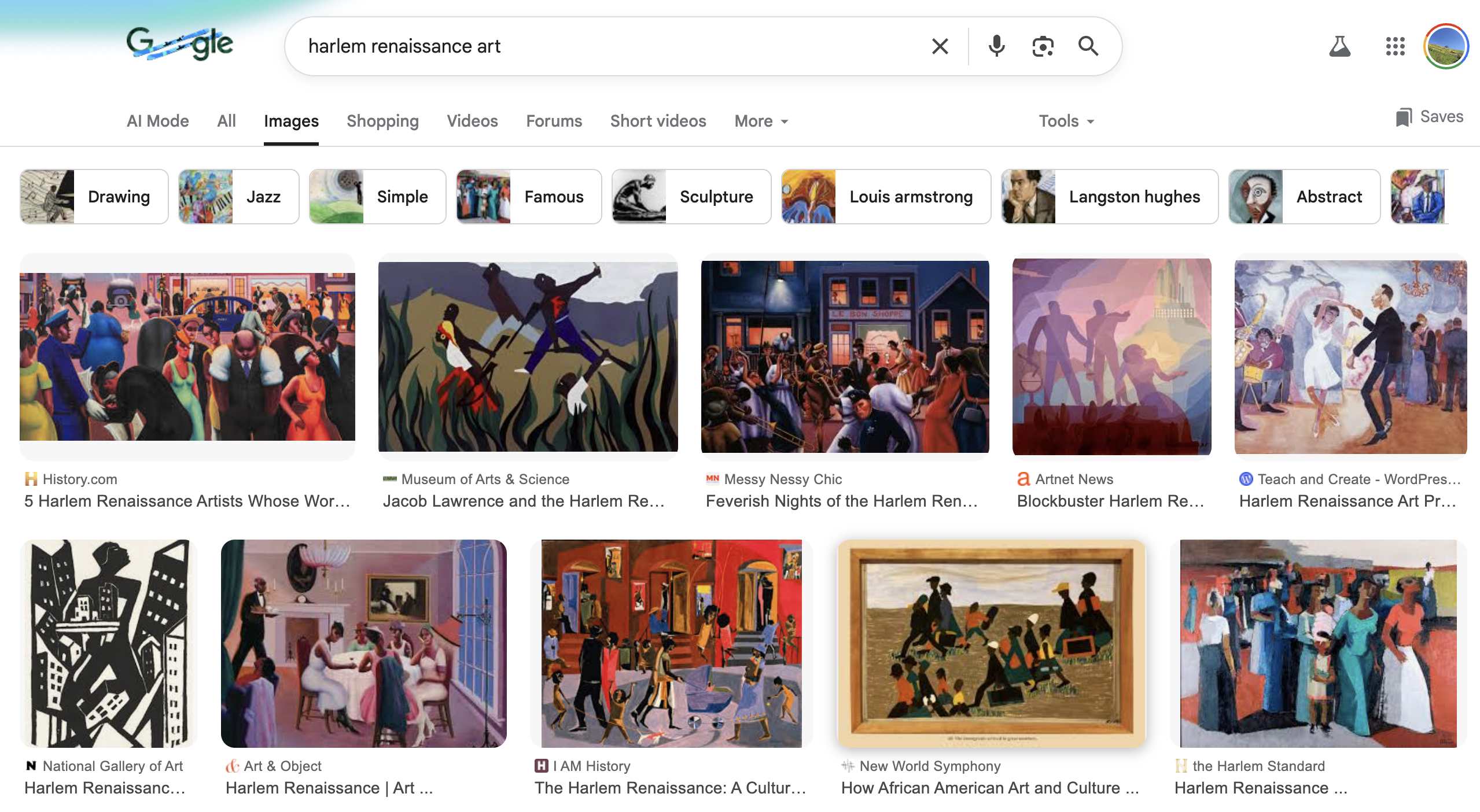
Harlem Renaissance (~1920’s) 

This period was followed by the Harlem Renaissance in Art where the reality shaped by experiences of people took hold. Art and literature tried to take what was life and reclaim our meaning and dignity through our shared and lived realities. Great Gatsby by Scott Fitzgerald served as a cornerstone for what greed could like, while Harlem authors like Zora Neal Hurston gave us glimpses into the lives of Black communities in the rural South.

The early 1920’s also gave rise to the Jazz Age and changes from the classical art forms from the past.
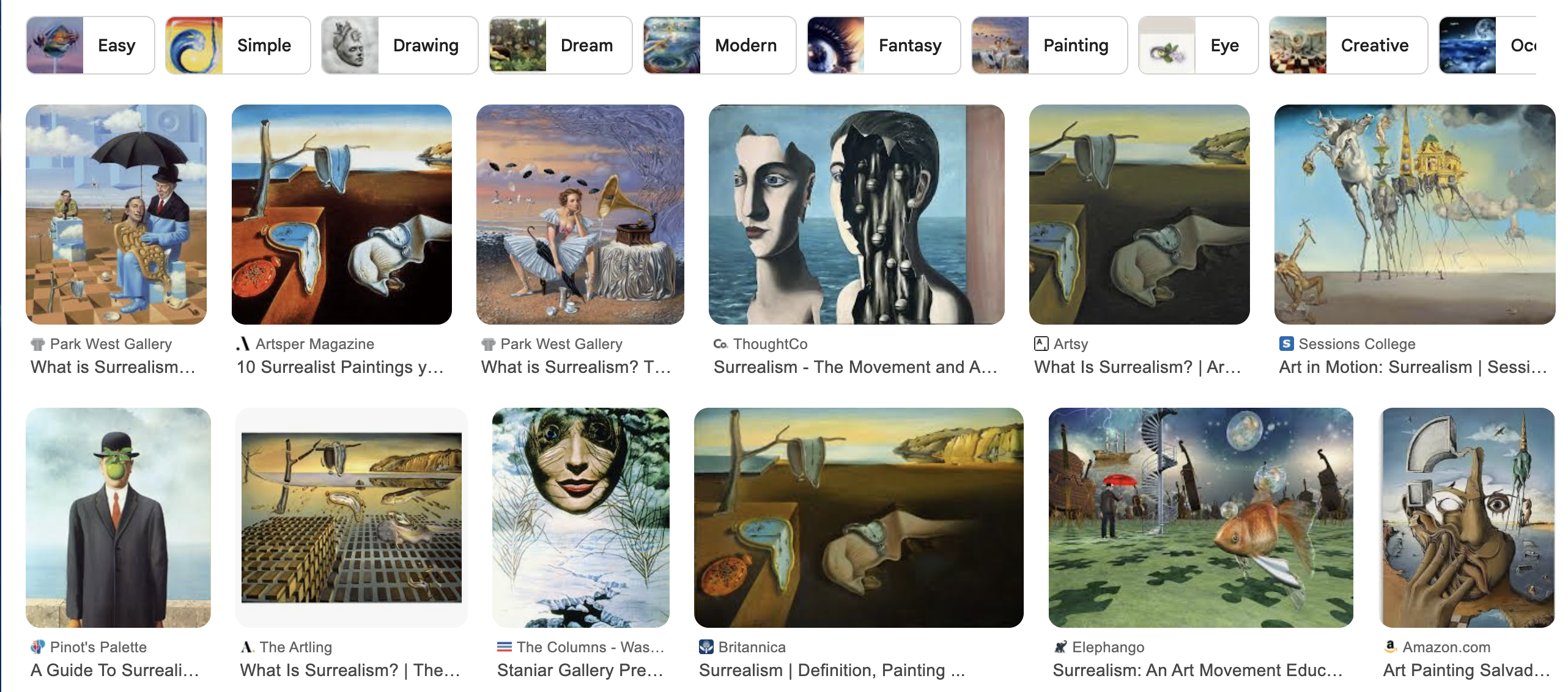
Surrealism (Post WW II – 1950’s) 

After the intense periods of the two World Wars with a depression sandwiched in between, the populace seemed to be in need for some hope, and an escaping-reality kind of theme developed. Artists like Salvador Dali & Frido Kahlo dipped into the realm of dreams inspired by Sigmund Freud’s psychoanalysis.  They gave to the public a taste of what it was like to bypass reason, and exist in a world of possibilities.

I thought it was one of those ways in which art could inspire life to be forward looking. After all, dreaming up what can be is just as crucial as depicting what-is, isn’t it?
The Journeys of Art & Humans

In some small way, it was like the progression of humans itself. We start off innocent, hopeful, trusting, and then become wary, cynical. From these experiences, is shaped a reality that is a sum of our experiences; and it either takes a determined person to evolve into the next version of themselves, or to fester in a pale imitation of what-was.

It is fascinating that Art itself can provide answers to our anthropological progression, isn’t it?

Please let me know what you think: Is the evolution of art as essential as evolution of life itself?

Once again, any pointers to books/podcasts/articles along these lines would be much appreciated.

Coming up soon: Art in the digital age – how do you think it will be classified and transformed?

A Break from Breaking News : Please!

A few months ago, I was discussing the concept of a column with an editor. She suggested ‘It’s Not Breaking News’ – seeing as that was the theme of the writing on my blog. I felt inordinately proud at that. I loved that my blog was perceived as such.

It got me thinking of all the things I looked forward to reading in newspapers as a child. My brother went for the Sports and Automobiles column, I went for the Humor and Science sections in The Hindu. It is why I still love the Open Page section of The Hindu and was so proud to have been published in it as an adult. Who said dreams did not come true?

I remember smiling at the Slice of Life column written by V Gangadhar every week. After all these decades, I may have forgotten the content of his columns, but I remember how it made me feel. Combined with the illustrations by R K Laxman, this was week-end magic – reminding us of the joys of human living.

“I’ve learned that people will forget what you said, people will forget what you did, but people will never forget how you made them feel.”

― Maya Angelou

Jane Austen

I read in a book of essays on Jane Austen’s works, a few years ago, that one of the reasons for her enduring popularity is not because love and affairs of the heart were a novelty, or because there was no other material to choose from, but because of the gentle reassurance of the warmth of humanity.

Which makes sense. Since it wasn’t as though the world was peaceful or even that her own world was idyllic. I think her choice of theme was powerful – she chose the best themes of humanity to write about. After all, she lived in a time of slavery, spice wars, economic upheaval, and before antibiotics came on the scene – which meant there must have been plenty of personal tragedy in her circles as well.

A Jane Austen Education

Incidentally , it is her 250th birthday today, and I find myself thinking fondly of her humorous characters and wondering whether a snippet of Emma or Sense & Sensibility is on the cards for viewing – even if only for 20 minutes. Let me try my luck with the family. 

P G Wodehouse

The same can be said about P G Wodehouse’s choice of theme. Young love, satire about economic classes, and gentle mockery of perceived classes among human-beings. He lived through the horrific 1st and 2nd World wars. He was interned in 1942, and taken to Germany, where he lost over 60 pounds and in his own words, ‘looked like something  a carrion crow had bought in ‘ – a scarecrow. He lived through the most horrific times. He also experienced personal tragedy after losing his step-daughter Leonora – a daughter he adored. 

Do Not Hate in the Plural

Any of these writers could have taken any of the less savory topics – poverty, slavery, war, crime, misery, hunger, disease, imperialism – name your pick. But they chose to focus on the light, on the rewarding, on the beautiful nature of the human spirit that looks for happiness and peace.

When Humor Jumped in Neptune’s Pool

As Stephen Fry said on P G Wodehouse:

He taught me something about good nature. It is enough to be benign, to be gentle, to be funny, to be kind.

– Stephen Fry on P G Wodehouse

Please! No Breaking News!

In some ways, I think I try to do the same on my own modest scale with my writing. When the news is relentless. When I receive Breaking News multiple times a day, I think I yearn to give myself a small dose of what is important, and what is worth working towards – finer qualities of humanity and their spirit, nature, humor, friendship, camaraderie, family, books. 

I wish we could embrace more of these, so that we can find a way to get properly outraged when something horrific happens. As such, it is a brutalizing cycle of normalizing outrage. When the shooting at Brown University became news, how can the leader of a free country come out and say, “Things happen.” ?

Fallout after Trump’s critical statement about Rob Reiner

https://www.usatoday.com/story/news/politics/2025/12/15/donald-trump-brown-university-shooting/87772785007/

Why are we not more affected by it? 

A voice in my brain answers logically: Because the desensitization is deep.  Because you cannot be angry and upset all the time. Because action means nothing. Because this. Because that. Because.

What is the best medicine?

Then I stop to pause and reflect. The warm qualities of humanity is the best antidote. It is the only thing that matters in the end isn’t it?

It is why 250 years later, we still relish a Jane Austen movie’s nth remake. It is why we still laugh at the absurdities of life as outlined by P G Wodehouse, Jerome K Jerome, Miss Read, R K Narayan, Gerald Durrell and stalwart authors who do the difficult job of finding light and keeping us hopeful through it all.

Breaking News is bleh. The lack of Breaking News is what we have to strive for.

“Be the reason someone smiles. Be the reason someone feels loved and believes in the goodness in people.”
― Roy T. Bennett, The Light in the Heart

So, my questions for you:

  • What is the source of reading that serves as the light in your life?
  • What is it that you look forward to rather than dread?

A Lament for Short Stories

Give me short stories over real news or fake news any day

The clouds are wondering whether or not to drizzle. It is the perfect weather for musing and meandering thoughts.

I wonder how I meander to the thoughts on short stories – maybe a recent conversation. But I feel the short story is one of the most poignant losses of literary fiction. As children, magazines were filled with short stories and the thrill of finding a short piece contained in and of itself providing the nourishment of the soul was brilliant. What happened to short stories these days?

Give me short stories over real news or fake news any day. Please.

Stories in their natural length: stream, or rivulet, or tributary, or river

I’ve read stories stuffed into tweets – threatening to spill over, and bulging in all the wrong places.

And Then.

I’ve read stories watered down and stretched into novels. The original essence there, somewhere perhaps, but too watered down like homeopathic medicine.

What I’d like is a story – at its length. No fluff. No dilution. Just essence.

If a story is meant to dance and spurt joyously like a stream, let it. If it settles in, and flows like a river, let it. If it is a tributary and wants to join the main river, let it. If it is vast and encompasses depth adn breadth and expands into an ocean, let it.

Kindle Singles came up with the idea – I wonder what happened to it. They fizzled out.

There are anthologies – but they are few.

Reading the first half of The Overstory by Richard Powers made me yearn for short stories again. I think it is time to revisit Golf stories by P G Wodehouse or a little visit to Malgudi to reacquaint myself with all the characters. Tales from a Village School would be welcome too, wouldn’t it? Miss Clare Remembers is a wonderful book of short stories all woven around the fallen giant – the elegant, thin, straight-backed kind teacher, Dolly Clare.

Give me short stories when my attention is wandering. Enough to keep me stimulated, and wanting more.

Recommendations Please

Are we losing another art-form altogether? What would Somerset Maugham say, what would Alice Munro say? I remember the thrill of liking an author’s story, and then finding a whole book written by them. How marvelous it would be to crack open any magazine and find short stories there?

If you do read short stories, which magazines do you get your source from? Apart from The New Yorker I mean.

P.S: I have written a collection of short stories of my own too – both singles & themed collections. Written to its natural length, and savored from time to time by Yours Truly, but otherwise waiting – wondering where they can be published. So, if you have any recommendations of publications for short stories, please let me know.

🌲🌳🌴🎋Magic So Sublime 🌲🌳🌴🎋

“Do you see anything dramatically different today?” I quizzed the husband. He looked around him. We were standing outside the home before setting off on a walk. He looked blank, looked around, and then settled for his safe-bet. “Did you cut your hair? It looks good!”

I rolled my eyes. Honestly! 

“Nice try, but no!” Then, taking pity on him, I gave him a hint. “It is more to do with the immediate surroundings.”

He paused, looking up at the roof. Yesterday’s rains had us both rattled a bit. It isn’t often that we get up to the sounds of heavy rains lashing against our windows. It is a beautiful sensation, but a little fraught for us this time, since the last time, we found a pool of water had managed to seep in. This, after the roof repairman had stomped on the ceiling repairing things for sometime already. 

“Not the roof either! Look at the flora and fauna.” I said.

“Ahh – okay – that is easy.” Then went on to gabble on about flowers blooming, some plant surviving till I stopped his rambling, and said, “It is okay to give up, you know?”  

Then, with a dramatic flair, I pointed to the cherry blossom tree that only a day ago was fully white filled with blossoms. To be fair, I did not see it while it was raining. But one day later, it was there fully clothed in fresh green leaves – not traces of the tree in full bloom from just a day ago. 

How I wish the tree would tell us when it would do this? I would love to just set up a time-lapse video and sit watching it in slow rapture. When do you think the leaves actually sprout? Has anybody actually seen a leaf grow? This has to be some of the most sublime magic on the planet. 

🌸🌸🌸 Oubaitori in Spring Time 🌸🌸🌸

I felt a pang for the beautiful blooms of that tree – gone so quickly and completely, and then remembered that a month ago, it was bereft – a tree in abscission. Beautiful in its starkness, then resplendent in its white blossoms, and now lovely in its fresh greens. It is no wonder that cherry blossoms have captured the hearts and minds of philosophers for centuries – the simple lessons of enjoying the beauty of the moment, the oubaitori to bloom and sprout at your own pace.

The Ease & Malaise of Literature

The Literature Malaise

There was a strange sense of malaise and I could not put my finger on it. It had nothing to do with the body – a blood test could’ve told you that. It had something to do with the literature I was reading.

I have felt like this many times in the past – especially when reading some writer who has the gift of ripping our hearts out, crushing it, and then putting the raw, bleeding thing in gingerly again. You gasp to regain control over the poor organ again, and soothe it back into action: “Never mind – that was just a book!” and the heart contracts, beats, pumps and does its thing again. How the writers themselves write it, I do not know.

Then, there are books that take one particular theme: shame, guilt, horror, anxiety, or grander themes like social injustice, and play on the heart-strings. J M Coetze’s Disgrace comes to mind.

That was how this particular book was. The narrative tone is never upbeat. It is  wrought with anxiety.  The reader is quite caught up in the frenzy of the social media world, its harsh realities of unraveling reputations, and the fate of the protagonist in YellowFace – by R F Kuang. ‘The mechanics behind the popularization’, as she puts it in her novel. The world of popularity has always been a high-stakes game (Or at least as far as I’ve read about. I wouldn’t know.) It is interesting to see the publicity stakes in the publishing industry . The book says something to the effect of : Best sellers are chosen long before they make it to the stores.

The illusion of an image built up through social media engagement can be a frightening monster indeed. For how do you find the imaginary?

I had decided to dedicate the week-end to catch up on some reading, and was I reading?!

After a few hours, I stepped outside. The world outside was basking in the summer sunshine. The bees were buzzing around my shaggy lavender patch. The patch needs trimming, but right then, the faint smell of lavender was soothing, and oddly endearing. It was a tug to reality, a reality in which not everything felt so grim as in the book. That was grounding – I took charge.

bee_in_roseroses

I made a cup of tea, and shook myself like a dog after a swim. Literally – I went for a swim and shook myself as I got out of the water. I had been drowning in the book all morning, and the cool swim in the hot sunshine worked wonders.

The Joy in Literature

I mused to the husband. “It is like Nobel Prize winning literature. You have to be serious-minded, have plenty of  suffering and drama. You cannot bung in humor and hope and write about light and all that and expect to find literary acclaim, can you? “

Why can’t people write like P G Wodehouse? I said forlorn. What was it that P G Wodehouse said on Writing?

https://claremontreviewofbooks.com/frivolous-empty-and-perfectly-delightful/

“I go in for what is known in the trade as ‘light writing’ and those who do that – humorists they are sometimes called – are looked down upon by the intelligentsia and sneered at.” – P G Wodehouse

So what is it about taking ourselves so seriously that appeals to humankind so much? I’d like a serious response please.

The book was critically acclaimed -a lot of serious books are, you’ll notice. It is like the world is looking to see – “Ahh – this particular kind of anxiety and loneliness, let’s see which writer can crush the essence of that most succinctly.”

So, I did what I do best:  I bull-dozed through the book, sitting up till 4 in the morning, finishing the book, before soothing the heart to sleep. I refused to put myself through another day with that feeling.

Something Fresh – By P G Wodehouse

The next evening, I resolved to do the opposite. I picked up books where the overpowering mirth or joy of the writer exudes from the pages and envelopes the reader in a warm, cocoon. A trip to Blandings Castle seemed nice

“This is peculiarly an age in which each of us may, if he does but search diligently, find the literature suited to his mental powers.”

P.G. Wodehouse, Something Fresh

 I laughed, and I grinned at the turn of phrase. I anticipated the next laugh – because I had read the book several times of course, and I still hung on. Laughing – matching the glorious summer outside. Later that night, the son & I thumbed through an illustrated copy of a favorite book as the silvery light of the full-moon filtered in through the night. 

All was well. Knowing all will be well in a book is a wonderful feeling. It is why I turn to authors like Miss Read, P G Wodehouse, R K Narayan, Alexander McCall Smith, Jacqueline Winspear etc like plants turn towards the sunlight.

Recommendations Please

Please recommend some authors you turn to for light, joy, hope, optimism and magic.

What do you want to be?

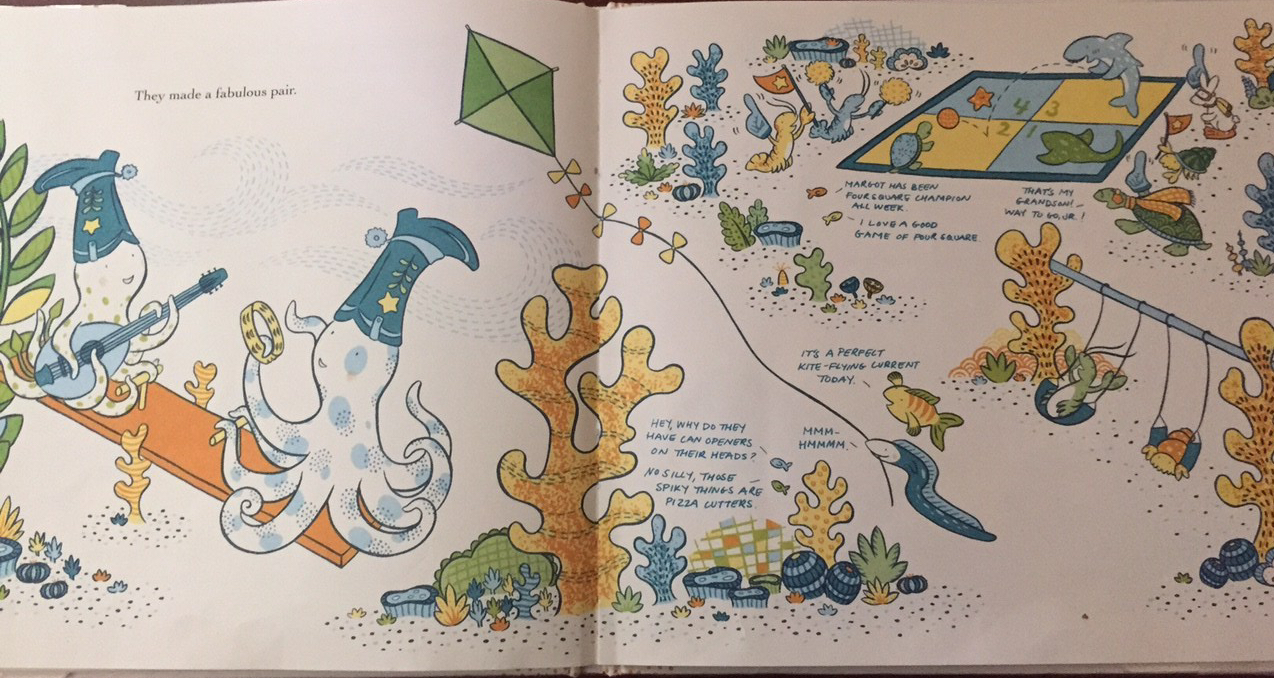
I like reading children’s literature. I have always liked reading children’s books. They tap into beautiful aspects of our mind that is dormant in our adult lives. It is almost like unicorns and fairies are only there for minds great enough like a child’s mind. The son seems to like tales of friendship between frogs and toads, race cars and tow trucks, octopus and squid etc.

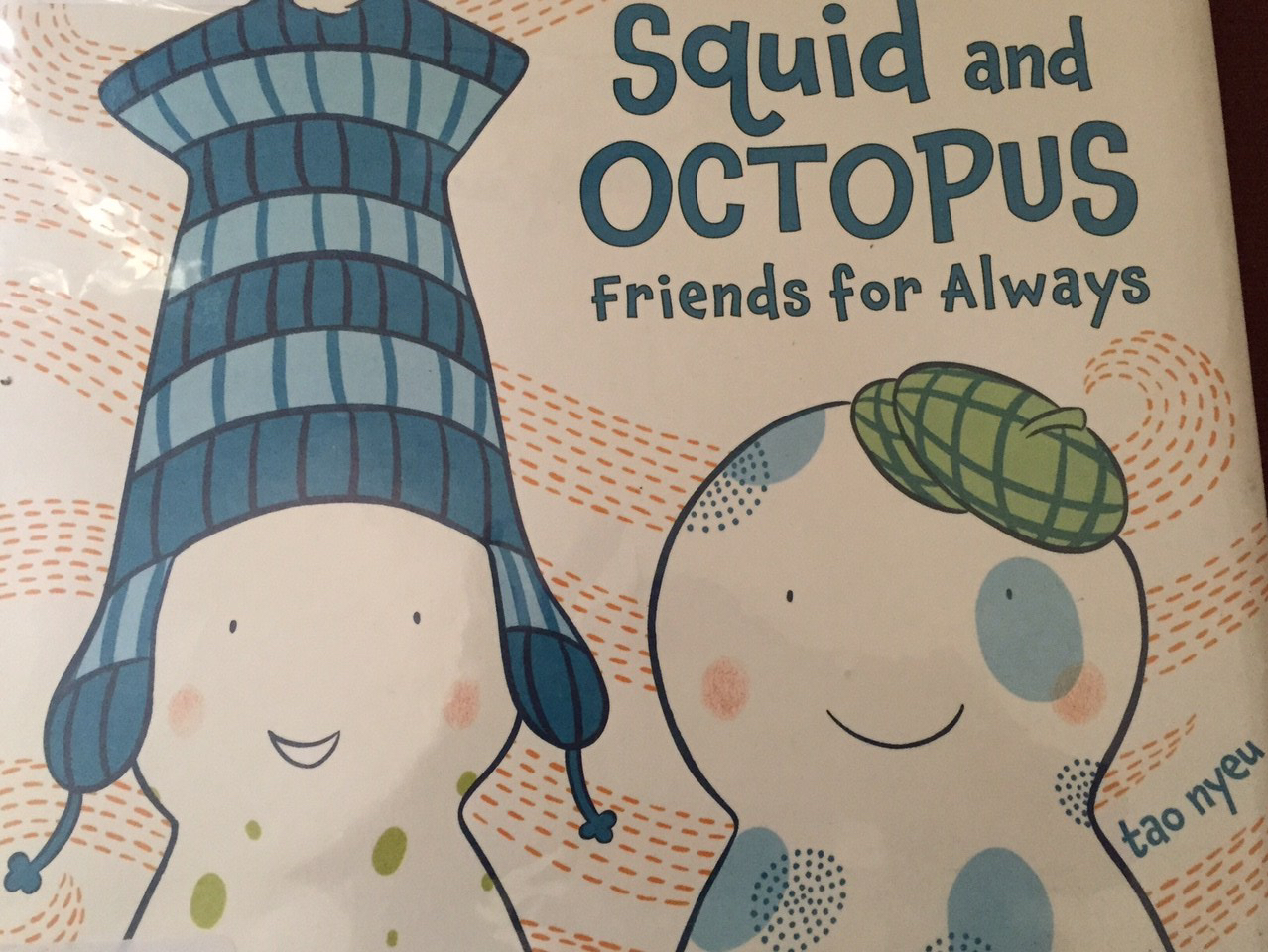
Squid and Octopus : By Tao Nyeu

The ability to imagine a whole different world when we have a perfectly good one around us requires an imagination greater than our conditioned minds can take.

Imagining
Imagining

Of late, I have been thinking often of the post of mine a few years ago:

https://nourishncherish.wordpress.com/2011/03/01/logarithmic-linear-logarithmic/

Children’s books remind me of the quote by Einstein.  When asked what to read to children to make them intelligent, he said:

If you want your children to be intelligent, read them fairy tales. If you want them to be very intelligent, read them more fairy tales.

http://www.brainpickings.org/2014/03/14/einstein-fairy-tales/

I love the books by Dr Seuss addressing important questions such as:

Want kind of feet do you want?

Would you rather be up or down?

A question our children often get asked is: What do you want to be when you grow up?

I know it weighs on some children a rather lot more than on others. When they ask me what they should be when they grow up, I reverse the question and send it back to them to think. What do you like to do, and from there we can see what you would like to be.

The son’s answer is an interesting one. He wants to be an eye doctor and a fire fighter ‘this month’. (He was fascinated that his sister went for an eye exam and got to come home and test her brother’s eyesight, and he is in awe of fire-trucks and Disney’s Planes 2 movie about a plane training to be a firefighter ).

The daughter picks a different profession every few months, and one day when they asked me what I wanted to be when I grew up, I thought a little harder instead of shooting something out to appease them: This is what I want to do. I want to do several things that stretch my  imagination in several directions for several weeks at a time. I want to be a writer,  a dancer, a teacher, an entertainer, a researcher, an economist, a firefighter, a nurse, a counsellor, a tree planter, a software engineer, a banker, a naturalist, a biologist, a librarian (one of my earliest dreams), a doctor, a teacher, a painter, a sculptor, a physicist, a chef, a scented candle maker, a perfume maker, a florist, a gardener, a textile engineer, a physicist, an anthropologist, a historian.

How about a reader, a dreamer, a traveler, an adventurer, an imagineer?

Dr Seuss: Would you rather be?

Some weeks, I want to be as introverted as it is possible to be, some weeks, I want to work a party into everything I do. I would like to be the animated one day and an animator the next. I would like to be a thinker one day and a do-er the next.

I would like to be curious-er everyday.

There are several things that removal of poverty can bring about. One, I hope is the ability to try different things to see the most appealing work for each person. That, in itself, could obviate the need for self renewal:

 http://www.brainpickings.org/2014/07/14/self-renewal-gardner/

Our education could be a few years of doing everything, for the mundane is already taken care of, the existential is no longer a question.

What do you want to be today? This month? This year?