The Whole 9 Yards

The whole 9 yards

We lost my father-in-law (henceforth referred to as Appa) earlier this month. He had a wonderful life, was loving and was loved by almost everyone who knew him.

When we reached home and awaited the body from the mortuary, bizarre things began happening. We were supposed to be sending the father-in-law’s soul to a different realm, but I found myself transported to a different realm instead.

Suddenly, one is surrounded by a society that morphs into layers of irrational. I was overpowered by a mob of conservatives who draped me in a 9 yards saree before I could breathe.

For reasons beyond me, the society of people I was born into, sets great store by a garment that is wholly undeserving of the praise bestowed on it. It is the 9 yards saree. I abhor the garment for several reasons: apart from the casteism it symbolizes, it is also an extremely uncomfortable garment.

The 9 yards saree makes one look like a roadroller, impedes motion, and rouses an instinct in all females who see you to ‘fix’ the saree. One thinks, the folding pleat behind the legs is too long, another thinks the tugging back is too long. So, they all attempt to fix it — all completely well-intentioned of course. Only this gives you a strange sense of being disrobed – for like one of these sailors knots, if you pull one place, the whole thing can unravel. One time, an aunt, tugged something while I was descending the stairs and I almost fell headlong down the stairs. After the initial flare of annoyance, I started to laugh trying to envision myself like a rolled up carpet at the bottom of the stairs, and all good hands trying to extricate me from a 9 yard mess.

I have never liked it – but as luck would have it, society is enamored by it.

As I moved numbly to see the mortal remains of my dear father-in-law, about 50 different women and 10 men told me that the important thing to remember is that I wear this particular 9 yards saree everyday – to be washed, dried and worn again for the next 13 days. “Remember – the same saree only.”

I stared at them too speechless to say anything. Could they not see I was grieving – why was this same-9-yard-everyday thing so important?

It made no sense – until you realized that religion loves giving dictums for everything starting from how a woman should dress to how she should grieve. This one was apparently to ensure that we did not accidentally attempt to feel good by dressing well.

I’ll let you all roll your eyes at that one.

Dear Appa

A few years ago, when we had moved into our new home, everyone was pressurizing me to wear a 9 yards saree for the house warming ceremony. I was sipping my tea looking glum one evening after another aunt insisted that it was a critical garment for the success of the ceremony. Appa asked me “Yenna ma?” (What is it, ma?) in his typical calm voice sensing my disquiet.

I told him that I didn’t like the 9 yards saree but everyone wanted me to wear it.

He looked at me and said, “Don’t wear it!”

I looked up, and saw him looking at me sincerely. He continued, “This ceremony is supposed to ensure that you are happy in your new home – wear something that you will be happy in!”

I didn’t wear a 9 yards saree that day. I wore something I was comfortable in.  When I came down the stairs, he saw me and gave me a glorious smile.

Dear Society, Can you change?

I thought of this little interaction every day that I was miserable in the 9 yards saree during his long drawn out death ceremonies that everyone insisted had to be done in 9 yards (for the departed soul you know?)

saree_potter

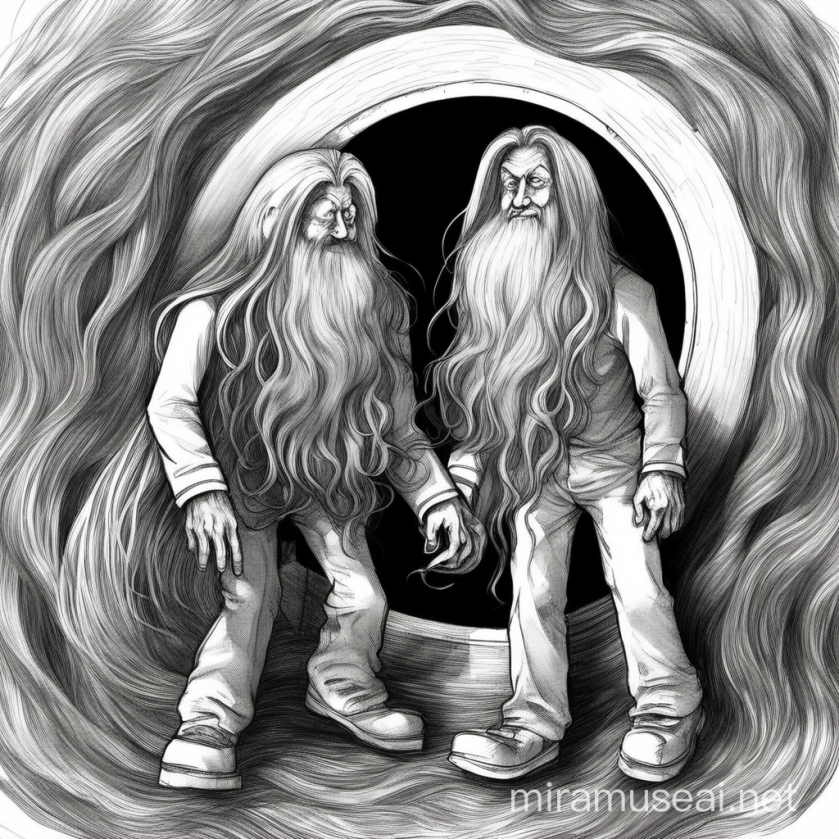
(Saree Potter – caption by the brother)

Actually, this seemed to be a theme through many of the ceremonies. There were a lot of things that I am sure Appa would not even have considered – but religion seemed to dictate it all necessary to his soul. There were hours of mantrams and ceremonies everyday that we little understood.

What I would have liked is for people to let us know the little and big ways in which he impacted them. For it was apparent, that he was loved by everyone who had the fortune of interacting with him. He was a dedicated brother, brother-in-law, husband, father, father-in-law, uncle, grandfather, and friend. As it was, there was precious time left for personal anecdotes and reflections after the long-drawn out ceremonies that Appa, when alive, had little patience for.

“Man is kind enough when he is not excited by religion.”

– Mark Twain

Appa, My Friend

Appa

Mine was an arranged marriage. The first people I met from the husband’s side of the family were his parents. The one who drew us all in with his quiet charm, shy smiles, simplicity and overall, just by being his authentic self was Appa. He knew how to make an uncomfortable situation comfortable. He must’ve sensed a girl with modern thinking not liking this ‘arranged marriage girl seeing thing’. So, he made it simple by removing the formality from the process: Let’s just chat like we are old friends.

Any new bride going in to a large, loud, slightly overwhelming family knows what it takes to make that first meal or that first cup of tea in an alien kitchen alone. She is intensely aware that all tongues out there are waiting to judge the taste of it, the consistency of it, the heat, and sugar, and the judgements are harsh and swift depending on the existing political climate between the folks in the room.  She also knows that her efficiency, charm, competency all hang on the hinge, even if one is an educated professional girl who should not set store by these things. Appa did the thing he does best. He followed me into the kitchen – quietly removing himself from the larger family, and giving a shy smile. He had come to help.

He gave me the necessary ingredients, a hint or two or how they like the water-milk proportion by making a small joke about it, and then as quietly as he had come, he left.He did not hover giving directions. Then, a few minutes later, as I was flailing around looking for the glasses, he was back again. He took the cups that everyone liked, quietly strained the tea, and left again.  I don’t think anyone noticed the head of the family nip out to the kitchen to help his daughter-in-law.

When the tea was served and everyone smiled happily, he gave me one of his trademark encouraging smiles, and that set the tone for our relationship: Appa was always there for me. He and I were going to be best friends, and I knew it then. He had your back, he was always, firmly in your corner.

Long before corporates came up with terms like inclusivity – Appa showed us how it is done. It is done by making people comfortable.

IMG_3183

Raju Thaatha

When children were born, he was there for them. He was there for us. Any grandchild who has had the privilege of being held by Raju Thaatha has been blessed by the cosmos multiple times over.  He would come to meet me every evening at the railway station with my baby in his hands so I could see her as soon as I came out of the train. Decades later, many fellow commuters have asked me how the baby and her loving grandfather are doing.

Fussing children, overactive children, rambunctious children, shy children, they all felt comfortable in Raju Thaatha’s hands. He could put children to sleep, get them to eat, and he never, ever in all the years I knew him raised his voice with them. They all behaved like perfect lambs because they loved him.

“You need Power only when you want to do something harmful; otherwise
Love is enough to get everything done.”

– Charlie Chaplin

That was Appa – he was not a powerful man, he was a loving man, and that was his greatest power. He loved you, wholly, and simply. We all wanted to do things for him, we all wanted him to be happy because he was such a pure, loving soul.

raju_thaatha

He never took sides in any conflict, but always knew who was aching and soothed everyone just by being him. When anyone was ill, Appa with that keen sense of empathy, knew when a fruit would be welcome, or when a glass of water was required. But he didn’t use words like empathy. He just did things for others – without show, without expectation, and with great competence.

Days after they left, after every visit, I would miss Appa. For he was the one who helped me the most. He was the one who helped me in the kitchen. He was the one who’d cut fruits and lay them on the table because he knew I liked fruit. He was the one who would know when to take a fussy infant from my aching arms. He was the one who went for quiet walks with me.

He was my friend.

When I spoke of my father-in-law like this, many folks were surprised that an Indian man of his generation was like this. But he was – he was supportive of everyone – through and through. He did not tell any of us how to behave, or what to do, he showed us. He would light up when I said “Good Morning Appa!” in the mornings, or when I said a tired ‘Hello Appa’ in the evenings. “Hello Saumya.” “Good morning ma!” , “Yenna ma?” (What is it ma?) – his quiet, friendly voice that surely guided us through life is ringing in my ears as I make the last journey to see his mortal remains.

It hurts me beyond measure to write of him in the past, his sort of love in the lingering type: like the sun, always shining, always nourishing. We are enormously blessed to have had him in our lives.

Thank you Appa – May you always be happy!

The Most Wonderful Week of the Year!

“This is my favorite week of the year!”, I crooned to the son, and sang, “The most wonderful week of the year!” all out of tune, complete with the wrong lyrics etc, and he gave me an exasperated look. The children can never understand how I can consistently get lyrics wrong. 

We were out walking after lunch. Our gait was leisurely which is to say mine was; he was leaping and prancing like a superhero taming a reindeer on magic mushrooms, while making sounds like a steam engine swooshing and whishing. 

“Why?” he stopped to ask.

I gestured around us vaguely. The sun was shining, the white fluffy clouds were drifting, the earth was fresh after the rains the previous night, ducks were swimming, gulls were flying overhead, and the humans on the trail were pleasant and happy. We wished each other happy holidays and sniffed in the fresh air. What was not to like?

img_8362img_8243-effects

Last week was even better!

“Yeah – but why this week – last week was even better! We went to see…” he started, and I nodded. It had been a wonderful week – we had been traveling.  The memory of lights and stars shone alongside family, friends, nephews, nieces, and aunts. We ate glorious foods prepared with love by extended family, played marvelous games, and took delicious sips of tea. 

“Yes – last week was wonderful, but I mean – I like this week every year. The week between Christmas and New Years. The week when we all seem to be off together, waiting for the year to wind down and getting ready for the new year.”

“I prefer summer!” he said, and I gave him an amused look. 

“Summer vacations and school going children. We don’t get that sort of luxury do we? “ I asked him, and he laughed.

“No! I like this week, and am going to enjoy it. Maybe go and eat a snack, write a post, read a book, and do anything at all the mind fancies!” I said, and skipped a bit as we turned homewards.

The Feeling

There’s nostalgia, relief, expectation, hope, optimism, a sense of wrapping up, mingled with the feeling of opening in to the new year. There must be a word for that feeling. Do caterpillars feel that way in their cocoon? No – that is too powerful, after all our metamorphoses are not half as dramatic.

“So, what’s your post about?” he asked pulling me away from my thoughts, and we discussed caterpillars, wars, words, and other inconsequential things. The birds chirped outside, and the teapot gurgled inside. 

All was well. Happy New Year to all of you!

Sun Rise Sun Rise!

We stood there waiting for the sunrise over the Grand Canyon. 

img_9015

We had driven up there the previous evening in what felt like 20 degree weather. The moon lit scapes around us were beautiful from inside the car, but outside, it looked unforgiving. It was cold, and the desert around us was different enough. Even so, the same landscapes at night take on a different feel and dimension altogether. The shelves of stone around us in the early morning light of dawn was breathtaking. As if a different hue was revealed with every tilt in angle of the sun’s rays. 

How drawn to light we are as a species? Somewhere, the sharp smells of pine wafted through, and I wondered briefly whether we stopped to let our other senses weigh in as much when we have sight and light. 

I suppose we do let sounds and smells in, and do allow our sense of touch  to help us along. But do we really develop our other senses? A preliminary search says we gather about 80% of our sensory perceptions using sight. 

Dogs, on the other hand, seem to distribute their perceptions between sight, smell and sound. 

The early morning calm of the sun-rise and my meandering thoughts were interrupted by the loud calls of a mother looking for her children. I turned around irritated, and was somewhat surprised that I was surrounded by this many people on a cold Christmas Day morning, standing on a cliff overlooking the Grand Canyon and waiting for the sun to rise. 

But I suppose, it was my fault for not expecting this. It promised to be a beautiful day, after all, and like me, many had decided to brave the cold, and take in the marvelous sunrise over the horizon at a point helpfully named Sunrise Point. 

img_9014

I let out an amused grin, and exchanged a look with the children – they seem to have caught on to my look of surprise at finding other people there. It was a beautiful moment: the mother pulled her child towards her, and the sun burst forth in glory over the horizon. 

All was well with the world at this moment. 

Let’s go for some breakfast and then take a long, quiet walk along time, I said shuffling away from Sunrise Point, and the children chuckled at the thought. We are not an early rising family, and we scurried inside towards warmth, food and coffee before attempting to take on people and canyons. 

2023 – I am stuck in a book, be back soon!

One of the favorite parts of the year are here. The Christmas lights are twinkling. There is magic in the air. I get to go back and revel in the books that have made it so. Some books evoke a feeling, and trying to capture that is a joy in itself.

Hindsight is our finest instrument for discerning the patterns of our lives. To look back on a year of reading, a year of writing, is to discover a secret map of the mind, revealing the landscape of living — after all, how we spend our thoughts is how we spend our lives.

Maria Popova – TheMarginalian

This year, I get the strange sense of being in a floating Universe. I seem to have whizzed past centuries reading things in the past, zoomed and ducked out of alternate worlds with all the science fiction and fantasy adventures, while being thoroughly grounded in making sense of today’s world with its AI, and its technological advances.

I get the familiar sense of time slipping through the sieve with extra large holes once again, but then, will it always be like this? I hope so, for in its speed lies its charm.

Here are some of the notable ones – I find the neat classifications all being thrown out – every year, I seem to have a different classification system and therein lies the charm. Nothing is immutable and all that.

the_world_playground

I also see that I have dozens of unfinished posts for some of these books that have never made it to the blog. Oh well! I need to take inspiration from Robert Louis Stevenson I suppose.

“I kept always two books in my pocket, one to read, one to write in.” ― Robert Louis Stevenson

Peek back into time:

The World Around Us:

“The reading of all good books is like conversation with the finest (people) of the past centuries.” ― René Descartes

    Non-Fiction:

    Beautiful & Informative:

    • Nanoscale – visualising an invisible world – Kenneth  S Deffeyes, Stephen E Deffeyes
    • Atlas of the Invisible – James Cheshire & Oliver Uberti
    • A celebration of Beatrix Potter : art and letters by more than 30 of today’s favorite children’s book illustrators
    • In the woods / David Elliott ; illustrated by Rob Dunlavey

    Alternate Worlds/ Science Fiction/Magic:

    Tech Tech:

    Inspirations:

    Books that ought to be classified as warm cups of tea 🙂

    • News from Thrush Green – Miss Read
    • The White Lady – by Jacqueline Winspear
    • Much Obliged Jeeves – P G Wodehouse
    • A Song of Comfortable Chairs – Alexander McCall Smith
    • What would Maisie Do? – Jacqueline Winspear

    “Some books are so familiar that reading them is like being home again.” ― Louisa May Alcott

      Children’s Books – my favorite category (just mentioning a few since I don’t keep note of all the titles)

      I hope 2024 continues to be as varied and inspirational in its moments of magic and learning for all of us! I shall put in a comment the complete list of books. I only put in a few in the post here.

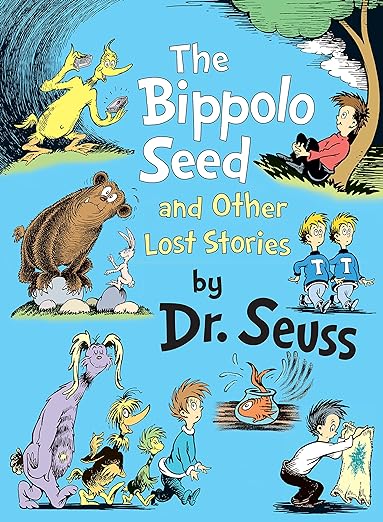
      “The more that you read, the more things you will know. The more that you learn, the more places you’ll go.”

      Dr. Seuss 

      Happy Reading!

      reading_in_a_tree

      The Tides of the Year

      It is already that time of the year when people are making lists, and reminiscing the past year. I don’t feel like it has been 12 months since we last did this exercise, if we are being honest. I just wrote out all the books I read in 2022, is it already time for me to do the 2023 list? I feel strangely like a student in the headlights before the final examinations. Wait a minute – I was supposed to have read this and that. My bedside table is sagging, with half-read books, to-be-read books.

       I planned to write about this topic and that book, and well, that possibility too, if it comes to that. My document with burgeoning ideas and drafts looks worse than ever with half completed phrases and paragraphs. In short, it feels like a construction site : a promise of feverish hectic activity, but a dull ache between the eyes while thinking of shaping it all up. 

      Looking back over the past few years, it seems to be the same song sung : pace of life, the months whizzing by, and all that. 

      However, this year seems to be tinged with the dawning realization of the opposite and inevitable too. Maybe it is our phase in life. What I mean by that is, in increased conversations with elderly people, it is obvious that the elderly amidst us face the opposite problem : one of filling their time while holding onto their anxieties of their health, and the inevitable frailty it involves. Acceptance of our mortality has always been one philosophers have addressed. But will we remember all these concepts when it is our time? I wonder. 

      rain

      In the exuberance of youth, and the arrogance of our health, we often parry the times when we do have to set ourselves down to a slower pace, and imagine a life when we are not in control of our circumstances. The pace of technology, while helpful in general, seems to be a source of anxiety for many, and I don’t blame them. I feel the same way – on my recent visit to India, I was confronted with both sides of the coin. On the one hand it was fun to watch everyone from the roadside vendor selling chaats to the large department store going with options such as PayTM and Google Pay. But on the other hand, it was unnerving for older people or NRIs like us who needed to have all that set up within the country in order for smooth functioning. 

      I remember reading somewhere that it is not just us and our bodies that are changing, but the situations and the world around us changing too. At times, it feels like the combination can feel like we are being pushed and pulled by the tides back and forth relentlessly. We need to weather the tides, ride through the storms, and look out for the light on gloomy days. 

      weather_storm

      2023 had its share of hikes, bikes, runs, and walks. It had a fair share of travel managing multiple responsibilities across work and our personal lives. Not to mention the frenzied feel of to-do lists and the sinking feeling that nothing was never quite enough. But in spite of all this, it felt rewarding: it gave us the feeling of spotting the rainbow in the storm. 

      I liked this quote and wanted to share this here:

      “Half of me is filled with bursting words and half of me is painfully shy. I crave solitude yet also crave people. I want to pour life and love into everything yet also nurture my self-care and go gently. I want to live within the rush of primal, intuitive decision, yet also wish to sit and contemplate. This is the messiness of life – that we all carry multitudes, so must sit with the shifts. We are complicated creatures, and ultimately, the balance comes from this understanding. Be water. Flowing, flexible and soft. Subtly powerful and open. Wild and serene. Able to accept all changes, yet still led by the pull of steady tides. It is enough.”

      Victoria Erickson

      A Sleepy Jolly Christmas

      I lounged in bed – it was a Sunday morning, and the approaching holidays made the whole world seem more warm even though the world outside was foggy, rainy, and cold. It was the perfect weather to be doing nothing. It was also the perfect day – no one should be expected to bustle about on Sundays, I said severely to no one. The whole house seemed to have been knackered – there was some movement elsewhere but we were all happy to be left alone.

      I read a series of books one after the other, still lounging in bed, completely aware of what a luxury that was. Indian women of our generation are used to this voice: it chastises you every time you don’t get yourself up to toil for the rest of the people around you. I ignored this voice resolutely, and plodded on. Indians pride themselves so unnecessarily on rising early and all that lark, it makes me mad. I liked sleeping in on cold wintry week-ends. Always have, even when the neighboring temple started blaring its margazhi music at an ungodly hour, or the maids swooped in to sweep at times when one cannot expect to be fully conscious.

      The past few days had been a lot of doing after all. 

      The Christmas tree and the decorations were finally up, and the husband and children had gone overboard with all the twinkling lights and the music during the decorating itself. The son and I sat by the twinkling lights of the christmas tree, and the little lights from the street outside well past midnight the previous night reading. It was a beautiful, silent night. 

      img_8773

      I remember sitting and reading well after the children went to bed. It felt nice – like I was sitting inside a christmas card. The only thing missing was a robin chirping. I smiled to myself thinking of this, and started up a silly song in my head. 

      November’s gone nilly nilly, December’s here.

      December’s here dilly, dilly, the year will be gone.

      Where shall we start willy willy, what shall we do?

      The next morning was a school day, and as such, did not afford the luxuries of the previous day. I stepped out for a short stroll before the day started, and the cloudy rainy day meant that the air was fresh, if nippy, the ground moist with the rains, and the whole Earth smelling fragrant and beautiful. 

      As I was driving a few minutes later, the sun burst out from behind the clouds, and I scanned the skies feverishly for a rainbow. It must be somewhere – the conditions were just right after all. After a while of looking, when I’d almost given up, the little rainbow showed itself – not one of those fully formed ones, just a small-ish patch of it nestled amidst the clouds. But I had the luxury of seeing it from the bridge, and the bay below seemed to become prettier just by virtue of that. The birds flew past, and the clouds skittered, the world beautiful, and fresh once again.

      The sun seemed to send the message that it was a day meant to be bustling about, and I didn’t mind that so much. It isn’t often that things turn out this way, and when it did, I was grateful to take advantage of them.

      🕊️🍁 🦅 Hawkish Power? 🐦‍⬛🍁 🦅

      As soon as I came home, the words rattled in me 

      To capture the moments when joyous and noisy, turned to eerie and silent.

      The terrifying sound of all the birds leaving at the same time

      The fluttering of a thousand wings – away, away to safety.

      The ecstatic beauty of standing under a tree 

      With thousands of leaves fluttering gently down.

      The ears pricking up with the joy of 

      Listening to hundreds of little birds chittering above.

      All gone with the arrival of one regal hawk

      The birds all flew, while the hawk gawked.

      Without the rustling of the birds

      Even the leaves stopped falling.

      Of what use was this power?

      When there was no one to exert it on?

      It was a show of power so instant, so terrifying and so alien to the beautiful wintry surroundings, that I shuddered in spite of myself.

      My thoughts swirled with dictators and their absolute clawing for this kind of power. Do people in power not want a happy, joyous populace? I thought of the happy chittering and camaraderie of the birds from moments ago and stood under the tree not making any noise,  content to enjoy the sounds of life overhead. 

      As I walked back home from this eerie setting, my mind wandered to all the fittings of power and its lure over mankind. It doesn’t look like it will abate. Countries continue to go to war, and though countries may win or lose, the people involved always only seem to lose – their trust, their security, their loved ones, their hopes, their peace.


      On Writing

      It is always fascinating to understand the process behind the craft. To everyone, the process is different, the resulting work is different, and maybe that is why everyone’s voice and stories are different. Though some things seem to be common enough: curiosity and observing people.

      Haruki Murakami in his musings, Novelist as a Vocation, writes about his mental chest of drawers – a place in which he places relevant and irrelevant information to be extracted when he is writing a novel. Some of the remaining ideas are used in his essays he says but the rest are there for the taking.

      The truth is that none of us can imagine the beautiful fierce power of our own imagination. Where will it take us, or what it can do for us if we wrestle with it long enough? Few of us get to find out and fewer get it out into the world. How are some authors able to create the Harry Potter universe, others write books that evoke such deep rooted emotions such as The Crane Husband? 

      I was fascinated to read that  the idea struck the author of Crane Husband, Kelly Barnhill, when she saw a crane land on a rooftop while she was driving through the countryside from somewhere to somewhere. What an evocative inspiration? 

      I remember thinking of the book, every time I spotted a crane by the riverbank. The raw sadness of the tale stayed with me for days afterward.

      cd3693d5-3eaa-4d3b-ab97-d7c865de8707

      Such inspirations are not unheard of. A few days ago I read a folk tale about the Crane Wife, in the book,

      Beneath the Moon, Tales, Myths, and Divine Stories From Around the World by Yoshitani, Yoshi

      All of us have  a mental chest of drawers and some of us rely on it more than others, but those memories shape and define us in ways we do not realize. 

      Murakami writes about his journey and how he stumbled upon the conviction that he wanted more than anything else to be a novelist at the age of 29. His journey was not one of writing obsessively throughout his childhood, but of simply deciding one day to become a writer.

      He writes about how his formative years were fairly trauma free apart from a stint in college where there seems to have been unrest among the student community. He writes:

      “I have never been comfortable in groups or in any kind of collective action with others, so I didn’t become a member of any student groups, but I did support the movement in a general sort of way.”

      But as time went on, he realized that:

      “Something criminally wrong had wormed its way into the movement. The positive power of imagination had been lost. I felt this strongly. As a result when the storm passed, we were left with the bitter taste of disappointment. Uplifting slogans and beautiful messages might stir the soul, but if they weren’t accompanied by moral power they amounted to no more than a litany of empty words,

      Words have power.

      Yet that power must be rooted in truth and justice. Words must never stand apart from these principles.”

      It was perhaps this realization that led him to lose faith in the movement and turn towards writing as a career when the epiphany hit him one day while watching a baseball game that he might be a novelist yet. 

      I am sure a conviction as deep as that would find its way into his writing and if there are specific examples or suggestions of books regarding these, please let me know.

      I remember a discussion in which it was mentioned that ‘You need war or love if you need a complete series.’

      While that is true, the pursuit of truth, peace, justice, the power of words all seem to be good enough inspirations too.

      Books:

      • Novelist as a Vocation – By Haruki Murakami
      • The Crane Husband – By Kelly Barnhill
      • Beneath the Moon – Fairy Tales, Myths and Divine Stories from Around the World – By Yoshi Yoshitani

      🐙The 🐙🐙Kraken 🐙🐙Sleepeth🐙

      I don’t know how many of you have heard of the Carta Marina: I hadn’t and was agog after reading about it. It is a fascinating geological map showing the mythical monsters in the oceans and where they are to be found. 

      Completed by Olaus Magnus in Italy in the mid sixteenth century, it attempts to outline all the monsters known at the time in the Nordic regions from various accounts. 

      In the book, The Underworld – Journeys to the Depths of the Ocean – By Susan Casey, she writes about the Carta Marina:

      “On land the action is orderly: tiny figures are farming, hunting, skiing, playing the violin, By contrast, the ocean is in chaos, awash in dangers and tragedies, livid with waves and currents flowing, swirling, pooling, seething. Aid the tumult, twenty-five monsters make their appearance.”

      • Susan Casey – The Underworld – Journeys to the Depths f the Ocean

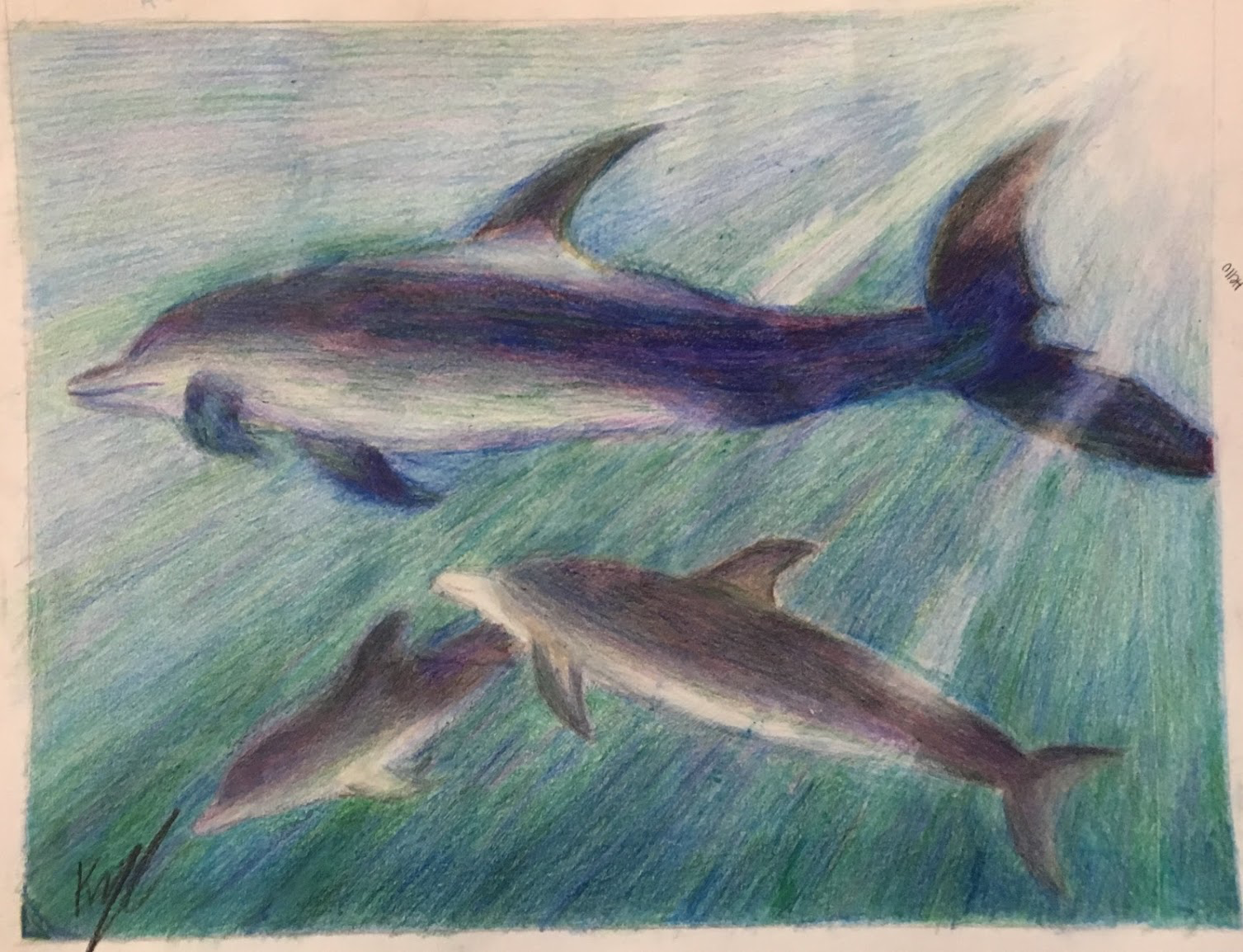
      I may have mentioned several times in these archives that the daughter is a mermaid born to human parents. Which is to say the endless fascination with the oceans, and natant joys of reveling in the waters are things we all enjoy. 

      After reading about the Carta Marina, I went looking for the Kraken picture. When you browse through the daughter’s artwork, there are quite a few aquatic themed paintings. This one – it is Kraken – the mythical creature that is spoken of with awe among the nautical elite. I must admit I am endlessly fascinated with octopii, squid and I suppose the kraken  as well.

      octopus

      Dictionary.com summarizes this perfectly: https://www.dictionary.com/e/squid-vs-octopus/

      In summary, if you see a sea creature with eight sucker-covered arms and a round shape, that’s an octopus. But if it’s got a long, thin, triangular shape and 10 limbs—eight arms and two tentacles—it’s a squid. If you see it swallowing a ship, it’s a kraken.

      Sea-faring must have been a difficult vocation as most vocations in humankinds’ past seems to have been, but it also provided the richest tales of adventure and mystique to those whose fortunes or destinies never allowed them to leave the small square footage they’d been born and raised in. 

      Screenshot 2023-11-13 at 6.48.32 PM

      Even now, as we set out sights on interplanetary travels, I find the deep allure of the deeps as fascinating as ever.  Would we see into the eyes of a greenland shark that is rumoured to live on for 350 years or be pulled into the clutches of the mythical Kraken? Or be dumbfounded in the noises of the monster that rises out of the depths of the ocean in the FogHorn – By Ray BradBury (I believe the book is out of print – but I can never truly forget that feeling of deep awe and fear as the monster rears towards the lighthouse thinking it’s being called by a mate. I felt a strange sense of loneliness for the last monster standing the night I read it as a teenager)

      As Sylvia Earle says, “Looking into the eyes of a wild dolphin – who is looking into mine-inspires me to learn everything I can about them and do everything I can to take care of them…You can’t care if you don’t know.”

      I looked at the picture, and remembered the poem by Lord Tennyson

      Below the thunders of the upper deep

      Far, far beneath in the abysmal sea,

      His ancient, dreamless, invaded sleep

      The Kraken sleepeth

      – Alfred, Lord Tennyson

      References:

      • Life in the Ocean – the Story of Oceanographer Sylvia Earle – by Claira A Nivola
      • The Underworld – Journeys to the Depths of the Ocean – By Susan Casey
      • The Carta Marina – The map of monsters 16th Century – By Magnus
      • The FogHorn – by Ray Bradbury