The Librocubilarist’s Dilemma

Folks were visiting the new nest. I was cleaning to ensure that the humble abode impressed them favorably.

That is to say, I was scrubbing beneath sinks, and behind blenders as though they were health inspectors who walked in with those examination pads in their hands, wearing steel rimmed glasses, censorious expressions, and a tough grading point scale for house inspections. Of course, like most people who visit the home, they were perfectly warm folks who cared more about the smiles on our faces as we greeted them, than the scrub factor in the sink. But.

The inspector general in me commanded everyone in the home to smarten up too.

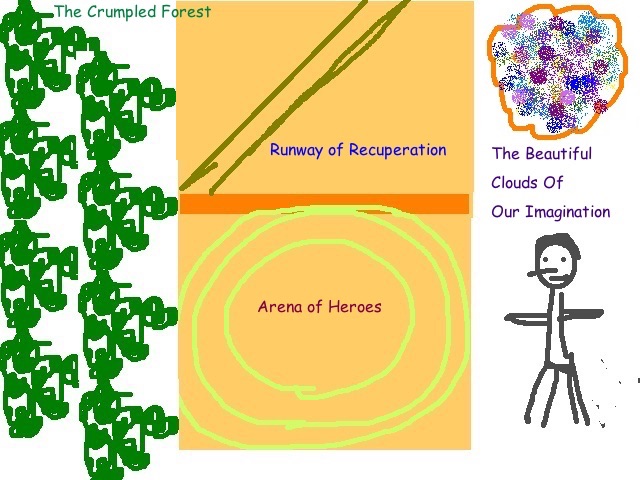
“Put away all those books, crayons, papers and toys – your floor should be clean.” I said looking into ‘Imagination Island’ the name the son has given his room. He gave a compliant nod gallantly suppressing a scowl. He knew this mother. She would flop back into the loving one in a few minutes once she felt the warm companionship of the folks visiting the home. But till then, it was better playing along. 

The daughter, competent and nonchalant as always, set off on a brisk walk saying, “I’ll run a vacuum over the place when I come back – don’t worry!” Her back registering duty deferred, her ears twitching to music, and an almost imperceptible nod to her little brother that she understood just how he felt when the cleaning-amma-before-guests-arrive made an appearance. 

I looked in to see how the husband was faring. He stopped what he was doing and said using his rare tone of exasperation, “You really need to get a hold on this mess here! Should I get you a bookshelf?”

I nodded – looking sheepish, guilty, and every bit a hypocrite after my instructions to the children to put away their books and toys. My bedside was a Mess. The number of books tumbling over each other were appalling. There were children’s books, non-fiction books, fiction books, and comic books, all jostling amiably together, and trying to keep on the make shift shelf (We had not yet furnished this space).

Some of the books were on piles on the floor – all in all an admirable spot to pick one up and start reading, but I resisted strongly. The clock was ticking, the payasam was boiling, the heater whirring working steadily to raise the temperature to that sweet spot of comfort, the rasam simmering, the fruit ripening. It would not do to read just then.

Tsundoku looked like a cute Japanese word evoking warm feelings of people with their list of unread books, chipping away one book at a time. Gluggavedur – that beautiful word that invites one to sit cozily inside and read while the weather outside is colder than it seems from inside the house. I am sure I picked one up and put it away with enormous willpower.

Illustration of Gluggavedur from the book: What A Wonderful Word – By Nikola Edwards

But these books were past all these sweet words. This suggested a problem. Order was in order. 

Wish this librocubilarist (one who enjoys reading in bed) luck.  The more I read about words like librocubicularist and lectiophile (one who loves reading), the more I am grateful for the reading habit. The ability to dip into a different dimension, learn something new, and roll beautiful ideas around in the head before sleep is precious. No matter how humdrum the days, how mired in the human aspect of living we are;  a good sip of ideas before bed can uplift the spirits before blessed sleep claims our consciousness.  By virtue of being in a better spot, aren’t our dreams that much sweeter? I suppose they are.
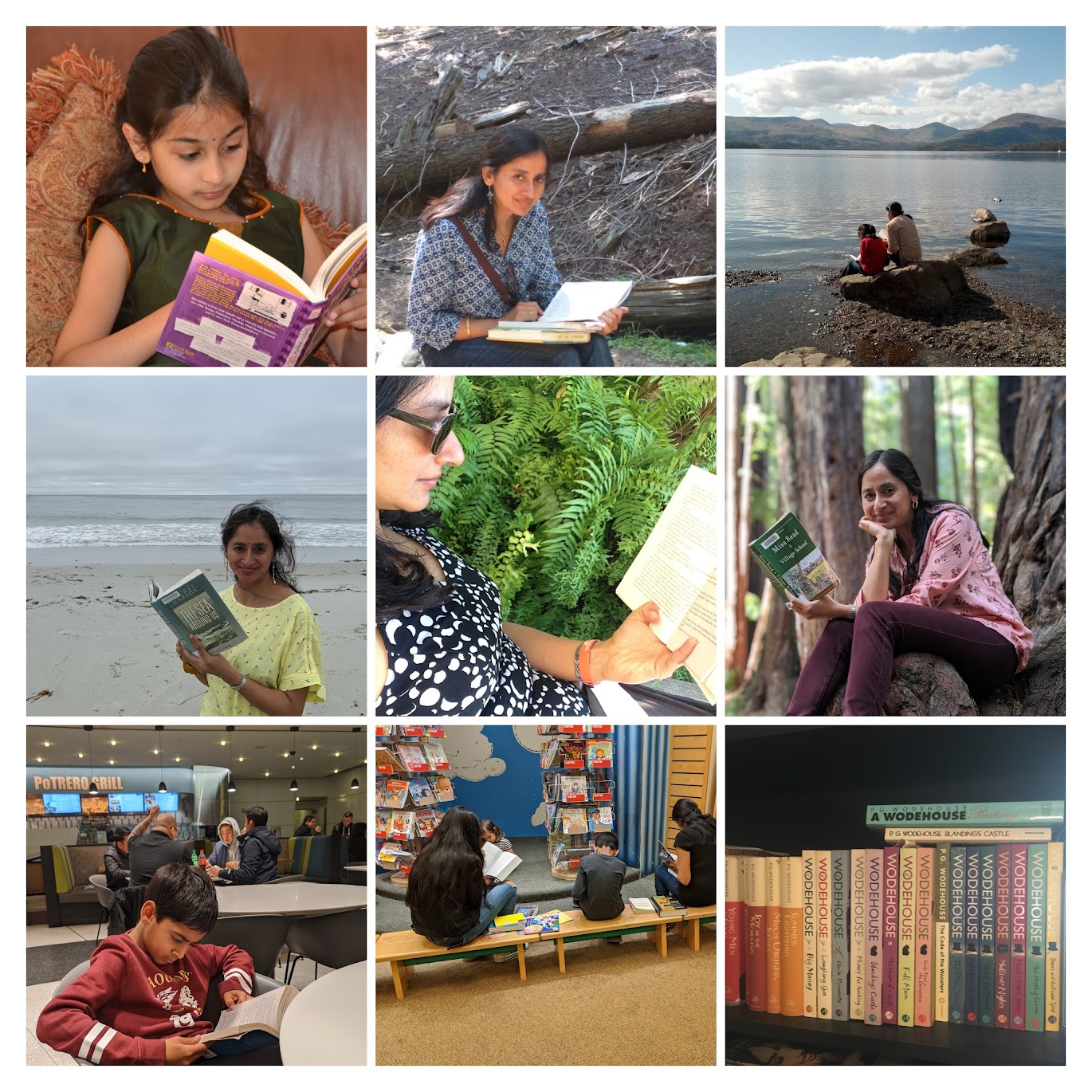
Reading with the children

Amidst the chaos of earning a living, and living the life one has earned, sundry to-do lists get longer and longer. The bedside still needs managing. 

Imagine my surprise then, when a friend stopped by on Christmas Day with a gift for the home. One she said reminded her of me. An antique piece of furniture – a desk that could hold my piles of reading material, and shaped like an encyclopedia.

I plan to wear the pajamas that another kind friend had gifted me for my birthday saying: “My week-end is all booked up”, and get my bedside in order.

My dear indulgent friends and family spoil me so, and I am grateful for it.

Next up: 2021 Reading List

In the Infinities of the Desert

Driving on deserted roads through the desert can be quite unnerving if you haven’t the right company. I remember thinking of those brave folks who ran marathons across the Sahara desert with nothing but a compass for company, and I must say I felt all the more grateful for the companionship that I did have in the bleak desert just then (Girls trips have a joy of their own!). There are times when one feels alright alone with a compass and the stars for company, but that day it felt just right to have your friends about you – squealing and laughing at the jokes and the non-jokes with equal joy.

We had been to Joshua Tree National Park during the day. The park literature spoke highly of Cholla Cactus Gardens, and I must say I was yearning to see them too. After the tall tree-like cacti of Sedona, Arizona, I was curious to see their west-side cousins. Would they be dwarfish like their tree brethren? The Joshua trees were nothing like trees, but were trees alright. What would the cacti be like?

The cacti, it turns out, were beautiful. They sort of creep up on you when you least expect it. There are miles and miles of desert, punctuated with outsized boulders on all sides. The boulders! Really – some of them were the size of buildings just sitting out there with the wind whooshing past them, and the sun beating down on them.

The Boulders!

Desolate, barren, comical. I suppose they would make marvelous spots to star-gaze in. (It is a desperate thing to yearn for the night skies on a bright, windy day, but the signs for star gazing were there everywhere. It sounded marvelous,. I have seen pictures of star trails in the Joshua Tree National Park area, and could only imagine the thousands of stars visible in the night sky from there. ) 

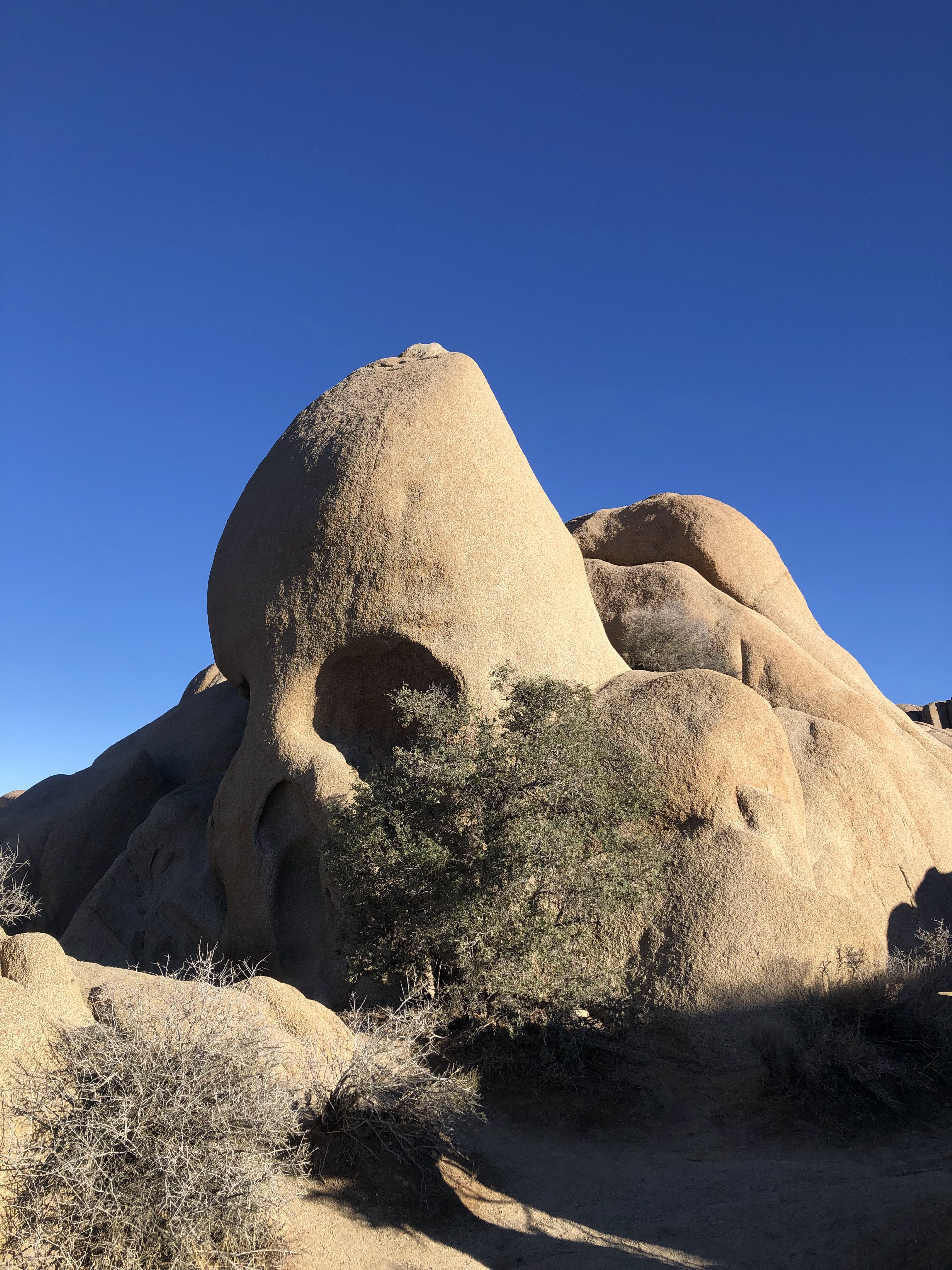
Skull Rock

The cactus gardens grew there in the middle of the desert, elegantly shimmering in the rays of the sun. Round a bend, when you’re least expecting it, the cactus gardens open up (not the same beautiful as William’s Wordsworth daffodils of course, but a different kind of beauty altogether). A beautiful array of life – glinting in the desert sun, reminding you of the resilience of life on this planet. There were beautiful in their own way. They reminded me of coral reefs – only in the desert and bathed in brown hues. 

We approached a happy couple coming our way to take a picture of us. They glowed in the setting sun, and beamed. They had apparently gotten engaged to each other a few minutes ago, and were bursting with happiness to share this with us: fellow human beings, who were there at the time. We wished them both happiness together. It was a beautiful feeling of strangers sharing their happiness and good wishes. We may never meet again, but that moment of their happiness was ours to remember. 

The cactus bore testimony to human paths forging a life together, the boulders : indifferent, but providing the backdrop for a proposal and an engagement, the Joshua trees branches of every shape delivering a message of love. 

In the infinities of the desert, there was a small pause: punctuations of happiness, and joy. 

Where the Wild Girls Are

Every once in while we get to step in to a world different than our own, and the only thing that reminds you of your earthly existence are your earthly companions. Would space travel be the same way? Would an exotic alien world be made habitable with our companions? I know not, maybe our future generations will find out.

Traveling to a place Where the Wild Things Are or to one of Dr Seuss’ landscapes is a unique opportunity. I have to admit I had not read the National Park Service’s description of the Joshua Trees on their site. They called it Dr Seuss’s trees. I felt the same. Dr Seuss lived not far from Joshua Tree National Park after all, and I am sure he took inspiration from these curious curvy alphabetic trees for his many books. (The one on alphabets, On Beyond Zebra. The Wum, Humpfm, Thnad that seem to go past the twenty six that we do know; or the trees that Horton the Elephant sits on while hatching his egg for instance.) 

The Joshua trees have a life lesson or two to impart. 

Each tree seems determined to leave an imprint on the planet. Like the illustrious bristlecone trees up further north, the Joshua trees seem to chart a unique path for themselves. Each tree resorted to a rule of no rules. I saw no two trees branch out similarly. Some took to elegant and simple forms, while others reveled in the complicated heiroglyphics to decode the essence of living.

They seem to have taken Mary Oliver’s poem to heart – every one of them.

Tell me, what is it you plan to do

with your one wild and precious life?

Mary Oliver, The Summer Day

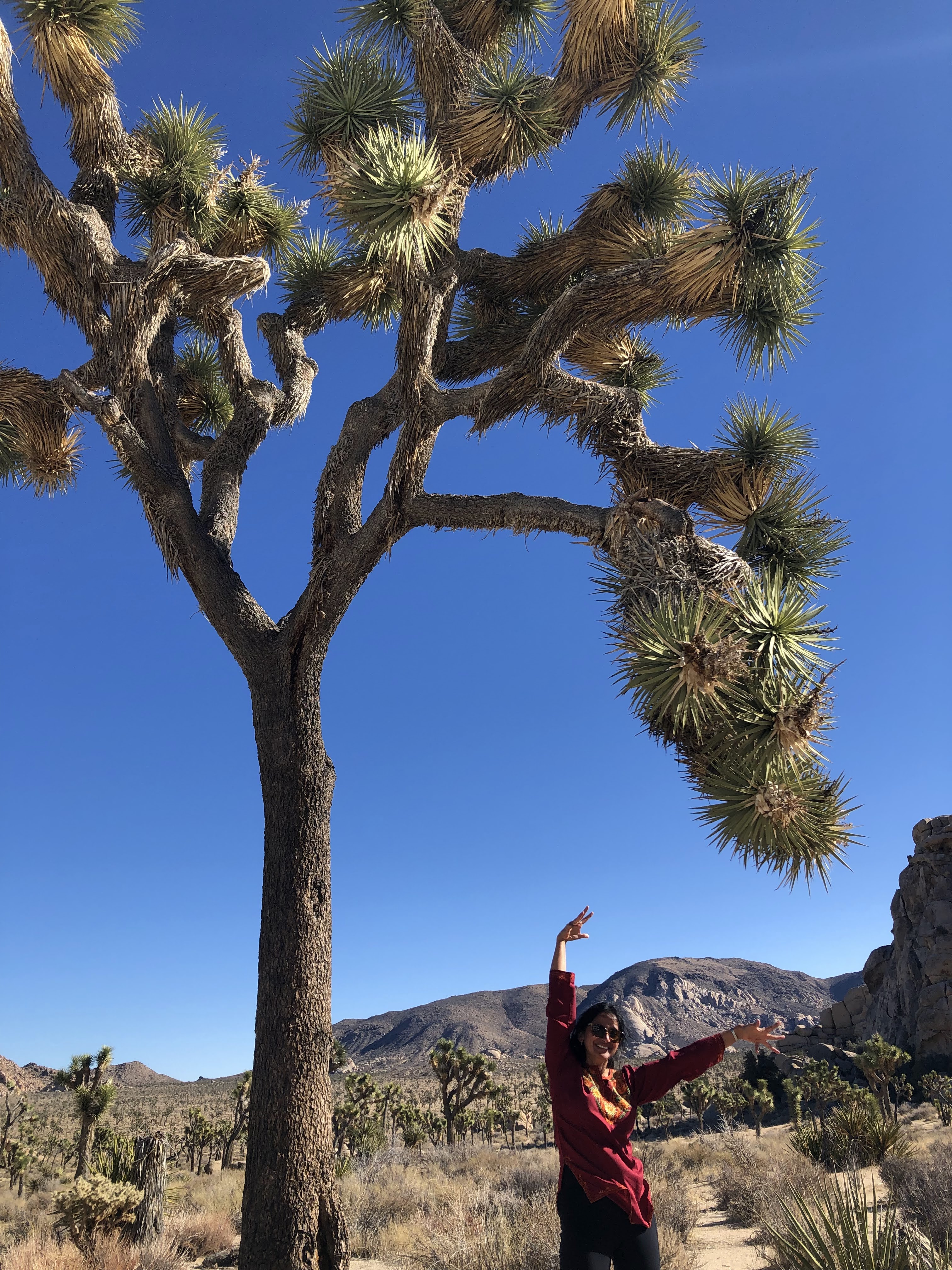
How does one become a tree? Like this 

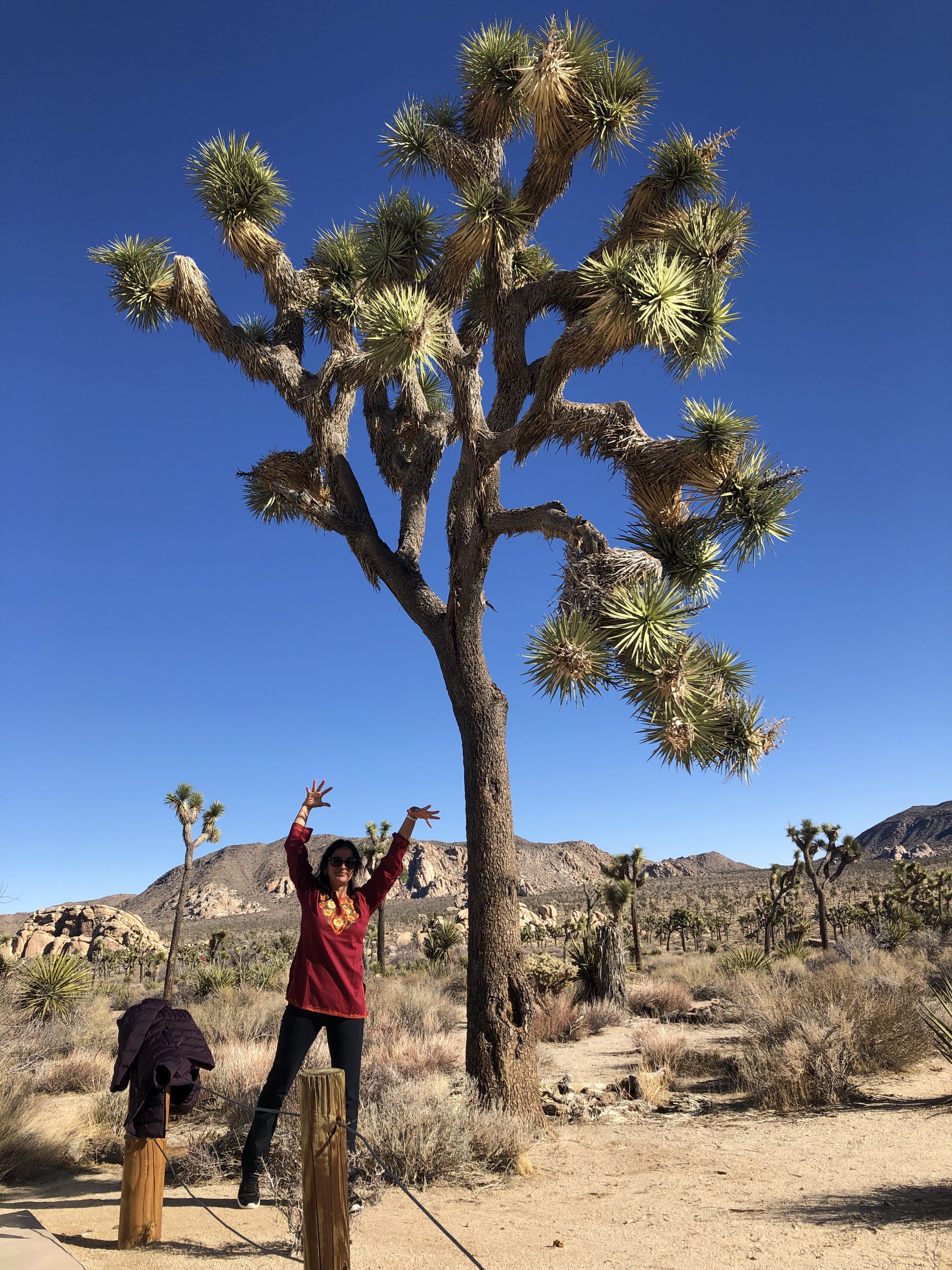
Or like this?

I know not. All I know is that life holds precious moments for those who attempt to become one, and the resulting camaraderie and joy of dancing and chatting in the deserts with one’s dear companions takes on a refreshing feeling that one can savor and smile at when Google Photos reminds you days afterward. 

Where the Wild Girls Are

If life is meant to be lived, live them like Joshua trees or Bristlecone trees  – hardy, beautiful, resilient, joyful and in the quiet companionship of your fellow souls journeying with you through this exotic world. 

Dream Boats

Oh! Books! Marvelous Books! 📚

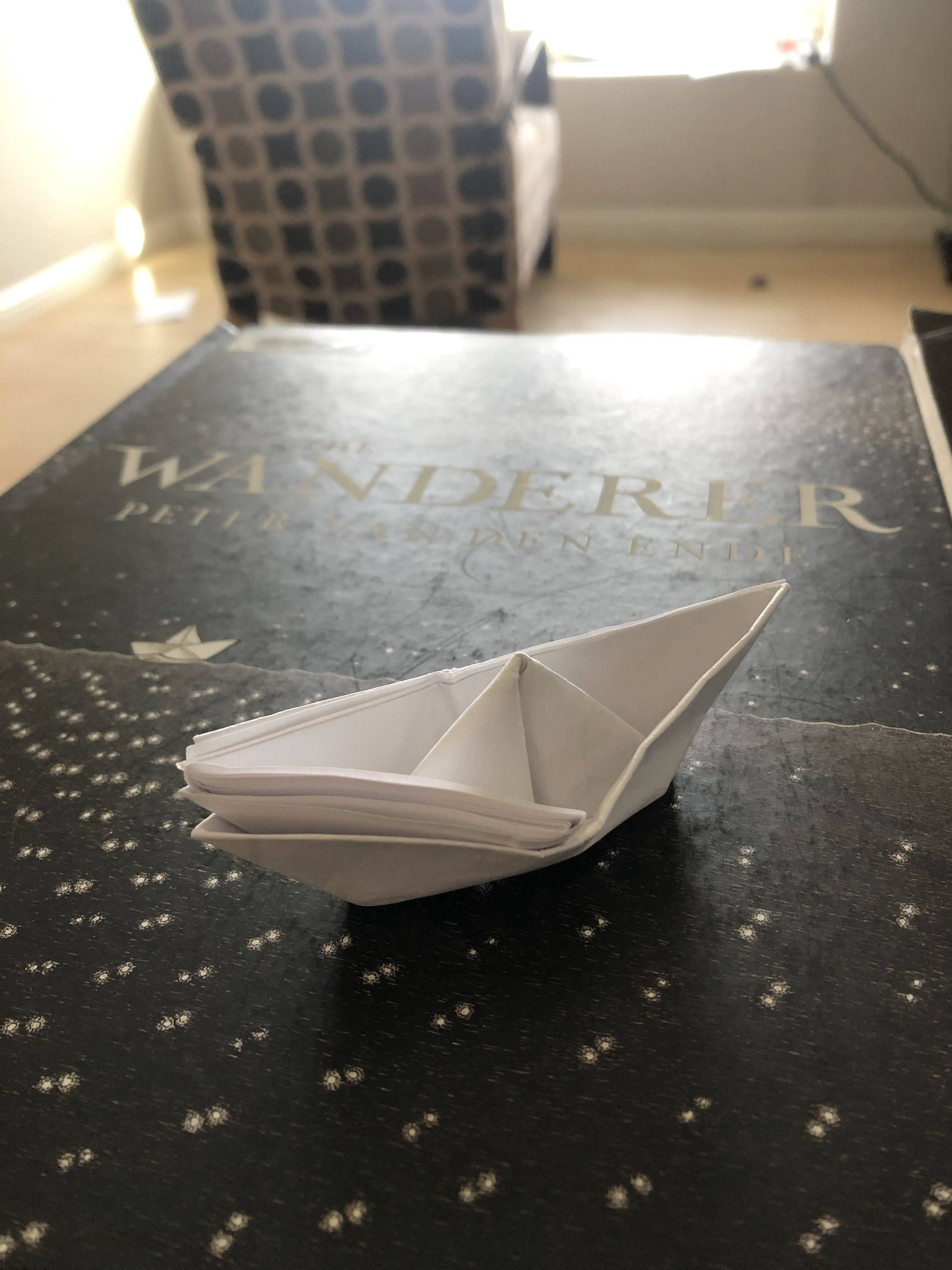
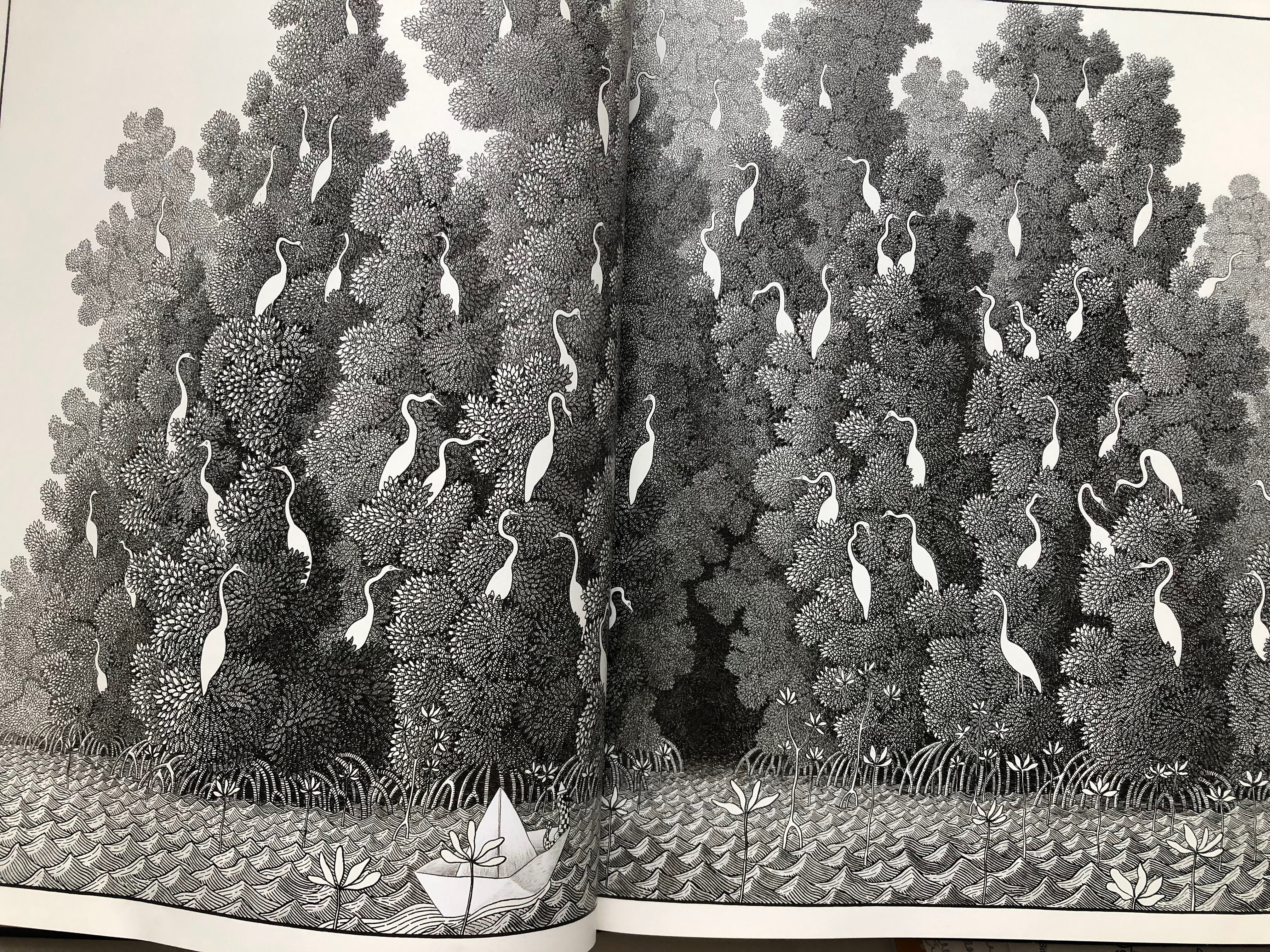
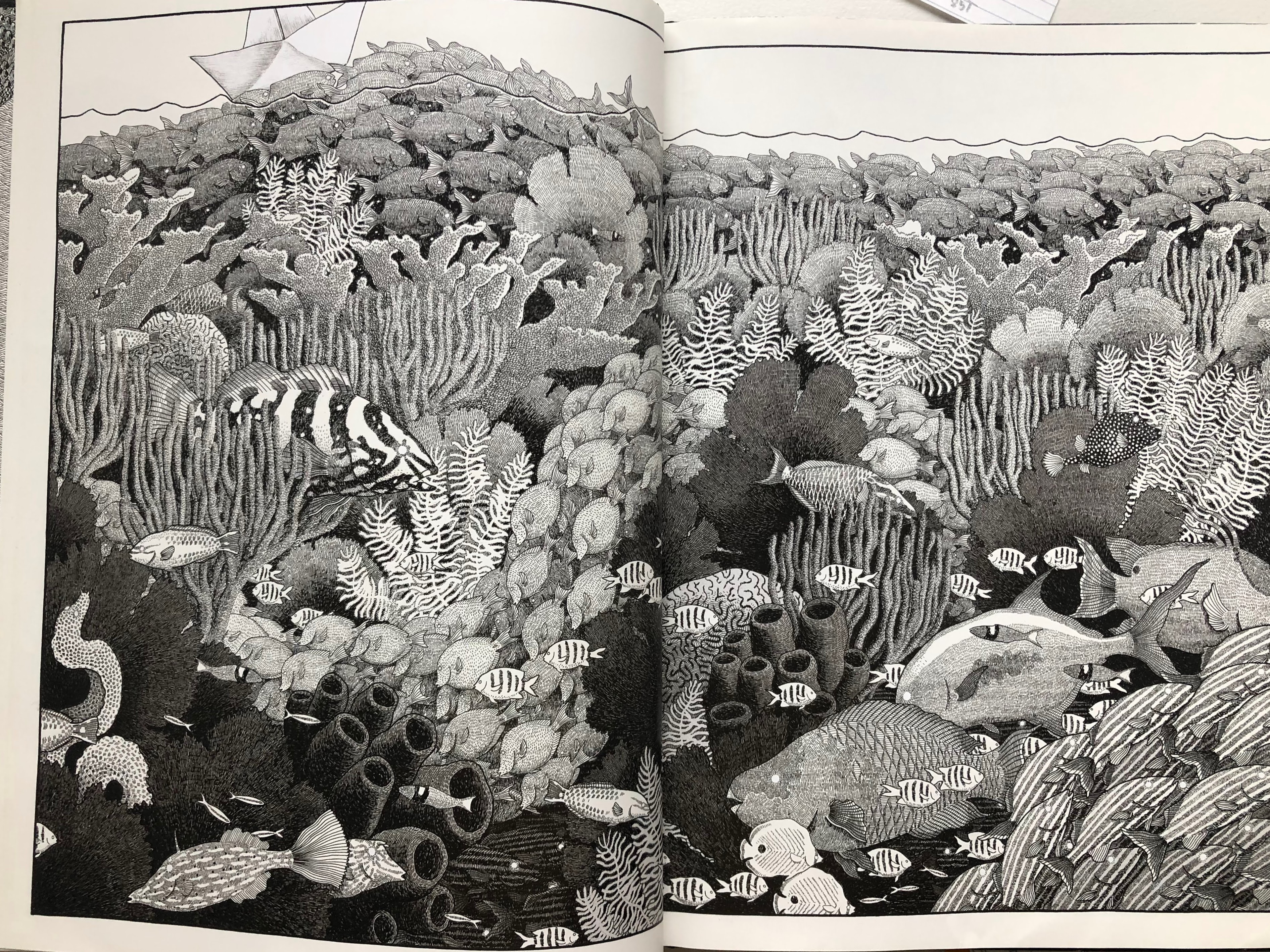
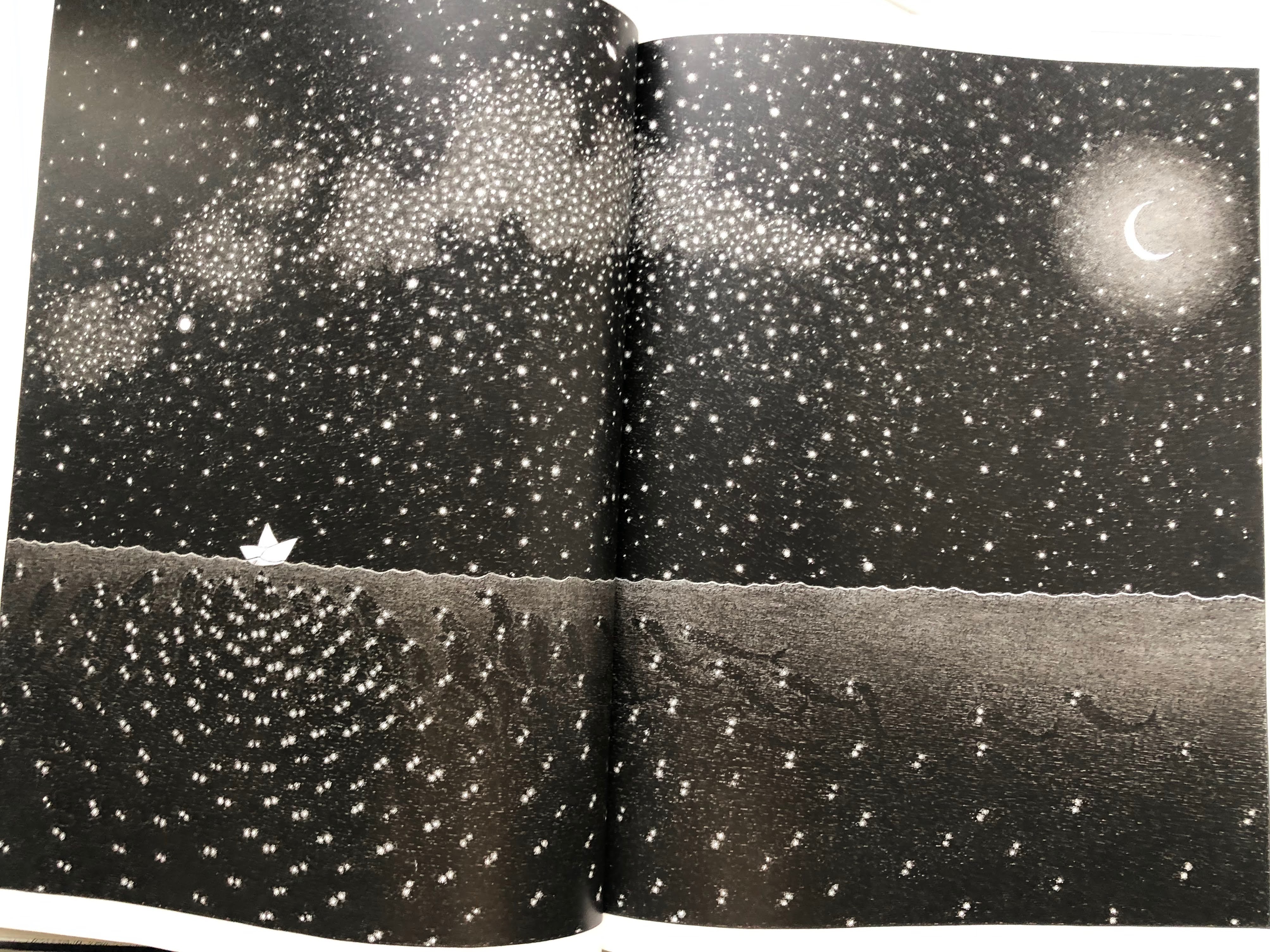
I am so grateful to live in a world that has an abundance of books. Take this one for instance: The Wanderer – By Peter Van Den Ende.

Paper boats have held a fascination all its own. The oceans must’ve been the first great frontier that humankind was enthralled by. How we came to design boats in the manner we do now must be an interesting journey. Why this shape – why not in the shape of a whale, or a swan with paddlers underneath? 

How long have boat designs stayed in this cup shape that floats? 

I remember making paper boats all the time. Setting them to sail on little puddles or watch them scooting along with a fast flowing rivulet of the rainwaters. Either way, the joy is never dampened, though the paper may be (please pardon the pun). Some folks made paper planes pretty well, but the paper boats were my little special things. I made them out of napkins in restaurants, out of spare paper in schools and work spots, and chocolate wrappers. I wrote poems on Puddle Boats, The Dream Weaver. A boat has an endless fascination: a mystical vessel with its ability to journey into places unknown, and encounter adventures unimaginable. Which child has not enjoyed the finale of The Adventures of Dr Doolittle even if the rest of the book did not enthrall?

Imagine my joy then in seeing this book. I had no words, and neither did the book.

Some books capture the heart’s yearning with no words at all. The Wanderer by Van Deck Ende is one of them. A simple concept, one that any one who has played with paper boats in rain puddles, rivulets and streams has often dreamed off. It takes a true artist though to capture those dreams and meanderings onto paper for others to enjoy. And an exemplary one to make the possibilities even better with monochromatic themes.

The little paper boat starts its journey off simply enough. As it traverses streams, rivers, oceans, and peeks into lakes, the pages come alive.

Whether you look around above the waters and take in the egrets and herons by the lake

Or peek into the depths of the ocean below and take in the sights of the reefs and whales below, this book is sure to take us on a journey of a lifetime. 

Every page is a different destination on its own, and every stop along the way adds unto a wonderful journey.

What a marvelous book! The above are a few sample pictures taken from the book to enable a review. The book has many more.

Tonight, after all is quiet, and the world can be left to its own devices, and the land of dreamlands can be entered; these images should help us along to the beautiful lands of possibility. 

Percy – The Enlightened Soul

Last night, I read a poem by Mary Oliver in the book, Truro Bear and Other Adventures, I got to the section where she writes about her beloved dog, Percy, and had a hearty laugh. Percy was named after an Italian poet, and as such was also wise in his ways. 

Take for instance, when he consumed the Bhagavad Gita.

Percy (One)

Our new dog, named for the beloved poet,

Ate a book which unfortunately we had

Left unguarded.

Fortunately it was the Bhagavad Gita,

Of which many copies are available.

Every day now, as Percy grows

Into the beauty of his life, we touch

His wild, curly head and say,

“Oh wisest of little dogs.”

Mary Oliver, Truro Bear and Other Adventures

Percy is indeed a wise soul, for she he seems to have an innate knowledge in the true things that matter in life. He has many friends, enjoys a romp by the seaside, polishes off good food, and is ever ready to provide companionship to his human friends. Show them a thing or two about living. 

I have several friends who dedicate a good amount of their time and energy to the study of the Bhagavad Gita.

One in particular also possesses the rare quality of sharing and explaining his learnings without the mantle of self-righteousness. (I call it a rare quality, since religion and spirituality are different things, and few souls have the wisdom to unify them in the pursuit of knowledge and humility. )

I am not sure whether all those who have immersed themselves in the wise learnings of the Bhagavad Gita have truly digested its many layered teachings (definitely not in the way that Percy did!). But a few of them I know would’ve enjoyed the following poem also in the book after several pages:

Percy & Books (Eight)

Percy does not like it when I read a book.

He puts his face over the top of it and moans.

He rolls his eyes, sometimes he sneezed.

The sun is up, he says and wind is down,

The tide is out and the neighbor’s dogs are playing.

But Percy I say. Ideas! The elegance of language!

The insights, the funniness, the beautiful stories

That rise and fall and turn into strength, or courage.

Books? Says Percy. I ate one once, and it was enough.

Let’s go.

Mary Oliver, Truro Bear and Other Adventures

Percy! Oh wise soul!

The Light of Ikigai

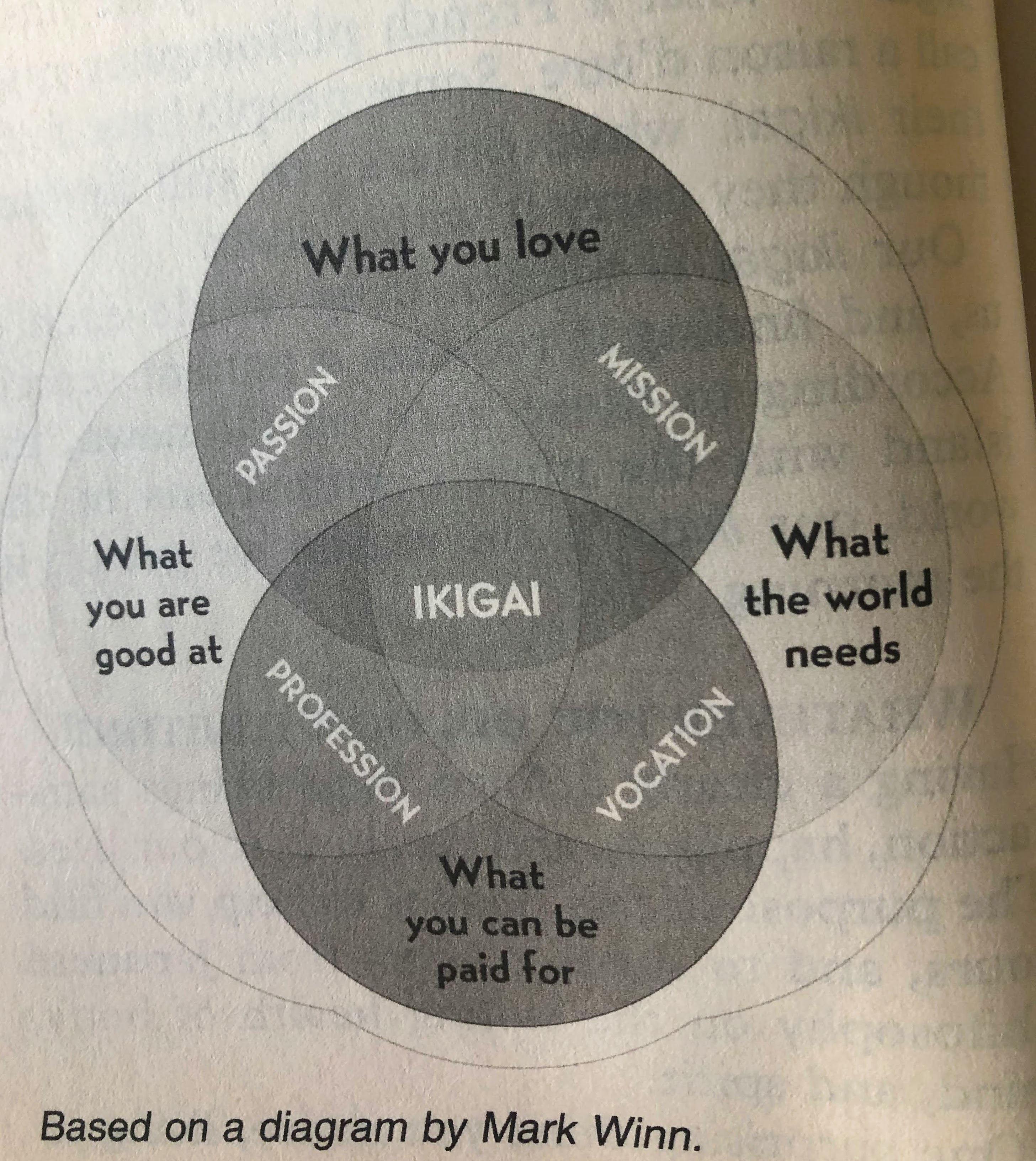
I have been reading a book titled Ikigai – the Japanese Secret to a Long and Happy Life – By Hector Garcia & Francesc Miralles. The concepts mentioned in the book are varied, for it takes many factors to constitute a happy, meaningful life.

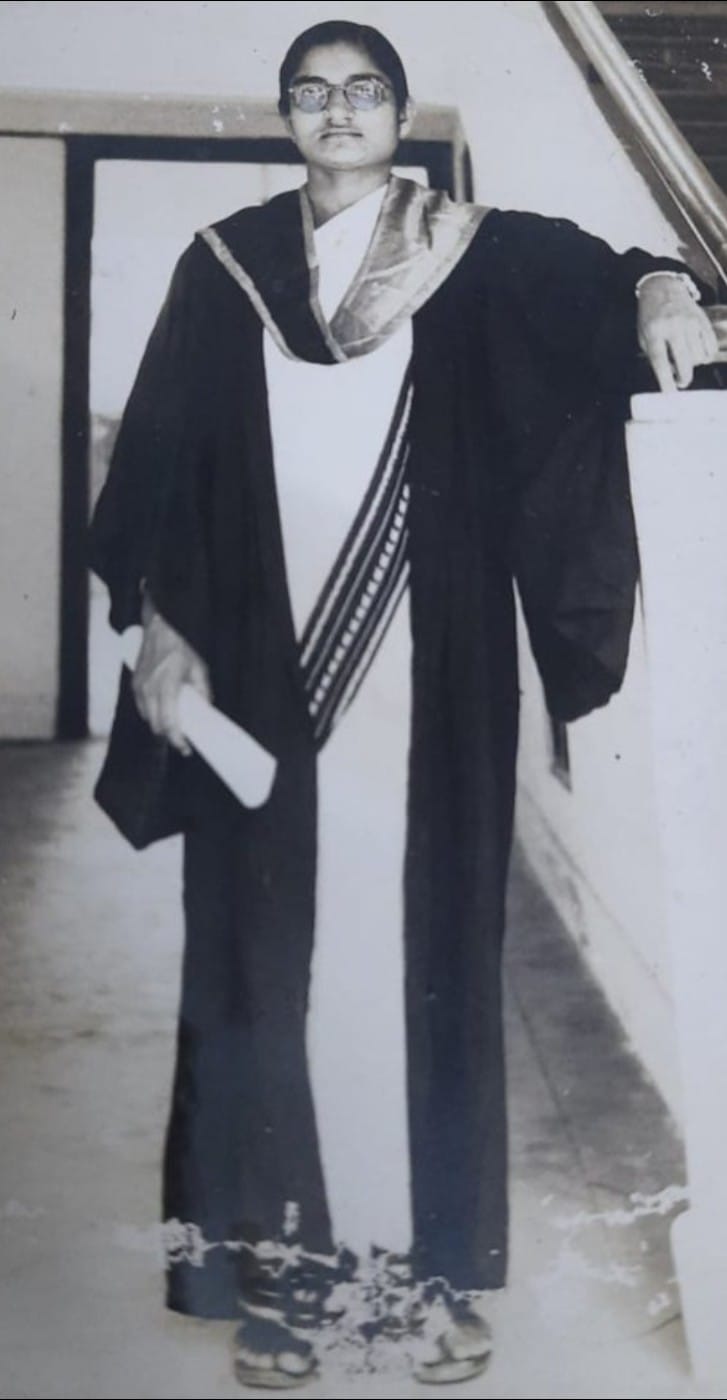
I am not sure if Prof Rukmini read about Ikigai, but it is abundantly clear to those who knew her, that she practiced it whole-heartedly. Of course, if ever there was a lady who could’ve curiously read up on concepts new to her, and taken to practicing the good in them, it is Professor Rukmini. She may well have been teaching Ikigai all her life. Kunja Athai as we referred to her, was a diminutive figure physically and a stalwart intellectually.  She adored learning about new ideas, and she loved those in her life with equal fervor. These will always be things I remember about her. 

There are a few people whose life story you grow up with. Kunja Athais was one. 

She was married after 8th Grade. Her life though was a tumultuous one: she was widowed shortly thereafter with a 2 year old daughter in tow. She came back to live with her elder brother and sister. Her brothers, intellectuals themselves, wondered whether a regressive society would kill her too. So, they urged her to study again. She wrote her SSLC exams with private tutoring and then went on to study Physics at Presidency College in Madras. 

She was bright, hard-working and wanted to be economically independent. Fate delivered a particularly terrible, and a somewhat vindictive blow to the beleaguered soul again. She had written 5 out of the 6 Physics honors papers. A few days before she was to write her 6th paper, her only daughter, aged about 8 or 9 passed away. I cannot imagine how it must’ve been for her. One of her professors who knew about her plight, told her to come and sit the exam – she needn’t even write anything, he told her. (For her performance in the remaining papers would ensure she got her degree). So, poor kunja athai went to the examination hall. 

Every action is a choice. 

Once there, she decided to take her mind off the terrible events in her life just then, and write the examination anyway. 

A moment that turned out to be a momentous one in her long life.

Kunja Athai graduated with Honors from Presidency College in Madras in the 1950’s. A rare feat in India at the time. I wish I knew the statistics of the number of female vs male graduates, or the economic statuses behind their fates. But none, I am sure had her particular set of circumstances. She had lost her young husband a few years ago, her only child a few days ago. Yet, she persevered. 

She became a Physics Professor at Ethiraj College in Madras, and went on to inspire hundreds of girls as she urged them towards a degree.

The authors of the Ikigai book interviewed the elderly people  of Okinawa in Japan(the place with the highest concentration of the longest living individuals), and gleaned some key concepts that contributed to their healthy, happy lifestyles. Some of them are : Communal life, Never Stop Learning, Finding the Flow in your tasks, Humans as Ritualistic Beings, and Enjoying Nature.

Kunja Athai seemed to have practiced all of these things.

One of my early memories of the grand old lady was at twilight in a small garden patch in Tambaram. I was staying at my aunt’s place for the night. My mother’s eldest sister, her husband and his sister, kunja athai. I pottered around the garden patch with her – probably chattering, as I was known to display considerable prowess in that department.

Kunja Athai let me smell the star jasmines, feel the gourds, grind the hibiscus leaves between my fingers, and pluck a few of the hearty hibiscus blossoms for her idols inside.

I loved tracing the shapes of leaves as a child. I would collect leaves from everywhere as I played or went on walks, and trip back home to trace them out in my notebooks. I told her about this pastime of mine, and she approved with a twinkle in her eyes. When we went back into the house, she took down a book that she thought I might like, and pointed to pages in the book. The leaves from the book came alive. Her eyes shone with bright interest. That is the image I will always have of the legendary kunja athai.

Kunja Athai passed away last week. While I sat there thinking of the marvelous life of Kunja Athai, I realized there were ever so many things and angles from which one could approach her life. I could write about she was a Professor of Physics in Ethiraj College for Women inspiring thousands of girls to get themselves an education, and acquire an inquiring mind that would serve them well through life. Or I could write about her struggles in early life, and how she not just found a way of going on, but of building something marvelous out of it.

I realized that Kunja Athai seems to have learned and consciously imbibed all the tenets of a meaningful life from the philosophers who came before her. Her Ikigai was well in practice. She was determined that her life should be one in which she spreads love and fosters a love for learning.

Every soul traces their own path. Some souls we are lucky to have benefited from: they are the suns who shine, give, and illumine all those around them. Kunja Athai’s light of Ikigai shall shine on in every life she helped nurture and guide by example. 

The King’s Stilts

A few years ago, the pater looked at me with an amused smile on his face, and said, “I’ve been seeing you walking around with that book for weeks. Do you plan to finish it?” 

I gave him a mock sorrowful look. It was true. That summer, life had been jolly and full. The son was a baby then, and any time I could snatch away from my highly demanding work spot was split between the visiting folks, the kitchen, housekeeping, and the children. I cannot say that I felt effective in  any of these areas, but I was stretching myself as best as I could. Without a book to help me get a perspective in, I felt even more unmoored. So, I did the next best thing and walked around with the book in hand. The intention was there, when the moment presents itself, I could glance a page here, and a page there, I told myself.

No one in the household but the pater noticed that I had the same book with me for weeks. 

“Never fear! These are phases that will come and go, and once the children are grown, you will be able to read again.” , he said. Luckily, it turned out to be true. I did get a little more time on my hands mostly snatched during public transit commute times, or when I finally wound down at night, all the demands of the day done, and a fresh set of demands not yet hankering for attention till dawn. 

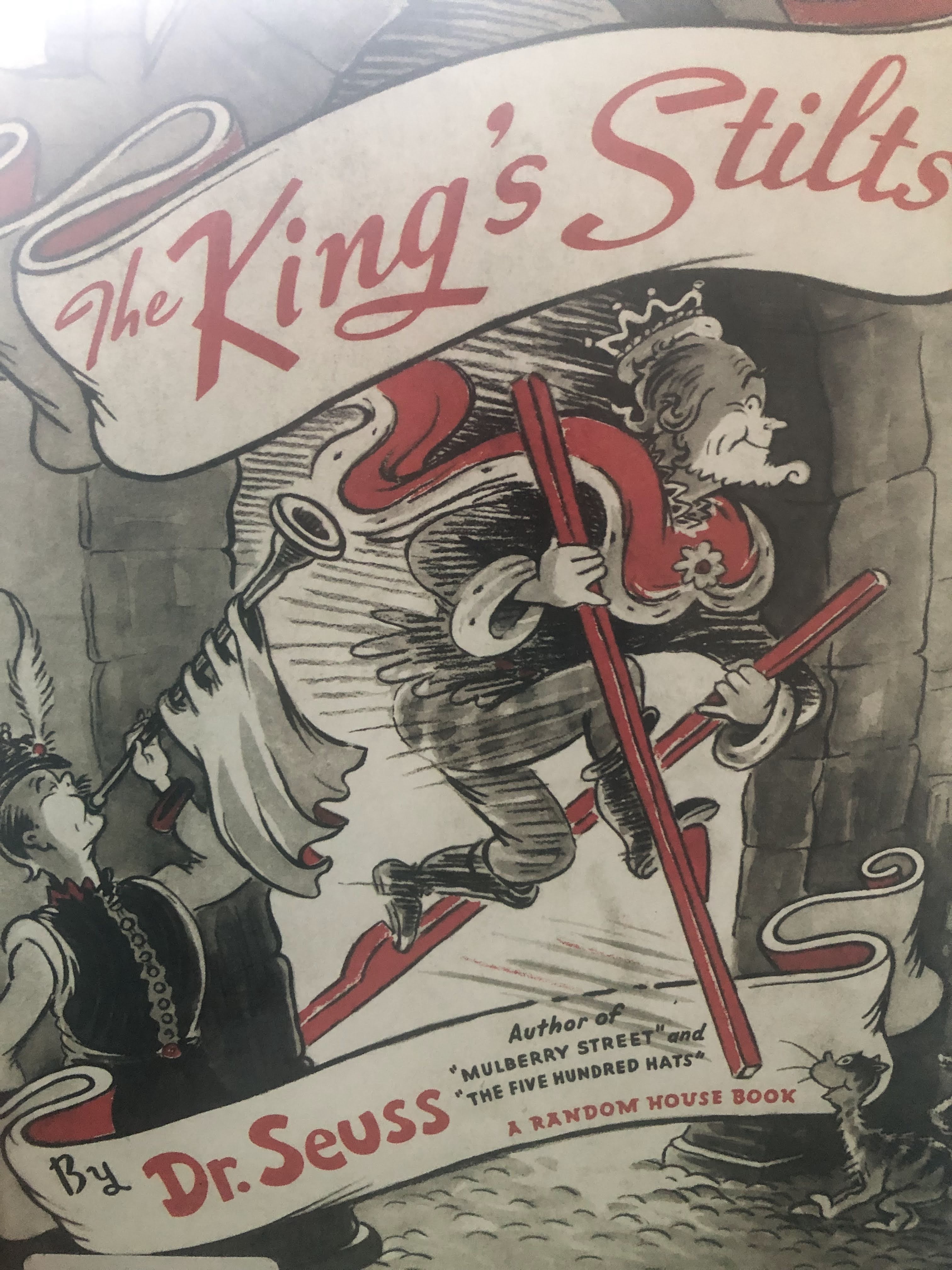
As I opened my library account, I realized the same thing had just happened again. I had gone for several weeks with the intention of finishing several books, and did not get the opportunity to do so. I felt like King Birtram in The King’s Stilts. A Dr Seuss book that I did manage to finish owing to its size. 

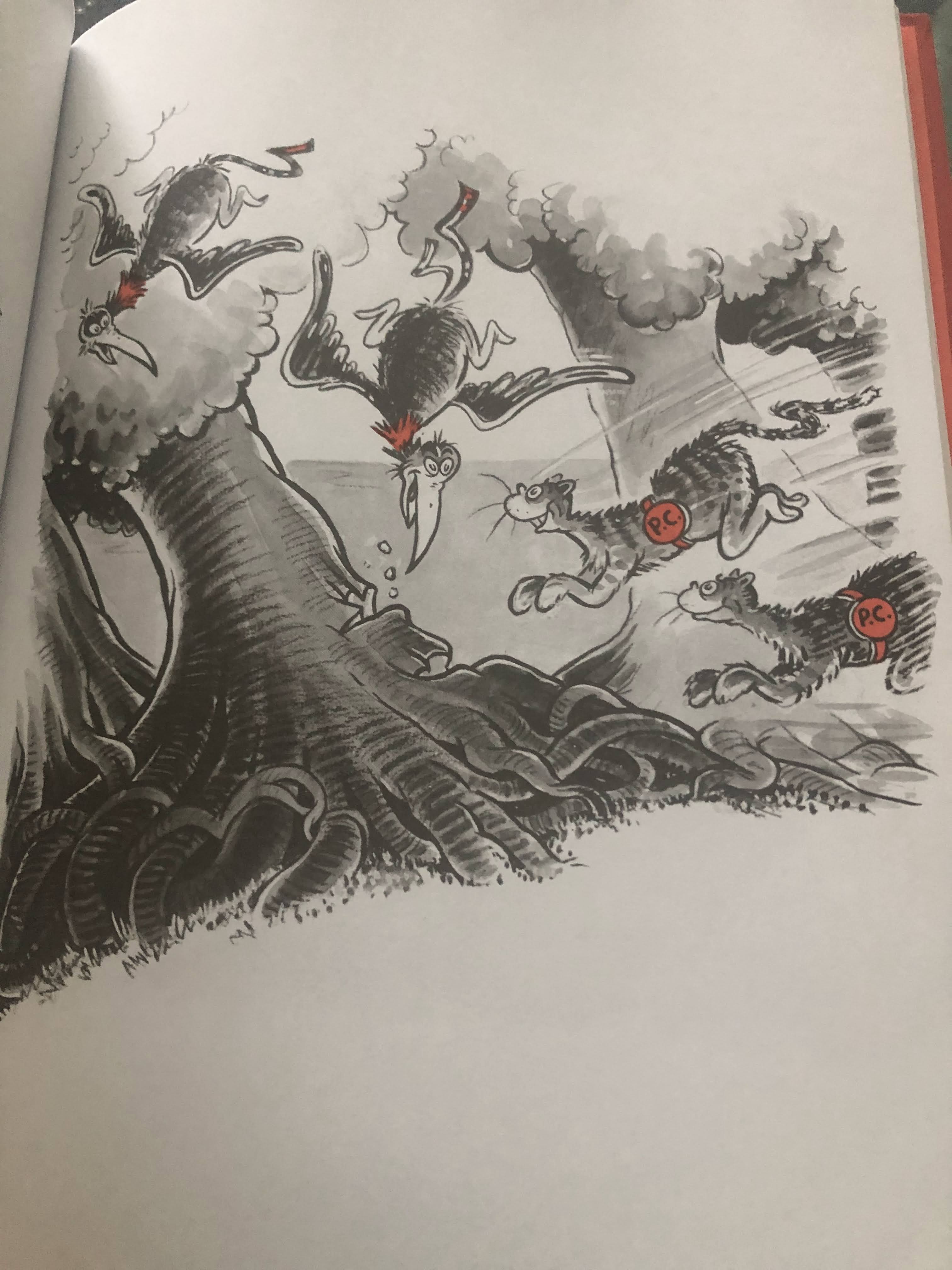
King Birtram is the hard-working, conscientious and just king of the low lying kingdom of Binn. He starts his day attending to all his administrative duties at the crack of dawn, signing papers and making decisions while taking his bath, eating his breakfast and is finished with his paperwork just in time to start his duties as commander in general who is in charge of keeping his cat army in tip-top shape, and motivated to protect the kingdom from the Nizzard birds.

His cats, are after all, critical to the functioning of the state. They keep the pesky nizzard birds at bay. The gizzard birds weaken the dike trees, and weakening those marvelous trees means the kingdom of Binn could be flooded within days since the trees are the only ones that are able to keep the waters at bay. 

King Birtram, however, never complains. He knows what needs to be done, and he is proud to do it. His moments of relaxation comes in the evening when his boy brings his stilts out for the king to play. The evenings with the king striding  across the kingdom playfully in his stilts endears the man to his subjects and all is well. 

Written with Dr Seuss’s characteristic humor, style and illustrations, the story takes an interesting turn when a judgmental courtier hides the King’s Stilts. The climax draws nearer and the perils of the water destroying the kingdom is even closer with every page. Does the King find his stilts? Is the kingdom a happy, prosperous place again?

Where am I going with this? Yes! The lack of reading made me feel like King Birtram deprived of his stilts. Lack-lustre, if you see what I mean. So, imagine the joy when I obtained a rare afternoon and evening in which I could read uninterrupted, and with no expectations of any kind?

Wild Souls – Freedom and Flourishing in the Non-Human World By Emma Marris will have a special place in my heart for providing me with this rare luxury last week-end. I have not galloped through a book that quickly or without guilt for a long time. 

The Art of Words

There are days when fiction exerts a strong pull on the mind. We are, after all, children of stories.

The nature of the allure is in the constantly changing nature over time. Some days demand active adventure, mysteries to be solved, and battles to be won. These flights of fancy can be just as fascinating as the timeless nature of love encapsulated in the pages of P G Wodehouse and Jane Austen – the balm for the soul. Just as special is the quiet, kind, and often humorous companionship among humans written by the likes of Miss Read, L M Montgomery or RK Narayan, especially for one who is tired after a day of dealing with people and their problems at work. Revelations that give us tiny insights into the possibilities and depths of the human spirit.

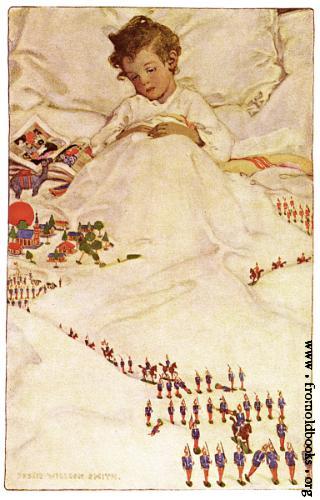
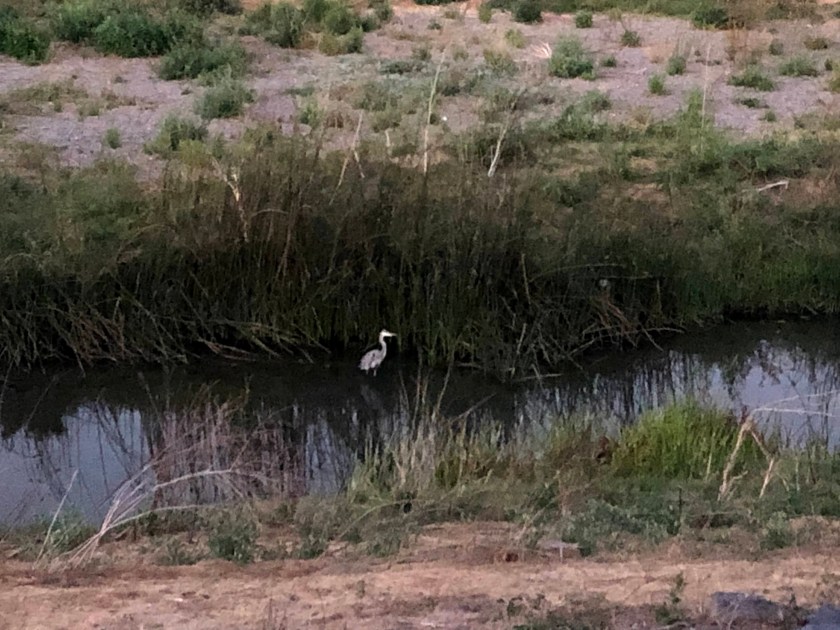
Some days, the allure of poetry is there like a soothing essence of the night. Like a lavender enhanced bath drawn up – cocooning one in the safe tendrils of the fragrance. Could you not be the imaginative child drawing up a Block City, or the crane standing quietly in the marshes waiting for the right time to strike? Or the star far away twinkling and waiting for us to absorb some of its light and magic into our very being?

Then, there are days when non-fiction calls out to one with a clear call like a foghorn in a tempest. The days when the most delicious pieces of revelation are nestled as innocuous facts in a book. A book in which the writer has graciously shared their enormous love for the universe and their learnings kindly with the rest of humanity. A giving of their very soul – a sharing of knowledge so deep, so pure, it feels almost visceral to read through the contents and absorb as best as one can.

In all these genres, there are stellar writers, writers who have their streaks of brilliance, and writers who strike it big with or without the art of craft, for popularity and merit do not always go together. Nevertheless,  most of them are united by the common thread of striving continuously in their art. 

As I read Conversations on Writing with Ursula K Le Guin compiled from a series of interviews with David Naimon, I felt a thrill of the art of words once again. 

As David Naimon points out, Ursula K Le Guin is probably one of the select few authors on which one could have a conversation on fiction, poetry and non-fiction, having written all three to great acclaim.

Starting off from this simple place of:

“Children know perfectly well that unicorns aren’t real, “ says Ursula K Le Guin, “But they also know that books about unicorns, if they are good books, are true books.”

That was my experience of reading Tales of Earthsea growing up.

Wizards walk the earth and dragons fly the skies. yet the further they took me from “reality” the closer I felt to the real.

Conversations on Writing – Ursula Le Guin with David Naimon

Her conversations on fiction and how she was unable to insert her science fiction portion of her mind to her poetry was fascinating.

As the conversation unfolds in the poetry section, David Naimon observes that her fiction stems from her imagination, but her poetry from contemplation. How true and marvelous? The quiet contemplation of the wind rustling through the leaves has quite a different rhythm in the heart from the mind imagining the wondrous life of the creatures by the riverside

The book provides many asides, many references to other writers, poets and non-fiction writers who have inspired her. Little snippets inserted on black pages while referencing another’s work provide branches into other worlds to explore into such as Lao Tzu’s Tao Te Ching. The reference to wu-wei (the act of non-doing) getting a smile out of me.

Oh! To be cocooned in the Magical Art of Words is bliss indeed!

Pirates Vs Ninjas

I suppose I can laugh about it now. Though the crick in the neck disagrees just a teensy teensy bit.

The whole unfortunate episode reminded me yet again of how marvelous children are. Allow me to mist my eyes up a bit and remember.

“What are you doing?” I said to no one in particular though there seemed to be a herd of elephants in the room above me stampeding through the forests and jumping into the river.

Just imaginating!” Came the familiar reply, and despite the elephants-in-room feeling, I smiled. In our home, the act of pure imagination has been given a verb-form all on its own. Imaginating, we call it, and go about our business of imagination without batting an eyelid. 

A few hours later, I asked him, “Won’t you hurt yourself? Jumping and tumbling about like that – from the bed, to the table and back again through the chairs?”

He smiled and said simply, “No amma! I won’t hurt myself. Besides, it is the only way when you are trying not to put your feet on the floor.” He rolled his eyes. Must adults be this thick?!

I felt a big cloud of fog roll into the brain. “But, why must you not put your feet on the floor, my dear?”

A sheepish grin met my innocent query, and he said he was pretending to be a ninja fighting pirates, and ninjas do not walk on floors like normal people. Pirates, I was told, had no problems jumping vigorously into battle, and the elephants-thundering-sensation must have been the pirates piece of the imagination, not the ninjas.

I praised the universe for an imagination, and went on to soothe my head, while he blithely tumbled and crouched and leapt from one vantage point to another in the battle.

Let the sofa be mountains, the carpet be sea,

There I’ll establish a city for me:

A kirk and a mill and a palace beside,

And a harbour as well where my vessels may ride.

This one is sailing and that one is moored:

Hark to the song of the sailors aboard!

And see, on the steps of my palace, the kings

Coming and going with presents and things!

Robert Louis Stevenson – Child’s Garden of Verse
A Child’s Garden of Verse – Robert Louis Stevenson

The next morning, the sun peeked out from behind the autumnal clouds, wondering whether or not to shine, when it happened. I miscalculated the depth and the breadth of the bed, and tumbled out. I suppose it would have been one of those funny videos when watched in slow motion, but all I remember is a pretty tumble, and a sort of dull crick in the neck before I rolled again and came to be a pile on the floor. 

The sun is a star. We see thousands of stars at night. But do you see thousands of them by day when the sun has decided to show itself too? I wasn’t sure, but that was what I saw. Within moments, I had the loving son rushing downstairs for a glass of water and packet of frozen peas, while the husband tried to help me up, and assess the bone-situation given my propensity of breaking them

For concerned readers, I am fine. Nothing happened except that I am still sore. Three days later, I asked the son wistfully how he managed his imaginating. My neck still felt sore and my head hurt when I tilted it just so. The house needed cleaning and the food needed cooking, and the neck needed resting. What was to be done?

He looked sorry for me, and shrugged. “Maybe you can imaginate that you will win your castle in battle?”

“That sounds like a good plan. My castle only needs cleaning before the army arrives. I can dance and make merry in preparation for the royal ball?!” I said, and we smiled.

I was a royal queen who was also a fantastic dancer as I cooked and cleaned. Robert Louis Stevenson would have been proud.

A Rainy Day Adventure

“Just like that, summer collapsed into fall.”

Oscar Wilde

“I like that quote and plan to use it on my blog!” I said, sitting down in front of the teenage daughter’s wall of quotations, though I was feeling luxuriously wet. Summer had collapsed into fall just like that! How these writers find the exact sentiment!

“Hey! That is my quote.” 

“Looks like Oscar Wilde’s to me.” I said and she laughed. I looked appreciatively at the quotes she had pinned up. She has some saucy ones, some spicy ones, some warm ones and some ‘meh’ ones as she calls them.

The rains had set in with a whim and the day in my mind was magical. It was a Sunday, and for a change we had arranged life so that nobody had anywhere to go that day.  A rare luxury. Marvelous days of rain and clouds with no list of  engagements can be quite liberating, and I had taken myself on a walk with a friend who was willing to bear the elements. We may have had a few close calls in which the umbrellas insisted on flying off with the winds, or the rains lashed in at an angle not expected, but overall, it was a marvelous walk. I felt alive, wind-whipped, cold, wet, and all the smells of nature mingled and tingled my nostrils. 

“Do you remember that little book, A Rainy Day Adventure, that you both loved as children. Your grandfather was quite sick of it. The one where the elephant, tiger, and monkey went to shelter under the tree from the rain, and when the elephant was dry, the tiger wasn’t; and when the tiger inched in, the monkey was wet?” The pair of them laughed at that story. They did remember. It was a sweet book that had served many an afternoon adventure for them. The tiger did not like getting wet at all, and consequently takes off in a huff to find shelter elsewhere. Read in their grandfather’s stentorian voice, it was always accompanied by an hilarious laugh, when the tiger falls into the river and gets completely drenched, and is pulled out by the elephant and monkey.

I sighed happily. “I didn’t exactly plop into the river like the tiger, but I was quite wet. I felt like a little girl in Lovedale again, the winds, the rains, and the scents of eucalyptus and pine were just so. The ducks were having so much fun in the fast flowing waters of the river swollen from a mere stream to a gushing river in the rains.”, I said rapturously.

The daughter had a moment of indecision. Should she, or should she not? Finally, she said, “You paint a promising picture of the rainy day adventure, it sounds fun! Maybe, I’ll try it.” I whooped with joy and then went downstairs to get her set up with a sturdier umbrella and some boots before sending her on the way.

I went upstairs to change, and for the first time cursed the double paned windows that were touted as a marvelous feature when we moved in to the new nest. Mostly, I appreciate them, for there is no outside noise that percolates into the home. But today, I wanted the noise to percolate into the home. I wanted to hear the wind buffeting the dear home, I wanted to hear the gurgling waters as they sped towards the gutters cleaning up the months of summer dust with them, I wanted to hear the momentous crash that sent half a sturdy tree crashing down in the front. But I heard none of that. 

A few minutes later, the daughter crashed into the home, looking like a battered duck that flew into a tree, and said to the husband. “Amma here! She really ought to be checked. The way she spoke about it, I thought it was mild to moderate rains, and you can just listen to the pitter-patter of rain-drops against the umbrella. Nothing like that! I was almost swept off my feet several times by the winds, the umbrella turned inside-out at least 3 times, and all this in a 15 minute walk inside our community! Look at her looking so happy after being soaked like this!” 

I laughed heartily, and said, “Well, I did tell you it was a good rainy day adventure. I never extolled a gentle stroll. I called it an adventure! That is what it is. Come! Admit it – you loved it.” She threw her hands up in the air and shook herself to dry like a dog does. A few minutes later, I found her holding a large cup of hot chocolate that she had made for herself and her little brother. “I am going to my room, lighting a scented candle with pumpkin spices, listening to some music, curling up with a good book, and sipping hot chocolate. That is what you are supposed to do on a day like this, not take off on sloshy walks.”

“I heartily agree. “ I said, calling after her. “Admit it! You appreciate this all the more because of the rainy day adventures.” She laughed in spite of herself.

I recognized the wisdom in her words, and did the same. The coziness of a rainy autumn day is heavenly indeed. 

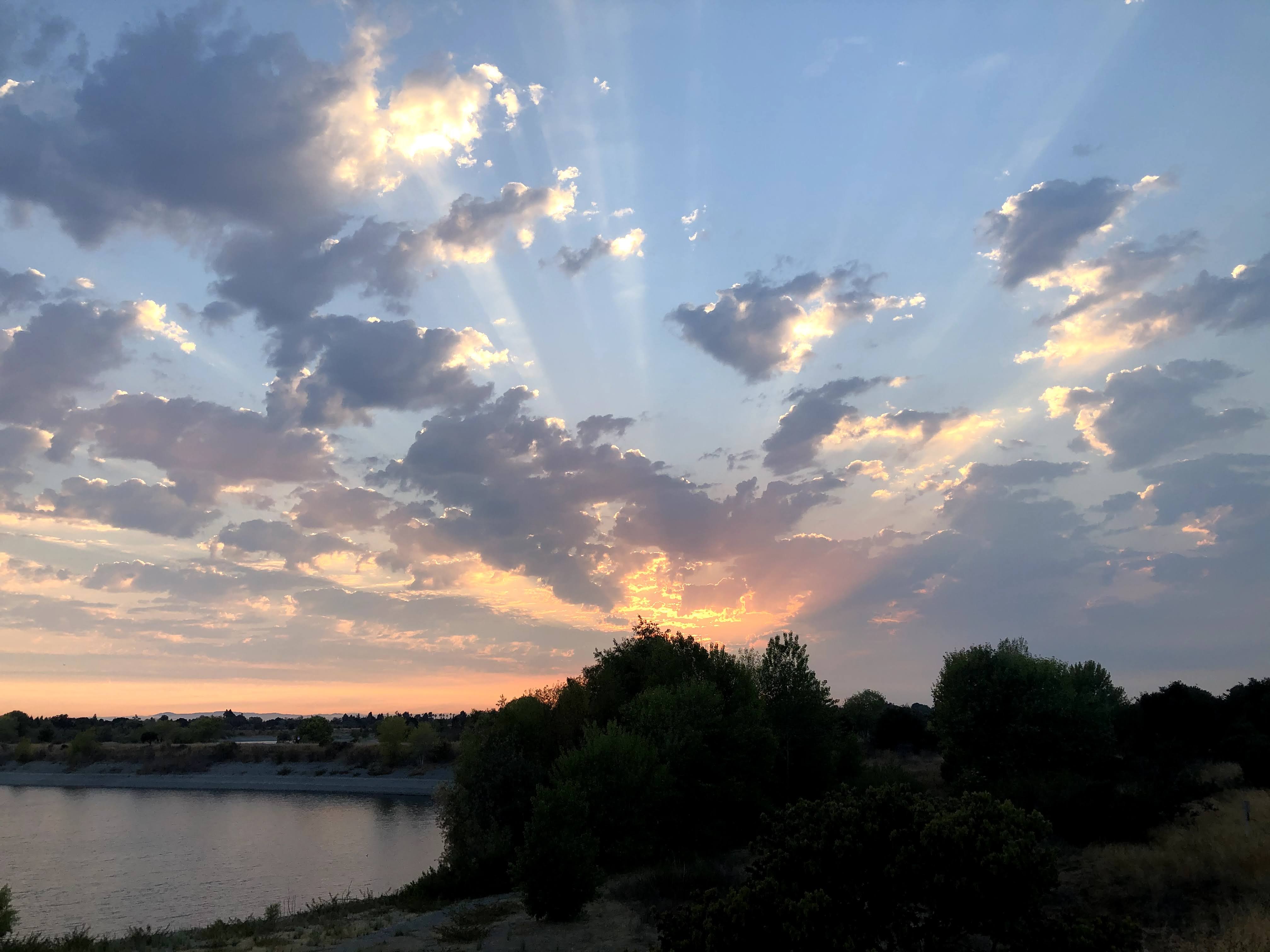
The river after the downpour