The Monarchs of Butterflies

Heliotherms & Heliotropes

The sun was shining. The birds were chirping, the leaves were all showing off that they were as good as their east-coast-fall-color relatives. It was all marvelous. So off we went for a week-end walk. 

The husband tried his best to not roll his eyes as I stopped in several places to admire big, fluffy brown and black caterpillars on the trail. “All those butterflies!” I buzzed. “Such darling guardians of the sun, aren’t they?” 

“What now?”

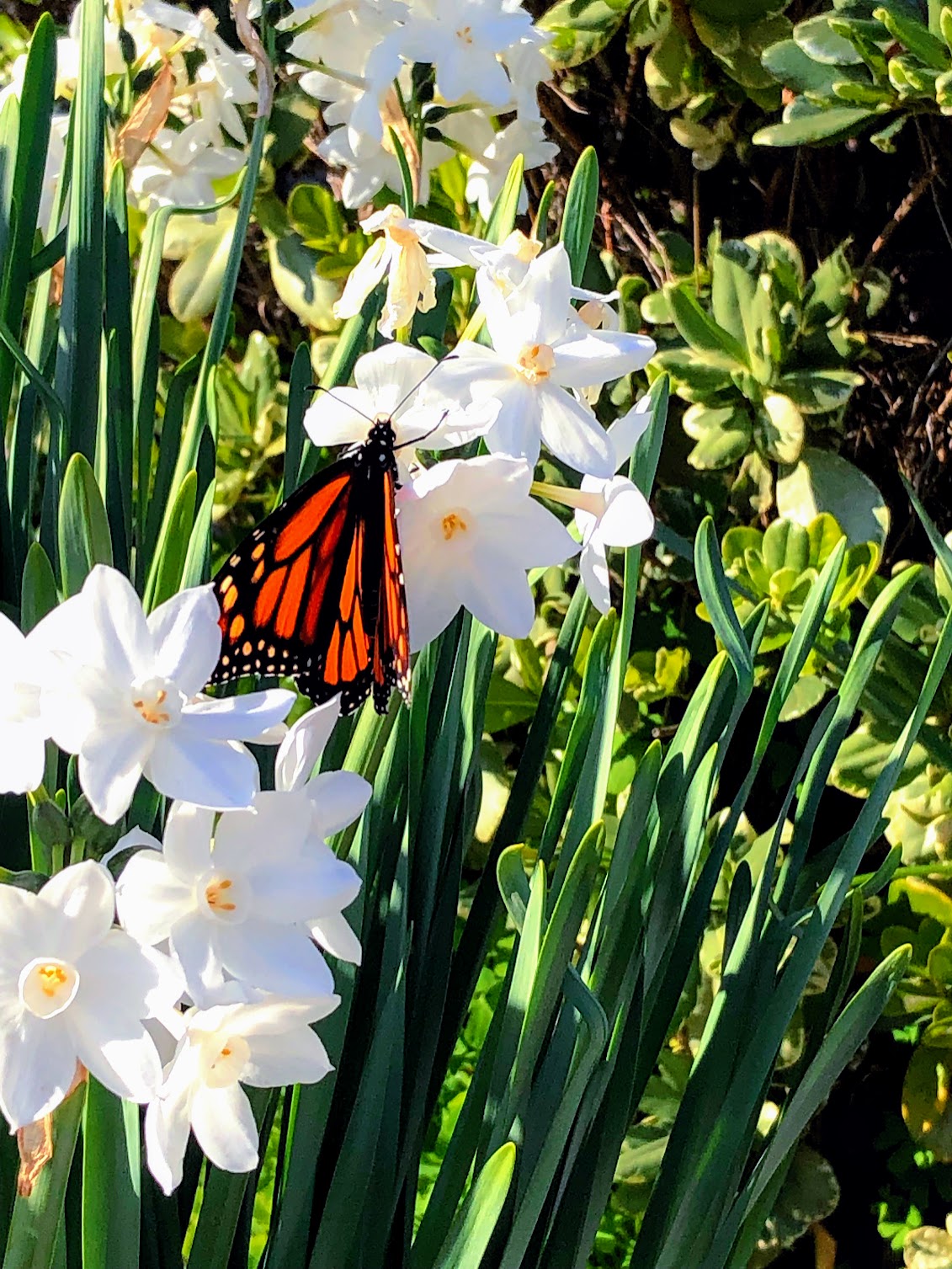
“Butterflies are heliotherms – did you know that? They get their body heat from directly basking in the sun. And isn’t it such a beautiful word? Heliotherms! Heliotherms flitting to Heliotropes for nectar.”

“Are we going to watch them weave their cocoons or shall we head back?” said the husband. 

Monarchs of Caterpillars

I waved to folks in the neighborhood as we passed, the dogs wagged their tails, the cats gave us looks of live-and-let-live. It was all lovely. What I didn’t realize was that it was all about to get much lovelier. I stopped to chat with a friend.

“I am going to give you a gift – it is a milkweed plant!” she said. I couldn’t help smiling at that. 

“Well – I do love that gift!” I gushed,

“They are required for saving the monarch butterflies, you know?”, she said beaming, and getting that smile on her face that meant she was excited to show me something a biophile would appreciate. 

“Yes I remember reading about it a while ago when the numbers of monarch butterflies had dropped. They planted them all along the migration paths to revive their numbers.” 

Monarch Butterflies: Back from the Brink

“Want to see the caterpillars?” she asked me, giving me a look like Christmas had come early. 

“I just saw a few – big fat furry ones there!” I said pointing vaguely in the direction I’d come from. The husband had that look that said – “I’ve had quite enough of caterpillars for the day!”

 “Come and see these. These are the monarch butterfly’s caterpillars, and they are only found on the milkweed plant itself.”

Now, how could I resist? The husband squiggled away – wishing us a wonderful caterpillar viewing session.

I went into my friend’s garden and am I glad I did?! 

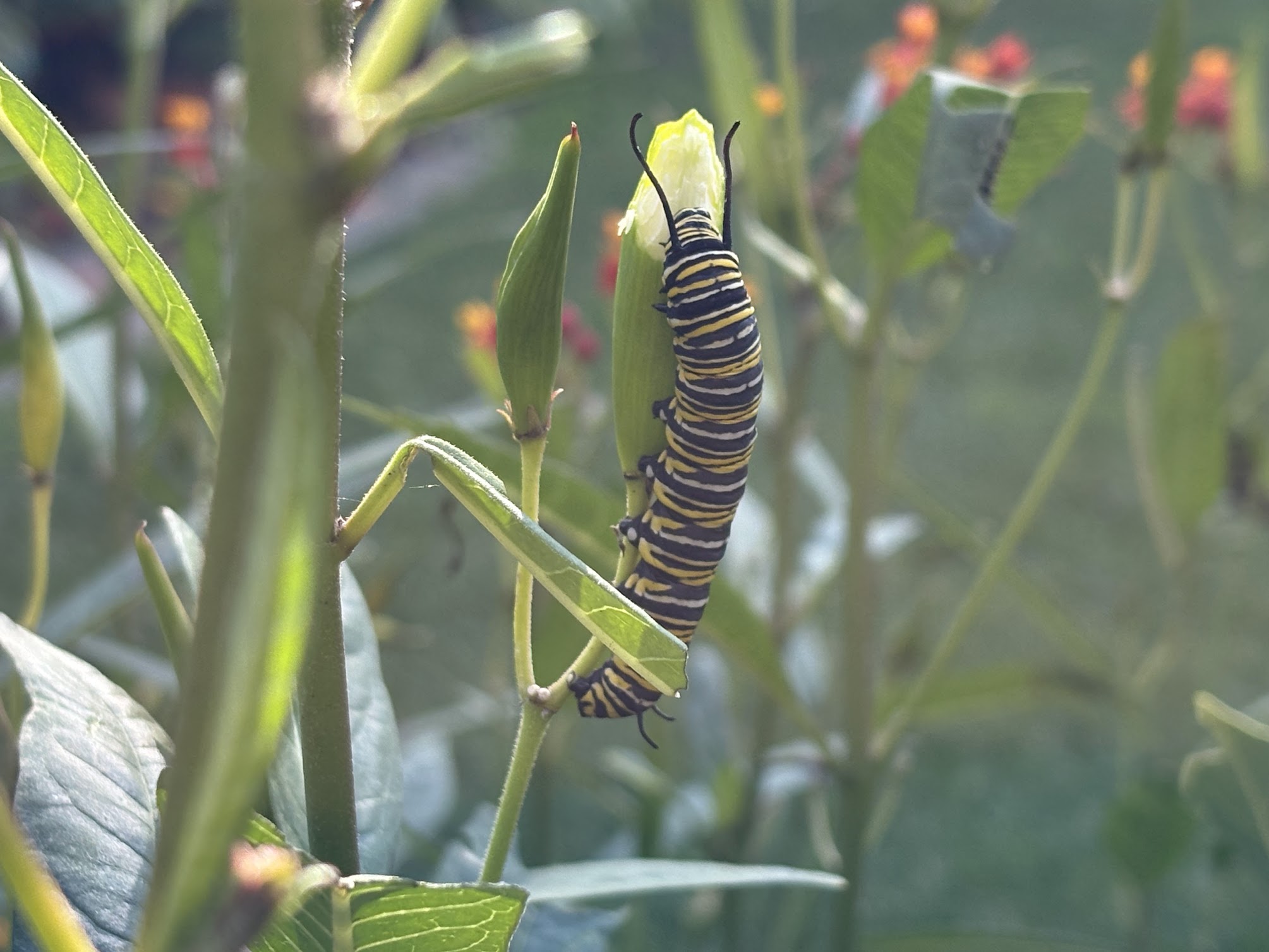
These caterpillars are striped beauties that make you want to sit and admire them all day. Light green, black and yellow, they were squirming and filling themselves on the milkweed plant. Their home looked beautiful in the November sun. Apparently, these caterpillars lived out their entire caterpillar-hood on the milkweed plants. 

A few years ago, I had written an article on the Monarch butterflies – their numbers had been dwindling and the state of California had revived them by growing milkweed plants everywhere along their migration route. I thought it was for the nectar – now, I know it was for the caterpillars to nest and grow a cocoon in too. 

Lepidoperist

When they say transformative like a butterfly, how many ways can it hold meaning? For there are the ones that become butterflies from the woolly variety. I now remember how my children as elementary schoolers loved talking about the caterpillars, cocoons, and butterflies.  The thick brown and black caterpillars produce butterflies too, but the monarch butterflies only come from the green and black striped beauties on milkweed plants. These caterpillars are really the monarchs of butterflies.

What fascinating things lepidopterists study. (One who studies butterflies and moths are called Lepidopterists)

Books: The Girl Who Drew Butterflies: How Maria Merian’s Art Changed Science – Joyce Sidman

Exploring Gardening Philosophy: The Joys of Deadheading

“Huh?! Who knew deadheading flowers was a thing?” I said.  I was reading a Miss Read book for the n-th time, and came across the phrase as she took charge of her new garden in the fictional village of Beech Green. I had read the book enough times, but somehow, this time, her thoughts on the flowers in the garden drew my attention. Maybe because I was enjoying the flowers in the gardens myself.

“Do you think I should try that? To get some better blooms in our garden?” I said to the husband. He muttered something which I took to mean yes, and started snoring to avoid further plant-based rants or ramblings. If I didn’t know better, I’d have prodded the man, but I know he literally can sleep, and snore, midway through a sentence that he was speaking.

So, I set about deadheading the little yellow roses off my little shrub that refuses to grow beyond a certain point. After that, I walked around with a pair of scissors and shears, properly and improperly deadheading flowers in and around the garden. Some variety of aster or phlox or daisies did not take kindly to this, and remain sticks pointing out. I think they sometimes give me severe looks when I step out. Roses are more forgiving for all their thorns. The chamomiles are conferring amongst themselves and deciding to see how much of a menace I can be with my garden shears. 

I muse about Ray Bradbury’s quote on gardening in the book, Dandelion Wine, as I flit about on my own in the evenings. The long days give me ample time before sunset. 

Gardening is the best excuse for being a philosopher. Nobody guesses, nobody accuses, nobody knows, but there you are. Plato in the peonies, Socrates force-growing his own hemlock. A man toting a sack of blood manure across his lawn is akin to Atlas letting the world spin easy on his shoulder.

-Ray Bradbury

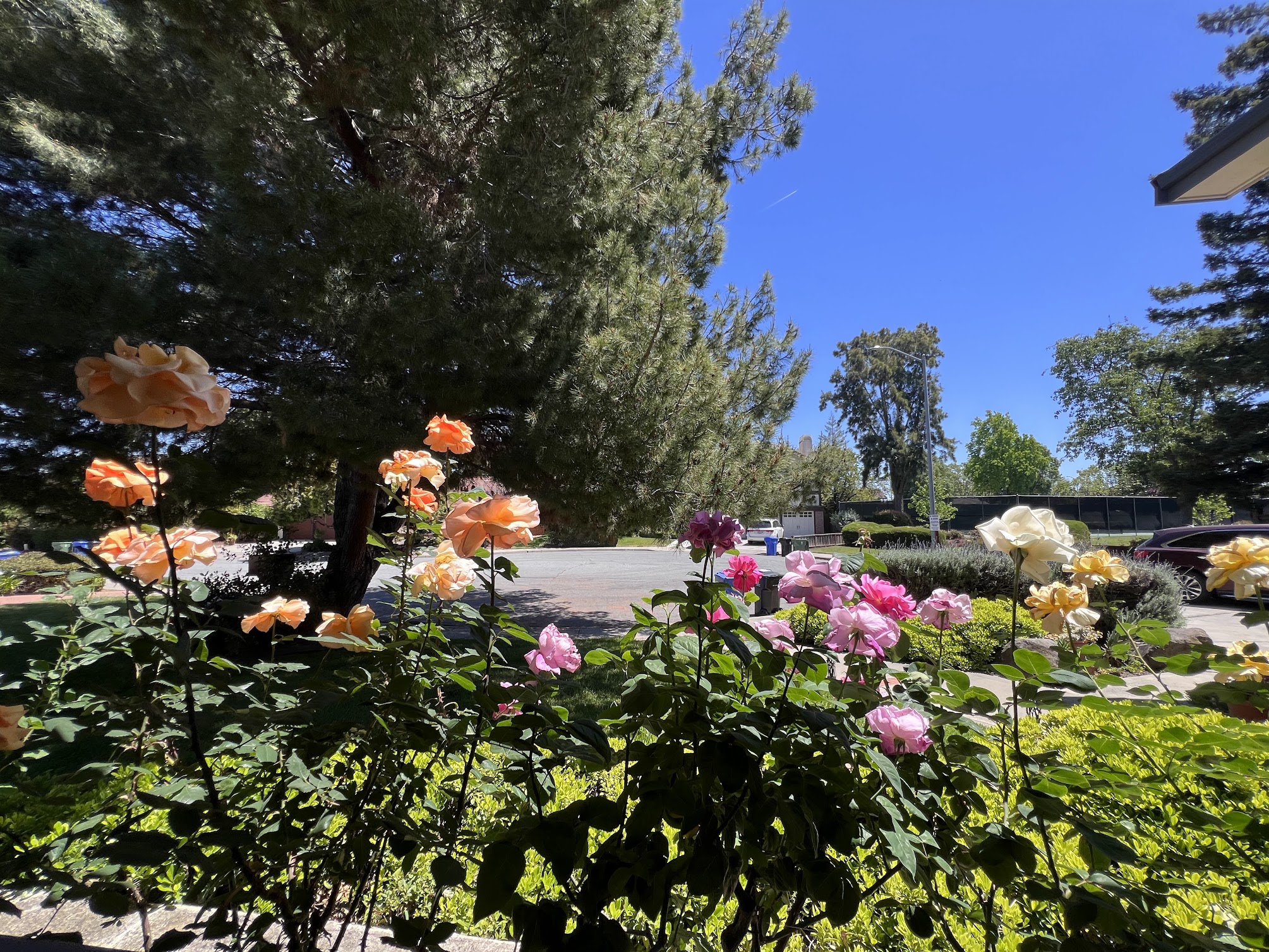
These are summertime joys. California is full of flowers in the summer. Even as the sun beats down on your head, you can’t help enjoying the blooms. The huge angel’s trumpet flowers, the large hibiscus and magnolias, or the smaller chamomiles, and aster, they all attract your attention. There is one garden that boasts of all colors and varieties of hydrangeas. I love them. 

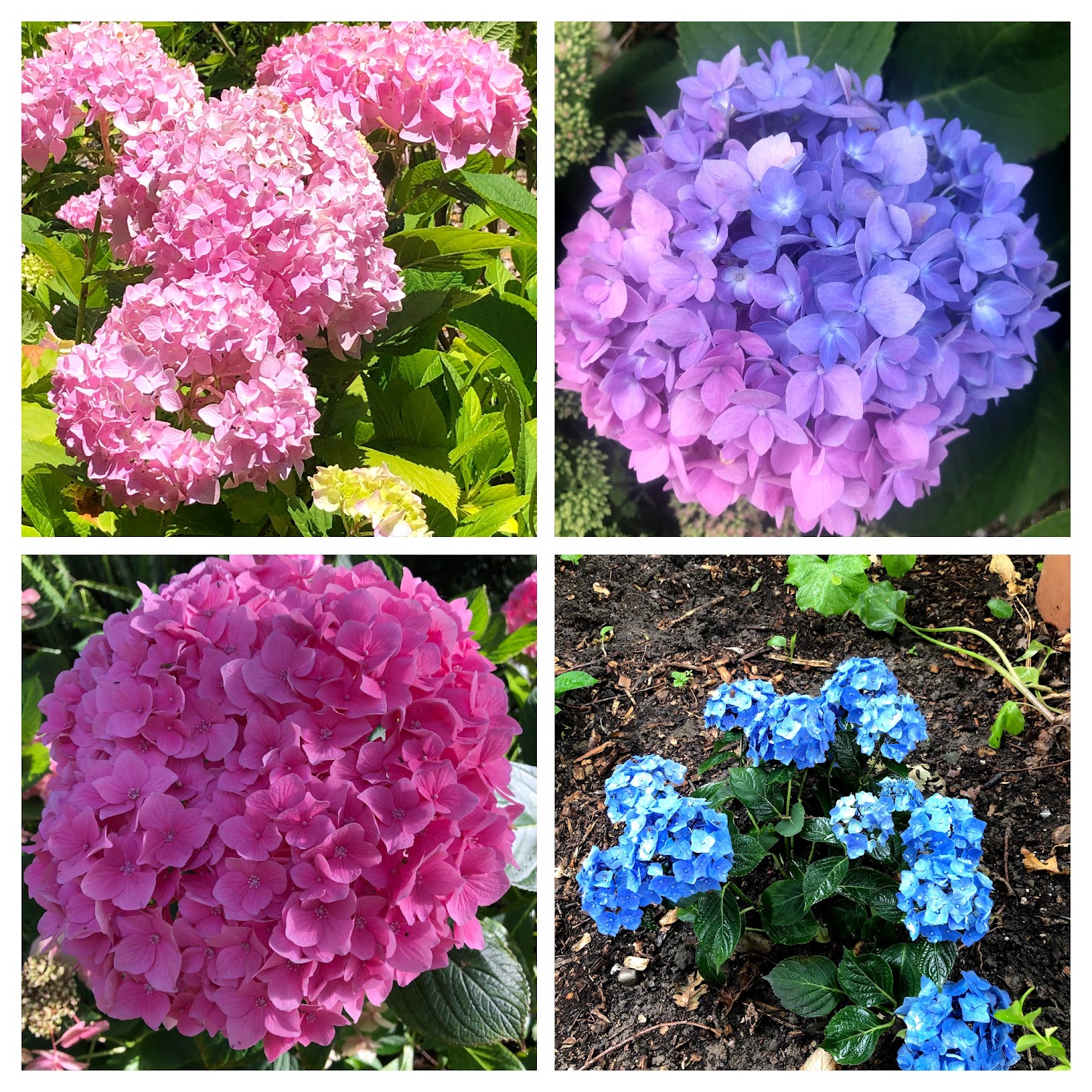
So, I bought a beautiful light pink hydrangea after a friend told me they need shade and grow very well. I spent the last few weeks deadheading the hydrangea, and resuscitating the poor plant after it almost died. I did everything the friendly fellow at the store told me to do. Sigh.

It makes me wonder every time I pass by a good garden. Because while I enjoy a good garden, I had thus far strayed from gardening shears and gardening experiments. Now, I have a new respect for Earth magicians. How do they coax the beautiful bounty from the Earth?

 If we could see the miracle of a single flower clearly, our whole life would change.”

– Buddha (apparently!)

If anyone has bright ideas on easy flowers that grow in pots or in tough soil, please let me know in the comments section. I saw a cheeky post on the internet the other day and drew solace from it. “You are enough!” it said, “That plant should have tried harder!”

Also, does anyone if the philosophers mentioned in the post were also good gardeners? I hope not!

Spring Adventures: Watching Nature Unfold

We had plans for a lovely bike ride by the bays and knolls near our home, a hike in the verdant hillsides, or even a walk by the stream/river by our home where all our fellow creatures are preparing for the year ahead. Soon, the ducklings and goslings will hatch. Everywhere you see, there are signs of nest building and it is endlessly fascinating to sit and watch the frenetic spring cleaning happening, even if it isn’t happening in our own home. I empathized with Mole in the Wind in the Willows : Who wants to wallow inside the home, dusting old furniture and mopping dusty floors when the world outside is so full of beauty and promise? 

The son and I had our spring hopes dashed for us with a bout of flu. That feeling of enormous promise that accompanies spring was dampened somewhat by the high fevers, and we moped about the house. 

Watching Spring

When the fever subsided, we pulled ourselves to sit outside and watch spring at least. The crows and wrens stopped flying and did a double take mid-air seeing our watch-fest. If AI interpreted their language, I am sure we’d have some semblance of this:

“These two restless souls – what are they doing sitting and watching?”

“I know – been seeing them for the past few minutes. Nothing? Are they really doing Nothing?”

“Strange!” 

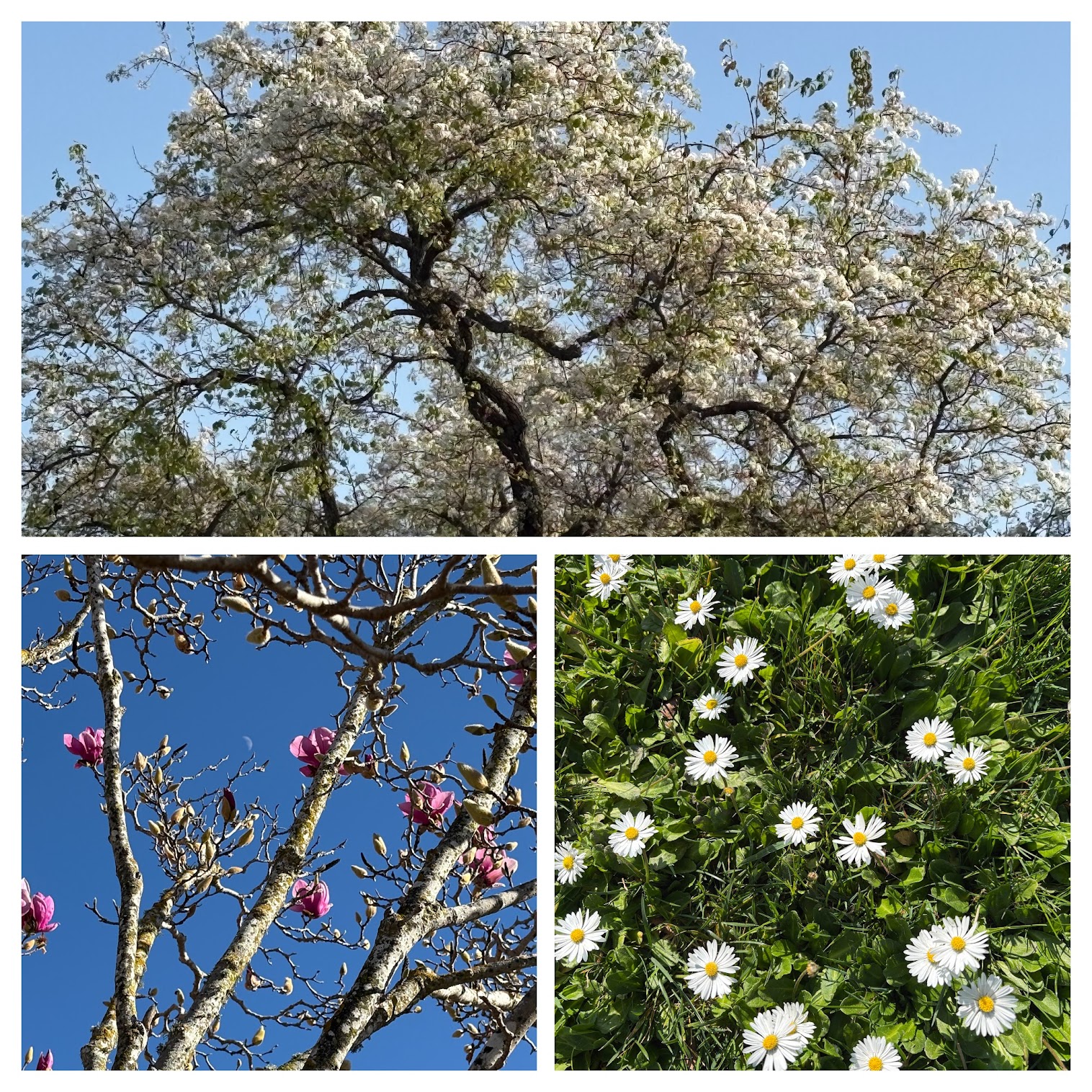
But this Nothing gave rise to something marvelous. We noticed the fresh green leaves sprouting in the ginkgo and maple trees. Some of the cherry trees had blossomed out of their flowery cloaks into their leafy ones, while others were still in their efflorescent robes of pink and white. 

“See this leaf? “ said the son. “It is shaped so that it can fly very fast and the seeds within can spread when it falls!” 

I peered into the leaves he was showing me, and it was true. I remember learning to make a paper airplane in a pattern like that once, and watched mesmerized as it floated down and away every time we launched it. What a brilliant inspiration? 

Right enough, we searched for the tree in question, and it is called the Hot Wings Tartarium Tree. The Hot Wings maple tree is a low maintenance beauty whose seeds are called Samaras.


Nature is astounding – every leaf, seed, flower, tree, shrub, plant, trunk, twig is a marvel in itself and sometimes sitting and watching is the best reward.

We came back inside flush with the knowledge of having seen a new wonder, and felt better.

Poems & Trees:

I think I shall never see 

A poem as lovely as a tree

 – Joyce Kilmer

The poem finishes on these wise lines:

Poems are made by fools like me,

But only God can make a tree.

Only Nature can do accomplish this fest without fanfare.

Embracing the Tranquility of a Summer Evening

The day could have been better. My to-do list gave me reproachful looks all day long as I took care of many different things and accomplished nothing. It was time for this and time for that, not yet time for this-and-that, and oh-so-past-the-time for this-or-that. Finally, I wrapped up for the moment and headed out. It was a beautiful summer evening after all, and moping about not doing the work was not going to get it done. 

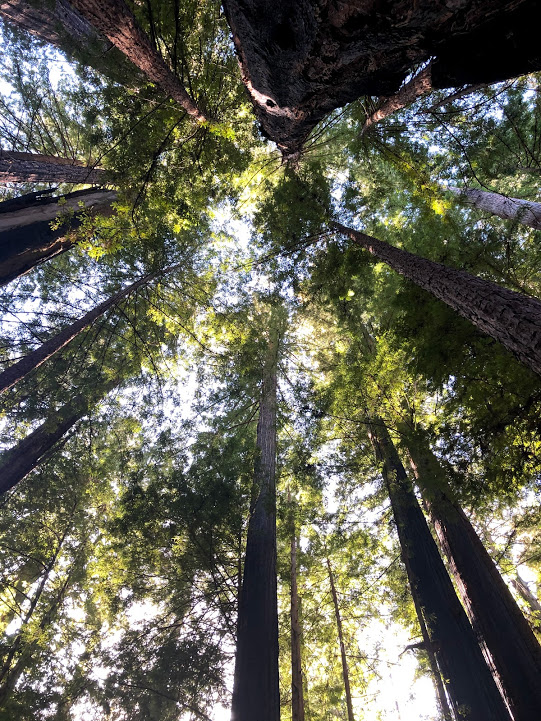
That’s how I found myself that beautiful summer evening, doing yoga in a friend’s garden that she had kindly invited us to. The sun’s rays danced through the maple leaves in the west, the mild breeze provided much required respite and made the italian cypress trees in the east look like they were dancing and swaying to the breeze too. 

The pink bougainvillea in the south leapt from fence to tree with such freedom of spirit, that I couldn’t help feeling a bit wistful at not being able to boldly leap and catch hold the way those plants did. How did creepers know whether they’d make it to the next branch? There must be a bold vision and a willingness to let go of safe harnesses that we never really stop to think about. I wonder how that feels – it certainly seems to be something we struggle with as adults more than as children. 

To complete the bucolic yogic scene, was the neighborhood black cat. Well-fed, preening its coat, gleaming in the evening sun and stretching every now and then to show us what a good stretch looks like, she lay there looking perfectly happy with the way her evening was going (or her days were going) by the looks of it. 

I told my friends about the state of to-do-ness that had ailed me that evening, and how the evening completely transformed it. My friends seem to have been in similar states of mind – and it all came spilling out the moment I said so. 

We smiled and drank in the scene: The cat did not care, the trees continued to sway, the leaves shone and the parched earth settled down to a cooler evening, the birds above made their way home. The purpose of life was right there, for those willing to take it.

The best part of the evening was the various angles from which we took in the garden – upside down, sideways. While breathing hard, while taking deep breaths. I tried taking the picture of the garden upside down, but of course all our tools seem to want to correct all our ‘mistakes’ and would not allow me to. So, I rotated the pic manually to retain the beauty of the world seen upside down.

upside_down_garden

Dancing in the wind, with the sun on my face.

Playing hide-and-seek and eating a treat.

It reminded me of Dr Seuss’s quote on looking at life

Fantasy is a necessary ingredient in living, it’s a way of looking at life through the wrong end of a telescope, and that enables you to laugh at life’s realities.

Dr. Seuss

Gazanias in the Garden

Time Paradox

There is a continuous time paradox that we run into in our lives.

My generous friends offered to help me plant my newly acquired gazanias in a small garden patch. You see, several times in the pasts, they’ve tried helping me with different plants with the cheery confidence that gardeners have:

“You cannot go wrong with these – they will definitely grow.”

“You don’t have to do anything, they will grow by themselves.”

“See those – they just spread without doing anything!”

To these optimistic statements, I say, “Challenge accepted!” and go ahead to botch the poor plants with the bumbling blistering competence of a dancing octopus with a shovel. (generated by Gemini AI)

octopus_shovel

So, they took pity on me, and came by with their shovels, hats, and laughter. The patch itself was a tiny one, but as we tried to turn the earth over, it was apparent to them why nothing grows there, and how I was making such a killing with their plants and bulbs. The patch was full of pebbles. So, instead of doing a half-baked job, they all pitched in till we were all shoveling, digging and plodding the earth along. We removed pebbles by the dozen, and by the time the patch was turned over, and the new gazanias were in place, we felt like proper earth movers, ready for some tea and biscuits.

Things take the time they take

As I sipped the tea though, I realized how much work goes into gardens that beam at us everywhere in suburban areas. If this small patch of land took us around 2 hours to do, how do people manage large yards, and sprawling garden spaces?

These things made me think of time itself. We did not realize that it took us 2 hours to plant the gazanias.  That night when I went to bed, I had a wholesome ache in my arms, and dreams filled with fresh soil and flowers. 

All this pondering on gardens made me realize how impatient I am with myself for things to develop into fruition: that garden patch, that novel, that myth, those short stories, those children’s books. Things take the time they take. Sometimes more than one thinks is necessary, but if we keep at it, removing one pebble at a time, moving one ounce of earth at a time, that is all that should matter.

I used my best philosophical insight voice and said so to the husband who chuckled and said “Pesu!” (Talk!) .

Ursula K. LeGuin’s Influence: Embracing the Passage of Time

This impatience towards results: Could it have something to do with the pace of modern life? After all, we spend a monumental amount of time flipping through videos on fast-forward mode showing us how cakes are baked, iced and decorated in less than 15 seconds. In reality, the whole process could easily take 2-3 hours. Do we really feel a sense of participation in the cake-making process by scrolling and consuming it? I think not. 

It reminded me of the interview by Ursula Le Guin in which she talks about time. 

“I lived when simply waiting was a large part of ordinary life: when we waited, gathered around a crackling radio, to hear the infinitely far-away voice of the king of England… I live now when we fuss if our computer can’t bring us everything we want instantly. We deny time. 

We don’t want to do anything with it, we want to erase it, deny that it passes. What is time in cyberspace? And if you deny time you deny space. After all, it’s a continuum—which separates us. 

So we talk on a cell phone to people in Indiana while jogging on the beach without seeing the beach, and gather on social media into huge separation-denying disembodied groups while ignoring the people around us.

​I find this virtual existence weird, and as a way of life, absurd. This could be because I am eighty-four years old. It could also be because it is weird, an absurd way to live.”

~ Ursula K. LeGuin, Interview by Heather Davis

I remembered one remark made by a mother of an elementary school going child who had helped her child out with an art project, and put it up as a reel on her feed: “That reel took more than 4 hours!” she said wistfully. 

I grinned, swiped, and sent a quick ‘like’ before parting ways. That was that. 

I have often wanted to see a flower bloom, or a berry ripen – but the real magic happens so slowly, you barely realize it is magic at all. Maybe, that is the real magic – work with a good intention, do your best, let things take the time they take, and develop into what they need to. In the meantime, I head out everyday to gaze at my gazanias – so lovingly planted. Surely, they heard the chatter and the laughs as they took root. In time, I hope they laugh too.


img_1524-effects

Solarium Magic

The son came and tugged me to the newly opened section in our local library. His eyes were shining as he said, “Come on! I found something that you’re going to love!” I cannot deny that I love it when something like this happens, and smiled. Off we went, climbing two stairs at a time. Christened ‘The Solarium’, it nestles in a sunlit section of the building – like a mini glass house, it basks there in the warmth of the Californian sun, and doing the good quiet work that is hardest of them all- converting sunlight to food. The area is dedicated to making gardeners of us all – there are seedling packets with instructions on how to sow and grow the seeds given to us. There are books on gardening nearby.  Feeble attempts to capture the glory and wonder of the real work.

I admit it, it has since become one of my favorite places in the library. I am in awe of gardeners – true magicians of the Earth I call them. My own feeble attempts at coaxing life to take root and thrive, only reiterate the power of the simple garden. I was talking to the son as to how we must all learn to grow our own food, make our own food, learn to sew and stitch out clothes etc. More and more, we live in a world where these simple things are becoming separated by layers of machinations and supply chain mechanics. 

When we were in Epcot (Disney World, Florida) a few years ago, I remember the children seeing the plants from which their beloved tomatoes and eggplants grew with awe. City children typically do not see these marvels of nature slowly doing their work, conscientiously and relentlessly.

Epcot green house

It was probably propitious that I should have found the book, The Blue Book of Nebo by Manon Steffan Ros, just then in the new fiction shelf. The book is set in a time after a nuclear war, and how very very few people have survived the disaster. The mother-son duo manage to grow food for themselves in a glass house, and learn to thrive on their own. It is a fascinating read. It is by no means unique, but the narrative style is appealing and slowly draws you in. It is also something that I am sure everyone thinks of occasionally – the sad aftermath of an apocalypse. What would we do? Who would survive and how will they live? So many of our solutions depend on power. 

Mulling over these things early one morning, is when I heard about the ProtoVillage from one of my friends. 

Protovillage.org

  • Grow your own food, 
  • Make your own food
  • Weave your own clothes
  • Build your own home 

Inspired, I emptied the seeds from the Solarium, into a moist patch of mud in the backyard and watched as slowly, a few weeks later, little shoots and leaves sprouted from the Earth. I may have danced a jig.

“Nature never hurries, yet accomplishes everything.”

Lao Tzu

Time in the Garden

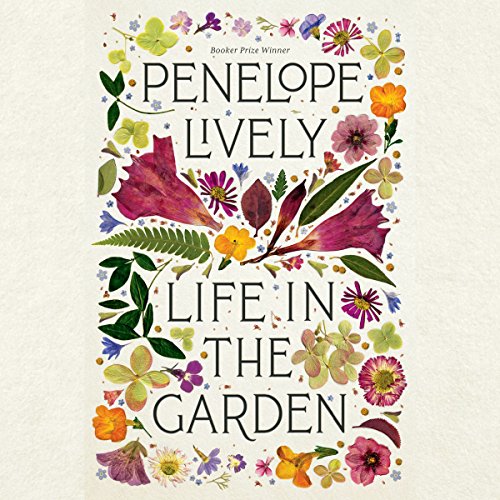
Regular readers know how much I enjoy nature and gardens. It is one of life’s ironies that my plants only thrive despite my loving care, and  many is the time I have made bloomers in the little patch I tend to. However, never one to shy away from blooming from the bloomers, I picked up this book, Life in the Garden, By Penelope Lively. 

life_garden

Lively begins by examining the gardens in Literature starting with the Garden of Eden, and working  her way through other fantastical gardens in the books, The Secret Garden, Alice in Wonderland and the beloved gardens of dear, absent-minded Lord Emsworth’s at Blandings castle. 

She examines the writing and finds out which of the writers are gardeners themselves and which of them have merely picked up the scenery from a gardening catalog. She teases the co-ordination of colors, the seasonality of the plants themselves in the landscapes and has given me an entirely different appreciation of gardens. 

Some passages are especially endearing and made me want to read them again. Especially her meditations on time, the gardener and the garden itself. 

I quote from her book: 

“To garden is to elide past, present and future; it is a defiance of time. You garden today for tomorrow; the garden mutates from season to season, always the same, but always different. … In autumn, I plant up a pot of “Tete-a-Tete” daffodils, seeing in the minds eye what they will look like in February. We are always gardening for a future we are supposing, assuming, a future. I am doing that at eighty-three; the hydrangea paniculata “Limelight” I have just put in will outlast me, in all probability, but I am requiring it to perform while I can still enjoy it.”

“The great defiance of time is our capacity to remember – the power of memory. Time streams away behind us, and beyond, but individual memory shapes for each of us, a known place. We own a particular piece of time; I was there then, I did this, saw tear, felt thus.”

She goes on to say, 

“A garden is never just now; it suggests yesterday, and tomorrow; it does not allow time its steady progress. “

Certainly, for me, part of the appeal of gardening is this ambivalent relationship with time; the garden performs in cycles, it reflects the seasons, but it also remembers and anticipates, and in so doing takes the gardener with it.”

As I look out the window at my clover-filled backyard with some foxgloves looking happy amidst the narcissi blossoms and the newly sprouted cherry leaves after their spectacular show of cherry blossoms, and the rose buds ready to burst forth in a few weeks,I cannot help feel the lessons nature is teaching us. Be forward looking – always, nurture what is important, and enjoy the passage of time. One moment at a time. Every flower has its chance to bloom and fade.

do-nothing-garden_1

Gardens are enduring lessons in hope. I cannot tell you the number of times, I have planted something in October and been surprised when they bloom in April, or the number of times, I have been pleasantly surprised that something  thrived  at all. 

“Hope” is the thing with feathers –

That perches in the soul –

And sings the tune without the words –

And never stops – at all – 

Emily Dickinson – Hope

I am lackadaisical at best with my gardening and it shows. I have a minuscule patch that seriously  has more air-time on the blog than the square feet it occupies. Yet, it gives me immense pleasure, peace and calm. Spurred on by the book, I went outside to take a more active role in the tending of my plants. I have been admiring the sweet peas plants that have sprouted in the garden. Some time ago, I got a packet of sweet  pea seeds from our local library. Thrilled at finding them, I scattered them by the apricot tree and forgot about them. The plants are thriving now, quite tall, and seem to be sagging. So, I went – “Coming dears! Here I am to take care  of you!”, I said, in my best nurturing voice and tried to prop up the plants as best as I could, in the process, breaking off one of the plants’ main stems.

If the plants in my patch could talk, they would’ve chorused – “Go inside – we know you  love us, just let us thrive! Breaking off our stems indeed!”

Do-Nothing Cooking

It was a mild and breezy week-end morning. “Yeah! We are going to work in the garden today! In the garden! In the garden!” I heard the song gain in strength as the gardeners thumped upstairs. “Get up amma!”, they called. I was lingering on in bed, savoring the warmth of the summer quilt.

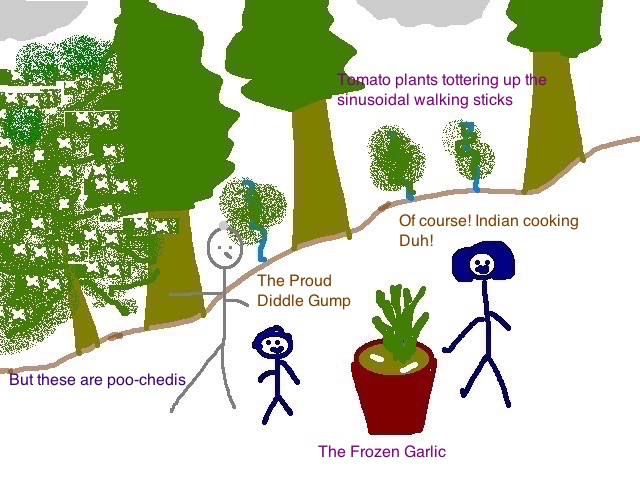
“What is this?” I asked a little later. The husband was back from somewhere brandishing several sinusoidal wave-like sticks of blue. Could they be fancy walking sticks?

“No – silly. These are for the tomatoes.”

“Yes – don’t you want large tomatoes from the plants? Look, they are already sagging outside.”, said the father-in-law pointing to his pride and joy in the garden. “The rasam can be even tastier with these tomatoes.”, he said with a sly grin on his face.

“Can you make rasam without tomatoes? I just don’t like tomatoes but I like the rasam otherwise.” said the daughter.

This I-Don’t-Like-Tomatoes theme was getting a bit tiring. I rolled my eyes, and stamped my foot in exasperation. “I do not know how to make tomato rasam without tomatoes! Let me know when you make it. ”

“Okay okay! Sheesh kababs! No need to get all cranky if you don’t know how to cook something.” she said and made off to the garden dragging her little brother with her to help her grandfather.

“Make rasam without tomatoes indeed!” I muttered to myself as I gathered the garlic, cumin, pepper, tamarind and tomatoes for rasam. Once the rasam was comfortably simmering, I went back and forth from the kitchen to the garden. Every now and then I was beset upon to give directions and suggestions for the garden. I asked for an old rose plant and the star jasmine creeper to be pruned.

do-nothing-garden

“But they are poonchedis ” said the father-in-law reluctant to cut flowering plants. South Indians have this strange, but endearing affection with flowering plants. I assured him pruning was good.

The children were busy discussing how to plant the other little flowers and herbs in the garden. The son was looking mighty impressed with himself for he was patted with admiration by his elder sister on the gardening tip he had provided.

“If you put a garlic in the herb garden, then nothing will happen – you know? Nothing. Yes. Ms Lara told us that. No insects will come.”

“Really? We can do that.”

“What?! Do we have garlic in the house? I didn’t know that!”

“Of course we have garlic in the house! How else do you think we can do any Indian cooking you little diddle gump?”, said the chef, who wanted to make tomato rasam without tomatoes.

The little brother was suitably impressed and a few frozen cloves of garlic made its way to the patch containing the Thai basil leaves.

do-nothing-garden_1

I looked at the father-in-law. He was tackling the unruly star jasmine creeper with energy. The jasmine had crept up the adjoining fir and cherry trees and was busy making its way past the garden fence. I saw the intense concentration on his face, and surveyed the garden. He must have taken lessons from the barber in the best army in a past life, for the trees had an efficient crewcut demeanor when he was done with them.

The whole scene reminded me of a short story, Annamalai, by R.K.Narayan in The Grandmother’s Tales. The story is about a gardener who had stopped on with him. The gardeners horticultural knowledge and classifications are simple. All flowering plants were ‘poonchedis’ while non-flowering plants were ‘not poonchedis’. The story writes of his taking charge of the garden and how sometimes he would go on a rampage and prune everything in sight, and the garden wore a threadbare, forlorn look for a few days afterward. At other times, he let things be, and the garden flourished anyway. It is a beautiful story that transports you to a little garden in South India almost instantly.

Screen Shot 2017-06-15 at 11.47.51 AM.png

I smiled thinking of the story. My horticultural knowledge is as woeful as that gardener’s, and my father-in-law’s botanical classification was equally simple. However, I hope our garden too thrives. Maybe we will become the best advocates of the Do-Nothing farming that Farmer Fukuoka speaks so highly of in the Biomimicry book by Janine Benyus.

Screen Shot 2017-06-02 at 9.37.17 AM

Quote from Biomimicry book:

A young man named Masonobu Fukuouka took a walk that would change his life. As he strolled along a rural road, he spotted a rice plant in a ditch, a volunteer growing not from a clean slate of soil but from a tangle of fallen rice stalks.

This proved an inspiration for the young boy : how a grain thrived without the need for coddling and soaking in water canals and so on.

Over the years Fukuoka would turn this secret into a system called Do-Nothing farming because it requires almost no labor on his part and yet his yields are among the highest in Japan. His recipe, fine tuned through trial and error, mimics nature’s trick of succession and soil covering . “It took me 30 years to develop such simplicity” says Fukuoka.

Instead of working harder, he whittled away unnecessary agricultural practices one by one, asking what he could stop doing rather than what he could do.

A sizzling sound alerted me to the rasam simmering over its sides. I charged into the kitchen wondering how to better the Do-Nothing cooking technique.

AF1QipPRTkiTkyjfsh8vHWiHJZkN-rBHzBnw9wR_wMua=I-U.jpg