Snow Snuffles & Snuggles

The alarm went off at 5:50 in the morning. That moment of transition between sleep and wakefulness is a short, sharp one on certain days, and a dull, lingering one on others. That day, it was a swift rising.

The alarm tinkled with a naughty smile – “Snow snuffles and snuggles”, it said with a snowman and a snowflake thrown in for good measure.

img_2216

The husband was not awake yet. Would he have liked this alarm? I wondered as I hit a snooze, and gathered the flowing blankets around me for a quick snuggle in the warmth before padding out into the cold to start the day.

The alarm that day was meant to set the mood and it sure did. We had gone over for a quick ski trip in the mountains nearby, and while we all looked forward to a day in the snow, it was also a day that the weather app forecasted as having heavy snow in the upper reaches and rain in the lower reaches of the mountains.

Driving in the snow is not for everyone. The last time we were stuck in the middle of a snow storm , we found ourselves, car and all, whistling and gliding through the snow looking like reindeer chasing after blackberries and magic mushrooms. (Read here: In Boysenberry Jelly & Mistletoe Jam)

Obviously, I was worried.

Which meant, I sat straight backed, with my woodpecker nose lengthening in the rear view mirror as I drew agitated gasps. I was also doing an impressive amount of passenger-seat driving and botching up directions thoroughly ( we found ourselves losing our way at least twice and doing a u-turn with the snowflakes hurling at us with light-hearted gaiety). My frowning only seemed to make the snowflakes more frivolous and they seemed to dance and jig their way from the skies looking joyous and relaxed, while I twitched and tutted inside, restless for us to reach our destination.

inyo_snowstorm
Snow

All of that worry evaporated the moment the car was parked and we found ourselves out on the slopes however. My face split into a slow wide smile, and I raised my face to welcome the little flakes on my skin. I was wearing a black scarf, and the snowflakes against the scarf made for a wonderful sight. Never had I see them this closely, and I was mesmerized. Each of them had a beautiful symmetry and a unique shape. Some of them clung together giving them the shape of pinecones. Others landed gently on my scarf giving me the gift of observing their individual shapes.

I have heard it said that no two snowflakes are the same. Every time in the snow I wonder how they possibly could have studied that. When millions are hurling down, what is the sample size that can make us reasonably assume that no two snowflakes are the same? It turns out the myth of the snowflake probably originated in 1885 in a remote farm in Virginia. A farmer, William Bentley, spent his winters photographing the snowflakes placed under a microscope. He spent years trying to photograph over 5000 flakes ( an extremely hard task given how quickly the snowflakes sublime.)

Wilson Bentley – The Farmer Who Gave Us Snowflake Images For The First Time (Wikipedia link)
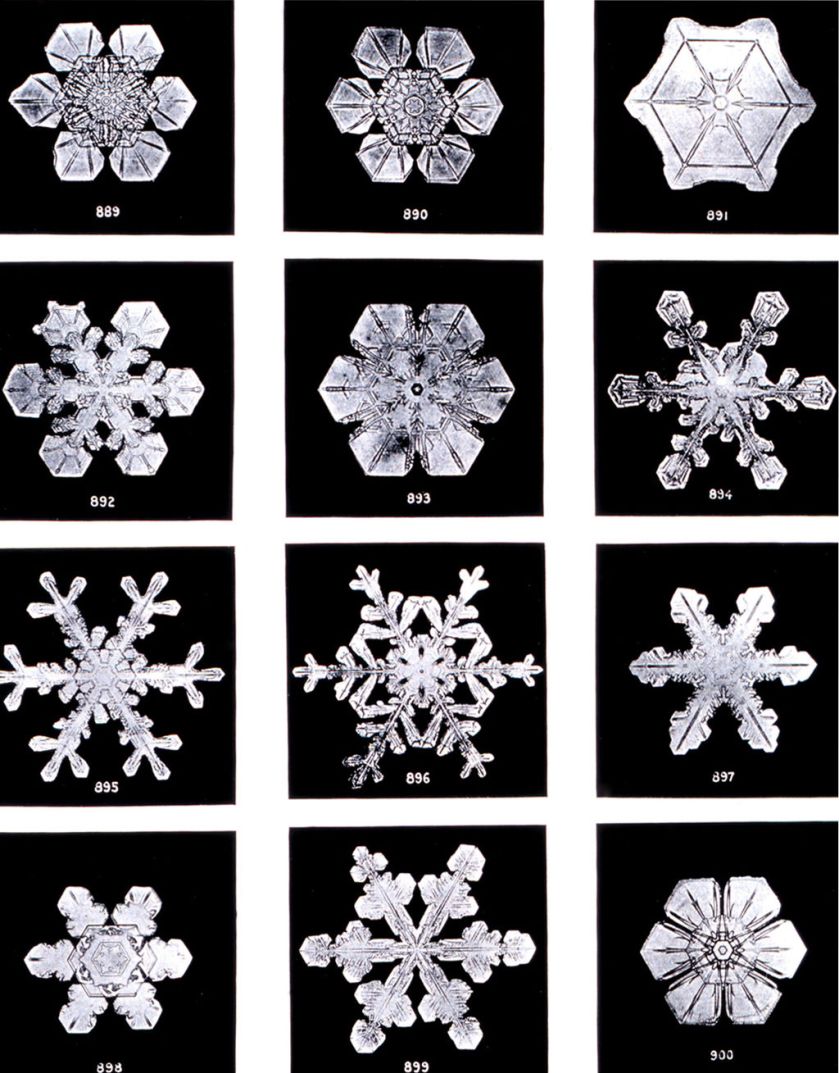
Wilson Bentley's Snowflake Images
Wilson Bentley’s Snowflake Images

I had no idea I could enjoy seeing the snowflakes so much: Tiny versions of perfection, and joy. And I had with me perfect companions on this adventurous day – Children. Children, who had not yet lost their sense of wondrous joy, and they helped me enjoy these little models of perception and perfection almost with as much joy as their own, and to that I am grateful.

I recently read Rachel Carson’s, A Sense of Wonder, in which she says:
“If a child is to keep alive his inborn sense of wonder … he needs the companionship of at least one adult who can share it, rediscovering with him the joy, excitement, and mystery of the world we live in.”
—Rachel Carson

I hope I was that adult to these children, but the truth is that they were the ones who led to my inner child so surely and unerringly with their enthusiasm and joy. I learnt from them not to mind the discomforts of a blue nose or a shivering hand when I had at my disposal the enormous present of appreciating a snowflake’s beauty.
What is your Friend?

The din from the kitchen area was appalling. One of our favorite aunts was a-visiting and the nieces had gathered around for a day of fun, and laughter which she invariably ensured was there around her. 

“What is your day like Athai (Aunt) ? How do you pass time?” we asked.

This is one of the questions that I pose to those of the older generation often. I know boredom and loneliness can be a big problem for some people. However, there are a few in the older generation who somehow manage to retain their vibrant joie-de-vivre as they age, so that they are not just occupied but keep themselves happily occupied and stimulated. 

“I am occupied enough, “ she began. After she told us in loving detail of time spent with her family, particularly grandsons, she said with a smile. “I practice what I want to teach later in the day to my students, and I find the time flies past. Music is really a friend.“

It was true. I remember visiting this Aunt a few months ago, and heard her humming and practicing a particularly tricky song that she wanted to teach her student later that day. She was trying it as she cooked & cleaned and it made for a comforting background while we went about our day. 

Many I know find it heavy-going after retiring from their busy lives. Some find solace in the demands of religion, others find themselves watching a lot of television. A few, though, find ways in which to keep themselves intellectually stimulated and happy.  These people seem to me the kind of people who are not only in touch with their Eternal Selves, but also nourished and sustained it. They are the ones who quite unwittingly spread joy and happiness around them by virtue of being happy with their own state of being.

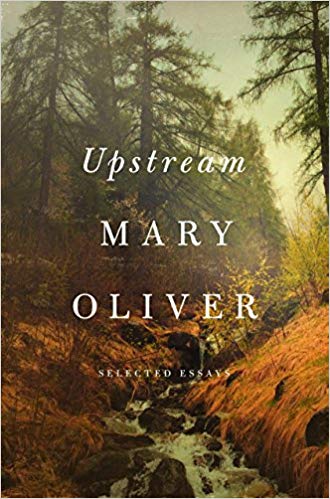
Mary Oliver’s, Upstream, is a book of many marvelous essays.  The essay, Of Power and Time, talks about the three selves in many of us:

  • The Child Self
  • The Social Self &
  • The Eternal Self.

Though in the essay, Mary Oliver, refers to the Eternal Self as the artistic self, I like to interpret it as the Creative self. 

  • The Child Self is in us always, it never really leaves us. 
  • The second self is the social self. This is the do-er, the list maker, the planner, the executer. 
  • Then, there is the third self: the creative self, the dreamer, the wanderer. 

upstream

Talking to people around me, I hear many who say that they would do this or that after retirement: I would take up gardening after retiring, I will take up reading after retiring. I am guilty of postponing  some of my desires to a golden time in my mind that is post-retirement ( I will learn to play an instrument after I retire).

But how would you know whether you like one activity over the other? The problem is finding that ‘something’ becomes more elusive the longer you deny it. 

Finding something that makes us want to do something without rewards is at once the least monetarily tangible and the most gratifying thing in the world. Not all of us can lead the life of an artist, but we each can devote small amounts of time consistently to find an artistic pursuit that sustains us. It may be in the creative process in things as varied as tinkering with wood, or analyzing the ebb and flow of economic market conditions. 

The essay ended on this note:

“The most regretful people on Earth are those who felt their own creative power restive and uprising, and gave to it neither time nor power.” – Mary Oliver

The Aunt who said “Music is a friend!” gave to her creative spirit time and power.

What is your friend?

Note: A version of the essay by Mary Oliver is found here: 

Mary Oliver: The Artist’s Task 

Brain Pickings – The Third Self

The Shocked School Marm

The Facebook algorithm had been working overtime. For days now it had been huffing and puffing, working overtime, showing me a thread with multiple people on it, begging me to engage – 23 other people had reacted to just a comment on the thread, was I really not going to react? Not even one Like?

The algorithm reminded me of all the busy-bodies I knew in life. The ones who took it upon themselves to come and deliver sensational news, and then dutifully take our responses back to all concerned.
Did I not realize?
Do I agree?
And off they would scoot, before you could hail them, to convey to the other end, that even I agreed with it.

news

How the world would function without their valuable services no one knew.

I had enough of this – time-boxing as the Productivity experts called it. A tiny peek outside was enough to convince me to shelve the whole thing- no more human conflict for me! “Bye-bye algorithm!” I muttered.

The Kerfuffle

I stepped out into the beautiful Spring evening, and a great whiff of fresh air gave me a spring in my step. I bounded outside cheerfully and had hardly moved 3 feet before I was waylaid by excited children – huffing and puffing with the news.
Did I know?
No?
Why?
There was a kerfuffle in the park!
The biggest one ever.

Before I knew it, I was being prevailed upon to resolve the situation. It was too late to turn back and head home. I checked.
On getting there, I saw one child crying, and another with a gleeful expression on his face. Reluctantly pulled into this sort of thing, I found out that the latter had “accidentally” slapped the former. The former had apparently thrown a stone at him “by mistake”, and the slap that had accidentally landed squarely on the cheek was in retaliation.
No-more-human-conflict-for-me forsooth!

This is the sort of problem that teachers swat out with their left arm and keep striding on, but it ruffled me. What do you say to this? Every child shouted out their own opinions and account of what happened, and suddenly the Facebook thread looked sanguine.

I mopped the brow, wondering how on Earth I found myself on the spot. In any case, I reached for my stern tone from the recesses of the brain, and gathered all the children around me. I told them that this sort of physical fighting was unacceptable. They all knew they were good children right? I was “disssapointed” in them.

Those who had done nothing (this time) looked stung. How could I hand out a less than satisfactory verdict like this? There was an outpouring of comments:
“I never hit anybody.”
“But he always hits and then gets away by crying!”
“I Am VERY Good!”

I heard these recriminations and glowing testaments to their own characters, and found myself unequal to reacting. Also, I could feel my audience’s attention dithering and tried my best to wrap up the unfortunate matter of the accidental-slap and the mistaken-stone-throw soon.

“The two of you”, I said pointing at the miscreants in question, “need to take a break, and come back to play later. This is not acceptable! Physical fighting – goodness me! And from such good boys too! My my!” I told them in my best shocked-school-marm voice. They had the grace to look discomfited and I hastily beat the retreat.

The United Nations could learn a thing or two by doing these exercises.

A few minutes later, I peeked at things from a safe distance and found harmony reigned once more. I asked them how things were, only to find out that they had all but forgotten about the furore and were enjoying themselves in a vigorous manner in a new game. The Slapper and the Stone Thrower were best pals now, I was told.

Online however, things were not so sunny.
A couple of days later, I found the algorithm still going strong. It was pulling all stops: This could be the best fight, and you could miss the chance to accidentally slap someone, or throw your stone by mistake. Are you sure, you don’t want to react?

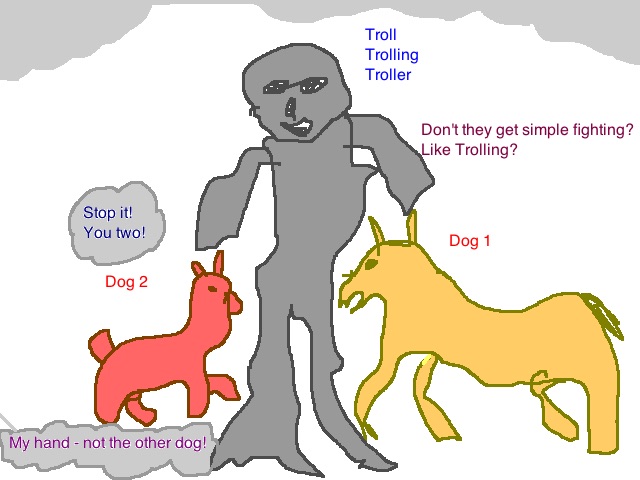
The original thread-starter was now defending himself in so many directions and in such ridiculous ways that there was no saying which way he may react. He had become his own troll, and could not back out gracefully. He was getting nipped and bitten on all sides.

dog_fighting

There was no shocked-school-marm to put a stop to it, and the sour-dour algorithm’s spite rankled on, like a river in spate.

I wonder why we cannot all move on to the next game with the dexterity and open-mindedness of children.

Oh Rapturous Spring!

A Version of this post was published in The India Currents Magazine : Oh Rapturous Spring!

There is something infinitely healing in the repeated refrains of nature – the assurance that dawn comes after night, and spring after winter.
Rachel Carson: A Sense of Wonder

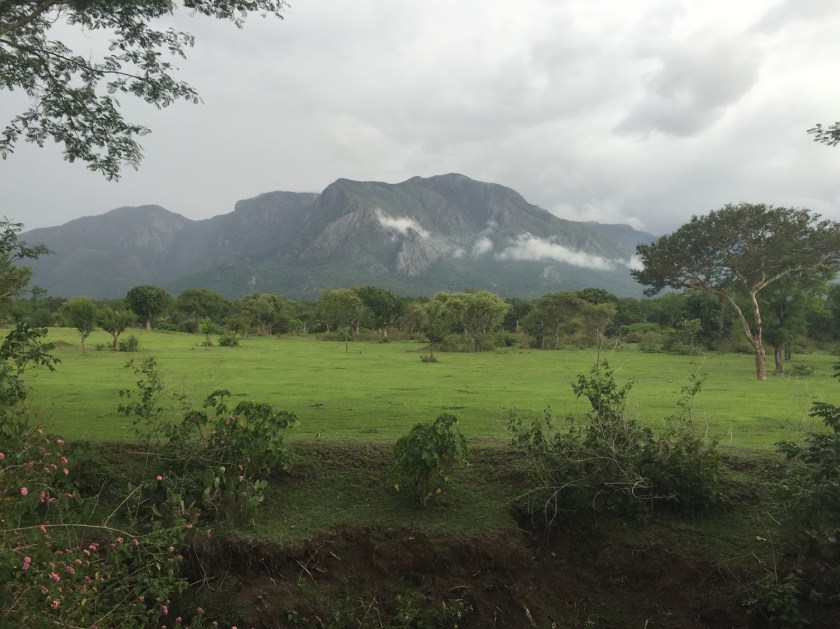
Growing up in the hills of South India, our seasons were broadly divided into: Rainy and Not-Rainy.

It was beautiful and scenic all around, and I am eternally grateful for a childhood spent in these charming environs. It isn’t a gift granted to many, and I realized it as a child, and even more so as an adult who lives far away from these beautiful hills.

We had the following seasons:
South west monsoons in June/July
North west monsoons that doubled up for Winter in Nov, Dec
It rained almost 9-10 months of the year. April, May were months we could hope for sunshine, and these doubled up as Summer.

This many rainy months without electronic stimulation meant that we learnt to occupy ourselves with books and our imaginations. (Complaining about being bored got us the gift of chores or more homework. We were smart enough to give these two a wide berth and be completely at peace with ourselves). The books I read were varied and often spoke of hideous adventures, some sleuthing that was just off the charts, travel etc. Many of these books were set in Europe where the seasonality was different from the rainy and not-rainy strains we saw. They spoke rapturously of Spring and Autumn.

sultan's life

I have to admit, I did not truly get the meaning of Fall and Autumn till I saw it for the first time with my own eyes.

When I first moved to the United States as a wide-eyed bride, everything about the weather and seasons seemed wondrous (it still does). Suddenly, what the books were talking about when they referred to Autumn and Spring took on a new meaning.

The bare trees have a beauty of their own. How could there be trees without any leaves I wondered when I first came. But every year, since, my heart has burst at this explosion of beauty when the leaves change colors, when the stark branches stand out, and when the flowers burst forth on the trees all at once, before slowly growing and complementing them with leaves.

I watch wondrous, a child again, as I see my flowering cherry tree, the apricot tree that flowers a little later etc.

img_1993

Looking at the Earth fresh and green in its Spring glory has been marvelous. Oh heart, does it not sing when you see geese flying towards the waters and making a perfect landing? The joyous anticipation of seeing mallard babies as they get ready to hatch in a few weeks has me in a tizzy. The blooming of my first daffodils have given me joy beyond measure.

Growing up in the Nilgiris gave me the immeasurable gift of finding pleasure in the simple gifts of nature. It is the reason I persist in passing this on to the children, even though I am given the who-is-the-little-nature-nutcase? pat on the head by them.

I could not have put it better than Rachel Carson in her small book, A Sense of Wonder:

Those who contemplate the beauty of the earth find reserves of strength that will endure as long as life lasts. There is symbolic as well as actual beauty in the migration of the birds, the ebb and flow of the tides, the folded bud ready for the spring.

Rachel Carson – A Sense of Wonder

An Extraordinarily Ordinary Life

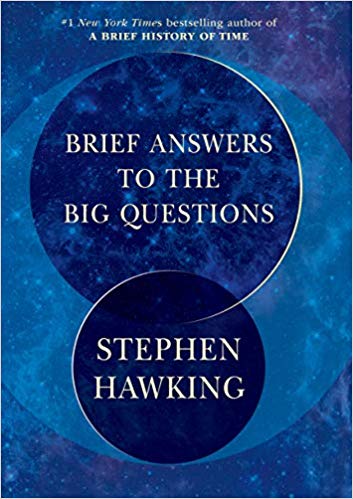
I read and re-read and read out this paragraph in the book, Brief Answers to the Big Questions by Stephen Hawking.

“I have led an extraordinary life on this life on this planet, while at the same time traveling across the universe by using my mind and the laws of physics. I have been to the furthest reaches of our galaxy, travelled back into a black hole and gone back to the beginning of time. On Earth, I have experienced highs and lows, turbulence and peace, success and suffering. I have been rich and poor, I have been able-bodied and disabled. I have been praised and criticized, but never ignored. I have been enormously privileged, through my work, in being able to contribute to our understanding of the universe. But it would be an empty universe indeed if it were not one the people I love, and who love me. Without them, the wonder of it all would be lost on me.”

This is one of the passages in the book by Stephen Hawking, Brief Answers to the Big Questions. The title is no empty boast, he really does take a stab at the big questions with the simplest language. The book’s forewords, and epilogue themselves make fascinating reading: A foreword by Eddie Redmayne who played Stephen Hawking in the movie based on his life, and Kip Thorne who worked with him at Caltech and one of the foremost players in the detection of gravitational waves (LIGO)

Related: Philosophers & Tinkerers

brief_answers

Some questions:

  • Is there a God?
  • Is there other intelligent life in the Universe?
  • Will we survive on Earth?

He touches upon climate change (Related: A Planet of Wizards & Prophets), and whether we have any option but to colonize space. It is written in layman’s terms, which suited me quite well.

Regular readers know how much I enjoy looking up at the night skies. It is the time I come closest to stoicism. I shiver and wonder what is out there among the great distances. I happily contemplate on the vast empty distances between the stars. I ponder on time and how we are seeing things that are no longer exactly like that. How a serendipitous sequence of events enabled us to be there to contemplate this beautiful universe.

milky_way_shree
Picture taken by a Friend – an amazing photographer

I marvel at our insignificance, I genuinely enjoy riding the thought sails through the night skies, and I look out the magic of it every chance I get. It is one of those times when I am in love with Being.

star_trails
Star Trails of the Milky Way Galaxy – Pic taken by my friend who is an amazing photographer among other things.

One of my friends on a nightly stroll with me once teased me that I will become a star when I pass on, and I laughed heartily. Her tone reminded me of how spoiled I am by my friends who indulgently put up with me as I moon about flowers, hills and stars.

It is extraordinary indeed that I should have read Brief Answers to the Big Questions so closely after I read this particularly fetching poem by Walt Whitman.

When I Heard the Learn’d Astronomer – By Walt Whitman
When I heard the learn’d astronomer,
When the proofs, the figures, were ranged in columns before me,
When I was shown the charts and diagrams, to add, divide, and measure them,
When I sitting heard the astronomer where he lectured with much applause in the lecture-room,
How soon unaccountable I became tired and sick,
Till rising and gliding out I wander’d off by myself,
In the mystical moist night-air, and from time to time,
Look’d up in perfect silence at the stars.

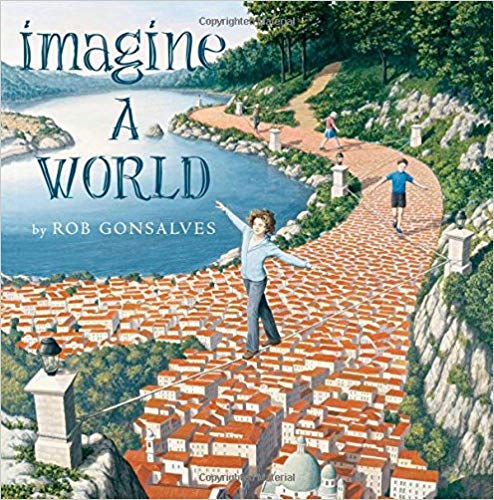
It is even rarer that I find the perfect illustration to go along with it. But Rob Gonsalves in the book, Imagine A World is the perfect one (Related: A Touch of the Eternal):

journey_to_stars

To me, the ability to enjoy these simple pleasures in an ordinary life constitutes an extraordinary one.

What We Do

I bobbed among the sea of fresh laundry. The children were helping with the folding and sorting, while I cackled and rattled around like a mother hen. Mother hens don’t fold clothes, I know, but it is a metaphor, or a simile or an odious comparison when viewed from the angle of a hen. Anyway, the conversation was quicker than the folding and after some time, I patted them on a job well done, and sent them over for a spot of week-end television. They tumbled off clucking happily. A prized activity they seem to think it is, though they seem to watch the same programs over and over again. 

After some more cleaning, I took stock. True, there was loads of cleaning left to do, but that was always the case. For now, the boats of laundry were taken care of, the family fed, the kitchen scrubbed, the shoes, jackets and all the paraphernalia that is plopped all over the place were back where they belonged. The children were happily watching their week-end television, and the husband was pretending to do some work on the computer. All was well.

I gingerly stepped out for a breath of fresh air even though it was cold. As soon as I opened the door, the wind gently lifted my hair welcoming my foray into the quiet pleasures of a Winter day. I surveyed my flower pots weathering the wind, rain and still cheerfully raising their heads welcoming the end of Winter. If that isn’t an invitation for a stroll, I don’t know what is, I told myself and set off, an umbrella swinging on my arm, and my spirits slowly rising to meet the clouded skies above.

img_1995.jpg

I stopped to gaze up at the trees sprouting the early Cherry Blossoms every now and then. One particular tree looked marvelous: There seemed to be a luminous glow on the cherry blossoms, with the dew drops glistening on them, and I could not help standing there, and catching a respite from the never ending activity that swirled around me. Our tasks and accomplishments seem to be so loud and cantankerous compared to this marvelous phenomenon of early Spring don’t they? 

The blossoming of a flower. 

I stood there wondering how lovely it would be to see the flower blossom, to actually see it expand into a flower from a bud. I suppose you could show me hundreds of time-lapse videos, but I still wanted to see the real thing. In front of my eyes. 

That is the sort of thing that will try the Dalai Lama’s patience, and I am happy that the thought to at least try it crossed my mind, since I knew my limits when it came to stilling the mind. A monkey mind if ever there was one. 

Watching a flower bloom is a thought that has occurred to many before me, and will occur to many after me. All we need to do is stop and admire a flower. In the River of Consciousness by Oliver Sacks, he says that as a boy, he used time lapse photography using multiple photographs and frames to develop the blossoming of a flower. To play with time in a sense.

“I experimented with photographing plants. Ferns, in particular, had many attractions for me, not least in their tightly wound crosiers or fiddleheads, tense with contained time, like watch springs, with the future all rolled up in them. So I would take set my camera on tripod and take hourly photographs…and make a little flick book. And then, as if by magic, I could see the fiddleheads unfurl, taking a second or two, for what in real time took a couple of days.”

river_sacks

When seen this way, we are all time machines, slowly growing and morphing all the time, are we not? Unfurling with furious energy that detracts at times, but all of us unfurling all the time, hopefully evolving into what we shall and can be.

I gazed up at the flowers again and wondered whether self reproach, achievement, contentment, ambition, or any of the things that seem to matter so much to human beings meant anything in the grand scheme of things. I am reminded of one of my favorite quotes by Ursula Le Guin.

“Things don’t have purposes, as if the universe were a machine, where every part has a useful function. What’s the function of a galaxy? I don’t know if our life has a purpose and I don’t see that it matters. What does matter is that we’re a part. Like a thread in a cloth or a grass-blade in a field. It is and we are. What we do is like wind blowing on the grass.”

The rain picked up, and I opened up my umbrella. I had stood there a long time, and my feet and hands were numb. I went in to the home, and put my wet, cold hands against the warm cheeks of the children watching TV, and they squealed half in exasperation and half in fun as the rain drops trickled down their cheeks. They chided me, united in their purpose: “Walking in the rain – being nuts! again? You will catch a cold. Go and get warm. Now!”

It was lovely to see the chicks take charge, and get a glimpse of the unfurling.

The Touch of the Eternal

The daughter came hurtling into the room bursting with something to share, her brother in quick pursuit. I was sprawled on my stomach across the bed surrounded by a bunch of books.  She looked surprised at finding me indoors instead of hustling people to come and enjoy the outdoors, and said “How come you aren’t flitting with the butterflies?” 

The skies were blue, the air pure, the trees outside looked splendid and inviting, the first shy cherry blossoms were peeping out, the first of my tulip shoots were making their way out of the ground much to my delight.

I snorted and said, that just because the day looks awesome outside does not mean that I have to ‘flit like a butterfly’. Besides, it was perfect Gluggavedur weather. (Gluggavedur is a delightful Icelandic word that signifies, ‘Window weather’ – beautiful from the inside, but too cold to go outside.)

I know I have yearned for the right word many times. (A word for the cool breeze that hits your face when you run down a mountain for instance: Zephyr Tales) This book, What a Wonderful Word, taps into that feeling with words from many cultures across the world.

Book: What a Wonderful Word – By Nicola Edwards & Luisa Uribe

Anyway, where was I? Oh yes: I looked dignified and mature. It is done by setting the chin at an awkward angle, and giving the impression of one finding a skunk when one lifted the bushes to find a squirrel.

“A mature adult can do many things!” I said.

“Like reading children’s books?” said she.

I laughed hard and she joined in. Mature indeed! 

One time she found me doing Yoga with a beautiful Children’s book open, and checking out the illustrations from various angles. This act of whimsy earned me the loving and coveted label that teenagers award rarely, “You are SO weird! That is such a you-thing, why am I not even surprised?”

Much later when I read Upstream by Mary Oliver, I was glad to see that I was doing something right – the whimsical part at least.

“You must not ever stop being whimsical. And you must not, ever, give anyone else the responsibility for your life.” 

― Mary Oliver, Wild Geese

Some of my favorite things to do is flip through children’s books. The illustrations on some of them made me admire the books on wholly different levels.

How an artist comes up with conceptualization, the drawings themselves, and the whole process that goes into making children’s books is amazing. Every book is a testament to creativity, teamwork, solidarity, the calling of the eternal, and so much more. When asked to critique a piece of Art, I would trip up on a few things like techniques, styles, brush strokes, paint colors, paint directions, canvas quality etc. But I can appreciate good Art when I see it, and describe it with the word, Beautiful.

I was book-flitting like butterflies, very happy with the set of books I was flitting through.

“See! See this book – how can people even conceptualize a piece like this? Hmm…what would we do without Children’s books?”

I was surprised she had no snarky comeback – it is seldom so. Blessed as she is with sharp wit, it is usually me that has Espirit D’Escalier episodes. I looked up, and saw her immersed in the beautiful drawing in the children’s book I showed her. She spends a good amount of her time doodling and definitely with more success than Yours Truly. 

Rob Gonsalves book, Imagine A World, was definitely mesmerizing. The almost seamless transitions within the Art that hid multiple layers and concepts was work of genius. A sample piece shown below  – you can also head on over to his site that has more Art work. 

img_1863
Rob Gonsalves work Book: Imagine a World

The book reminded me of Mary Oliver’s Quote:

“Keep some room in your heart for the unimaginable.” 

― Mary Oliver

Magical Realism is Gonsalves’ speciality, and I am so glad to have picked up the book. It is easy to see the pictures over and over again – being immersed in them over again.

imagine_a_world

I am the first to admit that I am no Art Critic, just a child admiring the work of artists whose touch of the eternal we are blessed to see. 

Also read: Dr Seuss’s Art

Una buona immagine

“Amma – you were sleep talking so much last night – it was hilarious!” said the daughter. The children and the husband giggled. In my defense, it had been a rather long few days. Roaming around in Rome had taken the wind out of my sails.

“I must have been tired!” I said. “ I had dreams of the weirdest nature. I dreamt the horses ran out of the picture, and out into the gardens that had the whomping willow type of tree.” (Pitti Palace & Boboli Gardens which are perfectly delightful to behold: A lovely spot of nature in Florence)

“Yes we know. And you sat up in bed sending Sabrina to get the horses back! Poor lady doesn’t have enough work in the reception, you have to send her galloping behind horses!”  I laughed with them. Sabrina had saved us considerable time by getting us a slot of time to visit the Uffizi Gallery.

I was trying to extricate the strands of weave from the coagulated mess in the brain. A number of galleries collapsed in the various chambers of the brain leaving the paintings smushed together. Waddling through the galleries with a coat hanging off one hand, a child off another and a bag on my shoulders, I wandered through the works of Leonardo Da Vinci, Michelangelo and Raphael – entire galleries devoted to Renaissance artists. I naturally gravitated towards pictures featuring the rich myths, with a whiff of the beautiful Italian countryside in the background. The Birth of Venus, Primavera et al were as beautiful as everybody said, and had I known the nuances of art could have enjoyed it more.


I felt like one of those canvases that inspired the starry night by Van Gogh. All the different colors flowing into each other, forming a confused mess of colors, but having a unique kind of beauty in itself.

Art can never exist without naked beauty displayed - William Blake.

The first time we spotted a picture featuring a nude, the son tugged at my hand, and giggled, “Why isn’t he wearing any clothes?”

I giggled with him. Do you think this is what William Blake had in mind? The renaissance era with its developments in the anatomy and study of the human figure really did go overboard on the whole human body thing. Considering that it was winter in Italy, there we were dressed in thermals, sweaters, jackets, caps, gloves and socks, looking upon the stone cold statues of apparently virile, strong men with muscles exploding out of their bodies, and not a thread of clothing on them. It was amusing, and the pair of us giggled like children in the pristine halls of the museums.

statues

Standing outside a fountain on the way from one gallery to another, I posed for a photograph. I smiled and asked if the picture was okay. Apparently, it wasn’t.

The teenaged daughter took a deep breath and with the air of explaining basics to an idiot child started instructing me on the best method to pose for a photograph. Apparently, smiling like I am happy to be in the photograph is out.
“Go for this look.” she said, and looked morose, angry, pensive all at once. “And those shots of you standing in front of a place is so third century! Look at this one, “ said she showing me a picture of a person with a sharp nose in a red coat overlooking a ruin.

If it weren’t for the fact that she was looking stylish in my coat, I could barely have recognized her, and that, she said, was the angle you have to go for.

I am not sure I will get it entirely. I come from a generation that saw as many people crowded together in one frame as possible, and all of us smiled at the the count of three – with at least one blinking at the opportune moment. From there to this sort of “Don’t even show your best face, and please don’t smile” slide is a bit quick.

But after looking at the numerous pictures in the galleries across Rome, Florence & Venice, I can see the impulse. I mean this trend probably came from too many pictures. It is probably why Madonna looks apathetic holding a babe Jesus in her hands, who displays no curiosity in his surroundings or joy or mischief. It was quite disquieting to see picture after picture like this with frozen expressions. Was the smile frowned upon so much? I can understand the looks of anguish in the scenes of the crucifixion, but even in the more joyous pictures of Madonna and Child, can one not introduce a motif of joy?


That’s what our million pictures must look like isn’t it? Frozen expressions  “capturing the moment”. If we are capturing frozen expressions, I don’t mind jumping on those galloping horses out into the gardens from the painting with a wild look of freedom and joy on my face any day.

So that brings me back to the basic question of what constitutes a good picture (una buona immagine). Does every picture need to tell a story? Why is Mona Lisa so famous, and not the beautiful pictures of these ladies?


Please recommend books on the art of appreciating Art.

The Roman Holiday

“Can you believe we are going to roam around in Rome?” said the excited son. He was very proud of his homophone.

“Isn’t it funny? Roaming around in Rome?”

“Yes! You bobble head! I said it was funny the first time you said it.” said the teenaged daughter pulling an I-can’t believe-this little fellow face. I laughed, knowing this was only setting the stage for at least another 108 times we would have to endure the phrase in Rome, and I was not mistaken. The nourish-n-cherish household is proud of its jokes.

“Have you done your homework? Did you spend some time trying to figure out the places to see?”

The husband’s I-love-my-wife-but-I-know-what-she-doesn’t-do-well tone deepened.

Setting aside the dismal feeling of being caught in school, I told him (patiently),
“Relax – I got the itinerary from my colleague who went there for his honeymoon, and it has a pretty good list of things to do including details on where to catch a sunset.” I said winking. “I even prepared a doc and shared it with you.”

He looked surprised, but right enough, when he opened the doc, he discovered entries like:
Check out the colosseum, if there is enough time, also add Palantine hill, and the Piazza Navona.
On the way back,  spend some time on the Spanish steps, and near that is Trevi Fountain.

I am no trip advisor, and when I generally send people on their way, I give them a vague list like above, keeping a wide margin for ducking into random stores that attract one’s fancy, stopping at random spots that demand one’s attention, looking at people scurrying about their business, tucking in an extra gelato, dribbling along and finding a couple of boys play football – it is all good fun.

roman_list

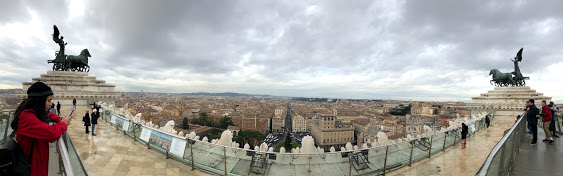
I like to blame my list-making on being one of those staunch believers in the super power of Serendipity, and the gift of winging it. For instance, the taxi driver the previous night told us not to miss the Piazza Venizia.  Piazza Venizia, as it turned out, was one of the most grandiose buildings I have seen. Built recently by Roman standards, it is only a century old among ruins millennia old, but the views from up above of the sprawling city of Rome,  Colisseum and the Palantine Hill were brilliant.

rome-aeriel

The Romans didn’t believe in skimping on the grandeur. Glancing skywards and finding flying chariots bearing regal men atop their chariots was so novel that we found ourselves gawking like fish seeing Poseidon’s horses swishing through the seas for the first time.
“Poseidon was a Greek God, his Roman equivalent, Neptune, wasn’t as powerful because the Roman Navy wasn’t very powerful then”, said the mythology expert, the teen- queen in her mythical world.

Rick Riordan has done a marvelous job in getting tens of thousands of teenagers interested in the Greek and Roman myths, and our tour guide at the Vatican, told us she wrote up a Percy Jackson tour that was hugely popular. I could well imagine it. The city burst with myths. Flying chariots, fountains of fortune, serpents of evil, winged harbingers of war or prosperity jostled along with busts of statues of philosophers, kings, and senators.

1920px-piazza_navona_0956_2013
Bengt Nyman [CC BY 2.0 (https://creativecommons.org/licenses/by/2.0)%5D, via Wikimedia Commons
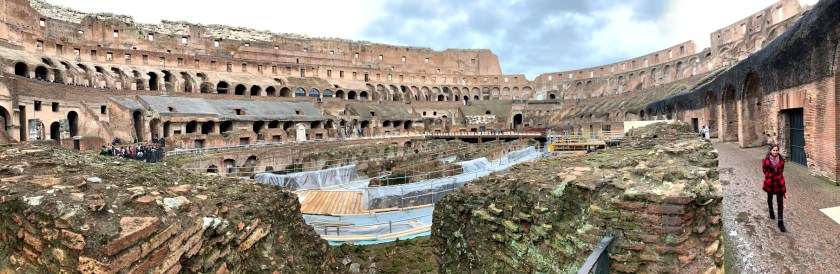
It was also slightly disconcerting to read about the forms of entertainment in early Rome. We have heard stories of the slave, Androcles, who was not mauled by the hungry lion remembering a past kindness, seen movies of the era etc, but there is something disconcerting about standing amidst the ruins of the Coliseum and reading about the manslaughter, the barbaric practice of skinning people alive etc. A place where hundred of years ago,  people watched this gore as a form of entertainment raises goosebumps.

coliseum

If that is the kind of evolution mankind has had to come through, we have come a long way, but we also still have several ways to go.

What was that poem about “Miles to go before I sleep” ? by Robert Frost.

Walking among the ruins, you are intensely aware of the fact that toga-clad Roman senators walked the same path 2000 years ago, and if you are even slightly distracted, there are thousands of tourists, their phones, and their respective tour guides to remind you of the significance. In spite of that, it felt strange to see the husband looking at the GPS to figure out directions beside a ruin that was literally thousand years old. What if a spirit from that age were to spring in our paths then and there?

Maybe one did, for the husband saw a chain lying across the road, and attempted his boyish skip across the chain. He underestimated its height and went sprawling face-down on the pavement. After the initial shock wore off, he started laughing, and the son said, “Appa tripped on the trip. Hey! Appa tripped on the trip while roaming around in Rome. Get it? Get it?”, and we all laughed.

Our jokes! Well, they need to evolve too.

In the Land of Dreams

I often have the privilege of reading books that require re-reading, thinking passively about the book every now and then, and then re-open and rekindle the feelings of the first reading, thereby making it a layered experience. Every once in a while, I find myself in the extremely fortunate position of having read several such books at once or in close proximity, and though the next set of books are no less interesting to the brain, I am stuck re-reading sections of the ones I have read.

reading
A picture of a man sitting and reading in a park

2018 was a year that started off on a promising note, and went on to delight and stretch my reading in all directions. In over 100 books, there are a few that I really did want to share. The links to the nourish-n-cherish articles in the brackets)

While I enjoy all forms of reading , and happily wade through tomes, fiction and non-fiction alike, the ones that truly uplift my spirit are Children’s books. Whether it is the magnificent imagination at work, or the illustrations, or the simple act of making one think deeply with the minimum of words, I cannot tell, but I feel a soaring of spirit every time I pick up a children’s book. A few notable ones in 2018 that I would happily pick up again to read are:

  • Louis I, King of Sheep – by Olivier Tallec
  • Here we are – Oliver Jeffers
  • Sadako and the Thousand Paper Cranes – Eleanor Coerr (The Cranes of Hope)
  • One Fun Day with Lewis Carroll – Kathleen Krull and Julia Sarda (Zephyr Tales)
  • Wangari Maathai – Green Belt Movement
  • Counting on Katherine – By Helene Becker and Dow Phumiruk (To All Astrophiles)
  • A Symphony of Whales – Steve Schuch

To enable all of this reading, one must have a frame of mind that works out the curious and whimsical muscle of the brain. So, of course, I had a healthy dose of P.G.Wodehouse, Miss Read, Gerald Durrell and R.K.Narayan mixed in to all of this.

Here is to another year of varied and marvelous reading.

Happy New Year!