The Monarchs of Butterflies

Heliotherms & Heliotropes

The sun was shining. The birds were chirping, the leaves were all showing off that they were as good as their east-coast-fall-color relatives. It was all marvelous. So off we went for a week-end walk. 

The husband tried his best to not roll his eyes as I stopped in several places to admire big, fluffy brown and black caterpillars on the trail. “All those butterflies!” I buzzed. “Such darling guardians of the sun, aren’t they?” 

“What now?”

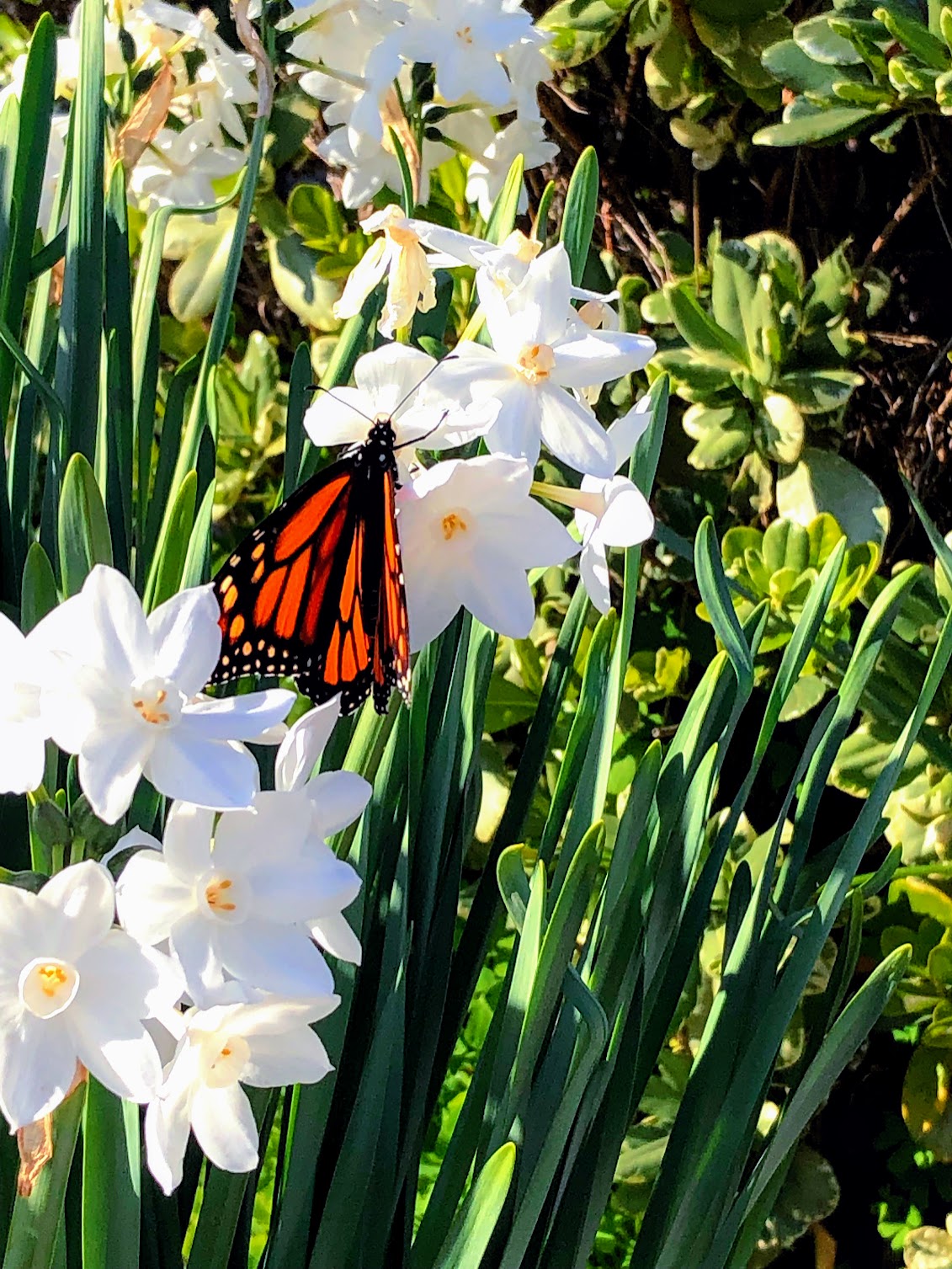
“Butterflies are heliotherms – did you know that? They get their body heat from directly basking in the sun. And isn’t it such a beautiful word? Heliotherms! Heliotherms flitting to Heliotropes for nectar.”

“Are we going to watch them weave their cocoons or shall we head back?” said the husband. 

Monarchs of Caterpillars

I waved to folks in the neighborhood as we passed, the dogs wagged their tails, the cats gave us looks of live-and-let-live. It was all lovely. What I didn’t realize was that it was all about to get much lovelier. I stopped to chat with a friend.

“I am going to give you a gift – it is a milkweed plant!” she said. I couldn’t help smiling at that. 

“Well – I do love that gift!” I gushed,

“They are required for saving the monarch butterflies, you know?”, she said beaming, and getting that smile on her face that meant she was excited to show me something a biophile would appreciate. 

“Yes I remember reading about it a while ago when the numbers of monarch butterflies had dropped. They planted them all along the migration paths to revive their numbers.” 

Monarch Butterflies: Back from the Brink

“Want to see the caterpillars?” she asked me, giving me a look like Christmas had come early. 

“I just saw a few – big fat furry ones there!” I said pointing vaguely in the direction I’d come from. The husband had that look that said – “I’ve had quite enough of caterpillars for the day!”

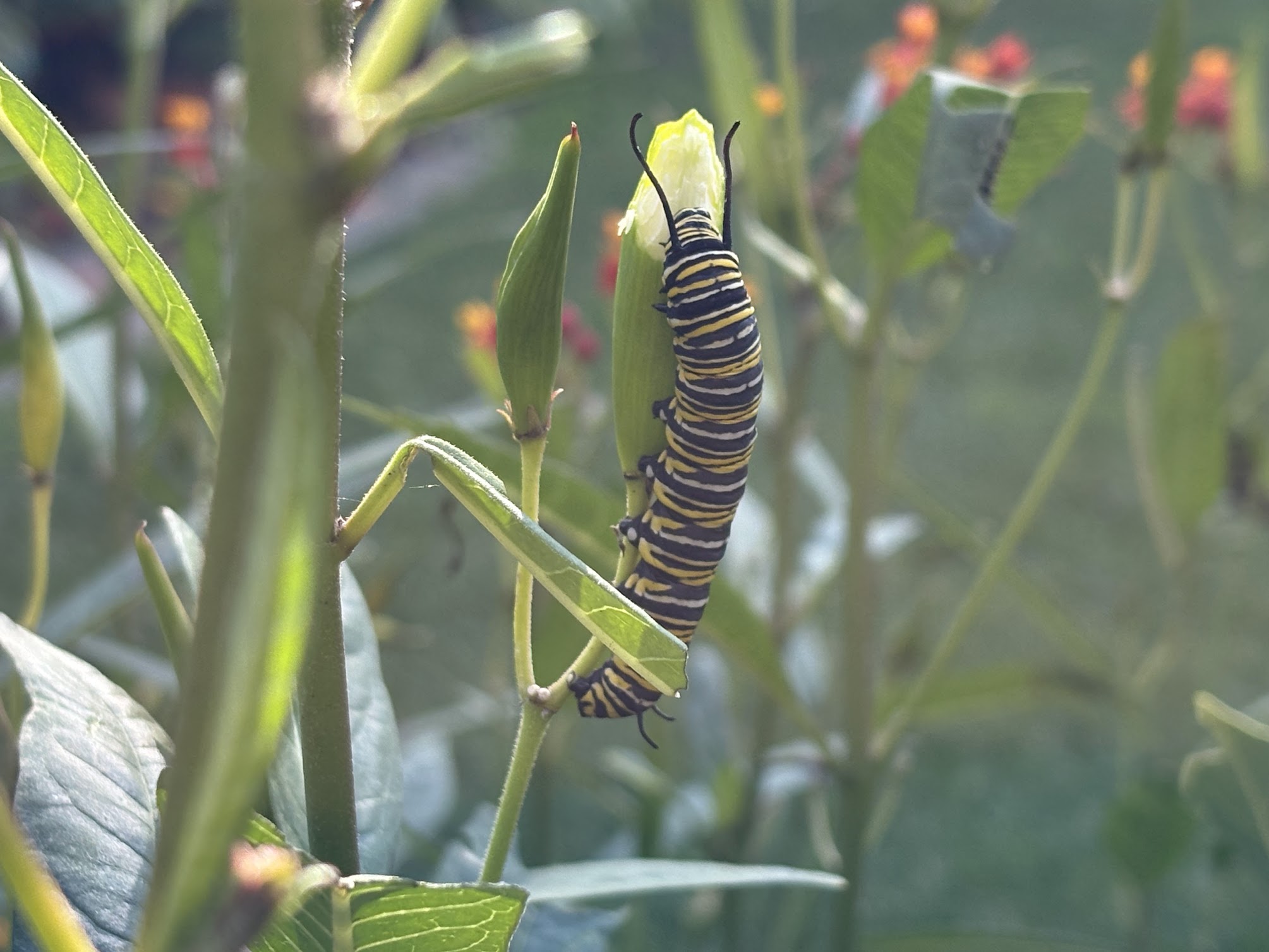
 “Come and see these. These are the monarch butterfly’s caterpillars, and they are only found on the milkweed plant itself.”

Now, how could I resist? The husband squiggled away – wishing us a wonderful caterpillar viewing session.

I went into my friend’s garden and am I glad I did?! 

These caterpillars are striped beauties that make you want to sit and admire them all day. Light green, black and yellow, they were squirming and filling themselves on the milkweed plant. Their home looked beautiful in the November sun. Apparently, these caterpillars lived out their entire caterpillar-hood on the milkweed plants. 

A few years ago, I had written an article on the Monarch butterflies – their numbers had been dwindling and the state of California had revived them by growing milkweed plants everywhere along their migration route. I thought it was for the nectar – now, I know it was for the caterpillars to nest and grow a cocoon in too. 

Lepidoperist

When they say transformative like a butterfly, how many ways can it hold meaning? For there are the ones that become butterflies from the woolly variety. I now remember how my children as elementary schoolers loved talking about the caterpillars, cocoons, and butterflies.  The thick brown and black caterpillars produce butterflies too, but the monarch butterflies only come from the green and black striped beauties on milkweed plants. These caterpillars are really the monarchs of butterflies.

What fascinating things lepidopterists study. (One who studies butterflies and moths are called Lepidopterists)

Books: The Girl Who Drew Butterflies: How Maria Merian’s Art Changed Science – Joyce Sidman

Exploring Gardening Philosophy: The Joys of Deadheading

“Huh?! Who knew deadheading flowers was a thing?” I said.  I was reading a Miss Read book for the n-th time, and came across the phrase as she took charge of her new garden in the fictional village of Beech Green. I had read the book enough times, but somehow, this time, her thoughts on the flowers in the garden drew my attention. Maybe because I was enjoying the flowers in the gardens myself.

“Do you think I should try that? To get some better blooms in our garden?” I said to the husband. He muttered something which I took to mean yes, and started snoring to avoid further plant-based rants or ramblings. If I didn’t know better, I’d have prodded the man, but I know he literally can sleep, and snore, midway through a sentence that he was speaking.

So, I set about deadheading the little yellow roses off my little shrub that refuses to grow beyond a certain point. After that, I walked around with a pair of scissors and shears, properly and improperly deadheading flowers in and around the garden. Some variety of aster or phlox or daisies did not take kindly to this, and remain sticks pointing out. I think they sometimes give me severe looks when I step out. Roses are more forgiving for all their thorns. The chamomiles are conferring amongst themselves and deciding to see how much of a menace I can be with my garden shears. 

I muse about Ray Bradbury’s quote on gardening in the book, Dandelion Wine, as I flit about on my own in the evenings. The long days give me ample time before sunset. 

Gardening is the best excuse for being a philosopher. Nobody guesses, nobody accuses, nobody knows, but there you are. Plato in the peonies, Socrates force-growing his own hemlock. A man toting a sack of blood manure across his lawn is akin to Atlas letting the world spin easy on his shoulder.

-Ray Bradbury

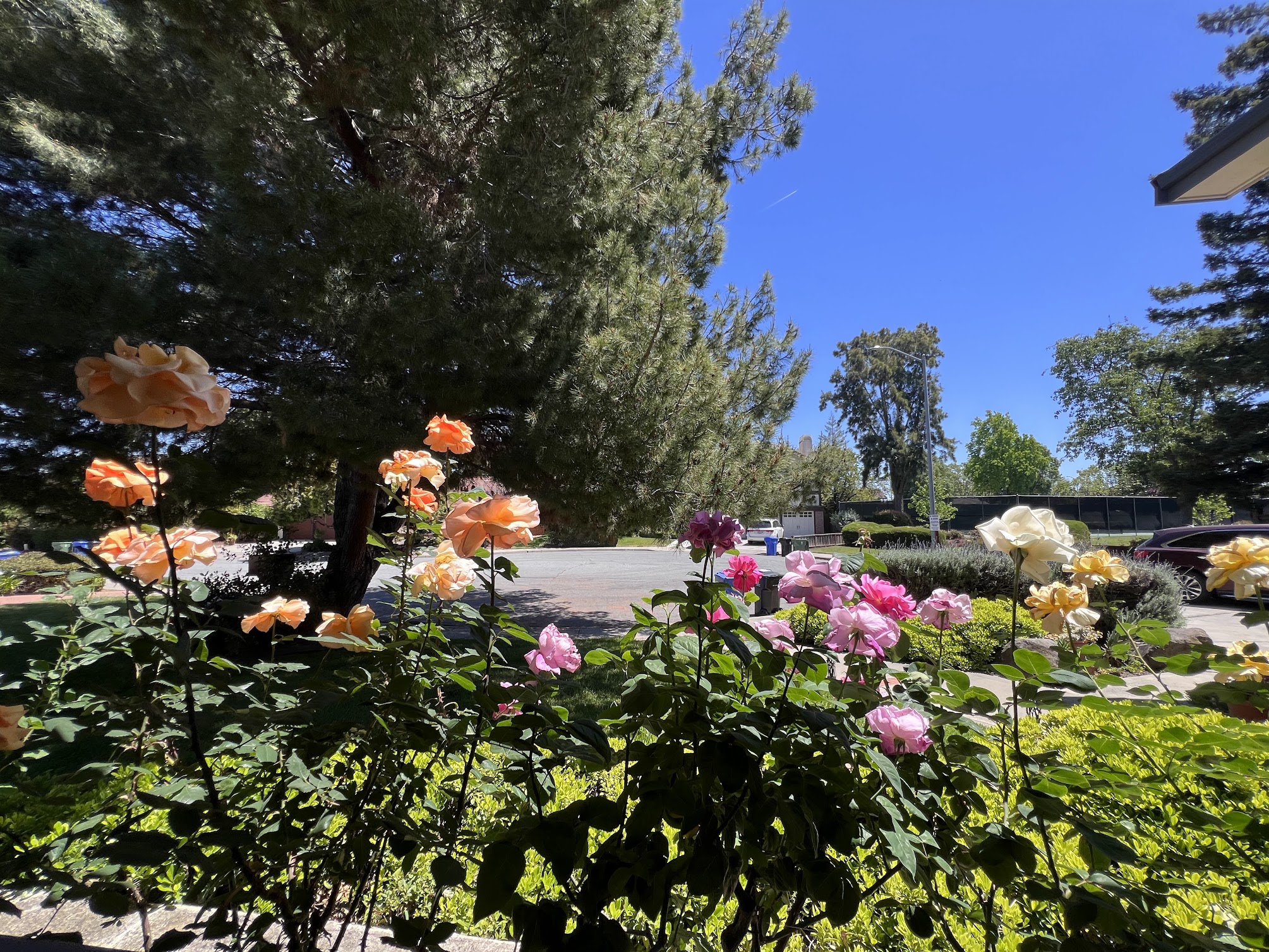
These are summertime joys. California is full of flowers in the summer. Even as the sun beats down on your head, you can’t help enjoying the blooms. The huge angel’s trumpet flowers, the large hibiscus and magnolias, or the smaller chamomiles, and aster, they all attract your attention. There is one garden that boasts of all colors and varieties of hydrangeas. I love them. 

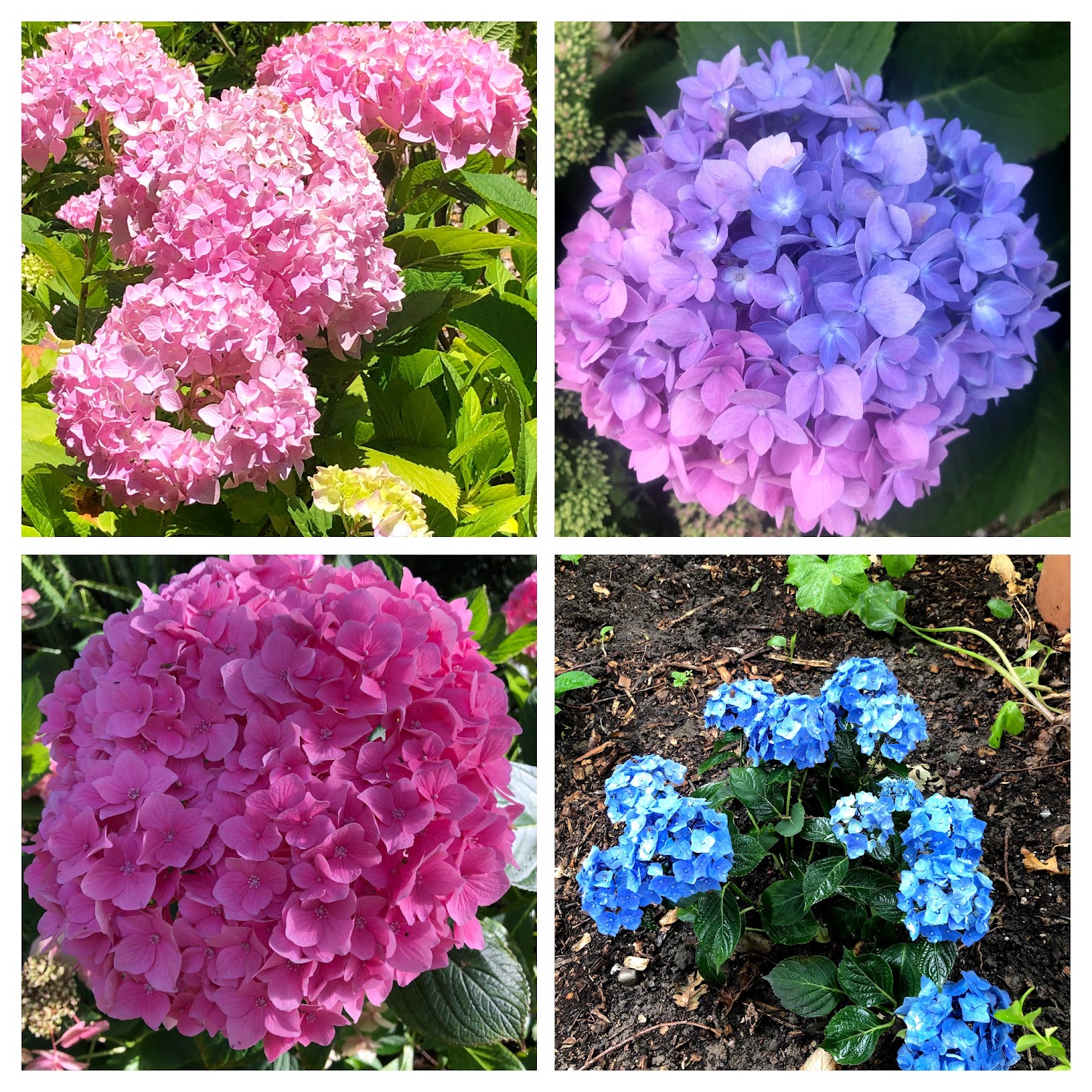
So, I bought a beautiful light pink hydrangea after a friend told me they need shade and grow very well. I spent the last few weeks deadheading the hydrangea, and resuscitating the poor plant after it almost died. I did everything the friendly fellow at the store told me to do. Sigh.

It makes me wonder every time I pass by a good garden. Because while I enjoy a good garden, I had thus far strayed from gardening shears and gardening experiments. Now, I have a new respect for Earth magicians. How do they coax the beautiful bounty from the Earth?

 If we could see the miracle of a single flower clearly, our whole life would change.”

– Buddha (apparently!)

If anyone has bright ideas on easy flowers that grow in pots or in tough soil, please let me know in the comments section. I saw a cheeky post on the internet the other day and drew solace from it. “You are enough!” it said, “That plant should have tried harder!”

Also, does anyone if the philosophers mentioned in the post were also good gardeners? I hope not!

Nyctinasty Flowers’ Lessons

I could barely stay indoors. You see? The day had started off with a mild drizzle. After what felt like months of sunshine, a little bit of moisture felt amazing. I stood outside peering up at the clouds – in itself a rarity now given how parched things get during Californian summers in the Bay Area. Even with summer flowers blooming and vegetable gardens flourishing, I yearn for the simple pleasures of marvelous sunsets, clouds, a pattering of rain, some breeze.

That is perhaps one of the things I miss most about the Nilgiris – the western ghats in South India where the rain drops and eucalytpus provided the backdrop for magic and mysticism. The rains, the clouds, the winds – how in one day you can experience so many different climes and you have to be prepared for it all, and still go about your day.

Nature is Transformative

That evening I said, “Well – come on then! “  hustling everyone out to see the glorious sunset. The clouds had scattered during the course of the day, but there were enough of them still there –  enough to provide crepuscular glory with the rays of the setting sun. Some clouds looked like an artists reluctant brush stroke jostling right alongside the weightier ones. How every evening a different painting is rolled out to us continues to be a source of wonder.

img_3068

Art is transformative – so is nature.

It transforms ordinary days into extraordinary ones.

It assures you that normal is numinous.

Nyctinasty flowers

That evening, I took in the deer grazing near the river banks, the rising full-moon swollen, resplendent and beautiful against the setting sun orangish-red and bright. I don’t have to be a naturalist to know that the birds felt it, the deer felt it, the frisky fox felt it, the fish in the river felt it, the  flowers felt it. I stopped to admire everything – especially those that are classified as nyctinasty flowers :nyctinasty flowers like the evening primroses or gardenias  close up for the night. They show you the importance of closing and resting in order to bloom and spready one’s beauty for the next day.

If ever there is an appointment to keep, it is with nature in those moments in the golden hour when all the world is settling in for a quieter pace.

img_3069

Embracing the Tranquility of a Summer Evening

The day could have been better. My to-do list gave me reproachful looks all day long as I took care of many different things and accomplished nothing. It was time for this and time for that, not yet time for this-and-that, and oh-so-past-the-time for this-or-that. Finally, I wrapped up for the moment and headed out. It was a beautiful summer evening after all, and moping about not doing the work was not going to get it done. 

That’s how I found myself that beautiful summer evening, doing yoga in a friend’s garden that she had kindly invited us to. The sun’s rays danced through the maple leaves in the west, the mild breeze provided much required respite and made the italian cypress trees in the east look like they were dancing and swaying to the breeze too. 

The pink bougainvillea in the south leapt from fence to tree with such freedom of spirit, that I couldn’t help feeling a bit wistful at not being able to boldly leap and catch hold the way those plants did. How did creepers know whether they’d make it to the next branch? There must be a bold vision and a willingness to let go of safe harnesses that we never really stop to think about. I wonder how that feels – it certainly seems to be something we struggle with as adults more than as children. 

To complete the bucolic yogic scene, was the neighborhood black cat. Well-fed, preening its coat, gleaming in the evening sun and stretching every now and then to show us what a good stretch looks like, she lay there looking perfectly happy with the way her evening was going (or her days were going) by the looks of it. 

I told my friends about the state of to-do-ness that had ailed me that evening, and how the evening completely transformed it. My friends seem to have been in similar states of mind – and it all came spilling out the moment I said so. 

We smiled and drank in the scene: The cat did not care, the trees continued to sway, the leaves shone and the parched earth settled down to a cooler evening, the birds above made their way home. The purpose of life was right there, for those willing to take it.

The best part of the evening was the various angles from which we took in the garden – upside down, sideways. While breathing hard, while taking deep breaths. I tried taking the picture of the garden upside down, but of course all our tools seem to want to correct all our ‘mistakes’ and would not allow me to. So, I rotated the pic manually to retain the beauty of the world seen upside down.

upside_down_garden

Dancing in the wind, with the sun on my face.

Playing hide-and-seek and eating a treat.

It reminded me of Dr Seuss’s quote on looking at life

Fantasy is a necessary ingredient in living, it’s a way of looking at life through the wrong end of a telescope, and that enables you to laugh at life’s realities.

Dr. Seuss

Gazanias in the Garden

Time Paradox

There is a continuous time paradox that we run into in our lives.

My generous friends offered to help me plant my newly acquired gazanias in a small garden patch. You see, several times in the pasts, they’ve tried helping me with different plants with the cheery confidence that gardeners have:

“You cannot go wrong with these – they will definitely grow.”

“You don’t have to do anything, they will grow by themselves.”

“See those – they just spread without doing anything!”

To these optimistic statements, I say, “Challenge accepted!” and go ahead to botch the poor plants with the bumbling blistering competence of a dancing octopus with a shovel. (generated by Gemini AI)

octopus_shovel

So, they took pity on me, and came by with their shovels, hats, and laughter. The patch itself was a tiny one, but as we tried to turn the earth over, it was apparent to them why nothing grows there, and how I was making such a killing with their plants and bulbs. The patch was full of pebbles. So, instead of doing a half-baked job, they all pitched in till we were all shoveling, digging and plodding the earth along. We removed pebbles by the dozen, and by the time the patch was turned over, and the new gazanias were in place, we felt like proper earth movers, ready for some tea and biscuits.

Things take the time they take

As I sipped the tea though, I realized how much work goes into gardens that beam at us everywhere in suburban areas. If this small patch of land took us around 2 hours to do, how do people manage large yards, and sprawling garden spaces?

These things made me think of time itself. We did not realize that it took us 2 hours to plant the gazanias.  That night when I went to bed, I had a wholesome ache in my arms, and dreams filled with fresh soil and flowers. 

All this pondering on gardens made me realize how impatient I am with myself for things to develop into fruition: that garden patch, that novel, that myth, those short stories, those children’s books. Things take the time they take. Sometimes more than one thinks is necessary, but if we keep at it, removing one pebble at a time, moving one ounce of earth at a time, that is all that should matter.

I used my best philosophical insight voice and said so to the husband who chuckled and said “Pesu!” (Talk!) .

Ursula K. LeGuin’s Influence: Embracing the Passage of Time

This impatience towards results: Could it have something to do with the pace of modern life? After all, we spend a monumental amount of time flipping through videos on fast-forward mode showing us how cakes are baked, iced and decorated in less than 15 seconds. In reality, the whole process could easily take 2-3 hours. Do we really feel a sense of participation in the cake-making process by scrolling and consuming it? I think not. 

It reminded me of the interview by Ursula Le Guin in which she talks about time. 

“I lived when simply waiting was a large part of ordinary life: when we waited, gathered around a crackling radio, to hear the infinitely far-away voice of the king of England… I live now when we fuss if our computer can’t bring us everything we want instantly. We deny time. 

We don’t want to do anything with it, we want to erase it, deny that it passes. What is time in cyberspace? And if you deny time you deny space. After all, it’s a continuum—which separates us. 

So we talk on a cell phone to people in Indiana while jogging on the beach without seeing the beach, and gather on social media into huge separation-denying disembodied groups while ignoring the people around us.

​I find this virtual existence weird, and as a way of life, absurd. This could be because I am eighty-four years old. It could also be because it is weird, an absurd way to live.”

~ Ursula K. LeGuin, Interview by Heather Davis

I remembered one remark made by a mother of an elementary school going child who had helped her child out with an art project, and put it up as a reel on her feed: “That reel took more than 4 hours!” she said wistfully. 

I grinned, swiped, and sent a quick ‘like’ before parting ways. That was that. 

I have often wanted to see a flower bloom, or a berry ripen – but the real magic happens so slowly, you barely realize it is magic at all. Maybe, that is the real magic – work with a good intention, do your best, let things take the time they take, and develop into what they need to. In the meantime, I head out everyday to gaze at my gazanias – so lovingly planted. Surely, they heard the chatter and the laughs as they took root. In time, I hope they laugh too.


img_1524-effects

🌸🌸🌸 Oubaitori in Spring Time 🌸🌸🌸

Spring is here, and with it, the delightful uncertainties of the weather. 

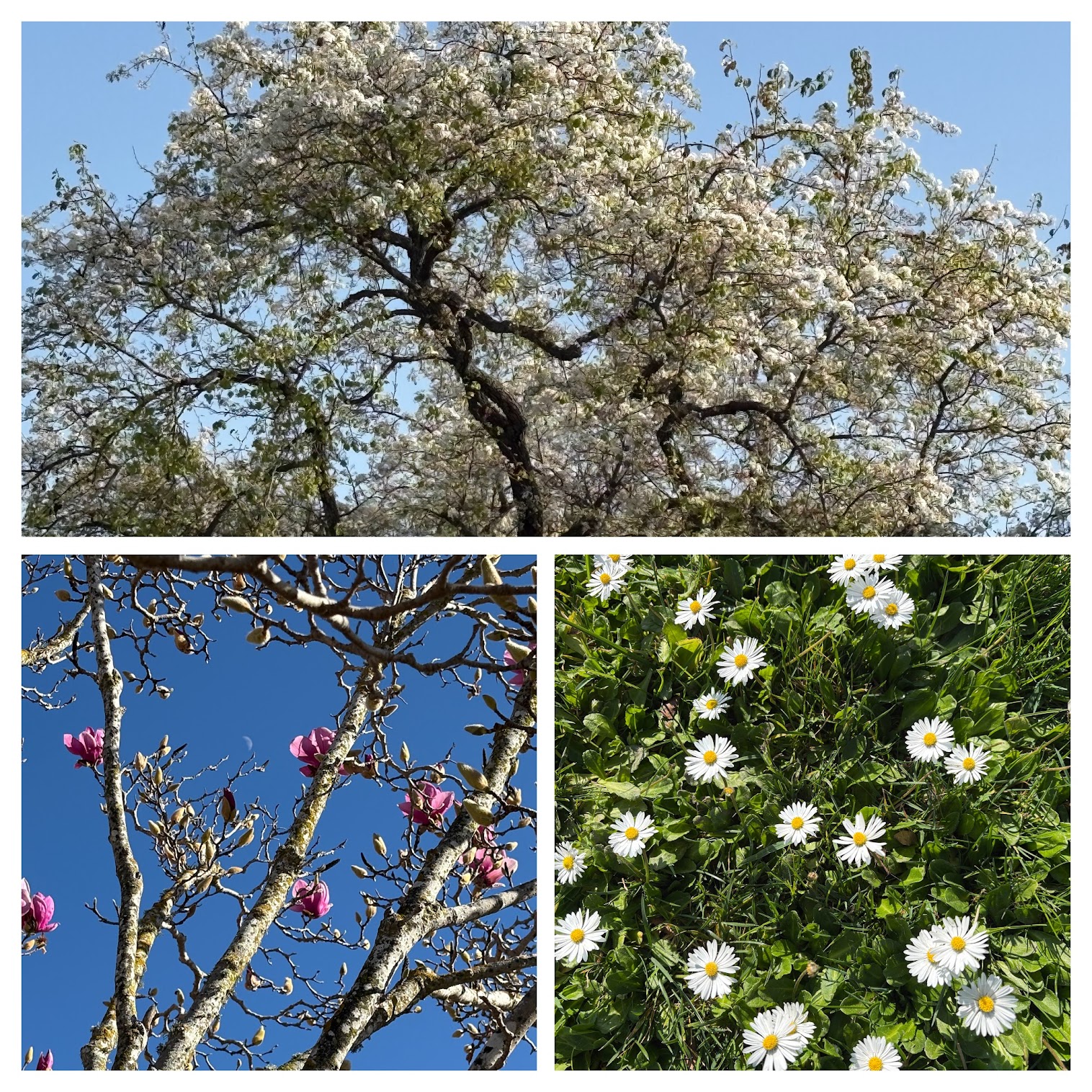
Would it be a cold, bright, cloudless day, or a cold, cloudy day, or a warm sunny day? The possibilities are endless. Sometimes, I feel like a lamb in spring-time ready for a spot of prancing and rollicking in the hills, other times, like a caterpillar not yet ready to shed the cocoon.

Springtime is a fantastic excuse to wear a silly hat and chase after unicorns, wouldn’t you agree?

– Uncle Fred in the Spring Time – By P G Wodehouse

With the increasing length of our days, it is a beautiful feeling to step out into the sunset at the end of the day, The golden hour seems more radiant, and seems to even linger more, though that just may be due to the fact that the body has had the time to sip a cup of tea at the end of the day before sunset. 

One evening, I stopped to savor a fat plop of a raindrop on my face, and saw that the cherry trees had leaves on them. The flowers had all but gone. They were there two days ago. I peered at another tree not far away, still resplendent in its floral beauty, and another one that had a good smattering of brown leaves along with their pinkish blossoms. Once again, that longing to capture the blooming and blossoming in slow-motion came over me. How lovely it would be to sit and watch for the leaves to come in? 

Ah! What little things give us pause?! 

I read about a beautiful Japanese concept, Oubaitori

The ancient Japanese idiom, Oubaitori, comes from the kanji for the four trees that bloom in spring: cherry blossoms, plum, peach, and apricot. Each flower blooms in its own time, and the meaning behind the idiom is that we all grow and bloom at our own pace.

img_0119

A few days later, I went on another walk, this time peering up at a clear blue sky, and no jacket, only to notice the young gingko trees in the neighborhood beginning to sprout their light green leaves of beauty. I remembered the large gingko tree we’d long admired. That large tree, over a century old, fell in the winter storms this year, and I felt a pang. The patch on which it stood was overgrown with fresh grass, and a meadow full of yellow flowers. Nature’s lessons and epiphanies are rarely novel, but always welcome. 

Making a mental note to go for a short hike in the beautiful green hills nearby, I reluctantly headed home. 

Spring time is nature’s way of saying, ‘Let’s Party’!

– Uncle Fred in the Spring Time – By P G Wodehouse

Maybe it is time for a spot of springtime laughter with the maestro, P G Wodehouse himself.

True Heaven on Earth

“Just try them! True Heaven on Earth is right here!” 

I find myself telling the children versions of this multiple times( in response to which I have multiple sets of eyes rolled at me). Parenting helps develop a thick skin like nothing else does. 

I roll my eyes right back at them and I am fairly sure I do the e-roll better than they do. I learnt eye-rolling as an art form as a young dancer from a pretty young age after all, I say with pride. The daughter disagrees: 

“Too much flounce – it should be subtle,” says the daughter. 

“That way, you can always deny you ever rolled your eyes?” 

She has the grace to laugh at least – “Yes.”

The son’s style is still developing, and therefore a lot more noticeable.                                        

Back to the problem of True Heaven on Earth, though, I use this term mostly with respect to fruits, and flowers – the marvelous, wonderful variety of them that we enjoy. Ephemeral joys, yes, but also eternal. 

img_8467

The children do not seem to recognize the joys of fruit-eating and it is somewhat of a disappointment. For once, I am  grateful that my childhood did not have easy access to chocolate. Maybe I too might have succumbed to chocolates in favor of the variety of fruit flavors.. 

Novembers in California smack of persimmons, apples, and pears. The satisfying crunch of these fruits after a day crunching leaves outside? There should be a word for that. 

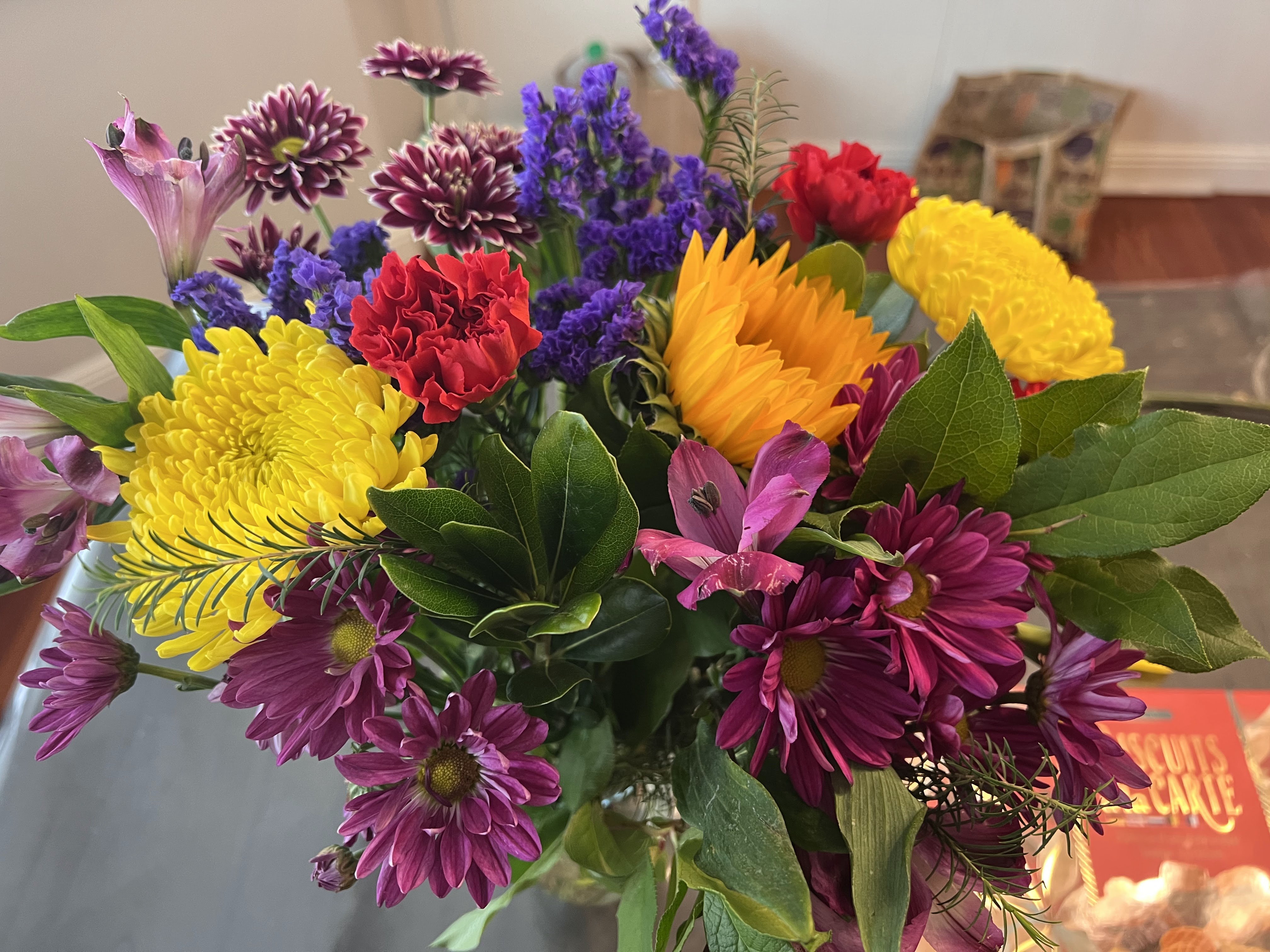
In the spirit of grateful Novembers, I beamed around the home relishing these gifts of heaven spotting the home. Flower bouquets and fruit baskets fill the soul like nothing else does, and I was pampered enough by friends and family for gifting me with these over the past few days. The fruits and flowers smack of the bounties of our planet, but they also manage to evoke a sense of gratitude for the thrill of friendship and the memories of shared experiences.  

“All in one bite or one sniff!” I say.

“You’re weird!” the children chorus, and I agree whole-heartedly. Where the children are concerned, it is a compliment and I shall graciously accept.

I hum and prance through the rooms with a bounce in my spirit, and a shirt that proclaims ‘The Earth laughs in flowers’. Ralph Emerson might have said it, or a truly marvelous poet who attributed it to Emerson to give the beautiful phrase longevity. With the internet, I am never sure. Either way, it works.