The Birds of Heaven

“Do you think we’d have seen at least fifteen species of birds?” the husband said, huffing and puffing beside me on his bicycle. 

We had biked up a little hillock, and even though it looked like the sort of thing we’d have torn up while playing hide-and-seek as ten year olds, it proved to be a huffer just a few decades later, Curious how life reminds you about the passage of time and all that right?

“Easily!”  I said, and started listing them off.

  • Hawaiian stilts
  • Terns
  • Avocets
  • Pelicans
  • Geese
  • Ducks (green necked, wood ducks)
  • Quails
  • Egret
  • Heron
  • Green heron
  • Blackbirds
  • Turkeys
  • Turkey vulture
  • Red tailed hawks
  • Grebes
  • Cormorants
  • Coots

The huffing and humming had stilled, and I turned around to see what had happened. The husband grinned sheepishly – “Oh! Yes – might’ve stopped listening after you started listing the birds.”

I laughed. 

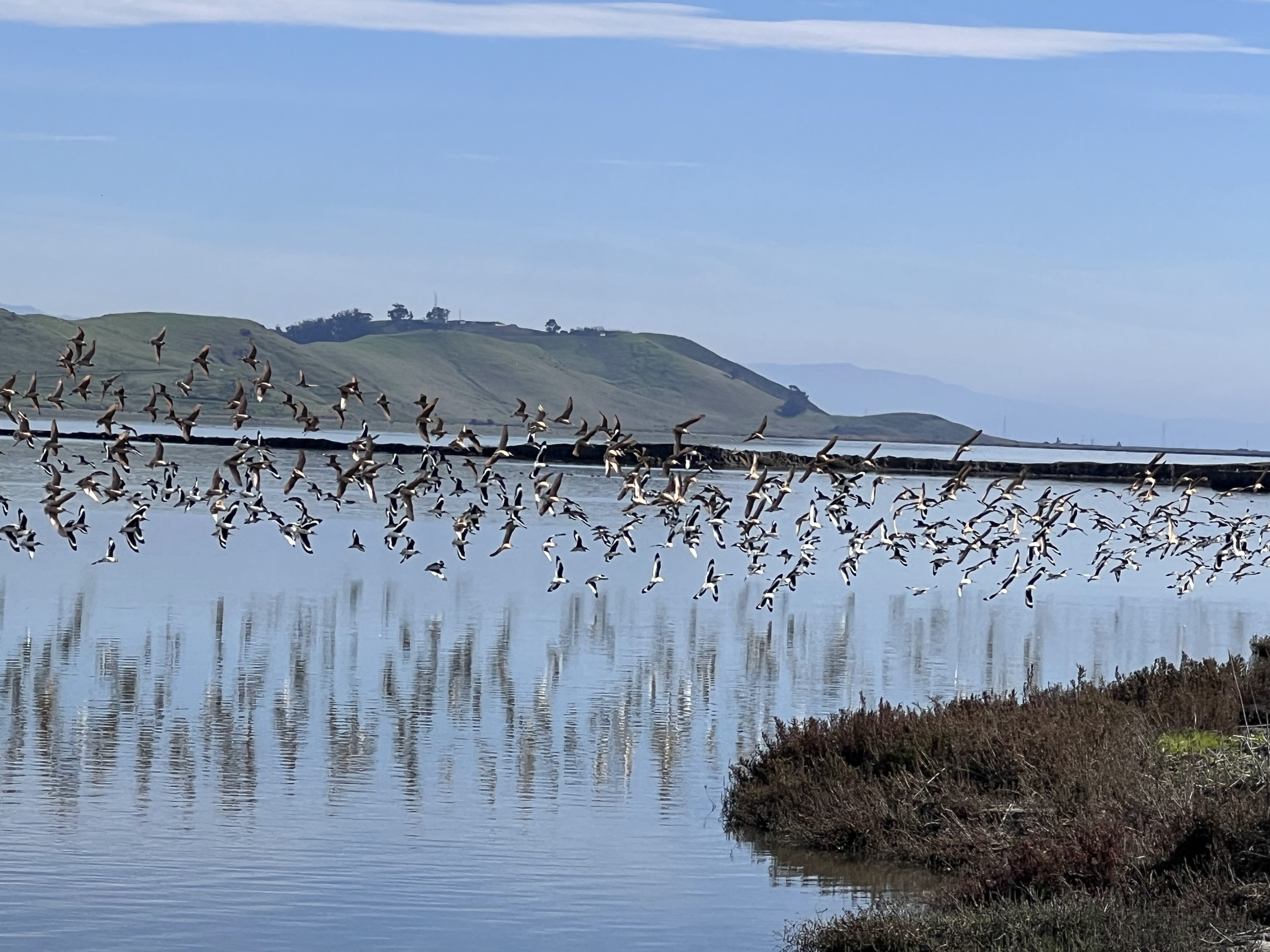
It was a beautiful ride by the bay. The colors of the bay combined with the golden light of the evening made for a fantastic setting for all these birds. There was a time when the soft cooing of the birds, the lapping sounds of the waters around us and the flapping of wings was all that could be heard for miles. If there was a heaven, would these birds be there too? I would hope so.

img_2249

The Tales of Birds

I am sure the falcons and the avocets have the stories of their lives. That pesky crow that annoys the hawk must have their heroic tales. With their enhanced senses, I have often wondered the world through their lenses.  

In any case, we were racing against the sunset, and time was showing it’s presence with every passing minute. 

The elongated shadows of our bikes finished as my long-nosed shadow hit the garage entrance. “Made me think of all the long-beaked friends we saw today.” I said laughing.

It was true – especially down by the bay where we see many birds fishing, long beaks seem the norm: avocets, terns, pelicans, curlews, herons, egrets. They all have sharp beaks that give them decisive looks. I wonder every time I look at them what goes through their mind as they hunt for their food, look after their young and build their nests. This is, after all, what most of the lifeforms on Earth do. And yet, each does so differently, unique to their species, unique to their abilities, and unique to their habitats.

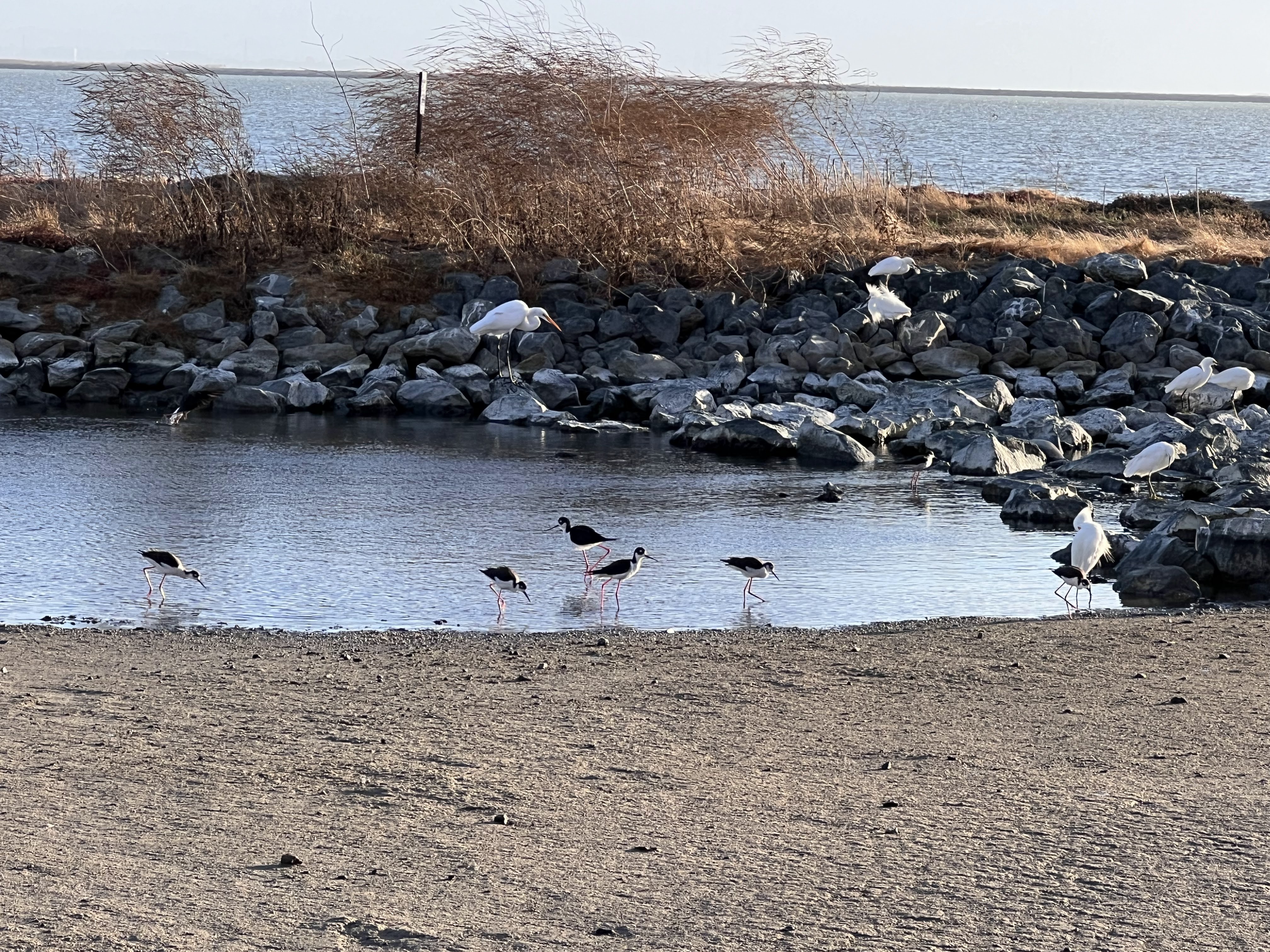
The last birds I stopped to admire in our race against the sunset were the Hawaiian stilts (curiously these birds were once on the endangered list, but have since made a comeback and I am so glad. ) They are a joy to watch in the sunset’s glorious light, with their pink legs, their sharp beaks, and the black-and-white contrasts.
img_2264

Time is a Curiosity

Each of these birds surveys the life beneath the waters differently, and with the deft skills of an archer plunges in for their kill. Their groups merging and reforming with the bay’s tides. Time is a curiosity in these settings, and one can spend hours in these environs, filling the soul.

The trail we are lucky to have access to is beautiful, and every time we set out to catch a little ride by the waters come back more peaceful, filled with gratitude at the marvelous forms of life we share the planet with. I have tried describing rides like this and come up with no one word that can capture it all. Maybe a feeling of abundance? Serenity? In our human existence of intense craving, the ride and what it offers pales in comparison. It is slow, it is present, and it somehow exemplifies your horizons. 

“When we go down to the lowest of the low tide lines and look down into the shallow waters, there’s all the excitement of discovering a new world. Once you have entered such a world, its fascination grows and somehow you find your mind has gained a new dimension, a new perspective — and always thereafter you find yourself remember[ing] the beauty and strangeness and wonder of that world — a world that is as real, as much a part of the universe, as our own. “

– Rachel Carson
Meeting ‘Loki’: An Enchanting Encounter with a Mysterious Fox

What was That?

The other night, I was out on a walk around the neighborhood, reveling in the fact that I could. The neighborhood was quiet for a week-end evening, and the stars were twinkling just so. The waning moon would not be rising for a while, and the sound of crickets had been replaced with the occasional croak of a toad.

I was thinking of all the laughter and camaraderie of the evening spent amidst friends, and was cackling to myself reminded of this or that. 

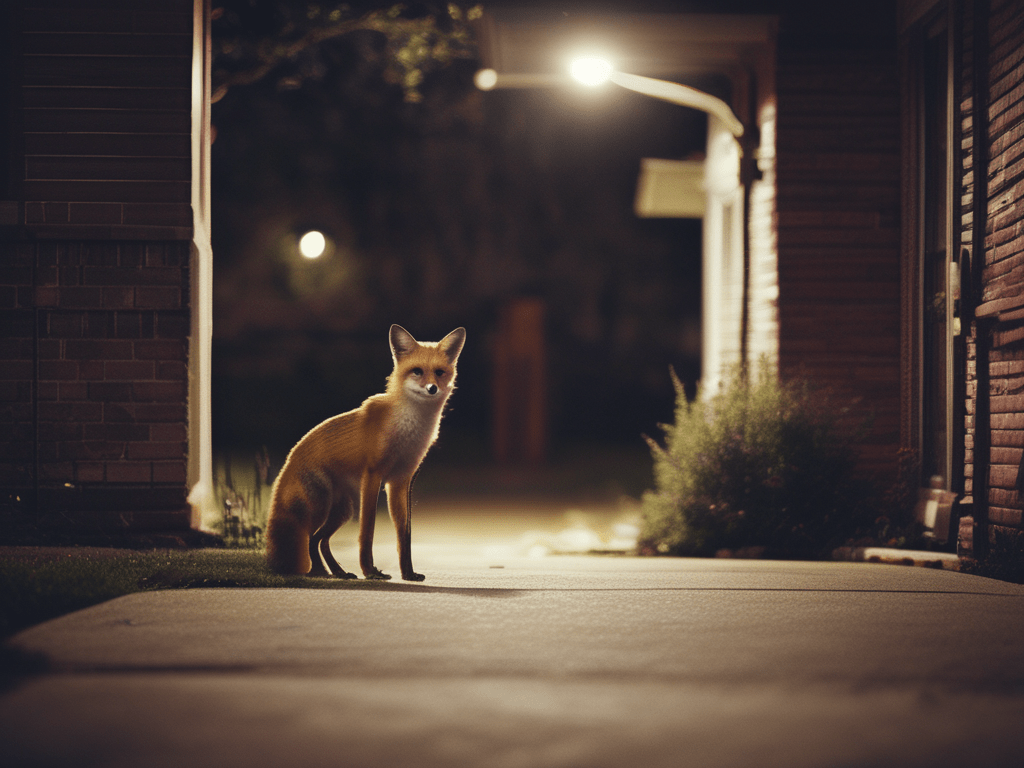
That’s when, I saw a fox running really fast. The back of my mind knew I ought to turn back, or at least be more scared. But I couldn’t do any of that whole-heartedly, for I was in a flippant mood – an evening laughing with friends does that to one.

But for another, it was a surreal experience. A glimpse into a magical realism – there was a spring in the step. Like its feet only used the ground beneath to provide the bounce required to leap and bound away. I stood there stunned at this movement. It must also have been quite young – for it’s size was not large. Rather frisky.

Usually, night time naturalist explorers in our neighborhood might find a cat scratching itself and yawning.  I was prepared for not much else. 

It was Scared!

It ran away from me at first, and then towards me with the same frenzied gait. That’s when I realized I would be in trouble if it did try to attack me. For you see? The fox’s run was brisk. If we were both to compete in a 100 metre dash, I have no doubt it would leave me in the dust well after the 5 meter mark. This one already had a head start too. Me? I had three plates of excellent biriyani, naan, kofta curry, etc followed by equally sumptuous helpings of dessert tumbling about in the old stomach. Stuffed, in other words. I was dragging my feet so I could soothe the old digestive system to start digesting and I could sleep. 

Thats when I caught sight of the animal’s face. 

It had clearly taken a risk leaving the river trail nearby venturing to the nieghborhoods nearby, only to find a pesky woman out on a walk. What was more, the thing that made it jump and start running was the sound of me cackling to myself about some inane joke. Probably thought it had a nutcracker on the loose. This creature was clearly alone and figuring out a way out of this mess. So, I stood still, and acted like a GPS to it. “Go away! That way! Off you go!” 

The fox (or could it have been a coyote cub?) gave me a terrified glance, and I continued heartened. “That’s right – after about 100 meters toward the ursa minor constellation, turn right – you’ll be on the river trail again.”

Loki

It turned swiftly and gave me a look that said, “If foxes could certify people, I would!” and took off into the night. That flighty temptress of the night might’ve looked like Wily E Coyote, but it did have a Loki-like look on its face.

I shall call you ‘Loki’ I said in its general direction,  and continued with my walk – but prudently decided to head homewards.

I wonder what Loki thought of the interaction.

I was glad – I had a glimpse into the life of a fox. Seeing the creature’s nimble gait had energized me. There was something immensely laughable in the way it turned and gave me a look too. All too often we are weighed down by the worries of the world (or in this case, good food satiated with good memories), and forget to prance about the world. “You must prance!” is what Loki seemed to have been saying to me that night, and I did try.

🐘🐘🐘🐘🐘 The Tusks of Extinction 🐘🐘🐘🐘🐘

The Mammoth Tale

Few passages capture the bane of consumerism like this one does. It is from the novella, The Tusks of Extinction by Ray Nayler.

The premise of the book is an intriguing one. 

  • It is set in a future when mankind has figured out how to upload one’s consciousness into the cloud. A manner of immortality. This is very much in the realm of possibility.
  • It is also set in a time where the Siberian mammoths have been resurrected. This has already transcended realms of possibility into reality

The wooly mammoth is being resurrected – being cross bred from the genetic remains frozen in the Siberian Tundra with  the Asian elephants (because they are gentler than African elephants). 

Thus, begins the tale of a doctor whose life was hacked from him moments after he uploaded his thoughts and knowledge to the web. This man, Dr Damira, was a passionate naturalist, a man who studied the African elephants and their ways. He fought for their conservation but failed. This is set in a future where the last of the elephants no longer roam the Earth. 

tusks_extinction

The resurrected mammoths in Siberia are facing difficulty thriving in the wild. They have all been bred in captivity, and do not understand how to survive the demands of living by themselves, caring for each other, and forging paths so they can forage and live through the cruel winters. They are thus being killed by poachers in a cry that reminds scientists of how the elephants were all killed off one by one. 

In an attempt to give them a chance at life, the doctor’s consciousness is uploaded to a mammoth – a matriarch by the name of Damira. 

Bane of Consumerism

There are several aspects of this novella that can appeal to us, but one in particular stood out to me, and that was how our consumerist culture alienates us from the natural world. For we buy things, we want things, we accumulate, we hoard – who is it hurting? I am earning and I am buying. It is all helping the economy is it not?

Extract:

In offices-a tusk in a case, beautifully carved, transformed into a world of its own, worked by human hands into a chain of elephants walking trunk to tail. Beautiful, lifeless elephants carved from the destruction of an elephant, hacked into what had once been a part of a body, a tooth, a tool. A part of a life.

“Among the skyscrapers, there were also older places-little streets of cramped shops, survivors from another Hong Kong. Marginalia that had been missed by the eraser of progress. And there, in the shop windows, so crammed with clever things, there it was. My eyes found it over and over again. Ivory. Ivory jewelry, ivory stamps used to sign decrees that were meaningless now, ivory game pieces of every kind. Ivory turned into useless gewgaws, dripping with the blood in my home. It could be carved into any lovely shape they wished, but all of it began in killing. No-more than that all of it began in killing that took place far away. That took place somewhere the people who thought of ivory as a material could not see. Killing that took place in an extraction zone.

I remember the horror I felt when I first learnt that certain types of leather were obtained from the skin of crocodiles and were thus priced higher. 

Cities like Hong Kong and New York and London at the center, vortexes into which the currents of trade accelerated, into which goods from all over the world were pulled. Places where things became materials. Where things became commodities.

Many of us rarely stop to think of the source of all the things we use as part of our daily lives. In all honesty it is overwhelming to do so. How does the kidney bean come to be in its packet in the grocery store? Once we start down that road though, what about the almond flour, the diamond ring, the leather handbag, the silk scarf, the perfume, the spice, the watch, the gold ring, the ceramic jug? Everything has its tale, its journey, its place in the human chain of wants and needs. 

What Can We Do?

In reality, we cannot give in to an almost paralyzing analysis of source-to-table for everything we consume. Is there economic exploitation along the way, unscrupulous practices, inhumane treatments? Would we be happy to know it all and make informed decisions – yes, (I am hoping that humans have enough humanity to make the right choices if we do), but can we do so? Not always. 

I spent a pleasurable few hours at the mall the other day, and found my fellow human beings doing the same. Glancing around at the happy faces of those of my fellow humans that morning, I did not see malice or greed – I simply saw folks at a mall on a rainy week-end. 

I like that mass production has made life easier, the jobs it has created, alleviating entire nations from poverty. I like that poor children can have new clothes, and that horizons have expanded thanks to the general prosperity of nations. I do not, however, like the ever-increasing pressure to produce and consume more. 

Is the economy to be weighed against the Earth’s resources at every step in the mall? Or just more more meaningful consumption? I do not know.

The Fascinating Behavior of Songbirds: A Morning’s Musings

It was one of those mornings in May – clear skies, the sun’s rays dancing through windows, and replacing moans quickly with sharpness and dedication.

I stood there wondering how it was so thoroughly that we transition from a supine, sleepy form to an alert, going-about-the-day form. The demands of the clock are relentless indeed. 

For an instant, I stopped to hear the beautiful voice of the songbird on our garden fence. It was trilling and beautiful, and I could have sworn just a little inspired – that last note a little higher than a human would have envisioned for that piece. 

It was as I was musing thus, that I noticed the son charging down the driveway to get to school on time – a sock hanging in one hand, a school project in another, and off we went. The songbird flew from my mind as we navigated the traffic, spoke of this-and-that, and chose music for the ride there. 

When I came back, the songbird was still flitting about here and there. I stood mesmerized by the little flashes of movements that my phone camera would not be able to capture anyway, and listened as it chirped, and went about gathering its breakfast.

I remembered a book that I had from the library – patiently waiting its turn.

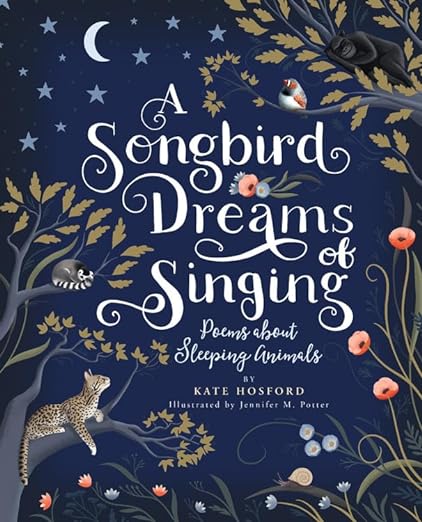
A Songbird Dreams of Singing – By Kate Hosford, Illustrated by Jennifer M Pottersongbird

I flicked open the book. The poem about the songbird was there:

Other birds may dream of worms 

Or flower beds or thunderstorms 

But every night this bird performs 

A concert in his mind.

How marvelous to imagine a songbird rehearsing and getting better at its craft subconsciously – every night.

The book goes on to talk about research made about sngbirds:

In the case of songbirds, scientists at the University of Chicago have done studies on zebra finches demonstrating that the males practice and refine their songs while dreaming, adding little flourishes to make their version of the song unique. Zebra finches are diurnal birds who rest in the afternoon and sleep for about ten hours a night. Like many other songbirds, when they awake in the morning, they sing with particular enthusiasm in what is known as the dawn chorus.

Children’s book illustrators are so wonderful at their craft. This book too has beautiful illustrations, color schemes, and an overall look and feel of a book that is all set to send us to our worlds of dreams too.

So, what should we dream about, and subconsciously try to get better at?

What is April to you?

April is many things to the poetic brain, to the romantic at heart. It even somehow manages to give a tinge of optimism to the incorrigible pessimists amongst us.

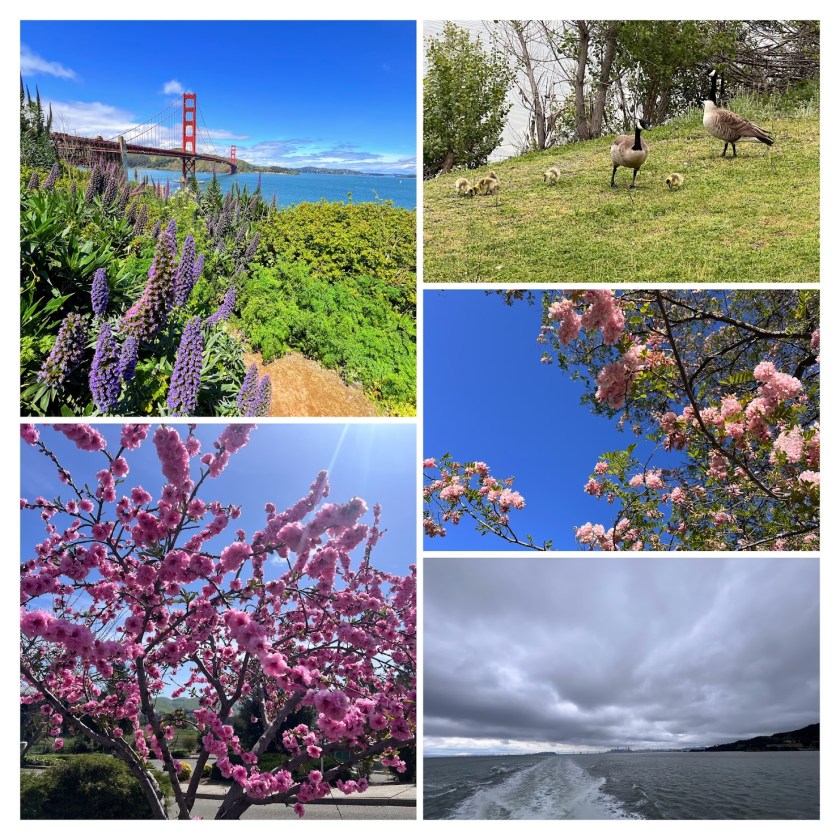
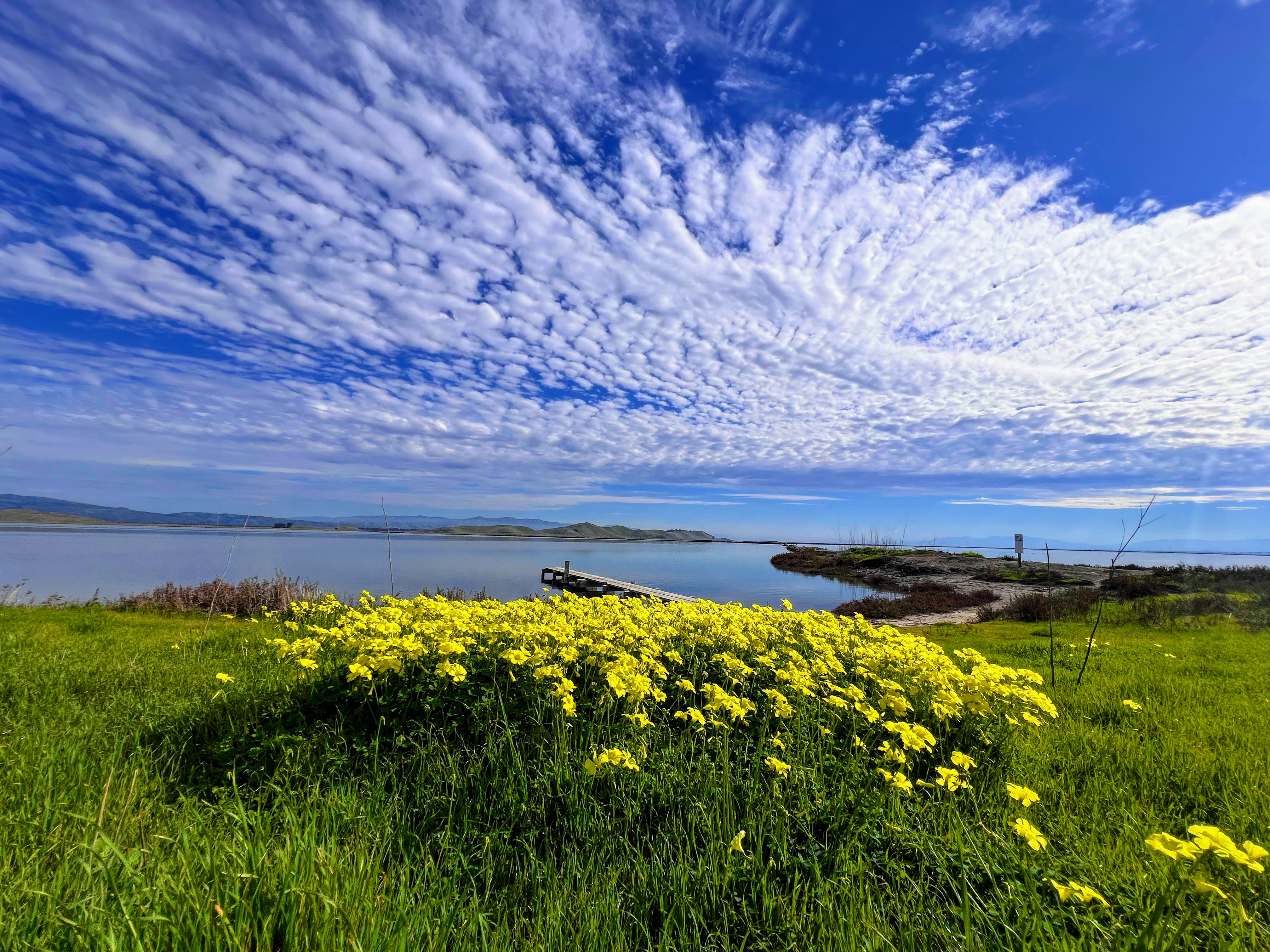
It is the month of gorgeous signs of spring in the bay area. Hillsides filled with green grasses and wildflowers in hues of yellows, pinks, purples & oranges everywhere. It is difficult to not be buoyed up in spirits when spring gets going like this around us. The butterflies flit, bees buzz, woodpeckers peck (drill?), tulips push up through the soil, flowers burst forth from buds, barren trees cloak themselves in new leaves. 

april_collage

Life, it seems, wants to be up and about.

April is not just when Spring is in its glory:

📜 It is the month of poetry – I picked up a bunch of poetry books from the library the other day, and have yet to get to them. It is the thought that counts.

🌎It is the month for our dear planet Earth – well Earth Day, but I really think we should dedicate a month in which we consume more conscientiously, make choices that help our only home and all that.

📚It is the month that has a day dedicated to Books – World Book Day. I found my pace of reading especially slow this month given everything, but I still clutched them inhaling the scent of my dearly beloveds that night – too tired to read, but too stubborn to put it away and fall asleep. Someone must’ve rescued them, for I saw them in a tottering pile on my bedside table in the morning, and smiled.

🧬April 25 is also World DNA day.

This month, I found myself wandering the planet, wondering where the time went, and watching in awe as the goslings hatched, and the bird parents showed us good parenting. I found myself being inspired by humans achieving remarkable things, finding time to do the things they love, pondering on what is inherent via DNA and what can be changed via nurture, being taken aback by what we are capable of doing to one and another, and so much more. 

I did not even feel my usual sense of helplessness as my to-do list remained stubbornly long. It is a list and has a right to exist, I told myself. Spring cleaning can wait, to-do lists can wait (maybe it is why we have World Workers Day on May 1st – to remind us to get back to that list) 

What is April to you?

A disruption of ducks

There is a curious rhythm to the days after our India trip. The usual things still occupy our time – school, work, projects, commutes, the changing landscapes of nature, and all the rest of it. Maybe it is the throes of a winter season, or the fact that after the intense ceremonies of the beginning of the month, the quiet is disconcerting, but we felt on edge.

Like the hedgehog, we found ourselves peeking out of our hidey holes to see if life is normal, and finding that it is, were somewhat taken aback. Do you mean to say that we must plan to prune the roses? 

Oh well, all right. If you insist, I suppose.

One morning, the son and I finding ourselves at a loose end decided to take a bike ride to dissipate some of this energy. img_9439

“Amma! Look – I just saw a hedgehog peep out.”

“Oh nice! It is close to February, so it must be checking.”

“I didn’t see if it saw its shadow though – we were going too fast!” said the son.

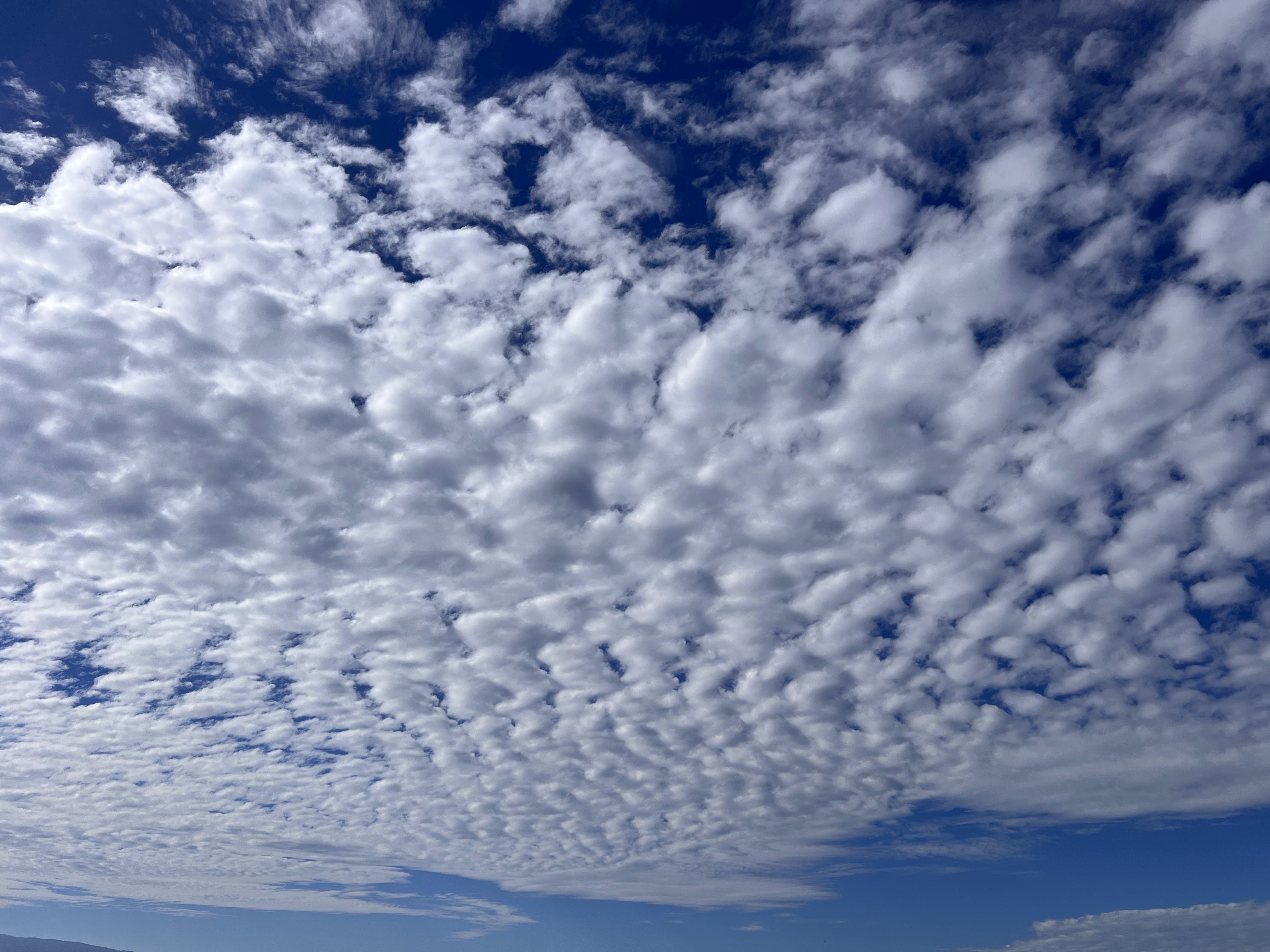
It was a lovely day – the feel of wind against our cheeks, the gentle cumulus clouds overhead, and the bay hosting a large variety of birds. We stood there taking in the beautiful sights when hundreds of birds took flight all at once, and then, as though nothing had happened, flocked back to their original place a few moments later. The son and I had a number of ideas as to what caused the disturbance, each more juvenile and silly than the next, but left us cackling all the same. 

No one could deny the beautiful shared experience of the disruption – the birds heaving in one smooth cacophony and the humans ashore fumbling quickly to capture the sudden movements and failing miserably. 

It reminded me of the book I was reading the previous day, On Duck Pond – By Jane Yolen Pictures by Bob Marstall.

on_duck_pond

As I walked by the old Duck Pond

Its stillness as the morning dawned

Was shattered by a raucous call:

A quack of ducks both large and small …
img_9453


An understanding quickly dawned:

We’d shared a shock, and now a bond

And I was feeling very fond,

Of everyone on old Duck Pond.

As always the day out in nature surrounded by the fabulous clouds, the sun’s rays, the beautiful lights of the ocean, the stories the son and I swapped on our ride, the birds, first signs of spring in the wildflowers by the bay, had weaved its magic, and we returned home refreshed in mind and spirits.

img_9442-effects

P.S: A group of ducks, as Jane Yolen mentions in her book, are known by a number of names:

A raft of ducks

A paddling of ducks

A badelynge of ducks

Also, bunch, grace, gang or team.

🍁I Found A 🍁🍁Million🍁🍁 Bucks 🍁

“It rained last night, did you hear?” the son said the first thing in the morning as he crept groggily downstairs. 

I confessed I hadn’t. It had been a late night – one fraught with beeping alarms, low-battery carbon monoxide filters, very cold temperatures, and a spate of international phone calls. I remember peeking out at the full-ish moon before finally collapsing into a warm bed, but not much else.  In fact when the alarm went off in the morning, I was in the midst of a strange and confusing dream in which somebody was giving me a recipe. I can’t remember the details, but I also remember my first thought being – what a strange recipe!

Luckily I shook all memories of frog chutneys and slime pickles aside and made for the open air. The air was fresh – the Earth beautiful after the rains, and I was not going to miss it.

I was rewarded with brilliant cloudy skies, rain-drop topped leaves, and quiet birds shaking their wings and beaks throughout. 

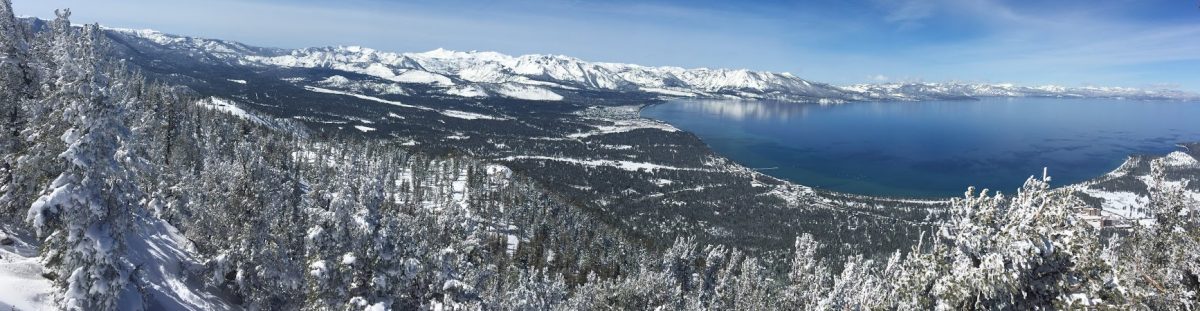
I stopped to marvel at the casual beauty that lay there in front of me – the lake not realizing the perfect reflection it provided to the mountains in the distance, the fall trees closer by, and the still groggy white heron on the opposite shore. All just there for anyone wanting to see it. Sleepy, dewy, cloudy, misty. 

fall-COLLAGE

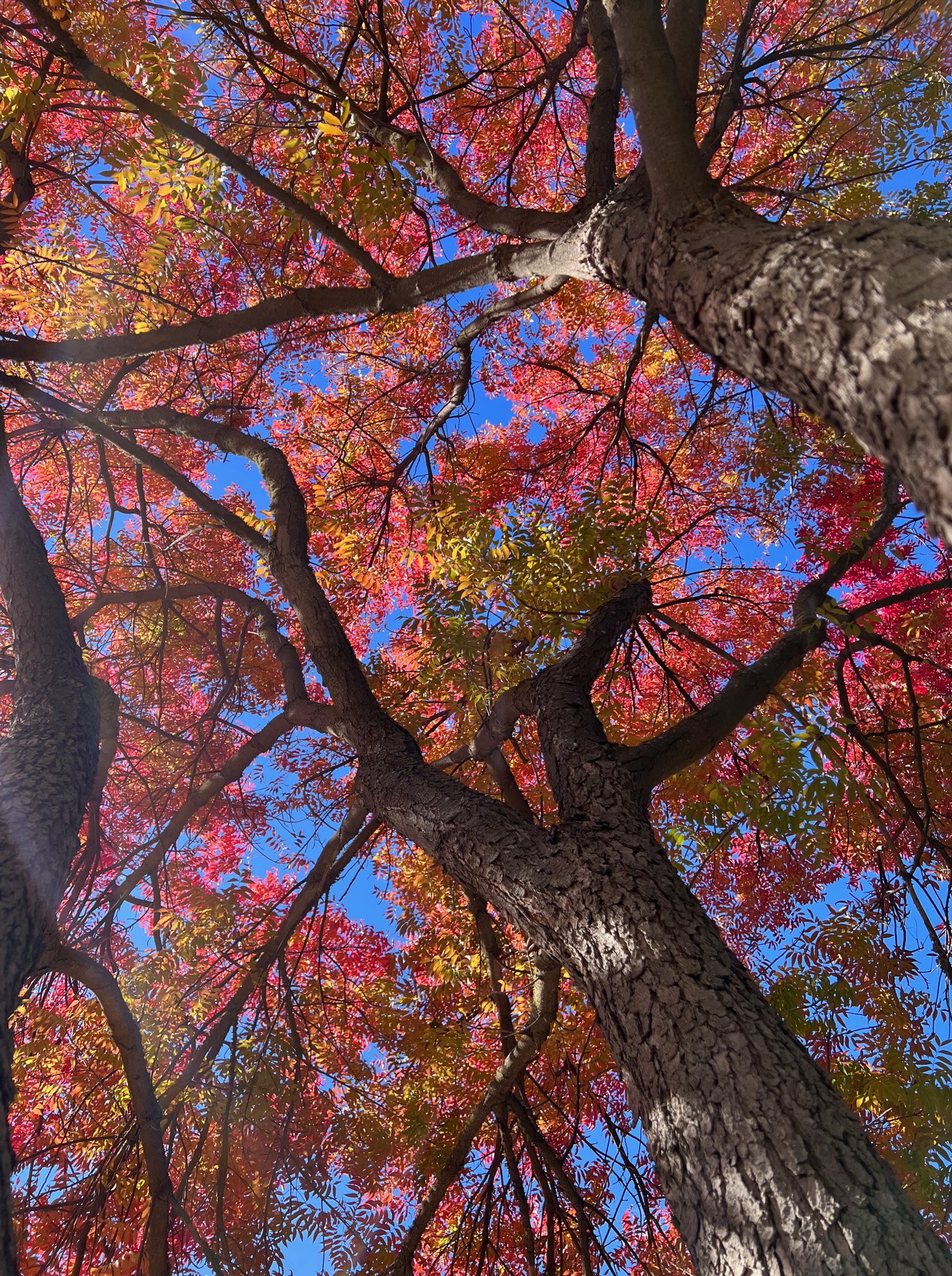
I stood there trying to remember the chemical names that were responsible for the brilliance of the colours reflected before me: carotenids, anthocyanins and tannins. I wondered at the wisdom of these trees: realizing that it was time to stop photosynthesis and let the tannins and cyanins or whatever take over without any fanfare, and producing the most breath-taking show for the world to revel in. 

🍁Carotenids : the pigments for the orange and yellow colors

🍁Anthocyanins: the pigments that are responsible for the purples and reds.

🍁Tannins: responsible for the brown color.

Almost instinctively, I looked around and found myself alone. Alone in a bustling suburban area – the only one who took a quick detour and stopped to admire the lake on my way from somewhere to somewhere. It felt nice. Special. Like I had won a million bucks.

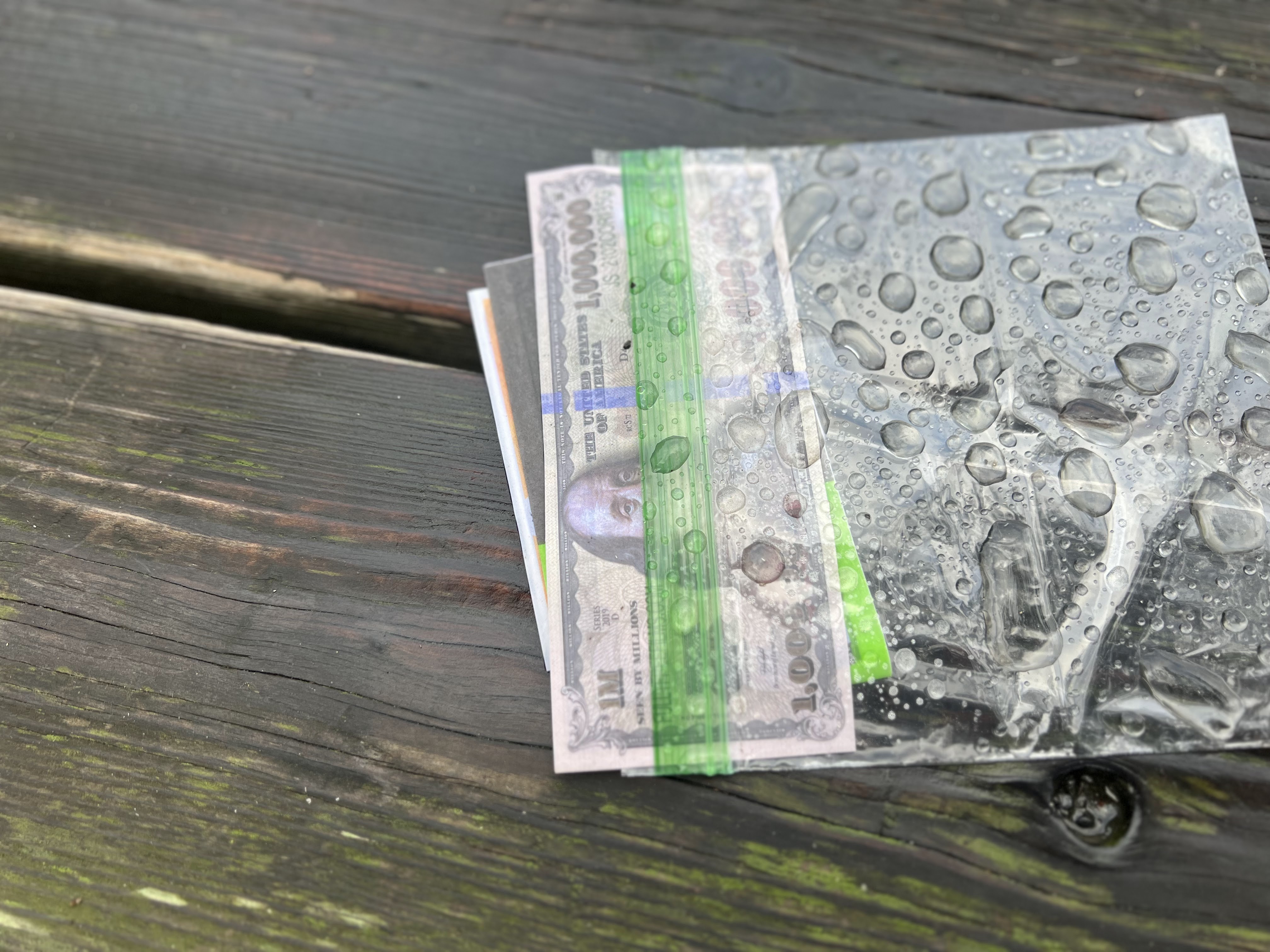
November is already on its way out – 2023 is already on its way out. The trees have put their show on, on time. I gave myself a little scolding: My Christmas tree was not up yet.  “But I did have some beautiful poinsetta plants beaming their reds at me in the morning, that was something! “ I said to myself heading to a small park bench, and there: I found a million bucks. 

img_8614img_8615

I left it there for the next lucky person to find, and went on my way, a smile playing on my lips.

Who said the universe did not have a sense of humor?

🍁Sauntering🍁,🍁Strolling🍁, 🍁Scrunchfesting 🍁

The son and I pranced into the house with our bouquet of fall leaves. We went for a walk to feel the nippy November air on our faces. While out there, we ran after leaves fluttering down in the winds, and indulged in the inevitable scrunch party. 

“No one saw us jump and scrunch in the leaves, Appa!” he said entering the house wind-blown and happy.

“Are you sure?” said the husband, accepting the beautiful bouquet of fall leaves from us, and giving it right back to me with a flourish.

“ I saw some neighbors scuttle inside looking dubious at the activity outside. You sure it wasn’t you two?” 

The son guffawed loudly at that. I scrunched up my face – but was too happy to care. Who could when you’ve just been able to look at views like this?

IMG_0506

Seems only yesterday we were ushering in 2023 and now we are already looking at the final curtain calls of the splendid trees before the closing of the year. As usual, if I throw my mind back the year felt differently at different points in time. Bleak, dreary, joyous, hectic ,the travails of aging with parental figures, friends, events, work, school, volunteer work and so much more.

There is a book called the Secrets of Infinity in my library – Edited by Anonio Lamua, it is a gorgeous book. It gets taken out and seen every now and then just for the sheer brilliance of the topics and the range of topics in them. But there is one thing the book doesn’t quite put the finger on: the feeling of infinity in the repeating seasons of the Earth, the different joys of each month. 

The Tibetan Infinity Knot and the Ouroboros come close in their symbolism – but one of more to do with our actions and therefore Karma and the other a destruction/creation paradigm. 

“So, how do the leaves turn color?”, I said with a flourish revealing the book Summer Green to Autumn Gold – By Mia Posada. The book’s illustrations managed to capture the natural beauties outside, and we settled in to read the book contentedly. 

We flipped the pages comparing the leaves we had in our precious bouquet to the ones in the book. The final reveal of the pigment colors gave us the different colors.

🍁Carotenids : the pigments for the orange and yellow colors

🍁Anthocyanins: the pigments that are responsible for the purples and reds. 

🍁Tannins: responsible for the brown color.

“Trees must be beings of infinity!” , I said sighing happily and the son rolled his eyes.

☀️ Energy Sources 🗺️

The son and I were discussing this and that when we hit upon one of our favorite topics of discussion: energy sources. The fellow has been very happy that we now have a solar roof.

“And now – we generate more solar power than we use. Isn’t that awesome?!” he piped up as we were out on a walk one evening after a particularly hot October day. (I wondered if the solar energy could be bounced off our heads too, and that earned a weak chuckle and an eye-roll.) Of course, this led to an interesting discussion on energy sources and we got talking on the recent articles or books we’d read.

“There is one place where they take your steps and convert that into energy. Like you step on the floor and that becomes stored energy. Cool right?”

“Cool!” I agreed, and screwed up my face at the nearby freeway noise. “I am sure if we can just figure out a way to take all that wasted energy from all the fast and noisy cars on the freeway, and use it to power the cars behind them, that would be even better – you know get off gasoline altogether? ”

“They are already working on it somewhere. Life is so exciting in these energy fields!”. he said.

Later that night, he bellowed that he’d left me an interesting article to read on my bedside table on Energy Sources. 

August 2023 Issue of OYLA – Energy All Around Us- Generating Electricity from Dance Floors, JellyFish and more

#33 AUGUST 2023

If I haven’t raved about OYLA before, allow me to. The magazine is a gem of science and mathematical tidbits . I was enthralled by the article and read it all agog, exclaiming at the right intervals. It pleased the son.

  • A thoroughly fascinating article in which the different types of energy sources are briefly touched upon. Piezoelectricity – the technique of using our movements to power energy. 
  • The many ways in which sound vibrations can be turned into electricity (apparently a new generation of architects are working on powering skyscrapers powered with noise energy – so the hustle and bustle of the city, the blaring sirens, freeway noise everything is actually used to power the building – isn’t that brilliant?)
  • In another section, it says nanoantennas are more efficient than conventional solar cells and they have a ‘good chance of displacing conventional solar panels’.

All highly exciting possibilities. I was especially thrilled to read this bit about jellyfish and their green fluorescent proteins. 

Quote: (from the Bioelectricity section) 

“Some jellyfish glow in the dark. This is due to the green fluorescent proteins (GFP) that are present in their cells. Such an element may not need sunlight at all and could instead “feed” on bioluminescent radiation (like in fireflies) and ultimately they might be used in nanodevices.”

It must be wonderful being a jellyfish or a firefly. Were there some jellyfishes who glowed more than others, the same way some human beings are more energetic than others? 

Individual energy levels is a common topic of discussion in our household as we are surrounded by friends and family who seem to be made up of inexhaustible sources of energy and positivity. ‘How do they manage it?’ we say as we admire these folks, but it is something I’d love to gain an understanding about.

Would it make the difference between glowing, glowing less, or glowing more?

Also Read : Life’s Determinants

Source: August 2023 Issue of the OYLA Magazine. Article: Every Volt Counts 

\

A Rosely Abode

The rose bushes were blooming all summer and every time I saw the blossoms fade, I felt a pang. How did these bouquets in stores retain their freshness for that long while my blossoms faded so quickly? There was one white rose still unfaded before the next set of blooms came in, and I stopped to admire it. I’ve always loved white roses. I leaned over to pluck the beautiful blossom, picturing the peaceful looking flower in Buddha’s hands.

Peace. 

Such a nebulous quality in our lives, I mused. Also, something that one only appreciates wholly when threatened or is lost. Maybe turbulence is a necessary component of life in small doses so we appreciate sturdy peace when we do have it. 

roses

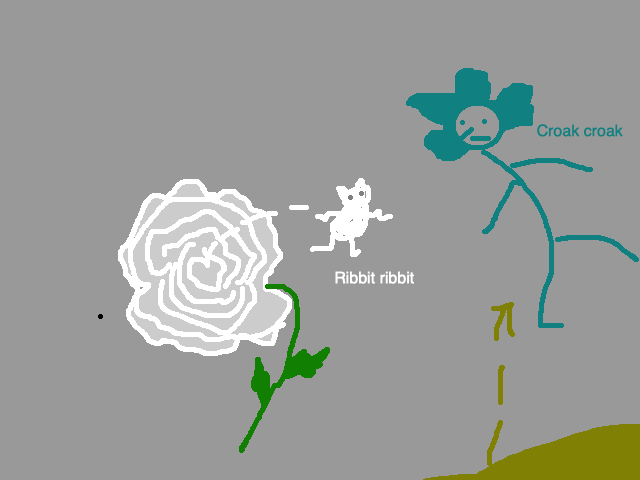
I peered into the rose and saw an inner petal that looked slightly less white than the surrounding petals. Maybe it had started to brown, I said to myself and reached in gingerly to pull the petal, when I gasped and leaped back. A small albino frog leaped out at me from within the white rose petals. 

I don’t know whether any of you have had albino frogs leap up at their faces, but if you haven’t, I can tell you it is quite the shock especially when you are expecting to loosen rose petals and have amphibians leaping at you instead.  It is like finding crocodiles in your bath-tub.

I gasped and tried regaining my composure. All thoughts of peace forgotten – the heart hammered against the ribcage as if on a great adventure, I willed it to stop. So much for courage – a frog is all it takes. Maybe it wasn’t a good thing. I thought forlorn, as irrational thoughts came flooding in. 

What is it with adrenaline and irrationality?

frogs_in_roses

Regardless of that first reaction, frogs are apparently omens of good luck, prosperity and fertility. 

Later that night, as I drifted off into sleep, I couldn’t help thinking of the little frog in the white rose that I had inadvertently disturbed. What a lovely abode? Drinking nectar, snuggling into the softest petals, and resting in the fragrance of a rose. Sometimes, the gifts of nature are marvelous. I wish I had the sense to take a photograph. White frogs are rare enough. White frogs in white roses must be even rarer. As for, white frogs leaping up at writers from within white roses: well, who says that nature doesn’t have a sense of humor?

I’ve always admired bees for having their feet dusted by a thousand blossoms as Ray Bradbury says:

bee_in_rose

‘Bees do have a smell, you know, and if they don’t they should, for their feet are dusted with spices from a million flowers.’

– Ray Bradbury