Baða – A Vatn post

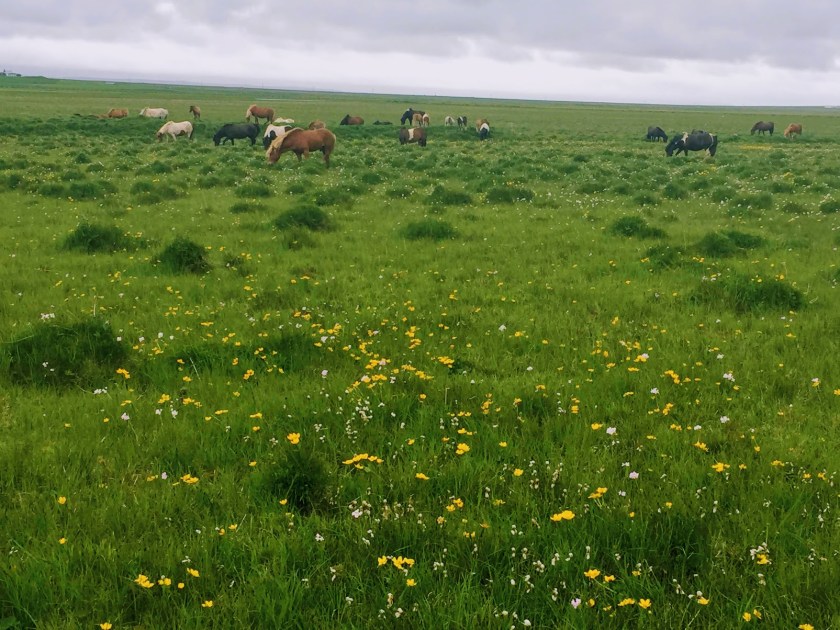
I remember seeing some pictures of Icelandic horses, in the meadows and thinking to myself that the fellows seem to be having a swell life. I mean fresh air, green pastures, and none of the bother of getting folks from one place to another harnessed to an infernal coach. Their poor ancestors must have had a thin time of it: I can’t imagine human beings being any better horse-coach passengers than public transit passengers. But, look at these fellas looking rather pleased with themselves knowing that no amount of chirping and tock-tock noises can budge them from their excellent perch in life. The younger generation I tell you! *Shakes head*

horse.jpg

The universe has a queer way of satisfying our desires. Within a few hours of landing in Iceland, I had the satisfaction of feeling like a horse. I suppose in a way that made me an Icelandic horse.

“Are you going to take a bath again?” , is a familiar refrain in the old home. Mia familia rolls their eyes indulgently as I come out feeling refreshed and happy again. In fact, when I am grumping around and shooting dark looks at folks after a long and trying day, the family gently nudges me to take a bath, and Voila! The magical waters yield a perfect amiable nut in their midst again.

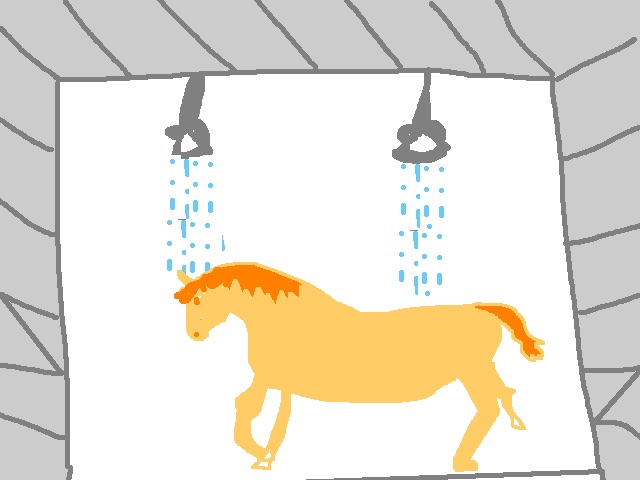
Obviously after a long-ish flight, I pranced into the shower, but I was astounded to see the shower in our lodgings in Reykjavik were best suited for Icelandic horses, not humans. There were 2 shower heads, placed about 2 feet apart, and both spurted water together or not at all. This posed a number of problems for one who does not want to waste good warm water. Do you stick your feet in one shower and lean across to get your hands in the other shower, and leave the torso high and dry? Or do you go in for some of that fashionable puppy like scooting in the rain?

horse_shower.jpg

Icelandic horses seem to throwing their heads back and laughing and neighing with glee at my plight. But I wasn’t done with my bathing adventures.

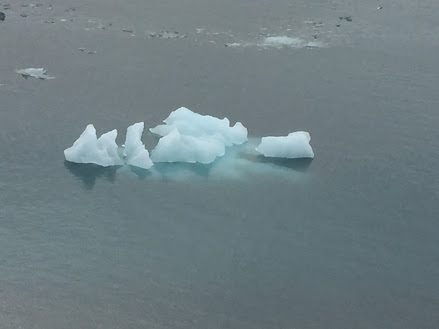
The next day, we were admiring the glacial melt join the oceans, when I shivered, and thought yearningly for a warm water shower, even if it was the horse type, when a young couple shouted, “What?! Do you think we are afraid?! “, and the pair of them removed their top clothing layers and plunged into the chill waters. I shuddered and my teeth went on chattering in that incessant typewriter mode in a speed and intensity that I wish were true when I start writing.

Apparently, in the olden days, babies in Russia were given cold dips in glacial or fresh water every now and then so they would adapt to the severe cold better. Called Polar Dips, I got to tell you, I was in no hurry to try it.

(https://siberiantimes.com/healthandlifestyle/others/news/like-ducks-to-water-in-the-snow-keeping-kids-healthy-siberian-style/)

ice

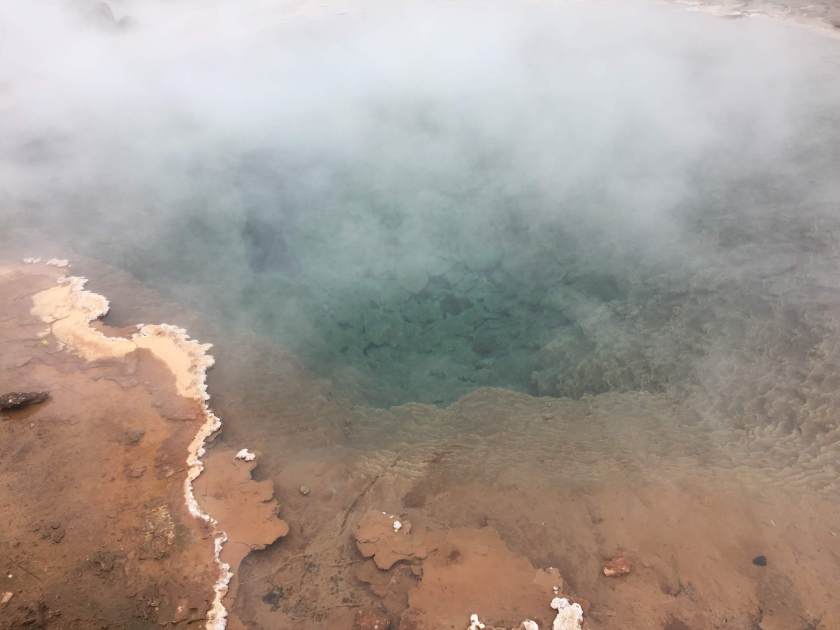
And then, Mývatn came along. Mývatn, a natural geothermal spa, was curious in that I came out smelling multitudes worse than when I went in, but I felt refreshed multiple times over. Iceland sits daintily on a couple of tectonic plates that have their tiffs and turfs every now and then. So, it is heavy in both volcanic activity and geothermal spas. These warm waters are like everything everyone said – warm, soothing waters, set in natural surroundings that smell like those gasping chemistry experiments in high school emitting Hydrogen Sulphide, that chefs later tell you is the smell of rotten eggs.

img_9710

Folks have called me a sound egg before, but what I was not prepared to smell like one, much less a rotten one.

Add to this the rinses, showers and dances in the rain, and I can truly claim that Iceland far from being the Land of Fire and Ice, was the Land of Baða Vatn. (I think that means Bath Waters.)

Foss, Ain, Ja, Vatn, Jökull, Sjó

In a moment of poetic rarity, I daftly said I would break my posts into the Elements of our being (Earth, fire, air, water and space), which means I am now stuck with the strange problem of writing my experiences around water in Iceland in one post.

Now do I tell you about how I bathed like a horse in Reykjavik, or how I much-muchly laid bare my ignorance of this beautiful Earth’s ecosystem as I lamented the cleaving of the iceberg, or how we were convinced an obstinate mermaid had come ashore the beach, and insisted on getting into people’s pictures the whole afternoon?

mermaid

I have to swim quickly past the Icelandic rivers and streams (Ain), gasp like a wasp at the thousands of waterfalls (Foss), warm myself in a sprint by geothermal spas, jump and shiver near glaciers (Jökull), watch a tidal wave sweep past me as I admire the seas (Sjó) and let my soaking in the rain (rigning) all just fleet past.

I can hear you mumble that now, no one feels refreshed by the post on the most sustaining of the poetic elements, and I agree.

I get a faint understanding of what these authors have to deal with when they go and promise a N- book series. Take the Harry Potter series for instance. J K Rowling must have had little choice but to get the books bigger and bigger because she had to fit everything in 7 books.

I now have to delegate all of the important things to be said about these things to the links below:
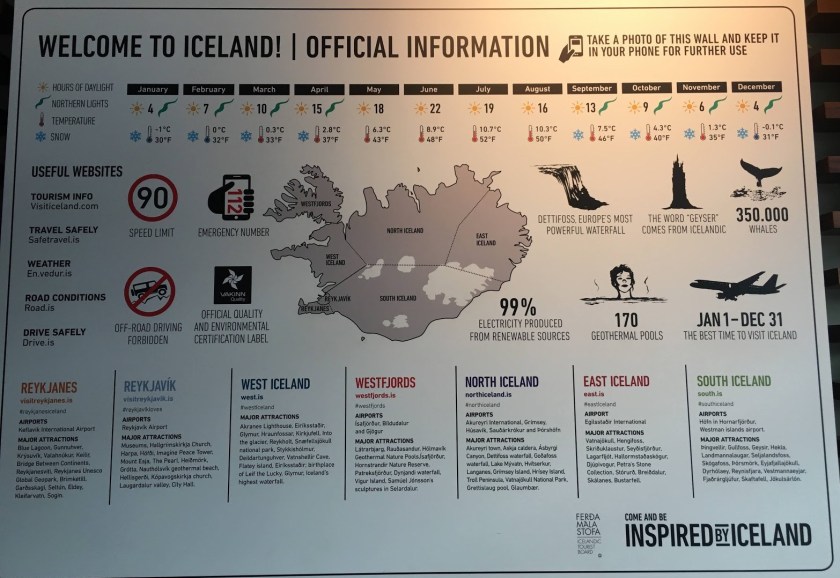
Did you know how 90% of Iceland’s energy needs are obtained from geothermal energy?

Did you know Icelandic glacial water is so fresh that you can drink it from source with little fear of contamination?

Well, you do now.

We were there in Iceland when Summer was beginning to show her beauty. Even so, more than half our days, there was rain. For a pluviophile, this was marvelous. Everywhere the eye could see, green carpets were rolled out for us to feast our eyes on.

The rain matched the tones of the children. Sometimes, the joyful pattering of the rain was like their perky tones of enthusiasm, the shuddering and heavy downpours were met with “Amma! Do you really want to hike like that? Get in now!”, and other times when the rain could not quite decide whether to pour or drizzle, the heart was torn whether to go out or stay in the car. These moments of cloudic indecision were the best and I danced and pranced in the rain, while the children adopted a distinct “I don’t know this crazy woman!” stance.

There were waterfalls of every kind and very soon, we stopped pointing them out to one another. We quietly enjoyed the weeping wails of the fjords, as much as the roaring riptides of the beach, and almost as much as the gleaming turquoise blue of the glacial ice pack. Water, in any form, is mesmerizing, tantalizing, energizing and therapeutic.

Well, I suppose I shall at least have to write about bathing in Iceland after all this larking about.

Jörð, Gaia, Bhoomi

Fresh off the flight, and in our room, after loafing about during the day in Reykjavik, I was still groggy. I finally managed to sleep, happy to rest my tired frame on a good bed. The heart had already stirred in that nurturing soul mode, but was not in fully. A good night’s sleep is all I needed, I thought to myself.

It could not have been more than a couple of hours before I awoke to see the son looking cheerful, sitting on the bed alert, and tucking into Skyr, that delectable yogurt of Iceland that sustained our appetites anywhere. “Hi amma!” he said. The energy in his voice unfortunately was not echoed in my hollow moan.

The sun glowed outside, and I asked whether it was morning already. Tired or not, I was set on enjoying the holiday, and I tried to drag myself out, but the little fellow chuckled, “Nope! It is 2 o’clock amma. In the night. This is night!”

He was so enthusiastic and happy at this odd hour, that I smiled happily. (Smiled happily because he had the good sense to wake his father and not me for his night revels with Skyr)

I pointed at the window outside, and he said, “I know right?”

To be fair, I suppose that some of the clouds had a slight pink colouration indicating a sunset, but that was all. Within an hour, the sun had risen again without ever becoming dark or even dusky.

I goggled, the son giggled, and the sun cheerily ogled.

Our half baked theories are always fun, but this Khan Academy video of the Earth’s tilt is much better.

This infographic was useful to see how we would have to change our perception of a new day starting. Our minds are conditioned to the concept of dusk, the sun setting, and darkness enveloping our consciousness signaling the end of the day. But what if the Earth never signaled the end of the day. Would melatonin still be released?


IMG_6156

The long days, coupled with a sunny countenance made for action-packed days in which we had to force ourselves to sleep and take breaks. Nevertheless, it is truly wonderful when the earth offers its bounty to you the way Iceland does.

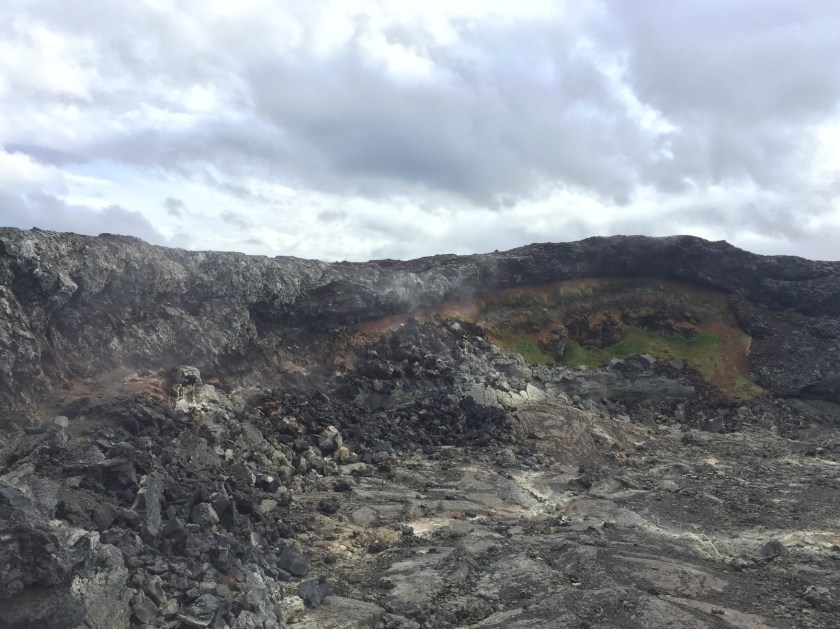
There were days when we saw fresh meadows filled with flowers that had sprouted afresh in the spring after the long winters, lava beds with thousands of years of moss growing on it, rivers gurgling with fresh snow melt winding their way across canyons and meadows, waterfalls thundering their way down as though their restive energy would not and cannot be contained, volcanoes and glaciers, all on the same day.


A country that blessed with natural beauty obviously tapped the imaginative strain in us. There was one particular place that looked like time had stood still in the middle of an epic battle in which a monster crocodile had pulled off a troll’s leg, and a bear was crossing the river.


If this sort of thing appealed to us within a few days of Iceland, it is only to be expected that the Viking myths and sagas are rich and bountiful. I am now reading Icelandic Myths, so I can continue to savor the experiences of that beautiful island.

viking


Years ago, when my dance teacher explained the poetic significance of the elements necessary for our very being, Panchabhutam – Earth, water, fire, air and space, I was thrilled with the poetic beauty of it.

My Icelandic experiences, I think, shall therefore be split into these elemental joys – this one of Earth(Jörð, Gaia or Bhoomi), followed by water, fire, air and space.

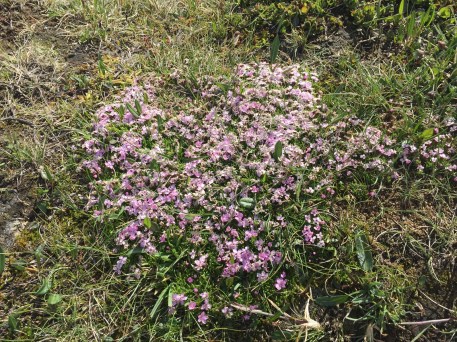
The Earth Laughs in Flowers

Quote from Education of Little Tree:
Everyone is born with two minds: one is the mind that is necessary for worldly survival – we need it for having young ‘uns, surviving and stuff. But there is another mind that is linked to the soul, that is the one that we must nurture.

I was off to nurture the soul like nobody has nurtured it for me before, only I had not realized that yet. Long flight journeys are true tests of the soul however, and I was still yelping with pain on the flight. Recent sharp pains indicated the causes: a teenage elbow was lodged in my rib-cage, and a smaller knee was lodged in my stomach. (The children were sleeping.)

I felt like a piece of clay pummeled and distorted by deft children’s limbs to be just the sort of play-doh shape that classifies for shapeless.

sleeping

Shapeless, exhausted, hungry and thirsty, I turned my head toward the vague direction of the husband’s head, and mumbled, “Iceland better be worth it after this journey!” He chuckled, or I think he did, for his mass rumbled underneath the jacket he had pulled over himself to sleep. In that strange deluded condition, I thought he looked like an iceberg about to surface, and chided myself for delirium.

Not delirium, leaps of fancy, said the soul-brain.

Little did I know that leaps of fancy were just what the doctor ordered for me, and something Iceland, the Land of Fire & Ice was set to give in the order and magnitude of the seeker’s soul.

These poets have a way of saying things that make you wonder how they put things like that. I mean you think and you think and then you say, Flowers are beautiful, and beam around for approval. But these poets, nuh-huh. They’ve got your back when it comes to hitting the spot. Look at the way Ralph Waldo Emerson put it for instance:

The Earth laughs in flowers – Ralph Waldo Emerson
Iceland not only laughed, it engulfed us all in its merry wake.

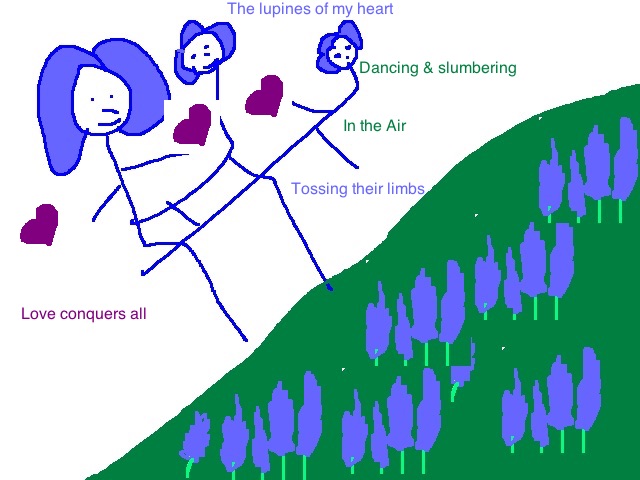
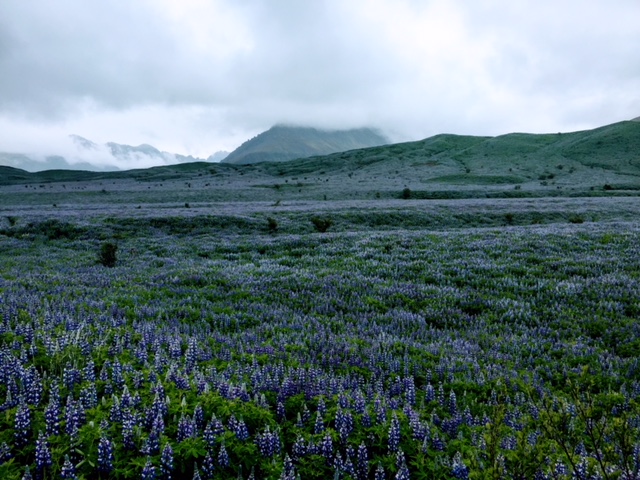
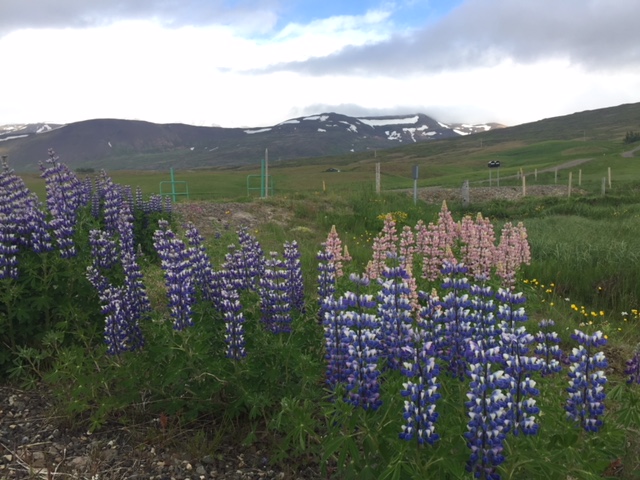
The first thing my heart-mind did in Iceland was to attach itself to the flowering lupines. There they were, strewn like birdseed – all over the countryside, the roadsides, the littlest mounds where you expect nothing, was home to purple flowering lupines. Entire mountainsides of them, valleys of them, meadows of them.

IMG_9362

They held their bright heads tall and straight and in their richness, I detected the essence of female kinship – waving and tossing their high spirit in the breeze with mellow grace, enriching those around them: heart-warming in their presence, strong in their roots; the world was infinitely better with them. In fact, in that short span, I could barely imagine Iceland without them.


IMG_9369

In my hurried search of pictures of Iceland, nobody had mentioned the lupines, and yet they are there in my mind’s eye, every time I close my eyes and think of beautiful Iceland.

IMG_9476

Skip Your Way There

The school year was coming to a close, and I had promised the elementary school going son and his friend that I would show them a marvel on the way to school. Off we went then looking for this mystical being living in our midst. The excitement had built up in them. With the ready enthusiasm for serendipitous adventure that childhood blesses them with, they were chatting along to see this wondrous three-headed beauty, while I soaked in their infectious enthusiasm like a pup on a spring saunter.

We approached the marvel with hushed tones, and there it was, standing erect and tall, urging us to believe that there is magic and possibilities out of the ordinary: A tree in which the trunk grew for several feet , and then sprouted off in 3 different directions, like three siblings, or a three headed being, each with its own whims, but living together as one.

As I saw the tree, I could not help thinking of Anne Shirley in Anne of Green Gables:

I couldn’t live in a world where there were no trees; something vital in me would starve. – Anne of Green Gables – L. Montgomery

It is a beautiful tree, but what was more beautiful was the rapturous attention the children paid to it. They marveled, and the magical in them, so easily accessible under the surface bubbled up as they befriended and clambered on the tree. Off they went with their heart full of tales of the little adventure they had had that day. I could see it in the way they skipped to school that morning. 

One dressed like a princess in bubbling swirls of excitement, the other clad in a princely cloak of incredulity and wonder. An urge to skip gurgled in me. I definitely had a spring in my step as I watched them that morning. When is it that we stop skipping along? I don’t remember the time adults stopped skipping, but it should be a day we rap ourselves on our knuckles. What can be more enjoyable than skipping along to wherever we are headed? Why are our steps laden with the weight of the world?

The tree which moves some to tears of joy is in the eyes of others only a green thing that stands in the way. 

Some see nature all ridicule and deformity. 

And some scarce see nature at all. 

But to the eyes of the man of imagination, nature is imagination itself 

– William Blake.

cropped-curvy_bristlecone.jpg

Why can’t we imagine ourselves as princesses and princes out for a royal journey with adventures along our path everyday? In fact, once we do imagine this, the world has a way of giving us the very adventures we don’t even dare to dream about.

For us it came about in the Land of Fire & Ice, and in a world where there weren’t as many trees as I’d like, but a place that captured my heart and soul to willingly belong elementally, fundamentally, intellectually to it.

Next Stop: The Land of Fire & Ice 

Also read: About Ombu Trees in The Mockery Bird

The Lake of Lousy Metaphors

This post was published in the Nature Writing online magazine dated 11th August

The past few months in the nourish-n-cherish household have been a whirling vortex of activity. I enjoyed most of it, but one night I felt exhausted. A sense of being spread too thin washed over me. I tried chuckling at Bilbo Baggins’ famous quote in The Lord of the Rings,  ‘like butter scraped over too much bread’, but what came out was a whimper. 

I walked over to the window, and gazed outside. The view of a spring night with its flowering plants and trees bursting with young leaves is beautiful. The faint moonlight breaking through the clouds above, makes for a serene scene, and made me reach longingly for Thoreau at Walden Pond, though it was well past midnight.


Screen Shot 2018-05-01 at 5.02.48 PM.png

Henry David Thoreau built himself a cabin in the woods near Walden Pond, and lived there for 2 years 2 months and 2 days. What emerged from this minimalist living of Thoreau’s was the great writings, that to this day offers us wisdom. (In case you run away with this notion of my acquiring wisdom, I  assure you, that I am in no such danger. I am still firmly rooted in the hustle and bustle of the human village.). The book I read was a graphic book meant to introduce Walden Pond to those who draw like me (stick or easy sketches – the actual sketches were of course better than any I produce). The words and captions belonged to Thoreau, and I enjoyed the drawings – minimalist sketches to match a minimalist lifestyle. 

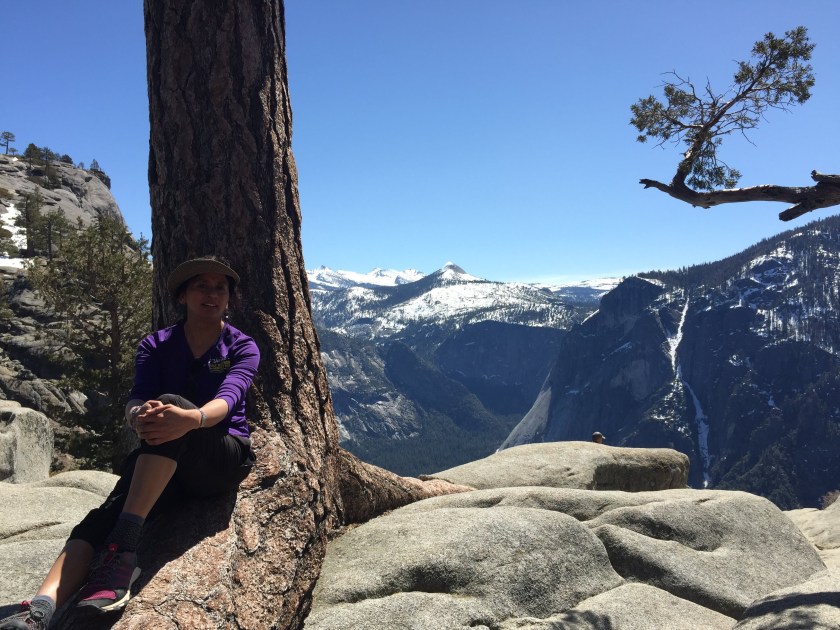
In the book, Thoreau refers to the calming influence of observing nature, and how if you stay still in the woods, you will notice things that are otherwise not revealed. I let the book flop on my tired torso, and threw my mind back to the day the husband & I managed to get a day to ourselves in the wilderness. We went on a strenuous hike up to Upper Yosemite Falls. It was a beautiful day to hike. Several cascades trickled across our paths, and we jumped joyously across them. The water trickles are the highlight of that hike, and we thoroughly enjoyed splashing ourselves with the fresh water from the snow melt. It was steep going, and we huffed and puffed our way upwards. 

IMG_8277.jpg

The trailhead helpfully said, that one must not under-estimate the hike, and that it would take 5-6 hours for average hikers. The husband, in his typical fashion, said it would only take 4 hours. I haha-ed somewhat helplessly at this optimism that has been my bait and mate, and said 6 hours it is. It took us 5 and 1/2. So there.

I was keeping my eyes out for some wildlife, and I was disappointed to find that apart from some squirrels, there really wasn’t any other wildlife of note. Of course, animals have learnt to keep away from wild humans. I remember reading somewhere that the only large animals to survive the Anthropocene stampede are those that are domesticated.  All others, we have managed to slowly wipe out. 

On the hike, it was a perfect day, the skies were a brilliant blue, the weather neither hot nor cold, anywhere you pointed the phone, you got a pretty enough picture ( I paid for this by spending an hour deleting 98% of these photos). The steps and switchbacks were exacting a toll on the calf muscles that I paid for the next day. Then we turned a bend, and there in front of us was the spectacular Yosemite falls crashing and thundering its way down to the Merced river. Loud crashes probably meant large shelves of ice chipping and crashing into the depths below. The mists created rainbows. It was marvelous. One could stand there for hours watching the waterfall. 

IMG_8338-EFFECTS.jpg

It was mighty lucky for us to enjoy Yosemite like that. For just a few days later, a storm engulfed the region, and Yosemite valley was evacuated, several rivers ran swollen and we heard of tragic mishaps and washed away roads. I thought also about how on our recent trip to the mountains, we had narrowly missed a snow storm.  There is something eerie about knowing how close one was to mishap. I was yanked back to the present by the goose-bumps on my skin, and I held the Walden at Thoreau in my hands as if looking at it for the first time. Maybe that is what the wise mean when they say ‘Enjoy the present’, and ‘Savor the moment’ and so on. I opened Thoreau slowly, mentally leaving the human village behind, and entered a sanctuary of peace and calm. I  retreated into the book for several blissful minutes, like a deer in the meadow at a rare moment.  

Thoreau had written about Walden Pond itself: 

“A lake is the landscape’s most beautiful feature. It is Earth’s eye, looking into which the beholder measures the depths of his own nature. “ 

I dipped my feet into the lake of sleep, thought of what a lousy metaphor that was, and drifted off.

IMG_8309.jpg

The Epic of Whalayana

The mother has been reading The Ramayana. She is especially fond of the Sundarakandam. For a few months, any good is attributed to the Sundarakandam readings. Anything bad is soothed away with the assurance that her Sundarakandam chantings will make it better. It takes her several weeks to make it through a complete reading. The Ramayana is a long epic, and lilts rhythmically. Reading this epic soothes her, and every now and then with touching belief, she has a go at it.

I like the Ramayana too for its main storyline, and its myriad side stories. I do think Sita could have been a pluckier heroine, but then I remember that these tales were passed down from one generation to the next, each one, quite probably, embellishing the epics a little to make sure their ideal version of the woman is subtly inserted in there. (Another post for another day)

It is interesting to think of how our epics and ballads have helped shape human history. Artifacts and natural phenomena shaped our myths, and particularly gifted story-tellers were always a treasured people. We truly believed that story-telling was the single distinguishing feature of our species. After all, imagination is a task much higher on the cognitive scale than living & feeling. 

‘Did you know? We used to have a Professor who could chant every verse and explain it so beautifully? From memory! In those days, our professors used to remember Shakespeare, entire Sanskrit texts, and eloquently recite from memory. ‘ said the father, and waxed as eloquently about the good old days; his fervor growing as he spoke of the stellar nature of his professors, about how they learnt and memorized Shakespeare and the Sanskrit texts from their forefathers. 

I smiled at the pride in his voice when he thought of his long-dead professors. For millennia we thought we were the only ones capable of passing on this kind of generational wisdom and knowledge. But that is not the case. Take the enormously intelligent whales and dolphins for instance. Carl Sagan, the physicist, writes about these intelligent creatures often. In his essay on dolphin sounds, he writes of Elvar the Dolphin who knows up to 50 English sounds and can use them in context. 

IMG_7634.jpg

Quote from Cosmos by Carl Sagan:

Some whale sounds are called songs, but we are still ignorant of their true nature and meaning. They range over a broad band of frequencies, down to well below the lowest sound the human ear can detect. A typical whale song lasts for perhaps 15 minutes; the longest about an hour. Often it is repeated, identically beat for beat, measure for measure, note for note. 

Very often, the members of the group will sing the same song together. By some mutual consensus, some collaborative song-writing, the piece changes month by month, slowly and predictably. These vocalizations are complex. If the songs of the humpback whale are enunciated as a tonal language, the total information content, the number of bits of information in such songs, is some 10 to the power of 6 bits, about the same as the information content of the Iliad or the Odyssey.

I would love to hear and understand the generational wisdom that these large benevolent creatures have for living in the oceans. The ever changing oceans must be a rich source of material. Do they have heroes vs villains, good vs evil, or things much more complex and intriguing than simple story lines like that? 

wind-in-the-reef

Quote:

They have no manipulative organs, they make no engineering constructs, but they are social creatures. They hunt, swim, fish, browse, frolic, mate, play, run from predators. There may be a great deal to talk about.

If human beings have a fault, it is assuming our anthropomorphic abilities are the pinnacle of what is possible. I must remember that until recently, we did not know whale songs existed. 

The sea is as near as we come to another world. – Ann Stevenson

Coming up next: The Inner Life of Animals

The Lord of the Trees

I gazed out of the window feasting my eyes on The Lord of the Trees working hard so early in the morning. The trees went past their blooming-flowers phase to the sprouting-young-leaves phase in the past few weeks.

“How can anyone who has spent any time observing life like this, feel like not preserving it?” I asked. Us not looking after Earth well enough for future generations is a pet peeve that regular readers of this blog know.

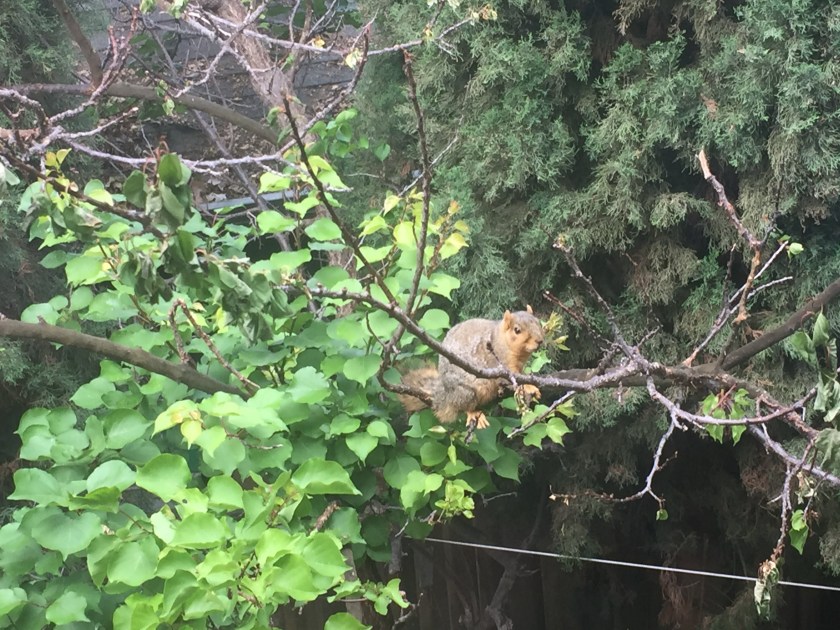
“Because I don’t think people stand and gaze at squirrels like you do when one is already late for school in the morning”, came the crisp reply and I nodded sadly hastening to bustle about for the morning tasks.

IMG_7860

The squirrels have resumed lording about the trees like they own them, which I suppose they do, since they are in them so much. I see them lovingly scraping bark, and checking out the fruits . I fight a losing battle every year trying to save the fruits from them. Friends have suggested fruit nets, but I haven’t the heart. They are the ones that live there, and sometimes I like to think of them sunning themselves on the branches while I am in a drab looking conference room surrounded by tonnes of concrete to pay for the land that these trees rest on. I only wish they would eat the whole fruit before tossing them to the ground, or hiding them away somewhere for the Winter months.

IMG_8683.jpg

I cannot deny that it is nice to see the little creatures busy again. The winter months are a little slow for them: though they do not hibernate much (apparently, they do not have enough body fat to sustain them through long cycles of hibernation), they sleep a lot. I wonder how their burrows are, and whether they feel the difference between night and day when they emerge from their deep burrows into the spring time bursting with flowers, fresh leaves and the promise of fruit. 

A few days later, the son and I picked out a book in the library called Morris Mole by Dan Yaccarino that dealt with a similar subject. The book was about a mole who was a wee bit different from his brothers and sisters.

IMG_8550.jpg
Morris Mole – By Dan Yaccarino

One day when the moles ran out of food in the deep deep burrows, the eldest moles wanted to dig deeper down, but Morris had an idea that nobody listened to. So, he “dug deep down in himself and found courage”, to dig upwards.

IMG_8553.jpg
Morris Mole – By Dan Yaccarino

When he emerged into the spring time, he is enamoured and baffled by the big wide world up there. 

This world also offers him the rare gift of friendship with creatures unlike himself such as a fox. 

IMG_8554.jpg
Morris Mole – Dan Yaccarino

The book made me think of how some seemingly little occurrences and thoughts have the power of transformation in them. Would Morris Mole have discovered this wondrous world overhead if he had not paid heed to that little crazy idea and acted upon it?

A few days later, I stopped to observe a squirrel again. This time, it was sitting by the roadside, and sniffing a mustard yellow flowery plant with a contented look on its face. The photographers up at the National Geographic magazine would have been able to get a picture of just such a thing. As it turned out, by the time I fumbled in my pockets, and took out the phone, dropping the keys in the process and finding some tissue marring the phone screen, the squirrel scampered probably laughing to its burrow. But I have the image in my mental eye: I hope it will remind me to enjoy the present when plans shadow life, or life overwhelms reflection. 

All good things are wild and free – Henry David Thoreau

I wish we could all dig deep down inside us to find the determination to set aside some time to spend with living, growing things that are very different from ourselves – observe a bird sing, marvel at a squirrel on a tree, look at ants carrying food, watch a spider spinning a web, or feel the wind against our faces knowing that it just rustled that beautiful tree top nearby. Maybe that will open up a way of living that is much more rewarding and satisfying like the world Morris Mole found overground.


The Big, Little and Half Domes at Yosemite

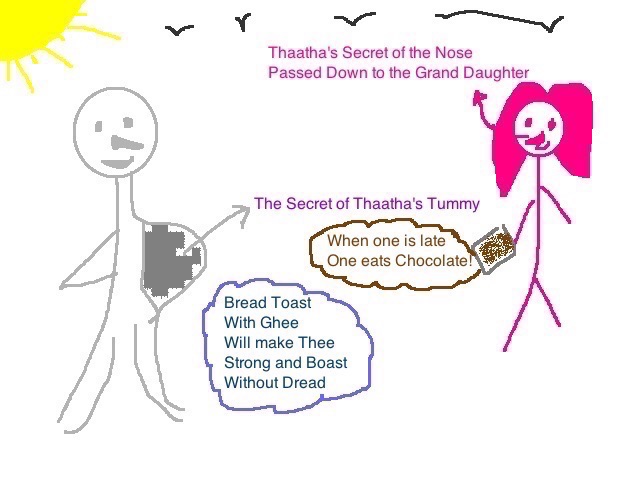
The grandparents arrived, and the grandchildren are reveling in the attention, food and companionship that grandparents bring in their wake. The pater is the Self Appointed Head Counsel for Advice in the household. When you take out a slice of bread, and don’t know how to bite it, he is the authority to seek out: Bread is best eaten when toasted with ghee on both sides in a frying pan, not toaster, and then you must liberally spread jam or even condensed milk. This new fangled chocolate on everything is not good for health, and one must keep away from large doses on chocolate on everything, he says to the children who have perfected the Art of Pacifying Thaatha (Thaatha – Grandpa) with a smile, and fleeing with the chocolates. The teenaged daughter is particularly adept at this. One time, he was advising her on how to leave the house for School without causing mayhem in the morning. “Remember, I went to School for 60 years!” said the old man. (He was a school teacher.) 

“Clearly, it wasn’t enough!” said the tongue-in-cheek grand-daughter to much mirth on Grandpa’s side. I don’t quite understand the rhythms of relationships between grandchildren and grandparents.

Bread_secret

Anyway, point is: Thaatha can give life advice on anything. Grandchildren can ignore life advice on everything. So, an easy truce prevails with each doing exactly what they want to do, with affection and love. It is a sight to behold.  

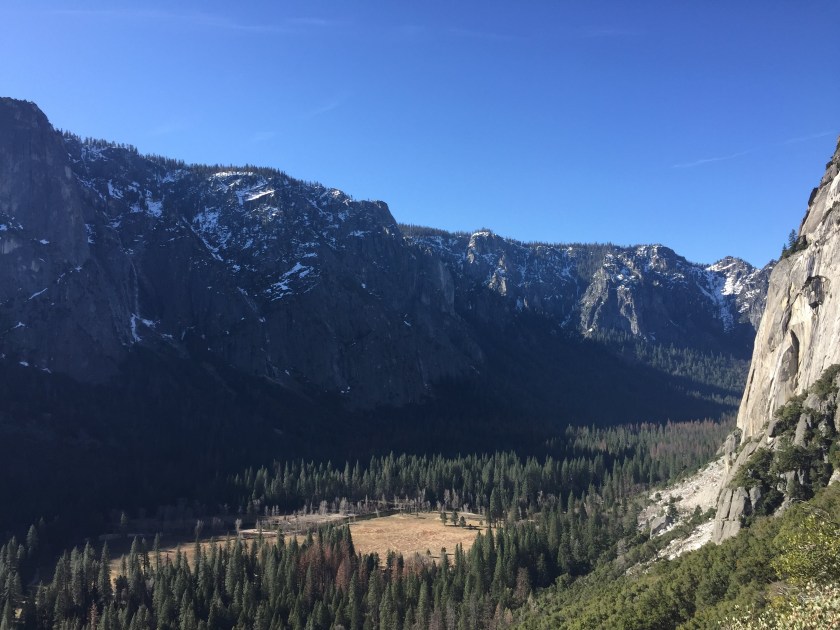
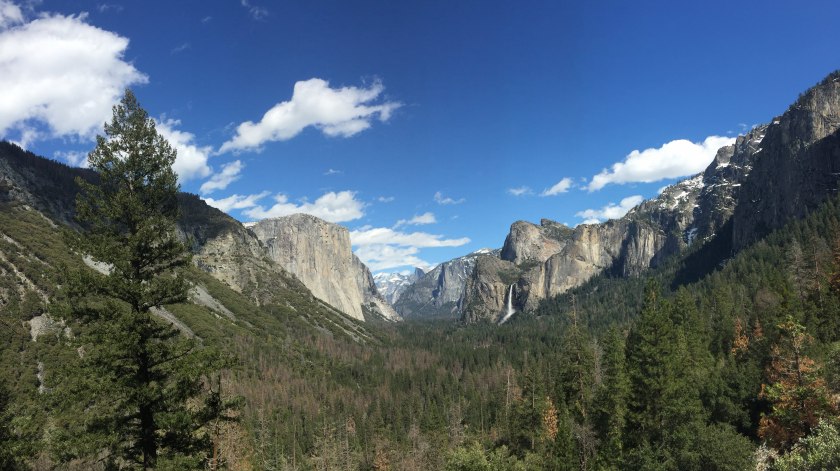
In other news, April rolled along, bringing Spring break in its wake, and off we went to Yosemite National Park for a few days. Gazing over the rain washed Yosemite valley, makes one think yearningly of the phrase: Where every prospect pleases and only man is vile. 

IMG_8356.jpg

Yosemite is a poet’s heaven, an artist’s dream, a hiker’s paradise, a parking headache, and a last minute accommodation seeker’s nightmare all rolled into one.

Luckily for us, we found a beautiful house about an hour away from the park’s valley. The second day of the trip,  the grand (children and parents) opted to stay in the house enjoying the environs nearby. This gave the husband and I an opportunity to sneak off on a hike, and we enjoyed the day and the views it gave us.

That day, the former school-going grandfather and current elementary-school-going grandson also set out on a hike of their own near the house.  

They were asked to take a phone along, and this suggestion was advised away saying the younger generation relies too much on technology, and that good common sense will always lead you in the right direction. “Especially on a walk, just note down the important roads and junctions, and you will increase your memory, …

“Okay okay Thaatha – you come back and teach me how to take a walk okay? I am only going to lie down and read today. Sure, you don’t want the phone? Okay! Bye! “ said the teenager and plonked herself on a couch that looked like it was made by fairies, and stuffed with dandelion twinkles.  She ruled the heavens of her imaginations with queenly delight and grace the whole morning.

Out in the streets, the walk started out sweetly enough. Grandpa advising his grandson on how to notice all the road signs, and distinguishing features, so they don’t get lost. About 2 hours later, the pair of them rolled up to the home in a police escort vehicle to much agitation in the household. The grandfather got himself out, somberly shook hands with the young officer, and his stentorian voice could be heard “ Thank you very much Officer. May God bless you. I am very sorry for the inconvenience caused to you, and we very much appreciate you bringing us home. ”

The son was seen shyly high-fiving the officer. 

“What happened?”, went the collective pry, and after a weary sigh, the duo set out to explain their walk.

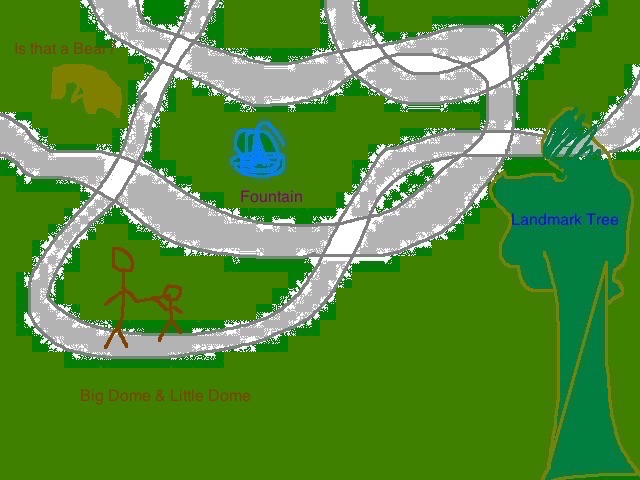
The grandfather had started off by advising the little fellow about how not to lose his way. “Take note of the road name, and you can always find your way back.”, said Big Dome to the Little Dome. The Little Dome said, “Oak Dr, Oak Road, Oak Trail, Oak Grove, Fountain Road, Fountain Circle. “

“Don’t remember them all, that would confuse you.”

“But you said …”,  and off they went giving and imbibing life lessons for all of us.

About a mile afterward when they decided to come back was when the fun started. It was a confusing place to get to, and several times the same road names looped one over the other. Was it Fountain Circle, or Fountain Drive that they had passed last. What about Lion Cove? Was Lion Cove parallel to Fountain Drive or perpendicular to Fountain Circle? The poor things went round and round in circles, till Officer Dave had driven by. The Little Dome helpfully rattled all the street names he remembered, and Big Dome apologized for having forgotten the route, though he remembered the name of the street the house was on. The police officer was most gracious and helpful to the grateful duo, and gave them a ride to the house on the prairie.

Roads

Thereafter, for the rest of the trip, Big Dome was teased about remembering the names of the streets, and landmarks. “Thaatha – this is Half Dome. Always remember that rock, and you will not get lost in the valley. If you get lost, keep walking towards Half Dome. From up there, you can see everything clearly, and can find your way.”

Never a dull moment, and that is just as life should be.

Henry David Thoreau At Walden Pond:

I am convinced, both by faith and experience, that to maintain one’s self on this Earth is not a hardship but a pastime, if we live life simply and wisely.

Also read:

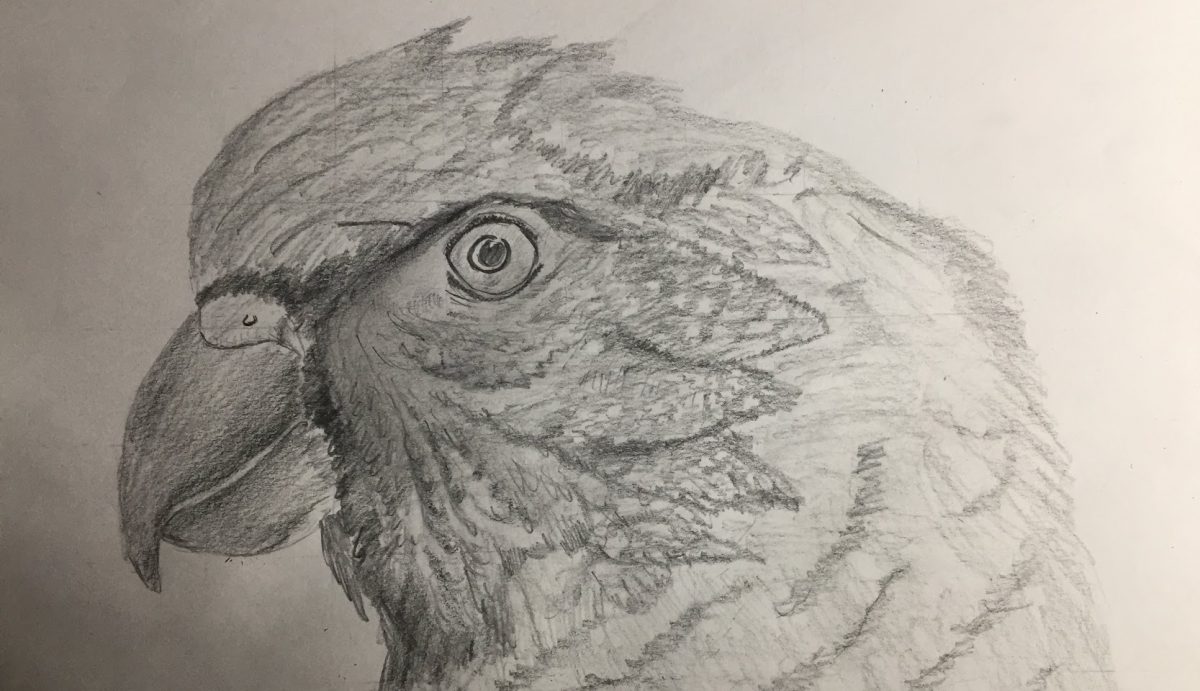
Slay The Dragon, Not The Parrot

The Dance of the Butterflies

Magical March gave us the immense satisfaction of walking to school under magical rainbows,  leprechauns had wreaked havoc and left treasures, my mother got to see her father for the first time at the age of 73, we had a beautiful trip playing in the snow, the doting grandparents arrived and the children have been reveling in the social rainbow that enveloped them.

Out in the natural world, the hills are alive with the sound of moo-sic (cows grazing – get it, get it?), the cherry blossoms send sparks of joy piercing through the soul every time I look at them, and the butterflies have been dancing the dance of joy. Rain showers cleansed the Earth, and all nature around us seems to be smiling benevolently.


One beautiful evening, I stepped out on a walk with my little son. Elementary school children derive a certain pleasure in crouching and looking at ants, snails or ladybugs. This time, however, we crouched down to look at a furry, black caterpillar. After reading Eric Carle’s book, The Very Hungry Caterpillar, everyday for months at a time with each of the children, I did not think that I would be enamored sitting and observing caterpillars, but such is the infectious enthusiasm of youth. (The Wind in the Reefs – Working title of The Wind In The Willows)

I found myself excited and thrilled to crouch and watch the caterpillar make its short journey across the concrete path back into the sidewalk where the bushes grew. I still find it amazing that these creatures metamorphose into butterflies. Eggs->Caterpillar(larvae)->Chrysalis(Pupa)->Butterfly has to be the most magical thing in our daily existence next to rainbows.

Later that week, the crouch with the caterpillar made me reach longingly for the book, The Girl Who Drew Butterflies: How Maria Merian’s Art Changed Science – Joyce Sidman

IMG_8198.jpg

Maria Merian was a naturalist and illustrator in the seventeenth century.  Written by the children’s author and poet, Joyce Sidman, she says:

In many ways, Maria was an enigma. She rarely wrote about anything other than caterpillars…What we do know is that she had boundless energy, insatiable curiosity, and superhuman focus – traits that would have been difficult to live with, but ones that marked her as a true scientist at a time when the odds were stacked against her.

How does one find the passion and perseverance to stick to a field of study in spite of societal disapproval, familial duties and demanding businesses?  The book gives us a glimpse into seventeenth century life: The impossible clamps on Women, the dangerous possibility of any curiosity being mistaken for witchcraft, the difficult life of artists in general and so much more.

I have always admired those who have high energy levels and put it to good use. Maria Merian was one of those people. She was a brilliant artist, had business acumen and her curiosity about insects made her a pioneer in the field of etymology (A field that did not even have a name until several decades after her death). Her contributions to etymology were remarkable because she also managed to travel to Surinam near Barbados in those days with the sole purpose of studying animal life. Her paintings on Surinam and her books on caterpillars had great appeal in Europe, and Maria Merian went on to transform Art and Science forever.

Screen Shot 2018-03-29 at 5.12.14 PM.png

The book is full of beautiful diagrams, paintings, flowers and plants with little insects on them. It is a joy to thumb through even if it is just to look at the pictures.


Here is to more butterflies, rainbows and magic.