Ostrich Philosophy: News to Peace

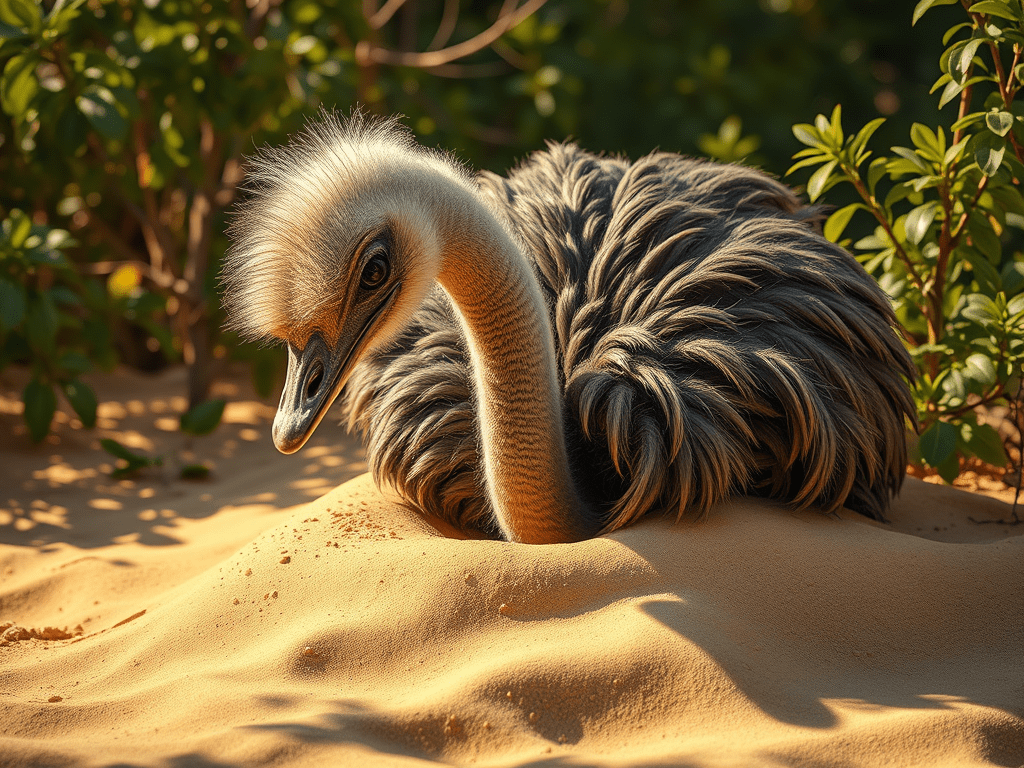
“I would like to be an ostrich, and just bury my head somewhere deep in the sand! “, I said reacting to another piece of breaking news. 

“What happened now?” said the husband. 

I mumbled and rambled, “Nothing new. Just expected but also so outrageous! Makes my blood boil. But like most of the folks at this point, I just feel resigned. Like I said want to be an ostrich – preferably in its natural habitat – halfway across the world from here!”

The husband laughed, and said, “Change of topic! What are you reading now?” 

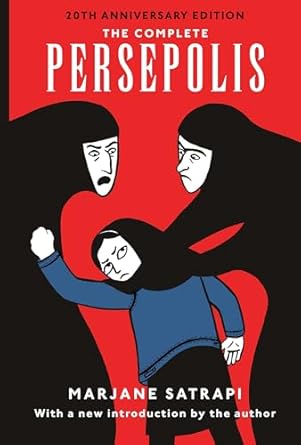
Ah…he was going for safe bets, but no sir! This time, I was ready with a book that plunged right on. I was re-reading Persepolis – By Marjane Satrapi. It was our bookclub pick, and I realized why it remains one of my favorite books of all time. Marjane Satrapi’s sense of story-telling has a childlike sense of wonder. It is a coming-of-age story after all. But it is set against the backdrop of the increasingly regressive Islamic Revolution, the Iran-Iraq war, and the numerous humanitarian excesses that go with these situations.  Marjane Satrapi’s sense of humor, even in the telling of the most horrific scenes of 1970’s Iran is what makes the book a marvel.

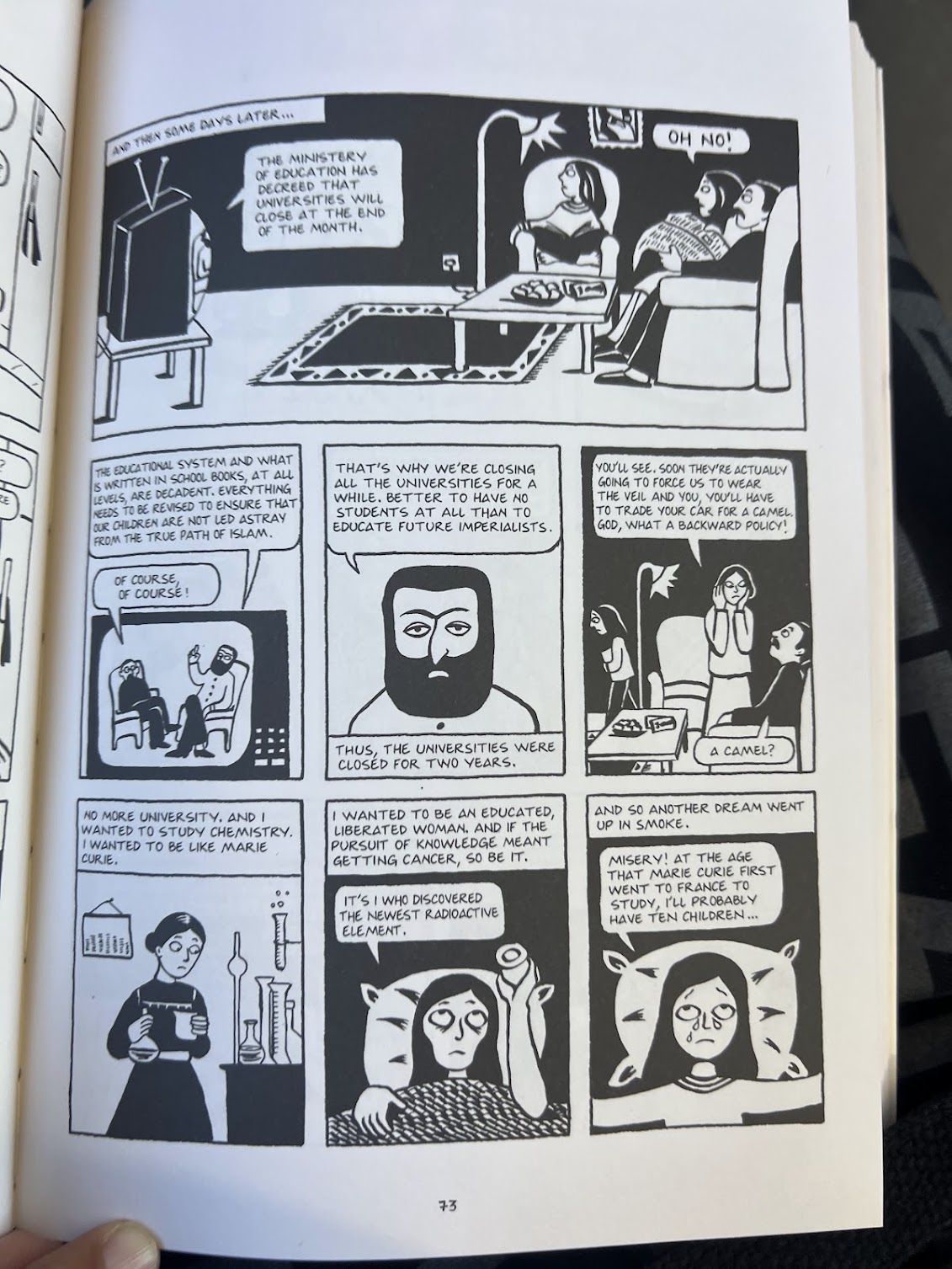
I held the book up, and opened up to read : as luck would have it, my eyes landed on the announcement by the authorities that they would be shutting down Universities and higher learning was banned. 

FromthebookPersepolis:ByMarjaneSatrapi

The next day’s breaking news made me want to be an ostrich again. The Education Department’s funding was being revoked. “Did he read the book and decide what to do next?” I said, clanging the dishes with extra vigor while unloading the dishwasher. 

“Really! There must be some sort of book of ideas – some template to go by, no?” I said. I admit I was flummoxed by the uncanny Tyranny 101. On Tyranny – By Timothy Snyder’s book also got it right. 

Why isn’t there an equivalent for Peace 101? I suppose all the hard things in life have to be worked for and attained in the hard way, but for everything else there are rulebooks.

From Science Fairs to Real-World Solutions

Almost everyday I am amazed at human potential and dismayed by what we choose to do with it. We are problem solvers, but we have enough folks who create them in the first place too. We have the ingenuity of using tools to forge ahead, and shortsighted enough to be thwarted by our own creations. We are a meticulous species, and a callous one. 

As I was musing thus, my thoughts were interrupted. “What if we run out of problems?” one of the children at the Science Fair asked me.

Problem Solvers or Creators?

I assured the worried children that as long as humans are around we will never run into that particular problem. We will always have problems to solve, and we will always ourselves to blame for creating most of them too. “So, you can choose to be problem solvers or creators – I think you kids are good kids who may land up becoming problem solvers” They beamed.

We were standing at the Alameda County Science and Engineering Fair, and the projects on display were truly inspiring and mind-boggling. “We created AI to solve many problems, but I assure you it will create some of its own too!” I said, “Then, we can set about solving them. We’ll be busy!” and they laughed nodding.

The AI Revolution

Over on the High School side, it seemed the children had taken the AI revolution to heart and attempted to solve almost everything with AI. 

Detecting lung cancer early, patterns of dyslexia, Parkinson’s disease, watering crops, even solving mathematical theorems. 

As I meandered slowly through the aisles looking at the display boards I took in as much as I could. The musings came later:

So what does AI predict for us? Especially if we are to use it for so many things? The Internet wave seems like one to play in at the beach compared to this surf wave.

Science Project Areas

It was fascinating to see all the areas in which the children had attempted to solve problems. Sustainability, environmental science, plant growth, reducing microplastics, hydro-farming, disease detection, water purification, working around the problem of microplastics in our soil and water, and so much more. 

One project on elder care had me hurtling back decades. It was a pill dispenser for the elderly. I thought of my grandmother, Visalakshi fondly. One day I caught her popping 15-16 pills at one shot, and was truly fascinated. Did she need that many to keep ticking? I was probably 7 years old at the time, and everyone with grey hair seemed impossibly old. Oh! Youth! She looked at me fondly when I asked her that, and said that she had merely forgotten the morning and afternoon doses. “Paati  – no! You can’t just eat them altogether!” I said, and she laughed like I was overreacting. I can see that particular project being quite useful, as I am sure that particular trait is not something that simply fades. 

I walked around the fair, admiring the vast variety of problems in front of us, and the many, many ones that did not even make it to the Science Fairs. The atmosphere felt promising, hopeful even. How could it not be? This is one of the places where the appeal of problem solving is showcased for all of us. The world doesn’t seem to be as bogged down by negativity and impossibility.

We need to teach our kids that it’s not just the winner of the Super Bowl who deserves to be celebrated, but the winner of the science fair.

Barack Obama

That is why he remains one of our favorite presidents.

Exploring Handwriting: Cursive vs. Digital Age

Cursive superpowers

The white board was littered with alphabets and numbers. We were discussing the different ways in which people wrote their numerals or alphabets. 

“How come nobody seems to like cursive writing as much anymore?” I said, and off we went writing our little cursive numerals and alphabets like artists swirling their best hieroglyphic characters.

“Is that an ‘I’? Truly? I have never seen an ‘I’ like that before!”

“Wow – that ‘J’ is wild! No wonder teachers moved away from cursive. “

“Well, there is a lost skill – imagine the superpowers teachers had deciphering everyone’s handwriting and essays.”

Hippopotomonstrosesquippedaliophobia anyone?

That was true. It is a superpower. Writing fast was a superpower too, one that was made easier with cursive. How beautifully could we go on in one pen stroke for a word like pneumonoultramicroscopicsilicovolcanoconiosis? How many people suffered from hippopotomonstrosesquippedaliophobia back then compared to now (fear of long words!)?

“I think in terms of the keyboard locations when I spell a word.” said a much younger colleague, and I drew in a breath – the places where generational differences get you is truly mind-boggling. But then I realized their generation spent more time typing things out in word documents, or in chat screens than any other generation preceding it, and it was only natural for their brain to associate the keyboard with the spellings..

One person said that when they added numbers, they imagined them as dominoes being added together. “Were you a gamer?” 

“Yes!” they said, looking a little sheepish.

The Cognitive Processes of our Brains

Truly, the brain is such a multi-layered immensely capable and adaptable organ. Neuroscience must truly be fascinating to study and research. How many visual thinkers were there among other species? What percentage were analytical? Many would possess kinetic intelligence. Once we stop only thinking of the narrow spectrum of human intelligence, the world becomes that many dimensions more fascinating. I peered into the bookshelf at a book that has been on my tsundoku shelf for ages: ‘How the Brain Thinks’ and resolved to read it soon.

The picture of the brain was on the front, and I smiled as I thought of a friend who told me that they don’t like eating cauliflowers because it looks too much like the human brain. What was that type of thinking called? Visual or Associative.

The Meaning of a Good Life

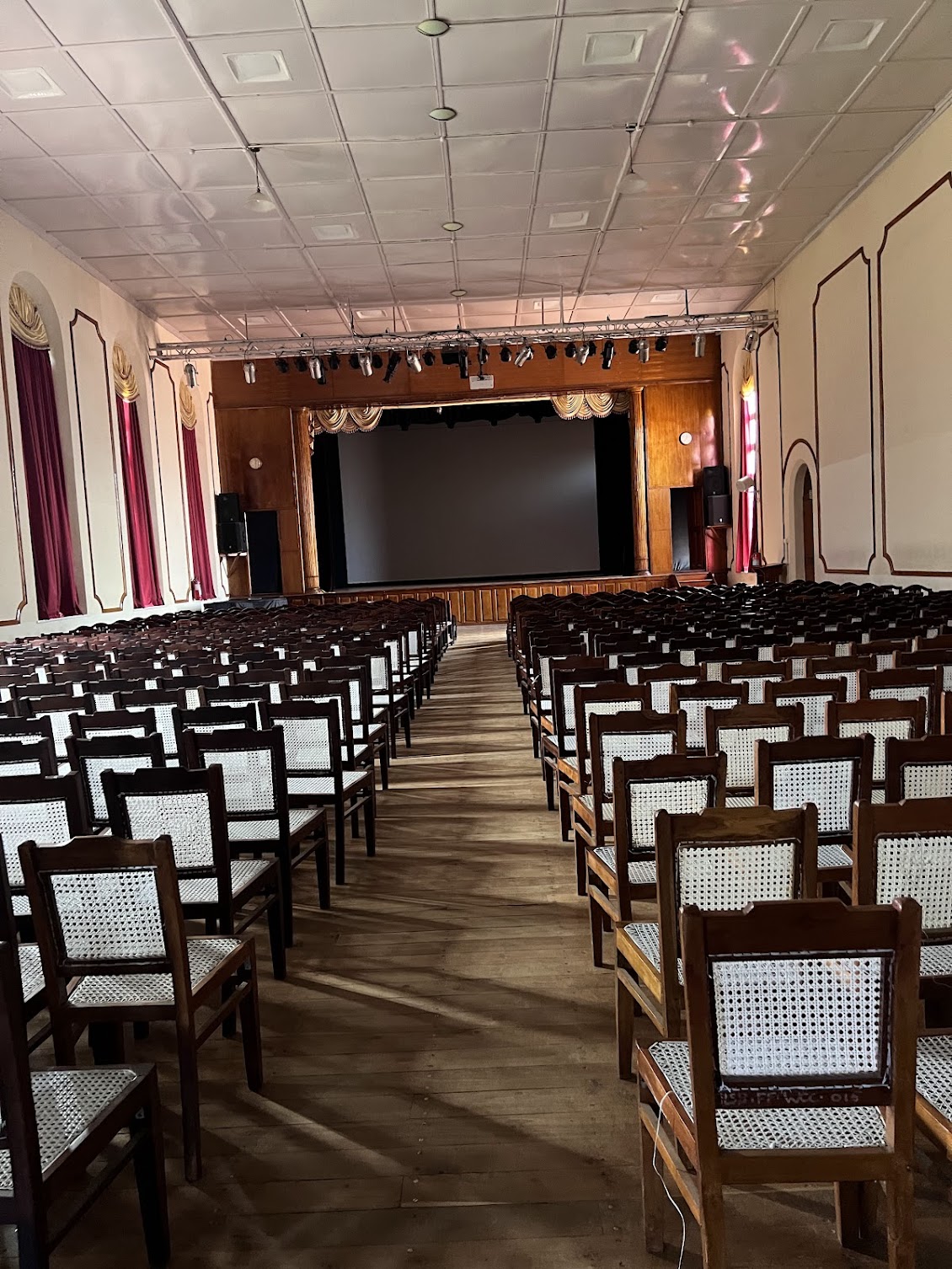
We went to visit our old school haunt – the home of our school days, and some of the best memories. If there is a utopia, I’d like to think it is very much like that place. There was plenty of ‘real’ life there too – It was by no means devoid of pain or jealousies or strife or suffering, but life still felt full of promise. Like the universe was conspiring and preparing us for a fantastic future. Maybe it was the optimism of youth, maybe it was the collective talent of the folks around us, or just the marvelous eucalyptus scented air around us in a beautiful location in the Nilgiri Hills.

Of course, one cannot help feeling like you’ve let down the school quite a bit, but what can you do? Luckily, most of our teachers have retired, but I felt I could feel their encouraging presence at every science lab and every playground. 
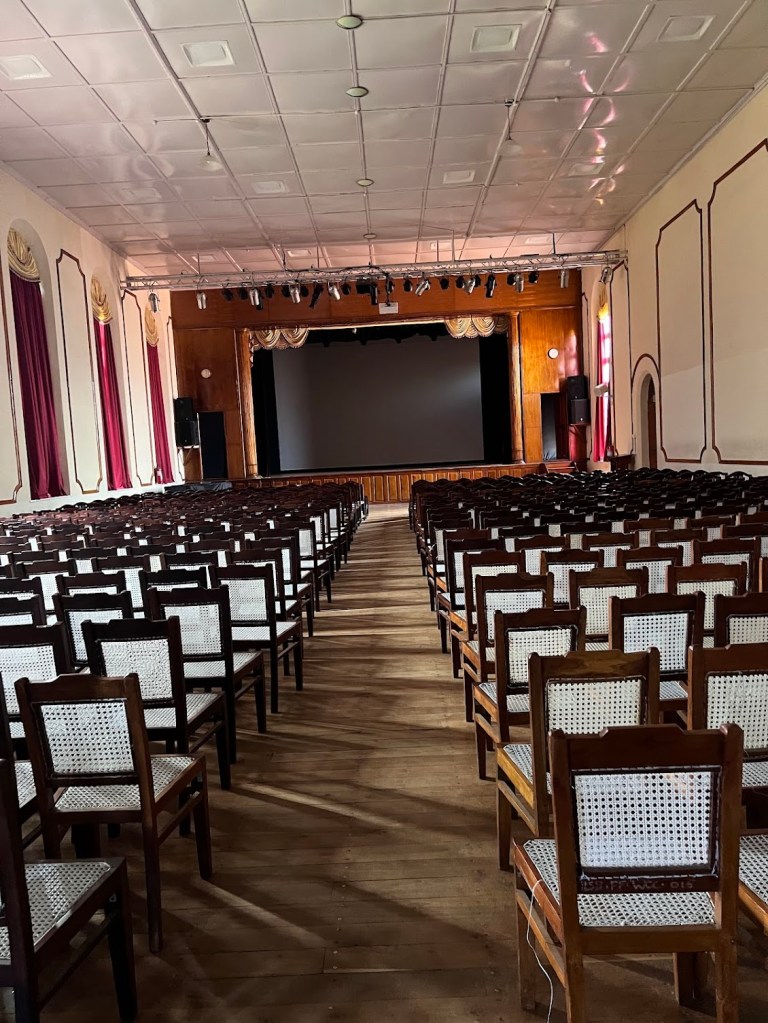
A visit there at this stage in life though, revitalized me in ways I did not comprehend till I had the quiet and solitude to mull things over after coming back to the USA. “You can still do a great many small things to make things better for the world around you, couldn’t you?”, a small voice whispered in my ears. Maybe after all these decades of striving, that is what you come to realize. That, as Mother Teresa said, there is greatness in small acts:

“Not all of us can do great things, but we can do small things with great love.”. – Mother Teresa

I asked my father what he thought at the time – he was a teacher there. Did he think any of his students would go on to win the Nobel Prize, or the Booker Prize or become the Finance Minister or make it big in the field of Arts/Drama/Acting?

He said that the markings of greatness were visible in few children at such a young age. Mostly, it was the potential that excited the teachers. You ask the pater a question, and he can turn it into an impromptu speech within seconds. So, I wrapped up and set off on a walk while talking to him. Always the best thing to do. He said,

To rephrase Shakespeare:

Some people are born into greatness, some acquire greatness, and some have greatness thrust upon them.

In good schools with well to do parents (by that I mean parents who not only have the means but also the interest to invest in the success and achievements of their children), many children belong to the first category. Success is expected of them, and the tools are there for the taking. Barring any major life events or health issues, these children can build a life for themselves – that is not to say there isn’t struggle. For those very expectations of greatness can be a burden to overcome.

The second category of talent comes up despite their circumstances – the distance they go in life, the differential between where they started and where they end up is the yardstick for their success. Many children from modest means who go onto achieve success belong to this category.

The last and final category can come from either of the categories above – but these people are tested beyond what normal people endure. Their hurdles are frequent, gargantuan and any progress they make is a success in and of itself. Health issues, career issues or relationship issues (sometimes all three) test them. Many break under the stress and strain of it, but those who are thrust into greatness endure, secure in their understanding that small victories and sustained mindsets often tide them over better.

Many are the stories and epics written about these characters. But more importantly, we all know friends and family in this category. Even if it isn’t obvious, even if we aren’s writing songs about them, they are truly heroes of their stories. Being a stable parent in a tumultuous relationship, navigating health hurdles, being a steady breadwinner through times of economic upheavals, being a steady person when all around you have lost their minds – that is their greatness.

IF – By Rudyard Kipling

If you can keep your head when all about you   

    Are losing theirs and blaming it on you,   

If you can trust yourself when all men doubt you,

    But make allowance for their doubting too; 

Yours is the Earth and everything that’s in it,   

    And—which is more—you’ll be a Man, my son!

Or more along the lines of: You’ll be a Human-being, my child!

The evening was drawing cold, and I knew I had to cut my walk short, even as I mulled on the father’s answer. Making the best of things, and Never Give In were the things they taught apart from Languages, Mathematics, Arts, Sports, Sciences and History. For those it served well, it was heartening that it had, and for those that it hadn’t, well there was still hope that they would learn to do so. That, right there, was the philosophy of a teacher in one grand stroke.

The walk made me reflect on two of my favorite speeches:

On The Importance of Failure and Imagination – By J K Rowling

Harvard’s 80 year old Study on Happiness and Success (Harvard Study Article)

Greatness is something we are told to pursue, without properly knowing what it means, at a young age. For many, the pursuit of a living (and maybe fame or renown) occupies time and energy. But life is far more complicated and richer than that. It means good and close relationships with family and friends, good health, good wealth, good pursuits (intellectual, spiritual and physical), purposeful work, the ability to feel joy, and so much more.

Maybe this is why school reunions and such are planned at a certain stage in life. The environs can stimulate thoughts and spur us on towards growth and meaning.