How do we exist?

It had been another long day, and as the clock ticked towards midnight, the body yearned for sleep, but the mind looked longingly at the tsundoku pile, and craved for some quiet moments of solitude. I peeked out of the window, and the moon sailing high through the skies tugged at my heart. There is something so intensely beautiful about catching sight of our  lovely cosmic neighbor sending its mellow moonbeams through the leaves at night.

I looked for a word that captures the phenomenon, but there isn’t one.

There are two words in Japanese that come close (the Japanese language has such amazing words for admiring wondrous nature around us.)

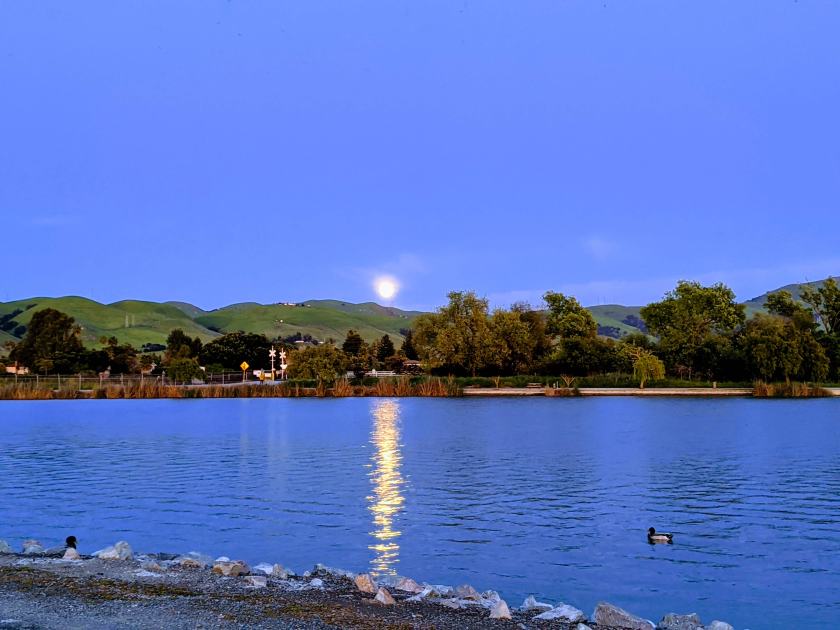
Kawaakari ( 川明かり – a word depicting the evening reflection of light on water, or in some cases can refer to the reflection of the moonlight off flowing water.

img_20200407_195324-effects

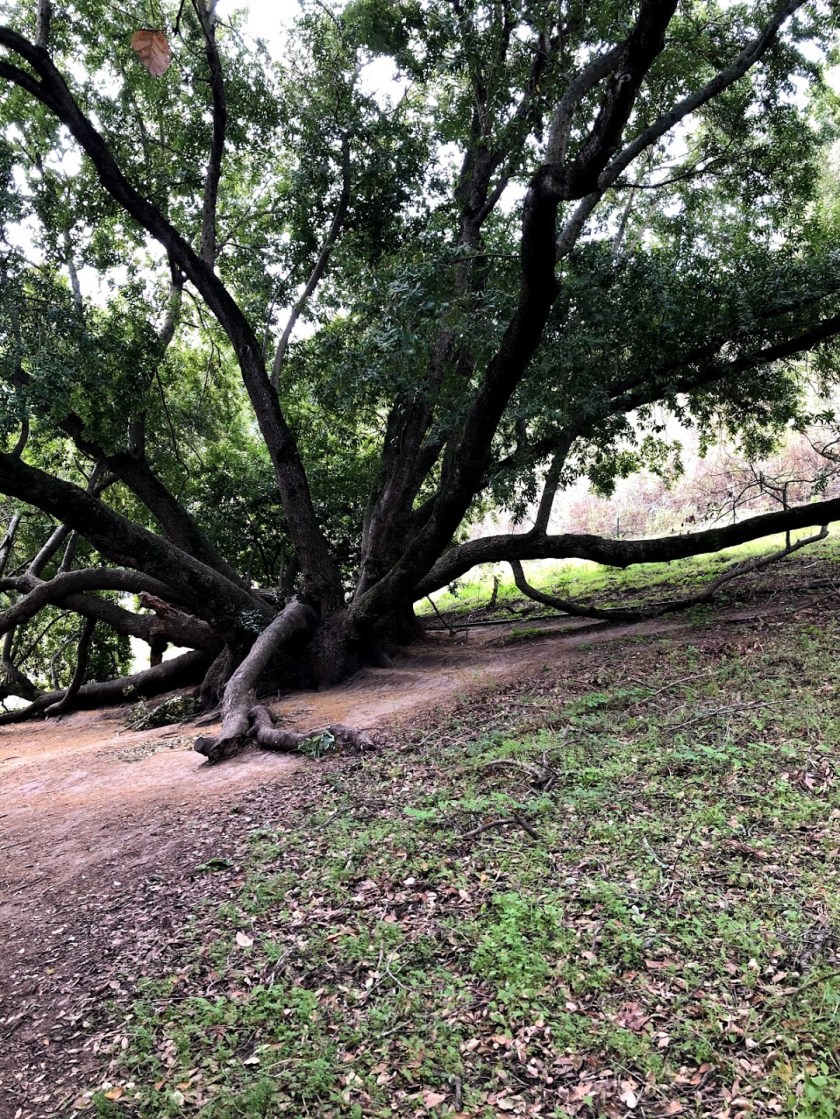
Komorebi (木漏れ日): Sunshine filtering through the trees.

trees_komerabi

I had just started reading The Sea Around Us by Rachel Carson. In the first chapter, Rachel Carson takes us with her steady voice into a time on Earth before the seas were created. When the planet was still heaving and churning its metallic ores, hot searing waves of liquid settling into a semi-liquid state in its outer cores. She wonders then about the question, how were the oceans formed?
“So if I tell here the story of how the young planet Earth acquired an ocean, it must be a story pieced together from many sources and containing whole chapters the details of which we can only imagine.
For although no man was there to witness this cosmic birth, the stars and moon and the rocks were there, and indeed, had much to do with the fact that there is an ocean.”

Then, she leads us from this fiery place in the cosmos with the sun heaving its solar flares, the earth itself arranging itself into concentric spheres with hot, molten iron at its core, and an intermediate sphere of semiplastic basalt , the outer layers of granite and basalt. And then gently she lures us into the possibility of the moon and the ocean being related to each other.

The next time you stand on a beach at night, watching the moon’s bright path across the water, and conscious of the moon drawn tides, remember that the moon itself may have been born of a great tidal wave of earthly substance, torn off into space.

How can one not be mesmerized by the creation of the moon? Was it truly hewn from the surface of the earth (The moon’s density does match the density of the outer crust). The hypothesis that the moon was hewn away after massive solar tides exerting a pull on semi-molten Earth is based on the theory that the large portion thus hewn away left such a large scar on the surface of the Earth. A scar that would continue to shape Earth and its lifeforms for millions of years afterward: The Pacific Ocean.

Later, as the Earth cooled and clouds formed from the steam rising, the rains started. Pouring onto the hot earth for years – initially almost immediately evaporating into steam, but eventually collecting as water – forming the first oceans.

It is, of course, fascinating that we still do not know for sure how the moon was created. There are several theories – theories of violent impacts, random objects being attracted by gravity, and young earth managing to keep one satellite, while heftier ones like Jupiter acquiring 67 etc. This is a topic still under discussion.

https://www.space.com/19275-moon-formation.html

Nevertheless, the very first chapter had me wowed. I would never be able to look at our closest cosmic neighbor with the same eyes ever again. How often I have stood marveling at the moon? Out on walks, my heart always skips a beat when I catch sight of the beautiful, faithful satellite accompanying Earth as she tears through space. To think that there is a possibility that the very creation of our cosmic neighbor was crucial to our oceans is awe inspiring. I live on the Pacific Coast, and never can I see the bays, the ocean or the moon without reminding me of this book.

The Sea Around Us by Rachel Carson

sea_around_us

The skies hold the answers to our most philosophical stirrings. Why do we exist?

The seas, it seems, holds the answers to our most existential stirrings. How do we exist?

The Rings of Life

We were walking a familiar route through our neighborhood, stopping to see some of the felled trees as we do every so often. The rings in the pine trees show they must have been at least 80 years old.

img_7820
For an impatient flitter such as myself, trees are truly sentient beings. Beings that teach me about holding still, of being sentient beings for the small time we spend on this beautiful planet. Like a butterfly flitting through the Earth for a day. You can replace tree for a star in the quote below and it would still hold when one sees redwood trees, sequoia trees and old banyan trees.

“From the point of view of a mayfly, human beings are stolid, boring, almost entirely immovable, offering hardly a hint that they ever do anything. From the point of view of a star, a human being is a tiny flash, one of billions of brief lives flickering tenuously on the surface of a strangely cold, anomalously solid, exotically remote sphere of silicate and iron.”

― Carl Sagan

As I was reading Life in the Garden by Penelope Lively, I stopped to relish the section on trees. Though the book is largely about gardens, she does make a foray into trees briefly:
“Tree rings are wonderfully eloquent; here is time stated, time recorded, time made manifest. Dendrochronology- the scientific method of dating based on the analysis of tree rings-can determine past climates, or the age of a building, it can be used to calibrate radiocarbon dating, or by art historians to determine the date of a panel painting. And all because a tree grows slowly, systematically, but laying down each year a memory of what that year was likes – usually wet, dry cold, hot-whether the tree flourished and grew, or held back, and how many years have passed. And the more I think about it, the more I have come to the conclusion that this is why trees invite anthropomorphism. They are sentient in a way that a building cannot be.”

octopus_tree

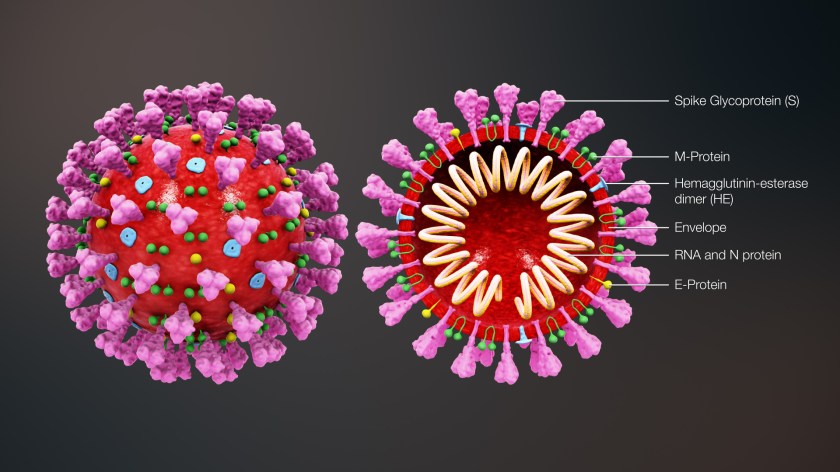
When I read this piece in Life in the Garden by Penelope Lively, I thought to myself, that Covid-19 would not register in the life of trees, would it? Droughts, wildfires, these may, but Covid-19 would not. The human suffering is acute – there is no doubt about it. The true heroes are the front-line workers, such as doctors, nurses, water and essential service providers, cleaners, mailmen, supply chain workers for groceries and medication who are braving the outbreak to keep society functioning as best as it can, while the virus takes it toll. The human toll is one thing, Covid-19’s economic ramifications is quite another, reminding us of the tottering pile we have built our societies upon: Stock markets indices, economies, international boundaries, – everything that a virus can thwart on a whim.

3D_medical_animation_coronavirus_structure

What would Covid-19 imprint in our psyches? It can be a time of transformation. A time of reflection. A time to prune the unnecessary, a time to nurture the necessary, a time to get to know ourselves and our loved ones better. A time to think of needs vs wants.  A time of quiet.

We may never have taken pandemic preparedness seriously. Covid-19 is teaching us about the importance of these things. What would we need to do for far more severe outbreaks, with water-borne or air-borne diseases in the future? I am sure these will never be treated with the same levity ever again.

“Nature is always more subtle, more intricate, more elegant than what we are able to imagine.”
― Carl Sagan, The Demon-Haunted World: Science as a Candle in the Dark

The more I think about it, the more I want to believe that we shall embrace Science as a Candle in the Dark. Many children will take up research in microbes. I hope we shall, from now on, invest in our infrastructure, in our research, in our general preparedness, and appreciate the fragility of life and our social ecosystems itself. Our rings in time will bear out the wisdom in the coming years if only we learn from it. One dark circle reverberating it’s learnings outward, and spreading light in the subsequent rings afterward.

“In its encounter with Nature, science invariably elicits a sense of reverence and awe. The very act of understanding is a celebration of joining, merging, even if on a very modest scale, with the magnificence of the Cosmos. And the cumulative worldwide build-up of knowledge over time converts science into something only a little short of a trans-national, trans-generational meta-mind.”
― Carl Sagan, The Demon-Haunted World: Science as a Candle in the Dark

References:

  • Life in the Garden – By Penelope Lively
  • The Demon-Haunted World: Science as a Candle in the Dark – Carl Sagan

Candles in the Dark

I remember talking to a man who was our van driver in the Yucatan peninsula. His theories were astounding, and he seemed to have scoured the internet for the plausible and marvelous, completely ruling out the possibilities of evolution and what science proved to us. He was obviously a man whose love for the marvelous made him an interesting story-teller, and was probably well-received  at parties.

Here is a clip from his conversation:
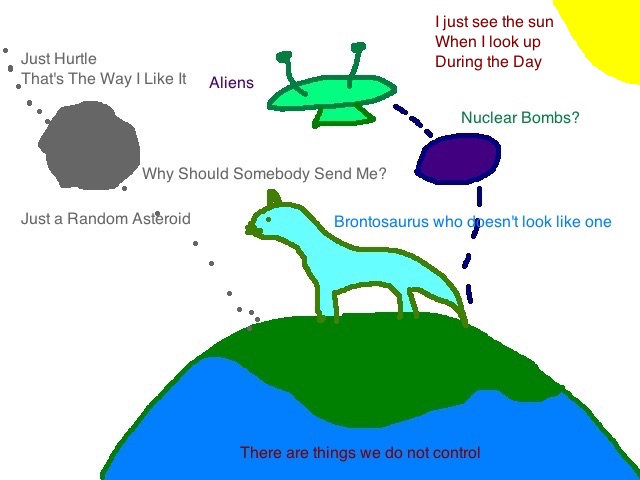
’Ah! Evolution. I don’t believe in evolution as a theory. I have a theory’, said the van driver. ‘My theory is that aliens are responsible for life on earth. I think that the aliens had tried to see if life can flourish on Earth with dinosaurs.’
Four second pause.
‘And then they found them too big. The dinosaurs were too big, you know? I think that the asteroid that hit the Earth was nothing but a nuclear bomb sent by aliens. You see it all the time, don’t you?’

‘Eh… What do I see all the time?’ I asked. I have to come clean and admit that I don’t see dinosaurs all the time. Or aliens if you come to think of it, and definitely hope not to see nuclear bombs sent by the unseen aliens to hit the now extinct dinosaurs. I like a quiet life.

aliens_theory

I felt sorry for the man. His mind was after all curious, and he was obviously in awe of the marvelous. He wanted to know what happened to the dinosaurs, he wanted to know how we came to be. A Science education, half-heartedly imparted in the faraway days of his youth were hardly enough for him to find and keep the wonder in Science. Moreover, Science was a demanding master. Every hypothesis required proofs, validation by peers. It all proved too much for the man. He was happy enough believing that an alien race came and bombarded Earth with their nuclear missiles when they felt dinosaurs were of no use to them. We could do the same to another planet, couldn’t we?

I am currently reading Science as a Candle in the Dark – In a Demon Haunted World by Carl Sagan.

In his usual manner Carl Sagan had hit the problem on its head:
We have arranged a global civilization in which most crucial elements – transportation, communications, and all other industries; agriculture, medicine, education, entertainment, protecting the environment; and even the key democratic institution of voting – profoundly  depend on science and technology. We have also arranged things so that almost no one understands science and technology. This is a prescription for disaster.  ”

I found myself nodding along as I read: One the one hand, while we know about Machine Learning and how it is used to change our ways  of life, we do not always understand all the variables involved and how each value affects the outcomes. We do not really know the chemistry behind the medicines we take and why they work  on our biological systems, and so much more.

On the other hand, somebody had shared yet another spurious discourse given by a religious figure. This time, the man spoke glibly – his half baked theories about the nature of the Universe had his audience enthralled. The man spluttered forth a jumble of high-sounding words, and the audience cheered and applauded.

Again, the audience was looking for nothing more than understanding a complex world. A world made more complex everyday with our technologies and applications.

The truth is the world is a complicated place. Grants determine research, enabling rich businesses and corporations to drive and set the tone for research (Remember the studies where the Sugar industry completely misguided the population by funding research related to Fats instead? ) Big money corporations also have the ability to have their own research facilities, and they are not always going to watch out for the common man. (Privacy concerns by Ethicist Tristan Harris – the  former employee at Google)

More than ever, we need to find a way to incorporate Science as a way of life, and equip ourselves with Baloney Detection Kits as Carl Sagan named them. We need to enlighten ourselves – maybe light ourselves a candle in the dark.

Books: Science  as a Candle in the Dark – Demon Haunted  World – By  Carl Sagan


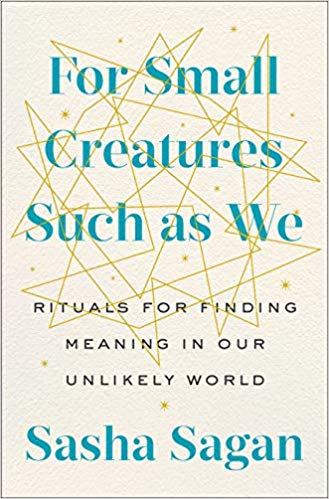
For Small Creatures Such as We ( Sasha Sagan )

As I set out the kanu leaves in the backyard on a bitingly cold morning , the rain drops from the trees above dripped onto my back. When one refers to shivers down the spine, I suppose that is a literal enough description. I charged back into the warmth of the kitchen multiple times as I drew out the squiggly lines with rice flour – quick kolams to appease whom or what I did not know. I am not one for following rituals every much, but some how I like this one.

Kanu Pongal – Celebrated during Makara Sankranthi

Rains are lashing the Earth, and I am grateful. Last week, we celebrated the Indian version of Thanksgiving, Makara Sankranthi – the beautiful festival thanking Mother Earth for providing us with plentiful food, a nourishing environment, and so much more.

Kanu is typically celebrated by having the daughters in the family set the morning kanu for two reasons: (1) our forbears supposedly come and eat the offerings as crows, (2) the girls pray for the well-being of their brothers, who then give them gifts for their prayers and wishes.

In our feminist household of course, we have long since modified the ritual. It isn’t just the women who set out the kanu for the brothers – we all set the kanu and pray for our siblings’ well-being. We celebrate not just gratitude to Mother Earth for feeding our rather populous brood of humanity with her harvests, but also for the gift of sibling love in this large world.

Coincidentally, I picked up the book, For Small Creatures Such as We, By Sasha Sagan. (The daughter of Carl Sagan and Ann Druyan). After all, her father’s Cosmos book and her parents’ TV show, Cosmos, still has me ringing with the Joy of Existence every time I dip my feet into the “shores of the cosmic ocean“.

Sasha Sagan’s book does not disappoint. She says, and I quote:
Beneath the specifics of all our beliefs, sacred texts, origin stories, and dogmas, we humans have been celebrating the same two things since the dawn of time: astronomy and biology.

I sat there savoring that sentence for its simple truth, and elegant choice of words. Festivals and rituals are our ways of making sense of ourselves with respect to the larger cosmos – and her book marvelously outlined rituals and festivals in various parts of the world in different cultures and religions.

Discerning the sentiments behind the rituals is a particularly savory task, partly because I have a healthy skepticism about the Gods, and oscillate between being a secular agnostic and a believer. For those who are Secular in outlook, Sasha Sagan’s book is a marvelous read. It encourages us to come up with our own models for celebrating life in this cosmos.

sasha_sagan

That cold morning as I set out the kanu, I wondered, not for the first time, why we set out cooked rice pongal for the crows. Is it to acknowledge our evolution as mankind to be where we are? Using fire to cook, was probably the single biggest leap in our journey, followed by becoming agriculturists from the hunter/gatherer mode. How different would everything have been if these two had not happened?

I especially thought of the brilliant poem she had referenced in the book by Vietnamese Zen Master, Thích Nhất Hạnh :
In this plate of food,
I see clearly
the presence of the entire universe
supporting my existence.

I also read a poem by Mary Oliver on Rice in the book. Blue Iris, and together with the books For Small Creatures Such as We, and Cosmos, it makes for a marvelous way to start the decade.

Rice – A Poem by Mary Oliver

It grew in the black mud.
It grew under the tiger’s orange paws.
Its stems thicker than candles, and as straight.
Its leaves like the feathers of egrets, but green.
The grains cresting, wanting to burst.
Oh, blood of the tiger.

I don’t want you to just sit at the table.
I don’t want you just to eat, and be content.
I want you to walk into the fields
Where the water is shining, and the rice has risen.
I want you to stand there, far from the white tablecloth.
I want you to fill your hands with mud, like a blessing.

As more and more of us move towards urban hubs for living, the less we realize all that happens to make food available for us to consume. How many of us have seen rice plants, or coffee plants or pepper vines – actually even if we have, how many of us consciously think of the journey from farm to table in its cooked form?

It is truly an enterprise of staggering proportions to realize how much has to happen for smooth functioning of Society, and it is lovely to read a book that is so full of joie-de-vivre

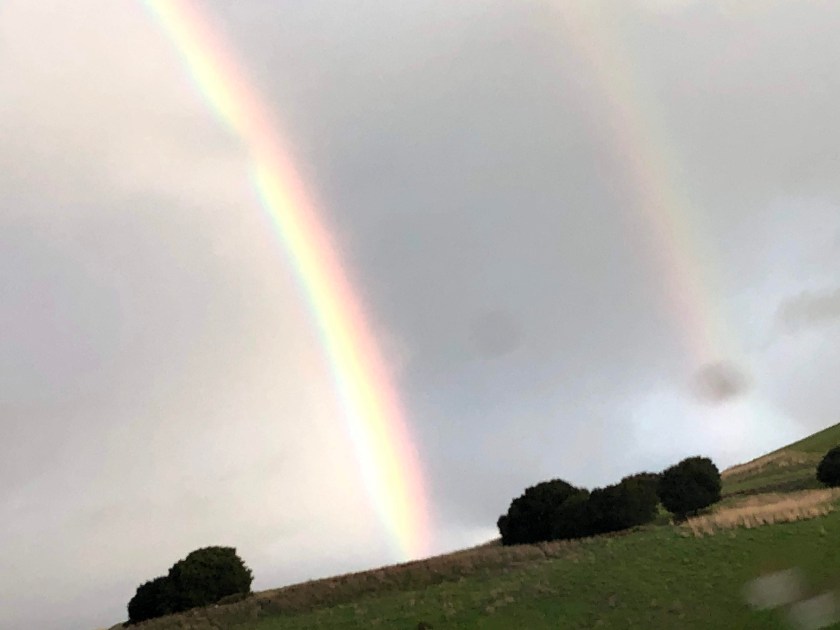
I like the concept of  thanking Mother Earth for her bountiful gifts to life (Did I mention this already?). When it starts off with fierce winds ripping branches from your backyard trees, followed by glimpses of sunlight illuminating the clouds during the sunrise, followed by mild rain, and then seeing a glorious double rainbow; what is not there to feel thankful about?

img_6569

Books:

The Magic of Story-Telling

“Stop being a Jellyfish!” said the husband.
“I knew you were going to say that – you are such an open book yourself!” said I.

We both giggled like children at our own pathetic joke. T’was the time for hulking men with or without mustaches and serious women to quack like ducks, twirl like fairies, flex those non-existent abs, and find that little teeny bit of whimsy that adulthood so expertly hides away beneath the layers. Halloween was here.


1dc1cf17-3133-4989-93a7-08bcd65b2be5

T’is the time people astound you with their imagination. Who doesn’t like having 3 spidermen knocking on your door all at once? Or to see the twin toddlers dressed as Nemo & Dory? The super-heroes and ninjas cowering behind their larger siblings in Vampire clothing, or the witches cackling hard?

There is something so uniquely beautiful about Halloween – the one festival where we can display our idiosyncrasies with grace, be accepted for whatever we are. You want to be a skeleton? That should be fine. Here is some candy for you. Really, buddy? You want to go out in the world in that costume? Well, if this appeals to you, then I suppose you deserve some candy anyway!

How many times in our lives do we get that kind of universal approval?

The husband and I were very proud of our last minute Halloween costumes: an open book & a jellyfish.

The little fairy lights I had taped into place made the jellyfish glow, and I received many compliments – I must say I glowed all evening with the praise, though I did credit the Internet with it.

When people asked me where I got the inspiration from, I replied truthfully that I have always wondered what it must be like to live under the sea, and they invariably laughed at my answer.

But it’s true. Every trip to the aquarium rekindles the magic of another world – right here with us. Reading Gerald Durrell’s essay about scuba diving is enthralling.

I have often wondered how we would have adapted if we had evolved under the ocean. Would we have figured out the laws and physics of the Universe to the extent we have, or would the medium have made little difference in understanding. The Octopus’s evolution to have more neurons than us is truly astounding.

Quanta Magazine: What shape is the universe? Closed or Flat?

It is why I like reading about the intelligence of dolphins and whales: the fact that they have epics the sounds bits of which are roughly the equivalent of our Iliad is amazing. Quote from Carl Sagan’s essay on Whale song:

If the songs of the humpback whale are enunciated as a tonal language, the total information content, the number of bits of information in such songs, is some 10 to the power of 6 bits, about the same as the information content of the Iliad or the Odyssey.

What must their epics say? For all our anthropological worldview, I wonder whether humans figure in them at all. That will be a fine thing to hear – a Dr Dolittle who finally translates a Whale Epic, only to find their world far richer than our own.

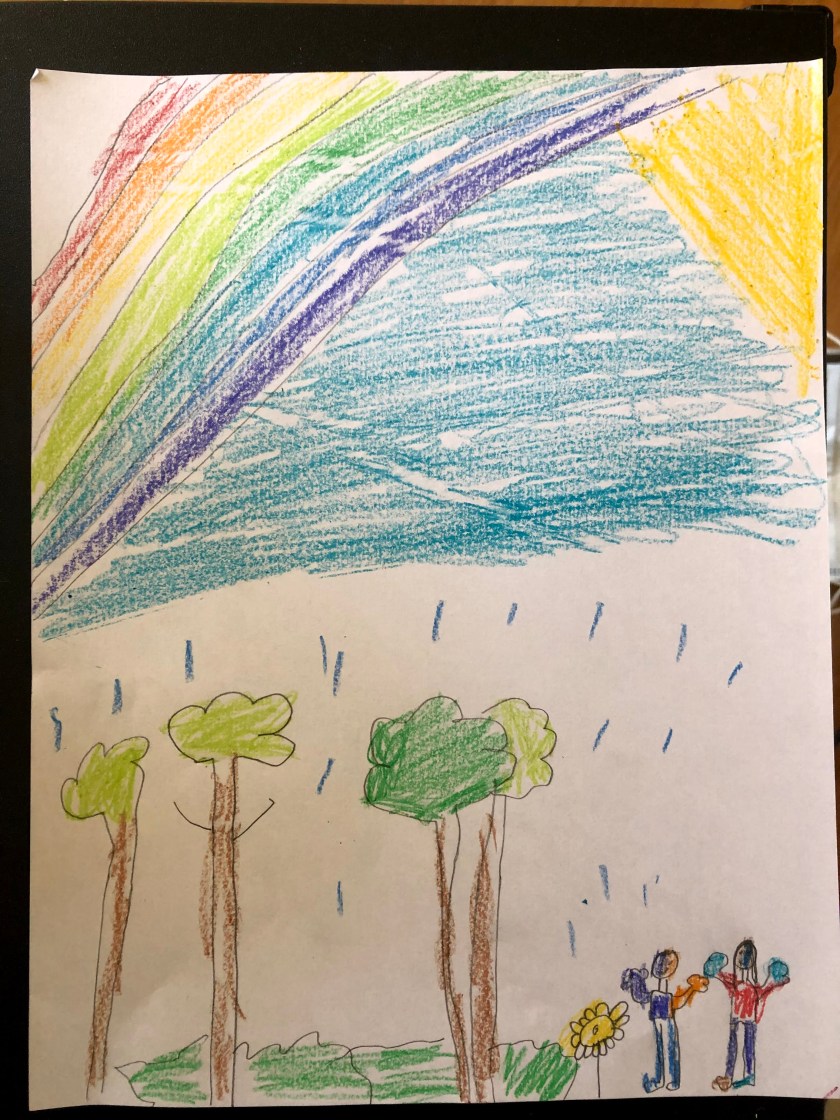
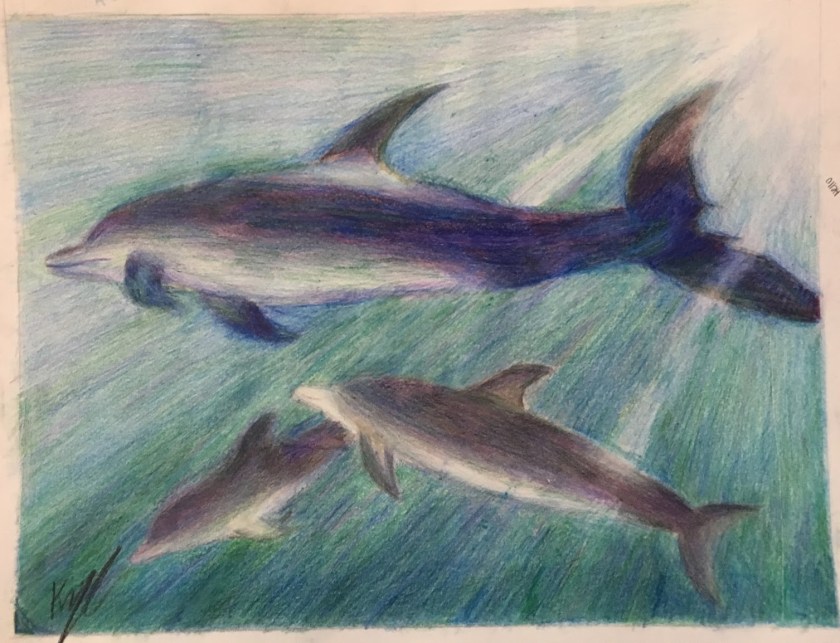
Keena_drawing
Art work by Daughter

I recently re-read the Voyages of Dr Dolittle by Hugh Lofting. I must say I thoroughly enjoyed visualizing myself sailing the seas with his motley group – either by skimming along like a porpoise, or better yet by getting a place inside the giant snail’s back as it sailed along smoothly churning the ocean as it went.

Swimming with Dolphins

We are all children of stories. We need epics and tales of fantasy. Our very own imaginations need an outlet, and Halloween gives us just that. I know my enthusiasm rubs off on the children as they go about planning their costumes. While I am out with a big smile on my face, a number of people give me an indulgent smile as if to say “Aren’t you a bit old for this?”

Mary Oliver gently reminds me to react with this nugget of wisdom:

“You must not ever stop being whimsical. And you must not, ever, give anyone else the responsibility for your life.” 

― Mary Oliver, Wild Geese

Privately, I am happy that our inner child never really leaves us.

Authors:

Galactic Plumes

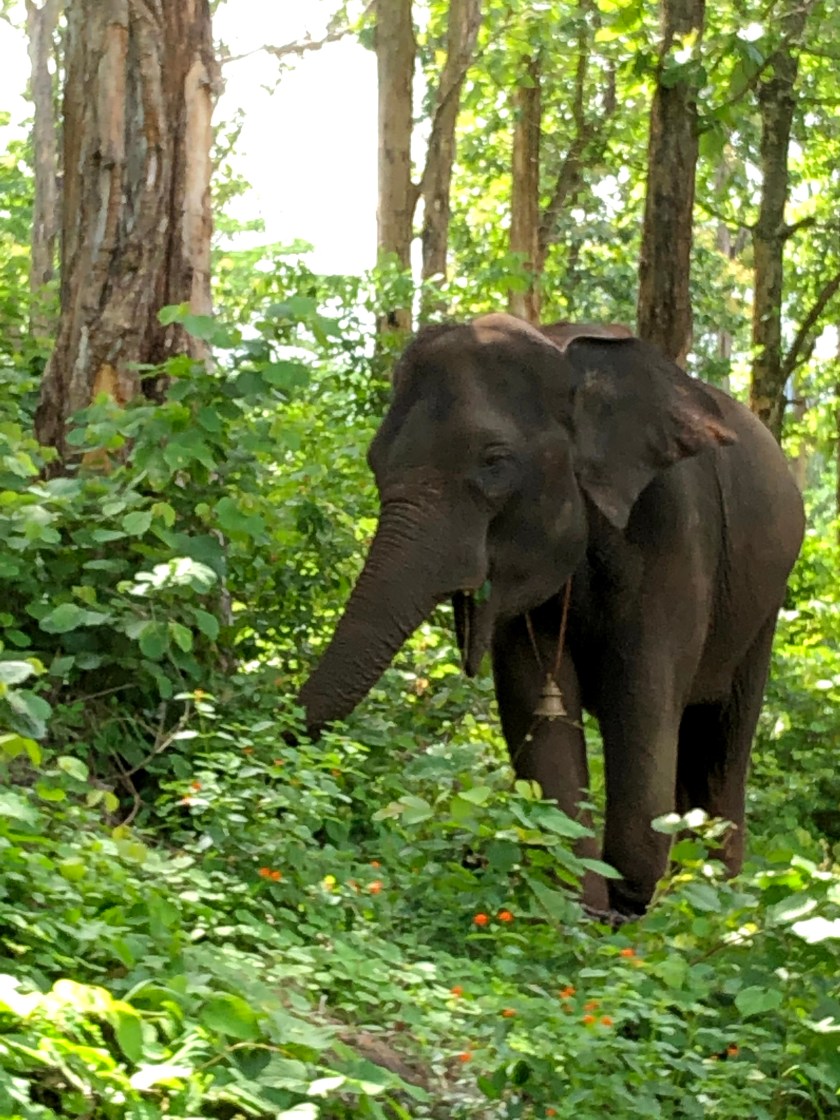
I had been mooning about the fields outside in the village where we stayed near Topslip National Forest. People told me to be careful about venturing out far – “There are Elephants nearby, and they love the fields. “, they said emphasizing the word, Elephants. My eyes lit up. The villagers exchanged looks that doubted my sanity and hurried on, “It isn’t Good seeing Elephants in the fields – you never know what they will do. If you hear fire crackers in the distance, come straight back here!” said one toothless fairy godmother, and her husband (I think) nodded in agreement vigorously.

img_3588

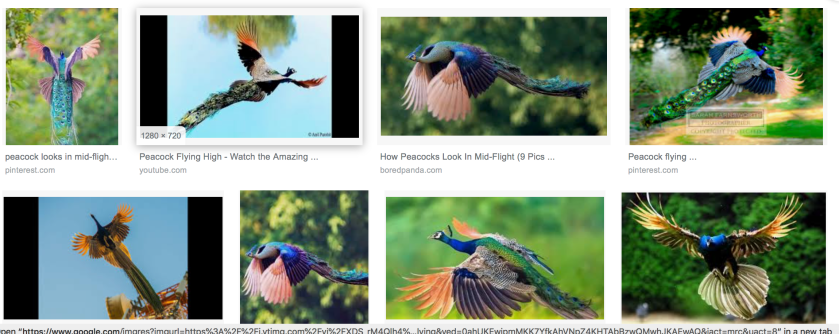
Off we went then, sauntering through the fields, listening to the loud orchestra of birds, crickets and frogs, accompanying the beautiful colors that nature was setting forth for us to see. It is magical indeed to see a half dozen peacocks take flight into the sunset. By the time, we fumbled for the phones they were gone, and I was glad I did not waste those precious moments of seeing them start off awkwardly and then gain elegance in flight by trying to get a picture. I have it in my mind’s eye, along with the indescribable moment of feeling your heart soar with the peacocks’ trajectory.

Screen Shot 2019-08-16 at 9.52.43 AM.png

Peacocks have long feathers, and while they know how to fan them out and preen in front of peahens looking splendid in the process; when they fly, it looks like it can feel like long hair feels to women.

Gather your tresses,
Of plume and multi-colored beauty
Tuck them in,
Letting it stream behind you elegantly while
Trying not to let it look messy
And all the rest of that.

It was then in the distance that we heard firecrackers go off in the distance. I don’t know about you, but this is the sort of thing that holds mystique. It is what inspired my Mother’s Day in the Jungle tale. Trumpy elephant going off to Farmer Hasalot’s farm – there is such an element of thrill and romantic mysticism to this kind of thing, though I think the elephants and farmers in question disagree.

Screen Shot 2019-08-23 at 10.06.10 AM

I spent dusk in a similar fashion enjoying the fading sunlight, the rising moon, the fields, the clouds, the village, the children, the adults and creatures of beautiful Earth. Every now and then, crackers went off in the distance – elephants in the distance we whispered. Though, why we were whispering we had no idea. Dusk seems to call for these things. A laid back village in South India tucked away in the recesses of the Western Ghats with all the fascination of the bucolic. An occasional rumble of a vehicle is all there was to remind us of civilization, corporates, power tussles, wars, micro/ macro economics, nuclear heavy-lifts, and motives of profit.

Post dinner, I traipsed indoors, happy with life, still rattling on about the beautiful image of the peacocks taking flight together in the evening light. We stayed chatting happily into the night (Part 2)

It was well past midnight when the electricity went out, and the husband said, “Outside now! Completely dark – yes!”

Off we went, self carrying the son piggy-back to see the stars in all its glory outside. With the electricity gone, it was pitch black outside.
Oh!
My foot!
Not there.
Ouch!

We bumped into one another spectacularly and I tripped on a chair outside in the verandah, carrying the little fellow on my back. Both of us went crashing down, self trying to save the poor fellow from being dropped from my back. One splendid moment later, I truly saw what ‘seeing stars’ meant.

The pair of us dragged ourselves off our feet and took our eyes skyward. The light pollution we have unleashed on our planet means that there are very few places in the world that humanity can stand and gaze at the sheer immensity of the universe in which we live. On an average dark-ish day, we can see about 3000 stars, on a day like this surrounded by mountains, forests and fields for miles around us, we could see tens of thousands of them lighting up entire bands of the sky with their luminance. The stars and galaxies are always there, and maybe because of this very permanence, it is seldom appreciated.

Standing there in the surrounding darkness with people I love, I felt light-headed. There we were, standing on an Earth that was spinning incredibly fast in its journey around the sun; the sun was swirling around the Milky Way galaxy; and the galaxy itself was spinning and whirling away into vaster expanses. Carrying us all: our ethereal thoughts, wishes and desires; and our solid physical selves on a solid planet.

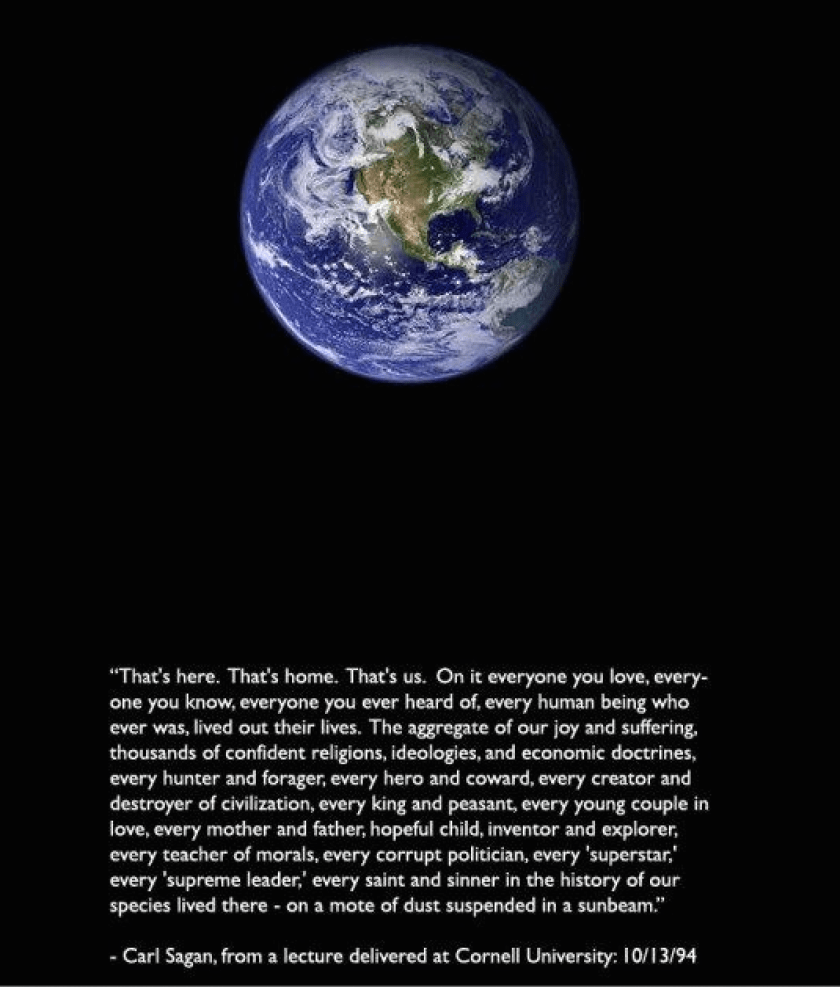
The galaxy tucking its star-studded plumes behind it gracefully, and taking flight with all its organic and inorganic components streaming gracefully along its path. Huge balls of gas and flames hurtling through space, and some spots in this beautiful expanse sanguine enough to cool down for a spot of life to flourish. #The Pale Blue Dot.

pale_blue_dot

The beautiful image of the peacocks taking flight earlier that evening came to me, and in that moment, the galaxies above looked like peacocks taking flight into horizons unknown.

Do the dreams of galaxies have limits? Do they have purposes?

Thinking back on that beautiful spin through the gathering darkness, I am reminded of this quote by Ursula K Le Guin:
“Things don’t have purposes, as if the universe were a machine, where every part has a useful function. What’s the function of a galaxy? I don’t know if our life has a purpose and I don’t see that it matters. What does matter is that we’re a part. Like a thread in a cloth or a grass-blade in a field. It is and we are. What we do is like wind blowing on the grass.”

Magical Garbage Collection

I plonked myself in bed one night and stretched the tired frame. The feeling of the muscles relaxing against the mattress is a welcome one. The thighs and calf muscles let out a small moan of gratitude at being allowed to rest. How lovely it would be if I could just sleep for another 12-14 hours? I knew the alarm had different plans for me though.

It had been another long day in a series of long days. The relentless nature of the days, and the things that were occupying them had me feeling somewhat jaded. 

Annie Dillard whispered her wisdom “How we occupy our days in how we occupy our lives.”

I really need something to rekindle the magic of life, I said to myself, and then remembered that a task lay ahead of me that had little to no magical appeal. I had forgotten that it was the night to put out the garbage cans for collection the next day. My muscles screamed in protest as I got up to take care of the unsavory task. 

I tried to silence the sound track of the amount of garbage we generate and push out just for this moment the heart -rending images of the garbage floating in our oceans that I had seen in the National Geographic magazine. I tramped from garbage can to garbage can in the various rooms in the house stumping listlessly and loudly. The sounds of my footsteps loudly registering my exhaustion and irritation at the same time. 

I dragged the cans out to the curb. A cool breeze gently caressed my tired frame. I stopped at the end of the curb, and lifted my eyes. I stood there caught in the moment of transformation. There was Jupiter shining down brightly near the Scorpio constellation in the summer sky. I veered my eyesight to the right and there was Little Dipper. It had been a long time since I glanced up at the night sky. The advent of summer meant that by the time the stars twinkled down gently at us at night, I was too tuckered out to exert myself to gaze longingly at the planets and the stars. ✨ 

I stood there for sometime. A few neighbors had stepped out on similar errands looking equally spent, and we had a curbside-garbage-can chat. I showed them Jupiter and the constellations I recognized. Really! How such a simple thing can invigorate us all is amazing. Soon, we were whipping out the Skyview app and looking for constellations and stars, familiar and unfamiliar. 

It was then I saw the artificial satellite orbit the Earth – shooting much faster than the remaining stars, steadily moving across the night sky, like a little star out for a run. In a matter of minutes, we were talking about the kind of data the orbiting satellites send us. No surer reminder of the Pale Blue Dot than an orbiting satellite is there?

pale_blue_dot.png

I traipsed back to bed after this welcome interlude of the magic of the skies. Who knew? Garbage collection could turn magical after all.

To quote Herman Hesse, “My advice to the person suffering from lack of time and from apathy is this: Seek out each day as many as possible of the small joys.” 

Classical Whale Symphony

Soft instrumental music was lilting in the background, and the sun’s watery rays were streaking in through the recently rain-washed window-panes. It was a beautiful week-end morning, and the kitchen was bursting with activity. The children were helping by putting away the dishes as noisily as possible. I was making a mess of things by changing the menu nimbly depending on what my refrigerator had. (Grocery shopping had taken a backseat the past few days and rations were thin on the ground)

The children were giggling about something when the teenage daughter said to hearty nods from her little brother. “By the way, what is this blasted toing-toing music you are listening to?”

“Melodious and uplifting for the soul, my dears. Classical Instrumental Music. Changes the way neurons interact.”

She shook her head, “Changes the way my nerves react!”and changed it to something that made my eardrums pick up the dishes and bang them viciously inside my head, while she chatted. Teenagers, I tell you!

“Whales like Classical Music.” , I said weakly.

“Well, I’m not a whale am I?” said she giving me a fish-like look- not the fishy look, the glassy gleam. I saw the piscean divergence in the gene and agreed. Though she could be, given her favorite doodles are themes under the sea

Art work by the Daughter:

Ever since I read in Carl Sagan’s Cosmos about Whale Songs, I have been enamored with the language of music, and the myths of the whales.

Quote from Cosmos by Carl Sagan on the Humpback Whale songs:
These vocalizations are complex. If the songs of the humpback whale are enunciated as a tonal language, the total information content, the number of bits of information in such songs, is some 10 to the power of 6 bits, about the same as the information content of the Iliad or the Odyssey.

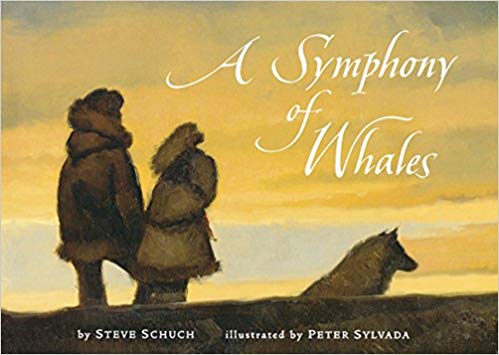
I was naturally was attracted to the book, The Symphony of Whales by Steve Shuch. It is based on a true story in a village near the Arctic circle. The onset of Winter had been swift, and a pod of whales found themselves iced in near Siberia. Unable to get out in time, the whole pod faced death in the iced-in waters.

symphony_of_whales

According to the book, a child, Glashka, who had always been blessed with the ability to hear Whale song heard them over the sound of the snowy storm. That night, they came to her in her dreams, and she knew they must be in trouble.

The next morning her father gathered the villagers and off they went to a sound over 30 miles away by dog sleigh looking for the pod of whales. It was true. The whales were in trouble. The pod had not anticipated the icing in of the waters so quickly, and were facing death. The villagers from all the neighboring villages started chipping at the ice to cut through the blocks of ice, so that the whales could surface and breathe.

“Look!”, said Glashka’s grandmother. “See how the whales are taking turns, how they give the younger ones extra time for air.”

The village elders had also radioed for help. A ship, an icebreaker, Moskva, was on its way to help.

The story, is based on a real incident that happened in the narrow Senyavina Straits of Siberia. Over 3000 beluga whales had been trapped by the rapidly freezing waters in 1984-1985. For seven weeks, the people of the Chukchi peninsula, and the crew of the Moskva risked their lives to save the whales.

The story does not end there. Once Moskva had cleared the way, the whales had to follow the ship out into the open seas, but they were reluctant to do so. The crew tried playing whale song to lure them. While they reacted to the music, they were not assured of human intent, and were still scared of the engine sound. They lurked in the waters.  Then they tried Classical Instrumental Music.

“The crew found some classical music. First, the sweet sounds of violin and violas, next the deeper notes of the cellos and, deepest of all, the string basses…and way up high, a solo violin…
Everyone fell silent as the music carried over the waters.”

That had done the trick. The ship’s engines started and the whales slowly followed the icebreaker out into the open ocean.

Would this heartwarming episode make it into Whale Song? That humans can be helpful too? I don’t know, but I do hope it makes it into our myths – maybe as one embracing a humane side to humans.

Dum inter homines sumus, colamus humanitatem – Seneca

As long as we are human, let us be humane

Read also:

Cosmic Nature of Living

Weaving The Sequins of Time

New York Times Archived Article on the Incident

The Domestic Explorer

There are things every explorer wants to do. Whether it is as drastic as Thoreau spending 2 years, 2 months and 2 days in a cabin in the woods, or Kate Harris finding herself in the process of exploring the Silk Road, there are aspirations for us to reach that state of mind where we can look past the hustle and the bustle of our daily lives. A form of reflection that one gets to experience once in a while, but has no idea how to sustain. (At least I have had no luck at it.)

Quote from Lands of Lost Borders:

“I’m not sure where I go when I spin wheels for hours on end like that, except into the rapture of doing nothing deeply.”

I think Kate Harris’s moving, poignant, lyrical, poetic, beautiful meditations on being, belonging, and living is well on it’s way to becoming one of my favorites. I have re-read sections of it soon after finishing it. Hers is a marvelous mind (I am grateful she penned her thoughts and found a publisher for us to enjoy). It does make me wonder sometimes how many others there are out there, who have similarly exalted thought processes, a Being larger than being squashed into narrow compartments that we seem to slot ourselves into: A Higher Order Thinker.

Kate Harris’s work is one for every traveler’s soul. Every body who has ever dreamed of adventures, ever dreamt of being bigger than your circumstances, hers is an invitation to sample what is possible. For everyone who is unable to sample the world with all its worries and problems, Lands of Lost Borders is there.

lands_of_lost_borders

The author writes of her journey across the oldest and possibly most famous road in the World, The Silk Route. Wanting to lose herself in the other worldly, she lands up finding herself on the oldest roads known to civilization.

Along with her friend Mel, the two women cycle through Turkey, the Stan-countries after Russia’s disintegration (Turkemistan, Kyrgystan, Uzbekistan), China, Tibet, Nepal and finally India – camping along the way, accepting the kind hospitality of friends and strangers along the way, navigating authorities, paper work and visa restrictions that make us want to throw our hands up in despair. A true voice of an explorer.

Her voracious reading sparkles in the form of quotations and anecdotes – Carl Sagan, Marco Polo, Charles Darwin, Russell Harris, Wright brothers are all in attendance adding their rich experience to the journey. Her clear heart blurs borders while sizing up people. Sitting up in bed with the wind roaring outside, the rains lashing, it is bliss indeed to pedal relentlessly through the high mountains, past lakes, punishing deserts and sketchy neighborhoods. Two women alone in an alien world.

As she quotes every so often,

“Every explorer dies of heartbreak.”

This is one of those books that will stay with me for a long time. I had the privilege of reading this book alongside another of Miss Read’s comfortable, cozy book. This book of travel and adventure was the perfect pairing to the domestic pleasures that a Miss Read book conjures up.

In Miss Clare Remembers, Miss Read writes about a young child of 8 or 9, who was excited and flushed after seeing the snowdrops when they went out on a school nature walk. Afterwards inside the home of the local farmer, where the farmer’s wife had kindly laid out biscuits, milk and cut fruit for the hungry children, she realizes how much she requires both pleasures in order to thrive. With a clairvoyance that children sometimes possess, she appreciates the vast spaces that nature provided for her soul to soar; and the cozy domestic pleasures where she can feel nurtured and at home. A safe haven from her flights of adventure.

Quote from Emily Davis – By Miss Read:

“One was her nest. The other was the place in which she stretched her wings, and soared, as effortlessly as the lark outside, into a different dimension.”

miss_clare_remembers


I felt that way while reading the Lands of Lost Borders together with a Miss Read book. I savored the stars kindly drawing the constellations out for the explorers to reach out to every night; as much as I enjoyed the domestic problems of a normal life. Ensconced in the modern comforts of living, reading both the books in parallel left me with a deeply delighted sense of having both adventure and comfort, and feeling grateful for it.

I am not sure my blogs can do justice to the books, but it seems a perfect way to begin winding down the year.

Boarding the Flight of Fancy

A version of this post was published in The India Currents Magazine: On a Flight to a Land Without Borders

I boarded the flight at the end of a long week. I was going to be away for a week, and I had spent weeks trying to get things in order for the week I was gone. It felt good to finally stretch one’s legs (as much as an economy seat would allow anyway), relax one’s senses, and stretch one’s mind.

The flight was strangely beautiful. It left in the evening, and as it took off, I left behind a sparkling firework of lights. The vast, urban sprawling city and surrounding areas looked kindlier from above. The freeways glowed like veins throbbing with cars as they crammed their way home for the week-end along the packed highways. I have watched ants with interest as they scurry about their daily duties and I felt we must look the same if someone were to be observing us. Maybe those monitoring satellites do have the feeling every now and then.

Bay area at night is beautiful from an airplane, however else it feels when one is on the road.

img_08171

I fell into an uneasy slumber once we passed the populated sections and darkness fell. I looked out the window hours later, to be pleasantly surprised by the beauty that greeted me. The plane was gently reverberating with the satisfied sighs of sleep from most passengers. A few were watching the brightly glowing screens. I peered out of the window, at first unable to see anything since my eyes took some time adjusting to the sudden lack of light. Once I did though, it was marvelous.

I have always loved gazing at the moon while traveling. The feeling of us moving, and our beautiful cosmic neighbor giving us company even though we are moving so fast is surreal.

I could not see the moon just yet, but I recognized the belt of Orion. We were flying along side the big hunter as he made his way in his pursuit of the seven sisters across the skies. It is a strange feeling to watch the stars and a familiar constellation accompany us on the trip while we journey through the stars.

cd

The Pale Blue Dot, as Carl Sagan so beautifully christened our lovely, if sometimes crazy planet, seems wonderful from high above. It helps us forget how judgmental, critical, harsh and war-mongering a species we are. While up there, borders and countries seem like a strange concept, like a tiger marking its territory. Can the tiger determine where life can flourish, where the weeds grow, or how many gusts of wind may swish through the bamboo groves? Our borders mean much the same especially when surveyed from the stratosphere: Meaningless asks from an arbitrary marking.

Musings from the wonderful book, Lands of Lost Borders by Kate Harris, took me to an uneasy land of half slumber in which strange dreams accompanied unknown stars through a flight that even a 150 years ago was nothing but a flight of fancy. Kate Harris’s work is one for every traveler’s soul.

lands_of_lost_borders

I got up to see the moon looking slightly alarmed at still being up and about when the sun was rising. The pink, and orange skies twinkled benignly upon the clouds below, and all the world was still full of promise and expectant. The blush of joys unknown.

flight_clouds.jpg