We Belong: A Heartwarming Experience at the San Jose Public Library

As we stepped into the San Jose Public Library with the brood, I could feel a sense of contentment. It was pouring rain outside, and typically one of those days that the world, including Yours Truly, would have preferred to stay indoors, reading a book, drinking cups of tea and maybe dancing in the rain for a bit. However, we decided to hit the library and then the Art Fair afterwards instead. 

It was a good decision. It was also supposed to be a surprise – my portrait had been put up in the library as part of a We Belong series run by The India Currents magazine, and I felt doubly blessed. To have a picture of my dancing in a library – what more could the Universe give – both my loves of reading and dancing together! 

The husband, children and parents were all suitably impressed, and we took turns looking at all the portraits put up by the talented artist and photographer, Sree Sripathy from the India Currents Magazine. 

Seeing that the pouring rains would not be conducive to an outdoor Art Fair, we lounged around in the library instead. It was perfect Gluggavedur weather. (Gluggavedur is a delightful Icelandic word that signifies, ‘Window weather’ – beautiful from the inside, but too cold to go outside.)

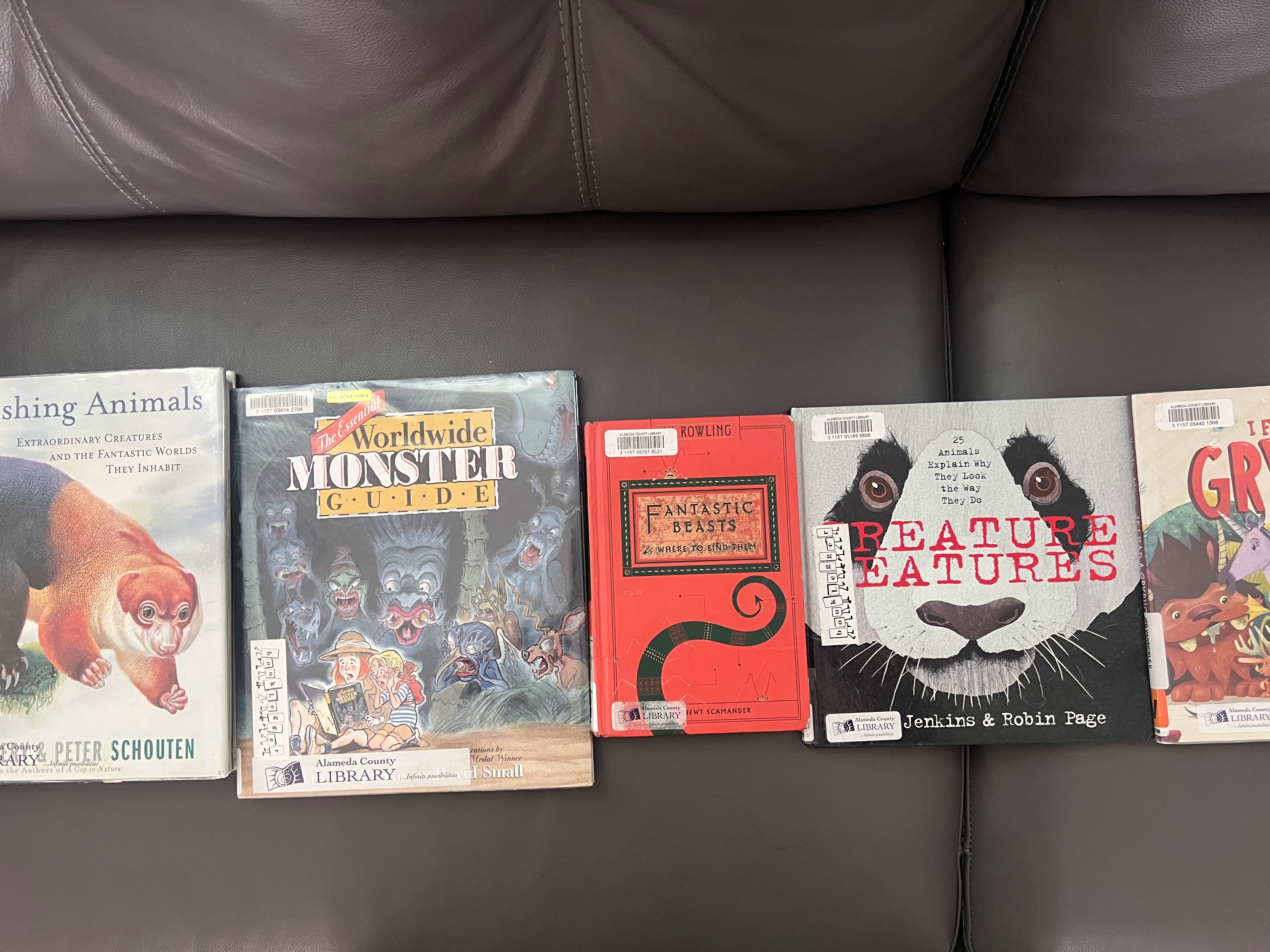
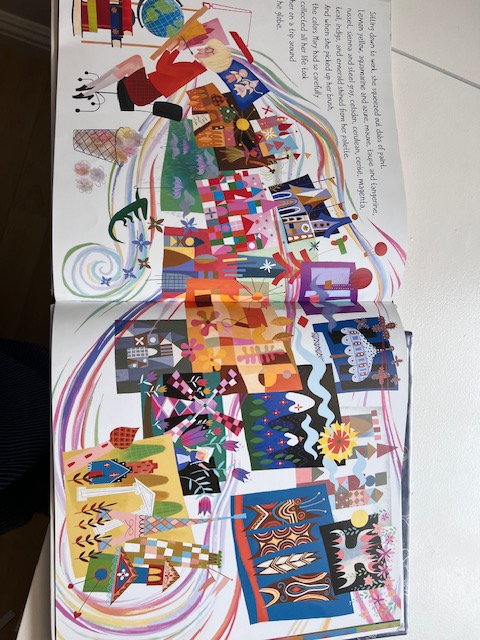
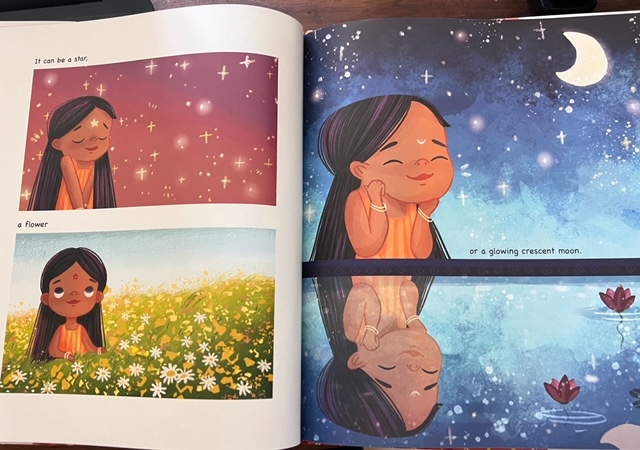
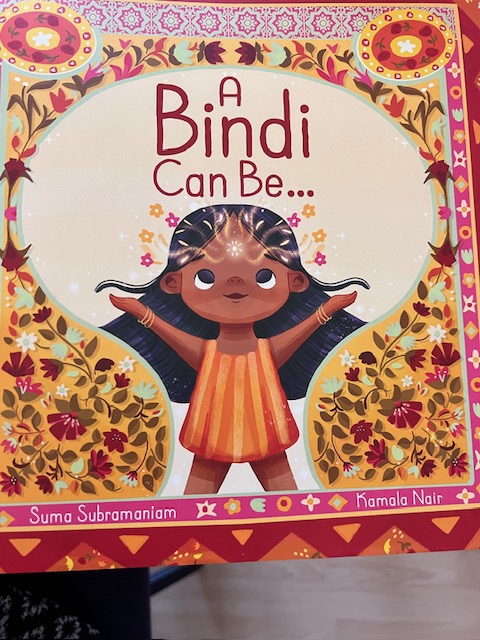
BookWhat a Wonderful Word – By Nicola Edwards & Luisa Uribe

All young, old and those in between were in their respective sections, while Yours Truly flitted about everywhere, dancing my way into everything from Seaweeds to Chinese Poetry and blurbs off novels. I didn’t link the fact that there was maybe an extra splattering of Star Wars content about till I realized it was May 4th – May the Force Be With You day. 

The rest of the afternoon was spent in a glorious haze of the sun peeking through the clouds, and raucous laughter with friends. It was after all World Laughter Day the next day.

World Laughter Day

May the Force Be With You!

The Powerful Epiphanies

The Power of Spring

As epiphanies often go, it was unexpected, and oh so satisfying. This spring season has been particularly fantastic – there are bumblebees, butterflies, dandelions, ducklings – all tripping over themselves to give you epiphanies of life, miracles, hope and so on.

One such day, we sat watching lazy waves rippling through a large pine tree. The previous day had been a cold, and windy day, we had scuttled inside for warmth. The next day was warm, pleasant and entirely suited to lounging around watching wind waving through pines, firs, and gingkos. 

The house was filled with noises of spring – young children exclaiming at blueberries, standing on tiptoes and peering up at the oranges on the tree, running through the house in a mad scramble looking for juice packets and snacks while playing freeze tag or mock-cricket. 

When the next stampede grew closer, I wondered whether to move aside from the herd of stampeding rhinos, or sit my ground and continue gazing at the roses in bud, and the pine in the wind. I continued to sit, and luckily, the fellows stopped, and one-by-one they all flapped around, and flopped on the grasses. 

“What are you thinking about?”

The Ginkgo’s Wisdom

I told them, and they sat pondering for a moment, sipping their juice. I couldn’t resist the pull of a quiet moment, and an uncharacteristically pliant audience. “Did you know about the ginkgo trees?” I asked my young fellow admirers of wind and trees.

ginkgo-COLLAGE

Thrilled that they didn’t all know, I launched on the ginkgo train – telling them about how they were around from the days of the dinosaur, and how they all communicated to each other, and decided when to shed their leaves. The son said that one of the trees will slow down if it is going too fast in the color changing race, waiting for its fellow ginkgos to catch up.

“Like friends are supposed to be!” piped up another. 

I beamed appreciatively. “Yes – exactly like friends – all helping each other get there. Together.”

Read also: The night of the Gingko : By Oliver Sacks in the New Yorker magazine.

The day’s epiphany done, the playgrounds beckoned, and I let them all run off their sugar highs before expecting them to quieten down for the night. I wonder how the birds manage to quiet their brood when they’ve had a little too much nectar. That epiphany can’t wait for another day.

“A real artist is the one who has learned to recognize and to render the ‘radiance’ of all things as an epiphany or showing forth of the truth.” ~ Joseph Campbell

What is April to you?

April is many things to the poetic brain, to the romantic at heart. It even somehow manages to give a tinge of optimism to the incorrigible pessimists amongst us.

It is the month of gorgeous signs of spring in the bay area. Hillsides filled with green grasses and wildflowers in hues of yellows, pinks, purples & oranges everywhere. It is difficult to not be buoyed up in spirits when spring gets going like this around us. The butterflies flit, bees buzz, woodpeckers peck (drill?), tulips push up through the soil, flowers burst forth from buds, barren trees cloak themselves in new leaves. 

april_collage

Life, it seems, wants to be up and about.

April is not just when Spring is in its glory:

📜 It is the month of poetry – I picked up a bunch of poetry books from the library the other day, and have yet to get to them. It is the thought that counts.

🌎It is the month for our dear planet Earth – well Earth Day, but I really think we should dedicate a month in which we consume more conscientiously, make choices that help our only home and all that.

📚It is the month that has a day dedicated to Books – World Book Day. I found my pace of reading especially slow this month given everything, but I still clutched them inhaling the scent of my dearly beloveds that night – too tired to read, but too stubborn to put it away and fall asleep. Someone must’ve rescued them, for I saw them in a tottering pile on my bedside table in the morning, and smiled.

🧬April 25 is also World DNA day.

This month, I found myself wandering the planet, wondering where the time went, and watching in awe as the goslings hatched, and the bird parents showed us good parenting. I found myself being inspired by humans achieving remarkable things, finding time to do the things they love, pondering on what is inherent via DNA and what can be changed via nurture, being taken aback by what we are capable of doing to one and another, and so much more. 

I did not even feel my usual sense of helplessness as my to-do list remained stubbornly long. It is a list and has a right to exist, I told myself. Spring cleaning can wait, to-do lists can wait (maybe it is why we have World Workers Day on May 1st – to remind us to get back to that list) 

What is April to you?

😇 Even AI Knows 😈

A Guild of Authors

A friend and I were returning from a meeting in which authors from different genres were presenting their works. We fell to discussing the books that appealed to us, and what worked in the format, and what didn’t. I, for one, felt that giving folks a platform to present their books, while noteworthy, could just as well have been done via a YouTube short, but what would have been harder to achieve would have been moderating a discussion about the overlapping topics between the authors. That was something I would have loved to see.

A Company of Authors – Stanford Guild

The sections were grouped together by genre, and topic, so it would have been a good panel to have discussions around. 

Even AI Knows!

As conversations usually go, we meandered, and I said something to the effect of the housework and the truth of an Indian woman having its effect on writerly ambitions etc, to which he mentioned a joke he’d chanced upon, and I guffawed at the truth of it.

“With AI, I thought, it would take over monotonous tasks such as dishwashing and house cleaning, so I could take up Poetry & Art. Instead AI has taken up what little I had of Poetry and Art and left me to do the dishwashing and cleaning!”

Even AI knows to steer clear of household tasks, while humans (women still bear the brunt of the housework) are in charge of these mundane tasks. Who says the universe doesn’t have a sense of humor?

“Really! Of all the things I wanted help with – it was Art that was the least. Give us one tough thing to spend our lives mastering and perfecting!” I said. “Help me with robots – one for the chores, one for help to care for the aged, another with companionship for the lonely etc. Why art, literature and poetry?”

“I do think there are startups for every one of these in the off-ing somewhere.” said he – sanguine as ever and optimistic in the ways of the world’s future.

He was right of course.

Intuition & Instinct?

It did help us loop back to a book that was discussed in which the author spoke about intuition/instinct being a precursor to our conscious thinking, and whether AI would be able to simulate that level of prescience. Which made me wonder, whether that was what made us human, but plenty of us have learnt to ignore these things over time (after all, we don’t need to know when a tiger is lying in the bushes). But would it help us identify dangers in our life?

https://open.substack.com/pub/managingeditor/p/surfin-mia?r=2e6vr0&utm_campaign=post&utm_medium=email

More importantly, if that too can be modeled, what does that leave us with to claim our humanity? Messy emotions and imperfect decisions maybe?

Which brings me to the most important question: What would you like AI to help with, and what would you prefer AI kept is nose out of?

Analyzing Love

The niece & I were discussing the what-ifs, what-abouts, and why-nots of life. A vibrant character, she is also blossoming into a lovely young lady, and I told her so. She laughed.

“So do you believe in soul-mates?” she asked reminding me intensely of the sort of things the daughter would throw my way in terms of conversation.

“Yes!” I said without hesitation. I hope all of us have had that tug of friendship or love where we do not know why exactly we love a person, but we do. People name it different things: wavelength match, soul mates etc.

She tried narrowing it down though, to whether there is a soul-mate, whether destiny plays a role in determining our love lives and so on.

After a chatty session in which I got to enjoy the perspectives of the younger generation , I finally threw up my hands and said, “I don’t think we should analyze love too much. Just be glad that we can give and receive love.” 

She was kind enough to not roll her eyes at that, but I knew what it must’ve cost her to do so. “That is love!”, I said, and this time she did roll her eyes. 

All the talk about love and destinies and soul-mates and what not got me thinking on what a messy business life and love is. 

img_0494

Love in Literature

In the book, Forest of Enchantments, Chitra Banerjee Divakaruni talks about all the different things love makes us do. This is a retelling of the epic saga, Ramayana, from Lord Rama’s wife and consort, Sita’s point of view.  

“My first lesson on nature of love was that in a moment it could fulfill the cravings of a lifetime, like a light that someone might shine into a cavern that has been dark for a million years.”
― Chitra Banerjee Divakaruni, The Forest of Enchantments

It is true:

Love anchors us, and unhinges us at the same time

It refines, and sometimes defines us

Love is predictable 

It also makes us do unimaginable things

Love keeps us rational

It also makes us behave irrationally

As quixotic and frustrating as it all is

Love is our only hope

I thought of all the heartbreak and hurt feelings that Love leaves in its wake,  of all the great stories of love that play out in our lives. Every single person around us has been affected by love or the lack thereof. We only need ask, and they only need tell.

It is my fervent hope that we all feel the positive and nourishing powers of love – whether from a friend, parent, uncle, aunt, teacher, guide, maid –  at some point or the other. Every loving interaction has contributed to who we are, and why we are the way we are. 

As Jane Austen says,

There are as many forms of love as there are moments in time.”

-Jane Austen, Mansfield Park

Even the love we feel for each person is defined by moments in time.  So how can we rationalize, predict, counteract, and otherwise analyze this marvelous force? There is only one thing for it – be grateful.

It is why most of our literature, songs, ballads, and poems all need either love or war to make it enduring, as the daughter so eloquently put it, a few weeks ago.

War & Peace, Love & Power

The Cave of Quietude

In Quietness the Soul Expands

I sat watching the water flow, feeling the sweet caress of the gentle breeze at night, and had this strange urge to just sit there and enjoy time flowing by. It had been an exceptionally hot and dry day filled with activities and emotions. 

“These are the times in life — when nothing happens — but in quietness the soul expands.”

Kent

As we grow older, I find we need to fight for those moments in life. Find those quiet moments in which to let the soul expand. My mind wandered to what I had read about Keats and his Cave of Quietude as he calls the quiet and expansive moments of our lives. 

They say of books, that each book appears at a particular moment in your life. I was reading the book, The Great Work of our Lives – By Stephen Cope, recommended to me by a good friend. I shall be ever grateful – it was marvelous and precisely the sort of book I required to read.

Version 1.0.0
Version 1.0.0

The Great Work of Our Lives – Our Dharma

I see this is the sort of book that I shall be giving to people who find themselves at the cross-roads. I have always thought that concepts like Dharma have a certain weighty interpretation. But to have them handled in the skillful hands of a writer like Stephen Cope makes all the difference. In a lucid style, he talks about the important concepts of the Gita and compares and contrasts them against the life of well-known poets, naturalists, and writers. He also draws parallels of the teachings against real-life people (with their names changed of course) 

Excerpt:

Keats, in a brilliant intuitive move, now attempted to work out the problem of grasping through the protagonist of the poem he was writing.”

“How does Endymoin work it out? He enters what Keats called “The Cave of Quietude’, a retreat into the depths of consciousness. In quiet retreat and contemplation, Endymion realizes that success and failure are not the measure of life. He sees the way in which both light and shade, success and failure, and praise and blame, are all parts of life.”

When you wonder which pieces to highlight in the book, and think you shall have to re-read multiple sections because it resonates with you, it is a good book, wouldn’t you agree?

May we all find our Caves of Quietude and find moments of calm and peace in which nothing happens, and the soul expands.

Wind💨, Rain 🌧️ & Boats ⛵️

In what was a beautiful wind-whipped whirl one morning, the on-a-spring-break son and I went on a walk. Power & Internet were down, which meant we could both twirl off on our adventures while these things were being restored. 

A few minutes in, we were confronted with a huge water pipe that gushed out in great spades. The county’s water department was already there looking into the problem, while we stood watching in awe as the water spooled off into the drain. Clean water. 

“Hmm…everything decided to go nuts huh?!” the son said, as we stopped to marvel at the swift waters.

“Do you think we’ll have time to head back and bring back papers to make boats?” he asked, after a few seconds of awed water watching. I saw the determined faces of the county workers’ faces gleam with triumph – they had fixed the problem no doubt, which meant our time was short. Luckily, it was also garbage day, and the windy day had scattered a couple of pamphlets in the wind as the garbage truck tipped the contents over. So, off we went chasing after these pamphlets to make into paper boats. 

If the maestros of productivity were to observe us that morning, there would be a lot of tutting, and note-taking on ways-to-improve, but we felt amazing. 

Our boats, Mitillandimus Tittilandumas, and Mixter Baxter Junior fared the best. The remaining capsized before starting. For those interested, our boat christening was inspired by Gerald Durrell’s boat, Bootle Bumtrinket, in the book, My Family and Other Animals.

boat

There does not seem to be a word to capture the sense of adventure, contentment and joy watching your paper boats take off on adventures, but we both highly recommend the experience.

What kind of life is it always to plan
and do, to promise and finish, to wish
for the near and the safe? Yes, by the
heavens, if I wanted a boat I would want
a boat I couldn’t steer.
                    ~   Mary Oliver, Book: Blue Horses

Just as the last of our boats disappeared with the rivulets, the wind picked up, and we tried keeping ourselves upright as we continued on. It was no use. Within minutes, the winds were accompanied by plump raindrops, and we scuttled back home. 

It had been a useful outing, and we came back refreshed and grateful that the rains started lashing down a few minutes after we reached. Back home, the power gods had restored electricity but not the internet. So, we settled ourselves down to a cup of tea and cocoa. We sipped in silence while the rain pattered all around us.

“Wonder what happened to our boats!” the son said finishing his hot cocoa, and we smiled together. They were not in safe harbor, and it was an exhilarating thought.

raindrops

🌸🌸🌸 Oubaitori in Spring Time 🌸🌸🌸

Spring is here, and with it, the delightful uncertainties of the weather. 

Would it be a cold, bright, cloudless day, or a cold, cloudy day, or a warm sunny day? The possibilities are endless. Sometimes, I feel like a lamb in spring-time ready for a spot of prancing and rollicking in the hills, other times, like a caterpillar not yet ready to shed the cocoon.

Springtime is a fantastic excuse to wear a silly hat and chase after unicorns, wouldn’t you agree?

– Uncle Fred in the Spring Time – By P G Wodehouse

With the increasing length of our days, it is a beautiful feeling to step out into the sunset at the end of the day, The golden hour seems more radiant, and seems to even linger more, though that just may be due to the fact that the body has had the time to sip a cup of tea at the end of the day before sunset. 

One evening, I stopped to savor a fat plop of a raindrop on my face, and saw that the cherry trees had leaves on them. The flowers had all but gone. They were there two days ago. I peered at another tree not far away, still resplendent in its floral beauty, and another one that had a good smattering of brown leaves along with their pinkish blossoms. Once again, that longing to capture the blooming and blossoming in slow-motion came over me. How lovely it would be to sit and watch for the leaves to come in? 

Ah! What little things give us pause?! 

I read about a beautiful Japanese concept, Oubaitori

The ancient Japanese idiom, Oubaitori, comes from the kanji for the four trees that bloom in spring: cherry blossoms, plum, peach, and apricot. Each flower blooms in its own time, and the meaning behind the idiom is that we all grow and bloom at our own pace.

img_0119

A few days later, I went on another walk, this time peering up at a clear blue sky, and no jacket, only to notice the young gingko trees in the neighborhood beginning to sprout their light green leaves of beauty. I remembered the large gingko tree we’d long admired. That large tree, over a century old, fell in the winter storms this year, and I felt a pang. The patch on which it stood was overgrown with fresh grass, and a meadow full of yellow flowers. Nature’s lessons and epiphanies are rarely novel, but always welcome. 

Making a mental note to go for a short hike in the beautiful green hills nearby, I reluctantly headed home. 

Spring time is nature’s way of saying, ‘Let’s Party’!

– Uncle Fred in the Spring Time – By P G Wodehouse

Maybe it is time for a spot of springtime laughter with the maestro, P G Wodehouse himself.

War & Peace, Love & Power

“You need to have either love or war; those are the only ones that can sustain a long running saga!” the daughter said as an off-hand comment one day when we were discussing the art and craft of world building, and she was convincing me to read another series – one with a female protagonist. I was hesitant to start reading a series that not only had 7 books but all seemed to be progressively bigger in size too. She guffawed at this and said,  “You’ll enjoy it, so what’s the problem?”

The problem with wars is that nothing makes sense as time goes on. Even if there is justification in the original act of going to war, the long-running losses and frustrations often eclipse the original intent. It becomes a cascading pile of losses that fuel more losses.

I was reading Haruki Murakami’s book, Novelist as a Vocation. There was one particular section when with the book still open in my hand, the mind started to meander, trying to make sense of what was said, and trying to piece things together as they might have been.

He writes about the time he witnessed civil unrest as a student in college long before he decided to become a writer. Coming from a stable family, and not having endured any significant challenges or wars in his lifetime, he writes about the period in his life when he witnessed strife. He confesses that he felt drawn to the cause originally, but gradually could see cracks beginning to appear. Slowly, he saw how words lost their integrity, and he felt he could not identify with any of it anymore.

“As time passed,.., and internecine warfare between the student factions grew more and more violent and senseless – an apolitical student was murdered in the classroom we often used, for example-many of us became disenchanted. Something criminally wrong had wormed its way into the movement. The positive power of imagination had been lost. I felt this strongly. ….Uplifting slogans and beautiful messages might stir the soul, but if they were not accompanied by moral power they amounted to no more than a litany of empty words…..Words have power. Yet that power must be rooted in truth and justice.”

I felt a heavy sadness settle over me as I finished reading that section of the passage again. Thus it has always been. With war, with power, with long-running angst. It sometimes seems to me that human beings are remarkable for still allowing light to seep through – to be hopeful, happy, joyous, friendly, loyal, trusting, loving and giving. But I am glad of this tug-of-war too, for without one, we may never learn to fully appreciate the other. 

News of war and conflict have always plagued humanity, and exactly a century ago, the whole world reeled from wars back to back that sent the world careening into madness. The insanity of it, the dreariness of it, we hoped would be deterrent enough for at least a few centuries – but I doubt it. For just as ubiquitous as love seems to be conflict. 

In centuries of warfare, there have been gains and losses. All things fragile to begin with (egos, lives, trust, careers), they all seem to shatter in the eternal quest for what? Seldom in war do people win. Maybe countries do, armies do, but never the individual. And yet without collective action, where would we be?

In our very contradictions lies our greatness. 

I eyed the book series on war & love the daughter had given me, and wondered whether to start another saga.

It seems so simple to say: All we need to do is figure out a way to value Peace over War, and Love over Power. Oh well! That is the saga of the human life, isn’t it?

Time as a Map of Reality?

Time in our Universe

I was reading about time, its paradoxes, black holes and white holes while awaiting our turn at the salon. It was a busy day, and luckily, the son and I had the foresight to take our books along to pass the time. 

Every time I looked up, I saw hairdressers concentrating on their craft, while making small talk and easing their customers to relax into their chairs. It is a gift, I realized, to get their customers to trust a stranger with scissors nipping at their heads. It is hair, and it does grow back. But it also does change your immediate appearance and the perception of yourself and those around you, even if only momentarily. For a species that is vain, visually conscious, it is a fine balance to get the right look. 

Time as a Map of Reality?

Back in my book on White Holes by Carlo Rovelli, the paradox of time was being explained:

white_holes

I can’t say I understood it all, but it was lovely to try:

“The reason we remember the past and not the future is entirely due to the fact that the universe was further from equilibrium at one point in the past than it is now.”

Whatever did that mean?

I read on about equilibrium, till I found something that I liked.

“The flow of reality is always more fluid than any of our frantic attempts to capture it might lead us to believe. Time is not a map of reality: it is a kind of memory storage device …”

I liked that. Time as a map of reality, or not?

No Trace Will Remain

I looked up trying to fix the concepts and the reality of my physical space at the same time. I noticed the many small ways in which we trust ourselves to those around us. It should all be organic, safe, slow, and yet in our quest for productivity everything has sped up. Watching barbers and hairdressers doing it all with confidence and aplomb in such a short span of time, was fascinating. 

Watching the people in the salon getting their hair cut with those cutting the n-th customers’ hair, while trying to understand the concepts of equilibrium and time is a strangely meditative experience. The son and I watched and read in turns. The annoyance of the long wait mitigated by the philosophies of being. 

“Sooner or later, every memory vanishes, canceled through the wear and tear of time. Sooner or later, of our proud civilizations, of everything that we have understood, of the words in books such as this one, of our controversies and of our desperate passions and loves…no trace will remain.”

“Would you come please?” It was our turn.

“Soon of our long locks of hair, no trace would remain!” I smirked to the son, and chin up, we made our way in.

At that moment where we are not in a black hole, or not reversing into white a hole, there is only the experience of time, and the trimming of hair.

127e22d1d2494032867770d78ef0335f_ComfyUI_20682_