Maps of War: A Fascinating Insight into Historical Warfare

Maps of War

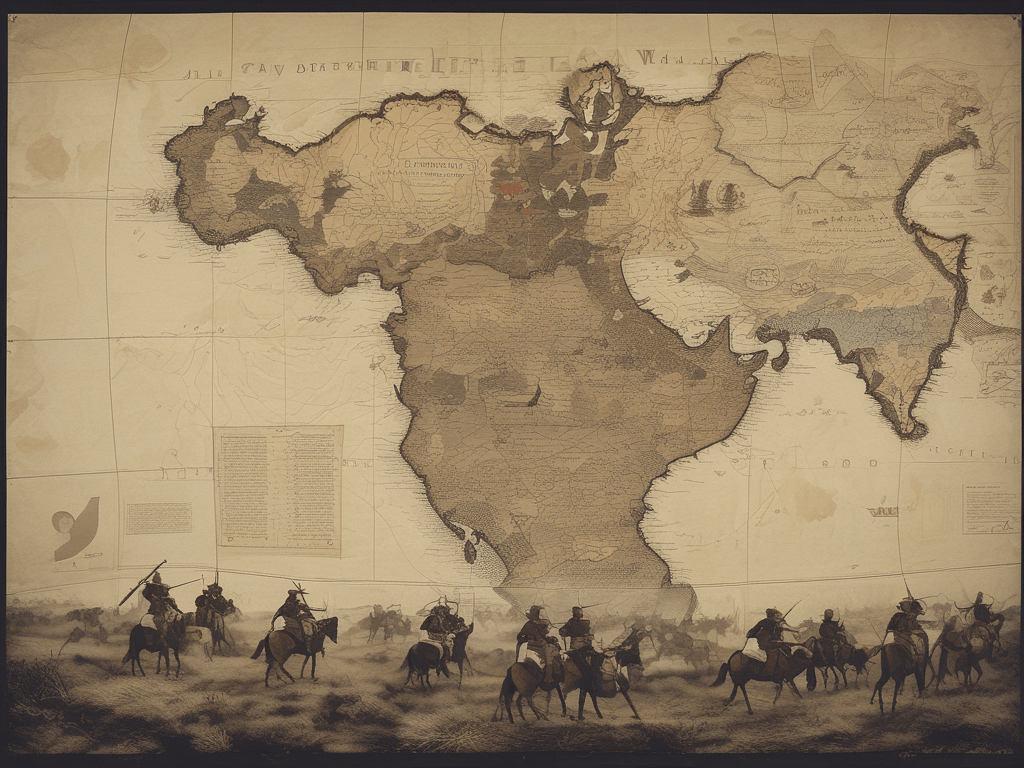
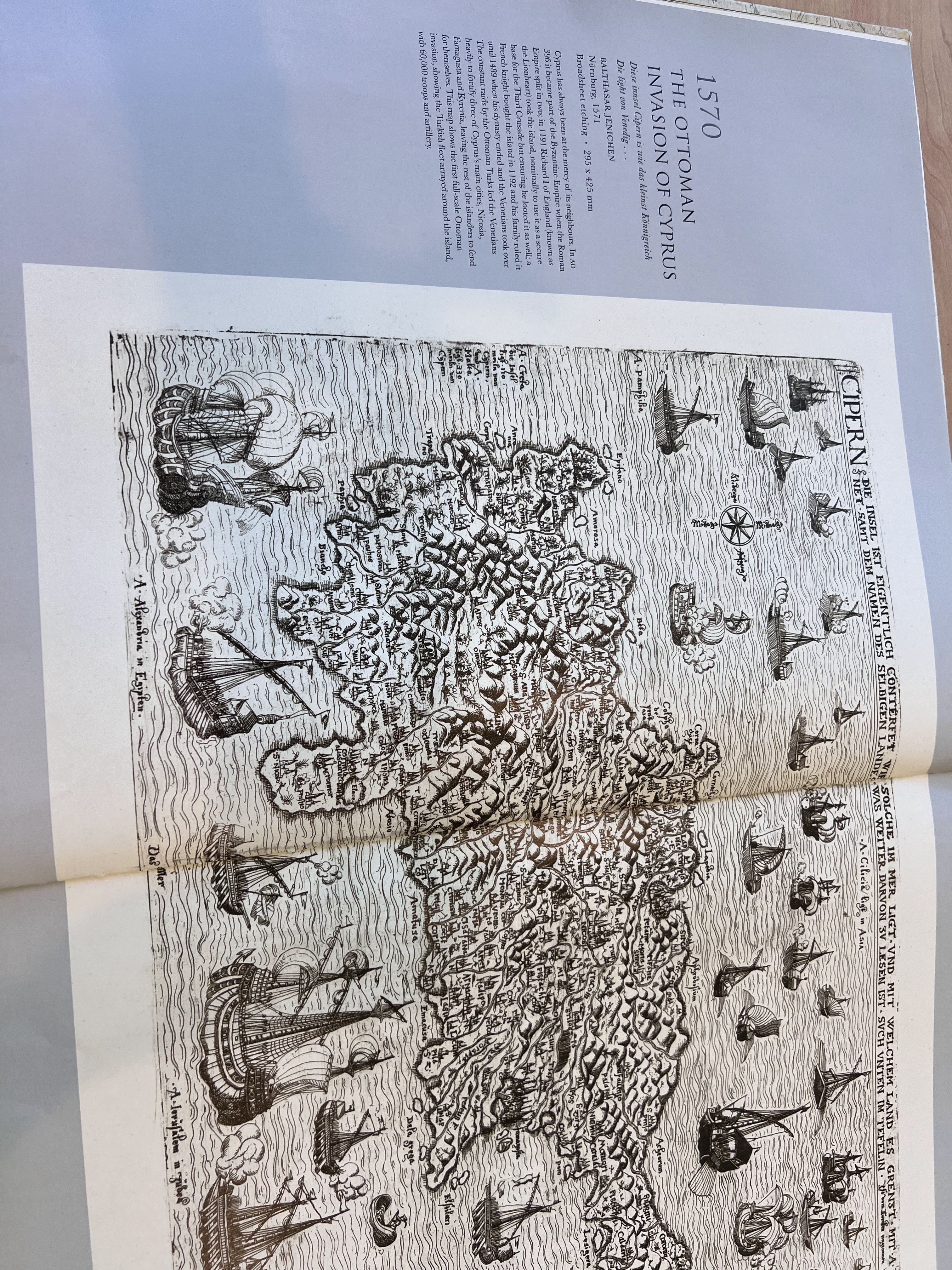
I picked up the huge tome titled Maps of War – Compiled by Ashley & Miles Baynton-Williams, and started browsing. The book had been the fascinating battleground to Avengers and superhero battles, not to mention the hours of entertainment and insight into the son’s latest hobbies of drawing maps of the world at various points in time.

img_1947

I saw the lure of the book. It had beautiful imagery, interesting ways to depict maps, and drove home the point that war was such an integral part of humanity’s history. This book only covered 130 wars between 1547 – 1902.

The foreword mentions why every conquering army was so keen to put out their own maps of war. That was their key to proclaim victory, garner public support and justify the wars. For every major map that made it to the book, imagine the thousands of skirmishes and conflicts that did not. The battles that were turning points in the wars, but were too minor to mention because it did not fit into the story being spun for the conquerors. It certainly was not a comprehensive look at all major wars during this period. 

“Lovely it is to witness great battle-plans of war, carried out across the plains, without your having any share in the danger.”  – Lucretius

 The maps of war are the larger picture of generals, and kings playing their games of strategy. 

img_1944

Impacts of War

What is not depicted is the culture, love, and familial struggles depicted as a map on a page. 

It is hard to imagine the individual lives of millions of lives lost. Yet, every single one of them were flawed human beings too. Some heroes in the eyes of their comrades; some troubled youth finding their way to vent their violence; some gentle souls caught up in another meaningless war; some hoping to gain power for themselves, some spying and hoping for the best outcome, some hoping their livelihood could be provided for if only they managed to make it back in one piece. Almost all of them terrified at the loss of peace in their individual lives, pining for the peace and love of their loved ones in faraway places while they hoped for probability to work in their favor every time they poked their heads out of the trenches, victims to random throes of arrows, or minefields. 

Well – The problem with society’s revolutions as Haruki Murakami mentions in his book, Novelist as a Vocation, is that in the world of war nothing makes sense as time goes on. Even if there is justification in the original act of going to war – remaining there is a whole different set of sacrifices. Yet, time and time again mankind goes in for that. Centuries of warfare and careers, egos, lives lost in the eternal quest for what? 

For in war, people never win. Maybe countries do, ideologies maybe. 

Though I wonder whether we’d have come up technological innovations such as we have if not for warfare: war has spurred technological innovations – fireworks, firearms, tanks, artillery, radar, sonar, cryptology, drones, nuclear power, chemical weapons, space travel. (We’d have come up with different ones if wars weren’t providing the impetus, for sure)

What is the Solution?

Is there a way to know how many wars started as peacekeeping missions and remained so? We may never know.  The son & I were discussing these very things one evening on our walk, when we fell to discussing another species that is just as war-mongering (maybe even more so) : Ants. 

Do we ever stop to think of territorial conquests of ants? Isn’t that how our own wars must appear in the scheme of the universe? 

man_in_stars

The only saving grace I could think of was to be grateful that we probably do live in one of the peaceful eras of history (“Touch wood!”, I said, grabbing a passing tree trunk, which made the son laugh) . 

“Yes Mother! You grabbing tree trunks will stop World Wars!” I heard the children’s voice chuckle in my ears, and I laughed too. May not be a bad suggestion to the United Nations Security Council, would it?

The Ease & Malaise of Literature

The Literature Malaise

There was a strange sense of malaise and I could not put my finger on it. It had nothing to do with the body – a blood test could’ve told you that. It had something to do with the literature I was reading.

I have felt like this many times in the past – especially when reading some writer who has the gift of ripping our hearts out, crushing it, and then putting the raw, bleeding thing in gingerly again. You gasp to regain control over the poor organ again, and soothe it back into action: “Never mind – that was just a book!” and the heart contracts, beats, pumps and does its thing again. How the writers themselves write it, I do not know.

Then, there are books that take one particular theme: shame, guilt, horror, anxiety, or grander themes like social injustice, and play on the heart-strings. J M Coetze’s Disgrace comes to mind.

That was how this particular book was. The narrative tone is never upbeat. It is  wrought with anxiety.  The reader is quite caught up in the frenzy of the social media world, its harsh realities of unraveling reputations, and the fate of the protagonist in YellowFace – by R F Kuang. ‘The mechanics behind the popularization’, as she puts it in her novel. The world of popularity has always been a high-stakes game (Or at least as far as I’ve read about. I wouldn’t know.) It is interesting to see the publicity stakes in the publishing industry . The book says something to the effect of : Best sellers are chosen long before they make it to the stores.

The illusion of an image built up through social media engagement can be a frightening monster indeed. For how do you find the imaginary?

I had decided to dedicate the week-end to catch up on some reading, and was I reading?!

After a few hours, I stepped outside. The world outside was basking in the summer sunshine. The bees were buzzing around my shaggy lavender patch. The patch needs trimming, but right then, the faint smell of lavender was soothing, and oddly endearing. It was a tug to reality, a reality in which not everything felt so grim as in the book. That was grounding – I took charge.

bee_in_roseroses

I made a cup of tea, and shook myself like a dog after a swim. Literally – I went for a swim and shook myself as I got out of the water. I had been drowning in the book all morning, and the cool swim in the hot sunshine worked wonders.

The Joy in Literature

I mused to the husband. “It is like Nobel Prize winning literature. You have to be serious-minded, have plenty of  suffering and drama. You cannot bung in humor and hope and write about light and all that and expect to find literary acclaim, can you? “

Why can’t people write like P G Wodehouse? I said forlorn. What was it that P G Wodehouse said on Writing?

https://claremontreviewofbooks.com/frivolous-empty-and-perfectly-delightful/

“I go in for what is known in the trade as ‘light writing’ and those who do that – humorists they are sometimes called – are looked down upon by the intelligentsia and sneered at.” – P G Wodehouse

So what is it about taking ourselves so seriously that appeals to humankind so much? I’d like a serious response please.

The book was critically acclaimed -a lot of serious books are, you’ll notice. It is like the world is looking to see – “Ahh – this particular kind of anxiety and loneliness, let’s see which writer can crush the essence of that most succinctly.”

So, I did what I do best:  I bull-dozed through the book, sitting up till 4 in the morning, finishing the book, before soothing the heart to sleep. I refused to put myself through another day with that feeling.

Something Fresh – By P G Wodehouse

The next evening, I resolved to do the opposite. I picked up books where the overpowering mirth or joy of the writer exudes from the pages and envelopes the reader in a warm, cocoon. A trip to Blandings Castle seemed nice

“This is peculiarly an age in which each of us may, if he does but search diligently, find the literature suited to his mental powers.”

P.G. Wodehouse, Something Fresh

 I laughed, and I grinned at the turn of phrase. I anticipated the next laugh – because I had read the book several times of course, and I still hung on. Laughing – matching the glorious summer outside. Later that night, the son & I thumbed through an illustrated copy of a favorite book as the silvery light of the full-moon filtered in through the night. 

All was well. Knowing all will be well in a book is a wonderful feeling. It is why I turn to authors like Miss Read, P G Wodehouse, R K Narayan, Alexander McCall Smith, Jacqueline Winspear etc like plants turn towards the sunlight.

Recommendations Please

Please recommend some authors you turn to for light, joy, hope, optimism and magic.

Captivating Creatures & Whimsical Tales

“We really need a read-a-thon!” 

A quiet chuckle and then, “Yeah – look at this.”

So, we sat. Quietly. Reading together. 

Children’s books really are the best -the equivalent of YouTube shorts to get into the act of reading: 

To turn a fun read into a whimsical time, 

To turn a chuckle into a snort, 

A laugh into a guffaw,

A sigh into a wistful longing.

🦌🦅🐿️🐦‍⬛🦢The day’s books were awe-worthy all right. I am just outlining a few here, but it serves to reiterate our need to dedicate a few hours every week to children’s books – the art, information, story-telling is all it takes to remind us that the world holds space for beautiful , gentle, innocent things. We just have to stop and enjoy them, and if possible contribute to make it all the more wondrous in our turn. 🦌🦅🐿️🐦‍⬛🦢

🦌This is how we do it – by Matt Lamothe

This booklegger award winning book takes the look of seven kids from around the world and shows us that we aren’t all that very different whether we live in a tiny hut in Uganda with a small family, or a large family in the hills of Peru, or in a multi story building in Italy, The author’s idea of profiling 7 children from Japan, Peru, Iran, Russia, India Italy and Uganda is brilliantly done. The similarities and differences are beautifully illustrated. 

🦅If You Run Out of Words – Felicita Sala

This book is whimsy itself. It reminds us of the beautiful reason we love children. For they say and ask the darndest things. In this book, the child asks her father what would happen if he ran out of words. Flabbergasted is what should have happened, but he rallies. Assuring his little girl that he would to to magical elves and get the words he needs. If that doesn’t work, well, he would go underwater, into other universes and find what he needs – even if he runs out of all the words there are, he wouldn’t ever run out of the 3 most precious words to say before putting his daughter to bed, would he now? 

🐿️From Tree to Sea – By Shelley Moore Thomas & Illustrated by Christopher Silas Neal 

This book is for those in quiet moods. What would the whale teach you? To dream big and take small steps? What would the mountain teach you, the sea? The artwork is comforting, serene and perfect for quiescent summer afternoons.

🦢Creature Features – By Steve Jenkins and Robin Page

A curious book that tells us odd things about animals around us – why does the babirusa have dangerous tusks? (Babirusa is not an animal we think of on a regular basis is it? Nor is the spicebush swallowtail caterpillar or the thorny devil if you come to think of it. Just for that, it is well worth picking up books like these in my opinion) 

🐘Astonishing Animals By Tim Flannery & Peter Schouten

An astounding book of creatures with different superpowers – the motion specialists, shape shifters, vertical ocean dwellers and so much more. I will probably have another post or so for this book because of the captivating illustrations, the interesting details about the fascinating creatures brought alive in the pages of the book.

IMG_1519

What do you think? Which children’s books would you recommend?

The Crafting of Characters

Development of our Characters

Book: Normal Rules Don’t Apply – By Kate Atkinson

I was reading a book (predictably), the son and husband fiddling about with their laptops. The short stories in the book,  Normal Rules Don’t Apply – By Kate Atkinson, were good. Really – we need more short stories than large novels of our lives, and this particular story was proving it so.

kate_atkinson

Quote:

“Good looks didn’t count for much with Franklin, he was the handsome child of handsome parents and had witnessed at firsthand the havoc that could be wrought by the pursuit of beauty without truth.”

A simple sentence – borne out generation after generation, and still as relevant in its truth.

In fact as I am writing this post, I thought of the variation of the quote in Jane Austen’s Emma:

“Vanity working on a weak head produces every sort of mischief.”

Jane Austen, Emma

Many of us remember the struggle (or continue to struggle depending on age, sex, race, nationality etc) of perception against self-esteem – I suppose it is hard to escape that. Society has improved by spades, but yet I do still see the expectations of eternal youth and raving beauty all around us. It is there in the filters that apps like instagram offer, it is there in the AI generated models’ and their definitions of beauty. It is there in the cosmetics, the advertisements, and even if most folks aren’t consumed by it, they are at the very least affected by it.  

Character Building

The building of character, the shaping and becoming of our authentic selves, however is a harder journey, and therefore, that much more satisfying, was it not? Luckily that is where the short story was heading towards. I read on, and stopped to read this piece twice. 

“Franklin spent his life under the impression that one day he would be tested, that a challenge would appear out of the blue- a war, a quest, a disaster-and that he would rise to this challenge, and not be found wanting. It would be the making of him, he would come into his own. But what if this never happened, what if nothing was asked of him? Would he have to ask it of himself? And how do you do that?” 

I remember writing a short story as a child. It was of a young girl, influenced by adventure books of Enid Blyton, looking for an adventure to prove their worth – their bravery, loyalty, their ‘goodness’ in the world. It was, in hindsight, partially autobiographical. For adventures seemed to come to these protagonists in stories, but seldom on such grand scales to ordinary beings such as us. I asked the middle schooler in our midst about the adventures they had, and he sighed somewhat wistfully, and said, ‘Ugh! Most days, The biggest stuff is whether to run via the library to PE, or return the book after PE, but risk getting to the next class late, amma! There aren’t any adventures! That’s Harry Potter stuff, not for us!”

We laughed and I told him about the story of the girl I wrote as a girl. But I continued musing that night. 

Everyday Choices & Grand Tests

Was a Grand Test better than the somewhat lackluster set of everyday choices and conundrums that shaped our characters?  

🪅Do you let your friend copy your homework? 

🎋Do you give in to the temptation of an extra toffee knowing your sibling will lose their share? 

🎏Do you sheepishly confess to being the person responsible for not finishing that group project on time?

Would we welcome the dramatic or realize that solid, everyday security was more difficult to achieve?

‘Dramatic things always have a bitterness for someone.” – L M Montgomery, Rilla of Ingleside, Anne of Green Gables series

Whether by dramatic events or small everyday events, we are constantly becoming – as long as we look into the mirror and like the character reflected to us, does it matter?

What do you think? Do you feel our small everyday choices help us take on the dramatic when they do happen, or do we find something within us that we didn’t know existed when the dramatic happens?

The Fascinating Behavior of Songbirds: A Morning’s Musings

It was one of those mornings in May – clear skies, the sun’s rays dancing through windows, and replacing moans quickly with sharpness and dedication.

I stood there wondering how it was so thoroughly that we transition from a supine, sleepy form to an alert, going-about-the-day form. The demands of the clock are relentless indeed. 

For an instant, I stopped to hear the beautiful voice of the songbird on our garden fence. It was trilling and beautiful, and I could have sworn just a little inspired – that last note a little higher than a human would have envisioned for that piece. 

It was as I was musing thus, that I noticed the son charging down the driveway to get to school on time – a sock hanging in one hand, a school project in another, and off we went. The songbird flew from my mind as we navigated the traffic, spoke of this-and-that, and chose music for the ride there. 

When I came back, the songbird was still flitting about here and there. I stood mesmerized by the little flashes of movements that my phone camera would not be able to capture anyway, and listened as it chirped, and went about gathering its breakfast.

I remembered a book that I had from the library – patiently waiting its turn.

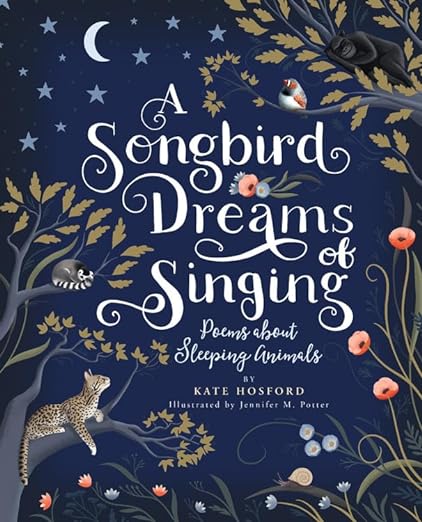
A Songbird Dreams of Singing – By Kate Hosford, Illustrated by Jennifer M Pottersongbird

I flicked open the book. The poem about the songbird was there:

Other birds may dream of worms 

Or flower beds or thunderstorms 

But every night this bird performs 

A concert in his mind.

How marvelous to imagine a songbird rehearsing and getting better at its craft subconsciously – every night.

The book goes on to talk about research made about sngbirds:

In the case of songbirds, scientists at the University of Chicago have done studies on zebra finches demonstrating that the males practice and refine their songs while dreaming, adding little flourishes to make their version of the song unique. Zebra finches are diurnal birds who rest in the afternoon and sleep for about ten hours a night. Like many other songbirds, when they awake in the morning, they sing with particular enthusiasm in what is known as the dawn chorus.

Children’s book illustrators are so wonderful at their craft. This book too has beautiful illustrations, color schemes, and an overall look and feel of a book that is all set to send us to our worlds of dreams too.

So, what should we dream about, and subconsciously try to get better at?

Sarees for Mothers

A Sari for Ammi

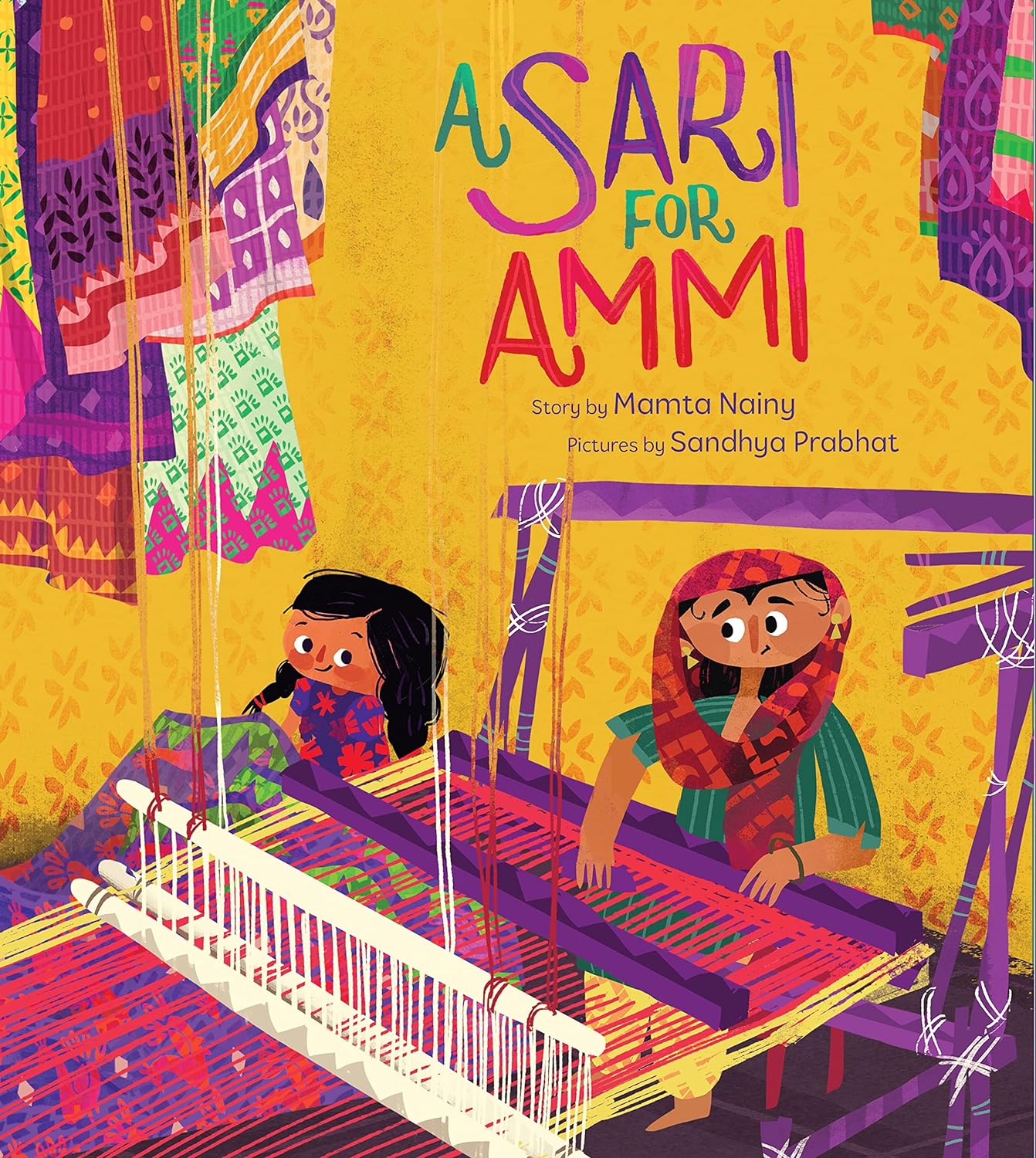
It is Asian Heritage Month, and the library is vibrant. I saw this book, A Sari for Ammi – Story by Mamta Nainy illustrated by Sandhya Prabhat. 

I thought I’d write about this for Mother’s Day, for it is a heartwarming tale. 

The young children of sari weavers watch in awe as their parents work on their arts of creation every day. Dyeing the threads, working the looms, selling their brilliant creations at the local market. Their beautiful mother, who creates magical saris can seldom wear a sari -she usually wears the practical and old salwar kameezes she owns – for she can neither afford the sairs she weaves, nor can anyone buy these for her. They are Kota Doria fabric weavers, and many generations ago moved to the Rajasthan area from Mysuru in South India at Rao Kishore Singh – the then ruler in Rajasthan.

Sari_ammi

The children decide to buy a sari for their mother: One she particularly liked, and one of her own creations. Of course, they realize that they do not have enough to buy a sari, and the heartwarming tale pushes on. 

Buying a sari for a mother is a special joy – one that Indians know and appreciate. For many years, I felt sorry that I could not indulge in this simple pleasure when my mother or mother-in-law came to stay with us in the USA. Luckily, now we have a few stores, and online options, but that was not always the case. 

A simple book that taps into the simple joys of buying your mother figures a saree.

Happy Mothers’ Day to all the wonderful mothers and mother-figures in your life.

War & Peace, Love & Power

“You need to have either love or war; those are the only ones that can sustain a long running saga!” the daughter said as an off-hand comment one day when we were discussing the art and craft of world building, and she was convincing me to read another series – one with a female protagonist. I was hesitant to start reading a series that not only had 7 books but all seemed to be progressively bigger in size too. She guffawed at this and said,  “You’ll enjoy it, so what’s the problem?”

The problem with wars is that nothing makes sense as time goes on. Even if there is justification in the original act of going to war, the long-running losses and frustrations often eclipse the original intent. It becomes a cascading pile of losses that fuel more losses.

I was reading Haruki Murakami’s book, Novelist as a Vocation. There was one particular section when with the book still open in my hand, the mind started to meander, trying to make sense of what was said, and trying to piece things together as they might have been.

He writes about the time he witnessed civil unrest as a student in college long before he decided to become a writer. Coming from a stable family, and not having endured any significant challenges or wars in his lifetime, he writes about the period in his life when he witnessed strife. He confesses that he felt drawn to the cause originally, but gradually could see cracks beginning to appear. Slowly, he saw how words lost their integrity, and he felt he could not identify with any of it anymore.

“As time passed,.., and internecine warfare between the student factions grew more and more violent and senseless – an apolitical student was murdered in the classroom we often used, for example-many of us became disenchanted. Something criminally wrong had wormed its way into the movement. The positive power of imagination had been lost. I felt this strongly. ….Uplifting slogans and beautiful messages might stir the soul, but if they were not accompanied by moral power they amounted to no more than a litany of empty words…..Words have power. Yet that power must be rooted in truth and justice.”

I felt a heavy sadness settle over me as I finished reading that section of the passage again. Thus it has always been. With war, with power, with long-running angst. It sometimes seems to me that human beings are remarkable for still allowing light to seep through – to be hopeful, happy, joyous, friendly, loyal, trusting, loving and giving. But I am glad of this tug-of-war too, for without one, we may never learn to fully appreciate the other. 

News of war and conflict have always plagued humanity, and exactly a century ago, the whole world reeled from wars back to back that sent the world careening into madness. The insanity of it, the dreariness of it, we hoped would be deterrent enough for at least a few centuries – but I doubt it. For just as ubiquitous as love seems to be conflict. 

In centuries of warfare, there have been gains and losses. All things fragile to begin with (egos, lives, trust, careers), they all seem to shatter in the eternal quest for what? Seldom in war do people win. Maybe countries do, armies do, but never the individual. And yet without collective action, where would we be?

In our very contradictions lies our greatness. 

I eyed the book series on war & love the daughter had given me, and wondered whether to start another saga.

It seems so simple to say: All we need to do is figure out a way to value Peace over War, and Love over Power. Oh well! That is the saga of the human life, isn’t it?

Zinniga-Zanniga Tree – The Cure-It-All Tree

Dr Seuss Magic

“Isn’t it marvelous to leave such a legacy behind?” I asked sleepily. It was Dr Seuss’s birthday and typically marked as Read Across America week. I miss the fuss of the week in elementary schools. The middle schoolers and high schoolers get to have their fun, but we just get to hear about it a lot less, I guess. 

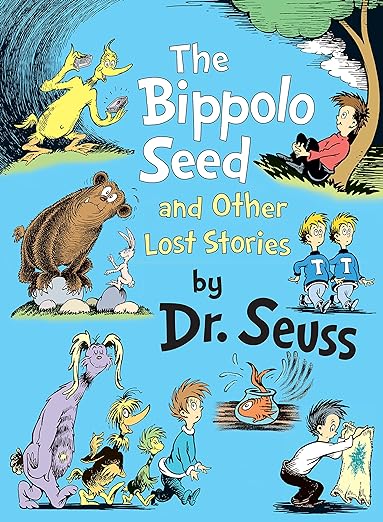
Lazily, I picked up a book written by Dr Seuss, that has been lying around for ages in the children’s bookshelves and had never read before. The Bippolo Seed and Other Stories.

bippolo

The stories, some of them at least, had predictable plot lines, but oh! How he presented them! I feel justified in the use of as many exclamation marks as necessary when writing about Dr Seuss. For instance, there is a story of a bear ready to pounce on a rabbit. The rabbit, doing some quick thinking, stalls the bear with an intriguing thought.

The Rabbit, the Bear, and the Zinniga-Zanniga

“I sure hate to tell you It isn’t too good.
I was counting the eyelashes 'round your eyes,
Your left eye…your right eye…and, to my surprise,
They weren’t the same number!

“I’m sorry…SO sorry.
But, sir, it is true.
Poor Bear! This is dreadful!
One eyelash too few!”

In typical Dr Seuss fashion, the rabbit takes it to ridiculous extremes. Could the bear’s spine be cracking, could his brain be lopsided, all those aches and pains, oh it all makes sense. By the end of the tale, the bear is sitting atop a zinniga-zanniga tree with a flower pressed to his eye so that the extra eyelash can grow and make him feel whole again, while the rabbit skips on his way, free from the bear’s claws.

Oh! 

I laughed so hard, I sputtered and sprayed my coffee, I put my phone in the refrigerator and looked for it all morning, and I almost walked straight into a zinniga-zanniga tree myself.

What a marvelous tale to encapsulate how our worries sometimes run away with our imagination, the hypochondriacs hidden in every one of us to a certain degree poking fun at itself, and the societal pressures on perfect eyelashes playing into the bear’s psyche?

Sometimes, we need entire tomes to discuss these themes, other times, a lost story of Dr Seuss would do.

🐲When Women Were Dragons 🐉

Intriguing beginnings:

There are powerful beginnings and there are intriguing beginnings to stories. It has been a while since I saw a beginning as brilliant as the one in the book, When Women Were Dragons – By Kelly Barnhill

women_dragons

Dragoning

Dragoning is the term that seemed to be used when some women turned permanently into dragons and left their human life aside – taking off to wherever dragons live. For those left behind, the phenomenon is bizarre, frightening, traumatic, and quite often fatal. 

This is how the book starts:

“Greetings, Mother- I do not have much time. This change (this wondrous, wondrous change) is at the very moment upon me.

I married a man who was petulant, volatile, weak-willed, and morally vile. 

But there were no babies, were there? My husband’s beatings saw to that. Tooth and claw. The downtrodden becomes the bearer of a heavenly, righteous flame.

I shall not miss you Mother. Perhaps I won’t even remember you. Does a flower remember its life as a seed? Does a phoenix recall itself as it burns anew? You will not see me again. I shall be but a shadow streaking across the sky-fleeting, speeding, and utterly gone.

– From a letter written by Marya Tilman, a housewife from Lincoln Nebraska, and the earliest scientifically confirmed case of spontaneous dragoning within the United States prior to the Mass Dragoning of 1955-also known as the Day of Missing Mothers”

I am midway through the book, and the story soars with the dragons – fiery tempests in teacups and how the placid bore it within themselves.

The book’s narrative voice is brilliant. Seamlessly moving between dragoning as a phenomenon and when it was first observed, slowly moving onto research of dragoning and its funding removed, to the whole topic becoming a taboo.

Society isn’t really mysterious once you understand the original intent. Cruel maybe, but not as mysterious. For instance, in this world, drawing or mentioning dragons could get children in serious trouble. Those who had lost a mother or a sister or a friend to dragoning don’t ever want to hear anything to do with it. They ignore it so it may never happen again. The news forgets to mention it, and society plows on.

For those looking for dystopian fiction or just a jolt from our current state, When Women Became Dragons, is worth a read.

2023 – I am stuck in a book, be back soon!

One of the favorite parts of the year are here. The Christmas lights are twinkling. There is magic in the air. I get to go back and revel in the books that have made it so. Some books evoke a feeling, and trying to capture that is a joy in itself.

Hindsight is our finest instrument for discerning the patterns of our lives. To look back on a year of reading, a year of writing, is to discover a secret map of the mind, revealing the landscape of living — after all, how we spend our thoughts is how we spend our lives.

Maria Popova – TheMarginalian

This year, I get the strange sense of being in a floating Universe. I seem to have whizzed past centuries reading things in the past, zoomed and ducked out of alternate worlds with all the science fiction and fantasy adventures, while being thoroughly grounded in making sense of today’s world with its AI, and its technological advances.

I get the familiar sense of time slipping through the sieve with extra large holes once again, but then, will it always be like this? I hope so, for in its speed lies its charm.

Here are some of the notable ones – I find the neat classifications all being thrown out – every year, I seem to have a different classification system and therein lies the charm. Nothing is immutable and all that.

the_world_playground

I also see that I have dozens of unfinished posts for some of these books that have never made it to the blog. Oh well! I need to take inspiration from Robert Louis Stevenson I suppose.

“I kept always two books in my pocket, one to read, one to write in.” ― Robert Louis Stevenson

Peek back into time:

The World Around Us:

“The reading of all good books is like conversation with the finest (people) of the past centuries.” ― René Descartes

    Non-Fiction:

    Beautiful & Informative:

    • Nanoscale – visualising an invisible world – Kenneth  S Deffeyes, Stephen E Deffeyes
    • Atlas of the Invisible – James Cheshire & Oliver Uberti
    • A celebration of Beatrix Potter : art and letters by more than 30 of today’s favorite children’s book illustrators
    • In the woods / David Elliott ; illustrated by Rob Dunlavey

    Alternate Worlds/ Science Fiction/Magic:

    Tech Tech:

    Inspirations:

    Books that ought to be classified as warm cups of tea 🙂

    • News from Thrush Green – Miss Read
    • The White Lady – by Jacqueline Winspear
    • Much Obliged Jeeves – P G Wodehouse
    • A Song of Comfortable Chairs – Alexander McCall Smith
    • What would Maisie Do? – Jacqueline Winspear

    “Some books are so familiar that reading them is like being home again.” ― Louisa May Alcott

      Children’s Books – my favorite category (just mentioning a few since I don’t keep note of all the titles)

      I hope 2024 continues to be as varied and inspirational in its moments of magic and learning for all of us! I shall put in a comment the complete list of books. I only put in a few in the post here.

      “The more that you read, the more things you will know. The more that you learn, the more places you’ll go.”

      Dr. Seuss 

      Happy Reading!

      reading_in_a_tree