We Belong on Earth – Part 2

One sunny day, I felt a surge of happiness to find the latest book by Khaled Hosseini, Sea Prayer. I heard it was like none of his other books, but just as poignant. The moment of realization came a moment after the surge of happiness – how could I be happy to find the book that drove home the sad truth of refugees – of that child whose dead body floating in the sea inspired the book?

Child name: Alan Kurdi

sea_prayer

Was I really ready to have my heart wrung out as I am sure it will be when someone as competent as Khaled Hosseini wields their pen on the sad plight of refugees? I picked up the book late that night, long after the moonlight had transformed the late summer landscape into a luminous wondrous land.

I always hesitate to start a book of such deep issues, and for good reason. I was in a flight once, and delved into my book. I was about halfway in when tears started streaming down my face. A co-passenger asked me if everything was alright and I pointed to the book, feeling sheepish, but she replied that she had cried after reading that particular book too, and I felt like I had met a kindred spirit. Like P. G. Wodehouse said, “There is no surer foundation for a beautiful friendship than a mutual taste in literature. “ .

The book was In the Shadow of the Banyan, by Vaddey Ratner.
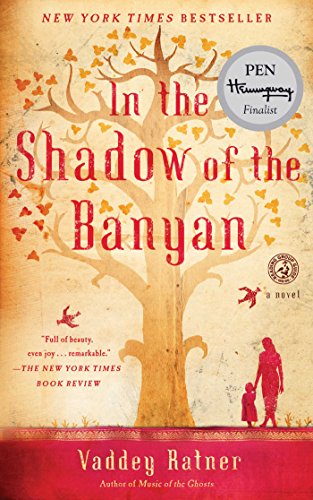
in_shadow_banyan

Vaddey Rattner writes of the child trapped in the horrendous events of the Khmer Rouge regime in Cambodia. I said it before and I shall say it again: There never is an upside to War. The worst affected are the children, and we have no excuse to maim their psyches thus. I read the book more than 5 years ago, and yet it stays in my mind. Vaddey Ratner draws you into the human experience through the suffering so beautifully that words fail me.

The book made me realize what it must have been like for an old colleague of mine.

I remember the shock with which I realized she was a refugee from Vietnam. We were both heavily pregnant with our first-borns and often traded tummy-tales. We were hallway buddies. I wished her a Happy Birthday, proud of myself to have remembered, and she gave me a rattling wholesome laugh in response. Then, with her characteristic good sense, she told me about how someone took a look at her and assigned her an age when she got off the boat. “They said I was 5 then. Looking back, I see I was given 3 years of my life to live again. “

I did not know what ‘got off the boat’ meant at the time. I looked at her quizzically for she said, “Oh, because I was pretty sure I was 8 then, but I did not know English, and I did not know that when they pointed at me, they were estimating my age and they gave me a birthday too. With the war I was malnourished, bones sticking out, and I am short too, so I suppose I could easily be mistaken for a 5 year old when I came here. I don’t really know my birthday, so I just celebrate this day that was given to me. “

Over the course of our pregnancies, she told me tidbits here and there about how she had escaped Vietnam as a refugee and came to the United States.

The fast flowing rivers of my consciousness, combined with the changing people-scapes around me, meant that I thought about her every now and then even though I lost touch. I am fairly sure that she must be enriching the world around her somewhere. For her, this life was too much of a gift to throw away and not live and contribute to the fullest.

Who was it who said, that we affect the world around us simply by being, or some such thing? Just thinking of her gave me the courage to read Sea Prayer. I opened the book and was transported to the town of Homs in Syria.

Sea Prayer is more of a poem in the form of a short letter written from father to son. A few words is all that is necessary for him to take you into a grandmother’s hut where the child played.
“We woke in the mornings
to the stirring of olive trees in the breeze,
to the bleating if your grandmothers goat,”

IMG_0456
A sample of the artwork by Dan Williams

A few strokes of the brush is all takes for the artist, Dan Williams to set the tone for ‘The skies spitting bombs. Starvation. Burials.”

It is a very short book, and not like Khaled Hosseini’s other works, but it is a book that reminds you to think of the human condition. The book finishes on this note.

”Sea Prayer was inspired by the story of Alan Kurdi, the three-year-old Syrian refugee who drowned in the Mediterranean Sea trying to reach safety in Europe in 2015.

“In the year after Alan’s death, 4,176 others died or went missing attempting that same journey.”

Where do we belong? To Earth surely.

Read also: Do We Belong On Earth?

Hero-Worship, Nicomacean Ethics & Baloney Detection Kits

I have heard friends rave about Dune by Frank Herbert many times over the past few years. I finally got to read the book, and I feel richer in mind and thought for it. The book was long and at times hard to keep track of (especially in the beginning). This is one of those times when I realize how my mind flutters with attention spans that drive calm butterflies to frenzy. But slowly, steadily, I settled into the book, and there were multiple moments when I felt like I must grab a pen and start writing (but that stern butterfly gave me a look, and kept me at my the task of reading). This, is probably the reason I have forgotten half the things I wanted to write about (This is where I glare back at the butterfly guardian who kept me reading)

Dune-Frank_Herbert_(1965)_First_edition
First Edition Cover – Image from Wikipedia

One of the many things that appealed to me in the Dune was the fact though there were vague references made to technology and the number of technological devices used by those living at the time, it is not a mainstay.

The book is a multi-layered piece of literature with over-arching themes of ecology, the art of war, religion, philosophy and politics. There is a particular quote that stuck with me in the Prologue written by Brian Herbert, Frank Herbert’s son, about the dangers of hero worship.

Quote:

As Liet Kynes lay dying in the desert, he remembered the long ago words of his own father: “No more terrible disaster could befall your people than for them to fall into the hands of a Hero.”

Having studied politics carefully, my father believed that heroes made mistakes…mistakes that were simplified by the number of people who followed such leaders slavishly.

In many ways, hero worship is what leads people to choose leaders who then turn into despots and dictators. Adulation affects everyone, and those with fragile egos are the most prone to its lure.

Towards the end of the book, Paul Atreides recognizes that he is being hailed as the Messiah and regardless of his acceptance of the title, there is a holy jihad in his future. He can either lead to the best of his abilities like his able and excellent father, Duke Leto or simply be the mascot of a movement that has already gathered momentum – a force that is much larger than him. This sort of trusting faith in one human being is never a good sign, and is a malady that has affected us for centuries. 

I quite agree with how Aristotle describes the nobility required of politicians: he opines that politicians should take an oath, almost as sacred as a Hippocratic oath, to remain fair and mete out justice. From the Nicomachean Ethics – By Aristotle. 

The lecture on Aristotle and Socrates on How Does One Live The Good Life? From 36 Books That Changed The World (Chapter 8) is an excellent listen.


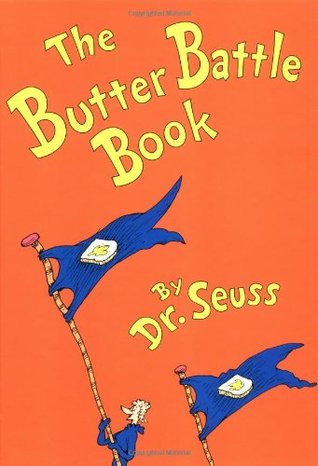
There are no initiation courses for politicians. No training. Though, I have a suggestion to have every politician complete the Butter Battle Course, it is unheeded. (The Butter Battle Course is an excellent course consisting of childrens’ books not more than a few pages each, and should only take a few moments of every leader’s time):

butter_battle

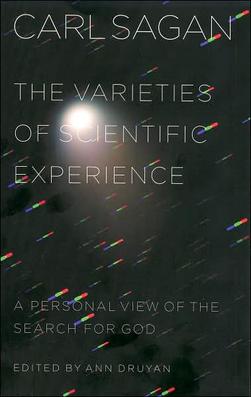
However, till politicians start taking their careers to truly be in service of humanity, we need to equip ourselves with Carl Sagan’s excellent Baloney Detection Kit from the book: The varieties of scientific experience : a personal view of the search for God / Carl Sagan ; edited by Ann Druyan. This book contains the Gifford lectures given by Carl Sagan in 1985.

The_Varieties_of_Scientific_Experience
By Source, Fair use, https://en.wikipedia.org/w/index.php?curid=28513011

When someone asked Carl Sagan after his lecture what we can do when the governments do not act in our best interests, he advised us to have Baloney Detection Kits handy.

Quote:

“I would say that the first thing to do is realize that governments, all governments, at least on occasion, lie. And some of them do it all the time – some of them do it only every second statement-but, by and large, governments distort the facts in order to remain in office.

And if we are ignorant of what the issues are and can’t even ask the critical questions, then we’re not going to make much of a difference. If we can understand the issues, if we can pose the right questions, if we can point out the contradictions, then we can make some progress. There are many other things that can done, but it seems to me that those two, the baloney detection kit and use of the democratic process where available are at least two things to consider.”

This seems to be age old wisdom: our oldest myths write about flaws in heroes, what brings about the downfall of the most powerful tyrants  etc; and yet, the reminder for our own Baloney Detection Kits is a timely one.

Books:

  • Dune – Frank Herbert
  • Varieties of Scientific Evidence  – Carl Sagan 
  • Nicomachean Ethics – Aristotle
  • 36 Books That Changed The World – Lectures on Great Courses
  • Butter Battle Book – Dr Seuss

Our Rainbow Colored Hearts Can Sing

The elementary school going son and his friends were proudly showing off their art work at the open house. It always makes my heart sing when I see the beauty of effort. Tables that looked like flattened zebras, zebras that looked like striped platypuses, and platypuses that looked like duck bills were all being open to interpretation. I was admiring everything and the artists around me were very proud of themselves. They puffed their chests out and competed with each other to show off one another’s work. 

img_8684.jpg

The teenaged daughter tugged my hand to show me a particularly fetching piece of art done by her brother. “Oh beautiful!” I coo-ed, though I could not really make out what it was. But to paraphrase Ursula Le Guin, a potter’s job is not to explain a pot, but to make the pot. It is upto us to use that pot as we will. In her fascinating collection of essays or blog posts, No Time To Spare, she deplores this tendency in Modern Art museums for the artist to explain their work.

Screen Shot 2018-06-04 at 4.57.22 PM

An artists work, she says, is open to interpretation and mean different things to different people at different points in time. It is a sentiment that I agree with, and I relished her way of putting it into words. Something that I have always admired in Ursula Le Guin’s work. Of course, she put it far more elegantly than I have attempted to here. 

Please read this earlier post on the daughter’s drawings as a child.

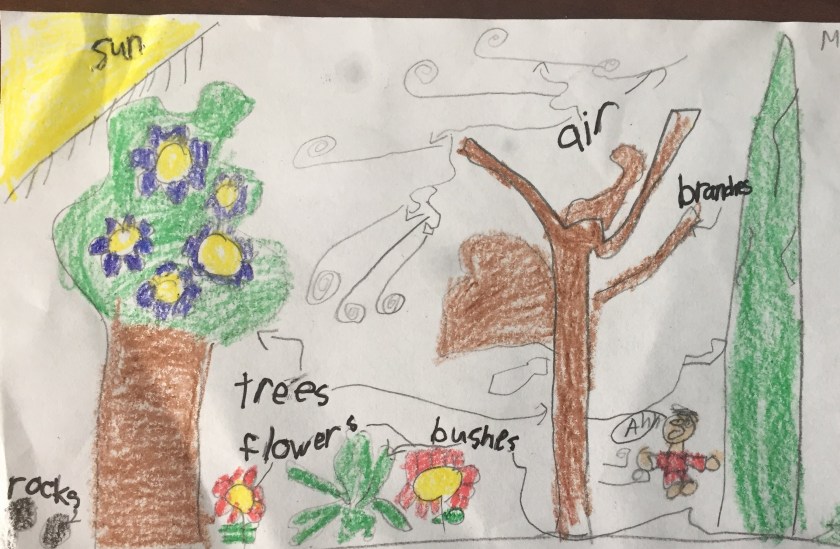
Anyway, I admired the son’s work, and then the daughter pointed to the bunch of people in the picture. Peering closely, I noticed they had rainbow colored faces. I asked the son why the folks in his drawing looked like rainbow trout in the sunshine.

He said, “Oh my teacher said to the class, to put in some colored people.”

I turned to the teacher, and she said she did say that for Diversity and Inclusion. I smiled at her, and thanked our stars for all the lovely things teachers teach the children.  Half the adults seem to have difficulty remembering these simple lessons in these sad times. All the more reason why we should all attend a year of Kindergarten every decade.

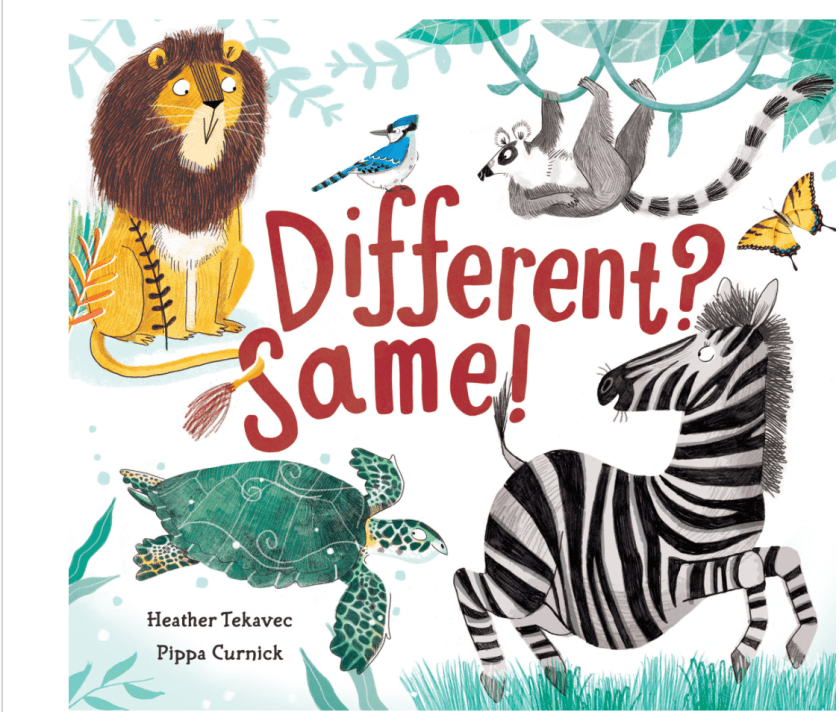
I looked again at the rainbow colored people and thought how beautifully untainted and open minded we are before we learn our little prejudices along the way. To think how much we obsess on skin color makes my rainbow colored heart very sad. It was, therefore, with utter joy that I picked up the book, “Different? Same!” Written By Heather Tekavec and Illustrated by Pippa Curnick.

Screen Shot 2018-06-04 at 5.22.25 PM
Different?Same! By Heather Tekavec, Illustrated by Pippa Curnick

In this beautiful book, we are reminded of how each of us are so different and yet similar. How is a Zebra similar to a bumblebee? Or an Elephant and a Narwhal? 

The book finishes on a beautiful note that can make our rainbow colored hearts sing: If you look closely enough, it soon becomes clear … we’re not as different as we first appear.

The World of Pure Imagination

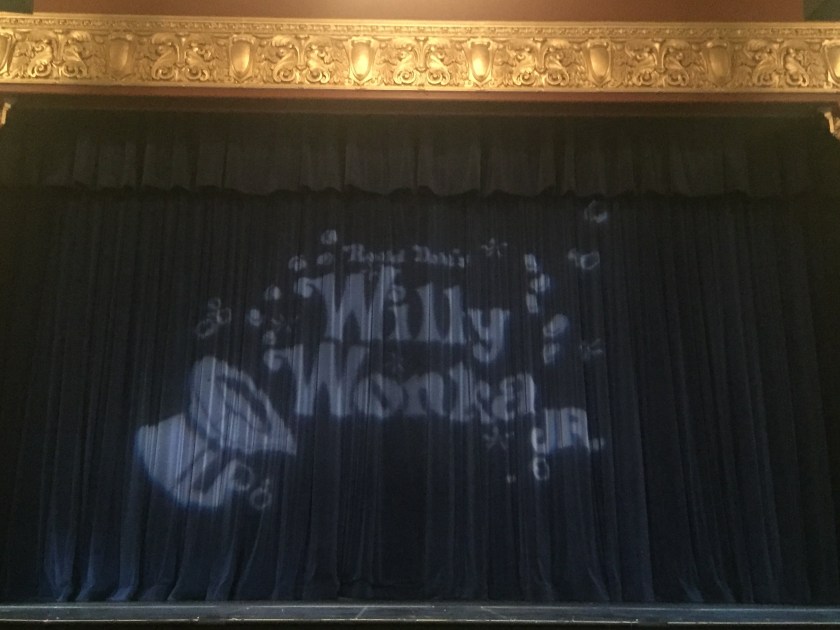
The daughter pranced into the home one evening a few months ago, her eyes agog with excitement. She had auditioned and been cast as Willy Wonka, the eccentric chocolate factory owner in Willy Wonka Jr (the musical based on Charlie and the Chocolate Factory). They say Art is Transformative, and it is true. Every time I see the children pull off something spectacular, my heart soars. 

Come with me and you’ll be 

In a world of pure imagination

We’ll begin with a spin 

Traveling the world of my creation

What you’ll see will defy explanation

IMG_8469.jpg

As she sang her songs from Willy Wonka around the house, there was a pleasant hum in my brain too. I remember reading the little book with her when she was in elementary school. The years in between have smudged into a blur in which I remember doing a lot of things, cherishing a few memories, and before I knew it, my little girl towered over me in height and ability. 

In a world of pure imagination: how would that world be? It must be a world in which all things vile are wished away, and only pleasant striving has a place. A canvas on which the best is to be painted and awaits the strokes of our creation. Maybe that is how we must view life. Every aspect of ours a stroke on our canvas – the true nature of the painting ever changing to be revealed to us as we go along, giving us a subtle choice here and there on whether to put in that jarring, wrong stroke or a mellow, right one.

There are many marvelous things that I can attribute to imagination (and immigration). One that ranks highest is the fact that I get to read American Children’s literature as an adult. As a child, in the lovely hills of South India, I loved curling up with Enid Blyton’s books, and often escaped into fairy lands on wishing chairs and ran into magical forests. It was easy imagining an adventure, while swinging on tree trunks that had fallen in the last storm. We had plenty of time, and had no one but ourselves to rely on for entertainment. State television made its entry a few years later, but it was agreed fact that our own flavor of entertainment was far superior to what we saw on Television. I sometimes played alone, but not once did I feel lonely. There were always imaginary friends who’d drop in for a cup of tea and we’d bake some scrunchy scones and whip up some tea cake, though I had never seen the inside of an oven. 

The Indian comic books, Amar Chitra Katha, Chandamama added flavor and beans to the curry pot of imagination. It was a wonderful time in the head. The pressures of wanting to make something of oneself had not yet begun to exert itself, the only lures were those of nature as it enclosed us. The trees were friends and frequently doubled up as props in our adventures. Many a scraped knee was soothed away with scratches from brambles. 

I entered my teenage years, and my imagination left some of its whimsy behind. The teen years and the early twenties were dedicated to much serious reading, and I spent a good portion of my time striving and wondering what to make of myself.

“That’s the worst of growing up, and I’m beginning to realize it. The things you wanted so much when you were a child don’t seem half so wonderful to you when you get them.”

L.M. Montgomery, Anne of Green Gables

Then, I realized that all those years that I had spent wondering what to make of myself had actually made me. Just like that, I could embrace all that happened to me. It was liberating, and then the more whimsical side of my imagination swooped in once more. I took tentative steps into Wonderland when I became a mother in the United States, and indulged the child in me with my growing children. 


Dr Seuss graced our tongues and teased the brain (What if I had duck feet? Did the elephant hatch the egg finally, will Zooks and Yooks ever become friends?), we sang poems by Robert Louis Stevenson set to the tunes of the old hymns in our school hymn book (To be written), we giggled with Bernstein Bears, hoo-hoo-haa-haa-ed with Curious George, and marveled at the friendship between Frog & Toad. The children and I read Charlotte’s Web when I was in my thirties, but I enjoyed it even more than I would have as a child.  

dr seuss

For a long time, I had meant to read Anne of Green Gables, but for some reason, did not. The daughter had not shown inclination towards this series, and there was no one to tell me how I absolutely must read it. Then, one day I read a quote from Anne of Windy Poplars, and I was intrigued. I have always loved that style of uplifting writing weaving the tendrils of imagination with subtle humor: the gentle breeze of the soothing powers of nature to nurture our soul wafting through every page. It is why I like Miss Read’s writing so much.

I identified keenly with how much Anne prized the gift of imagination. Somehow, we lose that streak of imagining as we grow older, much like we forget to skip while walking.  I now have that pleasurable thrill of reading all the remaining books by Lucy Maud Montgomery. It is a sustaining thought.  

Margarita Engle’s poem:

No giant or dragon

Is bigger or stronger

Than the human imagination

P.S: If you have not already listened to J K Rowling’s commencement speech, it is definitely worth listening to: The Importance of Failure and Imagination


How Windmills Became Giants

No giant or dragon

Is bigger or stronger

Than the human imagination

– Margarita Engle

That was the first poem in the children’s book, ‘Miguel’s Brave Knight – Young Cervantes and his Dream of Don Quixote‘. It acted like a magnet on me – not that iron had entered my soul, far from it, but you get the gist. Silly thing to say that magnets work on people, what I mean is that the book appealed to me. 

Screen Shot 2018-04-12 at 5.13.22 PM

The son and I read it together a few days later, and he cackled, “My goodness! This boy thinks of Knights on every page. “

“Yes. Doesn’t he?” I said, bemused that one who introduced car and ninja motives into everyday speech should find it amusing that another young boy was fixated with knights. I told him so, and he laugh good naturedly. “Yeah – but how come he sees knights everyday? I have never seen a knight.” said the little fellow.  We then had an illuminating discussion on the lure of the knight in the olden days. How ubiquitous he seemed, and what enamored thousands of boys to sign up as knights. Could it have only been a means of livelihood or a quixotic quest for glory? 

Back in the book, the story of Miguel Cervantes flowed along poetically.

The book is artfully written, and tastefully illustrated (Pen,ink and watercolor – sample below) . In short poems, titled Hunger, Imagination, Comfort, Daydreams; the story takes one through the life of Miguel Cervantes, the poor boy with an indifferent education, who made the world a richer place by imagining the modern day novel into existence. His flawed, grandiose, knight, Don Quixote lingers on in human imagination centuries later. 

IMG_8390

Miguel’s Brave Knight – Young Cervantes and his Dream of Don Quixote

The poems really talk of the life of Miguel Cervantes, but are lucid enough to be relished on their own. Miguel Cervantes lived during the sixteenth century, and had a far from easy life. Born to a barber cum surgeon, his early life was in constant turmoil as his father was frequently in debt, and was arrested for it several times. They had to move often, went to school if he could, but throughout all his travails, his imagination was his best friend. At a time when books were rare, and imagination frowned upon, the young Cervantes managed to learn to read and write, and carefully hone his imagination: a gallant knight on a magnificent horse was ever ready to rescue him and the world.

Daydreams  

My daydreamed knight

protects farmers and maidens

from ogres, goblins and trolls

The Ingenious Nobleman Sir Don Quixote of La Mancha was the original title of the book that was eventually published in Spanish. 

He sees windmills as giants 

with enormous, spinning arms

The first time I saw a windmill, I stood transfixed, even as an adult. It is no wonder that it appealed to the imagination of a young boy.

Beautiful poetry, mellow illustrations and the story behind Don Quixote is truly irresistible, and I have read the book several times already with joy.

Also read: The Boy Who Harnessed The Wind

The Dance of the Butterflies

Magical March gave us the immense satisfaction of walking to school under magical rainbows,  leprechauns had wreaked havoc and left treasures, my mother got to see her father for the first time at the age of 73, we had a beautiful trip playing in the snow, the doting grandparents arrived and the children have been reveling in the social rainbow that enveloped them.

Out in the natural world, the hills are alive with the sound of moo-sic (cows grazing – get it, get it?), the cherry blossoms send sparks of joy piercing through the soul every time I look at them, and the butterflies have been dancing the dance of joy. Rain showers cleansed the Earth, and all nature around us seems to be smiling benevolently.


One beautiful evening, I stepped out on a walk with my little son. Elementary school children derive a certain pleasure in crouching and looking at ants, snails or ladybugs. This time, however, we crouched down to look at a furry, black caterpillar. After reading Eric Carle’s book, The Very Hungry Caterpillar, everyday for months at a time with each of the children, I did not think that I would be enamored sitting and observing caterpillars, but such is the infectious enthusiasm of youth. (The Wind in the Reefs – Working title of The Wind In The Willows)

I found myself excited and thrilled to crouch and watch the caterpillar make its short journey across the concrete path back into the sidewalk where the bushes grew. I still find it amazing that these creatures metamorphose into butterflies. Eggs->Caterpillar(larvae)->Chrysalis(Pupa)->Butterfly has to be the most magical thing in our daily existence next to rainbows.

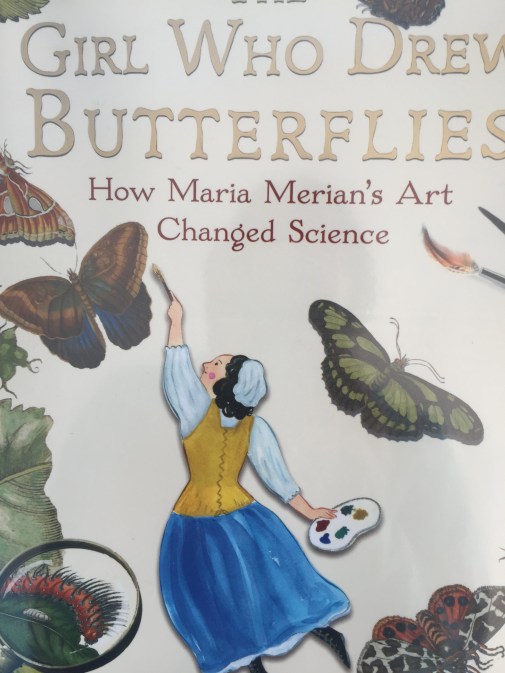
Later that week, the crouch with the caterpillar made me reach longingly for the book, The Girl Who Drew Butterflies: How Maria Merian’s Art Changed Science – Joyce Sidman

IMG_8198.jpg

Maria Merian was a naturalist and illustrator in the seventeenth century.  Written by the children’s author and poet, Joyce Sidman, she says:

In many ways, Maria was an enigma. She rarely wrote about anything other than caterpillars…What we do know is that she had boundless energy, insatiable curiosity, and superhuman focus – traits that would have been difficult to live with, but ones that marked her as a true scientist at a time when the odds were stacked against her.

How does one find the passion and perseverance to stick to a field of study in spite of societal disapproval, familial duties and demanding businesses?  The book gives us a glimpse into seventeenth century life: The impossible clamps on Women, the dangerous possibility of any curiosity being mistaken for witchcraft, the difficult life of artists in general and so much more.

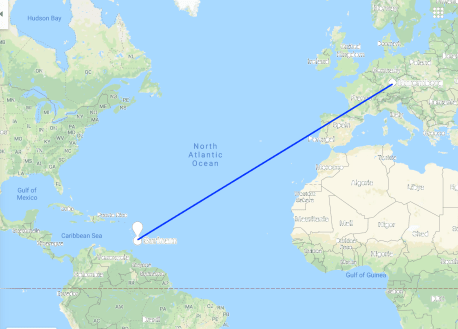
I have always admired those who have high energy levels and put it to good use. Maria Merian was one of those people. She was a brilliant artist, had business acumen and her curiosity about insects made her a pioneer in the field of etymology (A field that did not even have a name until several decades after her death). Her contributions to etymology were remarkable because she also managed to travel to Surinam near Barbados in those days with the sole purpose of studying animal life. Her paintings on Surinam and her books on caterpillars had great appeal in Europe, and Maria Merian went on to transform Art and Science forever.

Screen Shot 2018-03-29 at 5.12.14 PM.png

The book is full of beautiful diagrams, paintings, flowers and plants with little insects on them. It is a joy to thumb through even if it is just to look at the pictures.


Here is to more butterflies, rainbows and magic.

How Squids Shaped Our Myths

We are familiar with the Pangea theory (large hulk of a landmass floating together, and breaking apart into the continents of today, current day India going and joining up with the Eurasian chunk and creating the Himalayas in the process etc). Supporting evidence for this theory has been largely in the form of marine fossils found in the Himalayas, a region that is landlocked today.

Pangea_animation_03
Pangea animation from Wikipedia

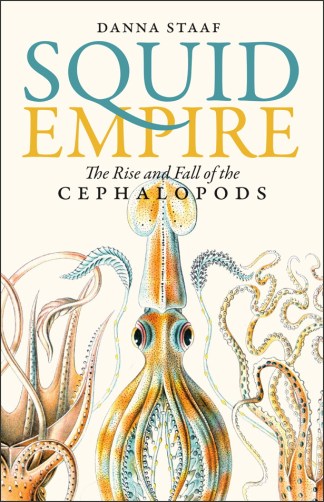
It was while reading Squid Empire by Danna Staaf that I realized how intertwined the evolution of the world, our myths, theories and culture are.

SquidEmpireCover

Culture is a funny word. It is supposed to capture the intellectual and sociological elements of a group of people living at a certain point in time in a certain place. The clothes, the food, the music and drama, the myths, the beliefs, the societal graces etc are what loosely constitute culture. It always amazes me how a word that is essentially an observation of life can be taken by the self righteous and used to noisily monger about the manger (but that is another post for another day.)

It is not surprising that our myths reflect our surroundings. Some cultures where myths have intertwined with religion are also reflective of the evolution of mankind over time in these places.

Indian myths, for instance, say that the Himalayas are home to the Gods. At the time when the myths originated, the Himalayas were probably looked on with awe (they still are, but probably more so 5000 years ago), and the only beings capable of living and scaling the mountains were attributed to having god-like capabilities. (Lord Shiva, the destroyer of the universe, apparently could be reached at Mt Kailas, Himadri Range, Himalayas. )

Lord Vishnu (The preserver), was always depicted with a conch and a shell. I have often wondered why Vishnu had a conch and a shell. Why not a sword and scythe?

Vishnu_shiva
Shiva-Vishnu: Image from Google Search

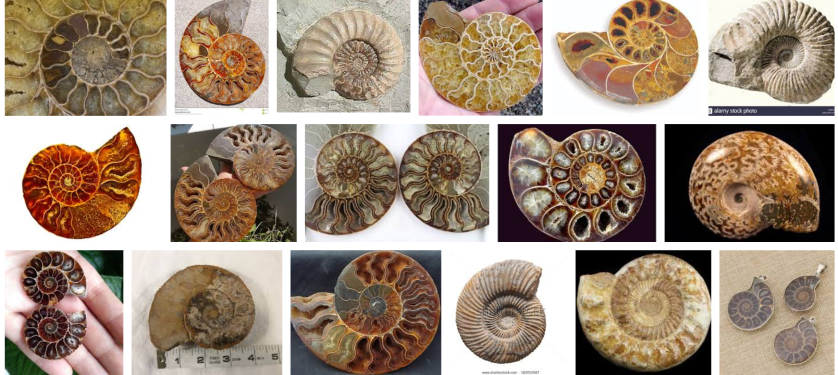
But like a minute puzzle piece waiting to chink into place, I realize that these were the fossils found in the Himalayas at the time. Nautilus shells, and ammonoid shells. They are shaped like conches and shells. Of course, they became the accessories for the popular gods. <Pictures of ammonoid shell fossils below>

Screen Shot 2018-03-22 at 9.10.28 AM

Quote from The Squid Empire by Danna Staaf:
Just on the other side of the Himalayas in India, certain coiled ammonoids fossils are named saligrams, symbols of the god Vishnu, and are believed to offer spiritual rather than physical healing.

Quote from: Adrienne Mayor’s paper on  (Fossil Appropriations Past and Present), (Classics and History of Science, Stanford University)

A current popular exhibit called “Mythic Creatures” at the American Museum of Natural History (May – Dec 2007) demonstrates how some stories of fantastic creatures, such as griffins, unicorns, and water monsters, arose from observations of extinct animal fossils around the world.

There is always a beauty to observing the natural phenomena around us. We are minute in a large throbbing cosmos, occupying a still thriving ecosystem on Earth for minuscule specks in time.

When you think about life that way, it seems beautiful:  a gift meant to be nourished and cherished. Did the squid think they would influence homo-sapiens millennia later, and help shape their culture? Probably not. But they did, just by existing.


Homo Incredulitatis

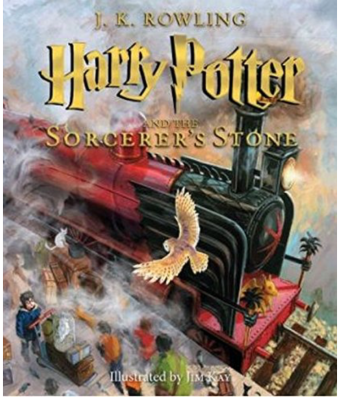
For the past few years, we have not watched any of the Harry Potter movies in the home because we did not want to ruin the Harry Potter stories for the little sponge in the household. So, we waited patiently till he read Harry Potter and The Sorcerer’s Stone. He read some of it, had some of it read to him, and he discussed the whole of it with his Harry Potter wise sister. (Please check out the latest edition with illustrations by Jim Kay. His illustrations are beautiful as if he lived and breathed in the story himself.)

Screen Shot 2018-02-05 at 12.27.47 PM

He only had the last chapter left, and savored the thought like the last piece of cake. The pair of us snuggled up one day with the rain pattering the windows and read. I read in the low rumbling voice of Albus Dumbledore:
‘As for the Stone, it has been destroyed.’
‘Destroyed?’ said Harry blankly. ‘But your friend – Nicolas Flamel – ‘

Dumbledore smiled at the look of amazement on Harry’s face.
‘To one as young as you, I’m sure it seems incredible, but to Nicolas and Perenelle, it really is like going to bed after a very, very long day. After all, to the well organized mind, death is but the next adventure. You know, the Stone was really not such a wonderful thing. As much money and life as you could want! The two things most human beings would choose above all – the trouble is, humans do have a knack of choosing precisely those things which are worst for them.”

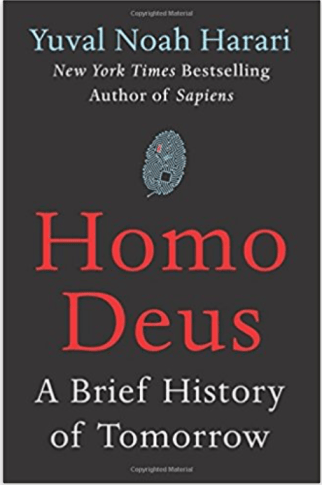
I could not agree more. Fresh from my readings of Homo Deus: A Brief History of Tomorrow, I was already uneasy with our hideous choices for progress:
An economy built on everlasting growth needs endless projects – just like the quests for immortality, bliss and divinity.

The husband had spent the afternoon watching a movie with some very interesting sound effects. A sci-fi crime thriller of one who had moved his consciousness into the ether and could possess bodies at will. “Something like Voldemort, only he could find one horcrux at a time and keep going.” said the husband.

Living for ever, resurrecting species back from the dead?

Why? A few years ago, we played a game in the car with the children where we asked the children which animal they would bring back from extinction, to great hilarity (Dodo, Dragon, Dinosaur Dis-apparitions) . This had such an impossible Sci-Fi feel to it, and that contributed to the thrill of the game. I mean you cannot bring back Dodos can you?

In less than two years, I read a book titled ‘Woolly: Bringing the Mammoth Back to Life’ by Ben Mezrich. I only read the book now, but work on that front has been going ever since we learnt to sequence a genome, and cloned a sheep. If pressed on the benefit of this move, I suppose mankind would say, “This will help reduce global warming by ensuring the Tundra permafrost is packed in with the stomping of large beasts.”

Screen Shot 2017-10-27 at 4.37.00 PM

I am not so sure. If anything, we use our considerable creativity to find grand purposes.

I was intrigued by the husband’s movie discussion on immortality in the form of storing one’s thoughts elsewhere. I have been looking at my thoughts ever since this discussion, and I got to tell you: There isn’t much going on up there. No future generation in the 25th century will benefit from my great wisdom. In fact, the number of times I resist eating chocolate, and then meekly give in, might be the greatest wisdom there is.

Projecting the future is a crummy business. An excerpt from the book, Homo Deus by Yuval Noah Harari:
While some experts are familiar with developments in one field, such as AI, nanotechnology, big data or genetics, no one is an expert on everything. No one is capable of connecting all the dots and seeing the full picture. Different fields influence one another in such intricate ways that even the best minds cannot fathom how breakthroughs in artificial intelligence might impact nanotechnology or vice versa. Nobody can absorb all the latest scientific discoveries, nobody can predict how the global economy will look in 10 years, and nobody has a clue where we are heading in such a rush.

Screen Shot 2018-01-26 at 3.31.08 PM

Why does the unknown scare us? If that is the case, isn’t tinkering with immortality even more of an unknown than death?

Our tales and myths are full of warnings against this very wish. From Bhasmasura, Ravana and Hiranyakashipu to Grindelwald, and Voldemort, we have read and ingested that immortality is not such a sweet bunch of grapes as it is made out to be.

Homo Sapiens seem to have forgotten that Happiness is only important when we have unhappiness to compare it against. Life is only good because we know it is finite, and we strive to make it a full, worthwhile one. Would I cherish every moment and live in the present and all that lark, if the present is all there ever is? It was a sobering thought.

Really Homo Sapiens are Homo Incredulitatis!

Books: 
   Harry Potter & The Sorcerer’s Stone: J K Rowling 
   Homo Deus: Yuval Noah Harari
   Woolly: Ben Mezrich
Movie: Mayavan
Myths: Bhasmasura, Ravana, Hiranyakisapu

T’is The Season To Be Grateful

Every year end, by the time Christmas rolls around, the husband and I look like the crumpled and frazzled dolls hanging off the hastily put together Christmas tree ourselves. This year too, we had fallen to our usual folly of not co-ordinating the Christmas gifts between us for the children. I stealthily went off and hastily piled up a bunch of things, so that come Christmas morning, there is something under the tree. As I gift-wrapped the presents, late one night with the children safely tucked in bed, I was reminded of one of Miss Read’s sensible sentiments on Christmas – she is one of my favorite authors for a reason:
The thing to do, is to get absolutely everything in the summer and lock it in a cupboard. Then order every scrap of food from a shop the week before Christmas and sit back and enjoy watching everyone else go mad. I’ve been meaning to do it for years.

The day before Christmas, the husband waved a suave hand in my direction with the loving parting words, “So, you’ve got the kids for the day right? Right! I am off. “ His eyes gave me a look deep with meaning that said, “I got to go and get the gifts”, to which I gave him an equally meaningful look that said, “Don’t worry! I got them all gifts. Just buy the milk.”
We’ve been married for 15 years and understand each other perfectly, and so obviously he thought I was admiring the cow-lick on his newly combed hair (blog post waiting to be done), and tootled off bringing gifts for one and all, and no milk.

The result being that we were all feeling thoroughly spoiled for Christmas. After surveying the pile under the tree, I felt that we had gone overboard again. Did I really need those noise-canceling headphones? (The resounding answers did seem to warrant them, I’ll grant you that. ) Maybe, the motto around Christmas should be: if we were bindle stiffs, what would we need? Bindle stiffs, I was curious to learn the term, are those who carried their clothing around in a bundle.

IMG_7490.jpg

I started on my Children-in-Africa lecture, when the children must’ve realized that it is better to take pre-emptive action before this lecture turns into a vegetable-praising healthy-eating fest that cuts into their hot-cocoa-under-the-tree dream. They pronounced mid-way that they were donating half the gifts (piled neatly on the left of the table ) to the poor. I noticed the particularly angelic and noble expressions on their faces as they made this solemn announcement, and stifled an urge to laugh.

I was glad of the opportunity to relax around friends once Christmas had come around, in the warm regions of Southern California. Days spent laughing, chatting, reading, playing and goofing off are like balm to the soul, and we reveled in the warmth of good companionship, and not being ruled by the clock.


As the year wound down, I realized that politically, speaking, it may have been a tough year, but we have much to be grateful for.
Bill & Melinda Gates foundation’s newsletter was uplifting and I was glad to end 2017, on a grateful and hopeful note.

I wonder if you have read the book where the hungry caterpillar expresses its thanks to every living being it comes across. If not, it is a marvelous children’s book, with Eric Carle’s signature illustrations and wonderful message: Thanks From The Very Hungry Caterpillar. 

As we head into 2018, it already promises to be a year in which we shall be called upon to remember such simple things as being kind to every living being and to care for our environment.

The Artistic Touch

I waltzed in to the San Francisco Museum of Modern Art thinking my usual self should do. It didn’t do. It pursed already thin lips and drew in breaths that should have been released.

So, here is a tip: Before you head into a museum, prepare to put on a face that reminds you of a serious matter: something like a puppy being pulled back home from a glorious spring saunter that yielded an unexpected bone, a couple of birds to chase and beautiful water hydrants to raise their hind legs against. An occasional smile commiserating with the owner (or the puppy) is okay, but grim seriousness is admired.

Remember: Life is Stern, Art is Earnest & Its Depiction Torturous. Good.

pets

What tripped me up was this: I walked into a largish room and found a men’s piddle seat in the middle. You know one of those umbrella-handle shaped urinals? In the middle. I know I have expressed the opinion that I wished the blasted things in bathrooms were less in the corner when you were trying to tighten a screw, but by gosh, I had not quite meant this! I am afraid I did the wrong thing here – I pointed and let loose a guffawing squeal and giggled at the exhibit. Modern Art patrons are a tolerant lot. Tolerant towards Art I mean – they scowled at my flippant attitude, while the urinal drew admiring noises.

urinal
Random pic of some urinal from the internet – I did not take a picture of the thing!

When I finally tottered away from this marvel, there was a painting around the corner, that reminded me of one of P.G.Wodehouse’s short stories. Reggie Pepper (who gave PGW the idea for Jeeves) says of his Artist friend’s work:

I’ve seen his pictures, and they are like nothing on earth. So far as I can make out what he says, they aren’t supposed to be. There’s one in particular, called “The Coming of Summer,” which I sometimes dream about when I’ve been hitting it up a shade too vigorously. It’s all dots and splashes, with a great eye staring out of the middle of the mess. It looks as if summer, just as it was on the way, had stubbed its toe on a bomb. He tells me it’s his masterpiece, and that he will never do anything like it again. I should like to have that in writing.

Art certainly conflicts: I stood astonished I suppose that one would take up a whole wall for a work like that when I looked around, and was told by a Patron, “Don’t you just admire how a true artist comes out?”
I eh-ah-ed weakly. When he says, artist comes out: Did artists lay their intestines out on canvas? It certainly did look like it. I recoiled a bit, but luckily the fellow was well launched on his story to notice. He then proceeded to tell me the most extraordinary thing.
Apparently, this artist was hailed as a genius after his death. His paintings regularly sold for $150 million dollars. I gasped at this. I should like to see these patrons! Apparently, one of his works made it to the local Goodwill shop where a lady paid 3 bucks for it. I suppose it must have shocked the $150 million dollar fellows, but life is tough. Anyway, a friend of the $3 buyer said there were enough squiggles to make the fellow a big artist, and had her check it out. Apparently, she got $25 million bucks for it but was not happy, since the other paintings of the fellow sold for over 100 million bucks. People I tell you. Never really happy! Tush.

There were beautiful paintings that managed to depict the 4 seasons, something that looked like a desert sunset, geometric shapes and so much more.


All of these marvels jostled with what I thought were the trial canvasses of the artist – you know those sheets against which you imagine them testing their strokes, and shaking out the extra spots on the brush and so on. (They weren’t – they were the real pieces of Art. I checked.)

IMG_7520.jpg

What really got me thinking about this whole Art business is the Sensuous blue painting.

There was one painting that looked like this.

IMG_7602.jpg

Oh, sorry, that is a picture of my daughter’s wall.

This is the painting.


Next to this was written a most poignant note. If I had not read the notice, I could not have imagined such a beautiful set of phrases can be applied for the color blue.

The final straw was the one where the artist forgot to paint and occupied a wall.


“Does this white square hold a mystery?”

I shoo-hoo-ey-ed my way up the floors, all the while admiring the many works, stopping to muse at a fair few, and thoroughly enjoying myself. When they say Art is mind-blowing, I could agree. I may not be able to appreciate the finer details of each piece the way the sturdier patrons do, but I was quite sure, it awakened some dormant senses.


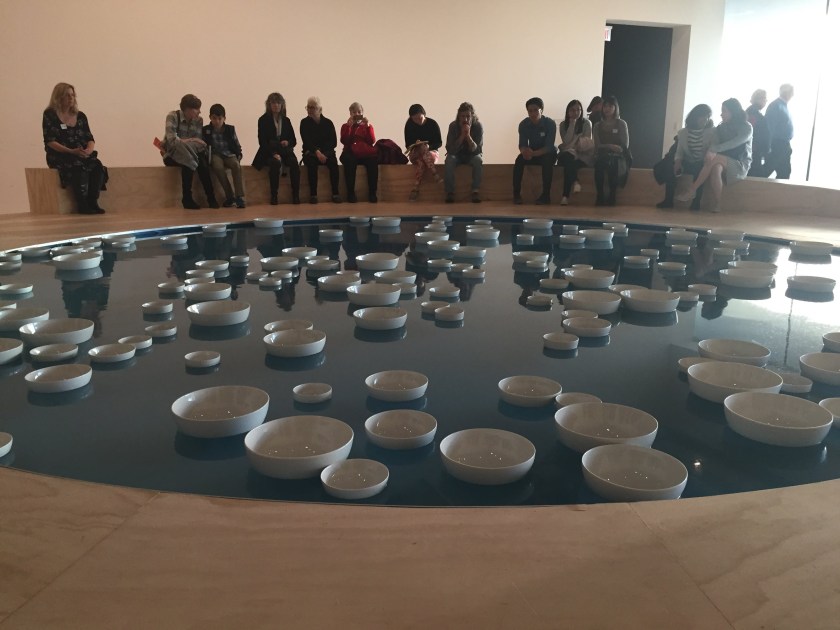
Finally, I washed up in front a pool of floating dishes. Not a dishwasher, more like an indoor pool with clean china chinking and tinkling against each other producing a haunting musical memory to go with the visual. It seemed like a marvelous touch depicting the day at the museum.

IMG_7515.jpg

All in all, the museum should have made me feel like this character from one of P.G.Wodehouse’s story on being in the presence of an Artist:

She was perfectly pleasant, and drew me out about golf and all that sort of thing; but all the time I felt that she considered me an earthy worm whose loftier soul-essence had been carelessly left out of his composition at birth.

But it didn’t. There was matter enough to engage simple minds like mine, and I thoroughly enjoyed it.