Emotion in Art: Unveiling the Power of Creativity

Art is about capturing a feeling 

T’was a few days before the Inside Out 2 movie was released. The husband was making me watch a thought-provoking interview. (He knew the distractions at hand on a beautiful summer evening. I needed to watch bees flit, deer graze, geese squawk, herons fish, dogs bark. As I cradled my evening cup of tea wondering when to get out on my evening walk, he swooped in. “Won’t take longer than the time it takes to gulp your tea” he said cheerfully and I gave him a skeptical look. I do not take ½ an hour to drink tea.)  

image-2

Anyway, in the interview, they spoke of suffering and how one needed that pain in order to emote well as an artist. It is not a new sentiment. I remember listening to an interview by J K Rowling or Stephen King (I don’t remember which) that one needs to have had a sufficiently terrible time as a teenager if they were to write anything worth writing at all. 

Problems Are Steady

I am not sure I agree with that. Suffering can be acute, agonizing and astonishing in its effects even as adults. In fact, much like our boggarts tend to change through life, so too does our ability to imagine and empathize, don’t they? Also, for many of us, problems tend to be a steady stream in life – we get jittery and nervous if there aren’t any. Can it really be that we are having a perfectly peaceful time – do you think something awful is going to happen? This can’t be true. Maybe I should call the children, see if they are okay.  Oh – what about the old parents, the siblings, the nieces, the nephews, our friends, colleagues, neighbors? Work? No? All well – is this really so?

Then, you tend to the heart like an overwrought bee in summer and soothe it down. “Yes my dear – there really are flowers everywhere! Believe it or not, managing plenty is as much work as managing long distances for some nectar. Just relax, will you?!” Problems like to steadily hum along like background music. We all need problems at some level, do we not? At least that’s what I tell myself when things get a bit clammy. 

Does Art Capture Emotion?

So, does art need to be about capturing emotion – whether through direct suffering or empathetic suffering? I thought Starry Night by Vincent Van Gogh was brilliant because it captured the frenzied anxiety of the artist’s mind. But, was that what everyone thought? How about those moments of bliss, joy, anger, disgust, repulsion, serenity, contentment, love, and all the ones that Pandora so generously released from her little box of troubles. Hope?

Screenshot 2024-06-29 at 3.32.19 PM

A couple of days later when we went to watch Inside Out 2, we sat spellbound as the movie captured Anxiety’s frenzy so perfectly in this animated movie. How Riley’s imagination spewed up every little thing that could go wrong and let her sense of self develop into a skewed sense echoing, “I am not good enough!” was tragic and Oh! So Well Done!

Screenshot 2024-06-29 at 3.28.31 PM

When you observe a piece of art, do you concentrate on how it makes you feel? Or do you appreciate it for the skill of the artist? 

P G Wodehouse on Art

What’s a post on Art without one of my favorite quotes by P G Wodehouse – only I feel a little like Bertie Wooster himself writing this – it has something to do with a painting looking like ‘summer blew up in your face’ – but I cannot remember it. Gemini threw up its hands and said: P G Wodehouse is not an art critic, but an humorous writer, without a trace of irony. I did spend an enjoyable few hours since then

(a) looking for the quote and reading several good ones on the internet,

(b) perusing my own PG Wodehouse collection opening books at random looking for the quote

Which is to say that I had a marvelous time, but still not find the quote. If anyone remembers it, please let me know. But the art of remembering the quote and imagining the painting itself made me laugh, made me feel joyous, so by that standard, it is already a piece of art. What do you think?

I would love to hear all the different ways in which you appreciate Art.

😇 Even AI Knows 😈

A Guild of Authors

A friend and I were returning from a meeting in which authors from different genres were presenting their works. We fell to discussing the books that appealed to us, and what worked in the format, and what didn’t. I, for one, felt that giving folks a platform to present their books, while noteworthy, could just as well have been done via a YouTube short, but what would have been harder to achieve would have been moderating a discussion about the overlapping topics between the authors. That was something I would have loved to see.

A Company of Authors – Stanford Guild

The sections were grouped together by genre, and topic, so it would have been a good panel to have discussions around. 

Even AI Knows!

As conversations usually go, we meandered, and I said something to the effect of the housework and the truth of an Indian woman having its effect on writerly ambitions etc, to which he mentioned a joke he’d chanced upon, and I guffawed at the truth of it.

“With AI, I thought, it would take over monotonous tasks such as dishwashing and house cleaning, so I could take up Poetry & Art. Instead AI has taken up what little I had of Poetry and Art and left me to do the dishwashing and cleaning!”

Even AI knows to steer clear of household tasks, while humans (women still bear the brunt of the housework) are in charge of these mundane tasks. Who says the universe doesn’t have a sense of humor?

“Really! Of all the things I wanted help with – it was Art that was the least. Give us one tough thing to spend our lives mastering and perfecting!” I said. “Help me with robots – one for the chores, one for help to care for the aged, another with companionship for the lonely etc. Why art, literature and poetry?”

“I do think there are startups for every one of these in the off-ing somewhere.” said he – sanguine as ever and optimistic in the ways of the world’s future.

He was right of course.

Intuition & Instinct?

It did help us loop back to a book that was discussed in which the author spoke about intuition/instinct being a precursor to our conscious thinking, and whether AI would be able to simulate that level of prescience. Which made me wonder, whether that was what made us human, but plenty of us have learnt to ignore these things over time (after all, we don’t need to know when a tiger is lying in the bushes). But would it help us identify dangers in our life?

https://open.substack.com/pub/managingeditor/p/surfin-mia?r=2e6vr0&utm_campaign=post&utm_medium=email

More importantly, if that too can be modeled, what does that leave us with to claim our humanity? Messy emotions and imperfect decisions maybe?

Which brings me to the most important question: What would you like AI to help with, and what would you prefer AI kept is nose out of?

Time as a Map of Reality?

Time in our Universe

I was reading about time, its paradoxes, black holes and white holes while awaiting our turn at the salon. It was a busy day, and luckily, the son and I had the foresight to take our books along to pass the time. 

Every time I looked up, I saw hairdressers concentrating on their craft, while making small talk and easing their customers to relax into their chairs. It is a gift, I realized, to get their customers to trust a stranger with scissors nipping at their heads. It is hair, and it does grow back. But it also does change your immediate appearance and the perception of yourself and those around you, even if only momentarily. For a species that is vain, visually conscious, it is a fine balance to get the right look. 

Time as a Map of Reality?

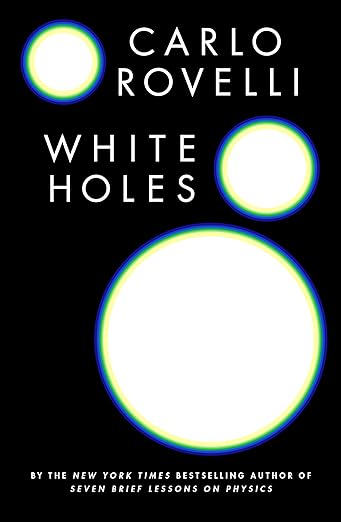
Back in my book on White Holes by Carlo Rovelli, the paradox of time was being explained:

white_holes

I can’t say I understood it all, but it was lovely to try:

“The reason we remember the past and not the future is entirely due to the fact that the universe was further from equilibrium at one point in the past than it is now.”

Whatever did that mean?

I read on about equilibrium, till I found something that I liked.

“The flow of reality is always more fluid than any of our frantic attempts to capture it might lead us to believe. Time is not a map of reality: it is a kind of memory storage device …”

I liked that. Time as a map of reality, or not?

No Trace Will Remain

I looked up trying to fix the concepts and the reality of my physical space at the same time. I noticed the many small ways in which we trust ourselves to those around us. It should all be organic, safe, slow, and yet in our quest for productivity everything has sped up. Watching barbers and hairdressers doing it all with confidence and aplomb in such a short span of time, was fascinating. 

Watching the people in the salon getting their hair cut with those cutting the n-th customers’ hair, while trying to understand the concepts of equilibrium and time is a strangely meditative experience. The son and I watched and read in turns. The annoyance of the long wait mitigated by the philosophies of being. 

“Sooner or later, every memory vanishes, canceled through the wear and tear of time. Sooner or later, of our proud civilizations, of everything that we have understood, of the words in books such as this one, of our controversies and of our desperate passions and loves…no trace will remain.”

“Would you come please?” It was our turn.

“Soon of our long locks of hair, no trace would remain!” I smirked to the son, and chin up, we made our way in.

At that moment where we are not in a black hole, or not reversing into white a hole, there is only the experience of time, and the trimming of hair.

127e22d1d2494032867770d78ef0335f_ComfyUI_20682_

The Joy of Effort – A Sense of the Infinite?

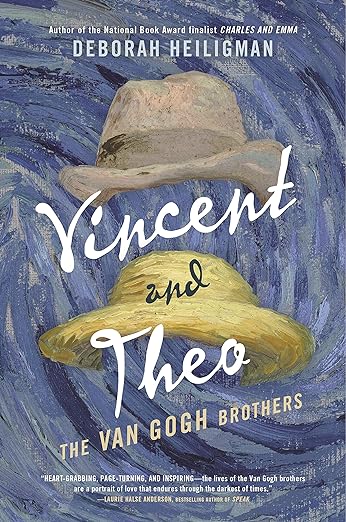
I was reading the book, Vincent and Theo – the Van Gogh Brothers by Deborah Heiligman. There are many aspects of the book that appeal to me. The narrative style, short chapters, clear language, not withstanding, it also touches upon difficult temperaments and the strain on relationships, Vincent van Gogh’s mental health, and his subsequent descent that led to the accident of cutting his ear off. 

vincent_theo

To Vincent van Gogh, portrait painting became an almost urgent need to master – just before his spiral towards insanity started. Uncle Cent, after whom he was named, was the closest uncle to him, though he was disappointed in Vincent, and left him with no legacy or inheritance. He left it all to his brother, Theo, instead. Still it moved Vincent at the time. He was in the process of prolific creation, and thoughts of mortality made him think of portrait painting with a sense of urgency.

This is a self portrait of Vincent van Gogh made in 1887. This portrait is on display in the Rijksmuseum in Amsterdam.

Screenshot 2023-09-18 at 10.43.48 PM

“Uncle Cents death makes him think more than ever about mortality – and immortality. Maybe there is an afterlife, maybe not. But if he paints someone well, that person is alive forever.

In the time he will spend in Arles – 444 days- he’ll make two hundred paintings and one hundred drawings, a huge number for an artist. He’ll paint landscapes, still lifes, scenes of cafes at night, furniture, rooms, flowering trees, flowers-he is about to begin painting his favorite again, sunflowers. But painting portraits is the thing that moves him most deeply, that gives him “a sense of the infinite”.”

I put the book down and thought about the meaning of effort in our existence. For many artists art gives a sense of meaning. To capture the infinite as Vincent van Gogh says. 

What has happened to portrait painting as a venue since photography came in? Maybe, photographers tend to capture the infinite. 

I thought of all the different mediums slowly replaced by a quicker technology. 

  • Writing  & Editing – ChatGPT, Grammarly and ProWritingaid are all quickly gaining traction for this hobby. 
  • Painting – there are tools available to take any picture and make it look like a painting. You can even choose the style you’d like your photograph transformed into
  • Knitting & Embroidery – almost lost to mechanization and mass production 

While newer and quicker mediums are welcome, I wonder about the appeal of the slow and steady. After all, half the joy is in the effort. I know I enjoy mulling and aching over my words – whether it is a short article, a children’s book, a novella, short story, or larger book. But I do also enjoy using my laptop – the ease and speed far enhanced from the days of penning my thoughts in notebooks as I used to do. 

I am sure all of our tools will lead to different hobbies and pursuits – after all, human imagination can rarely remain idle. I only hope the newer ones provide as much satisfaction in the effort.

Mysore Palace

In what was a whirlwind trip to India, I was fortunate to fit in a day to visit Mysore, or Mysuru as it is now known. The Mysore Palace was bursting at its seams. I don’t know whether the Wadiyar family was that popular even at the peak of its glory, but that Sunday morning, we had the distinct feeling that the entire populace around Mysuru had woken up with the singular thought of having a nice picnic day out at the palace. Crowds bustled, feet shifted, and more importantly, the sun rose in the skies above Mysuru. 

Image source: Wikimedia Commons: Photographer: (Muhammad Mahdi Karim/www.micro2macro.net)

We shuffled our way through the palace taking in the art work and the opulence. Every palace designer and acquirer of artifacts has this to contend with: in opulence lies plenty, and in plenty, even the rare loses its lustre. How often have we been to art galleries and been too awed by the hundreds or thousands of art pieces, to notice the subtlety that would otherwise be studied with awe?

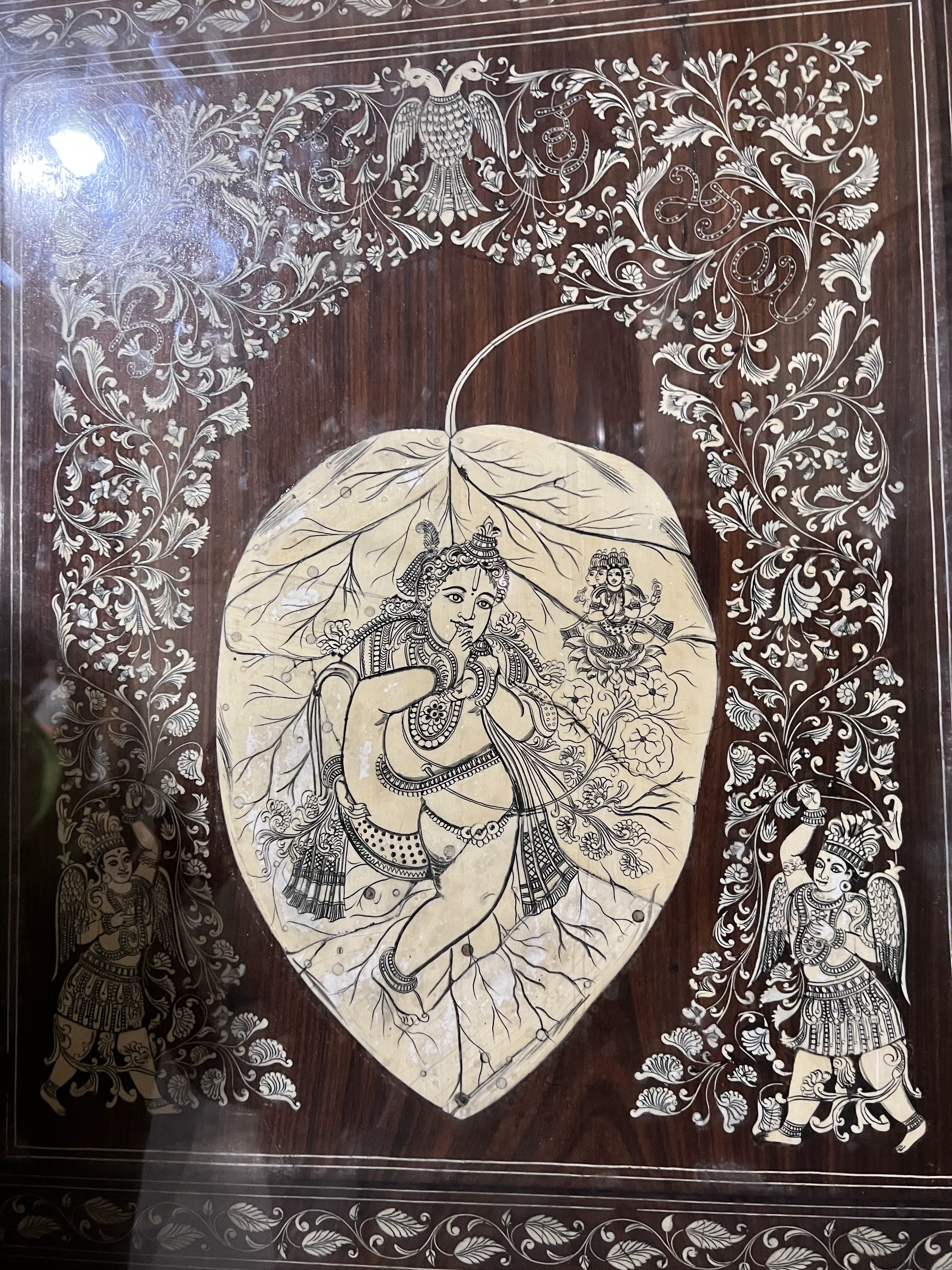
For instance, I am quite sure that if I’d seen any one of those doors by itself, I’d have been bowled over. After all, how often does one see ivory inlays in teak doors, and entire pictures carved out in the ivory?

img_7453

How often do we see the portraits of South Indian royal princesses from 100 years ago? But when one passes through 50 stately doors, and 500 paintings, surrounded by 5000 people, it suddenly becomes overwhelming. 

Even so, we couldn’t help admiring the artwork, the beautiful portraits, the marvelous turquoise green and blue themes, and the beautiful cultural themes of South India. 

I remember visiting Mysore Palace as a young girl – maybe around the age the daughter is now, and while I remember the night lights at the palace with awe, the rest of it seems to have mushed in with plenty of other palaces – I may have confused the Buckingham Palace,the Jaipur Ajmer Fort Palace, and Fatepur Sikri in one grand ballroom in the head.  

The Mysore Royal Family

Like every royal family across the globe, the Mysore Royal Family also has seen its share of news mongers, myth propellers and the like. Apparently, the Mysore Royal Family was cursed so that naturally born heirs could not beget their own heirs and would have to be adopted. They were also rumoured to be the descendants of Lord Krishna. If that is not pressure, I don’t know what is.

It must be exhausting to live in the public eye for generations. 

Royalty is completely different than celebrity. Royalty has a magic all its own.

Philip Treacy

As we bustled out of the palace, I found myself grateful for our quiet, ordinary  lives, but also appreciative of the art that the rich had a taste for. Thank goodness for patrons of art over the years. 

Imagine what our lives would be without Art?

Perspectives in Art

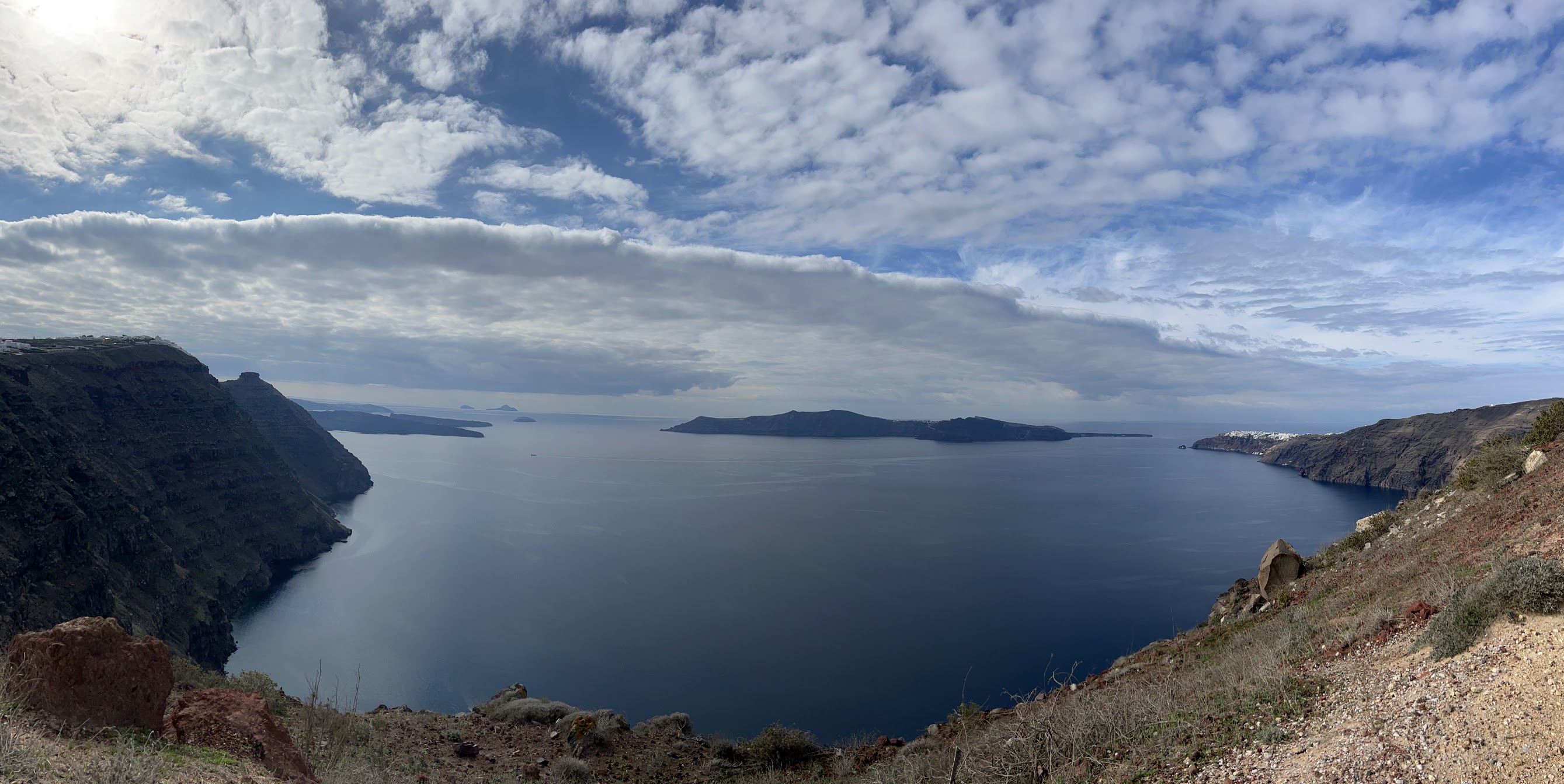
We were on a long-ish hike from Fira to Oia in the island of Thera (now known as Santorini) 

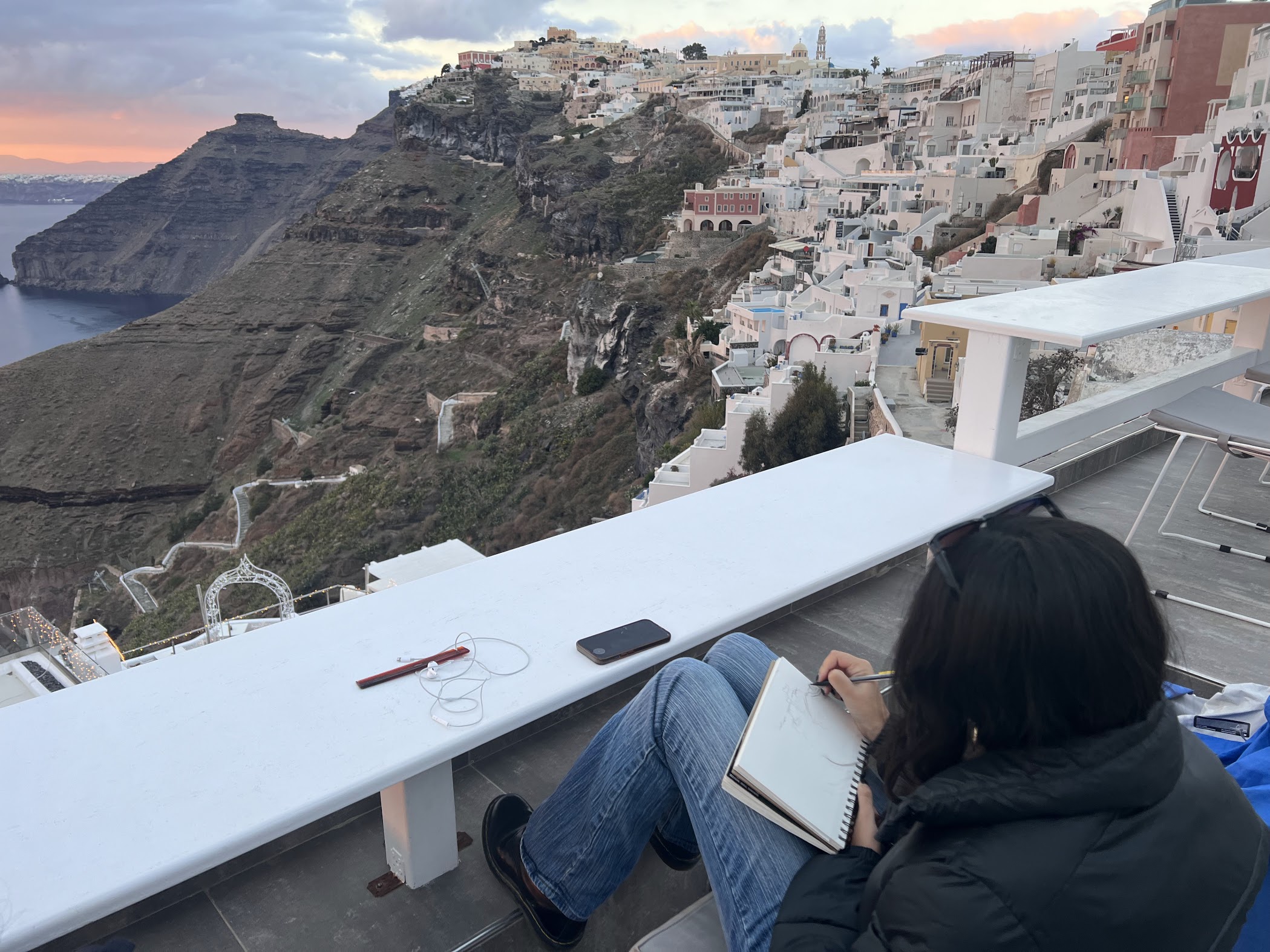
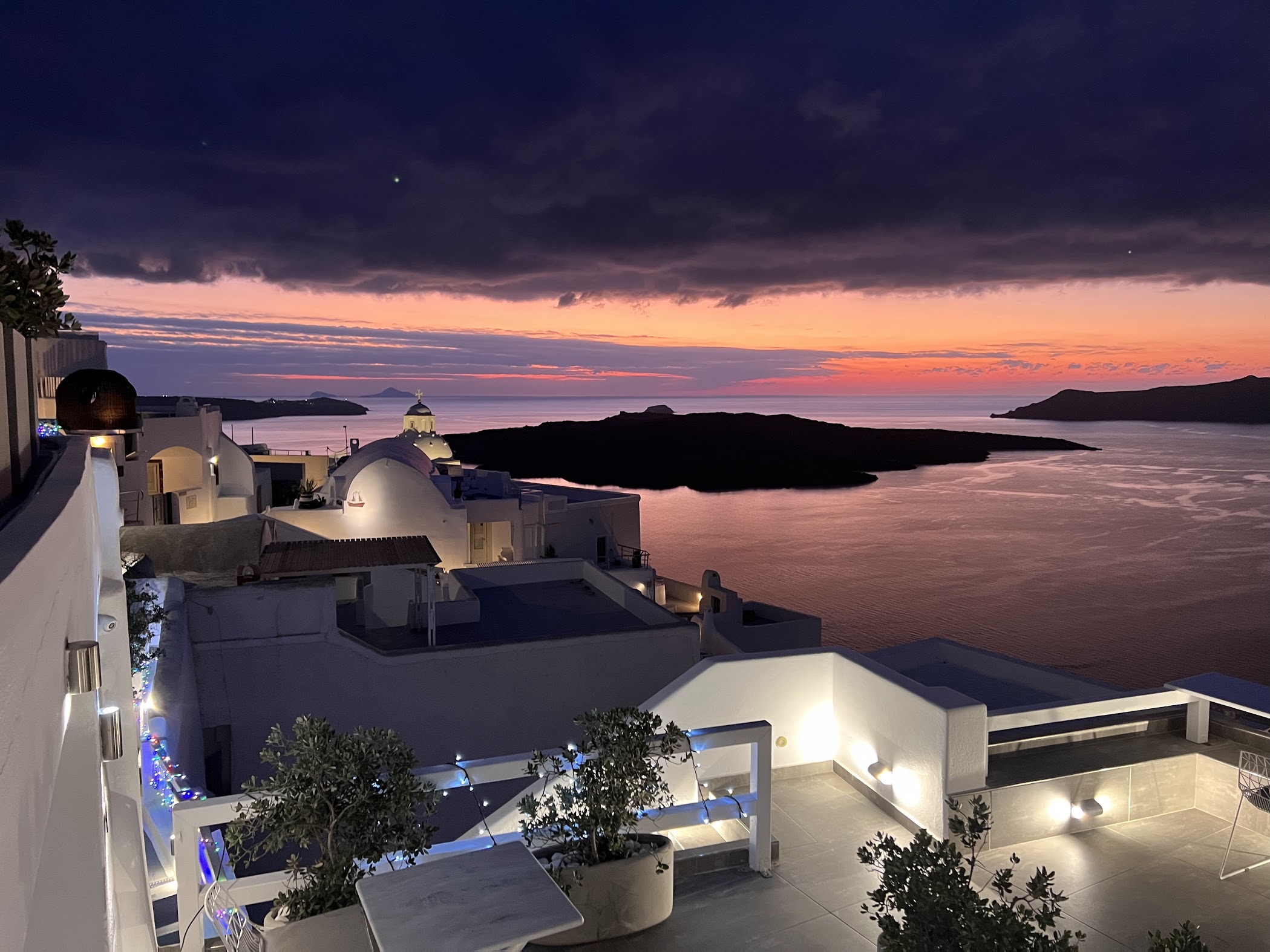
It was not a very long one – a 7 mile hike spotted with fantastic views of the surrounding islands, sweeping views of the calm Aegean Sea and vista points of the island of Santorini itself. When done after a full continental breakfast, (the kind given by Santorini hotels), and with an interesting conversation on the side, it is easily done. Around the 3 mile mark, when we had left the busy white buildings on Santorini behind us and were walking gingerly up the slopes towards the narrow cliffs overlooking the Aegean Sea, I asked the daughter her thoughts on art. I continue to be amazed by her artistic abilities, seeing …well how her parents draw. The previous evening, while we had all taken a hundred pictures of a gorgeous sunset, she had sat sketching the area while enjoying the sunset. 

IMG_2314therathera_2

“So can you really identify the artist based on the stroke of the paintbrush or something like that?” I asked.

“I can identify a few of them – definitely not all of them obviously. “

“Well – yeah! People study art for years and entire lifetimes. “

“The thing is, with art, everybody starts off with learning the techniques of realism, but as they keep growing as artists, they also develop a unique style. That’s what I am working on – developing a style. I don’t yet know mine, but I am trying.” , she said.

I looked at her with a new perspective. This child always doodling in her room was working on developing a style. It humbled me to see that I had not even appreciated or seen most of her work. Sometimes, she showed us. Most times, she did not, for as she claims, she wasn’t proud if it. 

I could understand this, but did want to see more of her work and said so.

She shrugged with her brand of nonchalance , and I recognized the style. She laughed at this.

“See? With writing or language, almost everybody comes with a style. That’s why it is easy to spot plagiarism. Everyone’s perspective is unique. The way we see the world, the way we use our words, the way we laugh, almost all of that has a unique perspective, but it isn’t that easy to develop your unique style in art.” , said she.

I made some agreeable noises at this, but demurred. Was language really that easy to find a style to? “I felt like I had spent years trying to ‘develop my voice’ as famous writers say, and it is still evolving, which is why it is interesting too. For it makes the development of the craft enjoyable. But I don’t think we are each ‘born’ with a style.”

 “True True – Writing does get better with practice and work. “ she said. 

“But okay – let’s try this: we were in Delphi yesterday. If you were to write about your trip to Delphi, what would you write about?”

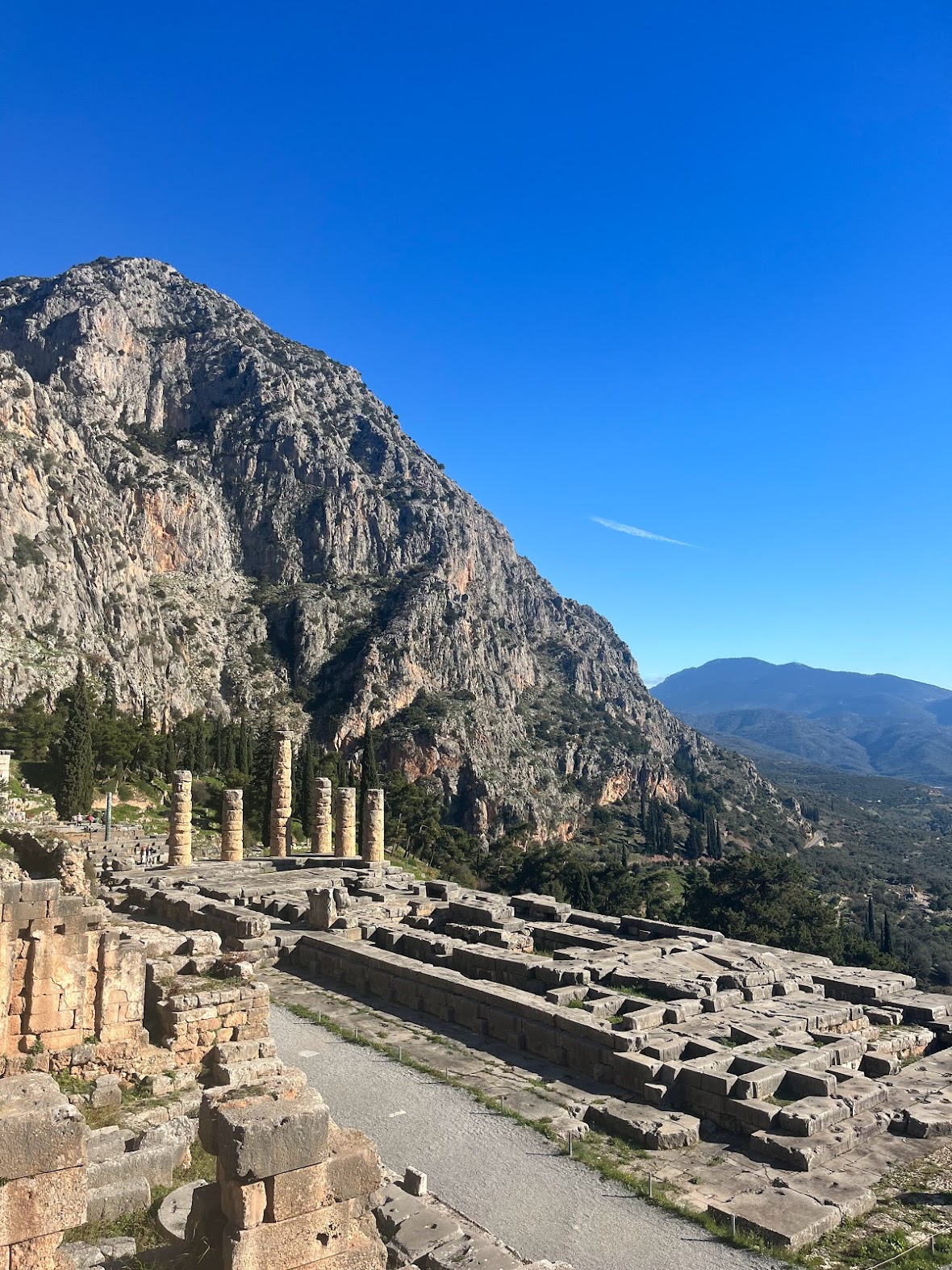
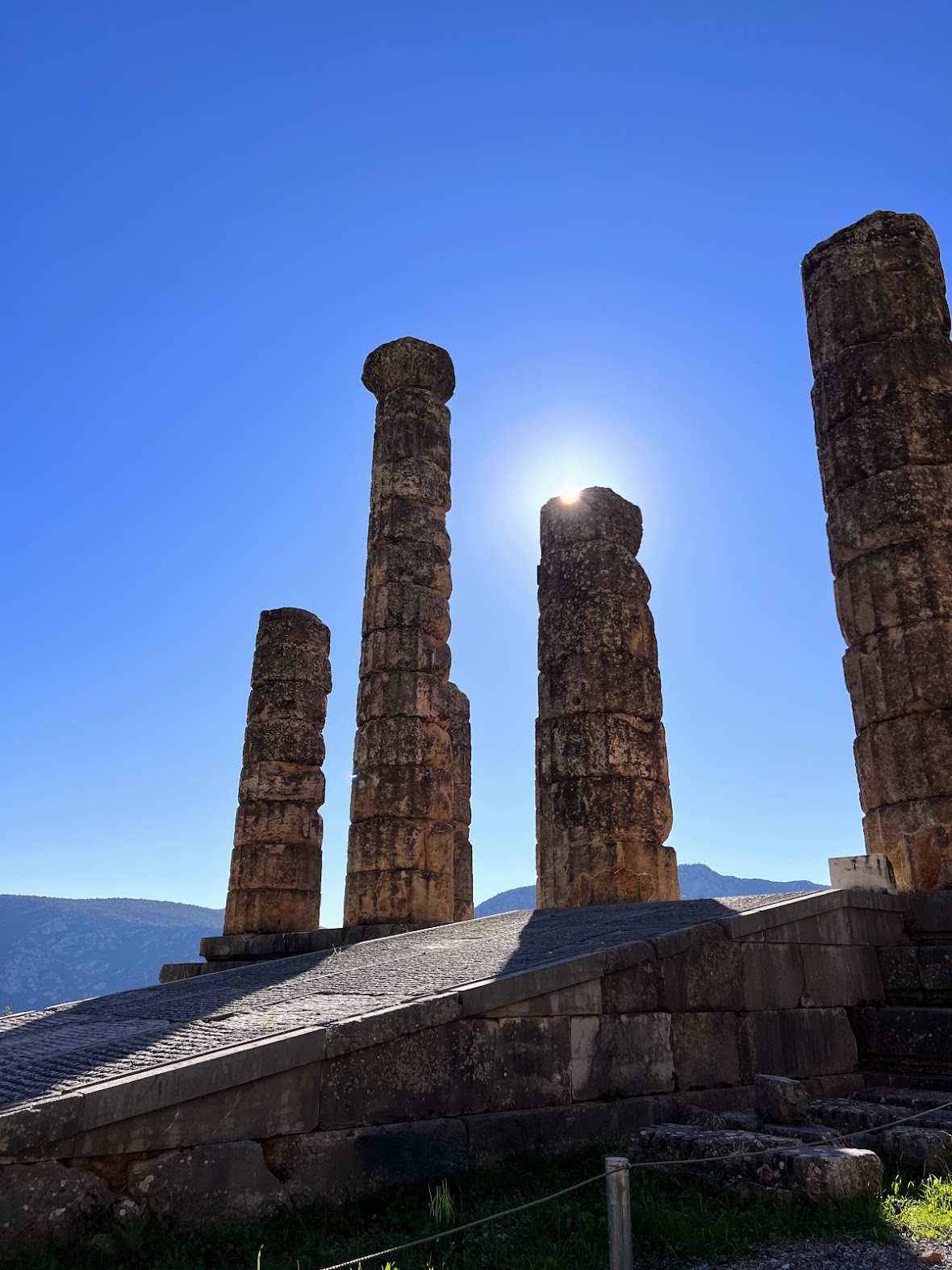
I thought about the glorious day at Delphi. Nestled in the Parnassus mountains, the home of the muses, this was where the Temple of Apollo was built. Apollo was the Greek God for light, poetry, and the patron of the arts. It was also the place the ancient Greeks went to, in order to have their futures prophesied to them. The Oracles of Delphi spotted literature the world over (Sybil Trelawny of Harry Potter Divination fame was named after a Pythia of Delphi called Sybill). Almost every story from the ancient times had a prophesy to run the show. As our bus left the city of Athens behind and ascended the Parnassus mountains, I wondered whether I would like to know my future. What if I did not like what was foretold in my future? Many did not. But their destinies were met even as they tried hard to fight it. Would I like to be guided by some vague prophesy even if I’d like to know how everything will turn out alright in the end? And what if it didn’t turn out alright? I don’t think I’d want to be miserable about it all. 

“Hmm…many many ways in which I could write it. But I think I would like to go at it from the perspective of how we got to visit the Temple of the God of Light on the winter solstice, on the shortest day of the year. Think about it: It was forecasted to be an intensely cold and rainy day high up in the mountains with limited visibility. I was worried we would not be able to able to enjoy the place as much it is was that cold and rainy. Indoor museums are alright, but high up in the mountains? And yet, it turned out to be a glorious day with ample sunshine. We got to enjoy the Parnassus mountains where the Oracles of Delphi gave out predictions and prophesies in directly opposite conditions from what was predicted. I loved the irony of that. So may be we are lucky and the trip to Delphi itself was a blessing in a way. “

delphi_2delphi_3delphi

“Okay see – that’s what I mean.We went to the same place, had the same tour guide explain stuff to us, and enjoyed the same day. But if I write about it, I would write from the perspective of seeing the cats at Delphi. How they roamed among the tourists, came to some of us, and how it all felt magical. There was that woman who made me mad – because she shoo-ed away the cat from me, and then ordered me to take a picture of her. If it were unto me, I would have taken the picture of the cat instead! “ 

I laughed. “Did you take a picture of the cat?” She is entirely capable of that. 

“No! “ she said with some regret, “But, just imagine how it must be from a cat’s point of view seeing so many people.”

“What about you truffle bumps? How would you write about Delphi?” She said pulling her brother into conversation. He was trudging along ahead of us in the mountain path.

I’d write a story about how I was fighting some bad guys who were coming at me. They were there: hidden in the ruins of Delphi, and how I defeated them with the myths of Apollo to help me.”, said the son flexing his arm where there were supposed to be muscles. 

“He and his super villains. Huh Hmm. But do you see what I mean? We already have a unique perspective with our almost identical experiences. So, yes, writing is unique to most people. But since art starts off with classical realism as the basis, we need to work harder at developing that style and perspective I suppose.” 

We were 2/3rd of the way done and we turned around to see the distance covered. This hike is unique that way – it shows us the meandering coastline and the beautiful buildings we passed on the way – all in one panoramic view. We took a few pictures here and the daughter peered out to see how much farther we had to go.

santorini_3

“Gosh – this is so far away, I left this piece of the jutting island out when I was sketching yesterday!”

“Lighten up! We can have a good coffee and a wonderful meal once we get back.” 

“I wonder what the myths of Santorini are.” I said to break them out of brooding over the remaining distance, and we passed the time discussing myths instead. 

santorini

The Artists at Paris

The husband planned a meticulous trip to Europe for the nourish-n-cherish household. Trips to Europe are rarely complete without museums and so, off we went with our admiring hats on. I do not know the different periods in European art, and after several trips find that I am astounded by how much there is to learn and appreciate.

I do not know why Claude Monet spent 30 years in his garden in France painting the lily pond. I am even less capable of recognizing a Monet from a Chagall. But I am glad that Monet’s masterpiece with the lily ponds in his estate in France have a home designed specifically to appreciate the art like he intended it to be (The Orangerie Museum: Musée de l’Orangerie). How many artists get to have that particular claim to fame?

lily_pond

After the Louvre, the Orangerie museum was a treat. The Orangerie museum was a beautiful little museum tucked away near the most historically magnificent palace grounds in Paris. (Fun fact: apparently,  the word orangery refers to a protected ground in large palaces in Europe :   a greenhouse for growing oranges, lemons and other citrus fruits in cool climates.)

IMG_1701

We each went our ways and did not have to worry about getting lost. It was a small, compact museum with works of a few artists, and it was all very done. Really – the way Europe reveres its artists and preserves its art history is admirable. In about 3 hours, we were done and ready to explore the rest of Paris by foot. As we walked on, we fell to discussing Art – the Renaissance, the rise of cubism, and all the rest of it. 

How some artists chose lighter subjects such as Auguste Renoir in these paintings of the girls bonding over music, or whispering a secret together.

Or the beautiful nature filled works of Sam Szafran where the human is but a tiny part of the intricate patterns of nature

IMG_1730-COLLAGE

As we trundled away from the Orangerie museum towards the Eiffel Tower in Paris, it was irresistible to stop and take a few pictures, very well knowing that I may never look at them again.

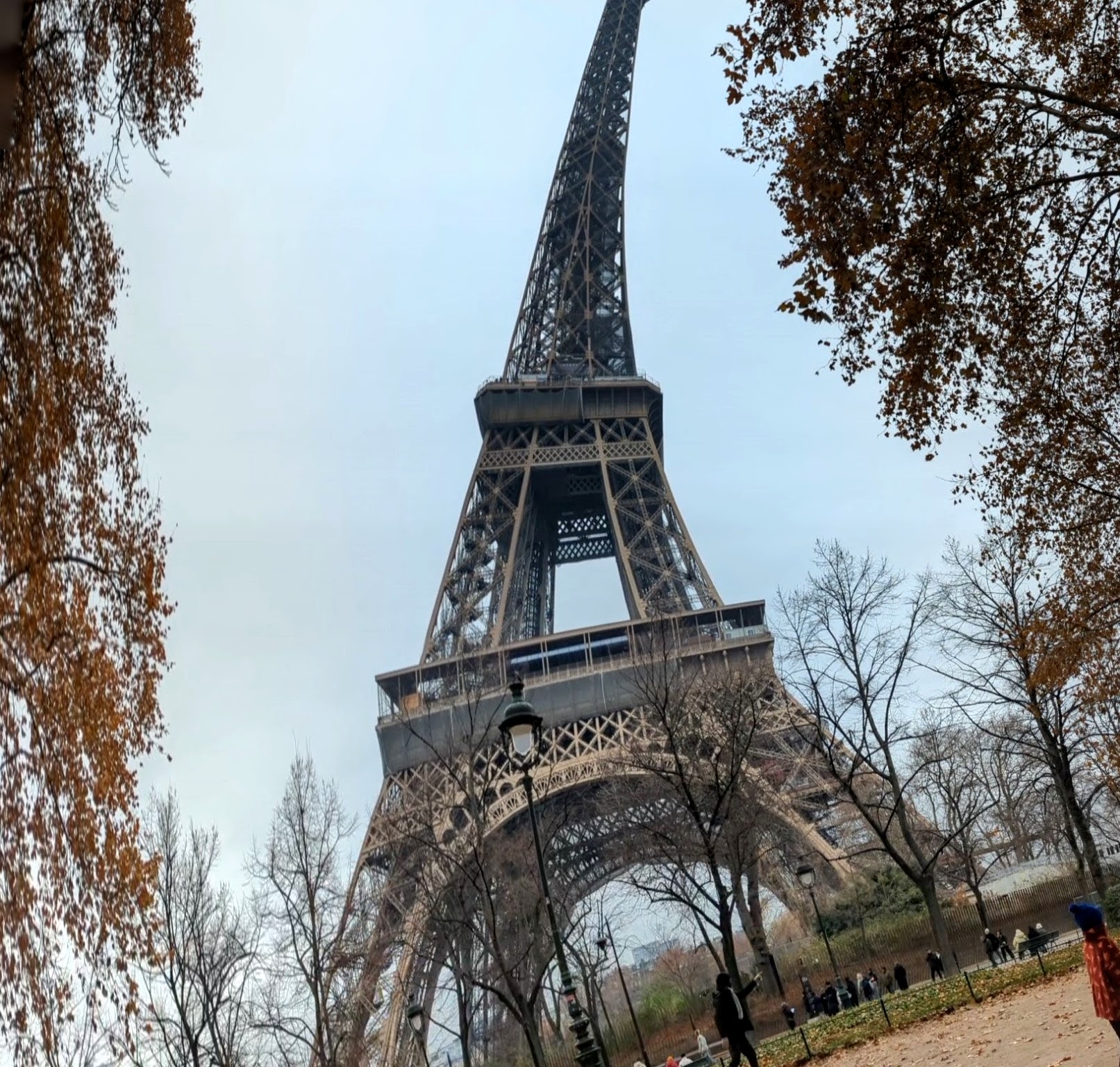
We ended up in due course, after our glacial progress through the streets of Paris, at the foothills of the Eiffel Tower. It was there that the many perspectives of Art we’d just learned about became apparent. The son tried taking pictures using the vertical panorama technique that I had shown him.

eiffel-1

He showed us cubism.

eiffel_cubism

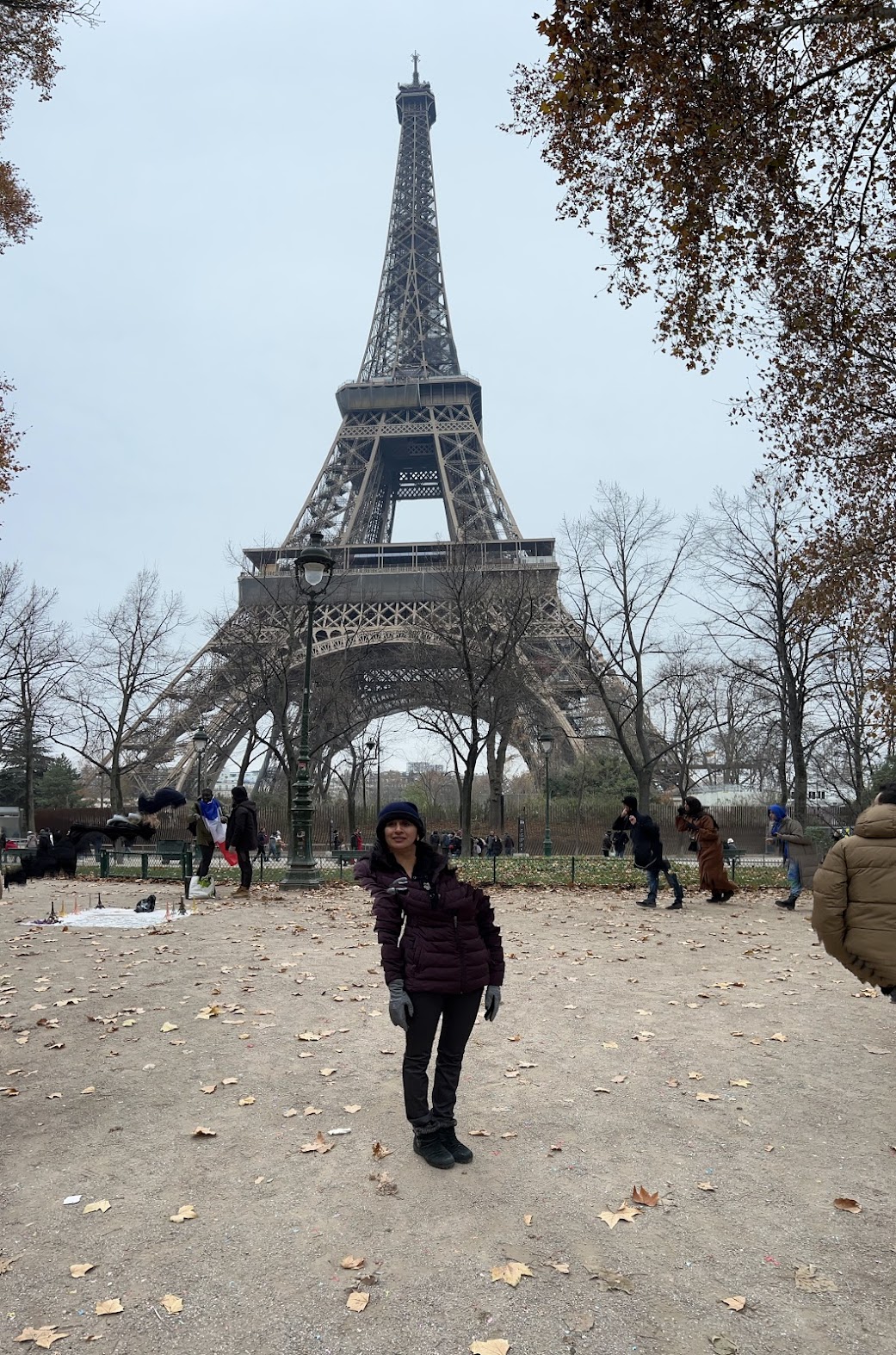
We even have a picture of me pulling off the invisibility cloak after apparating to the foot of the Eiffel Tower. I wonder why these art forms do not deserve their place in museums of modern art.

eiffel-invisbility

How better for our artists to capture the true magic of a European vacation?

Temple of the Mind?

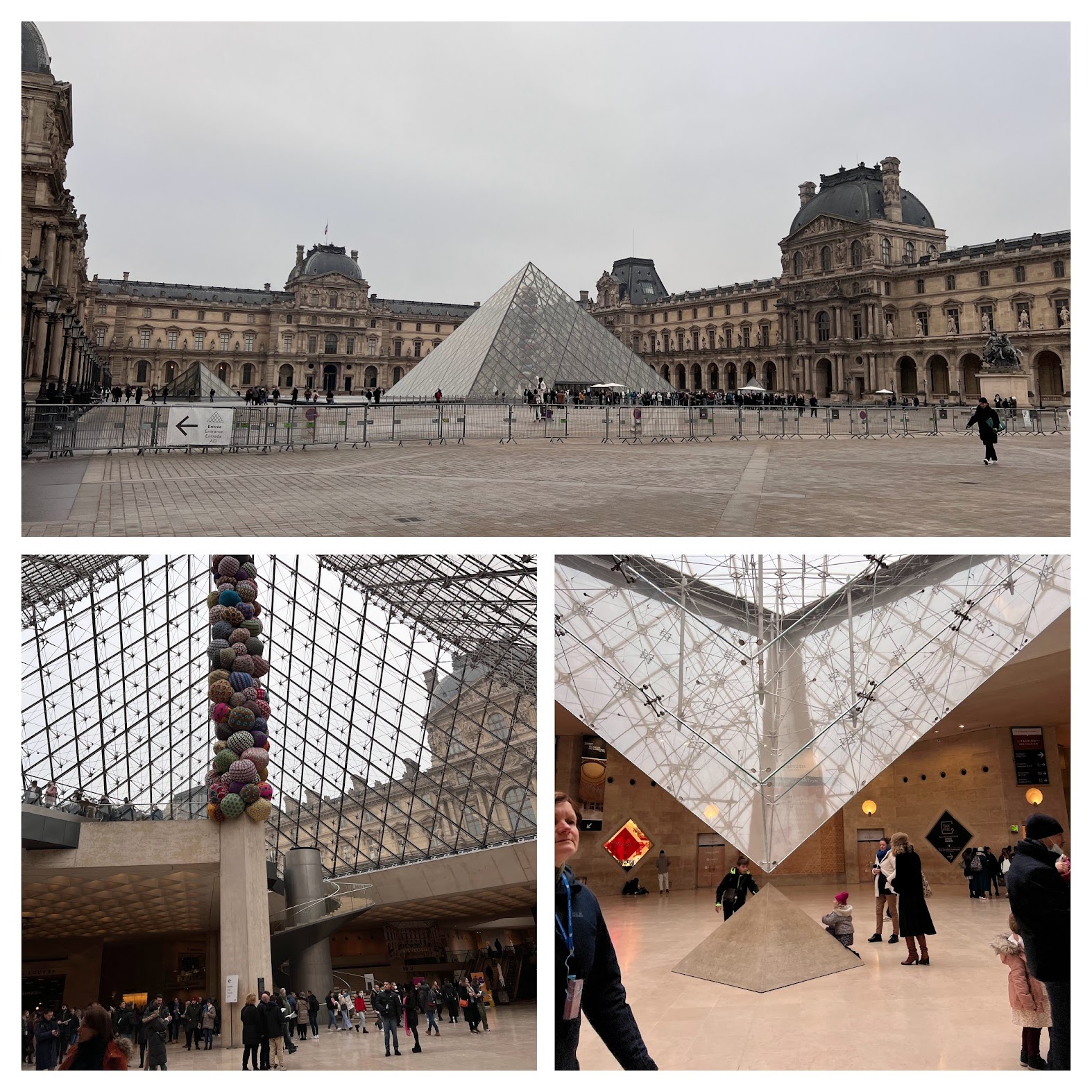
We’d been on a short trip to catch some European magic. We started off in Paris. In order for us to experience a proper European winter, the 1st day in Paris started off with a brisk walk to the Louvre at 8 in the morning when the temperature was still 24F. As we stood there, waiting for the rest of the tour group to join us on the marvelous walking tour through the Louvre, I felt a sudden stab of pity for all those who had lived before our times. 100 BC, 500 AD, 1500 AD, 1700 AD. None of these poor folks had indoor heaters that hummed and thrummed the way the museum indoors sounded welcoming. They didn’t have access to 32°Heat products that were brilliantly designed thermal wear designs – nor were they commonly available after mass production. With three layers of clothing, if it was still this cold, how on this marvelous Earth a mere 100 hundred years ago had people endured this time of the year? The thousands who died in the cold winters in the trenches, on the war fronts, in concentration camps. I shuddered and this time not from the cold. 

As I stood there, thinking of the little history I did know, I wondered why we never learnt from them. Why did we not recoil from war, sense divisive forces and squash them? Maybe this humanity’s path – bring ourselves to the brink of annihilation with our madness multiple times over and then miraculously survive till the one time when we don’t. Who knew? Wars and enmity don’t seem to end. 

Mercifully, our rag-tag tour group assembled after about 1/2 an hour that felt like 2. We walked into the Louvre like frozen zombies hoping to thaw out with the artworks inside. How did that sculptor bring himself to work on the marble statue of Venus dated 120 BC through these cold winters?

We started off at the famous prism inside where those who read or watched the Da Vinci code. It was beautiful and really, who thought of putting up bean-bags on that pole of the prism? It started the tour of with touch of a whimsy before the academic aspects of the museum unleashed itself.

IMG_1430-COLLAGE

If I were to describe the Louvre and the Vatican in one stroke of a brush, it would be: Too many artworks to properly appreciate each one.

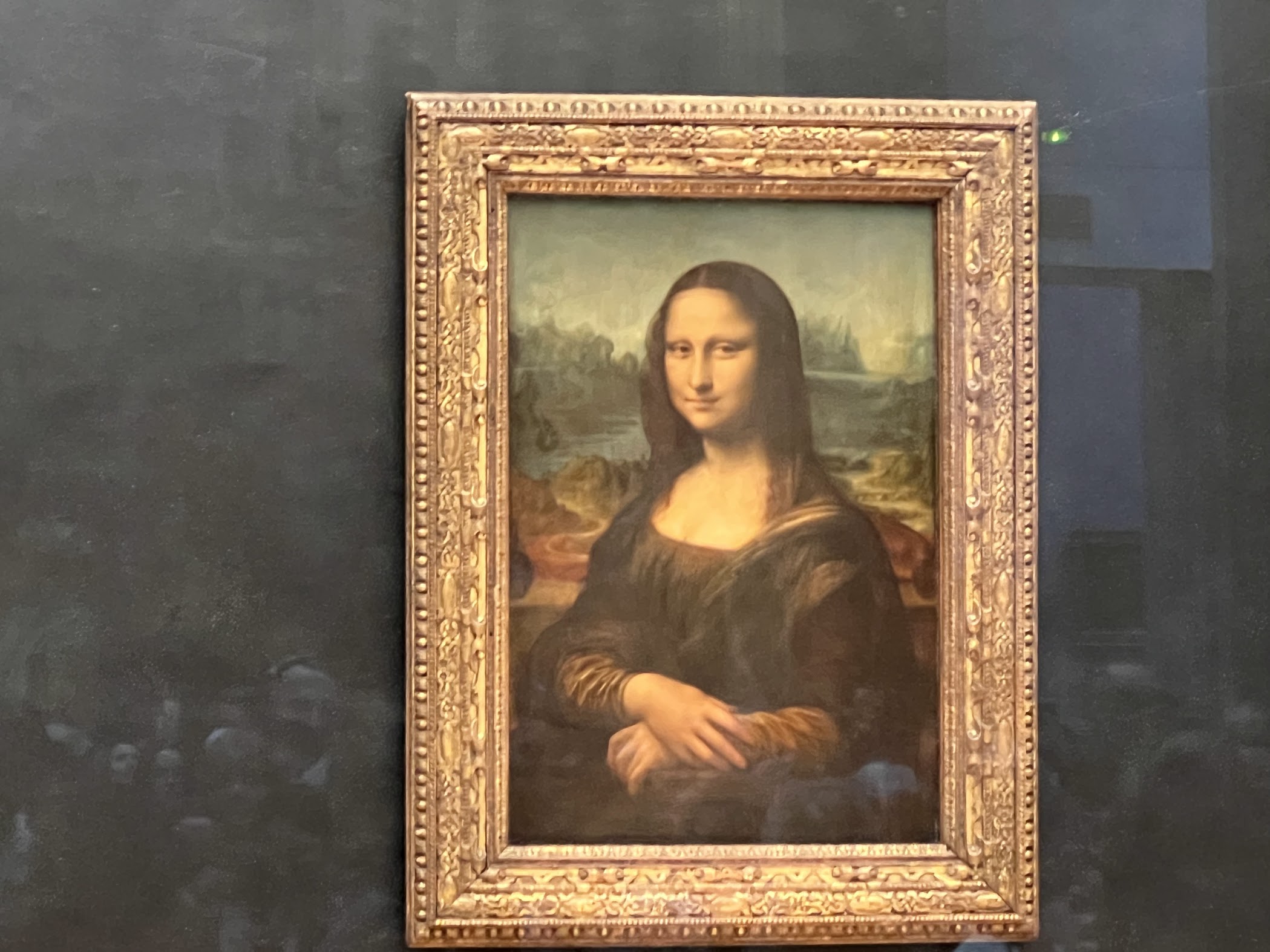
Though, our tour guide, Maria, tried her best. There were 38,000 pieces of art in there. The Vatican (70,000 of which 20,000 are on display). With all the hundreds of artists at the time, why did only a few achieve lasting fame? Maria explained many things about art that we ought to have known, but didn’t. Things such as  the angle of the light, the imaginative aspects of landscape, the differences in perspective, the kind of face that seemed to have appealed to Leonardo Da Vinci

monalisa

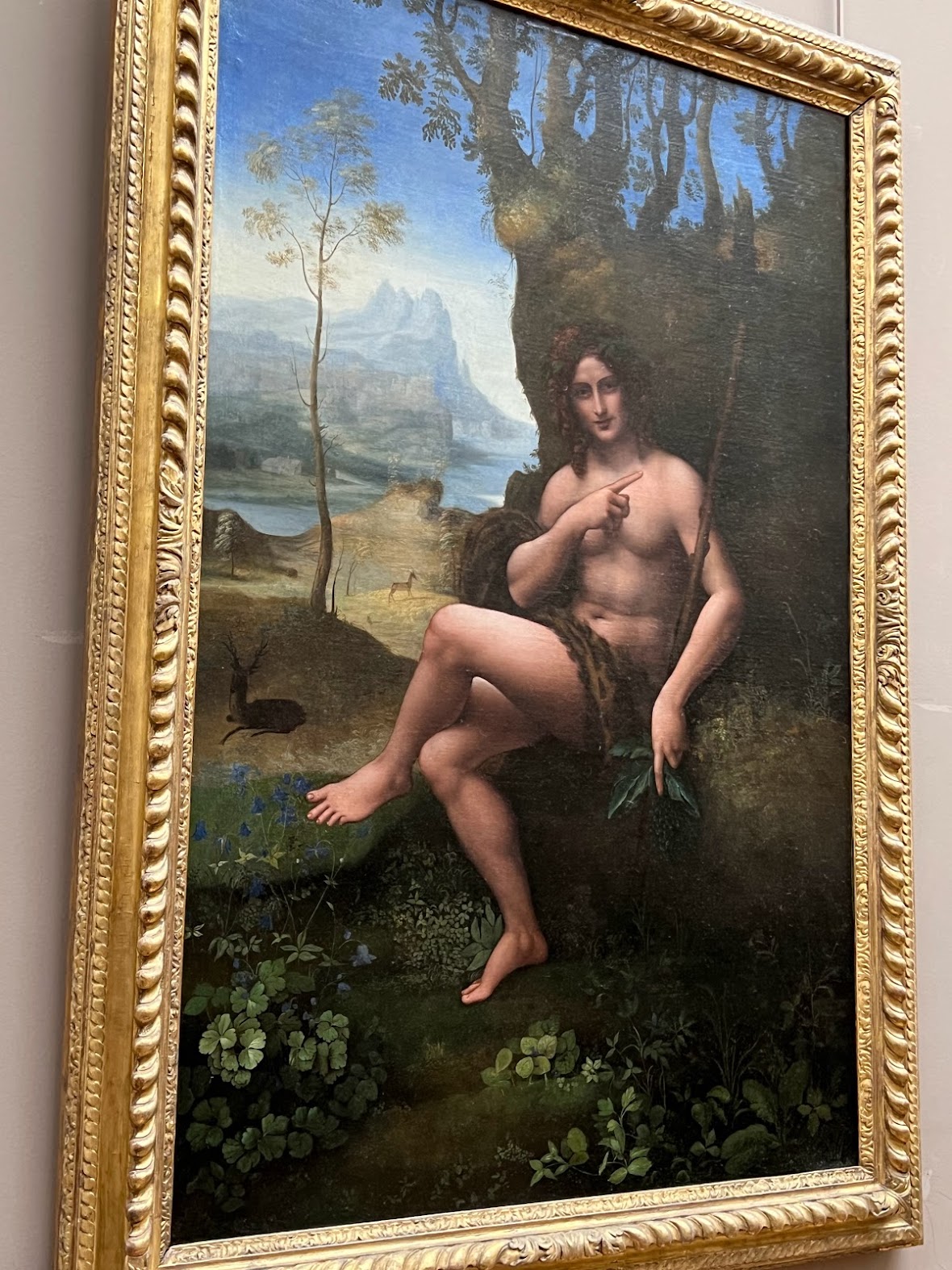
Did that famous, but thoroughly over-rated face of Mona Lisa have a glint of Leonardo Da Vinci’s favorite student? (shown below?)

IMG_1469

I keep clicking pictures of the pieces that appealed to me as she gave us salient features. I remember standing in the museum and thinking that I must not let art escape me in the daily humdrum of life. Corporate life, especially, had no time baked in to appreciate the finer aspects of life such as literature, art & music the way schools do. So, how do we make an appreciation of art a daily ritual, so there is always a little of the artistic in us? Oh! So many lofty thoughts. If Leonardo Da Vinci were witness to my thoughts that morning, he might’ve taken me on as a student, grandly overlooking my lack of talent, just for the touching sincerity.

But a mere 48 hours later as I write this, I am distressed to say that I cannot remember why I took half of the pictures I did. 

There was something about a picture of the maternal (Maria said Leonardo Da Vinci did not have a mother or someone who set a maternal example in his life, and thus the picture was doubly important). And something appealed to me. But what? 

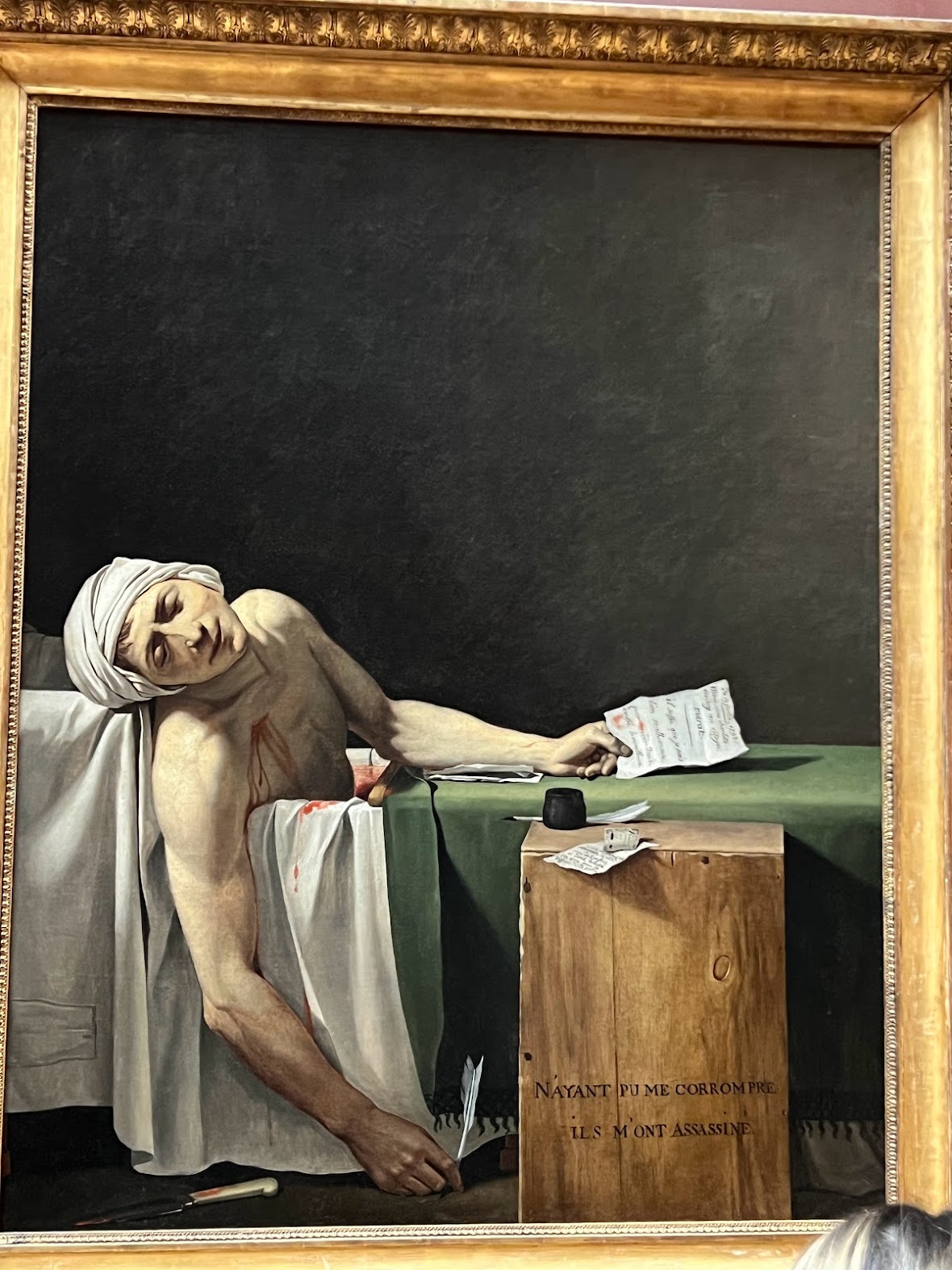
This one appealed to me as a writer. The early journalist who felt he had to say his truth and was murdered for it.

journalist

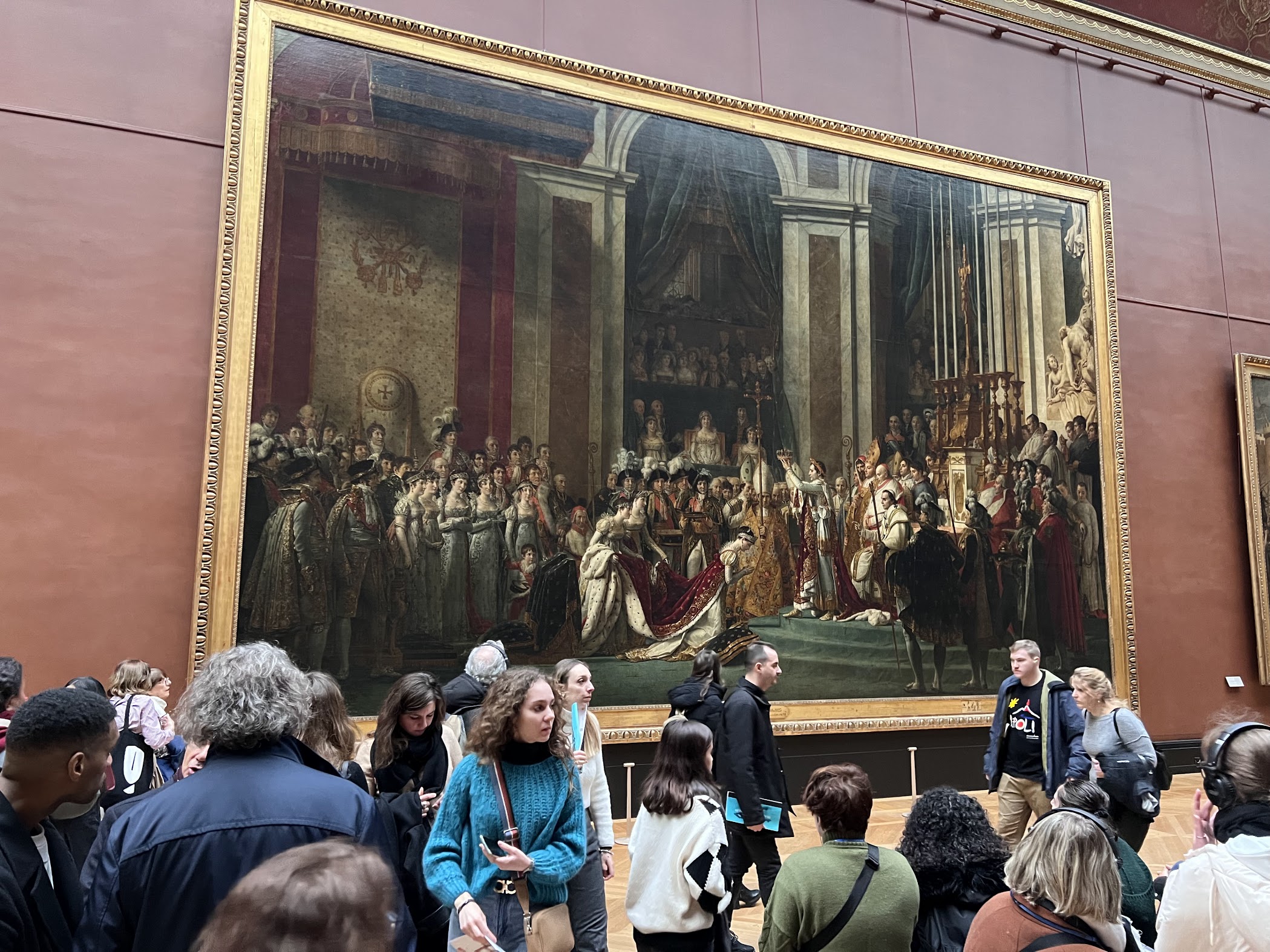
Or the coronation of Napoleon. Here was promise that megalomaniacs existed, continue to exist, and will continue to wreak havoc. In the absence of social media, this was Napolean’s attempt at portraying the coronation to the masses like he wanted – the truth be damned. Hundreds journeyed to the Louvre to get a glimpse of Napoleon and his bride, at the coronation. Apparently, Napolean’s mother did not accept his choice of bride and refused to attend the ceremonies as a result (there is a nice piece of continuity through the ages), but she is there in the painting. The Pope was invited and snubbed, but he looks happy behind the king. Maria pointed out many such discrepancies which I am afraid have evaporated since. Those art aficionados who do know the details have obviously written them out in detail in hundreds of books, blogs and YouTube videos for souls like myself.

coronation

And those statues of Venus – already promising womankind with all sorts of torment thanks to the impossible standards of beauty (the tall vertebrae, the perfect ratios between head, legs and girth, that seldom seem to bless breathing and living souls as we live out our lives on Earth.) Did the lovers of the sculptors of Venus feel the pressure, or were simply not bothered about the grandiose perfectionism as they had to tend to the business of living?

Venus de Milo on display at the Louvre

So many inspirational, marvelous wisps floated in at the Louvre. Maybe that is the vibe of museums: the wisps of imagination and insight from the millions of people over hundreds of years all hanging together illuminating the souls who dare to dip their toes into these journeys of the mind.

Our own temple of the minds.

The Art of Judging Art

The husband showed me an episode on White Collar – a drama series based on an FBI agent who takes the help of a conman he arrested to solve art crimes. A fascinating series, it soon caught the fancy of the household primarily because it is one of the few shows that we can watch with the young son in tow.  Of course, modern television has taken gripping drama to an art, and we found ourselves enjoying the show together. 

In one episode, the protagonist goes to great depths to explain how he found a particular piece of art was counterfeited. The light of the shadows in the painting, he says, were at an angle that could only have been possible if the museum lighting were shining at that angle, not something that Rembrandt or Van Gogh or Picasso (I forget which artist) would have had to contend with in his work of art. 

I remember being awestruck at this. Of course, art aficionados would not find it marvel-worthy, but I did. My simple mind appreciates the beauty of a good work of art, and it stops there. The critical eye, the keen observations, they all seem a work of wonder to me. 

It was, after we had watched this episode that we bundled up and drove through the lush hills shining in the sun-dappled valleys and plains of California for a short trip to the Getty Museum in Los Angeles. The Getty Museum turned out to be a wonderful outing for Covid times. It was not crowded, and the artwork was good without being overwhelming.

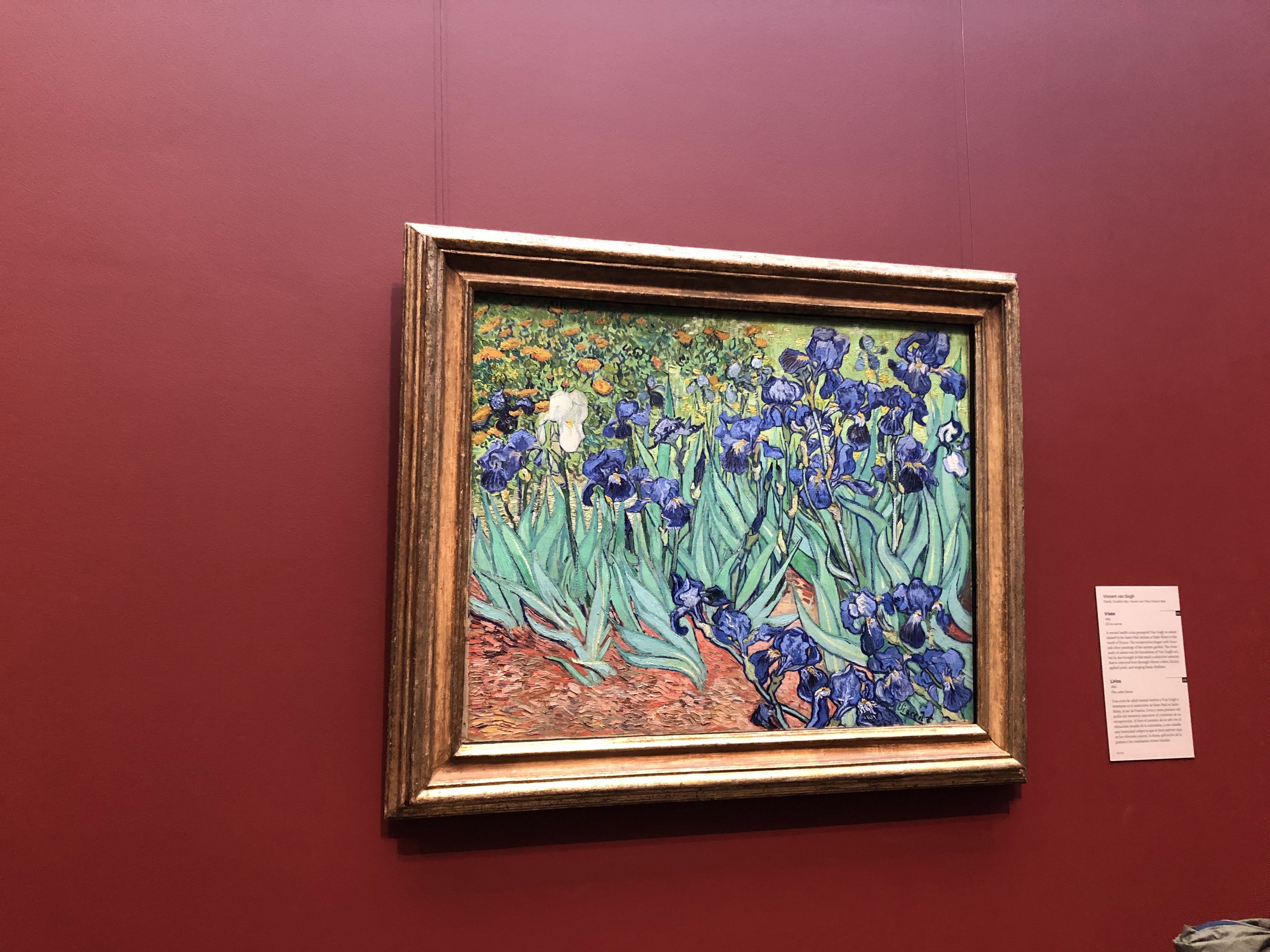
As I stood in the Van Gogh section, I could not help wondering how that many works of Van Gogh were in Getty’s Museum when we had seen numerous others in galleries across Italy. Apparently, in his last year of life, confined to an asylum for mental illness, Van Gogh created around 600 masterpieces.

I snapped a picture of the Irises, and made my way down to the gift shop afterwards. It was there that the awe of what we have done dawned on me, There were mass produced pieces of merchandise with the exact nuance of the irises on purses, scarves, tote bags, books and magnets.

What is the true worth of a masterpiece? I am sure there are hundreds of paintings, true masterpieces, that do not go on to have this enduring sense of appeal and capture the imagination of generations. 

I tried fumbling some of these sentiments to the children, and the children piped up in style, “If Neal Caffrey tries to steal it, it is worth it. If not, forget it!”

Regardless, the urge to paint is encouraged by Van Gogh himself (according to the Internet)

“If you hear a voice within you say ‘you cannot paint,’ then by all means paint, and that voice will be silenced.”

– Vincent Van Gogh

Star 🌟 Stuff?!

I don’t know if you have tried comet chasing every night for a week. A week in which photographers from the world over posted photographs that suggested a flaming, brilliant torch tearing past our heavens with an urgency that made you realize life was short, our journeys spectacular, and a whole lot of poetic asides.

The husband, the bright matter energy source in the household, if anything, shored up even more bright matter to counteract all the dark matter in the universe. His resolve only wiggled a bit when he saw these brilliant flaming pictures of the comet as though it was an olympic torch blazing through the heavens, when in reality, the comet looked like a Pluto after a good cry. (After the astronomer’s good cry, not Pluto’s!)

The son, kept his running commentary on photons, light years, superclusters, cosmic addresses, and the pair of us dreamt on.

The daughter, pragmatic as ever, squashed The Poetic Outlook like a bug under a hippo’s knee. Some teenagers may find it cool to tag along with their parents on adventures chasing 💫 comets: ours rolled her eyes, and the drag of the eye roll did resemble a comet’s tail.

I’d like to think that I was the calm influence that steered the boat into the cosmic oceans. The husband turned to give me an amused look, the son’s laughing rattled the comet to go back into hiding, and the daughter pulled her coolest teenage look of scorn and said the all-encompassing word, “kook!”.

“You know? I don’t see why people are wasting so much  time with the skies. I mean, if you  do see  the comet, I suppose it is nice and all, but  what’s the point of sitting there for hours on end and trying to find something hurtling through space. Huh-hmm!” she said, her lips thinning just the way her grandmother’s would.  I love it when the mannerisms of her grandmothers slip into her speech in unguarded moments like these, and couldn’t help smiling.

“I  mean – what sort of career is that? And what use is it?!” she cried, clearly asking for it.

The son & I, inferior debate  companions as we are to her sharp tongue, rose up to the occasion.

“Hey  hey hey! Going at the rate we are, scanning the skies may give us an opportunity to find another habitable planet to expand into. The same can be said of all kinds of research – the actual research does not immediately yield results, but every little bit of understanding advances us  a little bit further.”

“Yeah – also we need to know where we are in the universe! Are we in Milky  Way, Virgo Supercluster, Observable Universe:  what is our address?” said the son.

Location_of_Earth

Andrew Z. Colvin / CC BY-SA (https://creativecommons.org/licenses/by-sa/4.0)

The daughter’s tongue could have  sliced an apple in an instant as she rattled off our home address and said, “Why do we need to know huh? I mean, here we are. This is it. Live here, what is all this knowing where-we-are stuff? Waste of time. What is it going to do for us?”

The son & I blanched. You see: the pair of us are dreamers, standing beneath the stars, and endlessly wondering whether we belong to the Lainakea supercluster (is it the same as the Virgo supercluster?)  After the observable universe, then what? What if all the observable universe in inside a massive black hole, and time is only  something in this space? 

“But we are made of star stuff – isn’t that magical? Star stuff!” said the son wistfully.

“Yeah – duck poop is is also star stuff – deal with it!” said the daughter. The son wilted under this argument. The daughter caught sight of my eye looking like an angry comet, and mollified the little poetic fellow. “But duck poop is good star stuff! Heh??!!”

I cannot say the debate went anywhere. It was a disappointing bunch of evenings after all, and the teenager felt it keenly. I mean, when one has posted  to one’s friends that they are going comet gazing, and then come back after hours, having  grazed on half a luna-bar, there is bound to be a dearth of the poetic. 

“You know young lady, I have just the book to cure you of this disappointment.” I said and gave her the book, The Stuff of Stars by Marion Dane Bauer Illustrated by Ekua Holmes

The illustrations in this book make it an absolute treasure. In the past few days, after a clearly disappointing  comet gazing experience, I found myself gazing at the marvelous pictures in the book instead. 

stuff_of_stars