Imaginating on unbirthdays

There’s a little something that we have been treasuring in our home. It isn’t so much a secret as a quirk really. But it is something that our hearts have grown fond over, an idea that we share with close friends with a stab of joy, pride and a laugh that acknowledges the un-normal-ness of it all. But by doing so, we have invited you into our little circle of joy and keeping our spirits up. 

So, why do I share this now, here on the blog. My answer to it is, “I feel it will help us all cope in these times of uncertainty. ” Practiced over small doses, it can be comfortable or not depending on how much you have used this part of your personality before. But it is possible. I know it. For on the sternest of days, when life seems to be boxed into a little screen, and the slings and arrows of fortune come by taking straight swings at us, and the mind struggles for an outlet, this tiny act of will works its way into a part of the brain that senses wonder and magic. It seeps in.

I will need to take you back into our world for a bit. So, please come on over.

I was trying not to fall asleep one afternoon.  The leaves were rustling outside in the soft afternoon breeze, our stomachs were full with a week-end meal, and I had retired for a space to read a book. I had only just managed to let the book slide out of my hands as a wave of sleep crashed over me, when I heard  sounds of battle from within the home.

Bwoooshhh! Swoosh…aahh…guhgh, brwooosh!

This sizzling sound effect was followed by dull thumps, and a moan. A moan not of defeat, but of acknowledging a hard task that needs to be  done. If ever a moan was cloaked in determination and strategy, this was it.

“What are you doing?” I hollered. 

“Just imaginating!”, the reply came from the young son, and the samurai, dragon, ninja, or jedi warrior went about his business of setting his world to rights. Sometimes, electrons and quarks swoop in to change the nature of the opponent.

I smiled sleepily trying to figure out the latest battle he was fighting.

The dragons were slowly gaining ground and judging from the throaty cries, and the swift roll-ups being performed by the other side, lightsabers were running out of energy and quickly needed recharging, if anything were to be done about the dragon menace. They were taking over the mountainsides , gaining speed and traction even worse than the  wildfires that raged in the area just a few days ago. Weather monsters are only one kind of monster.
Imaginating

In our home, the act of pure imagination has been given a verb-form all on its own. Imaginating, we call it, and go about our business of imagination without batting an eyelid. 

When the son came up with the word as a toddler, I was amused. Here is a word that documents insist on underlining in squiggly red as unrecognized, and yet, this word feels right. It feels like a word that belongs. 

Imaginating evokes the act of imagination sure, but it is an imagination with power and force. Imaginating in the face of tyranny, imaginating in the throes of uncertainty, and imaginating in the relentless negativity of news cycles, seems to be just the panacea to set our world to rights. It is an act of our will, and to quote L M Montgomery from Anne of Green Gables,

“Because when you are imagining, you might as well imagine something worthwhile.” 

Lucy Maud Montgomery, Anne of Green Gables

Our song could be:
We shall imaginate.
When tyranny comes my way, I shall imaginate.
When hopelessness clouds my day, I shall imaginate,
Just like the tree that imaginates itself to be a bird. I shall imaginate!
 

Lewis Carroll, a man known for inventing words, would love to hear the word from the son, were he alive. So, here is the secret of imaginating and I am sure it is a necessary one in a world in which we are all mad.( To quote the Cheshire Cat in Alice by way of explaining Wonderland to her, “We are all mad here.”)

So why not have fun imaginating with it, and reserve them for special occasions such as our unbirthdays. (Lewis Carroll’s word for every special day that isn’t a birthday, which means we all get to have 364 of them every year).

IMG_8187

P.S: The story has been put to rights by the hero of the imaginating sequence. That afternoon, it was pirates he was fighting off, and not dragons. So, they weren’t gaining ground, but they were gaining water.  What else did I think those squishes and swooshes were? It was obviously the sounds of water splashing against the stern of the ships as he bravely fought off them pirates. Moreover, he wasn’t on an intergalactic space adventure to use his lightsaber, he was simply using his dark matter sword. Duh! 
 

The Wonder Formula

Someone told me once that we lose the joy and wonder in things as we knew more and more about how things work. If we knew the conditions were right for a rainbow to form, or the planets will shine in the evening skies brighter than usual, we seem to expect them, and then lost the magic of it all.

I have pondered on that often – could adding a pleasurable anticipation make up for the lost serendipity? As we watch the bleak skies of the winter, we can wait and feel the weight of the buds in the spring snowflake 🌱 plants, or watch the tulips bulbs shoot up from the Earth admiring their sense of timing, can’t we?.

While, waiting for the rains to subside, we can nurse a secret longing for a rainbow – I know I do.

Aside from all else, what isn’t lovely about a World that has rainbows? Maybe on other planets, with different atmospheric makeups than our own, rainbows themselves manifest differently or not at all, but it is comforting to know the colors of the rainbow and their perfect arc will be this way on this Earth as long as the suns rays can diffract the light in the moisture laden droplets.

img_6569

One day during the Winter holidays, I got to sit in a beach. It being the rainy season, there weren’t as many people around. There were a few beach lovers, so we curled up our beach towels and all set to greet the noisy seagulls. There I sat watching the Atlantic ocean with my umbrella open, sitting on a Mickey Mouse towel with a book in hand.

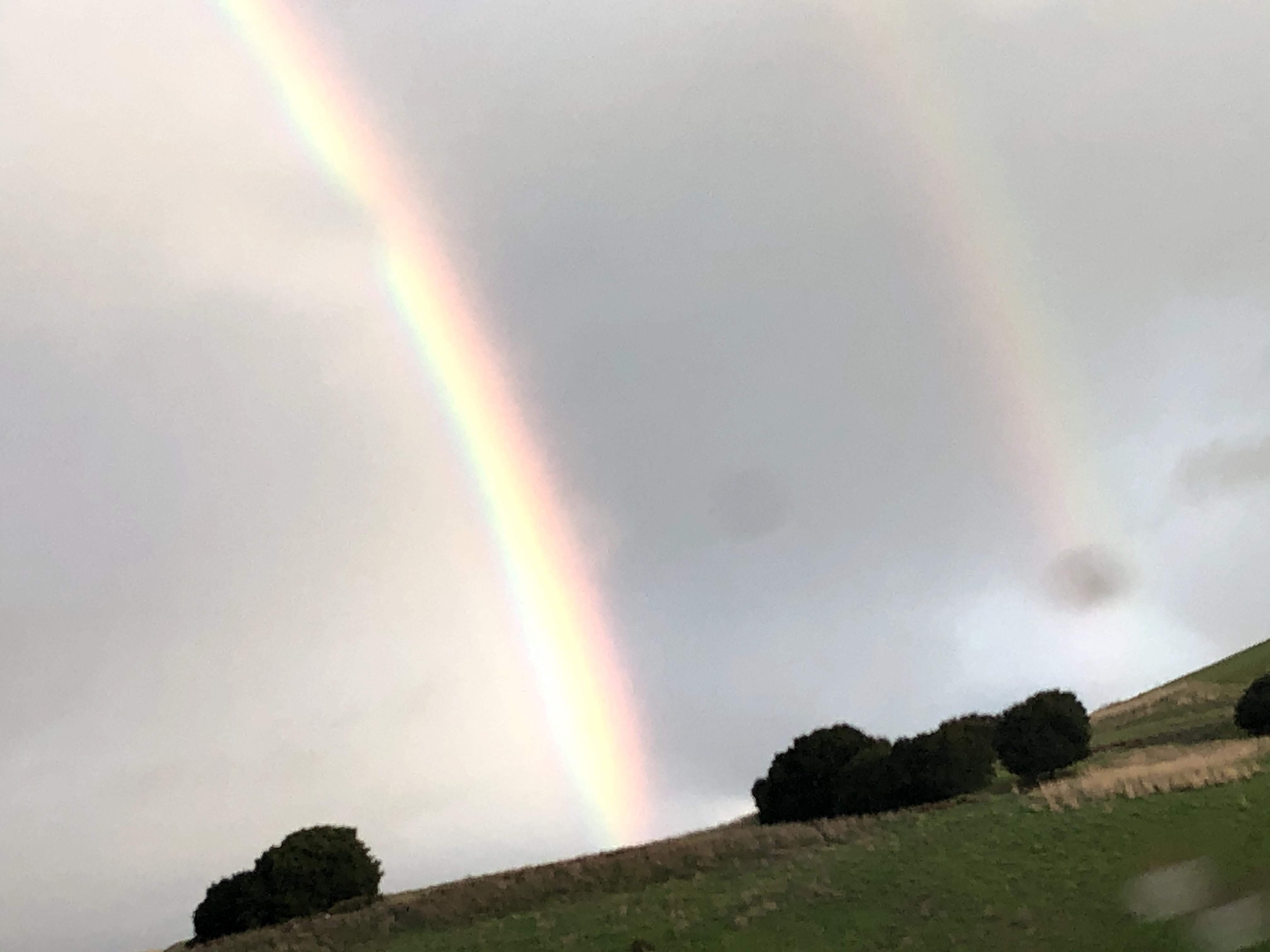
It was a few minutes afterward that we discerned the rainbow forming in the sky. How marvelous and wondrous an experience to watch the rainbow go from a faint smearing of smudged colors as though making up its mind whether to come out in all its glory or not; and then watch a colorful, bright rainbow full of the conviction of Being play on the horizon. The son came running across from where he was playing, flush with excitement pointing at the rainbow -🌈 “I knew it will come now.”

Sometimes, I wonder why we cannot be like children. Even though, they know the hows and whys behind things, they still retain Shoshin: the Zen concept of wonder as in a beginner’s mind. I smiled and patted him to sit next to me and take in the rainbow 🌈 with me.

After a while, he went back to playing in the ocean waves with his sister. I sat there, nourishing my musings with whimsy. I remembered some drawings of the daughter when she was much younger. Dolphins leapt out of the seas, with a rainbow arc-ed beautifully around them. Of course, children imagine the best possible things together – there isn’t any dearth or rationing in their imaginary worlds, is there?

Because when you are imagining, you might as well imagine something worth while.” as Anne of Green Gables would say.

The dolphins may get to see rainbows, but the fish do not. But maybe their world is marvelous enough with a thousand prickling and tricks of light that the water medium presents to them.

Musing in a world of rainbows is nothing short of magical even if I do know the concept of light refracting and producing the colors of a rainbow. My heart still lifts.

I had been traveling during the past few weeks. One such time on my sojourns, I left my home amidst brown hills. The summer sun had toasted the hillsides, and I yearned for a little respite to the eyes. In the two weeks that I was out, the rains had lashed the area liberally, and when I came back, the hillsides had turned a marvelous green. The rolling hills lifted their misty veils every morning, and I felt my heart pound with the magic of it all. Yes, I knew the rains make the grass grow, but the transformation is still a miracle that my heart waits for every year.

When I watch the dew drops glisten on the spring snowflakes,
When I watch the rainbow makes up its mind and throw itself like a garland across the skies
When I watch the eight-legged marvels creations catch in the sunset
When I watch the waves lap and play with the sandpipers

I feel hope stir in the spirits
I feel decisive and conviction in Being
I feel solitude’s gift can be tangible and needs to be nurtured for its fragile state
I feel engaged with the planet and all its gifts

I recently read a book bySasha Sagan, that is full of the joy of being. Titled: For Small Creatures Such as We: Rituals for Finding Meaning in Our Unlikely World, the book immediately caught my attention and I savored its many truths and facts about our rituals and festivals – the meaning behind life’s celebrations.

“My parents taught me that the provable, tangible, verifiable things were sacred, that sometimes the most astonishing ideas are clearly profound, but when they get labeled as “facts”, we lose sight of their beauty. It doesn’t have to be this way. Science is the source of so much insight worthy of ecstatic celebration.” – Sasha Sagan

sasha_sagan

I was also reminded of Richard Feynman’s meditations on 🌺 flowers.

Ode to a Flower – By Richard Feynman.

There is beauty in knowledge, and wonder in anticipation. We just need a formula linking the two now.

The Three Selves

Mary Oliver’s, Upstream, is a book of many marvelous essays. One in particular stood out: Of Power and Time. This one is about the three selves in many of us:

  • The Child Self
  • The Social Self &
  • The Eternal Self.

upstream

Reflecting upon the piece, I realized we should know this by now, and we probably do at some level, but it takes a clairvoyant writer to set it out so neatly.

The Child Self is in us always, it never really leaves us. I completely identify with that. I am decades away from my childhood, but I can dip into it like I only just grew up.  Everything felt keener and sharper as children, and that is part of the reason why The Child Self never really leaves us, I suppose. (Probably the reason why I forget the name of the person I met yesterday, but remember the names of my friends from when I was 5 years old : What is Time?)

While young, I yearned to grow up, and in the words of L M Montgomery realize that growing up is not half as fun as it is purported to be.

“That’s the worst of growing up, and I’m beginning to realize it. The things you wanted so much when you were a child don’t seem half so wonderful to you when you get them.”
― L.M. Montgomery, Anne of Green Gables

The second self is the Social Self. This is the do-er, the list maker, the planner, the executer. The one, in short, that most of us find ourselves trapped in for the most part of our lives. This is “the smiler and the doorkeeper” as Mary Oliver so elegantly puts it. This self I am familiar with: metaphorically the whirlpool, the swift horses of time, the minute  keeper.

“This is the portion that winds the clock, that steers through the dailiness of life, that keeps in mind appointments that must be made. Whether it gathers as it goes some branch of wisdom or delight, or nothing at all, is a matter with which it is hardly concerned. What this self hears night and day, what it loves beyond all other songs, is the endless springing forward of the clock, those measures strict and vivacious, and full of certainty.”

The social, attentive self’s surety is what makes the world go around as she says.

Then, there is the third self: The Creative Self, the dreamer, the wanderer.
“Certainly there is within each of us a self that is neither a child, nor a servant of the hours. It is a third self, occasional in some of us, tyrant in others. This self is out of love with the ordinary, it is out of love with time. It has a hunger for eternity.”

The essay goes on explain the regular, ordinary self in contrast to the creative self. The Creative Self – the one that is out of love with the ordinary, out of love with the demands of time or the regular routines of life, is concerned with something else, the extraordinary. This is the self, she says, that makes the world move forward.

“The extraordinary is what Art is about. No one yet has made a list of places where the extraordinary may happen and where it may not. Among crowds, in drawing rooms, among easements and comforts and pleasures it is seldom seen, It likes the out-of-doors. It likes the concentrating mind. It likes its solitude.”

img_1781-effects

The essay was eye-opening in many ways. For I know many, including myself, have to fill our days with the demands of the clock. It is also easier to be the do-er, so that we may not have to enter that difficult place of teasing, figuring and wrestling the extraordinary out; to give shape to the nebulous clouds skirting in the recesses of the brain.

There is nothing wrong with succumbing to the demands of the clock, but it is a valuable lesson to teach ourselves to take our brains for a tease and see what results, isn’t it? We may land up surprising ourselves if only we give it the chance.

The essay ended on this note:

“The most regretful people on Earth are those who felt their own creative power restive and uprising, and gave to it neither time nor power.”

What do we do to ensure that there is enough time in our lives to ensure the nurturing of the Eternal Self? (Read: The Art & Charm of Shoshin) I don’t know the answer yet, but when I do, I shall hop on social media and share it right away.

Note:

A version of the essay is found here: 

Mary Oliver: The Artist’s Task 

Brain Pickings – The Third Self

The Land of Crumpled Cardboards

I love to see the children play their games of make-believe. One night the son went on and on about which island I would save and why. I was doing three different things in the physical realm as he spoke, and mentally fifteen. So, by the time the question was posed to me, I was flummoxed.

“Umm the biggest island.”, I said.

“Ugh! You didn’t listen did you? That has the ferocious dragon, and not just that, it won’t even listen to you! Do you really want a dragon that doesn’t listen?” he asked. Distracted as I was, I was glad that the irony of the moment was not lost on me, and I chuckled.

Sometimes, I need to get something at night, and howl and yip after stepping on gallant heroes, tired cars, planes and figurines parked on the ‘arena’ in neat rows so they can sleep.

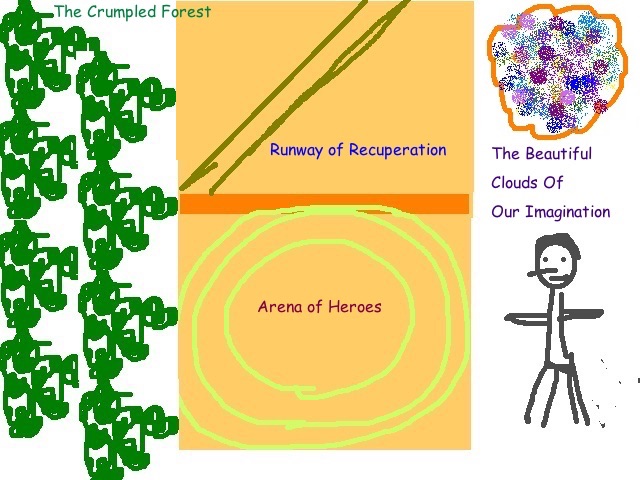
An old cardboard box has occupied prime real estate in my home landing for months. Several attempts to throw the thing out fizzled out when I heard the touching passion with which the son argued for it to be kept. It isn’t an ordinary one: It has hosted grand prix races, super hero battles and has even been used as an air strip for firefighting airplanes. 

cardboard_box


Inside, you will notice several faded crayon marks, the battle scars on a war-field.  The faded crayon lines are the tracks where the races take place. The green colored lines are the lanes within which the firefighter plane has to land, exhausted after fighting fires raging over the crumpled forests of paper nearby.

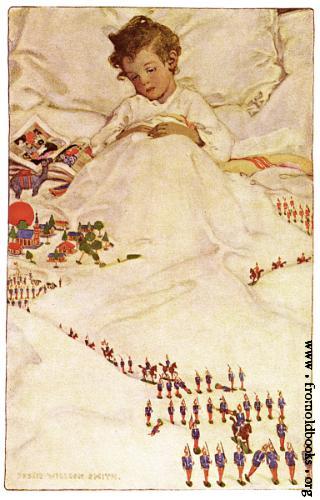
I was reminded of the poem, The Land of Counterpane, by Robert Louis Stevenson. A poem so endearing to me given the situation with the crumpled cardboard box.

The Land of Counterpane – By Robert Louis Stevenson, 1850 – 1894

When I was sick and lay a-bed,   
I had two pillows at my head,   
And all my toys beside me lay   
To keep me happy all the day.   

And sometimes for an hour or so     
I watched my leaden soldiers go,   
With different uniforms and drills,   
Among the bed-clothes, through the hills;   

And sometimes sent my ships in fleets   
All up and down among the sheets;  
Or brought my trees and houses out,   
And planted cities all about.   

I was the giant great and still   
That sits upon the pillow-hill,   
And sees before him, dale and plain, 
The pleasant land of counterpane. 

land_of_counterpane
Illustration from Book of Poems – R L Stevenson


One evening, all the adults and teenagers in the house were busy trying to figure out how to amuse themselves. Netflix was straining its algorithms, and saying, If you liked that, how about this? You-tube stars were creaking and moaning leading folks down rabbit holes of if-you-like how the soap bubbles popped in this purple bucket, then you will surely also like how the soap bubbles pop in this pink mug.

The elementary school going son, however, was playing vigorously. The Piston Cup was in progress, and he was charging round and round the stadium trying to see whether Lightning McQueen would win yet again. After an hour or two of this game, he became a firefighter, and flew off, his mouth-engine purring brrrr—prrr—vrooom—broom. 


Ask any adult about how they played as children, and you can be sure of being entertained.

“Because when you are imagining, you might as well imagine something worth while.”
― L.M. MontgomeryAnne of Green Gables 

I wonder when we lost this admirable skill. What would it take for us to regain the ability to amuse ourselves, and delve into the wonderful worlds of our imagination? 

I can understand now what Robert Frost meant when he said something to the effect of, the older one gets, the younger the teachers. 

When I was young my teachers were the old.

Now when I am old my teachers are the young.
Robert Frost

The World of Pure Imagination

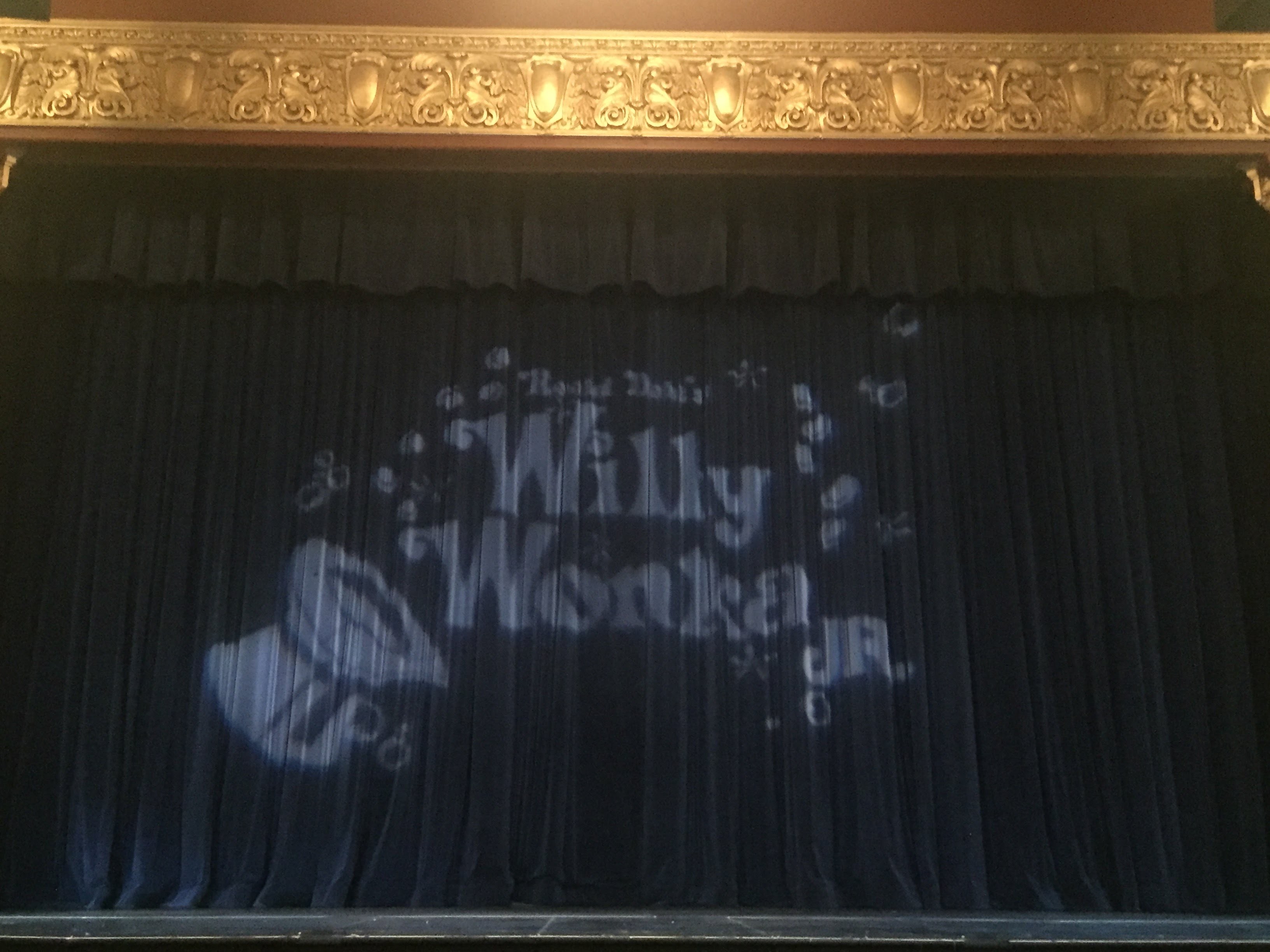
The daughter pranced into the home one evening a few months ago, her eyes agog with excitement. She had auditioned and been cast as Willy Wonka, the eccentric chocolate factory owner in Willy Wonka Jr (the musical based on Charlie and the Chocolate Factory). They say Art is Transformative, and it is true. Every time I see the children pull off something spectacular, my heart soars. 

Come with me and you’ll be 

In a world of pure imagination

We’ll begin with a spin 

Traveling the world of my creation

What you’ll see will defy explanation

IMG_8469.jpg

As she sang her songs from Willy Wonka around the house, there was a pleasant hum in my brain too. I remember reading the little book with her when she was in elementary school. The years in between have smudged into a blur in which I remember doing a lot of things, cherishing a few memories, and before I knew it, my little girl towered over me in height and ability. 

In a world of pure imagination: how would that world be? It must be a world in which all things vile are wished away, and only pleasant striving has a place. A canvas on which the best is to be painted and awaits the strokes of our creation. Maybe that is how we must view life. Every aspect of ours a stroke on our canvas – the true nature of the painting ever changing to be revealed to us as we go along, giving us a subtle choice here and there on whether to put in that jarring, wrong stroke or a mellow, right one.

There are many marvelous things that I can attribute to imagination (and immigration). One that ranks highest is the fact that I get to read American Children’s literature as an adult. As a child, in the lovely hills of South India, I loved curling up with Enid Blyton’s books, and often escaped into fairy lands on wishing chairs and ran into magical forests. It was easy imagining an adventure, while swinging on tree trunks that had fallen in the last storm. We had plenty of time, and had no one but ourselves to rely on for entertainment. State television made its entry a few years later, but it was agreed fact that our own flavor of entertainment was far superior to what we saw on Television. I sometimes played alone, but not once did I feel lonely. There were always imaginary friends who’d drop in for a cup of tea and we’d bake some scrunchy scones and whip up some tea cake, though I had never seen the inside of an oven. 

The Indian comic books, Amar Chitra Katha, Chandamama added flavor and beans to the curry pot of imagination. It was a wonderful time in the head. The pressures of wanting to make something of oneself had not yet begun to exert itself, the only lures were those of nature as it enclosed us. The trees were friends and frequently doubled up as props in our adventures. Many a scraped knee was soothed away with scratches from brambles. 

I entered my teenage years, and my imagination left some of its whimsy behind. The teen years and the early twenties were dedicated to much serious reading, and I spent a good portion of my time striving and wondering what to make of myself.

“That’s the worst of growing up, and I’m beginning to realize it. The things you wanted so much when you were a child don’t seem half so wonderful to you when you get them.”

L.M. Montgomery, Anne of Green Gables

Then, I realized that all those years that I had spent wondering what to make of myself had actually made me. Just like that, I could embrace all that happened to me. It was liberating, and then the more whimsical side of my imagination swooped in once more. I took tentative steps into Wonderland when I became a mother in the United States, and indulged the child in me with my growing children. 


Dr Seuss graced our tongues and teased the brain (What if I had duck feet? Did the elephant hatch the egg finally, will Zooks and Yooks ever become friends?), we sang poems by Robert Louis Stevenson set to the tunes of the old hymns in our school hymn book (To be written), we giggled with Bernstein Bears, hoo-hoo-haa-haa-ed with Curious George, and marveled at the friendship between Frog & Toad. The children and I read Charlotte’s Web when I was in my thirties, but I enjoyed it even more than I would have as a child.  

dr seuss

For a long time, I had meant to read Anne of Green Gables, but for some reason, did not. The daughter had not shown inclination towards this series, and there was no one to tell me how I absolutely must read it. Then, one day I read a quote from Anne of Windy Poplars, and I was intrigued. I have always loved that style of uplifting writing weaving the tendrils of imagination with subtle humor: the gentle breeze of the soothing powers of nature to nurture our soul wafting through every page. It is why I like Miss Read’s writing so much.

I identified keenly with how much Anne prized the gift of imagination. Somehow, we lose that streak of imagining as we grow older, much like we forget to skip while walking.  I now have that pleasurable thrill of reading all the remaining books by Lucy Maud Montgomery. It is a sustaining thought.  

Margarita Engle’s poem:

No giant or dragon

Is bigger or stronger

Than the human imagination

P.S: If you have not already listened to J K Rowling’s commencement speech, it is definitely worth listening to: The Importance of Failure and Imagination


On The Ribbons of Wonder

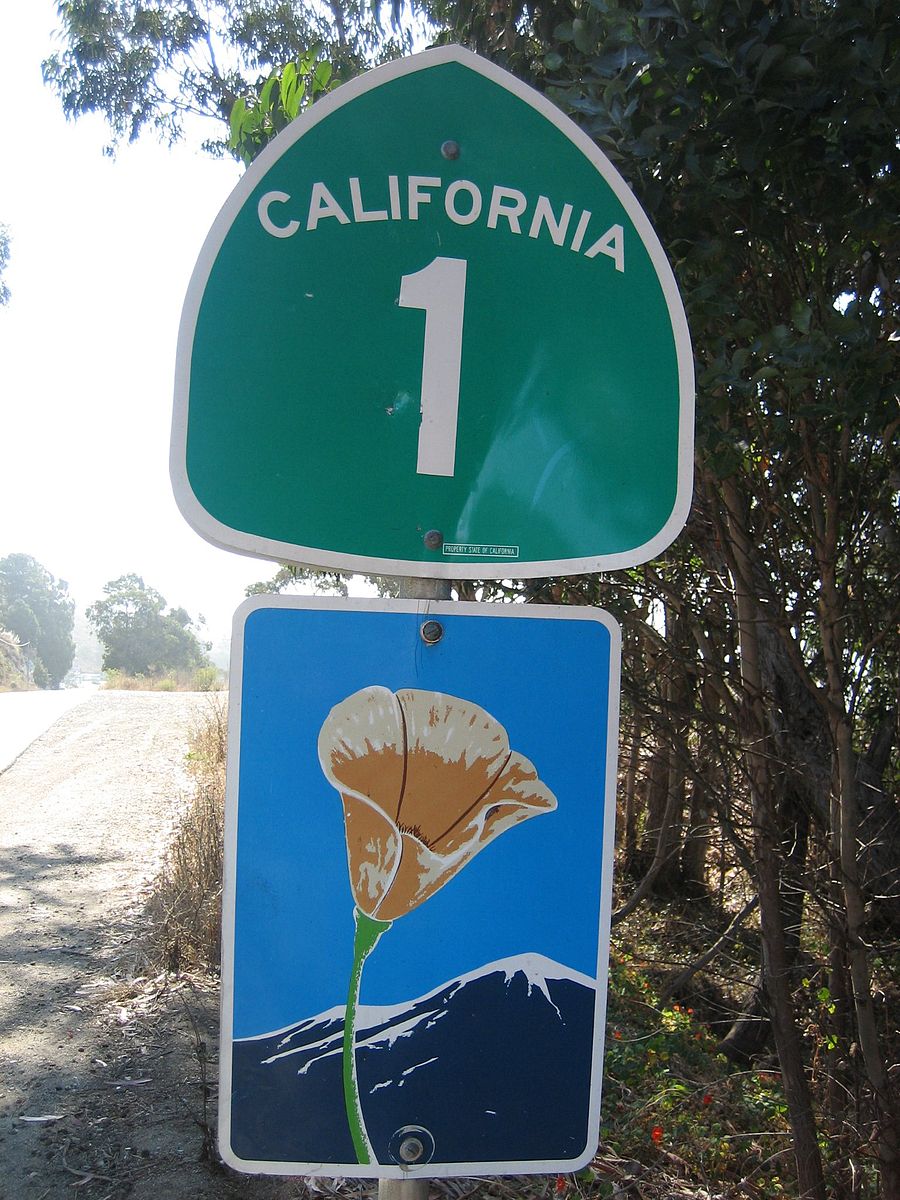
The ‘Scenic Highway’ sign brings about an overwhelming goodness of heart; a promise of something worthwhile; a yearning for the treat ahead.

Nuts? (Absolutely – especially near the symmetrically placed Almond plantations on Californian highways.)

Cuckoo? (Of course! Who wouldn’t be to the musical trilling of the birds?)

California_State_Route_1_All_American_Road_sign
https://en.wikipedia.org/wiki/State_Scenic_Highway_System_(California)
The image was created by Mario Salje from Greifswald, Germany. (Wikipedia)

I poke my head out to inhale the scent of fir, pine or eucalyptus, only to be chided by the children. Amma – stop that! It is cold, or it is hot or it is windy. I try to look repentant, but the joy in my face is a give-away. I become a child collecting wildflowers for the vases that spot every side table in every room in my childhood abode again. The same vases that the father used to roll his eyes at before gingerly moving them out of the way, for they had a tendency to fall and spill onto his ubiquitous newspapers. These tastefully collected possums of wildflowers, interspersed with pine or fir with a sprig of Eucalyptus is joy in a vase. I never learnt the art of Ikebana but my grasp and plonk technique gave me as much joy. 

Even on days when childhood woes and worries weighed heavy on the mind, a saunter in the hillsides with a wildflower bouquet in my hands was enough to get me looking at the world benevolently again.

Adulthood has cured me of this eternal optimism and benevolence, but it has had no luck when it comes to the joy nature can give me. I still potter about the neighborhood sniffing at primroses, admiring cow-slips, and reveling in the wild grass as it pokes its shoots out of the cracks in the pavement. I don’t know the names of the wildflowers, but when I see a squirrel sniff at one, it doesn’t seem to matter whether one knows the name of the flower or not. On road trips, I relish the beauty of the highways, the trees and flowers beside the highways, and thank Earth for its natural bounty. 

Little did I know that I really needed to thank Lady Bird Johnson for this bounty in USA. Having grown up in a small town in Texas, she enjoyed nature and its calming influences first hand. When her husband, Lyndon B Johnson, became President, one of the things she did as First Lady, was to get the Highway Beautification Act underway.

IMG_8394
Miss Lady Bird’s Wildflowers – By Kathi Appelt, Illustrated by Joy Fisher Hein

The nation was still pained at John F Kennedy’s assassination, and she wanted to cure the nation with the remedy she knew best. Natural beauty.


I am grateful to Lady Bird Johnson for this foresight. I belong to the class of people who derive spirituality from Nature, and wholly agree with the feisty Anne Shirley (Anne of Green Gables by Lucy Maud Montgomery.)

“Why must people kneel down to pray? If I really wanted to pray I’ll tell you what I’d do. I’d go out into a great big field all alone or in the deep, deep woods and I’d look up into the sky—up—up—up—into that lovely blue sky that looks as if there was no end to its blueness. And then I’d just feel a prayer.” 

― L.M. MontgomeryAnne of Green Gables

The next time you see a scenic highway stretch out like a wondrous ribbon unravelling itself from its spiel, send a wave of gratitude out to the thriving beauty of life out there, and the person(s) responsible for it. 

Beautiful highways are not a quintessential American feature either. There are accounts of beautiful tree lined roads, hugging mountainous roads with marvelous vistas, roads by rivers and through deserts, built as early as 300 BC. The most famous ones I can think off are the Silk Road(https://en.wikipedia.org/wiki/Silk_Road), and sections of the Grand Trunk Road (https://en.wikipedia.org/wiki/Grand_Trunk_Road) 

“The world calls them its singers and poets and artists and storytellers; but they are just people who have never forgotten the way to fairyland.” 

― L.M. MontgomeryAnne of Green Gables