Shiva & Buddha Together

After all the years in which several girlfriends and I sat around planning grand trips involving sky-diving, snorkeling and weeks in Bali – we decided just like that, to set off to Sedona, Arizona. It sounded like the most exciting place on Earth. Like the son said, there is such a matching ring to it, that it is fun to say it together.

Driving to Sedona from Phoenix, Arizona was surreal and giggly. The full moon shone down on the desert landscape with giant cacti illuminated in the glow of the moon. The constellations traveled with us. I gazed out the window, not really knowing how harsh the environment was. It was all muted and beautiful in the moonlight. The cacti stood out tall and distinct, and I was wondering how tall they must have been to stand out like that. I was to find out two days later that they could be as tall as 40 feet tall, and not for the first time I thought of how precious life must be to thrive in environments like these. Arizona is of course very proud of its cacti: The Arizona State Bird is the Cactus Wren and the State Flower of Arizona is the Saguaro Cactus Flower.

Hiking in Sedona is an experience unto itself. The vast expanse is humbling, the red rocks, layers upon layers of it, that were once the ocean bed is mesmerizing to look at. Hiking to a vista point, each of us I am sure had different things in mind. I had my backpack on for no real reason. When quizzed about its contents, I sheepishly acknowledged that I had in there a book and a kindle among other things so I could sit in the wilderness and read. The friends had an amused expression on their face, and teased me about it, but found me a good spot nevertheless in which to leave me to it.

As I settled in to read, there was much head-shaking, but indulgent smiling. I tried to calm my senses to the levels reading requires. I had with me a travel book : The Snow Leopard by Peter Matthiessen. The book won the author the 1979 National Book Award in the category Contemporary Thought[6] and the 1980 National Book Award for Nonfiction (paperback)

snow_leopard.jpg

Traveling through the plains of the Ganges and eventually going up to the upper reaches of Tibet, it is a book that I have long wanted to read. The Buddhist teachings and Zen mode of life are especially attractive to me because of the restlessness that underlies our mode of life. If centuries ago, when technology was not as pervasive as it is now, philosophy saw the wisdom of building in pockets of stillness into our lives and forming affinities with nature, how come we are remiss in finding access to these fundamental things after all our progress?

ea670f7c-5d1a-43ab-ad4f-28944c7f3bd7

Do we need Science to point us towards these again? Science has already started acknowledging the importance of exercise, sleep, meditation. For Nature, there are now studies being instituted in various countries to see the effect of nature as we cluster round closer and closer to each other in urban surroundings. Forest bathing as a concept has long been practiced by the Finnish and Japanese. Known as Shinrin Yoku in Japanese effects on our well-being are now being studied from a scientific perspective. Would we embrace nature if Science pointed us to?

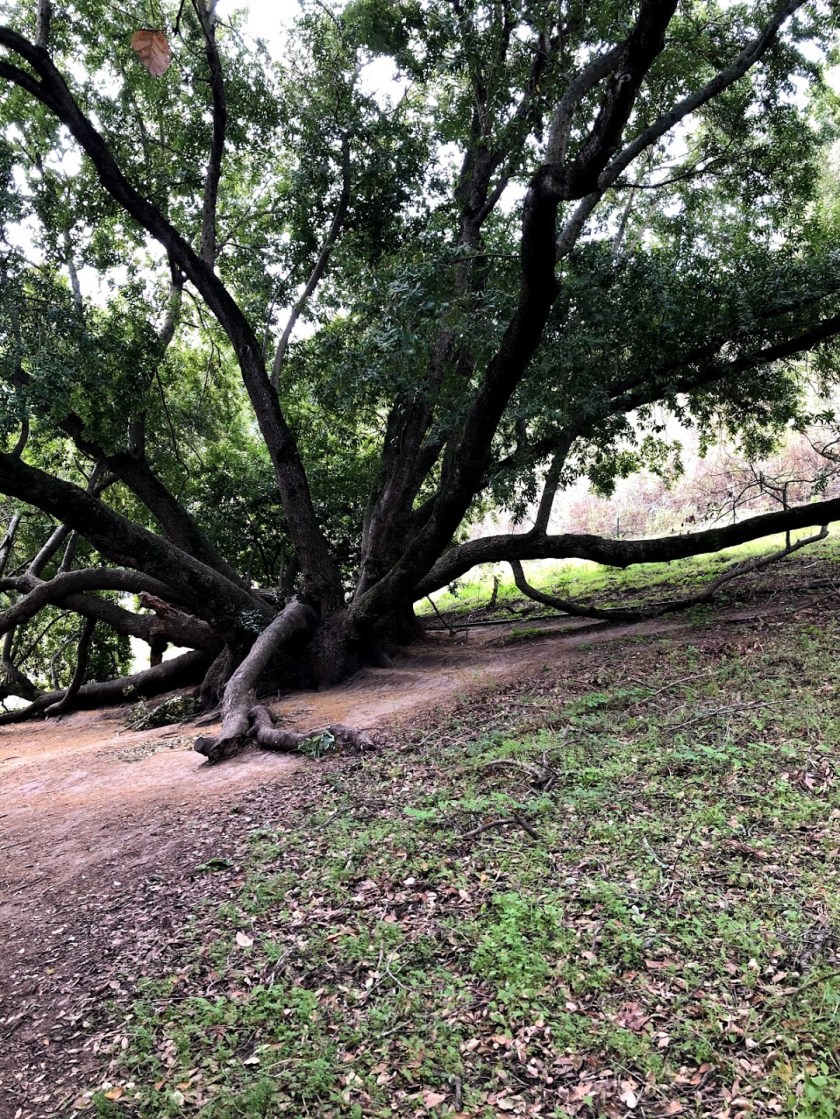
While I started out fake reading for a pose, pretty soon, I was transported to another world. Sitting in the hot lands of southern Arizona – the land of soaring eagles, vast expanses and red stone, I was joining the author on a journey to glimpse snow leopards in the Himalayas, passing stupas and taking in the Buddhist teachings on his journey. Shiva’s abode in the Himalayas is fierce and awe-inspiring as was the desert in which I sat.

img_4734

“Hey Girls! listen to this – Let me read out a passage out to you – see how Shiva comes alive here in Fay Canyon, Arizona?” I said, and started reading:

“Yet in Varanasi there is hope of life that has been abandoned in such cities as Calcutta, which seems resigned to the dead and dying in its gutters. Shiva dances in the spicy foods, in the exhilarated bells of the swarming bicycles, the angry bus horns, the chatter of the temple monkeys, the vermilion tikka dot on the women’s foreheads, even in the scent of charred human flesh that pervades the ghats. The people smile – that is the greatest miracle of all.”

By the time I looked up, there was much laughing and I looked to see that Shiva did not really need to dance in the spicy foods of the Ganges plain, A Shiva-ni was attempting a Shiva Tandavam right there. The poses were fierce, powerful, sloppy and funny all at the same time, and somehow totally at peace with the Garuda-esque surroundings of Sedona.

The giggling photographer looked slightly abashed and said “These girls lost you at Calcutta, and started dancing instead!”

I landed up giggling too, and like a bunch of tickled snow leopards fleeing the thudding of Shiva’s feet, we made our way out of the canyon lands towards our next stop.

I don’t know how much one’s readings can alter one’s surroundings, but I was quite astounded at our next stop. We were in a stupa with a Buddha statue. Sedona Arizona is well known for its mystic yearnings in its rustic surroundings, but I was still pleasantly surprised to find a quaint Stupa nestling in the canyons surrounded by naturally formed stupas of red stone, and a Buddha statue carved of wood.

img_4765

There probably is a reason for our richest myths and stories to emanate from awe inspiring places in nature, for it is where we can lose ourselves in order to come back to ourselves better.

November Novelty

A Version of this post appeared in The India Currents Magazine – the article focuses on communication.

The quality of the evening was ethereal. The cold November evenings had begun to set in. I had turned the thermostat up a couple of notches, the white light effused a warm glow against the fall colored curtains. Halloween was still fresh in everyone’s memory, Diwali had snuggled in, and spread its share of warmth and joy even amidst some moments of disquiet with raging fire and wind whipped storms.


I surveyed the house and felt a surge of warmth course through me. Dear friends and family were visiting, and I was glowing with pleasure at the companionship of the evening. The house had been through the cleaning wheel: which is to say that the closets were groaning and stuffed to their very brims. I warned guests to open any closet with care warning them that a dozen things could tumble out. All the children – residents and visitors, nodded with sincerity, but I found them an hour later playing hide-and-seek, and amazingly finding place to hide in the very closets that I thought sent me a clear memo to not put anything else in there. Oh well!

The conversation was ebbing and flowing with the fine food and beverages among the young and old alike. Jesty topics were making their way towards hefty ones, and laughter was being sprinkled with wrinkled looks of concentration as differing viewpoints were proffered, and evaluated. The beautiful feeling of minds changing slightly from their earlier stances mingled with the exasperation of trying to string complex thoughts into words – one word at a time, were at work, and I marveled at humanity once again.

“The art of conversation is the art of hearing as well as of being heard.”
― William Hazlitt, Selected Essays, 1778-1830

Can we get better? Absolutely. But I sometimes feel we lose sight of marvelous gift we have of empathy and of trying to understand one another. Moments in which we bestow upon one another the inestimable gift of attentive listening with a view to understanding. I was reminded of the saying, that I read somewhere a while ago.

Attention is the rarest and purest form of generosity – Simone Weil

When we talk of meaningful moments, it is moments like these that we wish to savor. November is unusually so – whether it is because it is my birthday month or the time for Thanksgiving, and therefore a time for gratitude, or something else, I cannot say, but I find it is a good time of year to look back on the past year, reflect on the grains that made up the texture of the preceding months, and those months layered upon years, like a tree adding a ring to its makeup.

Sappy perhaps? But so is life. 


It is the time of year when I select books with happy endings, the time of year I make it a point to snuggle in with my books and children,  buckle down and write more for November is Novel Writing Month.

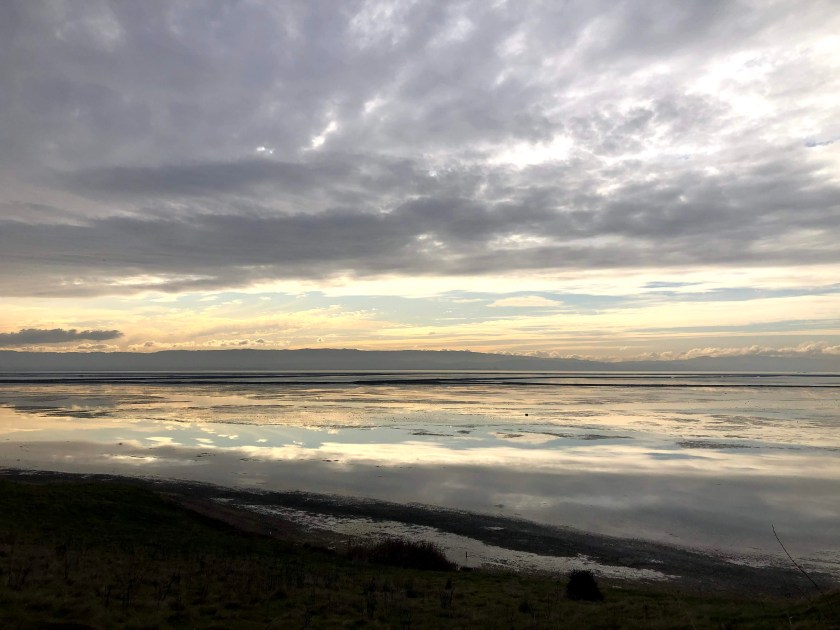
The air is nippier, the nights longer. It is also the time for crunch parties for in the area I live the trees are resplendent with the colors of Autumn. The gingko trees are turning gold (post coming up soon). There is no greater joy than seeing life scurry about in these changed surroundings. The promise of rain is in the air. Misty mornings make for a magical start. Even the waxing and waning of the moon brings with it a new joy for the nights longer and the evenings bring with it a different texture of joy. Kawaakari is sooner (Kawaakari – a beautiful Japanese word denoting the rays of the setting sun on a flowing river)

img_4660

It is a time to send thanks for all the small and big things in life. A time in short for us to enjoy Hygge. A wonderful word the Danish have, denoting the warmth emanating from inside even as the winters outside grow colder.

Here is to a wonderful season of the upcoming holidays, of nurturing light in a dark world.

Tick-Tock Tick-Tock

“October 29th, 1969 is the day the internet was born did you know that?” said the husband. I have seen pups don that look when out and about in sunny meadows with a new bone to boot.

“Google icon huh?!”

I suppose life has taught him to take in his leaping enthusiasm with our barely noticeable uh-huh with equanimity. “Hey! Let’s try again. Today is the birthday of the internet!”

“No….just fun fact. Oct 29th, 1969 – The first-ever computer-to-computer link is established on ARPANET, the precursor to the Internet. And then in 1974, the first protocol for communicating over the Internet was conceptualized. T-C-P – tada! Finally, in November 1977, the internet was functional as the ARPANET for the Defense.

“It wasn’t until the late 1980’s and 1990’s even that the internet was functional the way we know it!”, he said awe dripping from him. “I suppose in a way we were the perfect generation to see the wave take off.”

“So you guys are as old as the internet?! Oh my gosh – that is so old!” quipped the little fellow, mentally slotting us with the dinosaurs. “How did you guys live without the internet? ” , said he puzzled. He has taken to asking Google Home all sorts of things during the day:

“Okay Google – what is the atomic number of Boron?”
“Okay Google -what is the time right now?”
“Okay Google – tell me a Halloween joke.”

“Well – we lived quite well I suppose.” said I, throwing in a bit of philosophy about the simple life needing few things other than sustenance for the body and the mind. “We did not need the internet to entertain ourselves. We played outside, made forts out of mud, ran around, and had fun all the same. No battles on that game of yours – Clash Royale is it?!  We battled it out with sticks and stones.” I said, and the more I talked about our lives pre-internet, the more I realized that humanity had truly passed a technological milestone. It was like the power of electricity – it changed our lives forever, and though life is possible without electricity, it has become so much harder to sustain without it. Looking at the children born after the age of the internet, I realized that connectivity is much the same for these children.


tangled_web

“You want to know what I did with the Internet today?” asked the teenage daughter.

“I’ll show you!” she said in her effusive tones. There was then a rather jerky video of her popping into her mobile phone’s camera from various angles – one upside down and by the sounds of it rather clumsily, for we heard a dull thud followed by an “oww”.

“Not my best video – but how about this one? ” She then went on to show us another jumpy jerky video with some sort of a meme thrown in for good measure. I groaned.

“What is this?! Does anyone even see stuff like this? Tick tock is it?” I looked appallingly at her, and said, “Oh goodness child! You don’t tell me you actually posted this!”

I feel it is worth noting here that the App is called TikTok, not Tick-Tock as I thought up until a minute ago when I went looking for the wikipedia entry – sigh! I am as old as the Internet I suppose!

“For your information Amma, tons of people see this stuff. It is original see? This is the one that is going viral now. Already 30,000 likes and 100,000 views.”, she said, proud of herself.

My jaws dropped. “For this?!”

“Supportive. Mother. Supportive – remember?”

“But I’ve seen plenty of videos – even your own that are much better than this – even the one you showed us before where you banged yourself on the floor by the sound of that dull thud had a comical quality to it. ” I said, and she laughed hard, agreeing wholeheartedly.

“Fame doesn’t need merit Mother.”

“Fame is a fickle friend Harry!” said I in a brilliant imitation of Professor Lockhardt from Harry Potter and the Chamber of Secrets.

“Fame is as fame does!” said she, and we all laughed.

“Just goes to prove that all our inventions and resources take on a life of their own, and that is what will keep us busy as a race I suppose.” I said.

“All the brilliant protocols developed and conceptualized for dumb Tick-Tocks like this to go viral. What is the world coming to?” said the husband.

“What a tangled web we weave when we choose to connect?” I said paraphrasing not Shakespeare as it turns out, but William Scott in the poem Marmion, and looking around proudly for acknowledgement. Completely lost on the group of course. I sighed and continued – there are times when you explain your jokes and times you don’t. Not when something viral is competing for attention.

“Poor appa! Let’s throw him a bone and listen to him about the philosophy of the internet dears. ” said I, and we listened to him as he explained – his own fascination overtaking him, about how the internet developed and (d)evolved into what it is today.

Here is an interesting video with all the leading websites over time.

More videos here : Data is Beautiful

How we will continue to evolve is anybody’s guess, which leads me to a wonderful essay I read by Ursula Le Guin on the different types of fantasy. (coming up next)

Running like Elephants

“Guys! Let’s hurry up a little. I like how we are dawdling, but the school bell waits for no ships to sail across the seas! ” I said. There had been a mild spattering of rain across the dry summer season. A few snails had popped out to enjoy the moist, and the son and his friends were looking at them as they chatted and made their way to school. Rain drops on the late summer roses and oleander flowers made the scene a rather endearing one.

img_3991-effects

The response from the children was predictable – they ran, and I ran shouting like a charioteer pulling the reins on the excited steeds, “Slow down! No running here – oncoming traffic!”
“But you asked us to hurry up!”
“Yes – run like Elephants!” I said.

I had told the children earlier about the Elephant’s gait, and they exchanged glances and started laughing. The snail they were studying looked startled and showed a leap of speed as it made its way back to the comfort of the garden bed.

Is this walking? *giggle*
Is this running? *giggle giggle*
Is this fast walking? * giggle giggle giputly duggle*
Is this slow running? *giggle puddle chuckle duffle*

I smiled slowly. “Pretend you are Elephants teaching Snails to run.”

elephant_snail

I suppose that was a wrong metaphor altogether. By the time we arrived in the school, not only were we out of breath with the laughing, but we were also fashionably disconcerted. The legs seem to not remember how to walk straight or run properly, and were caught in this limbo of the Elephant’s Gait.

Later that week, I was sitting in the garden and watching the world go about its true business of living. I watched a hummingbird’s fast-paced wing movements up in the trees. A few butterflies were flitting hither and tither. A skein of geese were flying overhead in that beautiful v-shaped formation. Closer to the ground, a few snails were marking their slow way across the courtyard.

This combination of sitting in a garden, and watching life flit by had me take a hundred pictures with my phone. Pictures that may or may not be seen and appreciated again. I could capture the slow motion video of the humming bird whizzing up above or the butterflies in my midst. I could use time-lapse videos to capture the slow moving snails and a dozen pictures to capture the beautiful movement of the caterpillars.

As I sat there musing on the ease with which we capture movement these days, I could not help comparing and contrasting humanity’s struggle to capture that. I remember yawning in the Art galleries after seeing the n-th painting of a horse or the x-th statue of a horse drawn chariot.

But as I sat there that afternoon, I wondered whether I had appreciated them enough. After all, at the time of their making, studying movement was not all easy. One had to have an almost eidetic memory to understand the muscles and the way they moved.

Leonardo Da Vinci’s work is appreciated because of the lengths he went to study the anatomy of the creatures in his works. 300 years ago, movement must have been particularly hard to study.

In Oliver Sacks’ essay on Elephant Gaits in the book, Everything in its Place, he writes about the problem of studying movement.

everything_place

More than a century ago, Etienne-Jules Marey had made a pioneering investigation of elephant gaits. Of course, he did not use video analysis then, but still photography. I quote: “Marey’s lifelong fascination with movement started with the internal movements and processes of the body. He had been a pioneer here, inventing pulse meters, blood pressure graphings and heart tracings – ingenious precursors to the mechanical instruments used in Medicine even today.

Later, he moved onto the animal movements and analysis.
For animal analysis he used pressure gauges, rubber tubes, and graphic recordings to measure the movements and positions of limbs. From these recordings, he rotated in a zoetrope, reconstructing in slow motion the movements of the horse.

Muybridge, a contemporary of Marey, however, a peripatetic artist as Sacks describes him used 24 cameras along a track where the shutter would be tripped by the horses themselves as they galloped past to capture the movements of the horse as they raced.

When a similar technique was used to analyze the fast movement of elephants, it was found that they neither walked nor ran, but rather a combination known as fast walking.

I remember a long ago conversation with a friend who was training for a marathon on the more recent study of leopards running, and how he had changed his running technique to take a few tips from the world’s fastest runner.

As we watch the world around us, I wish different creatures could teach us some of their marvelous techniques. The dragonfly and the humming bird for flight; mallards and coots for water locomotion. Doesn’t Biomimicry as a field of study sound more fascinating than ever before? I positively yearn to be Dr John Dolittle at times!

Books/Articles to be read/referenced in this post:

Leonardo Da Vinci’s Horse

The husband was wearing a red t-shirt that had Leonardo Da Vinci’s drawing on it, that said, Simplicity is the ultimate Sophistication.

He was particularly fond of the t-shirt, especially as he was reading the biography of the great man.

img_4057

“Be like Leonardo Da Vinci guys. Be simple and eh… persistent.”, I said.

“Oh! I don’t know about that! Did you know about Leonardo Da Vinci’s horse? “, said the husband. He was reading the biography of Leonardo Da Vinci by Walter Isaacson, which is to say we almost read it. The book is a lengthy one, and as he made his way through it, he shared tidbits of things that fascinated him.

Time has probably been kind to the memory of Leonardo Da Vinci. Most of us only seem to be remember his genius in art, his legendary stature as a polymath, he said. The husband chuckled as he read and told us about Walter Isaacson’s portrayal of him – a tempestuous man who often did not complete the commissions given to him. Leonardo Da Vinci’s horse is an excellent example.

He then went on to relate the tale to much mirth and chuckling from the children. Apparently, what was commissioned to him was to build an epic statue of the Duke’s son riding a horse. He then went off to live on a farm, to study horses. The farm life yielded a treatise – an unpublished book, on different kinds of horses, equine surgeries to understand horse anatomy etc. He had originally planned to create a statue of a rearing horse.

This is an image that is much popular in the art forms at Italy, I remembered. The raw power of a horse rearing up on its hind legs is both attractive and magnetic. I am not sure how riders feel when they are about to be bucked off, but it makes for good Art. The prince would have to look brave while clinging onto dear life.

Study_for_the_Sforza_Monument
Abandoned Design. Image Courtesy: Public Domain, https://commons.wikimedia.org/w/index.php?curid=59580

Anyway, after a few years studying horses, their physiology, their movements etc, he started developing models for his statue. Clay, lead and bronze made its way from the armies to Da Vinci for his great statue. Then, he figured that the greatest statue of the magnitude he had in mind would not be supported by the hind legs structurally, and he went on to make it a standing horse. The prince riding the horse resplendently was forgotten!

These things took time, but it did not seem to perturb him. His sponsors may have been antsy, the bronze supplies may have been running low, the armies getting fidgety with not having enough new armor, but that was their problem, seemed to be his opinion.

In time, a large clay model of a beautiful horse may its way for the Duke’s inspection. The model won Da Vinci much critical acclaim. It truly was beautiful. If the Duke was slightly upset about not seeing his son on the horse, he did not show it. The royalty raise their children well.

Soon, war broke out, and no longer could his rich patron commission bronze and lead to be diverted to the most magnificent horse statue of all time. The clay model was put up in Milan, and was used as target practice by the young lads joining the army.

“But isn’t there a big horse in Milan or Florence? Da Vinci’s horse? I remember seeing a picture somewhere.” said I.

“Yes, but that was not done by him. Years later, somebody else finished it. “, said the husband.

By now, we were all laughing.

“What is remarkable is his insatiable curiosity and creativity however, and though he went off down rabbit holes, it was from a deep motivation to understand the world around him “, said the husband.

Read also : Gates Notes on Leonardo Da Vinci

“These days it is so easy to take a picture of a horse, model it, and run a simulation for structural evaluations. We sometimes forget how hard studying movement must have been!” I said, remembering the essay by Oliver Sacks on the Elephant’s Gait, in the book, Everything in its Place.

everything_place

He writes about how more than a century ago, Etienne-Jules Marey & Eadward Muybridge pioneered the study of animals running using 24 cameras along a track where the shutter would be tripped by the horses themselves as they galloped past to capture the movements of the horse as they raced.

Persistence comes in various forms, we all agreed. Muybridge and Marey were examples in a long list of people for whom a problem was intriguing enough to delve deeper and deeper into things that may or may not yield results.

But we never know the breakthroughs possible, and how things will change. That is why I am vary of futurists. A few centuries ago, to study the muscles straining for a horse running, one had to have an almost eidetic memory, along with a decent understanding of anatomy.

Today, photography has come so far as to allow us to snap a thousand pictures, take slow motion videos, and analyze everything from a butterfly flutter to the swift flying of hummingbirds. People are still extraordinarily creative with photography, and as long as we retain curiosity and creativity, I suppose we shall thrive.


The Art of Breathing

A colleague caught me mid breath one day. It was one of those days that butterflies would have looked on me with mixed emotions.

On the one hand with pride: When did this caterpillar learn to flit like this?

On the other hand with amused tolerance: The half-wit seems to be forgetting the sweet joy of collecting nectar amidst pretty bright flowers, with all the fast paced flitting. Forfeiting the sweet thing about flitting – tut tut!  Flutter tutter utter nutter! (I am not high up on the poems caterpillars learn to sing about when still creepy crawlies; and the butterfly metaphor only goes so far!)

Anyway, it was one of the many days in which I flitted about the old work spot tasking, multi-tasking, sub-tasking, reminding others about their tasking, setting reminders for my own tasks and so on. Thoroughly immersed in my second self that Mary Oliver so succinctly calls the Social Self…yes, it was one of those days.

Mary Oliver’s, Upstream, is a book of many marvelous essays.  The essay, Of Power and Time, talks about the three selves in many of us:

•The Child Self

•The Social Self &

•The Eternal Self.


upstream

Though in the essay, Mary Oliver, refers to the Eternal Self as the artistic self, I like to interpret it as the Creative self.

• The Child Self is in us always, it never really leaves us.

• The second self is the social self. This is the do-er, the list maker, the planner, the executer.

• Then, there is the third self: the creative self, the dreamer, the wanderer.

T’was during one of these trying days that I remembered the deep breath technique my Yoga teachers had tried to teach me about. Take deep breaths, and concentrate on it filling your stomach, feel it coming in and out of your nostrils and so on. So, I started my deep breaths as I was walking from one meeting to another. Deep breath, exhale, deep breath, exhale and so on. I had thought no one watched, but one colleague caught me, and grinned. “That should be your GIF you know?” he said.

I nodded sheepishly, and went back to my brand of breath-less flitting within minutes.

Later that week-end I ran into this beautiful children’s book in the library. A book that was just waiting to be written. A beautiful capture of all the different types of breath, Alphabreaths 

Written by : Christopher Willard (a clinical psychologist) & Rechtschaffen MA, Daniel (a counselor)

Illustrated by:  Clifton-Brown


The book is a lovely read urging us to Breathe like a Dolphin taking a dive, or our favorite one, The Ninja Breath – silently and slowly. The illustrations too make for a marvelously relaxing read. Please check out their Youtube clip : here


Mindful breathing and Yoga are excellent concepts to teach the children, and I am always in awe of those who can take complex concepts and make them palatable for the consumption of young and old alike.

If you happen to come home and find the son and I swimming like dolphins or getting ready for a Star Trek mission on the floor while Yoga-ing along with the Cosmic Kids Yoga series by Jaime Amor , do not be alarmed. Her yoga videos are appealing and fun. If, along the way, we do something to calm ourselves down – then great, else, we have had a great time.

There are so many aspects to the Philosophy of Being (I am amused it has such a strictly medical sounding name: Ontology)

Ontology is the branch of metaphysics dealing with the nature of being, and reading the Wikipedia page itself boggles my simple mind (A post on the Study of Philosophy is sitting up on its hind legs and begging to be written). Maybe, what is required is a Ninja Training on Ontology. Excerpt from the wiki page:

Such an understanding of ontological categories, however, is merely taxonomic, classificatory. Aristotle’s categories are the ways in which a being may be addressed simply as a being, such as:[9]

  • what it is (its ‘whatness’, quiddity, haecceity or essence)
  • how it is (its ‘howness’ or qualitativeness)
  • how much it is (quantitativeness)
  • where it is (its relatedness to other beings)

*** Taking a Y for Yawning Breath before a Z for zzzz breath about now ****

img_4049

Keeping ontological explanations aside, if The Nature of Being comes down to simple techniques of breath, fluidity and movement, it makes the simplicity behind it all brilliant.

It was one of those ‘Simple is brilliant’ types of  quotes that I went looking for. I know many brilliant blokes and blokees have said marvelous things about simplicity -I know old Leonardo Da Vinci said something about it, so did old man, Einstein. In any case, looking for one of those made me fumble on this one by Norwegian explorer, Thor Heyerdahl

From Wikipedia: Thor Heyerdahl became notable for his Kon-Tiki expedition in 1947, in which he sailed 8,000 km (5,000 mi) across the Pacific Ocean in a hand-built raft from South America to the Tuamotu Islands. The expedition was designed to demonstrate that ancient people could have made long sea voyages, creating contacts between separate cultures.

thorheyerdahl1-2x


Continue reading “The Art of Breathing”

The Animals Within


The evening was a beautiful one. The children played looking like little angels in the glowing sun, and I threw affectionate glances at the noise in the playground.

I was mooning about the streets admiring the shabby looks of late summer. The same hills that looked brown and uninviting in the distance during the day, now looked ravishing bathed in sunset’s golden glow. Little specks of clouds in the sky were blushing to different degrees. The purple, red, orange and pinks poufs flicked about looking snippy and sharp. The oleander trees and the crepe hyacinths lining the streets looked prettier than ever before.

The approaching week-end seemed inviting, promising in its possibilities: my outlook was cheerful; my spirits soaring with the multi-colored clouds up there; and no must-dos competed for attention in the old brain.

T’was after a little growl came from within that I stopped to wonder what was amiss. I had completely missed the making-dinner task at hand, and the growl was reminding me, that I had not just 1 growl from my stomach to contend with, but the whole family’s as well. The husband trundled in, the children trooped in to say hi, and I whisked them all off for a dinner outside.

‘Forgot to cook?!’ cackled the teenaged daughter, looking indulgent and proud that I was not being the conscientious cook, and filling her plate with healthy muck. “Didn’t the sunset fill you up?”

“It filled me spiritually my dear. I could not be fuller!”, said I patting my heart, “but the stomach still asks for its due, Alas! “ I said remembering a poem my mother-in-law often references about what an irascible taskmaster the stomach is. I always smile at the wisdom of the poem. Loosely translated, it means
“Oh stomach!
What an irascible creature you are!
I ask you to eat a lot at one meal, and you rebel, and push back saying you are full.
So, then I ask you to skip a meal, but that too wouldn’t do for you.
What a slave to your demands have I become?
It is very difficult to live with you!”

So, off we went to a Chinese restaurant in various states of hunger.

This is one of those places that believes in keeping you engaged while they prepare the food for you. In front of each was a sheet of paper containing the Chinese Zodiac Animals and their characteristics. We started off in typical fashion:
You are a monkey!
Really? A snake – ha!
How could you be a tiger?
I don’t want to be a pig!

For those who moon about on Friday evenings without considering the demands of the stomach, here is a tip: Don’t! Friday evenings beckon all mooners-about, and restaurants find themselves busier than usual that day. As we sat around with hunger gnawing at the insides, the sheet of paper telling us about our characters based on the year we were born in looked inviting. Soon, we started tabulating and cross-referencing the listed characteristics against the personalities in the family.

It is an interesting exercise, and really makes everyone stop and pause and think about oneself. There are characteristics that the whole family gave a miss to. There were some that we hoped we did not have, but found we did. There were others we hoped to have in a higher degree. The tabulations were derailed every now and then with questions such as “Why are hippos not there in the Chinese calendar?”, After going into habitats and biomes with glaring holes of knowledge, seeing as none of us had ever to China, we got the animals back on track.

The resulting diagnoses has us giggling uncontrollably:
“You are most like a rabbit, but also have the tongue of a dragon, and the heart of a pig!”
“Snake hissing and pouting maybe, while galloping like a horse, and snoring like an ox.”

It turned out that we churned out more fantastical creatures in that half hour than a whole mythological genre could in a book. “Imagine if these creatures were sitting in us, wouldn’t that be something?” I said.

inyo_20q

Humanity’s capacity to imagine strange and wonderful creatures has always been remarkable, though there are precious few creatures left for us to imagine. No one is bringing another Clara to our midst any time soon.

Clara the rhinoceros, was brought to Europe on a tour in the 18th century. No one had yet seen any of the creatures of the East, and had not even heard of such an animal. Clara became an instant darling of the masses – her gentle demeanor, her love of oranges and her sheer size endeared her to all those who had the privilege of seeing her. I can well imagine the wonder and curiosity such a creature brought to human society, and the number of children in whom the wonders of the natural world was rekindled. How many Gerald Durrells, who imagined the beautiful world of their family and other animals?

500px-Clara_1749_Oudry.jpg
Image title
Rhinoceros Clara
Author
Jean-Baptiste Oudry
Copyright holder
PD

Today, we silently add more and more creatures to the endangered species list, watch in alarm as forest cover disappears and wait for magic to happen in our lives. Anthropologically, will we hear the news of a Middle Earth tucked away somewhere with hundreds of majestic creatures again?

Maybe one day, our space explorations will yield something. Till that day, we shall have to content ourselves with imagining the various creatures and creature traits within us.

Books:

Clara the Hippopotamus – By Emily Arnold McCully

My Family & Other Animals – By Gerald Durrell

Galactic Plumes

I had been mooning about the fields outside in the village where we stayed near Topslip National Forest. People told me to be careful about venturing out far – “There are Elephants nearby, and they love the fields. “, they said emphasizing the word, Elephants. My eyes lit up. The villagers exchanged looks that doubted my sanity and hurried on, “It isn’t Good seeing Elephants in the fields – you never know what they will do. If you hear fire crackers in the distance, come straight back here!” said one toothless fairy godmother, and her husband (I think) nodded in agreement vigorously.

img_3588

Off we went then, sauntering through the fields, listening to the loud orchestra of birds, crickets and frogs, accompanying the beautiful colors that nature was setting forth for us to see. It is magical indeed to see a half dozen peacocks take flight into the sunset. By the time, we fumbled for the phones they were gone, and I was glad I did not waste those precious moments of seeing them start off awkwardly and then gain elegance in flight by trying to get a picture. I have it in my mind’s eye, along with the indescribable moment of feeling your heart soar with the peacocks’ trajectory.

Screen Shot 2019-08-16 at 9.52.43 AM.png

Peacocks have long feathers, and while they know how to fan them out and preen in front of peahens looking splendid in the process; when they fly, it looks like it can feel like long hair feels to women.

Gather your tresses,
Of plume and multi-colored beauty
Tuck them in,
Letting it stream behind you elegantly while
Trying not to let it look messy
And all the rest of that.

It was then in the distance that we heard firecrackers go off in the distance. I don’t know about you, but this is the sort of thing that holds mystique. It is what inspired my Mother’s Day in the Jungle tale. Trumpy elephant going off to Farmer Hasalot’s farm – there is such an element of thrill and romantic mysticism to this kind of thing, though I think the elephants and farmers in question disagree.

Screen Shot 2019-08-23 at 10.06.10 AM

I spent dusk in a similar fashion enjoying the fading sunlight, the rising moon, the fields, the clouds, the village, the children, the adults and creatures of beautiful Earth. Every now and then, crackers went off in the distance – elephants in the distance we whispered. Though, why we were whispering we had no idea. Dusk seems to call for these things. A laid back village in South India tucked away in the recesses of the Western Ghats with all the fascination of the bucolic. An occasional rumble of a vehicle is all there was to remind us of civilization, corporates, power tussles, wars, micro/ macro economics, nuclear heavy-lifts, and motives of profit.

Post dinner, I traipsed indoors, happy with life, still rattling on about the beautiful image of the peacocks taking flight together in the evening light. We stayed chatting happily into the night (Part 2)

It was well past midnight when the electricity went out, and the husband said, “Outside now! Completely dark – yes!”

Off we went, self carrying the son piggy-back to see the stars in all its glory outside. With the electricity gone, it was pitch black outside.
Oh!
My foot!
Not there.
Ouch!

We bumped into one another spectacularly and I tripped on a chair outside in the verandah, carrying the little fellow on my back. Both of us went crashing down, self trying to save the poor fellow from being dropped from my back. One splendid moment later, I truly saw what ‘seeing stars’ meant.

The pair of us dragged ourselves off our feet and took our eyes skyward. The light pollution we have unleashed on our planet means that there are very few places in the world that humanity can stand and gaze at the sheer immensity of the universe in which we live. On an average dark-ish day, we can see about 3000 stars, on a day like this surrounded by mountains, forests and fields for miles around us, we could see tens of thousands of them lighting up entire bands of the sky with their luminance. The stars and galaxies are always there, and maybe because of this very permanence, it is seldom appreciated.

Standing there in the surrounding darkness with people I love, I felt light-headed. There we were, standing on an Earth that was spinning incredibly fast in its journey around the sun; the sun was swirling around the Milky Way galaxy; and the galaxy itself was spinning and whirling away into vaster expanses. Carrying us all: our ethereal thoughts, wishes and desires; and our solid physical selves on a solid planet.

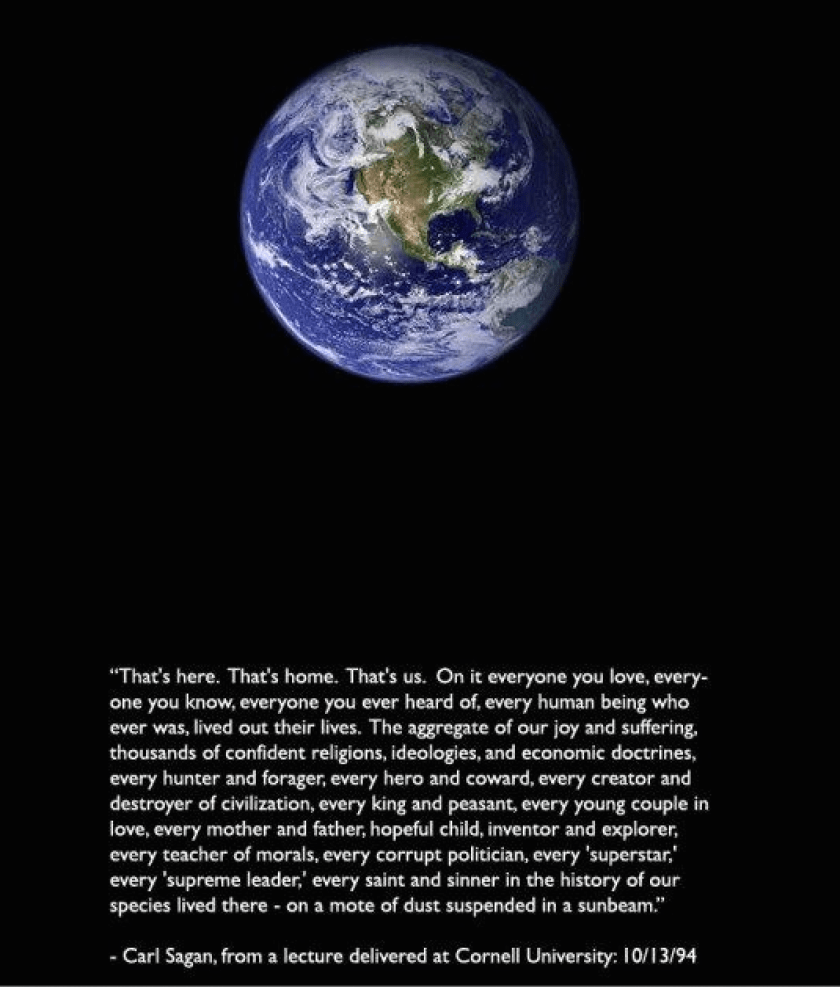
The galaxy tucking its star-studded plumes behind it gracefully, and taking flight with all its organic and inorganic components streaming gracefully along its path. Huge balls of gas and flames hurtling through space, and some spots in this beautiful expanse sanguine enough to cool down for a spot of life to flourish. #The Pale Blue Dot.

pale_blue_dot

The beautiful image of the peacocks taking flight earlier that evening came to me, and in that moment, the galaxies above looked like peacocks taking flight into horizons unknown.

Do the dreams of galaxies have limits? Do they have purposes?

Thinking back on that beautiful spin through the gathering darkness, I am reminded of this quote by Ursula K Le Guin:
“Things don’t have purposes, as if the universe were a machine, where every part has a useful function. What’s the function of a galaxy? I don’t know if our life has a purpose and I don’t see that it matters. What does matter is that we’re a part. Like a thread in a cloth or a grass-blade in a field. It is and we are. What we do is like wind blowing on the grass.”

For the Love of Libraries

“We are going to give you something special!” coo-ed the nieces as soon as I landed in India.
“What is it? I don’t really want anything, just time to spend with you lovely girls.” said I, ever the Aunt imparting Valuable Life Lessons.
They smiled it away without batting an eyelid. Life Lessons – pish tosh bigosh! If, as a child, you don’t know how to ignore that stuff, you’ve learnt nothing in life was the philosophical angle the children seemed to take and I appreciated them for it.
“Yes, yes we know. But you will really like what we have planned for you!” they said in unison. “It is an Experience!”

The children obviously knew where to get me, loop me with my own tune – Experiences are worth more than Possessions.

I grinned expecting a trip to the ice-cream store across the street. That was an experience for sure. There were flavors there that made me swoon. Could I have the coconut -lemon and the orange-watermelon and mango and jackfruit flavored ones?

Come evening, we all headed out. The nieces ,with touching sincerity, told me that they would forfeit their quota in my honor, given how much I would like where we are going. All highly puzzling so far.

When we finally made our way through the Gulmohar lined streets, the skies looking beautiful and benign over the towering apartment buildings, I stopped and watched the excitement build in their faces, as we turned the corner. Beaming at me in a small two-roomed store front tucked away near eateries and grocery stores, was a tiny library. I gave them a slow, wide smile. This was amazing. Off we went inside. I was grateful that the children had access to this small lending library.  (Yes – we stopped for ice-cream afterwards.)

bookworm_readingcorner.png

The lack of easy access to public libraries in India has always been a sore point with me. As long as we are in school and college, we have access to libraries in some form or another – the institutions themselves have them. Even if the Engineering college library lacked sorely in the Literature section, one could read IEEE journals to pass the time. I am immensely grateful to the librarians in my schooldays. During our school holidays, the librarian in my mother’s school, Mr Gandhi, would happily supply me with books enough to whet my appetite (Life’s blessings come in many forms – my mother’s school vacations did not coincide with ours, so their library was still open). Years later, when I came home with a broken leg to recuperate, Mr Gandhi, sent books that he thought I would like. That kind of care from anybody is touching. It is no wonder that one of my earliest career aspirations was to be a teacher and a librarian.

When first I moved to the big city, I felt unmoored without a library to frequent. I dedicated a Saturday morning every month for the trip across the city to the used books market, and pile up on books to read, making my way back with a teetering pile of books (I had no idea about the concept of copyright, how payments were made to authors etc). Most were in bad condition, not great authors or titles, but I took what I could. It was my only indulgence.

I read somewhere that people don’t really feel the need for Art if it was never a part of their life. But once exposed to the beauty and depth of any Art, if taken away, the void is there. An emptiness that you didn’t know existed. That resonated with me, for I feel the same way about libraries and access to good books.

I mourned the day the physical books stores went out of business in the United States. In every mall, every shopping street, I kept my eyes open for a place to dip into. There were none.

We bought clothing and fabrics simply because we were there and the clothes lured me through the shop windows.
We drank coffee because the coffee store was there.
We ate ice-cream b – well you get the gist.
But we didn’t read books with differing viewpoints and thoughts that could rejuvenate the brain because they weren’t there.

I chatted with the nieces once we were back here, and I asked them what they had checked out that week from their little sweet library. “Oh…they closed it now in the afternoons because they are using the space for English and Math tuitions.” they said, and I couldn’t help whimpering.

When we place so much importance on clothing that we change out everyday, shouldn’t we place more on thoughts that flit in and out even more constantly?

A quote from one of my favorite books, Fahrenheit 451, By Ray Bradbury:
There are worse crimes than burning books. One of them is not reading them.

I wish we all get to the chance to experience Ray’s Bradbury’s nugget of wisdom:

“You must write every single day of your life… You must lurk in libraries and climb the stacks like ladders to sniff books like perfumes and wear books like hats upon your crazy heads… may you be in love every day for the next 20,000 days. And out of that love, remake a world.”
Ray Bradbury

Also read :

Brain Pickings: Oliver Sacks on Libraries
Brain Pickings: How Libraries Save Lives

Love in a …

One of the best things in the world is to wash up at the sister’s house after a long and tiring journey across the fertile and populous plains of the Indian subcontinent. Her welcoming abode is en-route to our own home in the United States, and I was glad to get a spot of space to recover before heading on towards our own home.

While the sister herself has expressed a wish that we stir ourselves to sight-see the beautiful city she lives in, her marvelous husband takes our side, and says that during the best vacations, anything we do at all is a bonus and is quite happy to see us lounge around on the sofa reading and chatting.

Knowing this unfortunate tendency of ours to behave like sofa cushions when we visit, she nevertheless does her bit and lays out books to read, and in periodic intervals supplies us with food and drink. One of her favorite authors is Jean Sasson, who writes about the Middle Eastern life, having worked there as a nurse for over two decades. Jean Sasson’s books deal with real-life stories based on the lives of people who have reached out to her to have their story told. Their biographies are sketched out giving us a sense of life in the regions she deals with.

Would we otherwise hear of the life of a Saud princess, or the son and wife of Osama Bin Laden?

The book this time dealt with the harsh conditions existing in the regime of Iraqi leader, Saddam Hussein; and how a young Arab-Kurdish bride, Joanna, summoned the courage to flee the persecution of Kurds in Iraq. Written in 1st person, it is as though Joanna wrote it herself. It was gaunt reading.

Like billions of people, I watch with alarm the rise of dictatorship world-over including in previously democratic strong holds such as the United States. My nerves are on edge reading about the atrocities these crazed despicable dictators are capable of doing. Midway through the book, I set it down on the sofa and declared that I cannot take it anymore. “This is so sad, and brutal, and my imagination is not helping! ” I said somewhat ruefully.

The sister said in a brisk return to her elder sister mode, “I know about you – read the whole book and then talk. If you leave it midway you will feel terrible. This book has a happy ending. In fact, you will be pleased to know that I have met Joanna in person. She is well and happy, and is an inspiration, so read!”

I meekly plodded on.

I had no idea about Kurds and their persecution by multiple regimes. The Western press had caught on about the Sunni Vs Shia conflicts, but to read about the Kurds also being persecuted by chemical weapons, torture and execution on such a massive scale is heart-rending. The peshmerga life is a hard one, and it was written well.

There are millions of people with similar fates similar the world over. Syria, China, Somalia, Nigeria, Venezuela, Mexico, Afghanistan, Burma, and many more.

The behaviors behind these are as old as humanity itself. In fact, older, as I was reminded of Jane Goodall’s interview, that somewhere along the evolutionary chain we developed the genes to be territorial and to persecute one another. (Apes have been observed having territorial wars, and trying to follow imposed social orders.)

How in spite of all this, human beings as a species have the rare combination of love, compassion, and sacrifice on the one hand balancing out the cruelty, lust, and every other form of despicable behavior on the other, is a miracle in itself.

“Only when our clever brain and our human heart work together in harmony can we achieve our true potential.”  – Jane Goodall