The Fine Art of Baloney Detection

I feel like a separate dedicated post to Baloney Detection Kits are useful right about now. It has been a disturbing 6 – 7 years – ever since the presidential election started heating up for the 2016 cycle, we have been living in a state of dubiety (The state or quality of being doubtful; uncertainty).

We have grown used to being lied to, we are more divided than ever before, and the versions of the truth fluctuate wildly depending on which network or newspaper reports it, it is increasingly hard to determine what the truth is. 

Just a simple search for ‘Media Bias Charts 2020’ is enough to drive home the point:

media bias chart 2020

These problems have always been there. 2000 years ago, the world’s greatest democracy of the times, modern day Italy, then the Roman Empire, witnessed turmoil and breaking of the largest democracy. But with accelerated advances in technology linking us faster than ever to ‘breaking news’ and social media amplifiers for everyone, the waters have become noisier and murkier.

The book, Science as a Candle in the Dark by Carl Sagan, has an essay on the Fine Art of Baloney Detection.

Read also: Candles in the Dark

The essay starts off empathising with the human condition. Why are we, as humans, willing to believe in things whether or not ‘there is any sober evidence for it.’? 

It isn’t unheard of to believe in things supernatural, or falling for false advertising campaigns with exaggerated claims, or believing models wearing Doctor’s coats, or blindly believing religious zealots who spout hypotheses with confidence. As human beings we have been doing this for centuries, and in most probability will continue to fall for some sort of questionable practices. 

As long as there are those who are willing to take advantage of the vulnerable with little or no consequence, these will persist.

For those who wish to read the whole essay, it is here. Or it can be found in the book, Science as a Candle in the Dark – By Carl Sagan

While we enjoy the occasional myth or fib, it is important to know the difference. For an adult to attack Harry Potter for instilling witchcraft is worrisome for this very reason. As part of growing up, we want children to outgrow the myth of Santa Claus. Knowing to distinguish fantasies from reality is a necessary tool for survival. 

Which brings us to why we must have a version of Carl Sagan’s Baloney Detection Kit for us to use. 

The complete essay can be found here:

It has been a saddening realization to find that Science has not been embraced when it is needed the most. I was reading a book on the Greatest inventions of mankind in the past 2000 years. It is a book collating the answers from philosophers, researchers, and professors from various fields. One of the answers given was the framework of Science. I could not agree more. The ability to think, weigh, design experiments with control and test groups, and sift empirical evidence has resulted in the very least at :

  • Saving millions of lives, that in previous generations, succumbed to disease
  • Figuring out how to feed a planet that grew from 1 billion to over 7 billion within a generation

For those who would prefer a straight jump to the Baloney Detection Kit, here it is:

  • Wherever possible there must be independent confirmation of the “facts.
  • Encourage substantive debate on the evidence by knowledgeable proponents of all points of view.
  • Arguments from authority carry little weight—“authorities” have made mistakes in the past. They will do so again in the future. Perhaps a better way to say it is that in science there are no authorities; at most, there are experts.
  • Spin more than one hypothesis. If there’s something to be explained, think of all the different ways in which it could be explained. Then think of tests by which you might systematically disprove each of the alternatives. What survives, the hypothesis that resists disproof in this Darwinian selection among “multiple working hypotheses,” has a much better chance of being the right answer than if you had simply run with the first idea that caught your fancy.*
  • Try not to get overly attached to a hypothesis just because it’s yours. It’s only a way station in the pursuit of knowledge. Ask yourself why you like the idea. Compare it fairly with the alternatives. See if you can find reasons for rejecting it. If you don’t, others will.
  • Quantify. If whatever it is you’re explaining has some measure, some numerical quantity attached to it, you’ll be much better able to discriminate among competing hypotheses. What is vague and qualitative is open to many explanations. Of course there are truths to be sought in the many qualitative issues we are obliged to confront, but finding them is more challenging.
  • If there’s a chain of argument, every link in the chain must work (including the premise)—not just most of them.
  • Occam’s Razor. This convenient rule-of-thumb urges us when faced with two hypotheses that explain the data equally well to choose the simpler.
  • Always ask whether the hypothesis can be, at least in principle, falsified. Propositions that are untestable, unfalsifiable, are not worth much. Consider the grand idea that our Universe and everything in it is just an elementary particle—an electron, say—in a much bigger Cosmos. But if we can never acquire information from outside our Universe, is not the idea incapable of disproof? You must be able to check assertions out. Inveterate skeptics must be given the chance to follow your reasoning, to duplicate your experiments and see if they get the same result.

Books for the King

The son’s brisk questions were being met with sluggish answers and were wrong to boot. He looked at me with concern and said, “Ma! Are you okay?” 

“I feel like I need to read 3 fiction books back-to-back to start feeling myself again!” I moaned. The cuppa coffee wasn’t doing its job. I knew I had a long day of meetings, planning, production issues, and more news trickles along the way before that happy dream could be realized. 

What happened next should not have surprised me in the least, for that child has a knack for soothing frayed souls. He ran away at top speed and I went about lapping my coffee like a cat licking its milk out of the saucer on a cloudy morning.

After a few moments he tumbled into the room carrying three Dr Seuss books. “Don’t worry, I can read it to you for 2 minutes.” he said and proceeded to read from Yertle The Turtle and Other Stories.

He could not have selected a more apt book for the times  if he had thought about current world trends towards dictatorship and decline of large democracies, cross-referenced  it with philosophies on power and ambition etc. 

Yertle the Turtle was the king of the Sala-ma-Sond pond, but as often happens with power, he wanted more, and then some more. Maybe a really high throne would help him thought Yertle. So, he summoned some turtles on which he could perch himself . Yertle thought that the higher his throne, the greater he was. Everything in his eyesight could be his, couldn’t it?

Soon, a cow, a farmhouse and a blueberry bush wasn’t enough for the great Yertle the Turtle. More and more turtles scrambled, while Mack – the poor turtle at the bottom of the pile struggled. Mack’s complaints meant nothing. Yertle could see butterflies and birds, but what he really wanted was to get up there with the moon. 

In a fitting end to the story, the dictatorial Yertle meets his nemesis with Mack’s inadvertent burping. The pile of turtles totter and collapse sending Yertle crashing into the muddy swamps below. Yertle the Turtle learns his lesson. 

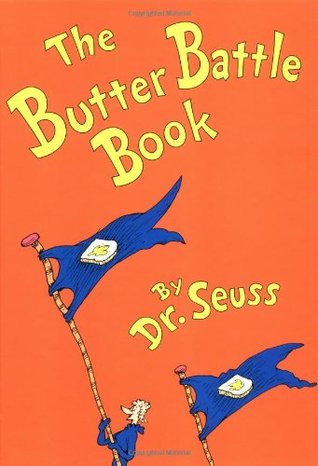
I know we ask of no formal training for politicians: there are no politician licenses, no courses one has to complete to take up public office, but I really think there should be a set of children’s books that they all have to read and re-read as refreshers every year in order to stay in office. We could call it the Butter Battle Course.

I’d definitely add these three titles to the course.

  • Yertle the Turtle and other stories – By Dr Seuss. (It even has a story about unbearable braggarts meeting their match in a humble worm who is trying to just till the soil underneath without the incessant brag-fests disrupting him)
  • Louis XIV – the King of Sheep – By Oliver Tallec ( A beautiful tale illustrating how Louis I the sheep became a king – the wind rolled a crown to him, and the same wind blew the crown away from his head)
  • The Fate of Fausto – By Oliver Jeffers ( This tale takes a megalomaniac’s obsession with ruling everything he sees including mountains, rivers, and sheep until he meets his match in the great ocean.

In Pursuit of the Truth

“Have you seen this video? “, said the husband for the n-th time. He definitely sounded like a child in Disneyland glimpsing Tinker Bell, and I looked up indulgently. His face was glowing as though he was discovering Calculus for the first time.

I could understand his enthusiasm – the 3Blue1Brown videos are well explained, beautifully animated and make you appreciate Calculus in a wholly new way. The journey as well as the philosophy behind it.

I have to confess that the 3Blue1Brown videos sparked my interest, and I peeked into the childhood brain enjoying Maths classes, as I picked up a book, called A Strange Wilderness – The Lives of the Great MathematiciansBy Amir D Aczel to read about the journey of Mathematics through the ages. How did we arrive at the basic tenets of the truth that held the universe together?

A Strange Wilderness: The Lives of the Great Mathematicians – By Amir D Aczel

The book starts with examining the Greeks and their approach to understanding the world over 2500 years ago. Starting with Thales of Miletus(624 BCE) , who was often called the first philosopher (He is known for the famous saying , “Know Thyself”), it examines Mathematics as a pursuit of the truth.

I was lured in, and though I did feel the writing could have been far more intriguing, it was a well-collated narrative of mathematicians and their lives through the ages.

The next great mathematician is the renowned Pythagoras of Samos (580-500 BCE) who continued the philosophy of:

Changing Mathematics from a computational discipline into a beautiful, abstract philosophy.

For those in Academia or are students still, the philosophical bent of the pursuit of truth is probably there. But for most others, in our day-to-day lives, Mathematics has taken on a more computational role than a philosophical one.

The arc of Calculus itself is an interesting story. How close we came as a species to discovering Calculus multiple times? Progress happens in fits and starts, and for every piece of the puzzle that we decipher, world events, or simply fate intervenes and sets us back a few steps. So many mathematicians came close to the concept of Calculus including the philosopher Zeno, in Zeno’s Paradox, over two millennia ago.

The History of Calculus

Finally, it wasn’t till the late 17th century when Leibnitz and Newton arrived at Calculus independently. Mired in controversy as it was as to who discovered it first, it is still a fascinating journey.

I remembered one cold Winter evening waiting for the fireworks at Disneyland and wondering whether the Imagineers at Disney had calculated Tinker Bell’s rope coverage using Calculus, to ensure that the area under the rope display was visible from most areas in the park. They must have done – this was Disney after all.

When we dedicate some of our Calculating Mind’s time to enable the Thinking Mind, the resulting moments are truly magical.

Photo by Mohan Reddy Atalu on Pexels.com

Taking the journey with Mathematicians through the ages was also strangely comforting. After all, in spite of wars, disease, revolutions and all the horrifying things in the world, the pursuit of truth did hold its slender string through time. Ravaged, and knotted up at times, maybe, but always resurfacing with the single minded purpose of the pursuit of the truth. The pursuit of the truth is one of our basic tenets, after all.

Bestiary Tales in Covid Times

“Summer will be done in just two weeks!” trilled the children. The son was excited, as expected, by the fact that it was time for the autumnal solstice. (Earth’s tilt, cosmos, time are all fair game for him)

I stopped bustling about and nodded. It was true! That’s two whole seasons of Covid living.

Summer has been a blur. Sometimes, it was a happy blur of forests, rivers, beaches, craters, lakes, browning meadows, bundles of hay, wildflowers, towering trees, stars at night, comets zipping in the Earth’s vicinity, angry and mellow sunsets, pelicans and 🎼 “wild geese that fly with the moon on their wings” 🎶, hummingbirds flittering in the pale light of the rising moon, asters and star lilies in the shade of their massive neighborly trees. All of this with the sweet companionship of the family, and close friends – zooming in at times.

Other times, it was exhausting – heat waves, massive wildfires, poor air quality indexes, Covid numbers continuing to rise and showing no signs of abetting, protest marches, racism, bomb blasts, all on top of a news cycle that seems to think it has to deliver the heaviest punch into every day. It is like watching the world’s worst wrestling match. 🤼‍♂️ Really, someone should coach the world that not everything needs to be shocking and bigger and worse than ever before. It might be okay to watch a match in which the players seldom land a punch and are merely playing the game warily sizing each other up once in a while. 

Yet, life must go on, and it often goes along much better when we stop and look for promising moments in the gloom. There are moments that stand out clearly in this pandemic, when I felt a wave of gratitude overwhelm me, and I am also grateful for the sheer timing of these moments.

The time I stood on a windy, lonely strip of beach wrapping a towel about me for warmth and watching the sandpipers fly against the wind without wavering one bit, while I had a tough time just standing erect was one such. It was but a fleeting instant in which the little nippy sandpipers taught me about keeping one’s spirits up when the world is attempting to veer us off course every which way.

Or the moment, when on a road trip to a solitary house by the Umpqua river, the road wove on, the heat rose in waves around us, and the shimmering waters of the Lake Shasta looked like a green beast taking it easy in the summer, and laying low for what lay ahead. A few weeks later, the Sierra Nevada mountains were to be threatened by wildfires on a magnitude that sent the state of California reeling. Looking at the dry lands about us for a couple of hours, I felt a moment of dread, when the road turned, and a beautiful gushing river accompanied the road, and there on a rock in the middle of the river was a great big bear, looking contented and trying to fish or just cool off. 

As we took our summer walks in the evenings, I stopped so many times to admire the geese splashing into the waters after their great squawking, while the pelicans achieved this feat with none of the noise, but all of the grace.

I remember the time we looked up on a stroll to come eye to eye with a great turkey vulture. The elementary school going son was with me, and he thrilled at it. “Amma – I know you take pictures of the flowers  everyday because they only last for sometime, but this…oh…this is so special. It is so .. umm.. “ He struggled for the right word, but I think I knew what he was going for. I felt it too. There was a majesty about the bird that was hard to describe. There was a divinity and a razor sharp quality to its gaze that falconers love. I have tried to experience this when I read the book H is for Hawk by Helen Macdonald. But all I needed was that encounter lasting all of two minutes. 

“The hawk was everything I wanted to be: solitary, self-possessed, free from grief, and numb to the hurts of human life.”

― Helen Macdonald, H Is for Hawk

Really! How much our fellow creatures have to teach us?! 

I think of what wild animals are in our imaginations. And how they are disappearing — not just from the wild, but from people’s everyday lives, replaced by images of themselves in print and on screen. The rarer they get, the fewer meanings animals can have. Eventually rarity is all they are made of.” H is for Hawk – Helen Macdonald

Just like that, Autumn comes in all its glory to teach us what it does best. Preparing for Winter.

A Reading Life

I sat around the house one week-end afternoon looking tired. It was a strange day in many ways. Forest fires were blazing forth razing acres of land in its wake. Nothing stood a chance, and the fire departments’ work was made all the more difficult with the Covid stipulations. How could people be evaluated if evacuation centers were this crowded? The air outside was stifling – smoke belching out by the fires a few miles away hung thick in the air, making an already hot day a sweltering one.

All the previous night, I had risen – once an hour to check if there was going to be another lightning storm. That first one that had sent 10,000 bolts of lightning and started over 350 forest fires that resulted in 60,000 acres of land being burnt was not predicted. The weather forecasts had predicted another one the previous night, and our local alerts had us all get an emergency evacuation bag ready. One bag – with some documents, a little cash, a change of clothes. When it comes down to that, is there anything else?

Luckily, the lightning strikes did not come that night. Somewhere around 6 a.m. I fell into an uneasy slumber knowing the husband and children will rise soon. Consequently, the next day, I felt tired: The oppressive heat, the lack of sleep, the worry about the fires, incessant news alerts, and I knew not what else was on my mind. 

Usually, nature is a pretty good soother, but nature seemed to be fed up with us! So, I sat myself in front of the bookshelf looking at the piles of books there, and tried to get a sense of calm from them. In a few minutes, I was sitting cross legged on the floor, looking through and reading books on yetis, baseball heroes, a book that just had the word – ‘Dude!’ on every page, stars, constellations, superheroes and much more. 

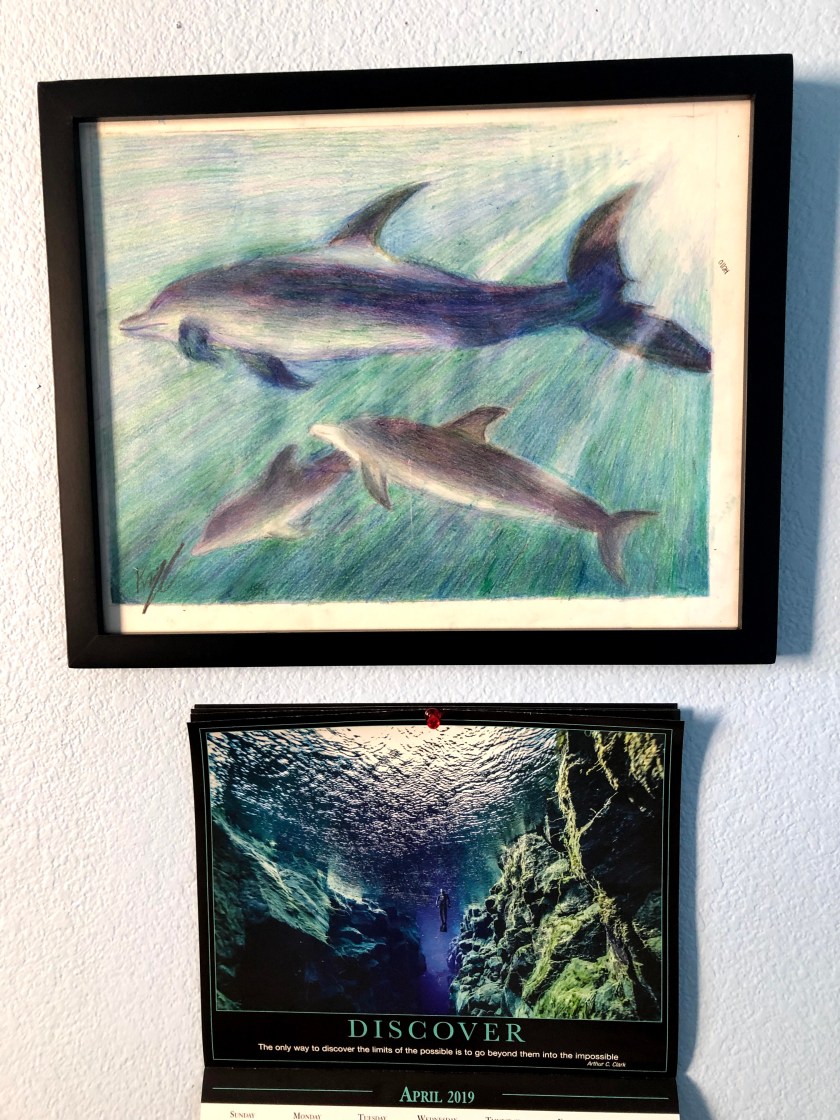
There is nothing half as meditative as a task like this. Before I knew where I was, I had traveled to Tibet, New York, the Arctic circle, a village in Central America, and fantastic lands where dragons held races. Of all the things that being human is, the worlds of imagination and inviting one another into the worlds created thus, has got to be the finest. Though, dolphins are pretty good at storytelling too.

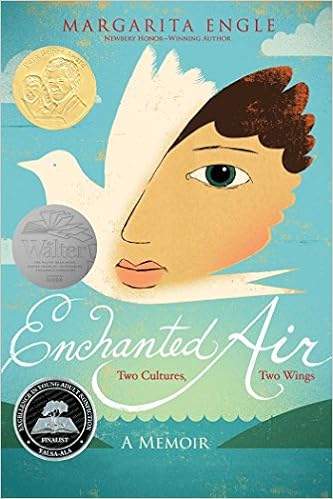
Margarita Engle’s poem:

No giant or dragon

Is bigger or stronger

Than the human imagination

I was also reading a book compiled by Maria PopovaA Velocity of Being. The book is intended to encourage young readers to read as much as possible. I am not sure whether the book will actually convince a non-reader to start reading, since it is a book of letters compiled from people in various fields on how reading helped them get where they are, but it makes for fascinating reading for adults, and I loved the illustrations beside each letter.

A Velocity of Being – Compiled by Maria Popova & Claudia Bedrick

Some letters were incredibly sad like the one where a holocaust survivor writes about how story-telling helped them hold onto hope when everything else was lost. Some were hopeful, some others whimsical, some directive-based, others curiously inviting. 

After a couple of hours, I stood up and my joints creaked from the wooden floor. The heat outside was still oppressive, the smoke still lingered in the air, but strangely my spirits felt uplifted. If that wasn’t the power of reading, I don’t know what is.

What other activities are equally absorbing and uplifting to you?

School in Covid Times

The week has been a blur. The son bounced into lunch the other day, and said, “Do you have a meeting at 12:30?”

Seeing us shake our heads, he said, “Yes! Finally I have a zoom meeting at 12:30! Gosh – it is so good to have something to do again, right? I mean, I was always the vetti one.” (vetti in this context means jobless one)

I love it when Tamil words and phrases creep into their conversations like this, and I said so. The children scoffed. “Oh stop already with this know-more-than-English thing. Indian people are so annoying!” 

“Well, I know my Chinese friends speak Mandarin at home, and go to Mandarin classes. My friends and colleagues from Russia have their kids learn a smattering of Russian. So …” I said shrugging my shoulders. 

The children exchanged glances that said “Parents will be parents! Let it go!”, and I smiled.

School has reopened in completely virtual mode, and the children have been thrilled. I feel bad that the usual back-to-school euphoria is muted with zoom calls, and not the raucous meeting of friends after a long summer ritual. The children felt it too. 

“I would have liked to meet my friends and the classroom amma. I mean, now, it is like looking at our pictures instead of us – you know the people?”

I laughed at the description, for it was true. The e-world has managed to make two dimensional beings out of us. Entire personalities squashed into a grid on the screen. 

On the second day of school, he spent the minutes prior to the zoom call getting things ready for the day: A Dr Seuss book, one of his comic book creations (with illustrations of superheroes fighting valiant battles with super magnetic force-fields against a turbulent tornado crusher etc), an Avengers action figure, his microscope and binoculars.

I looked amused at this collection of objects laid out by his computer. He saw me looking at these and said, “Oh! The teacher said she wants us to know each other better. So, I am looking for things that best describe what I like to do.”

I gave him a huge smile and thumbs up and awaited the news at lunch time. Say what you will about the Covid-situation, I am grateful to be home when school is done. It is a luxury I have seldom had, and the outpouring of chatter when they let out has been marvelous for me. My own batteries are not drained by a meaningless commute eating into my day, and I am more receptive to what they have to say.

“You know how we were supposed to get to know each other and bring stuff that represents us?! One fellow brings a football, because he likes football, and then he brings a basketball because he likes basketball, and then points to his shirt – a baseball shirt since he likes baseball. Really – you like Sports, we get it!” he said and looking at the smile on his face as he said it, I could see he already liked this fellow.

“I heard what you told your teacher! Really kid?! Sour patch candies and Pirates Booty?!” said the teenage older and supposedly-wiser daughter.

There was a train of giggles at this and the fellow gurgled on about how his teacher asked him if he knew more than 1 language and told him to practice speaking Tamil at home, so he doesn’t forget it. The words of wisdom coming from a teacher’s mouth meant that he took it to heart, and I could see him sprinkling in a couple of words here and there. 

I spoke to my school teacher-parents later that day and told them how their teacher had tried different things to get to know them, and my father said, “Poor  teachers and students ma! Most dedicated teachers come to the profession because of the joy of being surrounded by young people: their energy and personalities are truly a joy to be with. To have that replaced by a series of zoom meetings seems so sad! It will be okay soon. Don’t worry da kanna – you will get to see your school mates soon okay?” the grandfather’s voice boomed over the oceans like a foghorn of wisdom to his grandson, and he smiled and said, “Thanks Thaatha! So, when are you coming here?”

Well, in the words of Miss Read:

“Life went on. No matter what happened, life went on … But somehow, in this continuity, there were the seeds of comfort.” 
― Miss Read, Emily Davis

While I sincerely hope the children’s social aspects are not unduly affected by social distancing, I am grateful for what interactions they do get. While I have my gripes about technology, I am also grateful for it.

Life is full of paradoxes and that is as it should be.

Weather Monsters

“Have you gotten your bags ready?” my friends’ voices piped over the phone. 

“Uh – not yet. Got a bag down from the loft – will get to it.” I said shuffling my feet as I said so.

“Well..what are you doing now?”

“Writing about the weather over the past week.” I said somewhat sheepishly, and a loud laughter emanated from the other side. 

We toodled off with the sentiment of “Well Nero fiddled, I write!” but I am not going to lie. I was rattled, and went off to pack the emergency kit. The wildfires were too close for comfort – the air has been thick with smoke.

Exactly a week ago:

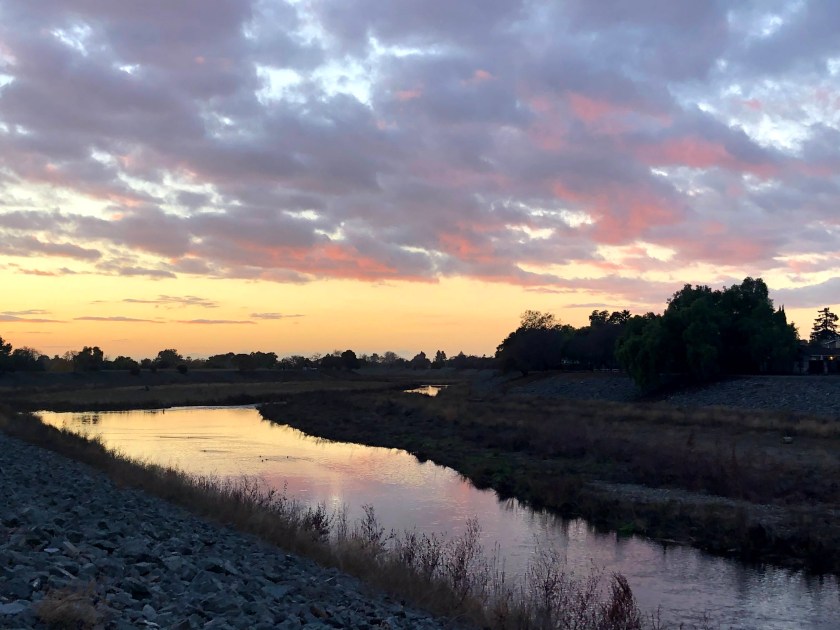
The days had been stifling in the heat wave that gripped the land. Oppressive waves rose from the shimmering hills nearby, and the eyes squinted for respite after the briefest strays outside. Some evenings had a splattering of clouds giving rise to splendid sunsets, and while I swooned my way through the evening walk, I yearned for a bit of rain, if nothing but to smell the parched sizzling earth cooling off a little bit. 

img_9485

I may have wished too soon.

For the very next day, I was looking at the most improbable of sights. I had set a whimsical alarm to rouse me at 5:30 a.m on that Sunday rearing for a hike before the sun started beating down on us. 

While I am always crooning about Nature and talking about it being the greatest soother of all time and all that, I often forget nature’s fury. I live in California where we pay a weather-tax. For the most part, the weather conditions are soothing, flowers bloom the year around, and though I yearn for more rains, it is a mellow nature that greets me most days. But that morning, I listened astounded as thunder rumbled overhead and the noise penetrated the double-paned windows, and then in the darkness the whole house stood illumined for a few seconds. I glanced unwittingly towards the sleeping children, and I stood awed.

We have easily gone more than two decades without thunder and lightning storms of this magnitude in this area. What was going on? 

I whispered to the husband – “Wow! Rain was not even in the weather forecast huh?” and stood mesmerized by the window wondering whether a walk was still on the cards if not a hike.

The husband looked at me and said, “Are you nuts?! Who goes out in this weather? Hiking at that. Nothing doing – if this is you wanting to watch the rain, pull up a chair and sit by the window!”, and he went right back to bed.

So, I did just that – I woke the son and showed him the lightning and the rain pelting down. It made for a magical morning, but I hadn’t completely realized the harm a storm of this magnitude can unleash on an already dry and parched Earth. In under 6 hours, there were more than 10,000 flashes of lightning starting over 300 fires that continue to rage across the Bay Area.

Time Lapse based off Satellite images of the Lightning strikes and subsequent fires in the area.

In just a few days we had experienced everything from heat waves to lightning and thunder storms – all in the midst of a pandemic no less. The air quality deteriorated significantly as the fires raged and fire fighters poured in from everywhere to contain the fires. 🔥 The sheer magnitude of the fires 🔥 they were dealing with had simple folk like me blanching, but these teams had strategy and they were working tirelessly. The tenacity for a job like that! 

In our skies, an angry sun shone through when it could through the smog.

img_9484

One week later:

Wildfires continue to rage over thousands of acres of land. Beloved forests and mountains ranges that have provided solace and comfort to millions of people over the years have been lost to the fires. My heart caught at the news that Big Basin Redwoods were damaged badly. Though redwood trees are supposed to be extraordinarily resilient to fires  and would probably make it past these fires, I grieved. Every time I visited these forests, I have come back not just refreshed, but spiritually in a better place as have thousands of tree huggers over the years. A true space for forest bathing or shinrin yoku as the Japanese call it.

trees_komerabi

It has been a week since the lightning strikes. 1 week in which more than 60,000 acres of land have been burnt, with ominous statistics of 5% fire contained, fire alerts etc.

California Redwoods 

2020 seems to be determined to make its mark.


Turmeric Magic

I felt a surge of amusement when I made cauliflower last time. The grocery lists needed love, and the results were showing.

“Yay Cauliflower!” yipped the young son, beaming like the early rising golden moon at this wonderful treat. Moments later, the moon face drifted under the clouds and his face looked disappointed as he looked at the pale muck of a curry that had been ladled onto this plate. “This isn’t Cauliflower curry! Isn’t it usually golden?” he said.

“Yeah ma – this one looks so pale. Like it needs some Vit D or something – should I take it for a walk in the sun?” said the daughter.  

I laughed at their reaction. Running a home can be tricky business in the best of times. My grocery lists are not things one writes home about even then (newspaper articles maybe but not to one’s mothers). In Covid times, I beam when we get by with everyone fed at reasonable times. Of course, this means I had to throw 2 tantrums since nicely asking did not seem to work. (I know!)

  1. Tantrum#1: 
    1. Venue:  work
    2. Subject: No meetings between 12:30 & 1:15! 
    3. Result: Sheesh kebabs reactions but people finding ways to accommodate this unreasonable ask
  2. Tantrum #2:
    1. Venue: home
    2. Subject: All people requiring daily sustenance will come to eat between 12:30 & 1:15!
    3. Result: Jeez-whats-with-her flavored eye rolls, followed by expressions as if indulging the local idiot 

Anyway, what happened was that we had run out of turmeric powder. As any decent south-indian cook will tell you, this simplest of spices is a must in almost everything that makes its way to a stove-top. It was only when one does not have the little sprinkling does one realize the joy and gaiety in the dishes thanks to it. It is like a drop of sunshine in the blobs of goo, and the children picked up on that. 

For the next few days, I quietly turned up more discolored dishes. The jokes became more raucous. Even the taste seemed altered. It is curious how tuned our sensory systems worked: taste seemed better if we liked how they looked, they even smelled more appetizing when they looked that scintillating yellow. Seeing that the world seemed a less vibrant place sans turmeric, the husband quietly made a special grocery run after the third day of discolored dishes. 

That day, I felt like a particularly gifted potion maker working her magic with the spices:

“…The beauty of the softly simmering cauldron with its shimmering fumes, the delicate power of liquids that creep through human veins, bewitching the mind, ensnaring the senses…” – Professor Severus Snape – Harry Potter and the Sorceror’s Stone.

I am glad to say that the folks seated around the table glowed from the rays of the yellow mellow sun at this meal.

“Wow! Everything is golden and sunny again!”

“Yep! Appa got turmeric at the grocery store!” I said, and the children cackled.

“Who’d have thought we would miss turmeric?” said the daughter. 

“Well Marco Polo certainly did!” I said. “The world was altered thanks to turmeric, pepper and ginger! So, I suppose it is okay to miss it.” I could see the little titbit had their interests piqued, and they listened in spite of themselves. 

The Travels of Marco Polo

“Many explorers started out in the medieval ages trying to find newer and better routes to the Indian subcontinent for spices. Marco Polo attempted an exploration that lasted almost 24 years . He made his way from Venice in Italy through the Mediterranean seas, past the harsh climates of the deserts in the middle east and the Himalayas in the north and north-east, as he went on past modern-day Tibet all the way to the Gobi Desert in China. His travels along the silk road were published in 1298 and are still sought after – The Travels of Marco Polo! “

“I did not write half of what I saw, for I knew I would not be believed”
― Marco Polo, on his deathbed

“So, you see – It is probable that this brave explorer in search of turmeric, pepper and other spices, altered world history and our grocery lists forever!” I said. 

The discussion then turned to European explorers setting out to find new routes to the Indian subcontinent, silk roads and trade routes. The history of the world, and how we have always been more interconnected on this planet than we realize, is fascinating.

The golden dishes took on an extra flavor with the story of the spices, and I sat back contented and grateful for a good meal in these times of the pandemic.

The Grapes of Wrath

We were driving through the countrysides of rural America. Vast landscapes stretched on all sides reminding us once again of the beautiful and vast nature of this country. The countryside baked in the hot Californian sun as we made our northward. We drove past fields and small towns that reminded me of the areas featured in the Grapes of Wrath by John Steinbeck in more ways than one.

img_9393

The Grapes of Wrath evoked a sense of economic ruin, human struggles, and the helplessness of it all. I walked around for weeks pulled down by the plight of the millions of Joad families who had to survive post the Great Depression. 

You see, I was prepared to see a certain level of isolation. Covid-19 has changed the landscape unimaginably with the service sector and the retailing industry in hiatus. What I was not prepared for, was the eerie and pervasive shadow of desolation and ruin. The divide between the haves and have-nots a deep chasm yawning wide and deep. 

https://www.bls.gov/opub/ted/2016/employment-by-industry-1910-and-2015.htm

The husband and I were in a somber mood as we made our way back, and fell to discussing the nature of work and how it is has changed so drastically in the past century. Just under a century ago, there was a good percentage of the population working farming jobs, then factory jobs. So, there still was a dream for a middle-class life – a life that promised reasonably good education for the children, relatively good health care, a decent home, and food on the table. It seemed the only jobs left for people to work in these small towns were in the service sector or the retail industry. With both these sectors impacted so heavily with Covid-19, it was a terrifying sight. 

“There ain’t no sin and there ain’t no virtue. There’s just stuff people do.”

John Steinbeck, The Grapes of Wrath

If the elections bring the current president to power again, he will find a way to make things much worse – maybe even go to the extent of inciting riots and civil unrest. If another president takes the reins, I do not envy the poor president-elect – what a mess to unravel and what a huge responsibility to the citizens. 

How would the world get back on its feet? 

“But how on earth is the stock market holding up?” I asked, for wasn’t that supposed to be an indicator of the economic conditions on the ground?

There – right there, is what is called a mystery. Anthropologically, mankind has been through worse survived more, but there is no doubt about it  – we have rough times ahead of us post-corona. As children, when we sang the hymns in our school, we liked some, loved the lyrics of others, and some stayed on with us through the ages. The first song that came to me that day was this one:

“We shall overcome .. We shall overcome…We shall overcome…Some day….”

After all:

“Muscles aching to work, minds aching to create – this is man.”

John Steinbeck, The Grapes of Wrath

grapes_of_wrath

The Kaleidoscope of Life on Earth 🌏

“Hmm…how Covid has changed things right Amma?” said the daughter when I walked into her room one day, and spotted ‘Greece’ sprawled across the whiteboard. She has been spending her summer making minor changes to the decorations in her room. As most teens do, she has a fond attraction to her room, and one day I found her looking at the pictures she had printed out to make a sort of picture collage. Her teenage eye-roll and monosyllabic answers fell away as soon as I showed an interest in the choice of pictures she had laid out on the floor arranging and rearranging them to see the best patterns.

How do you see the best patterns in a kaleidoscope? Everything seems beautiful, everything seems fine, and yet the artistic piece of her fussed with the layout and order of the pictures. There were pictures of happy people, little cafes, books, beaches, forests, city lights, quotations, rainbows, flowers, and small towns. The collage was eclectic enough to interest me. She gurgled and burst forth with the thought that went into them. I listened amused. 

By then, her excited voice had attracted her little brother and fond father into the room. Her brother painstakingly wrote ‘Mars’ below ‘Greece’.

“Mars! Seriously dude- next thing we know you will be lugging us into black holes and having us all burst into all the tiny starry bits like your Avengers or Star Wars superhero dudes in their adventures! No! No space travel!”

“Just yet”. I added and she gave me a look that indicated that this idiocy with space is because I indulge him with this stuff. I laughed out loud, and the children joined in too.

“And while we are at it,  no fictional or mythical places either. Only places that we can locate on a known map of the world.”

“Sheesh – she is so strict!” said the young explorer of the cosmos.

Travel_dreams

Cautiously, like deer in a prairie, we approached the topic of places we’d like to visit, ready to scurry back to Covid restrictions. Slowly, the name scrawled on a whiteboard set the stage. In the safe company of just the four of us, it felt good to take a peek into travel dreams again. It was done at first soberly – how happily we had taken international travel for granted? How happily we had taken good health for granted? Disconcerting as the Covid situation has been, it has also made us sit up and take notice of the beautiful things surrounding us on Earth. 

Once we started talking of lands beyond our day-to-day, a different energy gripped the room. Within moments, distances melted away, and the globe-trotters threw names on the board with no thought to distance or expense. Exactly how dreams should be.

Looking at the list on the board reminded us, however, that our lifetimes were not enough for this sort of ambition. How does one fit in a hike in the Himalayas for a zen feel, with a sort of Darwin-esque trip to the Galapagos? How can one fit the journey of civilization in Greece and Peru, to the pure sounds of nature as yet untouched by mankind? I suppose travel still has a lot to teach us, and post-covid, the world will start to cautiously explore once more.

We started, therefore, with a couple of day trips taken mostly on a week-day taken off from work, so we could avoid crowds. We looked for wide trails on which to get our dose of nature and exercise in. While for the first time thinking of a 2-3 day trip, we looked for godforsaken places. Places people do not usually go to for a vacation. But the house was a good one, pitched atop a hill with the nearest neighbor miles away. There was a  Jane Austen-esque feel to the whole thing. It reminded me of the poem by Wendell Berry: The Beauty of Wild Things.

On Being: The Beauty of Wild Things – By Wendell Berry

I set about the evening meal after the long drive there, while the children ran to find board games to be played that night. I cradled a cup of tea in my hands, as I set the water to boil, and rummaged the contents I had packed with me so as to minimize exposure to the outside world.  Slowly, the kitchen’s essence wafted around the room – smells, heat, textures all dancing together in an exquisite symphony of the senses. A symphony was playing as I cooked, and talked to the children. Here was a lively room packed with energy, activity, witty comments, and chaos that strangely translates to calm.

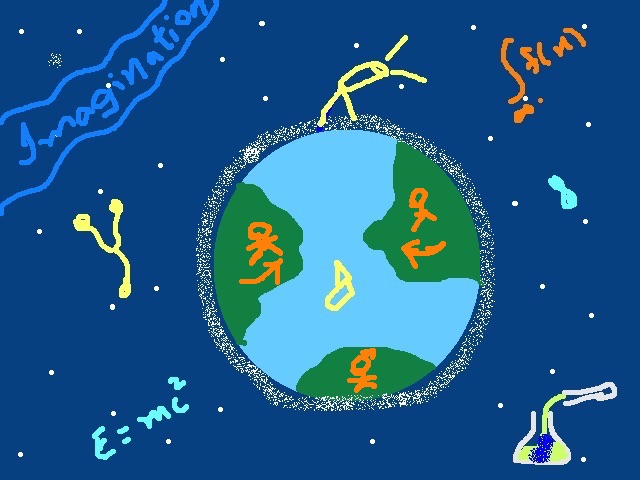
Inside this house overlooking a river valley, I felt the kaleidoscope of our life on Earth lap at me in waves. Watching the objects in the room around me evoked a strange sense of living  on this earth: the telescope, the books ,the music, the keyboard that promises the best music to those willing to invest in it, the creature comforts of a well-built house with the furnishings about us, the deer grazing in the hillside by us, the beautiful moon, the thousands of stars visible because of the distance from populated areas.

Life_On_Earth

The Peace of Wild Things: By Wendell Berry

I come into the peace of wild things

And I feel above me the day-blind stars waiting with their light.

The daughter’s pictures had indeed done a good job of capturing life on earth.