Exploring Dragons: Myths to Movies

No!

“You’re inviting me to a movie?” I asked, incredulous. 

Usually, I am begging to go to the movies with them, and the response is “No!”. Curt no’s, polite no’s, humorous no’s. But ‘No’. The fault, I admit, is on both sides. I fall asleep before the movie starts, but the theatres make you fall asleep even before the movie starts. What’s with all the dimming of the lights, and the trailers for every movie they are thinking of releasing in the next decade? What’s a good, hard-working woman to do in a comfortable reclining seat at the end of a long day with some inconsequential music playing in the background, and the popcorn butter doing its magic in the old intestines, huh?

I start with a simple meditation technique involving closing the eyelids for a few beats of music longer, and then a few frames of trailer longer, and before I know it, the magical lands open to the subconscious mind throw open the cosmic doors, and I float in with a smile on my lips. The theatre hears a dramatic hiss at this point in the proceedings: “Amma! Get up! The movie started and you missed the opening!” 

Anyway, this time, the dragons of sleep may have made valiant attempts to snatch my consciousness to their realms, but I was firm, and resolute. I was going to watch the dragons take the sheep in the movie, not in my dreams. 

“Wake me up when the movie starts!” I said before starting the m. technique.  

“If you don’t get up, I’ll…I’ll”

“What? Tickle me?! Please!” said I, and drifted off. 

I was happy to learn that I was invited because the movie was good for me: not too much violence, has a happy ending, is not too depressing, and has dragons and humans in a beautiful setting. 

How to Train your Dragon 

Based on the novels by Cressida Crowell, this is a wonderful story of a boy who seems to be a reluctant heir to the vikings chief, and a soft-hearted, intelligent misfit in a bunch of knuckleheads who all value brawn over brain. I have always liked the series, and when I read Cressida Crowell’s article on her childhood influences, it only made the series dearer.

However, I still do not understand the impulse of large studios to remake the same stories over and over again. Did you really have to take the same movie again? 

Does Harry Potter really need a remake this soon?

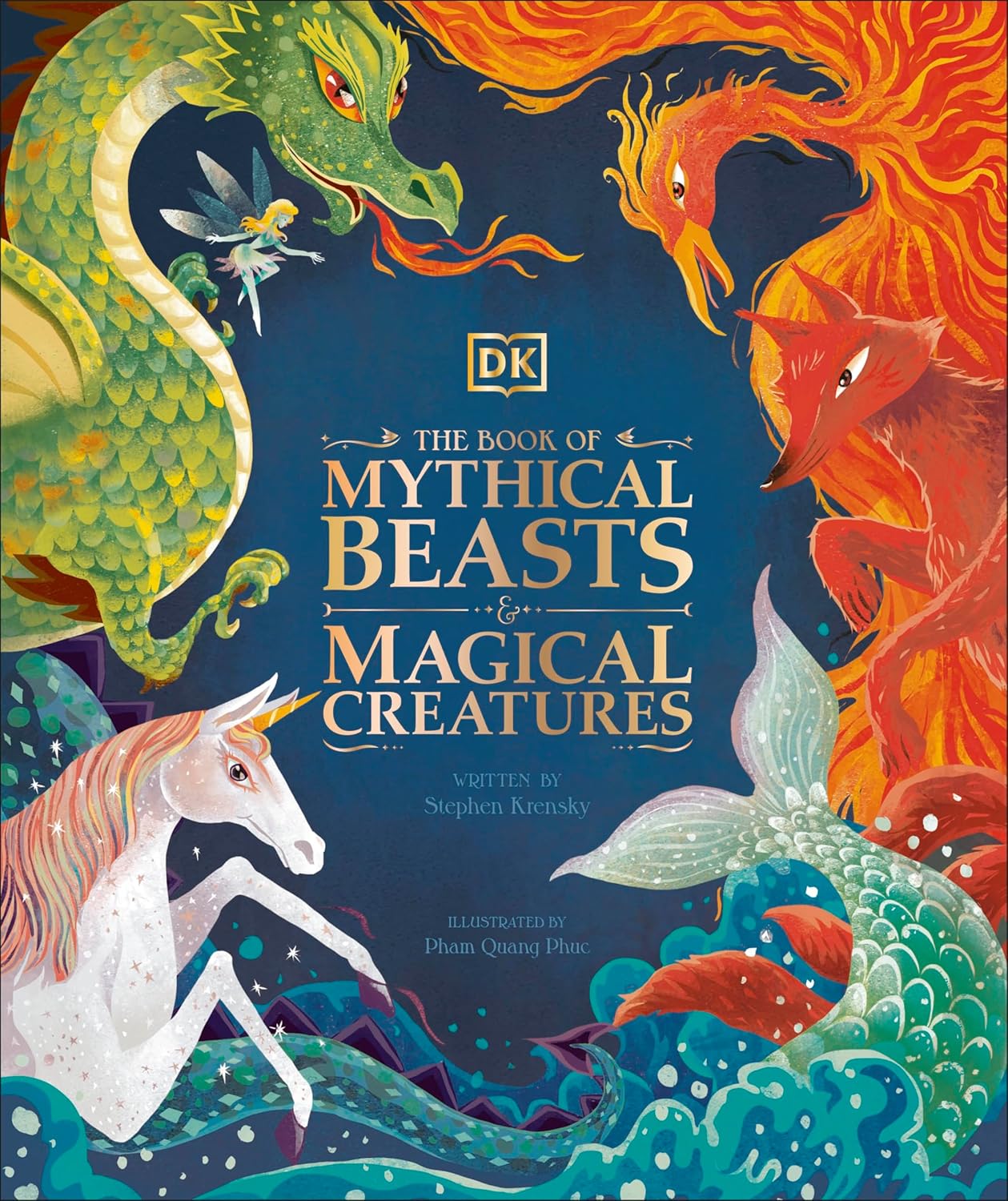
Our Fascination with Dragons

In any case, the fascination of humankind with dragons is millennia old and the number of dragon stories is near inexhaustible. So, I am sure there isn’t exactly a dearth of dragon content. 

How could human imaginations in the absence of social media have imagined similar creatures (Fire breathing, of giant aspect and size ) the world over? 

Our tales speak of dragons across time and geographies too. 

Ancient Aliens: Mythical Dragons Across the Ages

“Speak politely to an enraged dragon” – JRR Tolkien

The metaphors of inner dragons are just as widespread

“You can’t map a sense of humor. Anyway, what is a fantasy map but a space beyond which There Be Dragons? On the Discworld, we know that There Be Dragons Everywhere” – Terry Pratchett

“This Marcius is grown from man to dragon: he has wings; he’s more than a creeping thing.”  – Shakespeare. It describes the transformation of the play’s protagonist, into a figure of immense power and ferocity. 

With all the imagery, humor and wit we have humankind must continue on in its quest to slay its inner and outer dragons, with the motto of Hogwarts in mind

‘Draco dormiens nunquam titillandus’ – which means ‘Never tickle a sleeping dragon‘ – J K Rowling 

P.S: The children did tickle me when the movie started, and I am happy to say I enjoyed the movie.

Lessons from Nature: Embracing Our Unique Struggles

Burdened Biologies

I took the son to the pediatrician for a wellness check: Something that was simply not there in our childhood. You only went to the doctor if you had a problem, not to be assured that you didn’t, or find that you may have one. I quite like the strides in preventive medical care. 

The pediatrician asked the son his age, and prepped for his talk on teenage anxieties and stresses. He told him about how sometimes / oftentimes, one feels that whatever they do, it is never enough. They are never good enough. Society is always expecting more from you. This is not good enough, that person is better, their clothes are better, their smile is better and on and on.

I listened with rapt attention. Did this man have superpowers? The ability to time-travel, or apparate across cultures, places, geographies? Did he overhear what was being said in social circles? Or was this another thing that simply unifies the human experience the world over? Our burdened biologies.

Something about the way the doctor said it made me pause and listen. Was he aware that he wasn’t just talking to the teenager in the room, but to the parent as well? 

“Before you say anything – it isn’t anything specific to your son, it is something we like to educate all our teenagers about. These are things that add to toxic stress, and that can create other problems as well you know.” he said, kindly.

Hearing the pediatrician talk about these things with the teenage son made me feel – well, I don’t know how exactly it made me feel, for it was one of those moments when I felt the opposites war in the old fishbowl. For one, I was happy that they were making children aware of this. But on the other hand, I was also disappointed that this was something that was ever acknowledged as a problem in our childhood. No doctors, teachers gave voice to this feeling all these years, decades even. 

Atelophobia and Allodoxaphobia

There is a word for this:

Atelophobia. The fear of never being good enough.

Many of us went through our childhood (and adulthood in many cases) completely oblivious to this. 

There is a strange comfort in knowing that one is never alone in one’s struggles, isn’t there?

Those of us who grew up in India, were also given liberal doses of Allodoxaphobia.

Allodoxaphobia: fear of what other people think of you. 

Nature Shows the Way

That evening, the son and I sat under one of our favorite trees – wizened, misshapen, and marvelous. We admired the tree: It’s every bulge was a statement, every misplaced twig a surge of hope, every lump in its trunk a bold curve, every branch a home for birds, every leaf a fine producer of food, every ray of sun that passes through it a filter to enhance its beauty.

Nature shows us with every tree and every flower that we are enough. As we are. No two trees are shaped the same way, but nobody questions their enormous usefulness to life. Every plant’s purpose is different, and somehow, together, they created the conditions for life to thrive on Earth.

Yet – in spite of all these simple lessons from nature, humanity cannot stop burdening our biologies with unnecessary stress. What can we say? 

Finding Calm Amidst the Chaos of Life

May seemed to me an especially fast merry-go-round. The spinning was fun, the laughter for all those involved loud, and the merriment infectious. But as June came around, I had the feeling of being dizzy without the fun bits. The world still seemed to be spinning, but the merry-go-round had stopped. Life had resumed. Normal life had resumed, I mean. 

One rare afternoon, I sat trying to soak in the quiet of the evening, and felt strange. I usually relish these moments of solitude. I reached for my books, and found that the mind and body were racing far too much for quiet contemplation. Even though the book I had in my hand was a perfectly good one on Writing, exhorting me to pay attention to the following aspects of life (Attention, Wonder, Vision, Surprise, Play, Vulnerability,  Restlessness, Connection, Tenacity, Hope), I could not slow down enough to take it all in. 

I gave in to the impulse of watching Instagram reels, and got a ridiculous song stuck in my head, I went into Facebook, and scrolled – joyless and felt more drained by the end of it. That is when I knew that what I needed to get back to a slower pace of activity was to reach for a tried-and-tested book: Changes in Fairacre – By Miss Read. I took a deep breath as I entered the village of Fairacre.

For some folks, music does the magic. The mother-in-law said she listened to Amaidhiyaana Nadhiyinilae Odum – a tamil song whose lyrics evokes the imagery of a smooth flowing river and all its associated imagery. I can see how that can be a calming influence on the senses. 

For Yours Truly, it was a Fairacre book, By Miss Read. The slow and endearing life a village school mistress leads, is therapeutic. Maybe it takes me back to the idyllic times of my own childhood – growing up in a small village community, where both my parents were school teachers. The imagery she evokes of the beautiful countryside makes you think of the maxim: 

Nature never hurries and yet accomplishes everything – Lao Tzu.

Nevertheless, that evening when my restless legs stepped out for a walk, I forced myself to slow down, to feel the breeze, to look at the rays of sunshine shining like little sparkling diamond strings through the evening air. The smell of sage and lavender crushed in my palms like a beautiful balm for the soul. 

It helped but it still took some time. For those of us who refuse to do the hard work of trying to still our senses and the world around us, the merry-go-round can keep going. That night I thought of Miss Read’s observations on modern children (her books were written a good 30 years ago, but it seems truer today than ever before) 

“What I do feel that the modern child lacks, when compared with the earlier generation, is concentration, and the sheer dogged grit to carry a long job through.”

Miss Read, Village Diary: A Novel

Truly chastened, I settled in with a mellow light throwing a comforting gleam on my bedside table, took a deep breath, and immersed myself as best as I could in village life. Sturdy, slow, and reassuring.

The Magic King of the Coconut Kingdom

The Cognitive Model

“What were you two yapping about and giggling about the whole time?” the husband said, peering into a photograph at the upanayanam ceremony. 

He might have been short of breath after reciting and repeating endless mantras, but the children & I were short of breath trying to hold in our laughter several times – mainly because we had more time on our hands and little to do while on stage. 

“Well – which time? We got into trouble several times with everyone!” I giggled.

“Pick one!”

“Well Fine! I’ll tell you. This is when this fellow said, ‘If ever there was a time to run a cognitive interpretation model and turn the chanting into tonal bits, and then try to get  a translated gist, this is it.’ – That was so like him, that I couldn’t stop laughing. And then everybody shushed me!”

The husband gave the son an amused look, and then said, “Was that what he was saying? It sounded like a song!”

“Well – yes, he was singing. What were you singing?”I said, rounding on the son. I remember the whole hall giving me the pursed-lip and furrowed-brow routine, for his lip sync was clearly off from what his father was droning on the other side of me.

“Oh – that!” 

“Please don’t tell me you were singing Hamilton!” I said.

“Well – phew! Then I won’t get in trouble. No! I was not singing Hamilton, Amma!”

The Magic Coconut Kingdom

I raised my eyebrows and he said, in a somewhat more  abashed tone of voice, “First, I thought the coconut looked funny – like a wizard coconut, with a magic hat. The king of the coconut kingdom!” he puffed his chest out, and his ribs pushed out from under his shirt.

They had decorated that coconut very fancifully. I remember thinking to myself that the coconut looked marvelous. Even without all of this, the coconut is a swell thing, but with some stripes of ash across its face, a huge red dot on its handsome visage, and a silk turban like hat, dashing was the word. #Kalasam

“So, anyway, I imagined the coconut using its magic powers to fight the flames from the fire.. The coconut king, friends with the liquid ghee, used to fan the fire onwards and well – you know how it is, right amma?”

I nodded indeed. The coconut, in combination with the fumes, and the silks on one’s body is fertile ground for fanciful thinking. The chanting in the background can be very soothing for the imagination to pound on. 

Epiphanies of Spiritual Visions?

Religious rituals in Hinduism have a curious character – they rely heavily on the men to perform them, but need the women to hover and lend support at all times. The upanayanam ceremony is no different. The son had nothing to do but indulge in his childish dreams for the first hour or so. 

I wrote about it briefly here: Upanayanam: Insights into a traditional ceremony

Behind every beautiful moment are hundreds of moments leading up to it. The decorations, the coming together of everything in one swoop, the invites, availability of people and dates, and so much more. For one event to happen, even if the hero/heroine of the event is unaware, it means combined efforts from many people – mostly loved ones.

When finally it all comes together, there is much chatter, excitement, frazzled feelings, tension, drama, joy, laughter. Then, just when you wonder what to make of it all, out of the blue, a moment of rare insight, like peeking into a well, and catching the glimpse of a fish for an instant, appears before you.

If it was the coconut that gave that to the son, so be it. 

For me, it was the son’s quip on the cognitive model to apply to the tonal information. 

I hope the husband and daughter found that moment too. They must have judging by the looks of surprised happiness the pictures seem to get a glimpse of.

The Poochandi: Fear, Eunoia, and Allodoxaphobia

The Poochandi

“Acchichoo – Poochaandi varum!” 

Many of us growing up must’ve heard of the famed poochandi. He is ominous and omnipresent. The poochandi is the South Indian version of the bogeyman

In one of R K Narayan’s stories in the Grandmother’s Tales or Malgudi Days, I forget which one, he writes about this vague poochandi. The poochandi is a ghost or nefarious persona, whose purpose in life seems to vary: Frighten children into swallowing the next morsel of rice, or getting the slightly older ones to come home soon, or the daughter-in-law of the house to light the lamps on time every time. 

I remember thinking that the poochandi seemed like a busy, if slightly jobless character.

As we grew older, the poochandi was replaced by ‘They’ as in Society. 

What would They say? 

🫠 You aren’t making a 5 course meal in between the 3 course meals that are each 4 hours apart? What would They say?

🫠You aren’t wearing a 9 yard saree so you can pour water droplets on a coconut? What would They say?

🫠You aren’t making murukkus as well as halwa for Diwali? What would They say?

They were all-knowing & all-judging. 

If you were perfect, They knew all the ways in which you were not. 

So imagine finding out that fear of what They would say actually has a word? 

Allodoxaphobia & Eunoia

Allodoxaphobia: fear of what other people think of you. 

I first read the word in the book, Build the life you want – by Oprah Winfrey, Arthur C Brooks

Allodoxaphobia can work in strange ways – sometimes, it can make us function in ways that enhance our positive qualities. Other times, it can burden us with a mindset that we neither grow out of, nor discard easily. 

They and the Poochandi worked full-time to keep you pliant.

In the face of this, what can we do to retain and maintain our eunoia?

Eunoia? You ask. I am glad you asked. You didn’t? Well, here I go anyway.

Eunoia – is a beautiful word that signifies a positive and kind disposition. The kind of personality that develops out of cultivating beautiful thinking or a well-balanced mind. 

The ability to choose without spurning, live without hurting (others or ourselves), etc are extraordinarily hard things to do. It is why philosophers set great store by it and acknowledged this to be a great thing.

Sometimes what They say, and what the poochandi threatens aligns with our inner sense of eunoia. But when they don’t align, how do we balance the cultivation of eunoia against what They will say?

Eunoia means doing the hard work of finding our morality, and sticking by it regardless of what They say, even if the Poochandi will find you for it. Eunoia means being personable and helpful without giving yourself over to Them and Their demands. 

Sometimes, just sometimes, I’d like to find the poochandi and work with them to change what They say. A Poochandi who will give you a nod or a pat on your back when you clip unkindness in the face. A Poochandi who will not turn a blind eye to cruelty,  and arrogance, say? 

Here is a two-part question to you?

  • What would you like your Poochandi to do?
  • How do you cultivate Eunoia?

20 Years of Blogging: Cherishing Ordinary Lives and Moments

Two Decades of Writing

Some gifts are marvelous in how they keep giving. Writing is one such gift: a gift that enables us to find light and joy in our lives. Just like that, this month marks two decades of my blogging journey. 20 years or 1040 weeks in which I wrote 1-2 posts a week, every week. (#syzygy)

Read also: Why do I write?

Two decades in which the husband and I filled our lives with children, grandparents, aunts, uncles, friends – young and old, colleagues, mentors and mentees. Many of whom made an appearance on the  blog in some form or another. (#MyFamilyandOtherAnimals) I am always grateful for this journey of love, joy, friendship, and learning. The blog is a reminder for me that our extremely ordinary lives are filled with extraordinary moments and people.

A Tall Order

Chronicling all our lives is a tall order given the chaos and activity surrounding our modern lives. Yet, this little place in my mind always looked and mined for moments of reflection, growth, joy, and laughter, to record in my little blog. In recording these moments, I felt we were reliving these moments of beauty, and savoring them over again.  Even as we worked, grew, read, wrote, painted, danced, traveled, hiked, biked, ran, walked, enjoyed the eternal gifts of nature, and relished the spots of solitude that came our way, we were growing older. 

I spent a beautiful walk one evening reflecting on some of the extraordinary things that life has taught us, and that I learnt through the art of reflection, reading, and writing. 

When finally the epiphany came, a startled blue jay squawked and gave me a baleful look before taking off to saner pastures. 

Want to hear it?

As young adults, we are conditioned to crave fame, money, looks etc. But during the past two decades, we have all come to realize that working towards their less glamorous cousins: renown, wealth, and well-being are the secrets to happiness. Building habits around lasting happiness meant that indulging in the steady and sure work of building relationships, gaining education and experience, generating wealth, and focusing on mental, physical and spiritual well-being were the secrets.

We have enjoyed living in a time of relative international peace and cooperation thus far. I don’t know what the coming decades will hold for all of us. The world order is changing after all. But through it all, I hope the quiet reassuring ways in which we have led our lives thus far will help us. I hope the finer aspects of living will continue to enthrall us, give us hope, make us resilient, and do the best by those around us. 

Thank you to my readers

Of course, the whole journey might’ve sizzled out if not for those of you read what I wrote. Many of you sent me further reading materials, or told me hilarious anecdotes knowing it is blog-worthy material.

To all of you who not only acknowledged, but also encouraged  my efforts – thank you. I am eternally grateful – please continue to encourage me with your greatest gift of attention.

Upanayanam: Insights into a Traditional Ceremony

Upanayanam – Thread Ceremony

The husband and I found ourselves stupendously stumped. You see? We celebrated the son’s thread ceremony. We had managed to get in the middle of organizing and executing a function that smacked of our curious mixture of naïveté and fun. 

So much so that a lot of people were very happy, a few people held their tongues with pursed lips and stiff jaws (some even graciously told us that it is indeed what they were doing), and a precious few reveled in their self-glorified role of saying things-as-it-is (any politically savvy person knows what this means. But seeing as Yours Truly is particularly poorly suited to this, took some getting used to).

Summoned like a Woman!

Like all religious functions, this one excluded women, but insisted they were there for all the work. The organizing, the decorating, the gift-giving, the hosting. Just nothing religious. Every time I looked particularly bored on that stage, the priest would give me something to do.

 “Take that drop of water, and drip it on the coconut, amma!”

“Hold this bunch of dried grass against the shoulder, amma!” 

Then, a chuckle. “Not that shoulder amma, this shoulder!”

While all of these tasks weren’t exactly skillful, they ensured it kept me there. Otherwise, the poor priest found me wandering off the stage to talk to people. 

Then, summons were sent. Summoning the lady of the house on stage at a religious function is a curious case study of sonar technology and people movements. Every one calls out for you, and nobody realizes or remembers why I was summoned. Like a wave gathering in intensity before crashing on the shores.

Summoned!

Smiles to go before I sleep!

“How come you are smiling in all the pics, while I…”

“Look like you’re having your tooth extracted?” I finished smugly.

The husband paused to frown and then smiled, “Yes – like that!” 

“Easy! I had absolutely nothing to do but smile at people. Also, I looked for the phones and smiled pointedly. There’s a lot of time for not understanding a thing, and being dressed to the nines up there.” I said. 

“Talk about unfair – look how I looked in all the pics: confused, concentrating on getting the words right, while you…”

“Pranced and fluttered about the room? There are advantages to being a butterfly.”

So, that is how we survived a thread ceremony, without storm warnings.

Nilgiris: Nature’s Abundance on an Early Drive

“We need to leave by 4:30 a.m. if we are to beat the traffic!” the brother said. 

There were enthusiastic nods. I kept the alarm for 3:30 a.m, confident in our abilities to get going that early in the morning. After all, there is nothing as pleasant as a drive up to the Nilgiris from Bangalore. 

The route passes through two beautiful national forest reserve areas – Bandipur and Mudhumalai. The hills are usually green and welcoming at this time of year. Early summer in the Nilgiris is a joy – there are flowers blooming everywhere, the rivers and streams are flowing with healthy levels of water, and all of life seems like it should be: Full of beauty and abundance. 

I had quite forgotten the true splendor of a gulmohar tree in full bloom, but oh! What a joy to see these resplendent looking trees! 

You can spend all day gazing up at the branches – all the different ways in which the light dances and trickles through the very orange blossoms, all the different shapes the branches have spread themselves – no two trees the same, yet distinctive enough that they cannot be misunderstood for another tree.

The brother who is always in his element when he is driving anywhere other than city roads, shook his head as he saw me bouncing in my seat. He pulled over by a side road, and if you were to ask me the previous evening to imagine this road, I would not have been able to do it justice. I grew up in the Nilgiris, and have visited many times in the past two decades, but every time the hills surprise me (mostly good ways, but the increasing population and traffic snarls contribute to the bad ways) 

I tumbled out of the car, my heart bursting with song. Luckily it was just my heart that was singing, for who wants to frighten a bunch of elephants taking a calm dip in the Moyar River? 

The peacocks cooing in the distance provided a musical backdrop.

As we headed back to the winding road of 36 hairpin bends, all of the forest seemed to have risen. There were peacocks, sambar deer and spotted deer, iguana-like creatures, monkeys, langurs, and elephants. I cannot think of another experience where the soul feels as nourished or sated. 

By the time we had passed through the forests, we had been filled with the beautiful imagery of flora and fauna of the Nilgiri Hills. It is always so humbling to call this marvelous place home along with the thousands of creatures who live more unobtrusively in these parts.

The cheeky road signs only added to the allure of the morning forest scenes.

“Watch for deer crossing the road, remember the road is crossing their home!”

“Attention: Crocodiles in the River – do not swim. Survivors will be prosecuted.”

Development of Morality & Value Systems

Going back to a high school reunion after 3 decades is nothing short of illuminating. We had planned to meet regularly while leaving school. Then somehow, we all scattered into our various little lanes and holes, only to resurface like eager bunny rabbits after all these years. 

As far as social experiments go, this has to be one of the most interesting. 

Life seems to have been inventive, unique and predictable at the same time in all the ways it presented us with trials and tribulations. As we walked through the hallways of our school – it was curious to see how we fell back into familiar patterns of who we navigate towards. In 3 days time, it seems we fell back to familiar patterns and the intervening decades might not have happened at all. 

This fascinating behavior led to an interesting discussion on the subject and development of morality and values. At what point in time do we actually develop values, and our internal moral compasses?

I was shocked to find out that morality can start to form under the age of 1, and can easily be noticed between the ages of 2-5. Of course, morality and value systems continue to develop in noticeable leaps and bounds – till we are 10 years of age, then as teens shaped by societal and peer pressure, and as adults. But are they largely shaped by our early childhood? If there are any psychologists or anthropologists who have studied this, please let me know your thoughts. I would be interested to know.

Morality & Values

Childhood friends, when met after decades apart, can resurface memories good and bad. It was interesting to see how friendships played out over all these years. Sometimes, geographic proximity helped shape adult bonds. Sometimes, the bonds of friendships survived geographic distances. 

However, when gathered back in such a large group of classmates, it was interesting to note all the ways in which we fell back to familiar patterns in a matter of 3 days. The ones who were friends in school seemed to fall back into their familiar groups, even while a few new friendships were forged. 

A friend and I fell into a stimulating discussion on morality and values. It is obvious that we are drawn to people with values we admire. So, when looking back at our childhood selves, when was the inner moral compass formed? How did we know whether to be attracted to kindness or the lack of it? Were we drawn towards lightness of being and joy?

Could we be trained into ways of coping – I am sure we can. Pavlov’s experiment is proof of that. Our own behavioral patterns formed so early in childhood help shape how we navigate through life. Some of us are conflict avoiders, some conflict seekers, others do not seek conflict, but do not flinch when it comes to them. 

Is there an Inherent Moral Compass

I remember having a subject called Moral Science in primary and elementary school. It was a lovely class if only because the stories were always interesting, but how much did that help shape our inner compass, I wonder. It is true that reading about myths, and relatable struggles help us through our own. Hopefully, for most of us, our inner compass is strong in good times. It becomes tougher in times of stress and strife, and somehow life only makes these situations more and more complex.

Given that some of us had become friends when we were 5 years old, it was curious indeed. A quick google search reveals that moral based behaviors can be observed in children as early as 2 years old. So, is there such a thing as an inherent moral compass, and can we change ourselves enough and embrace growth through our learned experiences quite as much? Which brings us neatly to the nurture vs nature debate, and we could go on all day and all night.

https://www.mentalhealth.com/library/understanding-moral-development#:~:text=Between%20the%20ages%20of%202,when%20they%20break%20the%20rules.

There are values and morals shaped when we begin to question authority as teenagers, and then as adults when we learn a little bit more about all  the shades of grey, character motivations, and the like.

What are your thoughts? 

  • Do you think that our moral choices begin to be shaped in infancy, and if so, can they be changed over time (not just in small increments but in polar ways) 
  • When that young, do we consciously migrate towards value systems that appeal to us, or not?

https://www.betterhelp.com/advice/morality/morality-quotes-to-help-us-better-understand-ourselves/

The Magic of Shared Success

I am grateful I went to school for our high school reunion after all these years.

I have always loved the military traditions the school is steeped in, but seeing it all come together in such a spectacular fashion as a spectator was magical. 

The band was spectacular as ever, and after coming back to ‘normal life’, I miss the background music of the school band at all times of day. The band room was always full of enthusiasts – drummers, sax players, buglers, bagpipers, and a whole bunch of noises unrelated to music too. There was band practice in the mornings, band classes during the day, beating the retreat practice in the evenings, so there was music wafting in and around our lives at all times when school was in session.

There were sports, parade practices, and PT displays in our day too. But seeing the levels to which these shows have risen in their execution and creativity was enough to make my heart sing.

There were morning shows, evening shows and late night ones. Shows in which the children and staff had worked tirelessly all year long to pull off a brilliant endeavor. Sunset sensations featuring Yoga shows, laser shows, band displays etc were brilliantly done.

The Parade was a huge success as well. The Beating Retreat signaling the close of all the festivities was just as a marvelous. 

There is something about these programs involving hundreds of children that always gives me goosebumps. The strain of collaborative success running through all of these, is nothing but inspirational. Everybody has to ensure that they and everybody else is up to the mark, and work towards making it so. Or the whole troop/band/display fails. 

Why do more schools, or corporates for that matter, have activities like these?

Years later, when we reflect on these experiences, there is nothing but affection for those of us who worked and excelled together, and what better outcome in life is there to achieve?

 “We cannot seek achievement for ourselves and forget about progress and prosperity for our community…Our ambitions must be broad enough to include the aspirations and needs of others, for their sakes and for our own.”

— Cesar Chavez