Picking a Spot for A Snapshot of Earth

It was a beautiful day in San Francisco. Human-beings have this craving to capture and showcase moments, life and things. A primal aspect that social media latched onto so effectively.

The husband & I after talking of this-and-that (mostly food!) got to discussing a vantage point of life on Earth.

I was reminded of the Golden Record. The smattering of items sent aboard Voyager I in 1977. It was meant to be a snippet of life on Earth: it contained music from different regions, whale songs, etchings and engravings of human endeavor, animal species and so on. Another message was collected and sent to Europa on a recent mission.

https://science.nasa.gov/mission/europa-clipper/message-in-a-bottle/

Now, if we wanted to invite interplanetary visitors and then shoo them away from a glimpse, what places would you select?

A little tech-bragging

A little natural-resources showcasing

A little cool-culture cat walking

Which place would you choose?

Well, The husband & I thought the San Francisco Ferry Building strip would make a decent candidate.
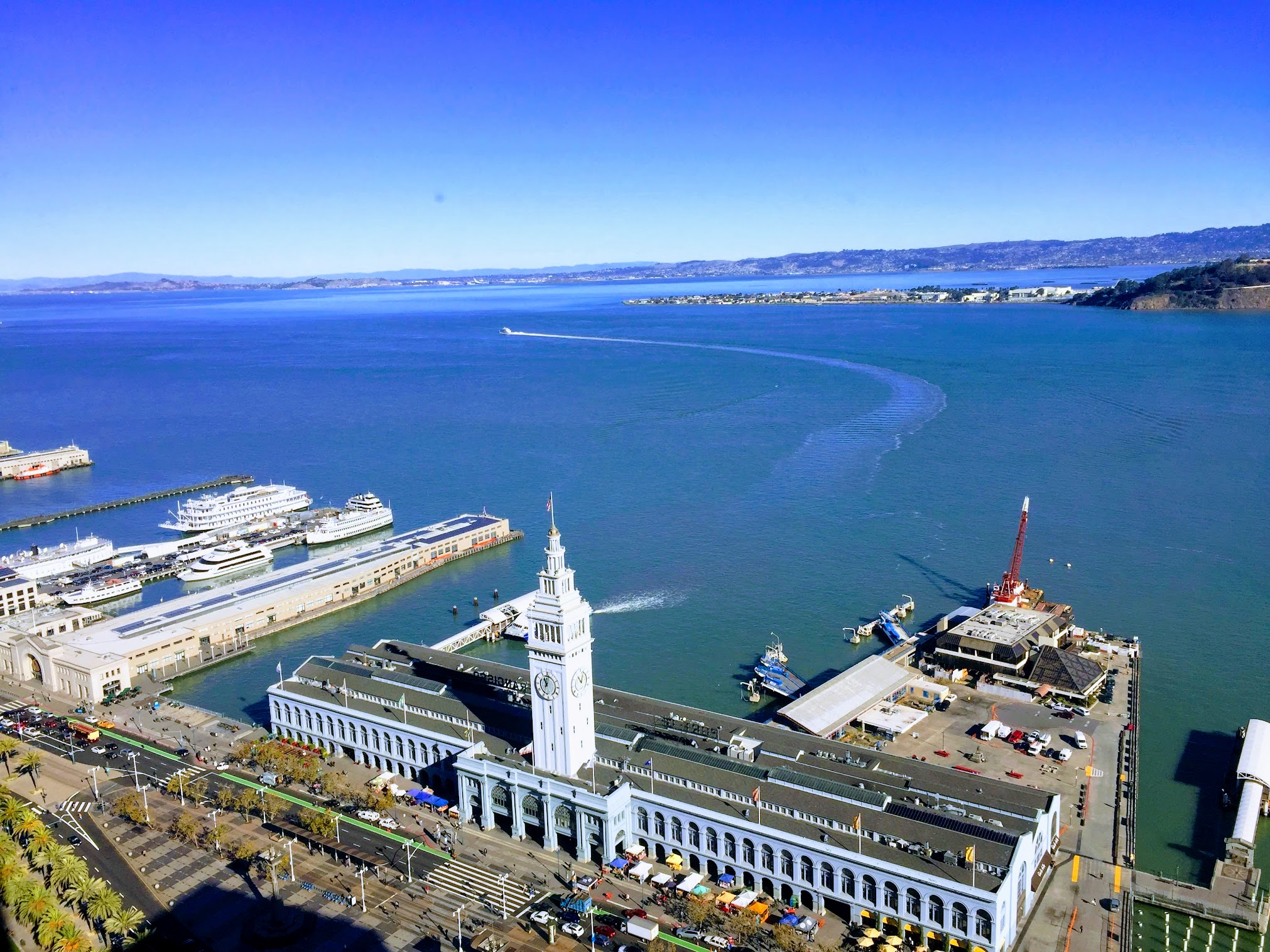
There, you can find a sampling on innovations, technologies, art, craft, transportation options all jostling with one another in a glorious canvas of chaos and movement.

Visual Arts:

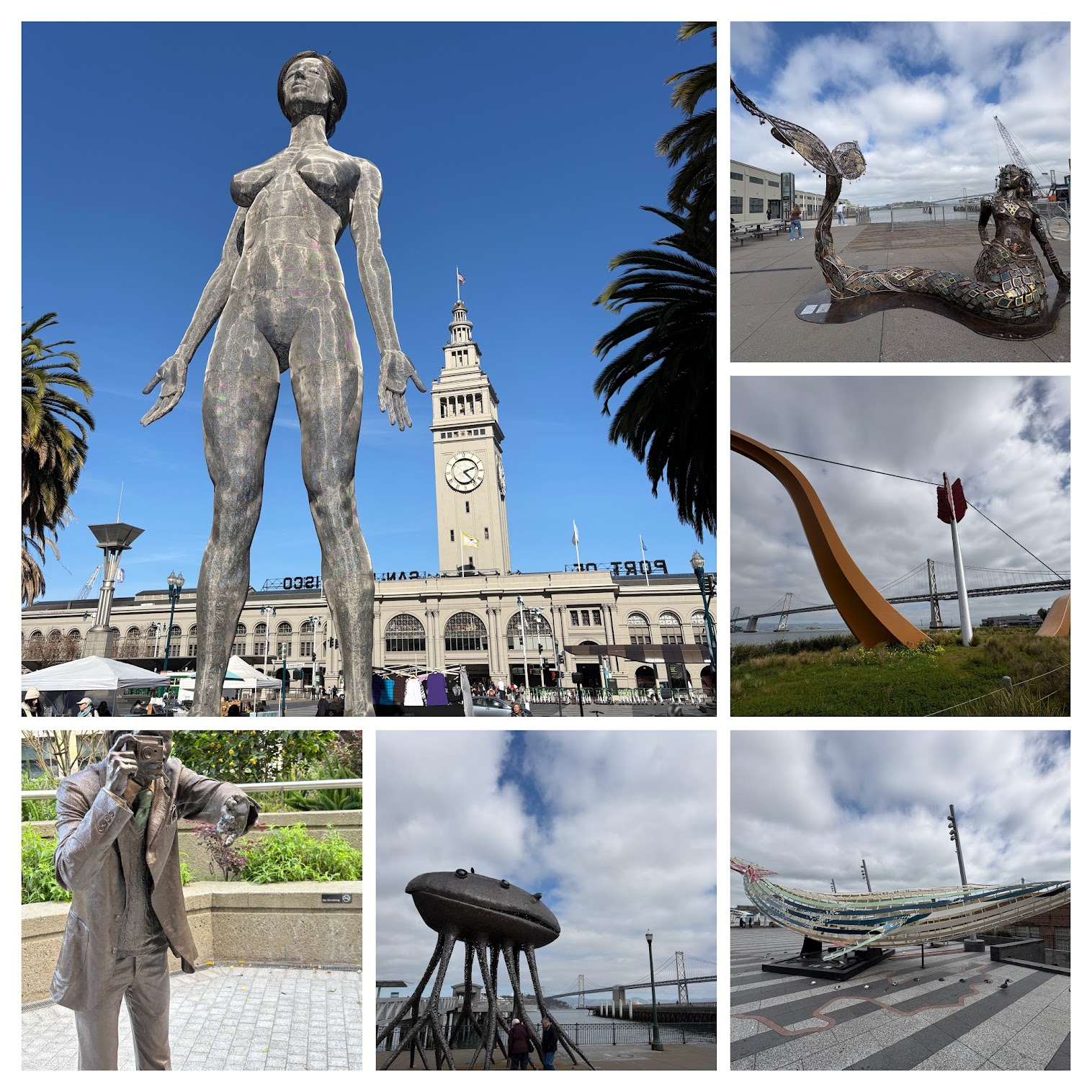
There are statues by the pier – Mahatma Gandhi tucked away from the main hustle and bustle. A small diminutive statue compared to the large ‘Woman’ statue in front of the Ferry Building. But even small, his importance draws one near. Tourists are there taking photographs almost everyday. The mermaid, jelly fish, sea lion, dolphin statues along the pier are whimsical and reflective of the fantastic lifeforms on Earth.
Transportation – Past, Present & Future:

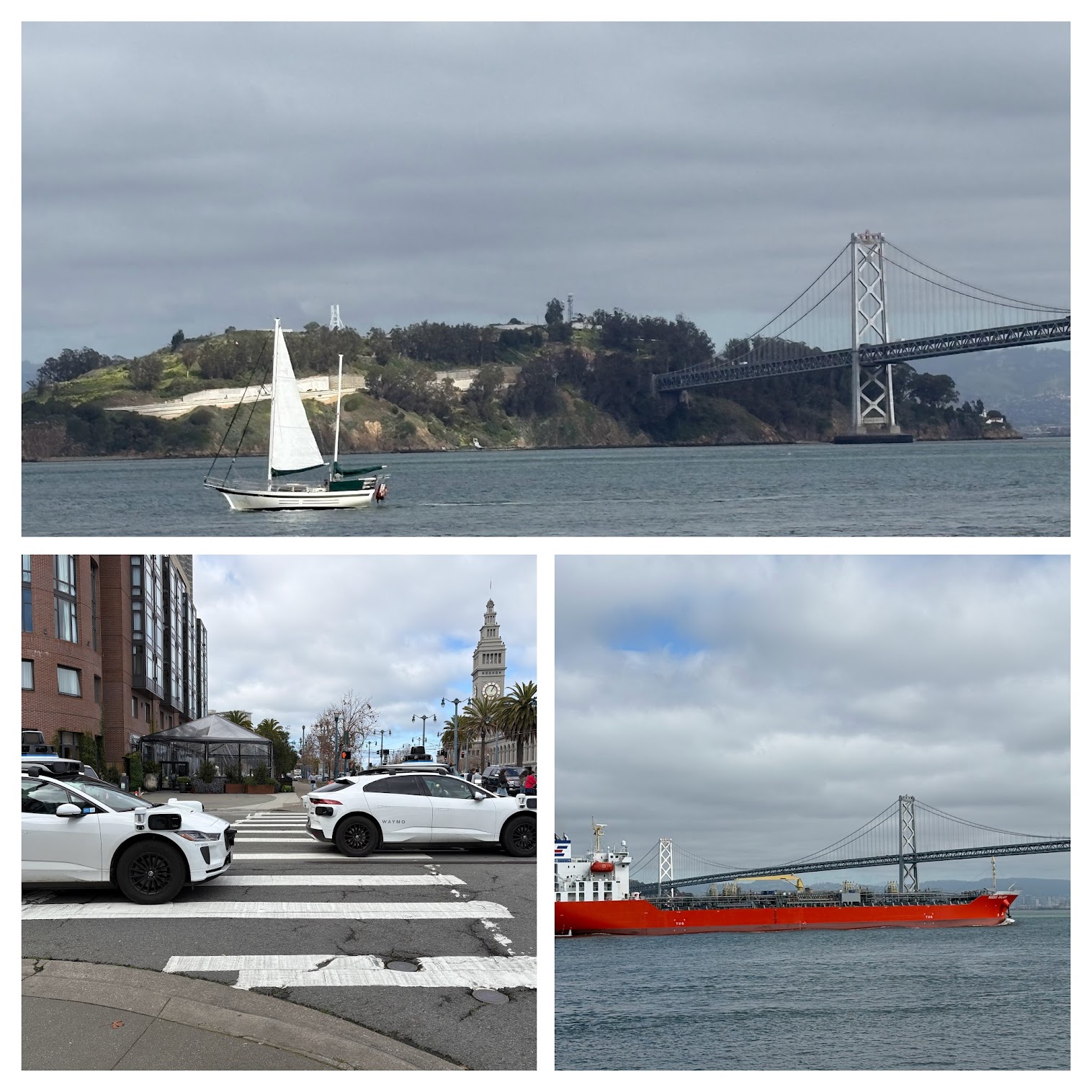
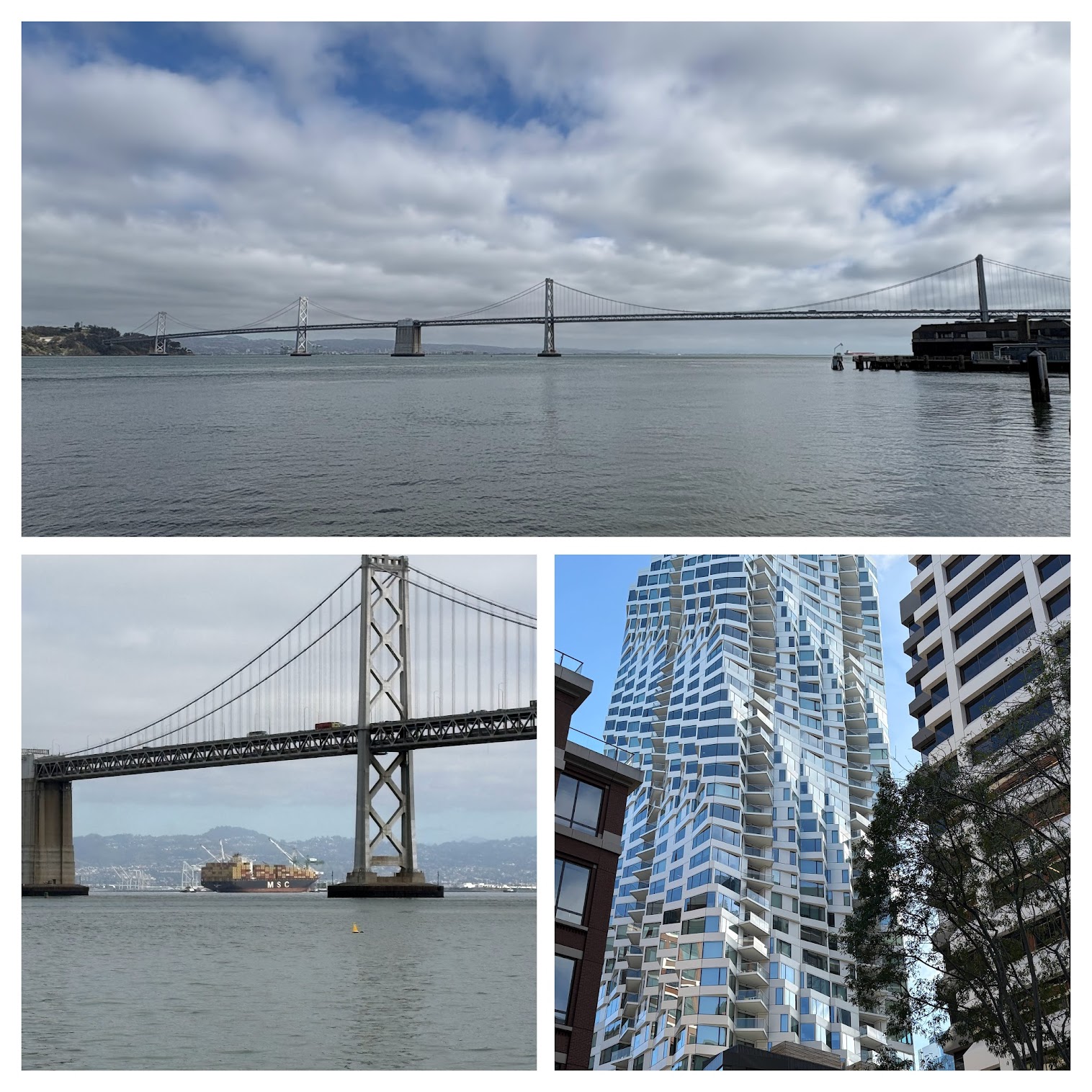
The transportation options in that one strip of land is astounding: cruise ships, daily commuter ferries, sailboats, underground trains, bridges – Bay Bridge & on a good day a view of the Golden Gate Bridge, cars, self-driving cars – Venmo’s, tramcars over a 100 years old. Some days, you can see the odd horse drawn carriage – a pure tourist attraction, but alien snippets need not know that.
Architecture:

The buildings are something else – towering in so many shapes and forms. Leaf-shaped one, conical towers, coat tower, Ferry building with its clock-tower, brick buildings, parks, baseball stadium, exploratorium, bookshops. There is plenty of scope for improvement as far as biomimicry designs go, but then were an earthquake to hit, these buildings can show you the difference a 100 years can make in our designs. That’s a towering accomplishment (Get it? Get it?)
Music, Sports:

The music from the subway or the freelance musicians is also sometimes wafting its way to you. The spring in the step of the tourists always a joy to behold.

Science:

The Science Exploratorium aside, you are assured of seeing a few flights landing or taking off from the San Francisco airport, a few Venmo cars gliding through the human-driven car traffic. Not to mention that if an aline knew how to operate a cell-phone, the reception and wi-fi is excellent there.

Food:

The food choices are a little too good to be true – Thai, Mediterranean, Indian, Mexican, Italian, Chinese, Danish, Swiss, American – all there. On the days they have the Farmer’s Market there, the fresh produce, flowers and fruits add to the flavors.

On a good day, the Ferry building area is pure beauty.

Which spot would you choose?

Exploring America’s Artistic Evolution Through History

The History of the United States

I just finished listening to a Great Courses Lecture Series on American History. I loved the chapters where the American History audiobook lectures cross-referenced the historical narrative with developments in Art History. After all, art is a reflection of life, and life is an inspiration for art. 

I am sure there are books and reams of material dealing with all of which I am about to write about. If you know of any good books or podcasts along these lines, please drop me a comment.

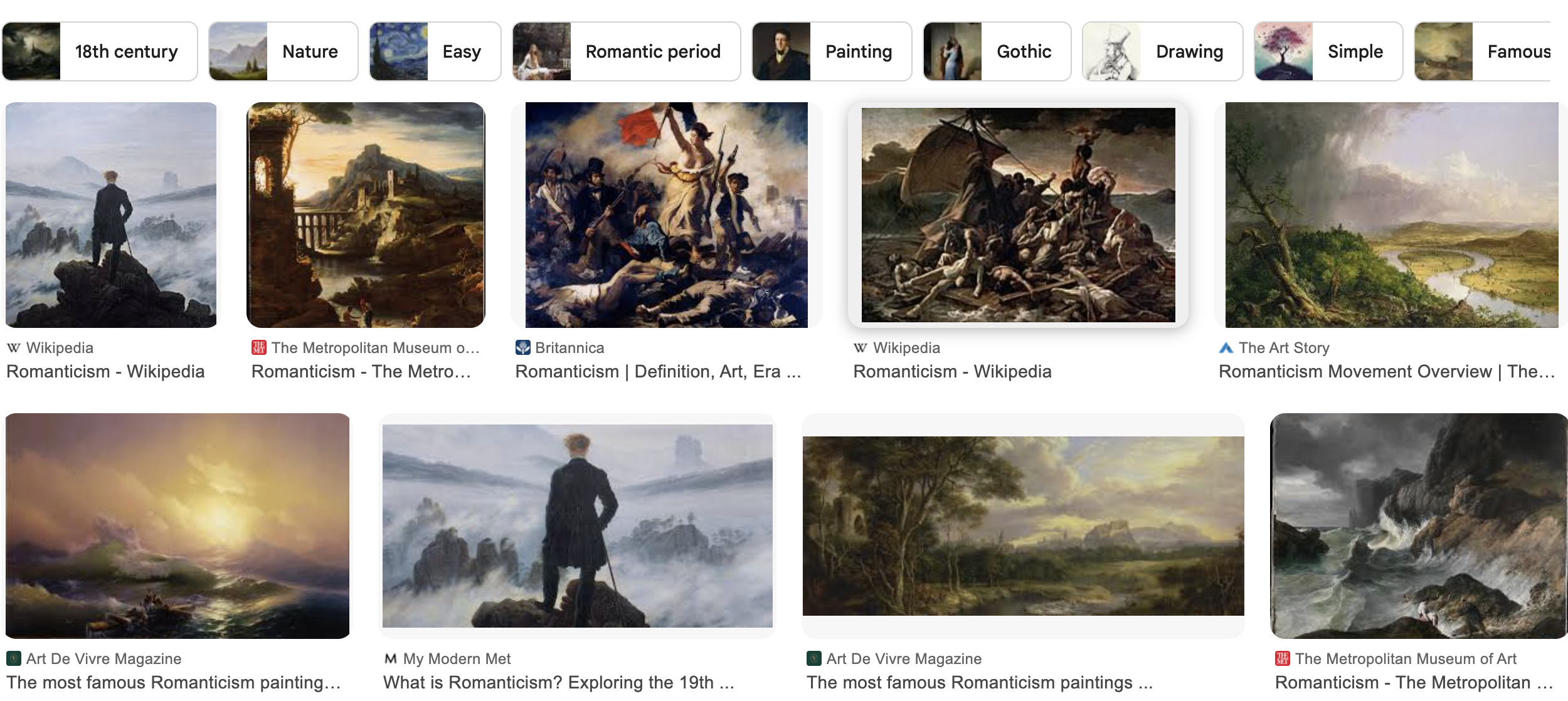
Romanticism (Early 1800’s) 

Romanticism in the early 1800’s from authors and poets like Walt Whitman and Ralph Waldo Emerson made their way into the American psyche with their hopeful and nature-oriented philosophy. The call for nature as a spiritual healer, a gentle reminder that life on Earth is bountiful even if sometimes hard. This was the time America was settling into itself as a fledgling nation – idealistic, ambitious, and prosperous.

The themes of art and literature spanned mystic nature, emotion, imagination, individuality, and inspiration.

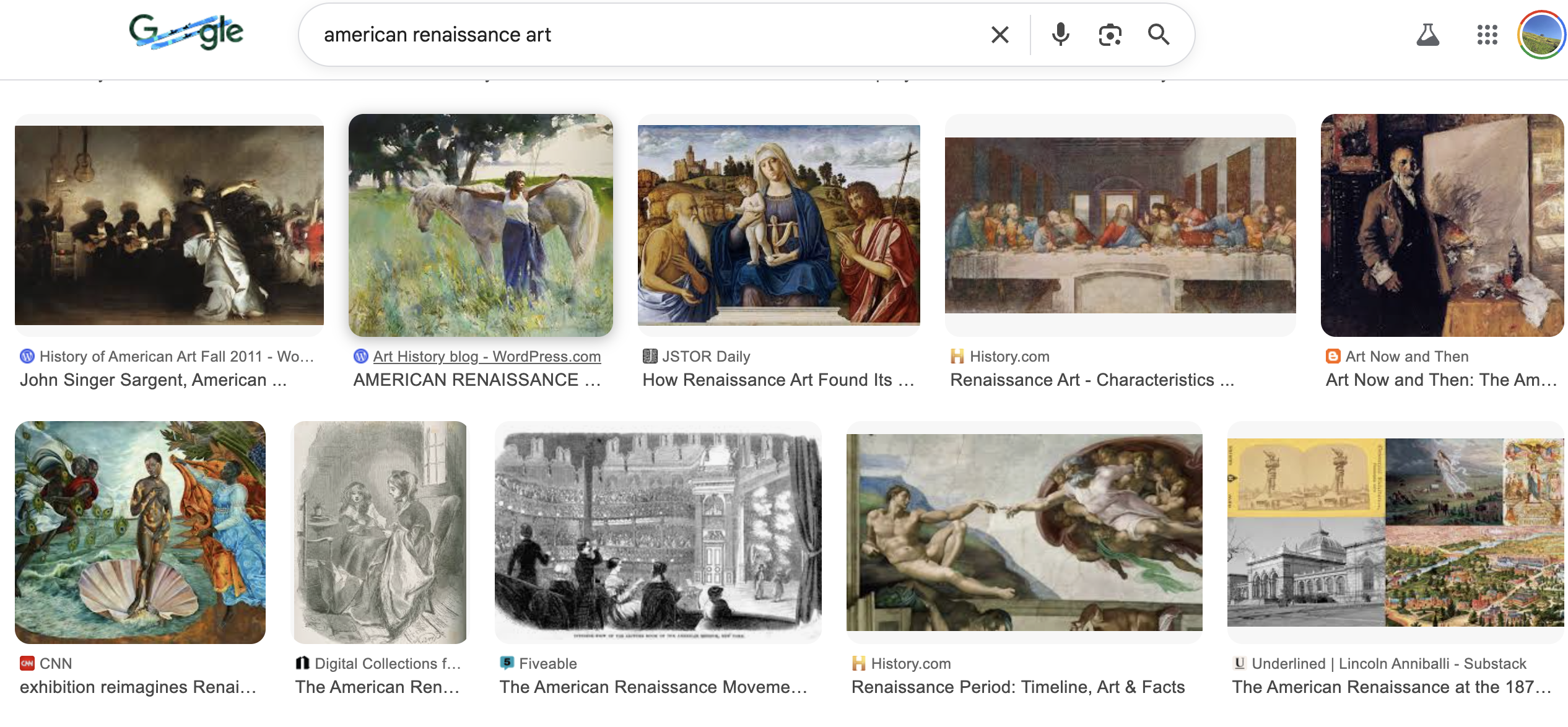
American Renaissance (Late 1800’s – Post Civil War) 

Then, in the mid-1800’s – after the Civil War and many losses on both sides, art and literature turned towards the American Renaissance. Nature was not the benign soother of souls anymore. It was the vast, terrifying force that could destroy. The darkness within. The ghost of reality underlying the dreams of the bright and hopeful. The likes of Edgar Allan Poe.

I thought to myself on a walk one day that maybe this was the growth that was necessary like the human teenage psyche needing to grow, deepen and mature. Knowing, becoming aware of the darkness, so we may shape our morality with knowledge. The post civil war was the Reconstruction Era. It was also a time of intense growth with populations migrating towards cities, industrialization replacing agricultural jobs etc.

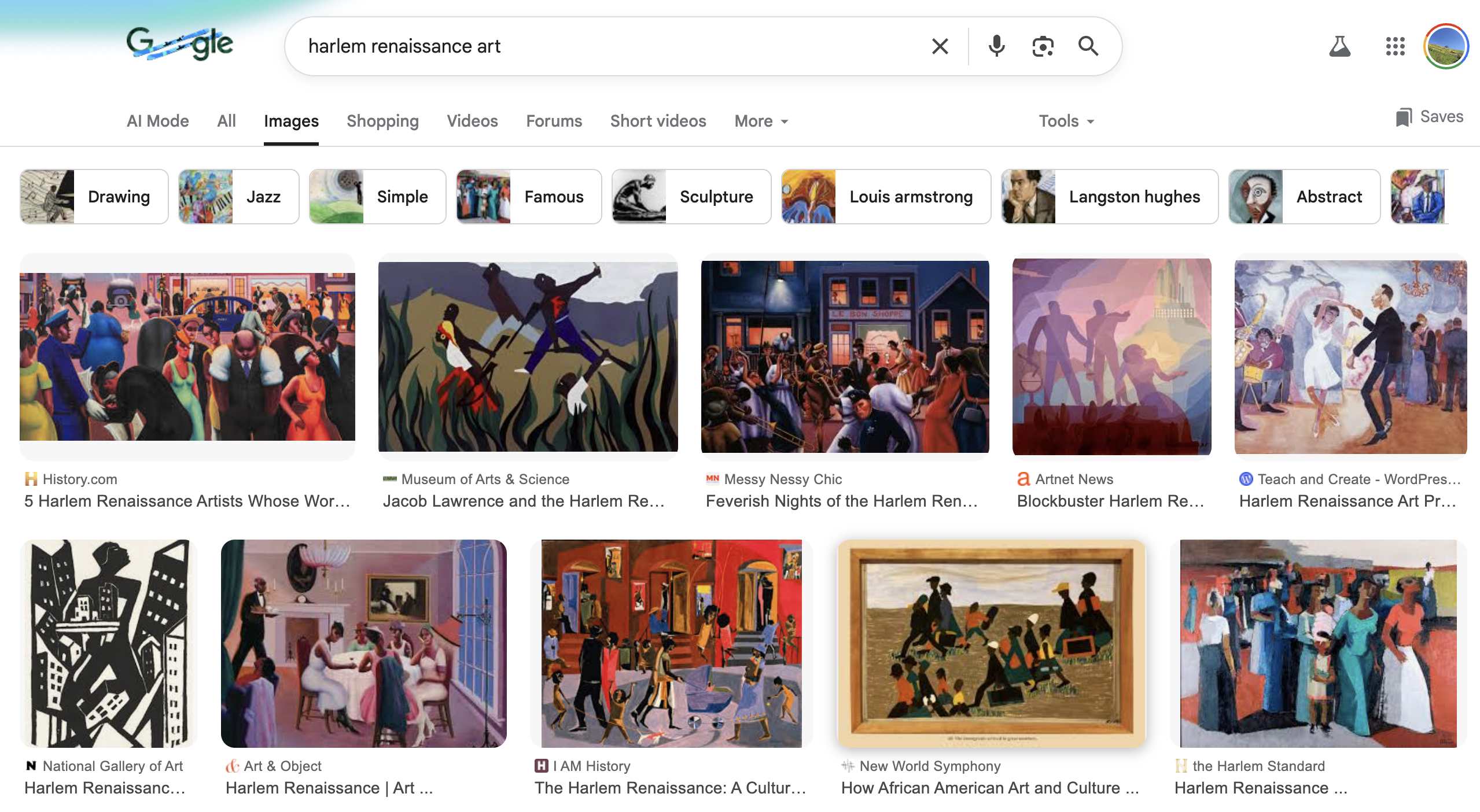
Harlem Renaissance (~1920’s) 

This period was followed by the Harlem Renaissance in Art where the reality shaped by experiences of people took hold. Art and literature tried to take what was life and reclaim our meaning and dignity through our shared and lived realities. Great Gatsby by Scott Fitzgerald served as a cornerstone for what greed could like, while Harlem authors like Zora Neal Hurston gave us glimpses into the lives of Black communities in the rural South.

The early 1920’s also gave rise to the Jazz Age and changes from the classical art forms from the past.

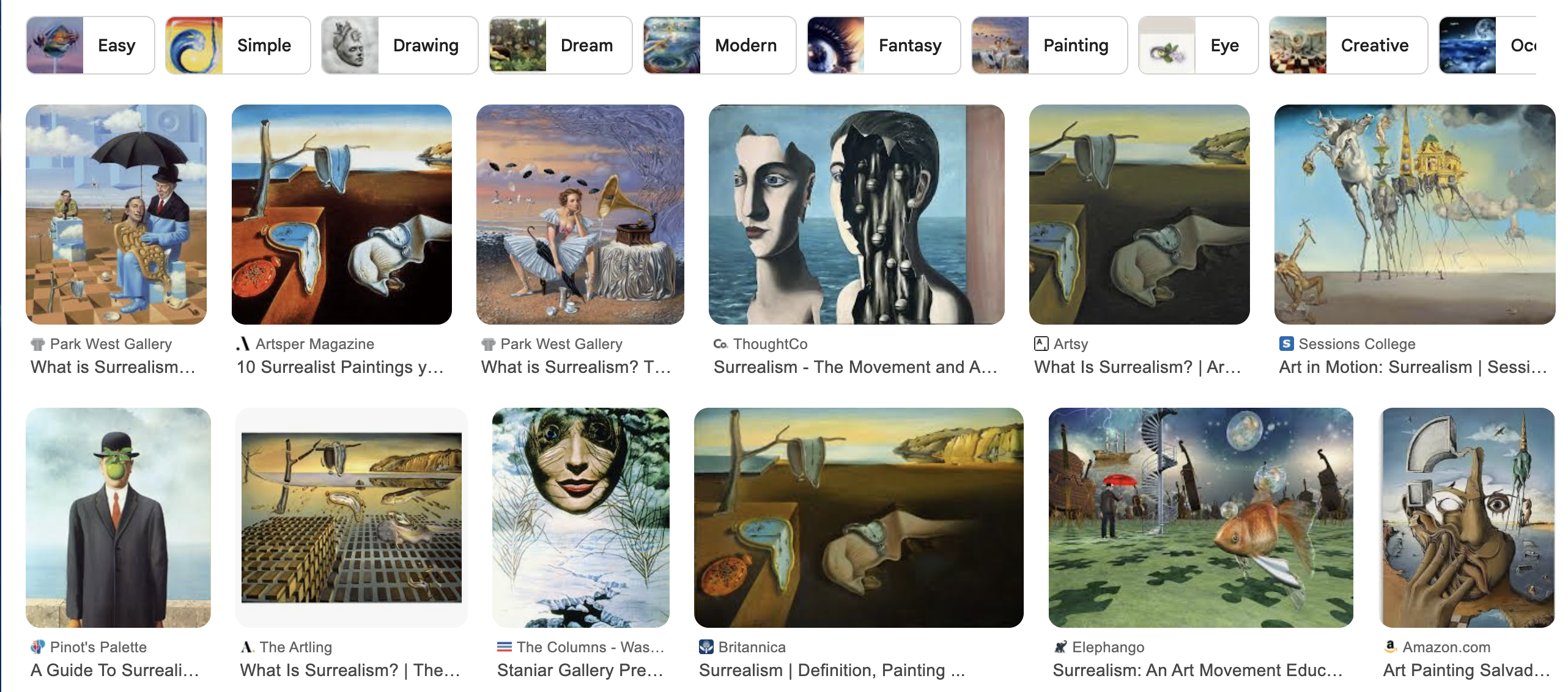
Surrealism (Post WW II – 1950’s) 

After the intense periods of the two World Wars with a depression sandwiched in between, the populace seemed to be in need for some hope, and an escaping-reality kind of theme developed. Artists like Salvador Dali & Frido Kahlo dipped into the realm of dreams inspired by Sigmund Freud’s psychoanalysis.  They gave to the public a taste of what it was like to bypass reason, and exist in a world of possibilities.

I thought it was one of those ways in which art could inspire life to be forward looking. After all, dreaming up what can be is just as crucial as depicting what-is, isn’t it?

The Journeys of Art & Humans

In some small way, it was like the progression of humans itself. We start off innocent, hopeful, trusting, and then become wary, cynical. From these experiences, is shaped a reality that is a sum of our experiences; and it either takes a determined person to evolve into the next version of themselves, or to fester in a pale imitation of what-was.

It is fascinating that Art itself can provide answers to our anthropological progression, isn’t it?

Please let me know what you think: Is the evolution of art as essential as evolution of life itself?

Once again, any pointers to books/podcasts/articles along these lines would be much appreciated.

Coming up soon: Art in the digital age – how do you think it will be classified and transformed?

River Valley Civilizations -> Digital Valley Civilizations

The History of the United States

I just finished listening to a Great Courses Lecture Series on American History. Over 48 hours of listening content aside, it meant I have been wondering and trying to piece together the deeper veins running through our history and why they are still relevant today.

Why is a leader still able to rouse such high levels of divisiveness around certain issues? Like immigration? I truly wanted to understand it.

I am no  political analyst. I am no historian. But even I know that immigration is an old wound. A scar tissue. A festering topic that never really leaves the American psyche. 

River Valley Civilizations to Digital Valley Civilizations

The strain of every bigoted immigration movement seems rooted in ‘Go-back-to-where-you-came-from’. This is an interesting perspective. Because if we go far back enough, that would mean all of humanity would still be clustering around the river valleys and deltas practicing agriculture with the annual flooding cycles.

The Egyptians eyeing the invading Greek with suspicion.

But here is the thing. We moved past that. We are no longer river-valley civilizations. We took to the open oceans. We found every nook and corner of land available for us to live on. We are now living in or moving towards digital valley civilizations.

We do not cluster around the primary vocation of those times – growing food. We cluster around the primary vocation of these times. Which is to earn livelihoods in increasingly complex domains using increasingly complex technologies. The prosperous have always attracted people from outside – whether as conquering hordes, or as people who simply were welcomed and came in to be assimilated.

So what seems to be the antidote?

Given this, two aspects occur to me. 

  1. Enable prosperity so high and peace so high in other parts of the world too, so that the immigrants who are flocking to America do not flock to America alone. This is harder, yes, but also the best path forward. It is what happened with the rise of the computer industry in countries like India and China. #EnableProsperity #EnablePeace.
  2. Immigrant workers have usually (willingly or otherwise) answered a call from America itself when human-power was limited. The Golden Triangle all those centuries ago, meant that America sought slave-labor from Africa and forcibly bought them to the United States to help with their cash crops and raising their families. When the railways needed building, America sought to bring in Chinese workers to do the work. When technical jobs needed doing, America legislated to have tech workers come in.
    So, the solution seems to be to raise the skillsets of what we need in our next generation. Prioritize science education, encourage research. Not the opposite. #EnableScience #EnableResearch

America took its time getting here to be the melting pot of civilizations. It has always dealt with changing demographics, but has also proved to be be best model for assimilation in the world. So why this turbulence?

What do you think? What are some of the solutions you can think of?