How COVID-19 Shaped My Blogging Routine

Syzygy

The blog is a familiar topic with the nourish-n-cherish household.

“How many posts have you written this month, amma?”

“This is going on the blog isn’t it?!”

“You should write about this in the blog, amma!”

The subjects who appear most often are by turns eager, resigned and accept their lot with good humour and grace. 

When I published my 1000th blog post, I was encouraged to write a special blog to celebrate the syzygy (aligning of the stars) that enabled me to continue writing.

1000 posts : A Special Post to Celebrate Syzygy

Now there is a different milestone – a smaller one, a different one. But something.

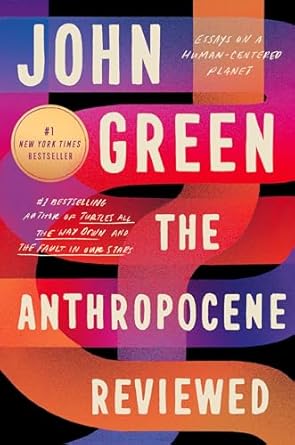
Atomic Habits

Half a decade ago, when Covid-19 hit the shores of America, something phenomenal happened. Travel stopped, non-essential services providers could not sustain, and I found myself faced with time that had been hitherto dedicated to shuttling to train stations, and standing up in crowded compartments being squashed with my fellow commuters, now available for something else. So, I landed up doing the things I liked most – hanging out with the family, walking, biking (we actually bought bikes just before the shutdown), reading (the library was a savior to so many families during this time) and of course, writing. My writing increased from a 4-5 posts a month to a 7-9 posts a month.

Well, it is half a decade since this happened. 5 years in which I kept the pace of the increased frequency. Even when the world around us opened up, economies fluctuated, inflation rose, elections came, and post-election yelps are still being heard, I kept the pace.

Covid and how it changed the world around us

Atomic Habits

“You don’t have to build the habits everyone tells you to build. Choose the habit that best suits you, not the one that is most popular.”
― James Clear, Atomic Habits

Doing something as a labor of love regardless of what it leads to seems to be my strength and my weakness. This month marks 7-9 posts a month for the past 5 years. 

The Mantra of Mass Misery

It was a beautiful weekend after a rushed week. On a whim, I decided on a walk by the bay. The waters of the bay with its myriad reflective powers, always helps to bring on the magic of expansive thinking. No two moments are the same here – the shimmering colours seldom fail to invoke that glimmering feeling of hope, the waves helping us think of the ebbs and flows of life. 

Meanwhile, out there, the world continued its dip further and further into its dystopian gloom, and I felt only something as powerful as nature itself would help. As I watched the birds titter and start their early morning songs, I mused on the callings of power. 

Promises, Promises

How ironical it was that every fascist dictator who came to power, rode on a promise of better times – often divisive slogans, and increased prosperity to certain segments, only to be followed by a regime running on a mantra of mass misery. 

After all, a prosperous populace is a demanding one. They want accountability, progress, intellectual discussions, better this and better that. They want to achieve prosperity, feel valued, etc – all the things abhorrent to total power. 

It isn’t even a month since the latest one assumed power and already society is reeling from the clutches of the many pronged tentacles of misery. It seems anything related to the finer and higher order thinking of humankind is not to be spared:  Art, education, humanitarian aid, medical aid, international peace. 

For once we get people worried about the daily grind, they would not have the power or splunk to protest, would they?  If they do, the next rule in their book states to create more and more distractions so that strife and misery are so widespread, no one is keeping track anymore. Keep moving their attention to the base of the pyramid.

It is astounding how so many fascists do not even bother to change that strategy, for it has worked every time throughout history. Every time the vulnerable and the gullible get taken in by promises of prosperity, till it comes back to bite them. Every time. 

“Voldemort himself created his worst enemy, just as tyrants everywhere do! Have you any idea how much tyrants fear the people they oppress? All of them realize that, one day, amongst their many victims, there is sure to be one who rises against them and strikes back!”

J.K. Rowling, Harry Potter and the Half-Blood Prince

While musing on the world’s spiral into fascism, my attention was brought back swiftly to the skies where a war was waging between a hawk and a couple of crows. Maybe the hawk had attempted to take a chick or attacked the crow’s nest, but the crows weren’t having it. If I hadn’t seen the savage anger and relentless driving away of the hawk by the crows, I might never have believed it.

Just like that, nature had shown the way out. Humans have spirit. We may not feel like we have much agency over what is happening now, but when things get out of hand, wouldn’t we, like the crows, rise against the hawks in our lives?

On Tyranny: Power and Compliance

On Tyranny

This book is a required reading for what’s coming.

on_tyranny

The book restricts itself to Twenty Lessons from the Twentieth Century, which is even better. For power hungry dictators have been there throughout human history, and the book may well turn out to be a treatise of its own, if not time-capped. Recent events are usefully analyzed from a technological and sociological view. After all, many of the fascists of the past century found themselves propped up through a democratic process, even if they refused to give up power democratically later on. 

One of the first topics in the book, On Tyranny – By Timothy Snyder Illustrated by Nora Krug caught my attention.

It talks about compliance without being asked to. 

“Do not obey in advance”

“A citizen who adapts in this way  is teaching power what it can do.”

  • On Tyranny – By Timothy Snyder

I found myself nodding along several times during the examples given from the Hitler regime, or sociological experiments conducted since, and was quite shocked to see it all play out again in recent times. 

For instance, the past week itself gave us examples of ‘Do not obey in advance’. It was in the flurry of news items about Meta – the mega social network bending over and showing what it is capable of doing for Donald Trump’s regime. The company removed the fact checking team, and essentially stopped DEI efforts.

Quote from article on removing the fact-checking intiative:

“Everyone is entitled to his own opinion, but not his own facts,” the late New York Sen. Daniel Patrick Moynihan memorably wrote four decades ago.

As far as DEI efforts go, to get to a point where a DEI team was necessary took many decades of work, mindset changes and progressive ideas. To remove it all in one stroke sets us back by at least two decades, does it not?

Now slowly think of all the programs and places in which progress has been painstakingly achieved through education, forward thinking initiatives etc, and the mind boggles on what lies ahead of us.

In the past few weeks, there were several discussions in which we wondered:

  • How do we know when a leader is likely to become a fascist ruler?
  • How do we know whether our systems designed to survive democracy will do so?
  • Which of the very institutions that help towards justice will be disbanded or at least thwarted in their efforts to do so?
  • And many more. 

The questions will answer themselves soon, shall they not?

The Role of Seaweed in Reducing Methane Emissions

The Odds of Our Survival

I was listening to a podcast by Yuval Noah Harari (How humans came to rule the world) and he was saying that if he were to draw odds of survival in the wild against a lion or a zebra, he would not rate himself too highly at being in the race at all as much, but as a species we do seem to have gone above and beyond. It is true. While human-beings can be extremely frustrating , what humanity is capable of achieving is truly astonishing. The eradication of so many life-threatening diseases such as small-pox, continuing medical advances including the recent covid vaccination, and so much more.

Humanity never does seem to have a dearth of problems to solve too. Maybe it was one of the things that came out of Pandora’s Box too. This ability for every solution we create, we seem to have more problems to solve. The industrial revolution led us to climate change, increased technology and reliance on over-stimulation with social media etc is leading to increasing mental health problems. But still we persevere on. When industrialization swept the globe, many feared the end of meaningful work, but the nature of work has morphed and morphed into something our ancestors can hardly recognize as work. 

Climate Change

Take for instance all the ways in which we set about solving the climate change problem (after having caused it in the first place – true true! ) 

While talking to college going young adults, one of the majors that keeps popping up is environmental science, ecological preservation, green engineering – all fascinating fields related to tackling the increased effects and problems of climate change.

That is the redeeming quality too of our sometimes frustrating species. 

This piece of news make me rejoice in the capabilities of human-beings, and the beauty of our planet earth all at once. 

Feeding seaweed to cattle reduces their methane emissions by upto 40%. Considering that 40% of methane emissions are from cattle fodder, this is a huge step in the right direction indeed.

https://www.anthropocenemagazine.org/2024/12/scientists-just-took-one-step-closer-to-a-climate-friendly-cow/?utm_source=substack&utm_medium=email

The oceans coming to our aid again! Seaweeds – truly if there are deities in the universe, the ocean would have to be ours. 

Methane production from live fodder constitutes 40% of greenhouse gases, and if feeding cows seaweeds reduces that by 40%, we may very well have a significant dent on the problem (16% reduction in methane will be a significant dent if all cows are able to get on a seaweed diet.) 

I want a beautiful word for the interconnected-ness of the universe

Seaweeds 🙂 The beauty of it is astonishing and the more I think of all the wonders that bound us together on this small planet, the more I am astounded by it. The interconnectedness of it all sometimes has me breathless in awe. How did we get to call this planet home? 

I ramble, but it may well be tipping point for the planet.  If the doomsayers are to be believed, the breakthrough comes as a critical moment.

The Ocean Deities Defy Pandora

It is as if the ocean deities are having a laugh and teasing Pandora with this win, and and with wins right now – we should take all the logical and sensible ones while we can.

Embracing Simplicity in Dramatic Times

The Calm before the Storm

I stood for a few minutes under the cloudy skies of winter, looking out into the ponds, lakes and rivers near our home. It was after the first proper rainfall of the season – and I was trying to capture the still quiet in my being. The stormy clouds above were portending another storm coming, but for now, all was calm. The herons watched (their demeanor not as impassive as it usually might be perhaps, or perhaps that was my own anthropomorphism) as the clouds gathered strength.

I couldn’t help asking the universe to help us through stormy seasons with the same impassivity that these herons showed.  

img_3851

As the year wraps, I feel a sense of dread. Humanity’s craving for the dramatic is probably a defining characteristic of the species (although to be fair, I am not sure whether geese crave the drama too. They do seem to get all agitated, and excited for seemingly no reason when you observe them).

A Dramatic Shift?

Regardless of political leanings, I think we can all agree that the change in presidency is going to lean heavily towards the dramatic – we saw it all the last time around. News frenzies, whipped up emotions, and a lot of emotions that probably look good on reality shows, but not in our daily lives. 

“Sometimes I wish something dramatic would happen once in a while.”, said Rilla

“Don’t wish it. Dramatic things always have a bitterness for someone.” said Miss Oliver

– Rilla of Ingleside: L M Montgomery

America did not just make an election choice, it elected for chaos. We seem to have forgotten so many things:

  • We forgot that the hiring and firing, and the incessant news cycles, gave little room for anyone to actually do any of the work that mattered to them
  • We forgot that thinking in long-term strategies is what separates humans from any other species on the planet – save ants, and squirrels maybe. 
  • We forgot that one ridiculous policy after another is all it takes for the house of cards to start crumbling down.
  • We forgot that having a leader spout not just dangerous, but frankly lustful language is what their young daughters and sons are listening to. That will be their new norm – it hurt me more than anything that the voter turnaround was significant in the 20-30 young men demographic nationwide. That means, we have a value system that is ready to spout whatever it is they are going to hear in the next few years for all their wives and children.
  • We forgot the study where sociologists were baffled when crime went down suddenly in the late 80’s. It was because there was a whole generation of unwanted babies who were not born thanks to Roe V Wade in the 70’s. In the 80’s, these babies would have entered their troubled adolescence trying to make sense of a world where they were unwanted. 
  • We forgot how easy it was to make one feel as ‘other’ – divisive lines everywhere.
  • We forgot the lack of empathy and compassion that our daily messages bore.

The older I get the more I wish people interesting, dull, and predictable lives – it seems so much better than the dramatic. 

“After all,” Anne had said to Marilla once, “I believe the nicest and sweetest days are not those on which anything very splendid or wonderful or exciting happens but just those that bring simple little pleasures, following one another softly, like pearls slipping off a string.”

L.M. Montgomery, Anne of Avonlea

Bracing for the Storm

I opened my eyes and took in the heron by the lake. It had barely moved – because it knew that storm or no storm, it would have to wait and pass the moments in the day as best as it can. 

I looked up and saw the storm gathering force. I felt the first few droplets fall on my nose, and hurried back. It was time to brace for the storm.

Preparing for Tsunami Warnings: Lessons Learned

 Emergency Warnings – Tsunami 

A week ago, we were all a-twitter. You see? We received a tsunami warning. There had been a 7.0 earthquake in Northern California – about 3 hours north of where we live.

We technically live not near the coast but we are quite close to the bay in the Bay Area.

This was the first tsunami warning we had received. So, while the tsunami warning made sense, we also had no idea on what to do with it. So, we did the only thing that humans in modern times do: Took to the phone and tried figuring out what others thought.

What is a yellow warning? We live a few miles from the shores of the bay – could that mean a sudden inundation?

Responding to Warnings

There are times when mass communications (by that I don’t mean communicating to the masses, I mean masses of communication) make sense, but this was not one of those occasions. Everyone said different things, people worried. Staying away from the bay seemed like a good option, but apart from that, no one had any idea on what to do. Should we head to the hills like we’d read long back somewhere?

So, we all did a lot of hand-wringing and sent more messages. Ultimately, the tsunami warning was revoked, but not before letting us know exactly how unprepared we were in case of a real emergency.

When that alert had come it was up to us to determine the next course of action. For one thing, we were a couple miles inland, so what was required of us? That’s when I realized the old fears I had for our little family when we both worked on the other side of the bay. I had wondered what might happen in case of an earthquake that stranded us all on the other side of the Bay. But a Tsunami could just as well have done that. 

The tsunami warning was lifted, and in a few hours, people went about their business as usual. Which is to say traffic snarls were everywhere, week-end parties and events did not bother to acknowledge that which could have been life altering.

It is a testament to the human temperament that we can so flippantly treat that which could have been a disaster with a wave of the hand. 

🦌 Emergency Drills -Earthquake, Fire 

I volunteer in elementary schools from time- to-time. The experience is a wholly enriching one as I get to work with children – which is refreshing. They are inventive, imaginative, kind and un-jaded in their outlook towards life.

I got to experience an earthquake and fire drill with them one day, and I cannot tell you how impressed I was by their skill and competence. Even when scrambling under desks – they looked out for each other as much as possible. When they filed out into the fields nearby, they kept to their classrooms and straight lines, and I was more than impressed by them on more than one occasion that day. 

I had seen firsthand how incompetent adults could be, when the tsunami warning came, and it was refreshing to see children knowing how to handle fire and earthquake warnings.

I suppose natural disasters are called that for a reason. They are erratic, chaotic, and tend to surprise humanity every time even with emergency warning systems, safety drills and the like. The school systems managed to highlight these things and taught me a thing or two: keep calm and fall back upon training.

Exploring Happiness: Is It in Our Genes?

In what was an intriguing chat with the son last evening, we poked around the ethics of genetic modification. Apparently, that had been an area of discussion in their classroom, and the son was keen – the novelty of a discussion with multiple viewpoints at that age is amazing. I smiled and listened to him talk offering a question here, a hum there, an insight elsewhere.

“What do you want to do with human-beings if we are smarter?” I asked him.

“We could fly.”

“Cool! But then what?”

I took a deep breath and said as casually as I could. “Everyone wants to be smarter, for things to come more easily to them. So we wouldn’t have to spend so much time figuring things out. But – the thing is, if everything came easily, we would not know what to do with all the time we have on our hands. What do they say? An empty mind is a devil’s workshop? I don’t know – I think it could lead to more mental health issues – what do you think?”

He pondered this for a while, and said it was an intriguing thought. 

Who Survives?

It reminded me of another chat the husband and I had a few months ago – on the larger theme of the future of humanity. With smarter, faster, stronger, what would happen to humans? The husband took a moment to gather his thoughts, and said, “Well – it will come back to good old basics then, wouldn’t it? Survival of the fittest. Those humans who can learn to be peaceful with themselves will ultimately win out – that is the strain that will survive.”

I was impressed – yes, no matter what we had, it ultimately came down to temperament, attitude, and the ability to be happy, didn’t it?

Generosity by Richard Powers: The Happiness Gene

Incidentally the book I am currently reading: Generosity by Richard Powers, talks about a variation of this: The Happiness Gene.

The story tries to figure out the reason for Thassa’s happiness. Thassadit Amswar is a refugee who has fled the Algiers region. Her brother is still under house arrest in a totalitarian regime, her parents are dead after years in which they were stuck in the midst of a civil war that raged around them, and any which way you look at it, she should be morose, sad – not chirpy, cheerful, and full of light.

The whole set up reminded me of one of Rumi’s sayings that have been making its way around the instagram world: something to the effect of:

When the world around you is dark, you could very well be the light.

Rumi

In any case, somehow Thassa’s ability to be happy attracts attention – first from local friends, then a policeman, a local news report diagnoses her as having ‘Hyperthymia’ – a condition of overwhelming happiness, and goes on to attract those who want to auction and buy her eggs, decode her DNA, figure out the happiness gene. She finds herself unmoored by how people feel bad because she is happy, and having to navigate the horrors of fame.

In Essence

  • Is there a genetic component to being happy?
  • If so, can that be picked and chosen for our offspring in the not-so-distant future?
  • What issues would that create for mankind? For just as sure as we are of creating solutions, so too can we be sure for creating problems for ourselves, isn’t it?

Stories Meant for the King

The husband was narrating life in his humble abode as a child to the children. “My ‘room’ ” he said, picking the quotes like the children do, “was under the steel cot. I was the Hero there. If my brother decided to join – then We Were Heroes There, or We Were Devils There. But it was all good fun.’ 

The children guffawed with laughter. This narrative was a familiar one, and I smiled. I remembered those steel cots. Appalling things they were – with steel rods painted dark green with apparently no aesthetic appeal. They were sturdy – I’d grant you that. They were the mainstay in almost every middle class home in India in the 80’s. As children, we had stress tested them by leaping on to them from cliffs on high cupboards, using them as rafts from oceans of swirling creatures below etc, and they did not break. Steel, you know? 

How we carve out space for ourselves when there isn’t any can be a problem. But children seem to find solutions to this problem in the most creative manners possible. 

The husband’s abode growing up was a small house – children did not have separate rooms. “Just the reality!” he shrugged when the children looked at him surprised. 

“Under the bed is a spacious place for a small boy, you know?” he said.

The daughter and son exchanged glances.

The daughter said, “We love having our room!”

“Decorated just the way we want too!” said the son.

“Our room under the bed was too – we had cobwebs in the east-facing courtyards, and well, lizards on the south-facing side. Beat that!” said the husband to his awed audience. 

Raja Kadhais : Stories meant for the King

The husband was reminiscing about his ‘room’ under the steel cot, “In there we listened to all sorts of ‘Tea’ (teenage slang for hot-off-the-stove spicy news). Things we should not be listening to. Things that we should, we ignored of course. Your grandmother was particularly adept at noticing when one ear would dance for the juicy tales. I tell you, she could see the ears squirm, and she would send us out to play  – “This isn’t for you – Raja Kadhai. (Meaning stories meant for the King )” she’d say. Well, she didn’t receive the memo about my kingdom under the bed I suppose! Anyway, those Raja Kadhais were the best!” said the husband grinning from ear to ear. 

I always like the way the daughter finds her space wherever we travel. In the cramped space of a car, she’d make her ‘room’. In a shared hotel room, she’d put up a sheet like a tent and make her ‘castle’. Her ‘room’ is not always a room, but she manages to make it so. Her space.

When AirPods Snuffed out Stories Meant for the King

That day, though, I was annoyed at her for not listening in. Here we were discussing things that would’ve been amazing for her to know, and she had plugged her ears in with noise-canceling headphones, pulled a blanket in the back-seat and gone on to tune us all out. Raja Kadhais, Tea – nothing. 

“Is this how life is going to be with these blasted devices? In one room, yet so far away?”I ranted to the husband later.  

“Leave her be! She is a teenager, and teenagers require space.” he said, taking his daughter’s side (as usual).

I rolled my eyes at this. “Isn’t receiving this kind of input critical while growing up. How many stories we’d heard in this manner? Not explicitly told to us, but enough to give us an idea of the world around us.” 

“They’ll find ways to get it – social media?”

“Instead of stories from adults in hushed tones?” 

Imagine my surprise then when I saw these Japanese headphones that promised to pop the bubble of silence : Popping the bubble of noise canceling headphones. These headphones are supposed to let background noise in, so we can still receive sensory information.

I admit, I rolled my eyes like a teenager at this. Really – all this progress. I wonder when we reach a point of diminishing returns and have to return to the tried and tested good old fashioned ways. You know? Go back to fiddling the knob on the rusty old radio with one channel to tune into.

https://www.newyorker.com/culture/infinite-scroll/popping-the-bubble-of-noise-cancelling-headphones

Which of the current technology trends do you think will bear the test of time? I thought noise-canceling headphones were the thing – but apparently not.

🐘🐘🐘🐘🐘 The Tusks of Extinction 🐘🐘🐘🐘🐘

The Mammoth Tale

Few passages capture the bane of consumerism like this one does. It is from the novella, The Tusks of Extinction by Ray Nayler.

The premise of the book is an intriguing one. 

  • It is set in a future when mankind has figured out how to upload one’s consciousness into the cloud. A manner of immortality. This is very much in the realm of possibility.
  • It is also set in a time where the Siberian mammoths have been resurrected. This has already transcended realms of possibility into reality

The wooly mammoth is being resurrected – being cross bred from the genetic remains frozen in the Siberian Tundra with  the Asian elephants (because they are gentler than African elephants). 

Thus, begins the tale of a doctor whose life was hacked from him moments after he uploaded his thoughts and knowledge to the web. This man, Dr Damira, was a passionate naturalist, a man who studied the African elephants and their ways. He fought for their conservation but failed. This is set in a future where the last of the elephants no longer roam the Earth. 

tusks_extinction

The resurrected mammoths in Siberia are facing difficulty thriving in the wild. They have all been bred in captivity, and do not understand how to survive the demands of living by themselves, caring for each other, and forging paths so they can forage and live through the cruel winters. They are thus being killed by poachers in a cry that reminds scientists of how the elephants were all killed off one by one. 

In an attempt to give them a chance at life, the doctor’s consciousness is uploaded to a mammoth – a matriarch by the name of Damira. 

Bane of Consumerism

There are several aspects of this novella that can appeal to us, but one in particular stood out to me, and that was how our consumerist culture alienates us from the natural world. For we buy things, we want things, we accumulate, we hoard – who is it hurting? I am earning and I am buying. It is all helping the economy is it not?

Extract:

In offices-a tusk in a case, beautifully carved, transformed into a world of its own, worked by human hands into a chain of elephants walking trunk to tail. Beautiful, lifeless elephants carved from the destruction of an elephant, hacked into what had once been a part of a body, a tooth, a tool. A part of a life.

“Among the skyscrapers, there were also older places-little streets of cramped shops, survivors from another Hong Kong. Marginalia that had been missed by the eraser of progress. And there, in the shop windows, so crammed with clever things, there it was. My eyes found it over and over again. Ivory. Ivory jewelry, ivory stamps used to sign decrees that were meaningless now, ivory game pieces of every kind. Ivory turned into useless gewgaws, dripping with the blood in my home. It could be carved into any lovely shape they wished, but all of it began in killing. No-more than that all of it began in killing that took place far away. That took place somewhere the people who thought of ivory as a material could not see. Killing that took place in an extraction zone.

I remember the horror I felt when I first learnt that certain types of leather were obtained from the skin of crocodiles and were thus priced higher. 

Cities like Hong Kong and New York and London at the center, vortexes into which the currents of trade accelerated, into which goods from all over the world were pulled. Places where things became materials. Where things became commodities.

Many of us rarely stop to think of the source of all the things we use as part of our daily lives. In all honesty it is overwhelming to do so. How does the kidney bean come to be in its packet in the grocery store? Once we start down that road though, what about the almond flour, the diamond ring, the leather handbag, the silk scarf, the perfume, the spice, the watch, the gold ring, the ceramic jug? Everything has its tale, its journey, its place in the human chain of wants and needs. 

What Can We Do?

In reality, we cannot give in to an almost paralyzing analysis of source-to-table for everything we consume. Is there economic exploitation along the way, unscrupulous practices, inhumane treatments? Would we be happy to know it all and make informed decisions – yes, (I am hoping that humans have enough humanity to make the right choices if we do), but can we do so? Not always. 

I spent a pleasurable few hours at the mall the other day, and found my fellow human beings doing the same. Glancing around at the happy faces of those of my fellow humans that morning, I did not see malice or greed – I simply saw folks at a mall on a rainy week-end. 

I like that mass production has made life easier, the jobs it has created, alleviating entire nations from poverty. I like that poor children can have new clothes, and that horizons have expanded thanks to the general prosperity of nations. I do not, however, like the ever-increasing pressure to produce and consume more. 

Is the economy to be weighed against the Earth’s resources at every step in the mall? Or just more more meaningful consumption? I do not know.

😇 Even AI Knows 😈

A Guild of Authors

A friend and I were returning from a meeting in which authors from different genres were presenting their works. We fell to discussing the books that appealed to us, and what worked in the format, and what didn’t. I, for one, felt that giving folks a platform to present their books, while noteworthy, could just as well have been done via a YouTube short, but what would have been harder to achieve would have been moderating a discussion about the overlapping topics between the authors. That was something I would have loved to see.

A Company of Authors – Stanford Guild

The sections were grouped together by genre, and topic, so it would have been a good panel to have discussions around. 

Even AI Knows!

As conversations usually go, we meandered, and I said something to the effect of the housework and the truth of an Indian woman having its effect on writerly ambitions etc, to which he mentioned a joke he’d chanced upon, and I guffawed at the truth of it.

“With AI, I thought, it would take over monotonous tasks such as dishwashing and house cleaning, so I could take up Poetry & Art. Instead AI has taken up what little I had of Poetry and Art and left me to do the dishwashing and cleaning!”

Even AI knows to steer clear of household tasks, while humans (women still bear the brunt of the housework) are in charge of these mundane tasks. Who says the universe doesn’t have a sense of humor?

“Really! Of all the things I wanted help with – it was Art that was the least. Give us one tough thing to spend our lives mastering and perfecting!” I said. “Help me with robots – one for the chores, one for help to care for the aged, another with companionship for the lonely etc. Why art, literature and poetry?”

“I do think there are startups for every one of these in the off-ing somewhere.” said he – sanguine as ever and optimistic in the ways of the world’s future.

He was right of course.

Intuition & Instinct?

It did help us loop back to a book that was discussed in which the author spoke about intuition/instinct being a precursor to our conscious thinking, and whether AI would be able to simulate that level of prescience. Which made me wonder, whether that was what made us human, but plenty of us have learnt to ignore these things over time (after all, we don’t need to know when a tiger is lying in the bushes). But would it help us identify dangers in our life?

https://open.substack.com/pub/managingeditor/p/surfin-mia?r=2e6vr0&utm_campaign=post&utm_medium=email

More importantly, if that too can be modeled, what does that leave us with to claim our humanity? Messy emotions and imperfect decisions maybe?

Which brings me to the most important question: What would you like AI to help with, and what would you prefer AI kept is nose out of?