“I may have just filled your phone with a bunch of useless pictures!” said the son.
I nodded. Par for the course. Not like in our childhood, when you had to think through getting a picture developed in a store and wondering whether a picture is worth the wait, is it? You just delete them, or worse archive them, never to be seen again. Somewhere. Sigh.
He was still thumbing through his pictures with a commentary on the side. Apparently, on several artistic ones of M&Ms on a plate 👀, when he stopped and said.
“Oh well – now I don’t feel so bad!”
I looked up. What was he on about?
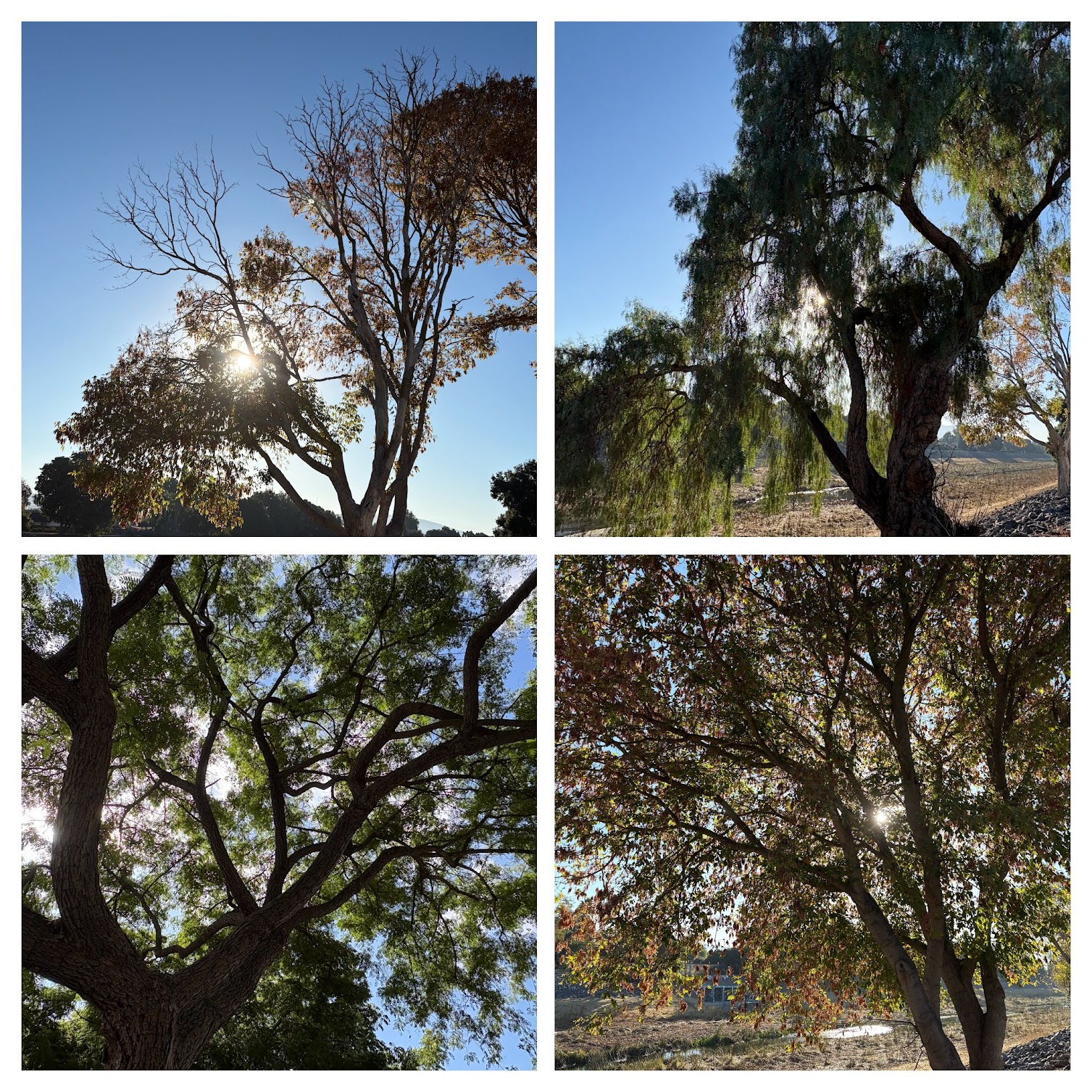
Komerebi – The dappled sunlight shining through the trees
“There are a whole bunch of pictures of … yep…. Pretty much all of them of trees! Goodness!”
I laughed. Then, feeling a little embarrassed, I confessed. “You know? On my walk the other day, I had this urge, nope…scratch that … It felt very important that I must try to see the differences in the way sunlight filtered through the old oak trees, the weeping willows, and the pining pines.”
“Oh Amma! You are a kook! How long did you do this?”
“I don’t know. Not very long, but I kept clicking knowing fully well that I may not exactly go back and see them again.”
Many to Solitary
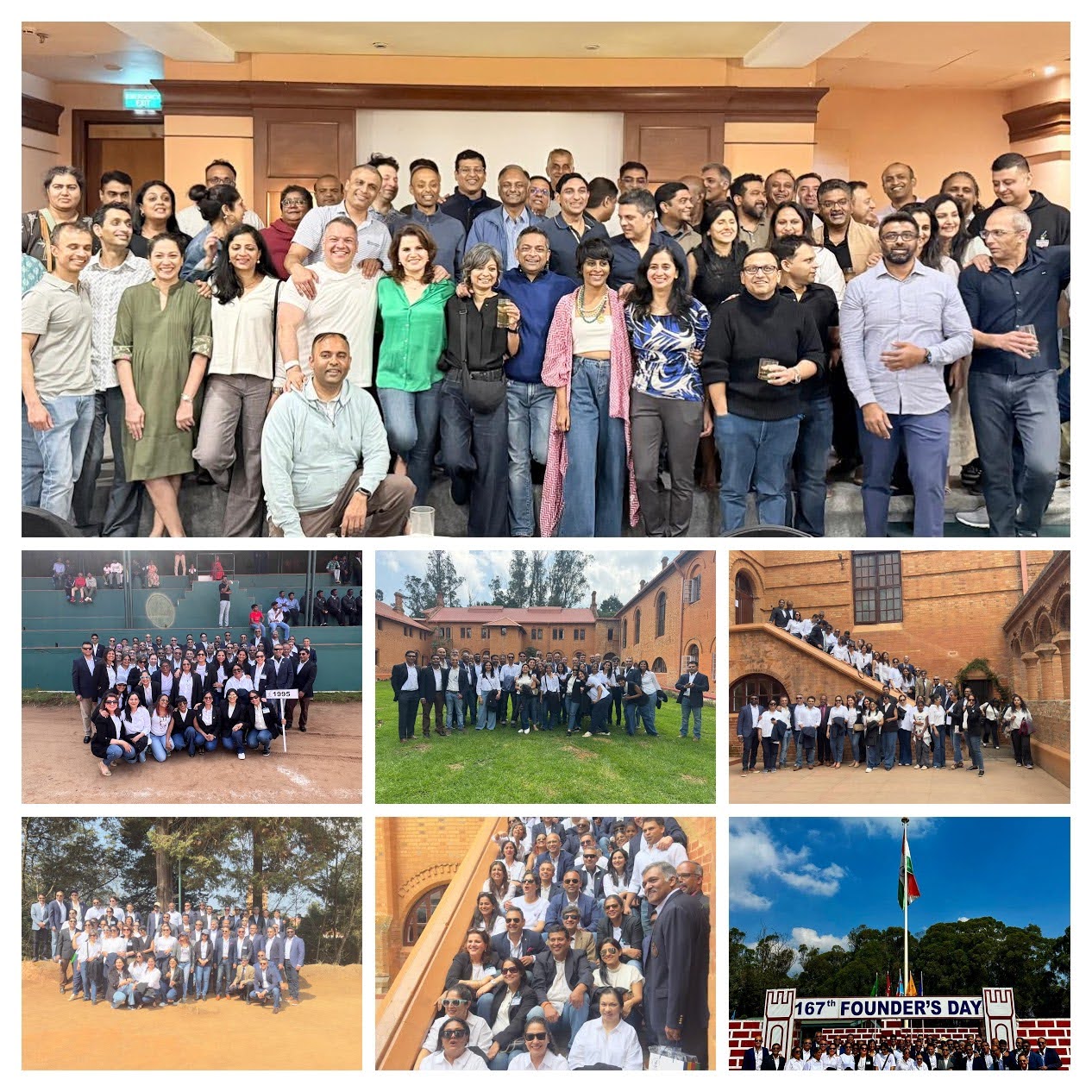
Oh! How technology has spoiled us? I don’t think there is a single photograph in our childhood albums of light filtering through the leaves. If there was a leaf you liked, you picked it up, and crowded as many people as you could around the leaf to get in that picture! The poor leaf squished and forgotten, and all of us looking mildly surprised at being included in a picture of a leaf that isn’t even visible. We did the same thing when we met up decades later at our school reunions. We crowded in front of the lawns, jacaranda trees, clock tower, and the bougainvillea plants, no clue why the background was so important, and the background completely forgotten with all the noises and laughter with folks in the foreground. It was marvelous.
I peered into the phone, and saw he had started looking at selfies taken a while ago by his sister. A teenage phase I’d like to call them – but these were all solitary hearts beating alone. Only context made it known that there was a crowd of loved ones around her that day as she took pictures of her nose from a 30 degree angle, and of her reading a book from the 130 degree angle. Obtuse. (I meant the angle.)
Precious to Abundant
Was that the trend of technology and advancements though? This move from crowded/community to alone/aloof lifestyles? Precious to Abundant.
Hmm…I peered out into the rays of the setting sun, and shelved philosophy for another day. “Maybe we should get a picture of the sun’s rays through the filter on the M&Ms,” I said, and we cackled. It was time for another picture – combining our objects of interest this time.
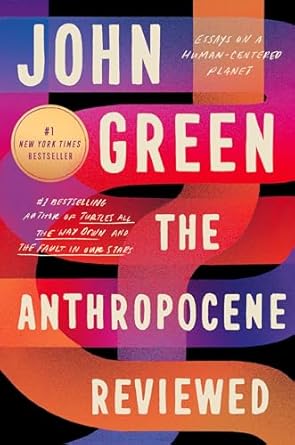
In the book, The Anthropocene by John Green, there is an essay in which he he mentions Mark Twain’s life being sandwiched between the two appearances of Halley’s Comet 76 years apart. He was born the year it was born, and he wrote famously the year before his death that he hoped to go out with it, and he did.
When I read that the first time, I felt sorry for him. He was born in 1835, and died the day after its perihelion in 1910. I hope he got to see the second occurrence. Imagine being alive for 2 appearances and not being able to see them both times. I suppose there is a poetic beauty to being born and dying between the spectacular cosmic events. But then, plenty of people did not see Halley’s comet even when it was visible in their lifetimes, so what’s the big deal?
Halley’s Comet
I remember being excited about Halley’s Comet in 1986. I was thrilled at being included in the viewing party – it was for my older sister’s classmates, and they had agreed to let her little sister tag along.
I remember peering through the telescope. I cannot say with any conviction that I remember the comet itself. Some blurry recollection is all that remains. But the feeling of the evening remains. The excitement at being included in an elite group of senior students, the protective aura of having my older sister and her friends look out for me, and the cold temperatures of the night. That cup of Bournvita before bed was enough.
Astrophilia
Nights and stars seem to have similar experiences ever since. The feeling more important than the viewing itself. For a star is a star. A celestial object – a celestial object – nothing more. Yet spectacular enough to be other-worldly. To tap into the possibilities of a vast universe.
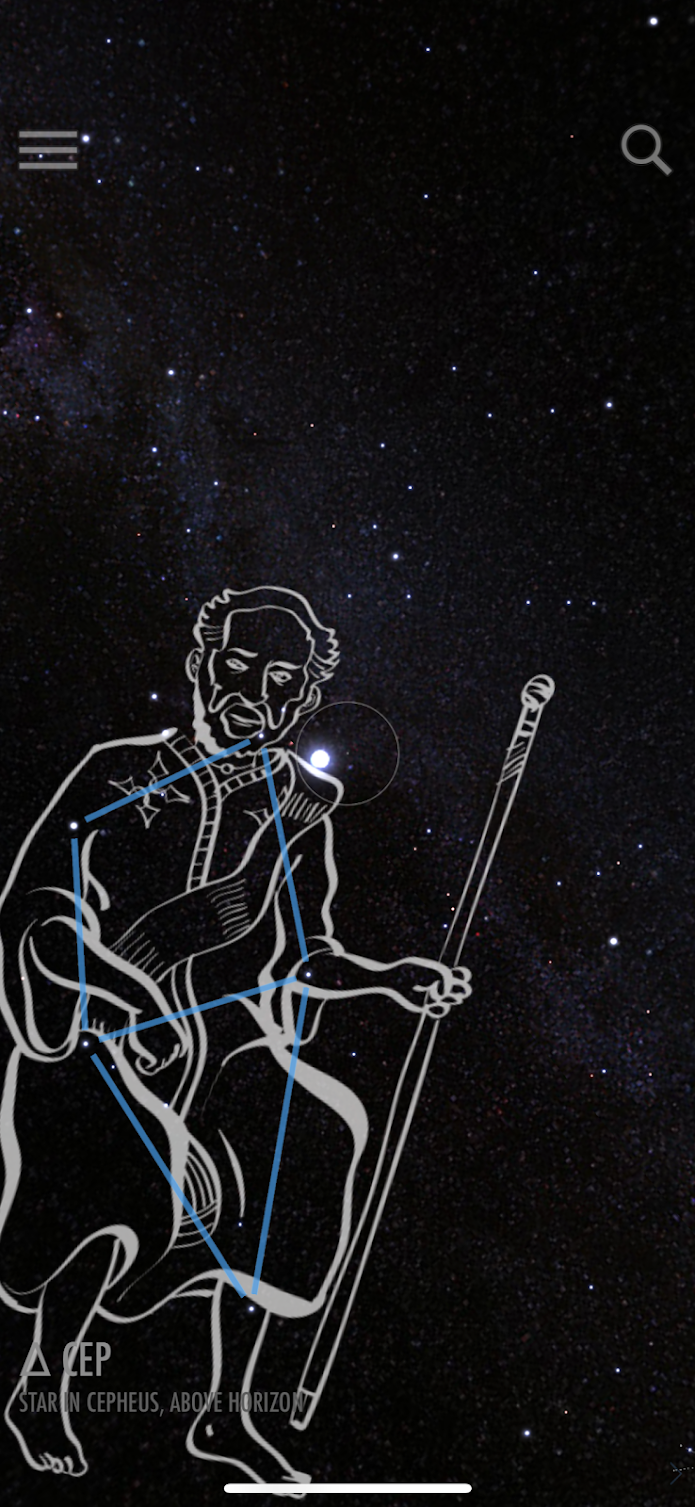
One night, we were out looking for a star system, Delta Cep in the Cepheus constellation, and I could not help wondering what their Delta-rise and Delta-set looked like on the planets in that star system. Did they have moons beaming the reflected lights of the stars to them? Were there any microscopic creatures willing its way into rudimentary life? Life seems to be so hardy and resilient and willing to thrive, it seems a little surprising that we have yet to discover traces of life elsewhere.
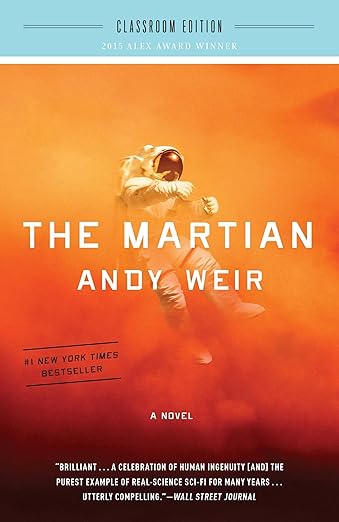
We were reading The Martian by Andy Weir for our book club, and thoughts of life elsewhere held all the more appeal. One only had to peer at the way weeds take root and crack through pavements, to see how resilient life can be. (It is another matter altogether that the plants I do try to grow on purpose seem to fizzle out on me, and routinely droop and call it a day, but that is a post for another day. )
In any case, it got us all thinking about all the things that enabled a planet full of sentient life, and how we sometimes forget to marvel at the sheer beauty of it. Wrapped up in our worries, anxieties, and livelihoods.
The son is doing a science experiment in which they are experimenting to see how microbial colonies develop in slice of bread under different conditions. In a fit of whimsy, he spoke and sang to the bread (gave it lectures on George Washington – his latest obsession, sang a Hamilton song) – to get the microbes on the slice, and has placed them in airtight containers in different conditions throughout the kitchen – in the dark, in perpetual light, and in freezing cold conditions. It will be interesting to see where life can thrive.
That life had a starter kit is miracle enough, but the fact that it thrived enough to produce the kind of beings we find on this planet is astounding, and, yet, we forget it everyday.
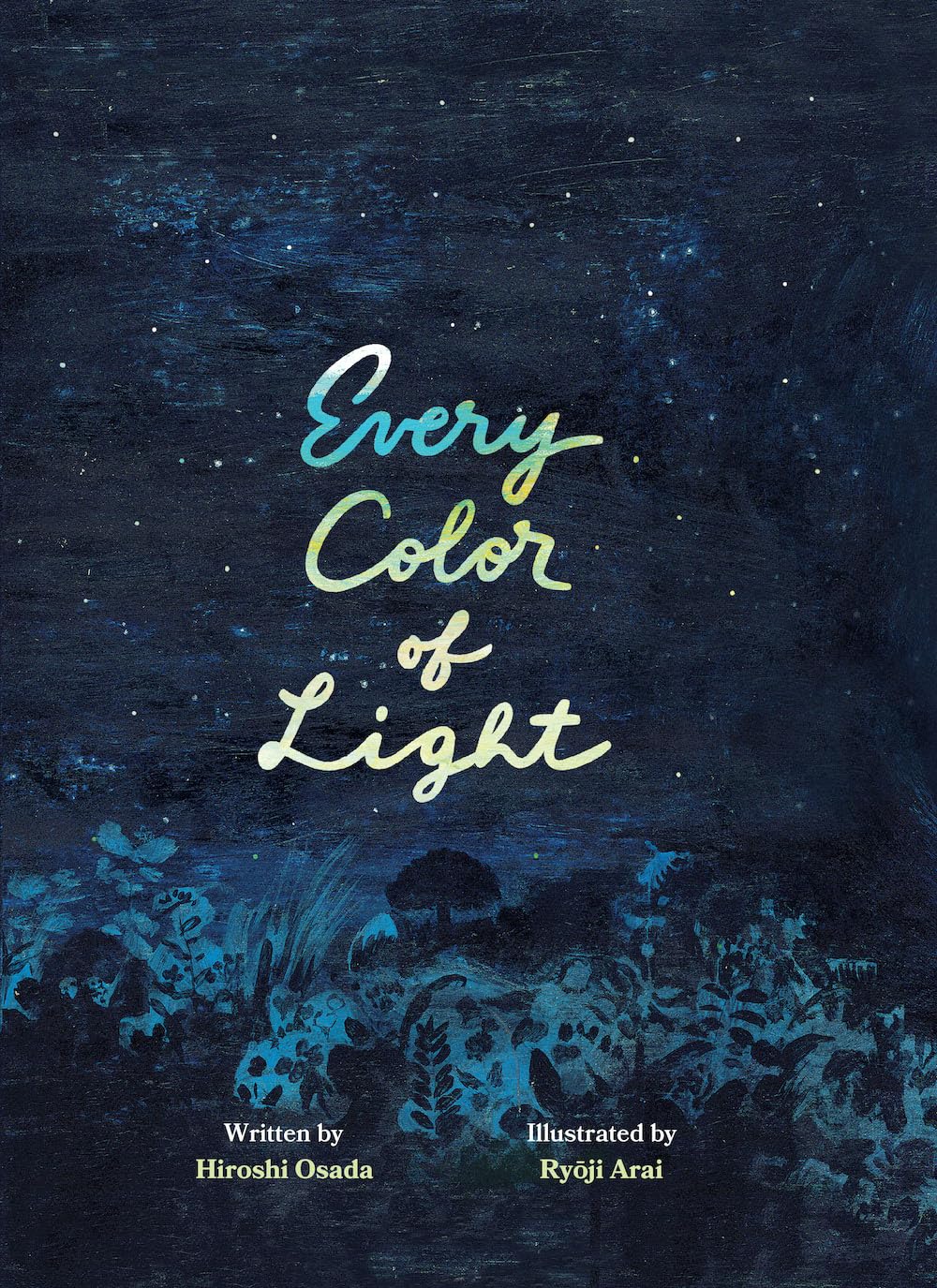
The book of essays in The Anthropocene Reviewed by John Green is an interesting read. For it each is an essay about a different topic – short but through provoking. Covid-19, geese, Halley’s comet. Combined with the kind of scientific and regimented problem solving that a book like Martian makes you think about, the possibilities to keep oneself occupied is manifold – like the possibility of life itself.
The world was swirling in activity, news, festivities, events. The world felt turbulent, swift, and equal parts joyous and worrisome.
The Navarathri festival meant that all versions of the festival were being celebrated – there were Durga pujos, Garba and Dandia dance events, golu, bommala koluvu. All in all, it was a week wrapped in the surreal – creation myths, war legends, female power. Most old cultures have versions of these – and if it takes festivities to remember the good old good-vs-evil arcs, and the figurines of goddesses to remind us of the righteous power women hold within themselves, so be it.
In some ways, it was a welcome distraction from the doom-and-gloom of news cycles. It was as if we could build a dichotomy of spirit within us.
Serene Solitude
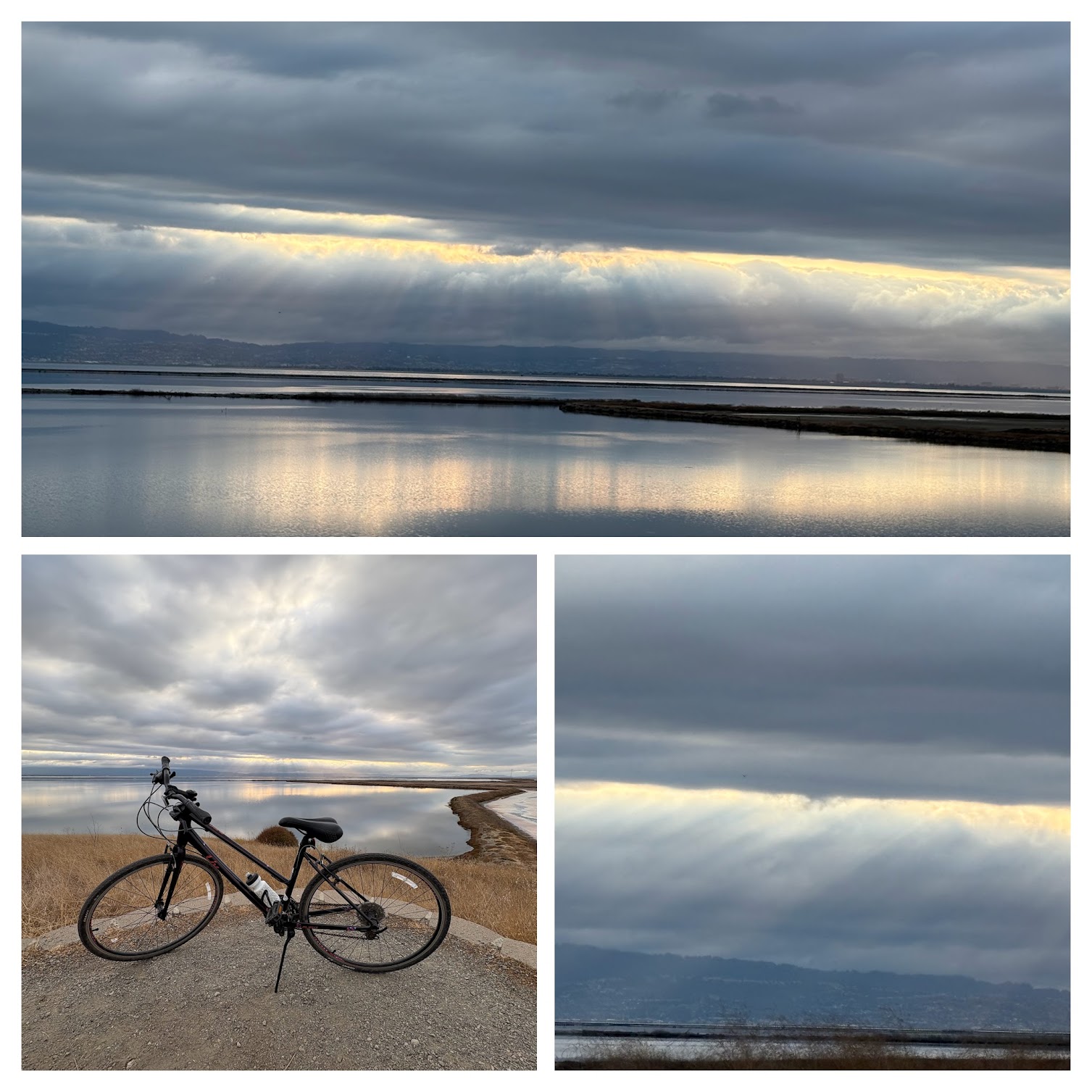
Come Sunday evening I craved for some solitude, and nature too, to round out the craving for peace. So, off I went with my bicycle, into the cycling trail nearby. It was tough going – all that festive food sloshing inside of me. Made me feel heavier and more sluggish than usual. But the trail is magic – it seems to lead, with each pedal stroke, to a place of peace.
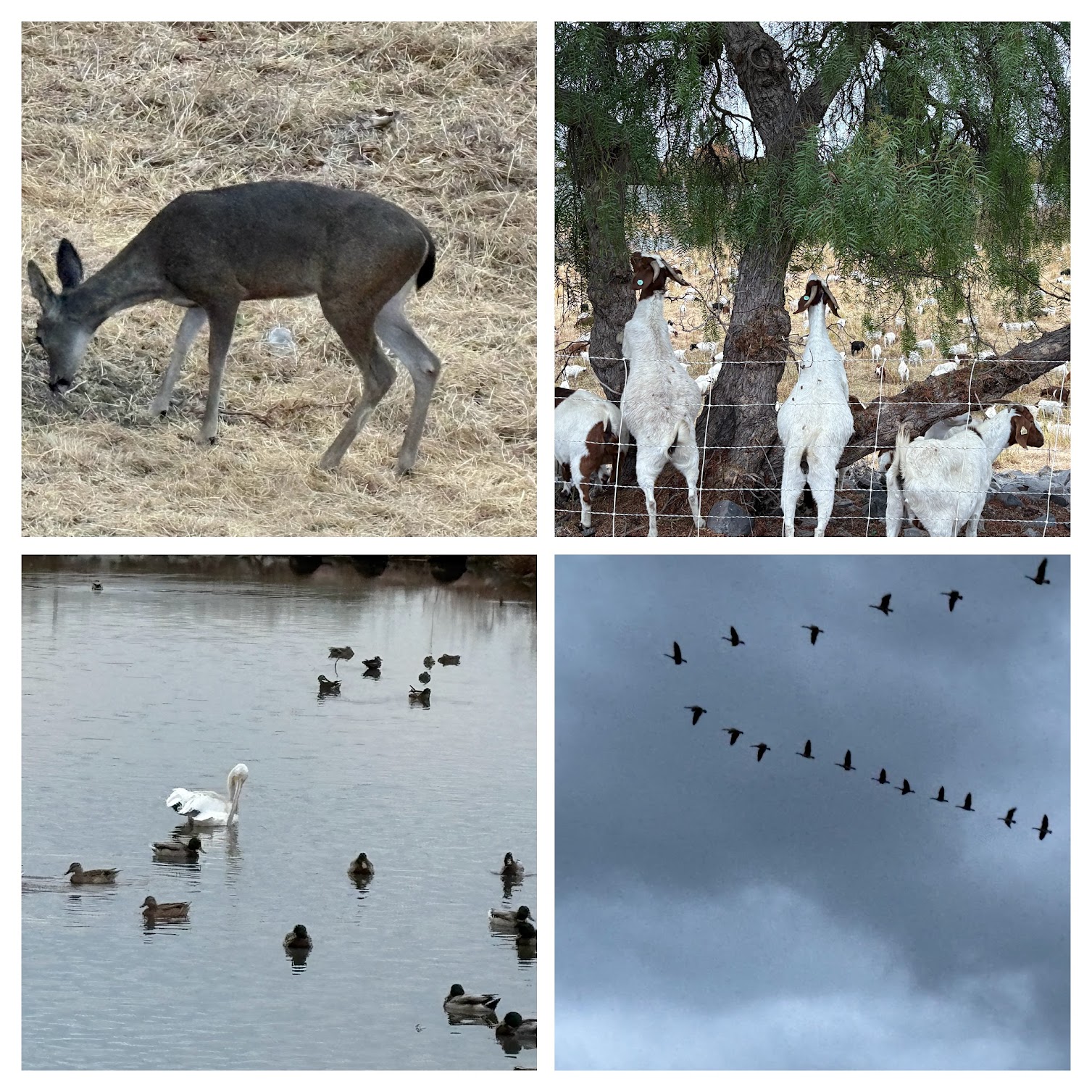
It was nearing dusk, and the birds had started their journeys home. I stopped every now and then to take pictures of beautiful sights that took my fancy. Deer and goats grazing, a hare (I couldn’t get a picture) running so quickly it startled me, pelicans lifting their incredible frames into the air with grace and ease (They did not eat puliodare over the week-end, but even so), kestrels soaring, squirrels daring themselves to see if they can make it across the bike path (I swear these little rascals wait till the last minute to scuttle across – a thrilling game for them for sure, but enough to scare rice-sodden slower-than-normal reflexes bike riders), the small birds (finches, blackbirds, wrens – all making a racket as they prepared for downtime). It had been a particularly hot week too, and I could see the relief of the cooling temperatures in my fellow beings.
The AT-CG Creation Dance
It was as I stopped to gulp some cool water – deep and slow, that I noticed the deer gazing at me. I have written about the gaze of a deer before. I shall write again. All the poets and writers when they write about unending universes in eyes, this is what they mean. It is possible to gaze deep into those big, round eyes. The goats eyes have a different quality to them – their pupils being rectangular appeals to the human mind differently altogether from a round, large pupil shape. Could that be social conditioning too?
It made me think about our genetic makeup, evolution, and all the creation myths. I could understand why every ancient culture and civilization had creation myths. I wonder whether whales have their version of creation myths in their repertoire. If they do, I’d love to hear it.
I stood there warmed by the deer’s gaze, the bird sound, and the gentle breeze around me. How was it possible that all these marvelous creatures I had seen today were variants of adenine, thymine, cytosine, and guanine?
We need a nice simple beautiful creation story with AT-CG that can round out the beautiful repertoire we have the world over. A goddess seated on a lotus from the AT-CG DNA, a multi-headed god whose genetic composition had mutated differently and went on to use that mutation to create a whole planet of marvelous creatures.
Full of beautiful images of nature, man-made images of golu decor, and a head refreshed, I pedaled back to the house. The pink skies were turning purple and grey, and it would soon turn dark. Another phenomenon that gave rise to so many legends till we understood Earth, and our miniscule place in the Universe.
I heaved a grateful sigh, breathing in the fresh air, and taking a gulp of fresh water before heading inside.
“I am going to indulge myself in something that I haven’t had the chance to do in some time!” I said – throwing it over my shoulder casually in a manner intended to intrigue and mystify.
“Going to the library? Good job ma!” said the son, and I moaned. Mystique and I. My foot.
I guarded the time I had between a drop-off and pick-up session like it was precious (because it was) and headed towards the library. I fended off requests for the grocery store, deftly ducked under an amazon return order request, and dodged an enticing offer to search for missing documents in the house.
When finally I walked into the cool library that hot summer evening, I felt something like an adventurer. An explorer who found their way to treasured lands. It was beautiful.
The display stacks groaned with new children’s titles, the popular books section assured me that the authors displayed there had been continuing to do their good work of broadening children’s minds.
I cannot adequately state how marvelous it all is.
The son was bemused at how enthusiastically we wanted to help in this particular homework assignment. He, of course, in the innocence of youth cannot understand our childish enthusiasm for learning new things, finding out about new things. “Did you know that if we scale our universe, if the solar system is a football field in California, the nearest star, Alpha Centauri, is in the East Coast of America?”
“Really?”
See? Amused at the awe shining like Alpha Centauri on our faces.
Anyway, he said it was difficult to find Delta Cep in the summer skies because of the light pollution in city areas. It isn’t the brightest star system. The husband asked his talented photographer friends for the best places to go, and off we went. For half an hour, we forgot about all the travails that seemed to be whipping our daily worlds. Maybe Delta-Cep had a better time of it. A place where peace and harmony prevailed. A star-system in which the greatest turmoils were mild-summer-breezes that rippled through their atmospheres.
That is the power of story-telling isn’t it? The ability to transport us to realms other, feelings exalted, and wholesome?
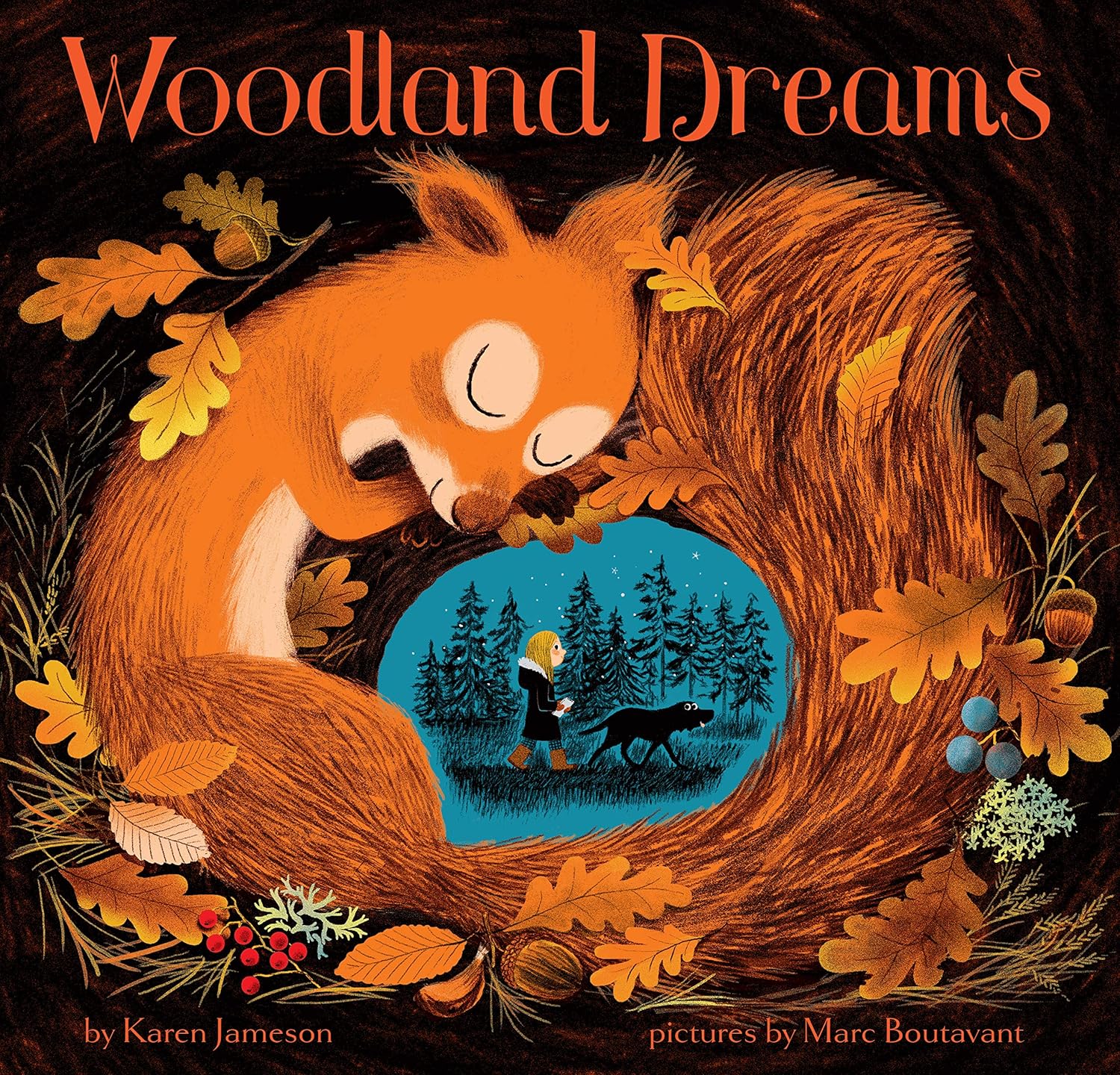
What whimsical names would you give our fellow creatures? Karen’s names were fascinating: Fox (Swift Legs) , Fish (Shiny Scales), Deer (Tiny Hooves), Woodpecker (Strong Beak)
Come Home – Swift Legs
Furry Schemer
Red-tailed Dreamer
Karen Jameson, Picture by Marc Boutavant
The lyrical poems she gives for each creature was enough to bring a smile.
And so it went, a little reverie of my own every time I picked up a book. It was the rare book that disappointed. Most children’s books had a sweet emotion it evoked – warmth, beauty, companionship, safety, love, growth.
“So, how was it?” said the son as I picked him up.
“It was amazing! I wish you could’ve come!” He beamed. “Yes, next time. Tell me which ones did you like the best?”
I told him about all the ones I had read, and we chatted about them all the way home. He listened, an indulgent look on his face, and I felt a pang – he was growing and children’s books seemed childish to him just now as a newly minted teenager with a reputation to grow into. I hope he’ll come back to them one day like C S Lewis said to his niece for whom he had written The Lion, The Witch and The Wardrobe
“Some day you will be old enough to start reading fairy tales again.” C S Lewis
I feel the need to clarify before posting this one – this poem is not AI generated, not helped on by AI. This is just Average Intelligence at work here.
The Language of Birds & Trees
The willow’s yearning for the river looks so easy to the oak The oak’s purpose is different The fir’s yearning for the sky looks so easy to the oak The oak’s purpose is different The banyan’s yearning for the earth looks so easy to the oak The oak’s purpose is different.
The eagle’s yearning for the sky looks so easy to the crow The crow’s purpose is different The stork’s yearning for still waters looks so easy to the crow The crow’s purpose is different The avocet’s yearning for diving looks so easy to the crow The crow’s purpose is different.
This oak embraces the crow as it prepares its nest in its boughs. This crow embraces the oak’s sturdy presence as it raises its young.
The week-end evening was pleasant after a hot week, I sat relishing the quiet: the especially large magnolia blossom on a tree, the clouds in their pinks, lilacs and greys before they embraced the inky blues of the night, and the gentle breeze through the leaves and waters nearby. It truly was idyllic.
The long summer days always make me yearn for the different colors of dusk and night. Our home is bright and filled with natural light which is a blessing, but it also means that late risers like Yours Truly do not get to the see the colors of dawn. The days start with light and then go on burning bright with every passing hour.
Last night, I had time on my hands. I watched the dusk turn to night. A slow stroll through the moonlit streets of our neighborhood made for a different rhythm. There was a mellow joy to it – not boisterous, but buoyant. Moonlight can be tender, but it also can throw everyday objects into harsh contrast.
Not just our homes but our heavens too
Maybe it was the lackadaisical nature of the stroll – one I rarely permitted myself to do. Brisk walks, phone calls while walking, chatting – they were all absent. I watched a cloud flit over a sinister looking tree, and looked on passively as an owl flew past and perched itself on the very tip of the tree-top. We stood there each surveying the other, and finally, of course, I lost. Can we ever win out against the stillness of predators?
I heard the sounds of animals scurrying outside – every sense accentuated by the lack of electric light. Even the olfactory senses seemed to be enjoying this – Some flowers that wafted their fragrance only into the night, and I stopped to sniff and smile every so often.
Out of the corner of my eye, I saw the owl swoop.
“Our village of Fairacre is no lovelier than many others. We have rats as well as roses in our back gardens…. But at times it is not only home to us but heaven too; and this was just such an occasion.”
Reluctantly, I headed back into the home, and insisted on switching off all the lights for the rest of the evening. Even when I watched a movie with the windows open, I kept sneaking glances at the moonlight pouring in through the slats in the window.
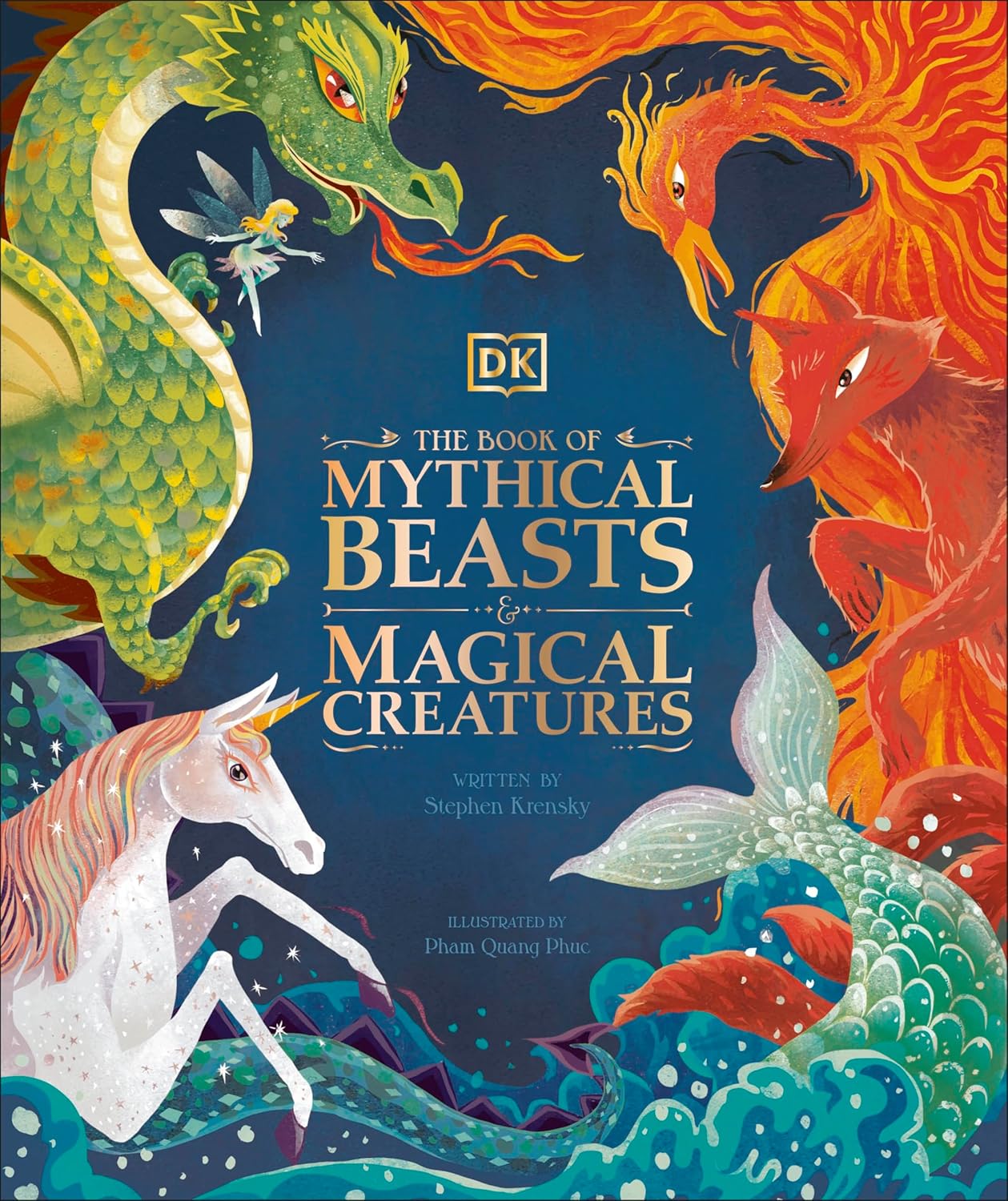
The evening reading fare was equally marvelous. A magical book with fantastic beasts, beautiful illustrations, and oh so much imagination! What a book, Stephen Krensky!
On the different kinds of fairies, Stephen Krensky has this to say on the Asrai:
Asrai are rare creatures that live in the water and only come to the surface once every hundred years. Asrai grow only by the light of the moon, and if exposed to sunlight, dissolve into the water and are never seen again.
-Stephen Krensky on the Asrai Fairies
When I read about the magical Asrais, I felt it was time now to go to bed and continue the beauty of simply watching the moonlight through the windows. Maybe it had been an evening when an Asrai had come out to the bless the lands. Who knew?
Sometimes, I see how much of a spoiled brat I am. What I am about to say falls squarely in that category, and I shall say it anyway. The Californian summers seem to drag on. It feels especially so at the end of August. They are warm, bright, sunny, but not too hot.
📚The school’s summer vacations are over. But the summers aren’t.
🩴The summer clothing is supposed to be winding down, but I can never bear to look at anything other than some flowy cotton with any fondness.
🌷The summer flowers are still blooming on every shrub, plant, tree and pathway.
While I mostly enjoy this halcyon time of the year, I also wouldn’t mind a few days of summer rain. Or even some cloudy skies.
That was probably why I had not the heart to come in this particularly overcast morning. The clouds made an excellent background. The flowers that we see on our walks everyday were still there – but they looked more fresh, more vibrant. The angel’s trumpet flowers that we admire everyday looked more angelic than usual. The chamomiles looked more soothing – their purples against the sombre greys. As your eyes zoomed to the skies, the jacaranda tree’s flowers attracted your eyes to their purples too. Really these color combinations look marvelous against the grey.
Shouldn’t cloudy days be called halcyon days? I mused.
Are Halcyon Days Myths?
I came and idled with ‘halcyon days’ floating in and out of my consciousness. What I stumbled upon made it so.
Halcyon itself referred to a species of bird that nested in the oceans during the winter solstice and were supposed to charm the wind and the waves into a calm.
Somehow Alycone and Ceyx managed to anger the mighty Zeus (apparently, they lovingly called each other Zeus & Hera. Really! It must be exhausting to have such fragile egos and live on forever. An endless cycle of being offended, and recouping from it). So, Zeus , in his rage, cursed them separately turning them into birds – there are many versions of the myths of course. Some say Alcyone became a kingfisher with a mournful cry trying to find peace in the seas. The gods (the other ones) took pity on her and granted her a period of calm as she prepared her nest and gave birth to the young. So, these days during the winter solstice were called the Halycon Days. Alycone’s father, the god of the winds, gave her mild breezes, calm oceans and tried to bring her peace.
Of course, kingfishers do not live by the sea – so they could be referring to other birds, and over time came to be associated with these beautiful birds.
After a start to the day in which I was feeling less than inspired – the cloudy days, and the halcyon myths managed to transform it. I have always liked the phrase, ‘halcyon days’. But now? I love it.
August 12th, is World Elephant Day. Seeing elephants (even the cute AI generated pictures) makes me smile. The huge, gentle, loving, empathetic, loyal, family and community oriented animals have always captured the human spirit. It is the reason one of the most popular gods of Hinduism features an elephant-headed god. His birthday is celebrated with so much pomp and splendor, I am sure the elephants wonder what the fuss is all about on those days.
I am not sure if they’ve heard how much their stories resonate with human-beings – Water for Elephants or Rosy is my Relative for instance. Even my own modest attempt, Mother’s Day in the Jungle, was such a joy to write. Oby Elephant and his pals are all that we want our children to be.
Mother’s Day in the Jungle
It is no wonder that elephant related documentaries are always a hit. We want to see them succeed, we want to know that peaceful living can take us far.
The question is, are we happy to suppose that our grandchildren may never be able to see an elephant except in a picture book?
– – David Attenborough
Temporal Range of Elephants
In the essay, Temporal Range, in the collection of essays by John Green, The Anthropocene, he talks about how long these majestic creatures have been a recognized species – 2.5 million years as opposed to humans who were only classified as such for the last 250,000 years. Yet in that short time, we have endangered almost every other notable species on the planet in small and big ways.
Dolphins have been here for 10-11 million years – with their songs of wisdom, playful natures, and community based raising of their pods. Dolphin grandmas are delightful, and critical in the raising of their young. The same way the matriarch of the elephant herd is instrumental in passing on skills to the younger generation of pachyderms. Humans have somehow managed to emulate and disregard this ancient piece of wisdom by denying women freedom and basic rights, but also making them critical to the caring of the family unit. Sigh.
When we talk about accumulated wisdom, most of the philosophy we have at our disposal caps out at 5000 years. But, elephants and dolphins? Please. They have figured out how to live out their lives cancer-free.
Unpacking 🐘🐘🐘, 🐬🐬🐬 & 🐦🦚🐧🕊️
A friend of mine shared this article, Face it! You’re a crazy person, on unpacking the life of someone’s job. As I read what it meant (trying to visualize every Tuesday afternoon for the next few years, the day-in-the-life-of series), I found myself thinking that I would love to unpack being an elephant in the wild, a dolphin in the oceans, or a bird in the gardens before deciding whether to remain a human-being.
Wouldn’t that be wonderful?
What are some things related to elephants you’d like to share? Anything.
I was regaling our little school reunion to one of my friends, and found myself thinking back fondly. My classmates who had arranged the whole affair did a fantastic job. They had booked the whole hotel for our reunion class, and we found ourselves in a position where we meandered in and out of the different hotel rooms, the banquet areas downstairs, and chatting in the hallways and lifts.
When I asked my father, who was a teacher in the same school, what he thought of folks and where they landed up later in life, he said it was the potential of humankind that drew him to the profession. All the ways in which the children grew in their capabilities, took on responsibilities, navigated changing landscapes and relationships – all with what is given to us.
In some sad cases, that potential remained unrealized. All the different ways in which we were tested was shared and received with compassion by the kind ones, and some (polite) scorn by the meaner ones. It truly was illuminating to watch the different ways in which we had grown older.
Vulnerability builds Trust
“Did people really talk about their trials and tribulations and not just thump their chests about their triumphs? “, asked a friend of mine when I was telling her about it, and I laughed.
I was surprised too, but then I realized that there is a shared space of trust built up during childhood that makes us both open and fragile with each other. Also if you have seen someone drool over their notebook in maths class, or get pulled up for not doing their homework, there is a good chance you tend to take their bragging and suffering with a forgiving air. If you’ve soothed each other through your fears and worries, wouldn’t you be more willing to share your life story with them?
Vulnerability seems to be an important component of trust, and as children, both were easily available, before society conditioned us out of it.
“Trust is a product of vulnerability that grows over time and requires work, attention, and full engagement.” – Brené Brown
That is probably why we were able to laugh at ourselves and embarrass ourselves with equanimity. Life felt suddenly very short and too quick when we looked back on it. There we were, not children trying to daydream through a boring lesson anymore, but adults who had navigated life to the best of our abilities.
Where did all the time go?
I came back with a renewed sense of shoshin, and regaled the children with tales of our childhood. They rolled their eyes but also indulged me. It is good for them to realize that their parents were not born this way – adults taking care of medical appointments, paying bills, dealing with insurance matters etc. But that we were children who dawdled on their way to class, who were punished for not completing their homework on time, or being silly and laughing for no apparent reason and getting into trouble for it.
That life is over too soon is a rather better complaint to have than the opposite wouldn’t you agree ? That is what I wish for everyone. A chance to look back, smile, feel light , and still be able to smile thinking of tomorrow.










 Nourish-n-Cherish