Unicorn or Werewolf, I am Grateful

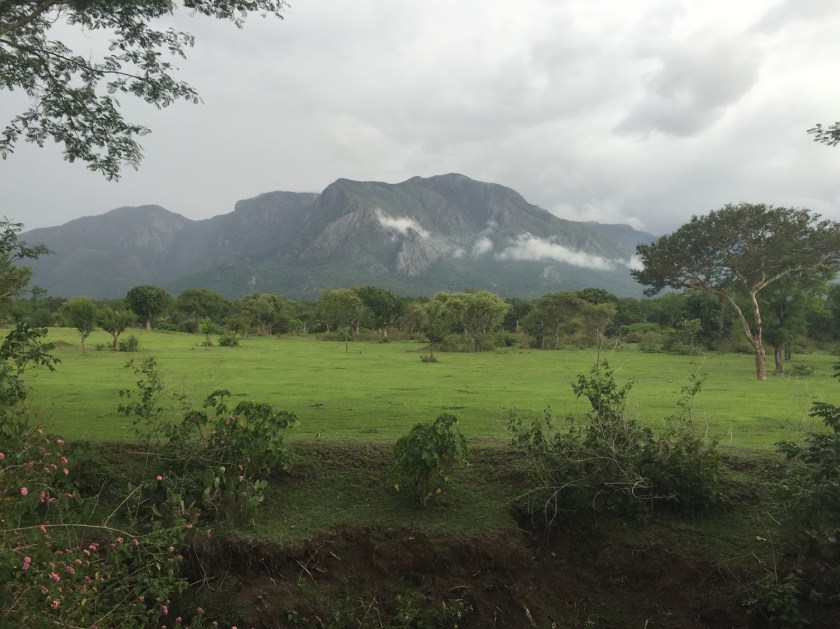
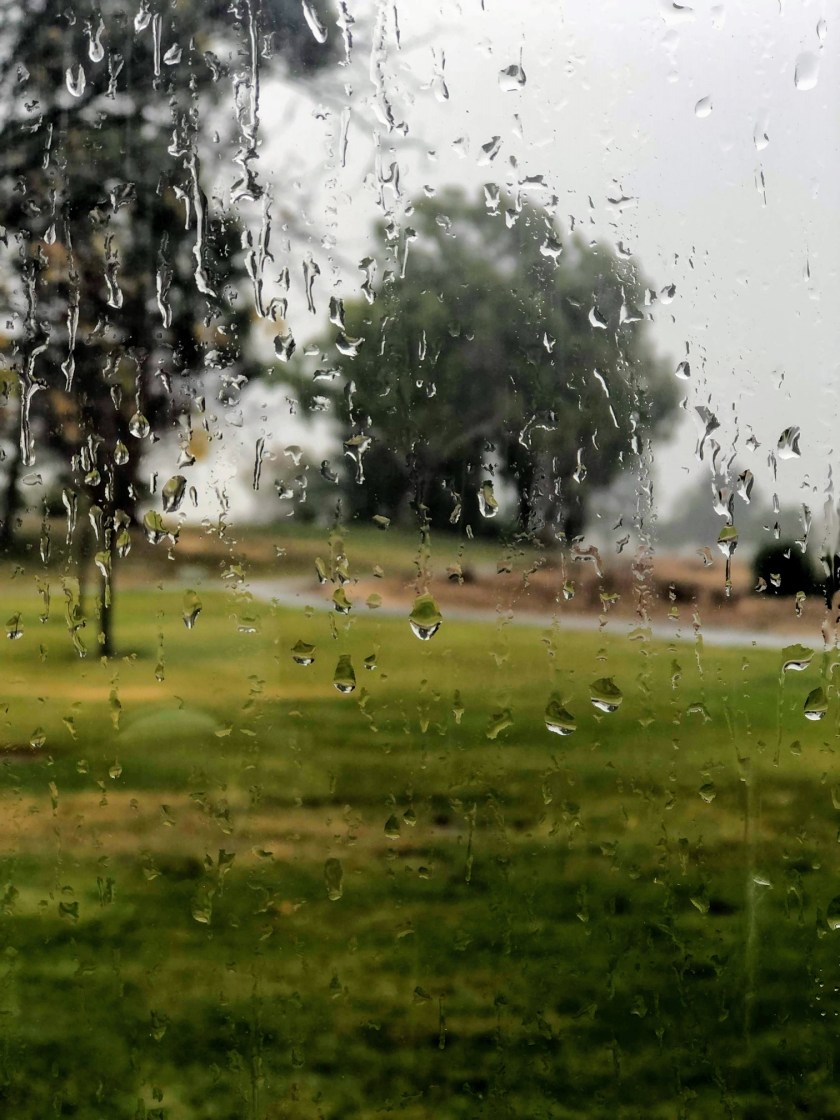
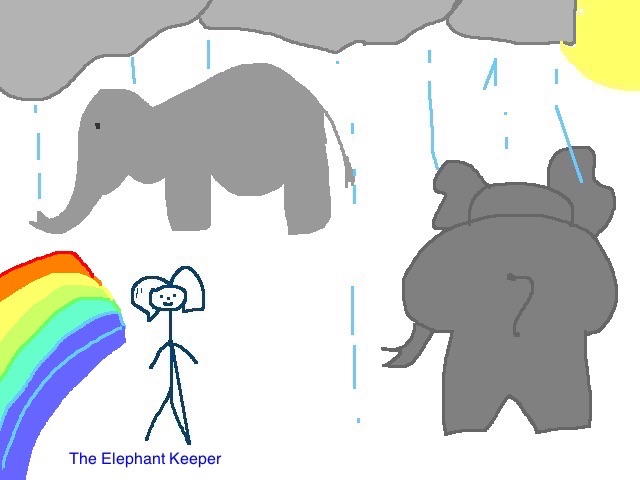
The day leading up to Thanksgiving has been a beautiful, beautiful day indeed. I cannot say I was calm and collected when I got up to see the earth scented with the first rains of the season. Even with the weather channels setting our expectations and all that, it was simply marvelous. I am a pluviophile and when we have gone this long without so much as a drizzle, I really cannot be blamed for a little overzealousness, can I? 

IMG_0726

The air quality over the past few days has been pegged down to ‘very poor air quality’. As a result of which, schools have closed early. The daughter has been rattling off statistics that the Air Quality Index indicated that it is the equivalent of inhaling 6 cigarettes a day or 8 cigarettes a day, leading to the most intriguing discussions between her and her elementary school going brother about smoking, second hand smoking, smog, and lung cancer. When I saw their faces one evening refusing to come out, I decided enough was enough and told them about how some children in highly polluted cities in China and India think the blue skies are some sort of poetic license, since they have never seen a clear blue sky. A smog-ridden world is not a beautiful one, I told them, but that doesn’t stop people from living, and finding joy; but only means we have to work towards finding a way to fix the problems.

Today, however, all of that was gone. We took deep breaths of the moisture filled air, looked afresh at the fall-colors – everything seems to be enhanced in its beauty. The earth seems cleaner, we can finally smell the pines and eucalyptus trees. I took the son out to play in the drizzle, inhale deeply and take a walk around the neighborhood.  The husband shot me indulgent looks, while the daughter gave me commiserating ones even as she patted my head, and said, “I know you love the rains Amma. Fine! I’ll come for a walk with you.” Sometimes, I really wonder who the child is.
img_0725

We spent the late afternoon in a golden daze (actually more of a silvery haze). As we headed home, the moon peeping through the scudding clouds made us all sigh once again, and I said I felt like a unicorn with all the magic in the air. The son, looked up at the skies, and said, “Don’t you mean a werewolf? It is a full moon remember?”

Werewolf or Unicorn, as long as we can enjoy the magic and feel grateful for all we are blessed with, I am happy. There is a reason Thanksgiving is one of my favorite holidays (the history of it aside), Gratitude is such a wonderful sentiment to celebrate. 

Happy Thanksgiving everyone.

The Time For Scrunch Parties

I wonder when we stop skipping on our way, when we stop reading children’s books: tales of magic and myth and splendor, when we start looking weird for having crunch parties in the scrunchy leaves of fall, but it is a time we must take a knuckle and give ourselves a good knock on the head, and cut it out!
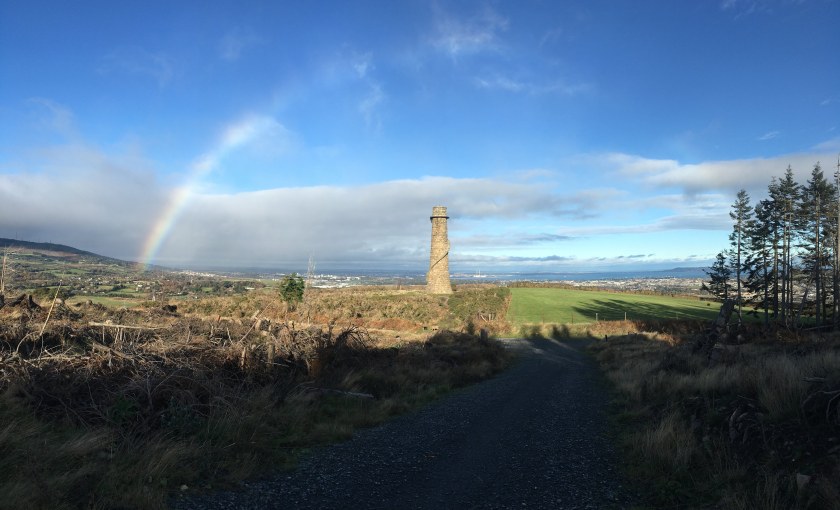
“Please! Just come with me for a walk! “ I said to the children.  November is the month of Scrunch Parties, and the month I can be seen begging the children to come on walks with me, even if they look and act like Hawks and Pandas. I still remember the day I came tottering into the home, my confidence in the true tra-la-la  of the world shaken. 

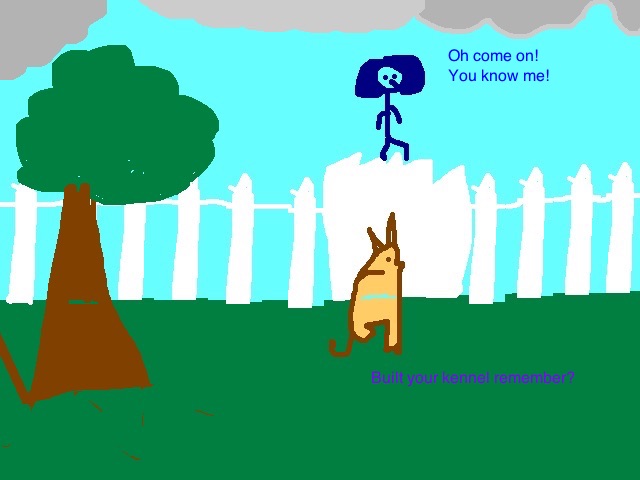
I had stepped out without the children after they had both called me ‘Nuts’ for wanting to go for a walk when the time could be spent inside the house on the couch instead. I gave them a withering look, and told them that I shall ascend to higher levels with my stint in the fresh air, where nature shall nurture my spirit and enhance my being, and they were going to miss all that. I threw in a quotation or two, gave them a sprinkling of philosophy, and a hint of lavender from my coat pocket to entice them into coming. I straightened my shoulders, and delivered the pep talk that Generals could take notes from. 

general_pep_talk

I don’t know how these Generals must have felt when they spread themselves liberally on the pep-talk, so they can leave pronto to acquire the next kingdom, only to have the troops say, “Nay, it is better if we camp here for a month. The Biriyani is particularly aromatic and spicy here!” But that is how my pep-t was received. They lolled on the couch, gamboled lazily in the warm, fuzzy throws like lambs in springtime, and continued watching whatever-it-is that amuses them so much. 

I told them they shall soon see a reformed person and made my way out, my back registering disapproval at this lack of enthusiasm for nature-walks, but my front eagerly galloping towards the joys awaiting me outside.  

A few minutes later as I stood looking up at the sunlight filter through the trees, a stiffish breeze started up. The mesmerizing sound of the the wind rustling through the trees caught my attention (There is a fascinating word for this – Psithurism). The wind rustled a special tune sending beautiful waves of ripples through the leaves. Standing there with the sunlight illuminating the waves was magical, the wind was also sending hundreds of leaves dancing their way down to the Earth. My face lit up with happiness, and I charged left and then right trying to catch one of these beautiful leaves on their way down.

My arms felt like the wings of a butterfly spread wide, my leaping from one side to another left me feeling catlike. I clasped at thin air as the leaves fluttered past me. I don’t think my performance would have landed me a spot on the International Cricket team for fielding, but no one could fault my enthusiasm. My face was happy, and it was then that I caught the eye of a gentleman out on a walk too. 

scrunch_party

He looked at me like I needed to have my head examined. A small twitch of his bulbous nose indicated disapproval of this entirely whimsical and childish act of catching falling leaves, his round head shook like he could not believe I was let loose on the streets and he made his way again with an exaggerated dignity. His figure exuded the unmistakable message: I was an adult in a world where we do not show happiness by ourselves, was I not? We do not skip, we certainly do not run like lumbering sea-whales going after fish, we are prim, and we must be proper, and we must never forget that we live in a world where there are many problems waiting to be solved.

I tried to shake the wet geezer off, but the scrunch had gone out of the scrunch party. I went back home, an altered soul. Seeing my less-than-exuberant spirits slink back into the house, the children wanted the low-down. I usually come back from my November walks bearing gifts of colorful leaves, or tales of butterflies and chirps of birds; not the slumping shoulder and the lack-luster shrug. I poured my heart out, and revived under the sympathetic brow swiftly giving way to gushing laughter. 

“You must’ve looked such a goofus Amma, running after leaves and scrunching leaves by yourself.” They cackled, and I smiled. 

Some inelegant demonstrations of my chasing the leaves were given to much mirth, and I felt happy at being able to spread joy in this stern world, even if it was at my expense. I mean I did not really think this little wet sop episode deserved rolling on the floor and laughing so hard, it was hard to stop.

I wonder when we stop skipping on our way, when we stop laughing out loud at Dr Seuss books, when we stop reading children’s books: tales of magic and myth and splendor, when we start looking weird for having crunch parties in the scrunchy leaves of fall, but it is a time we must take a knuckle and give ourselves a good knock on the head. 

The Cranes of Hope

Late one night, I read Sadako’s Thousand Paper Cranes by Eleanor Coerr. The book is based on the true story of a little girl called Sadako who contracts Leukemia ten years after the bombs were dropped on Hiroshima and Nagasaki. My heart attached itself to the lively, petite, friendly, active Sadako. Her energy is infectious and it leaps out of the pages and wants to make you skip too as you navigate the stairs and walk to school.

Sadako was two years old when the atom bomb was dropped in Hiroshima and Nagasaki. Ten years later, her body is wracked with the unmistakable signs of Leukemia, a disease her family knows as the ‘Atom-Bomb’ disease. Her friend gives her hope and says when she makes a thousand paper cranes, she will become better. Sadako’s older brother offers to hand the paper cranes for her and pretty soon, the soaring cranes of every hue and size adorn her hospital room.

Wiki Link: Sadako and the Thousand Paper Cranes

According to the book, she is on her 644th crane when she dies, but her brother says she really made 1400 paper cranes and some of her paper cranes are still available for viewing as a message for Peace. It is a poignant story, and just writing the summary brought back the details of a lively spirit forever taken from the world, and I was shaken.

sadako

The nuclear threat is ever there. Read: Butter Battle Book by Dr Seuss. Mindless tweets on the subject by dictators leave me in an uneasy state of mind: We have on Earth right now the power to annihilate all lifeforms and spread widespread suffering. How many Sadako’s does humanity have to lose before we embrace all encompassing peace? Isn’t One Sadako too many?

Compellingly told, it is a light book with a heavy message. Oh! How heartless is warfare and why oh why did humanity have to develop nuclear weapons? I said aloud – a loud lament with silence as an answer.

In a mutinous mood, I stormed into the concluding essay on the Value of Science in Richard Feynman’s What Do You Care What Others Think? book. What possible excuse had he for his work on the Nuclear bomb. (The essay doesn’t directly allude to his work on the atom bomb, but on the general value of Science.)

Much as I wanted to storm and rage, I found myself reading the whole essay. He started the essay with something he had heard from a monk in a Buddhist monastery once:

To every man is given the key to the gates of heaven; the same key opens the gates of hell.

It is a valuable essay and well worth reading. It reminded me of the beautiful saying by Ursula Le Guin in the Earthsea books,

“To light a candle is to cast a shadow…”


https://www.youtube.com/watch?v=kbh_6tQ6nm8

The value of science is similar – while it is hugely important for understanding our universe, solving medical problems etc, there is also the troubling underbelly of Science using the same understanding with mal-intent or certainly unintended intent. (Problem with the Like button?)

Troubling? Yes.

But did you know, said a small voice in my brain, paper cranes are a symbol of hope and peace in Japan? We can hope and have faith in our uncommon knack to find solutions even as we create more problems. (The Wizard & The Prophet)

Mermish Dreamish

“Ohhhwwwnn! What do you want us to get you from the labally?”, the son’s voice wafts upstairs to his teenage sister. She cannot make it to the library and her little brother feels bad for her, like she has been denied candy on Halloween. 

“Anything on Mermaids dobucles! From the Teen section.” 

The son and I exchange knowing smiles. 

“Okay!” 

I watch amusedly as the half teen swells with self importance: Oh! The glory of being given the esteemed task of picking out books for his teenaged sister from the teen section. 

“Mermaids! Really? Again? Still?” I ask, and I get a “Yessss!” accompanied by an eye roll, that I cannot see but can imagine, in response as we head off. 

keena_mermaid_doodle
A random doodle by the daughter when she was knee-high

The oceans and seas enthrall her, they exert an influence on her like no other. And it started young. Thousands of viewings of Finding Nemo, hundreds of The Little Mermaid later, her first choice for drawing anything is still marine. 

Keena_drawing

I can hardly blame her, I find the oceans fascinating myself.
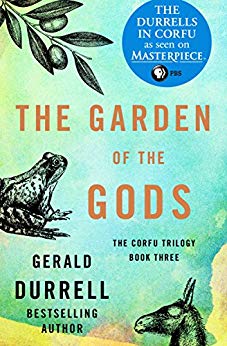
Gerald Durrell’s Enchanted World Essay
Carl Sagan’s Essay on his interactions with Elvar The Dolphin
Epic of Whalayana – Carl Sagan

I have been seeped in books on Whales of late. Ever since I read Carl Sagan’s beautiful notes on these gigantic, intelligent and curious creatures, I have become half mermaid myself. I see the allure that sets the daughter’s heart beating. Regular readers know that I have often described that child as one who should have been born a mermaid.

Nick Pyenson : Spying on Whales:

Astronomy and Paleontology are sibling fields really: they take human imagination to places where no person has ever been.

Some writers have the knack of saying the most profound things in passing. 

It is true isn’t it? The reason we gaze longingly at the night skies, charting out the constellations, having myths that surround them is the same reason we have stories of oceanic splendor. The reason we listen in awe about Noah’s Ark, Mastya avatar, Kurma avatar and myths of a milk churning ocean coughing up ambrosia for things that seemed nigh impossible like immortality is the same reason we imagine The Great Big Hunter going after the seven sisters. It is magnificent and unimaginable.  

“This must be something to do with the Sea. It has the word Tempest on it and there is a mermaid like thingy on the front. “, said the little fellow handing me the book he had picked out for his sister. 

“Should we get one or two more just in case?” 

We agreed and off we went looking for mermaid like ones, oceanic tales. I fell back upon Twenty Thousand Leagues Under The Sea by Jules Verne in case all else failed. That was the choice that earned me a loving “MOM!” look.

We needn’t have worried, the little fellow was given glowing tributes for selecting the best mermaid book, and we all settled down to read that evening. 

Taking a deep breath we dived deep into the rich oceans. 

I was trying my best to keep up with Nick Pyenson and his colleagues as they tried to find and relocate some of the largest whale fossils on record. More than 2 million whales had been lost to Whaling in the beginning of the 20th century, and only about 200,000 remained. What have we done? Another silent lament in my mind that will not have an answer. 

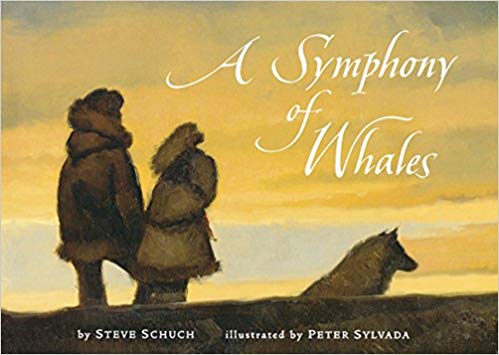
The son had a thoughtful crease after reading his book, A Symphony of Whales by Steve Schuch. I could well imagine his feeling. It is one of those books that in ten flips of the page leaves you wondering and marveling at so many things – the climatic conditions because of the geography of the story, the sounds of nature surrounding the little village, and the sounds of the living in the churning waters calling out to little Glashka who is a little girl blessed with the ability of hearing different frequency voices like the song of the whales stranded in the bay and iced in. Accompanied by illustrations that take you to the little Arctic village, this book was the perfect marine choice for the little fellow.


Little yawns appeared on our faces and we smiled sleepily. When we resurfaced from the waters, feeling refreshed after a cool dip in the oceans, we slept dreaming the dreams of the unimaginable. It was marvelous.

The sea is as near as we come to another world. – Ann Stevenson


The Secret To Blooming Like a Flower

I gabbled on about the beautiful Kurinji flower over a distinctly sub-par dinner one night. Sometimes the rhythms of cooking are too frequent. “Do we really need to eat every few hours?!” I said drowning out the sound of “You haven’t cooked in 3 days!”

The children listened – one with ardent curiosity bursting with questions and the other cloaked in teenage blasé that belies the true interest behind the flowers. ( “Cool!” – only a little wag of the ear indicating possible interest).

“Can you believe the Kurinji blooms without alarms and clocks to set store by? Every 12 years like clockwork!”

The questions that followed were better than the answers:

  • Do all of them bloom at the exact same time?
  • What about plants that grew later, won’t they all flower at different times?

My answers are not answers that would have pleased Charles Darwin perhaps, but if he wanted to answer right, he should’ve been there, not let me field them is my stout reply to this.

Interesting aside:
The River of Consciousness by Oliver Sacks starts off with an essay on Darwin and the Meaning of Flowers.

river_sacks

I could see why Darwin liked his flowers so much. This was long after his magnum opus, The Origin of Species, was completed. He actually spent the last decades of his life pottering about his green house, setting the children in his life to chart the course of the bees, studying orchids and their flowering patterns etc, and was therefore immensely better prepared than yours truly.

His joy was evident in his letters:

“You cannot conceive how the Orchids have delighted me .. What wonderful structures! … Happy man, he [who] has actually see rows of bees flying around Catasetum, with the pollinia sticking to their backs! .. I never was more interested in any subject in all my life than in this of Orchids.”

He went on to write the book with the fascinating title: On the Various Contrivances by Which British and Foreign Orchids Are Fertilized by Insects

Meanwhile, the kurinji flower was still blooming in the home: the river of questions on What Is Time flowed on:
What is Time when you are a flower?
What is Time when you are a squirrel?

The husband had a bemused and half-exasperated expression on his face, as he heard me talk about alarms, time and biological clocks. He watched me squirm and the urge to tut came to me. I knew what was going on in that optimistic mind of his. He hopes I will have the sense of a Kurinji flower someday.

I feel bad for the old boy.

The thing is, I set beautiful poetic alarms, replete with soothing ringtones to go with it, place them on his side of the bed, and then proceed to sleep like a blessed bear in the winter.

If we need to get up at 6 a.m., I set the alarm for 5:30 a.m. thereby allowing me to snooze a few times, and then go back to dozing the doze of the blessed. It is marvelous to get that snooze time, and some of my best snoozes are at this time. This vague time of day between wakeful consciousness and blissful unconsciousness.

If everything in the universe follows a pattern, how do we determine what ours is, without the aid of all our poetic alarms? There is a beauty to seeing the natural things around us, for they soothe us in ways quite unknown to our hectic way of life.

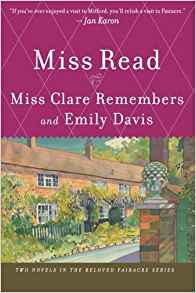
I was reading Village Diary by Miss Read for the n-th time (like a flower knows when to bloom, I know when it is time for a Miss Read re-read), and I admired yet again the simple way in which she had set a truth about humanity in her beautiful language.

village_diary

Quote:

As I ironed, I amused myself by watching a starling at the edge of the garden bed. He was busy detaching the petals from an anemone…

This short scene, I thought as I pressed handkerchiefs, is typical of the richness that surrounds the country dweller and which contributes to his well-being. As he works, he sees about him other ways of life being pursued at their tempo – not only animal life, but that of crops and trees, of flowers and insects – all set within the greater cycle of the four seasons. It has a therapeutic value, this awareness of myriad forms and varied pace of other lives.

So, maybe that is the secret to blooming like a flower. Set our patterns to the natural rhythms of the world around us rather than to the dictates of productive days.

“Hmm … when would you naturally feel like doing stuff? Like cooking! Just asking!” said the teen rolling those eyes of hers. The loud guffaws that accompanied this were appreciation enough for a chef.

I think I will take after that Kurinji flower after all.

Books:

  • River of Consciousness – by Oliver Sacks
  • Village Diary – by Miss Read
  • Origin of Species – Darwin
  • On the Various Contrivances by Which British and Foreign Orchids Are Fertilized by Insects – Charles Darwin

Blooming Time?

A version of this post was published in the Nature Writing magazine: When The Kurinji Blooms

In a small corner tucked away from the hectic panting of the world lives a small ecosystem,  nestled in a range of hills that is fast losing its unique beauty to ‘progress’. It is the place I was lucky enough to call home when I was growing up.

Jasminum_mesnyi.jpg
Primrose jasmines – Image by Wouter Hagens[Public domain], from Wikimedia Commons
The thought of flowering lupines takes me to Iceland; lotuses to a temple tank surrounded by trees with the breeze rippling the tank waters; primrose jasmines and Kurinji flowers back to the Nilgiris.

One of the marvels that is highly unique to the Nilgiris is the flowering of the Kurinji.

These flowers only bloom once in 12 years, and when they do, they are a joy to behold. I have only seen them once, and I remember thinking that for all this drama of blooming once in a dozen years, they should be, more grandiose, more robust, a trifle less ephemeral. But that is the thinking of an ignoramus, and I sensed the idiocy of the sentiment even then.

The flowers were beautiful, and the fact that there is a plant that knows the time to bloom when the rest of the world needs alarms and clocks to rise and shine is nothing short of marvelous. We need apps, calendars, schedulers, reminders and alarms to go about our daily business of living, and yet these unassuming flowers go about their act of procreation, maturing and enthralling the world without any such aids. What is more beautiful than that?

The kurinji flowers were in bloom last month, and I lived vicariously through a few friends of mine who live in the beautiful Nilgiris and posted the pictures. Entire hillsides clothed in royal robes of purple, swaying and billowing in rainy wind splattered skies, or waving and tossing their crowns to the blue skies with the scudding clouds.


The beauty of a functional model like a flower is a joy to behold. Imagine my joy then, when I opened the book, What Do You Care What Others Think – By Richard Feynman and the very opening of the book spoke straight to my kurinji-flower yearning heart.

I have a friend who’s an artist and has sometimes taken a view which I don’t agree with very well. He’ll hold up a flower and say “look how beautiful it is,” and I’ll agree. Then he says “I as an artist can see how beautiful this is but you as a scientist take this all apart and it becomes a dull thing,” and I think that he’s kind of nutty. First of all, the beauty that he sees is available to other people and to me too, I believe…

I can appreciate the beauty of a flower. At the same time, I see much more about the flower than he sees. I could imagine the cells in there, the complicated actions inside, which also have a beauty. I mean it’s not just beauty at this dimension, at one centimeter; there’s also beauty at smaller dimensions, the inner structure, also the processes. The fact that the colors in the flower evolved in order to attract insects to pollinate it is interesting; it means that insects can see the color. It adds a question: does this aesthetic sense also exist in the lower forms? Why is it aesthetic? All kinds of interesting questions which the science knowledge only adds to the excitement, the mystery and the awe of a flower. It only adds. I don’t understand how it subtracts.

Ode to a Flower – By Richard Feynman. This brain pickings article links to the beautiful animated video made by Fraser Davidson based on his ode to a flower.


I could not see the Kurinji flowers this time. I know many hillsides that were carpeted with these marvels have now become home to resorts and hotels. So, I wrote to the San Francisco Conservatory of Flowers requesting them to try and obtain a sample of this marvel: a tiny piece of magic tucked away for generations to behold. I hope they can.

To see a World in a Grain of Sand
And a Heaven in a Wild Flower
– William Blake


Recess The Basis of Culture

This article was published in The Hindu (Open Page) dated 14th October 2018.

There is a beautiful park that is frequented by many in our suburban area. The geese, gulls, squirrels, grebes, mallards and pelicans are a constant source of joy, and I feel much refreshed when I spend an evening there. One day over the week-end, off I went to the park for a brisk workout. It was particularly crowded as people were enjoying the last few weeks of sunshine before the fall and winter cold set in.  

img_0111

I found myself in several places having to slow down and take it easy, thus enabling me to listen to what people were saying from time to time. One time I found myself listening to a couple of women talk about the malady of modern times – the over-scheduled child’s life. The women were discussing the schedules of their 5th grade children.

As soon as he comes back from school, he has to go for Taek-wondo for 2 hours, then, violin class, and then his Math or English classes. I also want him to play basket-ball, so, the week-ends, he has Bala Vihar (the equivalent of Sunday school), swimming and basket ball. He asks me, – Amma, when can I do my homework? Poor fellow! I told him to skip his recess times, and just finish his homework during recess so that he need not be stressed about finishing it.

I turned around to see if they were joking, but they weren’t. They were genuinely worried about the children’s activities and wanted to solve the problem of finding homework time.

My heart went out to both the worried mothers and the harried children. 

I thought of how much I loved recess as child, and how much the children love recess now. I love listening to the recess games, and recess tales. I like to watch the elementary school children at play while dropping off the son to school in the mornings. It is a heartening sight to see the children find their friends, their faces breaking out into slow, wide smiles, and a spring in their step as they bound off to play.  

A few girls play the jump-rope. They stand on either side of the jump rope and swish the rope up and down while the person in the middle tries to jump as the rope comes under their feet. Every time one child trips, she smiles and good-humoredly lets go, while her friends cheer her on with their own smiles.

recess.jpg

In just a few weeks, I see the children have gotten much better at the game too.

The days I am able to see the children play the jump-rope I feel as though a lovely light permeated my soul, and whispered to me that all would be well. These children will be the new leaders in a few years after all. If they know how to encourage each other and work together to lift everyone up, we will be fine, won’t we? 

Most days when I ask about school, I get recess-tales. The best lessons in life are those imparted at recess: The strength of companionship, the solidarity of friendship, the simple choice of being present for one another, and so much more.

Read here about a German philosopher who said Leisure is the basis of culture – from Brain Pickings

The daughter, I remember, used to describe in marvelous detail about how they transformed the playground into an underwater coral reef, and played a game called Sharks & Minnows. (That child should have been born a mermaid!) The son shows me his callused hands from attempting the monkey bars and the various shenanigans possible with this simple play structure.

jelly_2

I pondered on the solution the mother gave her child to skip recess and finish homework instead. Often we find ourselves in spots like this, where we are trying to solve a problem without changing any of the variables. But it was an important lesson to me, maybe sometimes we need to see what variable can be changed – in this case, what activity can be let go. Or schedule in a Magical Do-Nothing Day Or Magical Do-Nothing hours.

Screen Shot 2018-03-01 at 4.14.21 PM

After all, like Socrates said, “Beware the barrenness of a busy life.”


Fiction Inspire Non-Fiction?

While reading a good piece of fiction, I often wonder about the inspiration behind the writing.  Dune, for example, is a book that immediately lets you know the author must be a personality of prodigious learning. The ecological angle, I was delighted to read in the note by his son, had its origins in Frank Herbert’s work for an an Op-Ed on the Shifting Sands in Oregon. The government was toying with the idea of planting grasses that could help with stopping the sands from shifting and collapsing onto roads and rivers. 

Dune-Frank_Herbert_(1965)_First_edition

Quote: 

In 1957, Dad flew to the Oregon coast to write a magazine article about a US department and Agriculture project there, in which the government had successfully planted poverty grasses on the crests of sand dunes, to keep them from inundating highways. He intended to call the article “They stopped the Moving Sands” but soon realized that he had much bigger story on his hands

Dune is a modern-day conglomeration of familiar myths, a tale in which great sandworts guard a precious treasure of melange, the geriatric spice that represent, among other things, the finite resource of oil. The planet Arrakis features immense, ferocious worms that are like dragons of lore, with “great teeth” and a “bellows breath of cinnamon”.

Planetology is a marvelous word for taking in the intricacies of a life sustaining planet (Dune makes reference to planetologists for figuring out survival strategies),  and the effects of our consumption of finite resources. 

I would love to study Planetology.We know that we are stretching the Earth’s resources – National Geographic came up with a simple number: we are currently using 1.71 times Earth’s resources every year and it is increasing. The effects are everywhere.

A friend and I were discussing the lack of tree cover in a country like Iceland for instance. Blessed with enormous natural beauty, the lack of tree cover is quite unnerving. Everywhere you turn is green because it rains a lot, but there are no trees. Apparently, excessive logging first got rid of them, and replanting did not take root as intended for sheep grazing ate away the saplings and the seedlings before they had a chance to sprout. 

horse

This too is not a new phenomenon. World over there are examples of over-grazing that edged out forest cover( Ireland, England, Mauritius are all examples of how our lifestyles has altered the ecosystem drastically). In the book Golden Bats & Pink Pigeons by Gerald Durrell, the author is on a mission to collect endangered species from Mauritius so he can bring them back to the Conservation Center for breeding and releasing into the wild. He writes about Round Island and how the simple act of introducing goats, sheep and rabbits into the ecosystem by humans has eroded the tree cover irreparably. 

IMG_0210
From Golden Bats & Pink Pigeons by Gerald Durrell – Round Island

While reading this book, I realized the inspiration behind his fiction book, Mockery Bird. This hilarious fiction book, Mockery Bird – was based on a story doing the rounds in Mauritius surrounding the Dodo bird and the loss of certain trees. The knowledge gave me immense pleasure. How lovely to see the inspirations behind good fiction.


Just as fiction draws its inspiration from reality, reality too can draw its inspiration from fiction.

In the Dune universe, the planetologist, Kynes, shares the visionary dreams for the planet Arrakis – a vision outlining a glorious self sustaining future for the planet that will take three or maybe four generations to come to fruition. We can derive our inspiration from fiction and set ourselves on a similar path working towards setting aside half the planet for forest cover to reverse global warming, sustenance etc. (News item : here)


A Planet of Wizards & Prophets

I was reading The Wizard & The Prophet by Charles E Mann on a crowded train one evening, and a pair of young girls shared the seat with me. The name of the book is a highly appealing one especially to little girls, and it piqued their interest too.

One of them was probably in the 1st or 2nd grade, and showed a precocious interest in my reading material. Her curly hair was made into numerous tiny plaits, and her eyes shone with a curiosity that would make her teacher’s heart sing. Her mother’s heart though, quailed. She said, “Now…now don’t bother the nice lady there, let her get on with it. “ I looked up at the mother, and told her that I love reading to children, and though this particular book sounds pedantic when read to children, I did it anyway. It taught me never to under-estimate children – the child soaked in everything, and asked the most engaging questions.

wiz_prop

I saw a certain amount of editing would need to be done if I were to sustain the interest of a 6 year old. The book is a non-fiction tome going strong at 678 pages – pages richly adorned with facts and figures, and life histories of all the people involved. I had already been through about 300 pages, so I knew the interesting bits, I knew the bits where a child’s wonder can be kindled. For the rest of the hour, I told her about wheat strains, water tables, and climate change.

The Wizard & The Prophet is a marvelous title because it encapsulates the polarity of our thinking so beautifully, and in this sense, they are both required for us to thrive. The Wizard in the book is Norman Borlaug, who is credited with leading the way for GMO strains of wheat production that along with stalwarts in the field such as Dr M.S. Swaminathan saved billions of people from hunger and starvation. 

William Vogt is the Prophet, who during his study in the Mexican coastal areas observed how we are stretching our natural resources and the effects it has on things as far-flung as bird migratory patterns and climate. In many ways, he is the one who set up the first bells of Global warming and Climate Change. He is the Prophet.

Do you believe in Climate Change? asked the girl wide-eyed.

I told her I did not need to believe Climate Change at all, and the experiments were here to show me how we are changing the air around us, and I showed her the pages outlining the experiment where humanity managed to pin down Carbon Dioxide as the problem-maker in the first place. 

I cannot deny that global warming and climate change has always intrigued me. Carbon Dioxide only accounts for 0.03 % of the atmospheric gases, a remarkably small proportion for it to be causing global warming on such a scale as to change weather patters and cause severe climatic catastrophes, is it not? 

In The Wizard & The Prophet, the author outlines the experiments used in determining that it is indeed carbon dioxide that is the culprit and how our industries are directly contributing to its increase. The correlation between carbon-dioxide levels increasing and global warming followed. I found it a fascinating experiment and one that school laboratories can demonstrate I hope. 

Keeling_Curve
By Scrippsnews [CC BY-SA 4.0  (https://creativecommons.org/licenses/by-sa/4.0)%5D, from Wikimedia Commons
https://en.wikipedia.org/wiki/Keeling_Curve

(During the spring, there are dips because the Arctic tundra sprouts plant life and plants absorb Carbon Dioxide from the atmosphere. )

Looking at the worried expression in the child’s face, I asked her, Did she know what we can do to reduce the carbon dioxide?

Trees? she said, and I nodded yes.

I went on to tell her about the excellent example set forth for us by the Kenyans in The Green Belt movement, and how a person called Dr Wangari Maathai helped the Kenyans plant millions of trees over the past 30 years.

Planting the Trees of Kenya, by Claire A Nivola, The Story of Wangari Maathai

Planting the trees of Kenya - Wangari Maathai
Planting the trees of Kenya – Wangari Maathai

She glowed at the simple solution thought of by Dr Wangari Maathai, but her stop had come, and she stepped off the train with her mother who was now listening to her daughter talk to her about The Wizard & The Prophet.

As I reflected on the chat with her, I realized that the narrative around Climate change and Global warming is quite confusing.  It is no wonder that the child framed her question as – “Do you believe in Climate Change?” The prophets in this case are doing their job, but the question of : “How does one realize when an extreme storm or flood is part of a natural occurrence and when it is a direct result of our tampering with the delicate balance of the climate?” is a vexing one.  

The Prophets have sounded the alarm bell often enough, and the Wizards have yet to think of a sustainable solution to it. But there is hope: I am glad to read that China proposes to plant and nurture a forest the size of Ireland to reduce carbon emissions and improve air quality. 

China to create new forests covering area size of Ireland

cropped-shasta_forest.jpg

A Life Well Lived

One of my earliest memories were of sitting next to the grand old man and pressing the mole on his hand. It was a button, he said, that made him laugh. Every time I pressed it, he sent a shiver down his body and laughed. That is the kind of game that cannot ever tire a 4 or 5 year old child. I’d press the button at random times hoping to catch him off-guard. But the button always worked. It even worked last year when I showed the button to my little son as an adult. The great grand old man laughed.

He was known as Pattu-Mani, a loving nickname given to the bluish—gray-eyed handsome boy with a twinkling smile and pleasant personality.

He was the closest my mother had to a father. (How I Mother Saw Her Father)

Pattu-mani maama
My Mother Being Given in Marriage By Pattu-Mani Maama(Kanya Daanam – usually given away by the girl’s father)

I remember listening wide-eyed to the stories of my maamas (Pattu-mani and Ambi as they were popularly known) and how they raised and educated my mother, their little sister. (My mother was the last born in a family of seven. When she was 3 years old, her father passed away. A shock that left the family bereft, and sent their mother into a decline from which she never recovered. )

The one who regaled the story was often my father. He was the story-teller in the household. In his stentorian voice, he would go on to narrate how they educated their sisters making them the first graduates in their village, in a time and age that girls were married off before completing high school.

These people were the true heroes of the #HeForShe movement.

The same loving, doting aunts and uncles who bathed us in the warm glow of their smiles were heroes?

As a young girl, I cannot quite describe the impression it made on me.

Clad modestly in cotton dhotis with no fancy degrees or awards, living lives of modest means in normal houses with dignity and self-uplifted from poverty; the ideas of personality, achievement and greatness conflicted with the world’s idea of greatness. Was it not always associated with wealth and fame?

Confusing as it all was as a child, it helped me understand that greatness comes in so many shapes and forms. It helped me understand that life is unfair, but we have to fight fairly anyway. That there is no correlation between (wealth, fame), and (wisdom, greatness). Sometimes, the wealthy and famous are also wise and great, but not all wise and great people are wealthy and famous.

So, what constitutes a worthy life?

pattumani_maama3

Is it in the fact that every one of us nieces, nephews, and grandchildren felt they were special to him?

Is it in the fact that the entire town showed up to say farewell to him when he died last week? The very town to which he came barefoot and penniless, looking for work as a teenager after his father’s sudden death.

Or is it in the sparkling affection behind the smiles he bestowed on those around him every time?

All the world’s a stage, and all the men and women merely players: they have their exits and their entrances; and one man in his time plays many parts. William Shakespeare

Here is to a man who played every role well, who made the show enjoyable for all those who had the privilege of sharing the stage with him.

My heart aches, my eyes tear up as I hear things like ‘end of an era’, ‘great soul’ etc. Maybe his parting gift is the meditation on what constitutes a good life, and working towards the very qualities he embodied.

TED Talk on a Worthy Life: here

The past few days have been a glorious recollection of a life well-lived.

A life that shouldered responsibility with élan
A life that never questioned sacrifice and duty
A life that gave and accepted love
A life whose inner light lit the world around him
A life that showed us how extraordinary an ordinary life can be
A Life Well Lived.

I have a small birth-mark where he had a mole, I propose to make that my laugh button. My way to remember Maama and to remind me to laugh when life gets me down.

pattumani_maama2

I love and miss you dear Maama. Thank you for your influence, your love and your beautiful presence in our lives.