Maybe science needs to lighten up!

We were chatting of this and that. I don’t know how many people relish nothing-to-do days: we love them in the nourish-n-cherish household. The son & I were goofing around: chitting, chatting, and all that.

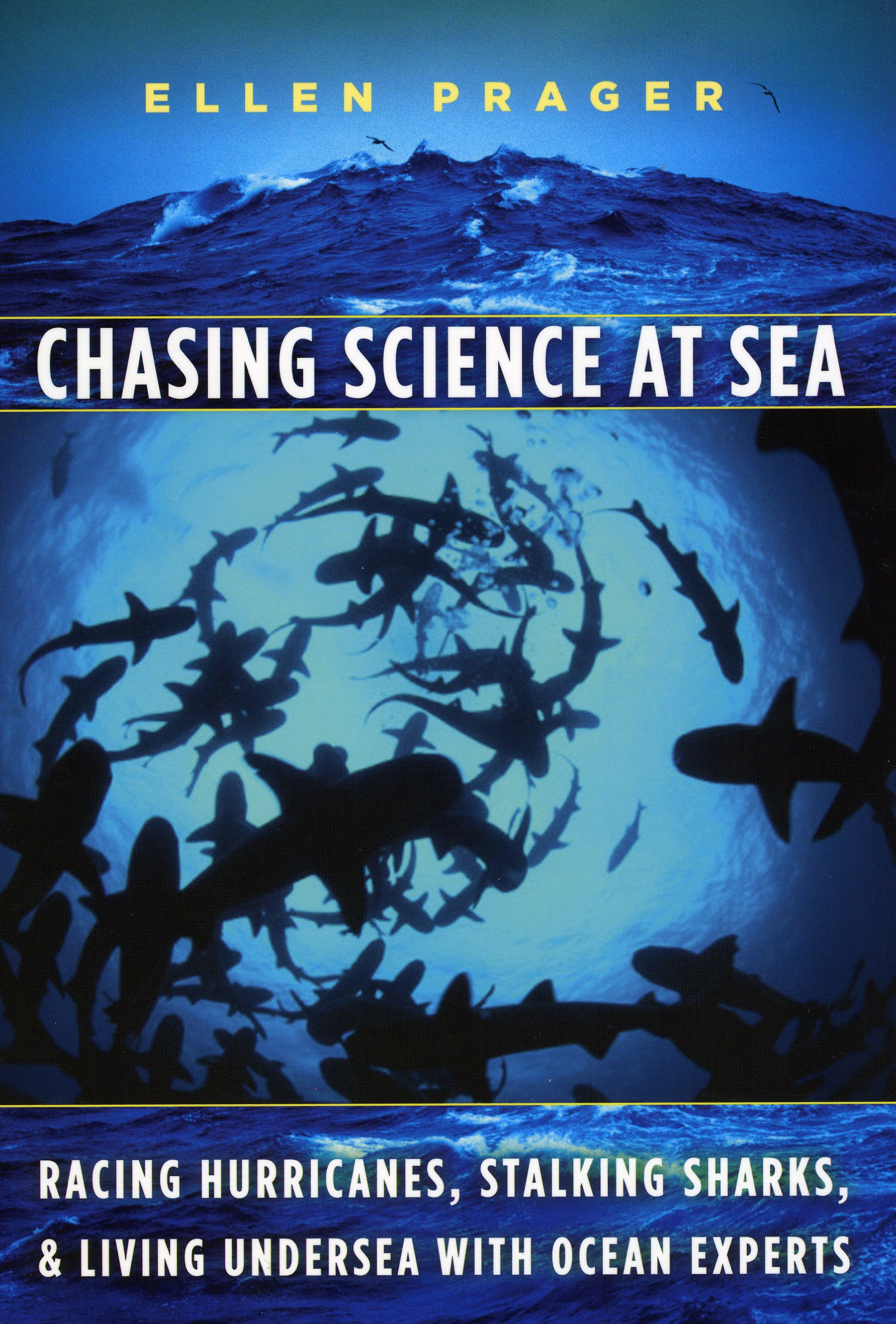
Chasing Science at Sea – By Ellen Prager

We were discussing Chasing Science at SeaRacing Hurricanes, Stalking Sharks, and Living Undersea with Ocean Experts  – the book I was reading. It is a lovely feeling to dip into the wonders of the ocean and experience the day to day life of a marine scientist (Something so different from American corporate life). How do you line up ocean vessels for your research expedition, how marvelous to experience bioluminescence on a full moon night in the middle of the ocean, and one instance where a flying fish hit a research scientist on the face as they leaned out to sea!

We both laughed.

“Maybe science needs to lighten up!” he said, and we went through the dialogue.

He was referring to the TV show we had watched the previous night: Corner Gas (Episode: Key to the Future) in which one of the characters is taken for a ride for being psychic.

From Corner Gas (Episode: Key to the Future):  

Wanda: Do you know what the odds are of Hank having a dream about my hair and a clock moving forward and then me having to move my hair appointment forward?
Brent: Ten to one?
Wanda: Unfathomable. Science hates it when things can’t be fathomed. The scientific mind demands to fathom things completely.
Brent: I understand, or fathom.
Wanda: There’s got to be a rational explanation for this.
Brent: Sure. It’s probably just a coincidence.
Wanda: Science hates a coincidence.
Brent: Maybe science should lighten up.

A few minutes later, that thoughtful crease flitted across his forehead and he asked me,  “So, Amma, tell me. What do you think is Impossible?”

I knew the fellow loved the quotes that his elementary school and after-school environments had drilled into him. How many times had I heard the children tell me: “Impossible is nothing but I aM Possible! Get it? Get it?”

“Hmm…let me think about it. You mean just impossible to do for humans?” 

He nodded

“Hmm…I think it would be hard to teleport to another star cluster system on the opposite side of the galaxy where life has thrived. Not just that, but survive and admire all the different forms in which life has evolved there, and then make it back here to describe the beauty and wonder of it all to our Earthlings.” 

“Well…it would be possible if you create a wormhole and find it back here I suppose.”

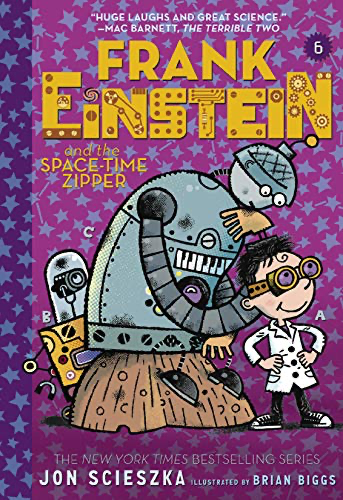
Then, he leaped off in answer and came back bounding in a moment later, “Huh! Funny you should say that.” I just read about that in this book by Jon Sciezka!” He held out the book, Frank Einstein and the Space-time Zipper by Jon Sciezka.

Frank Einstein and the Space time Zipper – By Jon Sciezka

“Huh! What a coincidence? You didn’t tell me about this before did you?” I asked the fellow. 

“Nope!”

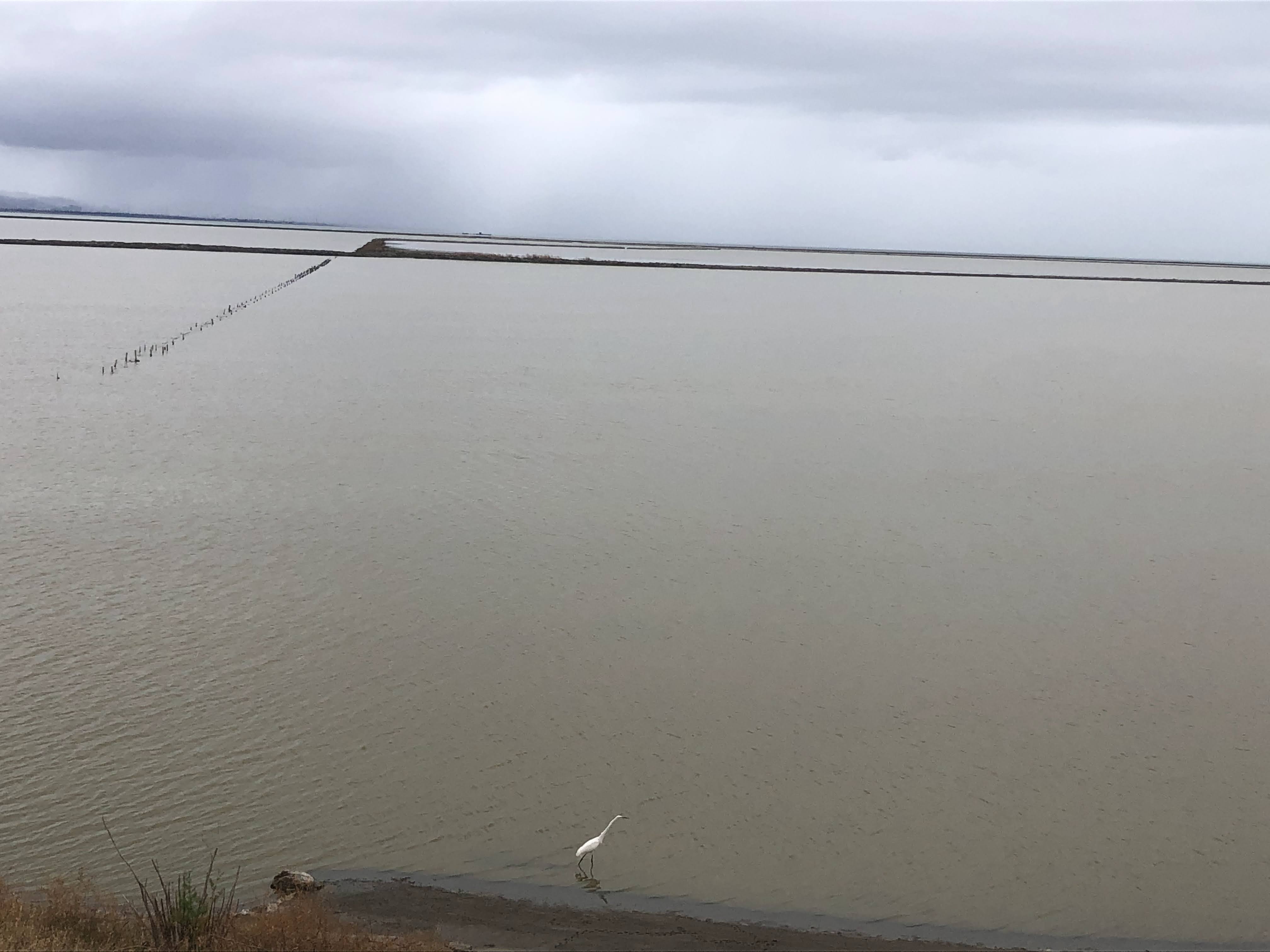
You sure you hadn’t been saying something to me on a walk when I was half wrapped in searching for rabbits in the bushes, and egrets in the air?”

Still nope.

“Well Science sure hates a coincidence!”, said I and we guffawed.

I think I shall read this book to see how to get to experience a system of life so far removed from us as possible. The coincidence of it is worth exploring. What do you think?

An Orchestra of Avocets

A few black and white birds, most probably avocets, if I remember correctly were flying calmly around me in great circles. They seem to have their beaks open, and relishing whatever they were eating as they flew. They were completely at peace around me, and a great sense of serenity swept through me watching them. My vantage point was perfect. I was on a hill overlooking a lake and the avocets darted in and out at times, but glided seamlessly at others. I had just decided to not reach out my hands and touch the beautiful birds  so I could have them comfortably flit above me for a while longer, when the alarm went off. 

It was one of those nights that melt into morns – seamlessly, and far too quickly. It is a blessing indeed to be able to get up when in the midst of a beautiful dream, so surreal, calm, peaceful and oh so vivid, and I felt a great sense of possibility and serendipity as I bustled through the morning and hustled the children to school. 

The son & I hummed and listened to our favorite Disney songs on the way to school. Before starting what promised to be a full day I wondered what a group of avocets are called. Then, my meetings called and I forgot all about them.

Before piling into bed sixteen hours later, I said to the daughter, that I wished to be a hedgehog. You know just curl up under a cosy tree and forget about everything and sleep. I don’t know if hedgehogs really do so, but they definitely look like it.

I have often wondered while standing and admiring birds and other fauna in suburbia whether they ever feel the same way. Do we give them peace the way they give us peace? Do they decide to stop and look at us so they can feel peaceful as they go about their days? I think not. But what a lofty goal that would be. I suppose we are curious creatures to many of our fauna friends.

That night, I opened the book, Sweet Dreamers – by Isabelle Simler, and was I in for a surprise?

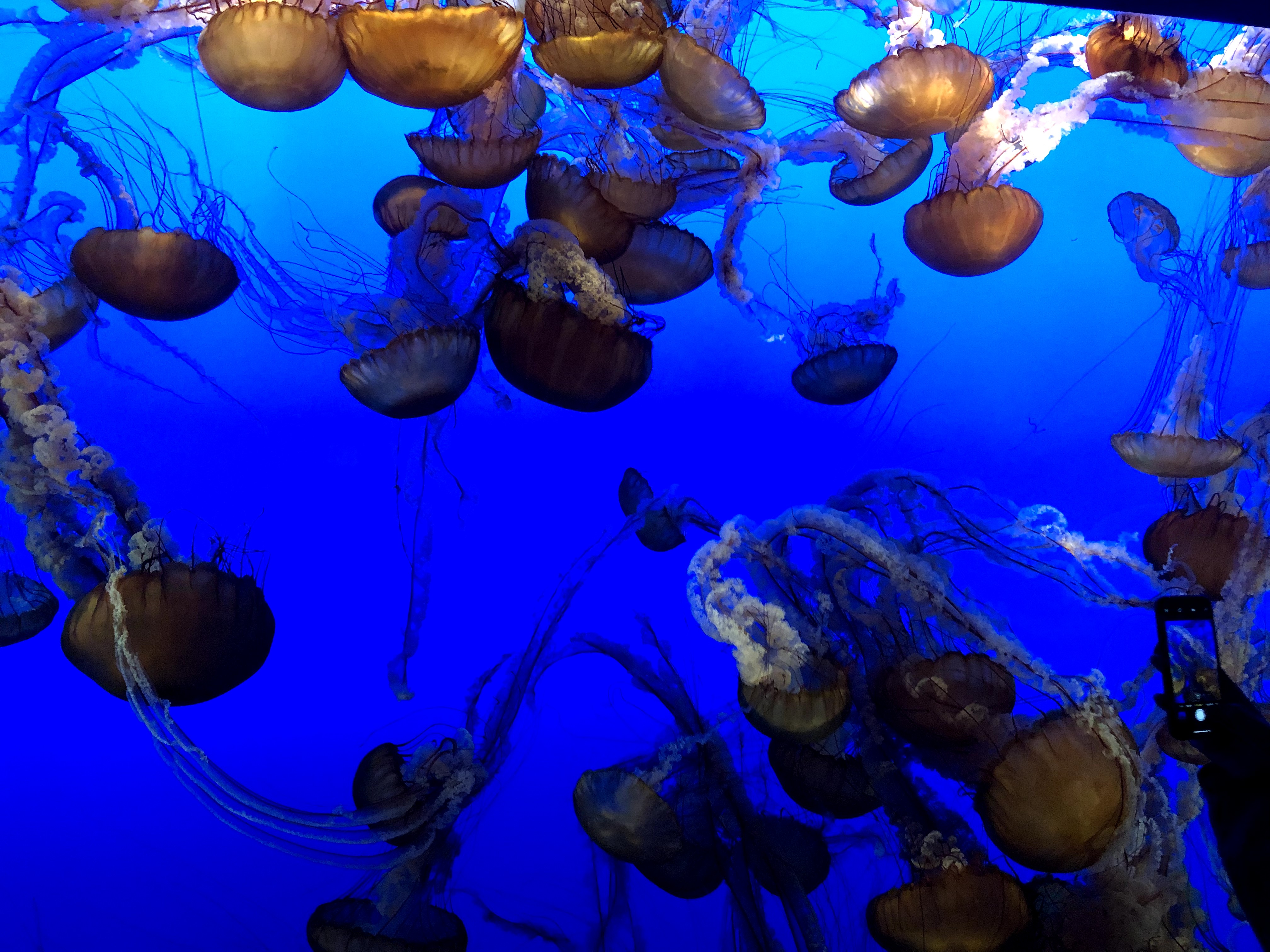
This is a children’s book that shows the many denizens of the planet settling into sleep. A bat hangs upside down, while whales float with one eye closed amidst jellyfish floats, and koalas hug eucalyptus trees. There is a page for hedgehogs curling up to sleep.

The hedgehog in the book, Sweet Dreamers

It is a sweet lyrical book, but the illustrations are what seals the book. On every page are stunning revelations. Scratch that – they are beyond stunning. Every page looks like the artist got up after seeing themselves in this joyous avatar in their dreams and just captured the sensations. 

Children’s book illustrations are always a joy to behold – this one tugs ones attention. 

Before flitting to sleep, I checked what a group of avocets is called. They are referred to as an orchestra of avocets. What a fitting collective noun for the birds of joy?

A Special Post to Celebrate Syzygy

“You’d better make it a special post!”, said the son. He is the one who is ardently fanning me in on, and keeping tabs on whether I am writing enough these days. His natural state of calculating kicks in, and he says “So, if you write another post in the next 36 hours then…”, and I have to remind him that it is not like that. One does not have to follow a punishing rigorous schedule for a hobby. That I will write and when I do, it feels joyous and good. Not laborious and like finishing up an arduous task for the sake of doing so.

There must have been a natural syzygy (aligning of the stars) when I started my blog seventeen years ago. The time it takes for a wizard to come of age in the magical world. I must say, the blog has given me an excellent magical education. I may not have graduated from Hogwarts in this time, but I certainly have learnt a thing or two on the magic of persistence, the seer of light in a dark universe, or any number of things.

Herbology: My specimens may still not be thriving, but as a chronicler of the natural world, I think Professor Sprout would gladly have me in her graduating class.

“Science has taught me that everything is more complicated than we first assume, and that being able to derive happiness from discovery is a recipe for a beautiful life. It has also convinced me that carefully writing everything down is the only real defense we have against forgetting something important that once was and is no more,” 

Hope Jahren, Lab Girl

Read: A Celebration of 🌎

The Joy of the Natural World

Astronomy: Professors Carl Sagan and his many many friends have been amazing companions in the starship of the night. Comets, moon cycles and changing constellations not withstanding, there have also been the amazing journeys through space on light ships designed and envisioned by Johannes Kepler.

Ancient Runes: Professor Vector has opened thine eyes to many wonders of the Mathematical world and how they help us find a structure to our days. A way to find the incontrovertible truth if you will.

Changing Mathematics from a computational discipline into a beautiful, abstract philosophy.

Pythagoras of Samos (580-500 BCE) who continued the philosophy of: 

Transfiguration: How else does a serious minded member of the software engineering firms of the world transform into a magic seeking writer who will arduously work out a sentence structure sometimes tens of times to get that laugh?

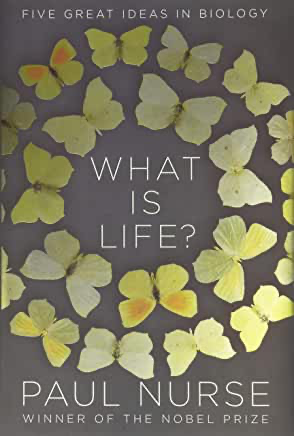
Potions: Professor Snape, Dr Oliver Sacks, Paul Nurse, Siddhartha Mukherjee, Ed Yong, and so many more professors have taken me under their wing and spent many enjoyable hours explaining the joy behind reactions.

Care of Magical Creatures: Hagrid, Gerald Durrell, Sy Montgomery and numerous other writers of the natural world have introduced and opened my experiences to the world of creatures around us. Snail tales, pelican and duck friends, and so many instances of the world around us.

Writing & reading have sustained and enthralled me every step of the way, and it has proved to me how remarkable life’s moments are – even in a seemingly unremarkable life such as mine.

Like Sy Montgomery says in her book, How to be a good creature: 

Thurber taught me this: “You never know even when life looks hopeless, what might happen next. It could be something wonderful is right around the corner.”

Sy Montgomery – How to be a good creature

It usually is in the form of a new book, or a new idea that magically transforms an ordinary day into an extraordinary one. The power of fleeting thoughts that can take flame, grow and sustain in a wholly positive way, weaving magical moments and learnings. What can be better than that?

“A reader lives a thousand lives before he dies. The man who never reads lives only one.”

George R R Martin in A Dance with Dragons

Here is to more years of fruitful occupation, magical meanderings and posts that entertain and hopefully enlighten. This is my 1000th post.

Thank you, my readers, for being with me on this magical journey. Of course, the blog owes its very existence To My Family & Other Animals – who are frequent and oft quoted celebrities on this blog.

The Human Experience

“You could be listening to anything at all, and this is what you choose to listen to?” , said the daughter.

I chuckled. We were driving through the Great Plains of the Mid-West between Wisconsin and Illinois. Snow flakes were flurrying lazily across the windshield, which was amusing to watch, since I could feel the car shuddering with the winds sweeping the plains. The great windmills on either side of the freeway were moving and converting the wind energy, while the snowflakes seemed to be dancing lazily and flitting across the plains. To see the flakes against the depth of the vast plain fields was mesmerizing enough, but to have Dr Indre Viskontas’s lecture accompany the scenes outside made for a new appreciation. 

I was listening to the excellent Great Courses lectures by Dr Indre Viskontas. In her energetic voice as she talks about how we hear and see, the world becomes magical again. 

Listening to Dr Indre Viskontas speak about the faculties of seeing and hearing, makes those of us given these two abilities more appreciative of all that goes on beneath the skin to make these happen. 

12 Essential Scientific Concepts

How we perceive light, hear the frequencies of sound that are audible to us, make for our human experience. The frequencies heard and seen by each creature on Earth itself is different. From the magical birds who sense the Earth’s magnetic field for their migration journeys to the fish who are able to navigate by the position of the stars from deep under the ocean, we each have our own unique way of living. Of Life. 

In Dr Oliver Sack’s book, Musicophilia, he says:

“Every act of perception, is to some degree an act of creation, and every act of memory is to some degree an act of imagination.”

Oliver Sacks, Musicophilia

Dr Indre Viskontas is also an Opera performer, and her joyous voice brings out the polymathic abilities she possesses. Truly, as she regales cognitive neuroscience and how our brains understand better, I am reminded of some wonderful musings with our dance teacher at school. In between rigorous bouts of dance practice, she insisted that her students were all bright, athletic, and doing so much better than we would have without dance. And, in the energy of youth urging us towards our better selves, we wanted to believe her. Could that have been a belief that spurred us on? We would not know – for good teachers, coaches and mentors all excel in that subtle balance of belief, discipline, and inspiration.

But maybe the musicality and the dance do make for better neurological experiences. As Dr Viskontas says in the lecture above, 

Art and science are after the same thing. The goal is to understand the human experience. Science does it by extracting general principles about the world, and art uses individual experience to highlight what is universal.”

Dr Indre Viskontas

Why is it that we are moved by a piece of music to visualize a god vs demon war on stage, or the haunting love-lorn calls to one another? Because music, like whales can attest, can evoke worlds in our imagination. 

“Music can also evoke worlds very different from the personal, remembered worlds of events, people, places we have known.”

Oliver Sacks, Musicophilia: Tales of Music and the Brain

And so, I wanted to say to the daughter, “When I could be listening to anything at all, I chose to listen to the lectures trying to understand the human experience in a vast, barren landscape, made unbearably beautiful by the beauty of the symmetrical snowflakes, and the gushing of the winds against the car. “

What I did instead was laugh, and let her call me weird. ‘Weird’ I am beginning to understand is one of the best compliments that a teenaged child can give you.

Strengthening the Soul?

Reading A Blizzard of Polar Bears in the cold Chicago trip was probably poetic justice. For it made me appreciate that every creature is different. Obviously, the polar bears found anywhere south of Manitoba too hot, and we found anywhere north of California too cold. It was strengthening for the soul to think of the polar bears when it was too cold. 

A Blizzard of Polar Bears – By Alice Henderson

This strengthening-of-the-self theme seemed to grate on the daughter when she casually mentioned something in the middle of a snowing day walking up a steep hill. “Well, uphills and stiff winds against our progress are character building things.” I huffed. “If in life, we only rolled downhill, how would we appreciate the ease of that?”

She stopped midway and said, “I do wish you were a polar bear now you know?”

She had a point:  I don’t think polar bear mothers give character building speeches when they are freezing across a cold stream of air. But I had a set of speeches to get through, and was determined to get through them. I mean, how else can one cover syllabus? 

I must say the more I read about naturalists and biologists doing the work required to keep biodiversity alive on our beautiful planets, the more I am in awe of them. 

In the book, Wild Souls: Freedom and Flourishing in the Non-Human World, Emma Marris notes:

“These are species we cannot simply leave alone if we want them to persist. They are species that require intervention-at least for now. A 2010 analysis of the 1,136 species with recovery plans under the Endangered Species Act in the United States found that 84 percent require ongoing management.”

Wild Souls: Freedom and Flourishing in the Non-Human World, Emma Marris

Chicago streets, we were told, need watching. There are areas that are good, and areas that are notorious for mob activity. I must say, the movies play it up a bit, but even the cab drivers and hoteliers there acknowledged it. Keep out of these streets, those streets, south of those streets and north of these streets and you should be fine, said one helpful fellow. Oh, and try not to be out too late. You know? Just to be safe. 

So, as evening fell, we decided to go bookstore browsing instead. Once inside, the familiar tug of books waiting to be read was enough to warm up the innards (the doors keeping out the gasps of cold air was useful too). Our discussion turned towards pricing of books and fiction vs non-fiction, etc. While I can see the point that fiction generally requires less research than their non-fiction counterparts, I couldn’t help thinking that I had actually learnt as much about polar bear research from the fiction book, A Blizzard of Polar Bears – By Alice Walker as from the non-fiction book,  Ice Walker – A Polar Bear’s Journey Through the Fragile Arctic – James Raffan

To see the kind of measurements taken by polar bear researchers to determine the health of the population and the steps necessary to save them in a changing ice-cap is enlightening whether set in the context of a thriller novel or a non-fiction book following the path of the polar bears. For instance: nuggets such as these spotted the book liberally. 

“According to the database, the bear had been collared four years ago. Because that was the upper limit of how long a collar could last, Alex removed it. They had less invasive technology now. 3M had developed the Burr of Fur, a small GPS tracking device that adhered to a bear’s coat. She recorded the device Id’s numbers on the spreadsheet and then worked it into the bear’s hair.”

“First she ran a test for persistent organic pollutants containing chlorine, fluorine, and bromine. Then she examined the sampled of the presence of industrial compounds like PCBs. These could compromise a body’s ability to produce antibodies, making humans and wildlife more susceptible to infection.”

A Blizzard of Polar Bears

In general, we do learn from fiction and non-fiction in different ways. Our emotional quotient benefits from a good spot of fiction, and we turn out more empathetic than we were before. With non-fiction, we are able to read the research, compare the measures, and get a good spot of analytical outlook-ing. “They are both strengthening for the soul huh?” I said, and the daughter rolled her eyes. 

“You know what is really strengthening for the soul? Starbucks! Come on – let’s go!” Said she, and the compliant polar bear followed her cub as it nosed out the coffee den.

Polar Bears

The 4 Seasons

We have been traveling in the Chicago area for the past few days, and I must say folks spotted us Californians miles away. They chuckled, they were amused and they had no idea why we scuttled and huddled like penguins in winter when it was clearly spring – ask the daffodils who were springing up to say hello to Lincoln statues everywhere.

Illinois does not let you forget that Lincoln hailed from there. The roadways, streets, statues and even a bust in a university that had a funny story of a Lincoln statue whose nose folks rubbed for good luck. I tried rubbing the daughter’s nose for luck, but it didn’t seem to amuse her much. A shame really – for the very child as a toddler was famed for joyously peeling off a gargling laugh like a tinkling stream every time we made her nose ‘disappear’ in what seems like just a few years ago. Oh well. Time.

I saw some folks out with light jackets, a spring in their step, and not so much as a cap. We? Well, once you wear the cap, mask, gloves, extra thick jacket, thermals, boots, you’d think there isn’t much place left to freeze. But there is. And we froze with every gust of wind by Lake Michigan and Lake Mendota. After a lovely stroll through the park by the lake, I mumbled through the layers to the daughter, “Nothing makes you feel so alive as catching that gasp of crisp air right?!” 

Her muffled retort made it past all the layers, and she said, “Oh – is that what we are calling this chilling cold now? Crisp! Ma!”

I must say driving from Chicago to Madison, Wisconsin and then from there to Urbana Champaign back to Chicago made for a marvelous time. It was good for the soul to contemplate the nothingness and vast expanse of space in the world. The Greek myths of Hades and Persephone’s plight came alive in those days starker than anywhere else I’ve seen. The Earth was barren for miles and miles around us. Spring planting had not yet begun, and what would have been green fields on either side in the summer and fall were empty, preparing for another season. The cold winds and a slightly snowy day made for exciting drives on the interstates reminding us of Lincoln’s Illinois. Windmills flailed their arms long and wide, while the little car shuddered along with the whipping winds and the large vehicles on the road.

Other days made for marvelous blue skies with scudding clouds. The characteristic blue skies and white clouds of Planet Earth are especially welcome when one is traveling and out and about.

We were told by indulgent folks that they experienced 4 seasons – a dig at Californian winters, no doubt. But after the cold days of Illinois springs, I am quite ready to take on the winters of California, and headed out on a rainy day walk almost as soon as I could find my bearing s again, only to be rewarded by a marvelous rainbow for Earth Day!

What’s more I didn’t have to pull my freezing fingers out of their gloves to take these pictures.

April

April is Poetry Month

April is also the month we celebrate Earth Day

April also happens to be the month the days are lengthening enough for us to moon about the countryside, and life is full of promise

Nature sat up and decided to revel in glorious life, and the hills are bursting with greenery and wildflowers

The buds are waiting to burst into bloom

Trees have been working extra hard to sprout new leaves. My alarm gleefully extols rapturous spring, and despite the strong motivation to get in a few snoozes more, the allure of the outside world is hard to resist.

Imagine my complete delight when I stepped out on a walk today and saw the goslings had hatched just in time for Earth Day?

Could this be why Easter festivities involve egg searches?

I walked into the house soaked one morning after walking in the rain, and announced to the chagrin of all in the household, “Only fools would step out on a walk on a day like this, but it was totally worth it!”

Maybe that is why April also hosts April Fools Day.

Nevertheless, please do enjoy and revel in the joys of April while you can.

Shark Splashers & Bear Growlers Creativity Index

“Why would I punch a shark in the nose?” I said swiping the phone with my hand as it rang on our evening walk.

The husband who had probably called with a view to getting a sane opinion mopped his brow on the other side. Was this really a good idea? He seemed to ask himself. After a second of stunned silence he said, “What did the poor shark do to deserve being punched in the nose by you two jobless folks out on a walk?” 

The son & I laughed. We were on our evening walk and the fellow was telling me a little story he had imagined the whole afternoon when I had droned on in one meeting after another. The thrilling tale involved Benjamin Franklin, Samuel Adams, the Boston Tea Party, and somehow as I nodded along, the tale had an inexplicable presence of trained sharks by the British Army going after the American Revolutionaries. The revolutionaries, on their part, weren’t quiet either. They had trained bears. How the bears fought the sharks with the humans aboard made for a loud, raucous tale with lots of noise and action. I was a confused, if slightly inattentive audience. For one, the day’s meetings were not yet pounded of the system, and for another, a marvelous spring sunset was in progress. The egrets, ducks and geese were making a fumble of noises, and the son’s story did not quite hold my attention till the sharks and bears fighting sequence made an appearance.

I double tracked and asked questions not letting on that I had let my mind wander over the past mile. He gave me a swift look, and said, “I know you haven’t been listening. Fine! I’ll explain again.” And off he went from the beginning again. This time, the story was even wilder than I imagined while half listening. 

I shuddered a bit at the high moments of battle between creatures.

That night I did chuckle to myself on the sharks vs bear theme to the American Revolution.

It also led me to think of the Torrance Studies for Creativity (in the book, In Praise of Wasting Time – By Alan Lightman) where they studied the different aspects of imaginative story telling in children and had an independent body of panelists rank the ingenuity, creative elements, and nuances to the story telling in primary school going children. The study apparently shows a drastic reduction of the creative elements somewhere around 1990. The correlation is plain. It is around the same time that the usage of the Internet and screen time soared.

The study is here:

The Creativity Crisis: The Decrease in Creative Thinking Scores on the Torrance Tests of Creative Thinking – By Kyung Hee Kim, School of Education, The College of William and Mary

It does make me wonder how many marvelous tales we will be missing with the advent of more advanced technologies. Even brilliant ideas such as code generators, image generators can either be used actively by us to better ourselves or passively used to distract and stop us from doing the hard work of utilizing our talents. Which way will we choose? 

I do hope the shark splashers and bear growlers continue to use their imagination to better this world.

A Whale of a Time

“Just read some book that is interesting, but not too interesting. Shouldn’t make me laugh too much, or make me say.”Oooh! That is interesting right?”, but make me sleepy in 10 minutes.”, said the son.

I said I would try. 

The strange specific request was because it was well past bedtime. The lights were off, but the young fellow was having trouble falling asleep. I could hear him chuckling at the conversation in his sister’s room, and getting up every few minutes to dart across and contribute. The rambunctious older sister and father were given a sober talking to so bedtime rituals could commence and I looked at the stash of books by the bedside trying to find one that would fill this vaguely specific request. The written world did not disappoint, and pretty soon, I had in my hands several books that could help.

However, the book on Whales seem to fit the description perfectly. It was interesting enough, the illustrations beautiful and the content remarkable yet not thrilling enough to keep one awake at night. It was like listening to Whale Song.

There is something remarkably therapeutic about the color blue.

Whales – by Kelsey Oseid

Seeing the pages in various hues of blue, with the lovely pictures of the most beautiful and interesting creatures on Earth made for a magical few minutes. It is no wonder that the daughter loves doodling with blues, and drew numerous pictures of whales.

The daughter’s drawing of Whales

The light blue on the pages lulled one to sleep and before long, the fellow drifted, and I tiptoed out with the book. 

Reading about whales on a weekday night is strangely relaxing. I kept going. Spreadsheets, documents, planning, working, cleaning – everything seemed irrelevant in the face of these creatures. The feeding, bubbling and the many aspects of the whales is beautifully shown. The illustrations in the book make it a relaxing artistic phenomenon – I have spent many nights since looking at the pictures in the book. 

Sample page to show the beauty of the illustrations in the Whales book by Kelsey Oseid

Whales also gently reminded me of my recent folly: It has been sometime since I went on a children’s book reading spree. So, I went about rectifying this immediately. It is no wonder the old spirit has been feeling jaded lately. Nothing like a dose of magic, art, laughter and childlike stories to rejuvenate the spirit. Sometimes, when we make a Whale of a Mistake like that, all it takes is a trip to the library to invite the guardian of the spirit to visit again.

I look forward to reading this lot, and having a whale of a time.

Children’s Books

What’s our hurry?

“Oh! How I love the fiery glow of the sunset and how I missed our quiet garden“, I said leaping out of the car after my long dredge of a commute back into the office. It has been two years since Covid shut office spaces down, and I cannot say that I missed the crowds on the trains, the noise of the city, or the snarling traffic inching along at peak times.

“I am so happy to come back to this suburban paradise from the hustling, bustling city!” I said sighing happily and taking in deep gulps of fresh air. I flitted to the rose buds starting to form, flew to the jasmine bushes sending wafts of jasmine-ly scent into the evening air, and lovingly tousled the lavender bushes. I suppose butterflies when let loose in a meadow from a bottle do the same.

I looked up to see the daughter giving me that look: the one where she is wondering whether it is prudent to have my head checked for bumps.

I am such a country mouse my dear!” I said by way of making conversation.

“I wouldn’t want to be a cat in a world that you are a mouse, that is for sure!”, said she, never one to falter at smart quips. 

I straightened my shoulders haughtily and wanted to retort. Sharply. With sarcasm, speed and humor. 

Nothing came. 

I shook my head and tried to fetch some quip, anything. Nothing.

I stood there fumbling and stammering. Maybe the pace of the day had taken it all out. So, I finally laughed. 

It was while I was out sauntering on a mild spring morning a few days later that I remembered the study on the pace of life in the book, In Praise of Wasting Time – By Alan Lightman. 

In Praise of Wasting Time – By Alan Lightman

In the book, Alan Lightman writes of the study where people’s average walking speed was measured across a decade. The speed was measured in suburban places, cities and bustling city centers. Apparently, the walking speed had increased considerably. An average woman of today in San Francisco city walks faster than an average woman in the 20th century. Makes us pause and think doesn’t it? What are we hurrying towards?

Excerpt from the book:

A momentous study by the University of Hertfordshire in collaboration with the British Council found that the walking speed of pedestrians in 32 cities around the world increased by 10% just in the 10 year period from 1995 to 2005.

How did we arrive at this point in the history of the world?

First, there is business. The pace of life has always been driven by the pace of business, and the pace of business has always been driven by the speed of communication. In 1881, in a book titled American Nervousness: its Causes and Consequences, physician George Beard noted the increase of nervousness and stress in the public caused by the new communication technologies of the day: The railroad and the telegraph. Today, its the Internet. 

In Praise of Wasting Time – By Alan Lightman

It is no wonder that spending time in Nature is such a soother, acting almost like an analgesic. The pace of nature hardly varies. 

Like Lao Tzu says: 

Nature never hurries, yet accomplishes everything.

Lao Tzu
Bryce Canyon National Park