Once Upon a Goat

The son and I stood by the river bed near our home once more gazing upon the goats in the riverbed. An endlessly fascinating pastime, we always return smiling and shaking our heads fondly at the kids and goats, and a little awe at the sheep dog whose job it is to herd them all.
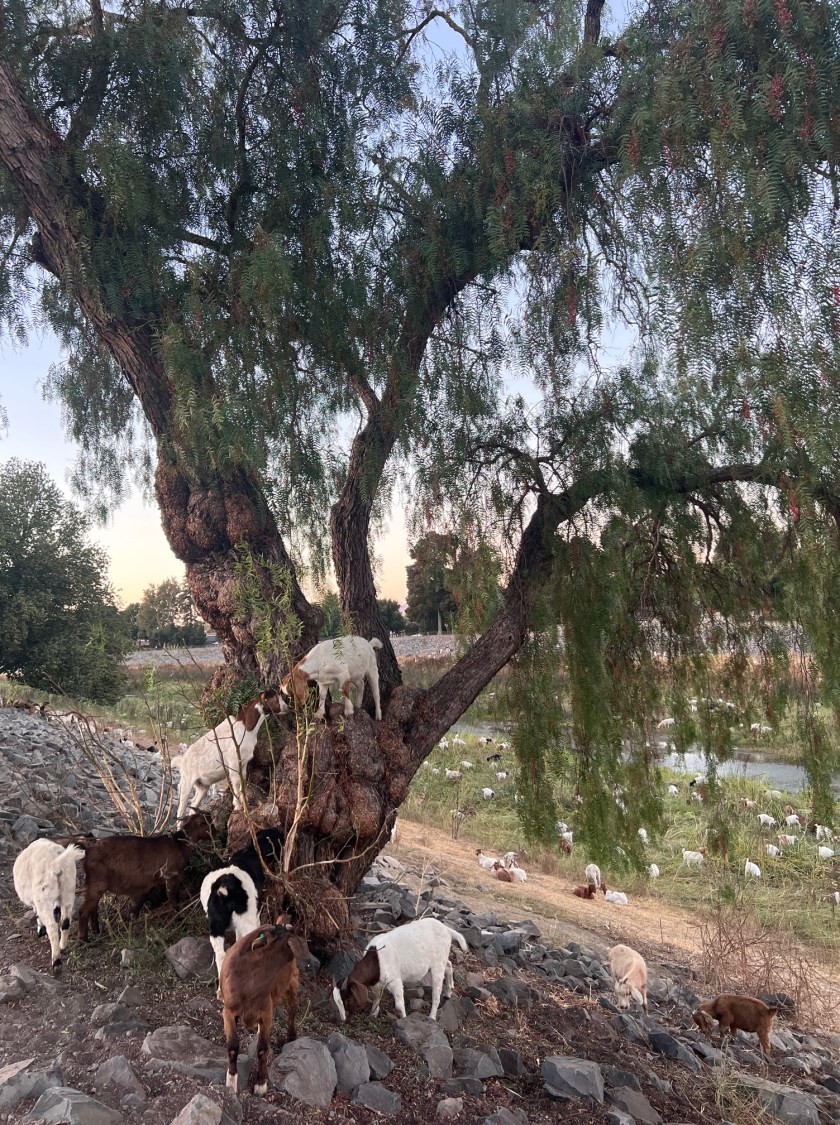
75AA2498-E9FE-4C9F-B211-BFFB9F499459

One evening, we saw two dogs gaze into each others eyes with an understanding that seemed to acknowledge their respective roles in life, while the goats gathered around looking curiously at the new dog behind the fence.
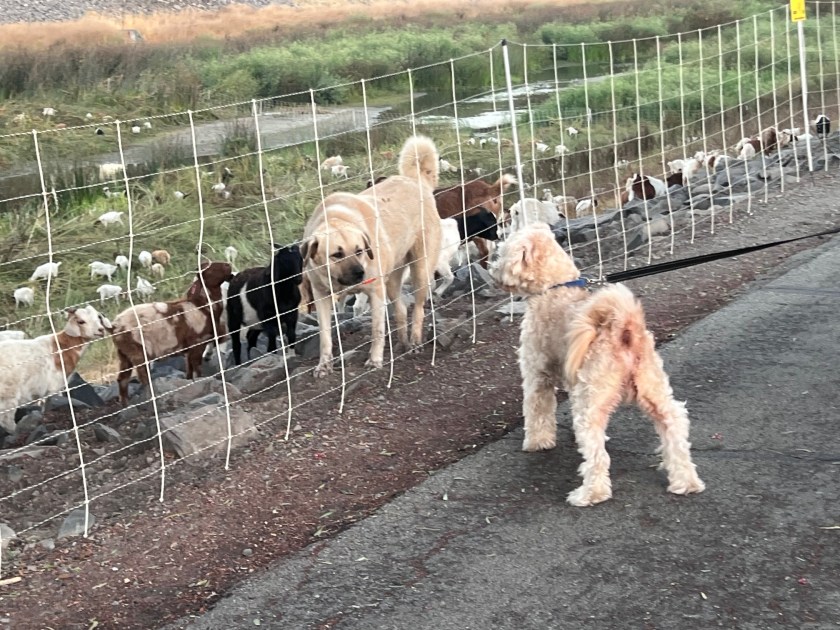
5E935F80-BB6D-40C3-8DE6-667BFCC5A791

“Hmm – maybe you should write about the goats huh?!” Said the son one day after we had spent a few minutes chuckling at their antics. I agreed. I had written a rather serious post by my standards, and I was in the mood for something light, something that shows the lightness of being, joie-de-vivre and all that. Goats seemed like a good option.

As luck would have it, the first book I had to read that evening was a children’s book on goats. I picked it off the shelf, and the son chuckled approvingly. “Oh – this is such a good book, right?”

“Yep! I love it too!” I said grinning too.

Children’s books are such a reliable source of light. Where else in this world would you be able to find as unalloyed a source of whimsy, fun, and a sheer exaltation of the nonsensical?

This book seemed to tick all of the above.

Once Upon a Goat – By Dan Richards, illustrated by Eric Barclay
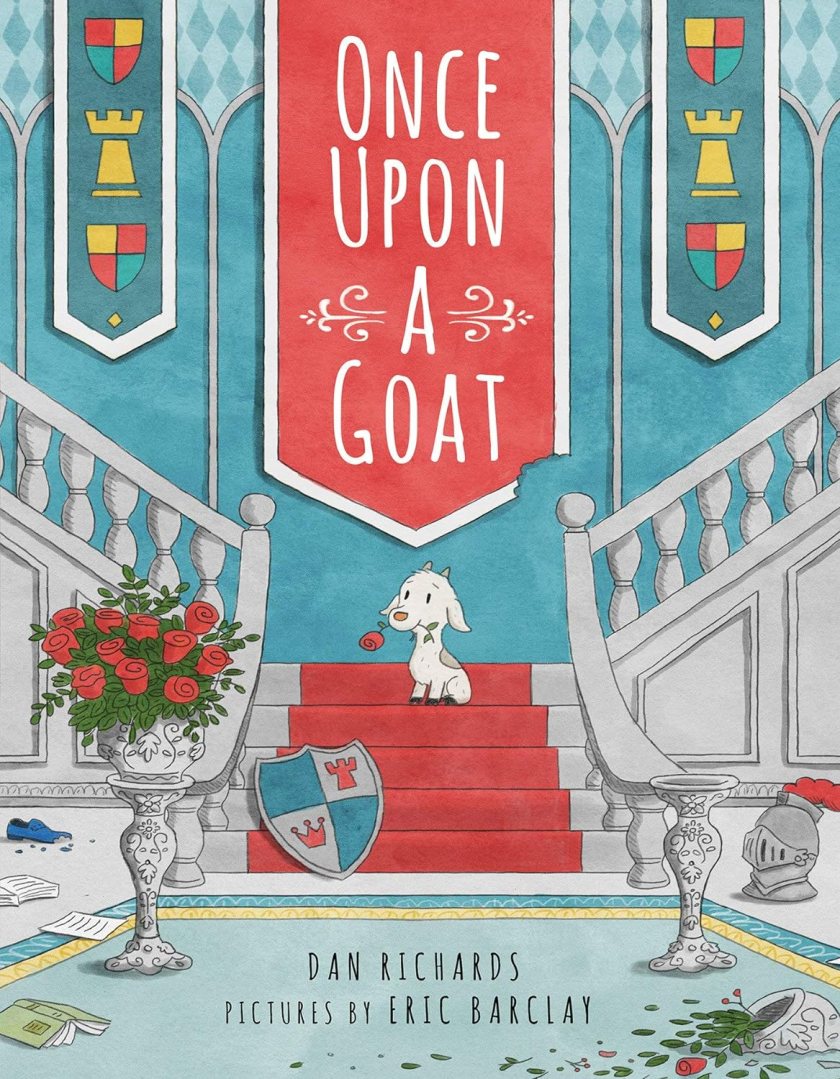
once_upon_a_goat

A king and a queen want to start a family and ask the fairy godmother for a kid who has “glowing skin, bright eyes and hair like ocean waves”.

I did wonder how they arrived at this combination to ask for in lieu of a hundred other qualities, but remember this is a fairy godmother asking them what they’d want. I suppose I’d be flustered too. What would you ask for?

Anyway, the fairy godmother, busy with hundreds of wishes like these I hope, grants them a kid with just these qualities. Only it is a goat kid and not a human one. The king and queen are flabbergasted, but go on to accept and love the goat kid anyway. Their lives are more messy than they’d have liked perhaps, and their rose bushes suffer a bit maybe, but otherwise, they are a happy family.

It is when the fairy godmother stops by to check on how the little family is faring, that she realizes her folly. In the meanwhile, a human baby is being raised by goats in the countryside. 

What follows makes for a hilarious take on families, and acceptance.

Hint: A large heart makes for great joy and from generosity of spirit stems more happiness.

Who knew goats would play such a big part in our laughter that day?
Successful Transitions

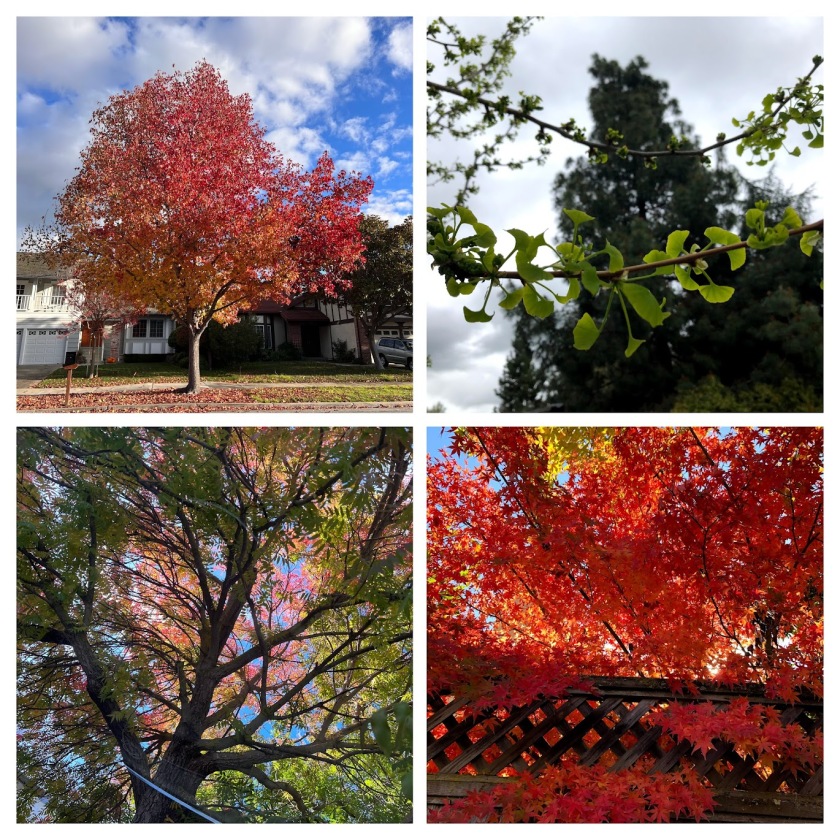
Reminders of time passing are all around us. It is there in the first drizzle of October nights, in the nippy mists of November mornings, and the frigid temperatures of the freezing winter months, as much as it is in the growth of hope and new leaves in spring.

IMG_7697-COLLAGEYet, even after a few years of these cycles, we still do not comprehend the effects of time as effectively as when we see those around us age, or loved ones lose their vigor. It has been a hard lesson and one everyone goes through in life. But the past few trips to India have really brought this to us with increasing clarity and sadness. Sadness, not for the coming of the inevitable, but for our own reluctance in accepting it.
It is hard seeing once vibrant aunts and uncle lose their vigor and charm. Precious few hold on to their good graces as they age. Many lapse into complaining about their lot. Still others, refuse to accept their diminishing physical prowess, and insist on being in-charge even in situations where they are clearly past it.

What will our folly be?

The more I saw of the aging and the elderly, the more I wonder whether there is an easy way for us to move towards acceptance. I understand first-hand the shock of it. I remember thinking with shock when my daughter’s friends called me ‘Aunty’ for the first time all those years ago. When had I become an ‘aunty’? But now, I love it when the friends of my children call me ‘Aunty’ – it is a word that fills me with joy.

This is also a reason I find myself attracted to books by authors like Miss Read. (Jacqueline Winspear was recommended to me recently and I like the style and wisdom in her writings as well). Fictional and functional characters such as Miss Clare and Mma Ramotswe of the No 1 Detective Agency come to mind. They bring to life the kind of people we admired through our childhoods: normal people living life with grace, common sense and love for those around them. It is comforting to read that practicing these apparently simple tenets lead to a good life.

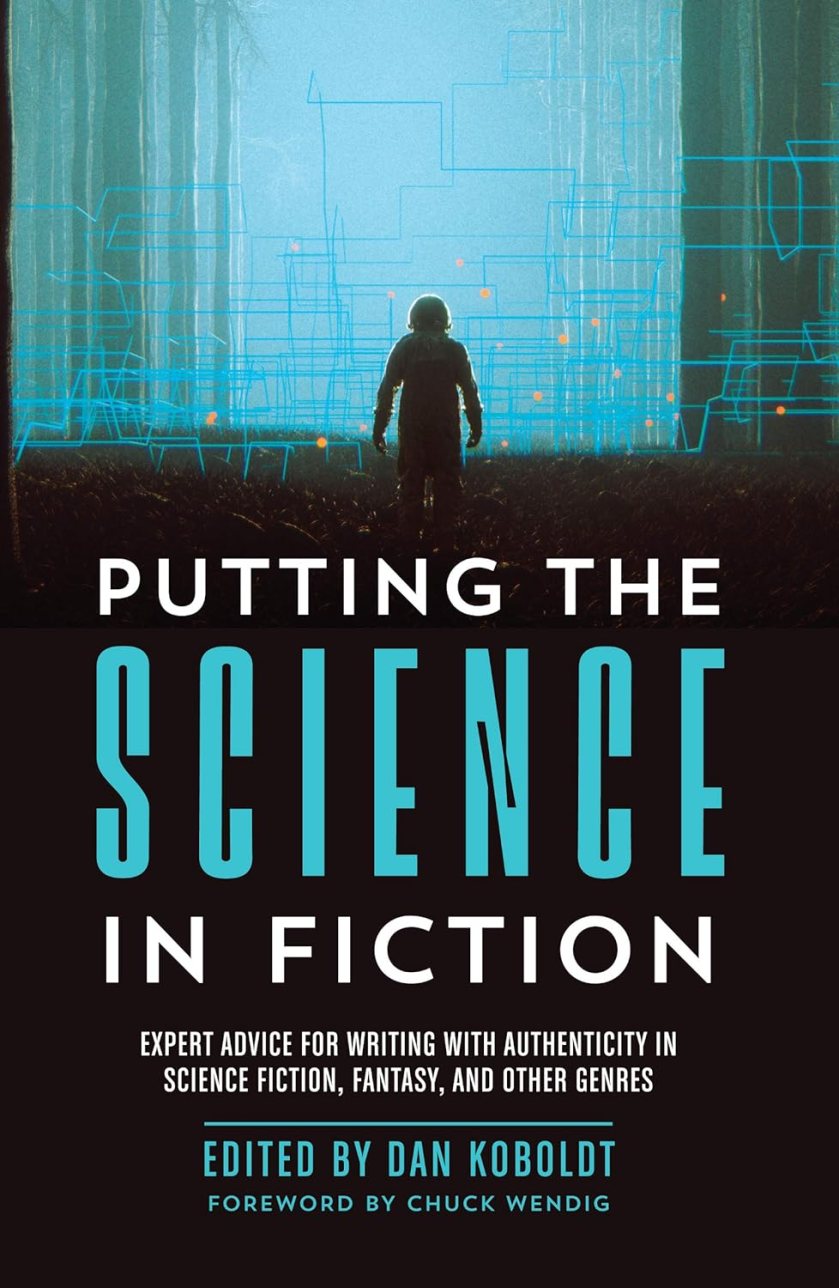
As I read the essay on psychosocial intelligence in the book: Putting the Science in Fiction – Collated by Dan Koboldt , I could not help nodding along at the bits of writing related to our lifespans as outlined by the essayist Maria Grace. Maria Grace is a psychologist and a curious observer of the human condition. In it, she says that

🍀”Psychosocial development encompasses the changes in an individual as they manage various societal expectations across the lifespan.”

While there are many books that guide us through adolescence (now more than before) , I am constantly looking for good books that guide us through the middle and later stages of our lives. There are always philosophical works – the wisdom of humankind through the ages distilled in our myths, fairy-tales, vedas, religious texts, fables and epics. Philosophers such as Seneca, Aristotle and Buddha who have given us a peek. 

When we are children, we rarely understand what adults mean when they say childhood is far easier. I don’t think I ascribe to that theory. Those of us lucky enough to have people looking after us certainly have things to be grateful for, but adolescence is also a period of great uncertainty and angst.

However, I understand now what teachers and parental figures meant when  they said childhood was easier, for adulthood brings with it a whole host of different challenges. The expectations of our roles in society, the ability to care for different generations – older parents, our siblings, colleagues and peers, and younger children ( our own, niblings, friends children, those in our care).

🍀”In addition to the tasks of preparing older progeny for launch into the world and managing the increasing needs of older parents, individuals at this stage of the lifespan are also expected to step into social leadership roles. A commitment to lifelong learning and growth marks a positive resolution to this stage, whereas Ebenezer Scrooge-like preoccupation with self and comfort mark an unsuccessful one.”

As I read on to the late adulthood sections of the essay, specifically, navigating the travails of old age and its associated ailments. She goes onto say:

🍀“Those who manage this transition (late adulthood) successfully do so by recognizing the worth of their previous and continued contributions to their society and future generations. Depression, despair and giving up mark unsuccessful transitions.”

I have yet to read any books by Maria Grace, but her essay on psychosocial development in the Putting Science in Fiction book is an excellent one. (Essay: Character Development Beyond Personality Quirks)

science_in_fiction

Raindrops on Roses

The tasks of the day done, I plonked myself on the window ledge, hoping to catch a glimpse of the waning moon before heading to bed. The nights in a waning moon cycle seem to hold a twinge of disappointment – the moon rises later and later. It is like the beautiful moon  is teasing us to forget its luminous glow before it starts up again, gaining in hope and luminosity as the waxing cycle kicks off.

I peered out of the window into the dark driveway outside and let out a gasp. It had been raining, or drizzling, and I was completely unaware. Oh!

Earlier that evening, the son and I had gone out for a stroll, hopefully clutching our umbrellas, and peering at the clouds overhead, but nothing happened. By the time we headed back the clouds had started parting, and we didn’t think anymore of it.

But now, sitting on the wooden ledge, I felt a pang. I have mentioned californian summers before – bursting with wildflowers, brown hills, aside, they also tend to linger on. By the time October rolls around, there is a distinct shabbiness to the summer looks – the flowers have dried out or faded on their stems, the hills have gone from a golden hue to a dull brown. All in all, there is a yearning for cooler days. 

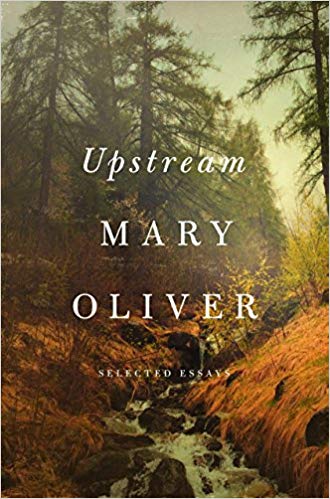
I sat and watched the quiet wet scene for a few minutes longer. It felt good to do nothing for a few moments after a long day of doing. Sometimes, I feel Mary Oliver’s three selves (The child, the doer and the dreamer) are constantly being overshadowed by the doer.

upstream

The child only peeks out occasionally, and when it does, it is always joyful, hopeful and wondrous. The promise of a new day, the beauty of a flower, the cool air after the rain and so on. The dreamer and the child self seem to get along quite well – one encouraging the other, teasing and prodding along the way. 

https://www.themarginalian.org/2016/10/12/mary-oliver-upstream-creativity-power-time/

This quiet contemplation at midnight was so refreshing, I had no desire to head to bed even though the adult self knew I must. The doer beckoned the next day.

The next morning as we stepped out into the fresh rain-covered morning, the son and I sniffed the cold air. We stopped to peer into a rose still wet from the rains of the previous day. A moment of peace nudged its way into the usually harried rush to school, and we looked up together smiling at the same time.

raindrops_on_roses

‘Tell me, what is it you plan to do with your one wild and precious life?’

  • Mary Oliver

The Storms of Vincent

Regular readers know that I am a pluviophile (one who loves the rain). On my recent visit to India, I was out walking around the apartment complex our family lived in one night, and found myself caught in the most brilliant and relentless rain they’d had in months apparently. 

I was delighted. 

rain

I was on a late night phone call to the family back in the US, and I rushed to the building in the center taking refuge there and looking stupendously happy for someone who had no idea how to get back home in the rain, or if the door would be open for me when I did get back. None of that mattered just then. Living in the present and all that. I poked my tongue out to catch a few raindrops.

“Hello!” said a neighbor, and I gulped feeling foolish. She smiled and I smiled back sheepishly, hoping she hadn’t seen. 

“I don’t think this is going to stop just yet. I am just going to run for it. “ she said and gave me one of her dazzling smiles, and plopped off through the rain. 

I stood transfixed by the pouring sheets of rain. It would have definitely been classified as ‘a storm’ in California.  Lightning lit up the skies, and thunder rumbled. It was beautiful.

I don’t know how long I stood there gawking like that, but soon I realized that the downpour was not stopping any time soon, And it was close to midnight. Unless I wanted to spend the whole night outside, I would have to run through the rain. So I did. I splashed into the house – luckily the daughter was still awake, chatting with her friends on the phone and she opened the door. She gave me a disapproving cluck and said “Oh my gosh – let me get you a towel.”

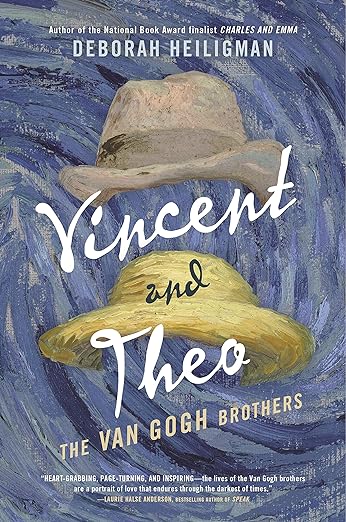
As I watched the rain pour itself out, the little rivulets of water sliding down the building walls, and the flashes of lightning illuminating the cityscape every now and then, I found I could not sleep and picked up the Vincent and Theo book by my bedside, and flipped to the part where Vincent likes painting storms.

vincent_theo

Excerpt:

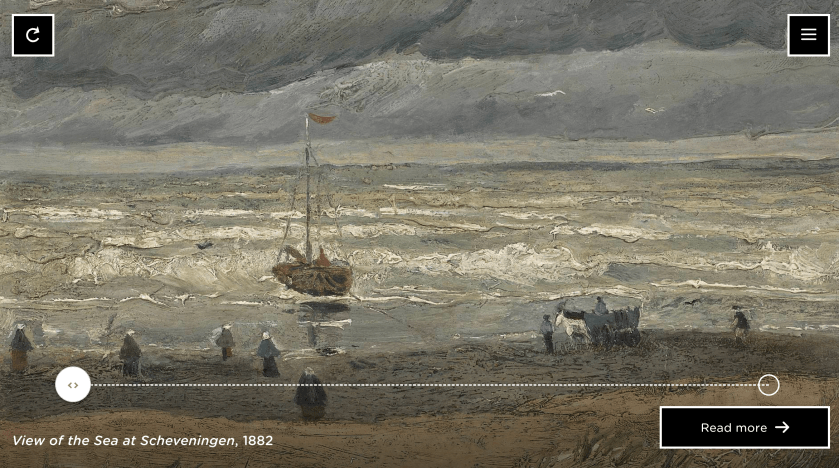
It’s been stormy and stormily beautiful to Vincent in Scheveningen lately, and into the squalls he goes. He is just starting to paint with oil and is not used to them yet, but he takes oil paints into the storm to paint the beach, the waves crashing one after the other, the wind blowing, the sea the color of dirty dishwater. He makes one of his first oil paintings, View of the Sea at Scheveningen, with a fishing boat and several figures on the beach. The wind is fierce, kicking up the sand. Sand sticks to the thick, wet paint.

Vincent loves capturing the turbulence of a storm. “There’s something infinite about painting”, he tells his brother. “I can’t quite explain – but especially for expressing a mood, it’s a joy.”

A few days later, on a quieter day, he sketches the beach. Sending the sketch to Theo, he describes a “Blond, soft effect and in the woods a more somber, serious mood. I’m glad that both of these exist in life.”

Wild and somber. Room for both. Room for all.

https://ontrafel.vangogh.nl/en/story/167/traces-of-a-nasty-little-storm

Please check out the View of the Sea painting and further details here

Screenshot 2023-09-25 at 2.35.11 PM

Vincent’s life was a stormy one too. He was not an easy person to live with and this caused many rows with his family, though he was intensely dedicated to all of them: his parents, siblings (especially Theo), uncles etc.

I looked out of the window again. We all live through the storms in our lives. But, the good thing is that no storm lasts forever. Not all living beings would have the luxury of drifting off to sleep like that, and that made me very grateful for a warm bed and dry clothes.

“There is peace even in the storm”

― Vincent van Gogh, The Letters of Vincent van Gogh

raindrops

A Rosely Abode

The rose bushes were blooming all summer and every time I saw the blossoms fade, I felt a pang. How did these bouquets in stores retain their freshness for that long while my blossoms faded so quickly? There was one white rose still unfaded before the next set of blooms came in, and I stopped to admire it. I’ve always loved white roses. I leaned over to pluck the beautiful blossom, picturing the peaceful looking flower in Buddha’s hands.

Peace. 

Such a nebulous quality in our lives, I mused. Also, something that one only appreciates wholly when threatened or is lost. Maybe turbulence is a necessary component of life in small doses so we appreciate sturdy peace when we do have it. 

roses

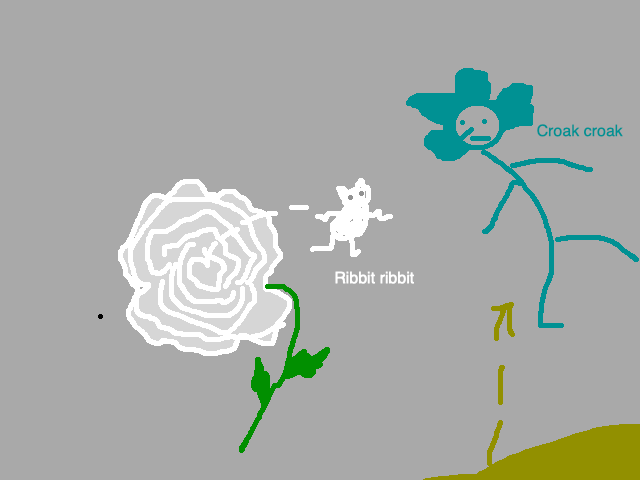
I peered into the rose and saw an inner petal that looked slightly less white than the surrounding petals. Maybe it had started to brown, I said to myself and reached in gingerly to pull the petal, when I gasped and leaped back. A small albino frog leaped out at me from within the white rose petals. 

I don’t know whether any of you have had albino frogs leap up at their faces, but if you haven’t, I can tell you it is quite the shock especially when you are expecting to loosen rose petals and have amphibians leaping at you instead.  It is like finding crocodiles in your bath-tub.

I gasped and tried regaining my composure. All thoughts of peace forgotten – the heart hammered against the ribcage as if on a great adventure, I willed it to stop. So much for courage – a frog is all it takes. Maybe it wasn’t a good thing. I thought forlorn, as irrational thoughts came flooding in. 

What is it with adrenaline and irrationality?

frogs_in_roses

Regardless of that first reaction, frogs are apparently omens of good luck, prosperity and fertility. 

Later that night, as I drifted off into sleep, I couldn’t help thinking of the little frog in the white rose that I had inadvertently disturbed. What a lovely abode? Drinking nectar, snuggling into the softest petals, and resting in the fragrance of a rose. Sometimes, the gifts of nature are marvelous. I wish I had the sense to take a photograph. White frogs are rare enough. White frogs in white roses must be even rarer. As for, white frogs leaping up at writers from within white roses: well, who says that nature doesn’t have a sense of humor?

I’ve always admired bees for having their feet dusted by a thousand blossoms as Ray Bradbury says:

bee_in_rose

‘Bees do have a smell, you know, and if they don’t they should, for their feet are dusted with spices from a million flowers.’

– Ray Bradbury

Frogs or Moths?

The morning started off with a commotion in the room. “Get me a magazine!” said the daughter. She was standing on her window ledge. The English language can be woefully inadequate at times like these. What adjectives could one use to describe a goddess incarnate in shorts and tangled hair shouting like the devil? 

I goggled at her: sleep addled myself and asked her what was going on. She sputtered and shuddered as she regaled the heroic tale of how she came to be in the position she was in when I was summoned into the room. 

As most tales of heroism in our home started off, it was with a big moth. No lepidopterists in this house as you can see. 

Apparently, one ‘huge’ moth had been flying around and after several minutes chasing after the monstrous thing, she had managed to trap the thing between the wall and the upturned waste basket. She stood there looking determined and sheepish all at once, and asked for something to slide between the wall and the waste basket. 

moths_in_bedrooms

“All that evolution for using tools, and this is what we use it for!” I muttered and went to get something of sufficient size. 

A few minutes later, she came smiling widely and looking very pleased with herself. She had released the gigantic thing out into the wild. (notice how the moth turned from ‘big’ to ‘huge’ to ‘gigantic’ in 3 paragraphs?)  

I used the opportunity to talk to her about being less-dramatic, feeling compassionate towards our fellow beings on the planet (I have compassion when the moth is outside, not in my bedroom, Mother!), and generally learning to be calm about little things like moths in bedrooms.

She rolled her eyes.

After this, peace was restored and we went about the day. It was later that day that she got her revenge on Yours Truly. I had just driven back home on a high traffic day, and noticed a rather large white rose in our garden. I’ve always loved white roses – they have a pristine look before they start drying up. I leaned over to pluck the beautiful blossom, picturing the peaceful looking flower in the Buddha statue’s hands.

I peered into the rose and saw an inner petal that looked slightly less white than the surrounding petals. Maybe it had started to brown, I said to myself and reached in gingerly to pull the petal, when I gasped and leaped back. A small albino frog leaped out at me from within the white rose petals. 

frogs_in_roses

I was still looking shocked and spooked when the daughter came to the door. She asked me a few questions and I croaked a thing or two in reply. Getting nothing intelligible out of me, she ushered me into the house. I ran to the bathroom to wash my hands. I had just touched a frog, had said frog jump out at me, and had leaped away with the agility that the frog was proud of. 

I don’t know whether any of you have had albino frogs leap up at their faces, but if you haven’t, I can tell you it is quite the shock especially when you are expecting to loosen rose petals and have amphibians leaping at you instead.  It is like finding crocodiles in your bath-tub.

A few minutes later, the daughter breezily walked into the room and said, “Okay – I’ve held off long enough to let the frog shock wear off a bit, but I can’t hold off anymore. Here goes! Proud, are we? Huh?!  After giving me a nice big lecture for the moth in my bedroom this morning, you can’t even croak a word out when faced with a poor, measly frog, huh?” 

“Yes – but a frog and a moth are not the same. The frog leaped at me!” I said.

“My moth flew at me. Your point, Mother?” said she, ever the astute debater.

The Sounds of Cricket

India has always been host to the resounding sound of cricket. The game and the insect. Television crews lose no time in covering the game non-stop, while the sound of crickets in the hills don’t seem to warrant coverage. Though, there is just as much excitement there if you ask me. 

We had gotten away from the immediate hustle and bustle of the city, and were thus allowed the luxury of listening to the sounds of nature. We shushed each other with rather more vigor and noise than was necessary and finally, the room quieted down. The sun was setting outside. Combined with the excellent company, the warm conversations reminiscing some of our pleasant times together, the beautiful light filtering into the room,  and the thrumming of crickets all around us, it all made for a surreal calm setting. I could imagine what people meant when they said ‘ports from the storm’ in that setting.

img_7377

I had no idea how many crickets would be required to produce a racket like that, and filed the question away for another time. That is the sort of the thing that the son would find amusing to find out. In the meanwhile, my friend was telling me about she noticed that at 7 o’clock sharp, the sound of crickets just died down. This was curious. So it wasn’t at sun-down. It was a few minutes past sun-down. 

The act of producing the sound is called stridulation, it meant that the thrum buffeting us in the hills was the sound of vibrant life finding a way to thrive in its environs. Much as the hum of entertaintment in the form of games, music and televised stories in our cities is a sign of thriving life of humans. 

The sounds of a species do have a story to tell – though I envisioned this line of thought quickly devolving to burps and farts, and wisely held my tongue. Just as my friend said, the clock ticked from 6:59 p.m. to 7:00 p.m. and the sounds instantly died down. An eerie quiet filling the void in its space. 

Later that night, after we had played a game of cards and quietened down for the night, a few minutes after lights were out, the sounds of our whispered conversations, the giggles of the children, and the admonishments of the older folks all died out. Just as sudden and just as deafeningly as the crickets earlier that evening.  

I smiled, and clearly exhausted drifted off to sleep myself, the lack of sound a cocoon for which I was grateful. 

Do Active Menaces Travel or Vacation?

She shook her head, as though explaining things to a dim-witted troll.

“We are on vacation – yes. In the sense, that you’ve taken time off and we are traveling. But we are not vacationing, we are traveling.”, said the daughter. It was during our trip to Alberta, Canada. We had been enjoying the joy and grandeur of the Rocky mountains, and trying to see as many lakes and blues in the waters and hikes as possible. The long summer days combined with the splendor of the Rocky Mountains make for pleasurable days – even if physically tiring ones after 3 days of non-stop activity, and that was the reason for the conv.

IMG_6497-COLLAGE

“My friends are wondering why I can’t pick up any calls from 6 in the morning till 10 at night, and I am telling them it is because we aren’t in any place with connectivity, and they wonder what I am talking about!” she said wringing her hands as teenagers tend to do when trying to explain things to parents.

“But, don’t they go on vacations?” , I’d asked in response to which I got the spiel on traveling vs vacationing. 

“Most people, when they go on vacations, stick to the place they booked – a resort maybe, and stay there. With excellent pools, televisions and the like. Not that I am complaining – I like the way we travel. I like seeing the places, hiking and having a wonderful time. Just saying that what we do is traveling, and what they do is vacationing!”

“Hmm!” I said thoughtfully, “But these days, we do add a day of rest, or a day we have a late start here and there don’t we?”

“Yes and those days are appreciated Mother, believe me! But it is not vacationing. When you vacation, you spend all the days everyday doing nothing.” 

I nodded. It did sound nice. I’d like to try something like that. Though I am not sure the husband would be able to take it. He is a do-er, and would by the end of day two have me climbing palm trees in the nearby oasis. I said so, and the man laughed – guffawed actually, chuffed at this, though it clearly wasn’t meant as a compliment. Sigh. 

The daughter, meanwhile, gave me a diagnostic glance up and down, and said, “Yes! Yes! We all know pops is like that, but you are an active menace too. ”

I drew myself up haughtily. An active menace?

“I mean did we really have to do all the hikes near Lake Louise on one day?  30,000 steps Mother. Some of my friends don’t do that much in a week!”

“Aren’t you proud though, my dear? Aren’t your spirits refreshed and rejuvenated?” I asked.

She took a moment to answer. A faraway look in her eyes as if contemplating the joys of traveling, and said, “I like it. I like traveling and I like our trips filled with places to see, hikes to do, and all that. Just making you realize that vacationers have different expectations. “

I conceded: “Fair point. “

Rainbow Colored

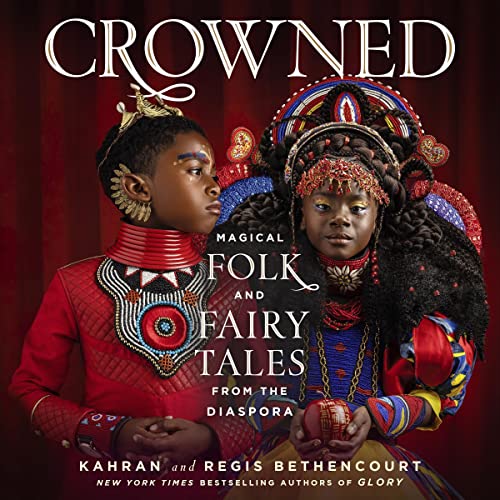
I picked up two books on separate trips to the library and enjoyed reading them. The first was a book of fairy tales retold in the African diaspora: Crowned. A book of fairy tales is always enjoyable, and one that has a good smattering of classic fairy tales combined with some myths from the African heartlands are a joy. 

The children shown as the princesses and princes are the best. The costume designs and makeup are exemplary, as are the re-imaginings of their origins. Most books illustrate Cinderella and Snow White as fair-skinned princesses, and it is refreshing to see these pictures.

The second book was: The Dark Fantastic – By Ebony Elizabeth Thomas

Race and the Imagination from Harry Potter to the Hunger Games

The Dark Fantastic is a book of essays exploring the absence of color in fantasy. The author starts off the book with Vernon Dursley’s famous saying in Harry Potter and the Philosopher’s Stone: “There is no magic.”.

She then goes on to explain her upbringing in working-class Detroit in the 1970s. 

“The existential concerns of our family, neighbors, and city left little room for Neverlands, Middle-Earths, or Fantasias. In order to survive, I had to face reality. “

A few sentences on, though the author states:

“In the realm of the fantastic, I found meaning, safety, catharsis - and hope, Though it eluded me, I needed magic.”

I identified with this statement of needing magic. Humanity’s need for magic is evident in our myths and epics from thousands of years ago. 

  • Was there a flying carpet? A pushpak vimana?
  • Are there heavens and hells?

Yet, for thousands of years, we have told ourselves increasingly fantastical stories to keep our spirits alive, and our imaginations intact.

“I like nonsense. It wakes up the brain cells. Fantasy is a necessary ingredient in living.” Dr Seuss. 

A common thread emerging from lack of diversity in books, is that children don’t see enough of themselves in the books. I lay the books down musing on this. I, like many in my generation, grew up surrounded by the fairy tales of snowy white princesses, and the fantasy worlds of Enid Blyton. Yet, I don’t think I ever wondered whether I would be able to climb up the Magic Faraway Tree to have adventures, or swish away on the Wishing Chair to magical places.  The protagonists were all British children, but it did not seem to make the slightest difference to a middle class brown skinned Indian child. Maybe I was just lucky that it never occurred to me. But did it occur to my friends? If it did, I am not sure we discussed it. 

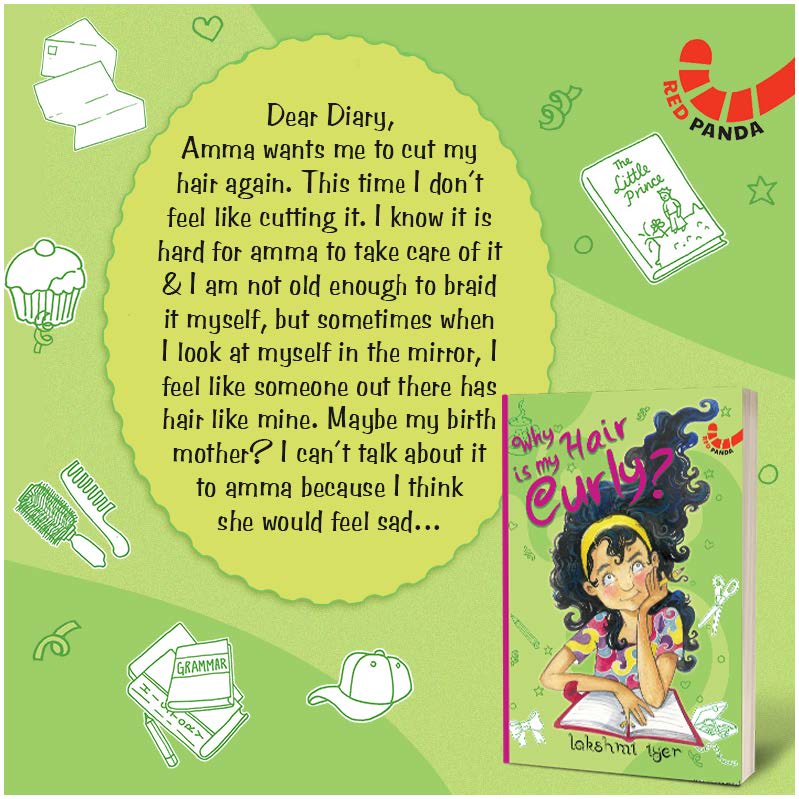
That sort of limitation in thinking only came as we grew up and saw for ourselves the inequity of opportunities. I am grateful, of course, to see a book in which a child refers to their mother as ‘Amma’ as we do at home. (Why is my Hair Curly – by Lakshmi Iyer)

Or see that picnics can involve rotis and potato curry, and not just sandwiches. But I am more grateful for the reach of fairy tales. They provided a much-needed element of magic and hope. 

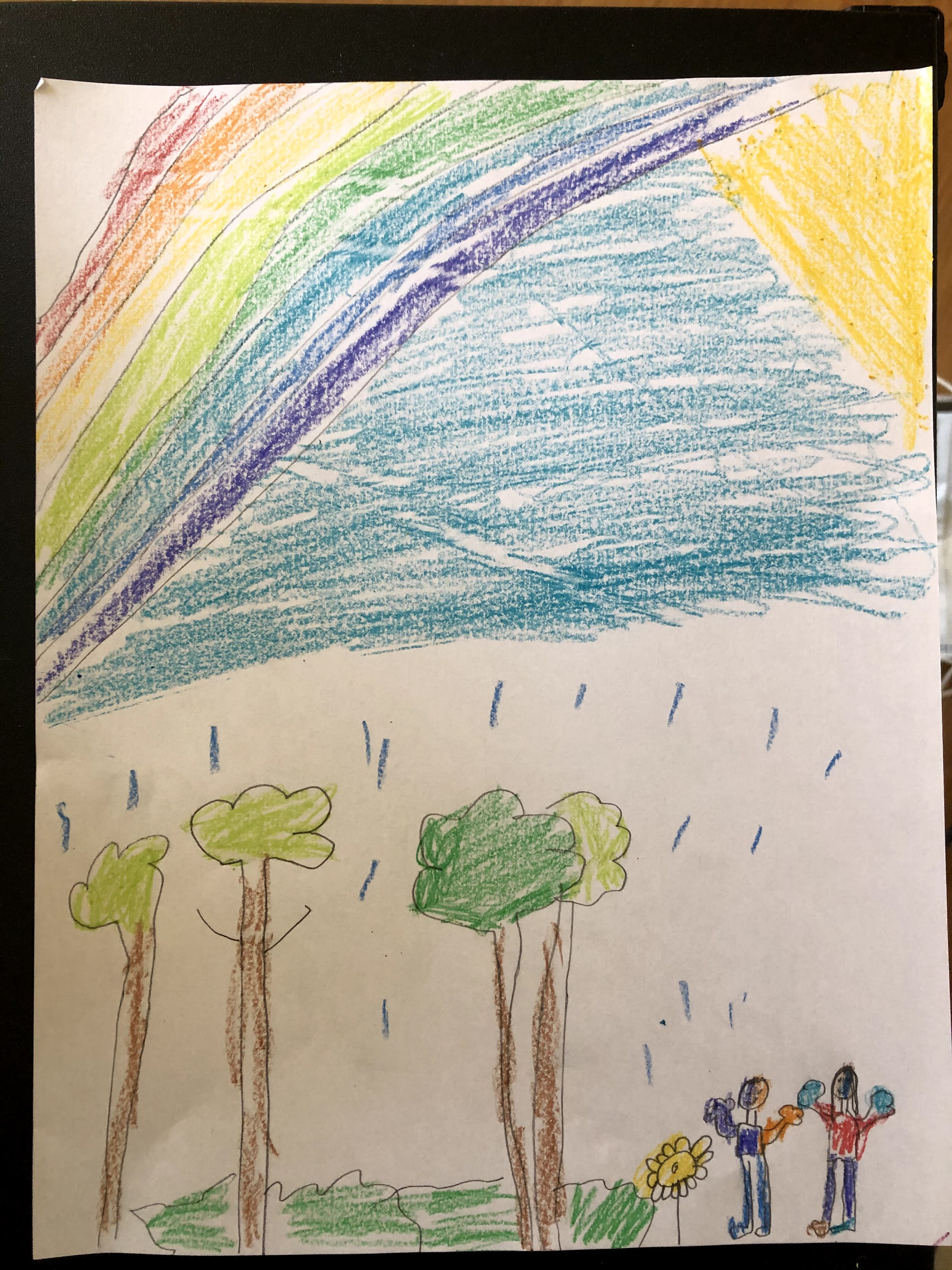
As children, the inhibitions of things like race, creed and color are not there. I fondly remember the picture drawn by the son in kindergarten when his teacher had told all children to have more colored people in their illustrations. He had drawn all their faces rainbow-colored 🙂 

The Humanity of Humans

It has been a month since we visited Banff in Canada. On the flight back, my mind buzzed with the possible posts to write about the place. 

The wonderful conversation we had with one of the locals in a coffee shop before we started off on our long drive to Jasper was one such. These are some of my favorite moments while traveling. Usually, we are on a tourist loop, and meet fellow tourists from different parts of the world, which is just as enjoyable. (The Elephant Keeper) But interacting with people who live and experience the very place that we go to, to make our magical memories is something else.

Living in a tourist attractive spot has its disadvantages. (We pay in terms of parking permits for instance. ) But it also has gifts galore. Knowing that what you get everyday is something people plan and take time out to enjoy is a gratitude pill hidden in plain sight. 

On those days when the routine banality of life throws us a particularly unstimulating day, it is marvelous to take an evening walk along a lake that people literally get on planes, trains and automobiles to get to. To know that within one drive over the week-end, we get to a world famous spot is mind-boggling even if we do take these things for granted a bit. 

That day, as we spoke to Jack in the coffee shop, we asked him what it was like living in Banff. He smiled, tentatively, wanting to be polite at first, but then went on to talk about how much he enjoys winter sports in the Canadian Rockies. One couldn’t help smiling listening to that thrill of adrenaline I am sure he feels as he skis down those steep mountains. You could hear the gush of the arctic winds in the rush of his voice. 

IMG_6497-COLLAGE

As our chat meandered, his wry sense of humor surfaced, and he asked us where we were from, and how we met etc. We told him about our arranged marriage and his reaction was as swift a time-travel capsule as ever there was. I was whisked twenty years into the past when our colleagues gawked at us the same way. He smiled and said what many showed us in their looks all those years ago. “Hmm…yet you folks seem to be alright!” 

The husband and I threw our heads back and laughed exchanging a quick look of understanding between us, while the children rolled their eyes. 

As we sat there, swapping stories, and the days of our lives, I was reminded of how the world is always trying to show us how we are different from one another, but really, we are no different from one another (trying to find the exact quote with little luck). The humanity of our being human is never more evident than in the simplest of things like enjoying a relaxed cup of coffee before starting the week-end.