The Mountain of Greed

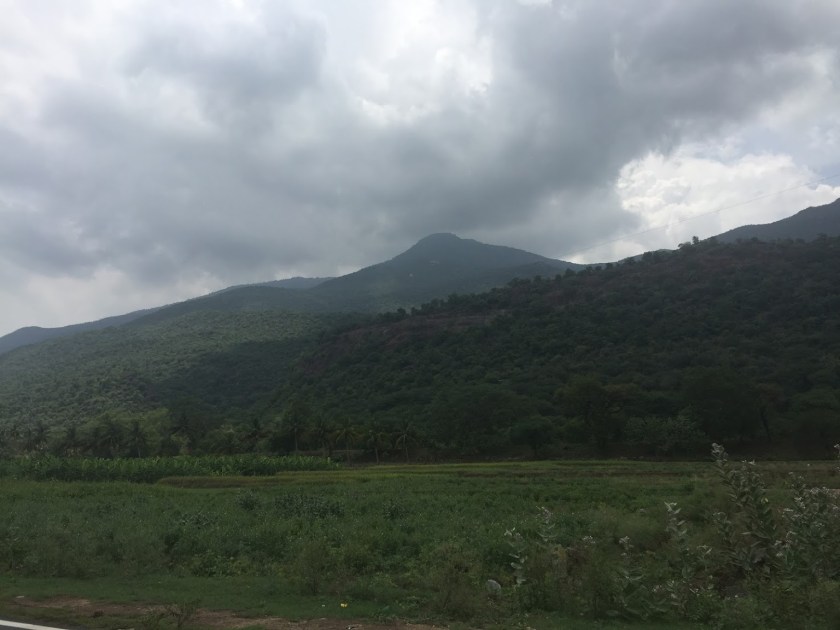
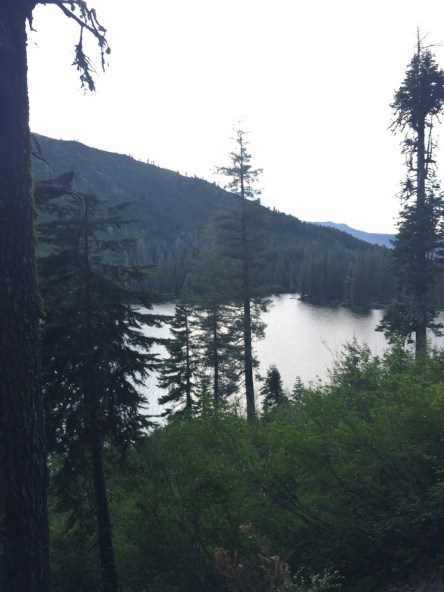
Hiking through the rolling hills one day, I noticed one hill that had the touch of our greed all over it. It was probably a quarry. Set against a state park, this stark mountain made me wince. It was visible from many points in the park, and I moved my eyes away from it as though it was a raw, open, visceral wound. I noticed later in the dozens of pictures I had taken that day, I had deliberately cut this mountain out from my lens. Like my cutting out a mountain from the frame will remove it from my conscience. But it didn’t. I can still see its jagged unnatural edges in my mind’s eye – edges that have been scraped by metal against rock abruptly, not shaped by wind and water over time.

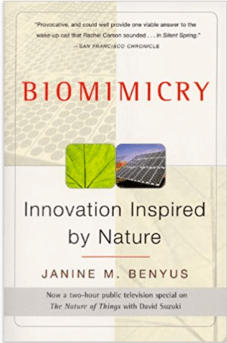
A sight like that got me started on the book called Biomimicry by Janine Benyus, for we have devised a way of life that is not sustainable.


Our corporations, keen on profitability, raced each other to figure out the best ways in which to make us consume more and more. But we have taken the race too far. It is time we stepped away from the treadmill.

As I gurgled on in this vein, I could not help noticing that there was a spring gurgling nearby. I stopped chattering like a monkey and quietened down, and as I did so, I felt a queer feeling seep into me and fill my being. Could it be happiness or gratitude? Whatever it was, I liked it. When birds, butterflies, rabbits, pinecones, free flowing water, trees and mountains jostle in friendly ambience in the early morning sunshine the way that Gaia intended it to be, it is refreshing.

brook.jpg

Please read this marvelous article on The Sound of Silence – Brain Pickings

I looked at the vegetation around me, and I found I did not quite know the type of trees or the plants around me. Gone were the days when I could tell you which berries were good, which ones made you itchy, and which flowers you could sip to get a wisp of nectar. How do animals know instinctively what works and what doesn’t, while we do not? I thought of the chimps in Gombe Stream National Park, the most studied species in the planet thanks to Jane Goodall’s work.

Quote From Biomimicry by Janine Benyus: Observing a chimp in Gombe Stream National Park, anthropologist Richard Wrangham, says: A chimp I was observing had woken up sick and instead of rolling over for more sleep, she got up and made a beeline. Twenty minutes later she stopped at an Aspilia plant [a cousin of the sunflower that grows as high as 6 feet] She suckered up her face and swallowed a dozen leaves before she moved back to her troop. It was obvious from her grimace that this was not a taste treat. Though chemical analysis of the ingested leaves showed no conclusive proof of medicine, he saw that a spike in leaf swallowing behavior coincided with the months of host tapeworm infection.

We too had this kind of instinctive knowledge with us, and instead of adding to its repertoire, we have accidentally followed another path.

Most frightening of all reports is that one in four wild species(including all taxonomic categories) will be facing extinction by the year 2025.

All this huffing up hills takes a toll on amateur knoll-climbers, and on the pretext of admiring a giant pine cone, I stopped to regain my breath. The pine cone was beautiful: It’s tough exterior, perfect symmetry and overall shape made me look at it and wonder why we cannot build jam jars like that pine cone.

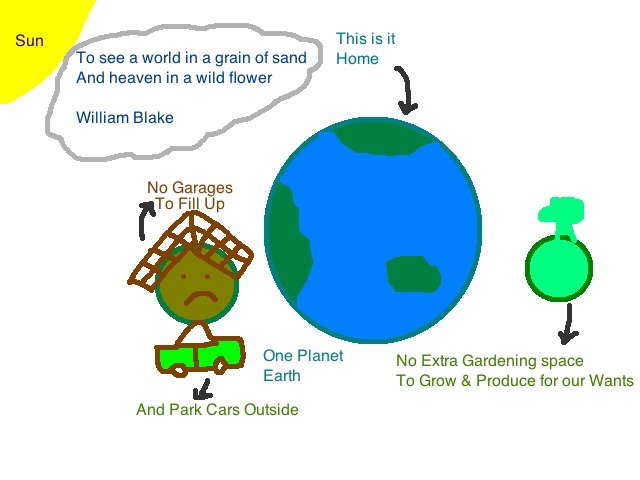
It is hardly the first nor the last time I will come across a Mountain of Greed. We have made extraordinary progress in areas pertaining to the skies, the seas, connectivity etc, but seem to grapple with the simple fact that we have one finite resource on which to live. There are no garages to be built for Earth. No extra closets. This is it.

no_garage

I sound extraordinarily sententious in this post, so maybe what we need is a reward system for eco-sustenance, so each of us can tap into the Naturalist nestled in us.

To see a world in a grain of sand
To see a heaven in a wild flower
– William Blake


The Magic of Biomimicry

I recently read a book called Biomimicry by Janine Benyus. A book, whose underlying concept appealed to the very core of my being, for it outlined how little we know of the world around us, and how much more there is to learn from Nature’s processes.

How do we become harmonious citizens of a planet that houses, apart from 7 billion of us, billions of plant and animal forms? It is a question that floats into my mind every so often. How beautifully a bee arranges its hive, how marvelously a dandelion reproduces, how trees take in water, how they produce energy. All of these things make me wonder and marvel at Nature the Tinkerer.

I am afraid I made rather a pest of myself with friends and family. I cornered parents-in-law while they were taking a rest and spoke to them of Do-Nothing farming, I got a children’s book on the subject and read tantalizing bits of information out to the children. I bored friends with it. I could see the scramble-and-run-before-it-is-too-late look on everyone’s faces when I stopped to admire the squirrel prudently checking whether the fruits are ripe before digging in.

‘Why is it wet winter or hot summer, some grasslands thrive?’, I’d ask, only to find that tasks of monumental importance spring up requiring immediate attention for my audience.

Did that stop me? No. If anything, I am going to go and do on the blog what I have been physically doing to those around me.

The book is arranged into the following sections:

Echoing Nature
 Why Biomimicry now?
How will we feed ourselves?
 Farming to fit the land: Growing food like a prairie
How will we harness energy?
 Light into life: Gathering energy like a leaf
How will we make things?
 Fitting form to function: Weaving fibers like a spider
How will we heal ourselves?
 Experts in our midst: Finding cures like a chimp
How will we store what we learn?
 Dances with Molecules: Computing like a cell
How will we conduct business?
 Closing the loops in commerce: Running a business like a redwood forest
Where will we go from here?
 May wonders never cease: Toward a biomimetic future

Higher education in Science has arranged itself along silo-ed areas of expertise. Biologists rarely study Computer Science. Mechanical Engineers rarely take up Zoology.

The author writes of her interactions with various scientists who have successfully transcended narrow areas of study to walk the line between disciplines to see where we can benefit from nature.
1) The materials science engineer who combines fibre optics and biology to study the beauty and resilience of spider silk

2) The agriculturist who, over decades, has perfected the technique of do-nothing farming, conscientiously chipping away at unnecessary practices while studying natural prairies and grasslands to see how plants grow in the wilderness, thereby coming up with the highest yield of natural grain per acre.

3) The anthropologist who studies chimps and how they cure themselves to see how we can identify cures for common problems.

Quote:
In exploring life’s know-how, we are reaching back to some very old roots, satisfying an urge to affiliate with life that is embossed on our genes. For the 99% of time we’ve been on Earth, we were hunter and gatherers, our lives dependent on knowing the fine, small details of our world. Deep inside, we have a leaning to be reconnected with the nature that shaped our imagination, our language, our song and dance, our sense of the divine.

This about sums up our position on Earth.
“In reality we haven’t escaped the gravity of life at all. We are still beholden to ecological laws, the same as any other life form.”

Now is the time for us to take our place as one species among billions in the ecological vote bank, and make wise choices.

P.S: Please see the TED talk on Biomimicry

Frog & Toad’s Wisdom

Dinner was done, the kitchen was clean enough, and the children were smelling delightful after a hot bath (They looked and smelled like mops after playing all evening just an hour ago). The kindergartner and I had read a children’s book. After a few minutes, I thought I heard the rhythmic breathing that meant he fell asleep and, I started fiddling about with the phone. I had started with the intention of checking my email, and had gone all over the place, finally grazing my Facebook feed.

Every now and then, an article pops up in my feed exhorting me to rise to greater heights and tell me in 10 easy ways how to become a Better Person. Over the past decade, the nature of these articles has changed. At first, it said great things like Manage Priorities in your list and how best to Stick to Plan and all that.

Now, things have been taken down a couple of notches. We will get you effective to the point of Making Lists. Then, you are on your own. Go back to your phone if you like. If you want to stick to the lists, you must already be efficient enough, the articles say and throw up their hands.

This one told me how to Be Productive in the age of notifications.

‘It has been a long time since we read Frog & Toad’, said a sleepy child’s voice by my side. I looked up and the pair of us started laughing.
‘You didn’t sleep yet!’
‘No!’ he chuckled.
I gladly set aside my phone – pesky little thing telling me how to be Effective and Efficient. Like I wanted that. Pssk Tssk and Zsssk.

’Let’s read it then!’, I said. ‘Yeah!’, he said, and we settled down together. I love those books. I am drawn to the simple problems, the bonds of friendship that endures between them and the humor in them.

frog_toad

Frog & Toad Eat Cookies

Frog & Toad sat at the tables eating cookies out of a jar. Frog had made the cookies and the friends could not stop eating them.

Hmmm….the brain said, and I glanced at the phone buzzing and blinking with a notification.

frog_toad1.jpg

Frog and Toad ate many cookies, one after another. “You know, Toad,” said Frog, with his mouth full, “I think we should stop eating. We will soon be sick.”

The friends try closing the jar each time after taking a cookie.
But they find they can open the jar every time.

frog_toad2

They then try closing the jar, and putting it on a high shelf where you have to mount a ladder.
They find that they can climb a ladder, open the jar, and eat the cookies.

FrogAndToad-ladder

My mind could not help drawing parallels to the article I had just been reading. The article told me that the way to stop the habit of grazing your favorite apps was to move the oft-used icons to a different, hard to find area in the phone. I had done that, but found myself, swiping a few screens, opening a folder with the apps, and going after them anyway.

I was Frog getting on a ladder and opening the jar of cookies.

Frog & Toad now figure they are going to get a stomach ache soon, and are desperate to stop eating the cookies. So, they decide that as long as they know the cookies are there, they cannot stop. The best path forward would be to share the cookies with the birds and the cookies are done, they agree, and take the cookie tin out into the Spring evening to share with the birds.

Like the wise friends above, it might be a better thing to do, to just ‘share the cookies with the birds’ and be done with it. I pushed the phone away from me resolutely, and we took to discussing cookies. ‘Yummy- I love cookies. Let’s bake them one day.’, said the little fellow. I agreed, and content with that promise, he settled down and fell asleep almost instantaneously.

I lay musing. It is a good reminder for us to read how our brains respond to the demands of technology (we know the effects of Dopamine, we know how companies gain by making us spend more time, but yet…)

Tristan Harris is a Design Ethicist who has taken it upon himself to make us aware of the challenges we face:

Quote from article

“Never before in history have a handful of technology designers working at three tech companies … influenced how a billion people spend their attention.”

https://ww2.kqed.org/futureofyou/2017/05/25/tristan-harris-brain-hacking/

Well….

Not all wisdom is new, nor is all folly out of date. – Bertrand Russell


When The Baahubalis Met Betsy

The husband was back from watching the movie Baahubali 2.  Indian cinema had outdone itself, and he was regaling us with the story line and the amazing fight sequences. This enthusiastic performance was greeted differently by the household:

(a) Avid interest in the toddler son, who was wondering whether to raise Baahubali to the echelons of Hanuman, or Spiderman,

(b) An eye-roll from the daughter who was doing something with her slime (coming up soon), and

(c) An almost soporific nod from me wondering when would be a good time to get a cup of tea.

“There is one scene where the bulls are all charging at Baahubali and he catches them by the horns like this and flings them – booyang!” , he said reaching for a water bottle, with a loose lid, to demonstrate. I held the water bottle on the other side, and he looked piqued that his bull showed resistance. Baahubali’s cows did not resist, they flew.

I had smartly declined the movie invitation and enjoyed a quiet afternoon in the park with the children.

The next day, the husband, friend and I were up early for a hike in the rolling hills nearby. The early morning clouds were scuttling about in a desultory fashion, the grass was swaying to the breezes. Only the birds seemed to be bright and energetic. I was plodding along not yet completely awake, and the husband and friend were talking about the Baahubali movie again. The friend had seen a late night show and was bleary eyed after the movie. But mere mention of that great and able Baahubali seemed to infuse him with energy. I watched the pair of them make animated conversation and smiled to myself as I imagined the daughter shaking her head and saying, “Boys! Amma – they can’t help themselves!”

There was a touch of the English countryside about us that morning. There were cows grazing calmly, and an occasional deer or two were visible far away. I was throwing my mind pleasantly to a book I had read recently, A Road To Little Dribbling by Bill Bryson. There were lovely passages in the book that seemed to match my surroundings at the time. The rolling hills, the slight chill in the air.  In the book, Bill Bryson writes about how he took up a road trip across Great Britain without the use of a car, and mostly on foot.

“What a joy walking is. All the cares of life, all the hopeless, inept *wits that God has strewn along the Bill Bryson Highway of Life, suddenly seem far away and harmless, and the world becomes tranquil and welcoming and good.”

Bill Bryson, The Road to Little Dribbling

hills

As we were ambling along, we noticed several cow-shaped obstructions in our path. Three cows stood in front of us blocking us quite effectively. One of the cows locked eyes with me.

I looked at her, she looked at me.

I looked, she looked.

I blinked, she didn’t.

I looked away, she didn’t.

“I like being in a country where when cows attack, word of it gets around. That’s what I mean when I say Britain is cozy.”

Bill Bryson, The Road to Little Dribbling: More Notes from a Small Island

Screen Shot 2017-05-18 at 9.49.14 AM.png

The cow showed no inclination of looking away, or moving.  I am in for the long haul, she seemed to say.

I can wait, I told her.

Ha! she said. It is you humans who are always in a hurry. I have no problems. I could stand here all day. Want to see? she said and stood there chewing the cud in what I thought was an unnecessarily exaggerated manner. If I had chewing gum, I could have played the game too, but I didn’t have any on me at the moment.

I then actually tried talking to her. “Please – we won’t do anything. We just want to pass you by.” I said.

To this she responded. She stared at me even more intensely, and then donned a positively bored look and looked away. It was like I was giving a teenage kid advice.

The husband and friend were standing nearby in a thoroughly helpless fashion.  I looked at the pair of them shuffling their feet and asked them to summon their inner Baahubali and scare the cows away.

The duo guffawed loudly at this, and said the best performance they could come up with was to flex their muscles till it plopped and then fly like Baahubali’s cows in the opposite direction.

bahubali

I looked back at the cows to appeal to them once again, and started laughing. It reminded me of one of the passages in Road to Little Dribbling where Bill Bryson had gone walking through a field. The field was on a hill, and he huffed and puffed up the hill, only to be confronted by an angry bull or cow(he couldn’t stop to see). One cow-or-bull-snort later, he came charging down the 2 mile hill to the nearest village. He entered a pub sorely in need of restoration to body and spirit. There, in the pub, was an old farmer who listened to his tale of woe, and said calmly, “Oh, That is only Betsy. She won’t do anything!”

The Betsy in our path seemed to derive inspiration from the story, and moved enough to let us pass.

The Baahubalis scampered across, while Betsy got her entertainment fix for the day.

Of Dinosaurs, Genes & Aliens

The thing about travel is it lets you indulge in conversations that you otherwise may not have: With car drivers (White Tiger, Driver Shiva or Murugan and Driver KillerMan ) for instance.

We were returning from a trip to Chichen Itza by van. The drive is a good three hours, and the husband was chatting amiably with the van driver, while we pulled out our books to read. I settled down with ‘The Gene’, By Siddhartha Mukherjee. The book is one that requires concentration, especially for one who made stout Biology teachers quail. The book is held tight by a web weaving historical context, scientific detail and personal insights. It is a fascinating read, if somewhat heavy going in places.

Screen Shot 2017-05-05 at 10.30.25 AM

Genetics as a discipline had a number of misdirections and key researches almost lost to mankind, like Mendel’s experiment with pea plants, but for a lucky discovery of his article over 50 years after his death. The book touches upon many such instances. It talks about the supposed brilliance of scientists, how scientists are after all human and how their personalities can sometimes thwart and stifle growth. I particularly enjoyed the little quotations at the beginning of every chapter.

Every now and then, I stopped to take in the rustic scenery outside in the Yucatan province. Up in the front, the conversation was flourishing, if in a somewhat one-sided fashion. The van driver liked his audience and his theories grew wilder, and his tales more grandiose.

The man said he was originally from Canada, then moved to US before settling in Mexico. His tales, at any rate, portrayed a colorful life – a trucker, a pop-star, construction, sound recording. We had niggling doubts as to why his life had followed the pattern it had, but did not dig too closely. (He had the power of the van remember?)

‘How is Gene?’ asked the husband turning his head wife-ward. I had gotten past the horrifying section on Eugenics thankfully and said a thing or two about what all mankind is answerable for. Evolution, I said, better have a good reason for cruelty.

’Ah! Evolution. I don’t believe in evolution as a theory. I have a theory’, said the van driver, perking up since he hadn’t spoken for all of three minutes. He bore the look of a man doing a grand flick off some sad sop’s tale from the internet, ‘My theory is that aliens are responsible for life on earth. I think that the aliens had tried to see if life can flourish on Earth with dinosaurs.’
Four second pause.
‘And then they found them too big. The dinosaurs were too big, you know? I think that the asteroid that hit the Earth was nothing but a nuclear bomb sent by aliens. You see it all the time, don’t you?’

‘Eh… What do I see all the time?’ I asked. I have to come clean and admit that I don’t see dinosaurs all the time. Or aliens if you come to think of it, and definitely hope not to see nuclear bombs sent by the unseen aliens to hit the now extinct dinosaurs. I like a quiet life.

Aliens_theory

‘I mean, look at the size of those computers earlier on, and look at them now.’ He stopped here for dramatic effect, like one coming with the argument that clinches all.’ The aliens then got a much better model with humans and current life forms and decided to drop a nuclear bomb on Earth to get rid of the dinosaurs.They were just too big for them.’

The husband and I exchanged significant glances in our minds without once looking at each other. “I will take it that you just consider it a theory.”, said the husband, a man who would have obviously done well in the diplomatic services.

“Well…evolution is a theory no doubt,” said the driver, as though conceding a poorly paid chess move by dim witted opponents. “But aliens is a better concept. You know the supposed asteroid that wiped out the dinosaurs fell right here? Yes – right here in the Yucatan desert.” , he said opening his arms wide, and the van jerked alarmingly. I implored him to hold the steering wheel, to which he laughed, ‘Of course, it was a nuclear bomb sent by aliens, and it is funny that centuries later, we are talking about it, and trying to fit in theories like evolution.”

crater
The Chicxulub crater in the Yucatán Peninsula, the site of the impact that decimated the dinosaurs.(Illustration: Detlev van Ravenswaay / National Geographic)

I set out to explain the experiments with pea plants, how the evidence set up the basis for genetics etc, but the man was bored, and said I must open my mind a little and consider the aliens theory. I bridled. I love a tall tale as much as the next one, but… The husband seem to sense my state, and shot me a warning look.

I had to concede that here was a fellow who had obviously educated himself on the Internet, and was proud of it. The Science teachers in his school days had done their best, and I too must learn to accept that he liked his erudition because he understood complex theories like aliens implanting life on earth.

By the end of the trip I needed some time to reflect, and when I did, I realized that travel had once again made sure I met a person so different in ideologies than myself. I hope he thought a little bit about things that could be proven vs things that could not be, when he reflected later on.

I, for my part, was able to understand why it is easy to believe compulsively written theories on the Internet.

http://theoatmeal.com/comics/believe?utm_source=nextdraft&utm_medium=email

Science lessons seem so far off tucked away in the recesses of the childhood brain. What time is left after earning one’s livelihood can easily be spent in the entertainment industry’s efforts to keep us glued: An industry that thrives on blurring the lines between fact and fiction.

As Lisa Randall says in Dark Matter and the Dinosaurs:
The beauty of the scientific method is that it allows us to think about crazy-seeming concepts, but with an eye to identifying the small, logical consequences with which to test them.

https://www.brainpickings.org/2015/11/28/dark-matter-and-the-dinosaurs-lisa-randall/

What we need is to be able to travel more, so we get to see another’s view point every now and then, even if we do not agree. Especially if we do not agree.

After all, we are nothing but star dust.

https://www.brainpickings.org/2017/02/01/we-are-all-stardust-steven-weinberg-interview/

Swimming With Dolphins

The daughter and I were lazing around one night a few months ago: she, reading me snippets from her Harry Potter book and gushing about Patronus charms, and self, reading out snippets from mine, The Cosmic Connection By Carl Sagan.

I was reading the fascinating piece on Elvar the Dolphin. The daughter’s favorite animal is a Dolphin. She has drawings of mermaids with Dolphins everywhere. The sea fascinates her in ways that amuse us. Dolphins, mermaids and narwhals enchant her mind, and her endeavor is to become one if possible.

So, obviously, I read the whole piece out to her.

wind-in-the-reef.jpgElvar had the brilliant scientist stumped after a brief interaction. Elvar-the-dolphin and Sagan-the-human, on being introduced, started playing a game initiated by Elvar wherein he swam to Sagan, and thumped his tail completely drenching Sagan. When after the fourth splashing, Sagan refused, the dolphin swam up to him and said ‘More’. Completely flustered with this turn of events, Carl Sagan ran to his fellow neuroscientist friend and said he might have heard the Dolphin say the word, ‘More’. To which the neuroscientist said that Elvar the Dolphin knew upto 50 words in English, and could use them in context.

It is of interest to note that while some dolphins are reported to have learned English — up to fifty words used in correct context — no human being has been reported to have learned dolphinese. – Carl Sagan

A marvelous essay that only serves to remind us about the virtues of humility. We can barely understand other languages that fellow humans speak, and are quick to erect barriers between ourselves, but here was a dolphin willing to pick up English in order to engage with human-beings.

“You know Amma? Dolphins are so lovely right?”

I nodded. I did love the little flubberty gibbets.

“I think I know what my patronus is – My patronus must be a dolphin. I love them amma. They are so magical and real too.”, she said her eyes gaining that dreamy quality that often accompanies magic.

So, imagine how we felt when on our recent vacation to Mexico, the husband had booked a ride with Dolphins.

We were first introduced to a pair of dolphins – a charming male and female, called Manta and Sole. We hugged, patted and kissed them. I have never in my life touched something that soft, warm, and plush pulsing with the robust health of life. I coo-ed with that tone of voice I use around babies, and the daughter tried her best to distance herself from me in embarrassment, unlike the dolphins, who seemed to enjoy the attention.

‘Would you like to ride with them?’, asked the instructor, and I got to tell you that I was apprehensive. I mean – weigh the facts. Dolphins can swim at the stupendous rate of 20 miles per hour. I swim, if you can call it that, at the rate of 2 strokes a minute, stopping to gulp water in between, spluttering a bit, gasping, coughing and rasping, then regaining my breath before taking another deep gulp to sustain myself for 2 strokes.

Would a Dolphin for the first time experience condescension? I had to find out.

It took me what felt like 20 minutes to swim a couple of hundred meters out to where the dolphins could meet me. I huffed and puffed, and flawlessly executed the gulped-water, sputter and choke routine before I felt able to say I was ready. The moment I nodded, she gave them the signal.

In under a second, I felt the dolphins streak toward me under water, and they were there wiggling their fins under my arm and assuring me in their playful way that all was well. Their faces looked like they were smiling which I suppose is a gift they are born with. Their demeanor indicated none of that condescension or judgment that I was dreading, but simply an amused curiosity.

In another second or two, they had deposited me on the shallow end. The pictures reveal an ecstatic look on our faces as we were carried gently ashore by the dear creatures. My heart was bursting with joy. Maybe my patronus changed to a Dolphin too.

dolphin_swim

If we truly were smarter than Dolphins, we would be totally giving you the works in Dolphinese. What I can do is to dance like they did for us.

I only hope their interaction with us was a happy one too. Boink – Thank-You in Dolphinese.

From Dostoevsky to Dr Seuss

uOne evening, I arrived a tad grumpier than I’d like on a spring evening. That day on the train, there was some commotion ahead of me, and I heard a person rudely shout and say, ‘What are you all doing here? Go back.’ His pugnacious intent scared people. He stared at me and shouted. I was unnerved, Then he looked at another one and shouted at her too. In the peak hour rush, he lay there sprawled across two seats and shouted down at everybody. Another one of those people who was spewing hatred post-election. It was a sad sight, and my senses were more alert than usual.

Hate is a virulent organism that thrives on people’s inclination to adopt it. In fact, if you do not put up an active resistance towards it, it will consume you.

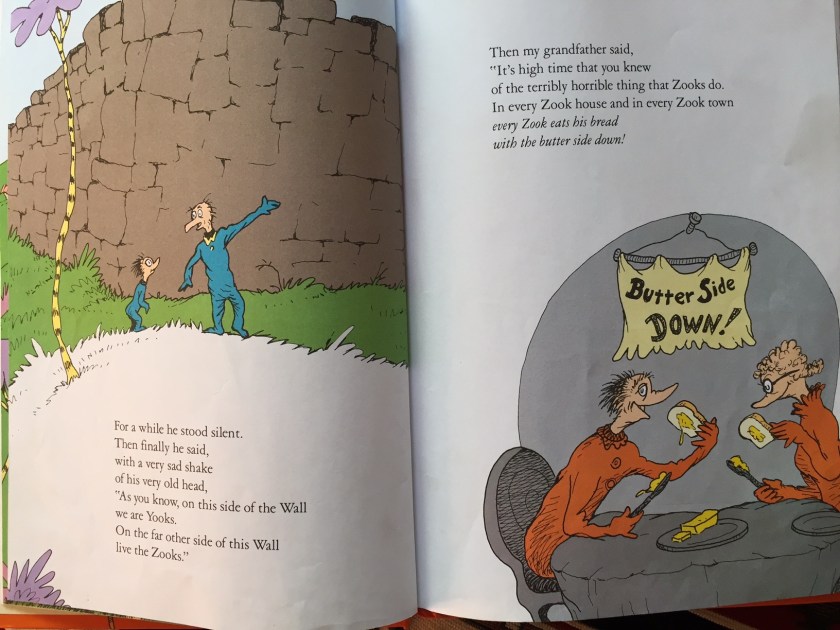
A few weeks ago I read, Dr Seuss and Mr Geisel, the biography of the beloved author, Theodore Seuss Geisel or more famously Dr Seuss.

IMG_5232

In the early chapters, one realizes how bigotry and hatred are vicious poisons that can affect people more deeply than we realize. Ted was a school going child in Springtown, Massachusetts, when the first world war started. The Geisel’s were first generation German Americans and though they were citizens at the time of war, it turns out the world around them did not treat them kindly. It is disheartening to read that young Ted Geisel was persecuted for his lineage. He never really got over the nickname he was given as a child, The Hun.

Outings grew rare as Germany became the common enemy and nativist prejudices arose; German Americans sought whatever anonymity they could. Ted and his sister, Marnie, grew even closer, sharing advice on how to cope with taunts on playgrounds and sidewalks.

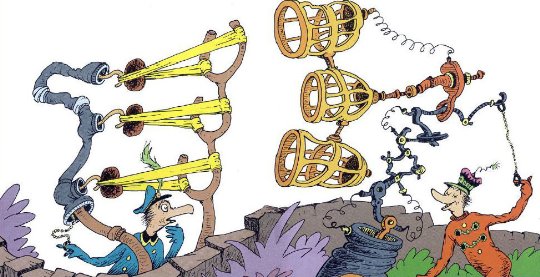
This boy went on to write books that are loved and adored by children of all races, religions, nationalities and backgrounds. His books only asked for an open mind whether it was imagining an elephant gingerly climbing up a tree to hatch an egg, or a rajah taking a walk down Mulberry Street.

To think that a century later, we are still labeling entire swaths of humanity with these broad labels is deeply concerning. To parrot a divisive slogan is easy, but true growth comes when we question what is being parroted to us.

Our narratives matter, for they become history, and history then forms the basis of our myths. In this beautiful essay by Fyodor Dostoevsky (Dostoyevsky on Good Fellows – Brain Pickings), he says :
It is our responsibility as human beings, to peer past the surface insecurities that drive people to lash out and look for the deeper longings, holding up a mirror to one another’s highest ideals rather than pointing the self-righteous finger at each other’s lowest faults.

Why was that poor man shouting at people on the train? And how can we resist succumbing to this fate?

Dostoevsky:

Judge [the people] not by those villainies which they frequently perpetrate, but by those great and holy things for which they long amidst the very villainy.

Coming up next: We cannot and must not hate in the plural. A lesson taught by one of my favorite authors, P.G.Wodehouse.

P.S: Also listen to this commentary on German-Americans on the centenary of American entering the First World War: http://www.npr.org/templates/transcript/transcript.php?storyId=523044253

A Fairy Tale Ending

When the daylight savings time change happens, regardless of how tiring the day and the commute has been, I will pep up in the evenings. Just listening to the twittering birds on the trees outside, the sight of young trees in bloom, and the new leaves are like a soothing balm to the soul.  The children who come out to play have all invariably shot up during the winter months and it is heartening to see them revel in the evenings on their bicycles or tricycles. The hues the setting sun throws against the sky never fails to lift my heart.

It is as the poets say, only I cannot say it half as well or correctly as they do. Isn’t it something like: February goeth like a lamb and March springs in like a lion or is it March goeth like a lamb? Or something about March springing like lions or going like lions. Anyway, the point is that March goeth just like February goeth and January goeth.

I stepped into the home one evening to find the evening chaos was worse than usual. Everywhere I looked, it seemed to me a bit of spring cleaning was in order. Piles of paper were on tables, coats and backpacks were strewn on sofas and floors, shoes with socks spilling out of them lay everywhere. My heart sank. I cradled my head in agony at the sight.

“There is so much junk in this house!” I said and started clearing up frenetically. The do-er is the worst, for it makes the non-doers squirm with guilt. The daughter squirmed, and the son looked discomfited.

“Oh you are cleaning up. Why, is anyone coming?”, quipped the teenaged daughter, and I moaned. I like to dispel this notion that we must clean up only when someone is visiting the old home, and I said so, loudly.

“Okay…okay…no need to get all learn-a-life-lesson-y, just asking.” The look she gave me suggested I was one screw short.

I donned my efficient look and got on with my cleaning spree keeping a running commentary up on the junk collection.

I picked up some plasticine (why do we spoil the environment with this trash?), a rubber ball (anyone plays with this still?), a torn glove(how did this beautiful glove tear and where is the other one?), a fruit bowl with what looked suspiciously like glue caked and dried(what is this? ), and a book of fairy tales that had come apart at its bindings. The pages were not held together by glue anymore, but they were still there inside the cover. (I had nothing to say but I smiled).

Heavens – how dearly I remembered the old book! The torn and tattered pages that I held gingerly in my hands seemed to take me back to those lovely spring evenings years ago when the daughter, then a toddler, would come to me clutching the large book in her hands asking to be read a story from it. The book was as large as her torso, and she tottered under the weight, but she loved the book. I knew she liked those stories so much. She listened intently, and sometimes, she would re-tell her grandfather the stories much to his delight.

fairytale

We had learnt morals, taken leaps of faith, and realized that external appearances do not matter all that much.

I looked at the torn book in my hands, and smiled again. Now more than ever, we must obsessively read our fairy tales and children’s books. Beautiful princesses can control their destiny, frogs can be princes, beasts can be gentlemen, elephants can hatch eggs and good always triumphs over evil.

Albert Einstein on Fairy Tales:

https://www.brainpickings.org/2014/03/14/einstein-fairy-tales/

If Mimosa Pudica Met Humpty Dumpty

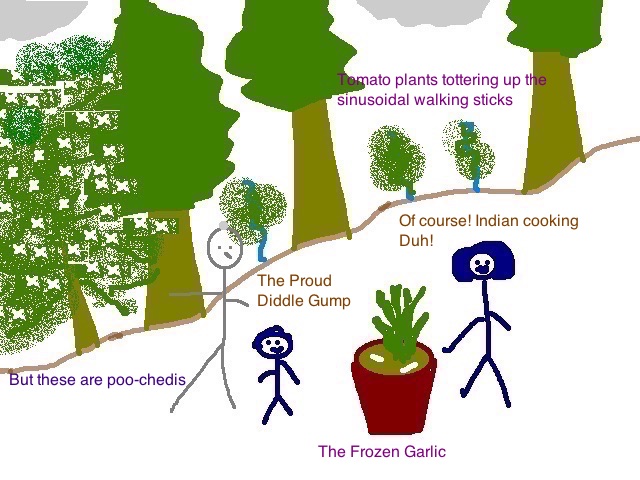
The children ask me interesting stories about my childhood every now and then. They seem to think I lived in a fairy tale and maybe I did. I find my reminiscences are often seen through the endearing lens of time ignoring the trials and strife of living in a wet, rainy, cold place. My stories often feature panthers, wild boars, and tigers. Occasionally, just to spice things up, I tell them about the different berries, clovers and exotic plants that were native to the Nilgiri Hills and they marvel at the wonders in this world and how on earth I am alive and kicking today when I seem to have used such loose food control mechanisms as picking berries to plop into my mouth. Today, when I attempt to pluck a wild berry and put it in my mouth, I am met with aghast looks and stopped with pleas appealing to my remaining sanity.

I remember being enamored over touch-me-nots too. Have you played with touch-me-not plants? If not, I suggest taking the term and tucking it firmly in the back of your brain and keep looking out for the curious species. The scientific name is Mimosa Pudica.

https://en.wikipedia.org/wiki/Mimosa_pudica

The fascinating little plants react to external threats by closing up their leaves as if in tune to a rhythmic heartbeat. There is something deeply soothing about watching them close their leaves to one’s touch and then open them again. To the immense delight of the children, we found clusters of touch-me-nots on our last trip to the Nilgiris and they spent an entire morning playing with them.

In the Hidden Life of Trees, Peter Wohlleben cites a piece of research showing that plants learn and indeed have memories. What the researchers did was take the shy mimosa plant into the laboratory. The mimosa plant closes itself up on external stimuli. So, to see whether the plant can learn, researchers set up the plant under a steady trickle of water.

Quote:

Dr Monica Gagliano designed an experiment where individual drops of water fell on the plants’ foliage at regular intervals. At first, the anxious leaves closed immediately but after a while, the little plants learned there was no danger of damage from the water droplets. After that, the leaves remained open despite the drops. Even more surprising was the fact that the mimosas could remember and apply their lesson weeks later.

Screen Shot 2017-03-14 at 8.59.19 AM

It is a good lesson for us to learn in these times of constant interruptions, distractions, news and fake news. These are steady drips and we the mimosas can learn and adapt.

Like the mimosa plant, it may be a worthwhile skill to find methods to rise and react when required rather than when Mr Donald Trump wants to divert attention onto something other than what he wants us looking at.

http://nextdraft.com/archives/n20170320/tweet-grinder/

The last time President Trump faced an uncomfortable moment, he tweeted the Obama-phone-hack claim, and all the kings horses and all kings men went chasing after the latest tweet leaving the egg he wanted to crash to do so unattended.

mimosa_humpty

If Mimosa plants met Humpty Dumpty regularly, what would they do? It is a great philosophical question to ask oneself.

An Elephant is Faithful 100%

“Ughhh! Amma, why is this boy so bright in the morning?” moaned the daughter. The daughter and I are slow to rise and shine. The eye first creeps open, the bath helps a little but not much. By the time, we muster the energy to throw our weight around, it is mid-morning. We are like sunbeams trying to break through a misty, foggy, cold morning. The husband and son, on the other hand, are like light bulbs. When they are up, the switch is on and they beam brightly with all the wattage available. The duo look indecently chirpy in the morning and bustle around with breakfast, cracking jokes and what-not. The daughter and I exchange dark looks and shudder a bit at this exuberance.

sun_bulb.jpg

One morning, the son looked at me, shook his head with pity and said, “I know what will wake you up! Let’s listen to Horton Hatches An Egg”, and we did. The toddler son was cracking up with hilarious laughter in the car and I don’t care what you say about speed of light being a constant and all that, I must confess that the sun beams broke through the misty morning fog a little faster. It is a marvelous book, and takes one through the most hilarious plot of an elephant hatching an egg.

I recently read Dr Seuss and Mr Geisel, by Judith & Neil Morgan, a biography of the beloved author, Dr Seuss. Ted Geisel confessed that he saw the world through the ‘wrong end of the telescope’ and  he seemed to have stayed in touch with his childlike curiosity and joy through life.

IMG_5232

Ted’s family was well-off. His father, after running the successful family business for several years, later worked for the public parks system with access to a zoo. He puts many of his influences down to the natural loafing around in the countryside with access to animals as a child. His mother, had a knack of reading things in verse to him in a way that stuck in his brain. Over his brilliant career, he would combine both these influences in a charming manner to enable an entire generation to love reading.

Reading about his foibles and his educational escapades gives a glimpse into the kind of endearing personality he must have been. Especially in the early part of the book, you see the boy and young man Geisel was not exactly a Grade-A student. From an early age, he exhibited a wonderful personality with humor, zest and curiosity.

His college sweetheart, and later, wife, Helen Palmer, was the first person to suggest to Ted that he may be better off drawing and writing than pursuing an academic career at Cambridge. He says this was around the time he realized that writing and drawing were like the Yin and Yang to his work.

One day she watched Ted undertake to illustrate Milton’s Paradise Lost; he drew the angel Uriel sliding down a sunbeam, oiling the beam as he went from a can that resembled a tuba.

“You’re crazy to be a professor. What you really want to do is draw.” she blurted out. She glanced at a cow he had drawn and said, “That is a beautiful cow!

Praise from one you love is truly lovely, and it set him on the course of his career.

Ted was used to taking brisk walks during frequent breaks from his studio in La Jolla, California. One time, he accidentally left a window near his desk open. When he came back, he saw that one transparent sketch had flown over the other, resulting in a strange juxtaposition of an elephant sitting on a tree. This set off a magnificent thought process in his head. What was the elephant doing on the tree, why, hatching an egg of course. Why is he there – what happened to the mother bird and so on. What resulted after months of mulling this train of thought and multiple revisions is the brilliant book, Horton Hatches The Egg.

“I meant what I said and I said what I meant. An elephant’s faithful one-hundred percent!”

Horton_hatches_the_egg
Image Source: Wikipedia 

If you haven’t read it, please do so. Fantasy is a necessary ingredient to living: Dr Seuss.

dr seuss

Coming up next:

Ted was a school going child when the First World War started. The Geisels were first generation German-Americans and though they were naturalized citizens at the time of war, it turns out the world around them did not treat them kindly.