The Power of our Emotions

Patience is a Virtue

“She can be hot-tempered!” my mother would say with a damning tone, which I thought was pretty rich coming from someone who had always been a bit of a live wire. 

“Patience is a virtue!” the father would say, and sing a terrible song in an even more terrible voice:

பொறுமை எனும் நகை அணிந்து

பெருமை கொள்ள வேண்டும் பெண்கள்

Meaning: Women should wear the jewels of patience, and feel pride in it.

And I would just lose it.

Again, coming from the pair that bickered their life through, it was a bit much.  

From a young age, I was led to believe that impatience, anger, and hot-headedness are vices. So, every time I felt this way, it bothered me – less over time, but bothered me nonetheless. While anger is better wielded when in control, there is a necessity for righteous anger, and even anger to defend oneself, or someone else. There is also a necessity to wield it as a protective shield – especially as a woman. So, why do we continue to tell women it isn’t okay to be angry? 

Is Patience a Virtue or a Vice?

Even as recent as last month, I was told that a friend of mine never lost her temper, in glowing terms. I had a cold, and was coughing and sputtering through a phone-call.  

“Did you try boiling the water using the kettle?” the mother said, not listening to what I was saying at all, but telling me what to do in a voice that did a thin job of veiling her true thoughts of my competence in the kitchen.

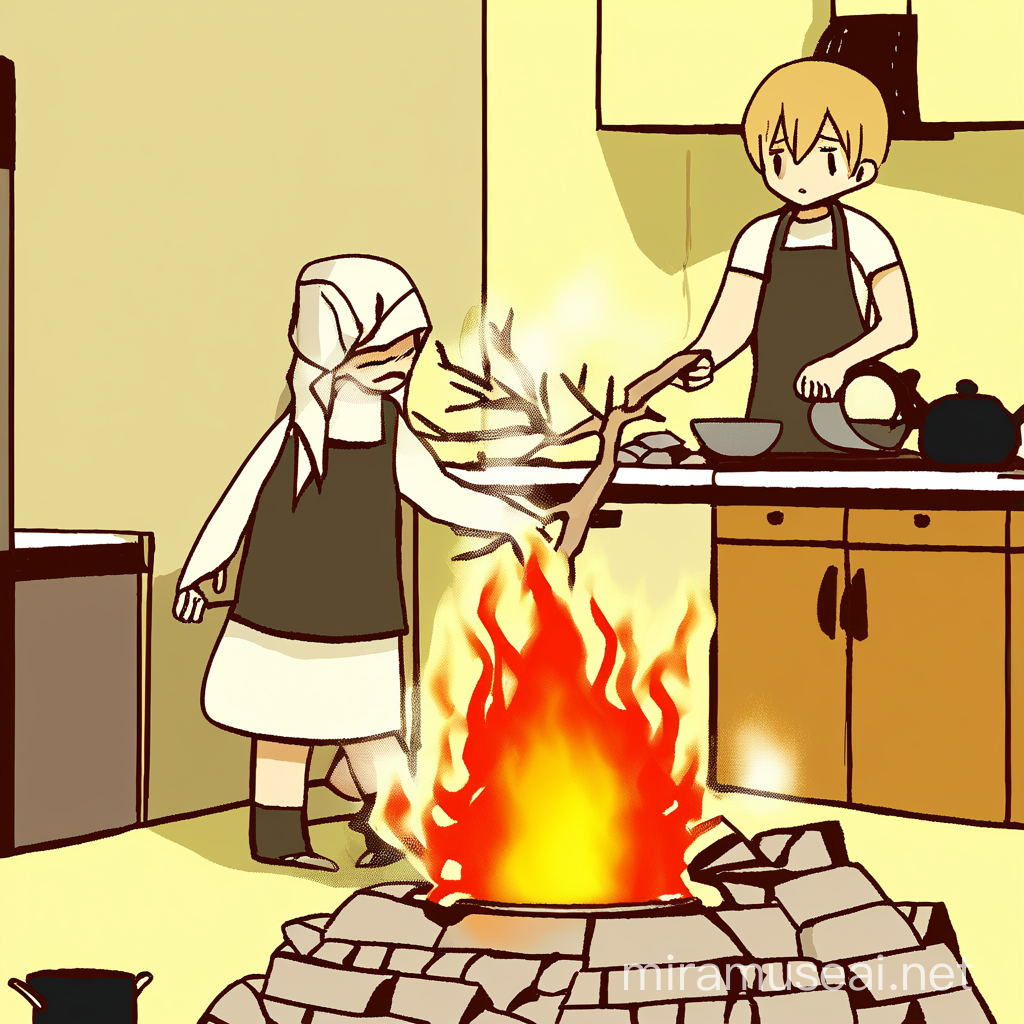
“No mother! I took three bricks, broke a branch, and tried scraping firestones together to light a fire on which to boil water.”

Hence the : patience is a virtue refrain. 👀I could try being endlessly patient like this friend, could I not?

f3b72f837d0e4d7981fcbb98a519021c_ComfyUI_10079_

As though that was her most redeeming quality. It wasn’t – she was loving, kind, generous, and funny. She was also judgmental and stubborn (her patience actually helped her win her way in the long run, so far from it being a virtue, I saw it as sometimes being problematic), but there it was. 

Cranes are endlessly patient, brutally so, in their quest for what they want, aren’t they? Ask the fish what they think of that.

cd3693d5-3eaa-4d3b-ab97-d7c865de8707

“Maybe, Buddha should have been a Bodhini and taught us the way”, I snapped and put the phone down. 

I did feel a twinge afterward – the poor lady was only trying to help, but really! She hadn’t even listened to what I was trying to say, which was somewhat time-critical. Too wound up to speak, and the timezones not contributing to the late hour, the crux of the communique had to be sent as a cryptic message on WhatsApp instead. This, of course,  resulted in tedious messages of varying hilarity, and interruptions. 

Sigh!

Anger from When Women Were Dragons – By Kelly Barnhill

women_dragons

A quote from When Women Were Dragons – By Kelly Barnhill swam to the forefront:

I am sorry. I said, I couldn't look at her face. “I .. I don’t get angry”. I shook my head. “I don’t usually get angry. But lately…”

Mrs Gyzinska gently cupped her hand against my cheek “Anger is a funny thing. And it does funny things to us if we keep it inside. I encourage you to consider a question. Who benefits, my dear, when you force yourself to not feel angry. Clearly not you.”

She glanced around the room. “Look at where you’re living. Think of what you’re being asked to do. You’re not angry? Hell. I’m angry on your behalf.”

I suppose, this is another of those things we need to stop telling our women. Instead stopping to think:

“Who benefits, my dear, when you force yourself to not feel angry?” – Kelly Barnhill, When Women Were Dragons

Just as much as we should stop telling our men to not cry, or feel vulnerable. 

Be A Man

Anger and vulnerability are human emotions capable of just as much as love and loyalty, so why do we deny ourselves the power of these emotions?

Happy Womens’ Day: May we allow ourselves to be angry for the right things in the right proportion at the right time, so that we may do the right thing!

Zinniga-Zanniga Tree – The Cure-It-All Tree

Dr Seuss Magic

“Isn’t it marvelous to leave such a legacy behind?” I asked sleepily. It was Dr Seuss’s birthday and typically marked as Read Across America week. I miss the fuss of the week in elementary schools. The middle schoolers and high schoolers get to have their fun, but we just get to hear about it a lot less, I guess. 

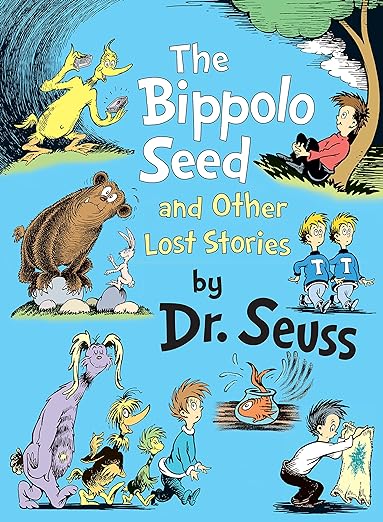
Lazily, I picked up a book written by Dr Seuss, that has been lying around for ages in the children’s bookshelves and had never read before. The Bippolo Seed and Other Stories.

bippolo

The stories, some of them at least, had predictable plot lines, but oh! How he presented them! I feel justified in the use of as many exclamation marks as necessary when writing about Dr Seuss. For instance, there is a story of a bear ready to pounce on a rabbit. The rabbit, doing some quick thinking, stalls the bear with an intriguing thought.

The Rabbit, the Bear, and the Zinniga-Zanniga

“I sure hate to tell you It isn’t too good.
I was counting the eyelashes 'round your eyes,
Your left eye…your right eye…and, to my surprise,
They weren’t the same number!

“I’m sorry…SO sorry.
But, sir, it is true.
Poor Bear! This is dreadful!
One eyelash too few!”

In typical Dr Seuss fashion, the rabbit takes it to ridiculous extremes. Could the bear’s spine be cracking, could his brain be lopsided, all those aches and pains, oh it all makes sense. By the end of the tale, the bear is sitting atop a zinniga-zanniga tree with a flower pressed to his eye so that the extra eyelash can grow and make him feel whole again, while the rabbit skips on his way, free from the bear’s claws.

Oh! 

I laughed so hard, I sputtered and sprayed my coffee, I put my phone in the refrigerator and looked for it all morning, and I almost walked straight into a zinniga-zanniga tree myself.

What a marvelous tale to encapsulate how our worries sometimes run away with our imagination, the hypochondriacs hidden in every one of us to a certain degree poking fun at itself, and the societal pressures on perfect eyelashes playing into the bear’s psyche?

Sometimes, we need entire tomes to discuss these themes, other times, a lost story of Dr Seuss would do.

Time just slips away!

“So this is how it is,” I thought. “Time just slips away.”

Haruki Murakami, Novelist as a Vocation 

I can well understand this. He writes about how everyone has it in them to write a single piece of work – a book even, but to consistently get back to the paper and do this over and over again – that is the making of a writer. I found myself nodding and smiling at that. 

While writing sagas, and series isn’t the same as writing a novel, and writing a novel isn’t the same as a novella or short story, and a short story isn’t the same as writing an article, and all of this is different from writing short bursts of poetry, or a truly honest sentence, there is one thing binding it all together. It is the search for the right words, the right phrasing, the right emotions, the right concepts, and the right flow, that is everything.

That is where the time goes. It slips away in building a life with memories worth writing about. It slips while thinking about writing. And it goes in the process of writing.

Why do you write?

Many friends ask me why I write, and my answer has been – Because I want to, have to even sometimes – an idea lodges itself and rattles itself inside till it is released onto the paper, and once done, other ideas are able to take root. 

🦌 Sometimes writing is a catharsis, other times a pleasure. 

🦅 Sometimes it is inexplicably hard, and other times easy. 

🐿️ Sometimes it is creative and wild, other times banal and plodding.

🐦‍ Sometimes it is a thankless pursuit, other times it is rewarding.

🦢 But in its very paradoxes lies its appeal, and for that I am eternally grateful.

Writing through Time

There is also a strange comfort in knowing that writing has been all of these things for centuries – from the humans who inscribed their thoughts into clay tablets, scrolls, to those who could do the same on paper, to those of us who take to pages on the internet.  Scribes, quills, pens, typewriters, and keyboards all helping the human mind make sense of their limited time on this planet in wondrous ways.

I am constantly in awe of storytellers – the kind of writing that requires not just a fount of wisdom and ideas, but also an unrelenting combination of imagination and discipline.

The Three Selves

How people write series, overarching stories, sagas spanning multiple threads, years and characters is stupendously inspiring. The ability to imagine, craft and execute is nothing short of miraculous.  There are thousands of books being published every year, and that only means that many people are choosing to expand their energies in these constructive ways. How can there not be hope for humankind?

The time that slips away building all these fantastical works – is it not time savored by the writer, and then by the readers if they are able to immerse themselves in it? Is there a measure for that sort of time slipping by?

Close-up fountain pen writing notebook

🐲Imagine Dragons 🐉

There are sections of the book, Novelist as a Vocation by Haruki Murakami that I enjoyed. I did think he was self-deprecating, and unwilling to take a little credit for his successes as a writer though. While being published and being received favorably are a function of luck to a certain degree, there is the fact that a consistent writer has to keep themselves out there. They need to remain vulnerable and suffer acutely all the emotions that their characters do with a passion. It is a tough vocation, and not always a lucrative one.

“Writing novels is, to my way of thinking, basically a very uncool enterprise.”

Haruki Murakami, Novelist as a Vocation
Version 1.0.0

He goes on to tell the story he read as a child in which two men go to see and understand why Mt Fujiyama is revered thus, and what was special about it. The smarter of the two men apparently sized the mountain from various vantage points and decided he knew enough about it, and went on his way. Efficient, Fujiyama seen, and admired.

The other one, apparently, went on to climb the mountain by foot, agonizingly conquering the mountain. “Finally, he has understood it or perhaps grasped its essence at a less conscious level.”

Murakami equates the latter with a writer. In other words, the harder route. He calls the endeavor of novel writing as sometimes being thankless, other times laborious, and at times a strenuous job.

I think I agree with all of the above. Every good novel I read has me in awe. For it takes a different kind of empathy and a wholly different kind of perseverance to imagine a world, make sense of the characters, imagine what each of them will do, how they would react to a situation and so much more. 

So, when I finished reading When Women Were Dragons – By Kelly Barnhill, I took the story with me everywhere. I read the author’s note scribbled at the end. The vote of thanks piece. The credits when people leave the cinema theatre. I read this because of the enormous respect I have for a piece of creative work – fiction or non-fiction – and the universe that helped create the book that I had just enjoyed. 

I am sharing a bit of Kelly Barnhill’s note here:

“And, thank you to my wonderful family – … -who have to live with a person often hijacked by her own imagination, and wounded by the world. The work of storytelling requires a person to remain in a state of brutal vulnerability and punishing empathy. We feel everything. It tears us apart. We could not do this work without people in our lives to love us unceasingly, and to put us back together. “

Kelly Barnhill (Acknowledgement) When Women Were Dragons

The depths and capacity for creative work continues to astound me – blessed is an intellect that can imagine, and blessed indeed is a culture that promotes growth through imagination.

🌿Loud Walks in Quiet Places🌿

Walks : Loud & Quiet

There are quiet walks and there are loud walks in quiet places. 

Henry David Thoreau called it, “Taking the village with you.” or something to that effect. What he meant, I think, was that we took the problems occupying our minds and held onto them tightly, and a trifle obstinately, thereby making it harder for nature to soothe and calm. Really! The human mind is a strange thing. Sometimes, nothing sticks, and other times, nothing slides. 

“I am alarmed when it happens that I have walked a mile into the woods bodily, without getting there in spirit.”
― Henry David Thoreau, Walking

These walks are trying at best. I found myself fiddling with poetry to try and distract the mind from the village, and the people in it. It was a feeble attempt, and one that requires far more concentration to be approved by Bard/Gemini maybe, but it’ll do. It would have to do.  

Poetry: Balm to the Soul

Was poetry not the balm to the soul?

The trees are trying

The waters are waving


The swans are soothing

The squirrels are scampering


The deer are divine

The eagles are evocative


The vultures are volatile

The pelicans are pure


Yet the spirit

Remains dispirited


Some days are trying

For your mind is wavering

Just as I had managed to get nature to work its magic, I was summoned back to reality by three loud gentlemen discussing the virtues of housing all their data in the cloud, and how that reduced their costs. I found myself calculating storage costs and estimating budgets. 

I looked resolutely at the clouds overhead and said loudly, “Nope – look at the real clouds!”. I may have startled a little wren foraging for food in the bushes nearby, and it took flight in an alarming manner after throwing me a reproachful glance. 

Oh well! 

Nature did do its work!

But, I found, on getting into the car, nature had done its work. It may have had to try harder and send a few more butterflies my way, but it did. I was much refreshed in mind and spirit, clearer in what I needed done.

I chuckled remembering Thoreau’s quote on Walking, and spending at least 4 hours a day in nature – a luxury most of us can seldom afford, but we can afford smaller bursts of it:

“I think that I cannot preserve my health and spirits, unless I spend four hours a day at least—and it is commonly more than that—sauntering through the woods and over the hills and fields, absolutely free from all worldly engagements.”

🐲When Women Were Dragons 🐉

Intriguing beginnings:

There are powerful beginnings and there are intriguing beginnings to stories. It has been a while since I saw a beginning as brilliant as the one in the book, When Women Were Dragons – By Kelly Barnhill

women_dragons

Dragoning

Dragoning is the term that seemed to be used when some women turned permanently into dragons and left their human life aside – taking off to wherever dragons live. For those left behind, the phenomenon is bizarre, frightening, traumatic, and quite often fatal. 

This is how the book starts:

“Greetings, Mother- I do not have much time. This change (this wondrous, wondrous change) is at the very moment upon me.

I married a man who was petulant, volatile, weak-willed, and morally vile. 

But there were no babies, were there? My husband’s beatings saw to that. Tooth and claw. The downtrodden becomes the bearer of a heavenly, righteous flame.

I shall not miss you Mother. Perhaps I won’t even remember you. Does a flower remember its life as a seed? Does a phoenix recall itself as it burns anew? You will not see me again. I shall be but a shadow streaking across the sky-fleeting, speeding, and utterly gone.

– From a letter written by Marya Tilman, a housewife from Lincoln Nebraska, and the earliest scientifically confirmed case of spontaneous dragoning within the United States prior to the Mass Dragoning of 1955-also known as the Day of Missing Mothers”

I am midway through the book, and the story soars with the dragons – fiery tempests in teacups and how the placid bore it within themselves.

The book’s narrative voice is brilliant. Seamlessly moving between dragoning as a phenomenon and when it was first observed, slowly moving onto research of dragoning and its funding removed, to the whole topic becoming a taboo.

Society isn’t really mysterious once you understand the original intent. Cruel maybe, but not as mysterious. For instance, in this world, drawing or mentioning dragons could get children in serious trouble. Those who had lost a mother or a sister or a friend to dragoning don’t ever want to hear anything to do with it. They ignore it so it may never happen again. The news forgets to mention it, and society plows on.

For those looking for dystopian fiction or just a jolt from our current state, When Women Became Dragons, is worth a read.

A disruption of ducks

There is a curious rhythm to the days after our India trip. The usual things still occupy our time – school, work, projects, commutes, the changing landscapes of nature, and all the rest of it. Maybe it is the throes of a winter season, or the fact that after the intense ceremonies of the beginning of the month, the quiet is disconcerting, but we felt on edge.

Like the hedgehog, we found ourselves peeking out of our hidey holes to see if life is normal, and finding that it is, were somewhat taken aback. Do you mean to say that we must plan to prune the roses? 

Oh well, all right. If you insist, I suppose.

One morning, the son and I finding ourselves at a loose end decided to take a bike ride to dissipate some of this energy. img_9439

“Amma! Look – I just saw a hedgehog peep out.”

“Oh nice! It is close to February, so it must be checking.”

“I didn’t see if it saw its shadow though – we were going too fast!” said the son.

It was a lovely day – the feel of wind against our cheeks, the gentle cumulus clouds overhead, and the bay hosting a large variety of birds. We stood there taking in the beautiful sights when hundreds of birds took flight all at once, and then, as though nothing had happened, flocked back to their original place a few moments later. The son and I had a number of ideas as to what caused the disturbance, each more juvenile and silly than the next, but left us cackling all the same. 

No one could deny the beautiful shared experience of the disruption – the birds heaving in one smooth cacophony and the humans ashore fumbling quickly to capture the sudden movements and failing miserably. 

It reminded me of the book I was reading the previous day, On Duck Pond – By Jane Yolen Pictures by Bob Marstall.

on_duck_pond

As I walked by the old Duck Pond

Its stillness as the morning dawned

Was shattered by a raucous call:

A quack of ducks both large and small …
img_9453


An understanding quickly dawned:

We’d shared a shock, and now a bond

And I was feeling very fond,

Of everyone on old Duck Pond.

As always the day out in nature surrounded by the fabulous clouds, the sun’s rays, the beautiful lights of the ocean, the stories the son and I swapped on our ride, the birds, first signs of spring in the wildflowers by the bay, had weaved its magic, and we returned home refreshed in mind and spirits.

img_9442-effects

P.S: A group of ducks, as Jane Yolen mentions in her book, are known by a number of names:

A raft of ducks

A paddling of ducks

A badelynge of ducks

Also, bunch, grace, gang or team.

🐳 Whale Grandma or Toucan Grandma? 🦜

I showed the son a text message capturing a conversation between his cousin and his grandfather, Balu Thaatha. Balu Thaatha has the unique capacity to morph into a 5/10/20/60/80 year old depending on his audience’s mental acuities and potential for mischief making and taking.

“I found your Hero pen – therefore, I am a hero.”

“Thaatha! You are just a zero, not a hero!”

I felt for the old man.

“Serves Thaatha right!” said the son rolling his eyes. 

“Why?! Poor man is not a zero! Though without zero, civilization will be a zero.” I mused and the son laughed.

“True! True! I meant – serves him right to be at the receiving end of this. He thinks he is Dr Seuss amma. He told me the other day that if I eat jhangri, I will not be angry, as when you are hungry you get angry! What even is Jhangri?” said the fellow.

“Diabetes in squiggles!” I said and the pair of us guffawed. 

Later that day, we were going through the book, Grandude – by Paul McCartney. The Beatles star is quite obviously a fun and dedicated grand-father (grandude) and his book outlines the adventures he has with his grandchildren in their quest to find their grandmother, nan-dude.

We fell to discussing the son’s own wonderful grandfathers again: Raju Thaatha & Balu Thaatha. Both loving in their own ways, and exhibiting a pick-and-choose of characteristics between them: sincere, playful, caring, hearty, engaging, mischievous,  witty, booming, quiet, talkative, reserved, humourous, erudite, and so many more.

“You will be a wonderful grandma – like a pirate grandma or a nan-dude!”, the son assured me. 

I glowed – and said, “Really? Would I be a ninja grandma or a butterfly grandma?”

“Yes – and also a toucan grandma, and a whale grandma, and a tree grandma. You will be a fun grandma. Don’t worry – I have confidence in you. “ said the son. He was licking an ice cream with obvious relish, and no doubt the fact that he was allowed ice cream on a cold day by his indulgent mother colored his opinion of me. 

“Marvelous books, isn’t it? Really – I am glad there are books outlining the special grandparents-grandchildren bond. I wonder whether there are good songs, and dances showing that.”

“I am sure there are. Just need to look.” he said stoic as ever. 

We were discussing the books: 

Both books are such joys to thumb through. Light-hearted and joyous, they highlight the beautiful bonds between grandchildren and grandparents.

⌘ The Essence of Life ⌘

The Fabric of the Indian household

One of my half written posts from one of my earlier trips to India touches upon the heroines of the Indian upper middle-class  household – the cooks and maids. The fabric of the Indian household is maintained through a network of maids – 3 or 4 of them, who swish through the house at various points in time, professionally taking care of the household chores, and keeping a human touch to those who crave for it. I know the aged parents looked forward to a few words with them: a smile, a question, or a comment.

As much as I savored the solitude, and quiet of nature back home in the United States, I understood the tug and pull of humanity in the fast-paced life of the Indian subcontinent, as well. You were never truly alone, even for a few hours, in India. There were maids, delivery men, sweepers, cleaners, neighbors in close proximity, cooks, who were all as much part of one’s routine as the immediate family themselves. 

“Did Appa like the avial?” the cook would ask as she entered the house, to which the father-in-law would reply cheekily that it was nothing compared to his sister’s avial. We all know, there is no point talking when his sister’s avial is raised, and she does too. “Ask your sister to make it then – look at him!” she’ll say looking to the mother-in-law for support and she would jump in with glee.

Read also: The Simple Grocery List

MrKeshav- Open Page - Groceries

Picture Credit: Mr Keshav, The Hindu, Open Page, on the article, A Simple grocery list

The whole thing would last maybe a few minutes from start to finish but this sort of camaraderie punctuated the day at regular intervals, and it provided them with much needed human contact. 

A few days before he began losing consciousness, he pestered his wife to buy their maid (their maid from a few years ago)a cell-phone, as she had told him hers was broken, when she’d called to see how he was doing.  

The Essence of Life

He was not a perfect man, and yet he managed to get people to only remember his loving side, his gentle humor, and his willingness to help. I cannot find the exact quote now, but when asked how he produced such marvelous tales of Malgudi, the eminent writer, R K Narayan, said that he only needed to look out the window, or sit in his front-porch observing life, and they gave him all the material and inspiration he needed. 

As the cooks and maids cried uncontrollably at his funeral, and told us how much they would miss him I was reminded of that interview by R K Narayan on the nature of humanity, and their human foibles being the gentle essence of life itself.

After all, we are who we are, and never is that more apparent than in the small, everyday interactions.

Stimulus🧘🏼‍♀️ 🪷 Pause 🧘🏼‍♀️ 🪷Response

“Life in India is so fast and hectic, isn’t it? “ . We were discussing the fast and furious pace of India with friends. We were each reminiscing our respective trips to India – both made under difficult circumstances, and we were both glad to be back home in the United States.

I nodded fervently, and said wistfully, “Yes – at least during the time I was there, the concept of solitude was rarely acknowledged.”

“Solitude?” And we all laughed. It was true – the populace, and the ways of life make slowing down much harder than usual. It isn’t made any easier with the speed of communications and transportation in cities. The very essence of vibrance that is a huge advantage and a beauty to the civilization was also a disadvantage.

There are times when I have marveled at how the Indian way of life came up with practices such as meditation and yoga, but then I also realize that it was there that it could have developed, for it was required to build still pockets of serene moments into one’s life. in fact, the concepts are nothing short of brilliant. The pause between breaths is essential to be mindful of, when it may be all you can get in terms of mindfulness. The breath becomes the prana in very significant ways. The pause, when rarely taken, becomes harder to practice, and yet the pause becomes that tiny moment of choice in our agency of life.

There are so many aspects to the Philosophy of Being (I am amused it has such a strictly medical sounding name: Ontology)

Keeping ontological explanations aside, if The Nature of Being comes down to simple techniques of breath, fluidity and movement, it makes the simplicity behind it all brilliant.

Buddha in Lotus?
Buddha in Lotus?

For many years I had thought of this quote, attributed to Victor Frankl in Man’s Search for Meaning:

“Between stimulus and response, there is a space. In that space lies our freedom and our power to choose our response. In our response lies our growth and our happiness.”

-Quote widely attributed to Viktor Frankl, Author of Man’s Search for Meaning, but not sure: Between Stimulus & Response

Back home, I savored the morning air, as I stepped out for a brisk walk embracing the nippy air. I felt like I could finally hear myself think, and I had a beautiful walk weighing and thinking of such topics as courage, resilience, choices, decision-making etc in the context of our work and personal lives. How one helps us evolve in another sphere, and how we are as human-beings are nothing more than the function of life’s ebbs and flows.

img_8958