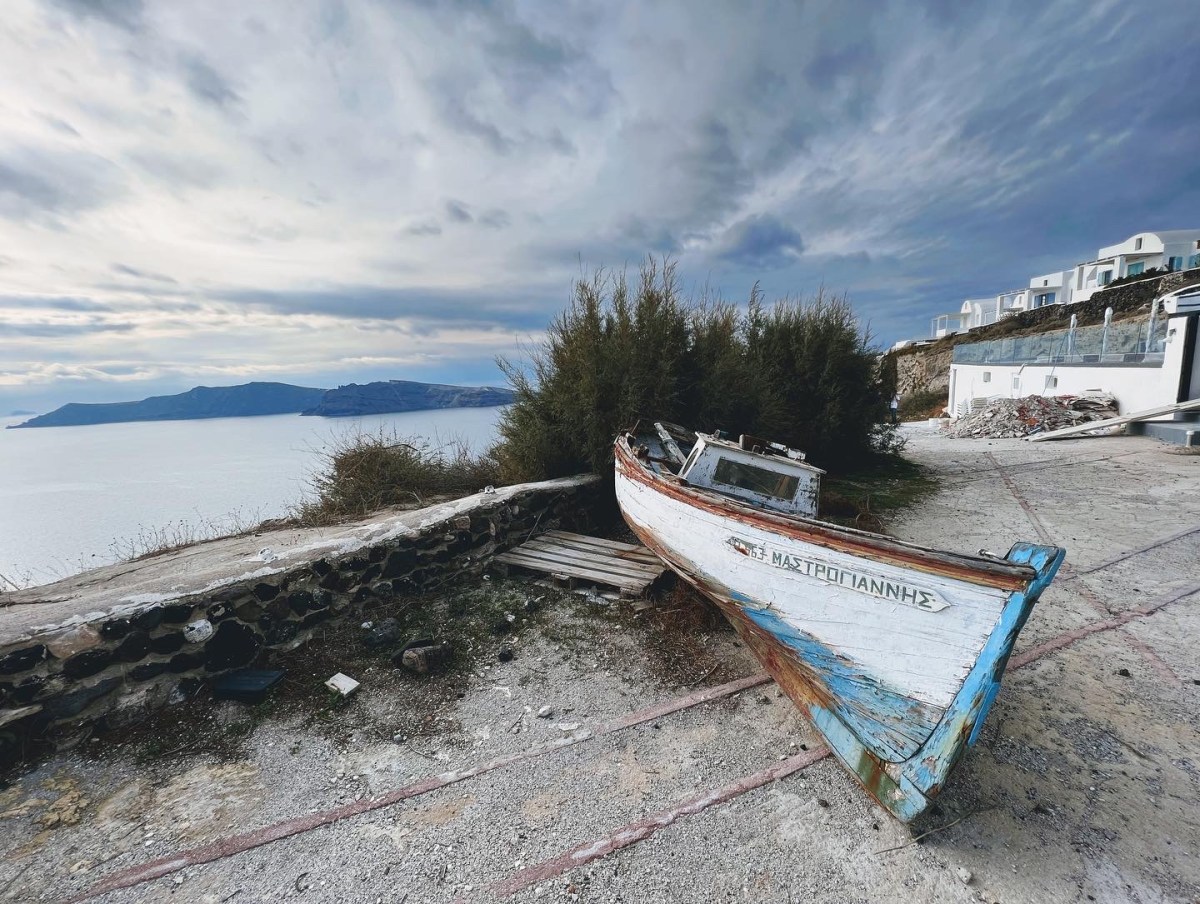
Wind💨, Rain 🌧️ & Boats ⛵️

In what was a beautiful wind-whipped whirl one morning, the on-a-spring-break son and I went on a walk. Power & Internet were down, which meant we could both twirl off on our adventures while these things were being restored. 

A few minutes in, we were confronted with a huge water pipe that gushed out in great spades. The county’s water department was already there looking into the problem, while we stood watching in awe as the water spooled off into the drain. Clean water. 

“Hmm…everything decided to go nuts huh?!” the son said, as we stopped to marvel at the swift waters.

“Do you think we’ll have time to head back and bring back papers to make boats?” he asked, after a few seconds of awed water watching. I saw the determined faces of the county workers’ faces gleam with triumph – they had fixed the problem no doubt, which meant our time was short. Luckily, it was also garbage day, and the windy day had scattered a couple of pamphlets in the wind as the garbage truck tipped the contents over. So, off we went chasing after these pamphlets to make into paper boats. 

If the maestros of productivity were to observe us that morning, there would be a lot of tutting, and note-taking on ways-to-improve, but we felt amazing. 

Our boats, Mitillandimus Tittilandumas, and Mixter Baxter Junior fared the best. The remaining capsized before starting. For those interested, our boat christening was inspired by Gerald Durrell’s boat, Bootle Bumtrinket, in the book, My Family and Other Animals.
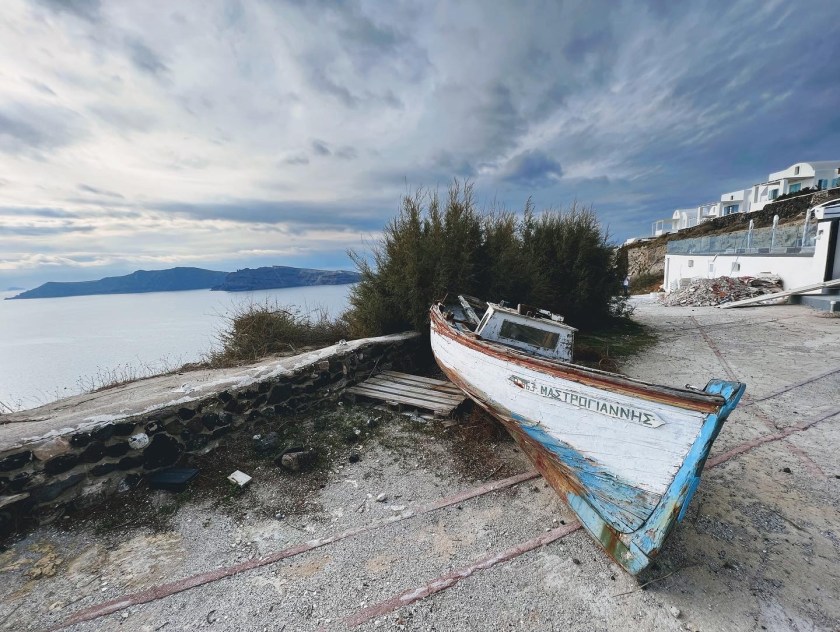
boat

There does not seem to be a word to capture the sense of adventure, contentment and joy watching your paper boats take off on adventures, but we both highly recommend the experience.

What kind of life is it always to plan
and do, to promise and finish, to wish
for the near and the safe? Yes, by the
heavens, if I wanted a boat I would want
a boat I couldn’t steer.
                    ~   Mary Oliver, Book: Blue Horses

Just as the last of our boats disappeared with the rivulets, the wind picked up, and we tried keeping ourselves upright as we continued on. It was no use. Within minutes, the winds were accompanied by plump raindrops, and we scuttled back home. 

It had been a useful outing, and we came back refreshed and grateful that the rains started lashing down a few minutes after we reached. Back home, the power gods had restored electricity but not the internet. So, we settled ourselves down to a cup of tea and cocoa. We sipped in silence while the rain pattered all around us.

“Wonder what happened to our boats!” the son said finishing his hot cocoa, and we smiled together. They were not in safe harbor, and it was an exhilarating thought.

raindrops

🌸🌸🌸 Oubaitori in Spring Time 🌸🌸🌸

Spring is here, and with it, the delightful uncertainties of the weather. 

Would it be a cold, bright, cloudless day, or a cold, cloudy day, or a warm sunny day? The possibilities are endless. Sometimes, I feel like a lamb in spring-time ready for a spot of prancing and rollicking in the hills, other times, like a caterpillar not yet ready to shed the cocoon.

Springtime is a fantastic excuse to wear a silly hat and chase after unicorns, wouldn’t you agree?

– Uncle Fred in the Spring Time – By P G Wodehouse

With the increasing length of our days, it is a beautiful feeling to step out into the sunset at the end of the day, The golden hour seems more radiant, and seems to even linger more, though that just may be due to the fact that the body has had the time to sip a cup of tea at the end of the day before sunset. 

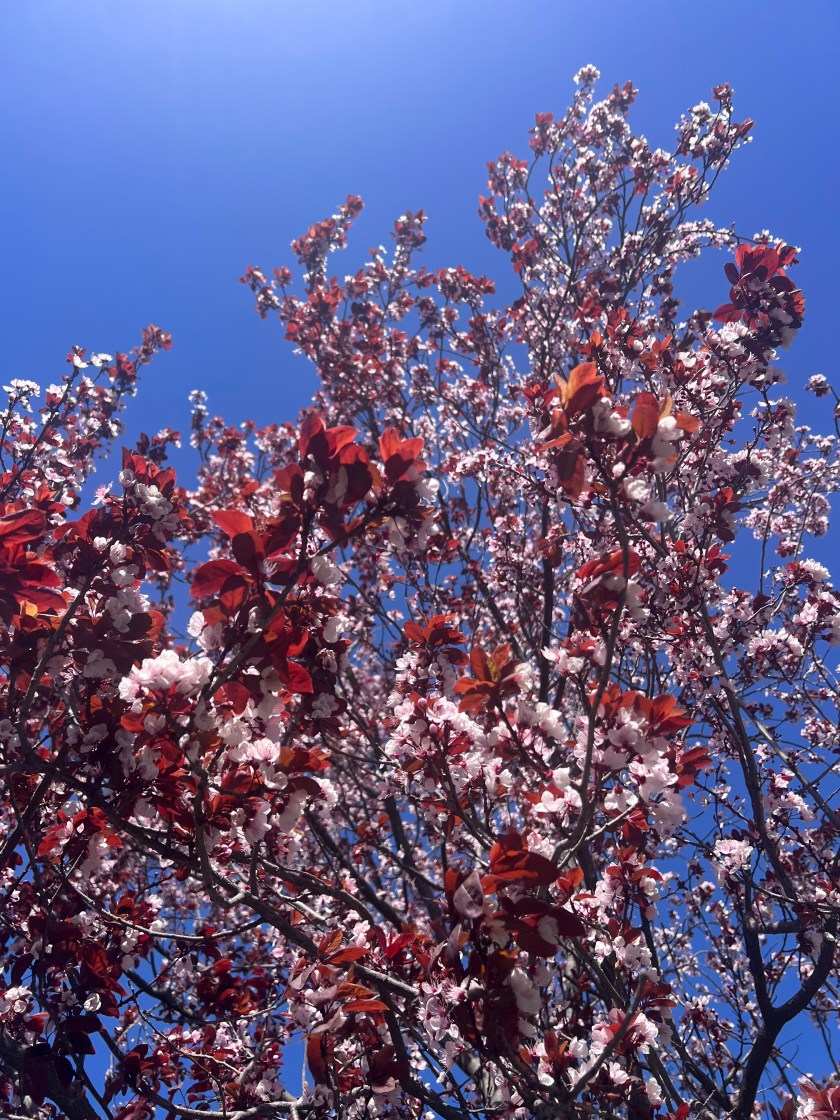
One evening, I stopped to savor a fat plop of a raindrop on my face, and saw that the cherry trees had leaves on them. The flowers had all but gone. They were there two days ago. I peered at another tree not far away, still resplendent in its floral beauty, and another one that had a good smattering of brown leaves along with their pinkish blossoms. Once again, that longing to capture the blooming and blossoming in slow-motion came over me. How lovely it would be to sit and watch for the leaves to come in? 

Ah! What little things give us pause?! 

I read about a beautiful Japanese concept, Oubaitori

The ancient Japanese idiom, Oubaitori, comes from the kanji for the four trees that bloom in spring: cherry blossoms, plum, peach, and apricot. Each flower blooms in its own time, and the meaning behind the idiom is that we all grow and bloom at our own pace.

img_0119

A few days later, I went on another walk, this time peering up at a clear blue sky, and no jacket, only to notice the young gingko trees in the neighborhood beginning to sprout their light green leaves of beauty. I remembered the large gingko tree we’d long admired. That large tree, over a century old, fell in the winter storms this year, and I felt a pang. The patch on which it stood was overgrown with fresh grass, and a meadow full of yellow flowers. Nature’s lessons and epiphanies are rarely novel, but always welcome. 

Making a mental note to go for a short hike in the beautiful green hills nearby, I reluctantly headed home. 

Spring time is nature’s way of saying, ‘Let’s Party’!

– Uncle Fred in the Spring Time – By P G Wodehouse

Maybe it is time for a spot of springtime laughter with the maestro, P G Wodehouse himself.

War & Peace, Love & Power

“You need to have either love or war; those are the only ones that can sustain a long running saga!” the daughter said as an off-hand comment one day when we were discussing the art and craft of world building, and she was convincing me to read another series – one with a female protagonist. I was hesitant to start reading a series that not only had 7 books but all seemed to be progressively bigger in size too. She guffawed at this and said,  “You’ll enjoy it, so what’s the problem?”

The problem with wars is that nothing makes sense as time goes on. Even if there is justification in the original act of going to war, the long-running losses and frustrations often eclipse the original intent. It becomes a cascading pile of losses that fuel more losses.

I was reading Haruki Murakami’s book, Novelist as a Vocation. There was one particular section when with the book still open in my hand, the mind started to meander, trying to make sense of what was said, and trying to piece things together as they might have been.

He writes about the time he witnessed civil unrest as a student in college long before he decided to become a writer. Coming from a stable family, and not having endured any significant challenges or wars in his lifetime, he writes about the period in his life when he witnessed strife. He confesses that he felt drawn to the cause originally, but gradually could see cracks beginning to appear. Slowly, he saw how words lost their integrity, and he felt he could not identify with any of it anymore.

“As time passed,.., and internecine warfare between the student factions grew more and more violent and senseless – an apolitical student was murdered in the classroom we often used, for example-many of us became disenchanted. Something criminally wrong had wormed its way into the movement. The positive power of imagination had been lost. I felt this strongly. ….Uplifting slogans and beautiful messages might stir the soul, but if they were not accompanied by moral power they amounted to no more than a litany of empty words…..Words have power. Yet that power must be rooted in truth and justice.”

I felt a heavy sadness settle over me as I finished reading that section of the passage again. Thus it has always been. With war, with power, with long-running angst. It sometimes seems to me that human beings are remarkable for still allowing light to seep through – to be hopeful, happy, joyous, friendly, loyal, trusting, loving and giving. But I am glad of this tug-of-war too, for without one, we may never learn to fully appreciate the other. 

News of war and conflict have always plagued humanity, and exactly a century ago, the whole world reeled from wars back to back that sent the world careening into madness. The insanity of it, the dreariness of it, we hoped would be deterrent enough for at least a few centuries – but I doubt it. For just as ubiquitous as love seems to be conflict. 

In centuries of warfare, there have been gains and losses. All things fragile to begin with (egos, lives, trust, careers), they all seem to shatter in the eternal quest for what? Seldom in war do people win. Maybe countries do, armies do, but never the individual. And yet without collective action, where would we be?

In our very contradictions lies our greatness. 

I eyed the book series on war & love the daughter had given me, and wondered whether to start another saga.

It seems so simple to say: All we need to do is figure out a way to value Peace over War, and Love over Power. Oh well! That is the saga of the human life, isn’t it?

Time as a Map of Reality?

Time in our Universe

I was reading about time, its paradoxes, black holes and white holes while awaiting our turn at the salon. It was a busy day, and luckily, the son and I had the foresight to take our books along to pass the time. 

Every time I looked up, I saw hairdressers concentrating on their craft, while making small talk and easing their customers to relax into their chairs. It is a gift, I realized, to get their customers to trust a stranger with scissors nipping at their heads. It is hair, and it does grow back. But it also does change your immediate appearance and the perception of yourself and those around you, even if only momentarily. For a species that is vain, visually conscious, it is a fine balance to get the right look. 

Time as a Map of Reality?

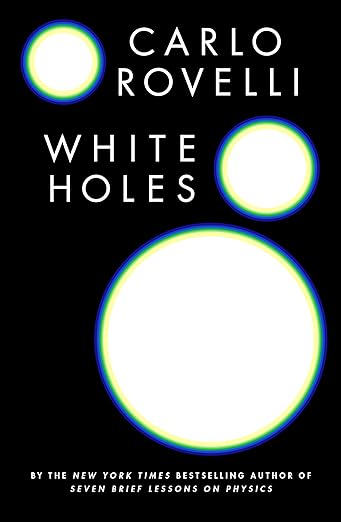
Back in my book on White Holes by Carlo Rovelli, the paradox of time was being explained:

white_holes

I can’t say I understood it all, but it was lovely to try:

“The reason we remember the past and not the future is entirely due to the fact that the universe was further from equilibrium at one point in the past than it is now.”

Whatever did that mean?

I read on about equilibrium, till I found something that I liked.

“The flow of reality is always more fluid than any of our frantic attempts to capture it might lead us to believe. Time is not a map of reality: it is a kind of memory storage device …”

I liked that. Time as a map of reality, or not?

No Trace Will Remain

I looked up trying to fix the concepts and the reality of my physical space at the same time. I noticed the many small ways in which we trust ourselves to those around us. It should all be organic, safe, slow, and yet in our quest for productivity everything has sped up. Watching barbers and hairdressers doing it all with confidence and aplomb in such a short span of time, was fascinating. 

Watching the people in the salon getting their hair cut with those cutting the n-th customers’ hair, while trying to understand the concepts of equilibrium and time is a strangely meditative experience. The son and I watched and read in turns. The annoyance of the long wait mitigated by the philosophies of being. 

“Sooner or later, every memory vanishes, canceled through the wear and tear of time. Sooner or later, of our proud civilizations, of everything that we have understood, of the words in books such as this one, of our controversies and of our desperate passions and loves…no trace will remain.”

“Would you come please?” It was our turn.

“Soon of our long locks of hair, no trace would remain!” I smirked to the son, and chin up, we made our way in.

At that moment where we are not in a black hole, or not reversing into white a hole, there is only the experience of time, and the trimming of hair.

127e22d1d2494032867770d78ef0335f_ComfyUI_20682_

Chance Encounters For a Magical Journey

🐕‍🦺🪷🦌🍀🐺❄️🐀🍁 The Deer Families 🐕‍🦺🪷🦌🍀🐺❄️🐀🍁

“Think we’ll see James and Lily today?”

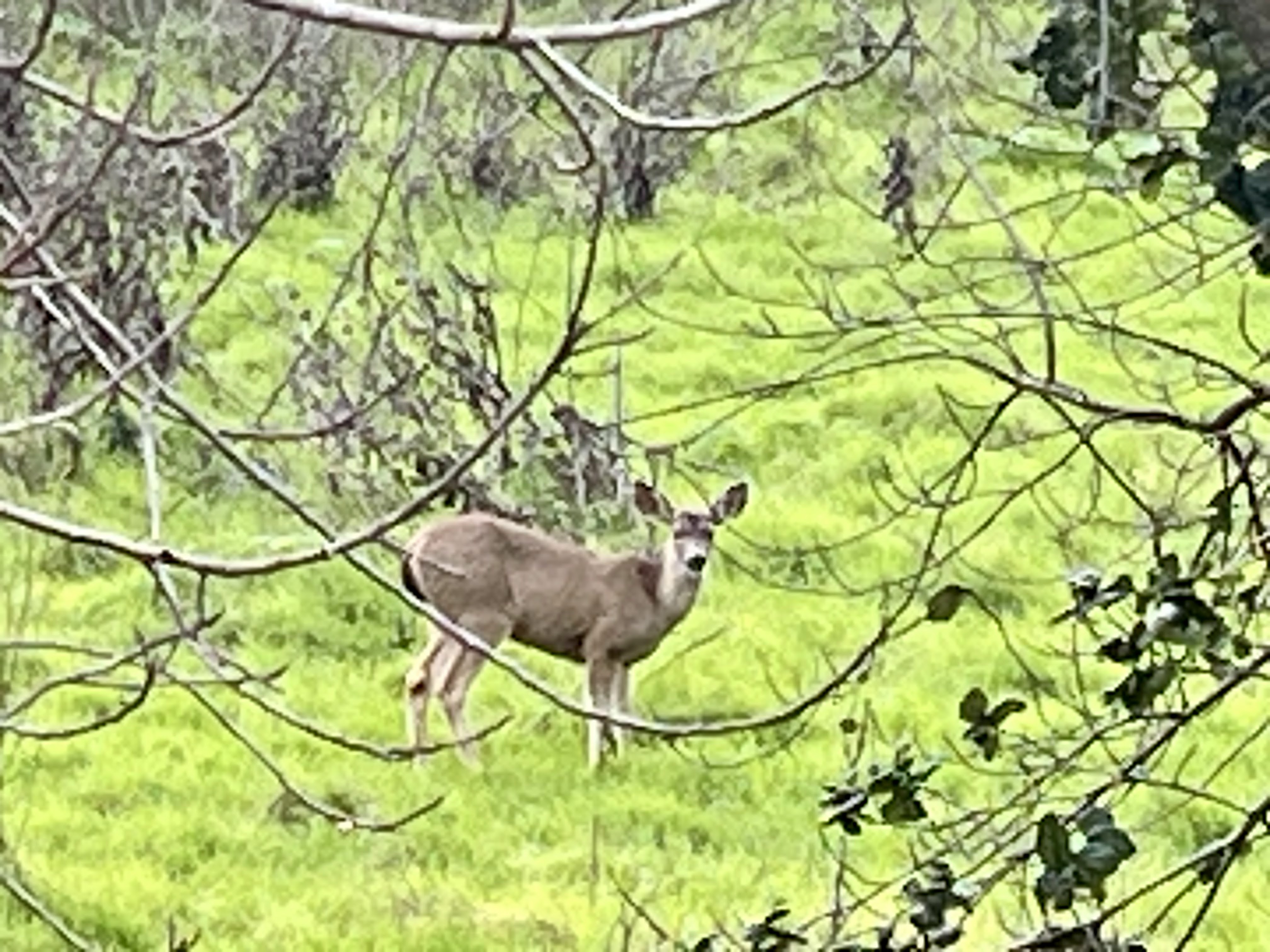
“I don’t know! Hopefully. It has been raining, so the poor things may have moved away, ” I said. We’ve christened the deer family near our homes. The mother and father are called Lily & James (I know!). Sometimes, there are several families – we call them all James & Lily. 

img_9619

We caught sight of them – much closer than they usually are, that evening, and exchanged a look so close up, it was … revealing, deep? (hard to pin down in one word). It isn’t often one gets the chance to exchange a deep searching look with a deer. It is a marvelous experience – and one we wouldn’t forget soon. Those brown eyes seem endless, and so full, it somehow fills up your being too. When poets write of moments feeling like eternity etc, I suppose this is what they meant. It could not have been more than a few seconds, and yet, the eyes spoke a language of eyes. 

Whenever writers talk about pools of emotion showing in the eyes, and the shapes of their ghosts flitting through their characters’ eyes and all of that, I am never sure what to think of it. Sure, it sounds brilliant and poetic, but can we really show all of that in one glance? Looking into the deer’s eyes was oddly satiating, and it was definitely more than words can try. 

Clearly the son was moved too, for he said, as soon as it left, “Do you want to talk to animals sometimes?”

I nodded. “That would be nice.”, I said

“What do you think they’d talk about?”

🐕‍🦺🪷🦌🍀🐺❄️🐀🍁 Understanding Animals 🐕‍🦺🪷🦌🍀🐺❄️🐀🍁

“I suppose it depends on the animals. Elephants have different concerns than pangolins. Bees, squirrels and ants – being more community animals may have similar concerns. But I think I’d like to know the range of emotions they have. Do squirrels have greed? Do ants have jealousy? Pelicans have been known to sacrifice themselves for their pod. “

Are there some emotions or behaviors that are completely unknown to man that our creatures possess? We know many animals feel love, despair etc. 

If a wolf is kicked out of its pack, it never howls again. 

– From the book, Sad Animal Facts – by Brooke Barker

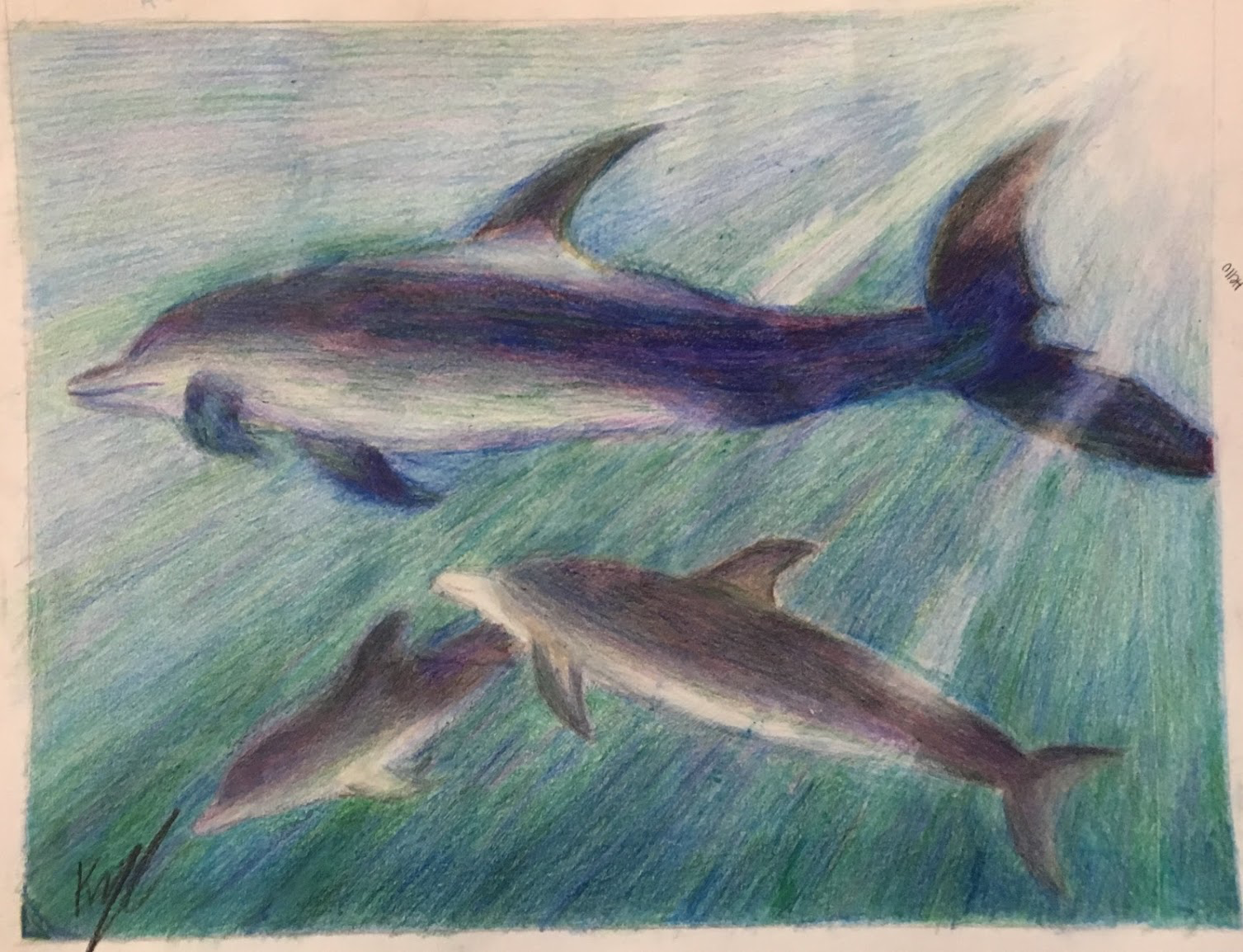
“For instance, and we all know whales have complex legends in song format that they pass down. With all the skills of navigation, survival, and protecting required, I am sure they all have different topics.”

image-1

“I think I’d also like to see what kinds of things they keep in long term memory. I mean we know elephants have long-term memories, but what does that constitute? Just routes to water during times of drought or also towards betrayals etc. They must have some extraordinary lives and stories to tell then, isn’t it?”

He was nodding along. We talked about the size of their brains in proportion to their sizes. Brain ratio requires a separate post in itself, but there are so many fascinating things once you start looking into it.

For instance:

“An alligator’s brain weighs less than an oreo. “

– Quote from the book, Sad Animal Facts – By Brooke Barker

The alligator literally has the smallest brain to body ratio. Only 0.2 % of its body mass is the brain.

🐘 🐊 ⌘ Gajendra Moksha & Vishnu Sahasranamam 🐘 🐊 ⌘

This led to research on a few things about body to brain ratios, and curiously, the myth of the crocodile vs the elephant in Hindu mythology, Gajendra Moksha. It is curious how the myth pitted the lowest brain ratio animal against one of the wild animals with the highest ratios (the elephant). It is supposed to be a reminder to keep our egos in check. Gajendra finally relinquished his ego, and required the great god, Vishnu, to come in avatar form and save the elephant. 

Gajendra’s plea to Lord Vishnu is called the Gajendra Stuti and is the first stanza of the Vishnu Sahasranamam (the 1000 names of Vishnu) 

Please read: Post by Krishna2 on the Vishnu Sahasranamam  – this post helps us comprehend us the depths of Vishnu Sahasranamam

शुक्लांबरधरं विष्णुं शशि वर्णं चतुर्भुजं
प्रसन्न वदनं ध्यायेत् सर्व विघ्नोपशान्तये

śuklāṃbaradharaṃ viṣṇuṃ śaśi varṇaṃ caturbhujaṃ |
prasanna vadanaṃ dhyāyēt sarva vighnōpaśāntayē ||

We came home fascinated by all the different things we usually do not pay attention to – filled with wonder, and awe. Many of us have forgotten what it is like to have encounters with our fellow beings – sometimes, exchanging a glance with a deer is all it takes to take on this incredible journey. 

The multiplicity of forms! The hummingbird, the fox, the raven, the sparrow hawk, the otter, the dragonfly, the water lily! And on and on. It must be a great disappointment to God if we are not dazzled at least ten times a day.

Good Morning – By Mary Oliver, Book: Blue Horses

References: 

The Power of our Emotions

Patience is a Virtue

“She can be hot-tempered!” my mother would say with a damning tone, which I thought was pretty rich coming from someone who had always been a bit of a live wire. 

“Patience is a virtue!” the father would say, and sing a terrible song in an even more terrible voice:

பொறுமை எனும் நகை அணிந்து

பெருமை கொள்ள வேண்டும் பெண்கள்

Meaning: Women should wear the jewels of patience, and feel pride in it.

And I would just lose it.

Again, coming from the pair that bickered their life through, it was a bit much.  

From a young age, I was led to believe that impatience, anger, and hot-headedness are vices. So, every time I felt this way, it bothered me – less over time, but bothered me nonetheless. While anger is better wielded when in control, there is a necessity for righteous anger, and even anger to defend oneself, or someone else. There is also a necessity to wield it as a protective shield – especially as a woman. So, why do we continue to tell women it isn’t okay to be angry? 

Is Patience a Virtue or a Vice?

Even as recent as last month, I was told that a friend of mine never lost her temper, in glowing terms. I had a cold, and was coughing and sputtering through a phone-call.  

“Did you try boiling the water using the kettle?” the mother said, not listening to what I was saying at all, but telling me what to do in a voice that did a thin job of veiling her true thoughts of my competence in the kitchen.

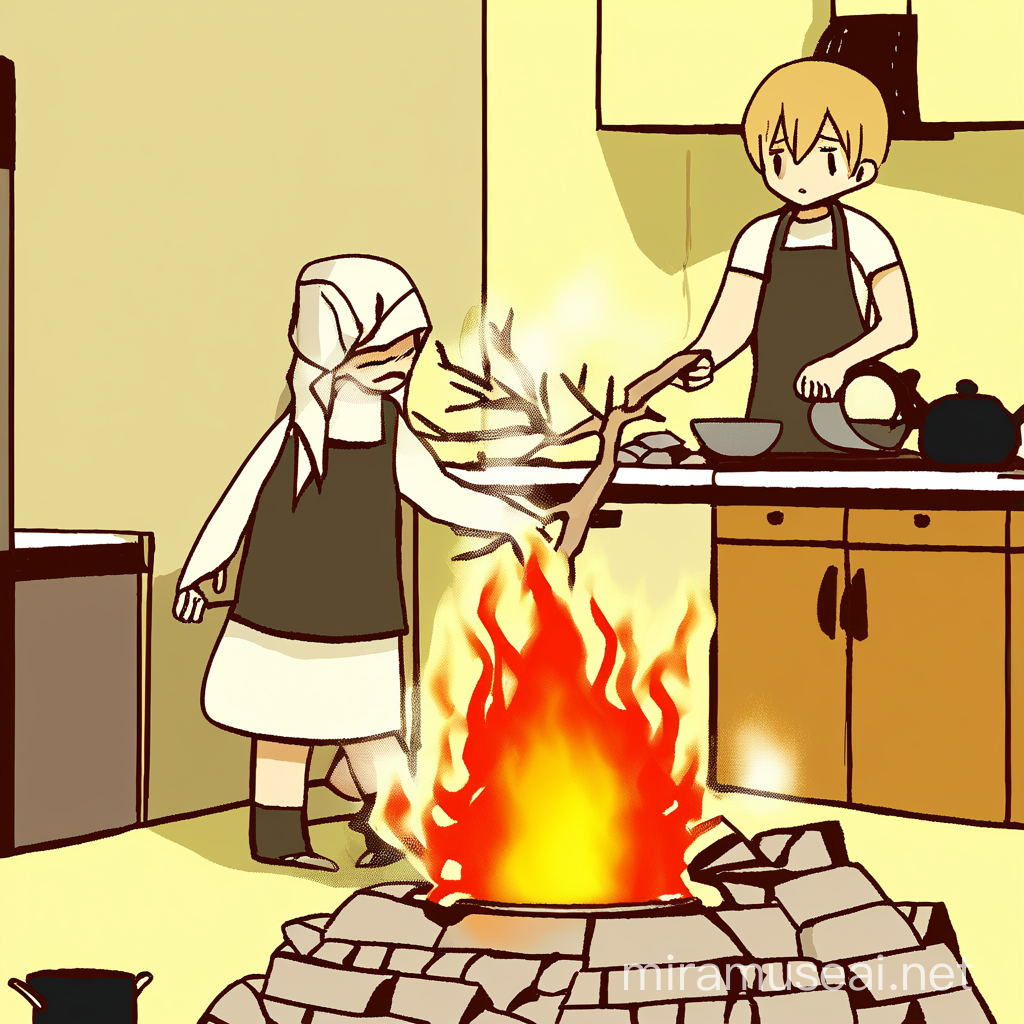
“No mother! I took three bricks, broke a branch, and tried scraping firestones together to light a fire on which to boil water.”

Hence the : patience is a virtue refrain. 👀I could try being endlessly patient like this friend, could I not?

f3b72f837d0e4d7981fcbb98a519021c_ComfyUI_10079_

As though that was her most redeeming quality. It wasn’t – she was loving, kind, generous, and funny. She was also judgmental and stubborn (her patience actually helped her win her way in the long run, so far from it being a virtue, I saw it as sometimes being problematic), but there it was. 

Cranes are endlessly patient, brutally so, in their quest for what they want, aren’t they? Ask the fish what they think of that.

cd3693d5-3eaa-4d3b-ab97-d7c865de8707

“Maybe, Buddha should have been a Bodhini and taught us the way”, I snapped and put the phone down. 

I did feel a twinge afterward – the poor lady was only trying to help, but really! She hadn’t even listened to what I was trying to say, which was somewhat time-critical. Too wound up to speak, and the timezones not contributing to the late hour, the crux of the communique had to be sent as a cryptic message on WhatsApp instead. This, of course,  resulted in tedious messages of varying hilarity, and interruptions. 

Sigh!

Anger from When Women Were Dragons – By Kelly Barnhill

women_dragons

A quote from When Women Were Dragons – By Kelly Barnhill swam to the forefront:

I am sorry. I said, I couldn't look at her face. “I .. I don’t get angry”. I shook my head. “I don’t usually get angry. But lately…”

Mrs Gyzinska gently cupped her hand against my cheek “Anger is a funny thing. And it does funny things to us if we keep it inside. I encourage you to consider a question. Who benefits, my dear, when you force yourself to not feel angry. Clearly not you.”

She glanced around the room. “Look at where you’re living. Think of what you’re being asked to do. You’re not angry? Hell. I’m angry on your behalf.”

I suppose, this is another of those things we need to stop telling our women. Instead stopping to think:

“Who benefits, my dear, when you force yourself to not feel angry?” – Kelly Barnhill, When Women Were Dragons

Just as much as we should stop telling our men to not cry, or feel vulnerable. 

Be A Man

Anger and vulnerability are human emotions capable of just as much as love and loyalty, so why do we deny ourselves the power of these emotions?

Happy Womens’ Day: May we allow ourselves to be angry for the right things in the right proportion at the right time, so that we may do the right thing!

Zinniga-Zanniga Tree – The Cure-It-All Tree

Dr Seuss Magic

“Isn’t it marvelous to leave such a legacy behind?” I asked sleepily. It was Dr Seuss’s birthday and typically marked as Read Across America week. I miss the fuss of the week in elementary schools. The middle schoolers and high schoolers get to have their fun, but we just get to hear about it a lot less, I guess. 

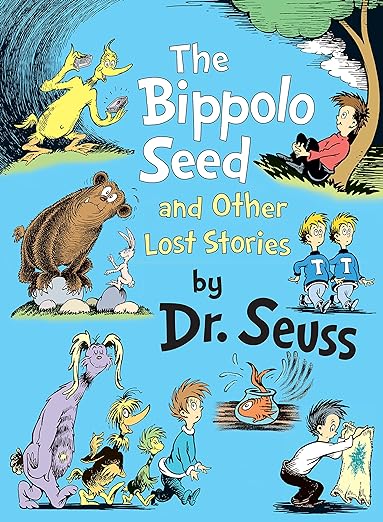
Lazily, I picked up a book written by Dr Seuss, that has been lying around for ages in the children’s bookshelves and had never read before. The Bippolo Seed and Other Stories.

bippolo

The stories, some of them at least, had predictable plot lines, but oh! How he presented them! I feel justified in the use of as many exclamation marks as necessary when writing about Dr Seuss. For instance, there is a story of a bear ready to pounce on a rabbit. The rabbit, doing some quick thinking, stalls the bear with an intriguing thought.

The Rabbit, the Bear, and the Zinniga-Zanniga

“I sure hate to tell you It isn’t too good.
I was counting the eyelashes 'round your eyes,
Your left eye…your right eye…and, to my surprise,
They weren’t the same number!

“I’m sorry…SO sorry.
But, sir, it is true.
Poor Bear! This is dreadful!
One eyelash too few!”

In typical Dr Seuss fashion, the rabbit takes it to ridiculous extremes. Could the bear’s spine be cracking, could his brain be lopsided, all those aches and pains, oh it all makes sense. By the end of the tale, the bear is sitting atop a zinniga-zanniga tree with a flower pressed to his eye so that the extra eyelash can grow and make him feel whole again, while the rabbit skips on his way, free from the bear’s claws.

Oh! 

I laughed so hard, I sputtered and sprayed my coffee, I put my phone in the refrigerator and looked for it all morning, and I almost walked straight into a zinniga-zanniga tree myself.

What a marvelous tale to encapsulate how our worries sometimes run away with our imagination, the hypochondriacs hidden in every one of us to a certain degree poking fun at itself, and the societal pressures on perfect eyelashes playing into the bear’s psyche?

Sometimes, we need entire tomes to discuss these themes, other times, a lost story of Dr Seuss would do.