24 Hours Later

Have you ever felt this way?

24 hours apart

One morning I felt like an optimist
The Earth felt full of promise
Luminous, inviting, abundant, peaceful
The skies benevolent, clouds wispy

The next morning I felt like a pessimist
The Earth felt cruel
Lacklustre, haunting, sparse, watchful
The skies sharp, clouds morose

One morning the brown grass looked ready
Ready to wear a green coat
Embrace the verdure
Invite the rain

The next morning the brown grass felt tiresome
Ready to absorb another layer of dust
Shake the moisture
Accept the scorching heat

So what changed?

One morning the white goose
Hobbled over to where I stood
Looking out into the waters
Inquiring, curious, mutual polite interest

The next morning the white goose
Stood mute and weak
Looking out into the waters
Her leg lost leaving an infected stump

Nothing to be done
I felt a pang of distress for the old goose
Could it have been a predator?
Maybe a coyote?

But I saw a coyote the other day
Beautiful coat shining, curious eyes watching
Gleaming in the evening sun
It couldn’t have been the coyote

One morning the world felt
Like how it could be
The next morning the world felt
Like how it can be

Ostrich Philosophy: News to Peace

“I would like to be an ostrich, and just bury my head somewhere deep in the sand! “, I said reacting to another piece of breaking news. 

“What happened now?” said the husband. 

I mumbled and rambled, “Nothing new. Just expected but also so outrageous! Makes my blood boil. But like most of the folks at this point, I just feel resigned. Like I said want to be an ostrich – preferably in its natural habitat – halfway across the world from here!”

The husband laughed, and said, “Change of topic! What are you reading now?” 

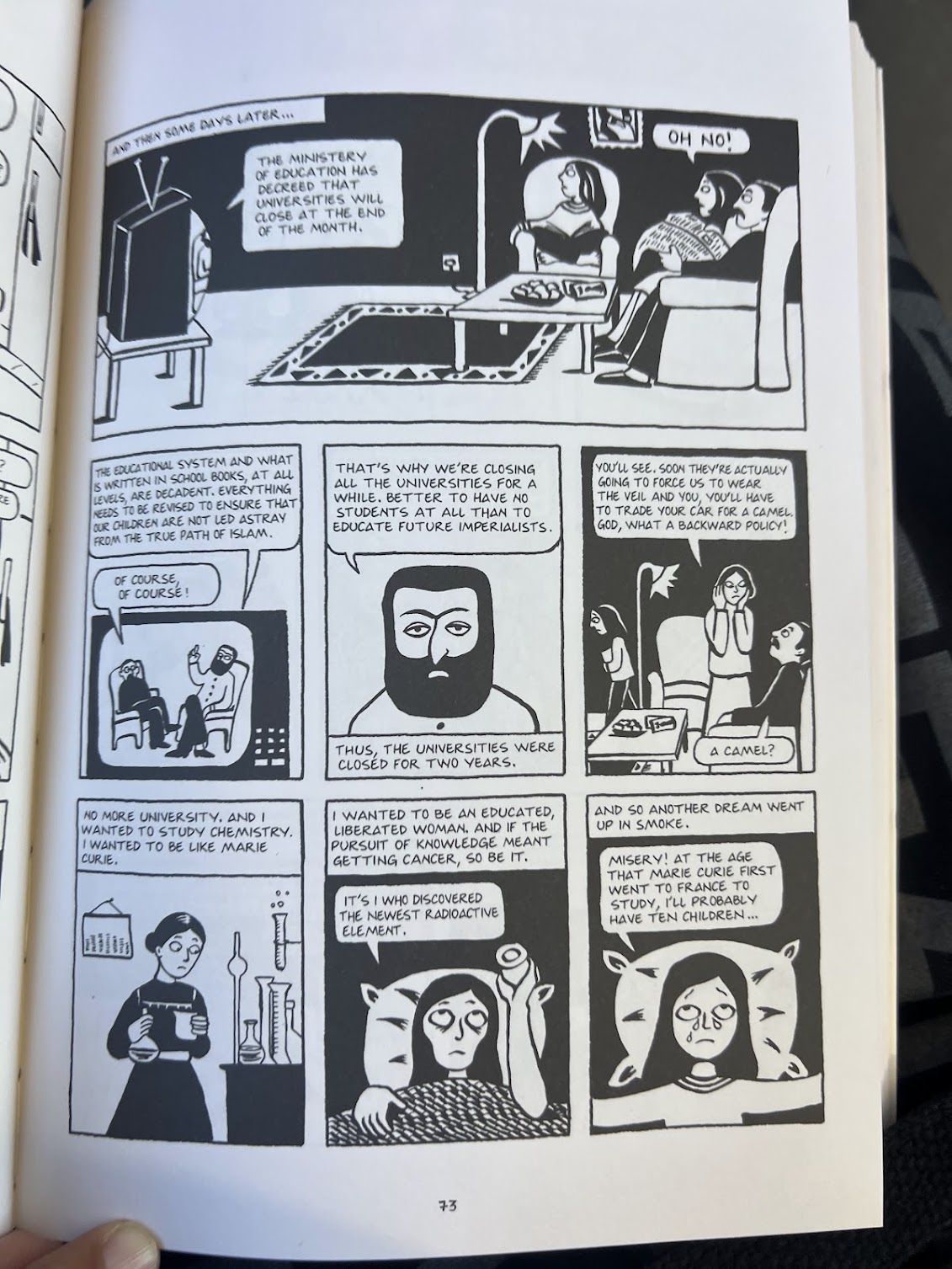
Ah…he was going for safe bets, but no sir! This time, I was ready with a book that plunged right on. I was re-reading Persepolis – By Marjane Satrapi. It was our bookclub pick, and I realized why it remains one of my favorite books of all time. Marjane Satrapi’s sense of story-telling has a childlike sense of wonder. It is a coming-of-age story after all. But it is set against the backdrop of the increasingly regressive Islamic Revolution, the Iran-Iraq war, and the numerous humanitarian excesses that go with these situations.  Marjane Satrapi’s sense of humor, even in the telling of the most horrific scenes of 1970’s Iran is what makes the book a marvel.

I held the book up, and opened up to read : as luck would have it, my eyes landed on the announcement by the authorities that they would be shutting down Universities and higher learning was banned. 

FromthebookPersepolis:ByMarjaneSatrapi

The next day’s breaking news made me want to be an ostrich again. The Education Department’s funding was being revoked. “Did he read the book and decide what to do next?” I said, clanging the dishes with extra vigor while unloading the dishwasher. 

“Really! There must be some sort of book of ideas – some template to go by, no?” I said. I admit I was flummoxed by the uncanny Tyranny 101. On Tyranny – By Timothy Snyder’s book also got it right. 

Why isn’t there an equivalent for Peace 101? I suppose all the hard things in life have to be worked for and attained in the hard way, but for everything else there are rulebooks.

Journey Through Timezones: 15 Destinations in 15 Days

In what turned out to be the journey of clocks – we managed to visit 15 places in as many days over three distinct timezones. I wondered where we were, how we got up, and how we made it from one place to another at all. But it seems we did, and we made it in one piece back to our home, so all is well.

Sometimes, I’d get up – the biological clock warring with the physical ones, and the expectations of the day starting in whichever language, country you were in. Orienting oneself always seemed to take a few minutes. I loved the sensation of relief as one realized one was supposed to be on vacation – so it must be alright.

Pack Mules

Packing for a European trip along with an Indian one seems good on paper but involves logistics that would have had a royal ensemble perplexed. With baggage restrictions, it turns out that nothing prepares us for two different cultures like this:

  • One requires thermals, caps, gloves, socks, closed-toe shoes, sweaters and jeans
  • The other requires sarees, in-skirts, blouses, salwar kameezes, cotton kurtis, sandals, and jewellery.

Planes, trains and automobiles

For you see? We also seemed to use every mode of transportation available: planes, trains and automobiles. (The boats were given a sad miss on this trip), though there were plenty of lakesides in which to catch our breath.
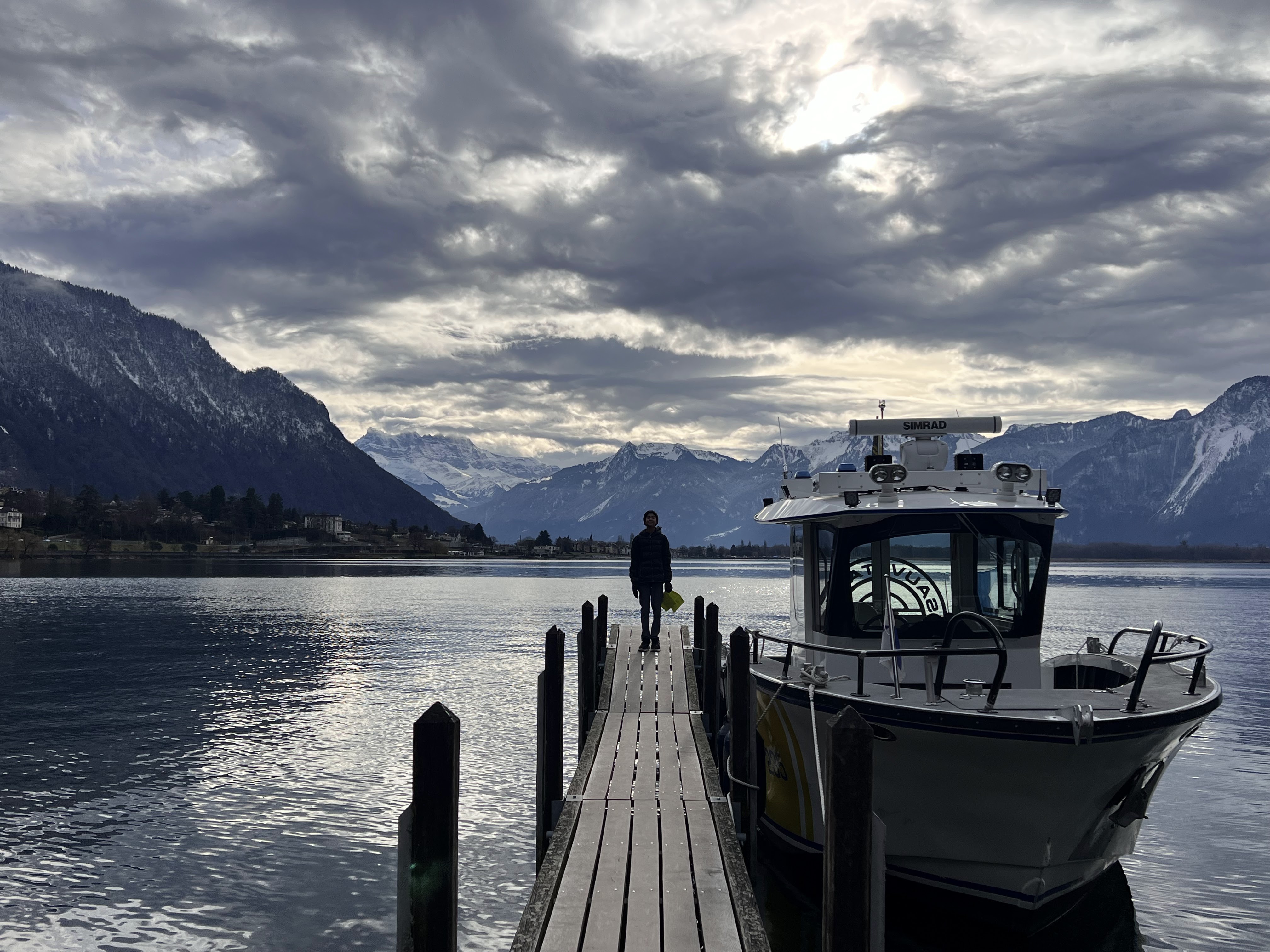
img_4807

We travelled by trains in India, slept through the night on berths, shot our heads out into the cool morning air as he watched the moon shine through the countrysides. We travelled by trains in Switzerland, where the freshly fallen snow on the countrysides made it all look like we had woken up in a picture postcard.

We travelled by automobiles – in deft contraptions boasting of 4 wheel drives, automatic braking, abs-something, in hilly regions both in India and Switzerland.

We braved the holiday crowds in airports and felt for the airline staff dealing with large swaths of humanity who all seem to have decided to take a holiday just then on an airplane.

Trains

One time, I woke up as a night train in India jolted me awake from a semi-state of sleep. Then I remembered why I was semi-awake. The son had gone to use the restroom minutes prior, and I suddenly felt wide awake. Could the jolt have meant … but mere seconds later, the fellow came back beaming like the waxing moon outside, “Amma! Luckily I had not yet let go when the train jolted – otherwise, my shoes would have definitely been gone!” he said.

I threw my head back laughing, and couldn’t stop for a few minutes. It was his first experience on Indian Railways for on overnight stint, and he was excited to be in the middle berth, and everything from how the iron chains held a person’s weight, to the loos, to the open doorways seemed to fascinate him.

Planes

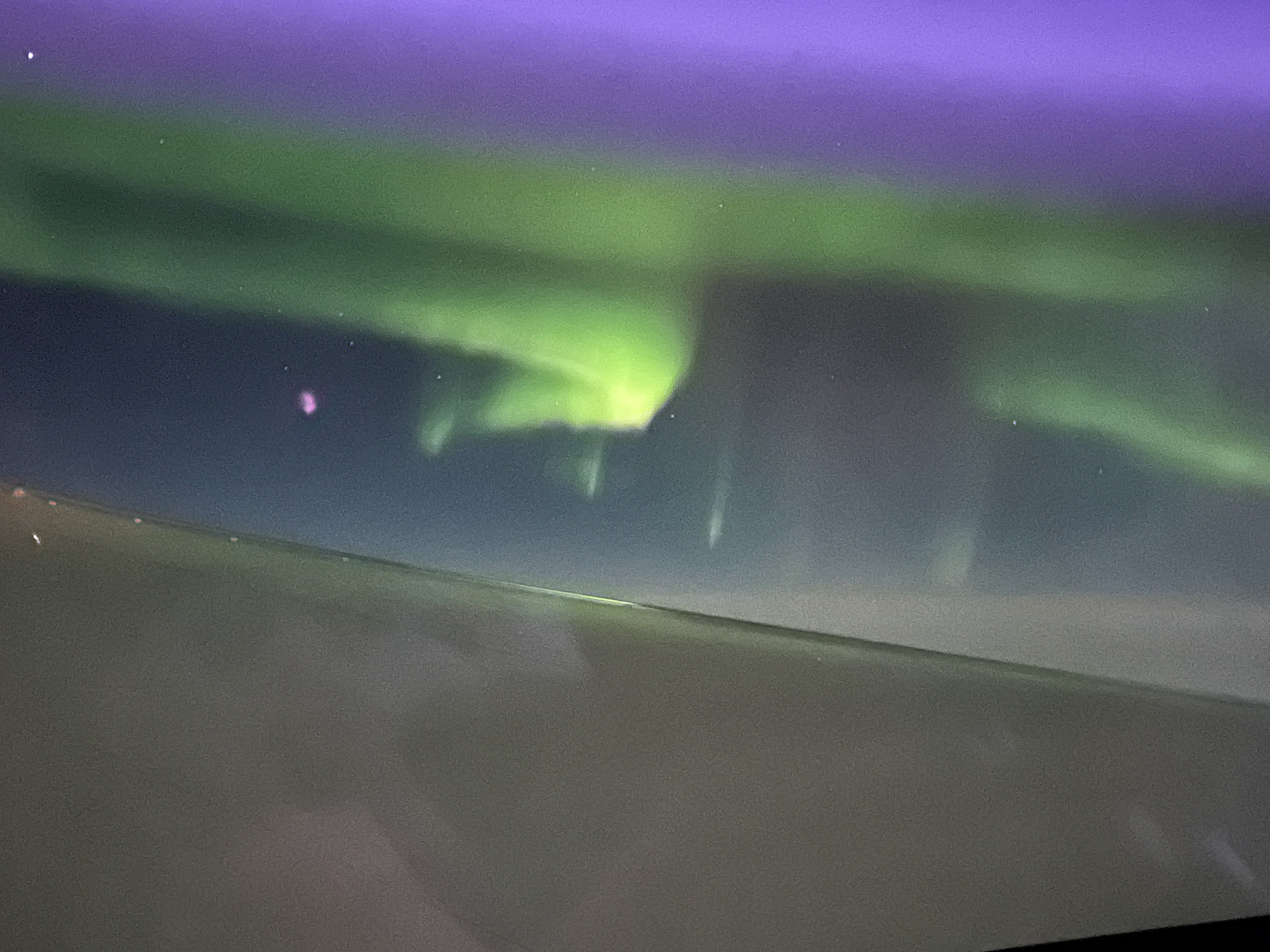
Another time, we were prodded out of our console screens by our excited co-passenger. She was a professional photographer of sorts (who was also a nurse), and she took a picture of the clouds outside our airplane window to show us what we were seeing. She had identified it correctly – we had a brilliant look at the dancing skies of the night over the Arctic circle, and we caught the aurora borealis in its glory. It was marvelous. 
img_4178

Automobiles

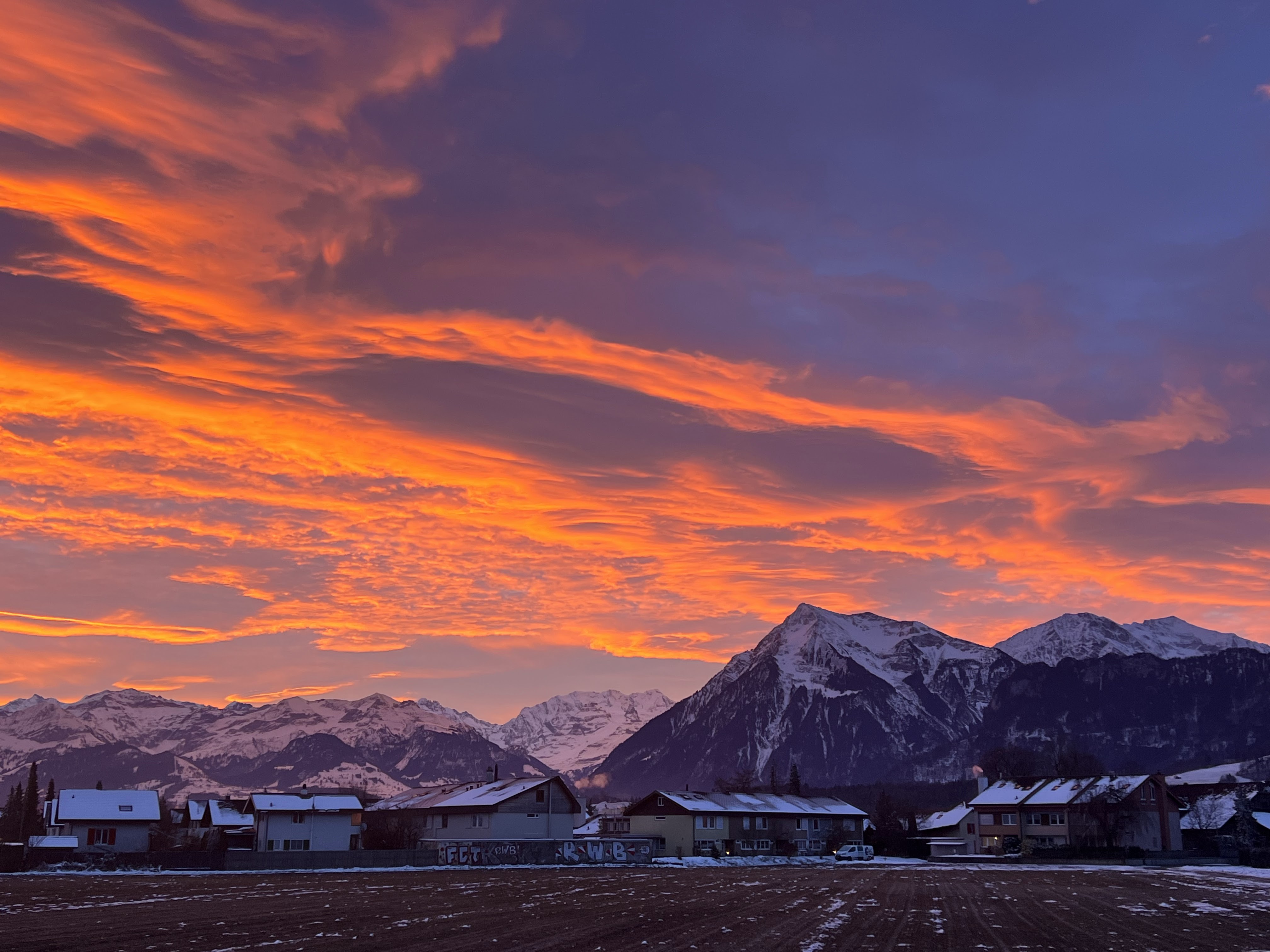
The ability to catch a marvelous sunrise over the Swiss Alps, or to catch a glimpse of an elephant by the roadside was all the magic required for the automobile sections. We managed to eat exotic fruit in Kerala (nongu), and stop for a quick snacks by the roadside in India. It was all a-thrilling, till we found ourselves snoozing on the uber-ride home after all of it. 
img_4575

We travelled by planes from one continent to the next in the peak holiday season, braving crowds, and delays, and cacophonous announcements. How we managed to get from one place to another inspite of all the things conspiring to derail things was beyond us, but we were grateful for it all. Once we landed back home in San Francisco, the very air around us seemed to ease us into being.

img_4869

It also seemed like the problems we had temporarily left behind, were lurking on the corner of our home, and ambushed us as soon as we came in.
Embracing Summer: From Scorcher to Serenity

Hot , Hotter,  Hotter Still …

One hot summer’s day, I tried turning on all the car’s air conditioning vents towards myself. It was no use. The sweltering heat was unrelenting. I sipped some water from the water-bottle I’d left in the car a couple of hours earlier, and it felt like very bland tea – warm, but still better than nothing. This is going to be the reality – I thought to myself miserably as I heard the climate doomsday sayers in my head. Every progressive summer heads towards hotter and hotter temperatures. 

Even the phone seemed to be prickly and finicky with the heat – sporadically dropping and picking up the CarPlay. That’s when I noticed the car’s options for nature sounds. I picked Rainy Day – yearnings for a wonderful rainy day even if the drops of water would evaporate the moment they hit the earth that parched day. 

I didn’t expect to feel much – but I was mistaken. We do not really give each of our senses its due in how it makes us feel. My ears pricked up at the sounds of the rain even as the car itself was dry as brush. Maybe it was the effect of the air conditioning kicking in, but everything felt suddenly cooler. I fumbled for my cooling glasses again – I could not wear them because they were too hot earlier, but that made a difference too. 

raindrops

It was miraculous, the transformation from parched to a feeling of summertime abundance. Life felt sweeter. 

SummerTime Sweetness

Watching the flowers sag on the trees, 

Even as the fruit trees are breaking off with the weight of their fruit,

The joy of filling your home with fresh fruits and vegetables from a summer bounty. 

Having friends to share all of this with 

Nurturing the garden 

Watching with amazement as butterflies and bees flit happily.

Indulging in summer activities

Reading great books, 

Having wonderful fellow readers to discuss them with.

The joy of grocery shopping that includes ice cream 🙂 

The abundance of books from the local library 

The night-time adventures with every protagonist and idea sharer

Those are the joys of summertime abundances.

summer-COLLAGE

If listening to rain sounds in the car when the weather outside is blistering can bring out all of the above, we are blessed indeed. What are your summertime sweetness feelings?

“The world smells of roses. The sunshine was like powdered gold over the grassy hillside” – Maud Hart Lovelace on Summer

Maps of War: A Fascinating Insight into Historical Warfare

Maps of War

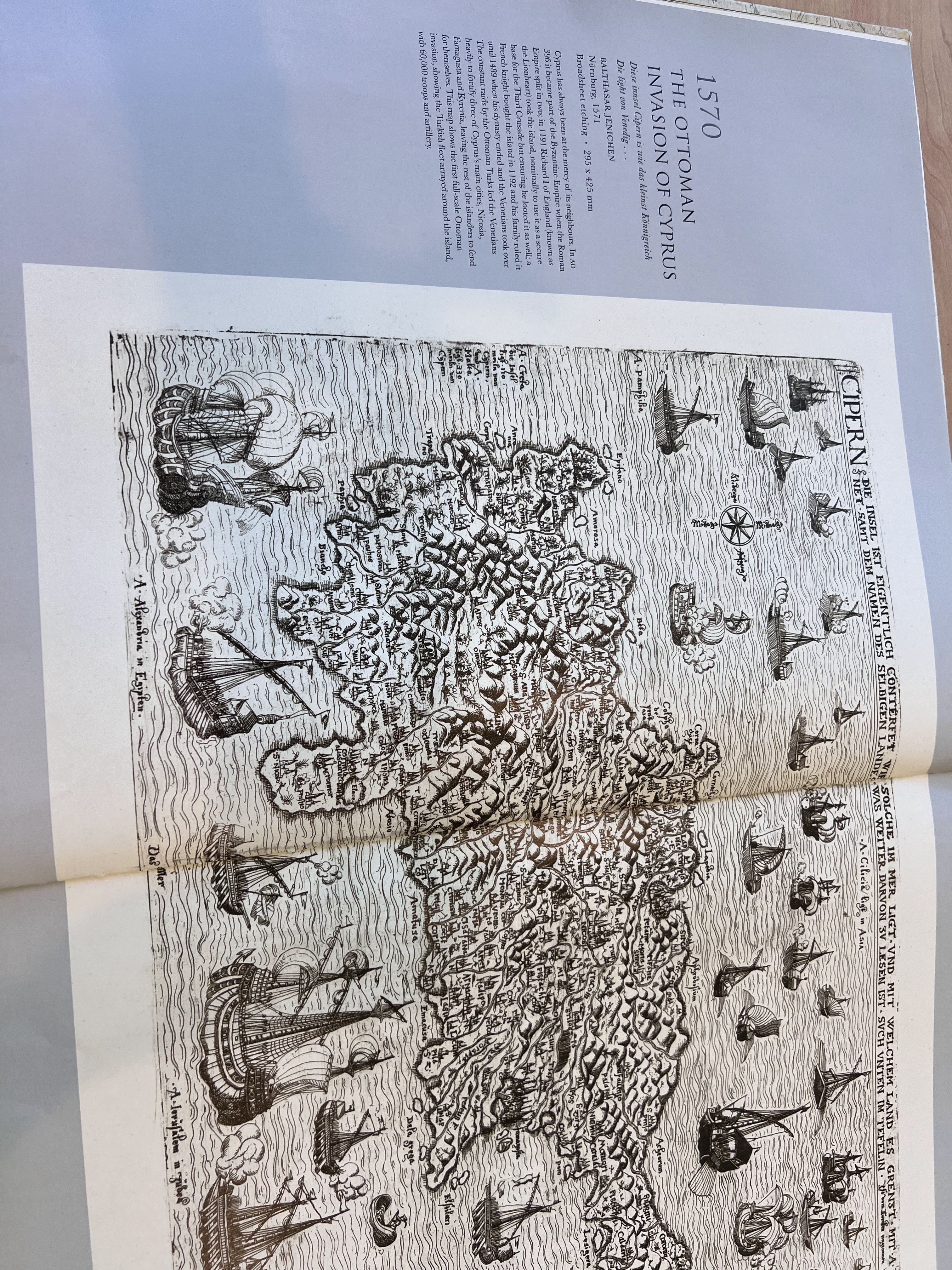
I picked up the huge tome titled Maps of War – Compiled by Ashley & Miles Baynton-Williams, and started browsing. The book had been the fascinating battleground to Avengers and superhero battles, not to mention the hours of entertainment and insight into the son’s latest hobbies of drawing maps of the world at various points in time.

img_1947

I saw the lure of the book. It had beautiful imagery, interesting ways to depict maps, and drove home the point that war was such an integral part of humanity’s history. This book only covered 130 wars between 1547 – 1902.

The foreword mentions why every conquering army was so keen to put out their own maps of war. That was their key to proclaim victory, garner public support and justify the wars. For every major map that made it to the book, imagine the thousands of skirmishes and conflicts that did not. The battles that were turning points in the wars, but were too minor to mention because it did not fit into the story being spun for the conquerors. It certainly was not a comprehensive look at all major wars during this period. 

“Lovely it is to witness great battle-plans of war, carried out across the plains, without your having any share in the danger.”  – Lucretius

 The maps of war are the larger picture of generals, and kings playing their games of strategy. 

img_1944

Impacts of War

What is not depicted is the culture, love, and familial struggles depicted as a map on a page. 

It is hard to imagine the individual lives of millions of lives lost. Yet, every single one of them were flawed human beings too. Some heroes in the eyes of their comrades; some troubled youth finding their way to vent their violence; some gentle souls caught up in another meaningless war; some hoping to gain power for themselves, some spying and hoping for the best outcome, some hoping their livelihood could be provided for if only they managed to make it back in one piece. Almost all of them terrified at the loss of peace in their individual lives, pining for the peace and love of their loved ones in faraway places while they hoped for probability to work in their favor every time they poked their heads out of the trenches, victims to random throes of arrows, or minefields. 

Well – The problem with society’s revolutions as Haruki Murakami mentions in his book, Novelist as a Vocation, is that in the world of war nothing makes sense as time goes on. Even if there is justification in the original act of going to war – remaining there is a whole different set of sacrifices. Yet, time and time again mankind goes in for that. Centuries of warfare and careers, egos, lives lost in the eternal quest for what? 

For in war, people never win. Maybe countries do, ideologies maybe. 

Though I wonder whether we’d have come up technological innovations such as we have if not for warfare: war has spurred technological innovations – fireworks, firearms, tanks, artillery, radar, sonar, cryptology, drones, nuclear power, chemical weapons, space travel. (We’d have come up with different ones if wars weren’t providing the impetus, for sure)

What is the Solution?

Is there a way to know how many wars started as peacekeeping missions and remained so? We may never know.  The son & I were discussing these very things one evening on our walk, when we fell to discussing another species that is just as war-mongering (maybe even more so) : Ants. 

Do we ever stop to think of territorial conquests of ants? Isn’t that how our own wars must appear in the scheme of the universe? 

man_in_stars

The only saving grace I could think of was to be grateful that we probably do live in one of the peaceful eras of history (“Touch wood!”, I said, grabbing a passing tree trunk, which made the son laugh) . 

“Yes Mother! You grabbing tree trunks will stop World Wars!” I heard the children’s voice chuckle in my ears, and I laughed too. May not be a bad suggestion to the United Nations Security Council, would it?

🕊️🍁 🦅 Hawkish Power? 🐦‍⬛🍁 🦅

As soon as I came home, the words rattled in me 

To capture the moments when joyous and noisy, turned to eerie and silent.

The terrifying sound of all the birds leaving at the same time

The fluttering of a thousand wings – away, away to safety.

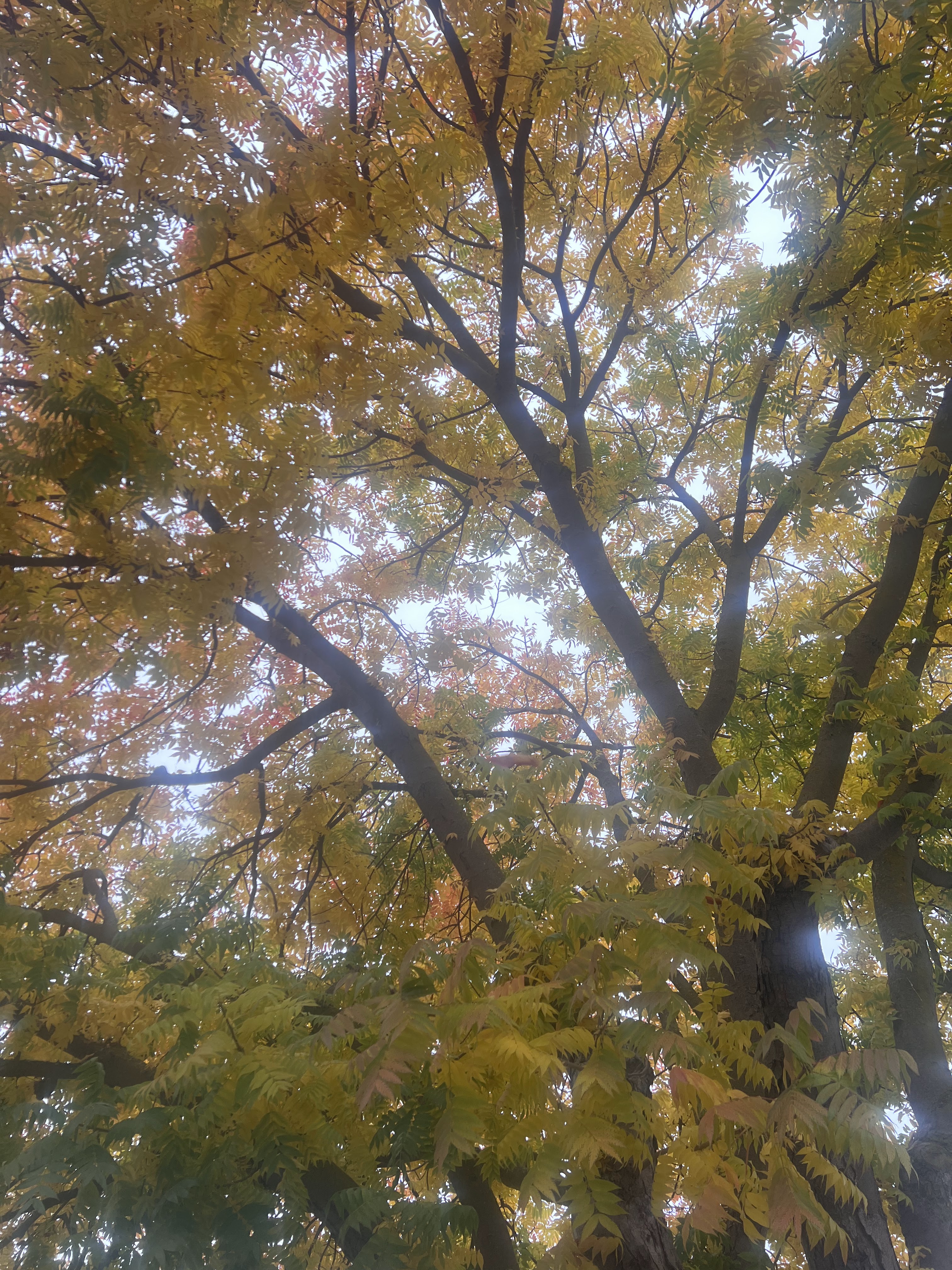
The ecstatic beauty of standing under a tree 

With thousands of leaves fluttering gently down.

The ears pricking up with the joy of 

Listening to hundreds of little birds chittering above.

All gone with the arrival of one regal hawk

The birds all flew, while the hawk gawked.

Without the rustling of the birds

Even the leaves stopped falling.

Of what use was this power?

When there was no one to exert it on?

It was a show of power so instant, so terrifying and so alien to the beautiful wintry surroundings, that I shuddered in spite of myself.

My thoughts swirled with dictators and their absolute clawing for this kind of power. Do people in power not want a happy, joyous populace? I thought of the happy chittering and camaraderie of the birds from moments ago and stood under the tree not making any noise,  content to enjoy the sounds of life overhead. 

As I walked back home from this eerie setting, my mind wandered to all the fittings of power and its lure over mankind. It doesn’t look like it will abate. Countries continue to go to war, and though countries may win or lose, the people involved always only seem to lose – their trust, their security, their loved ones, their hopes, their peace.


Mysore Palace

In what was a whirlwind trip to India, I was fortunate to fit in a day to visit Mysore, or Mysuru as it is now known. The Mysore Palace was bursting at its seams. I don’t know whether the Wadiyar family was that popular even at the peak of its glory, but that Sunday morning, we had the distinct feeling that the entire populace around Mysuru had woken up with the singular thought of having a nice picnic day out at the palace. Crowds bustled, feet shifted, and more importantly, the sun rose in the skies above Mysuru. 

Image source: Wikimedia Commons: Photographer: (Muhammad Mahdi Karim/www.micro2macro.net)

We shuffled our way through the palace taking in the art work and the opulence. Every palace designer and acquirer of artifacts has this to contend with: in opulence lies plenty, and in plenty, even the rare loses its lustre. How often have we been to art galleries and been too awed by the hundreds or thousands of art pieces, to notice the subtlety that would otherwise be studied with awe?

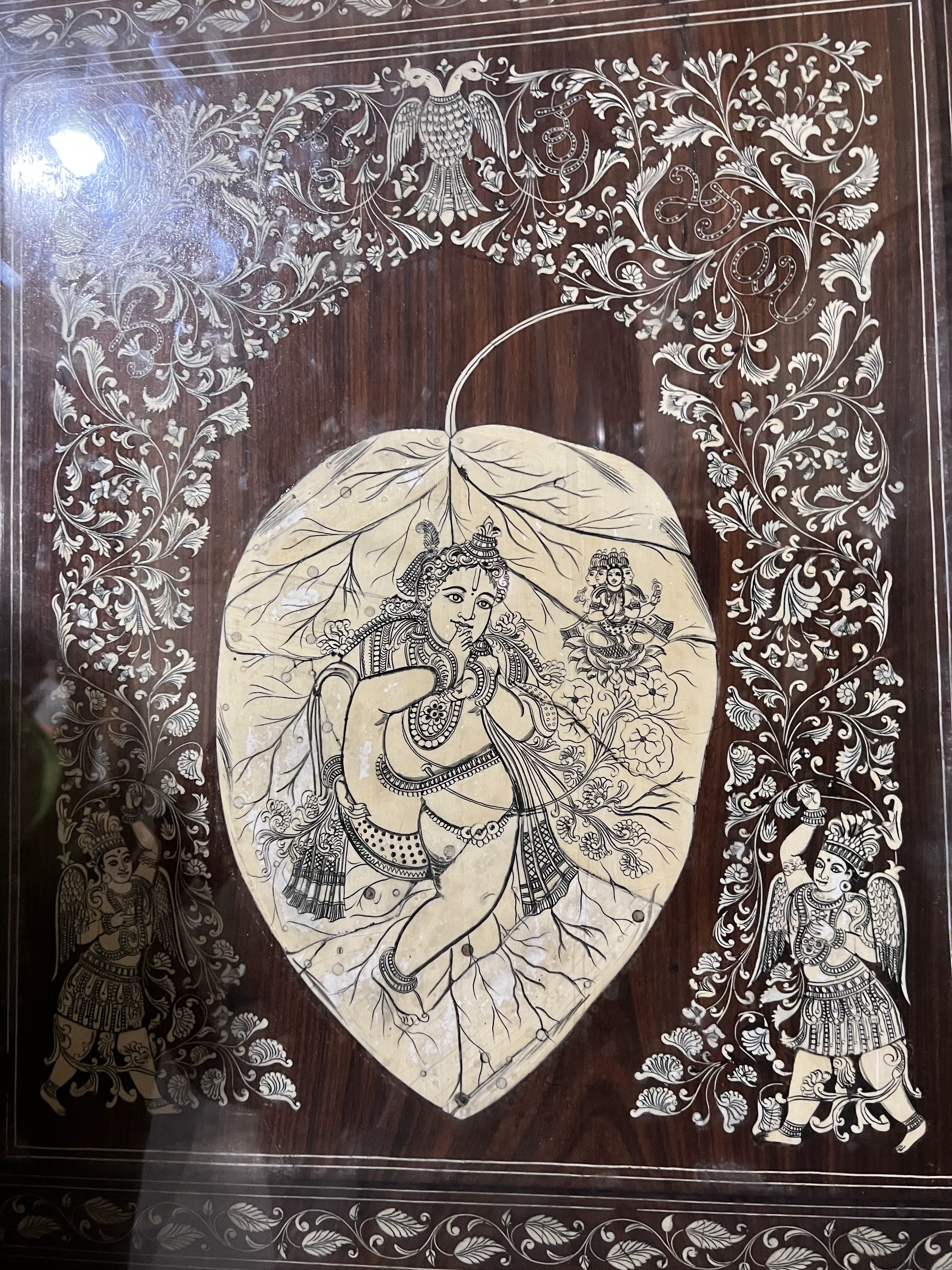
For instance, I am quite sure that if I’d seen any one of those doors by itself, I’d have been bowled over. After all, how often does one see ivory inlays in teak doors, and entire pictures carved out in the ivory?

img_7453

How often do we see the portraits of South Indian royal princesses from 100 years ago? But when one passes through 50 stately doors, and 500 paintings, surrounded by 5000 people, it suddenly becomes overwhelming. 

Even so, we couldn’t help admiring the artwork, the beautiful portraits, the marvelous turquoise green and blue themes, and the beautiful cultural themes of South India. 

I remember visiting Mysore Palace as a young girl – maybe around the age the daughter is now, and while I remember the night lights at the palace with awe, the rest of it seems to have mushed in with plenty of other palaces – I may have confused the Buckingham Palace,the Jaipur Ajmer Fort Palace, and Fatepur Sikri in one grand ballroom in the head.  

The Mysore Royal Family

Like every royal family across the globe, the Mysore Royal Family also has seen its share of news mongers, myth propellers and the like. Apparently, the Mysore Royal Family was cursed so that naturally born heirs could not beget their own heirs and would have to be adopted. They were also rumoured to be the descendants of Lord Krishna. If that is not pressure, I don’t know what is.

It must be exhausting to live in the public eye for generations. 

Royalty is completely different than celebrity. Royalty has a magic all its own.

Philip Treacy

As we bustled out of the palace, I found myself grateful for our quiet, ordinary  lives, but also appreciative of the art that the rich had a taste for. Thank goodness for patrons of art over the years. 

Imagine what our lives would be without Art?

The Peace Tree from Hiroshima

When I picked up the book, The Peace Tree from Hiroshima, I felt a familiar flutter of hope. The title promised a story about the best aspects of humankind. But little did I realize how moved I would be by the book. Published by Tuttle Publishing, which was set up to promote Asian stories in America post World War II, this is a heartwarming tale of a tree that became a symbol of peace between Japan & America.

The Peace Tree from Hiroshima

The Miyajima or pine tree was handpicked in about 1625 when Mr Yamaki’s great great … great grandfather, Mr Itaro, went hiking in the mountains of an island, Miyajama – nicknamed the Island of the Gods for its scenic splendors. Ever since the pine lived in the home of the family: carefully tended for and handed over as a legacy from father to son. 400 years later, when the nuclear bomb was dropped on Hiroshima, somehow this family and the bonsai tree survived.

From sample image on Amazon for The Peace Tree from Hiroshima

I had heard of Bonsai & Ikebana art, but did not truly understand what went into creating and preserving such magnificent specimens. When it comes to art forms with flowers and trees, the Chinese and Japanese have such a rich heritage. 

In what is the most moving gesture of humanity, on America’s 200th anniversary, Japan gifted America with 50 bonsai trees (one for each state). The bonsai trees were special ones including 3 from the Emperor’s collection. This 400 year old Miyajima tree from Hiroshima was also part of that gift and now lives in the Arboretum in Washington where it has been christened The Peace Tree. This tree that saw humankind go through industrial revolutions, technological advances unseen before, and the worst blemish in warfare is now a Peace Tree. I hope I can visit the Washington Arboretum one day and be in the presence of this little 3 ft tree with a powerful message of hope, resilience and forgiveness.

It truly became The Little Bonsai with a Big Story

This little bonsai’s story along with the Cranes of Hope, will hopefully be a reminder to us on the horrors of war.

I hope I can send these books along with the Butter Battle Book by Dr Seuss, to the current world leaders to remind them of how hard the world has worked towards maintaining world peace. A Course for World Leaders #ButterBattleCourse.

Sadako’s Thousand Paper Cranes

Towards the end of the book, the author writes a note indicating which parts of the story were fictionalized and which parts were true. They also include pictures of several bonsai trees including one that contains 11 trees in one arrangement, created by Bonsai artist, John Naka.  Apparently, one of the longest living bonsai, Fudo, lived over 900 years old. It was bought by the Brooklyn Botanical Garden, but unfortunately this one did not survive the new conditions and died. 

How could the miniature version of the magnificent large pine tree outside our house live as a bonsai tree for upwards of 400 years? Wonders never cease and artistry comes in so many forms.

Factfulness

I am glad I read How to Understand the World by Hans Rosling, and then picked up Factfulness. I could more fully appreciate the journey and the person who became the man and found his purpose beyond being a doctor (in itself a marvelous profession). His young aspirations based on the world view in a developed country shifted and enhanced his life in so many ways. He knew when he was interacting with young doctors in Bangalore, India in the 1970’s that the society he had in mind was very different from the world. The world was changing, and yet our worldview had not

He was to see this trend in varying degrees across different countries, professions and even in erudite halls where world leaders came together, and should’ve known better such as the UN or the World Bank. 

It is still this way in varying degrees, although the internet and entertainment options have accelerated the understanding of different cultures in different ways. But Hans Rosling’s work along with his son and daughter-in-law, Ola Rosling & Anna Rosling Roddmund has helped the world understand the areas in which we are doing well as a species, and as a planet. This factfulness enables us to concentrate our powers of doing to the right causes and people.


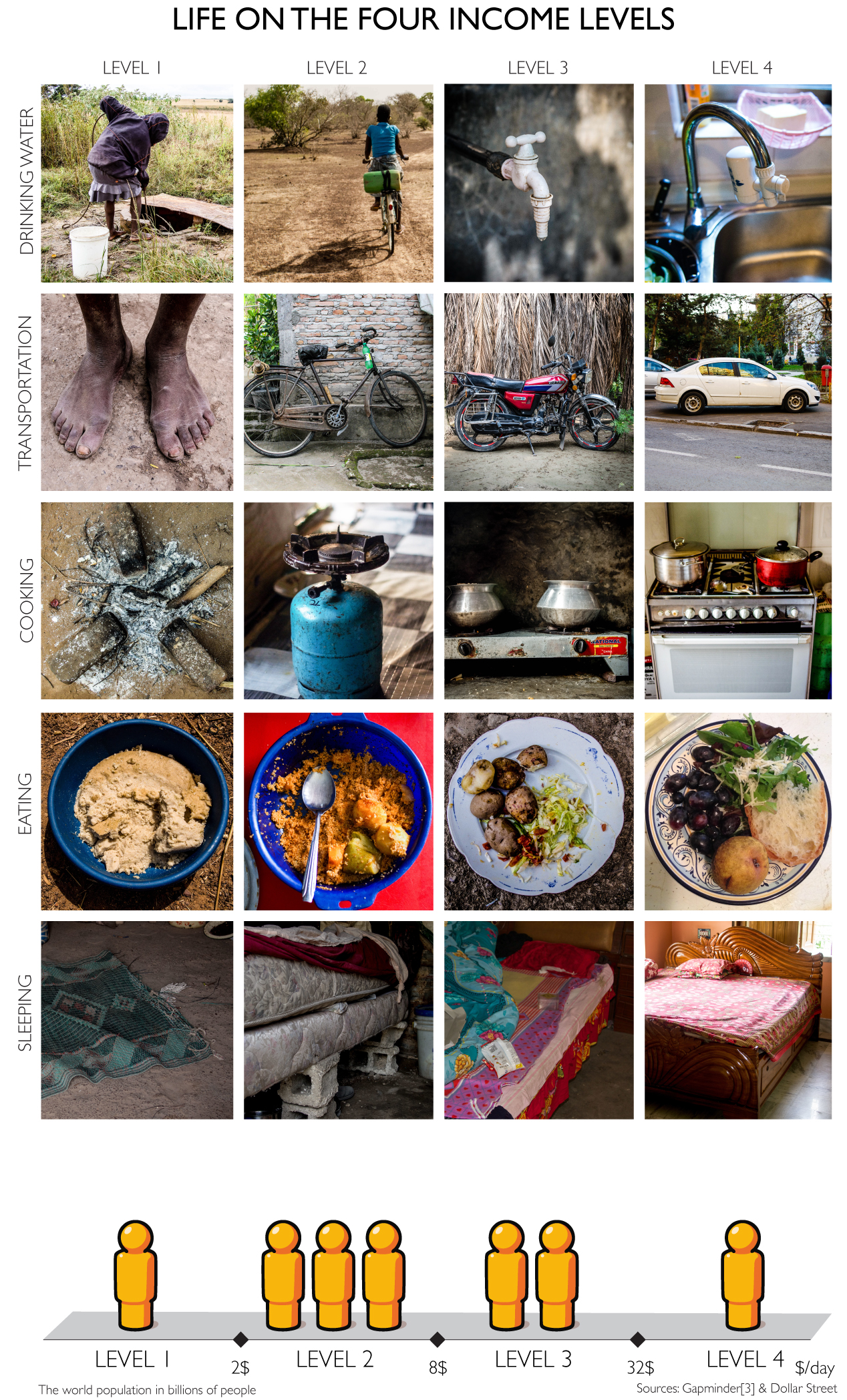
Instead of Developed Vs Developing Countries, he instead splits societies into 4 levels on the development graph. (Source: Gapminder.org)

  • Level 1
  • Level 2
  • Level 3
  • Level 4

Perhaps the most telling graphs in gap minder are those showing how countries shifted from Level 1 towards Level 4 over 2-3 generations, and how this is what we can hope and work towards for those countries stuck in Level 1 and Level 2 today.  Please watch his bubble chart from the Late 1800’s to 2018 to see the world view progress and change.

Bubble Chart for Level 1- Level 4 countries over time

He writes, for instance, of a Sweden during his grandparents time – a view that closely resonates with Level 1 or early Level 2 countries of today.

  • Large families, patriarchal mindsets limiting progress, faulty drainage, lack of access to good hospitals and medicines etc.
  • Then, in his mother’s lifetime, she was able to get treated for tuberculosis in a hospital for free, have fewer children than her mother did, gain access to some automation such as a washing machine – thus freeing her up to take her children to the library, and spend more quality time with them.
  • In his own generation, he was able to get free healthcare, a state sponsored medical education, ability to raise his children in good schools, and so much more. 

The book talks about the most common ways in which our worldview are shaped, and how to work against each of these biases while understanding the world around us. But really, these tenets are useful for decision-making in general, not just for the world-view.

  • Negativity Instinct – we assume things are far worse than they really are, and this clouds our decision making process
  • Straight Line Instinct  – not all trends are linear even if they start out that way. Population growth for instance. It is estimated that by 2100, we would have leveled out around 11 billion – not a linear projection as predicted by doomsayers a few years ago. Largely due to education, family planning etc.
  • Fear Instinct – decisions made irrationally based on fear.
  • Size Instinct
  • Generalization Instinct
  • Destiny Instinct – Fighting against a predetermined fate helps us shape the decisions we’d like.
  • Single Perspective Instinct
  • Blame Instinct
  • Urgency Instinct – Anyone who has bought a car would know this one: Today, and today only deals – that we all know is

The book finishes with an excellent essay on Factfulness in practice. Progress is happening and it is heartening – 🌏

References:

  • How I Learned to Understand the World – Hans Rosling with Ola Rosling & Anna Rosling Rönnlund
  • Factfulness – Hans Rosling with Ola Rosling & Anna Rosling Rönnlund
  • Gapminder.org – Designed by Ola Rosling & Anna Rosling Rönnlund

Is there a gene for this?

I honestly try to keep my nose down and go about my own sincere business. Everytime, I do that, I swear that some guy makes it a point to throw something like this at me and taunt me, just for the sake of it.

So, here goes. Apparently, a bunch of drunk humor challenged drunkards(did I call them drunk already? I must have.) So, where was I? Yes, humor challenged drunkards, did this to a fellow human being. They shoved an eel up a person’s a** as a joke.

http://www.huffingtonpost.com/2010/05/03/man-dies-after-eel-is-ins_n_560842.html

I am not one for macabre scenes, and take this opportunity to express my disapproval. But seriously, how does one think of these things? Forget all the negative psychological effects on the eel for a moment, and ponder on the sickening psychological workings of these men.

I grew up in a boarding school where ragging was rampant. I never understood the bullying mentality. I’ve read books and listened to spirited discourses from the father, who particularly disliked bullies.

Coming back to the eel episode, I think the fact that they were drunk was not the cause. I’ve seen drunk men doubling up as mild entertainment for the sober ones. For being able to hurt someone, the instinct may have nothing to do with being drunk. In this case, being drunk is an attribute. There must be a gene that wants to hurt people, and that is the gene to be squashed for all of mankind. Yet for all the advances we have made, we have not been able to isolate this intent to hurt and treat it.

Is there a gene for this?